
Are You Mad?

Does God exist?
Believe it or not, that is the central question in – get this – a Star Trek movie! If you haven’t seen Star Trek V: The Final Frontier… you’re not alone. Considered by fans the worst or second worst film in the original series franchise, it was also the worst of the original six at the box office.[1] But I love it. In it, Sybok is a Vulcan who has devoted his life to search for the answer to that question – does God exist? He believes God not only exists but is calling to him from the wellspring of creation, a place he calls Sha Ka Ree or what we would call the Garden of Eden and he executes an elaborate plan to hijack the Enterprise to prove it. Sybok thinks it exists beyond the Great Barrier in the center of the galaxy and when Captain Kirk tries to explain it’s impossible to breach the barrier, Sybok says to him, “But if we do, will that convince you that my vision was true?” Kirk looks at him, “Your vision?” Sybok responds, “Given to me by God. He waits for us on the other side.” And Kirk can only look at him and say, “You ARE mad.” And Sybok responds, “Am I? We’ll see.”
That’s the problem with people who claim to speak for God.
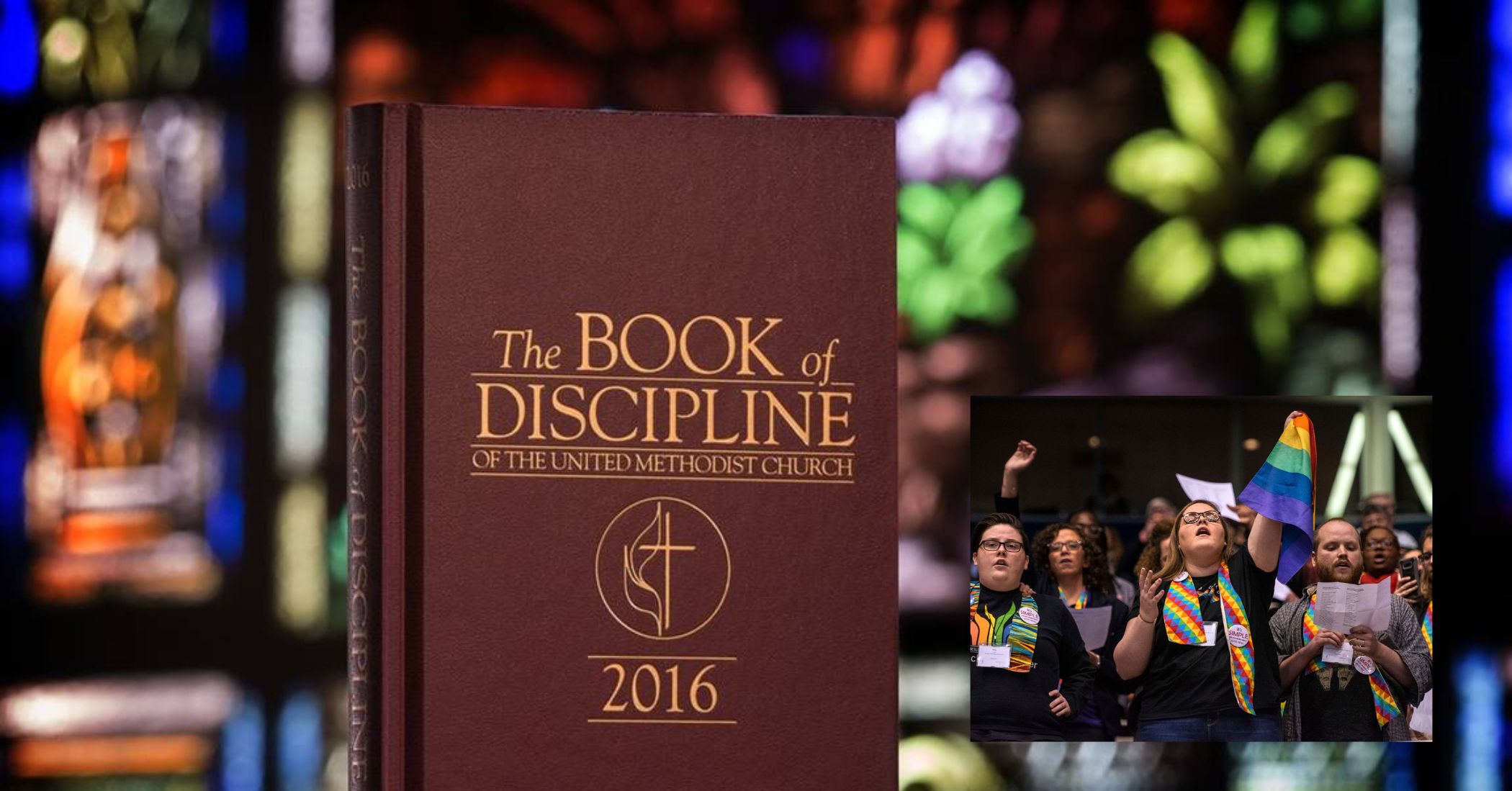
They ALL believe whole-heartedly in what they do. And that’s the case with Sybok. He honestly believes he has heard the voice of God and this place called Sha Ka Ree, this paradise from which creation began, is something that can be found. No one disputes Sybok’s brilliance, his gifts, or his devotion, but is that enough? Does that mean he is truly following God’s call and is that call right for us? That is the question we must ask ourselves. And we need to be cautious because if history is any indication, Christians have often gotten it wrong. We have believed without proper testing, the tall tales and complete falsehoods of leaders who claim to have support from God for their actions. There’s a reason the white supremacy movement is so closely linked to Christianity. It’s because Christians from the pulpit and the pews have long spouted their belief in it and justified it as God’s will. This quote was from a respected and influential pastor just weeks before the attack on Freedom Riders in Alabama back in 1961.[2] Henry Lyons, Jr., the pastor of a 3,000-member church in Montgomery, Alabama said this to the local white Citizens Council, “…I am a believer in a separation of the races, and I am none the less a Christian. If you want to get in a fight with the one that started separation of the races, then you come face to face with your God. The difference in color, the difference in our body, our minds, our life, our mission upon the face of this earth, is God given.”[3] And this guy wasn’t even considered an extremist. Today we have no problem seeing this for what it is – a white supremacy complex which sadly is alive and well in the world. But back then? People believed Henry Lyons, Jr. and thought he was sharing God’s word on the subject. We have the same problem in the church today. We have a solid group of people who believe whole-heartedly that people who identify as LGBTQ+ should not be preachers or teachers in the church and we have a group who whole-heartedly believe the opposite, and both throw around Scripture like its ammunition for a gun. How can we tell what path to follow?
Fortunately, like always, the Bible has a prescription for this problem.
And it can be found in the Book of Matthew in the Sermon on the Mount when Jesus himself addresses this issue. This isn’t the only place in the Bible where we are warned against false prophets, against those who would teach us things in the name of God that aren’t true. But this passage not only comes from Jesus, but he gives specific instructions on how it is that we, as ordinary, everyday people, can discern truth from untruth. Jesus’ words come near the end of his sermon to the people, and he closes with these words for a purpose. He wants the people to hold him to the same standard he is asking them to hold everyone else. In essence, he’s saying, “If everything I said is true, then judge me by these criteria as well, and then you will know who is speaking falsely and who is sharing the truth.” So here is what Jesus says:
15“Watch out for false prophets. They come to you in sheep’s clothing, but inwardly they are ferocious wolves.
Jesus warns us that it’s hard to tell the difference between one who speaks for God and one who does not because both drape themselves in the trappings of faith. They both play the part. It reminds me of a scene from Shakespeare’s The Merchant of Venice where the character Antonio says, “Mark you this, Bassanio, The devil can cite Scripture for his purpose… what a goodly outside falsehood hath!”[4] So how can we tell the difference? Listen to Jesus, verse 16:
16By their fruit you will recognize them. (He says this twice in our passage. Right here and again in verse 20.) Do people pick grapes from thornbushes, or figs from thistles? 17Likewise every good tree bears good fruit, but a bad tree bears bad fruit. 18A good tree cannot bear bad fruit, and a bad tree cannot bear good fruit.

The fruit Jesus is talking about is the fruit of the Spirit and the Bible is very clear what that fruit looks like. Paul’s letter to the church in Galatia tells us, “…the fruit of the Spirit is love, joy, peace, forbearance, kindness, goodness, faithfulness, gentleness and self-control. Against such things there is no law (Galatians 5:22-23).” James, the brother of Jesus tells us, “But the wisdom that comes from heaven is first of all pure; then peace-loving, considerate, submissive, full of mercy and good fruit, impartial and sincere. Peacemakers who sow in peace reap a harvest of righteousness (James 3:17-18).” Notice what’s NOT in there? Anything about judgment or belittling others or forcing people to do your will. Christ believed, and his disciples believed, that love, mercy, and gentleness was the way to go. Not using the Bible as a weapon to justify your own behavior. And there are consequences to working against God’s will as Jesus shares in verse 19 and on:
19Every tree that does not bear good fruit is cut down and thrown into the fire. 20Thus, by their fruit you will recognize them. 21“Not everyone who says to me, ‘Lord, Lord,’ will enter the kingdom of heaven, but only he who does the will of my Father who is in heaven. 22Many will say to me on that day, ‘Lord, Lord, did we not prophesy in your name, and in your name drive out demons and perform many miracles?’ 23Then I will tell them plainly, ‘I never knew you. Away from me, you evildoers!’

I love that Jesus uses the metaphor for fruit.
It makes me think of all the times my dad used to take me to Plowboys as kid. At the time, I thought it was BORING! I went to hang out with my dad (and because he always bought me this awesome gum called Adams Sour Apple). But looking back, I’m glad I went. Every week, we’d go down to the market together and Plowboys was sort of like the Whole Foods of its day. It was a fresh fruit and produce market where they got everything from local growers. It seemed like we spent HOURS there every weekend. But I learned a lot without even realizing it. I watched my dad as he would knock on a watermelon to see if it had the right sound or squeeze a tomato to see if it was ripe. I’d look at the kinds of apples he would pick and would taste samples of grapes to see if they were sweet enough and when they were too tart. He would show me how to tell if different fruit were good or not by using all of the five senses and these are still lessons I carry with me to this day. Now I bore Emma whenever she goes with me to the market, and I hope one day she finds those lessons as valuable as they are to me.
Spending that time with my dad helped me to discern the good from the bad.
Learning about which fruit were good and which were bad saved me so much grief over the years. In the same way, spending time with our heavenly Father can do much the same thing. Through prayer, worship, reading the Bible for yourself, joining a small group, and sharing the love of Christ with others, we begin to get a better idea which teachings are truly God blessed and which are just self-righteous. And in the long run, it will help us – no matter what – to be more Christ-like to one another. I mentioned at the beginning that our church is struggling with issues over the LGBTQ+ community and whether or not they should be teachers and preachers. I think those who condemn them are forgetting to apply God’s fruit test. Are they producing fruit? Are they showing the love, joy, peace, forbearance, kindness, goodness, faithfulness, gentleness and self-control of Christ? Some people get so hung up on what they consider “the law” or even the Book of Discipline, but we heard from Paul, those who exhibit fruit? “Against such things there is no law.” This week, I want to challenge you to spend time in prayer, read your Bible (or even listen to it on the Bible app), or find a podcast with sound teaching and dive deeper into God’s Word for yourself so that you might be better prepared for to see the wolves in sheep’s clothing. And if you’re interested in starting a small group or to be part of one, let me know so we can get you connected and start one up. We need to be prepared because there are a lot of false prophets out there, a lot of Sybok’s ready to lead you down a path that is anything but Christ-like, and if you’re not ready you’ll fall into that trap. Squeeze the fruit for yourself and see if it’s good. Learn what it means to bear good fruit. And you will be well-equipped to discern the truth always. In the name of the Father and of the Son and of the Holy Spirit. Amen.
[1] https://www.the-numbers.com/movies/franchise/Star-Trek#tab=summary&franchise_movies_overview=od5
[2] This is one of the most disturbing examples of racism and attempted murder in the fight for Civil Rights and is only one of many horror stories. To find out more, read from this account from the Equal Justice Initiative. https://calendar.eji.org/racial-injustice/may/14
[3] https://www.npr.org/2020/07/01/883115867/white-supremacist-ideas-have-historical-roots-in-u-s-christianity
[4] Found this reference while doing research for our message from this website: https://www.theledger.com/story/opinion/columns/guest/2021/09/25/beware-politicians-quoting-bible/5820118001/
 Craig's Corner