
I NEED MY PAIN!
Pain stinks!
I’ve had to endure a bit of it this year and I’ve got to tell you, I’d rather do without. When pain hits, it’s hard to focus on anything else. It becomes consuming as we try to deal with it. To not have to worry about pain would be a blessing! Or would it? Maybe we should ask Steve Pete. He is someone who literally feels no physical pain. None. He has a rare condition called congenital analgesia. [1] When his body is injured, he can’t tell at all. When other kids would get a broken arm or leg, they would stop because of the pain, but Steve would just keep going and would cause even worse injury to his body. His condition meant that his body never gave him any signals that there was something wrong. Often that meant he would have to stay in the hospital. When he was young, he literally bit off his tongue and didn’t feel it. It was then when his parents discovered he had this condition. Because he has no way of knowing the damage he is doing, Steve has often caused far more harm to his body than others ever would and that damage has been so extensive that even though he doesn’t feel it, Steve still has to pay the price. He may not feel pain, but he still suffers from its effects. The doctors told him so much damage has been done to his left leg that eventually they will have to amputate it.[2] And believe it or not, Steve is the lucky one. Because of the damage done, people with this condition are reported to rarely live past the age of 30.[3] In fact, Steve’s brother, who also suffered from the same condition, took his own life. Steve believes it is precisely because of his condition that he did.[4]
What are we to do about the problem of pain?
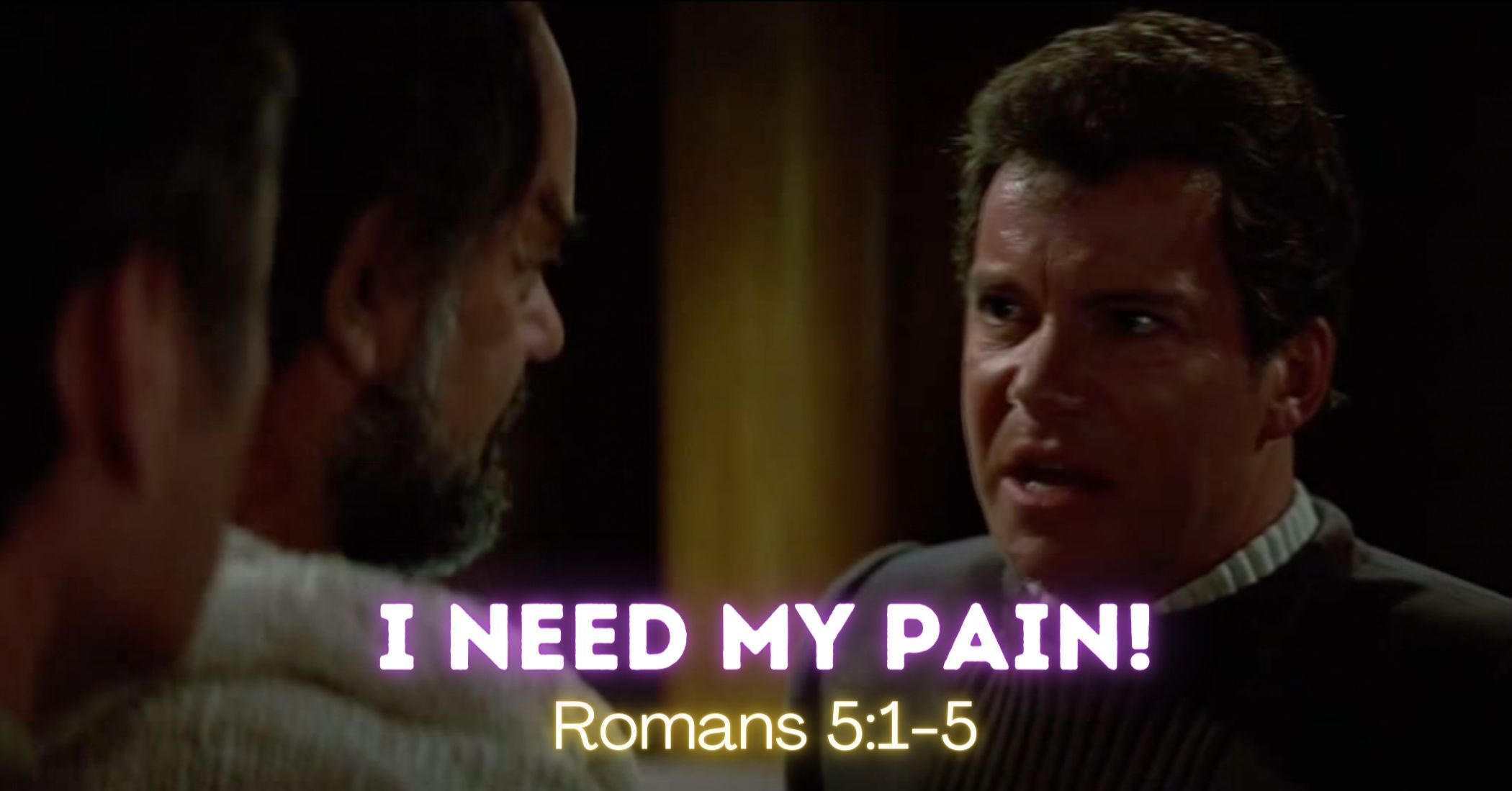
Pain can be crushing. It can rob us of the joy of life. And it can wreck us – not just physically, but emotionally and spiritually, too. Pain hurts on many levels, not just one. Sometimes people wonder if pain is God’s punishment for doing something wrong. It’s not. I can tell you that now. But it sure seems like it sometimes. Especially, when we are in the middle of it. Losing a loved one brings an emotional pain that is hard to endure, and it’s one of the biggest reasons people lose faith. Where is God in the middle of this pain? Why did God take this person from my life? It’s hard to believe in a just and loving God when there is so much pain in the world. But a pain-free life? That has its problems, too. Just ask Captain Kirk. In Star Trek V: The Final Frontier, Sybok, the Vulcan prophet, has this unusual ability to help people release their innermost pain. And at first it seems like a blessing. Dr. McCoy had been carrying around this guilt about the death of his father for decades! And with just a touch, Sybok seemed to release him from that pain. When McCoy tries to convince Kirk to let Sybok take away his pain too, Kirk tells his friend, “…Bones, you’re a doctor. You know that pain and guilt can’t be taken away with a wave of a magic wand. They’re the things we carry with us – the things that make us who we are. If we lose them, we lose ourselves. I don’t want my pain taken away. I NEED MY PAIN!”
“I NEED MY PAIN!”
Kirk, who has been through a lot of pain – the loss of his son, the death of his best friend, the loss of his career – wants to hold on to those experiences BECAUSE of what he has endured. He shouts almost in desperation because he is afraid the only redemption that comes from experiencing those painful moments will be lost if they are simply taken away. These are events that have shaped his life and have made him the person he is. To steal that pain away, would rob him of the ongoing transformative power of that pain. And that’s what Paul is trying to teach us in our passage today. The idea of pain as punishment is not new. It is literally as old as the Bible. In fact, older. Ancient Judaism believed our favor with God was not part of some future promise in Heaven but was a very real part of our life now; we could tell whom God favored by how good their life was. The pain and suffering of Christians were just more evidence we shouldn’t follow Christ, because surely, if God had blessed this kind of thinking, these people wouldn’t be suffering. But Paul tells us in this short passage suffering isn’t something to despair over. Not that God CAUSES suffering, but God can transform it into something better. God can bring hope out of our despair.
Therefore, since we have been justified through faith, we have peace with God through our Lord Jesus Christ, 2 through whom we have gained access by faith into this grace in which we now stand. And we boast in the hope of the glory of God. 3 Not only so, but we also glory in our sufferings, because we know that suffering produces perseverance; 4 perseverance, character; and character, hope. 5 And hope does not put us to shame, because God’s love has been poured out into our hearts through the Holy Spirit, who has been given to us. – from Romans 5
Here in this passage, Paul puts a new spin on pain and suffering.
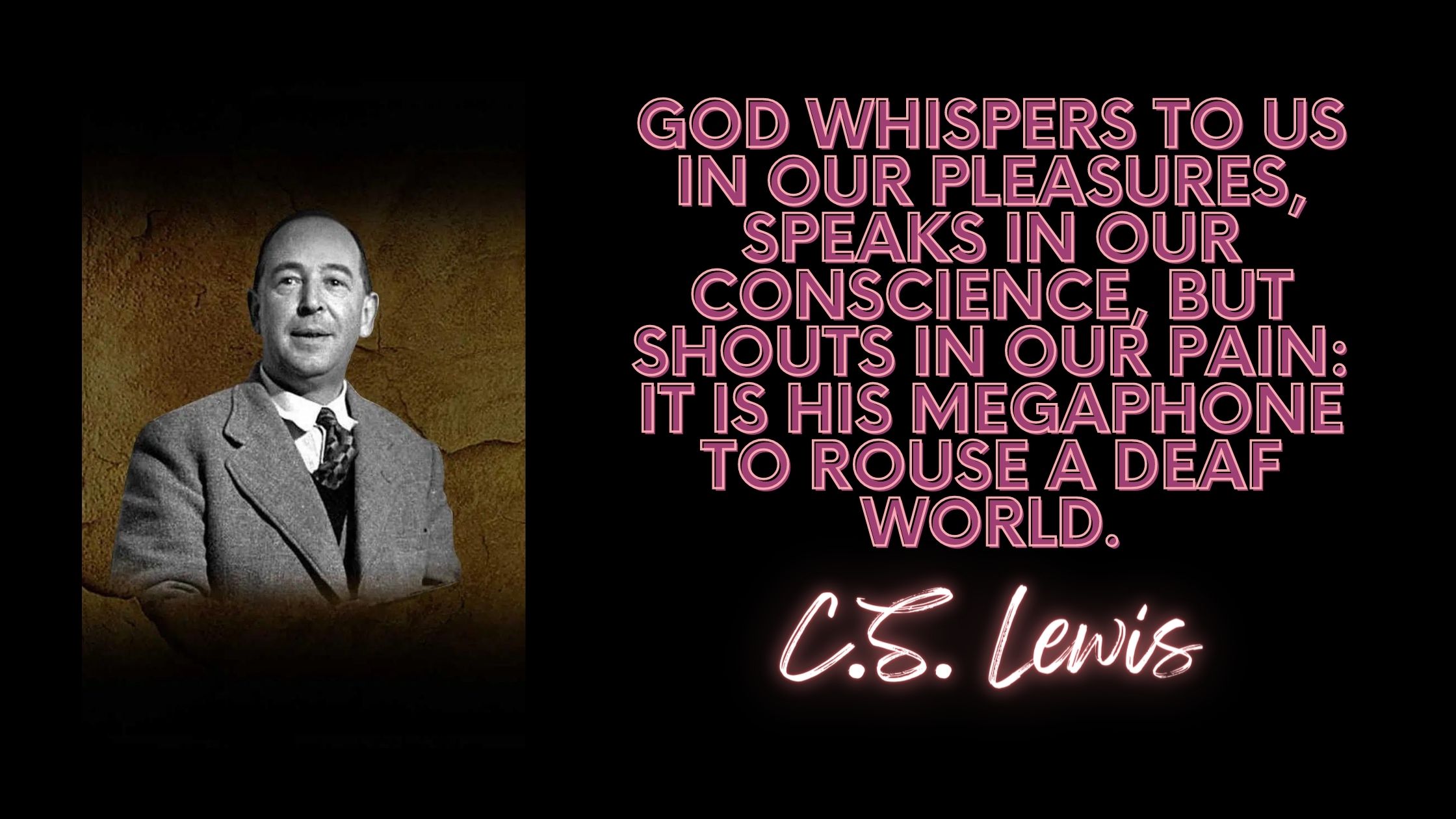
He’s not saying it doesn’t hurt. He’s not discounting the difficulties that come with pain, and let’s be honest – Paul knows quite a bit about it himself. He’s not only been a victim of it, but some of his friends and fellow disciples have been tortured and killed for their faith. Paul is no stranger to pain. But he wants us to look at it with a different perspective. In verse 3, Paul explains, “…we also glory in our sufferings (our pain, our affliction), BECAUSE we know that suffering produces perseverance; perseverance, character; and character, hope.” Paul is making the connection that we can grow from our pain. It is the journey of enduring the pain where we come to understand the hope we have in Christ and lean more into our faith. Pain is often a crucible for our character. It’s a testing ground. It’s the kiln that refines and polishes the clay that is our life. C.S. Lewis, one of my favorite authors, wrote a book called “The Problem of Pain,” and in it he said this, “…pain insists on being attended to. God whispers to us in our pleasures, speaks in our conscience, but shouts in our pain: it is His megaphone to rouse a deaf world.”[5] It is often in our pain, our suffering, and our trials that we draw closest to God, that we are most ready to hear him. Not that God causes pain, but in our pain, we are most ready to listen.
Pain is sometimes the catalyst we need to grow.
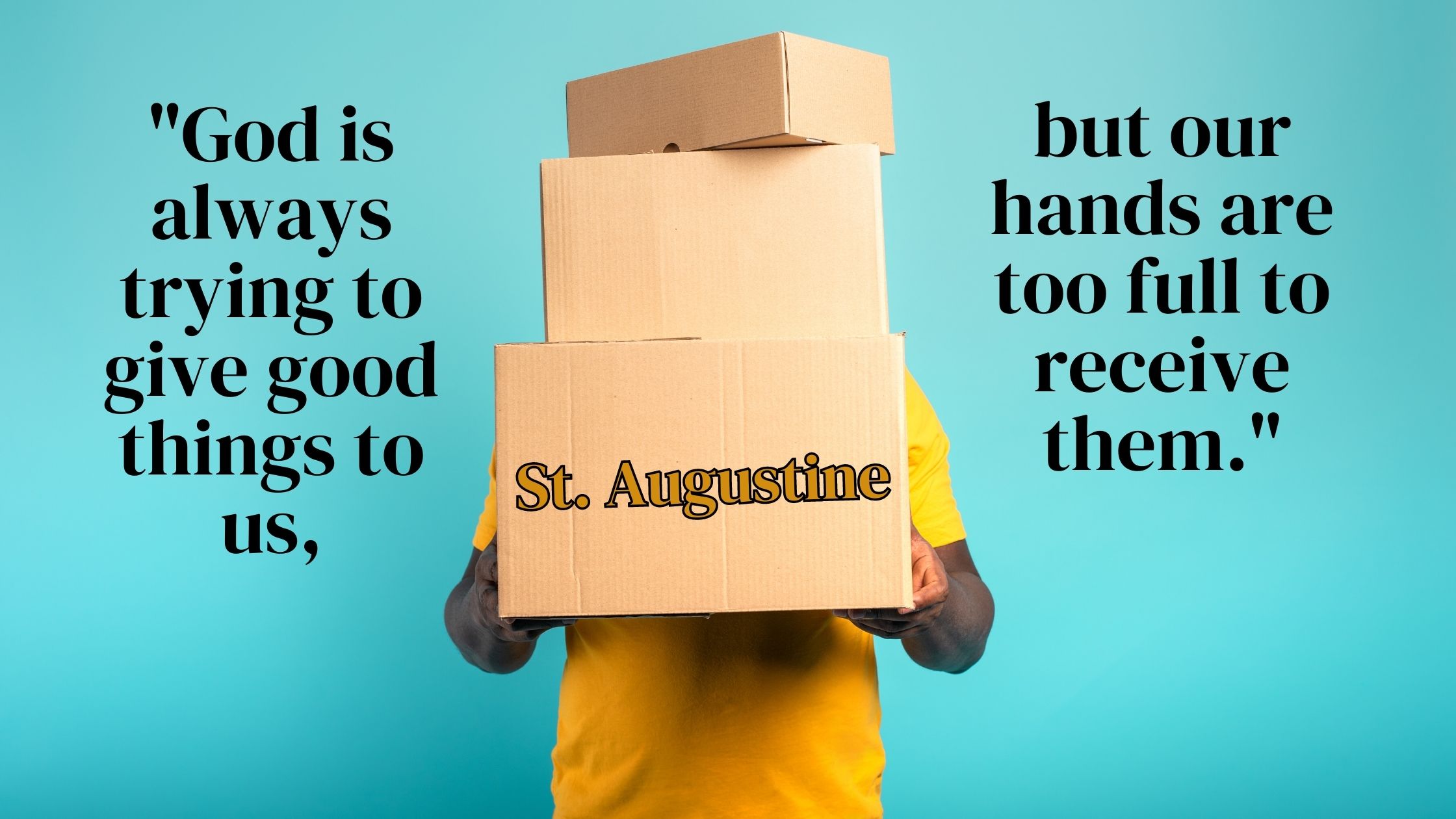
It is when we are most willing to make room for God. Lewis makes the counterpoint that when things are going too well, when our lives are free of trouble, free of pain, we have the tendency to shut God out, to forget we still need God. We look upon ourselves as being wholly sufficient without recognizing the need we have for Christ. We tend to make room for God only when we are in need. St. Augustine once said, “God is always trying to give good things to us, but our hands are too full to receive them.”[6] A human being’s natural tendency toward sin and pride and self-reliance too often wins out and only in our pain are we receptive to God. Maybe this is the point Captain Kirk was trying to make when he shouted, “I NEED MY PAIN!” The things he has suffered through are the same things that have transformed him into a better person. The ordeal, the battle, the struggle to endure – it is in these things that our character is shaped and formed.
But the hope Paul talks about comes from Christ himself.
When Paul talks about how character builds hope, he’s talking about the hope we have in Christ. When he says hope does not put us to shame, he means because we know Christ has suffered with us and for us. Jesus not only understands your pain but has felt it himself. In the darkest moment of his life, his friends abandoned him; his people demanded his death; and he was beaten, tortured, and humiliated – and that was before he was put on a cross to die. But the story doesn’t end there. If it did there would be no redemption, no transformation to speak of. A friend of mine put it this way, “God never lets human violence and sin have the last word. He transformed the worst that humans could do into the path of our own redemption.” That is why we have hope in Christ. Because even in this, God can transform and redeem us. It is in the resurrection of Christ that we find this hope that Paul is talking about and it is THAT hope which allows us to endure. As Richard Rohr once wrote, “Faith is not for overcoming obstacles; it is for experiencing them – all the way through!”[7]
It’s tempting for us to think that our life would be better without pain.
But the truth is pain serves a very useful purpose. In our physical body, it serves as a warning system. It gives us the opportunity to fix what’s wrong and to bring us more in line with our optimal selves. In our spiritual life, pain serves the same function. It tells us when something is wrong and gives us the opportunity to grow. As Captain Kirk said, we need our pain. We are so often surrounded by the immediacy of the moment, we cannot always see how pain can be useful. Our challenge is to understand the necessity of pain and have faith that even in this God can redeem our pain for his glory. And we rest assured that he can because he has already done so in the most difficult circumstances of all. Most of all, we can take comfort in knowing that we believe in a God who understands pain because he has experienced it first-hand. One thing we can be sure of in life is that we will experience pain, and when we do, let us pray to God to renew our faith, strengthen our resolve, and help us to grow and learn from the experience.
[1] http://www.bbc.co.uk/news/health-20239836
[2] https://www.bbc.com/news/magazine-18713585
[3] http://www.psychologytoday.com/blog/overcoming-pain/201201/chronic-pain-s-parallel-universe-congenital-analgesia
[4] http://www.bbc.co.uk/news/magazine-18713585
[5] C.S. Lewis, The Problem of Pain, p. 91.
[6] http://www.goodreads.com/quotes/75226-god-is-always-trying-to-give-good-things-to-us. Based on C.S. Lewis’ quote of St. Augustine from The Problem of Pain.
[7] http://www.goodreads.com/quotes/556286-faith-is-not-for-overcoming-obstacles-it-is-for-experiencing
 Craig's Corner