
Pulpits, Pews, and Programs

…And Other Non-Essentials of Church
What makes a church, a church?
When we compare our church to what it must have looked like in Jesus’ time, it’s probably not surprising the early church looked nothing like it does today. The Followers of the Way (as Christians were known back then) would gather in homes, maybe gather round a table, share some food, and talk about Jesus and how they could apply his teachings to their lives. No pulpit. No cross. No robes. Not even pews. All these things were added along the way. The pulpit for example didn’t come into existence until the 3rd century. Up until the 4th century, the cross wasn’t used as a symbol for Christ because it was seen as idolatry. In fact, the first crosses weren’t seen in places of worship, but instead on battle armor as commanded by Constantine. Constantine was also responsible for clergy wearing robes because he thought they should be “set apart.” And pews didn’t make their way into churches until the 13th century and then only as backless benches. During early Christianity, worship looked a lot more like a gathering of friends at somebody’s home. They truly embodied the idea of the priesthood of all believers, the concept that ALL of us are set apart by God for his work on the Earth. ALL of us.[1]

“What about the pastor? Isn’t that Biblical?”
If by Biblical you mean, is it mentioned in the Bible, then yes, it’s Biblical. But only Paul mentions pastors at all and only in one passage – Ephesians 4:11 & 12 where he writes, “So Christ himself gave the apostles, the prophets, the evangelists, the pastors and teachers, to equip his people for works of service, so that the body of Christ may be built up…” In Paul’s example, the pastor is but one of many servants of God with distinct gifts. The role of pastor as we know it today isn’t found anywhere. We sort of put all those roles Paul listed into one person and hope their good at all of them – preaching, teaching, evangelism, healing, leadership, service, encouragement, and mercy. The pastor is sort of the Super Christian. Knows every Bible verse by heart! Can also sing and play a musical instrument! Able to leap tall buildings in a single bound! But the pastor was never meant to be Super Christian. He’s part of a team that includes all of us. In Romans 12 we read, “For just as each of us has one body with many members, and these members do not all have the same function, so in Christ we, though many, form one body, and each member belongs to all the others. We have different gifts, according to the grace given to each of us. If your gift is prophesying, then prophesy in accordance with your faith; if it is serving, then serve; if it is teaching, then teach; if it is to encourage, then give encouragement; if it is giving, then give generously; if it is to lead, do it diligently; if it is to show mercy, do it cheerfully.” The pastor leads, encourages, and nurtures others who share these gifts. But the pastor was never meant to supplant the gifts of the people but to help those gifts grow in others to serve God.

In our minds, we’ve built up an idealized version of “church.”
This is what a pastor is supposed to do. This is what a church is supposed to look like. This is how we’re supposed to behave. Almost none of which happened in the 1st century. Not that we should go back to doing things the way they were done in the first century. Personally, I’m pretty fond of air conditioning. But are we open to where God is leading? Can we let go of our image of church to embrace where we might need to go next? We want to make sure that in all we do, we are putting God first, not ourselves or we might find ourselves with the form and function of church but without the heart. The passage we’re going to share today talks about this danger specifically. Isaiah is warning the people not to be so wrapped up in their version of church that they end up in idolatry instead of true worship.
13 The Lord says: “These people come near to me with their mouth and honor me with their lips, but their hearts are far from me.
Their worship of me is based on merely human rules they have been taught.
14 Therefore once more I will astound these people with wonder upon wonder;
the wisdom of the wise will perish,
the intelligence of the intelligent will vanish.”
15 Woe to those who go to great depths to hide their plans from the LORD,
who do their work in darkness and think,
“Who sees us? Who will know?”
16 You turn things upside down, as if the potter were thought to be like the clay!
Shall what is formed say to the one who formed it,
“You did not make me”?
Can the pot say to the potter,
“You know nothing”? – Isaiah 29:13-16

“Their worship of me is based on merely human rules they have been taught”.
That’s the danger we fall into when we hold on too tightly to our traditions, to our way of doing things. We transform worship from being about GOD to being about US. If the seven last words of a church are “We’ve never done it that way before,” then the seven words before that were probably very similar. “We’ve ALWAYS done it that way before.” Traditions are great. They give us a sense of continuity. They help remind us of our roots and reinforce what’s important to us. But there comes a point where if we hold on too tightly to them, we miss out on opportunities God is opening up before us. And the reason I say that is because traditions build within us expectations for how things should be and eliminate for us the possibility of what could be. Think about that. How many times have you caught yourself saying, “Well, that’s not the way it’s supposed to be done.” Isn’t that just another way of saying, “We’ve never done it that way before?” We need to learn to eliminate the expectation of how things should be, and embrace what might be possible if we open our hearts and minds. Eliminate the “SHOULD Be’s” and embrace the “COULD Be’s.”
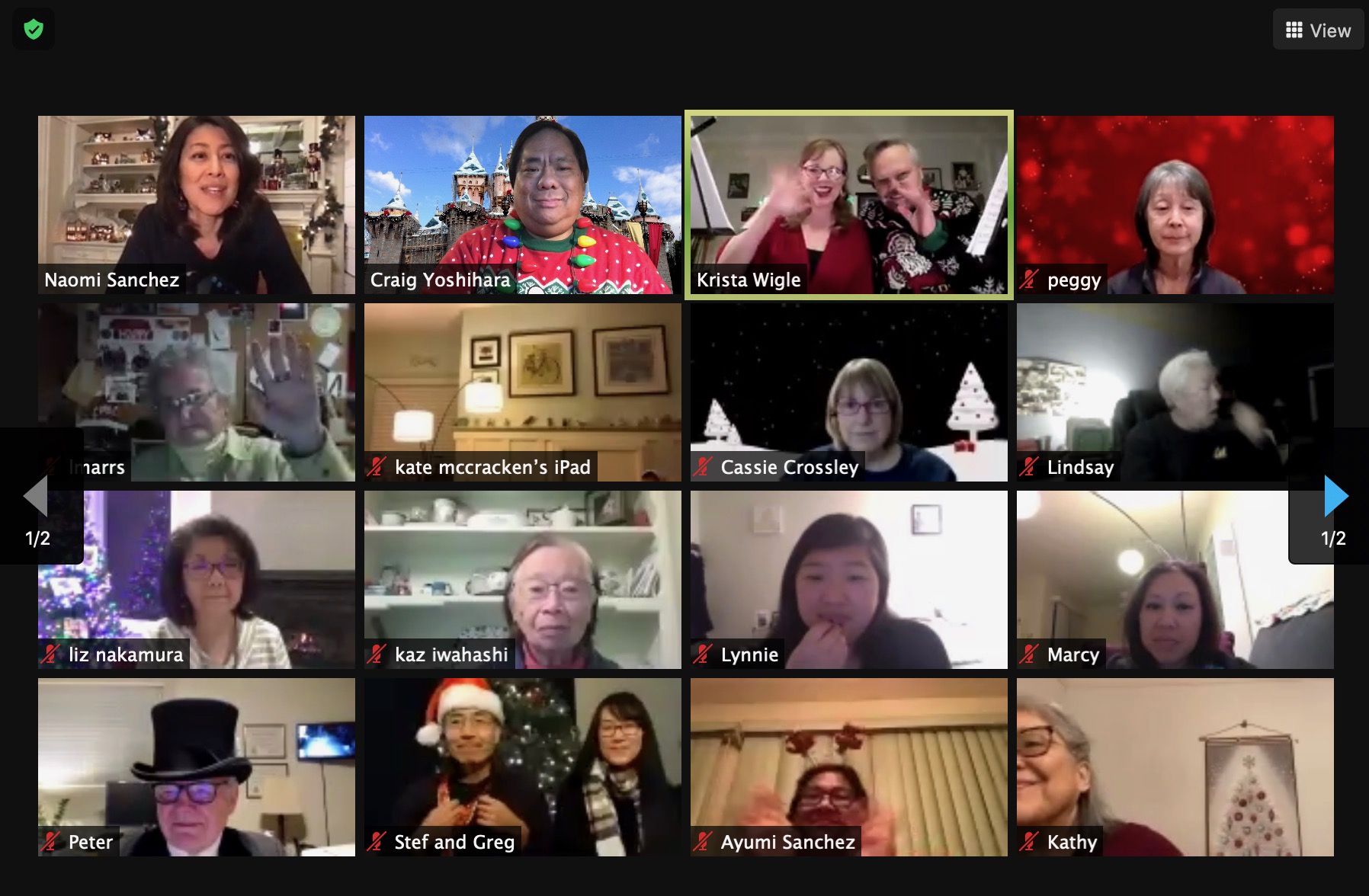
COVID forced us to adapt in ways we never thought possible.
My experience of it was lightning quick. One Sunday we were open. The next Sunday we were closed. We transitioned from in-person worship to remote worship in one week! It was crazy! It was a challenge. We had to do everything differently. Everything from music to the message and all that was in-between. We had to restructure worship to make it flow naturally on a screen. We had online giving to make it easier for everyone. We shortened our worship to account for a video audience. We even did creative communion where everyone would bring the food of their choice with them to the computer, and we would say a blessing over whatever was there. One time Cassie brought bacon! We still gathered together. We were still a community of faith. But it was unlike ANYTHING any of us could imagine and hearing your stories, you experienced that, too. Were we a church? Of course we were. Maybe more than ever. As it says in the Bible, “where two or three are gathered in my name, there I am with them (Matthew 18:20).” Because the church is not the building. It’s the people. It’s the PEOPLE who are the church. It’s not the pulpit, it’s not the piano, it’s not the Sunday School rooms – it’s the people. YOU are the Body of Christ. Not any of what we surround ourselves with. And as we envision what it means to be the church, let us also apply this to ourselves. This is a lesson we can use in every aspect of our lives. Keep in mind the things that are important – family, friends, and God – and really challenge yourselves about the things that drive a wedge between you and them. Because we are a people meant to live in community. We are better when we are together. Remember the words God gave to us through Paul the Apostle, “But avoid foolish controversies and genealogies and arguments and quarrels about the law, because these are unprofitable and useless.” When Emma was young she once said to me, “I have something important you should put in your sermon, Daddy.” I said, “What is it?” And she said, “Tell everybody it’s not about arguing or getting mad or fighting because everyone is part of God’s family. All of our friends and family are part of God’s family.” Isn’t that the truth?
I am so blessed to celebrate with our church family at EVUMC today removing the burden of debt from around our necks. Because of the hard work of so many both past and present, we can say we have been faithful to God here at Evergreen Valley UMC. But what makes us a church is one another…
[1] Most of the information about the use of common symbols in church comes from the book Pagan Christianity by Viola and Barna.
 Craig's Corner