
Mustard Seeds
Wishful thinking is not the same as faith.
But sometimes we act as if it is. We’re told in so many ways all we have to do is have enough faith and everything’s going to be alright. If we just have enough faith, we’ll be able to have a baby. If we just have enough faith, we’ll win the ball game. If we just have enough faith, we won’t be sick anymore. All we need is ENOUGH faith. But how much is enough? No one ever tells us that. It seems like it’s enough if what we want comes true. And not enough if it doesn’t. But that isn’t right is it? Does anyone think God is that petty? Do you imagine God in Heaven saying, “Well, if Bob had just a smidgen more faith, I would have done it, but since he didn’t, I guess he won’t get that job.” Is that really the kind of God we follow? When our team doesn’t win a game, is it because we didn’t have enough faith, or was it because the shortstop overthrew first base and the runner scored? Was it because the pitcher didn’t have enough faith or was it because on that night he couldn’t hit the broadside of a barn? On some level we know God isn’t that petty, that he doesn’t punish us for our lack of faith, but we’ve been taught for so long to equate faith with this power of positive thinking that it’s hard to know the difference.

The Bible even seems to support this point of view.
At least at first glance. The passage below occurs in all three of the Synoptic Gospels – that is the Gospels of Matthew, Mark, and Luke – which is important because while all three recount many of the same events in roughly the same order, there are slight differences, so in this we get a more complete view of events. Right before this passage, Peter, John, and James have just witnessed the Transfiguration, when Jesus goes on top of a mountain and talks with Moses and Elijah as if they were old buddies. The disciples are already stunned to see these legendary prophets with Jesus when suddenly they hear this voice out of the clouds, “This is my Son, whom I love; with him I am well pleased. Listen to him!” And all three of them collapse to the ground. You probably would too if the voice of God just spoke to you out of thin air and proclaimed Jesus as the Savior. But Jesus touches them lightly, tells them not to be afraid, and they walk down the mountain. That’s when this passage begins.
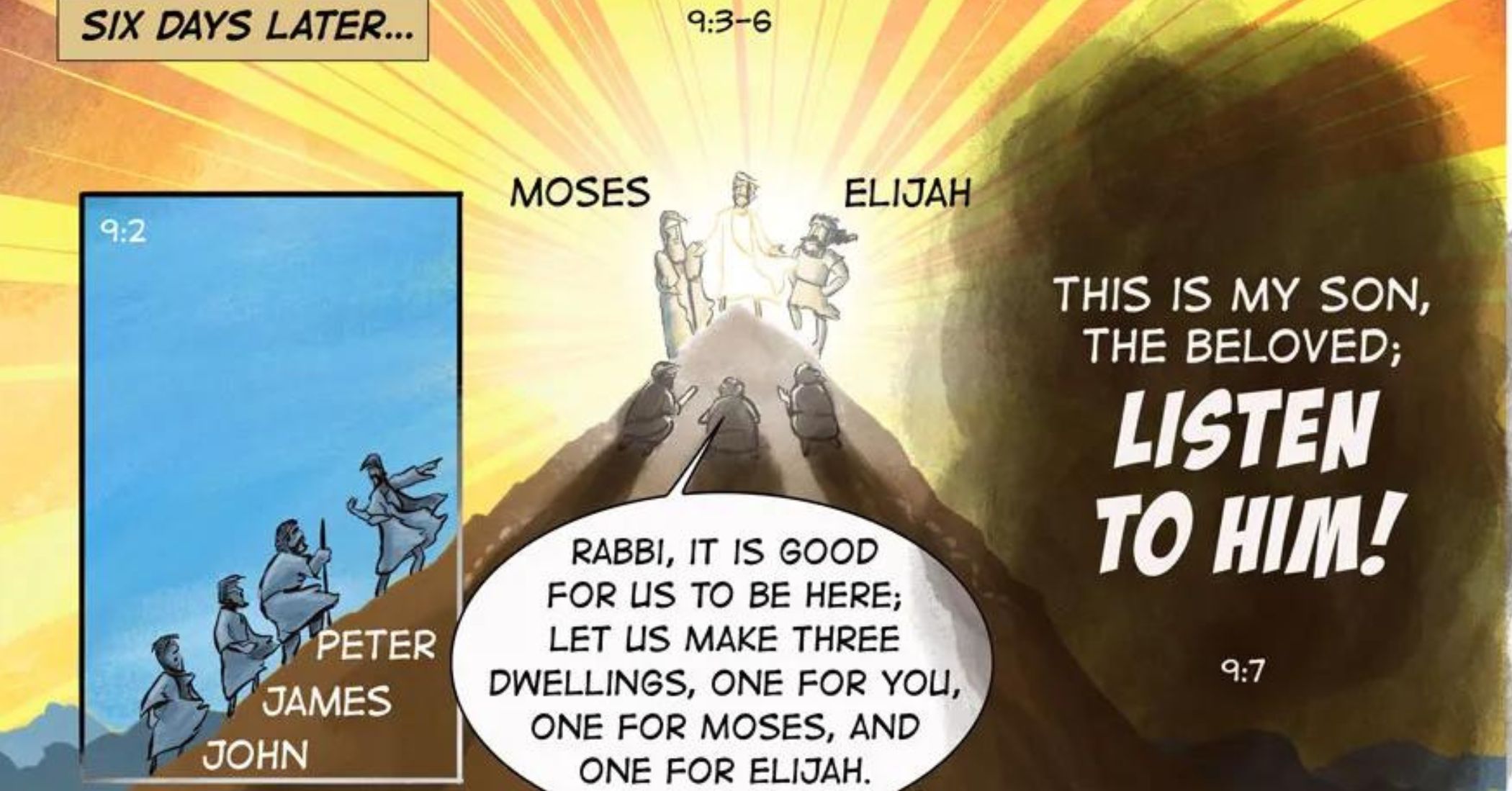
14 When they came to the crowd, a man approached Jesus and knelt before him. 15 “Lord, have mercy on my son,” he said. “He has seizures and is suffering greatly. He often falls into the fire or into the water. 16 I brought him to your disciples, but they could not heal him.”
17 “You unbelieving and perverse generation,” Jesus replied, “how long shall I stay with you? How long shall I put up with you? Bring the boy here to me.” 18 Jesus rebuked the demon, and it came out of the boy, and he was healed at that moment. 19 Then the disciples came to Jesus in private and asked, “Why couldn’t we drive it out?” 20 He replied, “Because you have so little faith. Truly I tell you, if you have faith as small as a mustard seed, you can say to this mountain, ‘Move from here to there,’ and it will move. Nothing will be impossible for you.” – Matthew 17:14-20
If you have faith the size of a mustard seed nothing will be impossible for you.
Sounds a lot like something you’d hear from a self-help guru right? The power of positive thinking! Just have enough faith! And apparently the disciples came up short because Jesus tells them they have so little of it. But if the disciples, who’ve seen Jesus perform miracles and have even performed some themselves, if even THEY don’t have enough faith, who would? The Bible doesn’t tell us if Jesus is referring to Peter, John, and James, but they just saw and heard the impossible – Jesus talking to two dead prophets and the voice of God telling them Jesus was his Son. They didn’t have enough faith? But maybe…maybe we don’t know the whole story. When we read Matthew’s account alone, it seems like that’s exactly what Jesus is saying, that they just didn’t have enough positive thoughts, but Matthew only gives us part of the story. If you read Mark’s version, it’s longer and ends a little differently.[1] In Mark, Jesus has the boy brought to him and the father asks Jesus to help them out if he can to which Jesus replies, “’If I can?’ Anything is possible if a person believes.” And he cures him, but this time when the disciples ask why they couldn’t drive the demon out, Jesus replies simply, “This kind can be cast out only by prayer.” This kind can be cast out only by prayer. Apparently, nobody had prayed for the boy. Nobody had called on God to do the work. They were relying only on themselves. So in light of this, it’s no wonder Jesus would call them out and say they had little faith. It wasn’t they didn’t believe in THEMSELVES. It was they didn’t believe enough in God to turn to him in their need.

When it comes to faith we have a problem with semantics.
Larry Osborne, in his book “10 Dumb Things Smart Christians Believe” described it this way.[2] Generally, when we think of faith, we think of this power of positive thinking. The whole, “If I have enough faith, I can move mountains.” But if we ask people about belief, they think belief is an intellectual process where we come to a conclusion based on the knowledge we have available. Like the fact we believe people have landed on the moon even though none of us were there to see it. When people are asked about trust, it’s something backed up by action. We don’t usually just SAY “I trust you.” We generally then SHOW we trust them – by believing them, by listening to their advice, by doing what they asked. But what’s most interesting about these three words that SEEM very different, is they all come from the same Greek root word in the Bible. Faith is emotional; belief is intellectual; trust is actionable – yet all three share the same Greek root word in the Bible. This is one of those instances where our ability to translate the Bible falls short and the nuance of the word gets lost. Our understanding of faith is cut short if we only mean it as an emotional response – the power of positive thinking. We fail to see the deeper meaning that incorporates belief and trust. And it is only when we understand faith as a blending of emotion, intelligence, AND action, that we understand what faith is. Look at Hebrews 11. If we read the entire chapter it’s a litany of faith stories. Some end happily and miraculously, but some also end tragically and brutally and yet in verse 39 the Bible says this, “39 These were all commended for their faith, yet none of them received what had been promised, 40 since God had planned something better for us so that only together with us would they be made perfect.” None had received what was promised. It makes you wonder then how do we understand faith?
Larry Osborne described it this way:
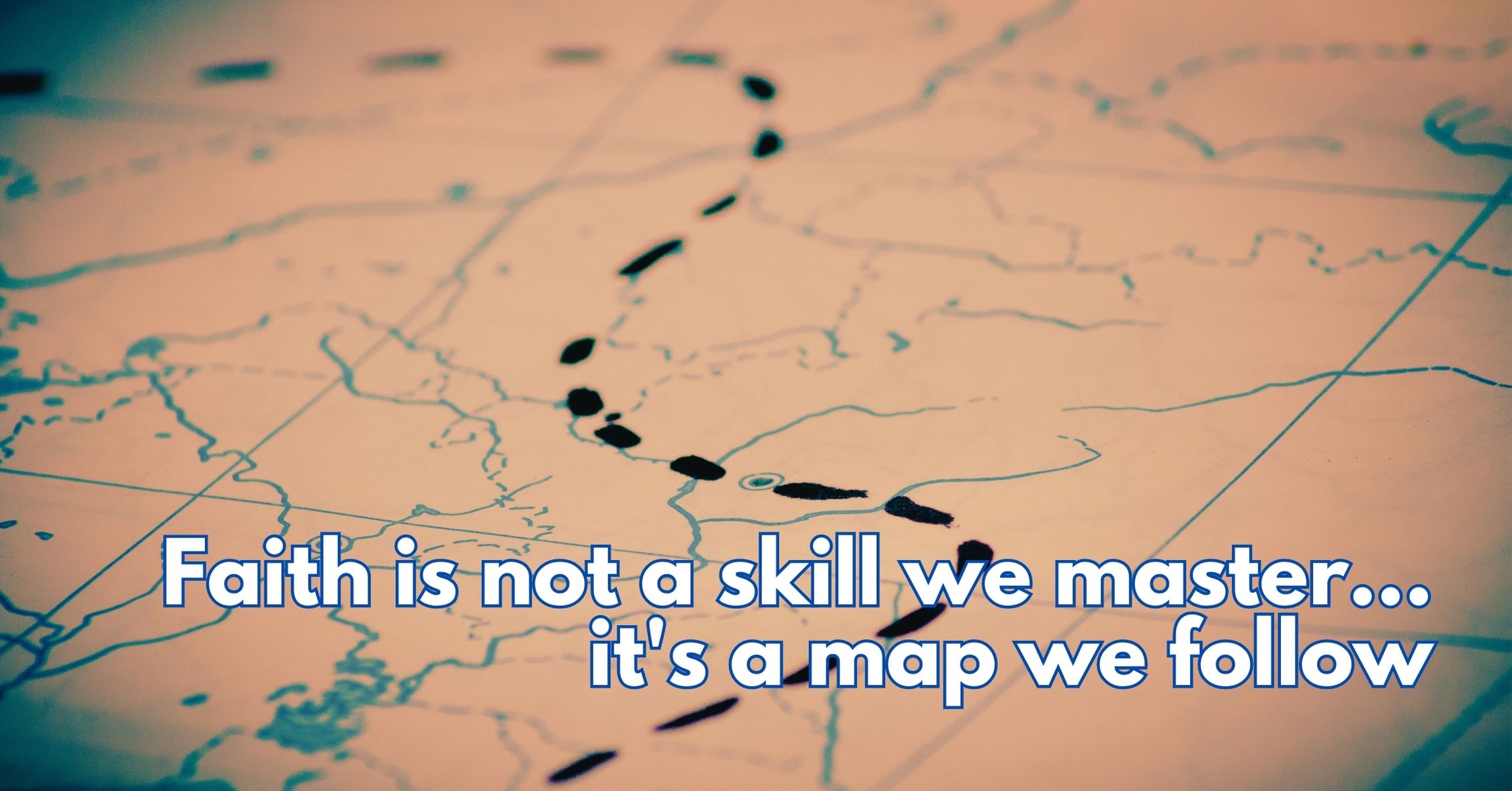
“Faith is not a skill we master. It’s not an impenetrable shield that protects us from life’s hardships and trials. It’s not a magic potion that removes every mess. It’s a map we follow.” Faith is not a skill we master…it’s a map we follow. When we are hurting the most in life, it’s faith that carries us through. Not the power to think positively, but the ability to continue as if Christ is still in control of our lives. To behave and respond with trust that even in the darkest corners of life, God will be with us even in this. That’s what faith is, to put our belief in the hand of God and say, “Even if I don’t understand this, even if it hurts like nothing that has ever hurt before, I will lay this down before you and trust in you.” That’s faith. It isn’t a pill we take to get better. It isn’t a cure-all for the world’s ills. It’s a process. It’s how we behave, act, and believe when the world around us falters. Faith defines who we are and how we behave when things DON’T work out. It doesn’t take faith when things are working great. It takes a LOT of faith to continue to trust in God when things are collapsing all around you. In the end, faith is the answer to the question, “What do I do now?” Faith is the answer to the question, “What do I do now?”
In the book, Mitch tells a story about the time when the rabbi’s daughter died at the age of four.
It was his first time back in the pulpit after the tragedy where this precious little girl died from an asthma attack, the kind that today could have been prevented, but back then had cost her life. The rabbi stepped up to the pulpit and shared his anger at God. He shared his tears and his loss with God. He talked about the pain and the hurt he felt at losing his little girl. And he talked about prayer. He faithfully recited the words of the Kaddish, the Mourner’s Prayer in Hebrew, and as he said those words it made him think, “I am part of something here; one day my children will say this very prayer for me just as I am saying it for my daughter.” His faith brought him comfort. The act of saying that prayer, a prayer he must have said many times with others and now for himself, helped him to realize that we are all frail parts of something powerful. That even when we curse God for our misfortune, we have faith that there is a power greater than ourselves that knows more than we know and even though we don’t know what that is, our faith can bring us solace even in the dark times. He would see his little girl again one day. In the meantime his faith would help him to heal.
Faith is real.
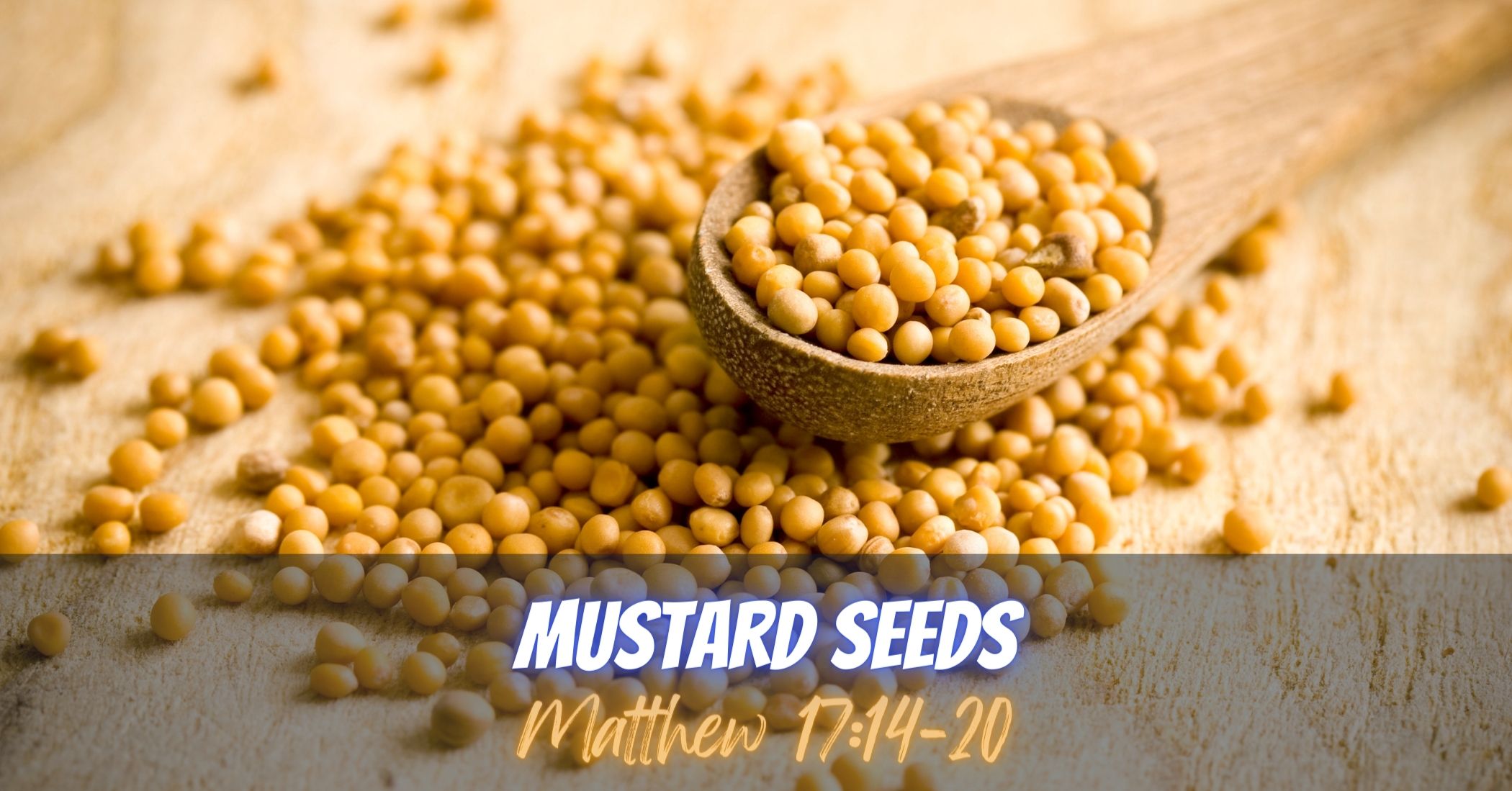
But it isn’t some magic medicine to make the pain of the world go away. Faith is what carries us in those times. To reduce faith to the power of positive thinking marginalizes what it really is. Faith is partially something we feel, something we know, and something we do. It is greater than any one those things alone. Faith is believing enough during the good times that we act consistently the life Christ asks us to live – to love others we don’t even like, to be kind to people who don’t even appreciate it, to help out just because it’s the right thing to do. And faith is believing enough during the bad times to hang on to God despite what our feelings might tell us in our pain. To know that God has something greater in store for us. To lift up praise even in our hurt. And most of all to turn to God when we’re not sure he’s even there through prayer and worship. Because that is the kind of faith that honors God and shows we truly believe. It’s the kind of faith that provides a powerful witness to all that God can do. And it’s the only kind of faith that will truly bring you the peace of Christ in your heart when you need it the most. Faith IS that powerful. When Jesus tells us that faith the size of a mustard seed can move a mountain, he wasn’t kidding. A mustard seed is one of the smallest seeds in the world. Often only one or two MILLIMETERS in size, but it can grow into the biggest of garden plants nine or ten feet tall.[3] And if God can put that much power in that small a package, just think of what he can do in you. Because everything is possible for him who believes.
[1] http://faithdays.wordpress.com/2010/03/10/day-22-mark-914-29-the-healing-of-a-demon-possessed-boy/ One of the sources that provided deeper introspection about this passage and about Jesus’ perspective on it. https://www.facebook.com/notes/alfred-scott/why-couldnt-the-disciples-cast-out-the-demon-from-the-boy-in-matthew-17/632227293468847 Another good passage.
[2] Larry Osborne, 10 Dumb Things Smart Christians Believe, p. 10-12.
[3] http://en.wikipedia.org/wiki/Mustard_seed
 Craig's Corner