
Alone In A Crowd
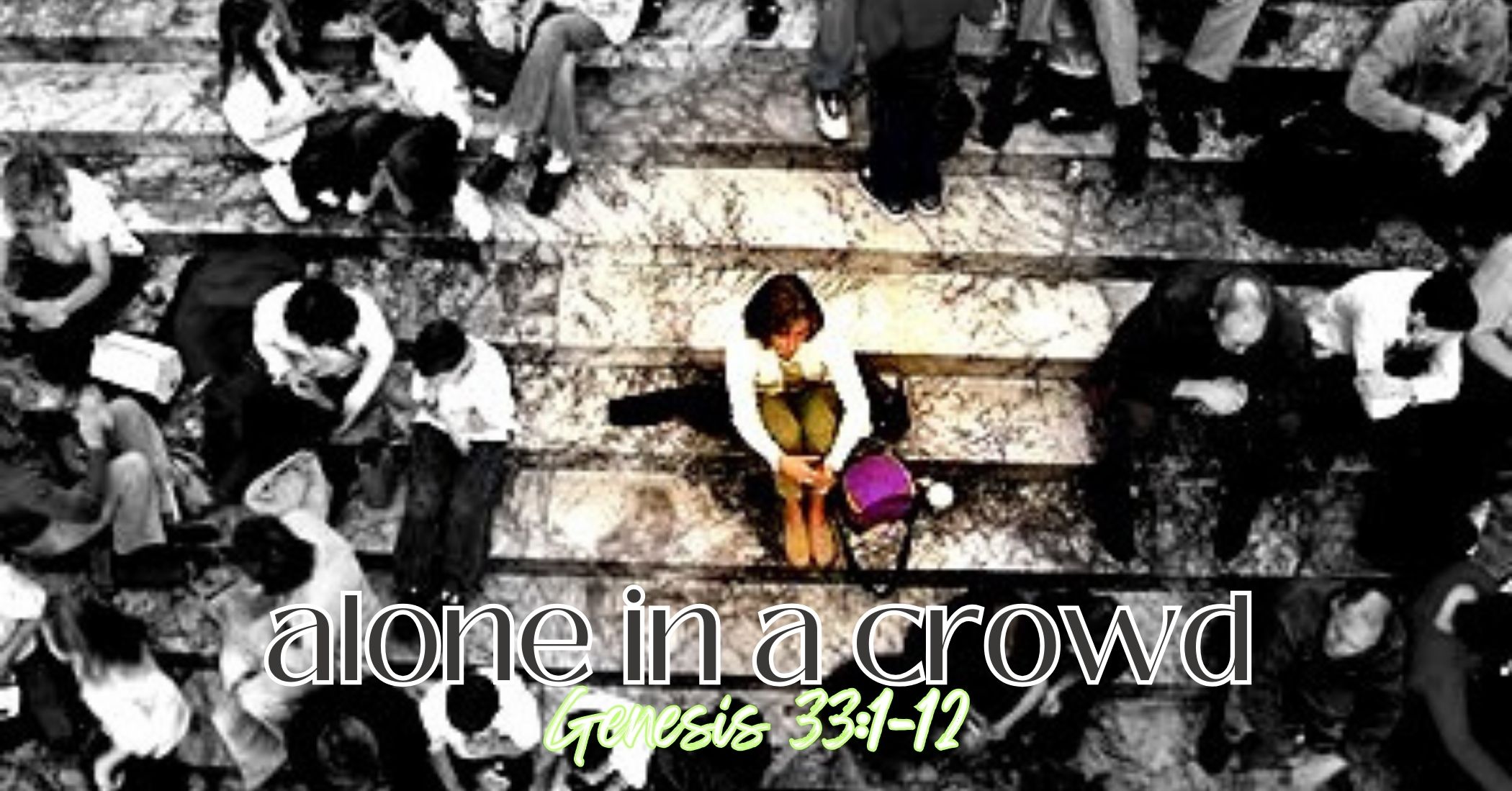
I love hosting parties. I hate going to them.
You would think as a pastor it would be easy for me to mingle with people I don’t know, and in the context of church you’d be right. I love making people feel welcome. I love meeting first time visitors. I try to go the extra mile to make people feel at home. But that’s the key. This is our space. We are the host. We have home field advantage. When I was young, it was so easy! I guess I had the innocence of youth. You know how I met one of my best friends, Lance? It was my first day of Kindergarten and I just went up to him and said, “You want to be my friend?” It’s been over 50 years now and we’re still friends. It’s harder for me now. Maybe because I’m more aware of social norms. Maybe because I’m not as innocent as I used to be, but it’s tough for me to walk into someone else’s territory and feel comfortable. I’m not sure how to behave, how open I can be, where the restroom is, what are the rules of the house. Do I need to take my shoes off? Which is always tough for me because I have very flat feet and it hurts to walk around without shoes. But I want to respect our host. After all, they opened their doors to me. So, it feels weird to walk into a place that is completely foreign, that has its own customs and traditions, that has a history and expectations all its own. How do you live up to all of that? You feel like a fish out of water. At least I do.

I imagine Jacob felt the same way.
Let me set the scene for you. Jacob and Esau were brothers. But early on, Jacob blackmailed his brother to give up his birthright to him[1] and then later tricked his father to steal the family blessing away from Esau. Which was a very big deal back then. Stealing the birthright was like stealing the family inheritance and stealing the blessing meant that Esau would always be inferior to Jacob in the family. After twenty years, Jacob was forced to flee from where he had been living (again because he had deceived someone even if rightfully so) and decided it was time to reconcile with his brother. He was understandably nervous. And a little bit fearful for his life. After all, his brother had no reason to forgive him. No reason to accept him onto his land. And no reason to be kind to him. So, you can imagine the level of anxiety Jacob had when he finally approached his brother for the first time in two decades.
Jacob looked up and there was Esau, coming with his four hundred men; so he divided the children among Leah, Rachel and the two female servants. 2 He put the female servants and their children in front, Leah and her children next, and Rachel and Joseph in the rear. 3 He himself went on ahead and bowed down to the ground seven times as he approached his brother.
4 But Esau ran to meet Jacob and embraced him; he threw his arms around his neck and kissed him. And they wept. 5 Then Esau looked up and saw the women and children. “Who are these with you?” he asked. Jacob answered, “They are the children God has graciously given your servant.” 6 Then the female servants and their children approached and bowed down. 7 Next, Leah and her children came and bowed down. Last of all came Joseph and Rachel, and they too bowed down.
8 Esau asked, “What’s the meaning of all these flocks and herds I met?” “To find favor in your eyes, my lord,” he said. 9 But Esau said, “I already have plenty, my brother. Keep what you have for yourself.”
10 “No, please!” said Jacob. “If I have found favor in your eyes, accept this gift from me. For to see your face is like seeing the face of God, now that you have received me favorably. 11 Please accept the present that was brought to you, for God has been gracious to me and I have all I need.” And because Jacob insisted, Esau accepted it. 12 Then Esau said, “Let us be on our way; I’ll accompany you.” – Genesis 33:1-12
What a relief it must have been!
To have been accepted with literal open arms like that. To be made welcome immediately and to be accepted. This was worse than just walking into a party at someone’s house or going to a new school or your first day on the job. Jacob was fearful for his life! And not just his, but his whole family as well. But Esau doesn’t treat Jacob like an enemy, and he doesn’t approach Jacob as if something fishy was going on. Instead, he approaches him with what we consider the love of Christ. No strings attached. No reservations. He even initially refuses Jacob’s gift and tells him to keep it for himself.[2] But when Jacob insists, he graciously accepts it – not for his own gain, but to help ease Jacob’s anxiety. Then he does exactly what a good host should do – he accompanies him to his new home.

This is the kind of hospitality that God wants us to offer to everyone.
An open, no strings attached, no reservation, unrequited love for our neighbor. When you are the host, whether it’s a party at your home or welcoming a new teammate at work or even here at church, keep this in mind. When you have home team advantage, the onus is on YOU to take the initiative. It’s up to YOU to reach out, to offer hospitality, and to accompany the new person in our midst. Sit with them. Talk with them. Take your cues from them. Don’t impose your own needs and wants upon them but try to be in tune with what they need and want from you. Romans 12:9-13 sums up God’s expectations pretty well. Be sincere in your love of neighbor. Honor others above yourself. Join them mentally and emotionally wherever they are. As it says in the passage, “Be joyful in hope, patient in affliction, (and) faithful in prayer.” Practice hospitality. It’s kind of God’s recipe for being a successful host no matter what situation you find yourself in.

What happens before a person enters our doors is more than we’ll ever know.
Whether that’s at home, at work, or at church, whatever brought them to us is deeper than what we see on the surface. While at a seminar for intercultural communication, they said people are like icebergs. What we see, what we hear, what we observe is only about 10% of what is actually going on. The other 90% is down below, hidden from our view and we’re not going to get to it on a first visit or even maybe a fiftieth. We just need to be patient, be observant, and be in tune with those who come to us. From a church context, this is especially critical. Nelson Searcy once wrote, “Seven minutes is all you get to make a positive first impression. In the first seven minutes of contact with your church, your first-time guests will know whether or not they are coming back.”[3] If you haven’t done the math yet, the first seven minutes is before they ever hear a song or listen to a sermon. It’s the time they spend from the parking lot to the door to the chair. That’s the most critical time for a guest. So how we go about offering hospitality and being a welcoming church is so very vital.[4]

But there is a right way and a wrong way of doing this.[5]
People want to be welcome, but they don’t want to stand out. From my own observation as the new membership pastor at Roswell UMC, it takes on average 18 months for someone to feel comfortable enough to actually join the church. Like jumping in a pool, everyone has their own way of doing it, but most people like to mosey in the shallow end and progress deeper and deeper as they feel comfortable. Often, they have joined a small group, started singing in the choir, or volunteered to help out before they consider actually joining. And they don’t like to give their personal information for at least the first four or five times they attend worship. They want to sit and observe and see if it’s a good fit. Highlighting them during announcements or prayer is often just too much for most people and they absolutely hate “passing the peace.” For some of you, you’re thinking, “What?!” But it’s true. There have been many, many, many studies on this. People want to be welcome, they don’t want to stand out.
It’s always hard being a new pastor at a new church.
I’m coming into YOUR house to serve you which feels a bit awkward because I don’t know much about you yet. It takes time to get to know you, get to know what is important to you, and how best I can use my gifts and graces to help be a blessing here. But as hard as it is for me, it’s especially hard for my family. Time and time again, they get thrust into a new church, one that they didn’t pick and are expected to make it their church family right from the start. And on our first day here, people were friendly and welcoming, but no one came up to Cassie to sit with her. No one came up and introduced her to different people in our congregation. No one showed her around. Thankfully, Cassie is the type to do it on her own, and she really liked you all right away. But sometimes it’s the little things that go into that first seven minutes that make the biggest difference. No one did anything wrong, but sometimes we need to take that extra step to be a truly exceptional host. Be bold and be willing to be that angel of hospitality. And if you’re not that kind of person, tap someone on the shoulder who has that gift and point out someone who could use that extra touch. This is true no matter the context. Whether it’s at work, at school, or at church, when you have home court advantage, be the gracious host. Don’t assume someone else will do it, because you know what they say about assumptions! Imagine, if it’s hard for you to step up into that role, how hard it must be for that new person walking in the door. Everybody can use a friend.
[1] https://www.gotquestions.org/birthright-Bible.html
[2] This totally reminds me of a Japanese custom to always refuse a gift at first offering. A Western equivalent would be “Oh, you shouldn’t have!” But a friend once told me that in Japanese custom you must refuse three times and if after the third time the person still insists, then you must take it or risk shaming them. But refusing is important because it shows your own humility and hospitality.
[3] https://www.ministrymagazine.org/archive/2017/12/Five-keys-to-opening-the-front-door
[4] Which is not to say that music and good sermons are not important because they are! A good sermon is often cited as the number one reason why people come and stay. Music is up there along with children’s programming, outreach, and fellowship. But it’s those initial seven minutes where an impression is made.
[5] If you’re interested, here are a couple of good articles on the subject:
Outreach Magazine’s “10 Things Not to Do to First-Time Guests”
Melody Maxwell’s “7 Do’s and Don’ts of Welcoming Guests to Your Congregati
 Craig's Corner