
明けましておめでとうございます
Akemashite Omedetou Gozaimasu
Happy New Year everyone! Now, I realize it’s not quite the New Year yet, but with January 1st coming up, I thought it would be a good idea to get just a little bit ahead of the game. After all, one of my New Year’s resolutions is to stop procrastinating. I was going to make that my resolution last year, but I decided to put it off. This is the time of year where we spend a lot of time looking back on what’s been going on in our lives. You can’t go on social media and not see posts about the “Top 9” something of 2023 or listen to the radio and hear the countdown of the year’s biggest hits. Wherever you turn people are reflecting on the past year – where it went right and where we could improve. As a person, as a nation, as a global community, how did last year go? And that’s a good thing. Reflecting on the past will help us do better in the future. One area I’m going to challenge ALL of us to do better in (myself included) is to grow deeper in faith. Let those roots of our faith dig down deep and take hold. Whether that’s coming to worship more often, joining a small group, volunteering, giving, or even praying, spend time next year doing something MORE than what you did this year and see how God will bless your life. And if there is someone in your life who could use some encouragement to come to church more often (or come at all), here are some facts you could share with them.

Coming to church regularly is associated with …[1]
- 55% lower risk for mortality among middle-aged people
- 68% lower risk of death among women due to drugs, alcohol, and suicide and 33% lower among men
- 22% decrease in the incidence of depression
- Better time and life management skills
- Decrease use of drugs, violence, and delinquency among at risk youth
- Higher math and reading scores, and greater educational aspirations
- Being more likely to finish homework and degree programs
- Better intimate relationships
- Young adults being 18% more likely to report higher happiness, 29% more likely to volunteer, and 33% less likely to use drugs

But even if there were not all of these statistical reasons to come to church, even if I didn’t have facts and figures to back up why coming to church is a smart and healthy thing to do, I’d say it’s still the right thing because faith is best in community. Faith is best in community. Our faith is something God meant for us to develop together as we are about to read in our passage today. If you’ll please go to Hebrews 10:19 in your Bibles or your Bible app we’ll begin there this morning. In this passage, the author has just finished writing about how people used to offer sacrifices to God in hope of cleansing themselves and starting life anew. But that obviously didn’t work because day after day, year after year, the priests continually offered sacrifices to God to cleanse themselves, but now…now that God has written his law on our hearts as we heard in Jeremiah, now that God has written a new covenant with us, we are cleansed in his sight. We are covered in forgiveness. And that is where we enter the Scripture.
Therefore, brothers, since we have confidence to enter the Most Holy Place by the blood of Jesus, by a new and living way opened for us through the curtain, that is, his body, and since we have a great priest over the house of God, let us draw near to God with a sincere heart in full assurance of faith, having our hearts sprinkled to cleanse us from a guilty conscience and having our bodies washed with pure water. Let us hold unswervingly to the hope we profess, for he who promised is faithful. And let us consider how we may spur one another on toward love and good deeds. Let us not give up meeting together, as some are in the habit of doing, but let us encourage one another—and all the more as you see the Day approaching. – Hebrews 10:19-25
Seems that even as early as 70 AD, the church had a problem with worship attendance.
And they didn’t even have Sunday morning football to worry about. This letter was written only about 40 years after the death of Christ and Paul already feels the need to tell people to keep going to church. People were deciding they didn’t need to bother, the same sentiment many have today. Even if you considered yourself a follower of Christ, even if you wanted your daily or weekly dose of spiritual fulfillment, why bother coming to Sunday worship? You can listen to sermons via podcast. You can sing worship songs on your iPhone. You can even donate to your church or other organization through a mobile app. Who needs to step foot in a building? According to the research, only 23% of Americans both profess faith in Christ and attend church as an active participant.[2] Only 23%. The sad part is “active participant” is defined as someone who comes only once a month. On any given weekend, 17.5% of Americans can be found in a Christian church. You might think, “Well, maybe they’re going to other churches,” but that’s not it either. When you add in all the other religious groups, the number only goes up by 2%.[3] We, as Americans, have decided to devote our time elsewhere.
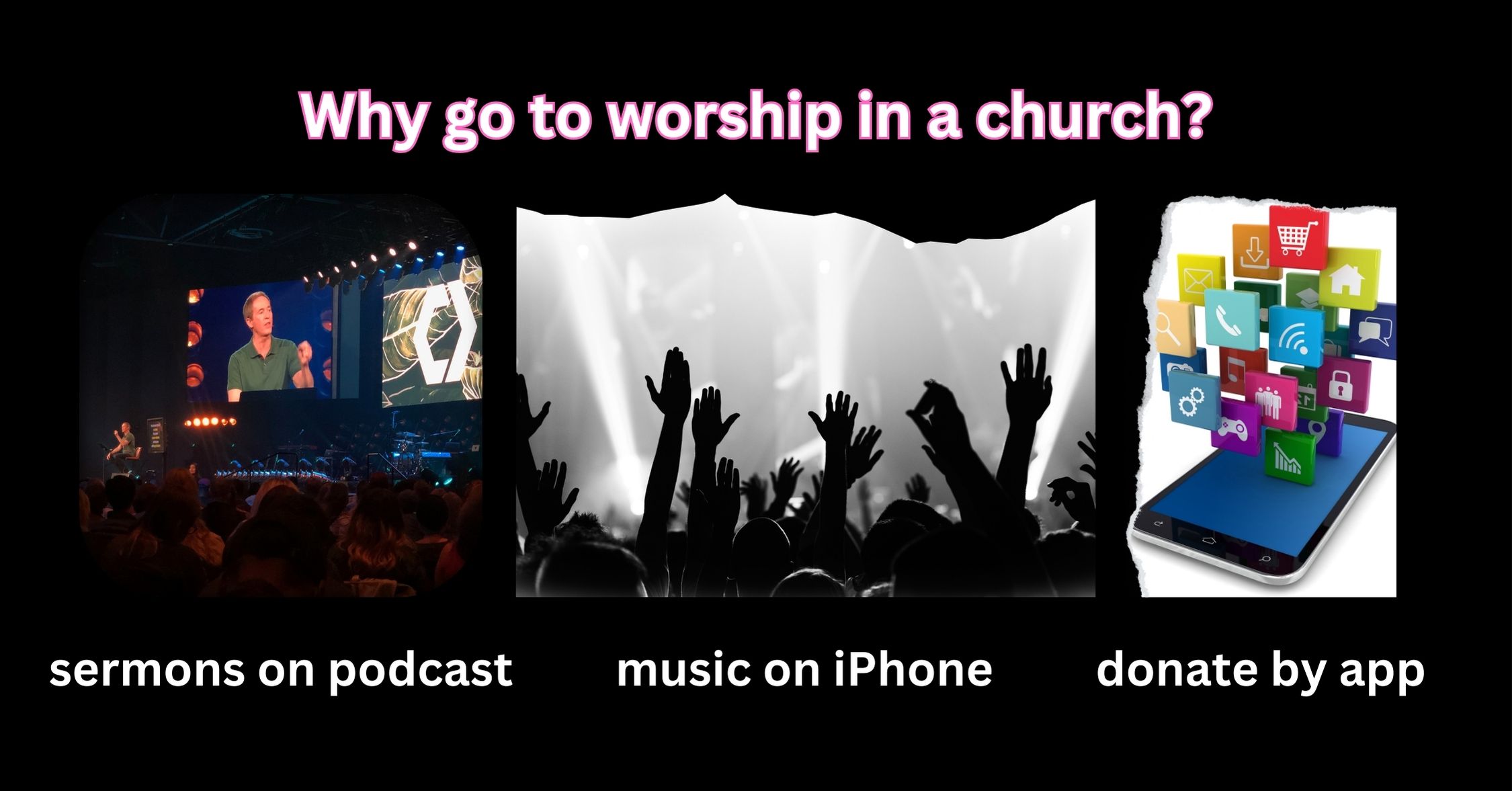
But we are NEEDED in the church as much as we need to be there.
When we took our membership vows, we promised to give our prayers, our presence, our gifts, our service, and our witness to God and to this church. And when we say presence, it means presence in the body of Christ. Presence means participating in this community of faith. Because even though we could sing praises to God in our showers; even though we could listen to sermons in our car; and even though we can give our offerings by mail or even on our phones, worship is more than that. Worship is more than the sum of its parts. It means fully and whole-heartedly giving of yourself to this time together. Of being fully present in worship, of being aware of those around you and what is happening. Presence means more than simply attendance. It means more than sitting in a chair or giving your offering to God. It means really being present for one another. It means sharing in fellowship and community because our Lord Jesus Christ told us that where two or more gather in his name he will be there. It means engagement in the community. Because worship is many things, and it is not just about us. Worship is many things, it is not just about us. It never has been. It’s about the body of Christ. And at different times and in different ways we contribute to the faith development of those around us, whether we are conscious of it or not.
We often dub the success or failure of a worship experience by what we get out of it.
But not every sermon was written for you. Not every song was played for you. Not every prayer was said just for you. Some weeks you’ll get more out of the message than other weeks. Some Sundays you’ll be profoundly moved by the Word of God or by a song we’ve sung. But even in those weeks when you didn’t connect to the sermon or the music, YOU may still have an important role to play. Maybe you’ll notice that person in the pew who needs a loving hand. Maybe you’ll notice that first time visitor who is feeling awkward and alone. Maybe you’ll be sitting next to someone who is having doubts about God. Maybe you’ll be the person they need.
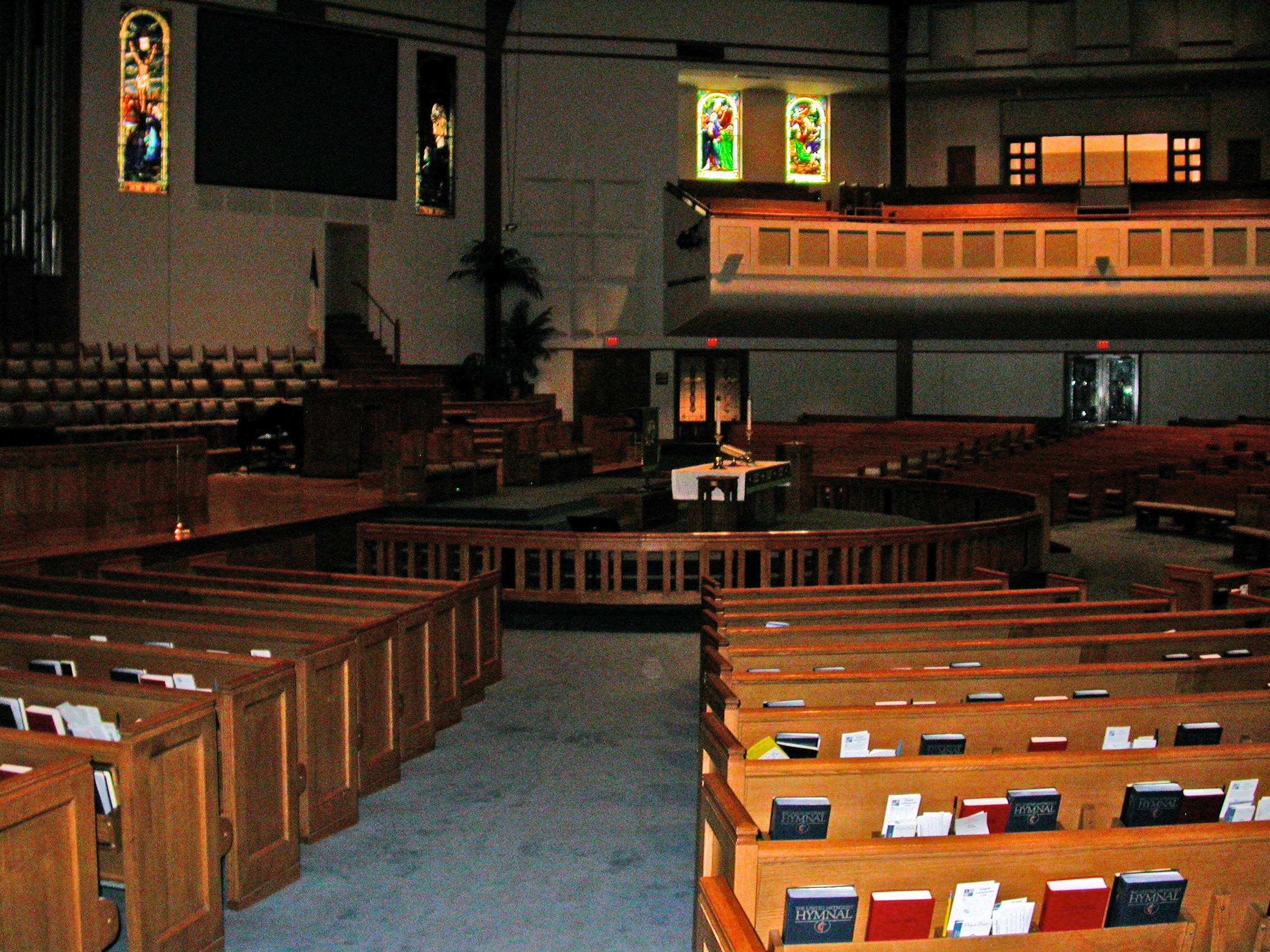
That’s what happened to me when I was serving at Roswell UMC.
It was a rare occasion when I wasn’t either involved in worship or teaching a Sunday School class or something, but on this one particular Sunday, I wasn’t doing any of those things. I planned to simply show up, experience, and be a part of worship. Now, on those rare occasions, I usually sit up front or near the front, but because I had been talking to someone outside, I was a bit late and decided to sit in the next to last row. There was only me and one other woman in the pew and she was sitting pretty far away from me. I noticed she had a diaper bag, so I guessed that her little one was in the nursery and sure enough, she was. When it was time for the greeting, I made it a point to walk over to her and say “hello.” She turned to me and said, “Hi, I’m so glad you were sitting here. I’ve been meaning to talk to you.” I couldn’t help but wonder if she meant me specifically or just one of us since we had five full-time elders on staff. But she literally meant me. She had seen me and my family when coming to worship and noticed we were a mixed-race family and she was too. She wanted to ask me privately if this would be a welcome place for her child who was a blend of Asian and Caucasian heritage and she knew I could relate. I was able to set her concerns at ease and not long after she became a member of the church and we had the chance to baptize her child. It always felt to me as if this was one of those moments when God placed me in that place at that time for someone else. To be honest, I couldn’t remember a bit about the sermon or any of the songs we sung, but I have always remembered that woman and her family. Maybe you’re here for the same reason. Maybe you’re here to help someone else. Or maybe someone is here to help you.
We come to church for the promise of a better life.
But that better life starts here and now. It starts with each one of us, here today, offering ourselves to God as a living sacrifice for his will. To allow God to use our presence to serve his Kingdom. And while there are lots of benefits for us to be in worship, perhaps the biggest benefit is the community of Christ that surrounds us and that we are a part of. We made a promise when we joined this church to give of our prayers, presence, gifts, service and witness. Fulfill that promise today and everyday for the Lord and Savior who gave his life for you.
[1] Please note that while these benefits are AWESOME, your mileage may vary! You can read the details for yourself at the following websites: Vanderbilt University, JAMA Psychiatry, Peter Haas,
[2] David T. Olson, The American Church in Crisis, (Grand Rapids: Zondervan, 2008), 29-30.
[3] The American Church Research Project.
 Craig's Corner