
A Twist on American History

How well do you know American history?
I don’t mean the obscure stuff you might need to win Trivial Pursuit or if you can name all the presidents. How well do you know basic American history. In honor of Independence Day, I thought it might be fun to have a little pop quiz. Let’s start off with an easy one.
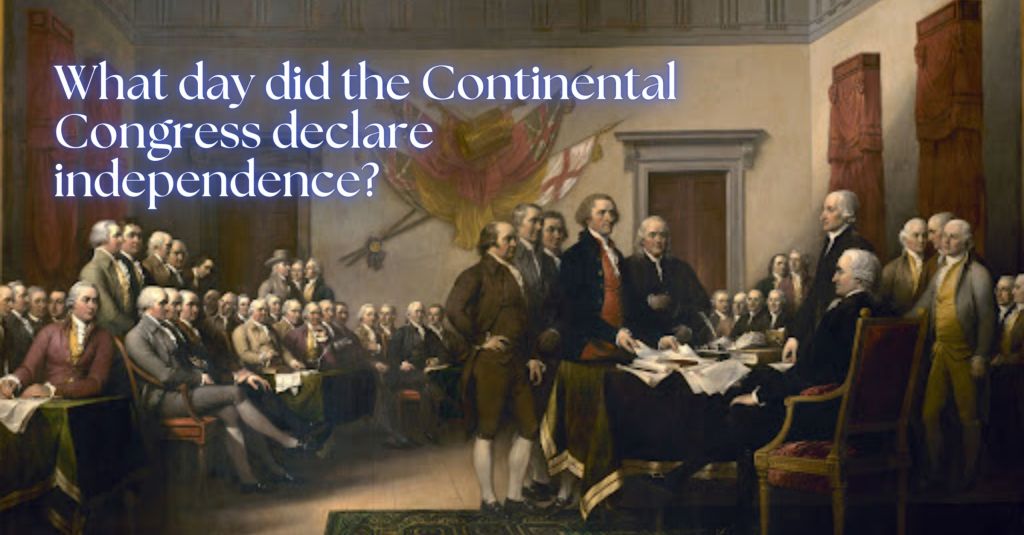
On what day did the Continental Congress declare independence?
Yes, it was July 2nd. “What?” you might be asking yourself. “Everybody knows it’s July 4th!” Although the Declaration of Independence was dated July 4th, the Continental Congress actually voted for independence two days earlier. It just took them a while to write it up and after that it took over a month to get it signed![1]


Who designed the first American flag?
Most of us grew up believing Betsy Ross did it. According to legend, General George Washington came to Betsy’s house and asked her to make a flag, but there is no evidence to show it ever happened. In fact, another person claimed to have designed the flag and even asked Congress for compensation for it – Francis Hopkinson. But he was told by Congress that the design of the flag had been a collaborative effort.[2]
What did Paul Revere say to warn the colonists about the British?
Well, he might have said many things, but he never said, “The British are coming!” It’s a popular misconception because of Henry Wadsworth Longfellow’s famous poem, but since many of the colonists still regarded themselves as British, that phrase would have been confusing. He most likely quietly warned his fellow rebels that the “Regulars” were on the move.[3]
Now don’t be too hard on yourself if you didn’t get those right. Had I not been scouring the Internet for juicy myths of American history, I wouldn’t have got them right either. But it just goes to show you, there are many things we believe to be true that simply are not. And things we believe to be false sometimes are actually true. And then there are things we believe to be true, that at one time WERE true, and are now no longer true. Like whether Pluto is a planet. To my dying day I will believe Pluto is a planet.

People often wonder how history will remember them.
They worry about the legacy they will leave behind. But if these questions of historical “fact” prove something, it’s that we can’t trust history to remember ANYTHING accurately. During your lifetime, you’ve probably believed many things you’ve found to no longer be true. And things we believe are super important now, will be completely unimportant within our lifetime. Jesus talked about the impermanence of life with the disciples and told them to focus on what’s truly important. We find that talk in the passage we’re going to read this morning from Matthew 24:1-2. This small passage comes right after Jesus had been grilled by the Pharisees and the Sadducees. Both groups are quizzing Jesus in the hopes of getting him to make a mistake so they can denounce him as a fraud, but he deftly manages to avoid their verbal attacks and ends up ripping them apart for their own hypocrisy. After that, he walks away with the disciples and that’s where we pick up our story this morning.
Jesus left the temple and was walking away when his disciples came up to him to call his attention to its buildings. 2 “Do you see all these things?” he asked. “Truly I tell you, not one stone here will be left on another; every one will be thrown down.”
Of all the things he could have pointed to, Jesus points to the temple.
Of all of the buildings around them, he points to the house of God and says to his disciples even this one day will be thrown down. Even the house of God will stand in ruins. Jesus wants to make the point that the things of this world will not last. Nothing is permanent except for God and his Kingdom. When I was young and would hear the phrase “the Kingdom of God” I would picture in my mind a huge, shining castle with a sprawling city around it. A literal kingdom. But the Kingdom of God isn’t a place. It lies within God’s people. The Kingdom of God isn’t a place, it lies within God’s people. In the rest of the passage, Jesus encourages them to live faithfully because no one knows when their time will come.

Jesus brings up an important image to us – the impermanence of this life.
We so often focus on things that ultimately aren’t important instead of the things that are – loving one another. Love is the only thing that will truly outlast us. Your name will one day be forgotten or if it is remembered, it will be for something you may or may not have done like Paul Revere or Betsy Ross. What will be remembered will only be a shadow of your true self, a representation of an idea instead of who you really are. For most of us, though, we will as the Bible tells us return to the dust from which we were made (Genesis 3). But the love we share with each other is the one gift that will affect a person’s life long after we are gone. As one pastor recounted, “Strangely enough, it usually catches us by surprise to find that the things others considered most about us is not how successful we might have been, but rather, how much we loved them. But it is in loving others that we best show how we love God.”[4] When our loved ones go ahead of us to God, we don’t think about how much money they made or how powerful they were or how famous they are. We don’t ask how many “employee of the month” awards they earned or how their company earned better fourth quarter profits because of their effort. We are remembered for the love we share and for who we are. That is the legacy we will be remembered for, long after our names are forgotten, it is how we loved and how we shaped the lives around us that will make the biggest difference. A material legacy will never last, but a legacy of love can last forever. A material legacy will never last, but a legacy of love can last forever.
This is something the early church understood well.
And it is one of the primary ways the church was built. Not through buildings with stained glass windows or fancy instruments but with love. A pastor once shared this story with his congregation, “Historians tell us that two plagues swept through the Roman Empire while Christians were being horribly persecuted. The Antonine Plague was the first, a little more than a century past the life of Jesus. The Plague of Cyprian came along a century after that. One document says that in Rome, where a million people lived, as many as 5,000 died per day. The bodies rotted on the streets, adding to the environment of disease and filth. The epidemic filled the people with terror. It was so devastating that when the first symptoms appeared some villages simply emptied out, leaving the sick behind. There was no cure. There was no hope. So they left sick family members in their beds and ran for their lives. But Christians didn’t run. They stayed and brought water to the sick. They fed them. They changed their bandages. They spoke kindly to them. They loved and encouraged them. And they got sick in the process. There’s no telling how many people were saved because Christians served, and there’s no telling how many Christians lost their lives because they stayed behind. But the world is different today because in the middle of devastating despair – we might call it overwhelming darkness – those who followed Christ saw their opportunity to shine.”[5] No one remembers these Christians’ names. No one remembers what they did for a living. No one remembers how much they earned in a year. But it was through these acts of love that more of them are around today.
History is a fickle mistress.
It is often said that history is written by the winners and that is often true. We can’t count on history to record our legacy. We can’t count on it to accurately reflect who we are or even what we’ve done. And ultimately, that’s not important. What is important is how we love others. How we devote ourselves to one another. How we treat one another. Those are the things we will be remembered for. Take time this week to reflect on how we can love the ones in our lives better. How is it we can show kindness to one another? How is it we can be gracious to one another? And let us follow the example of Christ by learning to simply love one another.
[1] http://www.archives.gov/press/press-releases/2005/nr05-83.html
[2] http://historyplaces.wordpress.com/2014/07/03/think-you-know-american-history-you-may-be-wrong/ and http://history.howstuffworks.com/history-vs-myth/betsy-ross-flag2.htm
[3] http://www.history.com/news/12-things-you-may-not-know-about-paul-revere
[4] http://www.lifeway.com/Article/sermon-building-a-legacy-that-lasts-mark-12
[5] http://www.lifeway.com/Article/sermon-building-a-legacy-that-lasts-mark-12
 Craig's Corner