
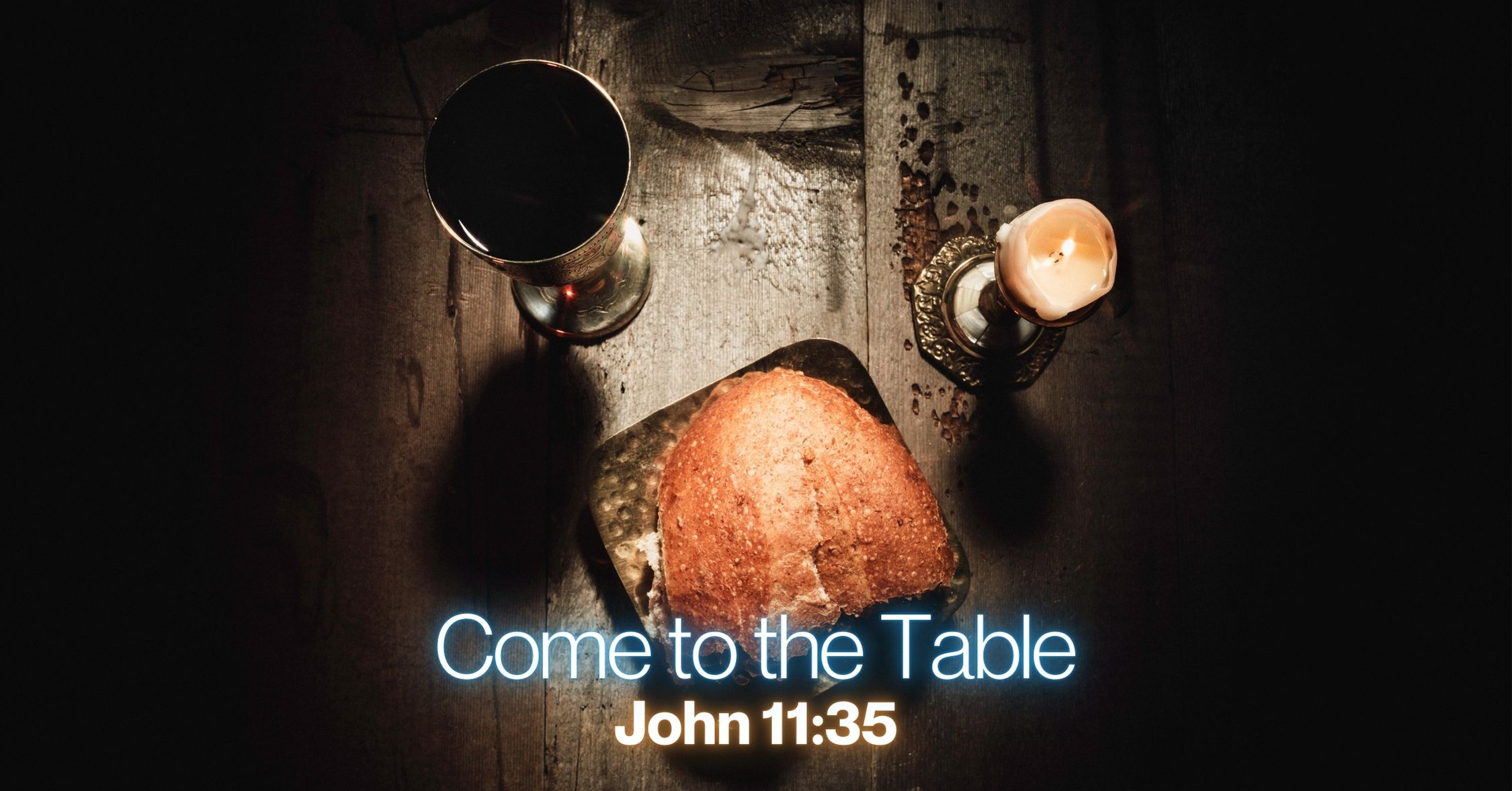
Come to the Table
This story is not new.
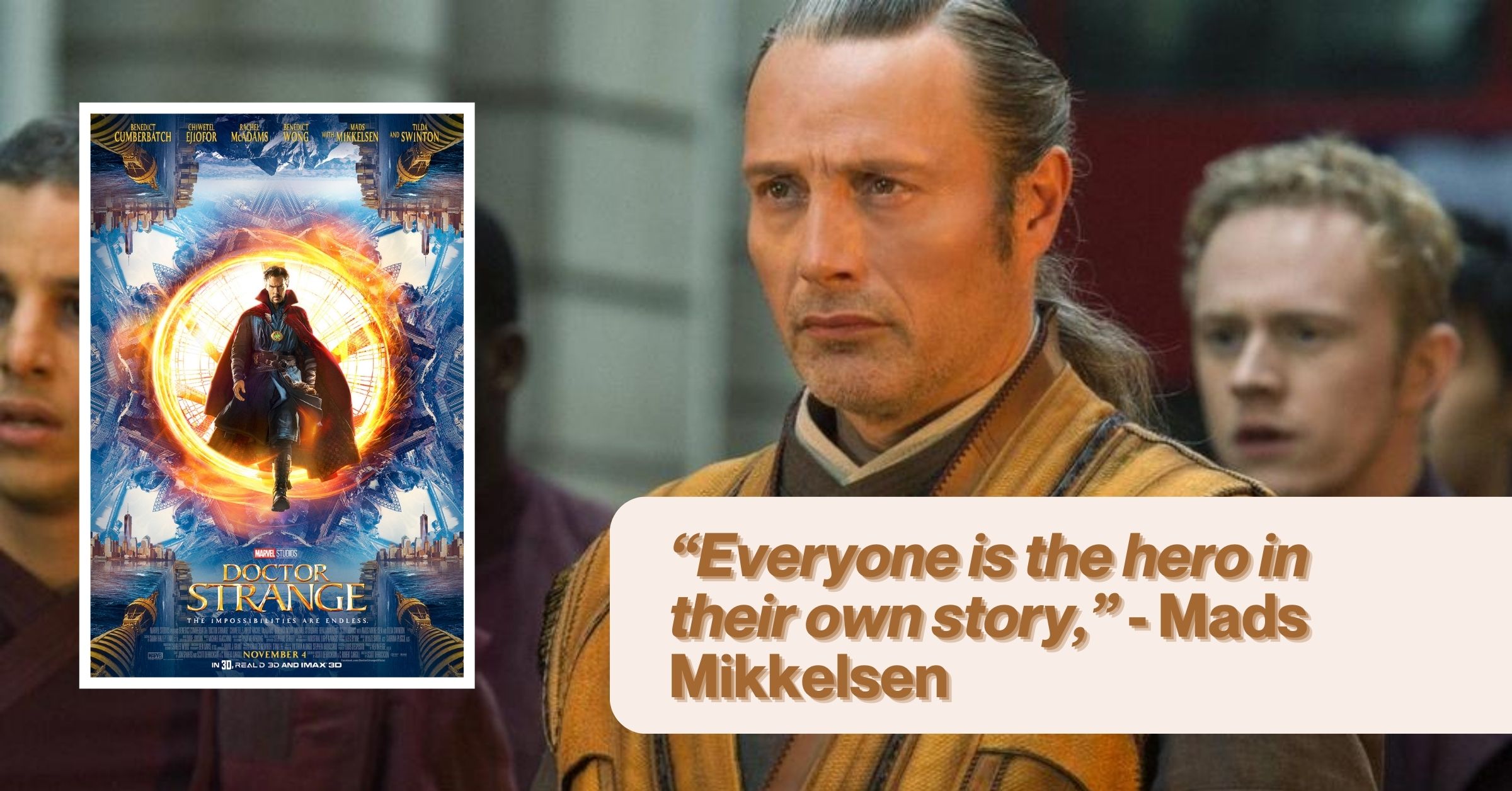
There are two sides. Your side. And their side. Your side is right. Their side is wrong. You wonder to yourself why they believe what they believe. It just doesn’t make any sense. And it’s hard not to see them as monsters. What they stand for will make things worse for everyone. They have such an intractable and yet indefensible position. You can’t understand how any clear-headed person could see the world as they do. Obviously, they are not clear-headed. You feel you have to do whatever is necessary to make things right. Of course, I’m talking about Kaecilius from the movie Doctor Strange. By every stretch of the imagination, Kaecilius is a villain except in his own eyes. Mads Mikkelsen, who plays the character in the film, said something in an interview that stuck with me. Kaecilius doesn’t see it that way. At the presser for the film’s opening he said, “I always play all characters as a hero. I mean, I think we have to look at it that way. The key to any good villain… is that they have a point. It’s not completely crazy what they’re saying. There is a point. Even in Doctor Strange’s eyes he does believe I have a point. Even though it’s for a fraction (of a second), if that.”[1] Everyone is the hero in their own story.
This perspective is important in the waning days of this long presidential season.
Everyone is the hero in their own story. In just a little over two months, it will all be over. All the lying, name calling, accusations, and bitter words will finally come to an end. At least we hope so. After the 2020 election, that wasn’t the case. The hurt, the lies, the attacks that continued after the election culminated on January 6th and we have been living with the consequences ever since. As children of God, we can always hope and pray this time will be different. But even if it is, whichever side “wins” will feel a sense of relief. A sense of victory. A sense that God was on their side. Whoever loses will feel depressed, defeated, and maybe even angry. They might feel Satan himself was working hard against them. And that God’s will was not done. That’s the problem. Both sides think that God is on their side when we know deep down God is on the side of humanity. He doesn’t care who wins. He cares about what we do with the responsibility we’ve been given and how we treat those on the other side. And that’s how we need to look at it. Not as winners and losers but as teammates who disagree. But at the end of the day we all want (or at least we should want) the same thing. To make the world a better place.
How we treat each other and how we come together will say a lot about our faith.
The key is to ask ourselves, “What would Jesus do?” I know it sounds trite, but we can’t go wrong when we model our life on Jesus Christ. If you have a Bible or a Bible app on your phone, please find John 11:35. John 11:35. This is literally the shortest verse in the Bible. If you know much about the history of the Bible itself, you know that there isn’t a uniform way the chapters and verses are assigned. Some verses are extremely long and some are extremely short, but this one is the shortest of all (although according to Wikipedia it is not the shortest when read in the original Greek).[2] I would love to know why whoever assigned the verses to John’s Gospel chose to include only these two words in this verse. Maybe it was because of the impact of this one moment in the life of Christ. Maybe because no more needed to be said. In just two words we understand so much about Jesus. His humanity, his love, and his empathy for all of us. Jesus wept.

But the whole story is much more than these two words.
Earlier, we find out Jesus knows Lazarus is sick but does nothing about it for TWO days. Because we know Jesus and what he can do, we read this and might be a little shocked. After all, he was able to heal a centurion’s son without ever seeing him or visiting him (John 4). If he can do that for a complete stranger, it might seem weird Jesus wouldn’t do the same for this man he knows. But the disciples are relieved. The last time Jesus went to Judea he was nearly stoned to death, and they don’t want a repeat performance. In their minds they probably think Jesus is being prudent or cautious. But what he actually did was wait for an opportunity. He knew he could help Lazarus at any time, but he also needed to help his followers understand who he was – the Son of God. As he approaches the city, Lazarus’ sister Martha hears Jesus is coming. He goes to him and says, “If you had been here, he would not have died.” Jesus hears the pain in her voice, feels her sadness. He comforts her and Martha dashes off to get her sister Mary. When Mary finds Jesus, she falls to her feet crying and says the same thing Martha did, “If you had been here he would not have died.” The grief is palpable to Jesus. He knows this must be the way, but he sees the pain Mary and Martha feel and can’t help but be moved by their sorrow. And he weeps. Jesus doesn’t weep for Lazarus as his family and friends do. He weeps because he empathizes with them. Because he knows the hurt they feel inside. And even if he knows the story will end well, he puts himself in their shoes and know their hurt is real. And then he does the miraculous and brings Lazarus back from the dead. It’s that empathy we seem to be missing in our world today – that ability to put ourselves in someone else’s shoes and understand what they are feeling. We don’t have to agree with them. We don’t have to believe what they believe. But we can be empathic if we choose to be. It’s just that most of the time we don’t choose to be.
Empathy took a nose dive entering the 21st century..
Over a period of 30 years, from 1979 to 2009, researchers found the average empathy score had dropped by 75%.[3] That means 75% of people showed less empathy than they did 30 years before. 75%! In another study of college students comparing empathy before and after the year 2000, it showed a 40% drop after the year 2000. What was most stunning, it wasn’t even hard to fake empathy on the study. The questions were so obvious that anyone who just wanted to SEEM like a nicer person could have easily scored high without even trying.[4] On the survey[5] you’re asked how well a statement describes you, and they give you statements like “I often have tender, concerned feelings for people less fortunate than me” or “When I see someone being taken advantage of, I feel kind of protective towards them.” An empathic person would of course highly identify with those statements. They are SO blatant that it doesn’t even seem to be worth asking and yet 40% of students could not even muster fake empathy. That’s how bad the situation had become. Not only were students less empathic, they couldn’t even pretend to be anymore.

The good news is empathy can be learned.
As evidenced by a recent study after the pandemic by the same team. They found young people today show about the same empathy as did their 1970’s counterparts![6] Our own capacity for empathy can grow too simply by trying.[7] It’s not just an innate trait. It’s something that can be learned with just a little bit of effort. I read an article in TIME magazine that offered four simple ways to help increase your empathy.[8] 1. Stop and listen – take time to really listen to other people. Learn to reflect back people’s feelings. It works. Even when you simply parrot what other people are saying, they often feel heard. And that is something powerful. 2. Ask your barista (or Subway sandwich person or Walmart store clerk) how their life is going. Just engaging other people connects you in different ways and helps you to see them not as stereotypes but as people. Take time to say “hi” to people you don’t know. 3. Read a book. This opens your mind to different thoughts and ideas. Especially when you read fiction books! And 4. Look into people’s eyes. The eyes say a lot about a person and being willing to look in another person’s eyes, creates a connection and can help you to better understand them. It might also feel awkward, but that’s okay.
Everyone is the hero of their own story.
And I’m not saying you need to believe they are right, but simply that if we understand why people think the way they do, we can do something to make the world a better place. Studies have shown that empathic people make better doctors,[9] better leaders,[10] and I’m guessing people you would be more likely to hang out with. I’m also thinking empathic people might be better equipped to lead others to Christ who are very different from themselves. Because the key to helping people find Jesus is to know where they are on the path and we can’t do that if we only see life from our own point of view. We have to get better at seeing others.
One of my favorite episodes of The West Wing is about Ainsley Hayes.
Ainsley is a Republican lawyer in the Democratic Bartlet White House, and Ainsley is very Republican. But President Bartlet decides he wants her in his administration. Despite the arguments from the rest of the staff, he decides he needs to hear the opinions of people who think differently than him and so he invites her to join. Everyone is upset about it, even Ainsley, because this was not how she expected to work for the White House. But she gives it a chance. So when she meets some friends at a restaurant for dinner and they ask her, “Did you meet anyone there who wasn’t worthless?” She tells them, “Don’t say that. Say they’re smug and superior, say their approach to public policy makes you want to tear your hair out. Say they like high taxes and spending your money. Say they want to take your guns and open your borders, but don’t call them worthless. At least don’t do it in front of me. The people that I have met have been extraordinarily qualified, their intent is good, their commitment is true, they are righteous, and they are patriots. And I’m their lawyer.” Often when we dig beneath the surface we realize we’re not truly all that different. We may have our differences ad sometimes those divides are deep, but we can all come to the table together and bring healing to our families, our communities, and our country. We just need to learn to stand in one another’s shoes. In the name of the Father and of the Son and of the Holy Spirit. Amen.
[1] Taken directly from the presser I attended while doing my Disney blog.
[2] https://en.wikipedia.org/wiki/Jesus_wept#cite_note-2
[3] https://www.scientificamerican.com/article/what-me-care/
[4] https://www.psychologytoday.com/blog/born-love/201005/shocker-empathy-dropped-40-in-college-students-2000
[5] You can take the survey for yourself here: https://umichisr.qualtrics.com/jfe/form/SV_bCvraMmZBCcov52?SVID=
[6] https://www.vox.com/future-perfect/24137520/americans-empathy-new-compassion-research
[7] http://www.nytimes.com/2015/07/12/opinion/sunday/empathy-is-actually-a-choice.html?_r=0
[8] http://time.com/3562863/5-ways-to-be-more-empathetic/ They actually offered five ways, but one was for the classroom and for young children only.
[9] http://healthaffairs.org/blog/2014/02/25/empathy-the-first-step-to-improving-health-outcomes/
[10] http://www.huffingtonpost.com/douglas-labier/why-humble-empathic-busin_b_6042196.html
 Craig's Corner