
Tradition!

My first church as pastor was a three-point charge in Washington, GA.
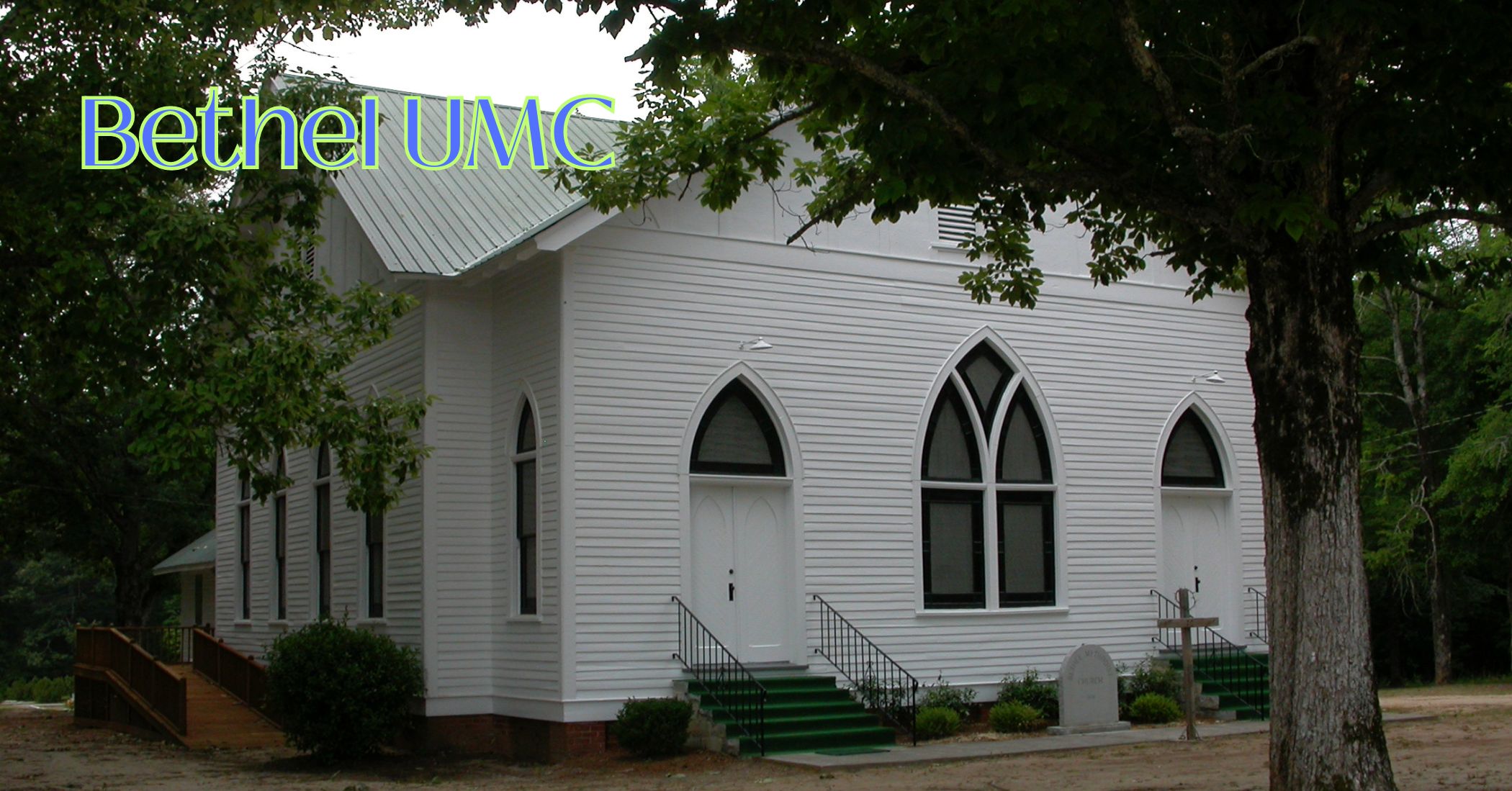
That meant I served three different churches in the area – Mt. Zion UMC, Bethel UMC, and Smyrna UMC. All of them were historic churches with a very long and rich history. Mt. Zion actually hosted Bishop Francis Asbury – one of the first and most famous bishops in Methodist history. I would preach twice each week, rotating between them. Bethel had a unique building. It had two entrances spread far apart. Everyone entered on the left and the one on the right was largely left unused. One day I asked about it, curious about the distance between the doors. Why not build it with one central door? And that’s when I heard something new I didn’t know before. Bethel at one time had a partition down the center of the sanctuary. The men would sit on one side and the women on the other. They had separate doors to keep the genders apart from the time they entered the church until they left. They told me you could always tell who the newlyweds were because they would sit on either side of the wall and touch hands over the partition. But the practice of separating the congregation by gender wasn’t something unusual. In fact, it was fairly common.[1] Largely since the 20th century that practice has become outdated in most, but not all, places. Some claim the practice is to allow people to better focus on God instead of each other. Some claim it’s done to protect widows and widowers. But in all honesty, it likely has much more to do with gender politics than anything else. Wanting to keep the women in their place. The Coptic Church of the Southern United States even said as much. It was an “appreciation of the natural order” according to their website.[2] That kind of thing always gets me upset. That’s why most churches today don’t practice this ages old tradition and why it faded away at about the time women received the right to vote. Some traditions are meant to be left behind in time.
A sentiment Jesus would agree with.
At least if we take to heart what we read about him in the Bible. In Matthew’s retelling of the story, our reading today happens soon after the feeding of the 5000 and when the disciples see Jesus walking on water. In his gospel reading, it’s all part of one continuous story and so after Jesus catches Peter from falling and gets in the boat with the rest, they finish crossing over to the other side and he begins healing the sick. That’s when the Pharisees decide to make their move.
Then some Pharisees and teachers of the law came to Jesus from Jerusalem and asked, 2 “Why do your disciples break the tradition of the elders? They don’t wash their hands before they eat!”
3 Jesus replied, “And why do you break the command of God for the sake of your tradition? 4 For God said, ‘Honor your father and mother’ and ‘Anyone who curses their father or mother is to be put to death.’ 5 But you say that if anyone declares that what might have been used to help their father or mother is ‘devoted to God,’ 6 they are not to ‘honor their father or mother’ with it. Thus you nullify the word of God for the sake of your tradition. 7 You hypocrites! Isaiah was right when he prophesied about you:
8 “‘These people honor me with their lips,
but their hearts are far from me.
9 They worship me in vain;
their teachings are merely human rules.’” – Matthew 15:1-9
Their traditions had basically become law.
As I was researching our message today, I came across this explanation. “Ritual washing before meals, which likely included utensils as well as hands, was a prominent example of these traditions.” By that they mean traditions that intended to follow the letter of the law and not the intent of it. “There was nothing wrong with doing it (washing up); however, those details were never part of God’s commands to His people. They were man-made traditions about the law, which were treated as if they carried the weight of the law.”[3] Jesus takes them to task on this and says “…you nullify the word of God for the sake of your tradition. You hypocrites!” The Pharisees and teachers of the law had become so fixated on the letter of the law that they forgot the spirit of the law. That’s what leads Jesus to repeat Isaiah’s prophecy: “These people honor me with their lips, but their hearts are far from me. They worship me in vain; their teachings are merely human rules (Isaiah 29:13).”
It’s the difference between tradition and traditionalism.
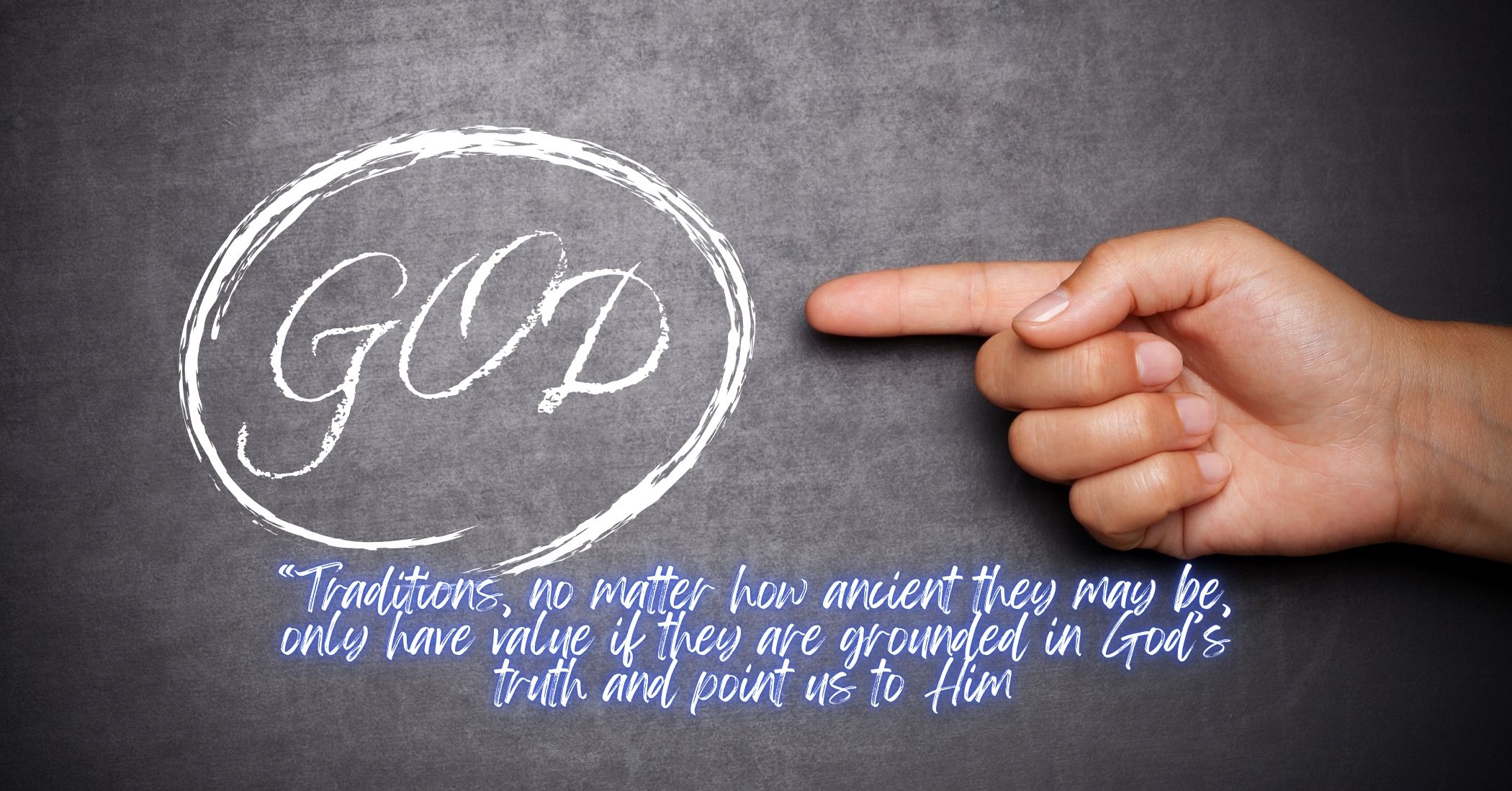
Tradition keeps us grounded in our history and in our past. It can help guide us and keep us focused, and we often take comfort in our traditions. But traditionalism takes traditions one step further. It lifts up tradition to be on equal level with Scripture. But we know that isn’t true. And it is one of the dangers we face when we cling too tightly to them. As one author wrote, “Traditions, no matter how ancient they may be, only have value if they are grounded in God’s truth and point us to Him.”[4] Sometimes we forget that. All we do should point our lives toward Christ. In our earlier reading, we found Jesus healing on the Sabbath. Standing on the outside, it’s easy for us to see Jesus did the right thing (not that Jesus needs our affirmation). But the church leaders and teachers couldn’t see it. They were blinded by their power. They were blinded by their fear. And they were blinded by their love of tradition. “There are six days for work. So come and be healed on those days, not on the Sabbath.” The woman in this story was suffering for eighteen years and an actual miracle was happening before them and all they could focus on was the day of the week? Jesus calls them out, too. “You hypocrites! Doesn’t each of you on the Sabbath untie your ox or donkey from the stall and lead it out to give it water? Then should not this woman, a daughter of Abraham, whom Satan has kept bound for eighteen long years, be set free on the Sabbath day from what bound her? (Luke 13:15-16)”
That’s the funny thing. We can’t always see when we are stuck in the mud.
It might be obvious to everyone around us, but we can’t see it for ourselves. Have you ever lost something and spent all day looking for it and then your spouse comes along and finds it in two seconds? Or have you ever been stuck on a problem at work and can’t figure it out and you step away for a bit and suddenly the answer become clear? That’s the same thing that happens when we hold too tight to tradition. We become so focused on the thing that we forget why we were doing it in the first place. We become rigid as if there is only one way to do something and it sometimes takes someone else to show us the way. Or sometimes we have to take a step back and let go for a moment to see it more clearly.
A while ago I told you the seven last words of a church were, “We’ve never done it that way before.”
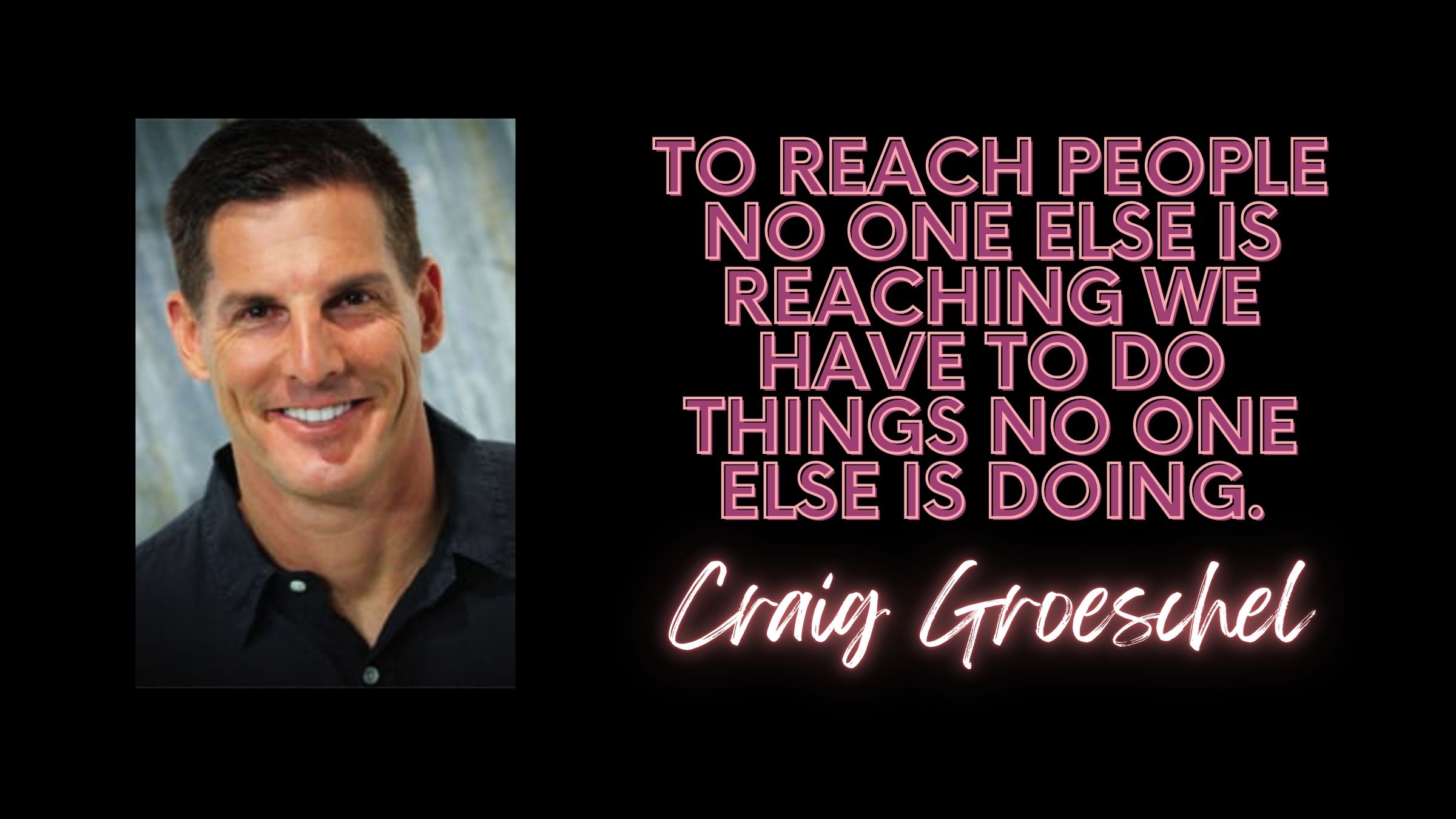
When you hear those words it’s a clear sign we’re holding on too tight to the past and to our traditions. It might also be a true statement. But God challenges us to keep our hearts and minds open to the movement of the spirit and sometimes the spirit wants to take us in new and different ways. The church has been in decline for decades now and we’ve done little to do things differently. I’m often haunted by the words of Craig Groeschel who leads Life.Church. I went to a conference where he was speaking and it felt like he was speaking to me (and not just because we both share the name “Craig”). He said, “To reach people no one else is reaching, we have to do things no one else is doing.” Traditions are great. Like we shared before, they often root us to the foundations of our past, they create community over shared experiences, and they bring us together as a community. It’s only when we elevate them and place them before God and the Holy Spirit that they evolve into something more. Church, if it’s going to be effective in reaching a new generation, likely won’t look the same as it does today. And that’s okay. Let us challenge ourselves to be open to where the Spirit is leading, even if sometimes it scares us a little.
[1] https://oxfordre.com/religion/display/10.1093/acrefore/9780199340378.001.0001/acrefore-9780199340378-e-6
[2] https://www.suscopts.org/q&a/index.php?qid=54&catid=76%C2%A0
[3] If you’re interested, you can read more about this on BibleRef.com: https://www.bibleref.com/Matthew/15/Matthew-15-2.html#:~:text=Pharisees%20and%20scribes%20come%20from,tradition%20above%20God’s%20actual%20commands!
[4] https://www.gotquestions.org/traditionalism.html
 Craig's Corner