
Question Everything!
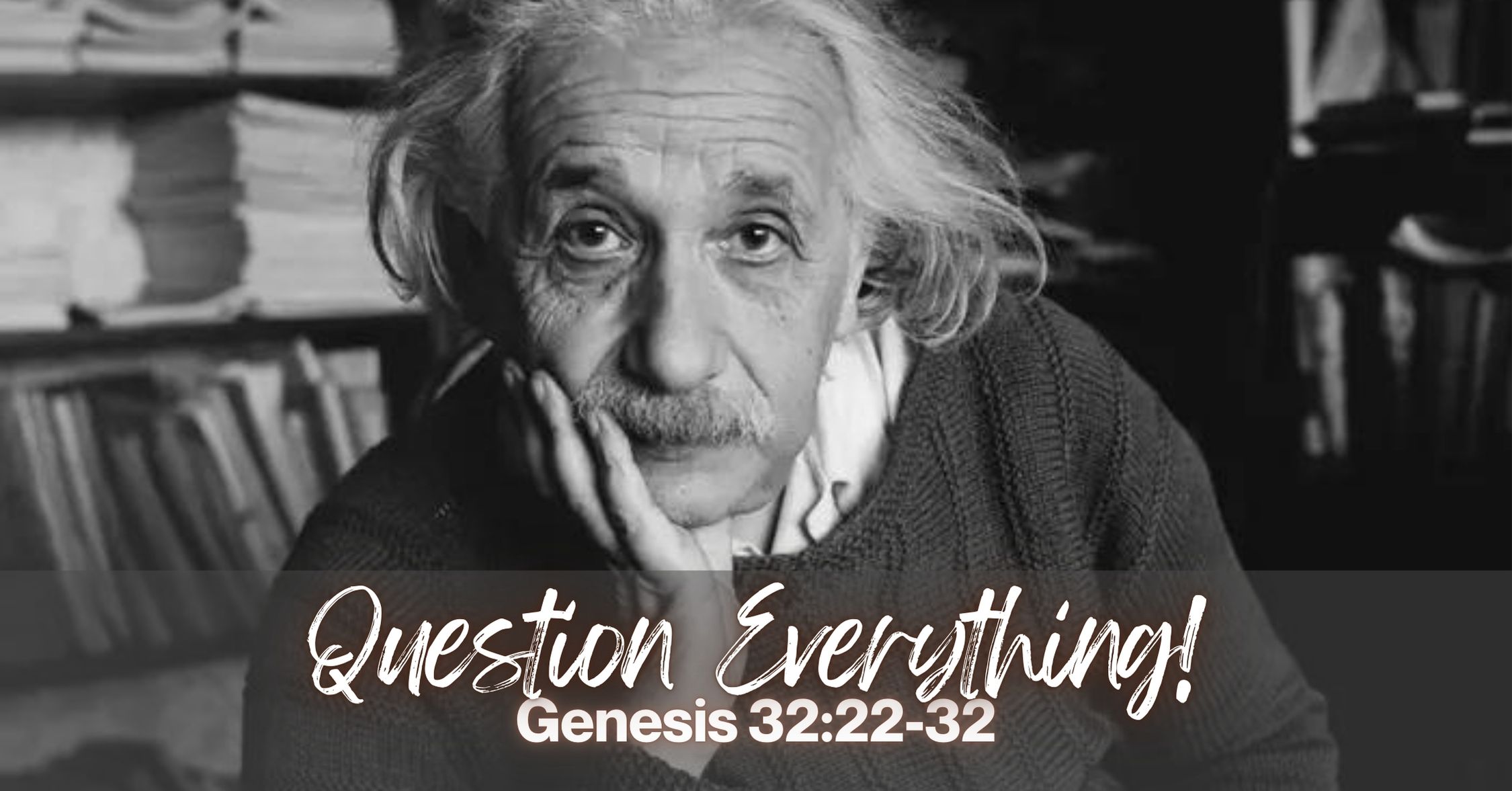
“Question everything!”
This simple quote has often been attributed to Albert Einstein, but no evidence proves he actually said it. Yet, the rumor persists and is often taken as fact. While researching our message today, I found numerous articles and images where people either said or showed those words as coming from him without any footnote or citation to show where they got that information.[1] It’s amazing how blindly we believe things that are not true. Here are a few other famous quotes we think we know. How many of these did you believe? “Let them eat cake!” is attributed to Marie Antoinette as Queen of France which makes her sound callous and unintelligent, but it’s actually a paraphrase from Jean-Jacques Rousseau’s autobiography where he recalls “a great princess” saying “Let them eat brioches.” Somehow people put two and two together and got sixteen and this quote stuck to her legacy.[2] “There’s a sucker born every minute” is another misattributed quote, this time to P.T. Barnum. Although most people think he said this, the truth is there is no evidence of it. In fact, the website The Quote Investigator traces the likely origins of this to a clothing store who linked the phrase to Barnum.[3] And of course my favorite – Captain Kirk never once said in the original run of Star Trek, “Beam me up, Scotty.”[4] The famous phrase for which he is known is something he never actually said. Weird, right?
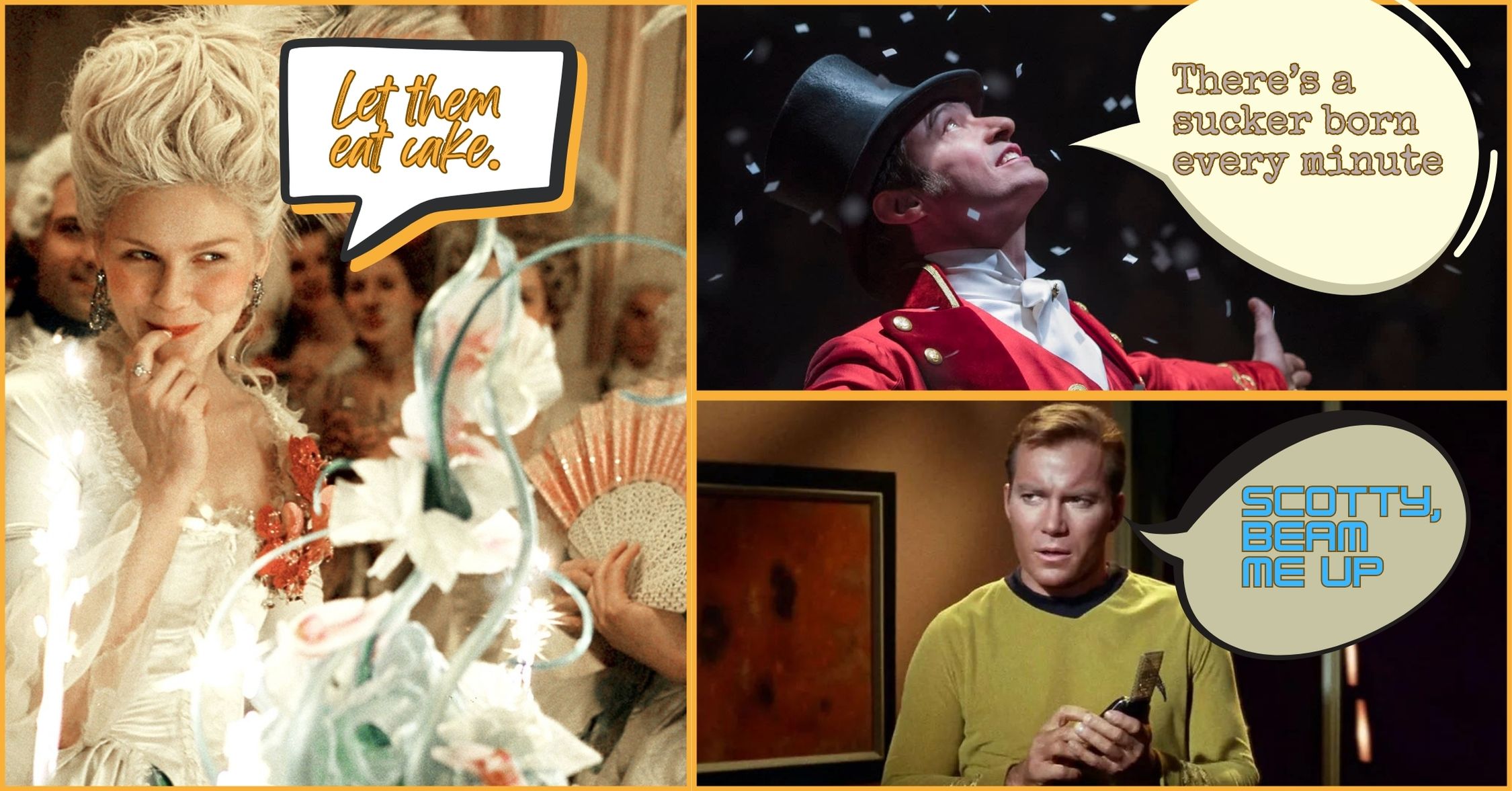
We often accept things as true without any actual evidence.
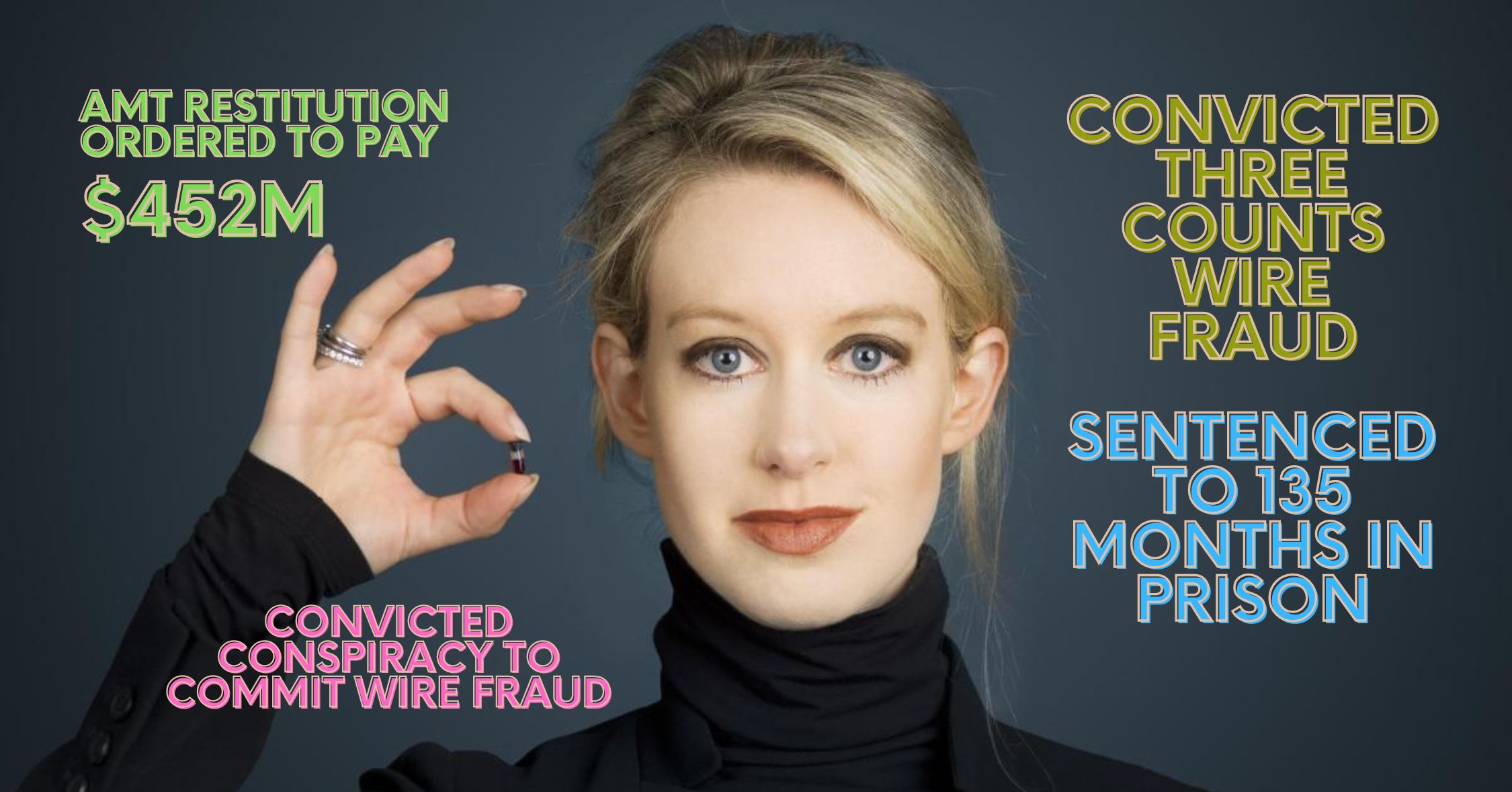
Part of that is because there is no way for us to know everything. We end up relying on others to provide us with information to make decisions. It’s what is called the illusion of explanatory depth – we think we know much more about a topic than we actually do. In her article on the subject, Rebecca Kates wrote, “We rely so regularly on other people’s expertise to the extent that we often take other people’s knowledge to be our own. It is often only when we are asked to explain a topic in great detail that we realize how little we understand something.”[5] In 2002 there was a study by Rozenblit and Keil where they asked people how well they thought they understood everyday objects like a toilet r a zipper and then afterward asked them to write a detailed explanation about how it worked. After the study they asked again how well they thought they understood those devices and their confidence dropped.[6] That’s why some of the great hucksters in society have been so successful at pulling the wool over our eyes. They gain our trust, and then exploit that to get what they want. Elizabeth Holmes is probably the most famous recent example of this. She swindled millions of dollars from investors by claiming fraudulently that her company Theranos had successfully devised a new machine that could instantaneously test for 200 to 250 different potential problems in the human body including HIV, diabetes, and cancer.[7] Through a very intentional cover up, she hid the fact that her new device could do virtually none of those things, and she not only got investors to believe in her but medical professionals who relied on the fake results she was peddling to have confidence in her product. There are too many examples of this to name them all here, but I’m guessing you can think of examples in your own life or in society where this has happened over and over again.
The lesson isn’t to stop trusting people.
The lesson is to wrestle with our understanding and question it when we should. In light of what you know, in light of your experience, do the things you believe make sense? The passage we are going to read this morning will take you by surprise. It did to me, and I wrote all of this. But God put this passage in front of me and suddenly I saw it in a different way. We’re going to read this morning from the book of Genesis all the way in the beginning of the Bible – Genesis 32:22-32. This is the passage where Jacob wrestles with God to a standstill. It is also where Jacob is renamed Israel and becomes the father of the Twelve Tribes. As we approach the time of the story, Jacob is worried about meeting his brother Esau. They haven’t seen each other since Jacob tricked his father to give him the family blessing which was a massive theft of Esau’s right as the eldest. He’s worried Esau will be furious with him. Maybe so furious, he could kill him. So, Jacob sends everyone else ahead of him including his wives and kids in an effort to calm Esau down before Jacob arrives. And while they are gone, Jacob wrestles with God. As in all of these stories, it’s left up to your imagination – did it happen or is this a metaphor? I have thought of it as a metaphor, but even still I always looked at it as a testimony to Jacob’s resilience. But now I’m beginning to see it in a different light.
22 That night Jacob got up and took his two wives, his two female servants and his eleven sons and crossed the ford of the Jabbok. 23 After he had sent them across the stream, he sent over all his possessions. 24 So Jacob was left alone, and a man wrestled with him till daybreak. 25 When the man saw that he could not overpower him, he touched the socket of Jacob’s hip so that his hip was wrenched as he wrestled with the man. 26 Then the man said, “Let me go, for it is daybreak.”
But Jacob replied, “I will not let you go unless you bless me.”
27 The man asked him, “What is your name?”
“Jacob,” he answered.
28 Then the man said, “Your name will no longer be Jacob, but Israel, because you have struggled with God and with humans and have overcome.”
29 Jacob said, “Please tell me your name.” But he replied, “Why do you ask my name?” Then he blessed him there. 30 So Jacob called the place Peniel, saying, “It is because I saw God face to face, and yet my life was spared.”
31 The sun rose above him as he passed Peniel, and he was limping because of his hip. 32 Therefore to this day the Israelites do not eat the tendon attached to the socket of the hip, because the socket of Jacob’s hip was touched near the tendon. – Genesis 32:22-32
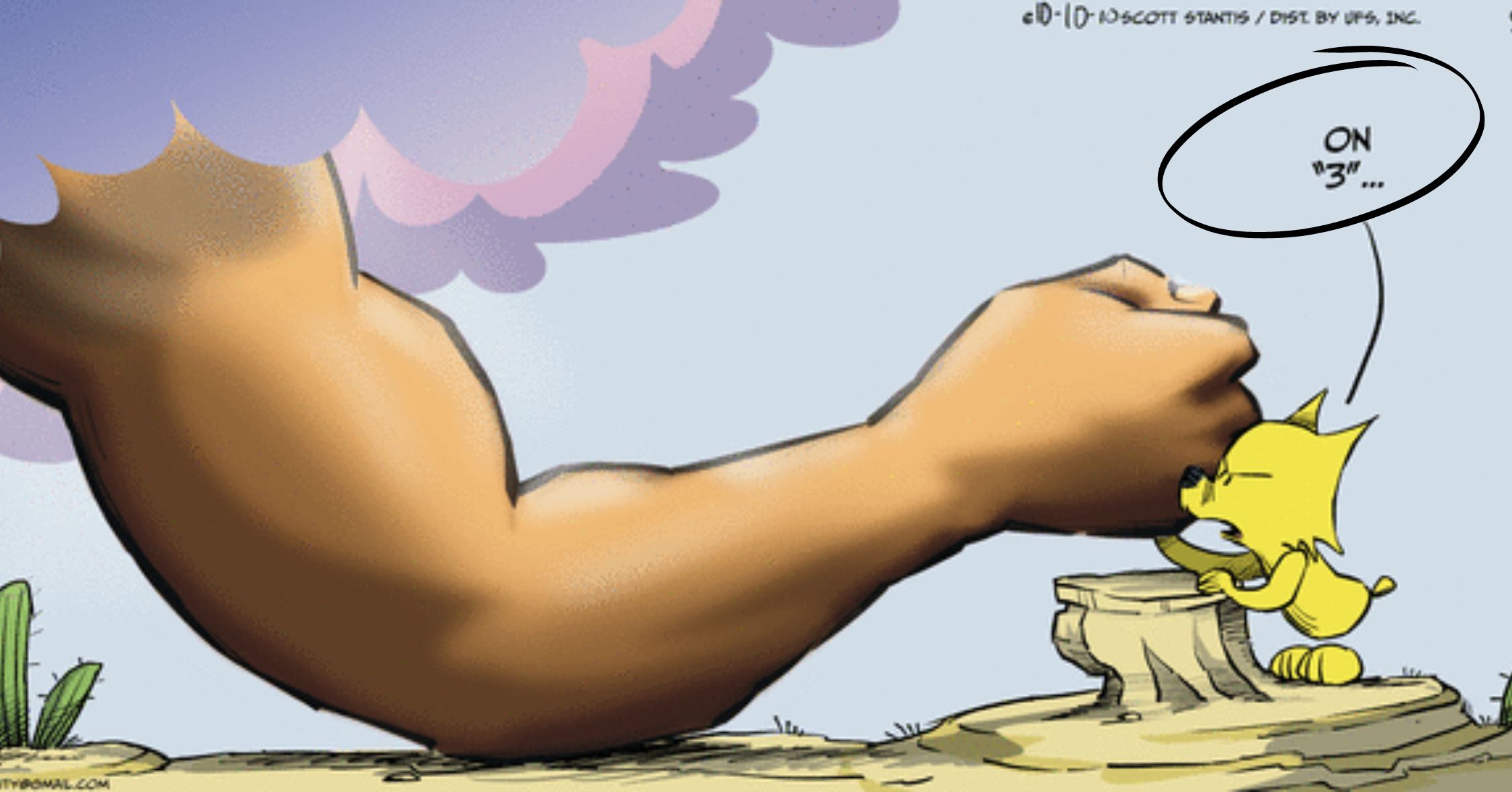
Jacob wrestles with God.
Obviously, if God wanted to, God could have overpowered Jacob in an instant, but I don’t think that’s what this is about. Today we often “wrestle” with things. We wrestle with problems. We wrestle with morality. We wrestle with change. We, even now in the 21st century, still use this term when our minds are grappling with ideas or concepts or choices that are hard to figure out. We “wrestle” with them. I don’t think God is testing Jacob’s resilience. Jacob is instead wrestling with his ideas of God. Who is God in this moment? Is God going to strike Jacob down for stealing the blessing? Is God going to show mercy and forgiveness? What kind of God do I believe in? Jacob wants God’s blessing for his own. He stole it once before, but he hopes he has found forgiveness in God’s eyes as he approaches his brother. That’s why he says to the Lord, “I will not let you go unless you bless me.” I don’t think Jacob was being demanding, but instead pleading, not wanting to let go unless he knew he had God’s support. God wants us to wrestle with the questions of our own lives and our own world today in much the same way. He wants us to hold on tight to God until we can discern where God is leading us.

People often put reason and faith as opposite ends of the spectrum.
One is seen as a product of the mind and the other a product of the heart or the spirit. But the truth is God gave us these minds to use them. Reason is meant to support our faith, not to destroy it. Reason is a tool in our tool belt to help us discern truth from fiction. It is meant to bring us closer to God, not to keep us far away. And it is meant to help us so we might be able to help others know the love of God. As Peter wrote in his first letter recorded in the Bible, “Always be prepared to give an answer to everyone who asks you to give the reason for the hope that you have (1 Peter 3:15).” We are meant to explore our relationship with Christ. We are meant to bring questions to God and seek out the answers. One of the reasons we have a church family is to give us a place to bring those questions so we can find the answers together. At the end of the day, it still comes down to faith. But not blind faith. Faith as an informed choice. God doesn’t want zombies as followers. It’s why he gave us freedom. But God gave you the tools to find him through the use of your mind. At the beginning, I said Einstein didn’t actually say, “Question everything.” Instead he said something much more nuanced and more profound. Here’s what he actually said about questioning, “The important thing is not to stop questioning. Curiosity has its own reason for existing. One cannot help but be in awe when he contemplates the mysteries of eternity, of life, of the marvelous structure of reality. It is enough if one tries merely to comprehend a little of this mystery every day. Never lose a holy curiosity.[8]”
[1] https://www.linkedin.com/pulse/question-everything-marilynn-graves
[2] https://www.britannica.com/story/did-marie-antoinette-really-say-let-them-eat-cake
[3] https://quoteinvestigator.com/2014/04/11/fool-born/ ; There is actually an even more interesting story about this from the Skeptikai website hosted on Medium. But because this was only a “likely” story (even though from a reputable source) I went with The Quote Investigator version because they trace the evidence through time. To be sure, both could definitely be true.
[4] https://en.wikipedia.org/wiki/Beam_me_up,_Scotty ; You can read more about misquoted figures in the article which launched my investigative nose from Business Insider.
[5] https://drive.google.com/file/d/11xV9-NsgNw6RN1ID9TRqdVp1V71iUI6M/view
[6] Ibid
[7] https://www.integrityline.com/expertise/blog/elizabeth-holmes-theranos/ ; This website provided a comprehensive summary of the Theranos case.
[8] http://www.quotationspage.com/quote/9316.html
 Craig's Corner