
Two Words To A Better Life

Three steps to a better YOU!
Five ways to make broccoli fun! Ten movies we can’t wait to see! Everybody’s got a list. Everybody wants to make you a better person, help you lead a better life. Well, I’ve got a list too. Two words to a better life. That’s it. Hard to believe, isn’t it? These two words are so powerful they will make you 10-25% happier with your life.[1] Even happier than if you won a million dollars in the lottery.[2] It’s true. So, what two words are they? “Thank you.”
But you can’t just say it without meaning it.
Actual gratitude is important. If you have kids (or a grumpy spouse), how many of you have tried to get them to say thanks and MEAN IT. Most of us have heard people say thanks without an ounce of real gratitude behind their words. Either they say it begrudgingly, sarcastically, or as if to say, “Thanks for nothing.” To truly experience all the benefits from those two magic words, there has to be sincerity behind it.
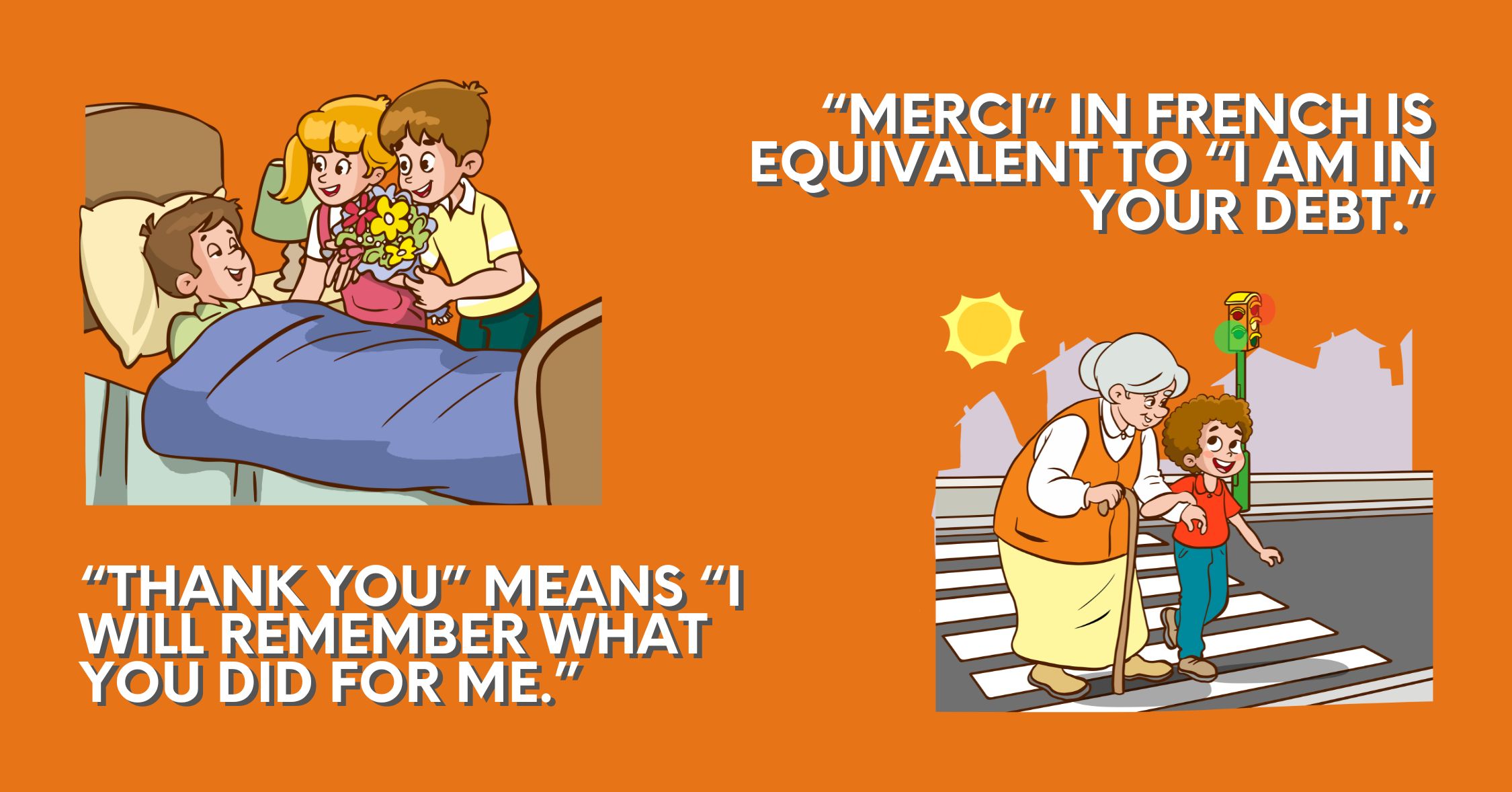
Did you know the word “thank” is a derivative of the verb “to think.”
And the phrase “thank you” originally meant, “I will remember what you did for me.”[3] In other languages, the sentiment is even stronger. The French word for “thank you,” “merci,” is the parent of our own word for “mercy.” When someone says “thanks” in French, what they are doing is placing themselves at the mercy of the other person as if to say, “I am in your debt.” It’s that kind of attitude behind our gratitude that we need, an actual expression of indebtedness. People appreciate feeling appreciated. In the workplace, studies found saying “thank you” increases productivity among employees by as much as 50%.[4] They’ve also found generosity is contagious. The more we give appreciation to others the more they do it for one another. And appreciated people find greater job satisfaction, which just makes common sense.[5] In married couples, these two simple words can save your marriage. They found couples that regularly say “thank you” were less likely to be affected by arguments between them.[6] Gratitude coats the relationship in a protective shell. Because they felt appreciated by their spouse, valued by their spouse, and acknowledged their spouse when they did something nice built up a reserve of good feelings that made arguments less likely to turn into something worse.[7]

Expressing gratitude not only helps the other person, but helps us, too!
One study at Harvard asked participants to journal about things they were grateful for over a 10-week period and had another group journal things that irritated them over the same amount of time. As you can probably guess, the gratitude group were more optimistic, felt better about life, exercised more, and went to the doctor less than the others.[8] What was most astounding to me was another study done showing over a six-month period you would be happier recording your blessings for five minutes a day than winning more than a million dollars in the lottery. Winning the lottery is awesome, but that momentary happiness that comes from it fades away and in just six months your happiness increase is barely up 4% more than what it was before. People who simply journal their gratitude show an increase of 10% happiness in that same time – 2.5 times happier than winning the lottery. Want to know other ways gratitude makes your life better? People like you more. You are generally healthier. It can boost your career. You focus less on material things and focus instead on your soul. It improves our sleep. We live longer lives. It makes us feel good. It helps us to relax. And those are just SOME of the benefits of being grateful.[9]

If you still aren’t convinced why you should express gratitude more often, let’s get Biblical!
That’s right, gratitude is Biblical and while there are a great many examples of being grateful in the Bible (both from Jesus and to Jesus) probably the best and most explicit example is the story of the ten lepers. During this time, you have to remember medicine wasn’t what it is today. Most people thought leprosy was highly contagious so they banished anyone who had it to outside the city limits. There were all kinds of rules lepers had to obey. Not only were they not allowed in the city, but they couldn’t even stand within six feet of another human being and if the wind was blowing they had to stay at least 150 feet away.[10] The only condition considered more unclean than leprosy was death. So when Jesus comes along, a group of lepers see him and beg him for help.
11 Now on his way to Jerusalem, Jesus traveled along the border between Samaria and Galilee. 12 As he was going into a village, ten men who had leprosy met him. They stood at a distance 13 and called out in a loud voice, “Jesus, Master, have pity on us!”
14 When he saw them, he said, “Go, show yourselves to the priests.” And as they went, they were cleansed.
15 One of them, when he saw he was healed, came back, praising God in a loud voice. 16 He threw himself at Jesus’ feet and thanked him—and he was a Samaritan.
17 Jesus asked, “Were not all ten cleansed? Where are the other nine? 18 Has no one returned to give praise to God except this foreigner?” 19 Then he said to him, “Rise and go; your faith has made you well.” – Luke 17:11-19
Ten men had leprosy. Ten men were healed. But only one came back to say “thank you.”
What’s even more amazing, the one was a Samaritan. Samaritans were among the most despised people in Israel. The only thing worse than having leprosy was to be a Samaritan with leprosy. But it was the Samaritan who came back to say, “thank you” to Jesus. It was such a big deal that the Bible even specifically points it out. Verse 16, “He threw himself at Jesus’ feet and thanked him – and he was a Samaritan (emphasis mine).” Of all the people healed, he was probably the one most likely NOT to give thanks. Samaritans were not treated well by the Jewish people. Out of resentment or spite or just plain anger, he would have the most reason not to come back, but he wanted to make sure Jesus knew how much he appreciated it.
When we read this, it’s easy to imagine that the other nine were this really ungrateful bunch.
But they were probably very, very grateful.[11] Imagine having this horrible disease that most people never get cured of, never getting to see your family and friends again, and then suddenly being healed! If it were you, you’d probably be ecstatic! They might have been in such a rush after getting healed they took off to see the priest without thinking about it. The only way a leper was allowed back into the community was by showing himself to the priest and being declared healed. That’s why Jesus tells them to go find the priest, so they can come back and see their family and friends. So given all of that, we could understand if it slipped their mind. But it shouldn’t have. It only took the Samaritan a moment to give thanks to God for the healing. Which one are you more like, the nine or the one? Do you make time to tell others how grateful you are? Do you reflect on the effort others put out for you? Or do you sometimes take the people in your life for granted?

Given the scientific evidence, we all take people for granted.
At least a little. A study back in 2012 showed we had a “gratitude gap.”[12] They found 90% of people were grateful for their family and 87% were grateful for their friends, but only 52% of women and only 44% of men expressed gratitude on a regular basis.[13] Why are we so reluctant to express our gratitude? There are many reasons this happens but one is because people are self-serving.[14] When things go bad, we like to blame other people, and when things go well, we like to take credit for ourselves. Robert Emmons who is well known for his research on gratitude wrote, “Gratitude really goes against the self-serving bias because when we’re grateful, we give credit to other people for our success.”[15] Expressing gratitude takes effort to overcome this self-serving bias. It also goes against our need for control because it recognizes there are outside forces at work helping us to achieve success. Emmons wrote something insightful about this. He said, “I think true gratitude involves a humble dependence on others.”[16] That humility points us toward God, the one to whom we should all be grateful and reminds us we are not the sole source of our own blessings.
Find your way to express gratitude.
For me, I like to do it through thank you notes. It’s not only a personal way to say thanks, but it is also a reminder to myself I have so much to be grateful for. But you need to find your own way. Whatever it is make sure you it is sincere and heartfelt. Something I read in Harvard Business Review said, “Think of something specific you are grateful for, acknowledge the cost or difficulty or sacrifice the person gave to do that specific thing, and then let them know why it was important to you.[17] When you take time to reflect on your gratitude it can’t help but come from your heart. If you watch any of the award shows that take place around this time every year, you see people come up and give thanks. Who would you give thanks to? Take a moment today or sometime this week to write your own acceptance speech. Think about the people on your list and why they are important to you. And then tell them. Send them a card. Give them a call. Bring them some homemade food and say those two little words that can make you 10% happier than you are today. Thank you.
[1] http://www.spring.org.uk/2007/09/practicing-gratitude-can-increase.php and http://happierhuman.com/benefits-of-gratitude/
[2] http://happierhuman.com/benefits-of-gratitude/
[3] https://www.brainpickings.org/2013/07/25/origin-of-please-and-thank-you/
[4] https://www.forbes.com/sites/amymorin/2016/11/20/how-an-authentic-thank-you-can-change-your-workplace-culture/#187c5c2f7990
[5] Ibid
[6] http://www.dailymail.co.uk/sciencetech/article-3283713/The-secret-happy-marriage-Saying-thank-Study-finds-gratitude-predict-couple-remains-together.html
[7] Ibid
[8] https://www.health.harvard.edu/newsletter_article/in-praise-of-gratitude
[9] http://happierhuman.com/benefits-of-gratitude/
[10] https://www.gotquestions.org/Bible-leprosy.html
[11] Andy does a great job talking about this in his sermon “I Owe Who” found on the Your Move With Andy Stanley podcast 11/12/2016
[12] https://greatergood.berkeley.edu/images/uploads/JTF_GRATITUDE_REPORTpub.doc
[13] Ibid
[14] https://greatergood.berkeley.edu/article/item/why_gratitude_is_good
[15] Ibid
[16] Ibid
[17] https://hbr.org/2013/02/how-to-give-a-meaningful-thank
 Craig's Corner