
The “Order” of Worship

What is “proper” worship?
Over the years, I’ve read a LOT about the subject. I’ve read books and articles, listened to sermons and the only thing I can tell you for sure is everyone has an opinion about it. And nobody has a definitive answer. But they sure have strong feelings about it. Very strong. The spectrum of comments range from “contemporary worship is empty and devoid of meaning” to “traditional worship is old and outdated.” I was at a workshop about emergent worship (and if you don’t know what that is, don’t worry. I don’t know if THEY know what it is either) and the person there was saying that if you worship in a church, you’re not really worshipping. She said worship is singing spontaneously in a coffee shop with three of your friends. She said worship was having someone just shout out a verse from Scripture and someone else tell everyone what it means. She said worship was not caring about an offering but just being in the moment. And after each of these statements, she said, “Now THAT’S worship.” I found it ironic that she was saying this in a gathering of church leaders who all led churches that “didn’t know what worship was,” and she was sharing this in a church that apparently didn’t know it either. Certainly there are a lot of different opinions, which begs the question then, what is “proper” worship?
We can find the answer to THAT question in Scripture.
Our answer lies in a reading from Psalm 100. In it we read that worship is shouting to the Lord with joy! Worship is coming to the Lord with gladness and with a joyful song. Worship is knowing the Lord is God and we belong to him. Worship is coming before God with praise and thanksgiving in our hearts, knowing we can count on him always. Those are the components of worship. Whether it’s contemporary, traditional, emergent, praise, or whatever you want to call it, worship is comprised of those elements – gathering, knowing God, responding with praise and thanksgiving. Worship isn’t a style, it’s an attitude. Matt Redman sings this song called “The Heart of Worship” and in a few simple words he gets to the deeper meaning of worship – it’s all about you, Jesus. If there’s such a thing as “proper” worship then it is one focused on God, Son, and Holy Spirit. Another pastor told me this funny story. She was listening to a youth praise band, and they were covering Matt Redman’s song in worship. The lead singer changed one word, but that one word changed the entire meaning of the song. Instead of singing “it’s all about you, Jesus,” she said instead, “it’s all about me…it’s all about me, Jesus.” One simple word and the entire meaning of the song changed. And that’s important because when we come to worship we need to remember it really is all about God.
Believe it or not, the way we worship today has its roots in a surprising story of the Bible.
There actually IS an order to worship if you will. There actually is an order to worship and in preparing for this sermon, I was surprised at finding out what that story is. I hope you find it as interesting as I did. If you have a Bible or a Bible app, go ahead and turn to Luke 24:13-35. Luke 24:13-35. You’ve probably heard this story before of the two men who encounter Jesus on the road to Emmaus. Usually, we hear this story as an account of coming to faith, specifically juxtaposed to that of Paul. Sometimes, you’ll hear people refer to their journey of faith as an Emmaus or Damascus experience, meaning either they came to faith over a period of time, or suddenly because of some event in their life. But this passage is more than just another Easter story about an encounter with Jesus. It’s a story about worship.
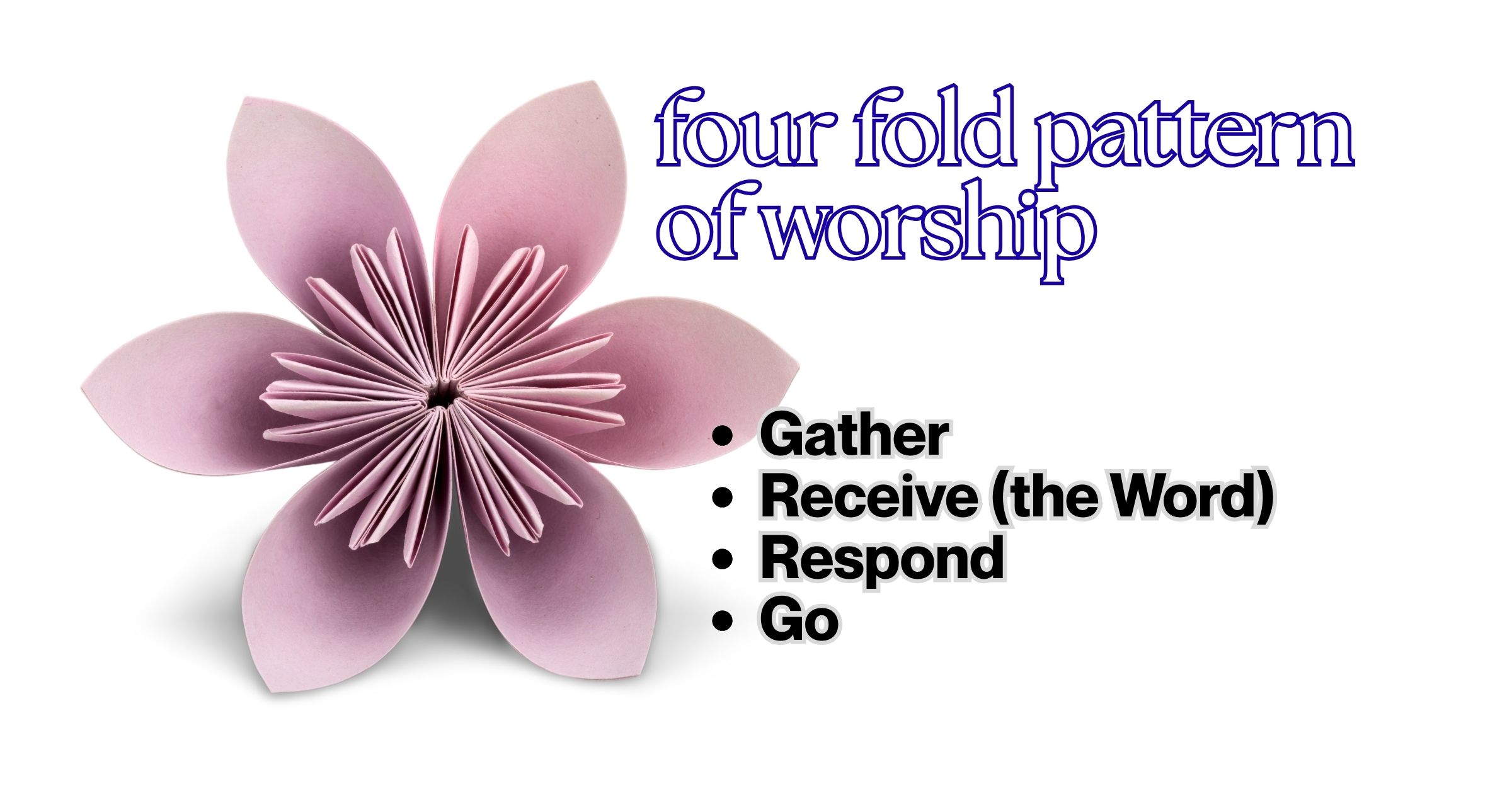
Scholars call this the “four-fold pattern of worship” – gather, receive, respond, and go.[1]
Gather, receive, respond, and go. We see how this unfolds in our story this morning. And because our passage today tells a story I’m going to share from it a little differently. Instead of asking you to stand and read the entire passage, I’ll break it up into chunks so we can explore for ourselves this four-fold pattern of worship. The first part of course is the gathering of God’s people and we begin our reading by joining the two men on their walk to Emmaus. Beginning with verse 13:
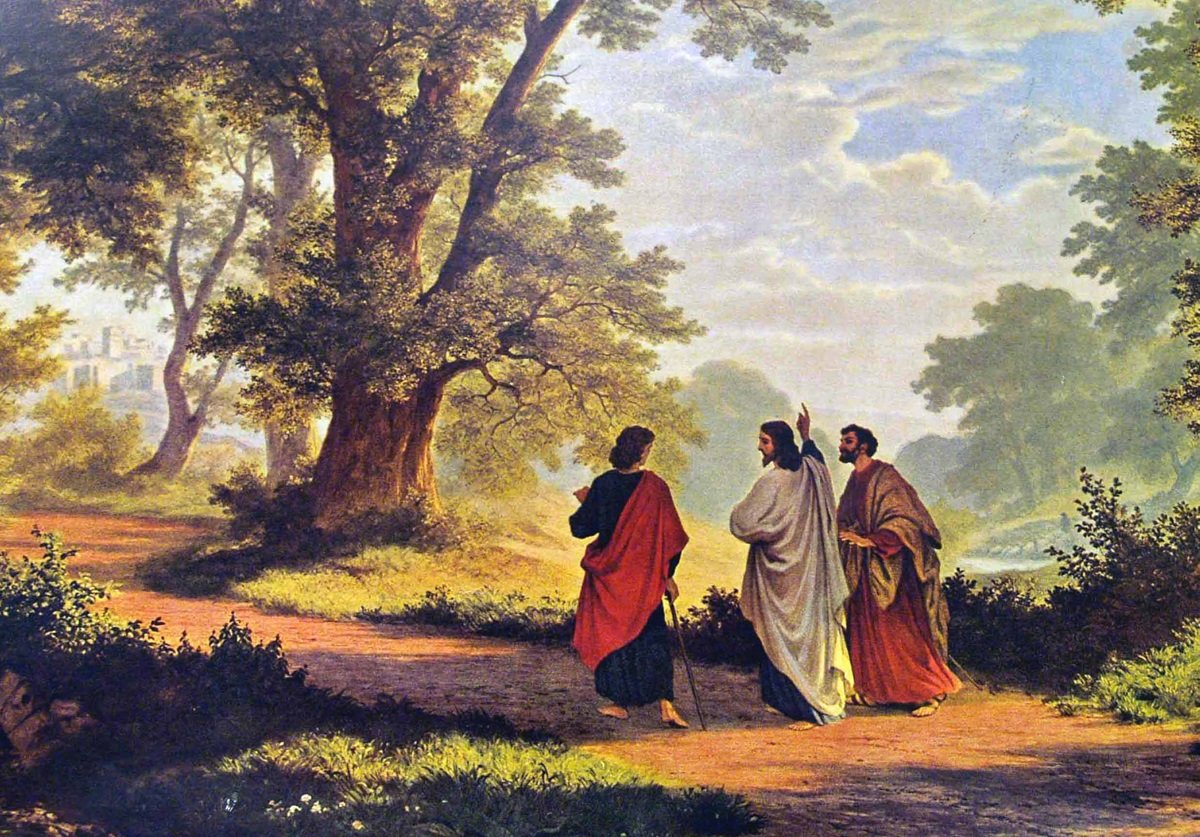
13 Now that same day two of them were going to a village called Emmaus, about seven miles from Jerusalem. 14 They were talking with each other about everything that had happened. 15 As they talked and discussed these things with each other, Jesus himself came up and walked along with them; 16 but they were kept from recognizing him.
We join these two men walking along the road together. They’re catching up and it sounds like from this reading they are talking about Jesus being crucified. Just from context, this is something important to both of them. In our study of worship, we recognize this is the gathering of God’s people. In Matthew’s version of the Gospel he writes, “For where two or three gather in my name, there I am with them.” Except in this case, it is VERY literal. Verse 17:
17 He asked them, “What are you discussing together as you walk along?”
They stood still, their faces downcast. 18 One of them, named Cleopas, asked him, “Are you the only one visiting Jerusalem who does not know the things that have happened there in these days?”
19 “What things?” he asked.
“About Jesus of Nazareth,” they replied. “He was a prophet, powerful in word and deed before God and all the people. 20 The chief priests and our rulers handed him over to be sentenced to death, and they crucified him; 21 but we had hoped that he was the one who was going to redeem Israel. And what is more, it is the third day since all this took place. 22 In addition, some of our women amazed us. They went to the tomb early this morning 23 but didn’t find his body. They came and told us that they had seen a vision of angels, who said he was alive. 24 Then some of our companions went to the tomb and found it just as the women had said, but they did not see Jesus.”
Here we visit with the two men as they bring their fears and concerns to God. They don’t know it at the time, but they are laying them down before him just like we do in prayer. And this is part of our preparation for hearing God’s Word. A confession. A plea. A praise. This is what we do in our unison prayer as we get our hearts ready to hear God’s message. Here, the two men begin by praising Jesus, saying he was a prophet, powerful in word and deed before God.” But then we hear in verse 21 how the men “had hoped that he was the one who was going to redeem Israel.” And now they can’t even find his body and they don’t know what’s happened. They raise their concerns before God and Jesus responds through the Word. Verse 25:
25 He said to them, “How foolish you are, and how slow to believe all that the prophets have spoken! 26 Did not the Messiah have to suffer these things and then enter his glory?” 27 And beginning with Moses and all the Prophets, he explained to them what was said in all the Scriptures concerning himself.
Just a few short verses, but we can imagine the sermon was long because they were able to finish their seven-mile journey during the time Jesus told them his story. But through it all they listened intently. Jesus begins with Moses and explains all of the prophecies of Scripture that predicted every event in Jesus’ life. He uses Scripture to illustrate and connect to current events how this all fits into God’s greater plan for the world. Much like we try to do every Sunday, Jesus makes the words of Scripture relevant to the lives of these two men. And when he’s done, the two men cannot let him leave without offering him something. Verse 28:
28 As they approached the village to which they were going, Jesus continued on as if he were going farther. 29 But they urged him strongly, “Stay with us, for it is nearly evening; the day is almost over.” So he went in to stay with them.
30 When he was at the table with them, he took bread, gave thanks, broke it and began to give it to them. 31 Then their eyes were opened and they recognized him, and he disappeared from their sight. 32 They asked each other, “Were not our hearts burning within us while he talked with us on the road and opened the Scriptures to us?”
Of course you probably recognize this image as the men did at the table. Jesus breaks bread with them. They heard all Jesus had to say and out of gratitude for hearing the Word, they invited him in. In fact, Scripture tells us they “urged him strongly.” This was their response to God, and Jesus stayed as he does with us whenever we join him at the table. When he breaks the bread, their eyes are opened and they experience the living God. When we share together in Holy Communion that’s the experience we hope for each and every time. That through the elements we come face-to-face with Christ. Verse 33:

33 They got up and returned at once to Jerusalem. There they found the Eleven and those with them, assembled together 34 and saying, “It is true! The Lord has risen and has appeared to Simon.” 35 Then the two told what had happened on the way, and how Jesus was recognized by them when he broke the bread. The final part of our worship is the call to “go.” Go into the world as they two men from Emmaus did and share with everyone the Good News. Worship should compel us to take what we experience and what we learn and apply it to our daily lives so that we might be a living witness for God in the world. Gather together, receive God’s Word, respond to his call, and go into the world with what you’ve learned. Gather, receive, respond, and go. This is why we worship, to remind ourselves of the love of Christ that we will go out into the world and tell everyone about him.
[1] https://www.umcdiscipleship.org/book-of-worship/the-basic-pattern-of-worship
 Craig's Corner