
No Room at the Inn

In those days Caesar Augustus issued a decree that a census should be taken of the entire Roman world. 2 (This was the first census that took place while Quirinius was governor of Syria.) 3 And everyone went to their own town to register.
4 So Joseph also went up from the town of Nazareth in Galilee to Judea, to Bethlehem the town of David, because he belonged to the house and line of David. 5 He went there to register with Mary, who was pledged to be married to him and was expecting a child. 6 While they were there, the time came for the baby to be born, 7 and she gave birth to her firstborn, a son. She wrapped him in cloths and placed him in a manger, because there was no guest room available for them. – Luke 2:1-7
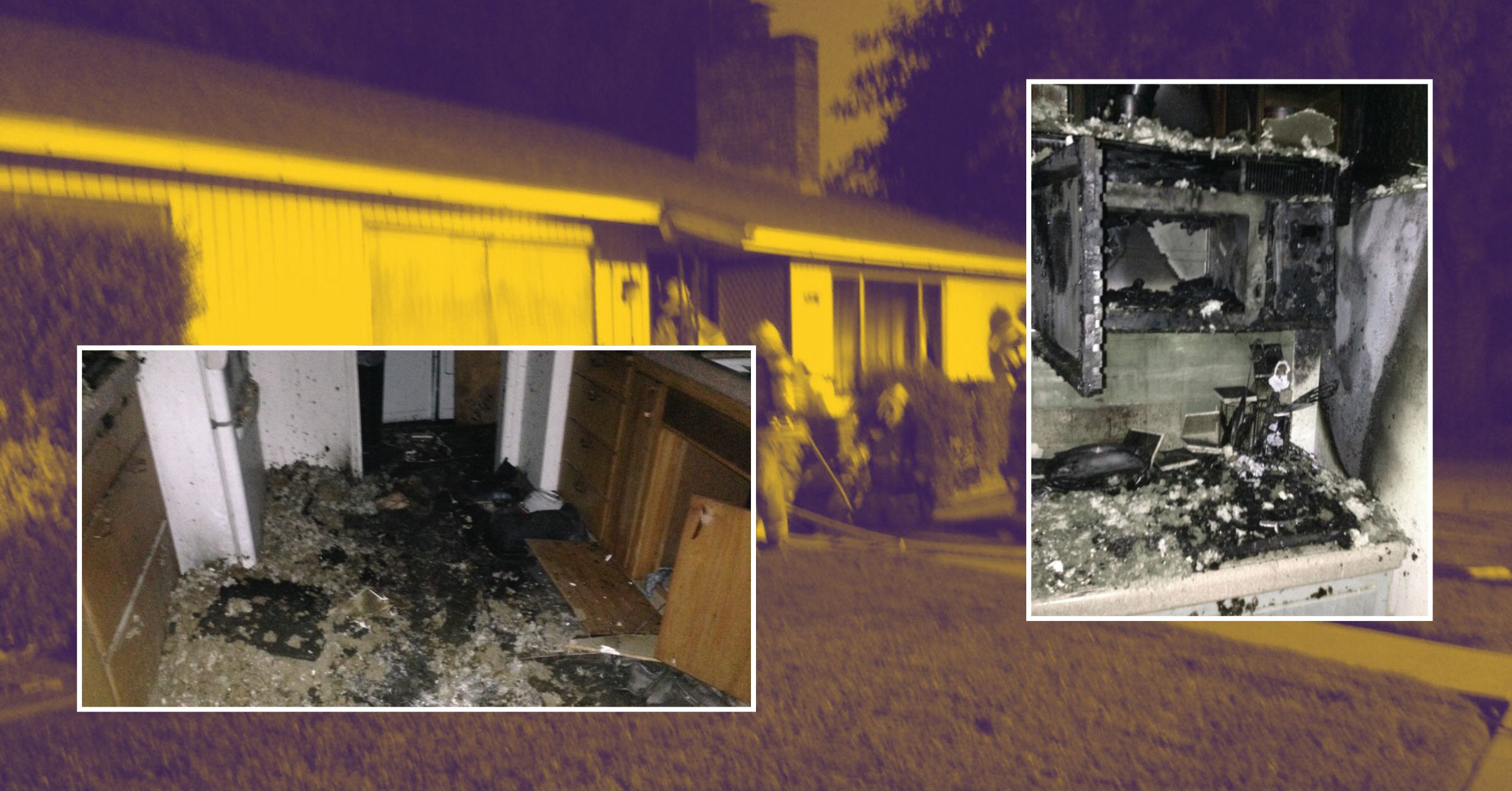
How long does it take to become homeless?
We all need a place to call home. A home provides protection from the weather, a place to rest in relative safety, and a retreat from the outside world. But a home is more than that. A home is an anchor. A home gives us a sense of security. It is a place we make our own. Think about your own home for a moment. Imagine your favorite place to sit. Think about the comfort of your bed. Picture in your mind the inside of your refrigerator and where you keep your favorite things to eat. Now imagine all of that suddenly GONE. That’s what happened to my family about twelve years ago. We were living in Dinuba at the time serving two smaller churches in that quaint, rural town. One Sunday after worship while I was cooking in the kitchen, the oil in the pan burst into flame! Without realizing it, I had left the burner on high for too long in a shallow pan and it suddenly caught on fire. I tried turning off the stove or just moving the pan off the burner, but the flames kept attacking me like they were alive. I couldn’t get close enough without risking getting burned. I immediately opened the doors under the sink to grab the fire extinguisher, but in just those few seconds the flames had risen high enough to catch the wooden cabinets next to the stove and they caught on fire. The flames raced toward the ceiling and I knew it was moving too fast for me to stop it. Instead, I shouted out to Emma to get out of the house. I opened the back door for the dogs and rushed to Emma’s room to make sure she was safe outside. I went back inside, got my lockbox with our passports, and a watch Cassie gave me for my birthday a few years ago and threw them on the lawn. Then I asked Emma what her favorite stuffed animals were and grabbed what I could. But as I was leaving the house that second time, I knew I couldn’t go back in. The smoke, if you could call it that since it looked black as tar, had come down to head level and already I was having trouble breathing. I could hear a loud CRACK and something exploding which later I found out was the microwave. And within the space of five minutes, we went from having a home to not having a home. That’s how quick you can become homeless. Five minutes.

It’s scary to think about how many people are homeless in America today.
According to reports, more than three-quarter of a MILLION people are looking for a place to sleep every night.[1] What is sadder is nearly 150,000 of them are children and that number grew by 33% in one year.[2] When you include children living in other people’s homes, waiting for foster care placement, living in cars, parks, and bus stations, the number rises to more than a MILLION homeless children.[3] It’s a mistake to believe that a vast majority of homeless people are suffering from mental illness. In fact, according to the Department of Housing and Urban Development, nearly 80% of unhoused persons were NOT suffering from severe mental illness.[4] What astounds me is as many as 60% of homeless people have jobs, but according to the USICH a person making minimum wage would have to work 86 hours a week to afford a one-bedroom apartment.[5] It’s not for lack of trying, it’s for lack of affordable housing. California already has nearly a quarter of all homeless people in America, by far the most of any other state.[6] High rent, mortgage foreclosures, and lack of affordable housing are just some of the causes of this epidemic. And while we attempt to bandage up the problem, we seem to be doing little to address the root cause.
Homelessness is hardly an American problem.
As bad as it is here, I cannot even imagine what it’s like in places like Syria where over 14 million people are refugees either inside or outside of the country.[7] Over 6.6 million refugees fled Syria while 7.4 million are displaced inside the country, effectively homeless, but more than that they are often without food, medical care, or even drinkable water.[8] Sadly the United States has done little to help under the current administration. While millions suffer, the President has set a cap of 7,500 refugees in total, down from 125,000 in 2024; and of those 7,500 most of them are allocated for white South Africans who face little danger compared to Syrian refugees and refugees from other countries.[9] The United States used to be a world leader in refugee resettlement. We used to help more refugees than all other countries combined and did so for decades.[10] But that has all changed. We’ve told the world, “There’s no room at the inn.”
Fear has gripped our country.
But we aren’t the only ones. It’s a plague spreading around the world, mostly to nations who are rich and comparatively prosperous. Fear of the other. Fear of something different. Fear of the unknown. Fear of change. These are not new fears. These are fears we fight with every day on both an international scale and on a personal one, too. Fear is the lynchpin of evil. It drives us to do irrational and harmful things to one another. It creates an atmosphere of anger and rage. It causes separation from God and division within communities. And it seems to be growing under the banner of nationalism. So much hatred of “the other.” It is the exact opposite of what Christ challenges us to do – to love others. One of the apostles, Luke, records Christ sharing these thoughts, “If you love those who love you, what credit is that to you? Even sinners love those who love them. 33 And if you do good to those who are good to you, what credit is that to you? Even sinners do that. 34 And if you lend to those from whom you expect repayment, what credit is that to you? Even sinners lend to sinners, expecting to be repaid in full. 35 But love your enemies, do good to them, and lend to them without expecting to get anything back. Then your reward will be great, and you will be children of the Most High, because he is kind to the ungrateful and wicked. 36 Be merciful, just as your Father is merciful. (Luke 6:32-36).” We are not meant to only love the people who love us. We are not meant to only do good to those who first do good to us. And we are not supposed to expect payment for services rendered, but instead do it out of mercy and love. With the world in crisis, how can we call ourselves Christians if we don’t do something about it?

We are sometimes so sheltered from suffering we don’t realize how deep the need is.
Trevor Noah became host of The Daily Show after Jon Stewart left with Jon’s blessings, and Trevor tells the story about how they had to force him to move into Jon’s office. He said he was really happy with the little office he had been given. It was simple. There was a little brown desk with a skylight and he was good with it. But (I assume the producers) wanted him to move into Jon’s office which had exposed brick and he was not a fan of exposed brick. He said, “Exposed brick is a classic example of privilege in my world, because coming from South Africa (coming from any poor country to be honest) exposed brick displays that you do not have the ability to plaster your walls and paint them. You don’t have enough money to do that. So all we had growing up was exposed brick. And then you move to a place that says, ‘We have so much plaster and so much paint, in order for me to be different I’m going to expose the bricks in my walls.’ And everyone says, ‘That is so fantastic! I will pay more for that.’”[11] Many of us are fortunate NOT to know the hardships of long-term homelessness. Even for our family during that short bit of time where we lost almost everything, we had enough resources to recover, but even still that little window of time is something that haunts us to this day. It’s hard to imagine having that BE your existence and what kind of lifelong impact that has on a young child and a family. For millions of people around the world it is the reality they are living. How can we expect the world to know the love of God when they struggle with simply existing? But it is also an opportunity for us to show the love of God to a world that is hurting. We may not be able to help out everyone around the world, but we can certainly help those in our community. Because Mary and Joseph aren’t the only ones without a room during this Advent season.
[1] The actual number of homeless in 2024 according to the National Alliance to End Homelessness is 771,480 which was up 18% from 2023.
[2] From the report in 2024 from the Housing and Urban Development Department
[3] According to the Campaign for Children, when you include other factors, the number grows by a huge amount. This number is consistent with the National Alliance to End Homelessness.
[4] https://www.kff.org/medicaid/five-key-facts-about-people-experiencing-homelessness/
[5] United States Interagency Council on Homelessness produced this report and the number is actually 97 hours per week in 2025.
[6] According to CalMatters we also have 44% of all chronically homeless persons in the country.
[7] Latest update includes numbers for 2025 from the USA for UNHCR website.
[8] Ibid.
[9] From a report by the International Rescue Committee, but support by other documentation as well.
[10] https://www.pewresearch.org/fact-tank/2019/10/07/key-facts-about-refugees-to-the-u-s/
[11] I wish I could remember where I heard this interview! I loved it so much I transcribed this section, but for some reason didn’t document it. I know it was around 2019 and I believe it was NPR but that’s about as far as I could trace it.
 Craig's Corner