
Milk…It Does a Body Good.
Milk…It does a body good.
I believed that phrase whole-heartedly my entire life. But I learned that as you get older, the benefits of milk aren’t so obvious. The New York Times posted an article asking the question, “does milk do a body good?” And it turns out…it doesn’t seem so. I long prided myself on my milk drinking. I may not always eat properly, but I would easily drink a glass of milk (and often more) once a day. Then Cassie came up to me one day and said drinking milk might actually be CAUSING me some problems. I have to admit, as smart as Cassie is, I thought she got this one all wrong. My entire life, doctors have been telling me to drink milk. Even as an adult. But in 2011, the Journal of Bone and Mineral Research did a study of over 200,000 women and could find no correlation between milk drinking and lower rates of bone fracture.[1] Another study of over 100,000 men and women could find no correlation between drinking milk as a teenager and incidents of bone fractures. And one study published in the British Medical Journal showed men and women who drank high quantities of milk had a higher death rate and women actually had MORE bone fractures than those who didn’t drink as much milk.[2] While they couldn’t prove milk actually caused those deaths, it’s pretty clear that it doesn’t seem to be doing much for us as we once thought.

The story, of course, is different for infants and children.
Especially for babies. Babies NEED milk – specifically mother’s milk. It strengthens the immune system, decreases disease, and helps to protect children from developing allergies.[3] Later in life, these babies have fewer cavities, are less likely to be obese, tend to have fewer problems related to blood pressure, and tend to be more mature and assertive.[4] The evidence is so strong for all the different benefits of baby milk that there are even milk banks where mothers can donate so mothers who have difficulty producing their own still have a source for their babies. Virtually everyone agrees that milk is essential for young developing infants.
And just as we need milk to grow physically, we need spiritual milk to grow spiritually.
Milk in the Old Testament largely referred to God’s promise of a land overflowing in abundance, but in the New Testament, milk is seen as spiritual sustenance. It’s the building block for a strong spiritual life. Just like milk is a necessity for babies who grow up to be adults, spiritual milk is needed to help our faith life develop into something strong and robust and in terms of faith, most of us if not all of us are spiritual newborns. Our passage this morning is just one that refers to spiritual milk but its one that sheds light on what that milk will do for us.
Therefore, with minds that are alert and fully sober, set your hope on the grace to be brought to you when Jesus Christ is revealed at his coming. 14 As obedient children, do not conform to the evil desires you had when you lived in ignorance. 15 But just as he who called you is holy, so be holy in all you do; 16 for it is written: “Be holy, because I am holy.”
Therefore, rid yourselves of all malice and all deceit, hypocrisy, envy, and slander of every kind.2 Like newborn babies, crave pure spiritual milk, so that by it you may grow up in your salvation, 3 now that you have tasted that the Lord is good. – 1 Peter 1:13-16, 2:1-3
Crave pure spiritual milk.
“Like newborn babies, crave pure spiritual milk, so that by it you may grow up in your salvation now that you have tasted that the Lord is good.” Spiritual milk is essential for our faith and protects us from malice, deceit, hypocrisy, envy, and slander. But what is this magical spiritual milk? It’s those things that keep us connected to God. It’s the everyday aspects of life that keep us grounded in how life is supposed to be instead of these awful things that lead us to our worst selves. And this is where John Wesley’s ideas about the means of grace come in. The means of grace are the spiritual milk that grounds us in faith and he called these works of piety. Works of piety are the personal practices that help us grow closer to God. Things like prayer, reading the Bible, going to worship, taking communion, taking part in Bible study, sharing our faith and fasting; these are the practices Wesley felt would connect us to our faith. But they must be done regularly. They need to become part of our everyday life, like brushing your teeth or taking a shower.
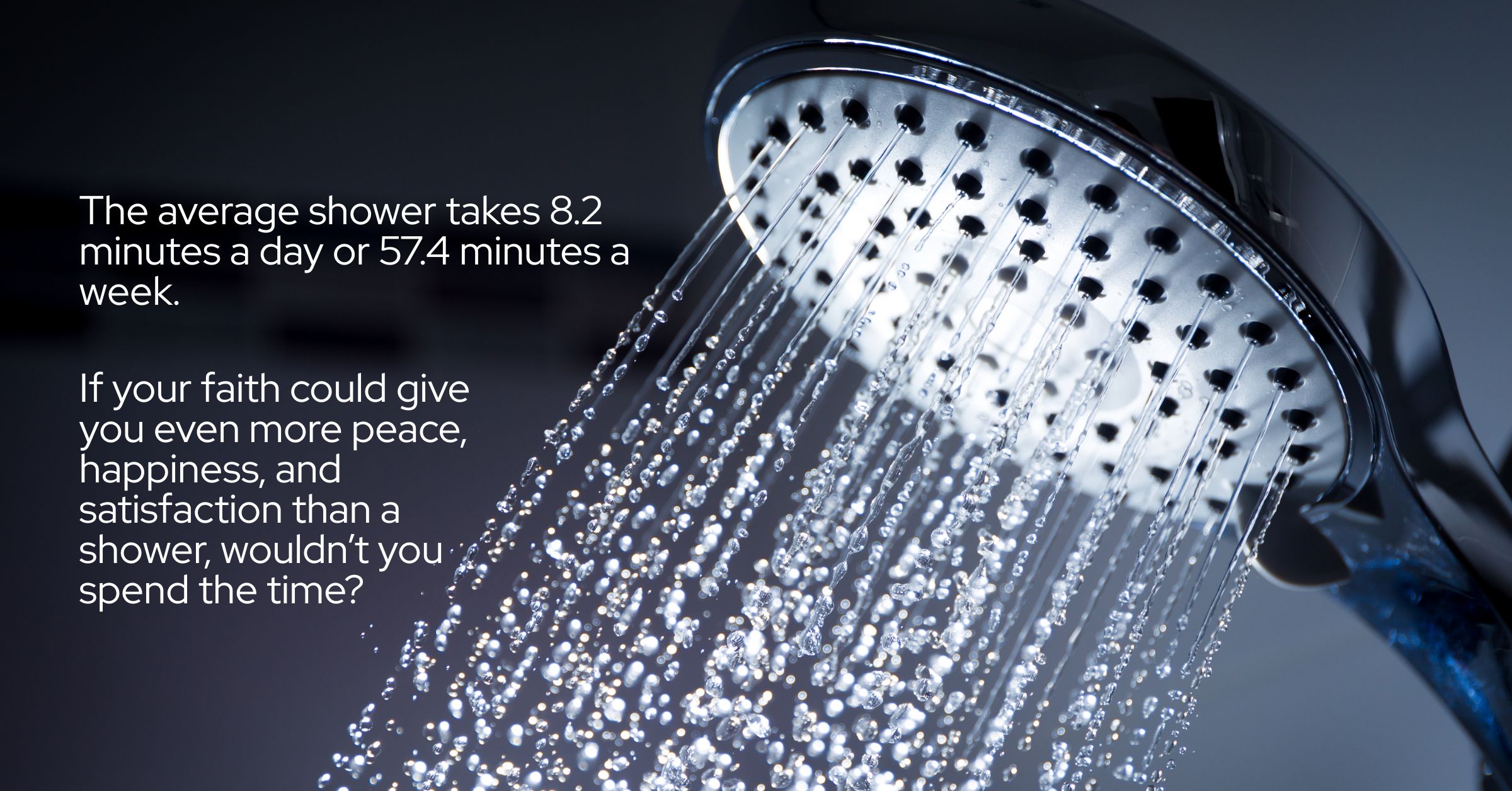
In our seemingly time-crunched world, how can we add in another thing?
We don’t have time for Bible study. We don’t have time for worship. We don’t have time for prayer. But is it we don’t HAVE time or we don’t MAKE time? Like with taking a shower or brushing your teeth, you could skip these things if you were seriously short on time. In the long run, you’d be able to do more if you stopped wasting time on hygiene. Think about it. The average shower lasts 8.2 minutes.[5] Assuming you take one every day, you could save yourself nearly 3,000 minutes a year. That’s more than 2 full days of time! But we don’t really think about skipping it normally because it’s become part of what we do every day. Plus, it probably keeps us from getting a divorce. Doing those everyday things might take a little bit of time here and there, but in the long run make our life better. We are healthier and happier and better to be around because of them. Now apply that to these works of piety. Almost all of these things – prayer, worship, Bible study, communion – take less than or about the same amount of time as taking a shower every day. Doing them makes us more spiritually healthy, gives us peace in our hearts, and also makes us better people to be around, so how can we make them part of who we are?

Stephen Covey had some great advice about this.
As you know, he’s the author of the book 7 Habits of Highly Effective People, and he writes, “The key is to keep the main thing the main thing.” You’ve probably heard that before. The key is to keep the main thing the main thing. We know this intellectually, but we don’t always do a great job of executing it. He says, “Most of us spend too much time on what is urgent and not enough time on what is important.” We’re so busy with whatever is in front of us that we don’t look at things long term. So how do we get around that? Covey says, “The key is not to prioritize what is on your schedule, but to schedule your priorities.” If you believe God is important then carve out time for God. It’s as simple as that. It’s just a matter of priorities.
As we approach the new year, pray about this.
Pray about how you can grow deeper in your faith. Pray about drinking the spiritual milk that Peter encourages us to do. If you’re already deep in prayer, reading your Bible, and joining a small group, then keep going. My guess is you’re already feeling that connection Peter talks about. But if you feel you need more of something in your life, consider these things, these types of spiritual milk. Commit to making one of these a new spiritual habit in 2026 and see if God won’t bless you for it. It is in the common, ordinary, everyday types of things that God gives us to help us tackle everyday life. These things that take very little time or money to do – prayer, Bible study, worship, communion. At times they might seem boring. At times they might even seem meaningless. At times we may not feel the working of the Holy Spirit within us. But it is. The Spirit is at work even if we don’t “feel” it all the time. And keep going. When babies drink milk, they don’t say to themselves, “Hey look! My leg just grew a quarter of an inch!” But slowly, over time, as they keep taking the nourishment they need they grow. Sure and steady they grow. And the same is true of our faith. Take time out to drink your spiritual milk. It does a body good.
[1] https://www.nytimes.com/2014/11/18/upshot/got-milk-might-not-be-doing-you-much-good.html
[2] https://www.bmj.com/content/349/bmj.g6015?etoc=
[3] http://www.nrdc.org/breastmilk/benefits.asp
[4] Ibid.
[5] http://www.home-water-works.org/indoor-use/showers
 Craig's Corner