
If The Game Was Rigged
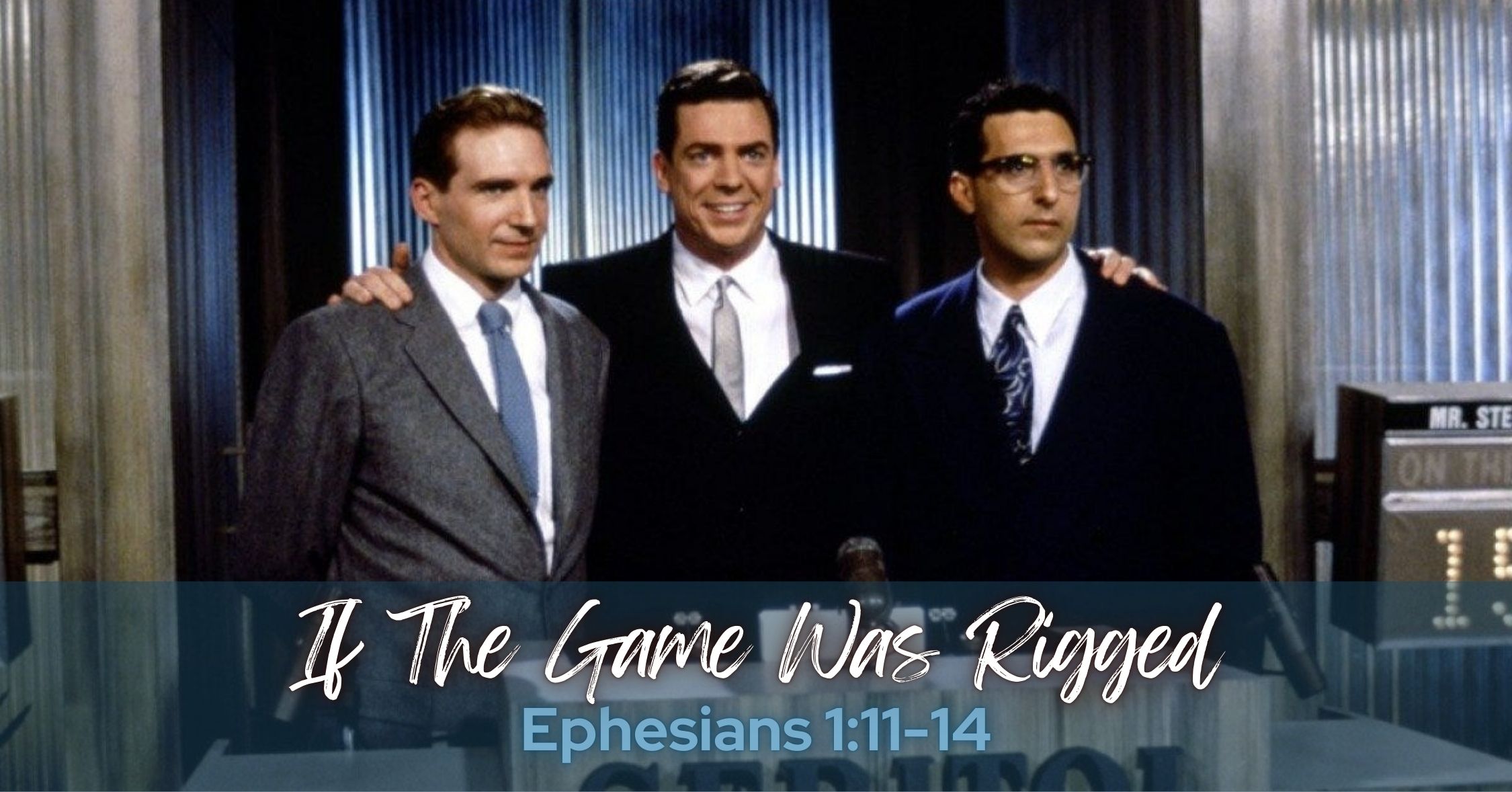
The fix was in.[1]
In the late 1950’s there was a television game show called Twenty-One? The goal of the game was to score 21 points or as close to 21 when the game ended. There were two contestants, a champion and a challenger and they were placed in isolation booths so they couldn’t see or hear each other or the audience. Each round they were given a choice as to how many points they wanted to play for, between 1 and 11. The more points, the tougher the questions. After the first two rounds, both contestants were given the chance to end the game without knowing the other’s score. It sounded pretty intense. On November 28, 1956, a contestant by the name of Charles Van Doren came on the show. He battled reigning champion Herbert Stempel over four grueling shows, each ending in a 21-21 tie. It was only in the 5th show when Van Doren called the game did he triumph over Stempel with a score of 18 points, enough to beat his opponent. Van Doren went on to win continuously until March 11, 1957 when he finally lost – after three straight ties – to contestant Vivienne Wax Nearing. In all, Van Doren won $143,000. Pretty good for a few months work – even by today’s standards. But that wasn’t it for Van Doren. He became so popular that he was signed to a contract with NBC for $150,000 over three years to appear on the Today show, on Steve Allen’s show as a guest, and he even appeared on the cover of Time magazine! But two years later, his world came tumbling down. He confessed to a House investigation committee that he had participated in a lie. He told the committee, “I was involved, deeply involved, in a deception. I had deceived my friends and I had a million of them.” What the committee uncovered was Twenty One had been rigged. All the white knuckle tension, all the drama, all of it had been staged. Both the winners AND the losers had been selected beforehand. Each one knew what his or her role was before walking into the limelight. And each one was even coached on how to react in different situations. The extent to which they manipulated the drama even went so far as turning off the air conditioning in the contestants’ booths to make them appear to be sweating due to the drama. When the news broke, the American public was outraged and the producers, the emcee, and even Van Doren were publicly ostracized.
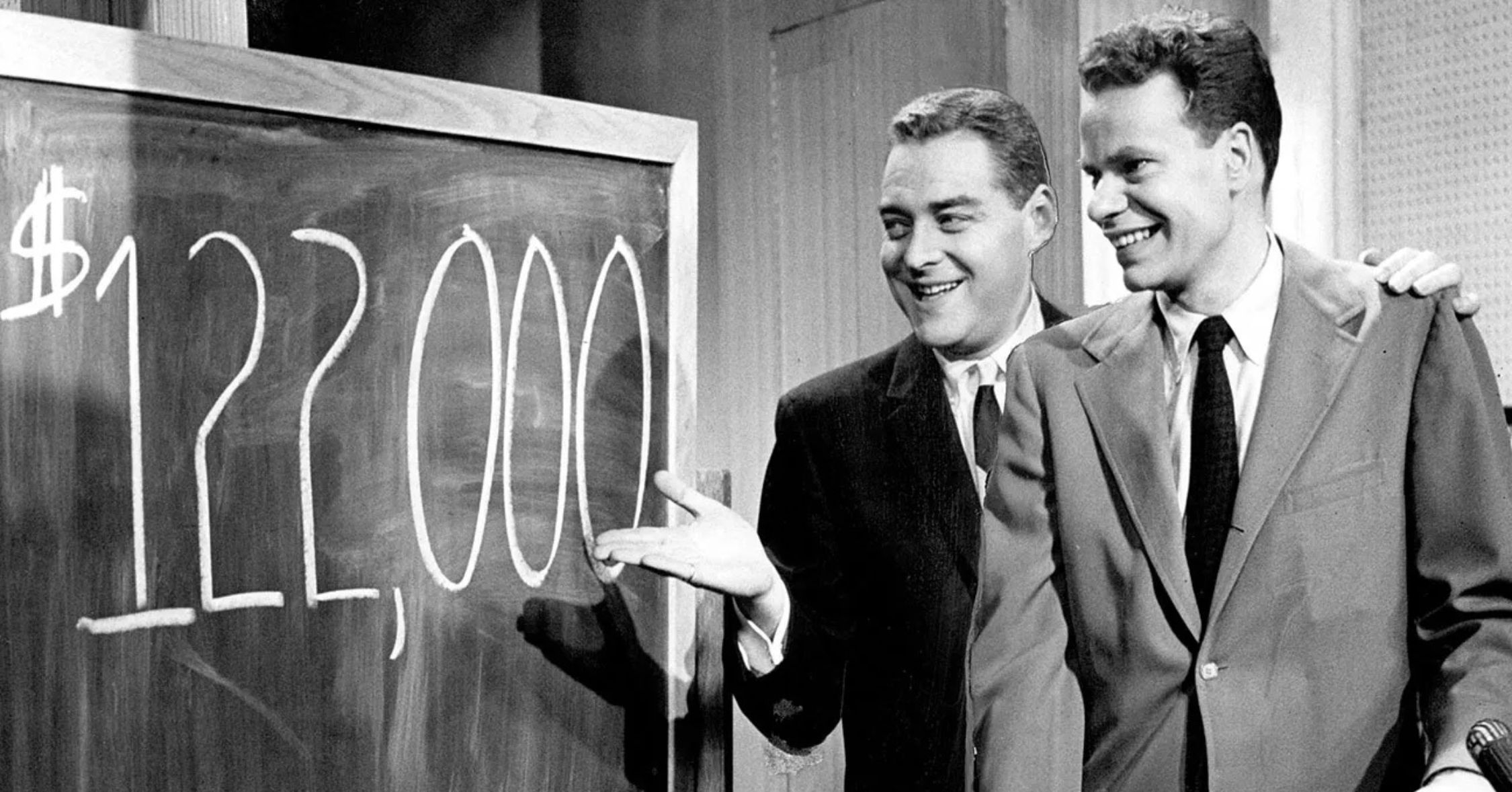
But why? Why did people care so much that the show was rigged?
It provided great entertainment which is what we all hope for when we watch TV, and at the time, it wasn’t even illegal to do it. So why do we care? Because the show at its essence was not about the game. Sure, they played a game, but the show was really about hope, the hope that an average, ordinary person could make it! That you or I could have a better future. And that hope was destroyed the moment the people found out it was rigged. What’s the point in playing a game if the outcome is already determined? If the “little guy who makes it big” was chosen beforehand to win, then he really didn’t win anything. He really didn’t triumph against the odds. It was a stacked deck. And that’s why I can’t understand the Calvinist concept of predestination.
Predestination is the idea God has already chosen those who will be saved and those who won’t.
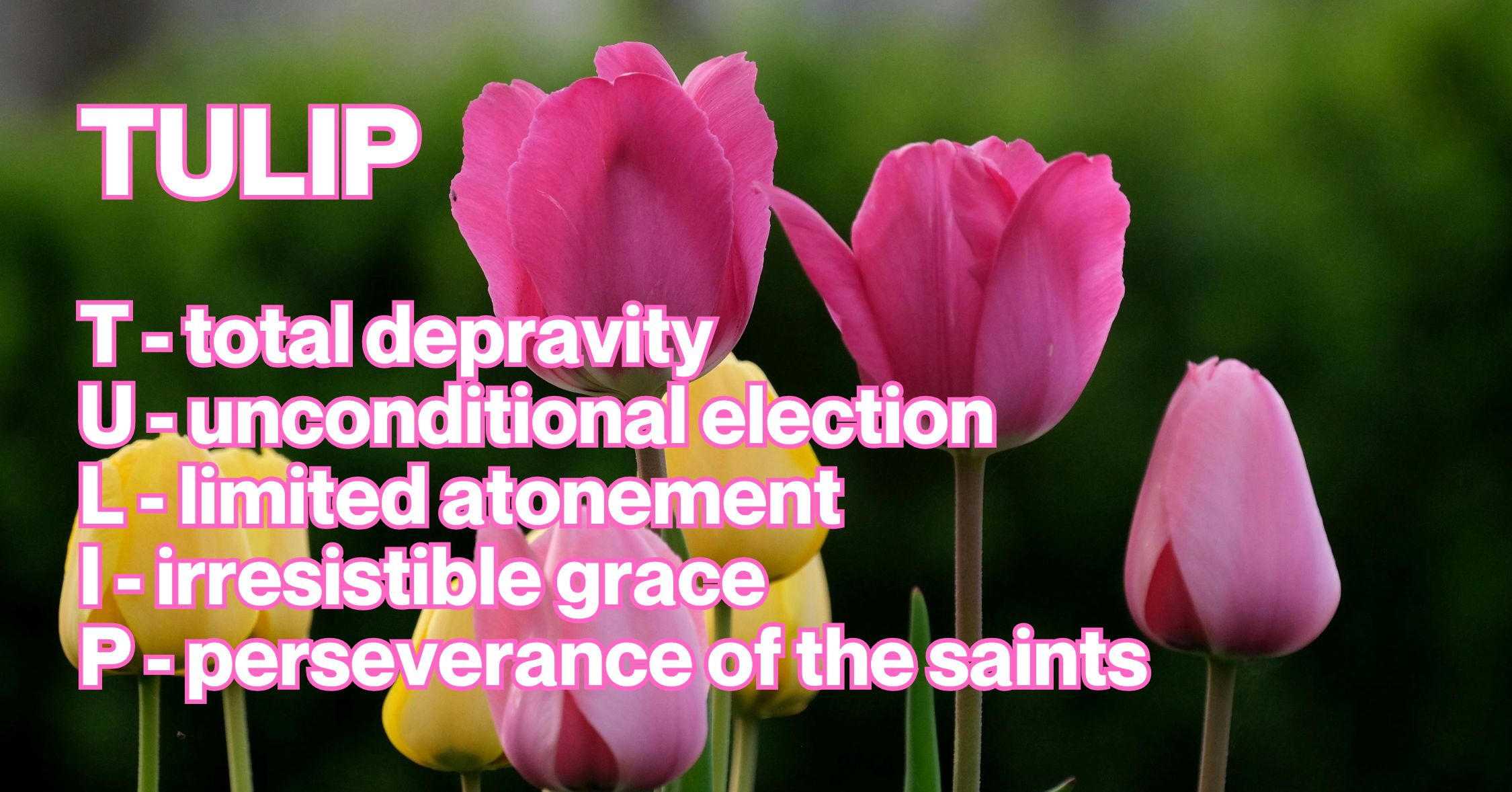
It strikes me as being completely against the nature of God because it seems downright mean. We’re promised by Jesus that he has prepared a place for us in Heaven – each and every one of us; it even says so in John 14. But if predestination is true, then Jesus was lying. And who could follow a God like that? But there are many. Among the major denominations in America, Presbyterians follow this thinking. Dr. Petersen was my one of my professors in seminar and he was Presbyterian and told us they like to call themselves the “Frozen Chosen” because they were preselected before they even existed to either go to Heaven or not. Nothing they could do or not do would change that. Its based on five core beliefs that form the acronym TULIP and it stands for “Total depravity” – meaning human beings are so utterly steeped in sin they can’t even choose to follow God; “Unconditional election” – meaning that God chooses who is saved; “Limited atonement” – meaning that Jesus died for some and not for all; “Irresistible grace” – meaning that if you are chosen you cannot resist it; and “Perseverance of the saints” – meaning once elected you cannot ever fall from grace.[2] TULIP stands for “Total depravity,” “Unconditional election,” “Limited atonement,” “Irresistible grace,” and “Perseverance of the saints.”
To be sure, people who believe in this doctrine didn’t pull it out of a hat.
The Bible makes many references to predestination, sometimes literally such as the one right before our passage where it says in verses 4-5, “In love, he predestined us for adoption to sonship through Jesus Christ, in accordance with his pleasure and will…” It sounds very straight-forward, doesn’t it? No debate there. Or is there? We’re going to finish this passage by reading as Paul Harvey used to say on his radio program, “the rest of the story.”[3]
1 In him we were also chosen,having been predestined according to the plan of him who works out everything in conformity with the purpose of his will,12 in order that we, who were the first to put our hope in Christ, might be for the praise of his glory. 13 And you also were included in Christ when you heard the message of truth, the gospel of your salvation. When you believed, you were marked in him with a seal, the promised Holy Spirit, 14 who is a deposit guaranteeing our inheritance until the redemption of those who are God’s possession—to the praise of his glory. – Ephesians 1:11-14
One key word can change our understanding of this passage.
“When.” “When” doesn’t fit into the idea of predestination. “When” supposes there is a time before and a time after and if its predestined there is no such thing because you were ALWAYS going to do it or not do it. There is no turning point in your life. It seems like such a small word to hinge the debate on, but it can be a big deal. Paul uses that word twice in this passage: “When you heard the message of truth” and “When you believed” meaning that what followed hinged on what the people did. It meant that you were not predestined but that you had agency, a choice. And that is an important aspect of what we believe. We believe in free will. We believe that God allows us to choose.

The only way to coherently hold on to Calvinist theology is to say that EVERYTHING is God’s will.
The good, the bad, and the ugly – and there’s a lot of ugly in the world. Cancer in children, hurricanes and earthquakes that devastate thousands, murder of innocent people, the Holocaust – all of it is according to God’s plan. To hold on to that system of belief, you have to buy into the idea that ALL of existence is basically one well-choreographed show like Twenty One and since it’s God’s show and his salvation to give, then that’s the way it is. But if God would not only force us to live in a world with such cruelty AND design the cruelty himself, then can we really say that God is love as it does in the Bible many, many times? Or is it perhaps that there is a different way to interpret predestination? We choose to believe when the Bible says we are “predestined” it simply means God knows us so well, he knows what we will choose and the path in life we will lead. That’s called determinism which is different. Determinism is God’s foreknowledge of future events, not his will to make them happen. He wants all of us to follow his path. He wants to extend salvation to all. God’s nature is to shepherd which means God will do all within God’s power to bring home his sheep short of forcing them to come home.

We believe as Methodists that our lives are not predetermined.
It may very well be that God is omniscient and knows our path, but not because God chooses it for us, but because we choose it for ourselves. And because we have that choice, both to follow God and not follow God, we eternally have hope – for ourselves, for our loved ones, for the world – that we can make this world a better place. We have hope that we can create a world that will eventually turn to God. We have hope that God wants us and loves us and will save us if we only turn toward him. That is the hope we cling on to! I am reminded of John 3:16, “For God so loved the world that he gave his one and only Son, that whoever believes in him shall not perish but have eternal life.” The game of life is not rigged my friends. The outcome has not been determined. Our hope is still alive.
[1] Information about the scandal was derived from http://www.pbs.org/wgbh/amex/quizshow/peopleevents/pande02.html, http://www.nytimes.com/2008/07/21/opinion/21iht-edbeam.1.14660467.html?_r=0, and https://en.wikipedia.org/wiki/Twenty_One_%28game_show%29
[2] Although found in many places, I referenced Adam Hamilton’s Christianity’s Family Tree, p. 64.
[3] https://en.wikipedia.org/wiki/The_Rest_of_the_Story
 Craig's Corner