
The Billion Dollar Mistake

What would you do if you made a BILLION-dollar mistake?
With a “B.” Most of us have an anxiety attack if we accidentally throw away a retainer and that costs at most around $1,000.[1] One time when I was at UCLA, we went dumpster diving for a friend who accidentally threw his away in the trash, so imagine if a mistake you made would cost you a BILLION dollars to fix it. What would you do? That’s the dilemma the Walt Disney Company had to face with Disney’s California Adventure. When it opened in 2001, they had high expectations, but the park never lived up to them. A second-rate park made for adults and not for kids with rides you could find in any traveling carnival and no Disney characters to be seen was just not appealing to anyone. Add to that Disney cutting corners in its development and using merchandise and retail people to design the park instead of the world famous Imagineers was a huge mistake and people felt it.[2] Disney owned up to it. They saw what was happening and instead of just letting it go, they did what few others would; they doubled down. Almost literally. They spent $1.1 BILLION dollars to fix their mistake which originally cost them only $600 million.[3] They added new rides and attractions, rethemed the areas and added loveable Disney characters and while still not quite Disneyland, California Adventure now looks and feels like a true Disney theme park. So why did they do it? Why did they make such a huge change? At the time, Bob Iger, outgoing-CEO of the company said, “Steve Jobs is fond of talking about brand deposits and brand withdrawals. Any time you do something mediocre with your brand, that’s a withdrawal. California Adventure was a brand withdrawal.”[4]
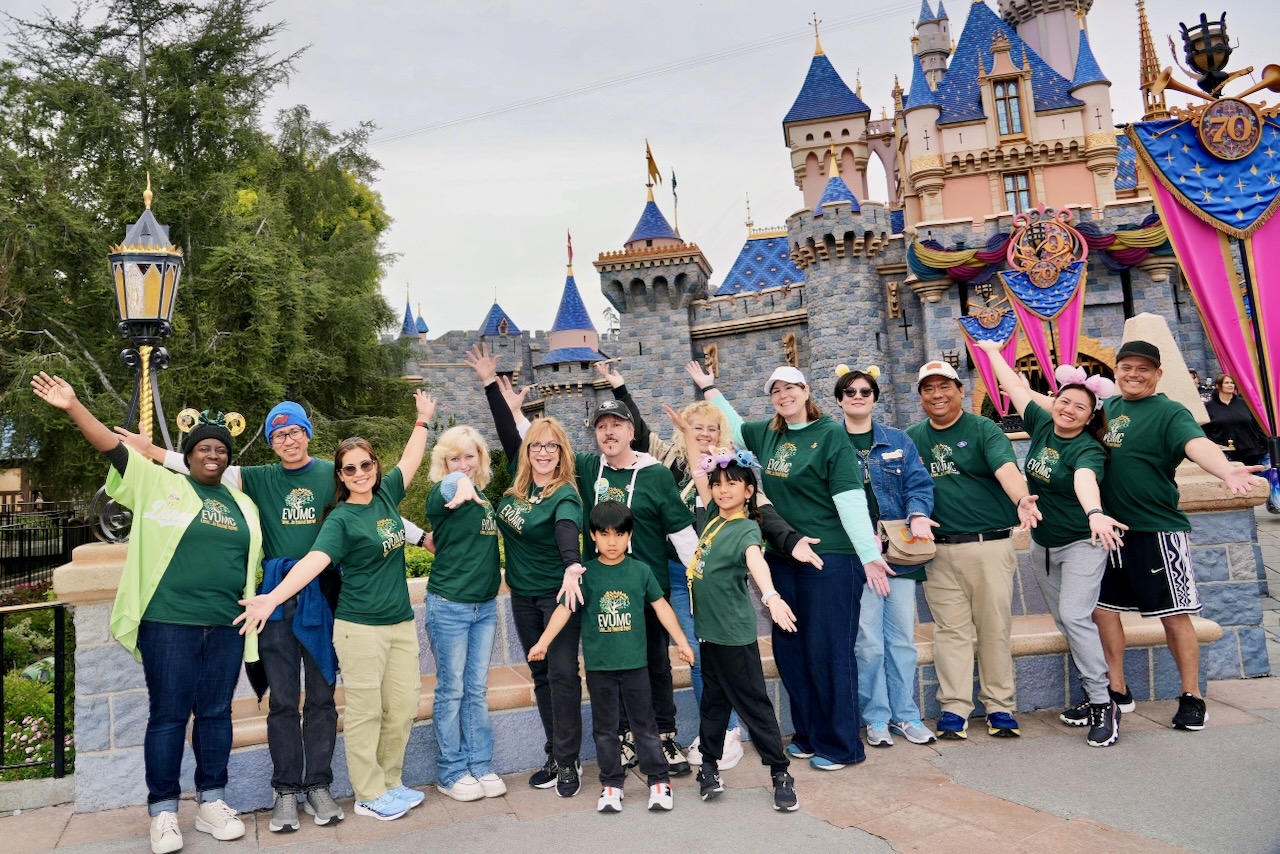
Our Faith and Family Trip was all about change this year.
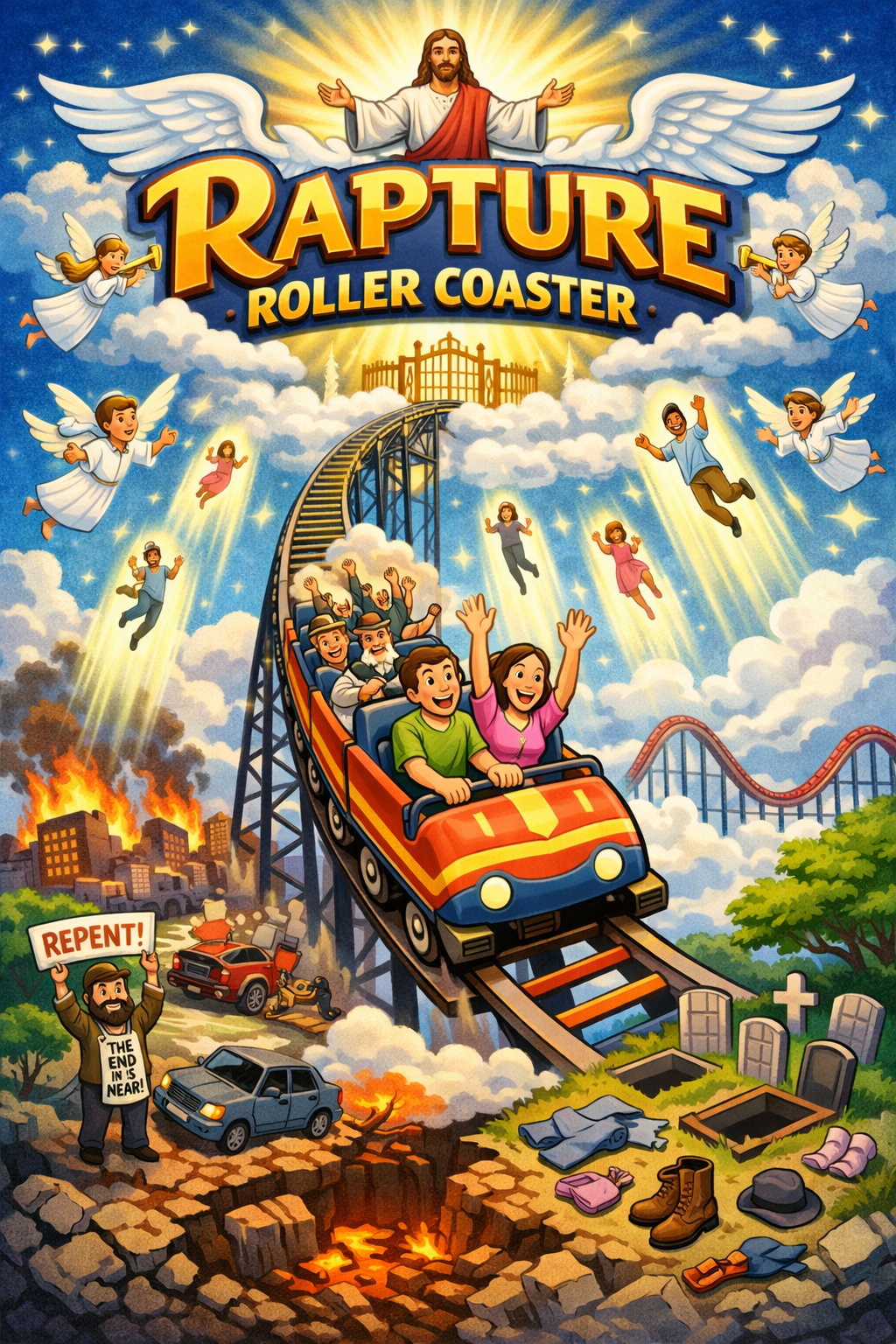
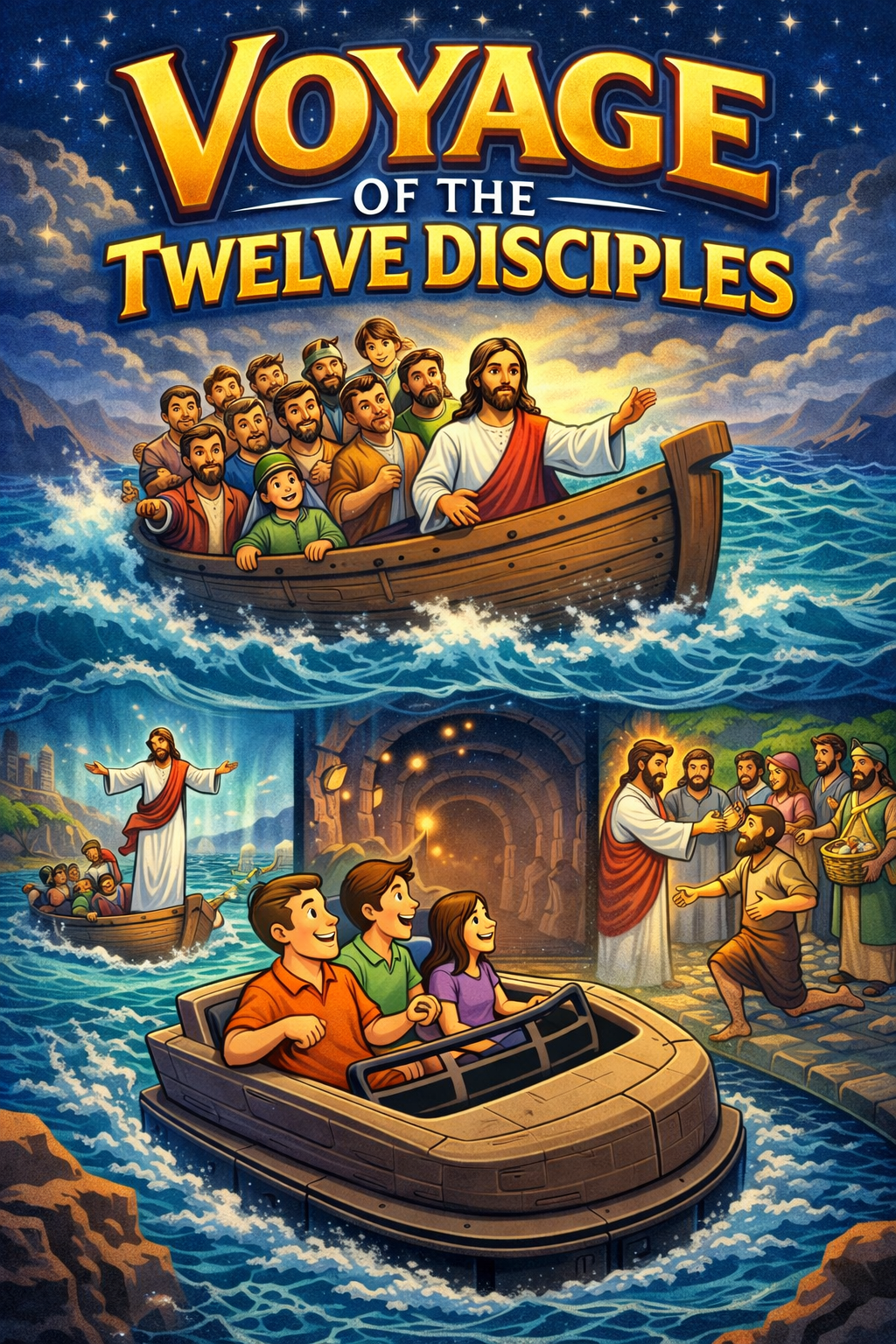
Because it’s something Disney does well. Instead of resisting change they lean into it. Do they always do it well? No. The entire Bob Chapek era is a good example of that. But overall, Disney has been able to navigate the rivers of change better than almost anyone. And it’s a lesson churches would do well to learn from. Now, in no way am I saying we should build a Rapture roller coaster out on the back lawn or a Voyage of the Twelve Disciples dark ride to draw people in (although both would probably do the trick). But too often, we dismiss what we can learn from others and pass up opportunities that could help us achieve our goal – to bring the love of Christ to the world. Call it pride. Call it ignorance. We don’t always embrace change well. In fact, we often reject it, especially if it comes from outside our walls.
I don’t need to tell you how quickly the institution of the church is becoming irrelevant.
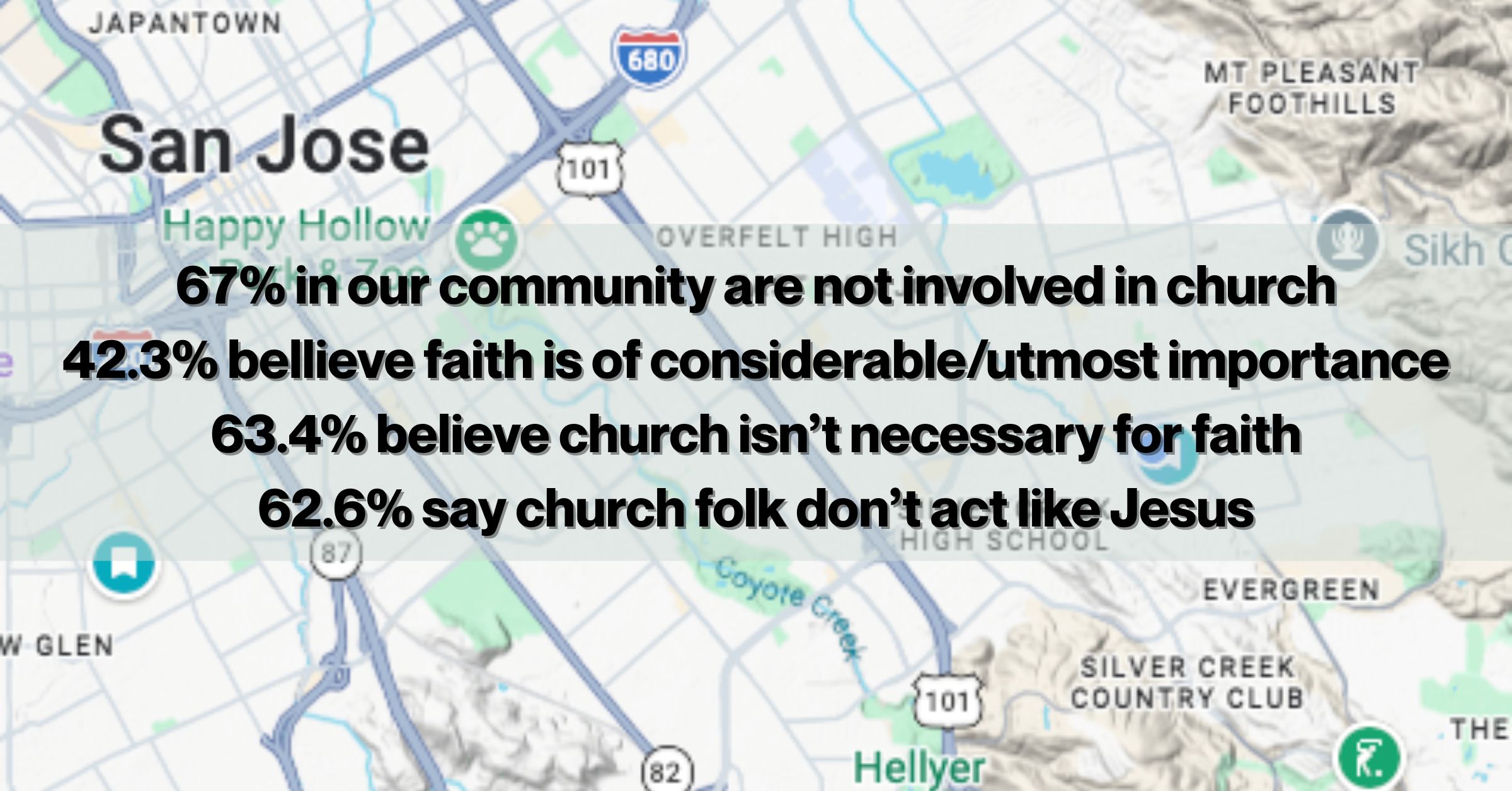
Church attendance is down everywhere. And it’s not just attendance. People’s attitudes are shifting away from church. Not Jesus. Not God. Not the teachings of Christ. But organized religion is becoming a tougher and tougher pill to swallow. According to Pew Research, 28% of Americans identify as “religiously unaffiliated,” up 12% from just 2007.[5] Of those, 49% identify as spiritual or say spirituality is very important to them.[6] It’s not necessarily they don’t believe in God or are not open to the idea of a higher being, but rather something else has convinced them they don’t need a community to develop their faith. Surprisingly, 70% of religiously unaffiliated people (which includes atheists and agnostics) say they DO believe in God or a higher power; 67% believe people have a soul as well.[7] In our local area, about two-thirds of people are not involved in a religious institution and yet over 80% find religious faith to be somewhat important to their lives, and 42.3% find it to be either of considerable or utmost importance.[8] They just don’t think they are going to find God in the church. In a survey of our community (of OUR community!) the number of people who said church wasn’t necessary for faith was 63.4% and the percentage of people who said church folks don’t behave like Jesus went up by more than 100% – from 28.2% all the way to 62.6% in just four years.[9] If we are going to help people become disciples of Christ, we are going to have to change.
The willingness to change is important.
When something isn’t working, you have to adapt. That’s one of the ways Disney has been so successful. More than most companies, Disney does the hard work to avoid the pitfalls BEFORE they happen, and they do that by adapting quickly to the outside world. That doesn’t change their core beliefs or the purpose of the company. But they find ways to achieve their goals by being willing to change when it’s needed. This isn’t just a Disney philosophy. We see the apostle Paul echoing this same sentiment in his letter to the church at Corinth. If you’ll please follow along in your Bibles or your Bible app, let’s hear this morning from Paul’s letter. From 1 Corinthians 9:19-23, let’s hear the Word of God.
19 Though I am free and belong to no one, I have made myself a slave to everyone, to win as many as possible. 20 To the Jews I became like a Jew, to win the Jews. To those under the law I became like one under the law (though I myself am not under the law), so as to win those under the law. 21 To those not having the law I became like one not having the law (though I am not free from God’s law but am under Christ’s law), so as to win those not having the law. 22 To the weak I became weak, to win the weak. I have become all things to all people so that by all possible means I might save some. 23 I do all this for the sake of the gospel, that I may share in its blessings. – 1 Corinthians 9:19-23
Maybe the Brady Bunch said it best.
“When it’s time to change, it’s time to rearrange, who you are into what you’re going to be.” Paul is the model for change. There’s no one in the Bible who had a more drastic about face in his thinking than Paul and arguably people would say Paul did the most for bringing the love of Christ to others. He felt helping others to know Jesus was so important he would adapt to whatever circumstance he was in. He called it being made “a slave to everyone, to win as many as possible.” He didn’t consider it demeaning or compromising to adapt to his surroundings. In fact, he felt it was necessary to meet people where they were. Whether it was with the Jews or with the Gentiles or with anyone else, he was willing to do whatever was necessary to help them understand what it meant to follow Christ. We need to meet people where they are, not where WE want them to be. And that means changing how we relate to the world. Paul says in verse 22, “I have become all things to all people so that by all possible means I might save some.” Even Paul knew he wasn’t going to save the entire world by himself. Still, to even help some, he knew he would have to constantly change how he related to people. He couldn’t afford to wait for people to come to him and we need to do the same. The church of the 22nd century is going to be completely different from the church of the 21st. We need to be open to new ways and ideas.
What are we willing to do for Jesus?
Can we be like Disney or better yet, can we follow the example of Paul? Can we be “all things to all people so that by all possible means we might save some?” It’s not easy, but then God has never asked us to do what’s easy. He just promises to be there with us as we do it. God is challenging us to get our of our comfort zone and be willing to do what needs to be done. Sometimes that means changing the songs we sing in worship. Sometimes that means changing how we deliver God’s message. Sometimes it means being open to new ideas and new ways of doing things. But it can be done. It is never too late to change. When I was in New Church Development class, one of my friends told me the story of this man who came to worship. In worship, they played hard rock music, modern music, and loud music. This man, an older gentleman who usually went to a traditional hymn singing church, sat in the back every week and every week made a healthy donation to the church. Finally, my friend the pastor, came up to him and asked him why he was there. He said, “I know this isn’t your type of music or your type of crowd, so why come here?” And the guy said, “You’re right. This really isn’t my type of worship, but my grandkids love it and I’ll do whatever I need to do to make sure they find a church they can connect to.” How refreshing to see someone who really gets it. I know many of you do, too. Because helping people to know the living God is worth the sacrifice. The method may change, but the message never will. And the world needs that message more than ever before. If we are to be effective in reaching people with the love of Jesus we have to change with it.
One of the keys to Disneyland’s ongoing success is their willingness to change.
Walt was never afraid to do something different if it meant creating an environment that would welcome his guests. He once said, “To keep an operation like Disneyland going, you have to pour it in there. It’s what I call, ‘Keeping the show on the road.’ You have to keep throwing it in; you can’t sit back and let it ride.”[10] The same is true for the church and is true for ourselves. We can’t afford to sit back and let it ride. We need to challenge ourselves to grow and learn and get better at whatever it is we are doing. Whether that’s in the church, outside of the church, with our families, or even ourselves. I hope and pray that we will always have that spirit of being able to embrace change. When we are willing to change, we can change the world.
[1] It was actually hard to find the replacement cost of retainers because they vary widely, but Polident (the denture people) give us a clue.
[2] https://en.wikipedia.org/wiki/Disney_California_Adventure
[3] https://www.sfgate.com/disneyland/article/disneyland-california-adventure-history-21330033.php
[4] Ethan Smith, “Disney CEO Turns Slump Into A Springboard,” Wall Street Journal, Nov. 8, 2010.
[5] Pew Research Center, “Religious ‘Nones’ in America: Who They Are and What They Believe,” Pew Research Center, published January 24, 2024, https://www.pewresearch.org/religion/2024/01/24/religious-nones-in-america-who-they-are-and-what-they-believe/ .
[6] Ibid, https://www.pewresearch.org/religion/2024/01/24/are-nones-spiritual-instead-of-religious/ .
[7] Ibid, https://www.pewresearch.org/religion/2024/01/24/are-all-nones-nonbelievers/ .
[8] Mission Insite, The ReligiousInsite Report: 2.5 mi Around 3520 San Felipe Road, San Jose, California 95135, United States, (Florence, SC: ACS Technologies, October 10, 2024), 25.
[9] Ibid, 8.
[10] http://www.ocregister.com/articles/disney-671663-disneyland-imagination.html
 Craig's Corner