
Line Item Giving

If you love God, raise your hand.
Now, raise it a bit higher. REALLY show the world you love God! Ask yourself why didn’t you do that in the first place? Why not thrust your hand in the air as high as it could go the first time? Maybe we’re just a bit unsure. Maybe we’re a little bit afraid. Afraid of being made a fool. Afraid of being the only one out there. Afraid of what others will think of us. We are often fueled by fear. And that’s why we have a hard time to being as bold as God wants us to be. It’s hard to overcome that fear, but that fear affects every part of our lives. From our relationships to our work lives to our faith and we can see that fear become manifest when it comes to giving. We might feel like we SHOULD be giving more or that we COULD be giving more, but fear holds us back from actually doing it. Fear about how the money will be used. Fear about if the people in charge will spend it wisely. Fear of not having enough for what we want to do. But what if giving wasn’t really about money. What if giving was in fact really about your trust and faith in God?
God doesn’t need your money.
It’s all his anyway. Psalm 24:1-2 – “The earth is the LORD’s, and everything in it, the world, and all who live in it; for he founded it on the seas and established it on the waters.” It ALL belongs to God. Giving is about our faith and trust. If you have your Bibles or a Bible app on your phones, would you please go to 2 Corinthians 9:6. In this letter to the church at Corinth, one of the things Paul hoped to accomplish was to get a donation from the church so more churches could be built. I don’t know if this was the first sermon on giving outside of Jesus, but there is no doubt that was Paul’s goal. He wanted to convince the Corinthians to challenge themselves in giving. Earlier he wrote, “But since you excel in everything — in faith, in speech, in knowledge, in complete earnestness and in the love we have kindled in you— see that you also excel in this grace of giving. I am not commanding you, but I want to test the sincerity of your love by comparing it with the earnestness of others. For you know the grace of our Lord Jesus Christ, that though he was rich, yet for your sake he became poor, so that you through his poverty might become rich (2 Corinthians 8:7-9).” Sounds like a guilt trip, right? Maybe it was a little bit. But Paul was earnest in his desire to challenge the congregation to grow their faith through giving. See what he says right there in verse 8? “I am not commanding you, but I want to test the sincerity of your love by comparing it with the earnestness of others.” Later, he makes it clear he’s not challenging the AMOUNT they give, but their faithfulness in giving. The amount matters very little. It’s our faith and trust in giving that is the most important thing. Which leads us to our passage today.
6 Remember this: Whoever sows sparingly will also reap sparingly, and whoever sows generously will also reap generously. 7 Each of you should give what you have decided in your heart to give, not reluctantly or under compulsion, for God loves a cheerful giver. 8 And God is able to bless you abundantly, so that in all things at all times, having all that you need, you will abound in every good work. 9 As it is written:
“They have freely scattered their gifts to the poor;
their righteousness endures forever.”[a]
10 Now he who supplies seed to the sower and bread for food will also supply and increase your store of seed and will enlarge the harvest of your righteousness. 11 You will be enriched in every way so that you can be generous on every occasion, and through us your generosity will result in thanksgiving to God.
12 This service that you perform is not only supplying the needs of the Lord’s people but is also overflowing in many expressions of thanks to God. 13 Because of the service by which you have proved yourselves, others will praise God for the obedience that accompanies your confession of the gospel of Christ, and for your generosity in sharing with them and with everyone else. 14 And in their prayers for you their hearts will go out to you, because of the surpassing grace God has given you. 15 Thanks be to God for his indescribable gift! – 2 Corinthians 9:6-15

I think we are all challenged to be “cheerful givers.”
I don’t know of many people who give the way Paul challenges us to give. He says in verse 7, “Each of you should give what you have decided in your heart to give, not reluctantly or under compulsion, for God loves a cheerful giver.” But there IS a part of us that is reluctant to give. Part of that is because plain and simple, we’re a little bit selfish. And we feel like we have a right to be. After all, we earned this money! We worked hard to get it and we want to spend it the way we want to spend it. The other part is even when we want to give, we don’t always trust the people we’re giving it to. We’ve heard about the seemingly ridiculous cost spent by the government like the $7,622 coffee brewer that the Air Force bought.[1] But it doesn’t even have to be on that scale. You’ve probably watched friends and family spend money on things you would consider a complete waste. Maybe it’s your kids, your parents, or even your spouse. “How much did that coffee maker cost?” “Why did you buy Tylenol when the store brand would have been fine?” “How many times a year do you need to go to Disneyland?” That one might have been from personal experience (actually Cassie is very understanding about my need for Disney). It’s hard to just be a cheerful giver because once we give it, we don’t have a lot of say in how it’s spent and that bothers us a lot because what if they waste it?

And that’s the challenge for us – to have faith and trust in our giving.
But we confuse faith and trust in GOD with faith and trust in how our money is being spent. It’s the difference between giving to give and giving to get. Are we giving cheerfully or conditionally? When we give for the sake of giving, it becomes more about developing our faith and trust in God. It’s about developing a heart of generosity. But we when we give to get, we care an awful lot about the outcome of our giving. We want to know how THEY are spending OUR money, and while that might on the surface seem rewarding, we are missing out on the greater transformation of becoming generous people. Being a cheerful giver is part of our developing relationship with God, the building of our faith and trust. Look at the rest of the passage from Paul’s letter, verses 12-15. “This service that you perform is not only supplying the needs of the Lord’s people but is also overflowing in many expressions of thanks to God. 13 Because of the service by which you have proved yourselves, others will praise God for the obedience that accompanies your confession of the gospel of Christ, and for your generosity in sharing with them and with everyone else. 14 And in their prayers for you their hearts will go out to you, because of the surpassing grace God has given you. 15 Thanks be to God for his indescribable gift!” Paul tells us here giving isn’t just about helping others’ physical needs, but it is a way of saying thanks to God for the gifts you have been blessed with. It’s a way of witnessing to others your love for Jesus. And in your spirit of giving, you will be blessed in return. It may not be in the tangible ways we expect when we give to get, but it can instead be in growing our faith or growing closer to God or learning to value the things money can’t buy. Giving is about the building up of faith and trust in God. And when we withhold our gifts and graces, we are not just cheating God but cheating ourselves of an opportunity to become who God wants us to be.
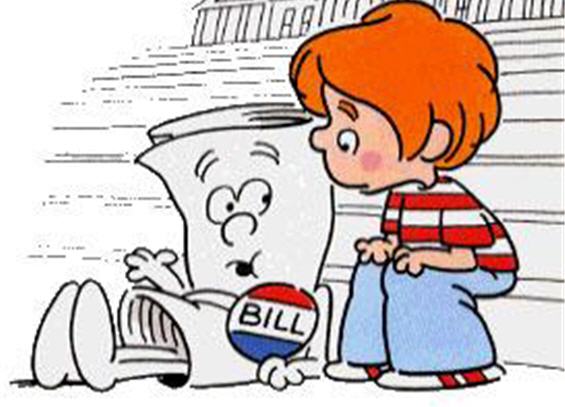
When we focus only on the outcome of our giving, we become line item givers.
We want to pick and choose the outcome of our giving like the Line Item Veto Act of 1996. Congress passed a law giving the President the authority to veto portions of the federal budget without having to veto the whole thing. That way they could pass a budget without worrying about a federal shutdown and we all know how real THAT threat is. But the Supreme Court ruled it unconstitutional because it cheated the system. It might be faster and more efficient, but at the price of the faith and trust of the people the government was created to serve. The same is true about our personal giving. We love the idea of line item giving – of giving only to those things we believe in. But that assumes we know better where our money needs to go than other people. And while we certainly know what we want and what we like better than anyone else, that doesn’t mean we know where it might be used the best or where it might be needed the most. That’s where our trust and faith come in. At a certain point we need to let go of our need for control. Will there be times people waste the gifts we share? Sure. But what God cares about isn’t your money, but your heart and when we worry so much about the outcome of our giving, our hearts grow cold and cynical. But when we give cheerfully and let go of our fears, we gain something for ourselves – a heart of faith and trust. By the way, this isn’t just about money but about everything we have to give – our time, our talents, and our service, too. When you give freely, you gain something greater – a heart for living that will bring you peace and freedom from anxiety. When you withhold, you come to a poverty of spirit and a poverty of friendship, trust, love, and other things God wants to bless you with. In whatever ways you give, reflect today on your heart for giving. Let go of your fear and doubt. Let go of your need for control and instead turn it over to God. Be the cheerful giver God hopes for you to be.
[1] Why coffee pots cost so much on planes – more to it than you think. Not so ridiculous when you realize what goes into it, but on the surface we make snap judgements about waste.
 Craig's Corner