
Festivus for the Rest of Us
“A Festivus for the rest of us!”
George Costanza’s father shouted that line in a 1997 episode of Seinfeld. Frank Costanza, tired of the rampant commercialization of Christmas, decided to make his own holiday called Festivus. As he proclaimed, “A Festivus for the rest of us!” Instead of a Christmas tree, there was a Festivus aluminum pole completely unadorned because tinsel bothered George’s father. There was the traditional Festivus dinner, the Feats of Strength, and my personal favorite, the Airing of Grievances where you sat around the table and told everyone how they bothered you this past year. Festivus was meant to be a parody of the holiday season, but there are people today who still celebrate it as a holiday. A workplace with a very diverse group of employees decided to have a Festivus party to be inclusive of everyone’s beliefs. One guy at the office felt it was so blasphemous he tried to knock down the Festivus pole.[1] The lead organizer said, “Grievances were aired about him.” But he’s not the only one with a humbug attitude. Two groups, The Catholic League and the New York Board of Rabbis, joined together to condemn another made up holiday, Chrismukkah, saying it was “insulting” to both Jews and Christians.[2] Theologically you can make the argument the two are not compatible, but is that really the issue or is it us?
Sometimes, when we feel challenged, we become defensive.
And people can be awfully defensive about Christmas. But are we defensive for the right reasons? Christians protest when nativity scenes are taken down in public places. Some get upset when companies tell their employees to say, “Happy Holidays” instead of “Merry Christmas.” But we don’t seem too worried there are people who can’t afford to put food on the table or are living in the streets. Instead of focusing on the things Jesus would be concerned about we act as if somehow Christianity will cease to exist if it’s not being celebrated publicly. We forget that Christmas is a completely made-up holiday. For that matter, so is Advent.

People love opening Advent calendars.
But few realize it’s much more than just a countdown to Christmas. For Christians today, it’s a season of preparation for the coming of Christ. In fact, “Advent” literally means “coming.” But originally, it wasn’t about the birth of Christ at all. Instead, it was the six-week period leading up to the Epiphany and during that time followers celebrated all the aspects of Jesus’ early life up to the first miracle at the wedding in Cana. It would be another 200 years before it focused on the coming of Christ, but instead of the birth of Jesus, it focused on his second coming.[3] It would be another thousand years before it would become what we are familiar with today. For most of recorded history, Advent wasn’t about the birth of Christ at all.
Which, by the way, didn’t happen on December 25th.
You probably know that by now, but I grew up associating December 25th with the birth of Jesus. Even friends of mine who are not Christian believe that’s what the holiday is all about. But the truth is, no one knows precisely when he was born. One book I read explained it was likely Jesus was born in the Spring since the Bible refers to shepherds who were tending their flocks at night, something they wouldn’t have done in the dead of winter. But no one ever wrote it down because to the early church it wasn’t important. The two biggest events in the church calendar were Epiphany and Easter. Christmas wasn’t even on the radar. It would take 400 years after Jesus’ actual birth before Christians started to celebrate it. Which also, by the way, wasn’t in 1 AD. Most scholars today will tell you Jesus was likely born somewhere between 2 and 7 BC, which translated from the Latin means “before Christ.” Because of an error in calculation, the guy who invented the counting of years was off. I don’t know how you miscalculate years, but there you have it. The first actual Christmas was not December 25th, 1 AD but sometime in the Spring of 2-7 BC.
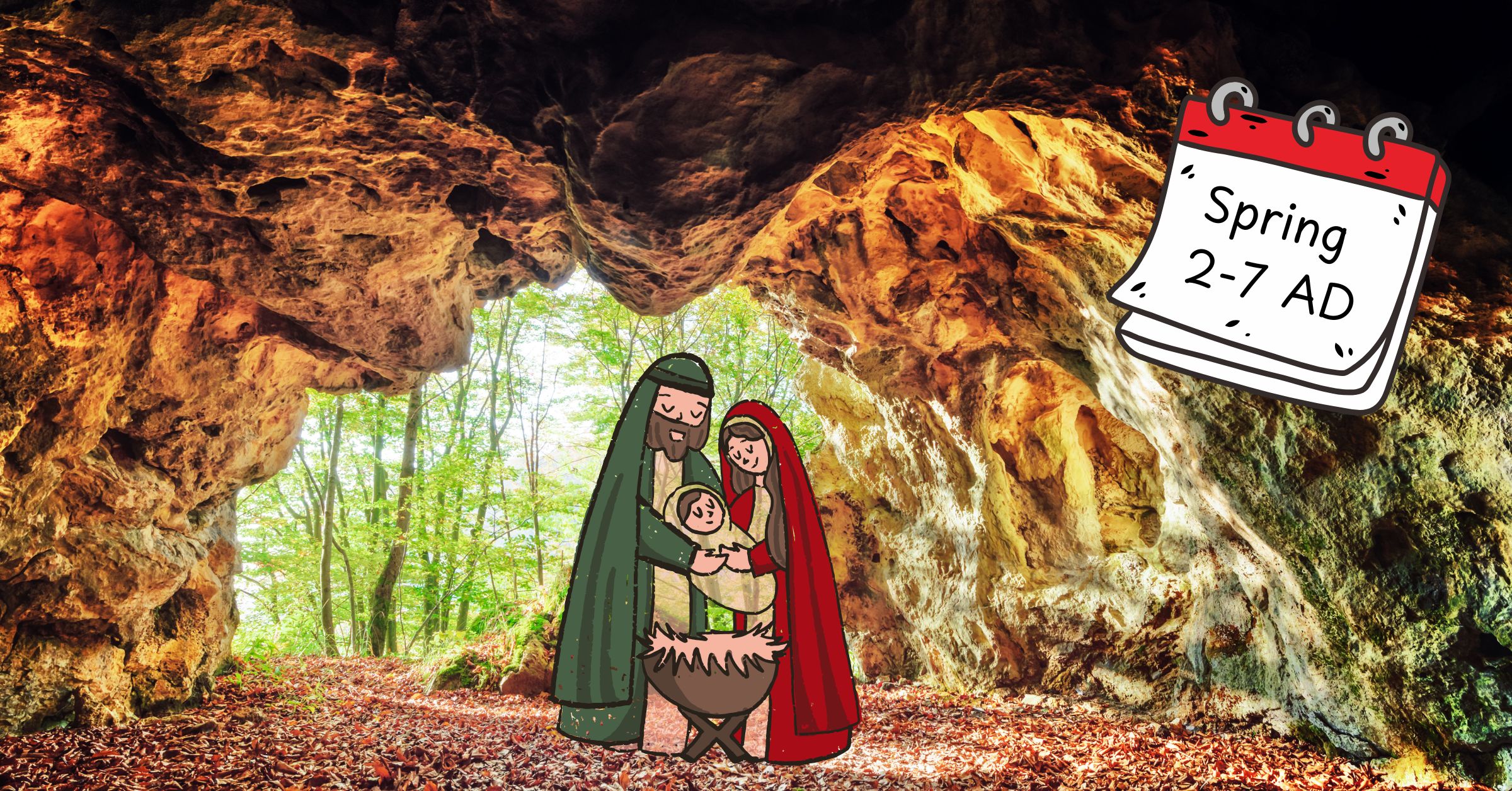
But none of that really matters.
What we need to focus on during the Christmas season is the “why,” not the “when.” Other than the event itself, the rest of what we think of as a traditional Christmas was created by human beings. The date, the season, the traditions, even the giving of gifts did not happen on the day Jesus was born. The only gift given that day was God’s gift to us in the form of a baby in a manger. Which is the reason we celebrate. Sometimes we forget the reason for the season and celebrate the traditions more than the event itself. For today, let us be reminded of that evening long ago that changed the world.
8 And there were shepherds living out in the fields nearby, keeping watch over their flocks at night. 9 An angel of the Lord appeared to them, and the glory of the Lord shone around them, and they were terrified. 10 But the angel said to them, “Do not be afraid. I bring you good news that will cause great joy for all the people. 11 Today in the town of David a Savior has been born to you; he is the Messiah, the Lord. 12 This will be a sign to you: You will find a baby wrapped in cloths and lying in a manger.”
13 Suddenly a great company of the heavenly host appeared with the angel, praising God and saying,
14 “Glory to God in the highest heaven,
and on earth peace to those on whom his favor rests.” – Luke 2:8-14
This is the importance of Christmas.
The birth of Christ into the world. “Today in the town of David a savior has been born to you; he is the Messiah, the Lord.” In all the hubbub of the Christmas season, it’s good to simply share in the story of the birth of Christ and be reminded of the significance of that moment when “a great company of the heavenly host appeared” saying, “Glory to God in the highest heaven and on earth peace to those on whom his favor rests.” When I mentioned we need to focus on the “why” instead of the “when,” this is the “why” we need to focus on – why we celebrate the season. We celebrate the fact that God humbled himself to enter into the world just as we do. God became man to lead us, guide us, and share with us the good news of salvation that comes through him. The good news the angel refers to is of course the birth of Jesus and as we like to say, he is the reason for the season. Instead of getting focused on the details of Christmas or complaining about the commercialization of Christmas or worried the season is losing its meaning, we need to instead focus on the meaning ourselves. Because Christmas isn’t a date on a calendar, it’s a way of living. Jesus comes alive when we love one another. And in that way, everyday can be Christmas.
Let me tell you a story about a friend of mine named Mark Thompson.
We went to Cerritos Elementary School and had most of the same teachers all the way up through fourth grade. Mark recently had his 14th birthday. That’s right. His 14th birthday. And I don’t mean because he’s young at heart. I mean literally, his 12th birthday. If you haven’t figured it out already, Mark is a “leaper” or “leapling” as they call it. He was born on February 29th, 1968, the same year as I was born. Yet he is only 11 years old because of the way we keep time on the calendar. Since his actual birth date only occurs once every 4 years, he is only one-fourth of my age. But is he really? We’ve lived the same number of days – actually I’ve lived less of them since my birthday is after his. But Mark used to like to say that he’d live to be a lot older than me because he’s aging only a fourth as fast as I am. I hate to break it to him, but he’s not really aging slower than anybody. Just because the date of his birth only shows up on a calendar once every four years, doesn’t take away from the fact that he’s still aging like the rest of us. All of that to say that December 25th is just a number. Christmas should live in our hearts every day.
[1] Taken from a story on the CNN website back in 2009. The story has since been removed.
[2] https://www.catholicnewsagency.com/news/2646/new-york-rabbis-join-catholic-league-to-denounce-chrismukkah
[3] https://www.up.edu/garaventa/did-you-know/meaning-advent.html – in fact, Advent does mean coming, but it’s Greek derivative is “Parousia” which refers to the second coming of Christ.
 Craig's Corner