
The Sound of Music
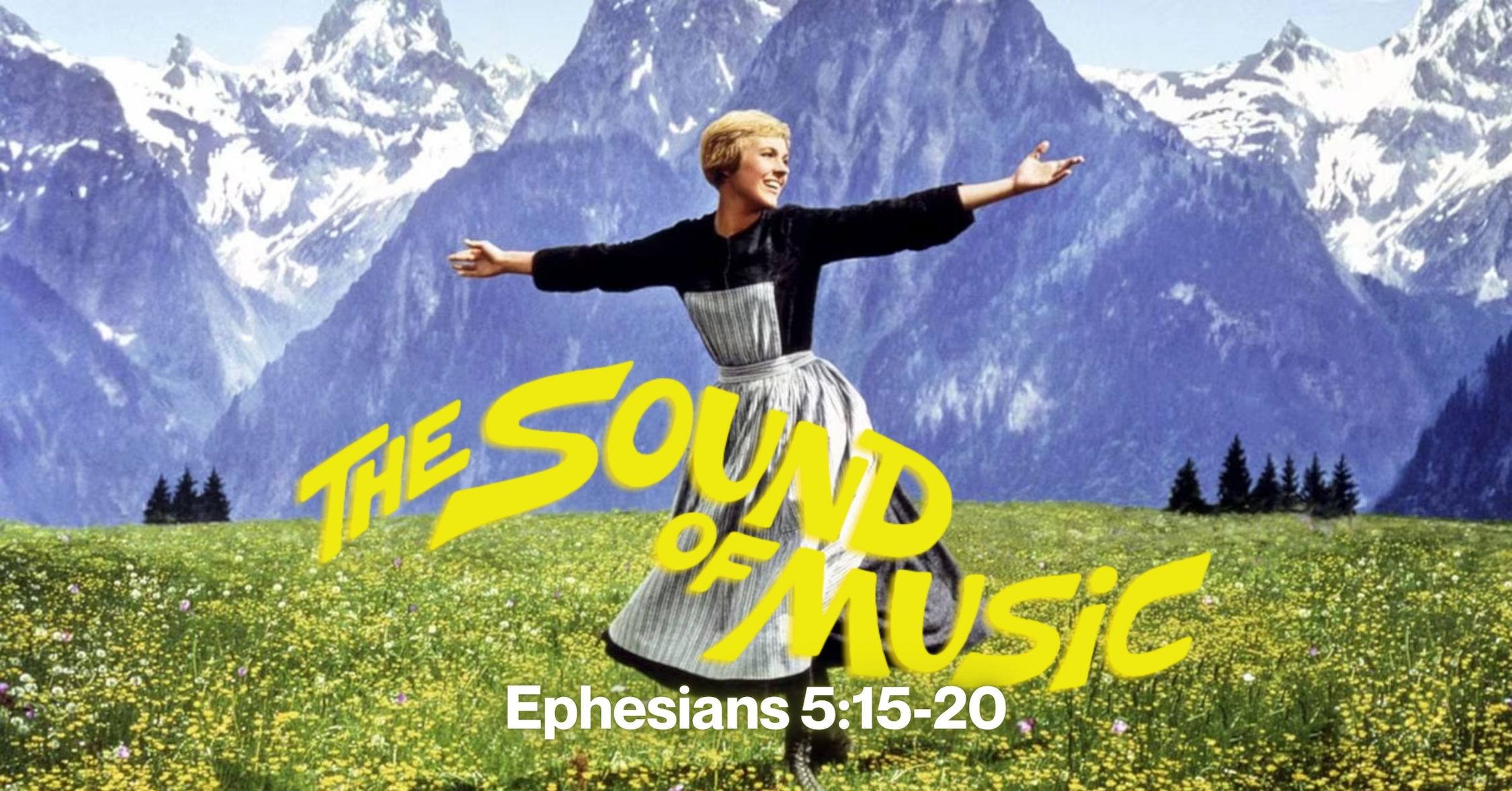
To sing or not to sing – that is the question.
Whether ‘tis nobler to wait until Christmas
Or to dive headlong into temptation’s arms
Do we sing songs only of Advent subjects
Or do we dare to sing songs about Christmas? – inspired by Hamlet
That argument has been an ongoing question in churches all across America. Maybe all over the world. When do we sing Christmas songs? Outside the church, as soon as Halloween ends. You start hearing the first trickle of it in stores right as November rolls around. I mean, you have to play Christmas songs for all those pre-Black Friday sales, right? I’m old enough to remember when Black Friday WAS on the Friday after Thanksgiving. But this year, nearly every store was having an “Early Black Friday” sale or a “Pre-Black Friday” sale or a “Black Friday Two Weeks Early” sale. Seriously. Have you seen this? The Christmas season starts so early you can’t help but hear Christmas music everywhere. But there’s one place where you often don’t hear the sounds of Christmas during this time. Church. Isn’t that weird?

Tradition dictates that Christmas songs are reserved for the Christmas season.
Which for the church STARTS on Christmas Day with the birth of Jesus and goes for two weeks up to Epiphany. Many churches hold off on singing Christmas songs until Christmas Eve. But for the rest of the world, the Christmas season IS Advent. As Pastor Tom Hobson put it, “The average person walks into church on December 28 and is not expecting to hear Christmas carols, because in their view, the season has come and gone.”[1] That feeling is true for folks who have been in church all their lives and for those who only come on holidays. People CRAVE to hear those Christmas favorites! It helps put them in the Christmas spirit and isn’t that a good thing? Encouraging people to express love, joy, hope and giving are all Christ-like traits and if hearing a few songs like “Angels We Have Heard on High” does that, then why hold back?

You certainly can’t avoid hearing Christmas songs everywhere else.
We hear them on the radio, in shopping malls, in elevators; it is such a natural part of the holiday that for many it wouldn’t be Christmas without Christmas music. But did you know churches only began singing Christmas songs as we know them within the past 150 years? It wasn’t until the late 19th century when Christmas carols moved from the streets into the walls of the church, even though Christmas carols had been around for hundreds of years before that. Perhaps the most famous example is the “Festival of Nine Lessons and Carols” that began in Cornwall, England back in 1880.[2] 1880! It’s weird to think historians could trace something like that so specifically but weirder to think that for nearly nineteen centuries nobody sang a song like “The First Noel” inside of a church. Like most music today, the best songs were sung in the streets, at festivals, at parties, but not in worship. Even then the church was behind the times. If you heard music at all during worship, it would be some kind of somber tune, usually in Latin.[3] But there was a hungering among people, just as there is now, to celebrate the life of Christ through music, and so the Christmas carols we know and love sprang to life – outside of the church.
We can’t help but sing these songs.
People are wired to lift praise and thanksgiving for their blessings and for Christians we direct that praise and thanksgiving into the hands of God and of his son Jesus Christ. So, even when the church could not get with the program in those early days, the spirit of praise and thanksgiving could not be stopped, and people wrote these songs that we love today. For anyone who casually reads the Bible, that is no surprise. The pages of the Bible are filled with people lifting praise to God in song, in prayer, and in their actions. Paul wants to encourage that kind of living and he writes this letter to the church at Ephesus where he includes this passage.
15 Be very careful, then, how you live—not as unwise but as wise, 16 making the most of every opportunity, because the days are evil. 17 Therefore do not be foolish, but understand what the Lord’s will is. 18 Do not get drunk on wine, which leads to debauchery. Instead, be filled with the Spirit, 19 speaking to one another with psalms, hymns, and songs from the Spirit. Sing and make music from your heart to the Lord, 20 always giving thanks to God the Father for everything, in the name of our Lord Jesus Christ. – Ephesians 5:15-20

Singing is central to worship.
Singing is central to worship. Not a controversial stance, I know. It’s important to note though Paul doesn’t say what kind of songs we should sing or when we should sing them. He only has one guideline. “Sing and make music from your heart to the Lord… (Verse 19)” I love that when they numbered the verses, they cut it off right there in mid-sentence. “Sing and make music from your heart to the Lord.” If it comes from your heart, that is what matters. My other favorite reference to singing? “Make a joyful noise to the Lord, all the earth (Psalm 98).” Because that’s what I do. Make a joyful noise. When we sing, you don’t have to worry about being in tune or having perfect pitch. It’s about the joy in your heart. Now the people around you might appreciate it, but God is pleased with what comes from inside.
The only “right way” to sing is with this in mind.
The early church would adopt customs and traditions of the surrounding culture to better fit in and appeal to the people around them. That’s how we got Christmas in the first place. Flexibility is our approach to the Gospel is a key component to reaching others for Christ. But that doesn’t always happen. Especially as Christianity has become more dominant, many have become more stuck in their ways, believing others should bend to our will instead of the other way around. One United Methodist minister was even quoted in USA Today as saying, “You would not sing ‘Christ the Lord is Risen Today’ on Good Friday…You don’t throw in Christmas hymns for the sake of appeasing people who want to sing.”[4] But do you think Jesus would care if we sang “Christ the Lord is Risen Today” on Good Friday if it brought someone to faith? Breaking with tradition is hard for some, but we need to remember what is truly important. Bringing people to faith in Christ.
There’s nothing wrong with tradition.
Only when it gets in the way of doing the work of Jesus. Traditions are important. They help to ground us. They help us to remember all that came before. But when adhering to tradition starts to get in the way of doing Christ’s work in the world., we need to remember to be flexible. While we should never compromise the message of Christ, we can alter the delivery if it helps others to see Jesus in a way that brings them closer to God. Singing Christmas songs during this season of Advent is not a compromise of our beliefs, but today it is a way for us to more easily get in the Christmas spirit, and shouldn’t we always be doing that? Keep in mind that almost all of the Christmas traditions we hold onto so tightly are human inventions. Advent itself was one of those inventions and has changed many times throughout the history of the church. But the message of Christmas, that God came to Earth to save us and bring us closer to him, is the truth of Christmas and the only one we need to hold on to. For those who believe, every day is Christmas. In the name of the Father and of the Son and of the Holy Spirit. Amen.
[1] https://pres-outlook.org/2010/11/christmas-carols-during-advent/
[2] http://en.wikipedia.org/wiki/Christmas_carol ; http://www.whychristmas.com/customs/carols_history.shtml
[3] Ace Collins, Stories Behind the Best-Loved Songs of Christmas, p. 53.
[4] http://www.usatoday.com/news/opinion/forum/2010-12-13-column13_ST_N.htm
 Craig's Corner