
Open 24/7

Do you know about PJS?
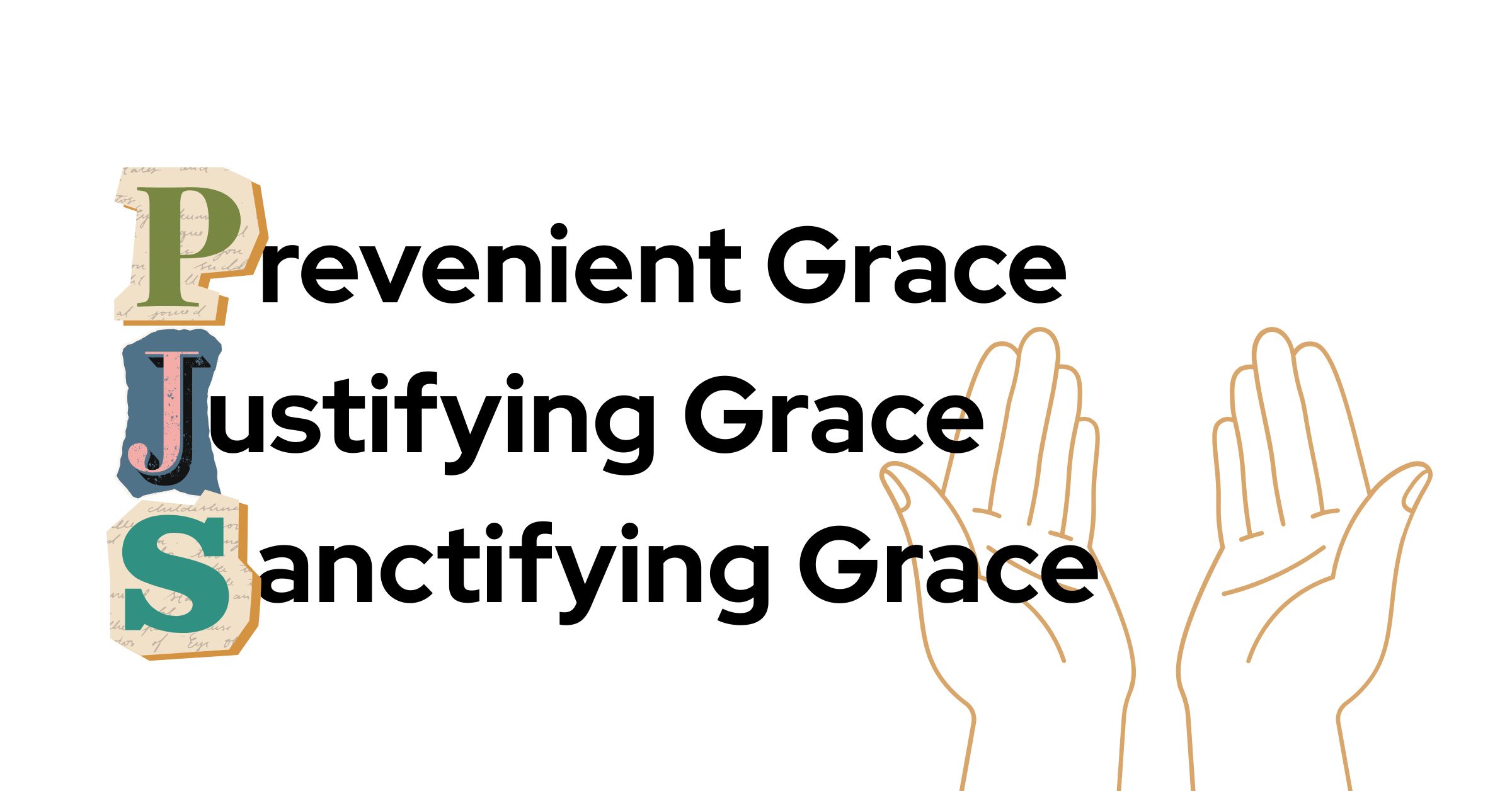
And I’m not talking about the nighttime clothes you wear to bed. PJS is a simple acronym to describe how John Wesley understood the grace of God. The letters, P, J, and S, stand for prevenient, justifying, and sanctifying grace. It may sound like Wesley believed in three different types of grace, but it might be better to think of them as STAGES of grace instead of different types. We move through the grace of God draw closer to him in that order – P, J, S – prevenient, justifying, and sanctifying grace.
But what is “grace?”
If you have a Bible or a Bible app please find Paul’s letter to the Ephesians, chapter 2, beginning with verse 1. Ephesians 2:1. We talk about grace all the time and in so many ways I think we sometimes lose sight of what it means. Put simply, grace is the unmerited, undeserved gift of God that moves us toward Him. God continually acts in the world to draw us closer not because of anything we said or did but just because he loves us and wants to be part of our lives. Paul talked about it in his letter to the church in Ephesus that we’ll read together this morning.
As for you, you were dead in your transgressions and sins, 2 in which you used to live when you followed the ways of this world and of the ruler of the kingdom of the air, the spirit who is now at work in those who are disobedient. 3 All of us also lived among them at one time, gratifying the cravings of our flesh and following its desires and thoughts. Like the rest, we were by nature deserving of wrath. 4 But because of his great love for us, God, who is rich in mercy, 5 made us alive with Christ even when we were dead in transgressions—it is by grace you have been saved. 6 And God raised us up with Christ and seated us with him in the heavenly realms in Christ Jesus, 7 in order that in the coming ages he might show the incomparable riches of his grace, expressed in his kindness to us in Christ Jesus. 8 For it is by grace you have been saved, through faith—and this is not from yourselves, it is the gift of God— 9 not by works, so that no one can boast. 10 For we are God’s handiwork, created in Christ Jesus to do good works, which God prepared in advance for us to do.
Paul wants us to know we all need the grace of God.
Without it as Paul noted, we’re dead, meaning there is no future for us beyond this earth. Only because of God’s grace, because of his gift to humanity, we have a chance for a better, eternal life. By nature, we are disobedient people who follow our own wants and desires instead of listening to God. As Paul put it, we are often more concerned with “gratifying the cravings of the flesh” than drawing closer to God. Have you ever skipped church because you wanted to sleep in? Have there been times you told yourself you “deserve” a break from church as if church is a chore? Or you skipped taking time to give thanks to God? Or you didn’t feel like saying a prayer even when you needed it? We all make excuses for not doing what we know is good for us because there is something else we WANT to do more. We’d stay that way, too if it wasn’t for the fact that God keeps reaching out to us over and over and over again. At each point in our lives, God is there. And for us who consider ourselves followers of Christ, it was because of God’s efforts we finally understand how much we need him.

God is working in our lives 24/7, constantly reaching out to us.
Like Disneyland, God never closes. Did you know that when Disneyland closes its doors to the public there are always people working in the background? They have electricians who walk the park replacing lightbulbs, painters who touch up areas that get worn down, custodians who power wash all the streets so they are fresh and clean when the doors open the next day. God is like that. Even when you can’t see him, he’s working in the background, putting in the time so when you’re ready you can see all that he has done to prepare for you. That’s what Wesley called prevenient grace. Prevenient grace is the grace that comes before we know we need God. For me, the clearest example of prevenient grace came from my mom. It was when I was about eight years old and my grandmother passed away. She was the one who gave me those sugar cookies with the cherry on top. When she passed away, I had no idea what death was about. Nobody that close to me had ever died before, and so when she did, I asked my mom what happened and I’ve never forgotten her response. She said, “I believe she is in Heaven with God.” This might not seem all that remarkable to you if you grew up knowing about God and Heaven and living in a Christian home, but we were none of those things. We were nominally Buddhist at best. So, what in the world would have prompted my mom to say that to me, to frame death as something heavenly? I even asked her about it once and she said she didn’t know, but as I came to understand God better, I realized it was God’s prevenient grace. It was the moment I needed to jumpstart my thinking toward God. From that point on, I can point to different friends, family, and other people right up to Cassie who kept prompting me into a closer relationship with God. God didn’t come and give them some sort of playbook. He didn’t coordinate some massive campaign to turn me into a believer. It was his constant work in my life that finally got my eyes to see and ears to hear. And it was at that moment God’s justifying grace kicked in.
To Wesley, justifying grace is the grace of forgiveness God gives when we realize we are lost.
It’s that brief moment when our hearts and minds finally turn to God. Justify means “to make right,” and in our faith it means to bring us back into alignment with God. For some it comes much earlier than others. If you have a hard head like me, it takes a few decades. But when you finally come around, God covers up your sins and forgets about them. It’s a misconception to say God erases the sins of our past. What’s done is done, and God doesn’t have memory impairment. Instead, God CHOOSES not to see them. It’s like he puts a blanket over them and just pretends they aren’t there. It’s sort of like when your mom or dad told you to clean up your room before going to get ice cream or something. You wanted that ice cream BAD, so you shoved everything in your closet or under your bed so you could go. Your room LOOKED clean, but you weren’t fooling anyone, least of all your parents who probably did the same thing at one time. But they chose to ignore the mess and take you out anyway, and that’s what God does. That’s why it’s called grace. God CHOOSES not to see the mess we’ve made and instead accepts us back. And once we’ve turned to God, his sanctifying grace moves us forward.
Sanctifying grace is the ongoing grace of God that moves us toward Christian perfection.
Wesley thought it was possible for human beings to achieve spiritual perfection in THIS lifetime. Most of us will never achieve it, but he did think it was possible. Not that we would forever BE perfect, but that if we kept moving in that direction, we could, for a moment or for small moments at a time, we could experience it if even for the briefest amount of time. He defined perfection as having 100% focus on God. That wasn’t a punishment. It was being in the peace of Christ and knowing you were aligned with God’s will. Wesley himself only thought he achieved this milestone at the end of his life. This was a man who would get up at four in the morning and pray for three hours straight before devoting the rest of his day to God. Needless to say, this idea of Christian perfection is not easy. God’s sanctifying grace is what makes this even possible. God’s presence, God’s inspiration, God’s forgiveness, God’s mercy – all of these are what makes the goal of spiritual perfection possible. But Wesley also felt we could backslide, meaning we could fall from grace. Not that God would remove us but that we would choose to remove ourselves. Either by our pride or stubbornness or greed or other human trait, we could go back to being the way we were before we accepted God in our lives. So let us stay vigilant and that means attending to the means of grace – worship, prayer, study, thinking of others, doing what is right instead of what is easy.
For now, I hope you will practice grace in your own lives.
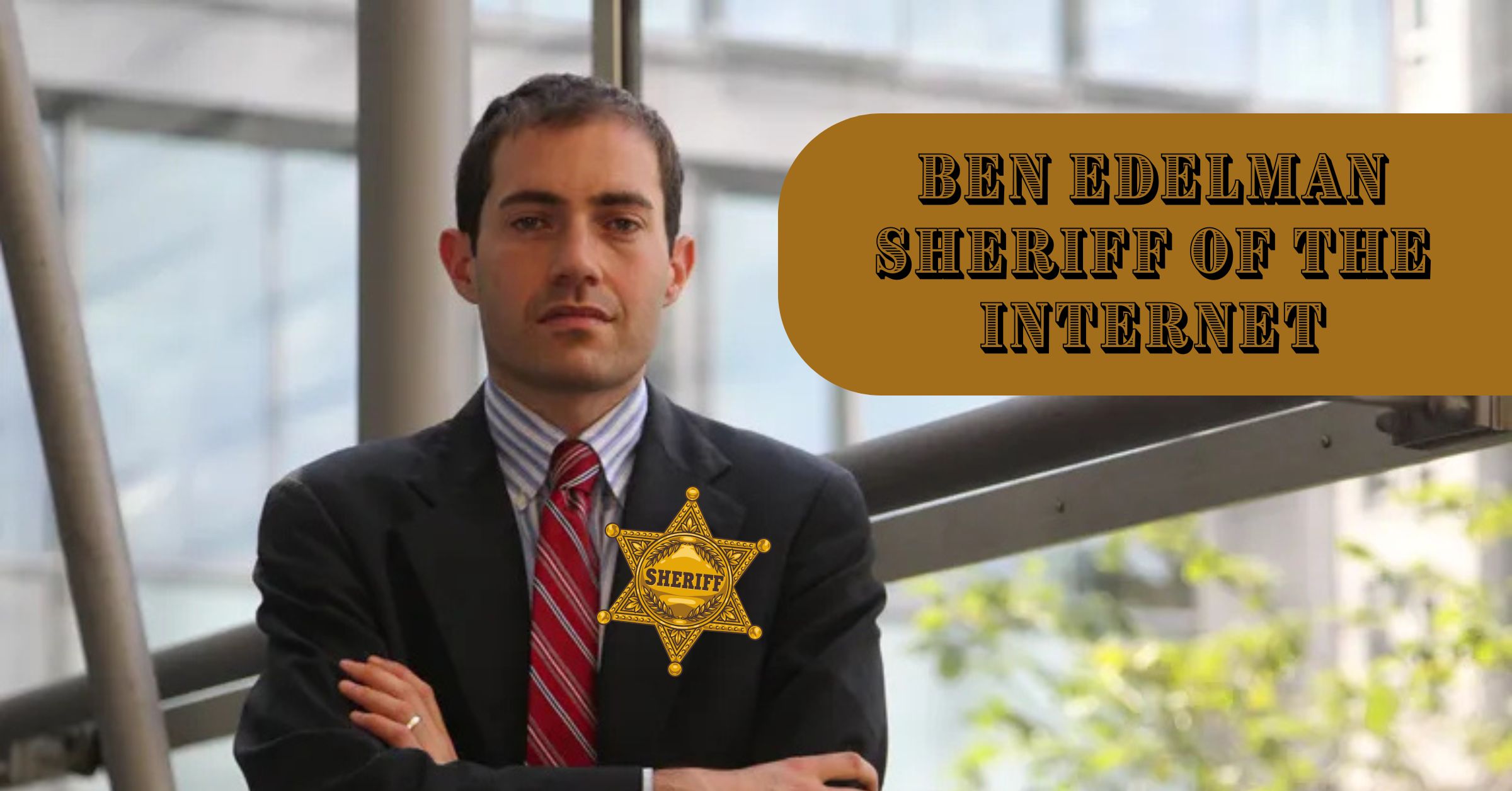
Like God has shown grace to us, we should show grace to others, or we might end up being like the Sheriff of the Internet.[1] Ben Edelman is an associate professor at Harvard Business School. He’s also a lawyer, an $800/hour consultant, and known as the “Sheriff of the Internet for pursuing companies he believes have committed online fraud.”[2] He ordered $53.35 worth of food from Sichuan Gardens, a small locally owned Chinese restaurant, including Shredded Chicken with Spicy Garlic Sauce and Braised Fish Filets and Napa Cabbage with Roasted Chilis.[3] Sounds yummy right? Turns out he was overcharged by $4 so the Sheriff of the Internet took it upon himself to right this most grievous of wrongs and threatened legal action against the restaurant as well as demanding $12 be refunded to him according to “Massachusetts Protection Statute, MGL93a.”[4] This professor of the Harvard Business School decided it was worth the time, effort, expense, and energy to hassle a restaurant over $4 which they offered to refund right away. He notified the authorities, he sent long email after long exhausting email, and made a monumental mountain out of a molehill. The story broke on social media and soon people were coming from all over to eat at Sichuan Gardens to support the owner and blast the Sheriff. A campaign even got started to donate $4 to the Boston Food Bank. Eventually the Sheriff of the Internet relented and issued his own apology. But all of this could have been avoided had Ben at any point in time decided that grace was better than justice. It was obvious this was not malfeasance but instead a small and simple mistake by a local guy just trying to earn a living. Had he offered forgiveness, mercy, or empathy to the owner of Sichuan Gardens, all would have been solved. Besides, he even admitted the food was delicious.
Don’t be the sheriff.
Be filled with grace as God made you and show that grace to those around you. To your spouse. To your kids. To your friends. Even to the stranger who just can’t seem to operate the self-checkout line. Show grace in the form of love, mercy, kindness, and forgiveness just as God has done for you. Perhaps you will be an inspiration to someone else. Perhaps your actions will lead others to act with more grace as well. And perhaps, just perhaps, we’ll make this world a better place to live. Just remember, God’s grace has, is, and always will be available to you 24/7.
[1] http://www.npr.org/2014/12/13/370347429/outrage-over-chinese-takeout-brings-to-mind-a-maxim
[2] Ibid.
[3] http://www.boston.com/food-dining/restaurants/2014/12/09/harvard-business-school-professor-goes-war-over-worth-chinese-food/KfMaEhab6uUY1COCnTbrXP/story.html
[4] Op Cit, npr.org
The McDonald’s Connection
12 Just as a body, though one, has many parts, but all its many parts form one body, so it is with Christ. 13 For we were all baptized by[c] one Spirit so as to form one body—whether Jews or Gentiles, slave or free—and we were all given the one Spirit to drink. 14 Even so the body is not made up of one part but of many.
15 Now if the foot should say, “Because I am not a hand, I do not belong to the body,” it would not for that reason stop being part of the body. 16 And if the ear should say, “Because I am not an eye, I do not belong to the body,” it would not for that reason stop being part of the body. 17 If the whole body were an eye, where would the sense of hearing be? If the whole body were an ear, where would the sense of smell be? 18 But in fact God has placed the parts in the body, every one of them, just as he wanted them to be. 19 If they were all one part, where would the body be? 20 As it is, there are many parts, but one body. – 1 Corinthians 12:12-20
We are the McDonald’s of churches.
Growing up, I never even considered that McDonald’s might sell different things in different places. That is until I saw the movie Pulp Fiction. Even if you haven’t seen it, you might know the scene. Vincent and Jules are driving in a car together and Vincent tells Jules it’s the little things in Europe that are funny and as an example he asks Jules, “You know what they call a Quarter Pounder with Cheese in Paris?” And Jules responds, “They don’t call it a Quarter Pounder with Cheese?” Vincet replies, “No man, they got the metric system…They call it a Royale with Cheese.” Never even considered that before. About a dozen years later, I’m in Hawaii for the first time and we passed by a McDonald’s on the way to our hotel and I was shocked to see they served Portuguese Sausage and Eggs as a breakfast item! What?! Wow. Not only did they call things by different names, but they had also completely different menu items in different places. That was what began my fascination with McDonald’s. To me it was so cool that I could go to any McDonald’s around the world and eat from the comforts of home, but ALSO that I could go different places and try different things at the same place. I’ve been blessed to travel to different countries around the world (thanks mostly to Cassie and frequent flyer miles) and in each place we go I try to stop by a local McDonald’s just to see what they have, even if I don’t try the food. In Canada, no surprise, they sell poutine which is fries covered in gravy with cheese curds. We happened to be in Quebec, home of the poutine, where they sell the exclusive Spicy Buffalo Crispy version.[1] In France they sell macarons in the McCafé made by the same company that makes them for the very famous macaron store, Laduree.[2] And in Japan they have both the Filet-O-Fish AND the Ebi Filet-O which is a shrimp version served with lettuce instead of cheese.[3] It’s pretty fascinating the breadth and depth of things they sell to customize to the local population. In the Philippines, in order to compete with Jollibee, they introduced the McSpaghetti with a more sweet-flavored sauce than the standard American version.[4] Jollibee is so big it’s one of the few chains that McDonald’s has to play catch up with.

The United Methodist Church that we are a part of operates in a similar way.
We are uniquely local and globally distinct. Now more than ever. At the last General Conference which is an international gathering of every local conference in the world, they passed a resolution to allow for even more distinct flavors of Methodism while still adhering to a common belief system. In that way, we are a lot like McDonald’s. Every United Methodist Church abides by a common set of rules, a common book of worship, and a common hymnal, but variations from place to place and even within a country are totally normal. Take communion for example. When Cassie and I were looking for a church to call home, we found one church that used King’s Hawaiian bread for communion. That one got my vote right away. One time when I was serving at a church, we didn’t have a loaf of bread available, so when I lifted the cloth covering the elements, I found two pieces of Wonder Bread waiting for me. There was something lovable and humbling about that moment. Some churches serve communion by intinction, meaning you dip the bread into the cup, and others have individual servings like we do. Yet we all have the same basic structure to communion that remains the same in every church globally. Uniquely local and globally distinct.
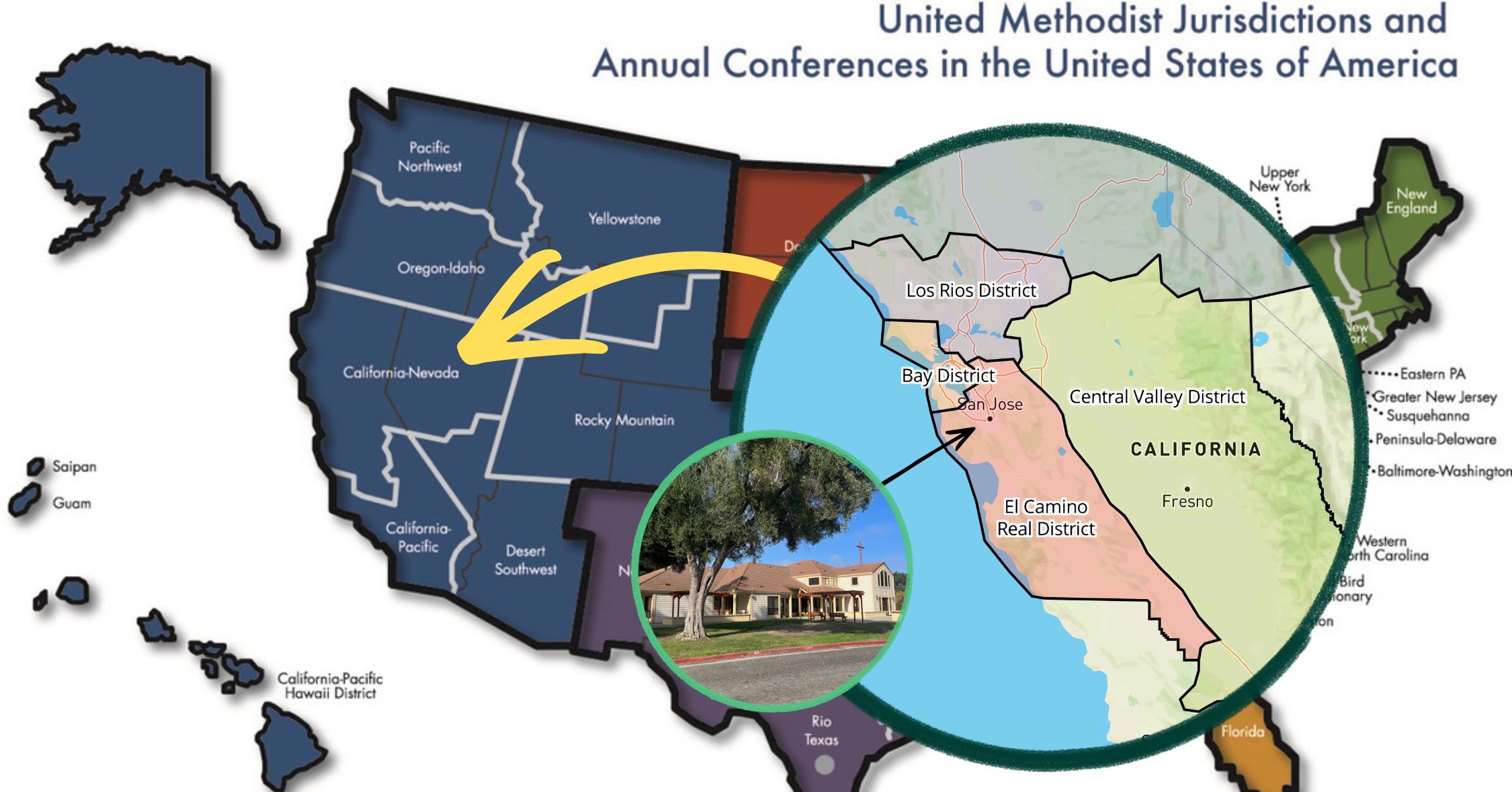
We have what is called a connectional system.
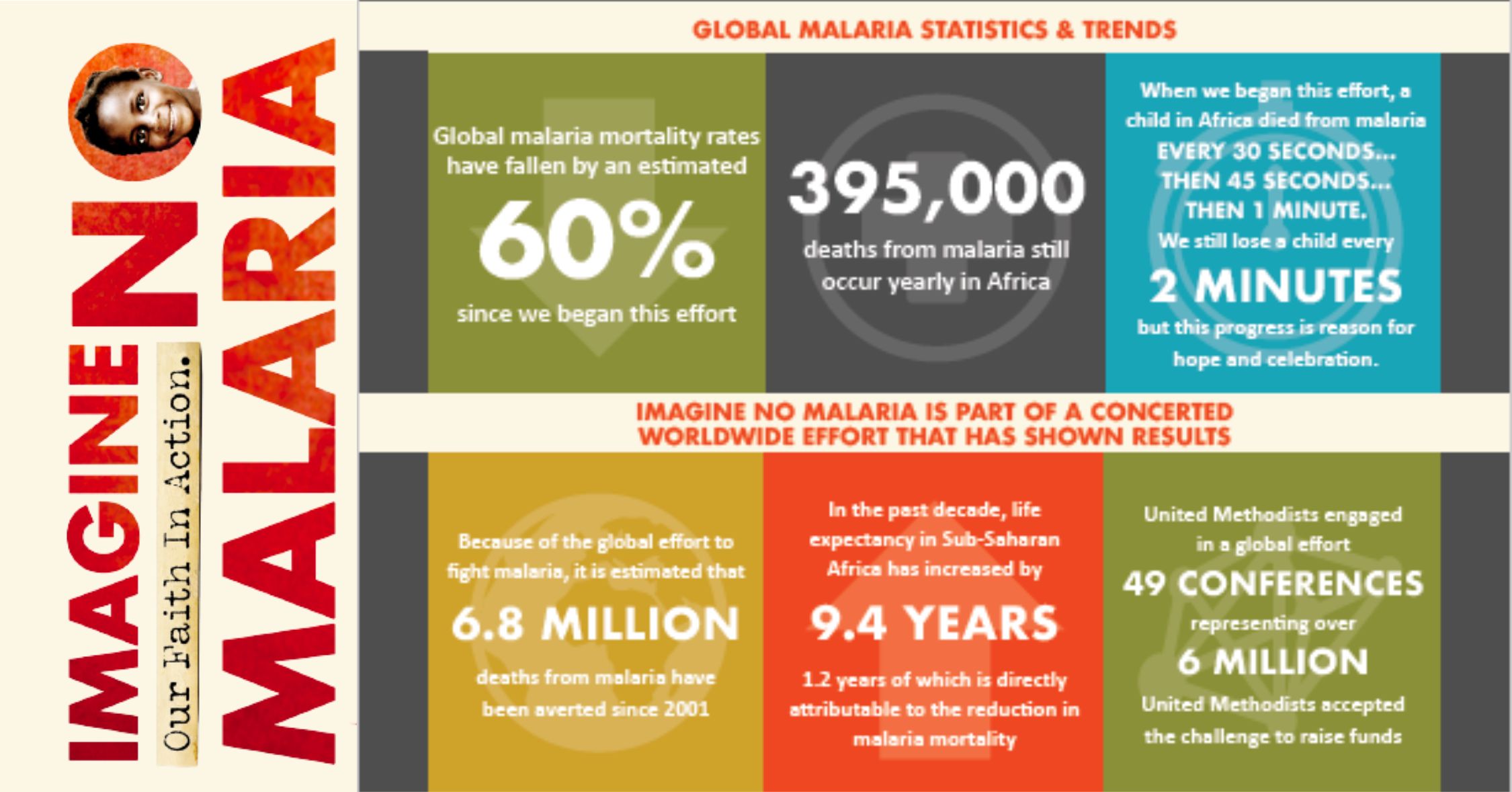
Our church is part of a district, which is part of a conference, which is part of a jurisdiction, which is part of a region, which is part of the global church. We make decisions about how we will operate as a church together. We decide together the things we believe and stand up for. And at the same time the local church like ours has incredible autonomy. We decide how to use our funds. We decide how we do worship. We decide what activities and groups we create and support. Believe it or not, my favorite part about being a connectional church is apportionments. If you know what apportionments are you are probably surprised because most people think of them as a tax on the local church. If you don’t know, apportionments are the amount of money we give to the conference to support not only our Bishop and the Cabinet and the work they do for the conference, but to support the global church as well. Ten cents of every dollar donated goes to the wider church with most of that staying in our conference. Only two cents of every dollar goes to the global church, but it’s amazing what those “two cents” can do. Imagine No Malaria was a campaign of the United Methodist Church to help drive out the devastating and completely preventable deaths caused by the disease in sub-Saharan Africa. Launched in 2010, in the seven years the program was in place it has been estimated that it saved 6.8 MILLION lives and life expectancy increased by 9.4 years – 1.2 of which are directly attributed to stopping malaria from killing people.[5] Sadly, there is still a long way to go. Could our church have done the same on its own? Sure, we could have sent nets to Africa, but the combined efforts of our global church not only provided funding for the initiatives that saved lives, but also the people and the organization to distribute aid productively. So when someone says if you’d like to add your two cents, say “yes please, I just might be saving lives.” We can do more together than any one church can do by itself.
That’s why this passage from 1 Corinthians is meaningful.
Each one of our churches, each one of YOU is important to the body of Christ. And even though we have differences we are united by a common cause – to help people around the world and in our homes know the love of Jesus Christ. By ourselves that would be tough, but working together, we can do so much more, have such a bigger effect, and make a bigger difference in the world. We continue to work with other churches outside of the United Methodist Church to strengthen ties and to work toward becoming the body of Christ that Jesus envisioned. But because we are human, it is a long and slow process but one that gives us hope for a better future.
What makes McDonald’s so successful isn’t their gourmet burgers.
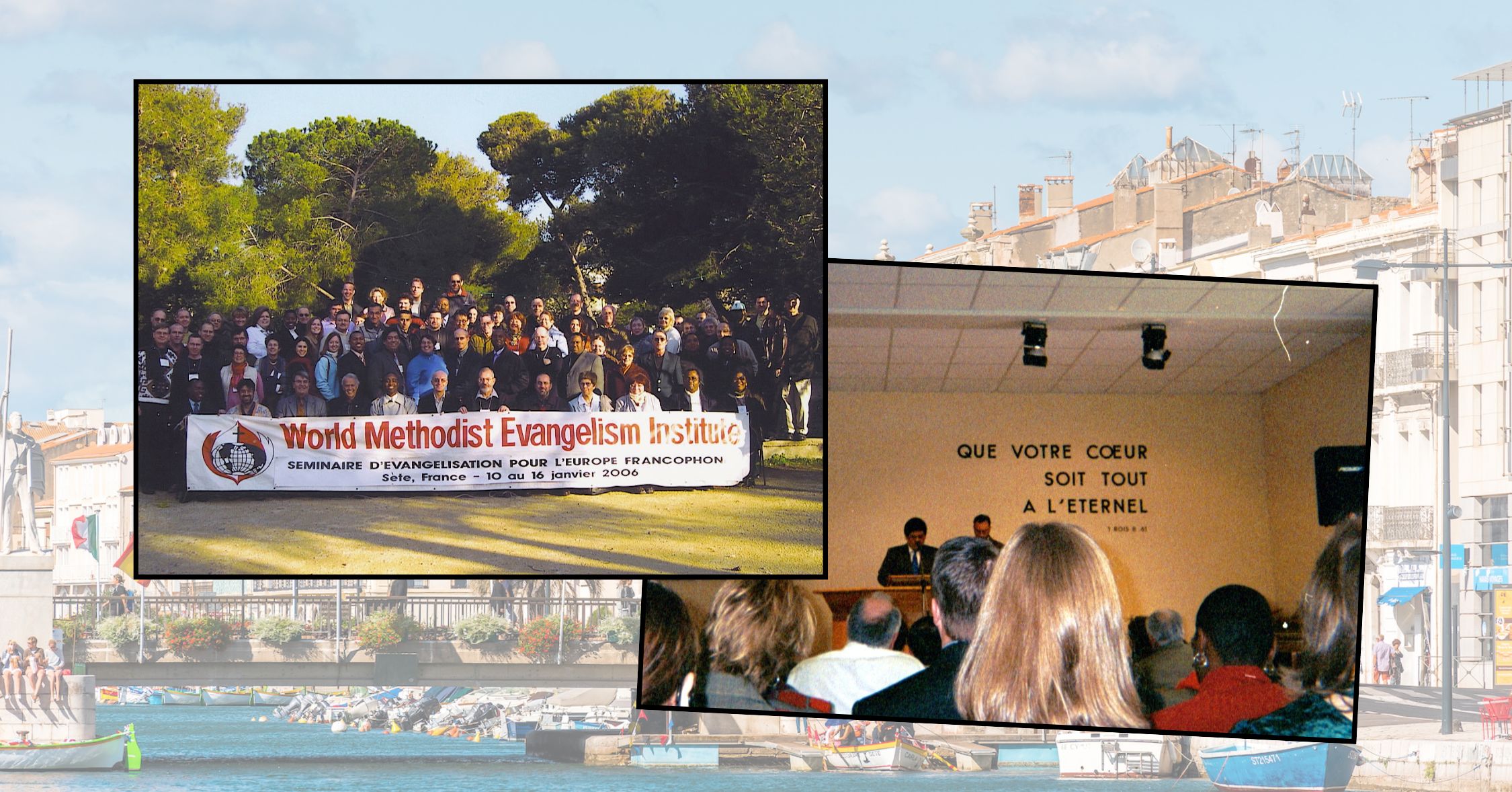
It’s the consistency of their product found wherever you go. The same taste and flavor you remember growing up you can find in just about any part of the world. And that is comforting. But McDonald’s also strives to honor the places they inhabit. They like to reflect the local desires and tastes of the people they serve and sometimes those local inventions go on to change the entire company. The McFlurry was invented in Canada, the Happy Meal was invented in Guatemala City, and the Filet-O-Fish was developed by an owner in Cincinnati, Ohio who wanted to serve his Catholic customers something good to eat on Friday during Lent. The same is true for our church. We can go into any Methodist church in the country and even the world and it will feel familiar, but each place will add their own twist to it. When I was a seminary student, I had the incredible opportunity to join the World Methodist Evangelical Institute in a little seaside town called Sete. We were given the chance to worship with different local churches around the city and I even was invited to read a piece of Scripture (in English) to the congregation. Afterward, we celebrated communion together using actual wine that the pastor’s wife had made in her own backyard vineyard! Because of French culture, it’s one of the only places they use actual wine instead of grape juice and to have it made by the pastor’s wife was a blessing. Each church is part of the greater body and while we can be unified in our beliefs, each one of us adds something different to the mix, but all of us are important to what we hope to accomplish – to share the love of Christ with the world.
[1] Gary He, McAtlas, (Princeton, NJ: Parla Publishing, 2024), 68. For more on all of these wacky and fun dishes you can check out his book!
[2] Ibid. 156 – I’m even finding out more in depth stuff!
[3] Ibid. 275.
[4] Ibid, 333.
[5] From the summary of the Imagine No Malaria campaign. If the link doesn’t work, just look up Imagine No Malaria in your browser.
What We Do Not See
When I was in fifth grade, my mom sent me to Sunday School.
I loved it. I’ve always craved learning. Cassie calls me a career student and she wouldn’t be wrong. It’s in my bones. So, when the opportunity came for me to learn about God and Jesus and Heaven, I jumped at the chance. Even though it meant getting up early and not watching cartoons. Mrs. Shimazki told my mom about it. She and my mom were friends, and she told my mom that every Sunday, she took her kids to Anaheim Free Methodist Church and while they were there, her and a bunch of other moms would go and have a nice brunch together so my mom joined in the fun. But I loved it. It was the first time I really studied my Bible, and it left me with a ton of questions. I would memorize my Bible verses each week and get a stamp on the wall. And that was quite the incentive. More than just learning more about God, the deal was if you got fifty stamps on the wall, you got to go to Disneyland for free. I mean what kid wouldn’t want THAT? After a while, my mom got a little worried I was spending too much time with my Bible, and we stopped going to church.
Flash forward and I’m in college.
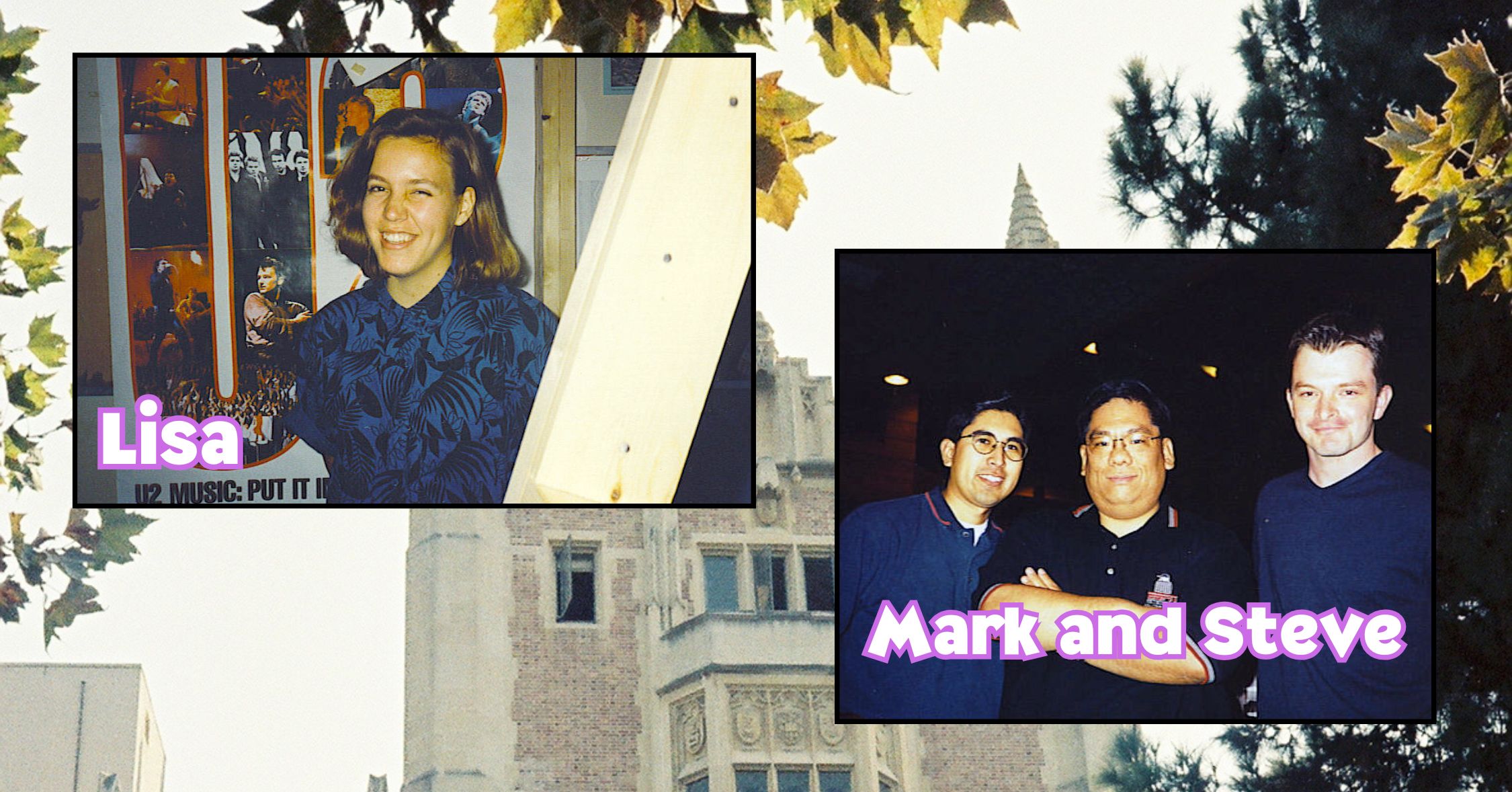
I had a crush on a girl named Lisa. She was the first girl I ever took home to meet my parents. It was Easter and that year our big family get-together was at our house, so I invited her. At the time we were just friends, but I had high hopes. She asked if we could go to church before going to see my folks and of course I said “Yes.” What else was I going to say? A few of us went together and sat in the balcony. I’d never been to a church with a balcony. Felt fancy. When the plate was passed, I only had few dollars on me but still put a couple in as it passed by and felt pretty good about that. We went to my parents’ house for Easter and then headed back to school. I never went back to that church, but I remember it was United Methodist.
A few years later and I’m working at Disneyland with my buddies Mark and Steve.
Both of them invite me to church. Both are Catholic. And one of them tells me it’s a great way to meet girls. I figured why not? I’m still curious about God and who knows? Maybe I meet my future wife there. I go with them semi-regularly when they ask and if I don’t have something else on my schedule. It’s not a high priority, but there are a lot of girls there. Not that I ever went out with any of them. Still, I’m learning more about God and about faith and it feels good to go. I give when I can. Not much. I’m just out of college and still trying to figure what my next steps will be in life. But the Catholic church just wasn’t for me.
I was every church’s nightmare. Until I wasn’t.
I sat in the pews. I didn’t join the church. Although I thought I was giving a lot considering everything, I really wasn’t. I wasn’t a regular. I wasn’t “growing in my discipleship.” I was a drain on church resources. At least I’m sure that’s what some people thought. It is not always easy to be faithful to God. Our culture teaches us to look for quick returns and easy rewards, but God plays the long game. Like it says in Peter’s second letter to the church, “…do not forget this one thing, dear friends: With the Lord a day is like a thousand years, and a thousand years are like a day. The Lord is not slow in keeping his promise, as some understand slowness. Instead he is patient with you, not wanting anyone to perish, but everyone to come to repentance. (2 Peter 3:8-9).” When we invest our time, energy, effort, and resources into something, we expect to see it pay off right away. If it doesn’t, we are prone to think of our efforts as a failure. But more often than not, we are just part of a much bigger picture. God is asking us to trust in the process. Something bigger is at work.
That same day Jesus went out of the house and sat by the lake. 2 Such large crowds gathered around him that he got into a boat and sat in it, while all the people stood on the shore. 3 Then he told them many things in parables, saying: “A farmer went out to sow his seed. 4 As he was scattering the seed, some fell along the path, and the birds came and ate it up. 5 Some fell on rocky places, where it did not have much soil. It sprang up quickly, because the soil was shallow. 6 But when the sun came up, the plants were scorched, and they withered because they had no root. 7 Other seed fell among thorns, which grew up and choked the plants. 8 Still other seed fell on good soil, where it produced a crop—a hundred, sixty or thirty times what was sown. 9 Whoever has ears, let them hear.” – Matthew 13:1-9
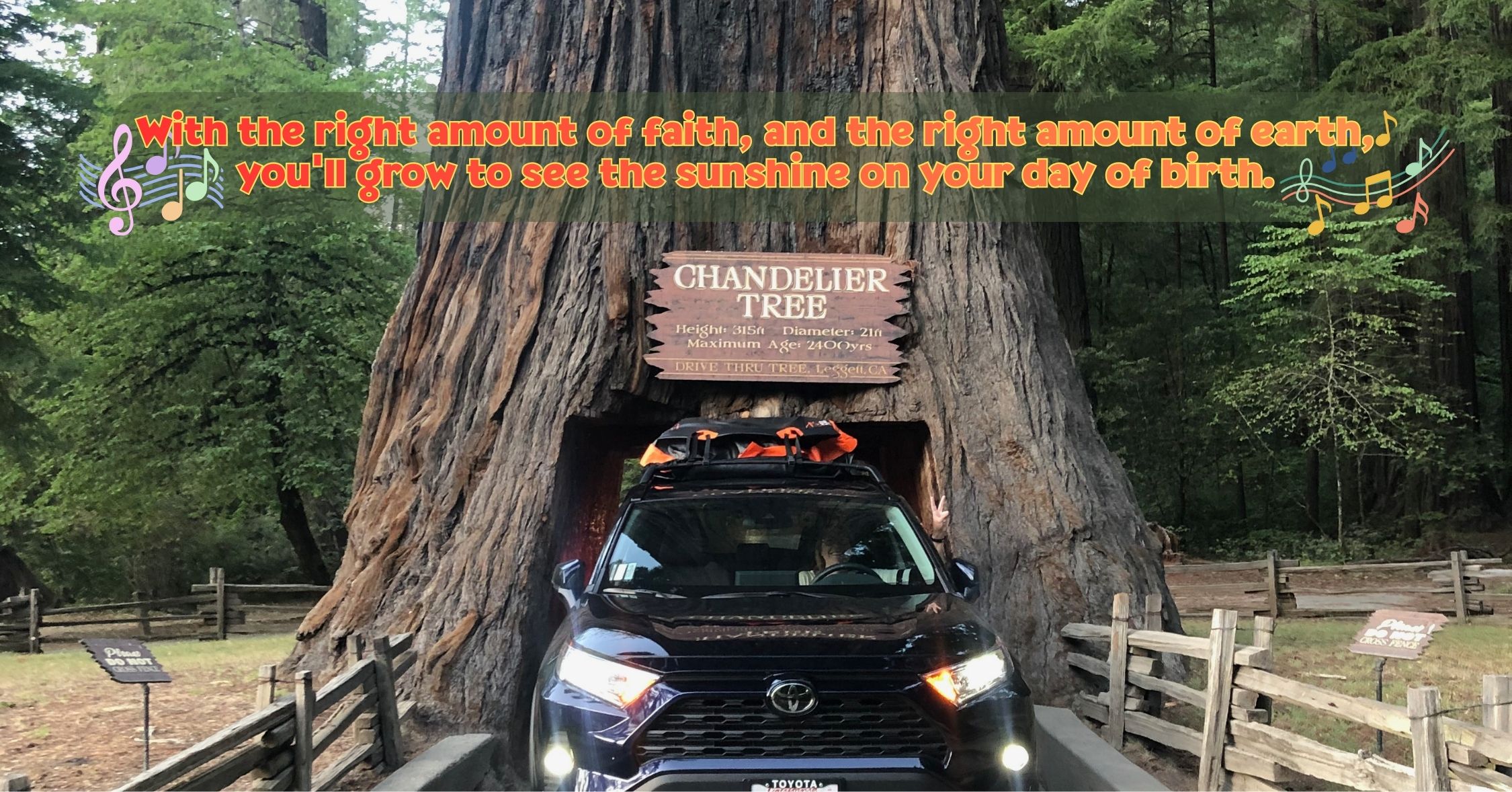
Our vision is too narrow. Our scope too small.
We often can’t see beyond the moment and that blinds us to the work God is doing. But just because we can’t see it doesn’t mean it isn’t happening. Let’s take the seed example. Have you ever been to the redwood forests along the coast of California? To stand in the midst of those trees is like watching nature reach up to Heaven. It’s pretty incredible. It’s even more incredible when you realize every single one of those trees started as a tiny little seed. Through decades, centuries, and – in the case of a select few – millennia they grew to be the trees we now see and enjoy. On a trip we took as a family up the coast, we even drove through the trunk of a tree! It had grown so big that a car could pass through it and still be strong enough to support the weight of the tree. That was incredible. But to get to that point takes longer than any of us will live. Even if we are faithful to the process of growing these trees, we will never see them reach their full potential. That’s alright. Our role is not to see it to the end. Our role is to be faithful to the process and leave the rest up to God.
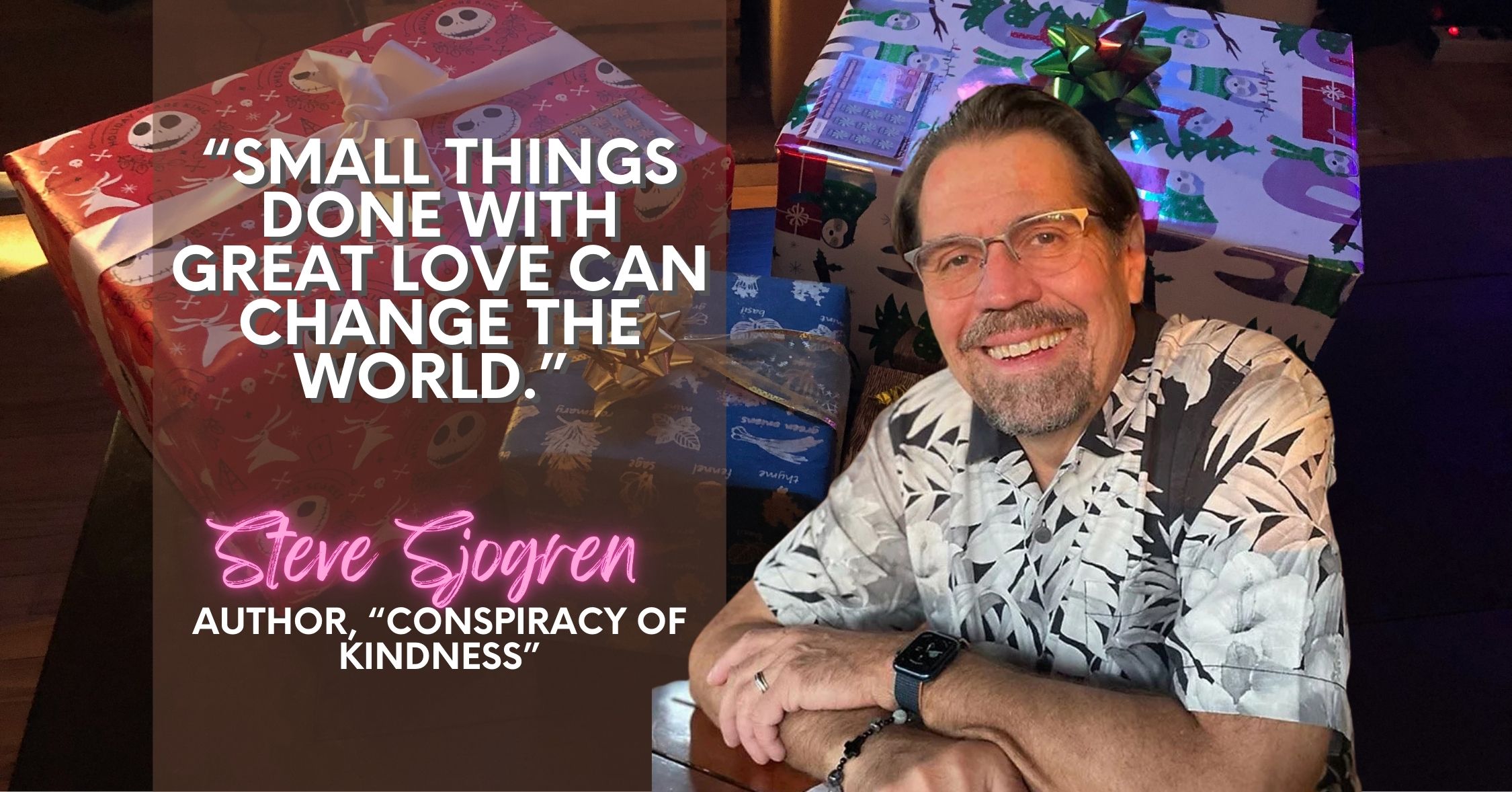
It reminds me of a true story we heard at a pastor’s retreat from Steve Sjogren.
Steve was the pastor of a church in Cincinnati and they were doing gift wrapping at a local bookstore during the Christmas season. They would go to local businesses and offer to wrap gifts for free. And they did a great job. Not just cheap paper and cheap bows, but they used the “good stuff.” This one girl, who was dressed up in dark clothes and dark make-up and looked like she was part of a traveling Goth band, came up to Steve and asked him to wrap something inappropriate. She did it to mess with the church people, but instead of making a face, instead of looking at her in judgment, he simply asked how she would like him to wrap it and he did. When he was done, he handed it back to her with a little card they gave to everyone that simply said, “Showing God’s love in a practical way” and on the back it had their church contact information and worship times. Something made her ask the question, what kind of people would do this for me? Why would they give up their time and effort and money for me? She put that card on her mirror in the bathroom and kept looking at it repeatedly. Finally, she felt compelled to find out more about what it means to be Christian and accepted the invitation of one of her friends who had been asking her to come to her small group Bible study for a long time. She found this group of people to have something she didn’t have – a quiet peace that pervaded their lives. And she started coming more often and soon became a regular attendee. Eventually, she started to go to church with them and found the message touched her in a special way and finally she decided to get baptized and give her life to Christ. She didn’t know what church her friend belonged to, but it turns out it was Steve’s church and when she got baptized, she went up to him, a completely different person with a whole new look and showed him the card and told him that one act changed her whole life. You just never know how God will work. Often, we don’t see the fruit of our efforts, but sometimes we are blessed to see something come full circle.
Over the next few weeks, we will be stuffing over 3,000 eggs.
Think of each egg as a seed. The seed of an idea. An example of our generosity and love for people we don’t even know. Will it sprout? We can hope, but likely we’ll never find out. The true testament of whether or not our Easter Egg Hunt “works” won’t be attendance on Easter Sunday. It will be far down the line when each tiny step in the process leads some child of today to know and love Jesus. In the meantime, I am confident that our faithfulness to the process bears fruit in other ways. Our community comes to know us as a place that cares. They see us as generous people who share their gifts with our neighbors. And slowly but surely if we stay faithful to the process, people will want to be part of what we are doing. When will it happen? In God’s time, not ours.

Each of those churches I visited growing up might have thought I was a waste of time.
Certainly, their outreach efforts didn’t pay dividends for them individually. But look how it turned out. Eventually, I met Cassie who also invited me to church and this time it stuck. We became members. We gave regularly. We joined a Sunday School class. I became baptized. And eventually was called by God to become a pastor of a church. Sometimes our efforts to reach others for Jesus might seem like a waste, but I hope you have eyes to see and ears to hear. Have you heard the story of the three bricklayers?[1] A man was walking by a building project and wondered what was happening. He asked each of the three workers he passed the same question, “What are you doing?” The first person replied, “I’m laying bricks.” The second replied, “I’m building a wall.” But the third replied, “I’m creating a cathedral!” Let us be like the third bricklayer and see beyond the individual tasks we are doing and instead have faith that we are part of a larger story, one we may not see to completion, but know in our hearts that God is doing something in us and through us to change the world.
[1] For more of the Three Bricklayers Story and its origins, read about it on the sketchplantations website.
The Billion Dollar Mistake

What would you do if you made a BILLION-dollar mistake?
With a “B.” Most of us have an anxiety attack if we accidentally throw away a retainer and that costs at most around $1,000.[1] One time when I was at UCLA, we went dumpster diving for a friend who accidentally threw his away in the trash, so imagine if a mistake you made would cost you a BILLION dollars to fix it. What would you do? That’s the dilemma the Walt Disney Company had to face with Disney’s California Adventure. When it opened in 2001, they had high expectations, but the park never lived up to them. A second-rate park made for adults and not for kids with rides you could find in any traveling carnival and no Disney characters to be seen was just not appealing to anyone. Add to that Disney cutting corners in its development and using merchandise and retail people to design the park instead of the world famous Imagineers was a huge mistake and people felt it.[2] Disney owned up to it. They saw what was happening and instead of just letting it go, they did what few others would; they doubled down. Almost literally. They spent $1.1 BILLION dollars to fix their mistake which originally cost them only $600 million.[3] They added new rides and attractions, rethemed the areas and added loveable Disney characters and while still not quite Disneyland, California Adventure now looks and feels like a true Disney theme park. So why did they do it? Why did they make such a huge change? At the time, Bob Iger, outgoing-CEO of the company said, “Steve Jobs is fond of talking about brand deposits and brand withdrawals. Any time you do something mediocre with your brand, that’s a withdrawal. California Adventure was a brand withdrawal.”[4]

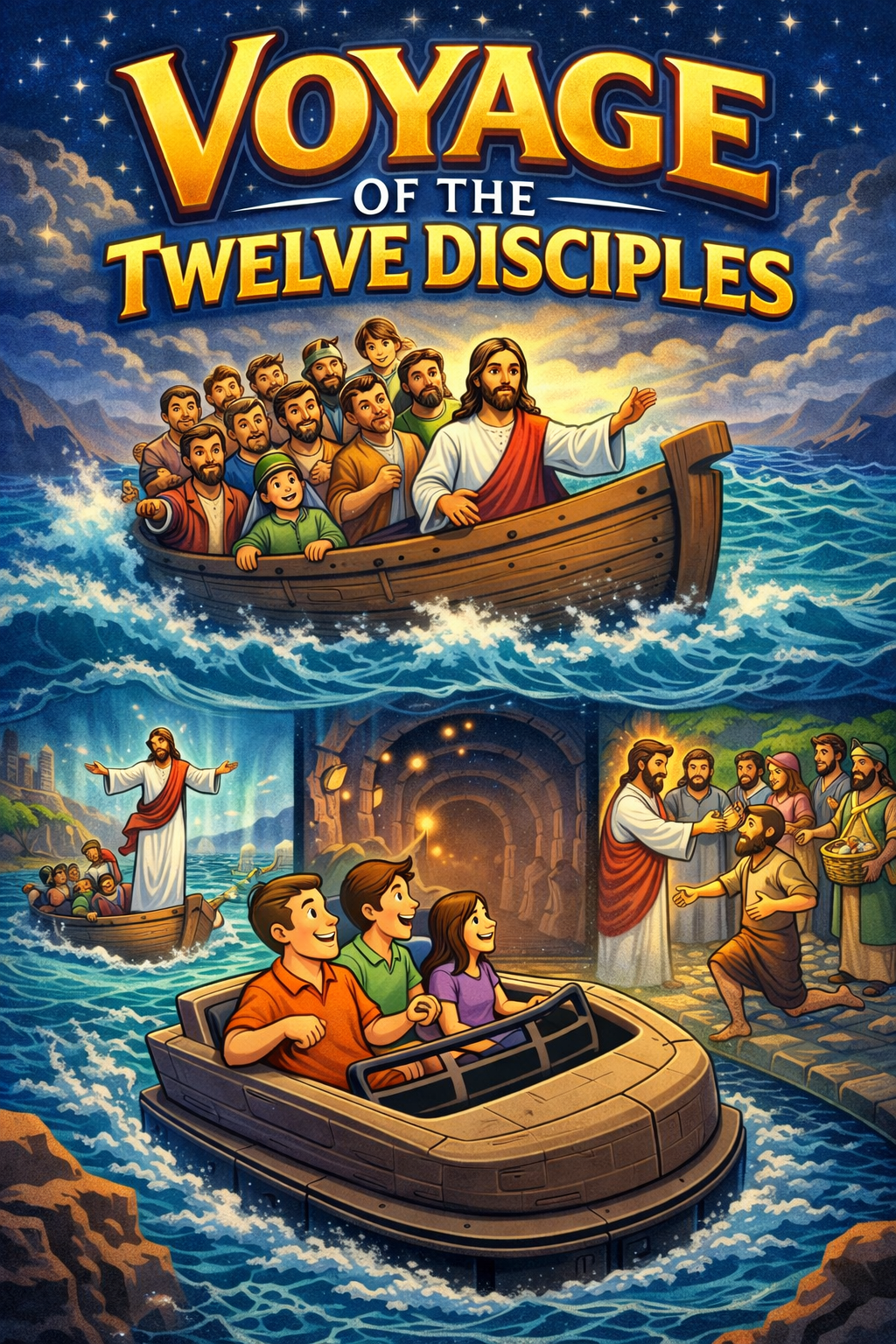
Our Faith and Family Trip was all about change this year.
Because it’s something Disney does well. Instead of resisting change they lean into it. Do they always do it well? No. The entire Bob Chapek era is a good example of that. But overall, Disney has been able to navigate the rivers of change better than almost anyone. And it’s a lesson churches would do well to learn from. Now, in no way am I saying we should build a Rapture roller coaster out on the back lawn or a Voyage of the Twelve Disciples dark ride to draw people in (although both would probably do the trick). But too often, we dismiss what we can learn from others and pass up opportunities that could help us achieve our goal – to bring the love of Christ to the world. Call it pride. Call it ignorance. We don’t always embrace change well. In fact, we often reject it, especially if it comes from outside our walls.
I don’t need to tell you how quickly the institution of the church is becoming irrelevant.
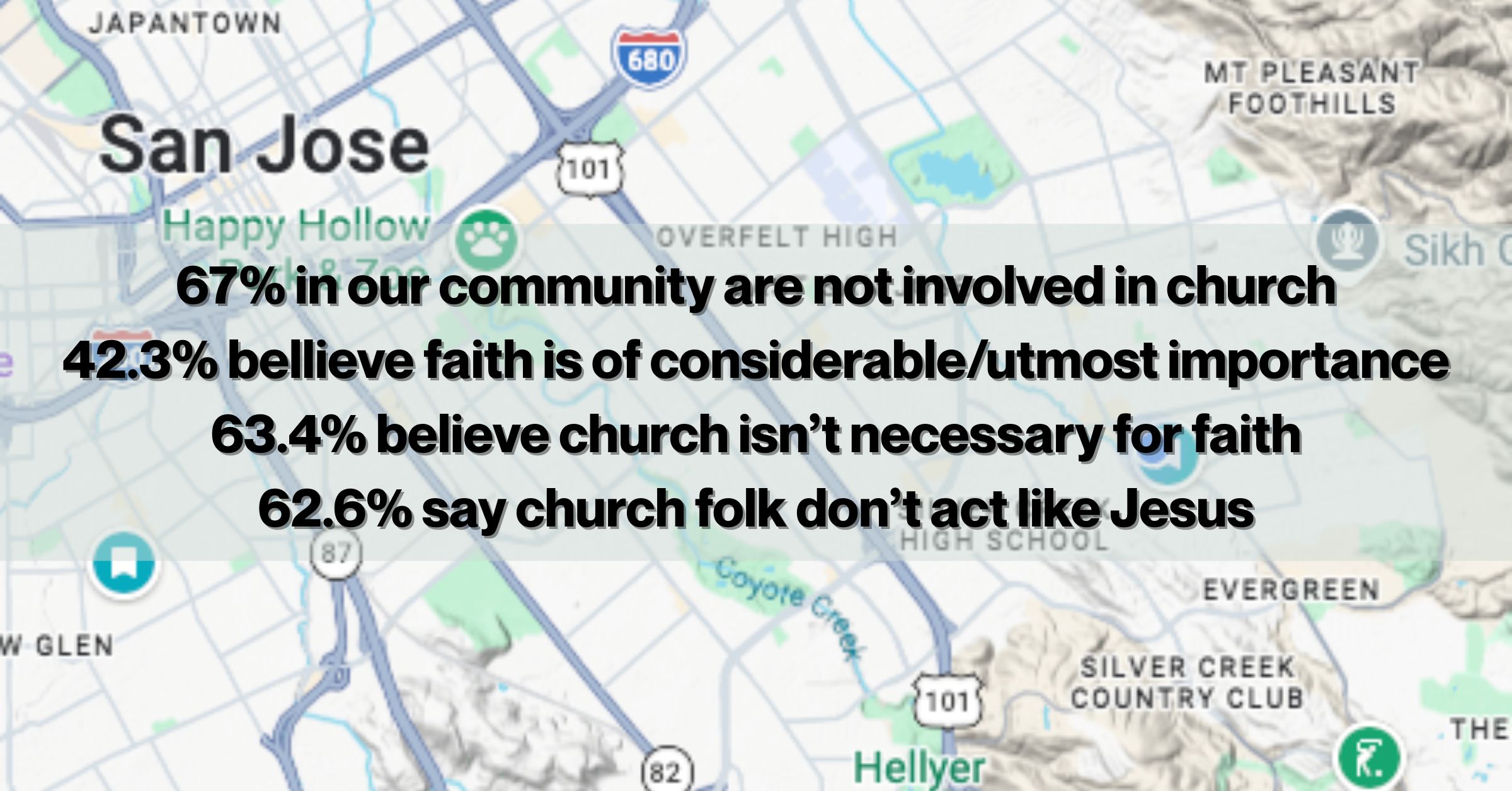
Church attendance is down everywhere. And it’s not just attendance. People’s attitudes are shifting away from church. Not Jesus. Not God. Not the teachings of Christ. But organized religion is becoming a tougher and tougher pill to swallow. According to Pew Research, 28% of Americans identify as “religiously unaffiliated,” up 12% from just 2007.[5] Of those, 49% identify as spiritual or say spirituality is very important to them.[6] It’s not necessarily they don’t believe in God or are not open to the idea of a higher being, but rather something else has convinced them they don’t need a community to develop their faith. Surprisingly, 70% of religiously unaffiliated people (which includes atheists and agnostics) say they DO believe in God or a higher power; 67% believe people have a soul as well.[7] In our local area, about two-thirds of people are not involved in a religious institution and yet over 80% find religious faith to be somewhat important to their lives, and 42.3% find it to be either of considerable or utmost importance.[8] They just don’t think they are going to find God in the church. In a survey of our community (of OUR community!) the number of people who said church wasn’t necessary for faith was 63.4% and the percentage of people who said church folks don’t behave like Jesus went up by more than 100% – from 28.2% all the way to 62.6% in just four years.[9] If we are going to help people become disciples of Christ, we are going to have to change.
The willingness to change is important.
When something isn’t working, you have to adapt. That’s one of the ways Disney has been so successful. More than most companies, Disney does the hard work to avoid the pitfalls BEFORE they happen, and they do that by adapting quickly to the outside world. That doesn’t change their core beliefs or the purpose of the company. But they find ways to achieve their goals by being willing to change when it’s needed. This isn’t just a Disney philosophy. We see the apostle Paul echoing this same sentiment in his letter to the church at Corinth. If you’ll please follow along in your Bibles or your Bible app, let’s hear this morning from Paul’s letter. From 1 Corinthians 9:19-23, let’s hear the Word of God.
19 Though I am free and belong to no one, I have made myself a slave to everyone, to win as many as possible. 20 To the Jews I became like a Jew, to win the Jews. To those under the law I became like one under the law (though I myself am not under the law), so as to win those under the law. 21 To those not having the law I became like one not having the law (though I am not free from God’s law but am under Christ’s law), so as to win those not having the law. 22 To the weak I became weak, to win the weak. I have become all things to all people so that by all possible means I might save some. 23 I do all this for the sake of the gospel, that I may share in its blessings. – 1 Corinthians 9:19-23
Maybe the Brady Bunch said it best.
“When it’s time to change, it’s time to rearrange, who you are into what you’re going to be.” Paul is the model for change. There’s no one in the Bible who had a more drastic about face in his thinking than Paul and arguably people would say Paul did the most for bringing the love of Christ to others. He felt helping others to know Jesus was so important he would adapt to whatever circumstance he was in. He called it being made “a slave to everyone, to win as many as possible.” He didn’t consider it demeaning or compromising to adapt to his surroundings. In fact, he felt it was necessary to meet people where they were. Whether it was with the Jews or with the Gentiles or with anyone else, he was willing to do whatever was necessary to help them understand what it meant to follow Christ. We need to meet people where they are, not where WE want them to be. And that means changing how we relate to the world. Paul says in verse 22, “I have become all things to all people so that by all possible means I might save some.” Even Paul knew he wasn’t going to save the entire world by himself. Still, to even help some, he knew he would have to constantly change how he related to people. He couldn’t afford to wait for people to come to him and we need to do the same. The church of the 22nd century is going to be completely different from the church of the 21st. We need to be open to new ways and ideas.
What are we willing to do for Jesus?
Can we be like Disney or better yet, can we follow the example of Paul? Can we be “all things to all people so that by all possible means we might save some?” It’s not easy, but then God has never asked us to do what’s easy. He just promises to be there with us as we do it. God is challenging us to get our of our comfort zone and be willing to do what needs to be done. Sometimes that means changing the songs we sing in worship. Sometimes that means changing how we deliver God’s message. Sometimes it means being open to new ideas and new ways of doing things. But it can be done. It is never too late to change. When I was in New Church Development class, one of my friends told me the story of this man who came to worship. In worship, they played hard rock music, modern music, and loud music. This man, an older gentleman who usually went to a traditional hymn singing church, sat in the back every week and every week made a healthy donation to the church. Finally, my friend the pastor, came up to him and asked him why he was there. He said, “I know this isn’t your type of music or your type of crowd, so why come here?” And the guy said, “You’re right. This really isn’t my type of worship, but my grandkids love it and I’ll do whatever I need to do to make sure they find a church they can connect to.” How refreshing to see someone who really gets it. I know many of you do, too. Because helping people to know the living God is worth the sacrifice. The method may change, but the message never will. And the world needs that message more than ever before. If we are to be effective in reaching people with the love of Jesus we have to change with it.
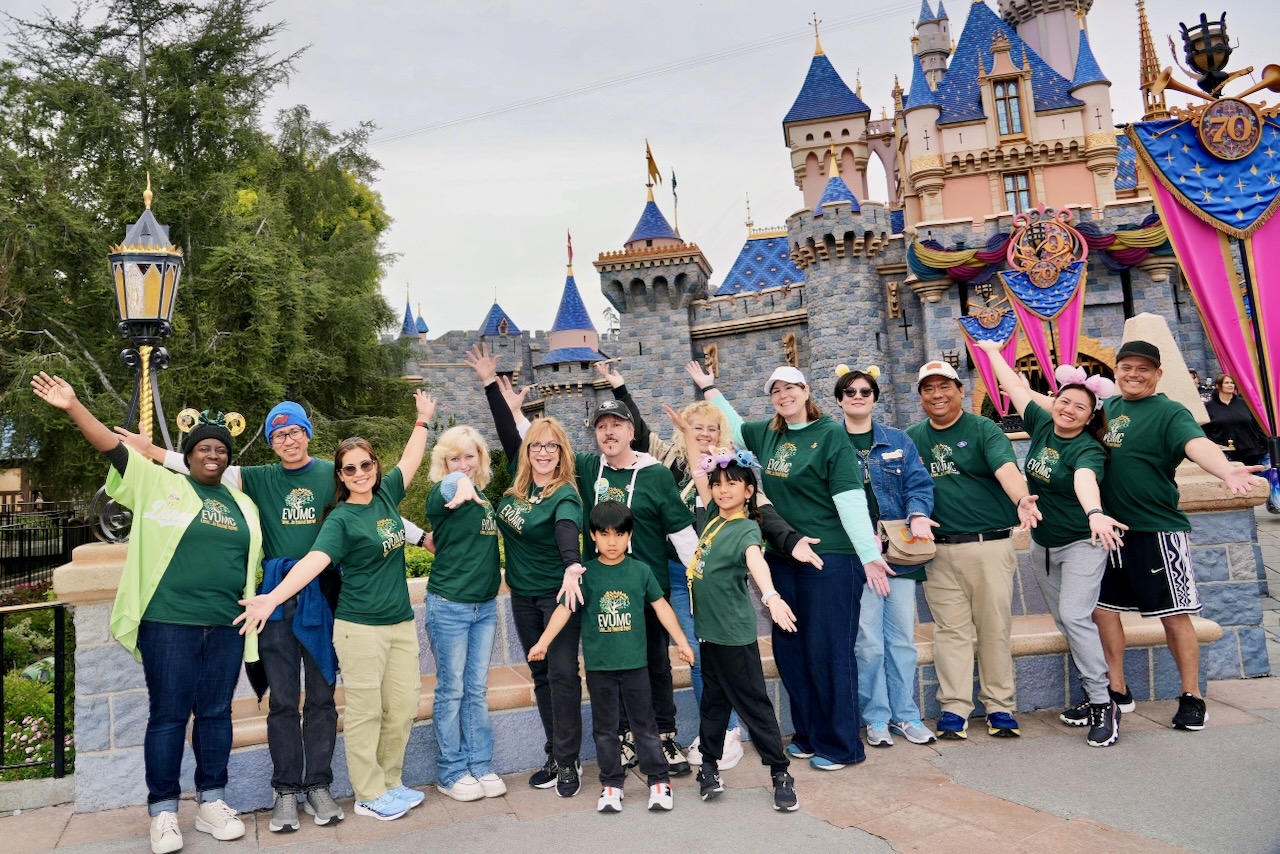
One of the keys to Disneyland’s ongoing success is their willingness to change.
Walt was never afraid to do something different if it meant creating an environment that would welcome his guests. He once said, “To keep an operation like Disneyland going, you have to pour it in there. It’s what I call, ‘Keeping the show on the road.’ You have to keep throwing it in; you can’t sit back and let it ride.”[10] The same is true for the church and is true for ourselves. We can’t afford to sit back and let it ride. We need to challenge ourselves to grow and learn and get better at whatever it is we are doing. Whether that’s in the church, outside of the church, with our families, or even ourselves. I hope and pray that we will always have that spirit of being able to embrace change. When we are willing to change, we can change the world.
[1] It was actually hard to find the replacement cost of retainers because they vary widely, but Polident (the denture people) give us a clue.
[2] https://en.wikipedia.org/wiki/Disney_California_Adventure
[3] https://www.sfgate.com/disneyland/article/disneyland-california-adventure-history-21330033.php
[4] Ethan Smith, “Disney CEO Turns Slump Into A Springboard,” Wall Street Journal, Nov. 8, 2010.
[5] Pew Research Center, “Religious ‘Nones’ in America: Who They Are and What They Believe,” Pew Research Center, published January 24, 2024, https://www.pewresearch.org/religion/2024/01/24/religious-nones-in-america-who-they-are-and-what-they-believe/ .
[6] Ibid, https://www.pewresearch.org/religion/2024/01/24/are-nones-spiritual-instead-of-religious/ .
[7] Ibid, https://www.pewresearch.org/religion/2024/01/24/are-all-nones-nonbelievers/ .
[8] Mission Insite, The ReligiousInsite Report: 2.5 mi Around 3520 San Felipe Road, San Jose, California 95135, United States, (Florence, SC: ACS Technologies, October 10, 2024), 25.
[9] Ibid, 8.
[10] http://www.ocregister.com/articles/disney-671663-disneyland-imagination.html
A Dog Named Taro
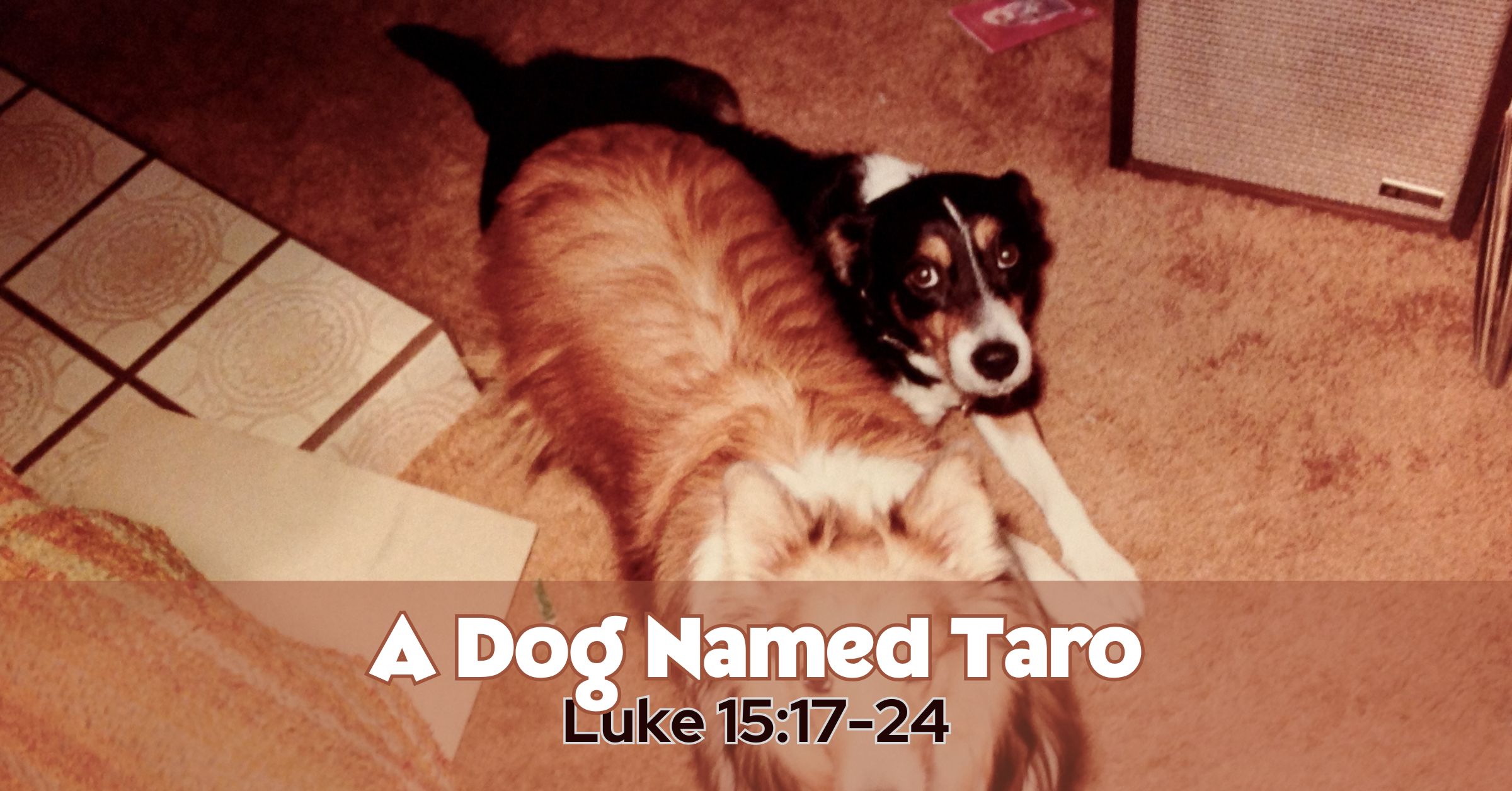
My grandfather had a dog named Taro.
He was a great dog. A mutt to be sure. My grandfather got him from the pound and it was pretty tough to tell exactly what kind of dog he was. Maybe part retriever, part beagle? I mean, who knows? He was mostly black with some white and tan spots. He was medium height and had short hair. And he was smart. Super smart. That was the best way I could describe him. My grandfather gave him a peanut jar once back when they were made of glass. He would put just three peanuts at the bottom of the jar and gave it to him. First, Taro tried to stick his nose inside the jar to get the peanuts out, but that didn’t work. He knocked it down, pushed it around with his nose, pawed at it, but nothing got those peanuts out. Finally, he stared at the jar for a while and then lay down next to it. He put his snout into the opening and placed his paws on either side of the jar and then rolled onto his back so the peanuts would fall into his mouth. Like I said, smart. When he wanted to go outside, he would get up, go to the door, bark once and wait. When he wanted to come back in, he would do the same thing. Such a good boy.
When my grandfather died, we took Taro in.
He quickly became part of the family and he seemed really happy. We already had a dog, a super cute Shetland Sheepdog named Ms. and the two of them got along great. One morning though, after we let Taro out to do his business, he didn’t come back to the door. Sure, sometimes he took longer than other times, but this was long even for him. I went out to the back to see what he was doing. I called his name out loud and he didn’t respond. Puzzled, I looked around and saw that the back gate was wide open! I ran out to the street, calling his name over and over, but he was nowhere to be found. I was heartbroken. We all were. Turns out the water meter guy didn’t close the gate behind him and Taro escaped. I kept a look out for him every day for a long time, hoping he would find his way home. A part of me thinks he did. I think he went looking for my grandfather and was trying to get back to where he used to live. I’m pretty sure my dad even went back there to see if he had done that, but we never found him. In my mind, I imagined he had found another home where he could be happier. At least I hope so. This was over 40 years ago so I’m sure Taro has since long ago passed away, but I guess there’s a part of me that still wonders what happened to him.
I imagine this is a smidgen of how God feels when one of us runs away.
The analogy isn’t perfect, but God loves us so much I imagine if we ran away, God would continue to look out the window and wander outside from time to time to see if we’re coming home. Much like the story of the Prodigal Son we will share from today. This is a classic story, and even if you never stepped foot in a church, you likely heard of it. But if you hadn’t heard it, it’s a story of a man with two sons. One of them wanted to leave home, so he asked his father to give him his inheritance in advance and the father did. The father wasn’t sick or about to die or anything. The son just wanted the money to leave home and make it on his own. He sold everything his father gave him, left his home, and squandered his money and soon had nothing. He had fallen so low he was reduced to working as a pig feeder and he was so hungry he envied what the pigs were eating. And this is where we pick up in our reading this morning.
17 “When he came to his senses, he said, ‘How many of my father’s hired servants have food to spare, and here I am starving to death! 18 I will set out and go back to my father and say to him: Father, I have sinned against heaven and against you. 19 I am no longer worthy to be called your son; make me like one of your hired servants.’ 20 So he got up and went to his father.
“But while he was still a long way off, his father saw him and was filled with compassion for him; he ran to his son, threw his arms around him and kissed him.
21 “The son said to him, ‘Father, I have sinned against heaven and against you. I am no longer worthy to be called your son.’
22 “But the father said to his servants, ‘Quick! Bring the best robe and put it on him. Put a ring on his finger and sandals on his feet. 23 Bring the fattened calf and kill it. Let’s have a feast and celebrate. 24 For this son of mine was dead and is alive again; he was lost and is found.’ So they began to celebrate. – Luke 15:17-24
It is never too late to come back to God.
This might seem obvious to you, but it isn’t to everyone and we need to be reminded that no matter how far we’ve fallen, God is always waiting for us to make the choice to come back. I had a friend who felt like God could never forgive her for falling away. She felt like she had done too much wrong for God to forgive, but that just isn’t the case. As Methodists, we believe people can fall from grace. Because God gives us free will and because we are human beings who are flawed we can and do at times turn our backs on him. And even though God doesn’t want us to do that, he loves us so much he gives us the choice to stay or go. But it also means that by the grace of God, we can come back.
Some believe it is impossible to truly fall away from God.
It’s a doctrine we colloquially call “Once Saved, Always Saved.” It’s the idea that once we invite Christ into our lives, we can never lose our salvation. No matter what we do God has claimed us and we can’t be drawn away. That’s what our earlier reading this morning highlighted, this idea that nothing on this earth can separate us away from God. But being separated from God forcefully is different from being separated from God willingly and most of us know at least one person who left their faith behind. People who saw a loved one die or lose their job or have their home destroyed. People who hear about the atrocities happening both at home and abroad and think to themselves there must not be a God who would allow such horrible things. These people choose to stop following him. They leave the church. They stop praying. They don’t read their Bibles. In every practical way, they abandon their faith.
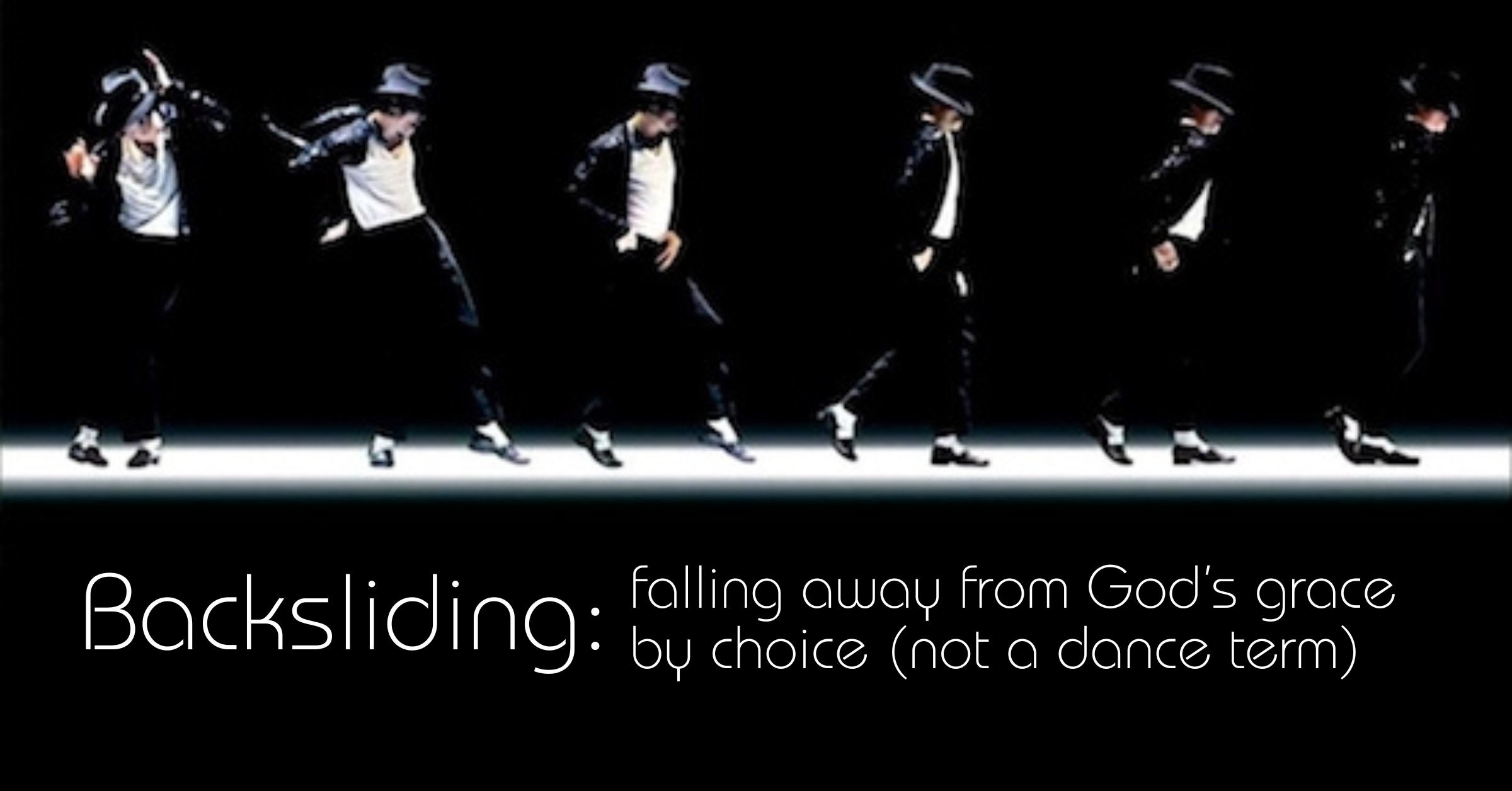
It’s what John Wesley referred to as backsliding.
In his sermon, “A Call to Backsliders,” he wrote, “Indeed, it is so far from being an uncommon thing for a believer to fall and be restored, that it is rather uncommon to find any believers who are not conscious of having been backsliders from God, in a higher or lower degree, and perhaps more than once, before they were established in faith.”[1] Backsliding is the term Wesley used for when we fall away from God’s grace. I once asked a Baptist friend of mine about this and he said Baptists don’t believe you can fall away. Most Baptists subscribe to the “Once Saved, Always Saved” doctrine, so I asked him, “What if a guy who gives his life to Christ later decides to go and murder a bunch of people, declares himself an atheist, and denounces the Holy Spirit? How would you explain that?” He told me, “Well, we would say he was never saved in the first place.” That was way too convenient so I asked, “What do you mean?” And he said, “If he could live a life like that after giving his life to Christ, deep down he never really meant it.” But aren’t there times when you honestly believe one thing and later believe something completely different? When I was a kid, I hated Sloppy Joes. If you don’t know what that is, it’s just ground beef, mixed with tomato sauce and spices and served on a hamburger bun. Most of my friends loved it, but not me. I hated it. But something happened over the years. My tastes changed or my experience changed and one day I found myself face-to-face with a Sloppy Joe and decided to try it – and found I really liked it! I wasn’t lying when I said before I hated it, and I wasn’t lying when I said I liked it. Simply, I changed. I think we all have that capacity to change.

And God’s counting on it.
God’s intention is for us all to come to him and want to be with him. God’s hope is that we realize that he truly is Lord and Savior. And God is waiting to welcome us with open arms. But God loves us so much that he gives us the freedom to choose. And even if we choose to come to him and later walk away, God will welcome us back. And even if we choose to come to him and walk away and never come back, God will honor that, but I think like it was for me and Taro, you’ll find God keeping an eye out for you, looking to see if maybe you just lost your way trying to come home, and hoping one day you’ll just show up on his doorstep. God would like that. I know I would.
[1] http://www.umc.org/what-we-believe/do-united-methodists-believe-once-saved-always-saved
Big “C,” Little “c”
Big “C,” little “c” – capitalization counts people!
The Apostles Creed and the Nicene Creed are two of the most important declarations of our faith. In these short passages, we sum up the entirety of our belief in God through Christ and the Holy Spirit. And although most churches recite at least one of these frequently, I have never been to a church where someone didn’t ask why we believe in the Catholic church. I mean, the whole point of the Reformation was to break away from the Catholic church, so why do we use these creeds? In these moments, I point to the little asterisk in our hymnals next to the word catholic and if you look down below it says “universal.” The word “catholic” is derived from the Greek katholikos meaning “according to the whole” or “universal” and was first used by St. Ignatius of Antioch in 110 AD.[1] Since at the time there was only one body of Christ (and even then with different beliefs), it made sense that eventually the name would stick and it would go from little “c” to big “C.”
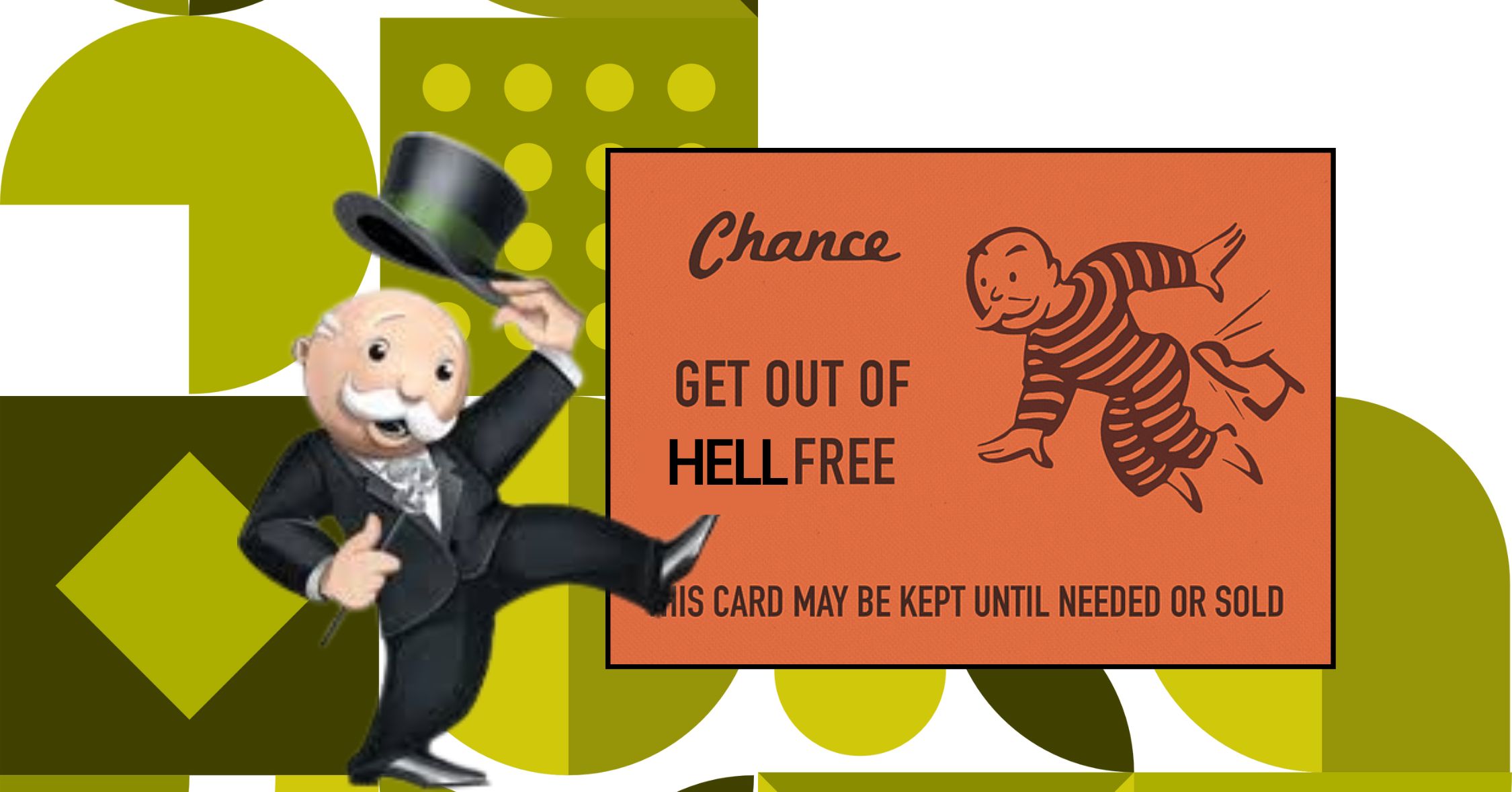
But as with anything run by humans, even the church would become corrupt.
In 1095, Pope Urban II was the first to sell salvation. He offered forgiveness of sins to anyone who participated in the first crusades, but those who did not participate could still be forgiven for a sum of money to help fund the effort.[2] From there it only got worse. By the 1500’s, salvation was being sold to raise money for different church projects.[3] They called these indulgences. It became like the money changers in the temple who had their tables overturned by an angry Jesus.[4] For the right price, you could buy a “Get Out of Hell Free” card. What the church would do would be to write a document on your behalf saying that you no longer had to confess your sins because you’ve already been absolved of them now and in the future. A priest by the name of Martin Luther thought there was something wrong with this.[5] Jesus had already paid for our sins, why were we paying again? He also objected to the church discouraging people from going to confession. If there wasn’t a need to repent of our sins, why did we need Jesus? On October 31, 1517, Luther sent a letter outlining his questions to the church, which came to be known as The Ninety-Five Theses. The church refused to change and over time a split occurred between the church in Rome and those who protested against the church’s actions. Those protesters became known as Protestants and that’s how the Protestant Reformation began. Now there was a big “C” and a little “c.”
As you can imagine, huge differences developed between the two.
The Catholic Church was convinced only they had the corner on faith, while the Protestants felt the church had strayed and given in to human temptation. They felt the Catholic Church held too tightly to human tradition and not enough to the essentials of faith, so they emphasized a return to the basics and went back to the Bible. The Protestants moved away from intercessory prayer where you prayed to the saints to speak on your behalf to Christ. Instead, they believed you could pray directly to God without someone having to intervene. In the Catholic tradition, only Catholics are allowed to take communion. It goes back to the belief that the Catholic Church holds the true faith so only those who believe as they believe are worthy of communion. In the Methodist tradition, we believe in what they call an “open table” (and if you’ve been with us before for communion, you probably know what that means). We believe God is calling all of us to the table of Christ and so it doesn’t matter if you’re Methodist or not, you are welcome at God’s table. You don’t even have to be Christian to come to our table because we believe in the mysterious power of Christ in communion to work in and through us. If someone is compelled to come up and receive the elements, we believe it is God working in them and we are not to get in the way of God’s work.
But perhaps the biggest difference between us is our belief in faith alone.
Sola Fide. It is one of the pillars of our faith. We believe we are justified before God by faith alone. This morning we will take a look at a passage from James to illustrate that point. If you have a Bible or Bible app on your phone, would you please go to the letter of James, chapter 2? We will be reading from James 2:14-26. Justification means God forgives our sins when we accept Christ as Lord and Savior.[6] He doesn’t forget, but instead he chooses to cover them up kind of like when you paint over graffiti. It isn’t gone, but we no longer see it. And while our Catholic friends believe in faith as an essential part of justification, they take it one step further and say we need to prove our righteousness before God will forgive us completely. We must prove our faith through works, something we call “works righteousness.” So even though we both believe in the power of faith, we look at what happens afterward differently. And that’s where we approach our passage today. If you’ll please rise as we read from James 2:14-26. Hear now the Word of the Lord.
14 What good is it, my brothers and sisters, if someone claims to have faith but has no deeds? Can such faith save them? 15 Suppose a brother or a sister is without clothes and daily food. 16 If one of you says to them, “Go in peace; keep warm and well fed,” but does nothing about their physical needs, what good is it? 17 In the same way, faith by itself, if it is not accompanied by action, is dead. 18 But someone will say, “You have faith; I have deeds.”
Show me your faith without deeds, and I will show you my faith by my deeds. 19 You believe that there is one God. Good! Even the demons believe that—and shudder.
20 You foolish person, do you want evidence that faith without deeds is useless[d]? 21 Was not our father Abraham considered righteous for what he did when he offered his son Isaac on the altar? 22 You see that his faith and his actions were working together, and his faith was made complete by what he did. 23 And the scripture was fulfilled that says, “Abraham believed God, and it was credited to him as righteousness,”[e] and he was called God’s friend. 24 You see that a person is considered righteous by what they do and not by faith alone.
25 In the same way, was not even Rahab the prostitute considered righteous for what she did when she gave lodging to the spies and sent them off in a different direction? 26 As the body without the spirit is dead, so faith without deeds is dead. – James 2:14-26

Reading this passage it seems to prove the Catholic interpretation of justification.
James clearly says, “Show me your faith without deeds, and I will show you my faith by my deeds.” He even says, “faith without deeds is useless.” But what James is talking about here is not faith by deeds, but rather deeds prove your faith. And that’s all the difference in the world. We believe when we turn to Christ and repent of our sins, God forgives. There are no conditions and we don’t have to prove it by our deeds. Rather, what James is talking about here is that a person who gives their life to Christ and who honestly asks for forgiveness will naturally do good deeds. They can’t help it. Deeds are the proof, not the condition of a forgiven life. It’s a small but important difference.
One thing I feel we need to be reminded of is that despite our differences, we both love God.
Jesus himself said in Mark 9:38-41, “whoever is not against us is for us.” And while we disagree on a lot of things, both Catholics and Methodists agree in the divinity of Jesus Christ. We believe him to be the Lord and Savior of us all. And we believe that the Bible is the inspired Word of God. Catholics like all who believe in Christ, come in all sorts of packages. They have varying beliefs. And they are sinful people trying to come into a better relationship with God. We are exploring the differences in our faith not to throw stones at fellow believers, but to help us better understand why we believe what we believe. And in the understanding, hopefully come to terms with our own faith in a deeper and richer way.
[1] As referenced in Wikipedia.
[2] From the UMKC School of Law page, “Questions & Answers Concerning Indulgences.”
[3] The interesting thing here is that it’s all based on a very secular understanding of finances. The church believed it had a “treasury of indulgences” based at first on the “merits of Christ and the saints” but then on the number of relics it had from the time of Jesus. The idea that material items could give you the power of forgiveness (a power only granted to Christ in our belief) would be ridiculous today.
[5] Notes on the reformation come from the Wikipedia entry “Ninety-five Theses” and from Adam Hamilton’s book Christianity’s Family Tree.
[6] For a deeper explanation of this sophisticated argument, R.C. Sproul has a great summary.
If The Game Was Rigged
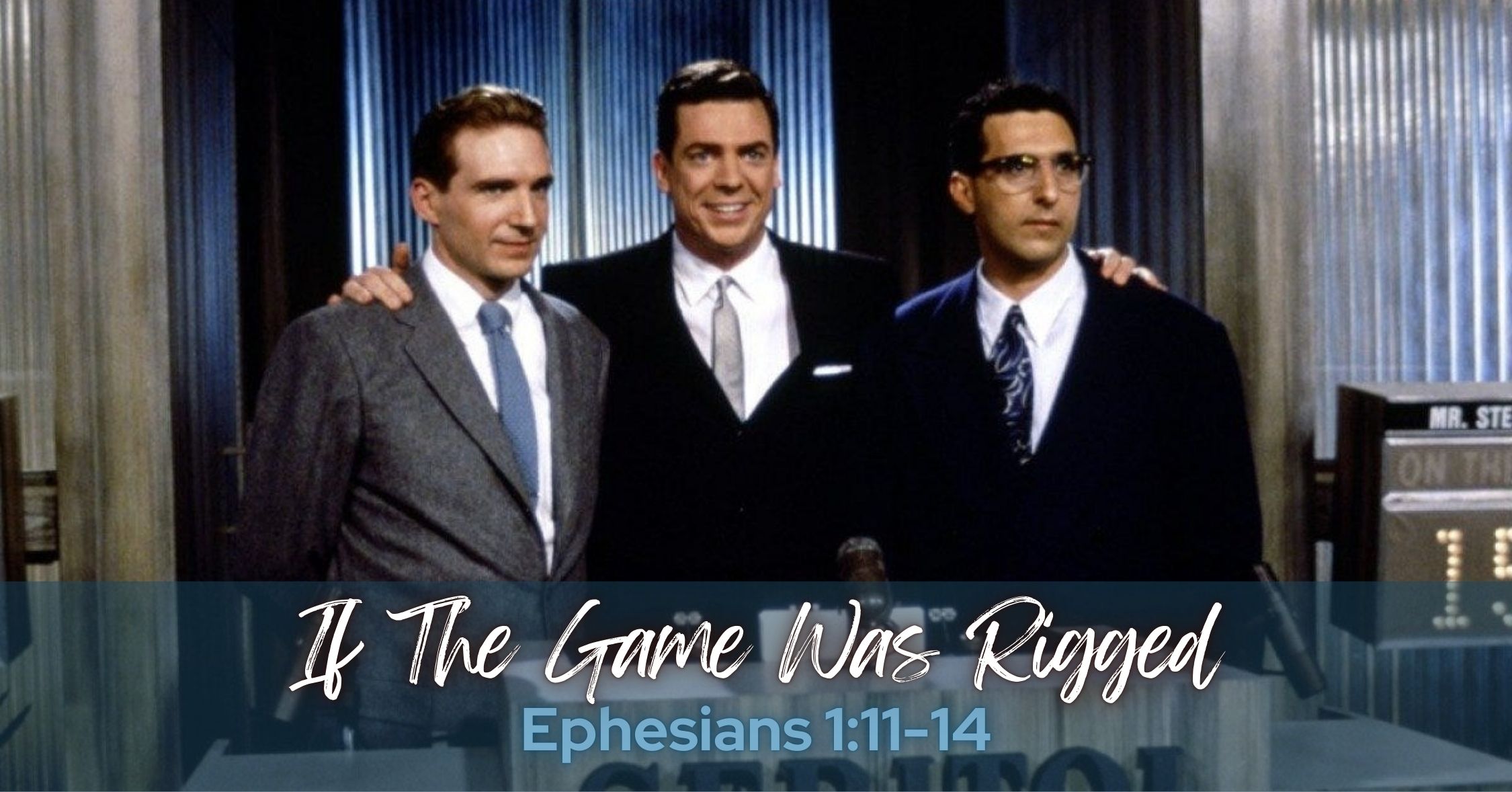
The fix was in.[1]
In the late 1950’s there was a television game show called Twenty-One? The goal of the game was to score 21 points or as close to 21 when the game ended. There were two contestants, a champion and a challenger and they were placed in isolation booths so they couldn’t see or hear each other or the audience. Each round they were given a choice as to how many points they wanted to play for, between 1 and 11. The more points, the tougher the questions. After the first two rounds, both contestants were given the chance to end the game without knowing the other’s score. It sounded pretty intense. On November 28, 1956, a contestant by the name of Charles Van Doren came on the show. He battled reigning champion Herbert Stempel over four grueling shows, each ending in a 21-21 tie. It was only in the 5th show when Van Doren called the game did he triumph over Stempel with a score of 18 points, enough to beat his opponent. Van Doren went on to win continuously until March 11, 1957 when he finally lost – after three straight ties – to contestant Vivienne Wax Nearing. In all, Van Doren won $143,000. Pretty good for a few months work – even by today’s standards. But that wasn’t it for Van Doren. He became so popular that he was signed to a contract with NBC for $150,000 over three years to appear on the Today show, on Steve Allen’s show as a guest, and he even appeared on the cover of Time magazine! But two years later, his world came tumbling down. He confessed to a House investigation committee that he had participated in a lie. He told the committee, “I was involved, deeply involved, in a deception. I had deceived my friends and I had a million of them.” What the committee uncovered was Twenty One had been rigged. All the white knuckle tension, all the drama, all of it had been staged. Both the winners AND the losers had been selected beforehand. Each one knew what his or her role was before walking into the limelight. And each one was even coached on how to react in different situations. The extent to which they manipulated the drama even went so far as turning off the air conditioning in the contestants’ booths to make them appear to be sweating due to the drama. When the news broke, the American public was outraged and the producers, the emcee, and even Van Doren were publicly ostracized.

But why? Why did people care so much that the show was rigged?
It provided great entertainment which is what we all hope for when we watch TV, and at the time, it wasn’t even illegal to do it. So why do we care? Because the show at its essence was not about the game. Sure, they played a game, but the show was really about hope, the hope that an average, ordinary person could make it! That you or I could have a better future. And that hope was destroyed the moment the people found out it was rigged. What’s the point in playing a game if the outcome is already determined? If the “little guy who makes it big” was chosen beforehand to win, then he really didn’t win anything. He really didn’t triumph against the odds. It was a stacked deck. And that’s why I can’t understand the Calvinist concept of predestination.
Predestination is the idea God has already chosen those who will be saved and those who won’t.
It strikes me as being completely against the nature of God because it seems downright mean. We’re promised by Jesus that he has prepared a place for us in Heaven – each and every one of us; it even says so in John 14. But if predestination is true, then Jesus was lying. And who could follow a God like that? But there are many. Among the major denominations in America, Presbyterians follow this thinking. Dr. Petersen was my one of my professors in seminar and he was Presbyterian and told us they like to call themselves the “Frozen Chosen” because they were preselected before they even existed to either go to Heaven or not. Nothing they could do or not do would change that. Its based on five core beliefs that form the acronym TULIP and it stands for “Total depravity” – meaning human beings are so utterly steeped in sin they can’t even choose to follow God; “Unconditional election” – meaning that God chooses who is saved; “Limited atonement” – meaning that Jesus died for some and not for all; “Irresistible grace” – meaning that if you are chosen you cannot resist it; and “Perseverance of the saints” – meaning once elected you cannot ever fall from grace.[2] TULIP stands for “Total depravity,” “Unconditional election,” “Limited atonement,” “Irresistible grace,” and “Perseverance of the saints.”

To be sure, people who believe in this doctrine didn’t pull it out of a hat.
The Bible makes many references to predestination, sometimes literally such as the one right before our passage where it says in verses 4-5, “In love, he predestined us for adoption to sonship through Jesus Christ, in accordance with his pleasure and will…” It sounds very straight-forward, doesn’t it? No debate there. Or is there? We’re going to finish this passage by reading as Paul Harvey used to say on his radio program, “the rest of the story.”[3]
1 In him we were also chosen,having been predestined according to the plan of him who works out everything in conformity with the purpose of his will,12 in order that we, who were the first to put our hope in Christ, might be for the praise of his glory. 13 And you also were included in Christ when you heard the message of truth, the gospel of your salvation. When you believed, you were marked in him with a seal, the promised Holy Spirit, 14 who is a deposit guaranteeing our inheritance until the redemption of those who are God’s possession—to the praise of his glory. – Ephesians 1:11-14
One key word can change our understanding of this passage.
“When.” “When” doesn’t fit into the idea of predestination. “When” supposes there is a time before and a time after and if its predestined there is no such thing because you were ALWAYS going to do it or not do it. There is no turning point in your life. It seems like such a small word to hinge the debate on, but it can be a big deal. Paul uses that word twice in this passage: “When you heard the message of truth” and “When you believed” meaning that what followed hinged on what the people did. It meant that you were not predestined but that you had agency, a choice. And that is an important aspect of what we believe. We believe in free will. We believe that God allows us to choose.

The only way to coherently hold on to Calvinist theology is to say that EVERYTHING is God’s will.
The good, the bad, and the ugly – and there’s a lot of ugly in the world. Cancer in children, hurricanes and earthquakes that devastate thousands, murder of innocent people, the Holocaust – all of it is according to God’s plan. To hold on to that system of belief, you have to buy into the idea that ALL of existence is basically one well-choreographed show like Twenty One and since it’s God’s show and his salvation to give, then that’s the way it is. But if God would not only force us to live in a world with such cruelty AND design the cruelty himself, then can we really say that God is love as it does in the Bible many, many times? Or is it perhaps that there is a different way to interpret predestination? We choose to believe when the Bible says we are “predestined” it simply means God knows us so well, he knows what we will choose and the path in life we will lead. That’s called determinism which is different. Determinism is God’s foreknowledge of future events, not his will to make them happen. He wants all of us to follow his path. He wants to extend salvation to all. God’s nature is to shepherd which means God will do all within God’s power to bring home his sheep short of forcing them to come home.
We believe as Methodists that our lives are not predetermined.
It may very well be that God is omniscient and knows our path, but not because God chooses it for us, but because we choose it for ourselves. And because we have that choice, both to follow God and not follow God, we eternally have hope – for ourselves, for our loved ones, for the world – that we can make this world a better place. We have hope that we can create a world that will eventually turn to God. We have hope that God wants us and loves us and will save us if we only turn toward him. That is the hope we cling on to! I am reminded of John 3:16, “For God so loved the world that he gave his one and only Son, that whoever believes in him shall not perish but have eternal life.” The game of life is not rigged my friends. The outcome has not been determined. Our hope is still alive.
[1] Information about the scandal was derived from http://www.pbs.org/wgbh/amex/quizshow/peopleevents/pande02.html, http://www.nytimes.com/2008/07/21/opinion/21iht-edbeam.1.14660467.html?_r=0, and https://en.wikipedia.org/wiki/Twenty_One_%28game_show%29
[2] Although found in many places, I referenced Adam Hamilton’s Christianity’s Family Tree, p. 64.
What Makes a Christian a Christian?
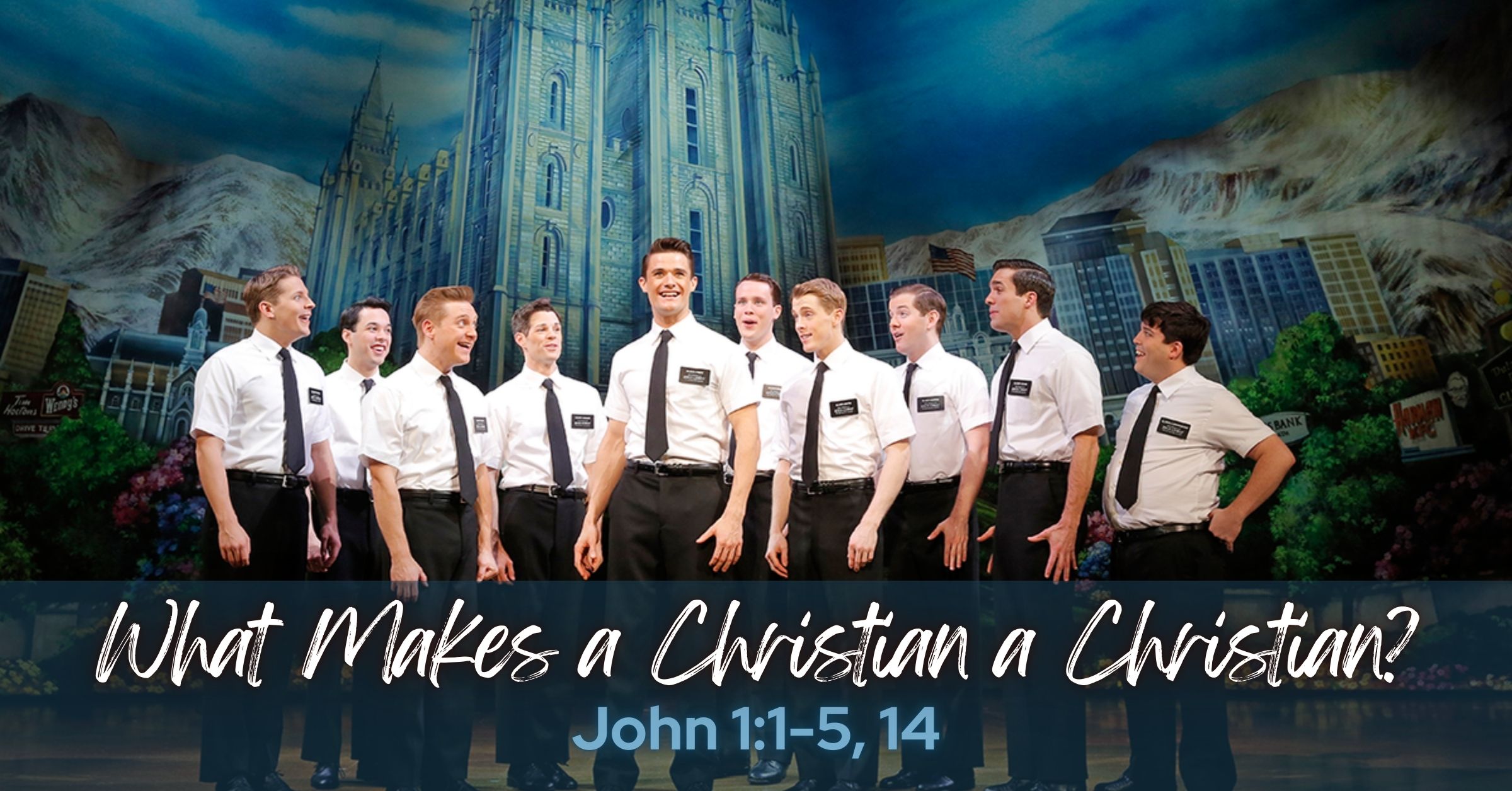
What makes a Christian a Christian?
It’s not coming to church. And I’m sure you already know what I’m going to say. “Going to church doesn’t make you a Christian any more than being in a garage makes you a car.” It’s about the life we live. What makes someone a Christian is love, compassion, humility, forgiveness, and a servant’s heart. I would argue that there are Christians out there who don’t call themselves Christian, but they are following the call of Christ in their life. And there are people out there who call themselves Christian who are Christian in name only. It goes back to something Shakespeare wrote in one of his most famous plays, “Romeo and Juliet.” When I was in high school, we had to memorize either Romeo’s soliloquy or Juliet’s and even though I did Romeo’s (“Hark! What light through yonder window breaks?”) it is in Juliet’s that we hear a word that mirrors this exact thought. She says to Romeo, “What’s in a name? A rose by any other name would smell as sweet.” Being a Christian is much more than simply calling yourself one. It’s about proving it through the life you live.

But it IS useful to know about our beliefs as a Christian.
If we don’t know what we believe, how can we know the life we are to live? Traditionally, most Christian traditions have defined Christianity by a few simple beliefs. John Wesley summed them up in his essay “The Character of a Methodist.”[2] He wrote Scripture is the inspired Word of God, Scripture was sufficient to “equip us for a life of faith and service,”[3] and Christ is both fully human and fully divine. Everything else Wesley said we should “think and let think,” meaning we can discuss and disagree with each other, but it shouldn’t drive a wedge between us. Obviously, with 47,000+ denominations worldwide, we have horribly failed at this.[4] Which says more about us than about these basic concepts which we find supported in Scripture. In fact, on our way back from visiting my parents, I saw a billboard that said “Jesus is not God” which is completely and 100% false. So, it’s important to know what we believe and why. Paul wrote in 2 Timothy about the sufficient and inspired nature of Scripture and our Scripture this morning is about the divinity of Christ.
In the beginning was the Word, and the Word was with God, and the Word was God. 2 He was with God in the beginning. 3 Through him all things were made; without him nothing was made that has been made. 4 In him was life, and that life was the light of all mankind. 5 The light shines in the darkness, and the darkness has not overcome it.
14 The Word became flesh and made his dwelling among us. We have seen his glory, the glory of the one and only Son, who came from the Father, full of grace and truth. – John 1:1-5, 14
It always confused me to hear Jesus being called “the Word of God.”
What did that really mean? I kind of just assumed it was just another name for God like Immanuel or Prince of Peace. But there is more to it than just a name. The “Word” was something both Jews and Gentiles would have been familiar with. The Jewish people would recognize this description of Jesus meaning Christ was the “instrument for the execution of God’s will.”[5] Throughout the Old Testament, God’s will was often made manifest by his “word” and so Jesus would have been seen as the personification of God’s will on Earth. On the other hand, the Greek interpretation of “word” was Logos which would have meant in Greek philosophy that he was the bridge or the intermediary between God and Earth.[6] So in the Old Testament you have the “Word” as the manifestation of God’s will, and in Greek the “Word” would have been understood as the bridge between God and Earth. To use this description of Jesus as the “Word” would have meaning for everyone in trying to understand what role Jesus played in God’s creation. Explaining that the Word was there at the beginning, the Word was with God, and the Word WAS God establishes Jesus as divine, on equal terms with God.
But not all people who claim to be Christian believe this.
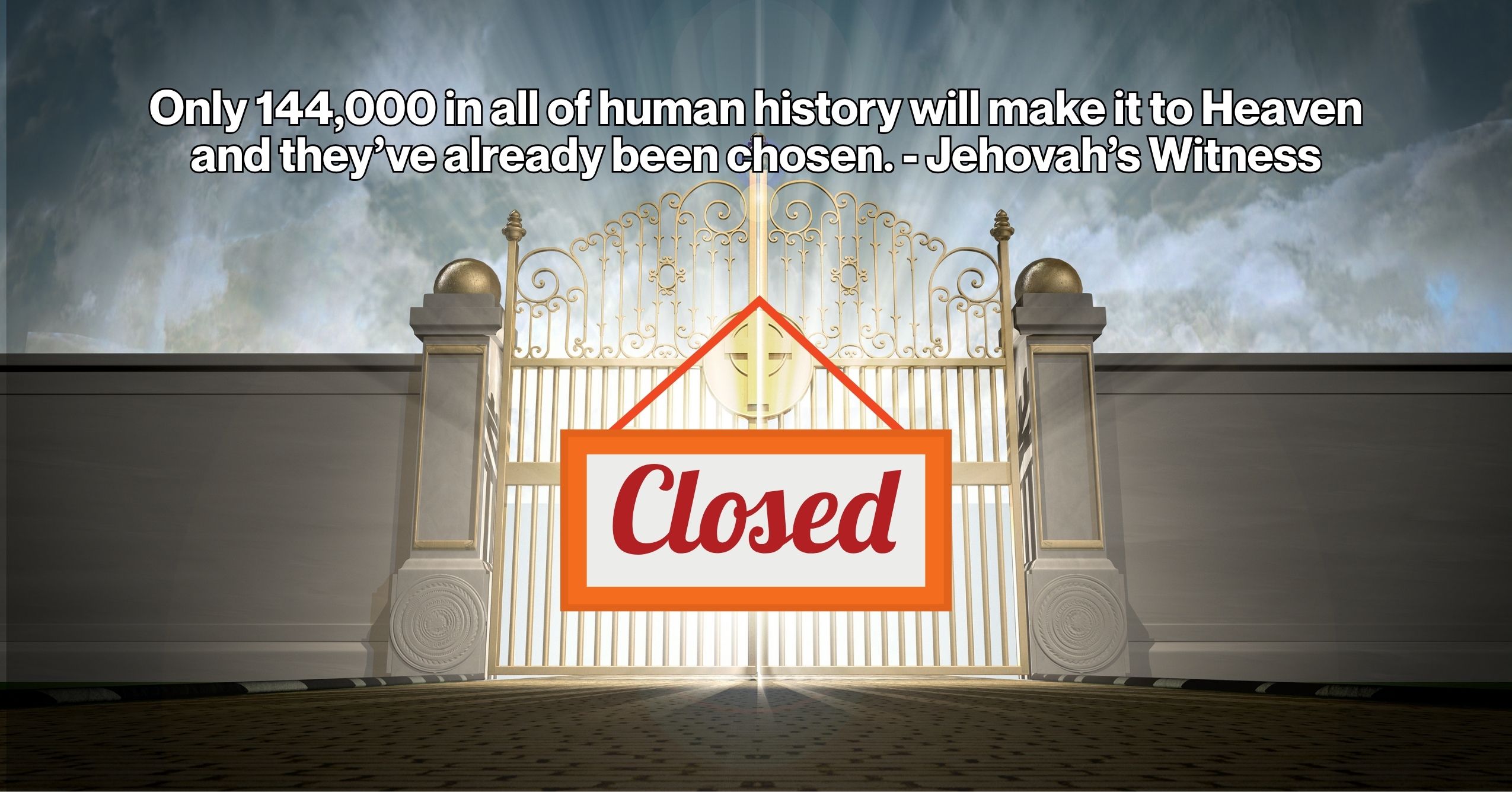
From my reading and understanding of both the Jehovah’s Witness belief and Mormon belief, neither one of them think Jesus was God in the sense we traditionally understand it. In the faith of the Jehovah’s Witness, Jesus was not God, but a creation of God. He was also known as the Archangel Michael and did not die on a cross but on a stake. When Jesus did die, he was not resurrected but existed only in spirit form. The Jehovah’s Witness were taught only 144,000 people would be taken to Heaven and the rest of humanity would remain dead. Not that they would go to hell but would simply cease to exist. They revised that interpretation to say that true believers after 1935 would be resurrected to a new Earth but that 144,000 who were chosen prior to 1914 would still be the only ones to go to Heaven.[7] My question is what happened to those “true believers” between 1914 and 1935? Mormons similarly don’t believe Jesus is actually God. Instead, they believe God, Jesus, and the Holy Spirit are different and distinct beings that act in unison with one another. It seems like a very subtle difference, but it denies that Christ is God and instead one of many gods. The Mormon faith also teaches we can eventually become God or at least as God is. They believe God and Jesus both have physical, perfected bodies, that God is made of flesh and bone so when we are created in his image that is a literal interpretation.[8] But then in what image is that? An answer to that isn’t offered. Mormons believe in a Heavenly Mother although not much more is said about this divine being. They don’t believe in hell but instead on three levels of Heaven. My roommate in college, Wayne, was Mormon and he described it to me this way. There are three levels of Heaven. The first level is occupied by true followers of the faith, the Mormons, who get to dwell with God. The second level is for all Christians who are not Mormon. They come close to accepting the truth, but are not quite on the Mormon level and they get to dwell with Jesus. And while they are happy, they are always looking up and wishing they could be with God the Father. The third Heaven is for everyone else. They get to live with the Holy Spirit. And while they too are happy, they are always looking up at the first and second Heavens and wishing they got to be there. Now, while the official version of the levels of Heaven or what is called the “degrees of glory”[9] is a little more complicated, Wayne’s version was a good summary of what is taught.

As for the sufficiency of Scripture and Scripture as the inspired Word of God, there are also differences.
The Jehovah’s Witness faith believes in the Bible as the inspired Word of God, but they use a translation of the Bible that conforms to Jehovah’s Witness beliefs.[10] As mentioned before, they don’t believe Jesus died on a cross so they changed the translation of the word to “murder stake.” They don’t believe Jesus was God but instead a creation of God so they changed the verse we read that distinctly said, “The Word was God” to instead say “The Word was A god.” And because they believe Christ already returned in 1914, they changed the translation of the word “coming” to “presence.”[11] In contrast, the Mormons do not believe in the sufficiency of Scripture – not because they doubt God but because they believe mistakes were made and the Book of Mormon corrects those mistakes.[12] They also turn to two other books written primarily by Joseph Smith based on his interpretation of the Bible and by a series of golden plates he claims revealed to him God’s teachings. Because they hold these revelations as equal to the Bible and in some cases supersede the Bible (although not the Bible’s fault), they don’t truly believe in the sufficiency of Scripture.
That isn’t to say that members of either church are not good people.
Many of them are living a more dedicated, Christ-like life than “mainline” Christians. That’s also not to say that we can’t learn from them as much as we hope they learn from us. Both have a dedication to evangelism that mainline Christianity has struggled with. Whether or not they are effective is something we can debate, but they take the Great Commission seriously in a way most churches do not, even though God commands it. As we explore our faith deeper and seek to define what we believe, it is important to point out that not every Christian faith is in fact Christian. Or at the very least when we seek to understand our faith, there are some very fundamental beliefs we believe come from God and the Bible that define who we are. We should always seek to love those who are different than us. We should always seek to understand without ridicule people who honestly adhere to their faith. And by understanding our own faith better we can be as Peter said “prepared to give an answer…for the hope that you have (1 Peter 3:15).”
[2] http://www.umcmission.org/Find-Resources/John-Wesley-Sermons/The-Wesleys-and-Their-Times/The-Character-of-a-Methodist
[3] http://www.gotquestions.org/sufficiency-of-Scripture.html
[4] https://omsc.ptsem.edu/the-annual-statistical-table/
[5] http://www.gotquestions.org/Jesus-Word-God.html
[6] http://www.gotquestions.org/Jesus-Word-God.html
[7] https://en.wikipedia.org/wiki/Jehovah%27s_Witnesses and http://www.equip.org/article/are-jehovahs-witnesses-christian-3/
[8] https://carm.org/is-mormonism-christian and https://en.wikipedia.org/wiki/Mormonism
[9] https://en.wikipedia.org/wiki/Degrees_of_glory
[10] http://www.gotquestions.org/New-World-Translation.html and http://www.equip.org/article/are-jehovahs-witnesses-christian-3/
[11] http://www.gotquestions.org/New-World-Translation.html and https://en.wikipedia.org/wiki/Eschatology_of_Jehovah%27s_Witnesses
[12] http://thecaucus.blogs.nytimes.com/2007/11/29/mormons-and-the-bible/?_r=0 and https://en.wikipedia.org/wiki/Mormonism_and_Christianity
If We Are the Body
Everyone say “cheeks!”
In today’s selfie generation it’s important to know how to maximize your smile and the word “cheese” just doesn’t do it anymore. The word “cheeks” gives you a better smile in pictures. It’s true.[1] Not only that, but a “cheeks” smile is more likely to make you feel happier as well. Studies have found that the more we use our upper facial muscles to make a smile, the kind that produces crow’s feet around our eyes, the more likely we are to feel happy. Researchers also did a study where they had people hold a pen in their mouth while looking at some cartoons.[2] The people who held the pen with their teeth, making them smile with their upper facial muscles, thought the cartoons were funnier than the people who held it with their lips, making them pout. Smiling has a positive reaction on our mood. It also makes us less stressed. It’s like the concept “fake it ‘til you make it” – the idea being that faking happiness can help lead us to happiness or at least alleviate us from stress and depression. Are there limits to this superpower though? Sure.[3] But overall, smiling has proven to give us added health benefits and can help “turn that frown upside down.”

John Wesley did the same thing with his faith.
He went through a period of doubt in his own life on his passage back to England from America. The ship he was on went through a heavy storm and his heart was gripped with fear, but a group of Moravians who were also on the ship weathered the storm joyfully. They sang songs and had such a positive attitude John wondered what their secret was; how were they able to face a crisis like this without fear. They told him their faith gave them strength. He admitted to them there were times when his own faith was in doubt and the Moravians told John to simply continue practicing his faith until he felt it again. In essence, to “fake it ‘til you make it.” John was convicted by their words and he continued preaching and teaching and helping others until one day at Aldersgate, John wrote that he “felt his heart strangely warmed.” And in that moment, the solidity of his faith returned and he felt renewed in the Spirit. That’s why John preached so feverently on the means of grace. He felt that the means of grace helped us to stay IN God’s grace. For John, the means of grace were simply the ordinary ways God worked in our lives and he divided them into works of piety and works of mercy.[4] Works of mercy are things like doing good works and seeking justice for the oppressed and addressing the needs of the poor. Works of piety were more personal tasks; reading the Bible, praying, fasting, attending worship, going to Bible study, taking communion, and sharing our faith. Both were essential to stay in the grace of God. Both were important to develop our faith.
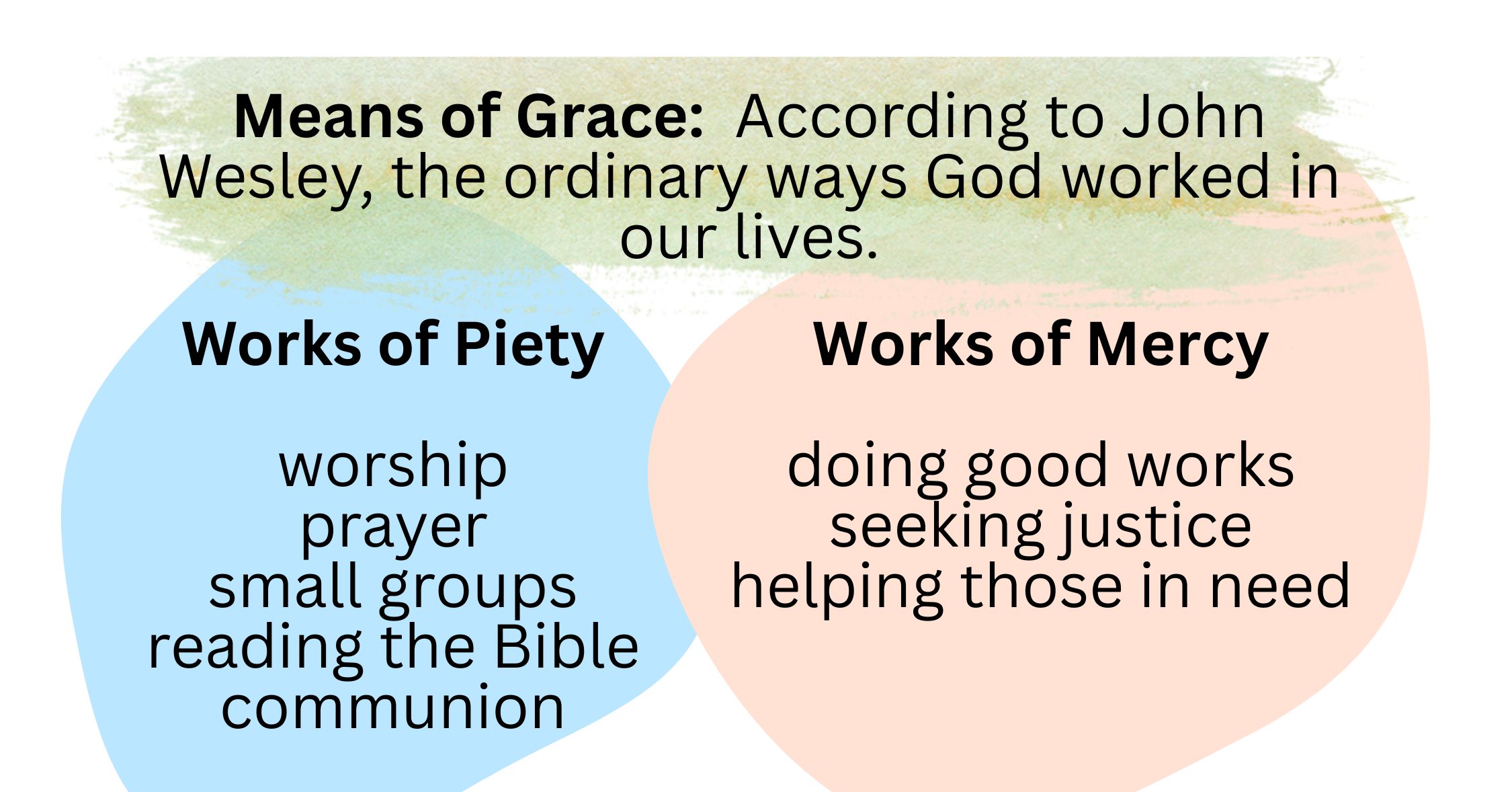
The passage we are going to share this morning is what inspired Wesley’s ideas about works of mercy.
Jesus reveals to his followers that eventually everything will come to an end. He points to their holiest of temples and says, “Truly I tell you, not one stone here will be left on another; every one will be thrown down (Matt 24).” The disciples come up to Jesus privately and ask him, “Psst. Tell us Jesus, when is this going to happen?” I don’t know if the disciples were simply curious or scared or trying to get a heads up, but Jesus tells them only that it WILL happen, and says that only God knows the details of when. Instead he encourages them to live a life of readiness – to act as if every day might be the last so that when he DOES return for them, they will be found to be ready. He tells them that on that day when he returns, all of the people of the world will be divided into two groups, the sheep and the goats with the sheep on his right and the goats on his left and the passage we are reading this morning describes what Christ will say to them.
34 “Then the King will say to those on his right, ‘Come, you who are blessed by my Father; take your inheritance, the kingdom prepared for you since the creation of the world. 35 For I was hungry and you gave me something to eat, I was thirsty and you gave me something to drink, I was a stranger and you invited me in, 36 I needed clothes and you clothed me, I was sick and you looked after me, I was in prison and you came to visit me.’
37 “Then the righteous will answer him, ‘Lord, when did we see you hungry and feed you, or thirsty and give you something to drink? 38 When did we see you a stranger and invite you in, or needing clothes and clothe you? 39 When did we see you sick or in prison and go to visit you?’
40 “The King will reply, ‘Truly I tell you, whatever you did for one of the least of these brothers and sisters of mine, you did for me.’
41 “Then he will say to those on his left, ‘Depart from me, you who are cursed, into the eternal fire prepared for the devil and his angels. 42 For I was hungry and you gave me nothing to eat, I was thirsty and you gave me nothing to drink, 43 I was a stranger and you did not invite me in, I needed clothes and you did not clothe me, I was sick and in prison and you did not look after me.’
44 “They also will answer, ‘Lord, when did we see you hungry or thirsty or a stranger or needing clothes or sick or in prison, and did not help you?’
45 “He will reply, ‘Truly I tell you, whatever you did not do for one of the least of these, you did not do for me.’
46 “Then they will go away to eternal punishment, but the righteous to eternal life.” – Matthew 25:34-46
Jesus makes it clear there is a right way and a wrong way of doing things.
The right way is helping those in need. Whether they are hungry or thirsty or needing shelter, we have an obligation as God’s people to help them out. It shouldn’t be conditional on whether or not they share our faith or vote the same way we do. It doesn’t matter if they are righteous Dodgers fans or misguided Giants fans, we are supposed to help everyone who needs it. When we ignore them, we are doing the exact opposite of God’s will and we distance ourselves from God. We become selfish and self-absorbed. We become so focused on the here and now that we forget all about the hereafter. Jesus is telling us in this passage that our faith is more than just words. It’s more than simply showing up. Our faith becomes evident in how we live our lives. And God is watching.
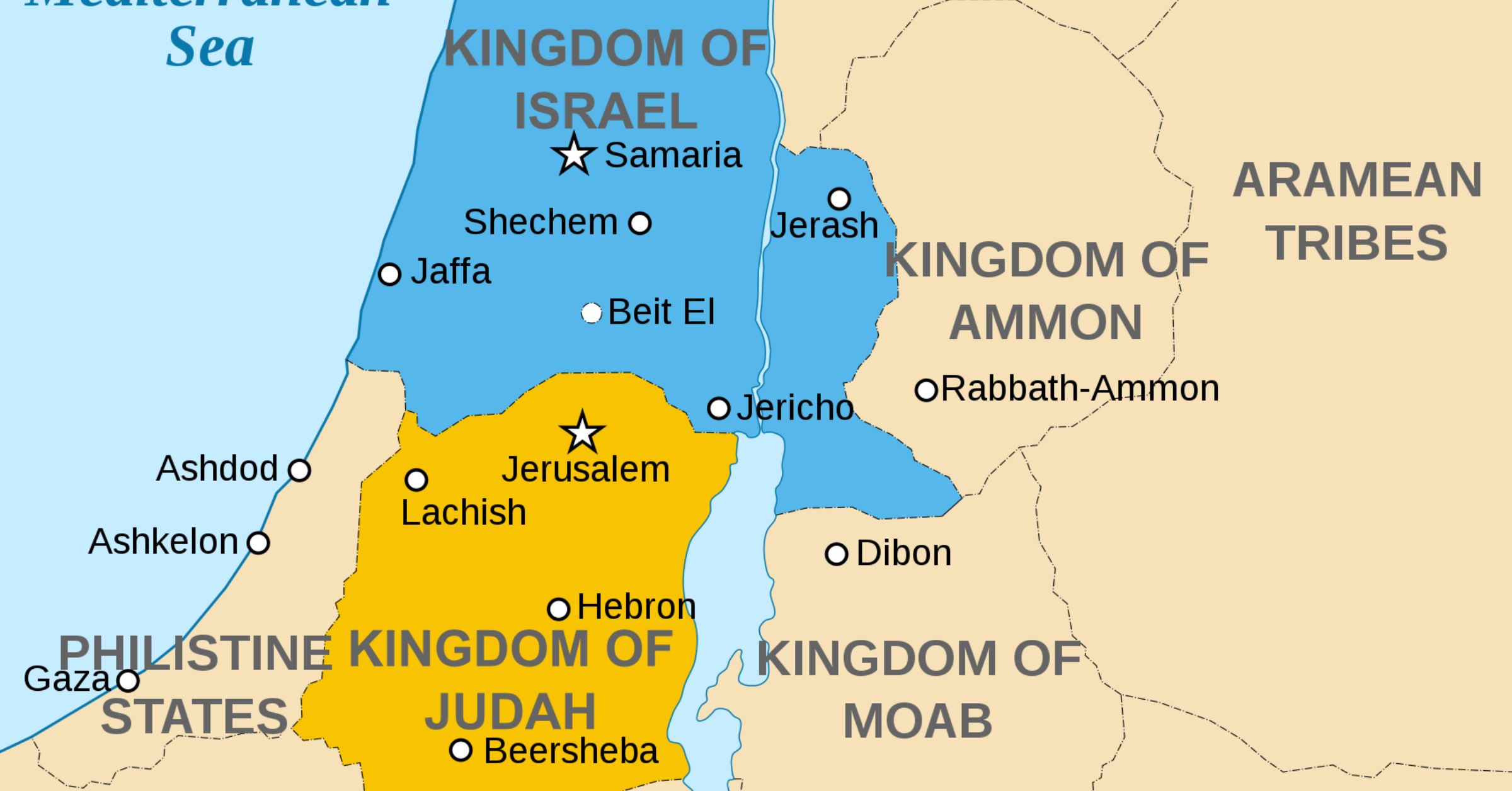
In the book of Acts, Jesus commands us to witness to those all over the world.
He tells us, “you will be my witnesses in Jerusalem, and in all Judea and Samaria, and to the ends of the earth (Acts 1:8).” It’s interesting that Jesus chose those exact locations, and like many of Jesus’ teachings, these words were carefully chosen. They weren’t random places to make a point. Jerusalem represented those who are like us, those who lived in our communities, those who shared our values, if not our beliefs. Judea was far from Jerusalem and represented those who might be like us but who lived far away. For us that might be the people of our state or maybe even our country. You know the story of the Samaritan woman. She lived close to the Jewish community. They were neighbors but considered outcasts to the Israeli people. But Jesus commanded us to bear witness to them, to the disenfranchised, to the outcasts, to the people on the fringes. Because they were his children, too. And to make sure everyone was covered, Jesus commanded us to take his Word to the ends of the earth. That we weren’t supposed to stop at just the people we knew, the people who were like us, or even the people on the fringes of our society. But we were supposed to take it everywhere else too. That meant we were supposed to be missionaries to the entire world. It doesn’t mean we are all meant to leave our homes and live in a grass hut in some far-off country. Sometimes our mission field is right in our backyard. What it does mean is that you need to find that mission field for yourself and contribute what you can to the mission.
Whenever we do what God wants us to do, our lives get better.
That isn’t an hypothesis, it’s a fact. Scientific study backs us up those claims time and time again. Being grateful helps our marriage.[5] Volunteering makes us feel more satisfied in life. Praying reduces stress. Keeping a gratitude journal makes us happier.[6] So when Wesley proposed works of mercy as part of the means of grace he may have been on to something without even realizing it. Because among the things that cause the most happiness in our lives or give our lives a “happiness” boost, are also means of grace he talked about.[7] I don’t think that’s a coincidence that what God wants us to do not only makes our lives better but brings us closer to him. And that is certainly something worth smiling about. In the name of the Father and of the Son and of the Holy Spirit. Amen.
[1] http://www.theguardian.com/lifeandstyle/2014/dec/22/smiling-wellcome-trust-science-writing-prize
[2] Ibid
[3] http://www.scientificamerican.com/article/how-smiling-can-backfire/
[4] http://www.umc.org/how-we-serve/the-wesleyan-means-of-grace
[5] http://www.dailymail.co.uk/sciencetech/article-3283713/The-secret-happy-marriage-Saying-thank-Study-finds-gratitude-predict-couple-remains-together.html
[6] http://www.huffingtonpost.com/2014/01/07/boost-happiness_n_4532848.html
[7] http://www.huffingtonpost.com/2014/01/07/boost-happiness_n_4532848.html
Milk…It Does a Body Good.

Milk…It does a body good.
I believed that phrase whole-heartedly my entire life. But I learned that as you get older, the benefits of milk aren’t so obvious. The New York Times posted an article asking the question, “does milk do a body good?” And it turns out…it doesn’t seem so. I long prided myself on my milk drinking. I may not always eat properly, but I would easily drink a glass of milk (and often more) once a day. Then Cassie came up to me one day and said drinking milk might actually be CAUSING me some problems. I have to admit, as smart as Cassie is, I thought she got this one all wrong. My entire life, doctors have been telling me to drink milk. Even as an adult. But in 2011, the Journal of Bone and Mineral Research did a study of over 200,000 women and could find no correlation between milk drinking and lower rates of bone fracture.[1] Another study of over 100,000 men and women could find no correlation between drinking milk as a teenager and incidents of bone fractures. And one study published in the British Medical Journal showed men and women who drank high quantities of milk had a higher death rate and women actually had MORE bone fractures than those who didn’t drink as much milk.[2] While they couldn’t prove milk actually caused those deaths, it’s pretty clear that it doesn’t seem to be doing much for us as we once thought.

The story, of course, is different for infants and children.
Especially for babies. Babies NEED milk – specifically mother’s milk. It strengthens the immune system, decreases disease, and helps to protect children from developing allergies.[3] Later in life, these babies have fewer cavities, are less likely to be obese, tend to have fewer problems related to blood pressure, and tend to be more mature and assertive.[4] The evidence is so strong for all the different benefits of baby milk that there are even milk banks where mothers can donate so mothers who have difficulty producing their own still have a source for their babies. Virtually everyone agrees that milk is essential for young developing infants.
And just as we need milk to grow physically, we need spiritual milk to grow spiritually.
Milk in the Old Testament largely referred to God’s promise of a land overflowing in abundance, but in the New Testament, milk is seen as spiritual sustenance. It’s the building block for a strong spiritual life. Just like milk is a necessity for babies who grow up to be adults, spiritual milk is needed to help our faith life develop into something strong and robust and in terms of faith, most of us if not all of us are spiritual newborns. Our passage this morning is just one that refers to spiritual milk but its one that sheds light on what that milk will do for us.
Therefore, with minds that are alert and fully sober, set your hope on the grace to be brought to you when Jesus Christ is revealed at his coming. 14 As obedient children, do not conform to the evil desires you had when you lived in ignorance. 15 But just as he who called you is holy, so be holy in all you do; 16 for it is written: “Be holy, because I am holy.”
Therefore, rid yourselves of all malice and all deceit, hypocrisy, envy, and slander of every kind.2 Like newborn babies, crave pure spiritual milk, so that by it you may grow up in your salvation, 3 now that you have tasted that the Lord is good. – 1 Peter 1:13-16, 2:1-3
Crave pure spiritual milk.
“Like newborn babies, crave pure spiritual milk, so that by it you may grow up in your salvation now that you have tasted that the Lord is good.” Spiritual milk is essential for our faith and protects us from malice, deceit, hypocrisy, envy, and slander. But what is this magical spiritual milk? It’s those things that keep us connected to God. It’s the everyday aspects of life that keep us grounded in how life is supposed to be instead of these awful things that lead us to our worst selves. And this is where John Wesley’s ideas about the means of grace come in. The means of grace are the spiritual milk that grounds us in faith and he called these works of piety. Works of piety are the personal practices that help us grow closer to God. Things like prayer, reading the Bible, going to worship, taking communion, taking part in Bible study, sharing our faith and fasting; these are the practices Wesley felt would connect us to our faith. But they must be done regularly. They need to become part of our everyday life, like brushing your teeth or taking a shower.

In our seemingly time-crunched world, how can we add in another thing?
We don’t have time for Bible study. We don’t have time for worship. We don’t have time for prayer. But is it we don’t HAVE time or we don’t MAKE time? Like with taking a shower or brushing your teeth, you could skip these things if you were seriously short on time. In the long run, you’d be able to do more if you stopped wasting time on hygiene. Think about it. The average shower lasts 8.2 minutes.[5] Assuming you take one every day, you could save yourself nearly 3,000 minutes a year. That’s more than 2 full days of time! But we don’t really think about skipping it normally because it’s become part of what we do every day. Plus, it probably keeps us from getting a divorce. Doing those everyday things might take a little bit of time here and there, but in the long run make our life better. We are healthier and happier and better to be around because of them. Now apply that to these works of piety. Almost all of these things – prayer, worship, Bible study, communion – take less than or about the same amount of time as taking a shower every day. Doing them makes us more spiritually healthy, gives us peace in our hearts, and also makes us better people to be around, so how can we make them part of who we are?
Stephen Covey had some great advice about this.
As you know, he’s the author of the book 7 Habits of Highly Effective People, and he writes, “The key is to keep the main thing the main thing.” You’ve probably heard that before. The key is to keep the main thing the main thing. We know this intellectually, but we don’t always do a great job of executing it. He says, “Most of us spend too much time on what is urgent and not enough time on what is important.” We’re so busy with whatever is in front of us that we don’t look at things long term. So how do we get around that? Covey says, “The key is not to prioritize what is on your schedule, but to schedule your priorities.” If you believe God is important then carve out time for God. It’s as simple as that. It’s just a matter of priorities.
As we approach the new year, pray about this.
Pray about how you can grow deeper in your faith. Pray about drinking the spiritual milk that Peter encourages us to do. If you’re already deep in prayer, reading your Bible, and joining a small group, then keep going. My guess is you’re already feeling that connection Peter talks about. But if you feel you need more of something in your life, consider these things, these types of spiritual milk. Commit to making one of these a new spiritual habit in 2026 and see if God won’t bless you for it. It is in the common, ordinary, everyday types of things that God gives us to help us tackle everyday life. These things that take very little time or money to do – prayer, Bible study, worship, communion. At times they might seem boring. At times they might even seem meaningless. At times we may not feel the working of the Holy Spirit within us. But it is. The Spirit is at work even if we don’t “feel” it all the time. And keep going. When babies drink milk, they don’t say to themselves, “Hey look! My leg just grew a quarter of an inch!” But slowly, over time, as they keep taking the nourishment they need they grow. Sure and steady they grow. And the same is true of our faith. Take time out to drink your spiritual milk. It does a body good.
[1] https://www.nytimes.com/2014/11/18/upshot/got-milk-might-not-be-doing-you-much-good.html
[2] https://www.bmj.com/content/349/bmj.g6015?etoc=
[3] http://www.nrdc.org/breastmilk/benefits.asp
[4] Ibid.
 Craig's Corner