
The Greatest Need

For the longest time, I didn’t think I needed God.
I believed in God since I was about eight years old, but I don’t think you could say he was really part of my life. Often I would talk to God late at night before I went to sleep. I had this old clock radio – I think it was my dad’s or my grandfather’s – and when I talked to God, I would always talk to him through it, kind of like a ham radio or CB. In those days, God was who I turned to when I needed to talk things out, but I never really thought about listening. God was there when I wanted him, but I wasn’t really in the business of being there for God. I guess at that age, and for many years thereafter, I didn’t think God needed very much from me. And at the time, I didn’t know how or why I should rely on God. When I was successful at something, I didn’t thank God for the gifts he gave me to do it. At mealtime, I didn’t give thanks to God for making it possible for this food to be on my table. When I was making important decisions, I wasn’t thinking about the path God was hoping I would choose. Pretty much it was all about me.

And I was fine with that.
I mean, it was nice to have God around, but I felt pretty self-sufficient. Still, there was this piece of myself that was missing. I couldn’t identify it at the time, but there were deep questions about life and purpose and existence that kept rattling around in my head. There were times when I wondered if life was just this phenomenally random event or if there was meaning and purpose behind it. I would wake up once in a while in sheer panic, anxious if there was anything more or if I would just be buried in some hole in the ground. I think I worried most that I would never know because I would just cease to exist. My life just a big “fade to black.” These questions, these worries, were persistent. They would come back to the surface out of nowhere, because the truth is I never dealt with them. It wasn’t until I went through a real spiritual crisis, when I went into a period of deep reflection that I understood just how much I needed God. Really NEEDED God. It was then I realized all those times I thought I had picked myself up off the ground and dusted myself off, God was there with me and cleaned up those parts I didn’t even notice were dirty. God was with me in my success. God was with me in my struggles. And it dawned on me that God never demanded anything from me in return. But now, having realized the impact God had on my entire life, I wanted to give something back. I wanted to share this amazing story of God’s work in me with anyone who would listen. And in that moment I decided to do what I have the privilege to do now.
It was in the NEXT moment that I realized I’d have to tell Cassie.
How would she react? I knew this is what God was calling me to do, but when you hear people say stuff like that, don’t you wonder for a moment about their sanity? Are they hearing voices? How do they know it was God? Plus, going into the ministry not only meant a big cut in pay, but three more years of school. And a pretty big life change, too. It was with all these things on my mind that I walked into the bedroom to tell Cassie about this revelation God had placed on my heart. And when I did, the most surprising thing happened. Cassie said, “I knew it. I could see it in you, but I wanted you to say it for yourself so you never thought I pressured you into it.” Wow. It was amazing to me that God had been working in Cassie’s heart just as he had in mine. He had been preparing her for this next step in our journey just as he had been preparing me. It was only one of several “God-incidences” that kept happening as I followed where God was leading.
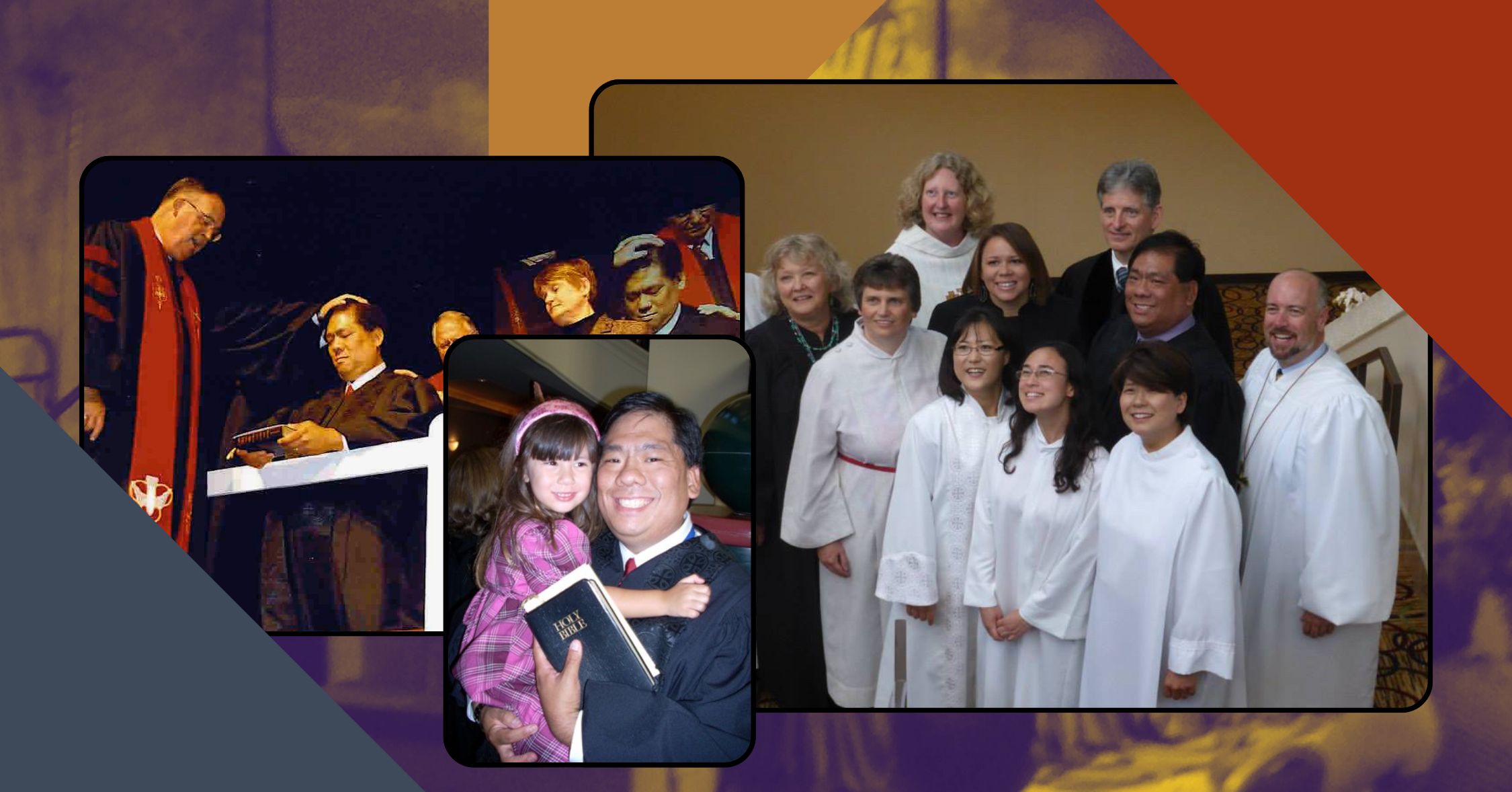
My life had changed.
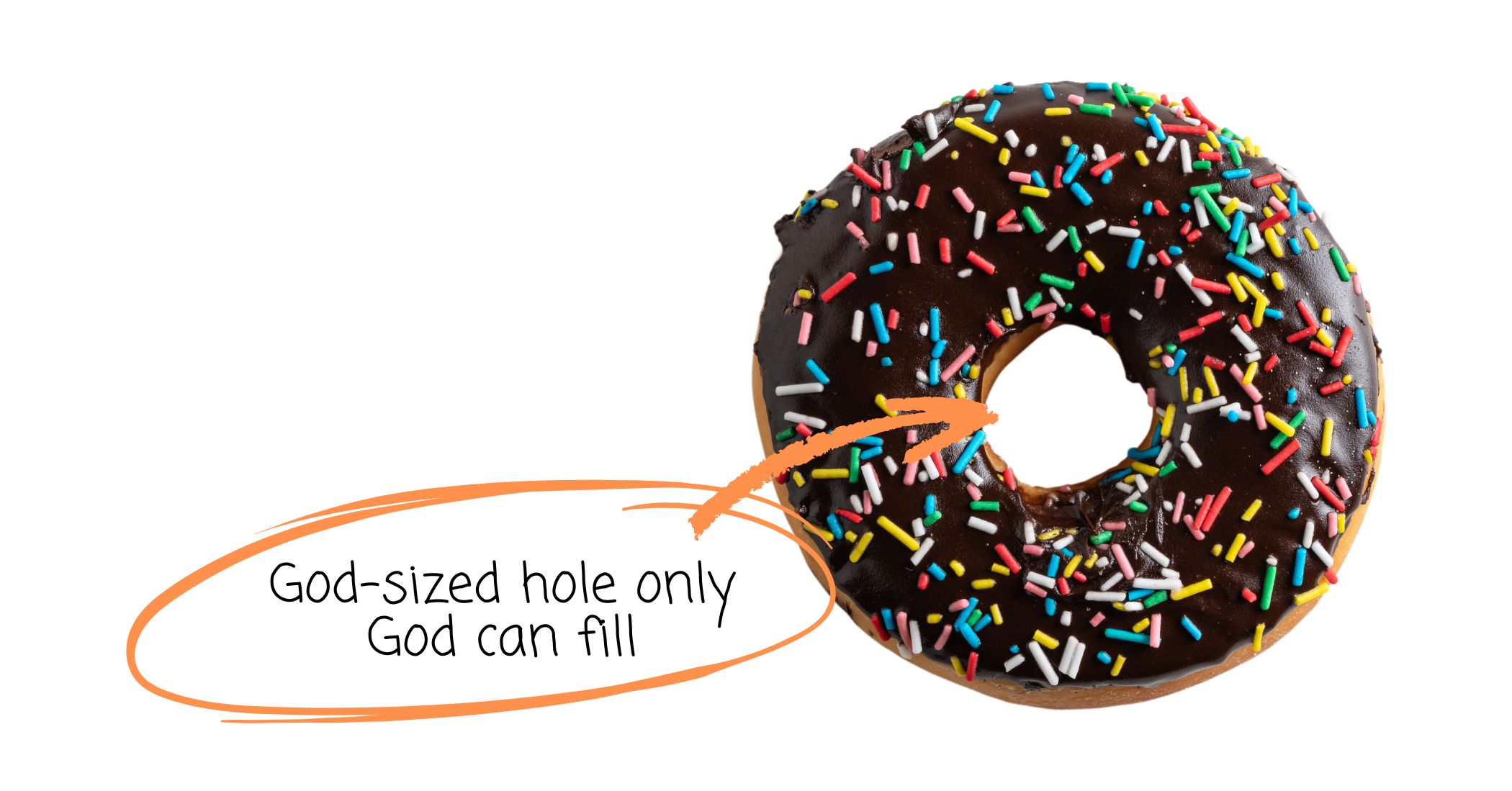
And it will always be different now that I know how much I need God and how God has always been there for me. I look at life differently and I see God in places I never noticed before. A skeptic would say I was making it up or I was reading too much into it. But these “God-incidences” occur past the point of coincidence, and I can see as I’ve looked back how God is present in my life. Now, are there times I have doubts about my faith? Yes. Are there times I wonder where God is in this mess we call life? Sure. Are there times I make mistakes? Pretty much every day. But my life is different now, and in ways I could never have imagined. I want your life to be different too if it isn’t already. It’s the reason I became a pastor, to help others have this same kind of experience. Because I know what it’s like to live a life without God at its center. I know what it’s like to feel completely alone in the world when you don’t have to be. And I don’t want that for anyone. I have also found that simply going to church is no guarantee you have really experienced the life-changing power of God in your life. There are people who come to church regularly who are about as far from God as any atheist. Until you realize how much you need God, your life will remain essentially the same. Like me, you’ll have this hole in your heart like a donut hole, and you’ll try and fill it with whatever you can. But until you find God, that hole will always be there. Because the one thing you need more than anything else is God. Only God can fill that hole.
We’ve been talking about basic needs all throughout Advent.
Throughout the Christmas season, we’ve shared how people have needs and when those needs aren’t met, we’re held back from being our best selves. Maslow called this his Hierarchy of Needs, but long before Maslow, God outlined them for us through his prophet Isaiah. Clothes, food, and shelter are some of the basic physiological needs we have, but equally as important are things like compassion, kindness, love, and forgiveness. And when we have these in our lives, we can become the person God created us to be. But when we don’t have them, we become focused on whatever it is we are missing. We crave them and keep searching for ways to fill those empty holes in our lives. The same is true for our soul. Just as our bodies crave nourishment, protection, and comfort so does our spirit and God is the answer to it all.
This duality of spirit and body we see throughout Scripture.
Jesus feeds the 5,000 and meets their physical needs, but he also declares himself to be the Bread of Life (John 6:35) and the Living Water (John 4:13). Body and Spirit. In Leviticus and Isaiah, God tells us to give shelter to those in need, while King David tells us to dwell in the shelter of the Lord. Body and Spirit. Jesus tells us to love our neighbor and then the disciple John reveals that God IS love. Body and Spirit are often interwoven throughout the Bible because both are fundamental to life. That’s why we feel so unfulfilled even when we have everything the world says we should have. That’s why people who have all the money in the world still seek fame, power, and influence. It’s why they feel this need to leave their mark. But ultimately, only one thing can give you the peace that will put your soul at ease and that one thing is Christ.
If you believe this, then you know why it’s so important to be the hands and feet of Christ in the world.
When a person spends their life trying to fulfill the most basic needs like food, shelter, and clothing, it leaves little time to ponder on God. So, we do what we can. We give as we are able. Some can give more than others, and if you can’t give a lot, do not be discouraged or think that your contribution is less than someone else’s. Because to God what matters is your heart for giving. God loves a cheerful giver. Remember the story about the Widow’s mite? All these rich people are dropping handfuls of coins into the giving plate, making a loud noise so everyone knows they gave a lot. But the widow drops just two coins into the plate, and it is the widow Jesus praises, because she gave from her heart. She wasn’t seeking credit and she gave what she could while all those others who made a big scene could have given more. God wants people with a loving heart. Which reminds me of a certain passage from the New Testament. It’s one that keeps encouraging me to grow in my giving and grow in my loving of other people.
34 “Then the King will say to those on his right, ‘Come, you who are blessed by my Father; take your inheritance, the kingdom prepared for you since the creation of the world. 35 For I was hungry and you gave me something to eat, I was thirsty and you gave me something to drink, I was a stranger and you invited me in, 36 I needed clothes and you clothed me, I was sick and you looked after me, I was in prison and you came to visit me.’
37 “Then the righteous will answer him, ‘Lord, when did we see you hungry and feed you, or thirsty and give you something to drink? 38 When did we see you a stranger and invite you in, or needing clothes and clothe you? 39 When did we see you sick or in prison and go to visit you?’
40 “The King will reply, ‘Truly I tell you, whatever you did for one of the least of these brothers and sisters of mine, you did for me.’
Christ came to us as the baby Jesus so many years ago.
He was born as we were born. He lived a life as we live our own – he ate, drank, and slept as we do. He experiences life as fully human and yet fully divine. When he returned to us, we knew he was exactly who he said he was, Immanuel – God with Us. One of the most important lessons he taught us in his short time on Earth is one that surrounds all that we do. It’s the one tenet that overrides all others and it’s how God wants us to live our life. Jesus said in John 13:34-35, 34 “A new command I give you: Love one another. As I have loved you, so you must love one another. 35 By this everyone will know that you are my disciples, if you love one another.” These were among the last words Christ said to us and the last command he gave. Love one another. This Christmas, let us remember these words and seek to live them out. Let us show our love for one another by doing all we can to help in the world today. Let us remember the words of the disciple John when he wrote, “18 Dear children, let us not love with words or speech but with actions and in truth.” Merry Christmas!
The Year of Jubilee

Extraordinary kindness.
Love. Generosity. There are people in your life who go above and beyond what’s expected. People who impact you in an extraordinary way. I feel blessed to have more than my fair share of people like that in my own. My friend Lyn is one of those people. We worked at Disneyland together and would hang out often. She was one of the sweetest and nicest people I’ve known, but her kindness and love stood out on one particular day that I’ll never forget. During my time at UCLA, I had a serious crush on a girl at school and things weren’t going so well. I called Lyn up and just poured out my heart to her and as she listened to my frustration and sadness, she told me everything was going to be okay and then said, “Don’t go anywhere. I’ll be right there.” I wasn’t sure what to expect since I was more than an hour away from Lyn while I was at school. Did she mean metaphorically? Nope. About 90 minutes later, I hear a knock at my door, and it was Lyn, holding this Pooh Bear she bought just for me. She gave me a hug, said “I thought you could use a friend,” and just sat with me for a while before heading back home. That act of kindness has stuck with me ever since. That was more than 30 years ago and it still feels fresh in my mind. Who does that? Not only did she make the long drive up from Anaheim to UCLA (no small feat in itself), but she made time to stop at Disneyland, get me a big Pooh Bear, brave the traffic, and find parking on a campus notorious for little to no parking. Not to mention we were both college students on a budget. Still she did all of that just for me.
In times of need, it’s good to know you have friends you can count on.
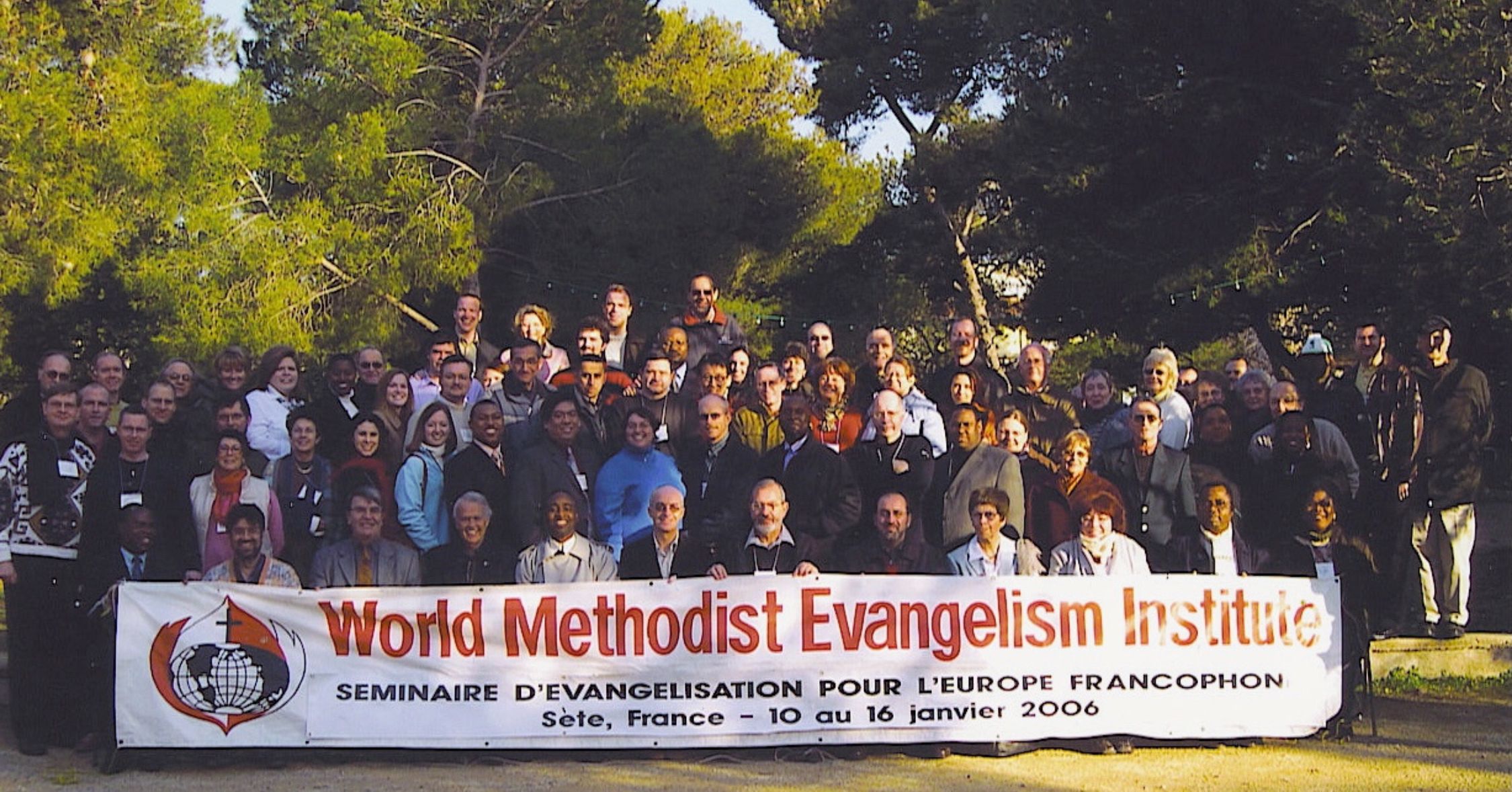
Back when I was in seminary, I had the extraordinary opportunity to attend a seminar in France about Methodism in Europe. We were going to stay for a week at a Christian retreat center in the small city of Sete on the French coast and would meet up with fellow pastors from all over Europe. To go would cost quite a bit of money and Cassie and I were not as well off then as we are now. It was a struggle just to send me to seminary. But Cassie agreed this was too good of an opportunity to pass up so we committed to figuring out the finances along the way. As part of the curriculum, the school had us send out ten letters to friends and family to ask for their help in deferring the cost. I did it to fulfill my obligation to the class, but I didn’t want to. I didn’t want to be a burden to family and friends or make them think I was abusing our relationship to get something out of it, so I also sent a separate note to everyone to explain all of that and let them know we weren’t expecting anything. But one of my friends did. My buddy Lance gave me $500. I was flabbergasted. Up to that point, I don’t think Cassie and I had given $500 in one lump sum to anyone or anything so to receive that gift was extraordinary. And it’s not like Lance was rich. He didn’t own a mansion. He was just making a living like everyone else so $500 was a very significant amount of money. But he said he wanted to help and knew this was important. It was. To this day, the things we saw and talked about during that week have impacted my life and my ministry. It was the first time ever I had the chance to travel abroad. It was the first time I had the chance to experience God in a different country through different eyes. It really was life changing and I have been so grateful for that opportunity.
When people show extraordinary love, it changes your life.
And you don’t have to travel across the world for it to have that kind of effect on you. Think back to a time when someone in your life did something like that for you. Think of a time when someone was there for you just when you needed them. Maybe they were there to comfort you when you were feeling like the world was coming to an end. Maybe they took care of you at the hospital and came to visit when you were scared or lonely. Maybe you were in need and someone reached out with a helping hand. That is humanity at its best, when we behave like the people God is hoping we will be. When we do that, we can change the world. Lance so generously helped me out about 20 years ago and Lyn came to my side over 30 years ago and I still remember both like they happened yesterday. When people show extraordinary love, you can’t help but have it affect you. It influences you. It changes you. And that’s exactly the way God planned it. God WANTS us to be extraordinary givers of compassion and kindness. God WANTS us to overwhelm people with our love and generosity. Because that’s how we are going to change the world.
8 “‘Count off seven sabbath years—seven times seven years—so that the seven sabbath years amount to a period of forty-nine years.9 Then have the trumpet sounded everywhere on the tenth day of the seventh month; on the Day of Atonement sound the trumpet throughout your land. 10 Consecrate the fiftieth year and proclaim liberty throughout the land to all its inhabitants. It shall be a jubilee for you; each of you is to return to your family property and to your own clan. – Leviticus 25:8-10
Every fiftieth year was proclaimed by God to be a Year of Jubilee!
It is a time of extraordinary forgiveness, compassion and kindness. God tells the Israelites, “proclaim liberty throughout the land to all its inhabitants.” But these aren’t just words. God tells the Israelites to set his people free. If someone was in debt, their debt was to be forgiven. If someone had to sell their land, their land was given back. If someone was a servant, they were released from service. It was complete freedom and forgiveness. God wanted his people to be free to serve only God. He knows when we are bound to someone else and could not take care of our basic needs, we could not truly devote ourselves to him. So just as we observe the Sabbath once a week to free ourselves for worship and rest, God wants us as a society to be restored and renewed. Restoration is important to God and thus it should be important to us. At the end of the chapter, God proclaims, “‘Even if someone is not redeemed in any of these ways, they and their children are to be released in the Year of Jubilee, 55 for the Israelites belong to me as servants. They are my servants, whom I brought out of Egypt. I am the Lord your God.” We are his people and we cannot be free to serve God when we are obliged to serve others. The key to free us to be God’s people is this form of radical forgiveness, compassion, and kindness.

We’ve been talking about basic needs, and how vital it is to have those needs met.
We’ve talked about physiological needs – food, shelter, clothing – but we’ve moved beyond those into what Maslow would refer to as higher needs. The need for security, the need for love, the need for kindness and acceptance. These are important needs also, every bit as important as the physical ones. Because like our physiological needs, when they aren’t filled we are inhibited from being the people God created us to be. And that’s why God demanded we celebrate this “Year of Jubilee,” to free us from whatever might be holding us back in this life. This idea of the Year of Jubilee is found embodied in the life of Christ. Christ came to liberate us from our sins, to free us from the shackles of rulers and teachers who stressed form and function over love and acceptance. Christ came not to tear down the law, but to free us from the yoke it had become and to help us realize the law was there to help us become our best selves. It wasn’t meant to be a tool of oppression as it had become. The Pharisees would use the law as a bludgeoning tool instead of a guide to right living. And we see that same attitude in our world today. People use the law to get what they want, to hurt those who aren’t like themselves, and justify their actions with “the law.” But they are not using the law as it was intended. Instead they are abusing the law for their own desires. Many of our leaders like to proclaim we are a Christian nation. Then how can we blatantly ignore God’s call on us to care for the alien in our midst? How can we ignore God’s call on us to take care of the poor and those in need and still say we are God’s children?
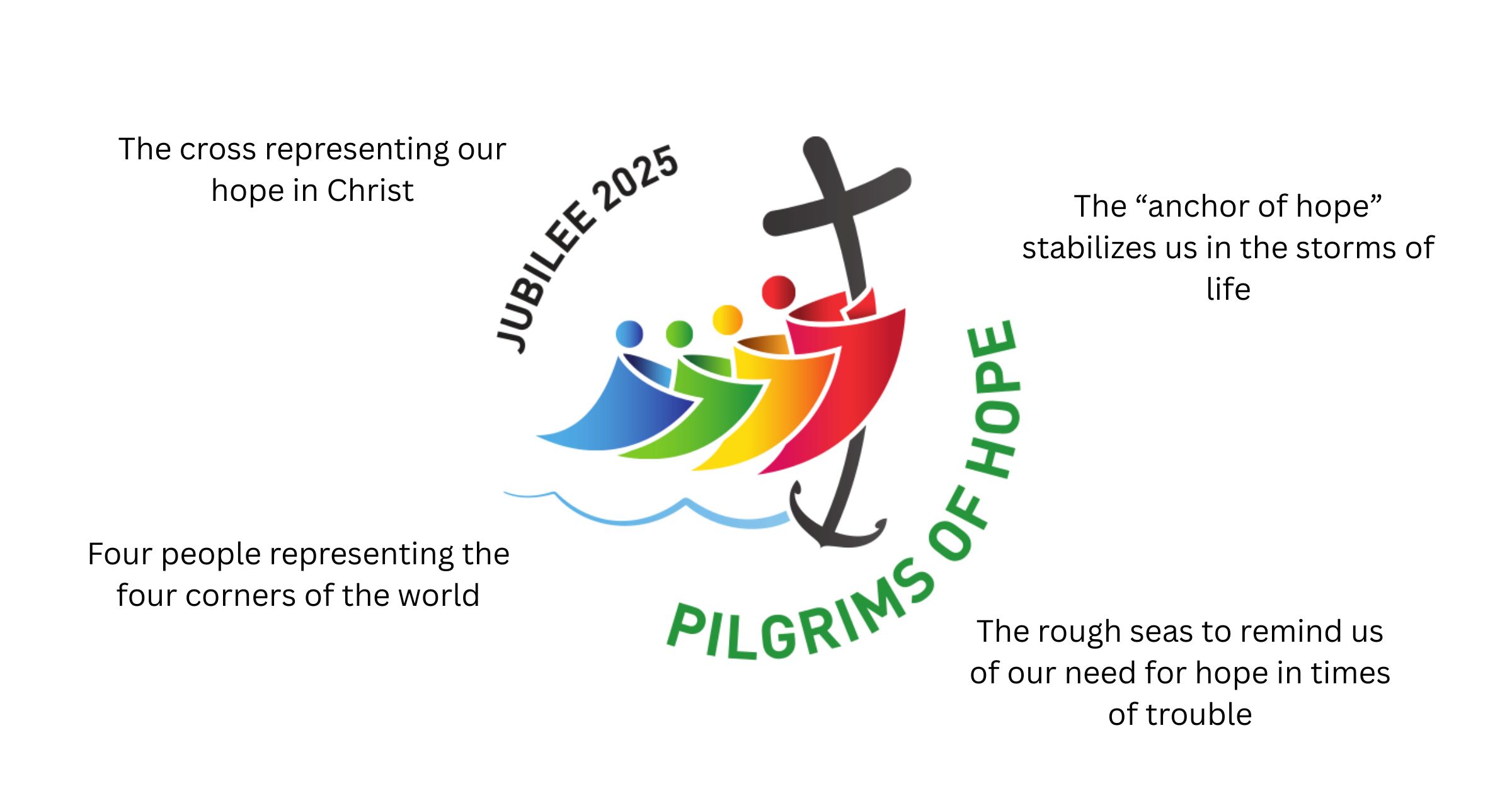
This is the actual Year of Jubilee.
The Catholic Church celebrates it every 25 years instead of 50. In fact, when needed, the Pope calls for special Jubilee years like in 2015 when Pope Francis declared the Extraordinary Jubilee Year of Mercy. This year we celebrate and embody hope. Something we all need in this world today. Some need it much more than even we do. Red has shared with us about the devastating storms and the political corruption that has permeated the Philippines. We watch from afar as the people of Ukraine fight off an unprovoked and clearly colonial invasion from Russia. And at home, we are experiencing the erosion of democracy, and we feel so helpless in the midst of ongoing corruption and the use of force against our own citizens. But as Christians, we are not without hope. During the Christmas season as we are reminded of the great gift God bestowed upon the world through his son, Jesus, and the hope he provides for a better tomorrow. Let us remind the world that Christianity is founded on the ideas of forgiveness, mercy, and redemption and act accordingly. Do one extraordinary act this year. Just one. Ponder upon the ways you can do something to impact the life of another. It doesn’t have to be with money. Look at how my friend Lyn was there for me with her presence and her thoughtfulness and what a long-lasting impact that had on my life. You can do the same. You can offer to let someone stay in your home. You can forgive a debt someone owes you. You can forgive someone for something they did to you when you have every right to be upset. There are lots of ways to be an extraordinary person. Sometimes it’s in doing the little things without complaint and with a smile day after day. The idea that God loves a cheerful giver does not just mean with money, but with everything we do. Let’s make this year and every year a chance to show the extraordinary love of God. In the name of the Father and of the Son and of the Holy Spirit. Amen.
No Room at the Inn

In those days Caesar Augustus issued a decree that a census should be taken of the entire Roman world. 2 (This was the first census that took place while Quirinius was governor of Syria.) 3 And everyone went to their own town to register.
4 So Joseph also went up from the town of Nazareth in Galilee to Judea, to Bethlehem the town of David, because he belonged to the house and line of David. 5 He went there to register with Mary, who was pledged to be married to him and was expecting a child. 6 While they were there, the time came for the baby to be born, 7 and she gave birth to her firstborn, a son. She wrapped him in cloths and placed him in a manger, because there was no guest room available for them. – Luke 2:1-7

How long does it take to become homeless?
We all need a place to call home. A home provides protection from the weather, a place to rest in relative safety, and a retreat from the outside world. But a home is more than that. A home is an anchor. A home gives us a sense of security. It is a place we make our own. Think about your own home for a moment. Imagine your favorite place to sit. Think about the comfort of your bed. Picture in your mind the inside of your refrigerator and where you keep your favorite things to eat. Now imagine all of that suddenly GONE. That’s what happened to my family about twelve years ago. We were living in Dinuba at the time serving two smaller churches in that quaint, rural town. One Sunday after worship while I was cooking in the kitchen, the oil in the pan burst into flame! Without realizing it, I had left the burner on high for too long in a shallow pan and it suddenly caught on fire. I tried turning off the stove or just moving the pan off the burner, but the flames kept attacking me like they were alive. I couldn’t get close enough without risking getting burned. I immediately opened the doors under the sink to grab the fire extinguisher, but in just those few seconds the flames had risen high enough to catch the wooden cabinets next to the stove and they caught on fire. The flames raced toward the ceiling and I knew it was moving too fast for me to stop it. Instead, I shouted out to Emma to get out of the house. I opened the back door for the dogs and rushed to Emma’s room to make sure she was safe outside. I went back inside, got my lockbox with our passports, and a watch Cassie gave me for my birthday a few years ago and threw them on the lawn. Then I asked Emma what her favorite stuffed animals were and grabbed what I could. But as I was leaving the house that second time, I knew I couldn’t go back in. The smoke, if you could call it that since it looked black as tar, had come down to head level and already I was having trouble breathing. I could hear a loud CRACK and something exploding which later I found out was the microwave. And within the space of five minutes, we went from having a home to not having a home. That’s how quick you can become homeless. Five minutes.

It’s scary to think about how many people are homeless in America today.
According to reports, more than three-quarter of a MILLION people are looking for a place to sleep every night.[1] What is sadder is nearly 150,000 of them are children and that number grew by 33% in one year.[2] When you include children living in other people’s homes, waiting for foster care placement, living in cars, parks, and bus stations, the number rises to more than a MILLION homeless children.[3] It’s a mistake to believe that a vast majority of homeless people are suffering from mental illness. In fact, according to the Department of Housing and Urban Development, nearly 80% of unhoused persons were NOT suffering from severe mental illness.[4] What astounds me is as many as 60% of homeless people have jobs, but according to the USICH a person making minimum wage would have to work 86 hours a week to afford a one-bedroom apartment.[5] It’s not for lack of trying, it’s for lack of affordable housing. California already has nearly a quarter of all homeless people in America, by far the most of any other state.[6] High rent, mortgage foreclosures, and lack of affordable housing are just some of the causes of this epidemic. And while we attempt to bandage up the problem, we seem to be doing little to address the root cause.
Homelessness is hardly an American problem.
As bad as it is here, I cannot even imagine what it’s like in places like Syria where over 14 million people are refugees either inside or outside of the country.[7] Over 6.6 million refugees fled Syria while 7.4 million are displaced inside the country, effectively homeless, but more than that they are often without food, medical care, or even drinkable water.[8] Sadly the United States has done little to help under the current administration. While millions suffer, the President has set a cap of 7,500 refugees in total, down from 125,000 in 2024; and of those 7,500 most of them are allocated for white South Africans who face little danger compared to Syrian refugees and refugees from other countries.[9] The United States used to be a world leader in refugee resettlement. We used to help more refugees than all other countries combined and did so for decades.[10] But that has all changed. We’ve told the world, “There’s no room at the inn.”
Fear has gripped our country.
But we aren’t the only ones. It’s a plague spreading around the world, mostly to nations who are rich and comparatively prosperous. Fear of the other. Fear of something different. Fear of the unknown. Fear of change. These are not new fears. These are fears we fight with every day on both an international scale and on a personal one, too. Fear is the lynchpin of evil. It drives us to do irrational and harmful things to one another. It creates an atmosphere of anger and rage. It causes separation from God and division within communities. And it seems to be growing under the banner of nationalism. So much hatred of “the other.” It is the exact opposite of what Christ challenges us to do – to love others. One of the apostles, Luke, records Christ sharing these thoughts, “If you love those who love you, what credit is that to you? Even sinners love those who love them. 33 And if you do good to those who are good to you, what credit is that to you? Even sinners do that. 34 And if you lend to those from whom you expect repayment, what credit is that to you? Even sinners lend to sinners, expecting to be repaid in full. 35 But love your enemies, do good to them, and lend to them without expecting to get anything back. Then your reward will be great, and you will be children of the Most High, because he is kind to the ungrateful and wicked. 36 Be merciful, just as your Father is merciful. (Luke 6:32-36).” We are not meant to only love the people who love us. We are not meant to only do good to those who first do good to us. And we are not supposed to expect payment for services rendered, but instead do it out of mercy and love. With the world in crisis, how can we call ourselves Christians if we don’t do something about it?

We are sometimes so sheltered from suffering we don’t realize how deep the need is.
Trevor Noah became host of The Daily Show after Jon Stewart left with Jon’s blessings, and Trevor tells the story about how they had to force him to move into Jon’s office. He said he was really happy with the little office he had been given. It was simple. There was a little brown desk with a skylight and he was good with it. But (I assume the producers) wanted him to move into Jon’s office which had exposed brick and he was not a fan of exposed brick. He said, “Exposed brick is a classic example of privilege in my world, because coming from South Africa (coming from any poor country to be honest) exposed brick displays that you do not have the ability to plaster your walls and paint them. You don’t have enough money to do that. So all we had growing up was exposed brick. And then you move to a place that says, ‘We have so much plaster and so much paint, in order for me to be different I’m going to expose the bricks in my walls.’ And everyone says, ‘That is so fantastic! I will pay more for that.’”[11] Many of us are fortunate NOT to know the hardships of long-term homelessness. Even for our family during that short bit of time where we lost almost everything, we had enough resources to recover, but even still that little window of time is something that haunts us to this day. It’s hard to imagine having that BE your existence and what kind of lifelong impact that has on a young child and a family. For millions of people around the world it is the reality they are living. How can we expect the world to know the love of God when they struggle with simply existing? But it is also an opportunity for us to show the love of God to a world that is hurting. We may not be able to help out everyone around the world, but we can certainly help those in our community. Because Mary and Joseph aren’t the only ones without a room during this Advent season.
[1] The actual number of homeless in 2024 according to the National Alliance to End Homelessness is 771,480 which was up 18% from 2023.
[2] From the report in 2024 from the Housing and Urban Development Department
[3] According to the Campaign for Children, when you include other factors, the number grows by a huge amount. This number is consistent with the National Alliance to End Homelessness.
[4] https://www.kff.org/medicaid/five-key-facts-about-people-experiencing-homelessness/
[5] United States Interagency Council on Homelessness produced this report and the number is actually 97 hours per week in 2025.
[6] According to CalMatters we also have 44% of all chronically homeless persons in the country.
[7] Latest update includes numbers for 2025 from the USA for UNHCR website.
[8] Ibid.
[9] From a report by the International Rescue Committee, but support by other documentation as well.
[10] https://www.pewresearch.org/fact-tank/2019/10/07/key-facts-about-refugees-to-the-u-s/
[11] I wish I could remember where I heard this interview! I loved it so much I transcribed this section, but for some reason didn’t document it. I know it was around 2019 and I believe it was NPR but that’s about as far as I could trace it.
The Rice of Life

What does Jesus look like to you?
Close your eyes for a moment and imagine Jesus sitting next to you. What would he look like? Think about the color of his eyes, the color of his hair, the color of his skin. In your image, is Jesus wearing a robe or is he dressed in something more modern? Try to picture how tall he is, the size of his foot, the sandals on his feet. Take that in for a moment and then open your eyes. If each of you had a sketch artist sitting with you and brought those pictures of Jesus up to the front, there would likely be many different versions to see. That’s because each of us pictures Jesus in our own way. Sometimes those images are remarkably similar, sometimes wildly different, but all with our own unique perspective. I went to a conference on multi-cultural ministry and the pastor asked us something similar. He asked, “If we hung up a picture of Jesus in the church, what would Jesus look like?” I hadn’t thought of that before. I guess in my mind, I thought of the same white robe, brown hair, brown-eyed, bearded Jesus most of us have seen. But he noted when you asked different people from different cultural backgrounds about how they picture Jesus, they often saw Jesus as black or Asian or Hispanic and that in his church they celebrated that diversity by having lots of different images of Christ so people could find images they relate to. It reminds me of a story I heard when I took Alpha Course for the first time. A Japanese woman was explaining the difference between European culture and Japanese culture. She told the man she was talking to, “What most people don’t understand is that rice is central to the Japanese way of life. Japanese people have two stomachs – one for rice and one for regular food. Even if you filled the one with regular food all the way, a Japanese person would still be hungry if they didn’t have any rice.” She said, “If Jesus had come to the Japanese people first, I’m convinced he wouldn’t have said, ‘I am the Bread of Life.’ He would have said, ‘I am the Rice of Life.’”

It is important to understand that Jesus enters into our lives in different ways.
The way I’ve encountered Jesus won’t be the same as the way you encountered Jesus or even the same way your kids encounter Jesus. God seeks us out wherever we are in life. He reaches out to us through the people, places, and things that surround us and for everyone that’s different. One of the great rewards of being a pastor is getting the opportunity to hear how Christ has changed the lives of each person, how God has worked in and through that person’s life. I can’t tell you the number of different stories I’ve heard and yet how similar each one is. One man who came to Christ told me it was because of the time he spent with his grandmother driving around in her van. She used to pick him up from school as a child to help out his parents, and when she did, she would often be playing Christian music on the radio or talking to him about things happening at her church. Something about her and the life she led made him curious about who Jesus was and how he could be dead for thousands of years and still have this impact on her life. That curiosity stuck with him until he decided to give it a try and dedicate his life to Christ. Then there was the man who wandered away from God. For decades he just pushed Jesus out of his thoughts despite knowing how much his mother wanted him to accept Christ for himself. His mother prayed for him every day. The topic of God and Jesus kept cropping up over the years and one day when he was talking to a friend and trying to sort out where his life was going, she convinced him to pick up a Bible and start reading it, which he did. That set him on a journey toward a deeper faith until he felt he needed to dedicate his life to Christ. He was baptized in our church and only a few weeks later, his mother passed away. It’s as if she was holding on just long enough to see God working in his life.
I am convinced that more than anything this world needs God.
When you think of all that is happening around us with war, mass shootings, hate crimes, and all the chest thumping and power mongering in politics, you must wonder if people would do these horrible things to each other if they truly had Christ in their heart. This passage below goes to the heart of what people are truly craving in the world today. Despite all of the rhetoric, diatribe, and posturing, people are looking for purpose, hope, and meaning in the world – the kind that can only be given by God. We might substitute other things in place of it, but only in Jesus do we find the authentic source of what we need the most.
5 Then Jesus declared, “I am the bread of life. Whoever comes to me will never go hungry, and whoever believes in me will never be thirsty.36 But as I told you, you have seen me and still you do not believe. 37 All those the Father gives me will come to me, and whoever comes to me I will never drive away. 38 For I have come down from heaven not to do my will but to do the will of him who sent me. 39 And this is the will of him who sent me, that I shall lose none of all those he has given me, but raise them up at the last day. 40 For my Father’s will is that everyone who looks to the Son and believes in him shall have eternal life, and I will raise them up at the last day.” – John 6:35-40
When we think of hunger, we think of food.
But food isn’t the only thing we are hungry for. Sometimes we are hungry for attention. Sometimes we are hungry for knowledge. Sometimes we are hungry for affection. There was a study done by Harvard University testing the theory that parents should let their babies cry, and they found that doing so can create long-lasting traumatic effects on the baby’s life.[1] On the other extreme, Rene Spitz studied infants raised in hospital institutions compared to those raised by mothers who were imprisoned and the difference was shocking. More than a third of the babies in the hospital died while none in prison passed away. Another study showed that babies raised in orphanages compared to foster homes were 30% more likely to develop mental illness, had IQs nine points lower on average, and were less happy than their counterparts.[2] Food isn’t the only thing we are hungry for. Jesus addresses that in this passage. When he declares “I am the bread of life” he is telling us that he is as important to our health and well-being as any amount of food we consume. Just as we are hungry for food, we also have a spiritual hunger that simply cannot be fully satisfied in any other way than with Jesus in our lives. He promises that all who seek him will always be able to find him and will no longer suffer from spiritual hunger.
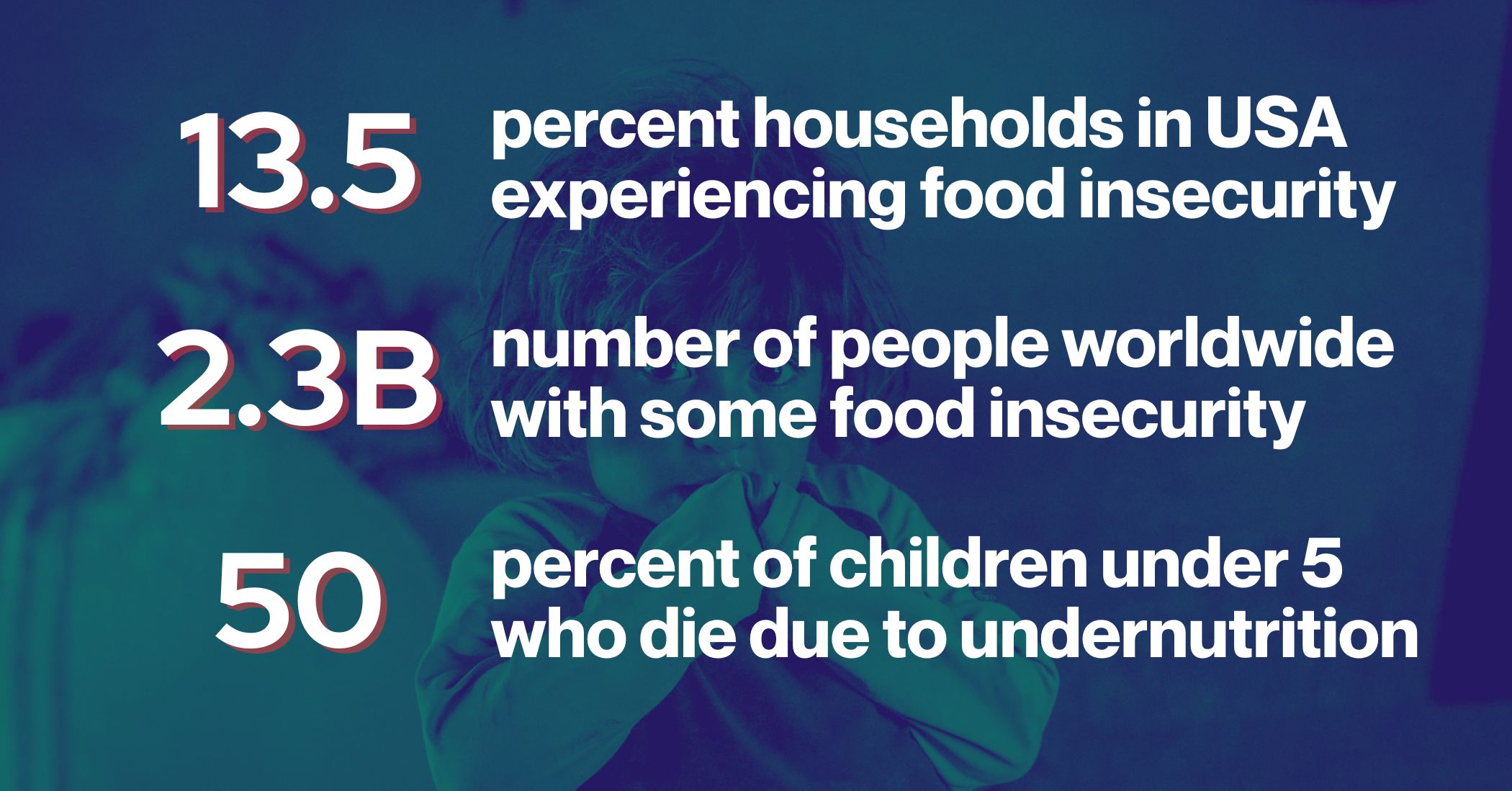
But how can we look for Jesus when we don’t even have the basics like food?
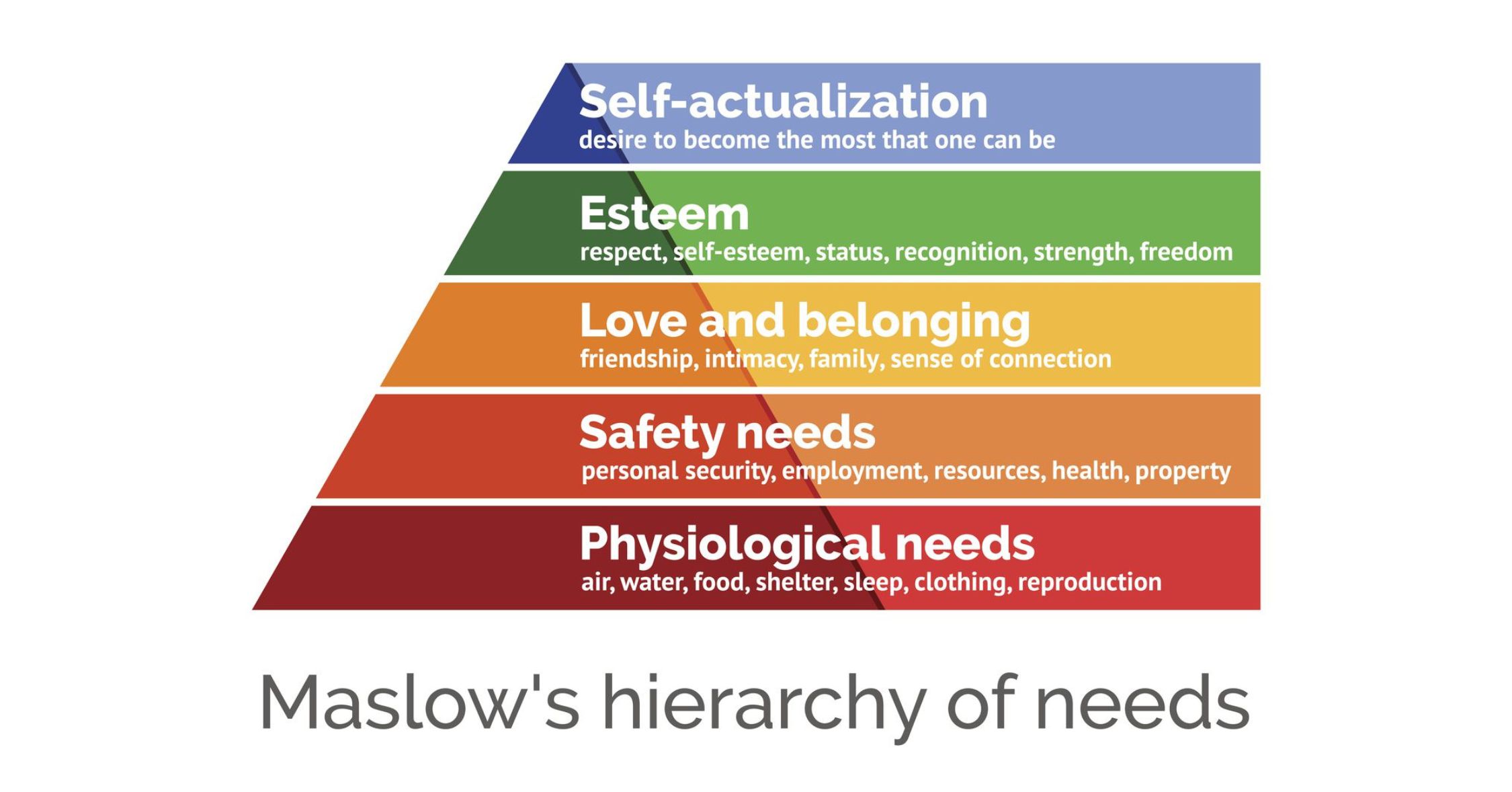
The USDA estimates that 13.5% of households experience some form of food insecurity, meaning they were “uncertain of having or unable to acquire enough food to meet the needs” of everyone living there either from lack of money or other resources.[3] Sadly, that number goes up to nearly 18% of households with children.[4] It only gets worse around the world. According to the World Health Organization, about 2.33 BILLION people are facing some level of food insecurity, and nearly half of all deaths among children under age 5 is due to undernutrition.[5] Do any of us really think any child should die from malnutrition? Should any person die from lack of food? If we want people to come to Christ it has to start by helping provide for the world’s needs. As we talked about last week with Maslow’s Hierarchy of Needs, when our basic needs aren’t being filled, there is no room in our lives to contemplate matters of faith. We can’t become our best selves, ideally at the top of that pyramid, when we don’t have a firm foundation to begin with. Jesus tells the disciples, “If anyone causes one of these little ones—those who believe in me—to stumble, it would be better for them to have a large millstone hung around their neck and to be drowned in the depths of the sea. 7 Woe to the world because of the things that cause people to stumble! Such things must come, but woe to the person through whom they come! (Matthew 18:6-7)” Meeting the needs of others is more than helping them physically and materially but is paving the way to open the door spiritually as well. How can we hear God’s call when the grumbling of our stomachs drowns out his words?
The point is YOU are the rice of life.
YOU are the rice of life. Or the cookie of life. Or the King’s Hawaiian Bread of life. Or whatever metaphor works for you. God is calling upon all of us to meet the needs of his people. Like he told Peter to feed his sheep, God is telling us all to feed his sheep. That might be a literal feeding of his sheep, or it might be a spiritual one. Pray for God to open your eyes for the opportunity to serve in whatever way you can with whatever gifts you have. You might be exactly who someone needs in their life at just that moment.
[1] They did an updated study that said letting them cry a little bit was okay. The technique is called “graduated extinction” and slowly lengthens the time you soothe the baby. In the previous studies it was all or none and prolonged crying can lead to negative consequences.
[2] Both studies were covered in Forbes magazine in an archived article, “It’s The Orphanages, Stupid!” by
[3] From the USDA’s data for 2023 which showed statistically significant increases in food insecurity from 2022.
[4] The actual number is 17.9%. Many parents sacrifice their own hunger to make sure their children have enough food, but even then almost half of those households had both adults and children who were food insecure.
[5] Data from WHO for food insecurity and malnutrition were released in 2024.
Clothes Make the Man

“Clothes make the man.”
You’ve probably heard that saying before. Clothes are a status symbol in our society. The shoes on your feet, the clothes on your back, the watch on your wrist all seem to MATTER. At least to some. Your clothes say something about the person you are. Wearing the “right” clothes can place you firmly with the “in” crowd, or definitely “out.” When I was in high school, the things to wear were Air Jordan shoes, Members Only jackets, and Guess jeans. But it changes with every generation. Every new group of kids has their own set of clothes that make them cool. The same is true for adults. This isn’t a youth only movement. What you wear and when you wear it goes across all generations. But fashion is fickle. It’s here one day and gone the next. Sometimes it comes back – whether we want it to or not. Bell-bottom jeans and neon sweatshirts have both made a reappearance in my lifetime. For what reason, I don’t know if anyone knows. Interestingly, what you wear not only affects how other people perceive you but even how you perceive yourself. Some researchers did an interesting experiment involving a white lab coat where participants were asked to either wear one or not wear one while doing a task. Now a white lab coat is often a symbol of authority, discipline, and knowledge worn most often by doctors and scientists, but the researchers were curious if it would affect not just the people who interacted with the white lab coat, but the people who wore them as well, and what they found out was that the people who wore the lab coat did significantly better at the task than the people who didn’t. They not only LOOKED more studious and professional, but putting on the coat actually MADE them more studious and professional.[1] The kind of clothes we wear seemingly affects not only other people’s perceptions of us, but our own perception of ourselves.

Interestingly, God talks a lot about clothes in the Bible.
He talks about it in both a spiritual way and a material way. For God, it isn’t important what kind of clothes you wear. It doesn’t matter how good you look or how much money you spent on a pair of shoes. Those things don’t measure a person’s worth. James, the brother of Jesus, wrote about this. He said, “My brothers and sisters, believers in our glorious Lord Jesus Christ must not show favoritism. 2 Suppose a man comes into your meeting wearing a gold ring and fine clothes, and a poor man in filthy old clothes also comes in. 3 If you show special attention to the man wearing fine clothes and say, ‘Here’s a good seat for you,’ but say to the poor man, ‘You stand there’ or ‘Sit on the floor by my feet,’ 4 have you not discriminated among yourselves and become judges with evil thoughts? (James 2:1-4)” James is warning us this is not how Christians are supposed to behave. We’re not supposed to place value on someone based on their clothing or jewelry or anything they put on. We’re supposed to love everyone equally. Jesus tells his followers they shouldn’t worry about clothes at all. He tells his disciples in Matthew 6, “And why do you worry about clothes? See how the flowers of the field grow. They do not labor or spin. 29 Yet I tell you that not even Solomon in all his splendor was dressed like one of these. 30 If that is how God clothes the grass of the field, which is here today and tomorrow is thrown into the fire, will he not much more clothe you—you of little faith?” Jesus isn’t an advocate for nudist colonies. He’s not saying people should walk around without clothes. Jesus wore clothes. What he’s trying to get his followers to understand is that they shouldn’t focus their life on these things. There are far more important things to focus your life on than what shoes someone is wearing or what designer made that dress. Jesus wanted us to stop worrying about the inconsequential things and focus on what’s really important.
But there is a type of clothing that IS important to God.
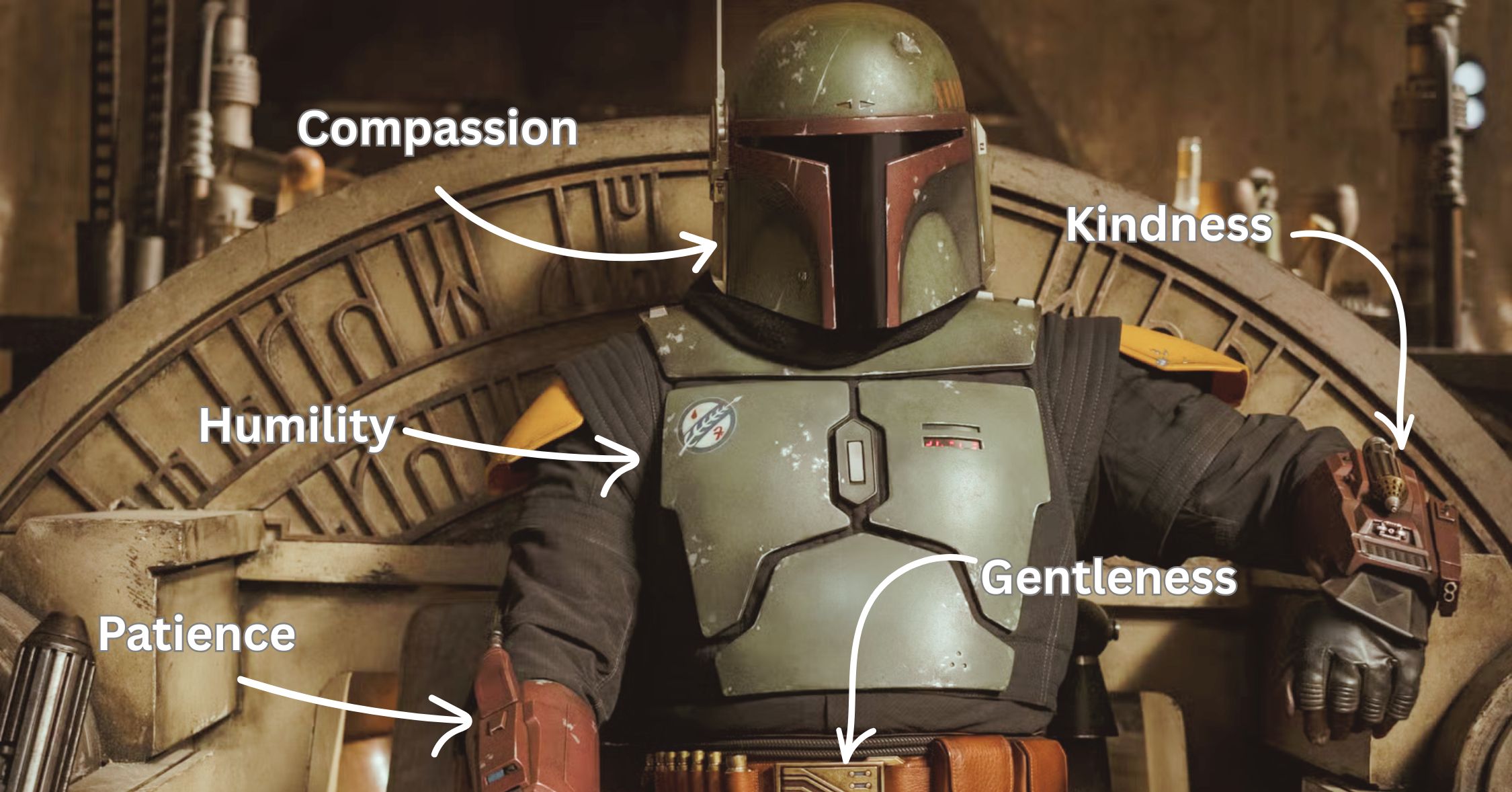
Clothing yourself in Christ. In Paul’s letter to the Romans, he writes, “12 The night is nearly over; the day is almost here. So let us put aside the deeds of darkness and put on the armor of light. 13 Let us behave decently, as in the daytime, not in carousing and drunkenness, not in sexual immorality and debauchery, not in dissension and jealousy. 14 Rather, clothe yourselves with the Lord Jesus Christ, and do not think about how to gratify the desires of the flesh (Romans 13).” Paul writes again to the church in Corinth, “53 …the perishable must clothe itself with the imperishable, and the mortal with immortality. 54 When the perishable has been clothed with the imperishable, and the mortal with immortality, then the saying that is written will come true: ‘Death has been swallowed up in victory (1 Corinthians 15).’” And in his letter to the church at Colossae, he writes, “12 Therefore, as God’s chosen people, holy and dearly loved, clothe yourselves with compassion, kindness, humility, gentleness and patience (Colossians 3).” In each of these instances, Paul is using a metaphor for clothing. He’s telling us that we need to “put on” the likeness of Christ. We need to act as Christ does with compassion, kindness, humility, gentleness, and patience. We need to put aside the things that will lead us astray or take us away from our faith, but instead protect ourselves by being covered with Jesus’ teachings. Because Paul knows that as human beings we are prone to go astray. And just as clothing protects us from the weather and from the elements, clothing ourselves in Christ protects us from everything that seeks to pull us away from God.
Not that physical clothes are meaningless.
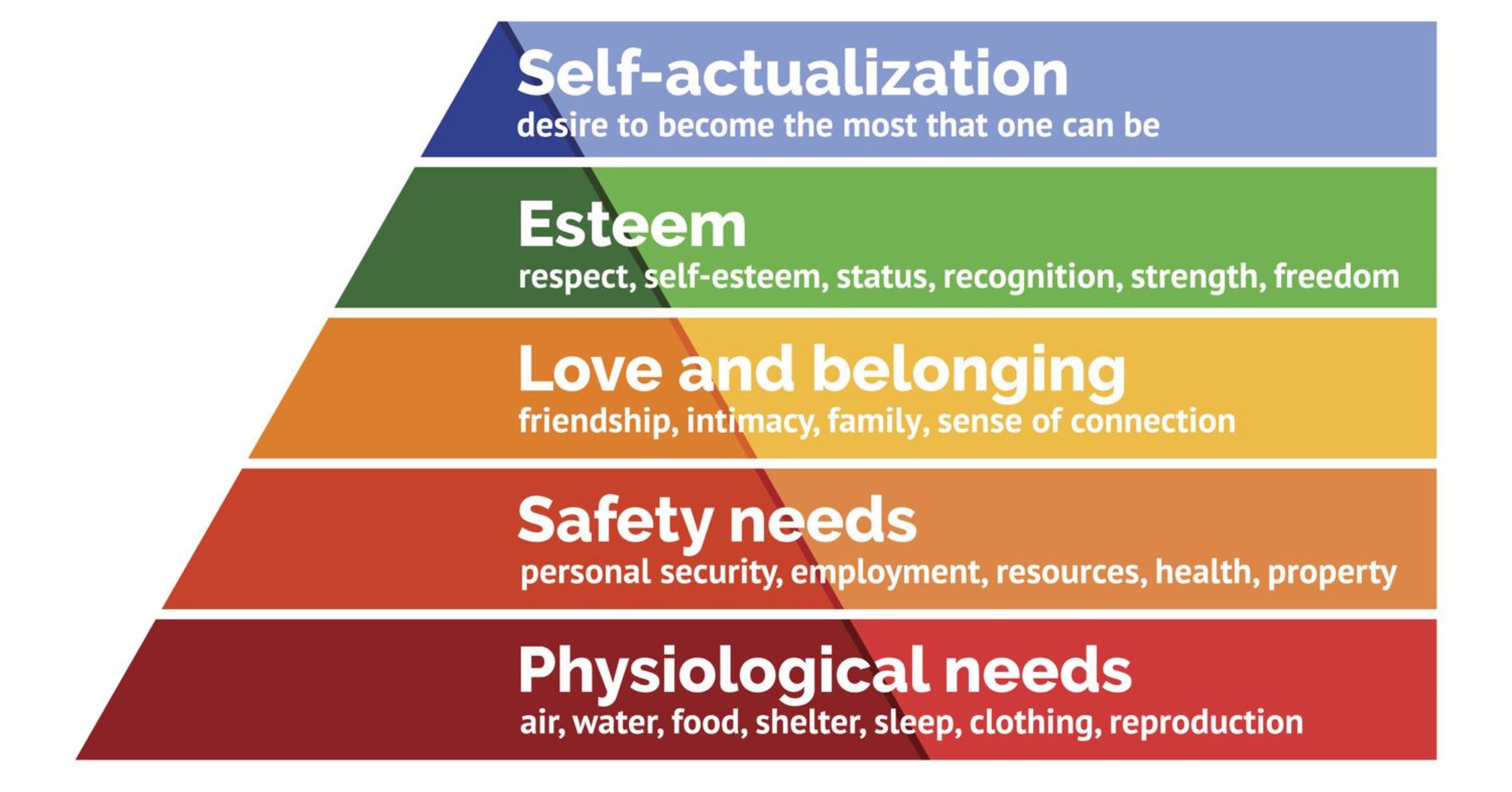
It’s one of our basic needs and over this Advent season, that’s what we will be focusing on – basic needs that everyone has and how we can meet them. We need air to breathe, food to eat, and water to drink. We need shelter to keep us safe from the elements and wild creatures that go bump in the night. Like we said earlier, we need clothes to protect us from the weather and from things we want to keep away from our bodies. And those are just our physiological needs. We also have the need to be loved, the need to feel safe from harm. Albert Maslow hypothesized that before we can become the people God created us to be, we had to fulfill those basic needs first. He called this the Hierarchy of Needs.[2] It’s gone through a number of revisions over the years, but the basics of his hypothesis have pretty much stayed the same since he shared it back in 1954. Did you know Maslow’s hypothesis wasn’t new? God thought of it first. If you remember from our earlier reading, each of these basic needs is called out by God. He challenges us to stand up for others, to feed the hungry, to provide shelter for the poor, to clothe those without clothes, and never to turn our backs on our family. In essence to fulfill the basic needs of all human beings. But it’s not just in the Old Testament that we hear about this call, but in the New Testament as well. In this passage we hear the words of Jesus’ cousin John who has been preaching to anyone who will hear it that we need to have our sins cleansed from us and to repent before God. The earlier prophets predicted that someone would come as a herald for Christ, a guy who would pave the way for Christ’s coming. Sort of like the stand-up comedian that comes out before the main act, except in this case, John is giving a preview of exactly why Jesus has come to Earth.
7 John said to the crowds coming out to be baptized by him, “You brood of vipers! Who warned you to flee from the coming wrath? 8 Produce fruit in keeping with repentance. And do not begin to say to yourselves, ‘We have Abraham as our father.’ For I tell you that out of these stones God can raise up children for Abraham. 9 The ax is already at the root of the trees, and every tree that does not produce good fruit will be cut down and thrown into the fire.”
10 “What should we do then?” the crowd asked.
11 John answered, “Anyone who has two shirts should share with the one who has none, and anyone who has food should do the same.” – Luke 3:7-11
John is a passionate preacher.
He’s not afraid to tell it like it is and he’s warning the people of Israel that they shouldn’t assume God’s favor. That just because they are the children of Abraham doesn’t mean they do not need to ask for forgiveness the same as anyone else. I like how John tells the crowd, “And do not begin to say to yourselves, ‘We have Abraham as our father.’ For I tell you that out of these stones God can raise up children for Abraham.” He’s telling them not to be smug in their heritage. Being a child of Abraham is nothing to a being who can create life from the rocks around them. He’s warning them that they have become too complacent in their faith and when someone asks him what they should do, his first answer is this: “Anyone who has two shirts should share with the one who has none, and anyone who has food should do the same.” Even before Jesus would come and basically say the same thing, John told the people of Israel that they needed to provide for one another. They needed to attend to the basic needs of their brothers and sisters. And the first reference he makes is to clothing.
We tend to take clothing for granted.
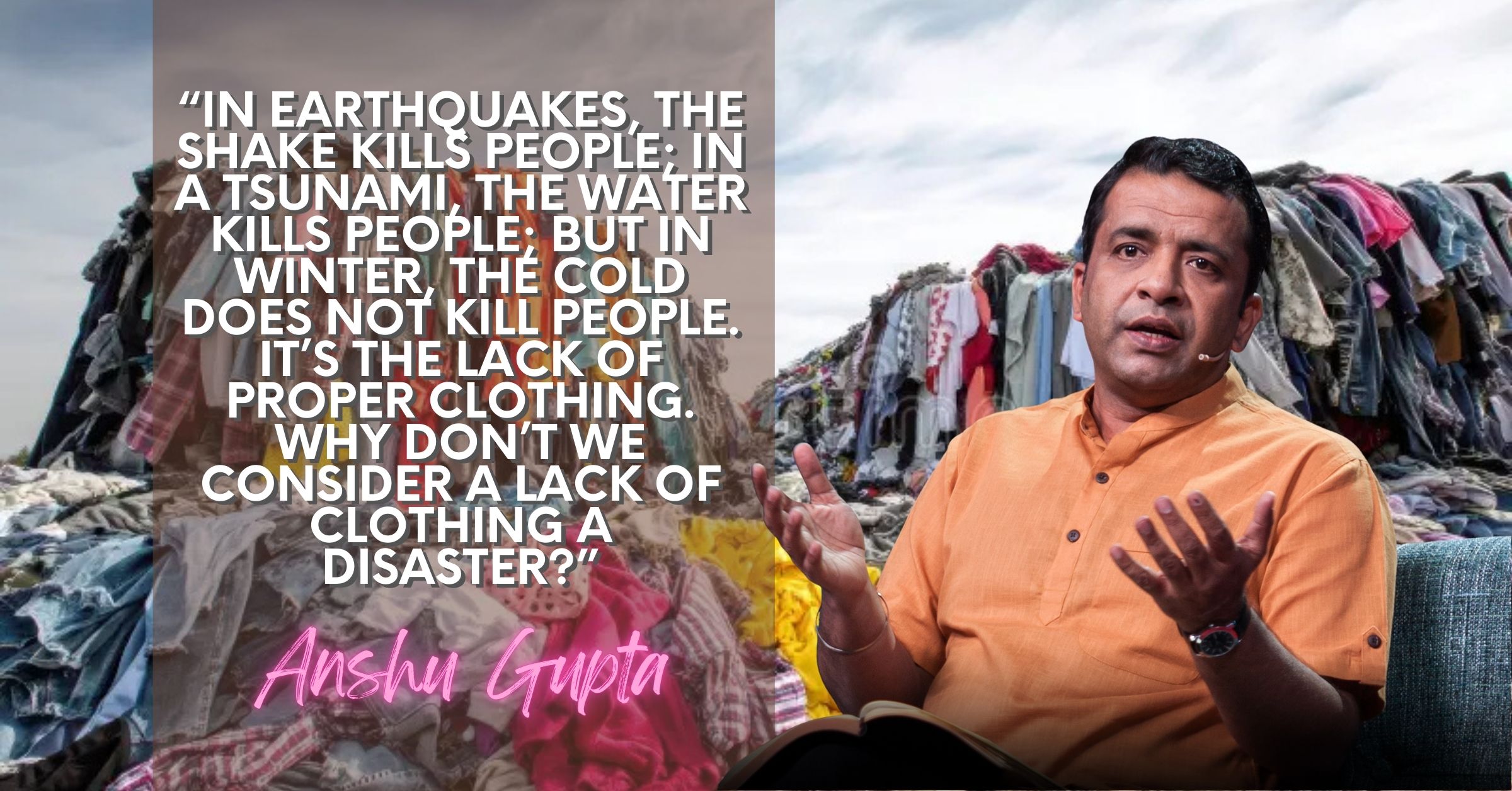
We don’t worry about HAVING clothing, but about what KIND of clothing we have. But we are so privileged. The New York Times estimated that between 40% and 80% of people in the world live on subsistence income, barely making 50 to 60 cents per day.[3] 40-80%! And even though there are tons of programs to help with other needs, clothing tends to get overlooked. Anshu Gupta, a freelance reporter in India, looked around and saw how in need of clothing so many people in his country were. He said to a reporter for the Times, “In earthquakes, the shake kills people; in a tsunami, the water kills people; but in winter, the cold does not kill people. It’s the lack of proper clothing,” says Gupta. “Why don’t we consider lack of clothing a disaster?”[4] Even in America, many people lack enough clothing just to protect themselves. As part of our ordination process in North Georgia, we took a tour of different Methodist facilities all over the area, but the one that stuck out to me the most was our trip to the Methodist Children’s Home. Two of my friends have now served as director of this great place that does so much to children in need. They house kids from broken homes or kids in need of protection or kids who have no place to go from all over, but the story I’ll never forget is the one we were told when we visited. The director at the time told us that most of the kids who arrive on their doorstep come with nothing more than a virtually empty backpack that the home often provides. Not only do they lack toys and games and other things we normally associate with kids, but sometimes they don’t even have a change of clothes. Sometimes they don’t have a jacket or a sweater or anything to protect them. Sometimes they don’t have clean underwear. They literally come with the clothes on their backs with no home, no family, no friends. It’s hard to imagine that in a country like ours, we have kids in need like that. That we have ANYONE in need like that. If we are truly Christian, we can’t stand by and do nothing. We must heed God’s call and do more. We must put on the clothing of Christ and reach out to clothe the world. When we help one another take care of our basic needs, we can all grow closer to Christ together.
[1] https://www.psychologytoday.com/blog/brain-babble/201208/clothes-make-the-man-literally
[2] https://en.wikipedia.org/wiki/Maslow’s_hierarchy_of_needs#Esteem
[3] http://opinionator.blogs.nytimes.com/2012/10/03/clothing-the-poorest-for-survival/?_r=0
[4] Ibid
“Share It!”

Did I ever tell you I met Jerry Seinfeld?
True story. I even got his autograph. It was at a bookstore in Beverly Hills almost 30 years ago. My friends and I saw him walking in and we followed. I think mostly out of curiosity, we wanted to know if it was REALLY him and not just someone who looked like him from a distance. When I got close enough to see that it was really Jerry Seinfeld, I grabbed a copy of his book SeinLanguage off the shelves, brought it over to him, and asked him if he would sign it for me and he DID! Weird celebrity sightings, right? Anyway, I was thinking about him this week because of something he wrote in that book. It said, “According to most studies, people’s number one fear is public speaking. Number TWO is death. DEATH is number two. Does that sound right? This means to the average person, if you go to a funeral, you’re better off IN the casket than doing the eulogy.”[1] It sounds ridiculous, but at the time it was true. People are deathly afraid of public speaking. Whether it’s to a group of ten or ten thousand, something about standing in front of a crowd makes our heart race and gives us the shivers. It’s an unnerving feeling opening yourself up for public scrutiny, giving people the opportunity to be critical of you or worse becoming embarrassed or humiliated in front of others. Nobody likes that. Nobody likes being attacked, nobody likes feeling awful. And I think that’s one of the big reasons we are also hesitant to share our faith – we are afraid.
But there’s a passage in the Bible that might help us overcome this fear.
It’s a passage that makes me realize how important it is to share the Gospel, despite our fears. We already know from the Great Commission that our duty as Christians is to make disciples for Christ. Jesus himself tells us so. We even incorporated that into the mission statement for The United Methodist Church. “Make disciples for Jesus Christ for the transformation of the world.” Our passage today reflects the consequences of not doing that. If you have your Bibles with you, would you please open them up to Luke 13 beginning with verse 23. Luke 13:23. Now the crowds Jesus is talking to keep growing bigger. By this time, he is talking to literally THOUSANDS of people. Since they didn’t have speaker systems or digital amplification, it must have been hard to hear and that’s probably why in Luke 12, the Bible says they are trampling over each other. Jesus gives this amazing sermon full of wisdom and people felt blessed just to be there. And as he is making his way through various town and villages, one person asked him, “Lord, are only a few people going to be saved? (Luke 13:22-23)” And that’s where we pick up in our Scripture reading today.
He said to them, “Make every effort to enter through the narrow door, because many, I tell you, will try to enter and will not be able to. Once the owner of the house gets up and closes the door, you will stand outside knocking and pleading, ‘Sir, open the door for us.’
“But he will answer, ‘I don’t know you or where you come from.’
“Then you will say, ‘We ate and drank with you, and you taught in our streets.’
“But he will reply, ‘I don’t know you or where you come from. Away from me, all you evildoers!’
“There will be weeping there, and gnashing of teeth, when you see Abraham, Isaac and Jacob and all the prophets in the kingdom of God, but you yourselves thrown out. People will come from east and west and north and south, and will take their places at the feast in the kingdom of God. Indeed there are those who are last who will be first, and first who will be last.” – Luke 13:23-30

We are a number-driven society.
Have you noticed that? We have a drivers’ license number, a social security number, if you go to school, you have a school ID number. Some of you have badges at work that are encoded with a special identification just for you. We have numbers for everything. Quarterly earnings, budgets, weight loss. Even in entertainment we use numbers. Just turn on ESPN any evening and you’ll see what I mean. It’s like a parade of numbers across the screen. Game scores, batter statistics, three-point shot percentages. Numbers rule our lives. But maybe the numbers we SHOULD be thinking about are different from the ones we focus on. I shared this story with you before, but among Kevin Costner’s many roles, he once played a Coast Guard rescue swimmer name Ben Randall who was instructing an upstart know-it-all named Jake Fischer. Throughout the movie Jake keeps asking Ben about “his number.” Most rescue personnel keep track of the number of people they’ve saved, and Ben is a legend in the Coast Guard so Jake keeps wanting to know “What’s your number?” figuring it must be pretty high. But Ben won’t tell him. Near the end of the movie, Ben and Jake have this conversation (the volume is really low on this clip for some reason):
“22 is the number of people I lost. The only number I kept track of.”
Ben didn’t care about recognition or setting records. He ACHIEVED his recognition because he was so singularly focused on the goal – saving lives. The numbers that mattered to him weren’t the numbers that mattered to everybody else. What he cared about were the people he COULDN’T save, not the people he could. As Christians, that should be our motivating factor, too. Ben kept the number 22 in his mind to act as a constant reminder of what the stakes were, of those who he couldn’t save, of those who were lost. So here are a few numbers that might help us remember OUR mission. 65 – the percentage of people within 2.5 miles of THIS CHURCH who have no faith involvement at all. 67,464 – the actual number of people that percentage represents.[2] 5.02 – the number in billions of people in the world who have not accepted Christ in their hearts.[3] Those are the numbers we should remember. Because Jesus is very clear, his words are very clear that not everyone will make it to Heaven. And if you believe his words to be true then those numbers have real meaning. Five BILLION people around the world don’t know Christ. 67,000 near our church don’t either. And that’s just those living right now. If Jesus’ words are even the slightest bit true, isn’t it our responsibility to do something about it? As people who are blessed to know Christ shouldn’t we share that love with others? The door is narrow and many will not make it. What are YOU doing to help people through the door?

When I die, I don’t want to be one of those people that Jesus says, “I don’t know you.”
But I also don’t want to see people I know and love having to hear those words either. And even if it causes us some embarrassment, even if it makes us uncomfortable, isn’t it worth it? How awful would it feel to know that you could’ve helped someone who needed to feel the love of Christ in their lives? Not only are there nearly 5 billion non-Christians out there, but there are many Christians out there too who will be on the other side of that door because they never bothered to practice their faith. Their lips professed faith in Christ, but their LIVES professed faith in something else.
Now so far, each week we’ve had a key “P” word.
Two weeks ago, it was the word persistence. Persistence. We said persistence was often the difference between those who knew Christ and those who didn’t. And last week we talked about practice. We shared that putting Christ’s words into practice, to live out the words of Christ, deepened our relationship with him and helped us to build a foundation that will sustain us no matter what happens in our lives. This week’s “P” word is present. We need to BE present and OFFER the present (the gift) of the Word of God to those around us. I’m not saying go walking around town with one of those sandwich boards proclaiming the end of the world. I am saying to keep your eyes and ears open for opportunities you have to share your faith in the ways God gifted you. Whether it’s as simple as saying grace in a restaurant or offering to pray for a friend when they are having troubles. Whatever choices you make, make them with these thoughts in your head – YOU could be the one who makes the difference. And what you choose in that moment – to make that little gesture or not – could make ALL the difference in the world. In the name of the Father and of the Son and of the Holy Spirit. Amen.
[1] An excerpt from the book SeinLanguage by Jerry Seinfeld, p.120 – emphasis mine.
[2] Based on the link2lead.com census data for the Dinuba 1st and Palm UMC area within a 5-mile radius multiplied by the percentage of unchurched people (36%)
[3] Based on number of people in the world (7.3 billion) multiplied by the percentage of estimated non-Christians (68.8%) according to GotQuestions.org
“Live It!”

You are a preacher.[1]
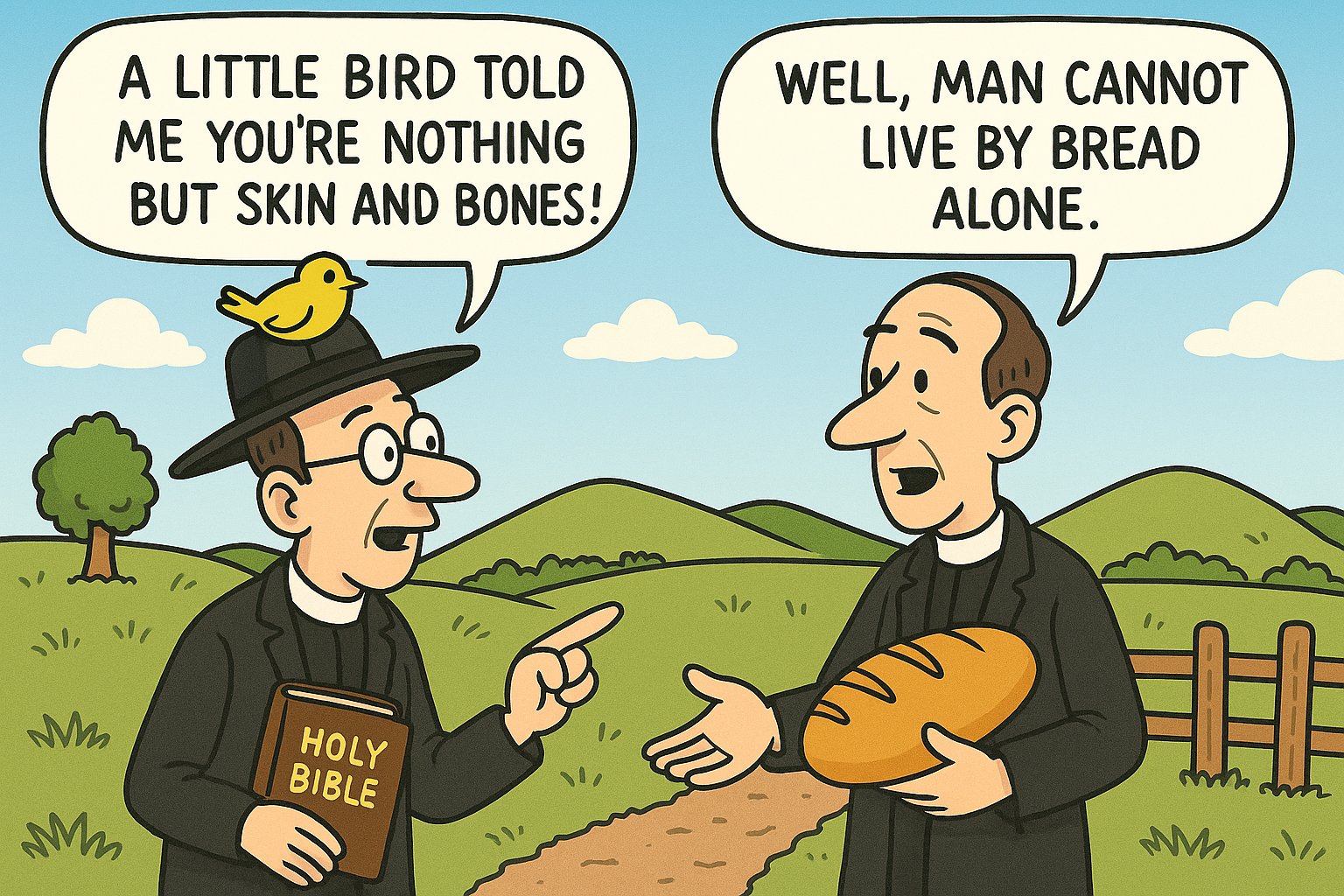
A preacher is someone who proclaims the Word of God, and you do that more often than you probably realize. In fact, most people are inadvertent preachers, even some atheists. What we know about God has become so interwoven into our culture we spout out sayings from the Bible without even realizing it. Some are pretty obvious. “Man cannot live on bread alone.” That one comes from Matthew 4 where Jesus is being tempted by the devil. Having “a thorn in my flesh” is how Paul describes his weaknesses in 2 Corinthians 12. And Jesus proclaims a new way to look at “an eye for an eye” in the Sermon on the Mount from Matthew 5. But there are others that are less obvious. For example, if you’ve ever said, “A little bird told me” you’re paraphrasing a quote from Ecclesiastes 10:20 – “Do not revile the king even in your thoughts, or curse the rich in your bedroom, because a bird of the air may carry your words, and a bird on the wing may report what you say.” If you’ve ever said someone was “nothing but skin and bones?” or that you “escaped by the skin of your teeth” you’d be quoting from Job 19:19-20 – “All my intimate friends detest me; those I love have turned against me. I am nothing but skin and bones. I have escaped with only the skin of my teeth.” And if you ever “saw the writing on the wall” you would be paraphrasing from Daniel 5:5-6 – “Suddenly the fingers of a human hand appeared and wrote on the plaster of the wall, near the lampstand in the royal palace. The king watched the hand as it wrote. His face turned pale and he was so frightened that his knees knocked together and his legs gave way.” The Bible is such an ingrained part of our culture and our language that it seeps into our lives in bunches of different ways. These little grains of wisdom that guide us and give us direction are part of God’s Word, but the most important quote from the Bible that we should constantly ask ourselves is do we practice what we preach? Matthew 23:2-3 – “The teachers of the law and the Pharisees sit in Moses’ seat. So you must obey them and do everything they tell you. But do not do what they do, for they do not practice what they preach.”
This has LONG been a problem for Jesus and continues to be problem for us today.
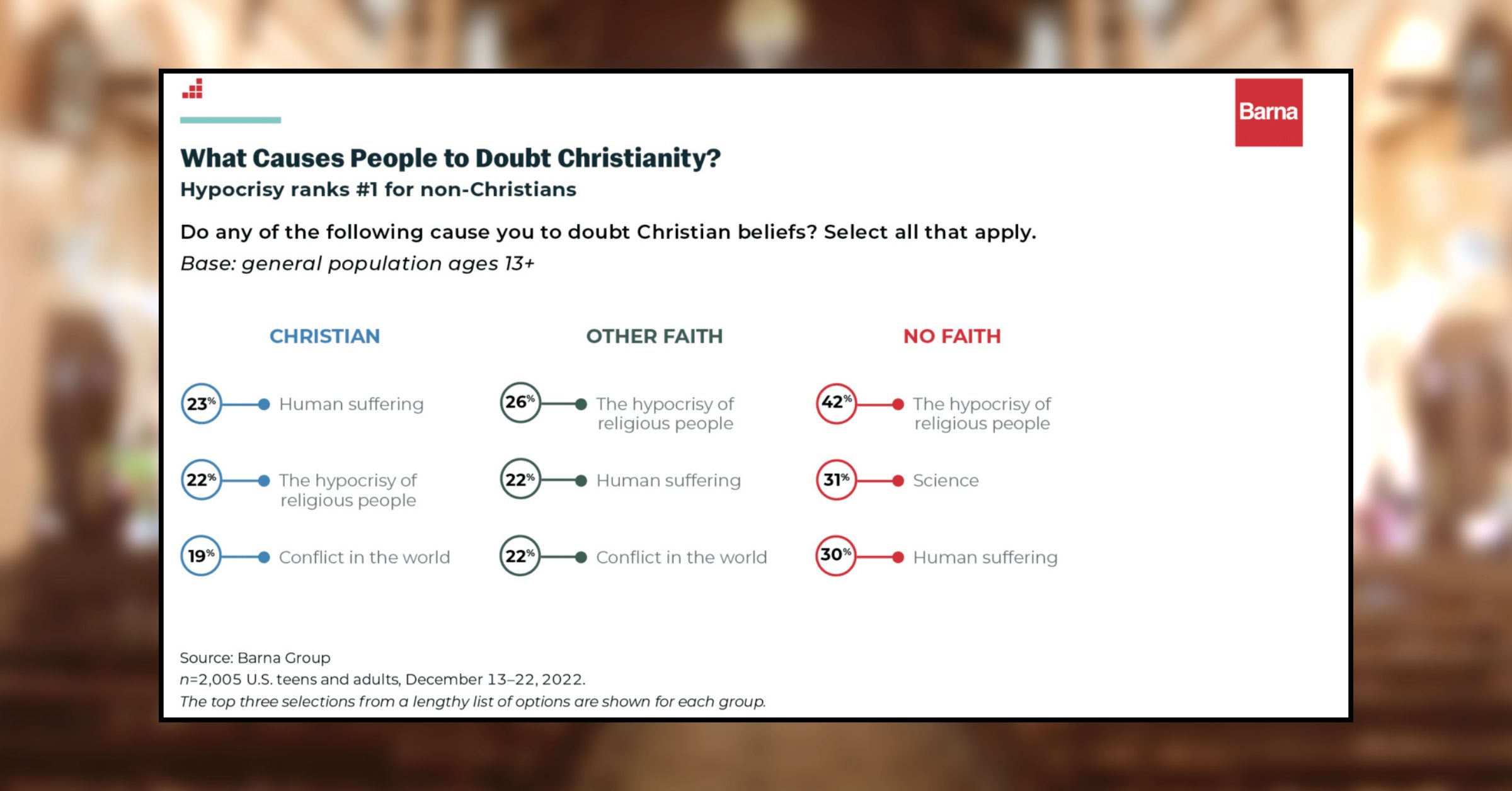
One of the reasons non-Christians and former Christians say they don’t want anything to do with organized religion today is because they think we are hypocritical.[2] Too often we DON’T practice what we preach. And while it creates problems for our church and for Christianity in general, Christ worries about what it does for US. Because when we fail to practice what we preach, when we fail to live up to the standards we say we believe in, it affects our faith. It creates a separation between us and God that puts our relationship with him at risk. And that’s what we’re going to talk about today, the strained relationship between us and God when we don’t practice what we preach. In the passage below, another large group has gathered in hopes of being healed and to hear what Jesus has to say. He shares with them many lessons about how to live life. He told them to love their enemies, to turn the other cheek, and not to judge others. He talked about bearing fruit and then he told them how important it is to follow what he is saying, to put his words to use. And this is where we pick up the Gospel message this morning.
46“Why do you call me, ‘Lord, Lord,’ and do not do what I say? 47I will show you what he is like who comes to me and hears my words and puts them into practice. 48He is like a man building a house, who dug down deep and laid the foundation on rock. When a flood came, the torrent struck that house but could not shake it, because it was well built. 49But the one who hears my words and does not put them into practice is like a man who built a house on the ground without a foundation. The moment the torrent struck that house, it collapsed and its destruction was complete.” – Luke 6:46-49
Living in California makes it easy to relate to this parable.
With all the earthquakes, mudslides and homes falling off mountains, we can appreciate the need for a good foundation. When I was at UCLA, I lived in the dorms and I loved it. It was close to campus and close to Westwood where they had tons of first-rate movie theaters, pizza places, and even a Tommy’s Hamburger. The only bad part was the dorms were all built on a GREAT BIG hill, so going to and from campus everyday was like hiking a mountain. In my third year, I was living on the 7th floor of Hedrick Hall, literally the highest place on campus. And that’s where I was when the Malibu Earthquake hit back in 1989 – at the top of a seven-story building at the top of a big hill at the top of the UCLA campus. The whole building rocked and swayed a LOT! That was because it was built on rollers to absorb the impact of a major quake, so it moved back and forth like a carnival ride. But I wasn’t worried. Being from California, even a quake this big wasn’t that unusual. My roommate and I walked calmly to the doorway and just hung out waiting for it to finish. My friend Amy, however, BOLTED out of her room shouting, “Oh my God! What do we do?! What do we DO?!” She was from Michigan and this was her first earthquake. No wonder she was panicking! She didn’t know what we knew that the foundation was solid even if it didn’t seem like it. We could trust in it.

And that’s the message Jesus is trying to tell us.
When you build a firm foundation for your relationship with God, you don’t have to worry about the storms or the earthquakes or the disasters that happen in your life because you TRUST God is there – even in the trauma. But when you don’t have that foundation, when you don’t know if you can trust it, you end up being like my friend Amy – worried, panicked, and unsure. The good news is you don’t have to live life that way. You CAN know the peace that comes with knowing Christ. And if you haven’t built it already, it’s never too late. You can begin building that foundation even now. All you need to do is learn about God’s Word and put it into practice. And that’s the key, to “put it into practice.” Our passage today highlights that as Jesus himself tells us the difference between a solid foundation and no foundation at all is putting what you hear and what you read into practice in your everyday lives. The man who does that can weather the storm because his foundation is so solid that it cannot shake the house loose. But if you notice the other guy whose house was destroyed, he came and heard the Word, too, but he never put it into practice. And that was the difference. It gives a new spin on the saying, “Practice makes perfect.”
Listen, it’s great if you come to church and listen to the sermon.
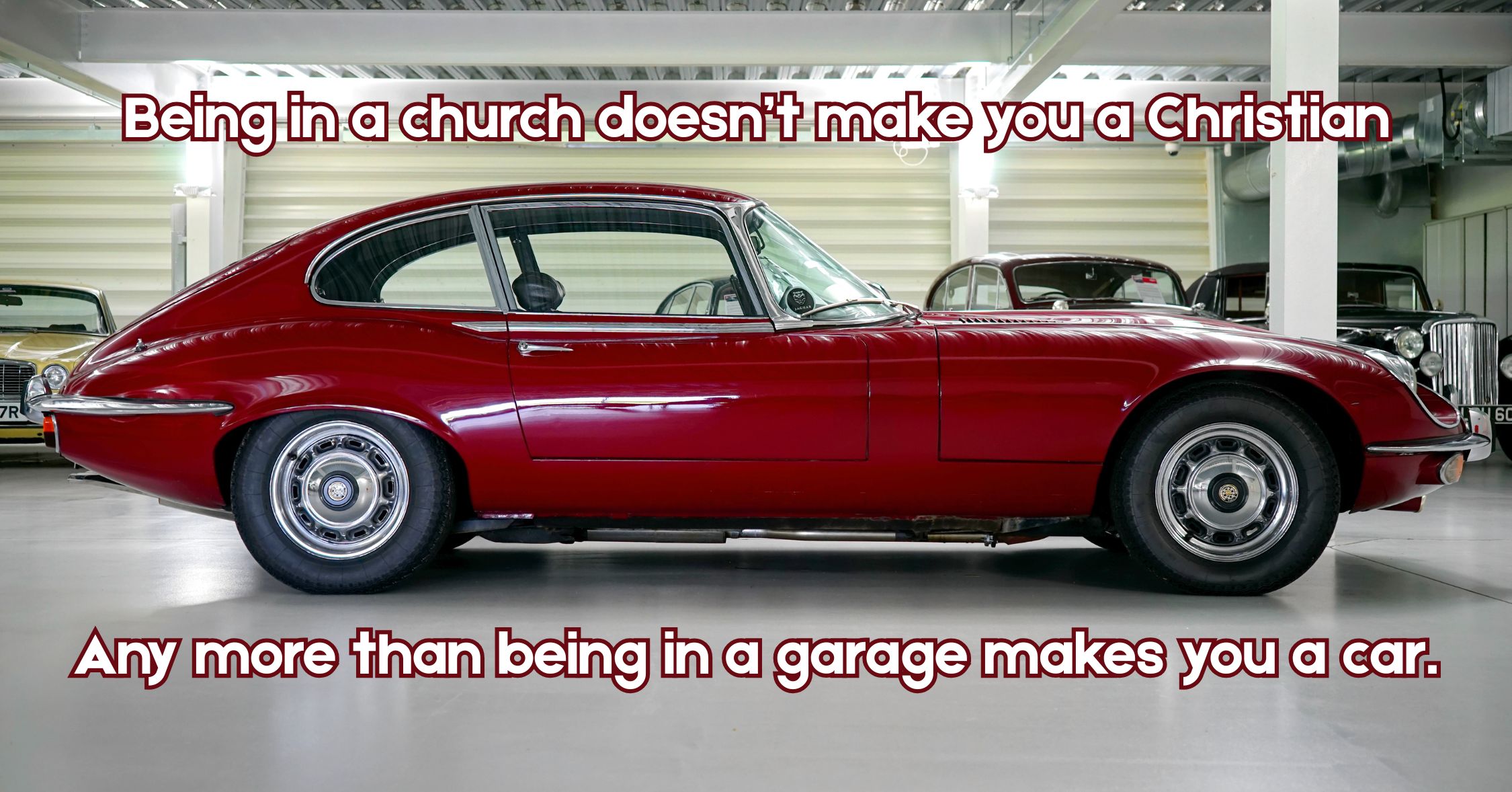
It’s great if you listen to Christian music. It’s great if you pop open a Bible now and then. But if you don’t put what you hear into practice it’ll be for nothing. You’re simply building a straw house without a foundation. You probably know what I’m about to say because I think I say it at least once a year. Being in church doesn’t make you a Christian any more than being in a garage makes you a car. You need to act. You need to do something with what you hear and with what you read. Because if you don’t, your faith will come crumbling down when you need it the most. So, remember these words, “Action creates traction.” When you act on what you hear, when you take what you know about Christ and apply it to your life, you will create traction for your faith. You will get it moving and slowly but surely, you’ll build that foundation that will last an eternity. Layer by layer, you’ll keep increasing the strength of your beliefs so that when the hard times come as they most certainly will, you’ll be able to weather the storm.
About 10 years ago, I heard one of the most amazing stories of faith.
I had just started the process to become a minister when someone told me about a phenomenal lady at our church named Pat Monzo. I knew Pat but not well. I had seen her and maybe talked to her once or twice. She was one of the office volunteers and everyone loved her dearly. Thing is she found out she had terminal cancer. They did all the normal work you do when you discover you have cancer, but I guess she had a particularly aggressive form of it and the doctors told her there was little they could do. She only had about 6 months to live. I think most of us would have been sad, mad, frustrated, hurt, or fearful, but not her. She still came in to volunteer at the church like normal, still with a smile on her face. When someone asked how she was able to keep in such good spirits all the time, Pat said, “What do I have to be sad about? Soon I’ll be with the Lord, and I’ll get to be with my daughter again.” Her daughter had died some years before. I don’t know from what, but I think it was also from cancer. For her, death wasn’t something to be afraid of or bitter about. It was a new opportunity. She wasn’t afraid because her faith was so strong she KNEW what would follow even though she hadn’t ever seen it. But she was the kind of person who lived out her faith everyday and because she did that, when she got the news that would have made most of us react differently, she approached it with the peace that only Christ can give. That’s what it means to live your faith. As you live it, your faith becomes stronger and stronger, and it doesn’t just change how you look at life, but it becomes a stunning reminder to the people around you of the strength we have because of Christ. It did for me. Pat’s story is an inspiration for me, and I hope my faith is as strong as hers. Take what you hear from week to week and apply it in your everyday life. Find ways to incorporate God’s Word into everything you do and if you don’t already, you’ll find you have that peace that God promises us. The peace that only he can bring.
[1] http://www.squidoo.com/everyday-sayings-that-come-from-the-bible ; http://www.phrases.org.uk/meanings/bible-phrases-sayings.html/fly-in-the-ointment.html
[2] David Kinnaman, unChristian, p.27. 85% of non-Christians say this is their perception of Christians.
“Get It!”

How many of you USED to “get it?”
There was a time, and it wasn’t so long ago, that I used to “get it.” But today, more often than not, I find myself saying, “I don’t get it.” Pants so baggy that you look like a human-sized penguin? I don’t get it. Reality TV shows that are more depressing than the news? I don’t get it. And the one thing I don’t get the most? Kids who text one another in the SAME ROOM! But the thing is, there was a time when I DID get it. You remember those times, don’t you? Back in the 80’s when I was in high school, I wore my sweater over my shoulders and tied it in front because being preppy was cool. Then, I wore bright orange neon clothes because wearing things that glowed was cool. And I when I found out I needed glasses I got aviators like Tom Cruise in Top Gun because Tom Cruise was cool. I used to even practice my Tom Cruise smile in the mirror. Don’t worry, it didn’t work then either. Hard to imagine, right? Anyhow somewhere between then and now, I lost it. I don’t know how and I don’t know when, but I lost it. The transition from having it to not having it happens without us even realizing it. You wake up and one day you realize that you don’t have it anymore.
Has that happened to you?
Have you ever gone from having it to not having it and didn’t even notice? Have you lost something you wish you hadn’t? Or lost touch with someone who just kind of drifted away? The thing is, it happens all the time. Our talent. Our friends. Our loved ones. All of them from time to time are suddenly no longer there. Maybe you were great at juggling or skateboarding or doing the Rubik’s cube. You look back when you were younger and think, “Boy, I used to be able to do that.” Maybe you had a friend who meant the world to you and somehow you lost touch and you don’t even know them anymore. Worse you wake up one morning and realize that the person sleeping next to you isn’t the one you fell in love with all those years ago. You had your job; they had theirs; you were shuffling the kids around and one day you realized there was a gap between the two of you and you say to yourself, “When did that happen?” None of us wants to wake up one day and find the people we love the most are suddenly strangers to us. None of us wants to lose our closest friends. And none of us wants to look back at the good old days when we used to be able to do something we can no longer do. Many times, we can’t even conceive of it happening. But it so often does – with our gifts, with the people we love, and sometimes, even with God.
Jesus talks about that in our Scripture passage this morning.
Growing apart from God isn’t something new. It’s been happening since human beings were created. Just read through your Bible. Over and over, the people of God would turn away and then something tragic would happen and they would come running back. But in this passage Jesus shares with us the key to KEEPING up your relationship with God so in a crisis you know God is with you instead of feeling like God abandoned you. During this time in Jesus’ ministry, he is building quite a following. Large crowds gather wherever he goes and people come from all around to hear what this man has to say. There’s something about Jesus people realize is more than simply a man close to God. They call him a prophet, they know he’s a healer, and some have even seen him raise a boy to life who was dead. But Jesus knows that even with so many who are following him, they are not all coming for the same reasons. Some are coming because they believe, some are coming because they are hopeful, some are coming because they are skeptical, and some are coming because they think he’s dangerous to Jewish thinking and want to get rid of him. We catch up to Jesus as he is moving from place to place, sharing the Word with the people, and in this particular passage, he shares with them a parable as he often does. If you would please rise as we read together from the Word of God, let’s hear from the Gospel of Luke, chapter 8, verses 4-15.
4While a large crowd was gathering and people were coming to Jesus from town after town, he told this parable: 5“A farmer went out to sow his seed. As he was scattering the seed, some fell along the path; it was trampled on, and the birds of the air ate it up. 6Some fell on rock, and when it came up, the plants withered because they had no moisture. 7Other seed fell among thorns, which grew up with it and choked the plants. 8Still other seed fell on good soil. It came up and yielded a crop, a hundred times more than was sown.”
When he said this, he called out, “He who has ears to hear, let him hear.”
9His disciples asked him what this parable meant. 10He said, “The knowledge of the secrets of the kingdom of God has been given to you, but to others I speak in parables, so that,
” ‘though seeing, they may not see;
though hearing, they may not understand.’
11“This is the meaning of the parable: The seed is the word of God. 12Those along the path are the ones who hear, and then the devil comes and takes away the word from their hearts, so that they may not believe and be saved. 13Those on the rock are the ones who receive the word with joy when they hear it, but they have no root. They believe for a while, but in the time of testing they fall away. 14The seed that fell among thorns stands for those who hear, but as they go on their way they are choked by life’s worries, riches and pleasures, and they do not mature. 15But the seed on good soil stands for those with a noble and good heart, who hear the word, retain it, and by persevering produce a crop. – Luke 8:4-15

“Hear the word, retain it, and by PERSEVERING produce a crop.”
What kind of soil are you? Most of us think we ARE the good soil. At least we hope we are. But today I want you to be honest with yourself. I want you to really think hard about this question, “What kind of soil are you?” Jesus tells us there are four types: those along the path, those among the rocks, those among the thorns, and those in the good soil. The path, the rocks, the thorns, and the good soil. He says some of us have never experienced Christ at all or if we have it was such a negative experience that we don’t have any relationship with God. Those are the seeds along the path. The people whose seed falls in the rocks are the ones who have a very surface faith. They say they love God but have never really thought very much about their faith. Maybe they go to church, maybe not. But we know they haven’t spent a lot of time getting to know God, either in prayer, Bible study, or talking about faith with other people so their “faith” remains largely unexplored. If something bad happens to them, they are more likely to blame God or believe he doesn’t exist because their faith has no roots. The seeds in the thorns are people who probably grew up in church. They learned their Bible verses, they really believed in God, but as they got older, the world started taking priority over God. They started worrying about their car, their wealth, their status, their position in the company. They started worrying more about making a name for themselves instead of making a name for God. Those are the thorns that come in to choke off a person’s faith. But the good soil is the one that will always stay close to God and Jesus describes it this way, “15But the seed on good soil stands for those with a noble and good heart, who hear the word, retain it, and by persevering produce a crop.” They HEAR the Word, retain it, and persevere. The key word there is persevere. Persevere. Now, the seeds that fall on the path don’t have any of those qualities. The seeds on the rocks and thorns at least hear the Word, and the seeds on the thorns even retain it for a while. But it’s only the good soil that perseveres. God is telling us that it’s not enough to hear we must also persevere.

Perseverance is the key in our relationship with God.
Like in any relationship, if we don’t work to maintain it, it fades from our lives and that’s our fault, not God’s. God is constantly working in our lives. Through our friends, through our families, through the church, God is everywhere, but we have to work on our end, too. It’s sort of like what happens when you’re swimming in the ocean. When I was younger, I used to love swimming in the ocean. I’d go out as far as I could and just let the waves carry me back in. I used to love using a boogie board and just trying to see how far the waves would take me. I remember one instance when I was out there for a pretty long time. I hadn’t really been watching the shore because I was so busy concentrating on the waves and by the time I was ready to come in, I couldn’t find my towel. I walked in a straight line from the water to where all the people were and my towel was gone. In fact, all my friends’ towels were gone, too! And some girl in a bikini was sunbathing right where all our stuff should be. I was thinking, “I would’ve remembered her.” I couldn’t figure it out until I looked at the skyline and noticed the buildings were further down than I remembered them. Without realizing it, I had drifted about a quarter mile down the beach away from our stuff. Our relationship with God is like that. If we don’t work at maintaining it, if we don’t check-in once in a while with God, we forget how to find him and we drift away.

This week I want you to think about your relationship with God.
Are you persevering? Are you regularly finding ways to connect with God either through prayer or Bible study or volunteering in service? Because those are key ways to connect with God. Read. Pray. Share. As we explore God’s vision for our lives, be encouraged to do one of these things regularly and see if it helps you grow roots in God’s garden. Take the time to be connected to God and see for yourself how your relationship with God grows!
Be Curious, Not Judgmental

Haters gonna hate.
But do they have to do it so publicly? I’m not convinced social media is a good thing. I love how I can connect with friends and family across the country and even across the world instantaneously. Sharing pics, telling stories, sending links to things I find interesting is so convenient. But along with it came cyber bullying, data leaks, and the widespread misinformation and disinformation that floods our feeds. And if you happen to be unlucky enough to become a target? It can make your life a living disaster. When I was on staff at Roswell UMC, we sponsored an event with Kate Gosselin from Jon & Kate Plus 8. At the time, they were using their celebrity to share their love of Christ with the world, which I thought was pretty cool. But even then, Kate was a polarizing figure. People loved her or hated her. And since I was in charge of the event, I received hate mail from all over the country, telling me I was a horrible person and how could I call myself a pastor? Some threatened to get me removed as a clergyperson and claimed I was supporting child abuse. One person went so far as to accuse me of being a horrible parent and how could I live with myself? I must be an abusive parent, too. And that was it for me. You can say a lot of things about me that I will ignore, but you cannot attack my family and especially my children. It was the one email I responded to, and even though the person was rude and hateful, I tempered my response. Still, that person cut my email up, misquoted me and took my words out of context, and then blasted it to her Kate Gosselin hate group. I got even more hate emails after that. It was awful. I did learn something valuable from the experience. Haters gonna hate, but you don’t have to play the game.

What bothered me so much was being judged by people who didn’t know me at all.
They were willing to slander me, to threaten my job, to try and get me removed as a pastor without knowing anything at all about who I was, what I stood for, or what I believed. Ironically, I wasn’t even the person who booked the event or decided on it. I just inherited it from the last pastor, but that didn’t matter. These attackers lived in their own little world and just made stuff up about me to suit their own narrow point of view and didn’t care about the consequences on my life or how it might affect me. I had never received hate mail in my life and I’ll tell you, it was a horrible experience. But how easy is it for us to sit on high and make judgements about other people behind the safety of our phones and computers? Without ever getting to know the people we are critical about or find out their motivations, we pretend to be God and pass judgment on them. Don’t get me wrong. There are plenty of people who deserve scrutiny and who do things that are wrong or abhorrent and when those things come to light, we should know about it. Public figures who put themselves out there at least know this kind of scrutiny comes with the job. But we all need to take a deep breath before hitting return on our keyboard because once it’s out there, it’s impossible to take back.
Ted Lasso has some thoughts on the subject.
So does the Bible which we will read in a bit. In the scene below, Ted is competing with Rupert at a local pub in a game of darts. Rupert, who has already called him a hillbilly to his face, obviously thinks Ted is some hick from America who is gullible and stupid. As they play the final round, Ted is down by 160 points, a near impossible score to beat, and Rupert is sure he has the game in the bag when Ted tells him this story:
“Be curious, not judgmental.”
I love Ted’s quote. Or more accurately, Ted’s quote of Walt Whitman. It’s a great reminder to us all not to jump to conclusions and to seek out the truth. God asks us to do the same thing. If you would please rise as you are able, we will read from Proverbs this morning to listen to what God has to say. Hear now the Word of the Lord.
Fools find no pleasure in understanding but delight in airing their own opinions. (Proverbs 18:8)
To answer before listening—that is folly and shame. (Proverbs 18:13)
The heart of the discerning acquires knowledge, for the ears of the wise seek it out. (Proverbs 18:15)
My son, if you accept my words
and store up my commands within you,
2 turning your ear to wisdom
and applying your heart to understanding—
3 indeed, if you call out for insight
and cry aloud for understanding,
4 and if you look for it as for silver
and search for it as for hidden treasure,
5 then you will understand the fear of the Lord
and find the knowledge of God. – Proverbs 2:1-5

Such beautiful poetry with deep words of wisdom.
King Solomon may be writing this to his literal son, Rehoboam but as with all of the books in the Bible, we can hear for ourselves God’s wisdom being passed down to us. Reading these words, “…turning your ear to wisdom and applying your heart to understanding,” is God’s way of imploring us to turn away from gossip and click bait and being discerning about what we hear. With a loving heart, we should apply Stephen Covey’s fifth habit of highly effective people, “Seek first to understand, then to be understood.”[1] I love the next part, “indeed, if you call out for insight and cry aloud for understanding, and if you look for it as for silver and search for it as for hidden treasure, then you will understand the fear of the Lord and find the knowledge of God.” Here, God is calling us to be as earnest and as diligent in searching for truth as we do for treasure because to God the truth IS our greatest treasure. The truth is what brings us closer to God. When we do that, we avoid the sensationalism of the moment and instead come to a deeper understanding of what is actually going on. We avoid getting caught up in our emotions and instead can act with wisdom and compassion.

We need to be a lot more curious and a lot less judgmental.
Our polarized society needs cooler heads to prevail and if we just followed God’s prescription for the answer (or even Ted’s) we would be a lot better off. When we make assumptions without knowledge, we make faulty decisions that can hurt and harm others. Maybe we should take the advice of one more sage philosopher who also happens to be an actor, Will Rogers. Will was incredibly famous in his time, making 71 films, writing more than 4000 columns in national newspapers, and performed in the famous Ziegfeld Follies.[2] In the musical based on his life and words, he shared these thoughts, “I guess I met a whole lotta people in my lifetime. I always try to approach ’em the same way my …ancestors would. … you must never judge a man when you’re facing him. You’ve got to go around behind him, …and look at what he’s looking at and then go back and face him and you’ll have a totally different idea of who he is. You’ll be surprised how much easier it is to get along with everybody.”[3] When you hear something bad or something too good to be true, don’t accept it blindly. Instead take John’s advice as he wrote to the church in his first letter: “Dear friends, do not believe every spirit, but test the spirits to see whether they are from God, because many false prophets have gone out into the world. (1 John 4:1)” In the past, they may have spoken from the temple or in the streets or in community gathering places. Today, they speak to you from Instagram and YouTube and Facebook. That doesn’t mean everyone is lying, but rather we need to be discerning before accepting things as the truth. Especially things that are sensational and attention grabbing. Try to be kind. Try to be forgiving. And seek the truth.
[1] https://www.franklincovey.com/courses/the-7-habits/habit-5/
[2] https://en.wikipedia.org/wiki/Will_Rogers
[3] https://agoodreedreview.com/2019/08/12/the-will-rogers-follies-has-staying-power/
Be A Goldfish

Sometimes the worst prisons are the ones we make for ourselves.
Have you ever been stuck? Just completely stuck. Unable to get past something or someone in your life. Maybe you flunked that test you studied so hard for. Or had someone completely stab you in the back at your job. Or fell in love with someone only to have them break up with you. Happened to me. All three of them. One time I was studying for a chemistry exam, stayed up late to make sure I understood the material, only to find out when I sat down for the test that nothing I studied was on the exam. Nothing. Needless to say, I failed. Another time, I was working at SunTrust banks in Georgia and had a completely incompetent boss. His friend was the head of the department, and he needed a job, so they let him be my boss. It was like the blind leading the blind. They let me go after two years saying they didn’t think it was a good fit. On my very last day, one of my co-workers came up to me and said she thought I should know that at every meeting, my boss would throw me under the bus and blame me for everything he didn’t do right. Made me feel both better and worse. And one time I was so over the moon over this girl who was equally over the moon for me. First time that ever happened. I knew she was the one. Even though her mom did not like me. I was her first serious boyfriend, and her mom did not like how much time she was spending with me – for what reasons, I don’t know. But it got so bad she had to decide between me and her family. I couldn’t really fault her, but it devastated me. I was walking around in a haze for three months. But fortunately, I was able to shake off those tough moments in my life. Not everyone is able to. I was in a good place emotionally and mentally when those things happened and I have always had good friends and family who were there to help me out. Again, so fortunate.

It’s okay to get stuck.
We all do from time to time. And hopefully, you surround yourself with good people who can help get you out of it. Because it’s always easier when someone’s got your back. The only real danger is when those bad moments turn into prisons of the mind. It’s a process called rumination which is a cycle of negative thinking. According to the American Psychiatric Association, “[r]umination involves repetitive thinking or dwelling on negative feelings and distress… The repetitive, negative aspect of rumination can contribute to the development of depression or anxiety and can worsen existing conditions.”[1] And again, we all do it from time to time. Most of us worry or ruminate daily or at least three to four times a week.[2] But it becomes bad for us when we can’t let it go; when it begins to rewrite the script of who we are and who we are meant to be. Dr. Elizabeth Scott says rumination can lead to stress, a negative frame of mind, a downward spiral of negativity, self-sabotage, and hypertension.[3]
Interestingly, it matters less why you are ruminating, and more on being able to stop.
And for this we turn to our friend, Ted Lasso, who offers a young up and coming star some advice. We’re also going to read a story this morning about Paul, the disciple who was determined to bring Jesus followers to justice until he became one himself. And we’re going to read his story from his letter to the church in Philippi, so if you would please turn to Philippians 3 beginning with verses 5 to 7 and then we’re going to skip down to verses 10-14. Again, that’s Philippians 3 beginning with verse 5. In Ted’s case, he just started his tenure as AFC Richmond’s head coach, and he notices one of his players down in the dumps after messing up a play. Ted asks around and finds out that Sam’s been struggling since leaving home and isn’t the player they know he can be so Ted takes him aside and gives him a piece of advice. He asks him, “You know what the happiest animal on earth is? It’s a goldfish. You know why? It’s got a 10-second memory. Be a goldfish, Sam.” Be a goldfish. It’s good for us to learn from our mistakes, but we’ve got to do a better job of forgiving ourselves to give us the space to move forward. Often ruminating on our mistakes, on the things we’ve done wrong, or the ways we’ve been wronged, can hold us back. And that’s what Paul talks about in our passage. Normally, I read from the New International Version or NIV, but today we’re going to read from the New Living Translation. It just felt clearer and easier to understand.
5 I was circumcised when I was eight days old. I am a pure-blooded citizen of Israel and a member of the tribe of Benjamin—a real Hebrew if there ever was one! I was a member of the Pharisees, who demand the strictest obedience to the Jewish law. 6 I was so zealous that I harshly persecuted the church. And as for righteousness, I obeyed the law without fault. 7 I once thought these things were valuable, but now I consider them worthless because of what Christ has done.
10 I want to know Christ and experience the mighty power that raised him from the dead. I want to suffer with him, sharing in his death, 11 so that one way or another I will experience the resurrection from the dead! 12 I don’t mean to say that I have already achieved these things or that I have already reached perfection. But I press on to possess that perfection for which Christ Jesus first possessed me. 13 No, dear brothers and sisters, I have not achieved it,[d] but I focus on this one thing: Forgetting the past and looking forward to what lies ahead, 14 I press on to reach the end of the race and receive the heavenly prize for which God, through Christ Jesus, is calling us. – Philippians 3:5-7, 10-14
If anybody deserved to ruminate, it would be Paul.
Or Saul as he was known before God anointed him with a new name. Because when Paul was Saul, he was one of the meanest and nastiest hunters of Jesus followers around. He was there when they stoned Stephen to death and did nothing to stop them. In fact, the Bible tells us he “approved of their killing him (Acts 8:1).” He admits to the people of Jerusalem that he hunted down the followers of the Way, which is what they called Christians in Paul’s time, to purposely “imprison and beat (Acts 22:19)” those who believed in Jesus. So, it must have come as a shock when Jesus came to him and made him a disciple. Imagine realizing that your life work was hollow and meaningless! That you were on the wrong side of history the whole time. But Paul realizes there is a better life and a better way awaiting him and instead of dwelling on the past, he says “I focus on this one thing: Forgetting the past and looking forward to what lies ahead.” That’s what God wants for you. He doesn’t want you to ignore your past or continue to make the same mistakes. God always wants us to grow and learn to be better people. But he doesn’t want you to dwell on it either.

At the end of the day, you never know where life is going to take you.
But if you are trapped in a prison of your own making, you might miss the opportunities that walk right by you. Which is what God was trying to say to us in Isaiah 43. He says, “Forget the former things; do not dwell on the past. See, I am doing a new thing! Now it springs up; do you not perceive it?” When we dwell too much on the past, we might be missing opportunities that could make a difference in our lives. Fortunately, these prisons are not inescapable. And you can do something about it. Part of the answer is right there in Ted’s little quote. The 10-second memory. Dr. Avigail Lev suggests we set a time limit on our ruminating (she actually recommends 3 minutes).[4] Give ourselves some grace and spend time in reflection but then do something to either leave it in the past or take action to correct whatever is bothering you. Neither action is wrong, but both help you to put it behind you. Because you never know what God has in store for you. It could be something amazing. As for those moments that got me stuck, I barely passed that Chemistry class, but it helped me to realize that being a doctor wasn’t my calling after all. And losing that job turned out to be a blessing in disguise. It set me on a path that would take me here today. And as for that mom who didn’t like me, I probably should thank her. If not for her, I might never have met Cassie, and then I really would have missed out on something special. It’s okay to ruminate once in a while, but don’t wait too long. God has more in store for you. In the name of the Father and of the Son and of the Holy Spirit. Amen.
[1] The APA provided this definition and warned that “The preoccupation with problems also makes it difficult to move beyond to allow for a focus on problem solving.”
[2] According to the National Institute of Health, 64.7% of people worry or ruminate daily or “more than half the days of the week.” Usually, it’s for less than 30 minutes at a time (60.9%) but 11% of respondents were caught for more than 2 hours.
[3] Dr. Scott’s article can be found on the verywellmind website.
[4] Dr. Avigail Lev is from the Bay Area and practices up here. She also had more to say about solutions to rumination. I encourage you to read about it.
 Craig's Corner