
A Wrenching Situation
Hi. My name is Emily.
Or it would have been if I had been born a girl. My parents had two names picked out for when I was born. This was way before gender reveal parties. When I was born, you know, back in the Stone Age, you did not know the gender of your child until they were born! So, they had to be prepared. “Emily” if I was a girl and “Brent” if I was a boy. I know, right? How did I end up with “Craig?” I asked my mom that question too and she told me they changed it at the very last instant. I don’t know if they liked the sound of “Craig” better or if I just looked like a “Craig” but “Craig” it was. I like my name. A lot. But there are times I wonder what my life would have been like had I been named “Brent.” Would “Brent” have made different friends? Would people have treated “Brent” differently? Would I have been able to find more coffee cups with my name on it? Those are the questions that plague me. I guess because of this, I have always been fascinated by name changes in the Bible. How did the names people have affect their lives? Some people had their names changed by other people like Daniel who was changed to Belteshazzar by King Nebudchadnezzer. Some people had their names changed by God like Abram and Sarai who became Abraham and Sarah, the “father and mother of all nations.”[1] Naomi, Ruth’s mother-in-law, changed her own name to Mara because she said the Lord had made her life “very bitter.”[2] Although it didn’t really stick. Naomi obviously didn’t know the rule that you can’t give yourself a nickname. But one of the most fascinating name changes is in the story we are going to read together today.

This is the story of Jacob and how he got a new name from God.
You need to know a little back story before getting into the passage though. See, Jacob wasn’t always the most upright kind of guy. When he was younger he had bargained for his brother Esau’s birthright in exchange for a bowl of stew. Technically not illegal, but extortion nonetheless. Then he tricked his father into giving him his brother’s blessing. Back then, blessings were considered to be limited in abundance. You always gave the best blessing to the firstborn and then other minor or lesser blessings to the other children. When Jacob tricked his dad, he received the better blessing and this made his twin brother furious. Esau pledged to kill Jacob and Jacob went on the lamb for his life. He ran away for 22 years.[3] In that time, he settled down, got married, and became quite wealthy. He decided to go back home to his father and to face his brother. He sent out messengers ahead of him to find his brother Esau and tell him that he comes bearing gifts and that he hopes that Esau will look kindly upon him. In response his messengers only tell him that Esau is coming with 400 men, but Jacob does not run away. Instead he sends everything on ahead of him in hopes that it will appease Esau as he spends one final night alone in the camp. This is his story.
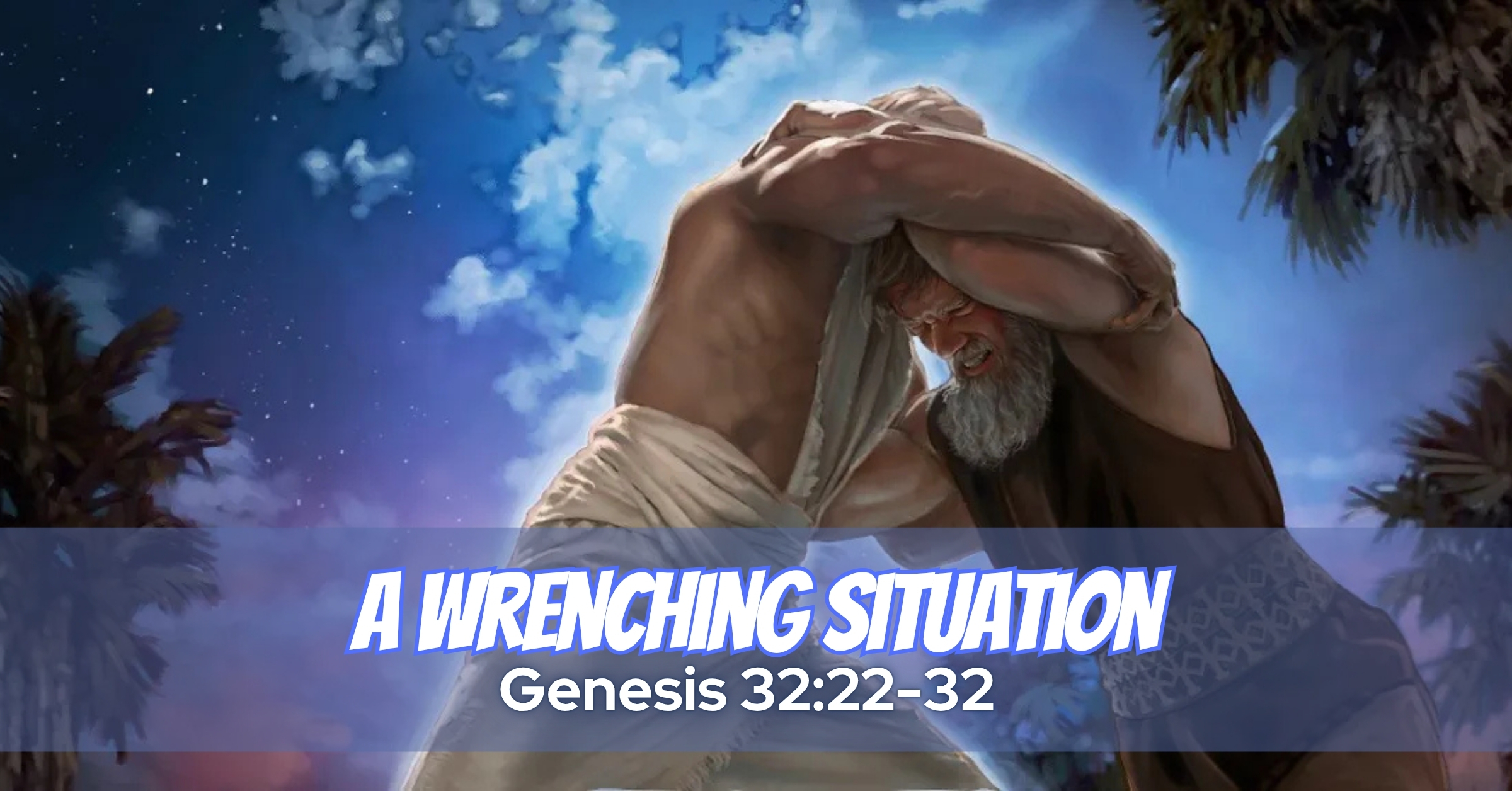
22 That night Jacob got up and took his two wives, his two female servants and his eleven sons and crossed the ford of the Jabbok. 23 After he had sent them across the stream, he sent over all his possessions. 24 So Jacob was left alone, and a man wrestled with him till daybreak. 25 When the man saw that he could not overpower him, he touched the socket of Jacob’s hip so that his hip was wrenched as he wrestled with the man. 26 Then the man said, “Let me go, for it is daybreak.”
But Jacob replied, “I will not let you go unless you bless me.”
27 The man asked him, “What is your name?”
“Jacob,” he answered.
28 Then the man said, “Your name will no longer be Jacob, but Israel, because you have struggled with God and with humans and have overcome.”
29 Jacob said, “Please tell me your name.” But he replied, “Why do you ask my name?” Then he blessed him there. 30 So Jacob called the place Peniel, saying, “It is because I saw God face to face, and yet my life was spared.”
31 The sun rose above him as he passed Peniel, and he was limping because of his hip. 32 Therefore to this day the Israelites do not eat the tendon attached to the socket of the hip, because the socket of Jacob’s hip was touched near the tendon. – Genesis 32:22-32
If names are important, Jacob got an interesting one – Israel.
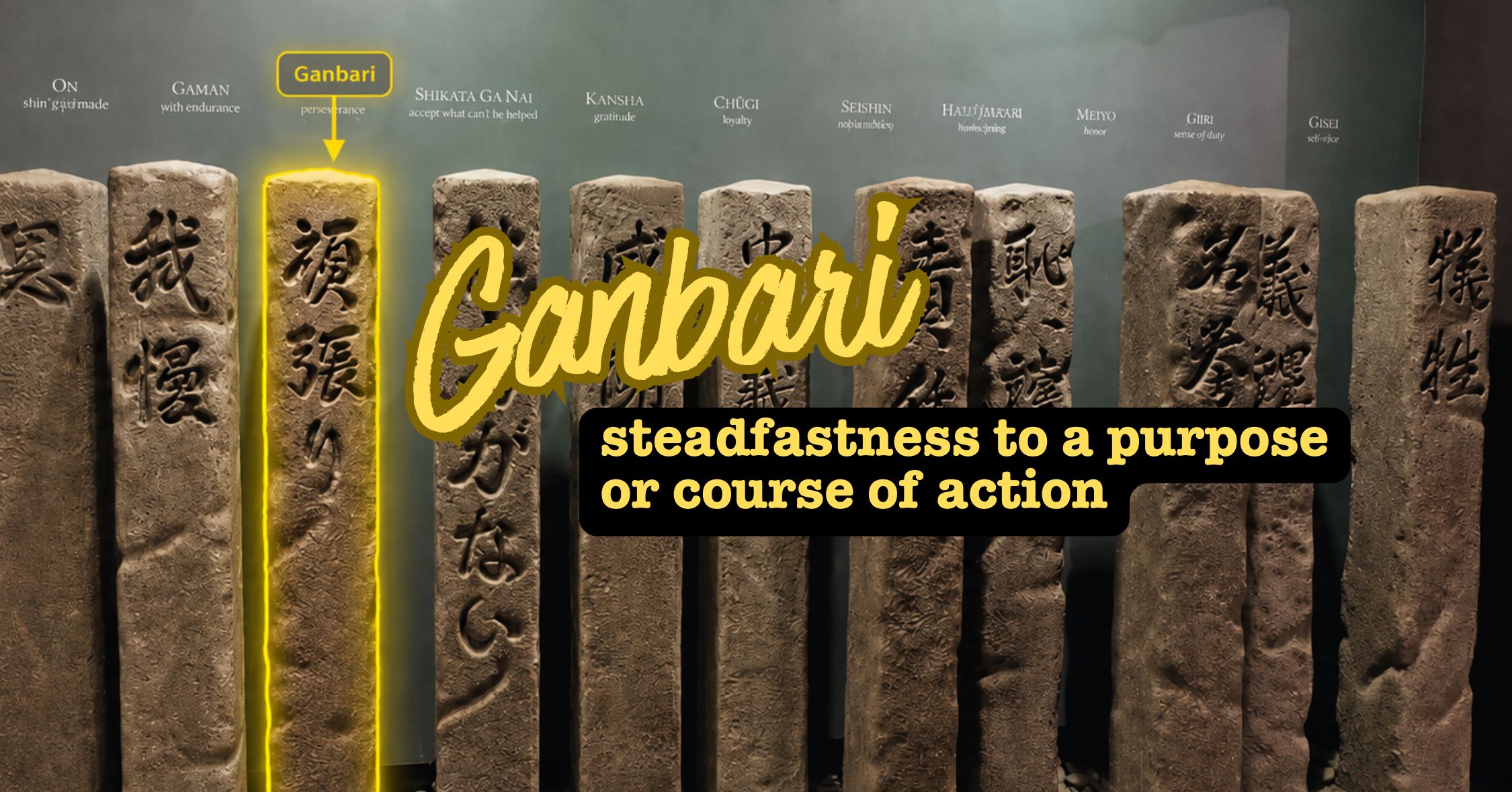
It means, “He who struggled with God and with humans and has overcome.” His name is a reflection of his character but also the character of his people. The people of Israel would be a people marked by struggle. But despite their struggles, they would persevere. It was that perseverance God saw in Jacob the night they struggled. God valued Jacob’s tenacity, his willingness to hold on for a blessing and when God added to his pain and touched Jacob’s hip so that it would be wrenched out of its socket, still Jacob held on. “I will not let go unless you bless me,” Jacob declares to God. And God gave him his blessing. Jacob did exactly what God wants us to do in times of difficulty – hold on to our faith and persevere. The Japanese have a word for this. They call it ganbari. It means “persistence” but it’s also more than that. It’s a “steadfastness to a purpose or course of action.”[4] Ganbari means steadfastness to a purpose or course of action. And that’s what Jacob showed to God. He showed his steadfastness to receive God’s blessing. And through that steadfastness he was able to overcome. His own doubts, his own fears, his possibly bleak future – Jacob was able to face all of that with courage because he felt God’s blessing upon him. The name of “Jacob” did not define who he was. “Jacob” meant “heel-grabber” but also “displacer” both of which defined him for many years.[5] But that’s not who he was and when he showed God who he was God gave him a new name to better reflect his true character, and it would define both himself and his nation.
Your name does not define you.
Do not allow others to name you either. You are simply who you are. God renames many people in the Bible and if you look them up its fascinating. He changed Abram (“exalted father”) to Abraham (“father of all nations”) and he changed his wife Sarai (“my princess”) to Sarah (“THE princess”). According to Dr. Eli Lizorkin-Eyzenberg, this was done to emphasize their lives were changing from a local to a global perspective.[6] But God simply changed their name to reflect who they were. It wasn’t a magic spell to change them into who God wanted them to be. In the same way, you are not bound to be who others perceive you to be or label you. You can choose for yourself who you are.
There are many ways we are given new names.
In some religions, like Judaism, you are given a new name at the moment of conversion, and it is considered a significant moment in your life.[7] Sometimes we choose new names. Something familiar to many immigrants into a new country. My middle name is from my dad, “Kensuke” which is a Japanese name, but his non-Japanese friends had a hard time with that so they just called him Ken, and he began to identify with it. The ladies at the racetrack where he used to go walking liked to call him “Kenny.” But sometimes we are given names out of cruelty, or we are labeled for a mistake we made. “Four Eyes” and “Metal Mouth” are some of the more benign names we can become defined by, but other times it can be extremely personal…or worse. We get called names by people who supposedly love us and know us and the longer it goes on, the more we identify with it. Studies have shown verbal abuse can have awful effects like depression, anxiety, low self-esteem, and social withdrawal.[8] And name-calling is exactly that – a form of verbal abuse. And verbal abuse doesn’t have to be using curse words. It can be telling someone they are worthless or that they couldn’t find someone else. Those are forms of abuse as harmful or more harmful than plain ol’ name-calling.

But that is not who you are.
And I hope you know you are worth more than that. A person who engages in verbal abuse regularly is someone no longer worthy of your time and effort. Many times, they are projecting how they feel deep down about themselves and trying to make themselves feel better by making others feel worse. You don’t need people like that in your life and try not to fall for their lies. You are a child of God, and you are worth more than the heavens. Why else would God send his Son to die for you? In whatever situation you find yourself, other people cannot define who you are. Like Abraham, like Sarah, like Israel, God has a secret name just for you. Have you discovered it yet? What will it be?
[1] http://godwords.org/450/name-changes-in-the-bible/
[2] Ruth 1:20
[3] Approximately based on the timeline from Bible Hub: http://biblehub.com/timeline/
[4] Japanese Cultural Center of Hawaii, Kachikan (Values), 2001.
[5] “Jacob (name),” Wikipedia, 26 May 2026, https://en.wikipedia.org/wiki/Jacob_(name)
[6] Eli Lizorkin-Eyzenberg and Jim Stowe, “What’s the Difference Between Abram/Sarai and Abraham/Sarah?” Israel Bible Center, August 22, 2022, https://weekly.israelbiblecenter.com/the-meaning-of-the-hebrew-names
[7] Chaim Harrison, “6 Tips for Choosing a Jewish Name During Your Conversion,” ReformJudaism.org, accessed 30 June 2026, https://reformjudaism.org/beliefs-practices/lifecycle-rituals/conversion/6-tips-choosing-jewish-name-during-your-conversion
[8] “The Negative Impacts of Name-Calling Across All Ages,” Evolve Counseling Services, accessed 30 June 2026, https://evolvecounselingpa.com/the-negative-effects-of-name-calling-evolve-counseling-services/
The Hamster Wheel
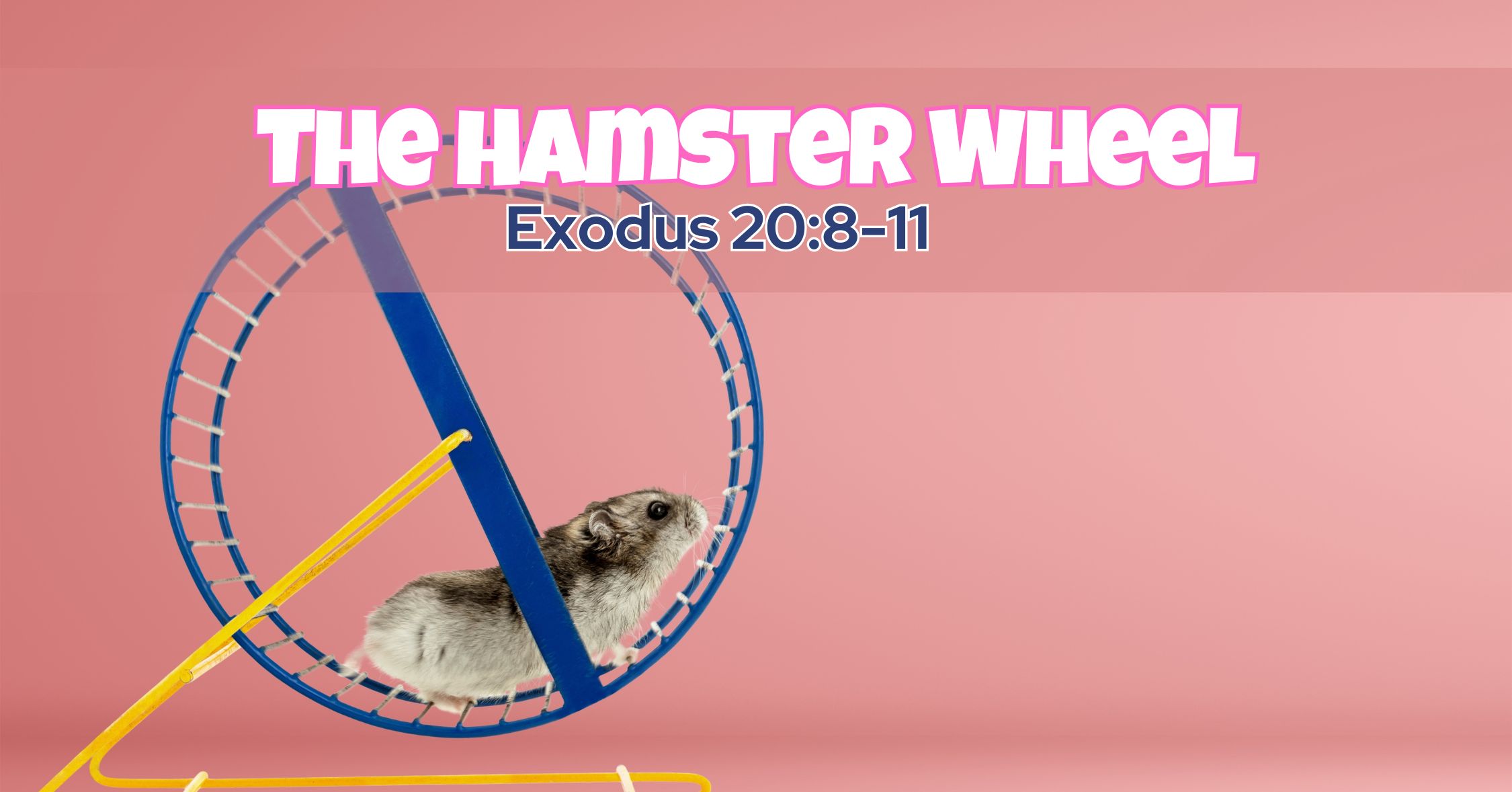
I never understood the hamster wheel.
If I were a hamster, I’d spend all day running around those plastic tube mazes. I was always fascinated by them. When I was a kid, I wanted to own a hamster just so I could build one of those hamster mansions with all those tubes and stuff and watch it run around. My friend Karleen had a couple of hamsters, but they didn’t do much except run on the hamster wheel. Now the hamster ball, I totally get it. You might be in a big plastic ball, but at least you’re going somewhere, but the wheel? I’d be bored to death. It just goes around and around and around. Where’s the sense of accomplishment? Sometimes life seems like a hamster wheel. We just keep going round and round, but then what?

God wants more for us than just the “rat race” of life.
God wants us to experience the full richness of his creation. And that’s why he created the Sabbath. It’s a time to pause and reflect and gives us the opportunity to draw closer to God. Whether that is by prayer and meditation, whether that’s in worship, or whether that’s with family and friends, we can feel the love of God reflected in those times. But do we stop long enough to really enjoy it? If not, we need to. God doesn’t offer the Sabbath as an option, God COMMANDS us to observe it. Even if you’ve never read the Bible, I’m sure you’ve heard of this section of it. It’s perhaps the most famous, often quoted, often referenced part of the Bible. That and John 3:16. This is the Ten Commandments. And within the Ten Commandments we find God calling us to observe the Sabbath.
Remember the Sabbath day by keeping it holy. Six days you shall labor and do all your work, but the seventh day is a sabbath to the Lord your God. On it you shall not do any work, neither you, nor your son or daughter, nor your male or female servant, nor your animals, nor any foreigner residing in your towns. For in six days the Lord made the heavens and the earth, the sea, and all that is in them, but he rested on the seventh day. Therefore the Lord blessed the Sabbath day and made it Holy. – Exodus 20:8-11
We don’t take the idea of Sabbath seriously in our culture.
We work 7 days a week. We are constantly connected to everything and everyone 24/7. We are figuratively running the hamster wheel and we never seem to get off to see what’s around us. We are checking our email, our apps, and our messages during dinner, at play, even on vacation. Setting aside a time to explore what God has to offer is something seemingly more and more rare. Back when we lived in Georgia, you couldn’t buy liquor on Sundays. To me that was a shock, not that I ever bought any, but Sunday was liquor-free. When you walked into the store, the alcohol aisle would be blocked off and you couldn’t even get to it. I thought that was pretty neat. I was told there was a time when you couldn’t even go to the store. Literally every place was closed on Sunday in observance of the Sabbath. Somehow, over time, the idea of Sabbath, like the idea of being closed, slowly disappeared. But there it is in black and white (or whatever color it is on your app), “Remember the Sabbath day by keeping it holy.” God included it as part of the Ten Commandments; he thought it was that important. Even higher up than “no murder,” “no adultery,” and “no stealing.” It’s hard for us to keep that in perspective, but it was listed before “no murder,” “no adultery,” and “no stealing.” References to the Sabbath occur all throughout the Bible – both Old and New Testament – and some of those passages are even more severe. Exodus 3 says that those who don’t observe the Sabbath should be put to death! Rest or die! Yet, we don’t value the Sabbath.
God built Sabbath into our system.
We are meant to observe it and when we don’t, our lives are the worse for wear. We are meant to rest, to give ourselves time to recuperate. Whether that’s physically, mentally, or emotionally, we need time to become healthy. Take sleep for example. People think they can “power through” and just “catch up” on the weekends, but studies have shown that isn’t how it works for your body or your brain. It’s what experts call “sleep debt.”[1] If you’re not getting the sleep your body needs, you keep accumulating that debt unless you find a way to restore the balance and if you don’t it has bad effects for your body – foggy brain, worsened vision, impaired driving, and trouble remembering just to name a few. Long term it can include obesity, insulin resistance, and even heart disease. There are penalties for not getting the rest we need.
In our heads, I think we know that. It’s getting us to DO something about it that’s tough.
Somehow, I think we’re almost afraid to take the rest we need. We’ve equated productivity with time spent doing something without realizing the benefits of rest and without recognizing the danger of constant motion WITHOUT rest. And even when we do realize we need a time for rejuvenation, we are pressured into skipping it either by ourselves or by others. As one writer put it, we are often applauded for our extra efforts “and rarely rebuked for working too long or hard.”[2] We often look at rest as a luxury instead of as a necessity and in that we are mistaken. God built the world with rest in mind. He wanted us to slow down and take it all in. To take time to process it all instead of simply going mindlessly from one thing to the next. To reflect on what has happened before so we can be better prepared for tomorrow. That includes spending time devoted to Christ. One of the most inspirational books I read was by Andy Stanley called “Choosing to Cheat.” In it, Andy wrote we’re always cheating someone of our time. There is always more work to be done, more things we could do with our families, or more time we could spend in prayer. There’s always MORE for us to do so we are always cheating somebody. We have to stop worrying about that and instead worry about what is the right thing for us to do.

It’s not always easy.
And at times it can really be tough to make those decisions, but I think in the long run when we choose to honor God’s commandment, God will look out for us. Truett Cathy applied this philosophy of Sabbath to his life and more importantly to his company – Chick-fil-a. When Truett first started Chick-fil-A (then the Dwarf Grill), he decided to stay closed on Sunday to give his employees and himself the opportunity to rest and worship God even though Sunday has traditionally been the busiest day of the week for restaurants. People thought he was crazy to give up on such a lucrative money-making day for his business, but he stuck by his decision; he was that firm in his beliefs. He felt being closed on Sunday said “two important things to people: One, that there must be something special about the way Chick-fil-A people view their spiritual life; and, two, that there must be something special about how Chick-fil-A feels about its people.”[3] Sticking to his beliefs helped his company grow into one of the top 3 restaurant chains in the United States behind only Starbucks and McDonald’s.[4] It probably seemed counter-intuitive to a lot of business people, but Truett felt his faith would steer him in the right direction. When we dare to be counter-cultural, when we dare to do what’s right instead of what’s profitable or convenient or selfish, our life is often better for it. While it worked out monetarily for Truett Cathy, there are more ways to measure success than with money.
God is asking you to obey.
Our failure to observe the Sabbath is at least partially our failure to trust in God. We’ve placed other things over God even though we know we should not; even when we know God has our best interests at heart. Even when we know we need to reconnect with God. Even when you regularly come to church, are you fully present when you’re here? Or is your mind in a million other places? Do you use this time to connect to your faith? Give yourself this time to recharge, not only physically but spiritually and open yourself up to where God is leading you. If even God took the time to rest and recharge – God, the literal creator of the universe who rested on the seventh day – then maybe…just maybe it might be important for us, too. And when you do accept this gift of sabbath that God offers us, I’m guessing you might find there is more to life than the hamster wheel.
[1] www.scientificamerican.com/article/fact-or-fiction-can-you-catch-up-on-sleep
[2]https://research.lifeway.com/2014/01/23/pastors-and-sabbath-the-importance-of-rest/
[3] https://www.southernliving.com/why-chick-fil-a-is-closed-on-sundays-8628136
[4] https://www.washingtonpost.com/business/2019/06/19/chick-fil-a-becomes-third-largest-restaurant-chain-us/
Pinky and the Brain Take Over the Church

Pinky and the Brain have a lot in common with the church.
Pinky and the Brain was an animated television show back in 1995 that featured two laboratory mice. As the show’s opening song described them, one was a genius, the other insane. The show opened every episode with Pinky, the insane one, asking Brain the same question, “Gee, Brain. What are we going to do tonight?” And Brain would respond, “The same thing we do every night, Pinky – try to take over the world!” In that way, Brain and the church have the same goal – to take over the world. We just plan do to do it differently.
Our hope and our goal is to win over the world with the love of Jesus Christ.
It’s not a task we can accomplish alone. Just like Brain needs Pinky no matter how smart he is, no one pastor or person can bring the world to Jesus by themselves. Although it sounds trite, it does in fact take a village, and in our case many villages, to do the job. Sports is a great example. The Los Angeles Dodgers just won back-to-back World Series Championships, the first team to do so in a quarter century. As amazing as Shohei Ohtani is, he literally can’t do it by himself. To prove it, you only need to look at his time with the Angels to see that come to life. For six seasons, the Angels had Ohtani along with veteran superstar Mike Trout and never even got into the playoffs, let alone the World Series. In his first two years with the Dodgers, they have won back-to-back. Talent is important, but so are the people you surround yourself with. Same with Michael Jordan and Scottie Pippen, Shaq and Kobe, Montana and Rice. And the list goes on and on. Even athletes in individual sports have coaches and trainers and people supporting them. Writers have editors. Chefs have sous chefs. And pastors have congregations. No one, no matter how talented or great, can do it alone.

That’s why we join the church; to lend our talents and gifts to the effort.
To become part of the team that is poised to take over the world. Because if we take seriously the words of Jesus, we can’t ignore that he tells us to baptize all the nations and there is no way any one of us can do that task alone. We are stronger as a group. We have more resources, more knowledge, and more support as a group. We build each other up and carry each other’s burdens. We may not be Shohei Ohtani or even Freddie Freeman. Maybe we are the Kike Hernandez or Miguel Rojas of the team, but our talents and gifts are needed, too, sometimes in unexpected ways. We also join the church so that we can become better Christians. We find a community that we fit into and we dive in. We don’t suddenly accept Jesus as Lord and Savior and “BAM” become imbued with all the wisdom of Christianity. The wisest Christians I know read the Bible over and over and get something new out of it each time. In their humility, all of them would say they still have some rough edges to work out. We enter into these communities to smooth out our own “rough edges,” to help us grow stronger in our faith and understanding of God. Other people have views and opinions that help to refine our own. Other people have ideas we’ve never even considered. And together we help to shape and mold each other in our faith. As it says in Proverbs, “As iron sharpens iron, so one person sharpens another (Proverbs 27:17).” We join the church to build each other up so that together we can take over the world with the love of Jesus Christ.
But being human, we sometimes misunderstand the role of the local church.
We see it as “our” church. We see it as “our” building, and “our” traditions, “our” chairs and tables and plates. And our thinking becomes very narrow. Paul addressed this in his letter to the church at Corinth which we are reading from this morning. Paul is writing to the church because something very bad is happening. Different factions are beginning to form and people are beginning to argue over who they should be following, whose words to lift up as doctrine. Some are claiming to follow Jesus, but some are claiming to follow Paul, some are following Apollos who we know from Scripture was a very influential teacher and leader, and some are following Peter. Sounds like us today. We let arguments over doctrine split us apart, whether that’s baptism, communion, or something else. And now there are literally thousands of denominations who think they got it right. Paul is writing to warn them of such foolishness and encouraging them to act as God’s people together.
Brothers and sisters, I could not address you as people who live by the Spirit but as people who are still worldly—mere infants in Christ. 2 I gave you milk, not solid food, for you were not yet ready for it. Indeed, you are still not ready. 3 You are still worldly. For since there is jealousy and quarreling among you, are you not worldly? Are you not acting like mere humans? 4 For when one says, “I follow Paul,” and another, “I follow Apollos,” are you not mere human beings?
5 What, after all, is Apollos? And what is Paul? Only servants, through whom you came to believe—as the Lord has assigned to each his task. 6 I planted the seed, Apollos watered it, but God has been making it grow. 7 So neither the one who plants nor the one who waters is anything, but only God, who makes things grow. 8 The one who plants and the one who waters have one purpose, and they will each be rewarded according to their own labor. 9 For we are co-workers in God’s service; you are God’s field, God’s building. – 1 Corinthians 3:1-9
Paul scolds the church members for failing to see the obvious.
All of them – Paul, Apollos, Peter – all of them are simply servants of God. Even though each one of them has contributed something unique and different to their understanding of Christ, ultimately, they all are servants of the same God. Paul comes down on the people of the church for not seeing this and essentially elevating the individual disciples over Jesus. The members of the church are arguing about who should be following whom instead of concentrating on bringing people to faith in Christ. They get caught up in things that are ultimately unimportant while the world around them is living a life without knowing Jesus. It’s a lesson the church needs to keep in mind today. I’m not sure what part of the body of Christ our church is. Maybe we are the ear or the eye. Maybe we are the armpit. Before you get offended, the armpit is very useful to the body. It’s partially responsible for getting rid of waste in the cells, it acts as the command-and-control center for the upper part of the body to transport oxygen, hormones, and nutrients around, and it can help you find love. [1]That’s right. Your armpits produce pheromones which have scientifically been proven to attract a partner. No matter what part of the body we are, we need to focus on doing whatever it is God equipped us to do and do it the best way possible.

Your membership in the local church is a commitment to a certain group of people.
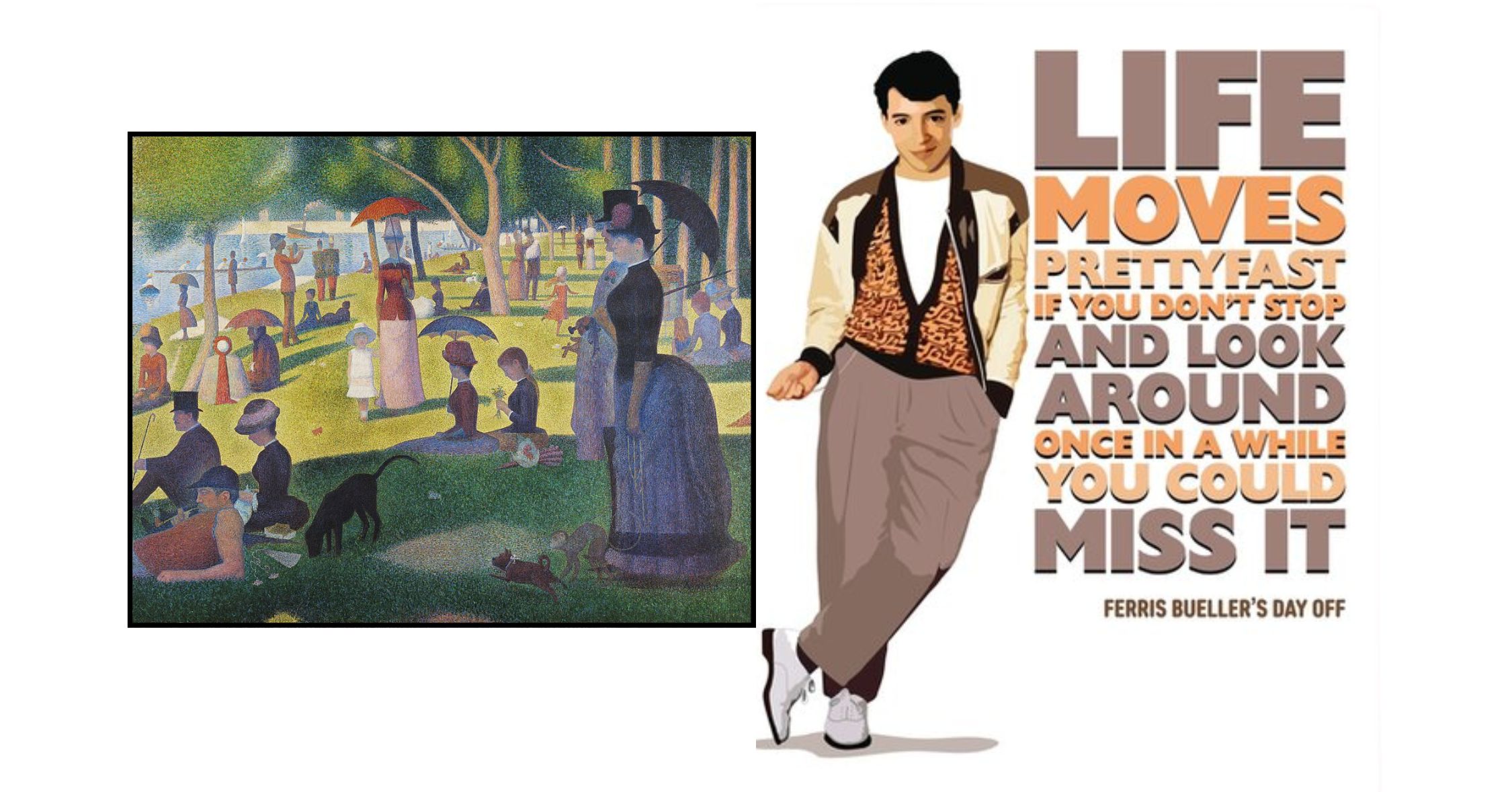
You’ve promised to join a community of like believers who offer something unique to the community and to one another. Our churches are like the dots in George Seurat’s “A Sunday on La Grande Jatte.” If you’ve ever seen that painting, you know that it’s made up of thousands of tiny dots. Literally tiny dots. Our churches are like those dots. Each one contributing to the whole, but only together do they make a beautiful painting. Likewise, without the dots, there is no painting. If the painting is missing a section of dots, it looks incomplete. We commit to being a part of one of those dots. Individually, our community is important, but its importance is largely because we are part of that painting. Together, we make the painting complete. We solidify that commitment by taking vows before the congregation when we join the church. Like wedding vows and baptismal vows, our vows of membership are a public way for us to express our faith in Christ. It says in the letter to the Romans, “If you declare with your mouth, ‘Jesus is Lord,’ and believe in your heart that God raised him from the dead, you will be saved. 10 For it is with your heart that you believe and are justified, and it is with your mouth that you profess your faith and are saved.” By coming before the congregation we are doing just that, declaring with our mouths that Jesus is Lord. We’re giving voice to what we already believe in our hearts. So as we take on the larger commitment to baptize all nations, that journey begins in our local church. As Dr. Stamm wrote in his summary of membership, “…the United Methodist membership vows call us to make the world our parish one neighborhood at a time.”
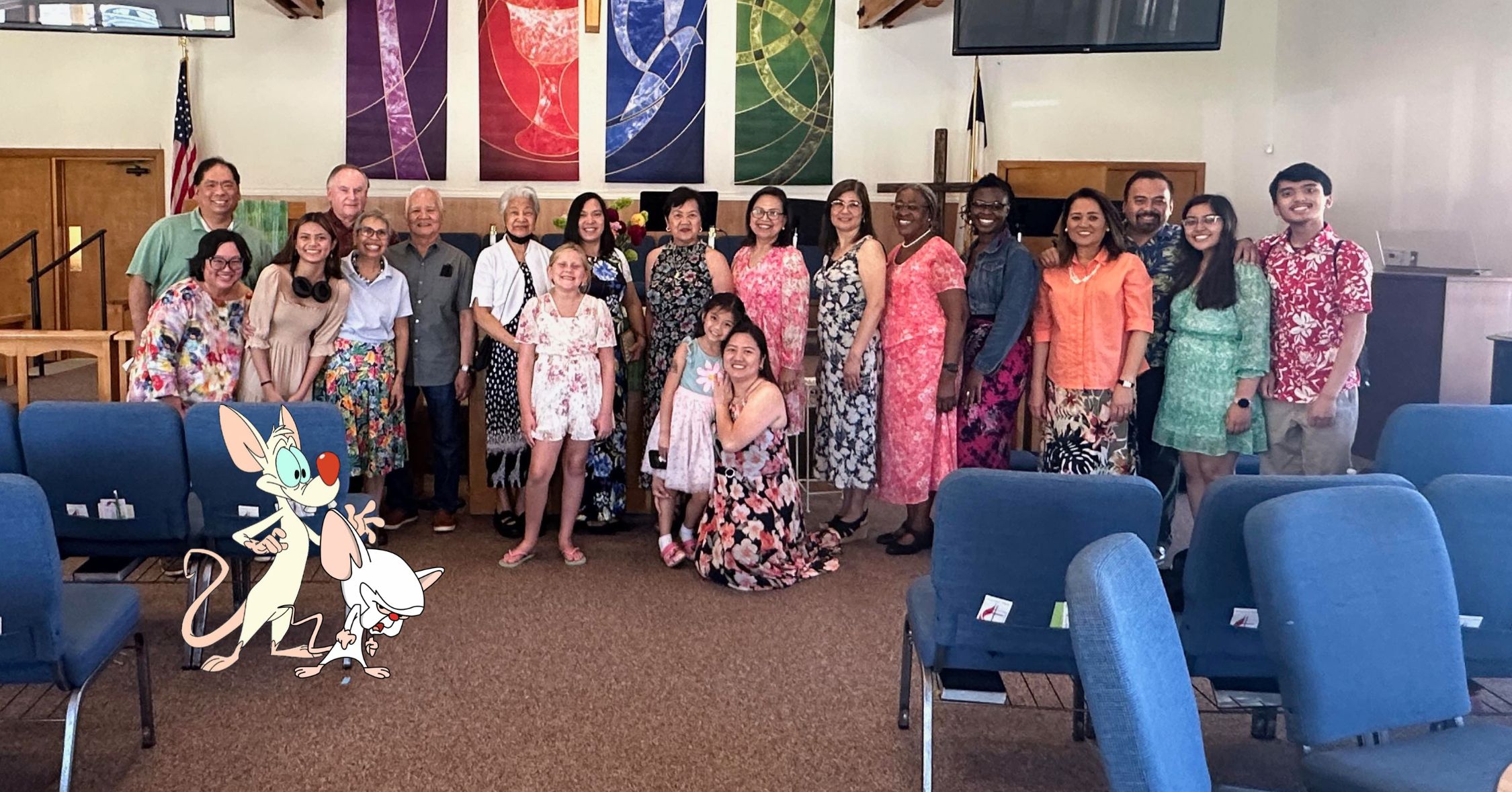
So you see, our mission is the same as Pinky and the Brain.
Like them, we are trying to take over the world. Not for our glory, but for God’s. Not with schemes, but with love. And unlike basketball, baseball, football or hockey, others don’t lose when we win. In fact, if the mission of the church was like a playground game, it would probably be Red Rover. The game isn’t over until everyone is together and everybody wins.
[1] Our data on armpits comes from two articles: “Know your body: Do armpits have a use?” and “Why Armpit Hair?”
The Last Invention?

If it were up to AI, there would be no Shohei Ohtani.
When Ohtani was about to enter his pro career in baseball, he asked every Japanese team NOT to pick him in the upcoming Nippon Professional Baseball league draft. He was going pro and instead of going the traditional route, he planned to try his luck by going directly to Major League Baseball in the states. But one team drafted him anyway – the Nippon Ham Fighters. The Ham Fighters were led by an unusual manager, Hideki Kuriyama, who ignored Ohtani’s advice and drafted him anyway. By all accounts, it should have been a wasted pick, but he asked Shohei to give him one opportunity to talk to him. Shohei, being the respectful young man that he was, agreed. In that talk, the manager told him that he saw potential in Shohei to be the first truly two-way player. Every other team would ave forced him to pick one or the other because it’s just not done any other way, and for sure he would have been drafted as a pitcher because his skills as a pitcher were more in demand. At the time, Shohei was an above average hitter, but he was already an exceptional pitcher so there was little doubt which way he would go. But the manager said if Shohei gave the team a chance he promised to develop him as a two-way player and anytime Shohei felt it was time to go he would let him try his luck in Major League Baseball. Shohei agreed. The press gave him a hard time for trying to have it both ways. Other teams were critical of him as were other players and even some of the fans. They said he was being disrespectful to the game because nobody did both. It wasn’t the way it was supposed to be. But the manager told Shohei to forget the critics and just play baseball and he did. Well, the Ham Fighters were right. Shohei did have the talent to be a two-way player. In fact, most students of the game will say he is likely the best player to have ever played the game. Only Babe Ruth did both well and even he didn’t do it at the level of Shohei Ohtani. They call him “The Unicorn” because that’s how rare his talent is. He has won FOUR MVP awards including two in both the American League and the National League. He has already won two World Series rings in his first two seasons with the Dodgers. And he became the first player in history to hit 50 home runs AND steal 50 bases. This past postseason, I just watched what was likely the greatest game any single player has ever played. He not only pitched for the Dodgers in the NLCS and won the game after striking out ten batters, but in the process hit three home runs including the longest post-season home run ever at Dodgers Stadium. This is the kind of talent you can never predict. This is the reason AI would never produce a Shohei Ohtani.
I don’t have anything against AI personally.
Like most things, AI is neither good nor bad by itself. It is technology. It can be both incredibly useful and cause great harm. The potential is still limitless and both those who predict a utopian world because of AI or the end of life as we know it have plausible and reasonable arguments. We simply don’t know. But one thing we do know is AI cannot create something truly original. It can mimic originality to the point you might honestly believe it. But it just can’t make the leap to true originality. That’s because AI draws on vast amounts of knowledge we have already accumulated and bases its response on that knowledge. But it can’t create something out of nothing. It can perfect it. It can make it better. But if all the data points in a certain direction, that is the way it will go. Hence, why Shohei would never be the greatest player on the planet. Because no one has ever done it that way before. Truly out of the box thinking is not possible for AI. It might consider it but never give it real credence because the odds are so astronomical. But sometimes it is that out of the box thinking that manifests fantasy into reality and makes the world a better place. My favorite example of this (other than Ohtani) is of course related to Disney. When Walt sought to bring animation to the big screen as a full-length feature film, “everyone” thought he was crazy. In fact, they called it “Disney’s Folly” and thought it would be the ruin of him. Instead, it launched an all-new way of storytelling that revolutionized the movie industry and the lives of people for generations to come. After opening day at Disneyland, again the critics declared it would be a colossal failure and even dubbed it “Walt’s Nightmare.”[1] Nine-hundred million visitors later those critics were proven wrong.[2]

Artificial intelligence is a reality.
How we use it and what we do with it will be our true test. Will we take the easy way out? Or will we use AI not as means of shirking our duties or cheating the system but instead to enhance what we are doing for the good of all? You might think this is a weird passage to use to reference AI but hear me out. Right before this, the people tell Samuel, “We want a king!” To be fair, Samuel’s sons were pretty despicable. The Bible even tells us they were dishonest, accepted bribes, and perverted justice. I wouldn’t trust them either. But they were forgetting that they already had a king – God. Samuel was upset about all of this so he prayed to God about it and God told him not to feel bad because it wasn’t Samuel they were rejecting. It was God himself. God told Samuel to go to the people and tell them the consequences of having a human king. And this is what Samuel shared.
10 Samuel told all the words of the Lord to the people who were asking him for a king. 11 He said, “This is what the king who will reign over you will claim as his rights: He will take your sons and make them serve with his chariots and horses, and they will run in front of his chariots. 12 Some he will assign to be commanders of thousands and commanders of fifties, and others to plow his ground and reap his harvest, and still others to make weapons of war and equipment for his chariots. 13 He will take your daughters to be perfumers and cooks and bakers. 14 He will take the best of your fields and vineyards and olive groves and give them to his attendants. 15 He will take a tenth of your grain and of your vintage and give it to his officials and attendants. 16 Your male and female servants and the best of your cattle[c] and donkeys he will take for his own use. 17 He will take a tenth of your flocks, and you yourselves will become his slaves. 18 When that day comes, you will cry out for relief from the king you have chosen, but the Lord will not answer you in that day.”
19 But the people refused to listen to Samuel. “No!” they said. “We want a king over us. 20 Then we will be like all the other nations, with a king to lead us and to go out before us and fight our battles.”
21 When Samuel heard all that the people said, he repeated it before the Lord. 22 The Lord answered, “Listen to them and give them a king.”
Then Samuel said to the Israelites, “Everyone go back to your own town.” 1 Samuel 8:10-22
The truth comes out.
“We want to be cool like everyone else. We want a king to tell us what to do and to do everything for us, so we don’t have to accept responsibility for our actions.” Now of course that’s not what they actually said, but in essence, it is. They want someone to just tell them what to do so they don’t have to do the hard work and figure it out for themselves. They want someone to do the work for them like fight their battles so they don’t have to accept responsibility for it, and they can go about their lives without having to consider the consequences. Samuel even tells them, “Look, this king you want? He’s going to take your best cattle. He’s going to take at least a tenth of your money. He’s going to take your land and give them as gifts to his sycophants. Then he’s going to take your sons and daughters to do with as he will. And finally, he’s going to take your freedom.” And they said, “We don’t care!” Human beings are always looking for the easy way out, even when the easy way turns out to be horrible! We love avoiding the hard work, but it’s in the hard work that the best work gets done.
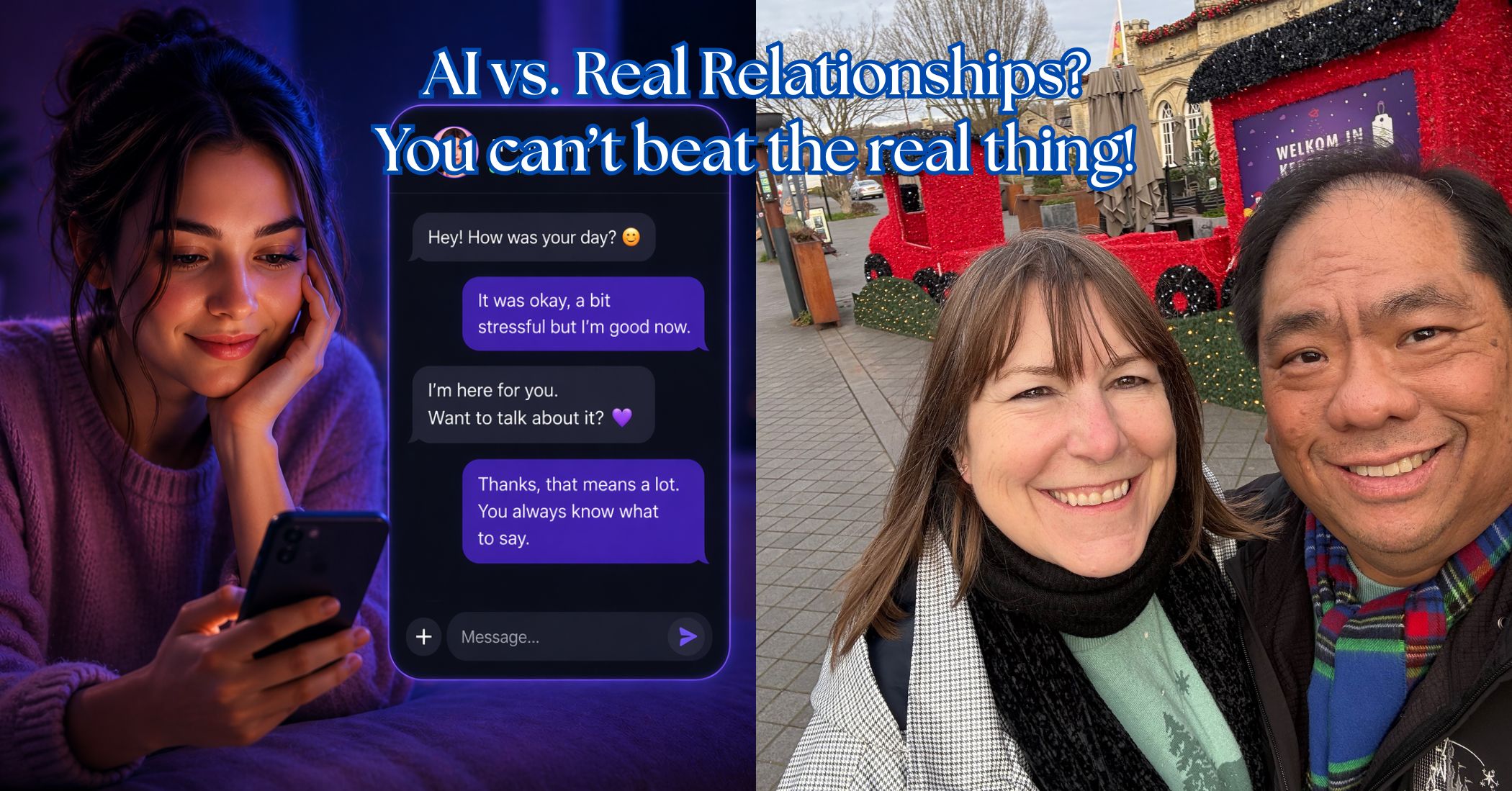
Already teachers are having a hard time.
Kids are using AI to get out of doing their homework. Sure, it might mean they get a good grade. It might mean they have a better chance of getting into that top university. But when push comes to shove, they won’t have the knowledge, the skill, or the ability to truly succeed because they cheated their way through life. Life isn’t like a hotel commercial: “You’re not Dr. Stewart!” “No, but I did stay at a Holiday Inn Express last night.” Kids who use AI to cheat are only truly cheating themselves because it’s not the grade that matters, it’s the learning behind it. But that’s only one way we are opting out of doing the hard work. We’re choosing to turn to AI to satisfy our needs for intimacy. That is a dangerous road because no machine can truly give you the human connection of another person or build a life with you. It can say all the things you want it to say; it can offer comfort on demand exactly as you want it, and even pretend sexual intimacy, but nothing will ever match the true beauty of a relationship that has been built together. Nothing can replace your hand being held when you’re lying in a hospital bed. Or the willingness of a partner who does something for you not because it’s been programmed to, but because they truly love you. It takes hard work to build that kind of relationship, but in the end its worth more than anything else.
I don’t know about you, but I’m worried for the future.
AI isn’t to blame. We are. Our attitude as the human race needs to improve. Instead of looking for the easy way out, we need to put in the hard work and let God’s gifts shine. God put it within each of us to contribute to the great tapestry that makes up our lives, but how will we ever discover what we can do if we’re always looking for the cheat code to life? Take the challenge. Do the hard work. Discover for yourself what God wants you to do at this time in your life. Whether you are old or young, big or small, you have gifts to offer, and your gifts could make the world a better place.
Funny note, as I’m writing this and correcting mistakes, I keep getting the prompt, “Rewrite this paragraph with Copilot” (Microsoft’s AI). Don’t worry. I didn’t use it. Not even once.
[1] Brady MacDonald, “Disneyland got off to a nightmare start in 1955, but ‘Walt’s Folly’ quickly won over fans,” Los Angeles Times, July 10, 2015, https://www.latimes.com/travel/la-tr-d-disneyland-opening-day-20150712-story.html
[2] Austin Haughton, “Disneyland Attendance Crosses 900 Million Guests,” WDWNT.com, January 12, 2026, https://wdwnt.com/2026/01/disneyland-attendance-crosses-900-million-guests/ – originally cites an article from the Orange County Register. Corroborated by an article in the Los Angeles Times but that article is behind a paywall.
Loving Day
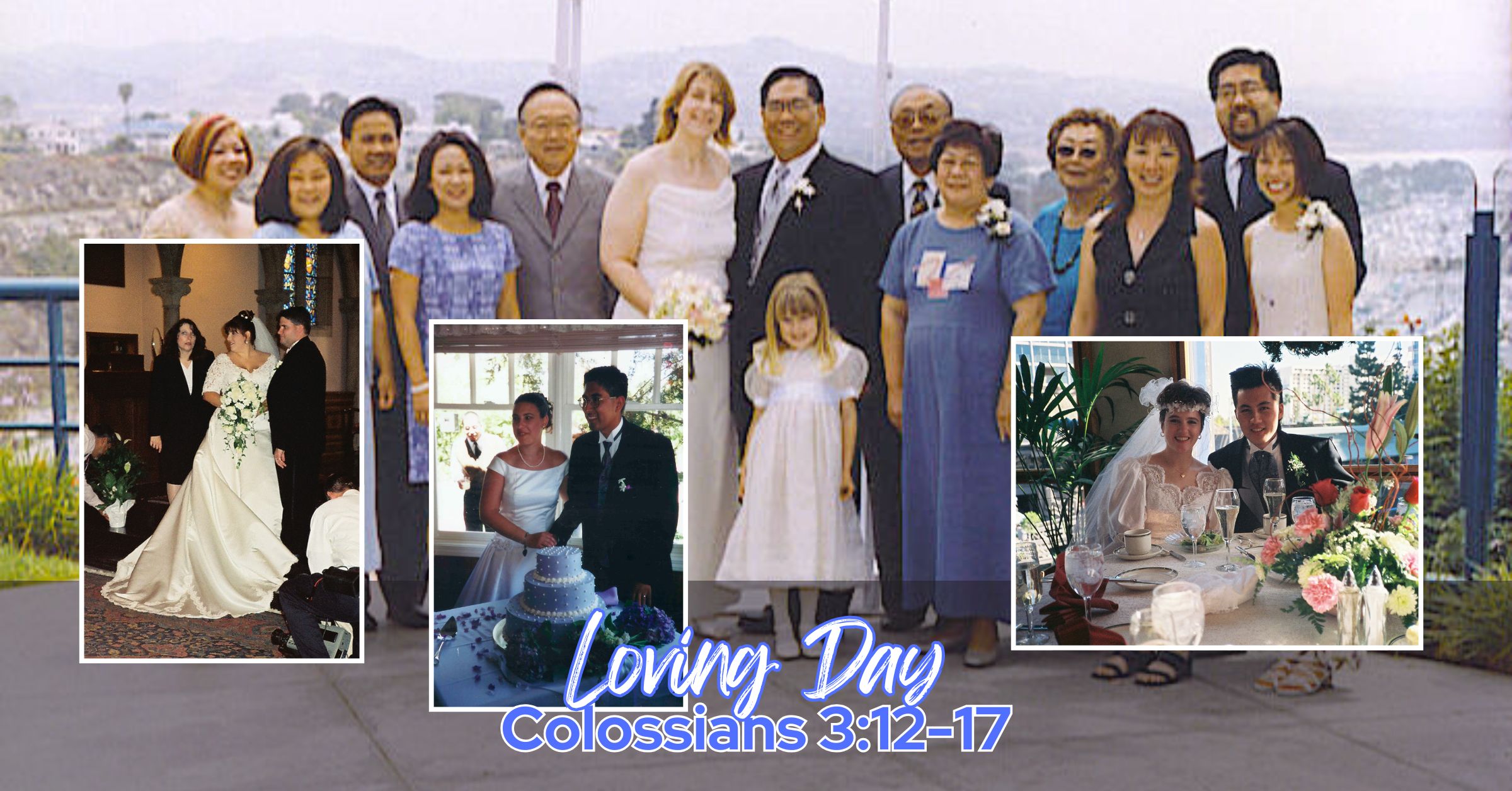
When I first met Jon, he didn’t like the church.
And I get it. He had every right considering what happened to his friends. We used to play this game called Legends of the Five Rings based on ancient Japanese mythology, and a bunch of us would gather at different game stores to play. We had a blast and I could honestly call all of them friends. Jon was the one who got me into it. I wandered into this game store one day back when we lived in Georgia and saw a bunch of guys playing this game that looked pretty cool and Jon offered to teach me to play. I was hooked ever since. We became friends. He knew I was a pastor and I knew he didn’t go to church, so we left it at that. We had a bond through this game and eventually, my curiosity bubbled up, so I asked him what the story was especially in church-laden Georgia where the churches outnumber CVS. And he told me. He had these two friends who wanted to get married. They were in love and decided it was time to take the next step. She wanted a church wedding, so her and her fiancé went to her pastor to see about getting married. I’m sure they were largely expecting to nail down possible dates and times, see when the church was available, maybe talk about types of wedding ceremonies. Instead, he told them he wouldn’t do it. That their marriage would be, and I quote, “an abomination in the eyes of God.” Jon told me, “I can’t believe in a God like that.” I told him neither could I.
His two friends were of different races.
One was black and one was white. And there are still pastors and churches today who look at interracial marriage as “an abomination.” My guess is they haven’t actually read the Bible because any cursory reading of it would lead you to the conclusion God would never say that. But it’s still enough of a commonly held belief that I knew in a moment his story was true, especially in the Bible Belt where you can call racism Biblical. Race still matters and black and white more than most for some unknown reason. I still don’t understand it, but I think that’s because I grew up in California. Not that racism doesn’t exist here because it definitely does and I’ve experienced it myself. But it is different where the divide and the deep history with slavery between Black and White isn’t as stark. Here’s how wild this racism is. When I was working at the credit union, one of our friends was from the South and she told us how she liked California because she could date whoever she wanted, so we asked her about that and she said, “Oh, in Georgia I could never take a Black guy home to meet my parents.” And my friend Albert asked, “Well what if you were dating Craig? How would you parents react?” You know what she said? “Oh, they would be fine with that.” We didn’t understand so she explained, “In the South, there’s Black and there’s not Black and he’s not Black.” Obviously, that is not how everyone feels who lives in the South, but to say racism doesn’t exist is to live like an ostrich with our heads in the ground.
Where do these ideas of racial purity come from?
Believe it or not, some Christians believe they come from the Bible. But they’re wrong and we’re going to explore how damaging it is when Christians put their own biases, fears, and prejudice ahead of God’s word. People love to use the Bible to justify their own thoughts and actions because if the Bible says it then it must be okay. But take anything out of context and you aren’t getting the message the way it was supposed to be received. When you only see part of an image or listen to half of a conversation, you might be able to guess from context clues what was seen or said, but you’re also just as likely to misunderstand it completely. It makes me think of 1 Corinthians 13:12, “For now we see only a reflection as in a mirror; then we shall see face to face. Now I know in part; then I shall know fully, even as I am fully known.” In this passage, Paul is emphasizing how little we truly know about God and how it is so easy to doubt God or misunderstand our path in life because we can’t possibly know all the things God knows. We don’t know the complexities of the world we live in and how one action creates ripple effects across time and space that affect who we are. So we jump to conclusions, often to support our own narrative instead of putting our trust in the Lord. Just as in this passage we are about to share which has been used to justify the condemnation of interracial marriage.
When the Lord your God brings you into the land you are entering to possess and drives out before you many nations—the Hittites, Girgashites, Amorites, Canaanites, Perizzites, Hivites and Jebusites, seven nations larger and stronger than you— 2 and when the Lord your God has delivered them over to you and you have defeated them, then you must destroy them totally. Make no treaty with them, and show them no mercy. 3 Do not intermarry with them. Do not give your daughters to their sons or take their daughters for your sons, 4 for they will turn your children away from following me to serve other gods, and the Lord’s anger will burn against you and will quickly destroy you. 5 This is what you are to do to them: Break down their altars, smash their sacred stones, cut down their Asherah poles and burn their idols in the fire. 6 For you are a people holy to the Lord your God. The Lord your God has chosen you out of all the peoples on the face of the earth to be his people, his treasured possession. – Deuteronomy 7:1-6
Do not intermarry.
Three tiny words in this whole passage and suddenly interracial marriage is condemned. By the way, this was not a condemnation of interracial marriage at all. It was a warning to the tribes of Israel about marrying people of a different faith because of the problems and conflicts that arise when any two people who have strong differing beliefs enter into a life together. Paul writes, “…for they will turn your children away from following me to serve other gods…” And that can be true. Sometimes people who do not have a strong faith will turn away and serve other gods, and sometimes it works the other way as well. But even in those instances the church does not forbid it. Even the Catholic Church, the stalwart of enforcing the rules, does not forbid it even if they discourage it. Again, because of the issues it brings. But people can work it out. People can make it work. It offers challenges and hardships when you have two different belief systems, but that doesn’t mean love won’t win out.

Interracial marriages can have challenges too.
Funny quick story. When Cassie and I were about to visit my parents for the first time, it was after we had gotten engaged and Cassie asked me in all earnestness if my parents would be okay with us getting married. II assured her it would be fine. After all, my sister Karen crossed that barrier first. Cassie looked at me. paused and said, “Isn’t he Korean?” And I just nodded my head like it was obvious. To which Cassie responded, “That’s not the same thing!” Of course, my parents were more than okay with Cassie. In a lot of ways she’s more Japanese than I am! She eats ALL the New Year’s dishes. But Cassie had a legitimate concern because racial prejudice can be a huge hurdle and sometimes you do have to choose between the family that raised you and the one you’re just starting. And that can be devastating. But it shouldn’t be.

As Christians, our job is to love not to judge.
Leave the judging up to God. Our role as parents, as friends, and as family is to be supportive even when we disagree. It’s fine to express your concerns. It’s a good thing to bring up potential sticking points where there might be conflict. It’s okay to express doubt in a calm and loving way. But once you get into the territory of threats or condemnation or rejection? You are not only putting your relationship in danger, but you’re doing the opposite of what God calls on us to do – love one another. Let me put it to you this way. When I first started out in ministry, I was working for a friend of mine named Brett. And the first time I was asked to do a wedding, I asked for his help. He shared with me his resources and his couple’s questionnaire (which I still use to this day) and I asked him, “What do you do if a couple asks you to marry them and you KNOW they aren’t a good fit?” And he said, “I’ll marry them anyway.” I was at first surprised, but his reasoning was about as sound as you could ask for. He said, “If they really believe they are in love, they are going to get married with or without you. By telling them you won’t marry them just alienates them from the church. I’d rather have them feel we are here as a resource when things go bad than to feel alone with no one to turn to.” Whether you are a minister or maid of honor, we should all approach marriage with the same thought of preserving the relationship. Because isn’t that what matters most?
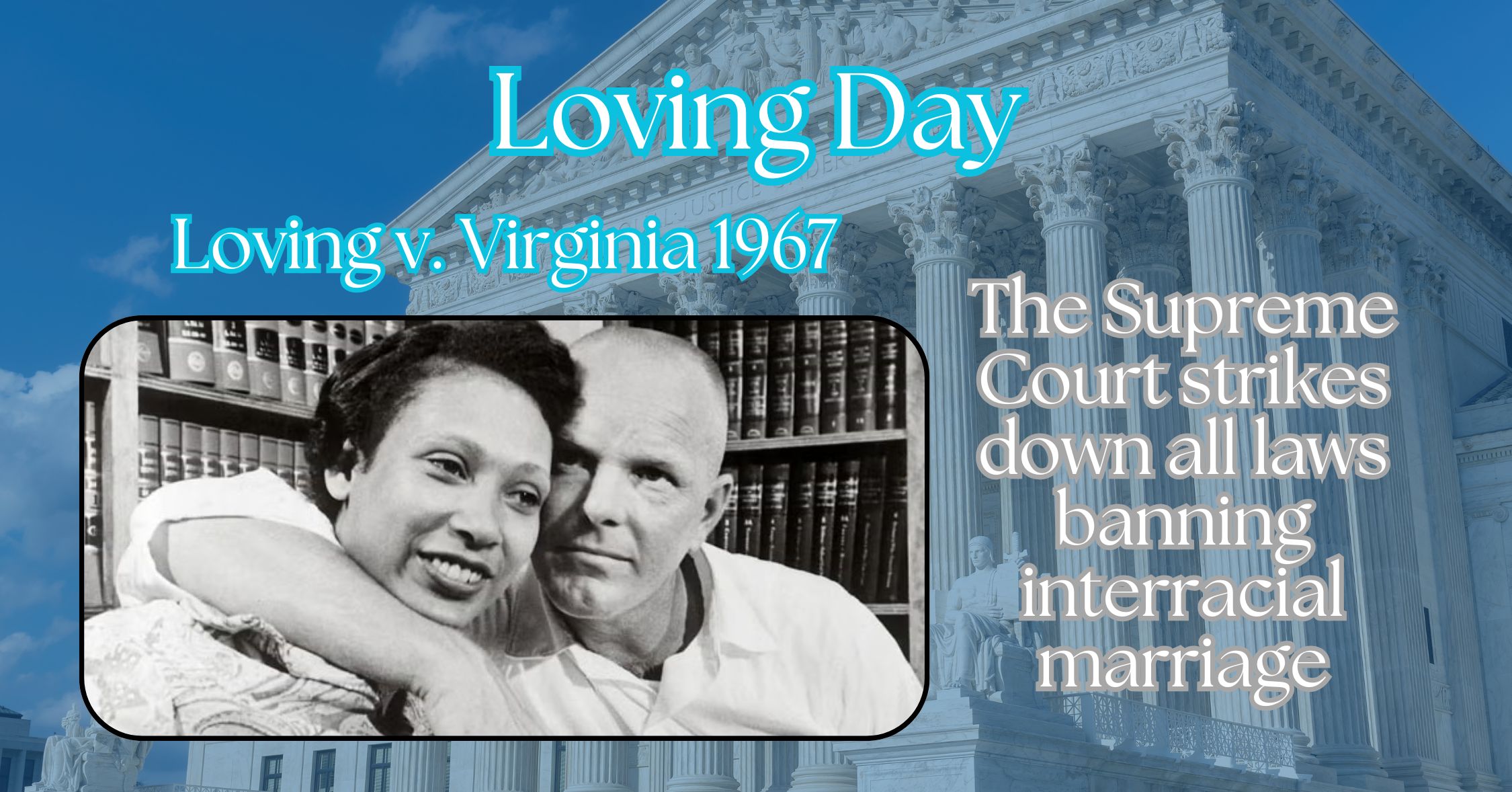

June 12th is Loving Day.
And I’m sure most people have no idea what that is. Sounds like another “Hallmark holiday” like Sweetest Day. But in fact, it’s the day when laws against interracial marriage were struck down nationwide. In the case of Loving v. Virginia (1967), (hence the name) the Supreme Court ruled in favor of Mildred Delores Jeter and Richard Perry Loving and overturned their conviction. They were free to live with one another and love one another as they always wanted.[1] But that didn’t mean instantly racism was gone. People still have to find it in their heart to let go of old prejudices. At the time of the decision, less than 20% of Americans approved of marriage between a Black person and a White person, and as late as the year 2000, that number was only about 65%! Today, that number is up to 94%.[2] Yet hate still abounds. We just keep finding different ways to show it. In 2024 there were over 11,000 incidents of hate crimes in the United States and still over 50% of them were race related, with religion and sexual orientation make up a large chunk of the rest.[3] That is not the world God wants us to live in. Let us always be on our guard against fear and prejudice. Not just out there but in our own hearts as well. It’s so easy to think the work is done, but we still have a way to go. Let us be a witness to love in the world today.
[1] “The Loving Day Story,” LovingDay.org, https://lovingday.org/the-loving-story/
[2] Justin McCarthy, “U.S. Approval of Interracial Marriage at New High of 94%,” Gallup, September 10, 2021, https://news.gallup.com/poll/354638/approval-interracial-marriage-new-high.aspx
[3] “FBI Releases 2024 Hate Crime Statistics,” U.S. Deparment of Justice, September 24, 2025, https://www.justice.gov/hatecrimes/hate-crime-statistics
How Facebook Killed the Church
Who would have thought Facebook would end the church?
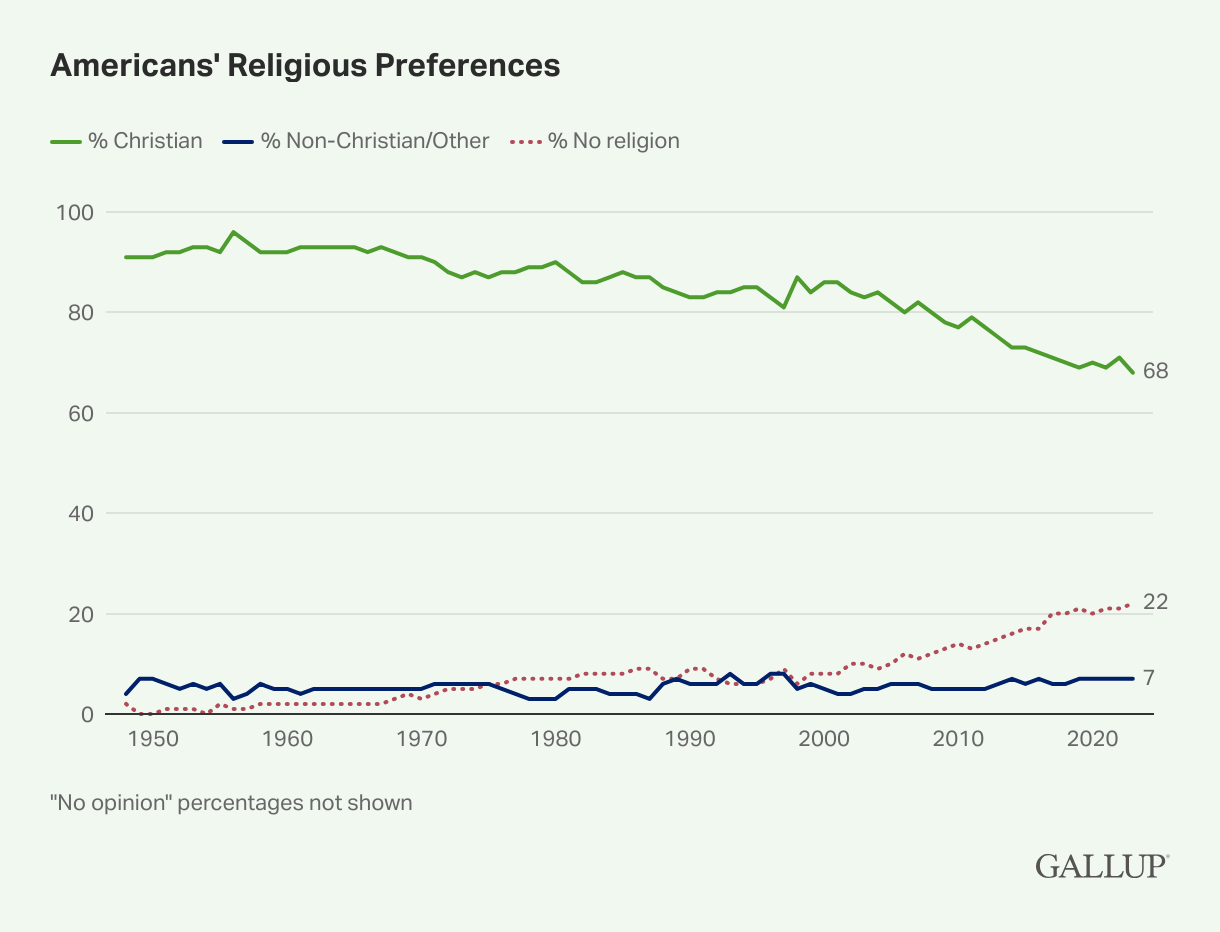
Have you ever wondered why it seems so hard to get people to come on a Sunday morning? Especially if you grew up coming to church, it just seems like what you are supposed to do. Why is it so hard to get people in the doors? And more importantly, to STAY in the doors? Richard Beck thought he had the answer. And the culprit was Facebook. Way back in 2010, he wrote a blog post called, “How Facebook Killed the Church,”[1] and to be fair it wasn’t Facebook itself that was killing the church – we were. In 1956, 96% of Americans identified as Christian; today that number is down to 68%.[2] And it’s not like they are flocking to other religions. Instead, they are increasingly becoming disengaged from the church.[3] It’s no big secret church attendance is down. Across the country, church attendance has dropped over the last couple of decades in nearly every major religion – not just Christianity. At the turn of the century about 42% of adults in the US were attending worship weekly or almost every week, but as of a few years ago that number had dipped to just 30%.[4] Attendance at Sunday worship has dropped whether you live in the Bible Belt, the Sun Belt, the Rust Belt, or even the Jell-O Belt. Yes, it’s a real thing. The Jell-O Belt, also called “the Mormon Corridor,” was given its name because Mormons like Jell-O. In fact, Jell-O is the official snack food of the state of Utah.[5] But I digress. All that to say most people are just not interested in coming to church.

The reasons are not all that surprising.
They question the teachings of the church, they don’t like organized religion, or they don’t feel like they need religion.[6] They find God elsewhere, they feel church is irrelevant, or just plain boring.[7] But here is the interesting thing. While all those things are true, they are also not new.[8] Beck’s argument is there is a reason people have chosen this time to abandon the church instead of say the ‘80s or ‘90s, and that’s because we’ve been replaced by something else – Facebook. Or social media in general. And it’s not just social media but technology in general has taken away the spot church used to fill.
“How Facebook Killed the Church” is about the loss of that “third place” in American culture.
Home and work are the first two places in our lives. They are the places we spend most of our time, but this “third place”… this “third place” is where we connect to the broader community.[9] Third places are important. It’s where we gather, where we form bonds, where we meet our future spouses. And Church used to be one of these “third places.” In its heyday back in the 1950’s, church was THE place to be. Even if the services bored you, even if you weren’t learning anything, even if the preacher was no good, you came anyway because it was the social hub of the community. That’s not true anymore. Technology has made us HYPER-CONNECTED. Through Facebook, Instagram, WhatsApp and so many others, there is a plethora of ways to stay connected, find a spouse, or talk about any subject on the planet and that “third place” is being transformed into something different. As Beck wrote, “Millennials are in a different social situation. They don’t need physical locations for social affiliation. They can make dinner plans via text, cell phone call or Facebook. In short, the thing that kept young people going to church, despite their irritations, has been effectively replaced. You don’t need to go to church to stay connected or in touch. You have an iPhone.”[10]

Not surprisingly, people are leaving organized religion.
Now that we can fill that social connection virtually, it eliminates or at least drastically reduces the need for a specific physical location to be that “third space.” And with the flight of so many people, maybe it’s time we go back to that fundamental reason the church exists – to make disciples for Jesus Christ. Instead of trying to be another Starbucks, we should focus on what only we can do – bring people closer to Jesus, whether that is virtually or in person, through worship or outreach. We need to do what only we were created to do. In this passage, Paul is writing to the church at Colossae because they have lost their way. They’re beginning to lose their focus on Christ and turning to mysticism and angels and stuff like that instead of keeping Christ at the heart of the church. Sounds a lot like religion today. So, Paul is encouraging them and reminding them of who they are and what the church, the followers of the Way, are supposed to look like.
12Therefore, as God’s chosen people, holy and dearly loved, clothe yourselves with compassion, kindness, humility, gentleness and patience. 13Bear with each other and forgive whatever grievances you may have against one another. Forgive as the Lord forgave you. 14And over all these virtues put on love, which binds them all together in perfect unity.
15Let the peace of Christ rule in your hearts, since as members of one body you were called to peace. And be thankful. 16Let the word of Christ dwell in you richly as you teach and admonish one another with all wisdom, and as you sing psalms, hymns and spiritual songs with gratitude in your hearts to God. 17And whatever you do, whether in word or deed, do it all in the name of the Lord Jesus, giving thanks to God the Father through him. – Colossians 3:12-17
Paul’s words are as timely now as it was back then.
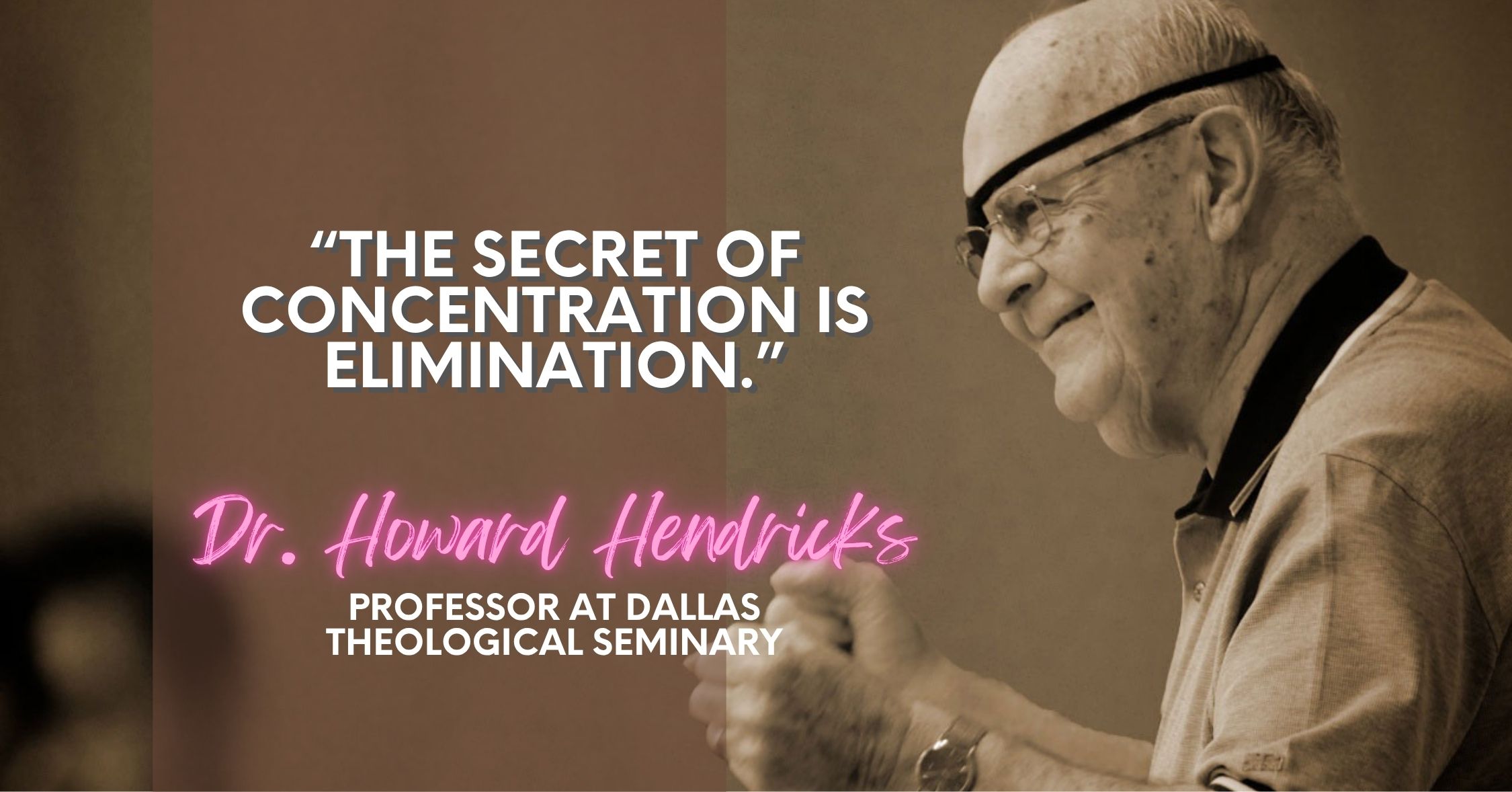
Churches lost their focus and instead started turning to things other than God. Again, like many churches today. So, Paul is reminding them who they were created to be – disciples of Jesus. The kind of people who are compassionate, kind, humble, gentle, and patient. People who bear with each other instead of complain, forgive each other instead of holding grudges, and overall, love one another in unity. But what makes the church truly special is what Paul writes in the next few verses. “Let the peace of Christ rule in your hearts…” “Let the word of Christ dwell in you richly as you teach and admonish one another…” “And whatever you do…do it all in the name of the Lord Jesus, giving thanks to God the Father through him.” When we focus on these things, things the church was created to do, we have limitless potential. Dr. Howard Hendricks, a professor at Dallas Theological Seminary, once said, “There are many things in life you ‘can do’ for God. And the more success you have, the more opportunities will come. But most opportunities are distractions in disguise. Therefore, find the one thing you ‘must do’ for God…The secret of concentration is elimination”[11]
People still need the church.
They may not need the buildings, but they need the church. Everyone struggles with the questions, “Why am I here? What’s the meaning of life?” They are questions that haunts us and we spend a great deal of our lives, either consciously or subconsciously, wrestling with them. As Kerry Shook, the author of One Month to Live said, there is a God-shaped hole in our hearts that only God can fill, and until we find him, it will continually gnaw at us. People try to find all sorts of substitutes to fill that hole, like power, money, fame, but until we know the overwhelming love of Jesus Christ, that hole will always be there. There will always be something missing. Facebook and all of social media has become a substitute for those third spaces, but maybe it’s a blessing in disguise. Now we can focus on what only we can do best. Fill those God shaped holes that exist in all of our hearts.
[1] Richard Beck, “How Facebook Killed the Church,” Experimental Theology, March 5, 2010, https://experimentaltheology.blogspot.com/2010/03/how-facebook-killed-church.html
[2] “How Religious Are Americans?” Gallup, March 29, 2024, https://news.gallup.com/poll/358364/religious-americans.aspx
[3] Ibid.
[4] Jeffrey M. Jones, “Church Attendance Has Declined in Most U.S. Religious Groups,” Gallup, March 24, 2024, https://news.gallup.com/poll/642548/church-attendance-declined-religious-groups.aspx – Two groups did show increases over this time: Jewish people and Muslim people, but the increase was minor compared to the droves leaving the Christian churches.
[5] http://en.wikipedia.org/wiki/Mormon_Corridor#.22Jell-O_Belt.22
[6] “Why are ‘nones’ nonreligious?” Pew Research Center, January 24, 2024, https://www.pewresearch.org/religion/2024/01/24/why-are-nones-nonreligious/
[7] “What Millennials Want When They Visit Church,” Barna Group, March 4, 2015, https://www.barna.com/research/what-millennials-want-when-they-visit-church/
[8] In his article, Beck argues for a different set of reasons why people are leaving the church, but his point is there is another reason why people are choosing to leave rather than put up with it.
[9] http://en.wikipedia.org/wiki/Third_place – the concept of the “third place” is from sociologist Ray Oldenburg.
[10] Beck, “How Facebook Killed the Church.”
[11] Will Mancini, “Epic Quotes on Discipleship from Prof Howard Hendricks,” VisionRoom,
It Takes a Village
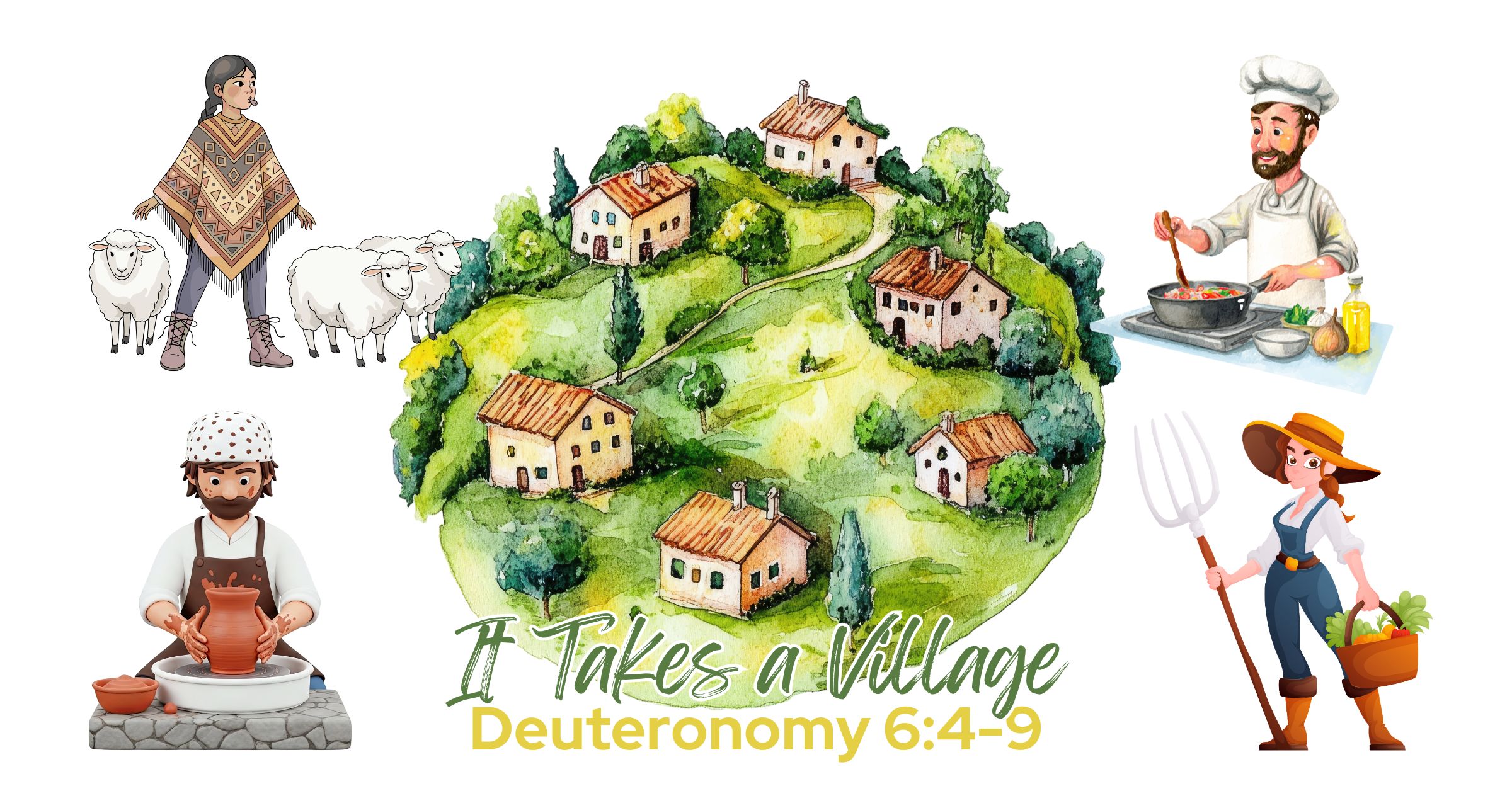
Who would make your list?
One day I plan to win the Academy Award for Best Original Screenplay for my film “A Kidney Between Us” so I need to be ready to give one of those fancy acceptance speeches. Did you know winners only have 45 seconds unless you win one of the big four (Actor, Actress, Director, Film) so my speech will have to be quick and precise. Of course, you have to thank the Academy since they voted for you in the first place. And the fans for getting your film recognized. Cassie…Emma…But who else? Forty-five seconds is a terribly short time to squeeze in every single person who made a difference in your life, so who would be “Oscar worthy?” Because let’s face it. None of us achieves anything in life on our own. As much as the idea of the “self-made man” is part of American society, it’s the ultimate in hubris to think we really didn’t have help. I know people who are fantastic writers who have never had a book published or a script produced; wonderful singers who have never been signed to a record label; artists who haven’t had their work published or put in a gallery and it’s not because they lack talent. Achieving success is the culmination of a great many people and events and choices in our lives and all of them are important.
Successfully raising a child is a lot like being a success at anything.
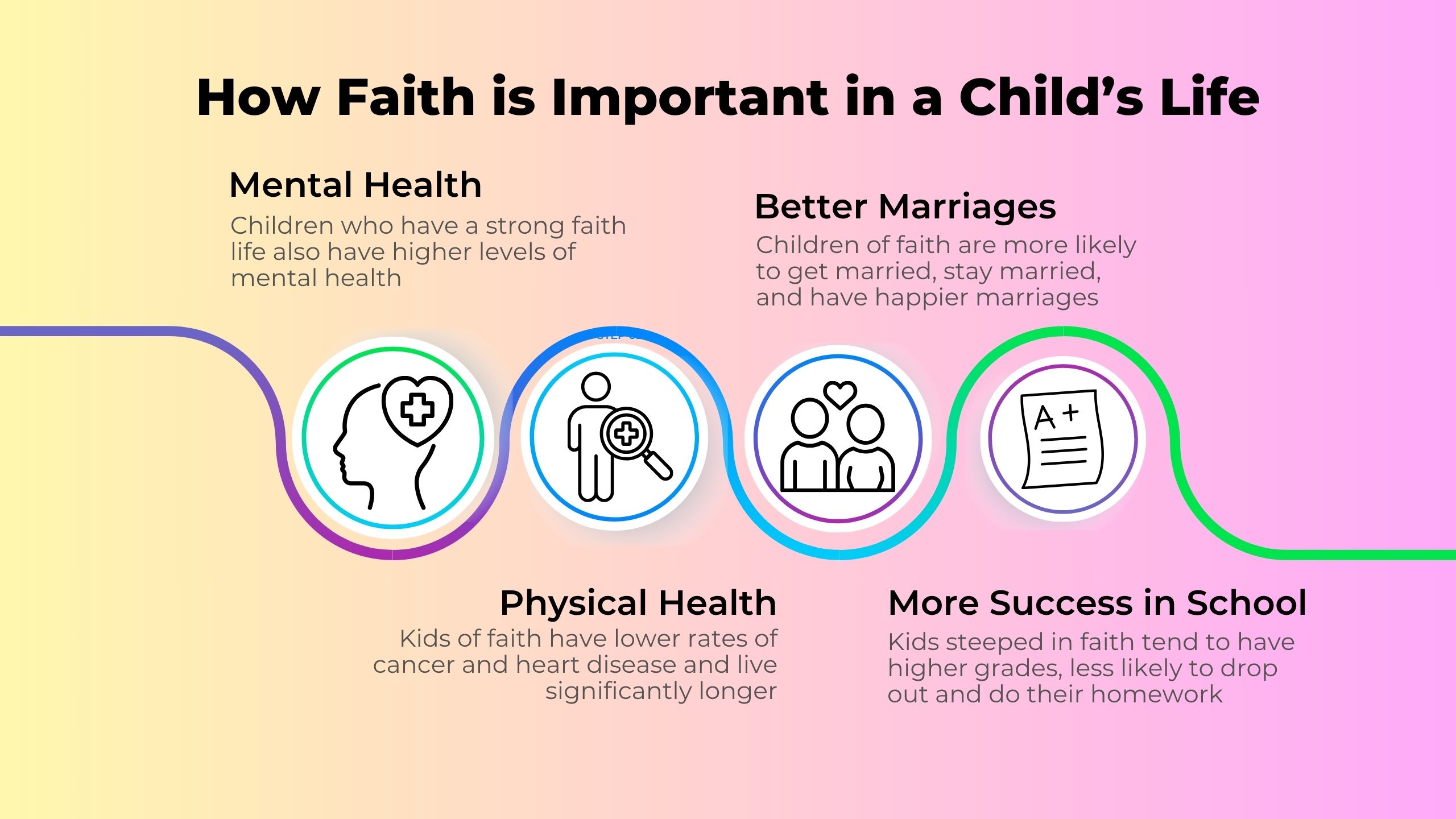
You can’t do it alone. And I don’t mean being a single parent. There are great single parents who make it work and having both parents around doesn’t guarantee success either. I knew a couple with two kids. Same parents. Same household. Same schools. One of them grew up to be a model student. Helped with the family, got good grades, never got in trouble. The other one was always getting in fights; got sent to the principal’s office time and time again; and started doing drugs and breaking the law. If it was just about good parenting, it wouldn’t make any sense! But it’s not. A child doesn’t grow up in a bubble. They have different friends. They have different teachers. They get involved in different things. All of it adds up to the person they become. If we’re lucky enough to have kids in church, we need to do all we can to be part of that formula for success. Studies have shown the benefits of faith in a child’s life. Overall, they have “higher levels of mental health, lower rates of cancer and heart disease, and significantly greater longevity and quality of life.”[1] They are also more likely to marry, stay married, and have better marriages.[2] As students, they tend to get better grades, less likely to drop out of school, and more likely to do their homework.[3] Who wouldn’t want that for our kids?
But most drift away from their faith.
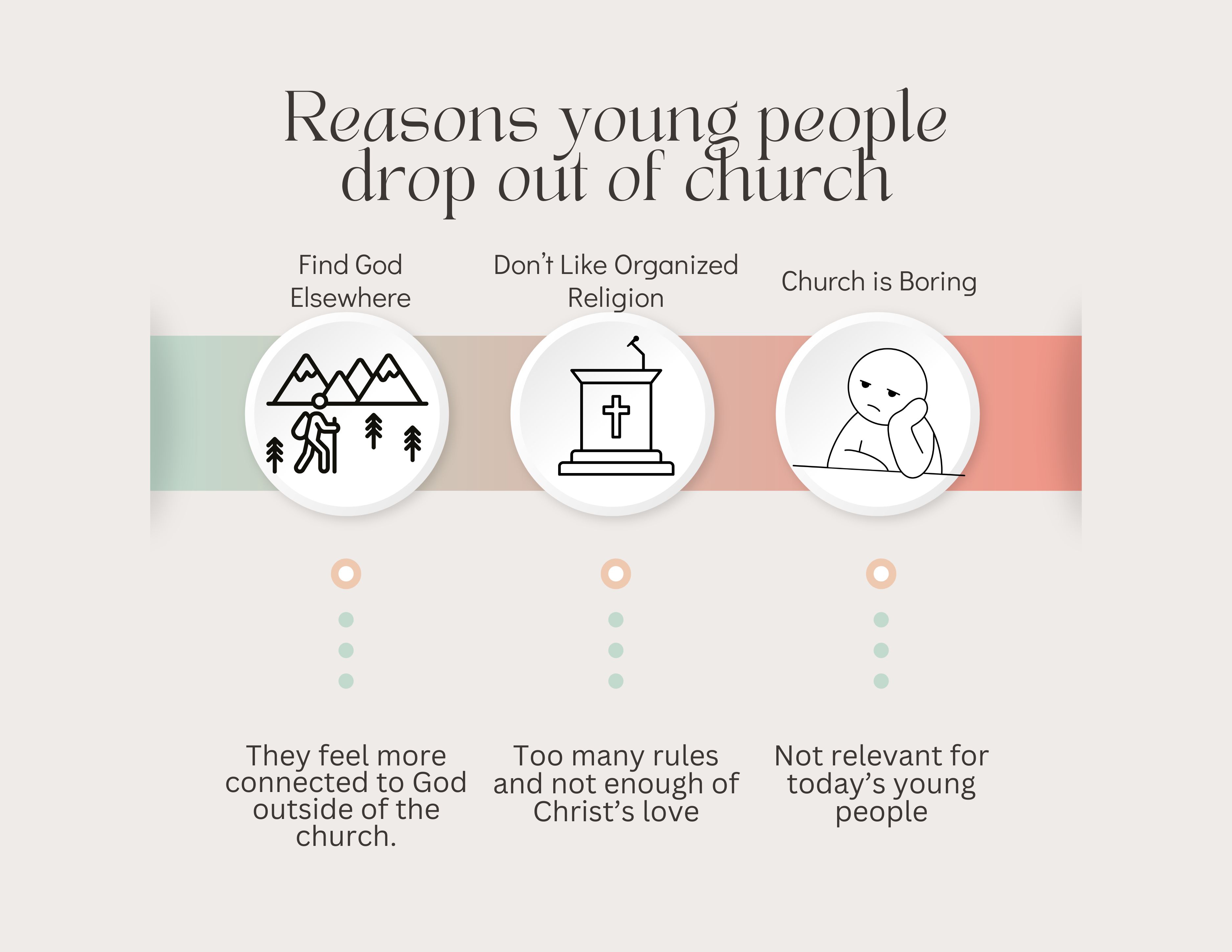
Even among kids who attended church regularly growing up, nearly two-thirds leave for at least a year or more once they move on to college or careers. Two-thirds![4] Some of them come back, but a lot of them don’t. In our changing church landscape, there are just so many more factors that weigh into it all why it is harder than ever to get our children to come back.[5] According to the Pew Research Center, the number of unaffiliated people (meaning people with no religious affiliation) stands at 28% of the population, up 12% since 2007 when these stats started being tracked.[6] The group that identifies as unaffiliated the most? Millennials and Gen Z.[7] Who knows what it will show for the kids in our churches today? But why? Why do our kids drop out of church? The answers are many and varied. They question our teachings (60%), they don’t like organized religion (47%), and they don’t see a need for religion in their lives (41%) are just a few.[8] They also say things like, “I find God elsewhere” (39%), “It’s not relevant to me” (35%), and “Church is boring” (31%).[9] We need to do a better job of listening to our young people and find a way to better connect them to God, because the way church is now just doesn’t appeal to them. And it needs to. We live in a different age than what the world was like when we were growing up. Having a cell phone would have seemed like Star Trek come true. In fact, when I got my first flip phone, I can’t tell you the number of times I flipped it open and said, “Scotty, beam me up!” For the church to be relevant today we need to listen with both our ears AND our eyes to try our best to retain the kids we have and help new ones know the love of Jesus.
Maybe the solution is in the Bible all this time.
One of the toughest obstacles we have is our own unwillingness to change, but Jesus tells us in very clear words we need to do better. In Matthew, he even gives us this stern warning: “Truly I tell you, unless you change and become like little children, you will never enter the kingdom of heaven. 4 Therefore, whoever takes the lowly position of this child is the greatest in the kingdom of heaven. 5 And whoever welcomes one such child in my name welcomes me.” Then he followed that up with another warning, “If anyone causes one of these little ones—those who believe in me—to stumble, it would be better for them to have a large millstone hung around their neck and to be drowned in the depths of the sea. (Matthew 18:3-6)” Are we truly doing enough to show the love of Christ? Here is one way we can do just that. Please rise for the reading of the Word of God.
4 Hear, O Israel: The Lord our God, the Lord is one. 5 Love the Lord your God with all your heart and with all your soul and with all your strength. 6 These commandments that I give you today are to be on your hearts. 7 Impress them on your children. Talk about them when you sit at home and when you walk along the road, when you lie down and when you get up. 8 Tie them as symbols on your hands and bind them on your foreheads. 9 Write them on the doorframes of your houses and on your gates. – Deuteronomy 6:4-9

It really does take a village to raise a child.
Parents are the most important ingredient to be sure, but parents alone can’t do all the work. We are products of more than just our biology. Friends, church, community, our nation, and our world all contribute to making us who we are. When then First Lady Hillary Clinton wrote her best-selling book with the title It Takes A Village, its purpose was to drive home this point and to inspire us to collectively take responsibility for the welfare of the children in our lives and in our world. In the passage we just read, Moses is talking not just to parents, but to the entire nation of Israel. “Impress (God’s commandments) on your children… Tie them as symbols on your hands and bind them on your foreheads. Write them on the doorframes of your houses and on your gates.” That word “impress” is more than just “teach.” The dictionary defines the word as “to apply with pressure so as to imprint.”[10] Teaching is the transfer of information, but impression is making it part of the person’s character. In this passage, Moses is telling the people of Israel that it is our responsibility to find a way to impress upon the children the lessons of Christ and to live them out as a reminder at all times of what it means to be Christian.
Wouldn’t it be great if you ended up in someone’s “thank you” speech?
What an honor to be placed in that rare category of influential people upon a person’s life. If we take seriously Christ’s call not to hinder the little children, we also have to take seriously Moses’ call to impress upon the children the lessons of Christ. Pray about how you can support the children of our church. When we join, we offer our prayers, presence, gifts, service, and witness. How can we do that for our kids? I’m reminded of a scene from The Untouchable when Eliot Ness and Jimmy Malone are talking in the church and Jimmy says to Eliot, “What are you prepared to do?” And Eliot responds with “Everything within the law.” Jimmy answers, “And then what are you prepared to do?” That is our challenge. Eliot was willing to do whatever he could within the boundaries he was comfortable with, but Jimmy knew that to achieve results they would have to think out of the box. They would have to dare to be different and find solutions that hadn’t been tried yet. Do we have that kind of commitment to our children? It takes a village to impact the life of a child, and YOU are part of their village. What an honor and a responsibility to be part of a child’s life.
[1] David Dollahite, Loren Marks, and Savannah Love, “This is the Way: Helping Youth with Positive Religious Development,” Public Square Magazine, February 26,2025, https://publicsquaremag.org/faith/american-families-of-faith/faith-parenting-raising-kids-stay-religious/ – not an endorsement for the entire article but it had good citations for research and overall the article was very good.
[2] Daniel Peterson, “Sociologist explains how religion benefits even atheists,” Desert News, September 26, 2013, https://www.deseret.com/2013/9/26/20526274/sociologist-explains-how-religion-benefits-even-atheists/
[3] Ibid.
[4] https://research.lifeway.com/2019/01/15/most-teenagers-drop-out-of-church-as-young-adults/
[5] Daniel A. Cox, “Generation Z and the Future of Faith in America,” Survey Center on American Life, March 24, 2022, https://www.americansurveycenter.org/research/generation-z-future-of-faith/#_edn2 – This article was such an interesting and well thought out piece. If you’re curious why it’s harder for kids to rejoin the church after a time away, it’s a good read and explains how this trend is a long time coming generationally.
[6] “Religious ‘Nones’ in America: Who They Are and What They Believe,” Pew Research Center, January 24, 2024, https://www.pewresearch.org/religion/2024/01/24/religious-nones-in-america-who-they-are-and-what-they-believe/ – as a side note, 2024 was the first year the number didn’t go up and in fact went down slightly. Too little is known about why that change occurred to make any conclusions.
[7] “PRRI Generation Z Fact Sheet,” Public Religion Research Institute, March 29, 2024, https://prri.org/spotlight/prri-generation-z-fact-sheet/
[8] “Why are ‘nones’ nonreligious?” Pew Research Center, January 24, 2024, https://www.pewresearch.org/religion/2024/01/24/why-are-nones-nonreligious/
[9] “What Millennials Want When They Visit Church,” Barna Group, March 4, 2015, https://www.barna.com/research/what-millennials-want-when-they-visit-church/
Why Pray?
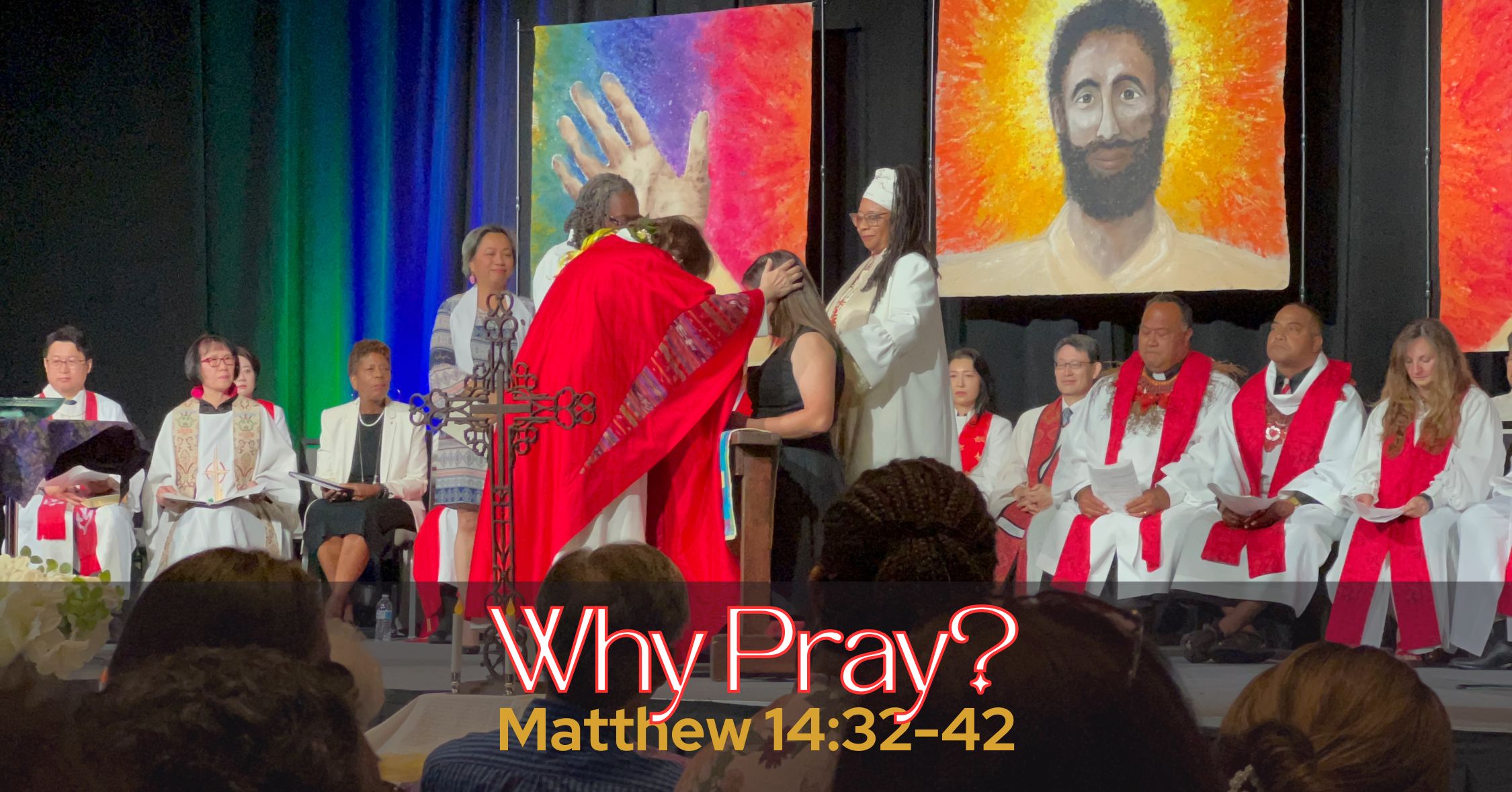
Why pray?
I mean it never seems to work right? The other day, I prayed for a million dollars, but I didn’t get it. When I was young, I prayed about being a doctor. I said “doctor” not “pastor.” However, my prayer about the Dodgers winning the World Series seems to have worked out pretty well. Batting .333 in the majors would be considered all-star caliber hitting so maybe it works after all. Whether or not our prayers are answered is often in the eye of the beholder. The devout follower will undoubtedly tell you God hears us. The skeptic will tell you they aren’t sure. And the unbeliever will say belief in the power of prayer is a fairy tale people tell themselves to feel better about living in a random and meaningless world. But what does it mean to say that prayer “works?” If our only measure of effectiveness is “did I get what I want?” then probably no, it doesn’t work. God isn’t a genie in a bottle who is at our beck and call. Prayer is designed differently than that.
Prayer has tons of awesome benefits beyond just creating a wish list for God.
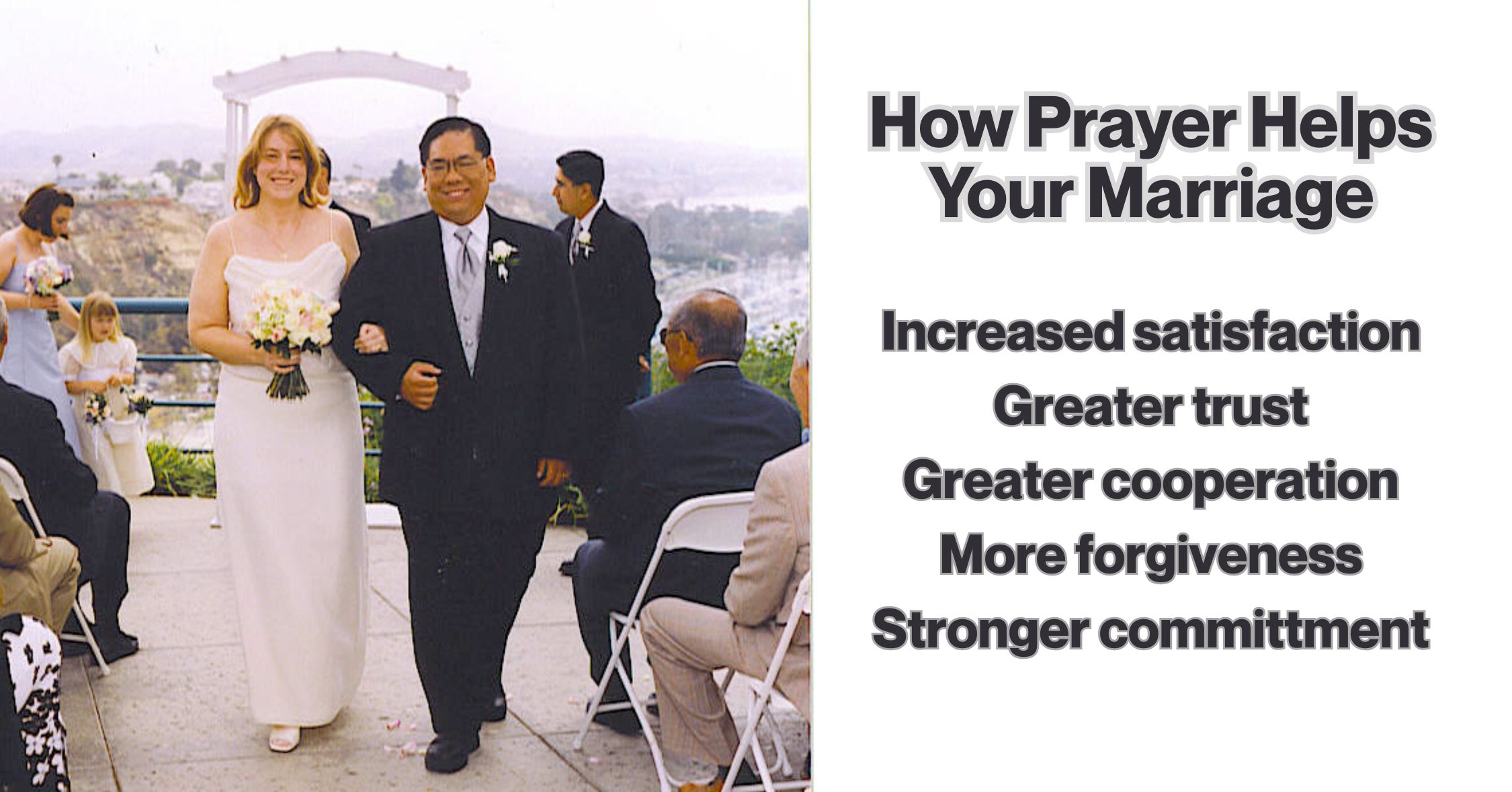
It’s true the scientific results of intercessory prayer have been hit or miss (that’s the kind of prayer where you pray on behalf of someone else), but overall prayer has been scientifically proven to have tons of positive, tangible results. They did a study between prayer and migraines and found that those who pray had fewer headaches and were more tolerant of pain than those who simply meditated.[1] Specifically prayer was more effective than secular meditation. My favorite study done by Florida State University found prayer helps in your marriage. When at least one spouse offers petitionary prayer for the other, those couples had “increased relationship satisfaction, greater trust, cooperation, forgiveness and marital commitment. Many of these benefits apply both to the prayer as well as the one being prayed for.”[2] Other studies have shown prayer can reduce stress, anxiety, and negative emotions and give you hope.[3]
Jesus never tells us to do something that doesn’t help us.
Everything Jesus commands is meant to make life better both personally and as a society. Prayer, gratitude, helping one another all have benefits on a micro and macro level. And we’re going to the garden in Gethsemane to find out more. Jesus is going off to pray to God the Father while a couple of his disciples go with him. This follows immediately after the Last Supper. But what I hope you focus on in this telling of the story is Jesus’ purpose in praying. When we discover that, I think we can best answer the question “Why pray?”
32They went to a place called Gethsemane, and Jesus said to his disciples, “Sit here while I pray.” 33He took Peter, James and John along with him, and he began to be deeply distressed and troubled. 34“My soul is overwhelmed with sorrow to the point of death,” he said to them. “Stay here and keep watch.”
35Going a little farther, he fell to the ground and prayed that if possible the hour might pass from him. 36“Abba, Father,” he said, “everything is possible for you. Take this cup from me. Yet not what I will, but what you will.”
37Then he returned to his disciples and found them sleeping. “Simon,” he said to Peter, “are you asleep? Could you not keep watch for one hour? 38Watch and pray so that you will not fall into temptation. The spirit is willing, but the body is weak.”
39Once more he went away and prayed the same thing. 40When he came back, he again found them sleeping, because their eyes were heavy. They did not know what to say to him.
41Returning the third time, he said to them, “Are you still sleeping and resting? Enough! The hour has come. Look, the Son of Man is betrayed into the hands of sinners. 42Rise! Let us go! Here comes my betrayer!” – Mark 14:32-42
Praying aligns us with God’s will.
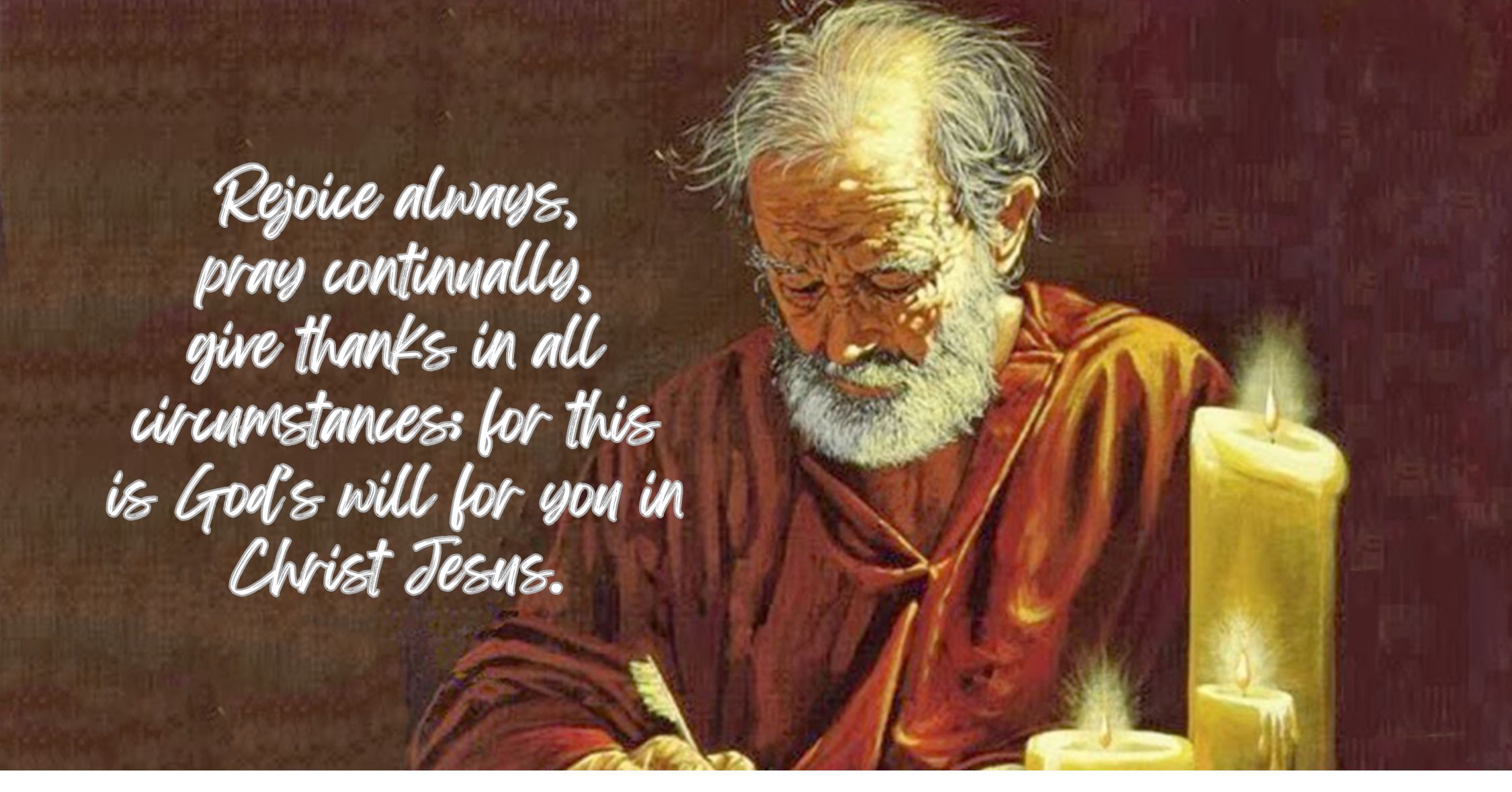
Even Jesus prays to discover what God has in store for him; that’s the power of prayer. It’s so strong that Christ, in the most difficult moment of his life turns to the Lord in prayer to seek out his will. That’s not the only reason we pray, because Jesus still asks him to take this burden from him. God wants to know what is on your heart and he wants to share that burden with you. Jesus prays, “Take this cup from me.” But the important part for us today is how he ends, “Yet not what I will, but what you will.” It’s an attitude of humility and submission. It says that we don’t know everything and despite our close relationship with God, we can’t always escape the harsh realities of life. We turn to God in those moments to give us strength. When Jesus tells Peter, “The spirit is willing, but the body is weak,” he’s talking as much to them as to himself. “Pray so that you will not fall into temptation.” Jesus knows this from personal experience, how easy it is to do what YOU want, to avoid the hard work, to turn inward instead of toward God. He knows the temptation of the here and now is far easier to turn toward than the distant promises of God, but God’s hope for your life and the life you are meant to lead are so much more important than the quick fix or the easy way out. Prayer is about the constant communication between us and God to align ourselves with his will. It’s why Paul writes in his letter to the church at Thessalonica, “16 Rejoice always, 17 pray continually, 18 give thanks in all circumstances; for this is God’s will for you in Christ Jesus.” By keeping in constant communication, we can stick to the plan God wants to share with us.
Prayer is hard for some of us.
Even if we carve our time for it and are willing to do it, there are other hurdles in our prayer life. For some people, praying to God is like visiting the Pope. What if you say the wrong thing? What if the only prayer you know is “God is great, God is good, thank you God for this food?” And praying out loud? Forget it. I’ve told you this before, but praying out loud is one of my biggest fears about being a pastor. If I forget something in a sermon, only me and God know (and our worship team since I give them my manuscript in advance). But the Lord’s Prayer? Mess that one up and everyone knows. We put the words up on the screen. What’s worse? I think about it nearly every time I do it. So of course, when you lose your concentration, you’re that much more likely to mess up…which has happened before. Thankfully, since I warn people in advance that this is a fear of mine, people are usually gracious. Other fears are not knowing what to say or being afraid that your prayer isn’t good enough. But I’ll let you in on a little secret. God doesn’t care about any of that. He just wants you to pray. Eventually, you’ll figure it out for yourself.
Imagine if you have a child and your child just stopped talking to you.
How sad would you be? And they stopped talking to you for years and years. Maybe they pick up the phone once in a while or worse – send a text asking you for money. You send it, but your heart is breaking because it’s obvious you are an afterthought. You can’t force them to talk to you because you hope they WANT to talk to you, not because they feel some sort of obligation. So you wait. I imagine in the story of the prodigal son that this is why God throws a party. His child has chosen on his own to reconnect to his father. Praying doesn’t require anything special and if you do it long enough and with an open heart, you’ll get the hang of it. Eventually, you’ll find yourself talking to God in odd moments. In the car. Right before bed. Before you have to give a presentation. Or right before doing the Lord’s Prayer. “God don’t let me mess this up.” That’s what Paul meant when he said “pray continuously.” You don’t have to be on your knees every moment of the day. Instead, you find yourself simply making God a part of your life. This is the kind of prayer life God wants for you. Not to make God feel good, but to make your life better.

If you think of prayer like a list for Santa, you’ll be disappointed.
But if you look at prayer as a way to help you open up your life to where God is leading you, you’ll find a lifetime of amazement. Prayer opens us up for the work of the Holy Spirit. Prayer helps soothe our fears, and to develop eyes and ears for God. As Jesus taught us, the temptations of the world are numerous, and it is all too easy to be lead away from the life God has in store for you. But if we stay in contact with God through prayer, he can keep our lives on track. Prayer is a discipline and like anything else only gets better with practice. Just pray and let God know you’re there. There are tons of benefits to prayer. Good health, longer life, less stress. But the best reason to pray is to find out the peace and joy God has waiting for you.
[1] https://health.usnews.com/health-news/articles/2008/12/22/health-prayer-should-religion-and-faith-have-roles-in-medicine?PageNr=1
[2] https://www.washingtonpost.com/news/acts-of-faith/wp/2017/08/07/frustrated-with-your-spouse-these-scientists-suggest-a-specific-kind-of-prayer/?utm_term=.ac21e2cd0468
[3] Chris Tompkins, “The Power of Prayer,” Psychology Today, January 24, 2025, https://www.psychologytoday.com/us/blog/lgbtq-affirmative-psychology/202501/the-power-of-prayer
Confident Humility

Confident or cocky?
They are not the same thing. I was reading an article by Michael Schein for Inc.com about the benefits of shameless self-promotion, and it made me mad.[1] While I agreed with half of his article, the other half was a recipe for all that is wrong in the world today. Never show doubt. Make enemies. Make people mad. Care at least as much about looks as about what you have to offer. Provoke people. Pull pranks. Generate hype however you can regardless of its effect. This is the perfect recipe for polarization. Does it work? Sure. But you need to ask yourself if success is worth sacrificing your morality, your honor, and your duty to caring for others. There are times when self-promotion is important and even essential. When you are trying to get a job or win over the girl of your dreams, you need to find a way to stand out, to differentiate yourself from the crowd. Putting your best foot forward, making sure they know what you have to offer is just the smart thing to do. But when it comes at the expense of others? That should be where we draw the line. It’s hard not to think about what Matthew wrote, “What good will it be for someone to gain the whole world, yet forfeit their soul? (Matthew 16:26).

People often mistake being cocky for being confident.
When in fact cockiness is the opposite of confidence. Cocky people feel the need to put themselves on display all the time; to make sure people notice them, to get attention for themselves. They cover up their own deep insecurities with grandiose gestures and over-the-top attention-grabbing antics. They tell you all the time about how great they are and how they are so much better than everyone else. Shameless self-promotion. But if you are truly at the top of your game, you don’t need to do that. You find ways to lift up other people. You acknowledge you didn’t do it alone. Because a confident person is secure in themselves. They aren’t worried about sharing the limelight because they shine bright enough on their own. They don’t need the recognition of others to feel validated because they already know they are enough.
God wants you to be confident.
God wants you to know that you are enough; that he loves you for who you are and that you should love yourself as well. When Jesus told us that the second greatest commandment is to love your neighbor as yourself, there’s an implied assumption that we do, in fact, love ourselves. Not in a vain, conceited way but truly loving the person we are; being satisfied and secure in ourselves. That doesn’t mean we think we are perfect. Again, that would be vanity. Just that despite the work we need to do for ourselves, we know we are loved and valued. That’s the wonder of God’s creation! When you’re in sync with God and God’s will for your life, you have that peace about you that Paul calls the “peace that surpasses all understanding (Philippians 4:7).” One of my favorite ways to describe it. “The peace that surpasses all understanding.” Who wouldn’t want that in their life? When you truly love yourself, you can’t help but feel confident because you know you’re good enough.

Cocky people are seeking validation elsewhere.
Instead of knowing they are enough, they look to others and compare themselves constantly to validate who they are. That seems to be one of the biggest differences between being cocky and being confident. Confident people look inward and cocky people look outward. In fact, the Bible gives us a great example of this in Matthew’s version of the Gospel. If you have a Bible or a Bible app on your phone would you please find Matthew 23:1-12. When this story happens, Jesus has been challenged relentlessly from the chief priests, the Pharisees, AND the Sadducees. If he were a basketball player, I would say he’s being triple-teamed in the low post! But like he normally does, Jesus is able to move and weave his way through and come out untouched. When he does he addresses the people who have borne witness to all of this and this is where we pick up in the story. If you would please rise as we share from the Gospel of Matthew 23:1-12. Hear now the Word of the Lord.
Then Jesus said to the crowds and to his disciples: 2 “The teachers of the law and the Pharisees sit in Moses’ seat. 3 So you must be careful to do everything they tell you. But do not do what they do, for they do not practice what they preach. 4 They tie up heavy, cumbersome loads and put them on other people’s shoulders, but they themselves are not willing to lift a finger to move them.
5 “Everything they do is done for people to see: They make their phylacteries[a] wide and the tassels on their garments long; 6 they love the place of honor at banquets and the most important seats in the synagogues; 7 they love to be greeted with respect in the marketplaces and to be called ‘Rabbi’ by others.
8 “But you are not to be called ‘Rabbi,’ for you have one Teacher, and you are all brothers. 9 And do not call anyone on earth ‘father,’ for you have one Father, and he is in heaven. 10 Nor are you to be called instructors, for you have one Instructor, the Messiah. 11 The greatest among you will be your servant. 12 For those who exalt themselves will be humbled, and those who humble themselves will be exalted. – Matthew 23:1-12
Jesus poses a threat to all of these religious leaders.
The chief priests, the Pharisees, and the Sadducees are insecure because they know from Scripture that one day a savior will come and they would rightfully lose their power. They should want this! If it happens it means the savior is amongst them! What an incredible honor to be witness to something so monumental! They should not just be willing but happy to give away their status to be in the presence of God. But they have defined their existence by the power they wield and they are so insecure without it. So instead of embracing Jesus, they do a full court press to discredit him. Jesus points out to the crowd that everything they do is for validation. They desire recognition. They want people to give them respect. They need to be called ‘Rabbi’ and take the seat of honor. Because they only feel good about themselves by lording their power over others. So, to lose it would mean losing themselves. It would be sad if they weren’t trying to kill Jesus. And that’s why Jesus offers that line of wisdom at the end, “For those who exalt themselves will be humbled, and those who humble themselves will be exalted.”
That’s the thing about cocky people.
Or anyone who elevates themselves above others. Eventually, they get found out. Cocky people have a false sense of their own abilities.[2] They like to think they are better than they are and because of that, they tend to believe there is no need to improve. I mean, why improve upon perfection? And eventually they become humbled. You’re probably saying to yourself you know plenty of cocky people who never seem to be humbled and you’re right. But they are often humbled in the eyes of others. People turn their backs on them. They finally see through the hype and bravado. And so, without even realizing it they lose influence on those around them. Confident people, on the other hand, are often humble. Which probably doesn’t make sense on the surface, but the confidence they possess gives them the security to be vulnerable, to lift others up. They don’t need to take credit for achievements. They don’t need the accolades to feel good about themselves. Instead, they share the praise and credit with others because they are know they are enough.
Ultimately, it’s the difference between being broken and being made whole.
You know the saying, “Hurt people hurt people?” I’ve been hearing that a lot lately and I think it is God’s not so subtle way of saying we need to explore this together. Cocky people are hurt people. Vain and arrogant people are hurt people. They are seeking validation from others because they don’t feel it within. And the way they feel better about themselves is by comparing themselves to others. Someone who is proud or cocky says, “I did this.” Someone who is confident and humble says, “I’m glad to be a part of this.” God wants us to be confident, not cocky. We need to work on ourselves to make sure we don’t slip from one to the other. The key is to “adopt a growth mindset.”[3] To be open to the possibility you are not perfect. To be willing to constantly improve your knowledge and be open to new ideas. If you acknowledge you have a way to go to be better, you find yourself more humble and more willing to listen to others and that will help give you the right mindset that God wants for us all. We can make the world a better place, but it starts with each one of us. Let us always stay true to the people God wants us to be.
[1] Michael Shein, “A Little Shameless Self-Promotion Can Be a Good Thing – as Long as You Follow These 10 Rules,” Inc.com, Jan 24, 2018, https://www.inc.com/michael-schein/the-10-commandments-of-shameless-self-promotio.html
[2] Enya Eettickal, “Cocky or Confident?” The Case Western Reserve Observer, February 17, 2023, https://observer.case.edu/cocky-or-confident/
[3] “#1 Confidence Imposter: Cocky,” American Confidence Institute, Accessed on May 15, 2026, https://www.americanconfidenceinstitute.com/blog/confidence-imposter-cocky
Multiple Choice Christianity

When was the last time you tried to argue your way out of trouble?
Growing up I was a big fan of the Brady Bunch, probably because I had an equally big crush on Marcia. There were lots of memorable episodes. Peter’s voice changing. Bobby running away. The mystery of Kitty Karry-All (whatever happened to Tiger anyway?). So many memories. One lesson that stuck with me from the show was in an episode called “Greg Gets Grounded.” Oldest son Greg nearly crashes the family station wagon because he’s reading the jacket cover of his new album while driving and ends up getting grounded from using the car for a week. But Greg, who has a big date that weekend finds a loophole and borrows a friend’s car instead. As usual, Mr. and Mrs. Brady find out, but Greg argues with his dad and says, “I didn’t disobey you. Your exact words were that I couldn’t drive OUR car, but you didn’t say anything about driving someone else’s car.” Mr. Brady says, “Greg, you knew what we meant when we grounded you.” But Greg argues, “Yeah, but Dad those weren’t your EXACT words.” Mr. Brady, in a very sly move, decides to let Greg off the hook by instead making his son live by “his exact words.” Needless to say, after doing chores at 11:00 at night, Greg finds out VERY quickly that living by the letter of the law isn’t all it’s cracked up to be and admits he was wrong.
Living by “exact words” isn’t all it’s cracked up to be.
And like Greg, we use it as an excuse for not doing the right thing. A very sad and tragic story happened about a nurse in Bakersfield all the way back in 2013 but one that drives this point home. Colleen, a nurse in Bakersfield, used the excuse to sit by while an elderly woman died.[1] Literally sat by and watched while a woman was dying on the dining room floor of a senior living complex. Apparently, an 87-year old woman named Lorraine Bayless collapsed to the ground and Colleen called 911 to get help. The operator, realizing the seriousness of the situation, told the nurse that someone needed to administer CPR to Ms. Bayless and the nurse refused citing company policy as her excuse. The operator pleaded with Colleen to do it to save her life and if not her, then to hand the phone to someone who might. Colleen refused. Literally refused. But perhaps the most disturbing part of the call was when the 911 operator asked her, “Is there anyone that’s willing to help this lady and not let her die?” And in what seemed to be a very cold and callous reaction, the nurse said, “Um, not at this time.”[2] Her adherence to the “rules” was so great that she allowed a fellow human being to die right in front of her without so much as lifting a finger beyond calling 911. What’s worse she was a nurse and still refused to do anything because of the “rules.” She wouldn’t even pass the phone to someone else or look for someone who might be willing to do what she wouldn’t and Lorraine died.
Was she following the spirit of those “exact words?”
Too often our “exact words” become weapons or shields against others, but this isn’t their intent. The intent of the law and the intent of rules are to lay down a guideline to better living. But they are NOT meant to be used as instruments or tools to harm others. Yet throughout our history, we have done exactly that – we have used the law as a means to an end instead of adhering to the spirit in which it was made. We hear about one such case in our reading of the Bible today. This will probably be a very familiar story if you’ve been in church for a while. It’s often referred to as the story of the adulterous woman, but that isn’t really fair to her. It should be called “The Pharisees are at it again,” but I guess that happens so much they need to differentiate it somehow. Once again, they try to trip Jesus up – trying to get him to contradict the Word of God so they have a reason to get rid of him. And this isn’t the only time they do this. At various points in the Gospels they try to trap Jesus with their clever questions and arguments. And this time is no different. In this passage they question Jesus about this woman who commits adultery and this is where we pick up in the Gospel narrative.
2 At dawn he appeared again in the temple courts, where all the people gathered around him, and he sat down to teach them. 3 The teachers of the law and the Pharisees brought in a woman caught in adultery. They made her stand before the group 4 and said to Jesus, “Teacher, this woman was caught in the act of adultery. 5 In the Law Moses commanded us to stone such women. Now what do you say?” 6 They were using this question as a trap, in order to have a basis for accusing him.
But Jesus bent down and started to write on the ground with his finger. 7 When they kept on questioning him, he straightened up and said to them, “Let any one of you who is without sin be the first to throw a stone at her.” 8 Again he stooped down and wrote on the ground.
9 At this, those who heard began to go away one at a time, the older ones first, until only Jesus was left, with the woman still standing there. 10 Jesus straightened up and asked her, “Woman, where are they? Has no one condemned you?”
11 “No one, sir,” she said.
“Then neither do I condemn you,” Jesus declared. “Go now and leave your life of sin.” – John 8:2-11
Let any one of you who is without sin be the first to throw a stone at her.
Jesus didn’t sidestep the law. He didn’t contradict the law. Instead he improved upon the law and said, “Let any one of you who is without sin be the first to throw a stone at her.” And they were stuck. None of them qualified and they knew it. They were hoping Jesus would say something they could hang him on, something that showed he really was either a heretic or a lunatic, but instead Jesus turns the tables on them. He doesn’t deny that this woman broke their laws and customs, but instead says in his own way that only someone who is sinless has the right to stand in judgment and if a sinless person was found who thought she deserved this punishment then it would be justified. Ironically, Jesus is the only sinless person. So one by one, they go away and Jesus instead of seeking justice offers mercy. “Neither do I condemn you,” he tells the woman, “Go now and leave your life of sin.”
Jesus had every right to throw the book at her.
Or a stone. She violated the law and the law demanded punishment. But as the only one worthy of issuing that punishment, Jesus chose instead the path of love and grace and mercy. As it says in Hosea 6:6 and again in Matthew, “For I desire mercy, not sacrifice, and acknowledgement of God rather than burnt offerings.” This is the kind of God we worship. One who is more interested in grace than condemnation, hope instead of harm. He makes it really easy to understand, too. Love God, love your neighbor. Very simple rules. And we twist those rules and use them as a battering ram against people who don’t believe exactly what we believe.

In the past, the Bible has been misused to justify offenses of the worst kind.
It’s been used as a tool to justify racism, sexism, spousal abuse, homophobia, destruction of the environment, destruction of basic freedoms, and other horrific tragedies, and yet it is clear by simply reading the Bible that God wishes for none of these things. They are inconsistent with everything we know about God. So how do they justify it? They engage in Multiple Choice Christianity. They pick and choose what parts of the Bible they like to fit their beliefs. You take a passage from column A and a passage from column B and you come up with some derivation of Scripture that suits your needs. But as H.G. Wells once said, “Satan delights equally in statistics and quoting Scripture.”[3] Because like statistics, you can shape and bend Scripture to say almost anything when you choose to ignore the facts. God doesn’t make it hard to understand and yet too often Christians have done a good job of twisting the message and life of Christ into a pretzel. But the message is simple: love God, love others. Love God, love others. This is the greatest commandment and as Jesus said, all the rest rely on these two things.
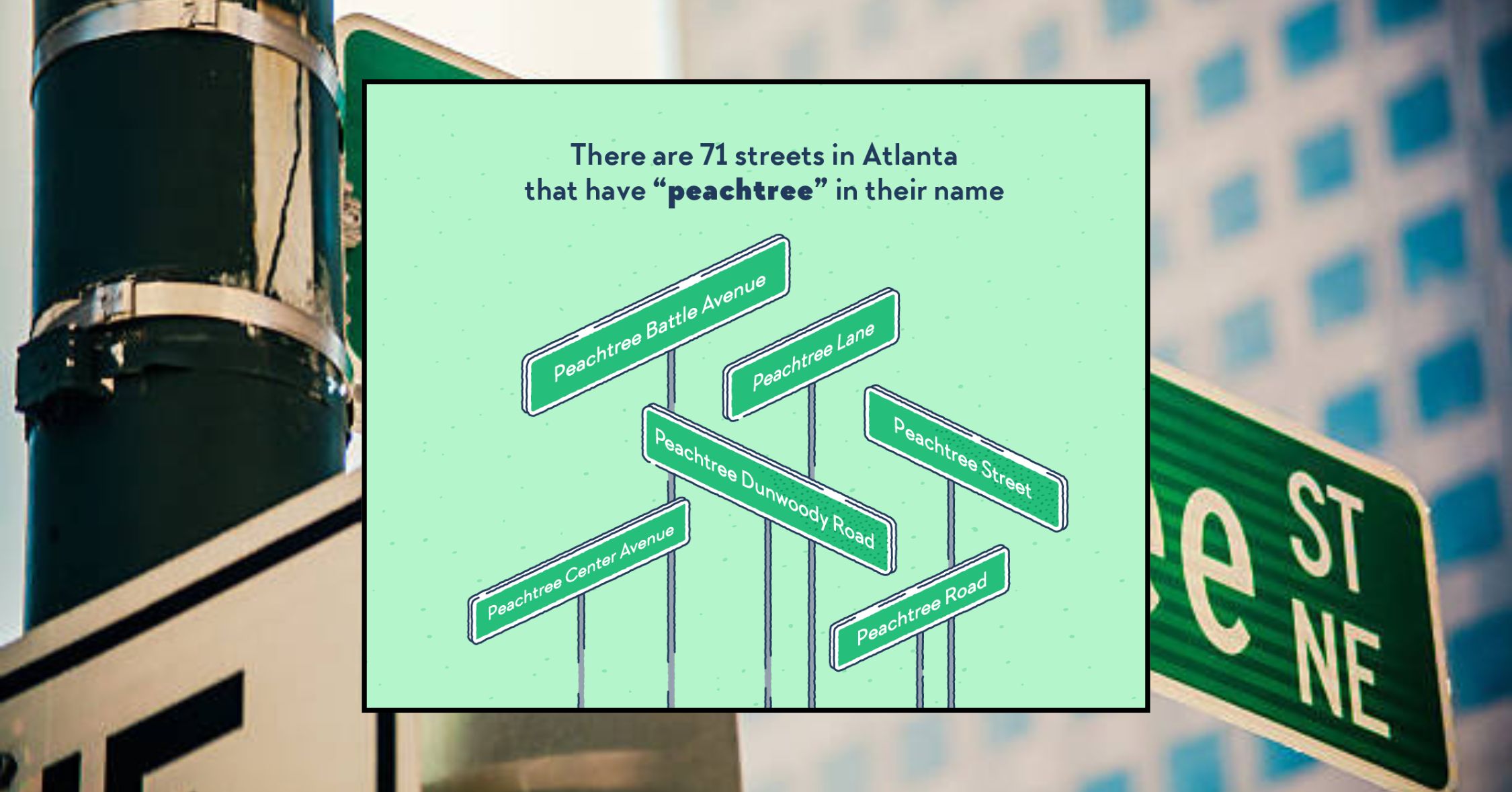
When I first moved to Georgia, I had a hard time finding my way around.
Everything was named “Peachtree.” You’d think they could come up with some original names for streets. There was Peachtree Ave, Peachtree Street, Peachtree Circle, Peachtree Battle (I don’t know how you end up naming a street Peachtree “Battle”), Peachtree Road, Peachtree Blvd, Peachtree Industrial Pkwy, and that’s just to name a few. Needless to say I needed a map. I didn’t have a GPS and so I was often driving around the city with one eye on the road and one eye on my map. Well, I guess this particular day my one eye missed the streetlight that was red. There were these two stoplights in a row and the first one was green and the second one, only a little farther away was red. And I just went right through that second light. Completely oblivious, I kept driving and out of my rear-view mirror, I see this police car with its lights on. I pull over like a good driver, not wanting to cause any trouble, and the policeman pulls over with me. I’m totally shocked. That is until the officer comes up and says to me, “Did you notice that you ran through a red light?” I told him, “No, sir. I didn’t see it.” I look back and sure enough there was a second light. I felt doomed. Not even a week in my new city and already in trouble with the law. But then the officer did something completely unexpected. He said, “You’re new around here, aren’t you?” I nodded. “Well, next time be extra careful. That light can be pretty hard to see. Welcome to Georgia. Have a nice day.” Grace is much more powerful than the law. It has an effect that goes far beyond the moment. Remember, it isn’t about adhering to “exact words.” It’s all about doing the right thing. So do the right thing. In the name of the Father, and of the Son, and of the Holy Spirit. Amen.
[1] http://abcnews.go.com/blogs/headlines/2013/03/elderly-woman-dies-after-nurse-refuses-to-give-her-cpr/
[2] http://www.foxnews.com/us/2013/03/04/partial-transcript-11-call-from-calif-senior-living-facility-where-woman-died/?utm_source=feedburner&utm_medium=feed&utm_campaign=Feed%3A+foxnews%2Fnational+%28Internal+-+US+Latest+-+Text%29

