
It Takes a Village
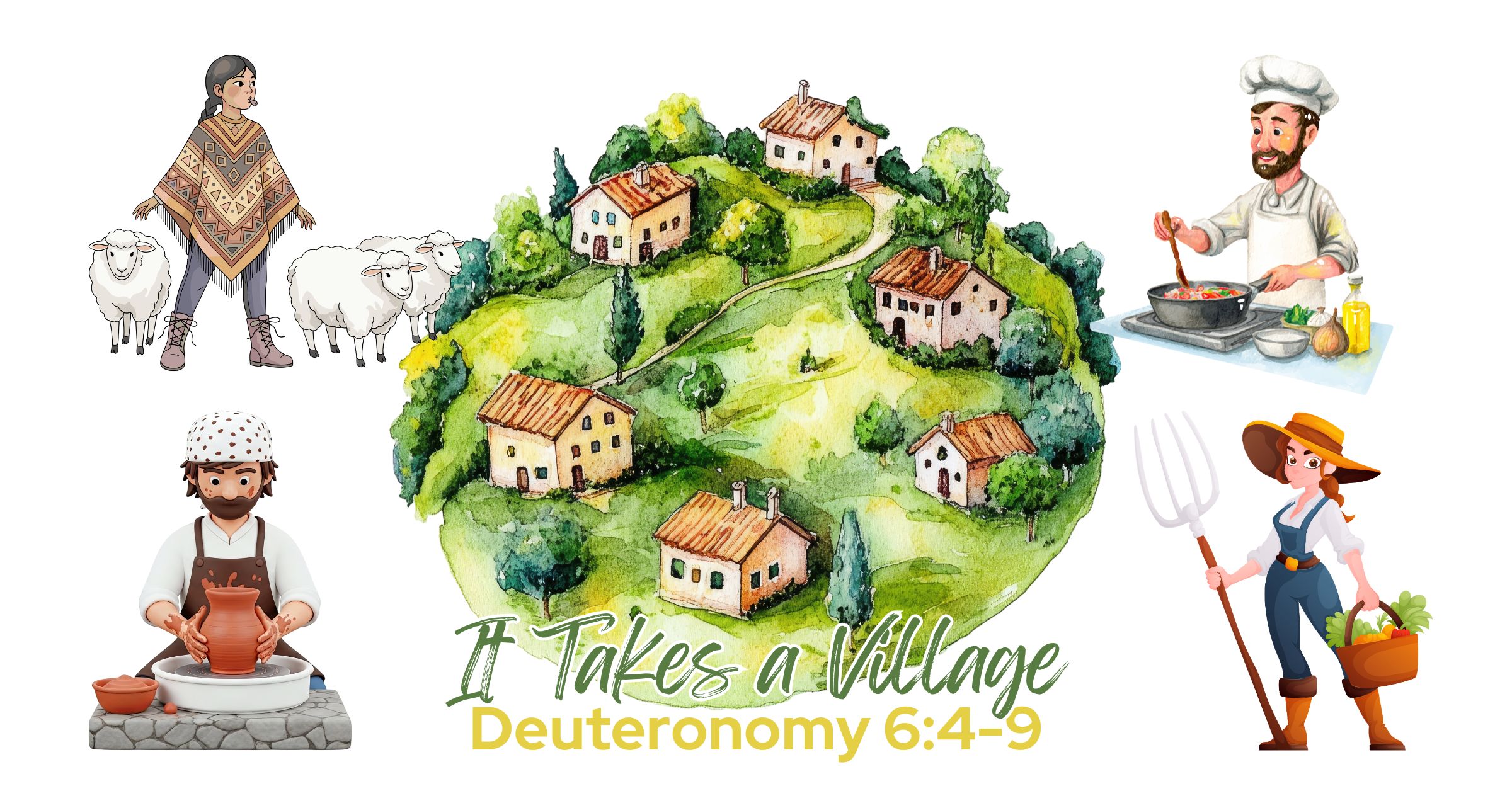
Who would make your list?
One day I plan to win the Academy Award for Best Original Screenplay for my film “A Kidney Between Us” so I need to be ready to give one of those fancy acceptance speeches. Did you know winners only have 45 seconds unless you win one of the big four (Actor, Actress, Director, Film) so my speech will have to be quick and precise. Of course, you have to thank the Academy since they voted for you in the first place. And the fans for getting your film recognized. Cassie…Emma…But who else? Forty-five seconds is a terribly short time to squeeze in every single person who made a difference in your life, so who would be “Oscar worthy?” Because let’s face it. None of us achieves anything in life on our own. As much as the idea of the “self-made man” is part of American society, it’s the ultimate in hubris to think we really didn’t have help. I know people who are fantastic writers who have never had a book published or a script produced; wonderful singers who have never been signed to a record label; artists who haven’t had their work published or put in a gallery and it’s not because they lack talent. Achieving success is the culmination of a great many people and events and choices in our lives and all of them are important.
Successfully raising a child is a lot like being a success at anything.
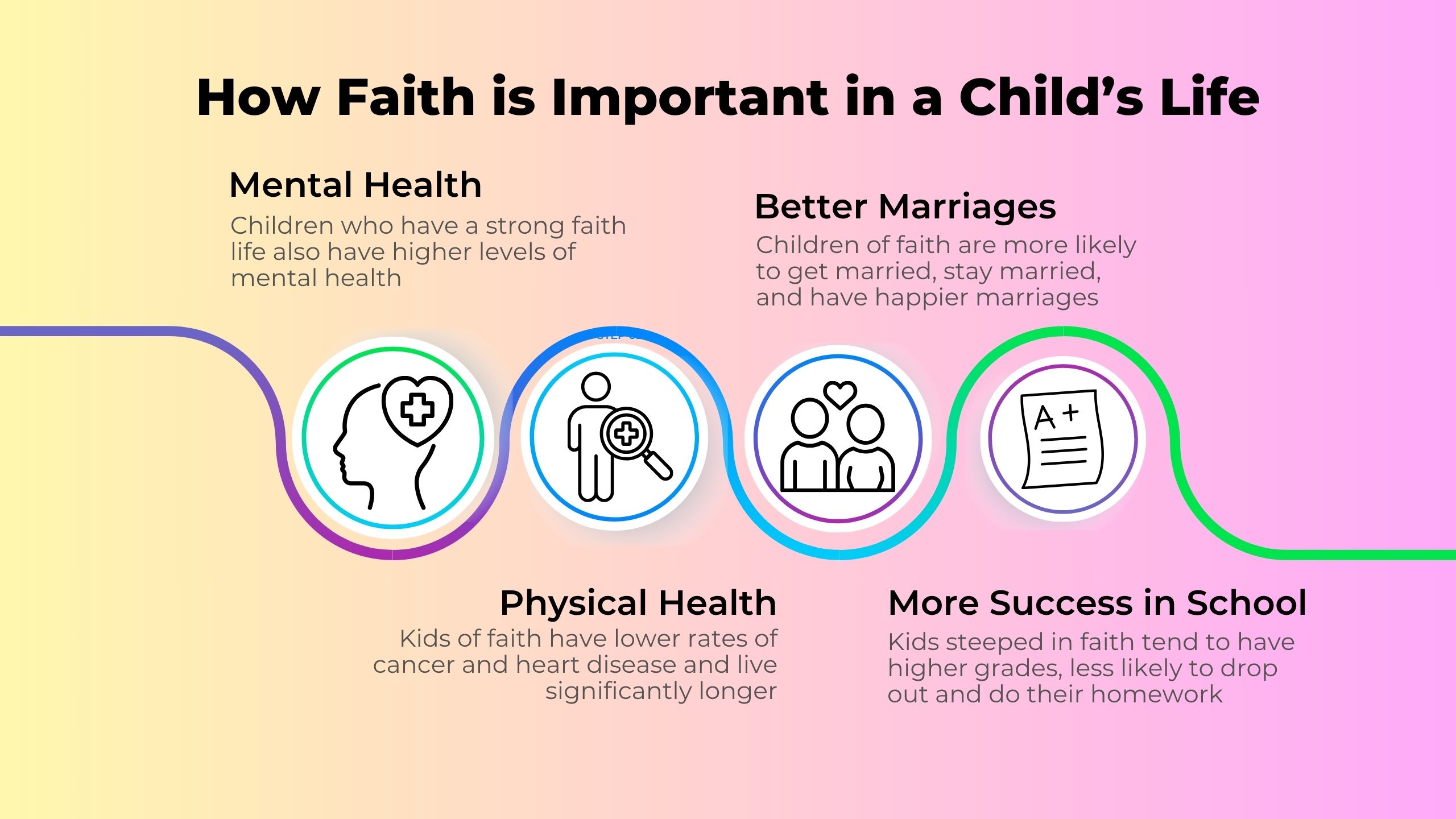
You can’t do it alone. And I don’t mean being a single parent. There are great single parents who make it work and having both parents around doesn’t guarantee success either. I knew a couple with two kids. Same parents. Same household. Same schools. One of them grew up to be a model student. Helped with the family, got good grades, never got in trouble. The other one was always getting in fights; got sent to the principal’s office time and time again; and started doing drugs and breaking the law. If it was just about good parenting, it wouldn’t make any sense! But it’s not. A child doesn’t grow up in a bubble. They have different friends. They have different teachers. They get involved in different things. All of it adds up to the person they become. If we’re lucky enough to have kids in church, we need to do all we can to be part of that formula for success. Studies have shown the benefits of faith in a child’s life. Overall, they have “higher levels of mental health, lower rates of cancer and heart disease, and significantly greater longevity and quality of life.”[1] They are also more likely to marry, stay married, and have better marriages.[2] As students, they tend to get better grades, less likely to drop out of school, and more likely to do their homework.[3] Who wouldn’t want that for our kids?
But most drift away from their faith.
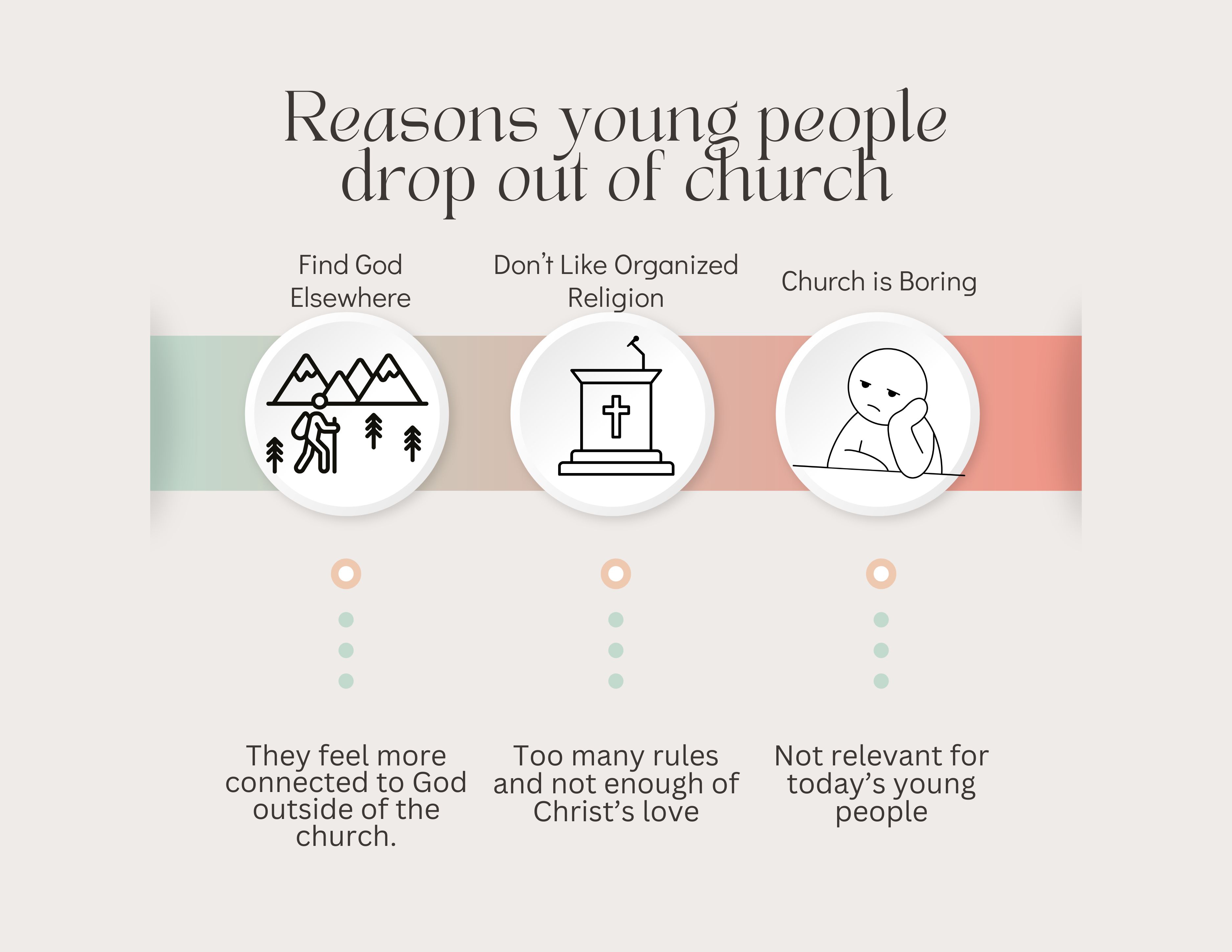
Even among kids who attended church regularly growing up, nearly two-thirds leave for at least a year or more once they move on to college or careers. Two-thirds![4] Some of them come back, but a lot of them don’t. In our changing church landscape, there are just so many more factors that weigh into it all why it is harder than ever to get our children to come back.[5] According to the Pew Research Center, the number of unaffiliated people (meaning people with no religious affiliation) stands at 28% of the population, up 12% since 2007 when these stats started being tracked.[6] The group that identifies as unaffiliated the most? Millennials and Gen Z.[7] Who knows what it will show for the kids in our churches today? But why? Why do our kids drop out of church? The answers are many and varied. They question our teachings (60%), they don’t like organized religion (47%), and they don’t see a need for religion in their lives (41%) are just a few.[8] They also say things like, “I find God elsewhere” (39%), “It’s not relevant to me” (35%), and “Church is boring” (31%).[9] We need to do a better job of listening to our young people and find a way to better connect them to God, because the way church is now just doesn’t appeal to them. And it needs to. We live in a different age than what the world was like when we were growing up. Having a cell phone would have seemed like Star Trek come true. In fact, when I got my first flip phone, I can’t tell you the number of times I flipped it open and said, “Scotty, beam me up!” For the church to be relevant today we need to listen with both our ears AND our eyes to try our best to retain the kids we have and help new ones know the love of Jesus.
Maybe the solution is in the Bible all this time.
One of the toughest obstacles we have is our own unwillingness to change, but Jesus tells us in very clear words we need to do better. In Matthew, he even gives us this stern warning: “Truly I tell you, unless you change and become like little children, you will never enter the kingdom of heaven. 4 Therefore, whoever takes the lowly position of this child is the greatest in the kingdom of heaven. 5 And whoever welcomes one such child in my name welcomes me.” Then he followed that up with another warning, “If anyone causes one of these little ones—those who believe in me—to stumble, it would be better for them to have a large millstone hung around their neck and to be drowned in the depths of the sea. (Matthew 18:3-6)” Are we truly doing enough to show the love of Christ? Here is one way we can do just that. Please rise for the reading of the Word of God.
4 Hear, O Israel: The Lord our God, the Lord is one. 5 Love the Lord your God with all your heart and with all your soul and with all your strength. 6 These commandments that I give you today are to be on your hearts. 7 Impress them on your children. Talk about them when you sit at home and when you walk along the road, when you lie down and when you get up. 8 Tie them as symbols on your hands and bind them on your foreheads. 9 Write them on the doorframes of your houses and on your gates. – Deuteronomy 6:4-9

It really does take a village to raise a child.
Parents are the most important ingredient to be sure, but parents alone can’t do all the work. We are products of more than just our biology. Friends, church, community, our nation, and our world all contribute to making us who we are. When then First Lady Hillary Clinton wrote her best-selling book with the title It Takes A Village, its purpose was to drive home this point and to inspire us to collectively take responsibility for the welfare of the children in our lives and in our world. In the passage we just read, Moses is talking not just to parents, but to the entire nation of Israel. “Impress (God’s commandments) on your children… Tie them as symbols on your hands and bind them on your foreheads. Write them on the doorframes of your houses and on your gates.” That word “impress” is more than just “teach.” The dictionary defines the word as “to apply with pressure so as to imprint.”[10] Teaching is the transfer of information, but impression is making it part of the person’s character. In this passage, Moses is telling the people of Israel that it is our responsibility to find a way to impress upon the children the lessons of Christ and to live them out as a reminder at all times of what it means to be Christian.
Wouldn’t it be great if you ended up in someone’s “thank you” speech?
What an honor to be placed in that rare category of influential people upon a person’s life. If we take seriously Christ’s call not to hinder the little children, we also have to take seriously Moses’ call to impress upon the children the lessons of Christ. Pray about how you can support the children of our church. When we join, we offer our prayers, presence, gifts, service, and witness. How can we do that for our kids? I’m reminded of a scene from The Untouchable when Eliot Ness and Jimmy Malone are talking in the church and Jimmy says to Eliot, “What are you prepared to do?” And Eliot responds with “Everything within the law.” Jimmy answers, “And then what are you prepared to do?” That is our challenge. Eliot was willing to do whatever he could within the boundaries he was comfortable with, but Jimmy knew that to achieve results they would have to think out of the box. They would have to dare to be different and find solutions that hadn’t been tried yet. Do we have that kind of commitment to our children? It takes a village to impact the life of a child, and YOU are part of their village. What an honor and a responsibility to be part of a child’s life.
[1] David Dollahite, Loren Marks, and Savannah Love, “This is the Way: Helping Youth with Positive Religious Development,” Public Square Magazine, February 26,2025, https://publicsquaremag.org/faith/american-families-of-faith/faith-parenting-raising-kids-stay-religious/ – not an endorsement for the entire article but it had good citations for research and overall the article was very good.
[2] Daniel Peterson, “Sociologist explains how religion benefits even atheists,” Desert News, September 26, 2013, https://www.deseret.com/2013/9/26/20526274/sociologist-explains-how-religion-benefits-even-atheists/
[3] Ibid.
[4] https://research.lifeway.com/2019/01/15/most-teenagers-drop-out-of-church-as-young-adults/
[5] Daniel A. Cox, “Generation Z and the Future of Faith in America,” Survey Center on American Life, March 24, 2022, https://www.americansurveycenter.org/research/generation-z-future-of-faith/#_edn2 – This article was such an interesting and well thought out piece. If you’re curious why it’s harder for kids to rejoin the church after a time away, it’s a good read and explains how this trend is a long time coming generationally.
[6] “Religious ‘Nones’ in America: Who They Are and What They Believe,” Pew Research Center, January 24, 2024, https://www.pewresearch.org/religion/2024/01/24/religious-nones-in-america-who-they-are-and-what-they-believe/ – as a side note, 2024 was the first year the number didn’t go up and in fact went down slightly. Too little is known about why that change occurred to make any conclusions.
[7] “PRRI Generation Z Fact Sheet,” Public Religion Research Institute, March 29, 2024, https://prri.org/spotlight/prri-generation-z-fact-sheet/
[8] “Why are ‘nones’ nonreligious?” Pew Research Center, January 24, 2024, https://www.pewresearch.org/religion/2024/01/24/why-are-nones-nonreligious/
[9] “What Millennials Want When They Visit Church,” Barna Group, March 4, 2015, https://www.barna.com/research/what-millennials-want-when-they-visit-church/
[10] https://www.merriam-webster.com/dictionary/impress
 Craig's Corner