
Gold, Silver, Bronze

Sometimes a race is simply too close to call.
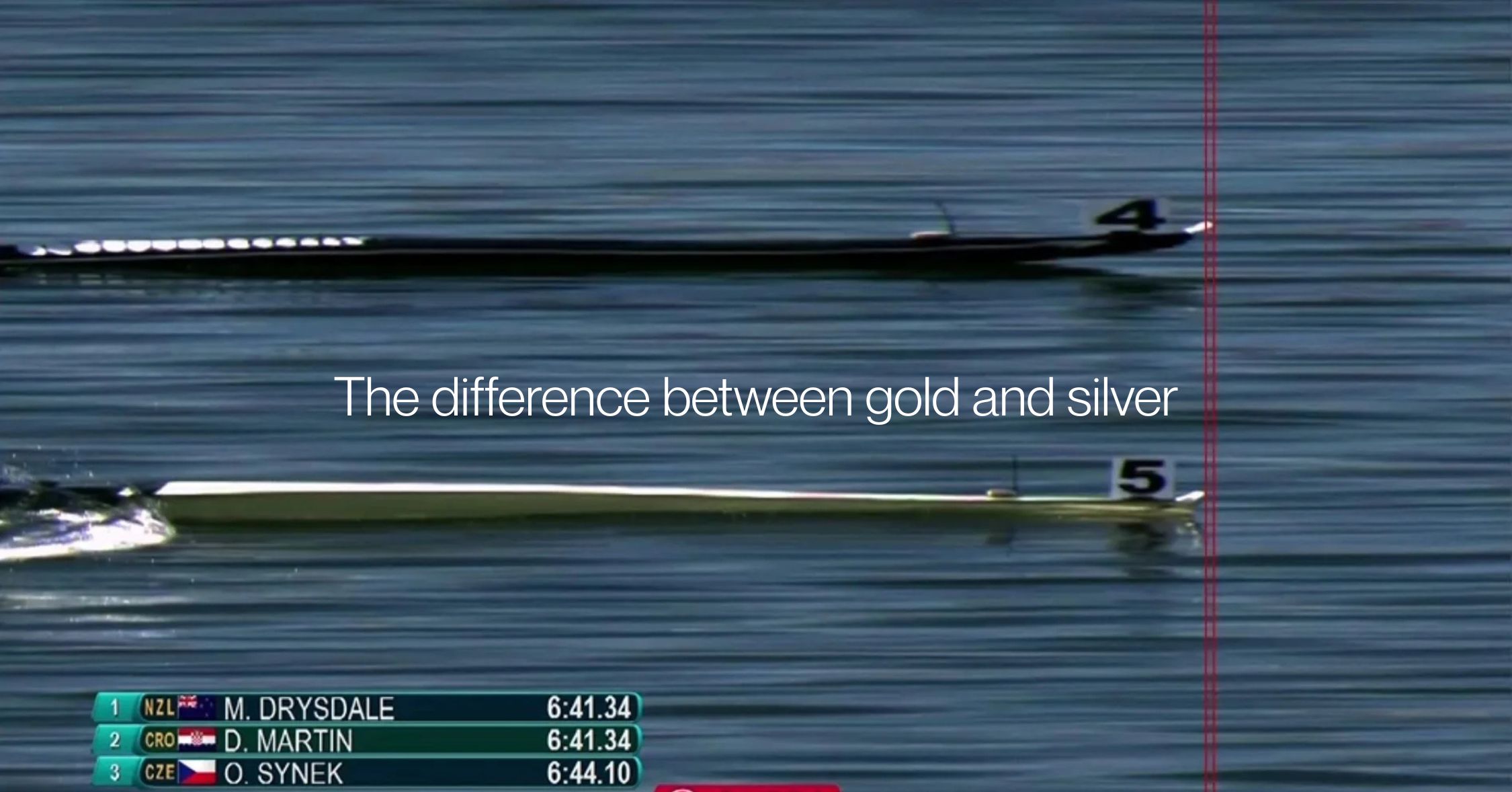
Back in 2016, I was watching the Olympics, and I remember thinking we need new standards on who wins and who doesn’t. When Katie Ledecky won the 800m freestyle by nearly 12 seconds she obviously deserved the gold medal. Maybe two. But on the other end of the spectrum, you’ve got Mahe Drysdale of New Zealand winning the men’s single scull rowing competition over Damir Martin by one-one-thousandth of a second![1] One-one-thousandth of a second! The official time for both rowers was exactly the same on the official clock, so they had to go to a photo and Drysdale literally won by a centimeter. A centimeter! Drysdale set a new Olympic record, and Martin went home with the silver. Somehow seems unfair. Without computers, they certainly would have called it a tie, and both men deservedly would go home with the gold, and no one would have complained. But now, Drysdale is a gold medalist and Martin is not. Jerry Seinfeld had a great comedy routine about the silver medal. He said, “I think I’d rather come in last than win the silver. You win the gold, you feel good. You win the bronze, you think, ‘Well at least I won something.’ You win the silver it’s like, ‘Congratulations! You…almost won. Of all the losers, you came in first of that group. You’re the number one loser. No one lost ahead of you.’” You had to feel for Damir Martin. To lose by such a small margin he must have been thinking, “If I had done ANYTHING different, I could have won! Maybe I shouldn’t have eaten that donut.” I’m sure he didn’t eat a donut before the race, but you get it. Still, our culture is obsessed with winning. We keep coming up with new technology to make sure we know. No more ties in competition. There has to be a winner. But why? When it is THAT close, so close we can’t tell with the human eye, why do we insist on declaring a winner?
The answer is simple: We like feeling superior.
We find value in comparing ourselves to others, and maybe that’s the real problem. Not being enough on our own. President Teddy Roosevelt once called comparison “the thief of joy” and it certainly can be.[2] Do you like yourself? Or do you constantly find yourself comparing your life to those around you? It’s one of the real drawbacks of social media because you’re comparing yourself to a false reality. Here’s a weird statistic for you, “for every selfie we see, around 10 attempts at that selfie have been made.”[3] Anyone can make life look good in ten second segments. It’s not like when I was growing up and you had to literally pay for every photo you took. You couldn’t check it immediately to see if it turned out good. Nope. You had to pay for that little gem, and the moment was long over before you found out that it was completely out of focus. But even without social media, when we define ourselves by those around us, it can be unhealthy. Basically, there are two types of comparison – upward and downward – and they are likely what you’d expect.

Upward comparison is when we look at others who we perceive to be doing better than us. In moderation it might inspire us to do better or work harder, but it can also lead to increased anxiety and stress, low self-esteem and depression, burnout, and dissatisfaction with life.[4] For today though, we are going to focus on the other one, the one that doesn’t get talked about as much – downward comparison. Downward comparison is when we look at someone else who we perceive to be doing worse than us or behaving more badly than we are and taking satisfaction from being “better than them.” This kind of comparison might make you feel grateful for the life you have, but it can also give you a false sense of superiority and make you less empathic to those around you.[5] And that’s where our half-truth for the day comes in. “Love the sinner. Hate the sin.” On the surface it sounds all well and good right? God tells us many times we need to love one another, so this seems like a reminder to separate the person from the act. Well, if that’s all it was then maybe it would be okay, but in reality, when we actually SAY these words we are doing exactly what the Pharisee is doing in our passage today.
9 To some who were confident of their own righteousness and looked down on everyone else, Jesus told this parable: 10 “Two men went up to the temple to pray, one a Pharisee and the other a tax collector. 11 The Pharisee stood by himself and prayed: ‘God, I thank you that I am not like other people—robbers, evildoers, adulterers—or even like this tax collector. 12 I fast twice a week and give a tenth of all I get.’
13 “But the tax collector stood at a distance. He would not even look up to heaven, but beat his breast and said, ‘God, have mercy on me, a sinner.’
14 “I tell you that this man, rather than the other, went home justified before God. For all those who exalt themselves will be humbled, and those who humble themselves will be exalted.” – Luke 18:9-14
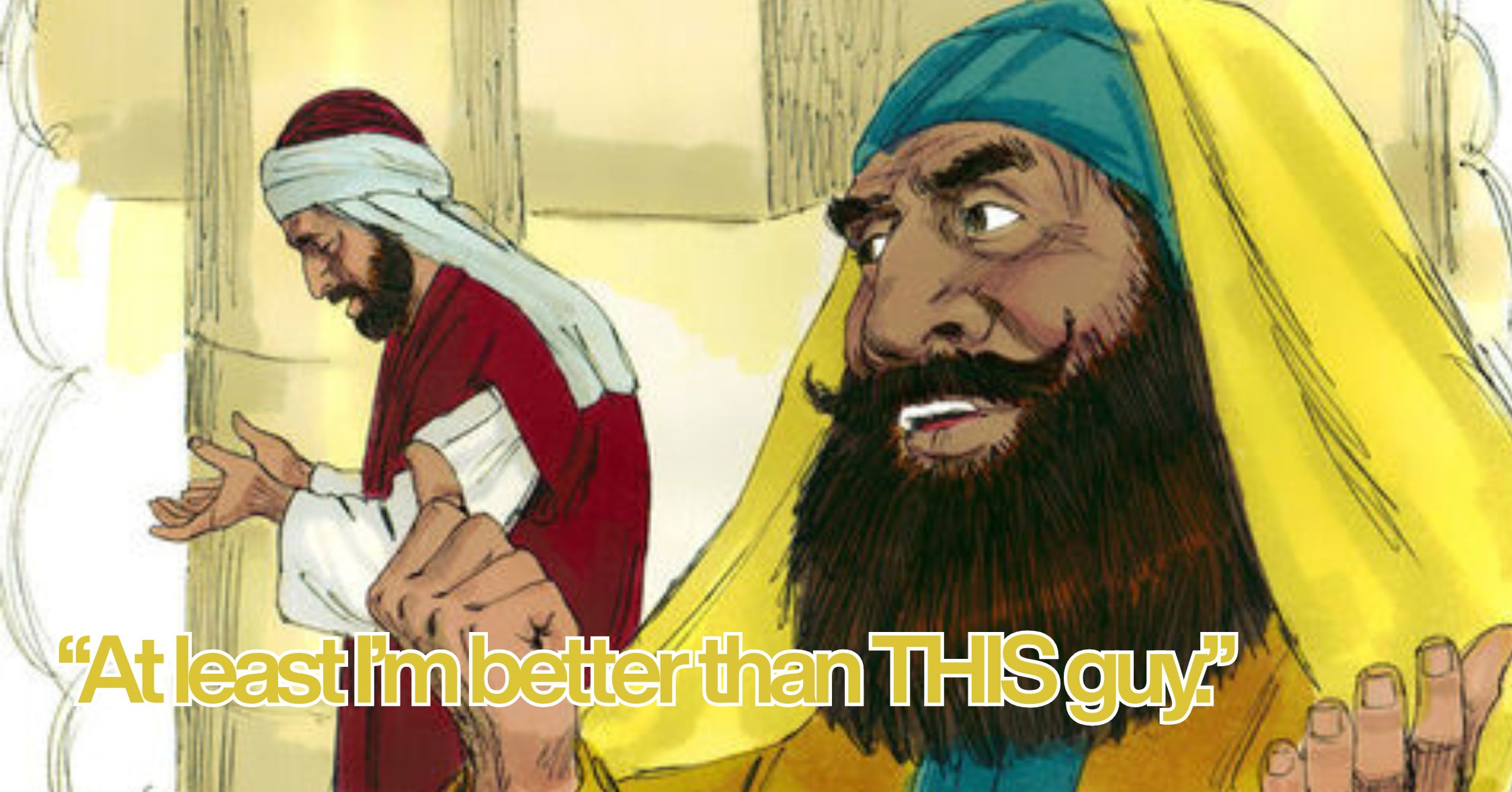
At least I’m not like him.
Have you ever caught yourself thinking something like that? You hear about someone in the news who was caught stealing, or cheating, or hurting someone and there’s a part of you, a part you probably don’t even say out loud that whispers, “Well, at least I’m not like him.” And that’s what is going on in this story. These two guys are going up to the temple to pray, and the Pharisee makes sure to keep his distance. He doesn’t want to be seen with a TAX COLLECTOR (insert your preferred most hated profession here). The Pharisee stands apart from him and prays this prayer: “God, I thank you that I am not like other people—robbers, evildoers, adulterers—or even like this tax collector. 12 I fast twice a week and give a tenth of all I get.” Amen. The Pharisee doesn’t admit to any wrongdoing. He doesn’t confess to any sins. He simply says, “at least I’m better than THIS guy.” Meanwhile, the tax collector, who probably feels unworthy to even be in the temple, simply asks for forgiveness, and Jesus said that it was the tax collector God was pleased with. Sure, the Pharisee followed the rules. He fasted. He gave his tithe. But he did it as much for himself as for God. The tax collector had humility in his heart and that’s who God was pleased with.

Pride is what gets between us and God.
That’s what was wrong with the Pharisee. His pride. “At least I’m not as bad as THAT guy.” It’s that arrogance, that judgmental attitude, to dare to elevate yourself above others that did him in. When we compare ourselves to others like that, it’s an attempt on our part to mitigate our own sin, our own faults, to say that even though I know I’m not perfect, there are other people much worse than I am out there God so you should be happy with me. But God doesn’t care about that. God cares about YOU. That’s why in Romans it says, “for all have sinned and fall short of the glory of God.” Because it doesn’t matter if you’re a little better or a lot better than the next guy. God’s concern is with YOU. God is concerned about YOUR heart. As Jesus said earlier, we need to take the plank out of our own eye before worrying about the speck in our brother’s eye (Matthew 7:3-5). So when we say, “Love the sinner, hate the sin,” we presume that the OTHER person is the sinner. It’s the OTHER person who needs some help. Not us. In his book Half Truth, Adam Hamilton says, “When ‘Love the sinner’ is our mantra, we’ve put ourselves in a position of seeing others as sinners rather than neighbors…I think what turns people off is when religious people point out the sins of others but act as though they have no sins of their own.”[6] We might admit to having sins, but there is this air about us when we start acting judgmental of others that somehow our sins are not as bad as someone else’s.
We make the mistake of thinking that life is a zero-sum game.
And that at the end of it, some of us are going to Heaven and some of us are not and all we have to do is finish ahead of the other guy to get there. I think about this a lot when I’m watching the Great British Baking Show. You don’t have to win Star Baker every week to win the whole thing. You really only have to win it once – at the end. The rest of the time you just have to finish ahead of the other guy to make it. I think we approach life like that at times. It’s why we don’t take how we behave and how we care about others more seriously. It’s the thought that if I do enough good deeds, I’ll make it. I don’t really have to believe in anything. I don’t really have to read the Bible. I don’t really have to go to church. I just have to prove that I’m better than the next guy and I’ll get into Heaven. And that’s what is dangerous. As soon as we do that, as soon as we start comparing ourselves to one another, we lower the bar. We keep playing for the minimum amount of effort. We sleep soundly at night not because we’ve done a stellar job of loving our neighbor but because we turn on the news and at least half of those people are way worse than us. But that isn’t how God expects us to behave and we dishonor God by comparing ourselves to each other. The biggest mistake we make is assuming life is a zero-sum game. God’s intention, his desire, is for everyone to come to him. In 2 Peter 3:9, Peter tells us, “The Lord is not slow in keeping his promise, as some understand slowness. Instead he is patient with you, not wanting anyone to perish, but everyone to come to repentance.” Remember that. God doesn’t care about how you compare. What he DOES care about that no medal or prize or award can ever give is the goodness in your heart. That isn’t something you can measure against other people. It’s something that is between you and God.
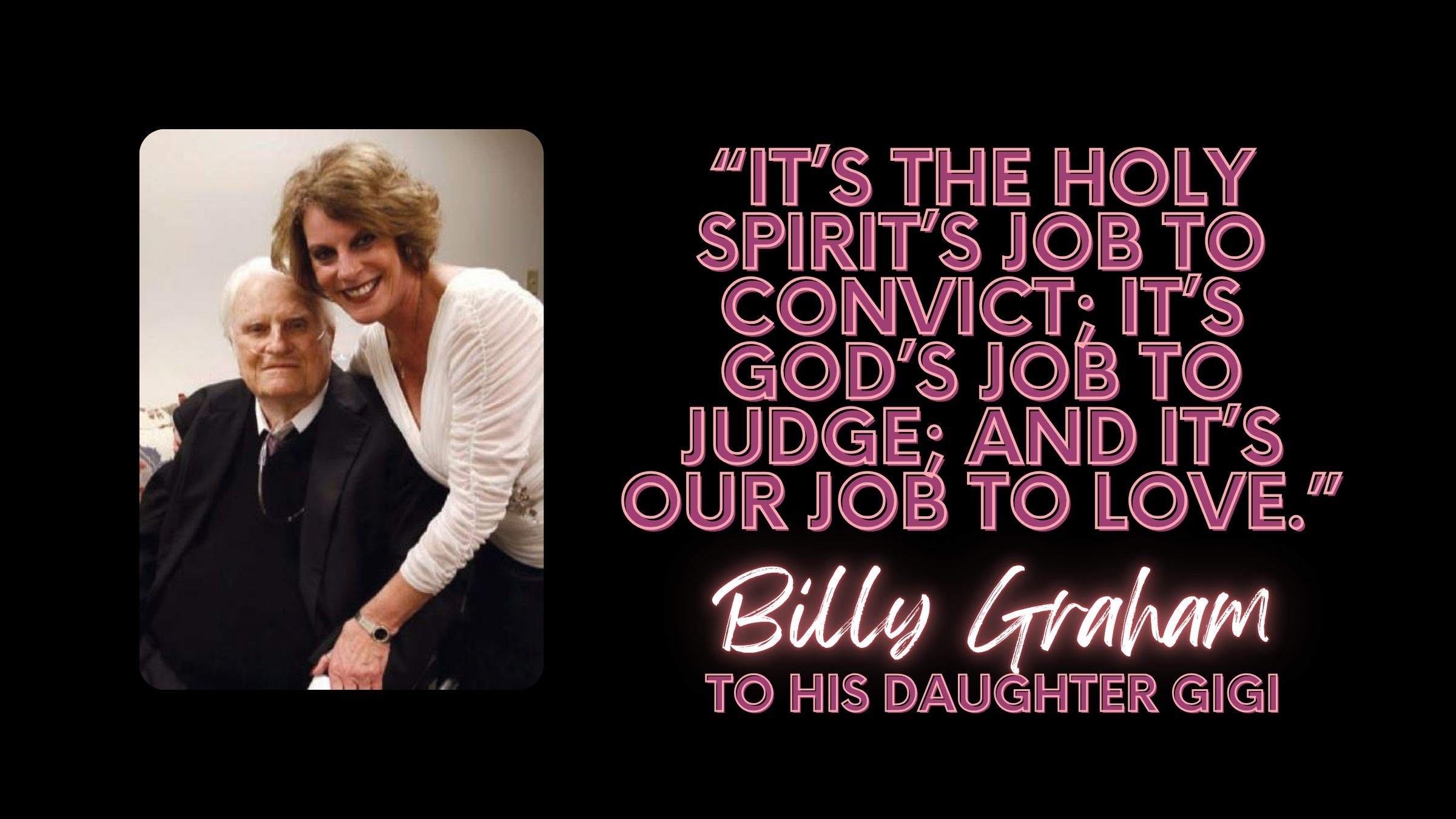
Hamilton tells a great story about how we SHOULD act toward one another.
He wrote, “Some time ago I read an interview with Billy Graham’s eldest daughter, Gigi. She was her father’s date to Time magazine’s seventy-fifth anniversary party, a banquet in Washington, DC. President Bill Clinton spoke at the event. He had just been impeached by the House of Representatives for perjury and obstruction of justice. The charge of perjury involved what President Clinton had said, under oath, about his relationship with White House intern Monica Lewinsky. At the banquet, her father sat with President and Mrs. Clinton. He was warm and gracious to them. After the dinner ended and Graham and Gigi were riding back to their hotel, the two discussed difficulties the president and First Lady were going through with so many people gossiping and judging. Gigi said her father’s simple comment was, ‘It’s the Holy Spirit’s job to convict; it’s God’s job to judge; and it’s our job to love.’”[7] A simple but powerful reminder of what we were created to do. Matthew 22: “‘Love the Lord your God with all your heart and with all your soul and with all your mind.’[a] 38 This is the first and greatest commandment. 39 And the second is like it: ‘Love your neighbor as yourself.’”
[1] https://www.buzzfeed.com/carolinekee/rio-close-finish?utm_term=.ma4495g4p#.heXbn3Db4
[2] https://www.psychologytoday.com/us/basics/social-comparison-theory
[3] https://www.stylist.co.uk/life/comparing-ourselves-to-others-comparison-culture-research-self-esteem-instagram-social-media-success-careers-fitness-relationships/345725
[4] https://www.desertwillowbh.com/blog/the-danger-of-comparison-how-measuring-your-success-against-others-affects-mental-health and also https://www.calm.com/blog/social-comparison-theory
[5] https://www.calm.com/blog/social-comparison-theory
[6] Adam Hamilton, Half Truths, p. 153.
[7] Ibid, p.159.

