
Two Words To A Better Life

Three steps to a better YOU!
Five ways to make broccoli fun! Ten movies we can’t wait to see! Everybody’s got a list. Everybody wants to make you a better person, help you lead a better life. Well, I’ve got a list too. Two words to a better life. That’s it. Hard to believe, isn’t it? These two words are so powerful they will make you 10-25% happier with your life.[1] Even happier than if you won a million dollars in the lottery.[2] It’s true. So, what two words are they? “Thank you.”
But you can’t just say it without meaning it.
Actual gratitude is important. If you have kids (or a grumpy spouse), how many of you have tried to get them to say thanks and MEAN IT. Most of us have heard people say thanks without an ounce of real gratitude behind their words. Either they say it begrudgingly, sarcastically, or as if to say, “Thanks for nothing.” To truly experience all the benefits from those two magic words, there has to be sincerity behind it.
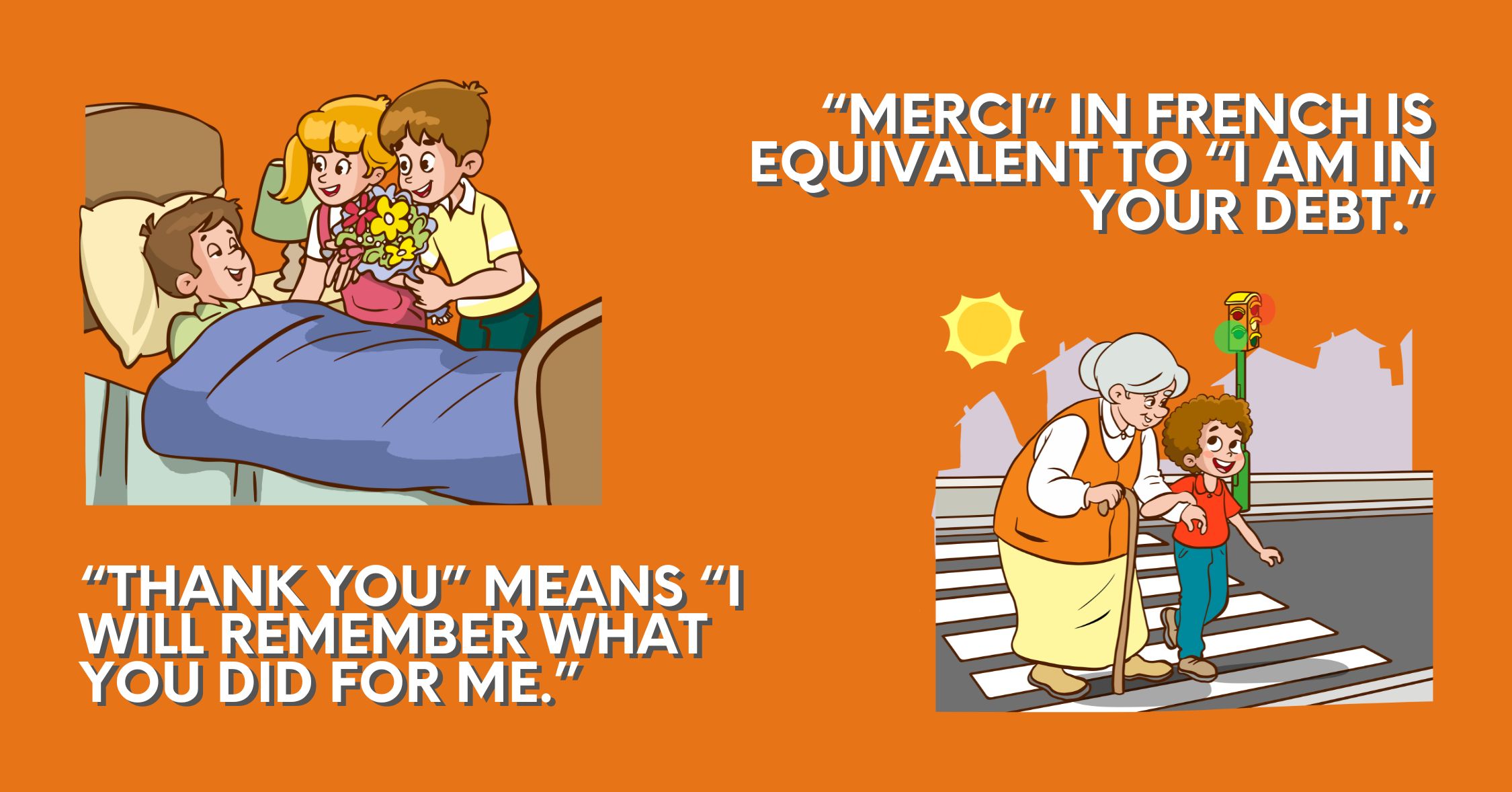
Did you know the word “thank” is a derivative of the verb “to think.”
And the phrase “thank you” originally meant, “I will remember what you did for me.”[3] In other languages, the sentiment is even stronger. The French word for “thank you,” “merci,” is the parent of our own word for “mercy.” When someone says “thanks” in French, what they are doing is placing themselves at the mercy of the other person as if to say, “I am in your debt.” It’s that kind of attitude behind our gratitude that we need, an actual expression of indebtedness. People appreciate feeling appreciated. In the workplace, studies found saying “thank you” increases productivity among employees by as much as 50%.[4] They’ve also found generosity is contagious. The more we give appreciation to others the more they do it for one another. And appreciated people find greater job satisfaction, which just makes common sense.[5] In married couples, these two simple words can save your marriage. They found couples that regularly say “thank you” were less likely to be affected by arguments between them.[6] Gratitude coats the relationship in a protective shell. Because they felt appreciated by their spouse, valued by their spouse, and acknowledged their spouse when they did something nice built up a reserve of good feelings that made arguments less likely to turn into something worse.[7]

Expressing gratitude not only helps the other person, but helps us, too!
One study at Harvard asked participants to journal about things they were grateful for over a 10-week period and had another group journal things that irritated them over the same amount of time. As you can probably guess, the gratitude group were more optimistic, felt better about life, exercised more, and went to the doctor less than the others.[8] What was most astounding to me was another study done showing over a six-month period you would be happier recording your blessings for five minutes a day than winning more than a million dollars in the lottery. Winning the lottery is awesome, but that momentary happiness that comes from it fades away and in just six months your happiness increase is barely up 4% more than what it was before. People who simply journal their gratitude show an increase of 10% happiness in that same time – 2.5 times happier than winning the lottery. Want to know other ways gratitude makes your life better? People like you more. You are generally healthier. It can boost your career. You focus less on material things and focus instead on your soul. It improves our sleep. We live longer lives. It makes us feel good. It helps us to relax. And those are just SOME of the benefits of being grateful.[9]

If you still aren’t convinced why you should express gratitude more often, let’s get Biblical!
That’s right, gratitude is Biblical and while there are a great many examples of being grateful in the Bible (both from Jesus and to Jesus) probably the best and most explicit example is the story of the ten lepers. During this time, you have to remember medicine wasn’t what it is today. Most people thought leprosy was highly contagious so they banished anyone who had it to outside the city limits. There were all kinds of rules lepers had to obey. Not only were they not allowed in the city, but they couldn’t even stand within six feet of another human being and if the wind was blowing they had to stay at least 150 feet away.[10] The only condition considered more unclean than leprosy was death. So when Jesus comes along, a group of lepers see him and beg him for help.
11 Now on his way to Jerusalem, Jesus traveled along the border between Samaria and Galilee. 12 As he was going into a village, ten men who had leprosy met him. They stood at a distance 13 and called out in a loud voice, “Jesus, Master, have pity on us!”
14 When he saw them, he said, “Go, show yourselves to the priests.” And as they went, they were cleansed.
15 One of them, when he saw he was healed, came back, praising God in a loud voice. 16 He threw himself at Jesus’ feet and thanked him—and he was a Samaritan.
17 Jesus asked, “Were not all ten cleansed? Where are the other nine? 18 Has no one returned to give praise to God except this foreigner?” 19 Then he said to him, “Rise and go; your faith has made you well.” – Luke 17:11-19
Ten men had leprosy. Ten men were healed. But only one came back to say “thank you.”
What’s even more amazing, the one was a Samaritan. Samaritans were among the most despised people in Israel. The only thing worse than having leprosy was to be a Samaritan with leprosy. But it was the Samaritan who came back to say, “thank you” to Jesus. It was such a big deal that the Bible even specifically points it out. Verse 16, “He threw himself at Jesus’ feet and thanked him – and he was a Samaritan (emphasis mine).” Of all the people healed, he was probably the one most likely NOT to give thanks. Samaritans were not treated well by the Jewish people. Out of resentment or spite or just plain anger, he would have the most reason not to come back, but he wanted to make sure Jesus knew how much he appreciated it.
When we read this, it’s easy to imagine that the other nine were this really ungrateful bunch.
But they were probably very, very grateful.[11] Imagine having this horrible disease that most people never get cured of, never getting to see your family and friends again, and then suddenly being healed! If it were you, you’d probably be ecstatic! They might have been in such a rush after getting healed they took off to see the priest without thinking about it. The only way a leper was allowed back into the community was by showing himself to the priest and being declared healed. That’s why Jesus tells them to go find the priest, so they can come back and see their family and friends. So given all of that, we could understand if it slipped their mind. But it shouldn’t have. It only took the Samaritan a moment to give thanks to God for the healing. Which one are you more like, the nine or the one? Do you make time to tell others how grateful you are? Do you reflect on the effort others put out for you? Or do you sometimes take the people in your life for granted?

Given the scientific evidence, we all take people for granted.
At least a little. A study back in 2012 showed we had a “gratitude gap.”[12] They found 90% of people were grateful for their family and 87% were grateful for their friends, but only 52% of women and only 44% of men expressed gratitude on a regular basis.[13] Why are we so reluctant to express our gratitude? There are many reasons this happens but one is because people are self-serving.[14] When things go bad, we like to blame other people, and when things go well, we like to take credit for ourselves. Robert Emmons who is well known for his research on gratitude wrote, “Gratitude really goes against the self-serving bias because when we’re grateful, we give credit to other people for our success.”[15] Expressing gratitude takes effort to overcome this self-serving bias. It also goes against our need for control because it recognizes there are outside forces at work helping us to achieve success. Emmons wrote something insightful about this. He said, “I think true gratitude involves a humble dependence on others.”[16] That humility points us toward God, the one to whom we should all be grateful and reminds us we are not the sole source of our own blessings.
Find your way to express gratitude.
For me, I like to do it through thank you notes. It’s not only a personal way to say thanks, but it is also a reminder to myself I have so much to be grateful for. But you need to find your own way. Whatever it is make sure you it is sincere and heartfelt. Something I read in Harvard Business Review said, “Think of something specific you are grateful for, acknowledge the cost or difficulty or sacrifice the person gave to do that specific thing, and then let them know why it was important to you.[17] When you take time to reflect on your gratitude it can’t help but come from your heart. If you watch any of the award shows that take place around this time every year, you see people come up and give thanks. Who would you give thanks to? Take a moment today or sometime this week to write your own acceptance speech. Think about the people on your list and why they are important to you. And then tell them. Send them a card. Give them a call. Bring them some homemade food and say those two little words that can make you 10% happier than you are today. Thank you.
[1] http://www.spring.org.uk/2007/09/practicing-gratitude-can-increase.php and http://happierhuman.com/benefits-of-gratitude/
[2] http://happierhuman.com/benefits-of-gratitude/
[3] https://www.brainpickings.org/2013/07/25/origin-of-please-and-thank-you/
[4] https://www.forbes.com/sites/amymorin/2016/11/20/how-an-authentic-thank-you-can-change-your-workplace-culture/#187c5c2f7990
[5] Ibid
[6] http://www.dailymail.co.uk/sciencetech/article-3283713/The-secret-happy-marriage-Saying-thank-Study-finds-gratitude-predict-couple-remains-together.html
[7] Ibid
[8] https://www.health.harvard.edu/newsletter_article/in-praise-of-gratitude
[9] http://happierhuman.com/benefits-of-gratitude/
[10] https://www.gotquestions.org/Bible-leprosy.html
[11] Andy does a great job talking about this in his sermon “I Owe Who” found on the Your Move With Andy Stanley podcast 11/12/2016
[12] https://greatergood.berkeley.edu/images/uploads/JTF_GRATITUDE_REPORTpub.doc
[13] Ibid
[14] https://greatergood.berkeley.edu/article/item/why_gratitude_is_good
[15] Ibid
[16] Ibid
Jesus Is A Fluffy Bunny

Unconditional surrender.
Two words you don’t want to hear if you are on the losing end of a battle. Unconditional surrender means you will give up without any guarantee of safety. You are completely at the mercy of whoever you’re surrendering to. And that is scary. Not knowing what they will do; if they’ll be merciful or vengeful, kind or cruel can overwhelm us with fear. Some people would rather die than surrender unconditionally. They would rather go out on their own terms than give in to someone else’s – even if it means death. So what do we do when the God we believe in asks that of us? God wants us to surrender to him unconditionally.
But we are so unwilling to give up control that we can’t even put our trust in God!
We call upon God when WE want to. We pray when it’s convenient for us. We worship when it fits into our schedule. We put Christ on call as if Jesus were checking his text messages for some kind of signal from us. There was a short-lived show called Studio 60 on the Sunset Strip and in the first episode two of the characters, Jeannie and Harriet, are talking to each other about the uncertainty of the future so Jeannie asks Harriet, “Do we just let Jesus be our co-pilot?” And Jeannie replies, “No. My mom used to say if Jesus is your co-pilot, you should trade seats.”[1] But how often do we do that? How often do we relinquish control and let Jesus guide our life? We want Jesus to be where we want, when we want, and how we want him to be. And when he’s not we conveniently tune him out. Even in church.

A friend of mine was criticized for preaching the Gospel.
We were both starting out in ministry and she was an associate pastor at a fairly big church. They had two services and she would lead one while the senior pastor would lead the other. After a while, one of the church members who attended her service came in to complain to the senior pastor about her preaching. The senior pastor sat the woman down and asked what seemed to be the problem. Was she not preaching from the Bible? No, that wasn’t it. Was she sharing a message not in line with the Gospel? No, that wasn’t it either. So what seemed to be the problem? She told the senior pastor that she wasn’t hearing the message she wanted to hear. She complained, “She’s always challenging us to improve and be better than we are. How about once in a while we hear sermons about how Jesus is like a fluffy bunny? You know? I’d like for once to hear about how following Jesus is like a beach ball floating in the wind. Just floating up in the air. How come it always has to be so serious?” Those were her exact words, “Jesus is like a fluffy bunny.” There are just some things you never expect to hear and “Jesus is like a fluffy bunny” is one for the ages. As outlandish as that might seem to some of you, it is more common than you might think. I’ve had my own “fluffy bunny” moments. Not quite as extreme, but pretty close. Some people are uncomfortable when they are challenged to change, to accept different ideas, to do something different or to think in a different way. But Jesus always challenged us to grow deeper in faith, to expand our understanding of God, and to stretch ourselves in directions we may not have thought of on our own. He wants us to put our trust in him, to surrender to his will.

Paul reminds us our relationship with Jesus is one of mutual submission.
Many of Jesus’ followers talk about this concept of mutual submission. Jesus comes to serve all of humanity. Jesus surrenders his life for ours on the cross. Jesus humbles himself by washing the feet of his disciples. Jesus modeled for us the kind of servant’s heart he wants to see in us all. Paul tells us we are supposed to submit to one another also. Husbands should submit to their wives as wives should submit to their husbands. Parents should honor their children as their children should honor them. The ideal relationship as described to us by Jesus and his followers is about mutual submission. It’s the only way it works right. And in our passage this morning, Paul talks about his own submission to Christ.
19 “For through the law I died to the law so that I might live for God. 20 I have been crucified with Christ and I no longer live, but Christ lives in me. The life I now live in the body, I live by faith in the Son of God, who loved me and gave himself for me. 21 I do not set aside the grace of God, for if righteousness could be gained through the law, Christ died for nothing!” – Galatians 2:19-21
In this passage, Paul isn’t telling us what to do.
He’s telling us about his own experience with Christ and how it changed his life. Paul was probably thought of by many people as a zealot and maybe in some ways he was, but if so, it was only because he was zealous for the kind of life we could all lead under Christ. Some of what he says might seem confusing because he uses a lot of contradictory statements. He says he died to the law so he might live in Christ. He says he no longer lives but Christ lives in him. But what he means is he finally surrendered to the understanding that he would never fulfill the law and so he devoted his life to the only one who could fulfill it – Jesus. And by so doing he gave up his own way of life to become an ambassador for Christ. And then he closes with this powerful statement, “I do not set aside the grace of God…” Paul doesn’t ignore, he doesn’t belittle, he doesn’t discount God’s grace in all of this, “for if righteousness could be gained through the law, Christ died for nothing!” He’s telling us if all we had to do was follow some rules to have our sins wiped away, if all we had to do was fulfill a certain number of requirements to get into Heaven, then Jesus’ sacrifice was pointless. We wouldn’t need his death on the cross. We could do it on our own. But we can’t. As good as we can be, we cannot be perfect. We cannot be sinless. It’s not a matter of willpower. It’s not a matter of being strong enough. We just can’t do it. The only way to overcome this mountain of mistakes and wrongdoing is to submit to it, to admit it cannot be overcome. Only then can we change for the better.

Rick Warren wrote a devotional around this concept.
He wrote, “Surrendering your life means: Following God’s lead without knowing where he’s sending you. Waiting for God’s timing without knowing when it will come. Expecting a miracle without knowing how God will provide. And trusting God’s purpose without understanding the circumstances.”[2] Following God’s lead. Waiting for God’s timing. Expecting a miracle. Trusting God’s purpose. This is what it means to surrender to God. Have you? Have you truly surrendered to God? We all fall short and will at times assert our own will, but have you made that commitment to follow Christ by fully surrendering to his will? Or are you still putting Jesus as your co-pilot? You can be the pilot of your own life. You can be the captain of your own football team. You can be the chef of your own kitchen. But are you the most qualified for the job? When I worked at Disneyland, I was the captain our volleyball team – meaning I was the one who signed people up, gathered the money, and turned in the paperwork. As the captain, I was responsible for making the assignments of who would play where. My favorite position was at the net. That’s where all the action is. Heroes are made at the net. But look at me. Even then I was 5’ 10” at best. My jumping ability was about the same as that of a turtle. But I was good at digging for the ball. I did a great job of saving the point. And I was very accurate at serving. It was hard, but I had to admit I wasn’t the best person for the front line so I put myself in the back row. And even though I had the right to do it, I chose to do what was best. That’s all God wants for our lives. He wants us to choose what’s best. That’s why he doesn’t force us because then not only do we not learn, but the decision is never really ours to begin with. We have to choose to surrender to God.
Let us recommit our lives to Christ.
Let us remind ourselves that when we chose to be Christian, we chose to surrender our lives to him. We didn’t choose to surrender our lives on condition. We didn’t surrender our lives because it was convenient. We chose to surrender unconditionally to God. Let us honor that commitment today as we lift it up in prayer.
God Almighty,
I surrender my control to you. I surrender my control to you. I surrender my control to you. I am not the best guide of my own life. You are. And when I surrender myself to you, my life becomes a whole lot better. But it is hard for me to do. The truth is I cannot do it alone. I cannot earn my way to Heaven. I cannot forgive my own sins. I put myself at your mercy. And surrender to your grace. Today, I give myself to you unconditionally. And my life is the better for it. In the name of the Father, and of the Son, and of the Holy Ghost. Amen.
[1] http://studio-60.hypnoweb.net/episodes-/saison-1/episode-102/script-vo-102.96.254/
[2] From a Rick Warren devotional which is no longer published but was on rickwarren.org
The Game of Life

The Game of Life is insidious.
At least it was when I was growing up. Today’s version is a lot more friendly, and I love how there are different ways to win. It still has those rolling hills, white buildings, and magical spinner, but now you have all sorts of choices you didn’t have in the old game and to me it’s even more fun than before. But the old game? While I had fun playing it, I didn’t like the message it sent – “Money is the only important thing in life.” Did you know that the Game of Life was the first game ever created by Milton Bradley?[1] Yes, THAT Milton Bradley. The company that brought you Battleship, Yahtzee, Connect Four, Candy Land and so many more. But the foundation for his success was The Game of Life that he invented back in 1861. And in his game, it wasn’t about money either. Milton Bradley thought that you could teach important life lessons through play, so his game focused on living a long and happy life. But over time, the game changed, and it focused instead on acquiring money. In fact, if you got to the end of the game and you were behind, you could spin the wheel for a chance to win, but if you failed, you were destined for the Poor Farm. The game’s attitude changed from living a good life to success at all costs, and success was measured only by money and things. But do you really think money can buy you happiness?
Stuart Scott is one of the most famous anchors to ever hold the position on SportsCenter.
Bear with me. It all makes sense. If you watched ESPN in its early days, you know his name and if you don’t you might have heard some of his famous catch phrases. He was one of the most famous and groundbreaking sports anchors in the business and he was well known for the things he would say on TV. Some of my favorites were, “Cool as the other side of the pillow.” Or “He must be the bus driver cuz he was takin’ him to school!” But the one everyone knows best is just two short syllables, “Boo-yow!”[2] Stuart Scott was one of those influential people who changed the way we watch television. He also defined SportsCenter for an entire generation of viewers. But at the young age of 49, Stuart Scott passed away from cancer. He had been battling it for nearly 8 years beginning in 2007 when after an appendectomy it was discovered he had the deadly disease. He battled it back numerous times but finally died because of it in 2015. Still, he approached life with an amazing attitude. While being honored in 2014 at the ESPY awards, he said about his battle with this horrible disease, “When you die, it does not mean that you lose to cancer. You BEAT cancer, by HOW you live, WHY you live, and in the manner in WHICH you live.” Some really deep thoughts. We do tend to think of life as a game in which there are winners and losers, but winning and losing the game of life isn’t about money or fame or achievement. Winning and losing the game of life is about what you do with the time you have.

This is a lesson God has been trying to teach us all along.
We’re going to read this morning from a passage you’re probably familiar with. Life isn’t a game to be won or lost, at least not in the traditional sense. Normally, when you play a game, there are winners and there are losers. In basketball, in baseball, in football. We are taught that winning is a zero-sum game. But to win at life, is different because it’s a game you play by yourself. Whether you win or lose has nothing to do with scores or money or ratings or any kind of metric we traditionally use to define ourselves with. And in this game, when we win, others win too. And when we lose, so do they. Here is what Jesus said to the crowds about this in Mark’s Gospel.
34 Then he called the crowd to him along with his disciples and said: “Whoever wants to be my disciple must deny themselves and take up their cross and follow me. 35 For whoever wants to save their life[b] will lose it, but whoever loses their life for me and for the gospel will save it. 36 What good is it for someone to gain the whole world, yet forfeit their soul? 37 Or what can anyone give in exchange for their soul? 38 If anyone is ashamed of me and my words in this adulterous and sinful generation, the Son of Man will be ashamed of them when he comes in his Father’s glory with the holy angels.” – Mark 8:34-38
When we value the same things God values, we become winners in life.
Both in this one AND the next. That’s what Christ means when he says we must deny ourselves and follow him. We must be willing to let go of the part of us that clings to the world and its values and instead admit to our weakness (by bearing our cross) and follow him. When we do that, we become alive in a new way. We are a new creation in Christ, and we belong to something greater and more noble than anything on Earth. And more importantly, we are saying our eternal life is more important to us than our mortal one. That’s why Jesus’ words are so powerful when he says, “What good is it for someone to gain the whole world, yet forfeit their soul? Or what can anyone give in exchange for their soul?” There is nothing we can earn in this lifetime that could ever match the promise of the next. There’s no amount of stuff we can gain that can redeem our soul other than giving our life to God. To the outside world, that sometimes seems like we’re giving up a lot. But when you know the peace of God in your heart, it’s really giving up very little.
Have you seen the movie, Field of Dreams?[3]
There’s a part in that movie that really touched me when I saw it. It’s a scene between Ray Kinsella, played by Kevin Costner, and Doc Graham played by Burt Lancaster. In the scene, Ray comes to visit Doc to see if he can make his wish of batting in the major leagues come true and he tells the Doc that he knows of a place where this could happen. Doc Graham is obviously moved by Ray’s gesture, but he says, “If it means leaving Chisholm…” and shakes his head ‘no.’ Ray looks at him and says, “But your wish…” And the Doc responds, “It’ll stay one. I was born here, lived here, and I’ll die here. That’s okay. I’ll have no regrets.” But Ray can’t let it go. Doc is willing to sacrifice his dreams to hit in the big leagues for a life in Chisholm, Minnesota? He says, “But sixty-five years ago – for five minutes – you came THIS close. It would kill some men to get that close to their dream and never touch it. They’d consider it a tragedy.” But Doc looks at him with a soft look on his face and says, “Son…if I’d only gotten to be a doctor for five minutes…now that would’ve been a tragedy.” Those words just touched me in a deep way the first time I heard them and every time thereafter. I think I’ve seen the movie twenty times and I still love it. But Doc’s words drive home the point that Christ told us in our passage this morning. It’s not fame or fortune that defines our life. It really is about this sense of fulfillment that we derive from living our best lives and as Christians we believe that our best lives come from Christ. When we live our lives according to HIS values and HIS direction, we find that peace that so often eludes the world.

As I keep getting older, I think more and more about what it means to live a “successful” life.
In 2008, one of my high school friends, Darryl Ishii passed away. He was barely forty years old. He was much more fit than me. He exercised regularly and had a passion for basketball. We weren’t that close, but I knew him enough to consider him a friend. We went to high school together and played basketball together when we were kids. And he died. Suddenly. From a heart attack while on the court playing basketball. He left behind a wife and two kids. Stuart Scott, nearly the same age as me suddenly found out he had cancer. He also was fit, and famous, and had a family who loved him. And then there are others who live to be 100 for no particular reason. They don’t take care of themselves any better or worse than my friend Daryl did or Stuart did. So was Daryl’s life or Stuart’s life any less of a success for having been so much shorter? I don’t think so. I don’t think we can take a standard measurement like money, or fame, or long life even as the measure of success. I see many people who spend the last year, 5 years, 10 years of their lives not quite themselves and wonder how they view their life. For me, watching different people come to their end in different ways, I believe that the success of your life is wholly dependent on you and God. Not your circumstances. Not the years you have. Not the awards or accolades you accumulate. Not whether or not you get your name in the paper. All of that is short-lived. The success in your life is dependent on the peace in your heart, the knowledge that you’ve lived your best life, that you are loved and that you love others, and that you have done everything you can to be deserving of that love. And all of that comes into place when we walk closely with God. Only God can give us the peace and contentment that we so desperately seek. As we approach Easter and the resurrection of our Lord, let us resurrect in ourselves a renewed spirit to live our best life. For ourselves, for those we love, and to honor the gift God has given us. With God, we give meaning to the HOW, and the WHY, and the manner in WHICH we live. God bless you all.
[1] Information on The Game of Life came primarily from an article from The Vox and Wikipedia.
[2] Great article on Stuart Scott. Read it and was surprised myself to find out that what I always thought was “Boo-yah” was actually “Boo-yow!” http://espn.go.com/espn/story/_/id/12118296/stuart-scott-espn-anchor-dies-age-49
The Downfall of John Kreese
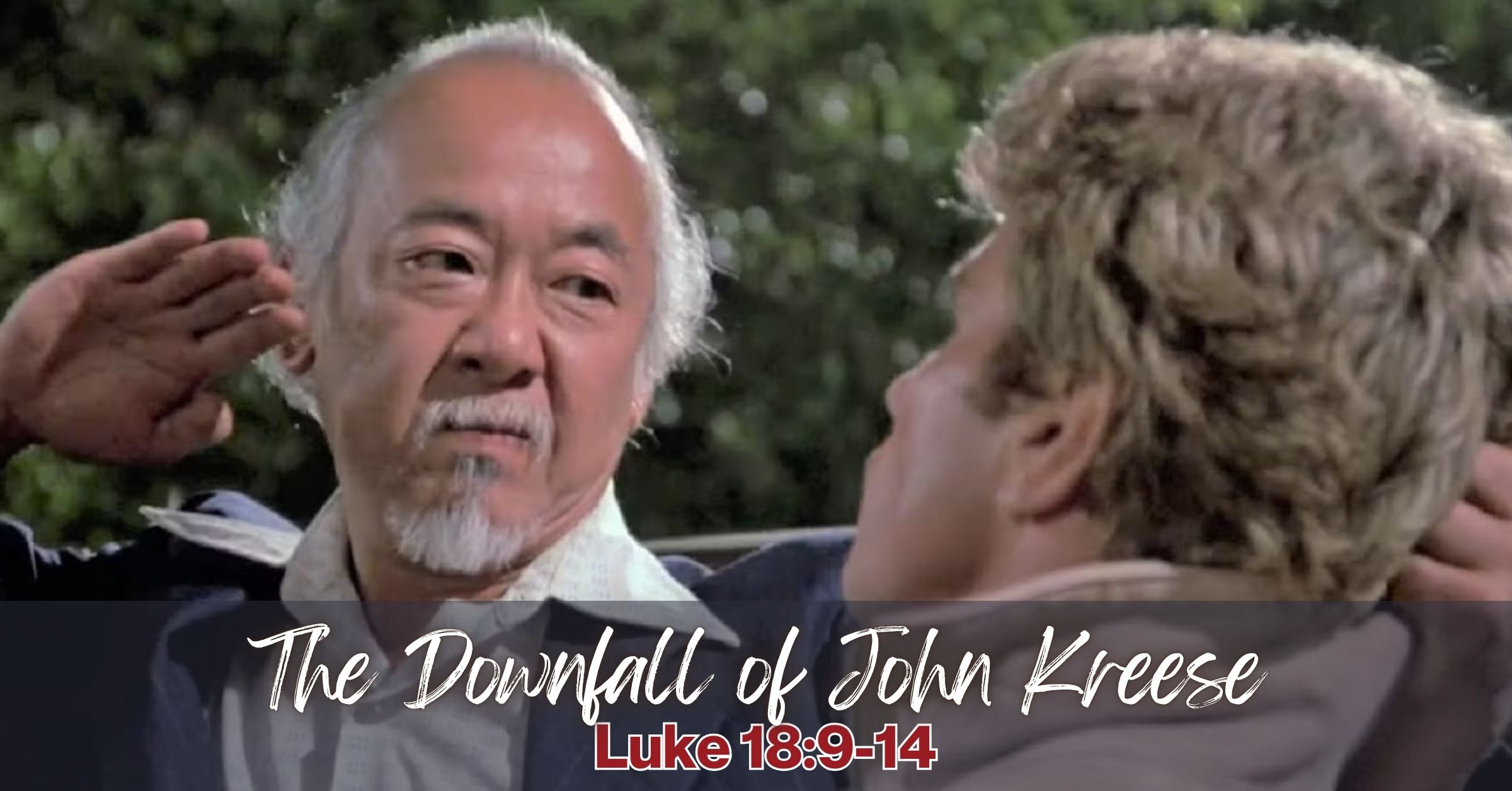
“Sweep the leg.”
That scene from The Karate Kid is as iconic of the ‘80s as Darth Vader’s “I am your father” or The Terminator‘s “I’ll be back.” Three simple words that would unravel John Kreese’s life. When Kreese orders Johnny to do this, he’s given up any pretense at being an honorable man. He instantly loses the respect of his prize student and he stands revealed as the villain we all know he is – a man so consumed with winning he would do anything to achieve it. When Johnny hesitates, Kreese sneers at him, “You have a problem with that?” And Johnny, speechless, simply responds, “No, sensei.” Reinforcing his order, Kreese follows up with, “No mercy,” and sends Johnny back onto the mat. Maybe before this moment you could write off Kreese’s mantra as bravado, as something to pump up his students. But there’s no mistaking it now. These aren’t just words. It’s what he lives his life by. To him, you win or you’re a loser. There’s nothing in-between. Even for something as inconsequential as the All-Valley Karate Championship. Because for Kreese, it’s all about pride. In his arrogance, he never imagined young Daniel LaRusso would have been able to make it this far in the tournament, let alone be up two points to none against his prize student in the title match. His whole sense of self-esteem is built on the backs of his students and to see them fail (and to him anything less than the title is failure) is unbearable. And when he does lose, his entire world crumbles around him. He loses his composure, his sense of self, his sanity, his students, and his dojo. All because of pride.
Pride is the anti-God.
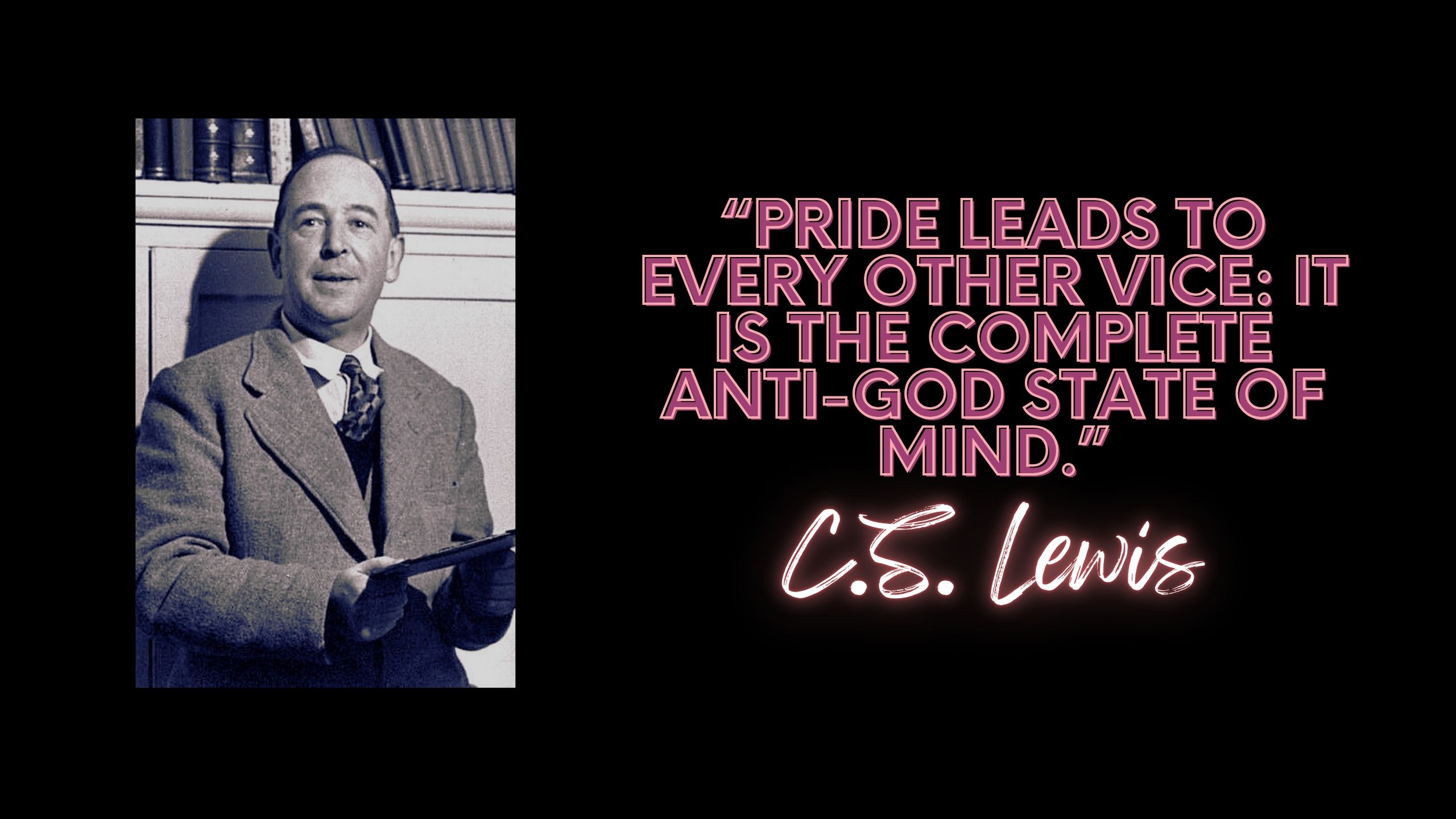
C.S. Lewis, the guy who wrote The Lion, The Witch, and The Wardrobe, is also famous for being a great Christian theologian and he describes pride as “…the essential vice, the utmost evil… Unchastity, anger, greed, drunkenness, and all that, are mere fleabites in comparison: it was through Pride that the devil became the devil: Pride leads to every other vice: it is the complete anti-God state of mind.”[1] But is that always true? I’m certainly proud of my daughter, Emma. Is that bad? Can you be a proud parent and not be a tool of the devil? Turns out you can. If you have a Bible or a Bible app on your phone would you find the Gospel of Luke, chapter 18 beginning with verse 9. Luke 18:9. According to psychologists, there are two types of pride – hubristic and authentic.[2] As you can imagine, hubristic pride is the type of pride often looked down upon. It’s the kind that got John Kreese into trouble. Whereas authentic pride is the kind parents feel for their children or friends might feel for each other or that you might feel for something you accomplished.
I have to admit I was pretty darn proud of myself when I completed the Disneyland 5K.
Being both flat-footed and overweight, I wasn’t sure if I would make it ahead of the pick-up cart. The pick-up cart is a little tram-like vehicle that goes behind the runners, and if you fall too far off the pace, you’ll get “picked up” and won’t get to complete the race. I walked/ran (but mostly walked) slightly out of fear of seeing the pick-up cart behind me, but not only did I finish, I never saw the cart at all. I felt a swell of pride! Not because I beat anyone. God knows my time was nothing to write home about. But because I set a goal for myself I wasn’t sure I could complete. And that’s the main difference between the two types of pride – hubristic pride is competitive by nature. It requires you to “beat” someone. It means that others have to be “less than” for you to feel accomplished. C.S. Lewis, in his book Mere Christianity, put it this way, “Pride gets no pleasure out of having something, only out of having more of it than the next man. We say that people are proud of being rich, or clever, or good-looking, but they are not. They are proud of being richer, or cleverer, or better-looking than others. If everyone else became equally rich, or clever, or good-looking there would be nothing to be proud about. It is the comparison that makes you proud: the pleasure of being above the rest.”[3] Hubristic pride is always felt at the cost of someone else. That’s the lesson we see in the Bible as well.

9 To some who were confident of their own righteousness and looked down on everyone else, Jesus told this parable: 10 “Two men went up to the temple to pray, one a Pharisee and the other a tax collector. 11 The Pharisee stood by himself and prayed: ‘God, I thank you that I am not like other people—robbers, evildoers, adulterers—or even like this tax collector. 12 I fast twice a week and give a tenth of all I get.’
13 “But the tax collector stood at a distance. He would not even look up to heaven, but beat his breast and said, ‘God, have mercy on me, a sinner.’
14 “I tell you that this man, rather than the other, went home justified before God. For all those who exalt themselves will be humbled, and those who humble themselves will be exalted.” – Luke 18:9-14
If you thought humblebragging was a 21st century thing, the Pharisees thought of it first.
This guy comes up to the temple and belittles the tax collector in front of God. He probably doesn’t know him from Adam (or Eve for that matter). But he feels the need to elevate himself by making the other guy look bad. You can almost sense the insincerity of this Pharisee as he gives “thanks” to God. We all know in reality he’s just trying to make himself look good. He’d be better off just bragging. According to a study done by Harvard, humblebragging is the most despised form of bragging because it is so insincere.[4] People would prefer you just come out and tell us how wonderful you are than try to disguise your bragging as false humility or a complaint. But nobody is fooling God. Jesus tells us in this parable, it is the tax collector who receives forgiveness in God’s eyes. Like most of us, God sees through this humblebragging easily and isn’t impressed.
The problem with hubristic pride is it constantly needs to be affirmed.
The braggart isn’t bragging because he is so self-confident. He is bragging because he is looking for affirmation that he is worthy. His “self-confidence” rests only on the belief that other people are not as good as he is. That’s why John Kreese feels so threatened by Mr. Miyagi and his student, because to lose to a Japanese handyman and his incompetent student would crush his sense of self-worth. The foundation for his sense of self rests on being better than other people. The thing is, if that is the basis of your self-worth, you are doomed. Around the corner there is always someone who is faster than you, stronger than you, a better marksman than you. There is always someone better. That’s the nature of being at the top. Eventually, you aren’t any more. Someone once wrote, “greatness is indeed on loan temporarily from the Gods (or God, but that’s not what was written).”[5] But sometimes, when pride is at its worst and we become so desperate to maintain our belief in ourselves, we will do unconscionable things to keep ourselves there. Cheat, lie, steal, even harm others all in the name of pride.
Instead, God wants us to be confident in ourselves without needing others to confirm it.
A person with self-esteem tends to have authentic pride. They are people who are confident enough in themselves and don’t need to be constantly affirmed by the outside world that they are worthy. They already know they are. Genuine self-esteem is linked to “successful social relationships and mental health,” whereas people who feel the need to constantly promote themselves or bring attention to their achievements are linked to “aggression and other antisocial behaviors.”[6]
To some degree, we are all probably a little bit guilty of hubris.
The danger is in letting that become how you define yourself. If you’re sense of self-worth is only based on how others see you, if you feel the need to compare yourself to the Joneses, if you care so much about being “the best” that you lose your moral compass, you are in real danger of letting the evil in this world overwhelm you. Jesus once said, “What good will it be for someone to gain the whole world, yet forfeit their soul (Matthew 16:26)?” This is how evil works in the world today, by making you feel unworthy unless you have more than everyone else, unless you’re more powerful than the next guy, when we are already loved by God who values the person you already are. In The Karate Kid, Daniel asks Mr. Miyagi what kind of belt he has, and Mr. Miyagi answers, “Canvas. J.C. Penny, $3.99. In Okinawa, belt means no need rope to hold up pants!” After laughing for a bit, Mr. Miyagi says, “Daniel, karate here (points to head), karate here (points to heart), karate never here (points to belt). Understand?” Mr. Miyagi is telling Daniel what God is trying to tell us, to know your own self-worth and not let it be defined by the outside world. God loves you for who you are and simply wants you to be the best version of you that you can be.
[1] C.S. Lewis Mere Christianity pg 51 (Kindle version)
[2] https://www.psychologytoday.com/blog/the-squeaky-wheel/201407/the-key-difference-between-pride-and-arrogance
[3] Op.Cit., Lewis, p.52
[4] http://time.com/5095144/humblebrag-bragging/
[5] http://thesportjournal.org/article/when-pride-goes-wrong/
[6] https://www.tandfonline.com/doi/abs/10.1080/15298860802505053
Fear is the Mind Killer
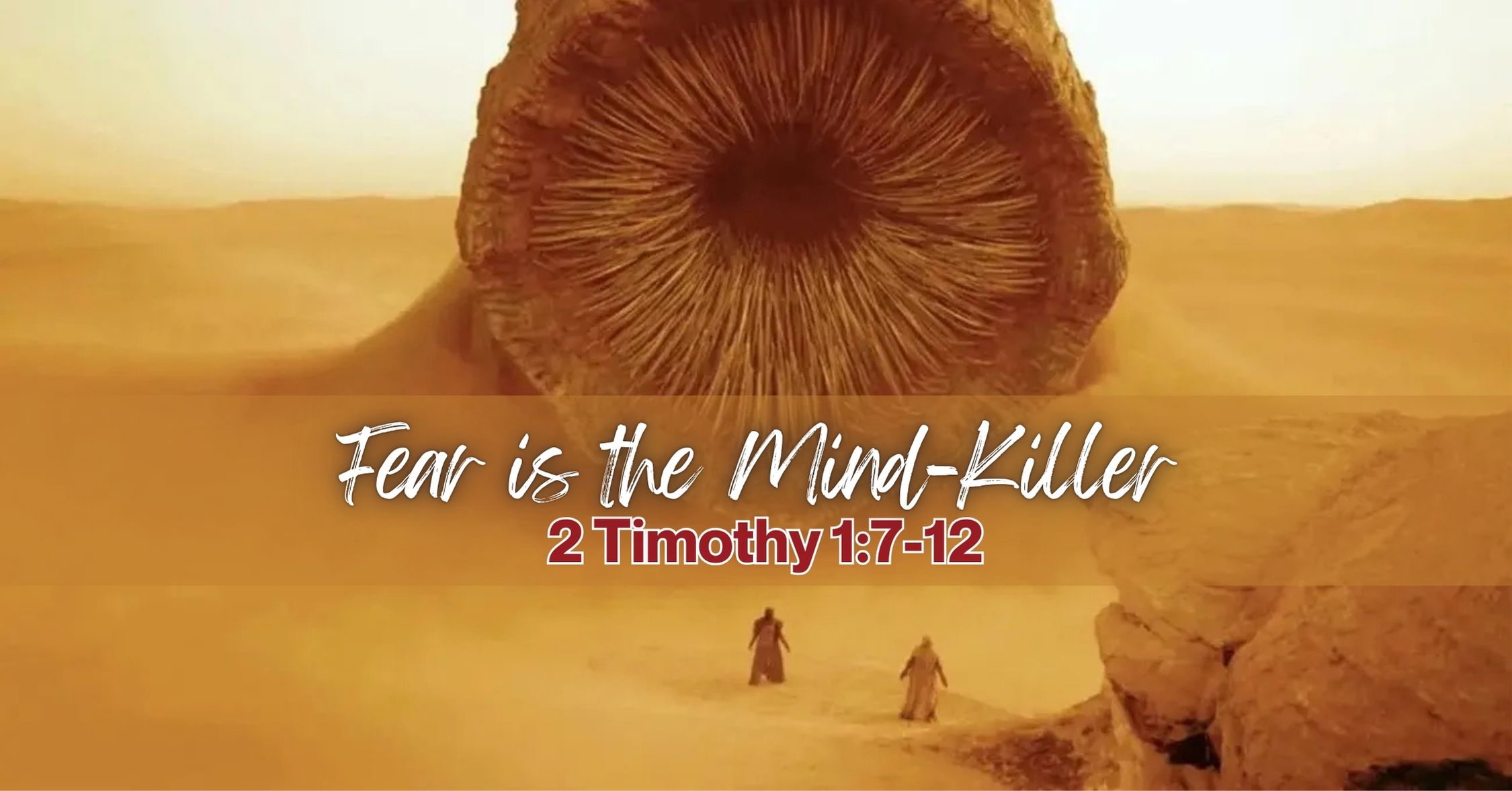
I must not fear.
Fear is the mind-killer.
Fear is the little-death that brings total obliteration.
I will face my fear.
I will permit it to pass over me and through me.
And when it has gone past I will turn the inner eye to see its path.
Where the fear has gone there will be nothing. Only I will remain.
The Bene Gesserit “Litany Against Fear” from the book Dune.
A powerful reminder that fear, as powerful as it can be, isn’t real. Fear can be conquered. Fear is simply a label we put on a feeling we have when our body is warning us about a possible threat. And that’s the key word – “possible.” We can be fearful of things that pose no threat or danger to us at all. But if our minds perceive it as a threat or even a potential threat, we CAN react with fear. We can take a nugget of information and turn it into a snowball of fear that spurs us to do hurtful, irrational, illogical, and sometimes downright stupid things. When I was six years old, my mom told me that laundry detergent could kill you. Technically, she’s right. If I swallowed a box of laundry detergent, and didn’t get help, it could kill me. But there are 20 steps in-between she failed to mention; the result of which had me holding my breath and RUNNING down the detergent aisle every time we went to the grocery store. I’d stand there at the other end, wondering how in the world my mom could so casually walk down this aisle of death! With my little sister Karen no less! I’d be pleading with my mom from the other end to hurry up and get out of there and heaven forbid she should actually BUY a box of death. I’d be holding my breath any time I was near the shopping cart!

Fear is like laundry detergent.
Its purpose isn’t to hurt us, but to help us. Like the cute little guy in the movie Inside Out, Fear is meant to be our body’s warning system. It puts us on high alert to potential danger so we can respond quickly if something turns out to be an actual threat. But if we let fear drive us, if we let fear consume us, it can become a threat. It can change us and alter the way we look at the world. The internment of the Japanese during World War II is a prime example of fear running amok. Despite absolutely no evidence of any actual threat by any person of Japanese ancestry, our government decided to lock up every person (including my parents and grandparents) of Japanese heritage. They forced innocents to move to remote locations in conditions worse than most prisons without any compensation for their loss. And although we were at war against the Germans and the Italians, people with ethnic ties to those countries were not typically rounded up. It was fear that drove that decision. The same thing happened after 9/11 with the Muslim community. Hate crimes against people who looked Arabic (whether they were Muslim or not) skyrocketed. Abuse, violence, and even death just for LOOKING like someone with Arabic heritage. Similar things have happened in the LGBT community, the Mexican community, and pretty much any group you can think of who have been labeled as “different.” In the “Litany Against Fear,” they describe fear as the “mind-killer” and the “little-death that brings total obliteration.” And that rings true on so many levels. Fear erodes at our being. Fear turns us into the worst versions of ourselves. That person who normally would be kind-hearted and caring, can turn into a rabid hate-monger. It’s the “little-death” because it happens without us consciously being aware of it. It’s a “mind-killer” because it erodes logical thought. We don’t suddenly say, “Today I’m going to be a hate-monger.” Fear gnaws away at our character and we develop prejudices and negative attitudes that don’t align with the truth at all. Instead, we develop our own “truth” and convince ourselves that our actions are not prejudiced or hateful but are done for our “protection” or the protection of those around us. But when you peel away the layers of it all, it comes down to fear.

Fear can be overcome.
It does not have to dictate our actions and it does not have to erode away at our character. In this letter to Timothy, Paul is trying to encourage him to boldly proclaim Jesus to the world. I don’t know if Timothy actually has a fear about doing this, but since Paul is in jail at the time, maybe he was trying to bolster Timothy’s spirits? Most of us would feel scared or downhearted if our mentor who we believed in was captured and put in jail. Paul is trying to encourage Timothy to carry on in his absence. After a few pleasantries, this is how Paul begins his letter.
7 For the Spirit God gave us does not make us timid, but gives us power, love and self-discipline. 8 So do not be ashamed of the testimony about our Lord or of me his prisoner. Rather, join with me in suffering for the gospel, by the power of God. 9 He has saved us and called us to a holy life—not because of anything we have done but because of his own purpose and grace. This grace was given us in Christ Jesus before the beginning of time, 10 but it has now been revealed through the appearing of our Savior, Christ Jesus, who has destroyed death and has brought life and immortality to light through the gospel. 11 And of this gospel I was appointed a herald and an apostle and a teacher. 12 That is why I am suffering as I am. Yet this is no cause for shame, because I know whom I have believed, and am convinced that he is able to guard what I have entrusted to him until that day. – 2 Timothy 1:7-12
We are not a timid people!
At least we weren’t designed that way. God created us to be bold. He created us to be strong, so that we could endure when life was tough. That we would have the strength to hold on to our faith and our beliefs even when the world turned against us. He wanted us to move beyond our fear – our fear of the unknown, our fear of the unexpected, our fear of rejection – and boldly show the world the love of Christ in tangible ways. Not just the people who make us feel comfortable. Jesus said it himself in Luke chapter 6, 32 “If you love those who love you, what credit is that to you? Even sinners love those who love them. 33 And if you do good to those who are good to you, what credit is that to you? Even sinners do that. 34 And if you lend to those from whom you expect repayment, what credit is that to you? Even sinners lend to sinners, expecting to be repaid in full. 35 But love your enemies, do good to them, and lend to them without expecting to get anything back. Then your reward will be great, and you will be children of the Most High, because he is kind to the ungrateful and wicked....”
But how often do we do that?
How often are we willing to step outside our comfort zone to do what’s right? Too often our fears overcome us and make us timid. We don’t do give as generously as we know we should or even could. We don’t speak up when we someone gets bullied or when people are gossiping about them behind their back. We don’t intervene when we see something wrong happening right in front of us and we allow our fear to convince us that it’s too dangerous to get involved or “not our business.” But that is how evil works – through our fear. It erodes our character, diminishes who we are supposed to be, and convinces us that the cowardly, cruel, and mean things to do are the right ones. God did not create us to be a “careful” people. He taught us to be wary of those things that might cloud our judgment or separate us from God, but God did not create us to be “careful.” We are supposed to be a bold people. The true test of a person is not how he or she behaves when things are good, but when things are at their worst. Do we hold onto our beliefs, or do we give in to fear? When we give in to fear, like we did after 9/11 and during World War II and to the LGBTQ community, we give in to the evil that is in the world. If we stand strong in our faith, we honor the Spirit God gave to us and we create a better world.
There are ways to fight fear![1]
According to Dr. Theo Tsaousides, we first have to respect and understand fear. Knowing our reactions are sometimes based on fear and not on reality can help us make better choices when fear enters into our lives. We need to understand where our fear comes from. Some things we fear are instinctive like giant bears and poisonous snakes. Sometimes fear comes from our own past experiences. If you nearly drown in water, you’re probably far more likely to be afraid of swimming than someone who has never gone through that experience. And sometimes we can stir ourselves up by the stereotypes, assumptions, and prejudices that lie beneath the surface of our minds. We start projecting what MIGHT happen and the fear of the possible drives us into making poor decisions. We need to be aware of what Dr. Theo calls “forecasting.” Just because something is possible, doesn’t mean it’s likely to happen, and we have to learn to differentiate between the likely and the unlikely.[2] Fear can be conquered, but if we don’t acknowledge our fear, if we don’t work toward overcoming it, we are likely to keep heading down a destructive path. And that is true not just for our lives, but our community, our society, and our country as well. We cannot let fear rule us. And we can be certain God did not create us that way.

Today, I can walk boldly down the detergent aisle.
I even buy the stuff on my own. That seems to be such a childish thing because it is. But so is being afraid of people because of the color of their skin. Or because they are gay. Or because they eat different foods than you do. Fear isn’t always rational. And for us to be the people God created us to be, we have to recognize our fear and grow beyond it. We cannot allow for fear to dominate our way of thinking. Fear can be a great tool to warn us, to heighten our senses, but it can also be a “mind-killer” and the “little-death that brings total obliteration.” There is nothing wrong with being afraid. The most brave, courageous people in the world are afraid at times like all the rest of us. The difference is they recognize the fear and don’t let it overwhelm them. Stand up to fear. Use it as the tool it was meant to be, but don’t let it use you. In the name of the Father and of the Son and of the Holy Spirit. Amen.
[1] https://www.psychologytoday.com/blog/smashing-the-brainblocks/201512/7-ways-fearless-people-conquer-fear
[2] Dr. Theo actually has “Seven Ways Fearless People Conquer Fear” but we only cover the first few. Definitely encourage you to read the rest. Very insightful article.
The Easy Way Out

We are wired to take the easy way out.
Sad but true. It’s a side effect of our autonomic system that protects us from harm. Think flight or fight responses. We are wired to favor shortcuts over conscious thought.[1] And while that might help us when a baseball is being thrown at our head, it is ironically those same systems which hold onto stereotypes, make assumptions, and are resistant to change. That’s why we feel good when we eat comfort food or wear our favorite shirt or watch The Princess Bride for the 1000th time. The familiar is easy on our brain. It brings us comfort. We don’t have to think so hard. But if we’re not careful, it may also close us off to new opportunities and new experiences that could make our life even better! Take for example Star Trek. I grew up with Kirk, Spock, and McCoy. The Original Series (TOS). When they announced they were making a NEW show with NEW characters, I vowed not to watch. How dare they?! Of course it could never be as good as the original. I didn’t watch the entire first season in protest, despite the praise of the press, the critics, and even fellow Star Trek fans (traitors!). But eventually, I decided to give it a chance. And you know what? It was GREAT! I LOVED it! How stupid I felt for not watching it sooner. I missed out on a whole year of amazing episodes (thank God for reruns). But we are resistant to change. Our minds favor comfort, and unless we make a conscious effort to be open to new experiences, we could be missing out on a lot of what the world has to offer.

“Comfort is your enemy.”[2]
When we think of evil in the world today, we often come up with the most horrible images we can think of. Images that rattle our very belief in the world around us. The Holocaust. The bombing of Hiroshima and Nagasaki. Serial killers like Charles Manson. Humanity in its ultimate depravity. But those are the extremes. Those may be the most vibrant and visual instances of evil in the world, but they are also (thankfully) very rare. Instead, we need to remember there is evil is around us every single day and if we aren’t careful, if we aren’t deliberate, we could be willful participants in it. Comfort is one of the ways evil works in and through us. It might seem weird to think of comfort as an agent of evil, but have you ever been so snug under the sheets you just didn’t want to get up? That nice warm feeling of being in just the right spot all cuddled up with your favorite blanket around you? It feels so safe and so happy that you don’t want anything to change. And that’s how the devil sucks you in. He comes to us in our comfort and says, “You don’t want things to change, do you? It’s all nice and cozy exactly how it is. We should make sure it stays that way.” You get lulled into believing that’s true, that it would be the worst thing in the world to change things up, to do something a bit differently. And you end up in the same rut you’ve always been in.
Even when the alternative is BETTER, we often are blinded by our comfort.
That’s what happens to the young man in our passage today. Leading up to this passage, Jesus has been healing and teaching throughout the region. The Pharisees confront him on the topic of divorce and Jesus has to correct the disciples who are shooing away the children from approaching him. Then this rich young man comes up to him and asks him the key to eternal life. And this is what he says.
16 Just then a man came up to Jesus and asked, “Teacher, what good thing must I do to get eternal life?”
17 “Why do you ask me about what is good?” Jesus replied. “There is only One who is good. If you want to enter life, keep the commandments.”
18 “Which ones?” he inquired.
Jesus replied, “‘You shall not murder, you shall not commit adultery, you shall not steal, you shall not give false testimony, 19 honor your father and mother,’ and ‘love your neighbor as yourself.’”
20 “All these I have kept,” the young man said. “What do I still lack?”
21 Jesus answered, “If you want to be perfect, go, sell your possessions and give to the poor, and you will have treasure in heaven. Then come, follow me.”
22 When the young man heard this, he went away sad, because he had great wealth.
23 Then Jesus said to his disciples, “Truly I tell you, it is hard for someone who is rich to enter the kingdom of heaven. 24 Again I tell you, it is easier for a camel to go through the eye of a needle than for someone who is rich to enter the kingdom of God.” – Matthew 19:16-24

The problem for the rich, young man isn’t money.
It’s comfort. When Jesus says it’s hard for a rich person to enter the kingdom of heaven, it’s not because being rich is evil or bad. It’s because having wealth makes you comfortable and it’s hard for us to leave a life of comfort. We’re wired to stick with what works. By all accounts, if we can accept his word as truth, the young man is a pretty good guy by our standards. He keeps all the commandments. He honors his parents. He loves his neighbor. Pretty good guy. But then Jesus challenges him, “If you want to be perfect, go, sell your possessions and give to the poor, and you will have treasure in heaven.” And the guy walks away sad, because it would mean giving up the life he is used to living. Familiarity breeds comfort and comfort is the enemy of progress.
Why change what works?
That’s the reason people are so fond of the saying, “If it ain’t broke, don’t fix it.” But if that were the case, we’d still be using horses for transportation. We’d all be fluent in Morse code. Our houses would be near the river so we could do our laundry every day. Most of us would agree life is better now than it was fifty years ago and better still from fifty years before that. Not only do we have modern conveniences like cars and telephones and washing machines, but Black people are no longer 3/5ths of a person, women are allowed to vote, and children are protected from unfair labor practices. Progress not only makes our lives better but our world better, too. To be sure, not everything we label as “progress” is actually progress, and we’re far from perfect, but overall, the world becomes a better place when we step out of our comfort zone and embrace what is possible.
This tendency toward comfort is dangerous for the church, too.
It’s one of the reasons why churches are shrinking and closing. We are unwilling to embrace ideas that take us out of our comfort zone. But as the world changes, we need to change with it. While the mission and the message stay the same, the way we transmit and deliver it should adapt to the world we live in. Imagine if we were literally delivering the message of God by Pony Express while the world is transmitting in 5G. That’s the danger of staying in our comfort zone. But it happens all the time. One of my friends found this out pretty quickly. He was the pastor of a small and at one time thriving church. They now inhabited a building far too big for the size of the congregation. But my friend is a person who has a passion for outreach and always has an eye for opportunities. He loves trying new and innovative ideas to bring people to Christ, but one of his parishioners complained. This person came up to my friend, his pastor, and literally said he didn’t want the church to grow. He liked it the way it was, and any new people would just mess it up. I wish this was an isolated incident, but it isn’t. Ask any pastor and they will have a story like this in their pocket. For me, it happened after giving a message about the possibilities of outreach. This guy came up to me afterward and asked how big I would want the church to grow, and I responded, “I guess as big as God wants it to grow.” And he responded, “I hope it doesn’t grow too big.” And he wasn’t a bad guy. Quite the opposite. A devoted Christian, always thinking of others, willing to give of his time, talent, and gifts. What he was saying in his own way was he was comfortable with the way things were and didn’t want that to change. And while I completely understand not wanting to lose that feeling, I hope we trust enough in God to know the difference between our discomfort and our disobedience and that we would choose the first over the second.

Psychologically and biologically there are many ways to explain this phenomenon.
But the important thing to know is we can overcome it if we choose to. By intention and discernment, we can put aside our tendency toward comfort and do what is best – for ourselves, for our community, and for the Kingdom of God. Intention – to do something with purpose by keeping our minds open to new opportunities; and discernment – to carefully examine our feelings when we resist. Otherwise, we may miss out on opportunities that can make our lives so much better – like watching Star Trek: The Next Generation. God has in store for you amazing opportunities if only we have the bravery to step forward in faith and embrace it. “For the Spirit God gave us does not make us timid, but gives us power, love and self-discipline (2 Timothy 1:7).” Dare to live a life of discomfort; to boldly go where no one has gone before!
[1] https://www.forbes.com/sites/nicolelipkin/2022/10/25/our-brains-want-to-be-lazy-heres-how-to-win-the-battle/
[2] https://www.huffingtonpost.com/joe-robinson/comfort-hazardous-to-health_b_957788.html
Craig’s Kitchen: Hawaiian Jello Cheesecake

Yummy on many levels!
This (sort of) no-bake dessert is easy to make but it’s multiple layers will give it great flavor and texture in every bite. You’ll be as surprised as I was that it’s so simple, but it does take time as each layer needs time to set in its own way. I call it Hawaiian Jello Cheesecake because the first time I had it I was told it was Hawaiian and the only place I’ve had it are in Hawaiian fast food restaurants. Other than that, I have no idea what its connection is to Hawaii (so if anyone has insight, feel free to share).
Ingredients
Crust:
- 12 tbsp butter (1.5 sticks) softened but not melted
- 1/2 cup brown sugar, packed
- 1.5 cups all-purpose flour
- 1 cup chopped walnuts or macadamia nuts
- 2 tbsp melted butter for buttering the pan (use only what you need)
Filling:
- 1 small (3 oz) package lemon Jello
- 1 cup hot water
- 3/4 cup sugar
- 1 8oz. package of cream cheese room temperature
- 2 cups heavy cream (1 pint)
Topping:
- 1 large package of Cherry or Strawberry Jello
- 3 cups of hot water
Directions:
- Preheat oven to 375 degrees
- Coat 9×13 inch pan with melted butter
- Cream together softened butter and brown sugar
- Add flour and nuts; mix together
- Press dough with your hands into your 9×13 inch pan making sure it is evenly spread
- Bake for 10 minutes or until crust is brown; let crust cool
- Dissolve Lemon Jello with 1 cup hot water and mix thoroughly and let cool
- Cream together sugar and softened cream cheese
- Create whipped cream from heavy cream and fold into sugar and cream cheese
- Add Lemon Jello into mixture and fold until well mixed
- Once crust is no longer hot, pour filling on top and place in refrigerator until solid
- Create Jello topping pouring 3 cups hot water onto Cherry / Strawberry Jello; let cool
- Once filling is solid and Cherry Jello is cool, pour Jello on top and refrigerate until solid
- Cut and serve

Director’s Cut
Buttering the pan – Make sure you butter the bottom well. The sides only need to be buttered about a half inch or so since it only needs to help release the crust. It will make it easier to lift out of the pan.
Chopping nuts – You want the nuts big enough so that you get that texture and crunch when you bite into it but now so big that it’s a big surprise on your teeth. I used chopped walnuts pre-packaged and even then broke it up into smaller bits.
Cooling the crust – One trick my wife taught me was to put the crust in the refrigerator to quicken the cooling process. While the crust is cooling don’t be tempted to cool the filling mixture because it needs to set in the shape of the pan.
Whipped cream dispenser – I know not everyone has one of these but it does speed up the process of creating whipped cream (and saves your wrist, arm, and elbow). It worked so well and so quickly. Of course you can always do it the old fashioned way.
I found the original recipe for this online from a very old blog. The author, Cathy, hasn’t written anything since 2011 but the picture she took looked the most like what I was searching for. I was inspired to try it after having it at The Loft in Cypress – one of my favorite Hawaiian plate lunch places. I’ve also had it at different potlucks at churches with Hawaiian roots. Although I found many similar recipes this was still the closest to what I remembered. Thankfully, it was easier to make than I anticipated. I made it for our “Fruit of the Spirit” Bible Study class and it seemed well received so I took the original recipe and clarified some of the steps and hopefully made it easier to make. It does take time in-between steps but not that much actually. And it’s worth the wait.
The Devil Made Me Do It

Jesus, full of the Holy Spirit, left the Jordan and was led by the Spirit into the wilderness, 2 where for forty days he was temptedby the devil. He ate nothing during those days, and at the end of them he was hungry.
3 The devil said to him, “If you are the Son of God, tell this stone to become bread.”
4 Jesus answered, “It is written: ‘Man shall not live on bread alone.’”
5 The devil led him up to a high place and showed him in an instant all the kingdoms of the world. 6 And he said to him, “I will give you all their authority and splendor; it has been given to me, and I can give it to anyone I want to. 7 If you worship me, it will all be yours.”
8 Jesus answered, “It is written: ‘Worship the Lord your God and serve him only.’”
9 The devil led him to Jerusalem and had him stand on the highest point of the temple. “If you are the Son of God,” he said, “throw yourself down from here. 10 For it is written:
“‘He will command his angels concerning you
to guard you carefully;
11 they will lift you up in their hands,
so that you will not strike your foot against a stone.’”
12 Jesus answered, “It is said: ‘Do not put the Lord your God to the test.’”
13 When the devil had finished all this tempting, he left him until an opportune time. – Luke 4:1-13

When the devil tempted Jesus, what do you think Jesus saw?
During Halloween, when I was growing up, I’d see other kids dress up like the devil with the red mask and plastic body suit and it would freak me out! I knew it wasn’t real, but still, you have to wonder what kind of kid picks Satan as his costume of choice. Probably someone you want to avoid. Of course, if the devil showed up in person, I don’t think that’s what he would look like. Too obvious. I like the way Aaron described the devil in the film Broadcast News. “What do you think the devil’s going to look like if he’s around? Come on, no one is going to be taken in by a guy with a long, red pointy tail… He will be attractive. He’ll be nice and helpful. He’ll get a job where he’ll influence a great, God-fearing nation. He’ll never do an evil thing, he’ll never deliberately hurt a living thing. He’ll just bit by little bit lower our standards where they’re important. Just a tiny little bit. Just coax along. Flash over substance. Just a tiny little bit…and he’ll get all the great women.” So, what do you think Jesus saw in the desert during those forty days?
Would it surprise you to know the devil is never described in the Bible?
At least not in a physical sense. There’s no mention anywhere of what Satan looks like in any of the times he pops up. But I think that’s on purpose. Because evil can take many different forms. Like a chocolate chip cookie. Certainly, THAT’S evil. At least to my stomach. But seriously, evil can appear in many ways – temptation, gossip, slander, abuse. Sure, a guy with red skin, horns and a tail might be scary, but scary and evil are two different things. It would make more sense if the devil were just as Aaron described, someone attractive and charismatic who would catch you off guard and compromise your morals.
And does the devil even exist?
Some believe the devil is a physical being. Some believe the devil is a spiritual being. And some believe the devil is the personification of evil in the world. There are a ton of references in the Bible to evil but surprisingly very few specifically about Satan or the devil or any of the other names we’ve come to associate with him. And none of them actually tell us if these different incarnations of evil are the same. But maybe that doesn’t matter. No matter what form you believe the devil takes, we can all agree evil exists and we are called to resist and fight it wherever it crops up. When Jesus was tempted in the desert by the devil, he was challenged in many ways – and none of them by what we would probably think of as “evil.” The devil didn’t torture Jesus. He didn’t attack him. He simply tempted him with rational arguments and promises of an easier life. That is the real trick of the devil – not to come at us directly, but to tempt us in our weakest areas.


Sometimes I think it’s better if we don’t believe in the devil.
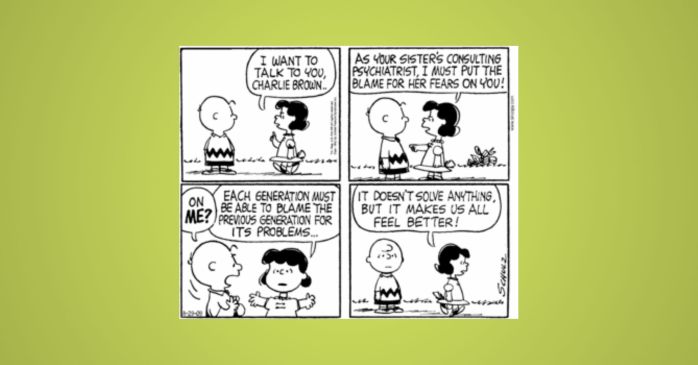
At least not as some sort of physical being like we read about in this passage. Not that he does or doesn’t exist. Not that he might be a physical or spiritual being. But for us to stand up to evil in the world, we are better off not believing there is one being orchestrating all of it. Because when we believe in the devil, it becomes too easy for us to relinquish any personal responsibility for the horrors we either allow to happen or don’t do anything to prevent. It is so easy for us to say “the devil made me do it” when (let’s face it) you did it. Or I did it. Or someone else did it. The devil didn’t make you do it. In fact, the devil doesn’t hold any power over any of us. The only way the devil succeeds in his schemes is because we give him the power to do so – either by our actions or inactions. We can justify it any way we want, but it amounts to the same thing – we are complicit in the evil around us.
Humanity loves to avoid responsibility.
Just turn on the news any day of the week and you can watch the circus of blame as people keep pointing fingers at one another. Whether the issue is healthcare, homelessness, or racism, everyone is blaming someone, but no one is getting anything done. It’s like that poem about four people named Everybody, Somebody, Anybody, and Nobody. There was an important job to be done (insert your favorite cause here) and Everybody was sure that Somebody would do it. Anybody could have done it, but Nobody did it. Somebody got angry about that because it was Everybody’s job. Everybody thought Anybody could do it, but Nobody realized that Everybody wouldn’t do it. It ended up that Everybody blamed Somebody when Nobody did what Anybody could have done.

Every time there’s a mass shooting, I think of this story.
“Everybody blamed Somebody when Nobody did what Anybody could have done.” The number of mass shootings since the pandemic has remained extremely high. Last year was the lowest in five years and there were still over 500 events in America alone.[1] A study done in 2023 shows Americans in are in favor of still stricter gun control laws (58% although some as high as 64%) even after the passage of the Bipartisan Safer Communities Act which enacted significant gun control legislation for the first time in three decades.[2] And while there is disagreement about how it should get done, there are a couple of issues where there is wide agreement – banning gun sales to those with mental illness and raising the minimum age to 21.[3] And nearly two-thirds of all Americans are in favor of banning high-capacity magazines (66%) and assault-style weapons (64%).[4] Yet it took three decades to pass something meaningful because Congress was afraid. Afraid of the NRA. Afraid of losing power. Afraid of losing funding. Fear has held them back from doing the right thing for thirty years, and even then we did not have the courage to do more when Americans were crying out for more. The words of Jesus echo loudly in my ears, “What good will it be for someone to gain the whole world, yet forfeit their soul? (Matthew 16:26)”

Is that the devil’s fault?
Did the devil make them water down legislation that could have done more? Or is evil as simple as good men doing nothing? John Stuart Mill said it in 1867, “Bad men need nothing more to compass their ends, than that good men should look on and do nothing.”[5] We have to be better. We have to do better. For evil to thrive in the world doesn’t have to be the machinations of some evil being manipulating the world from behind. For evil to thrive is simply good men looking on and doing nothing. We all get caught in situations where it would be easier, simpler, less problematic, less hassle, and less headache for us to do nothing. We’ve all been there when we would rather call in sick, skip church, relax and watch a football game. Challenge yourself the next time you are tempted to sit idly by when you could or should do something, to do it. When you think about the injustice in the world, just remember, we can do something about it. The devil only has power over us when we allow it. The devil’s greatest power is in the willfulness of humankind sitting idly by when we could be doing something to stop the evil in the world.
[1] https://www.cnn.com/us/mass-shootings-fast-facts/index.html (A mass shooting is defined as a gun incident where 4 or more people are either injured or killed as a result of the use of a firearm)
[2] https://www.pewresearch.org/short-reads/2024/07/24/key-facts-about-americans-and-guns/ and https://www.cnn.com/2023/05/26/politics/cnn-poll-gun-laws/index.html ; Bipartisan Safer Communities Act – https://en.wikipedia.org/wiki/Bipartisan_Safer_Communities_Act
[3] https://www.pewresearch.org/short-reads/2024/07/24/key-facts-about-americans-and-guns/
[4] Ibid.
[5] https://www.independent.co.uk/voices/top-10-misattributed-quotations-a7910361.html
Writing With Ink

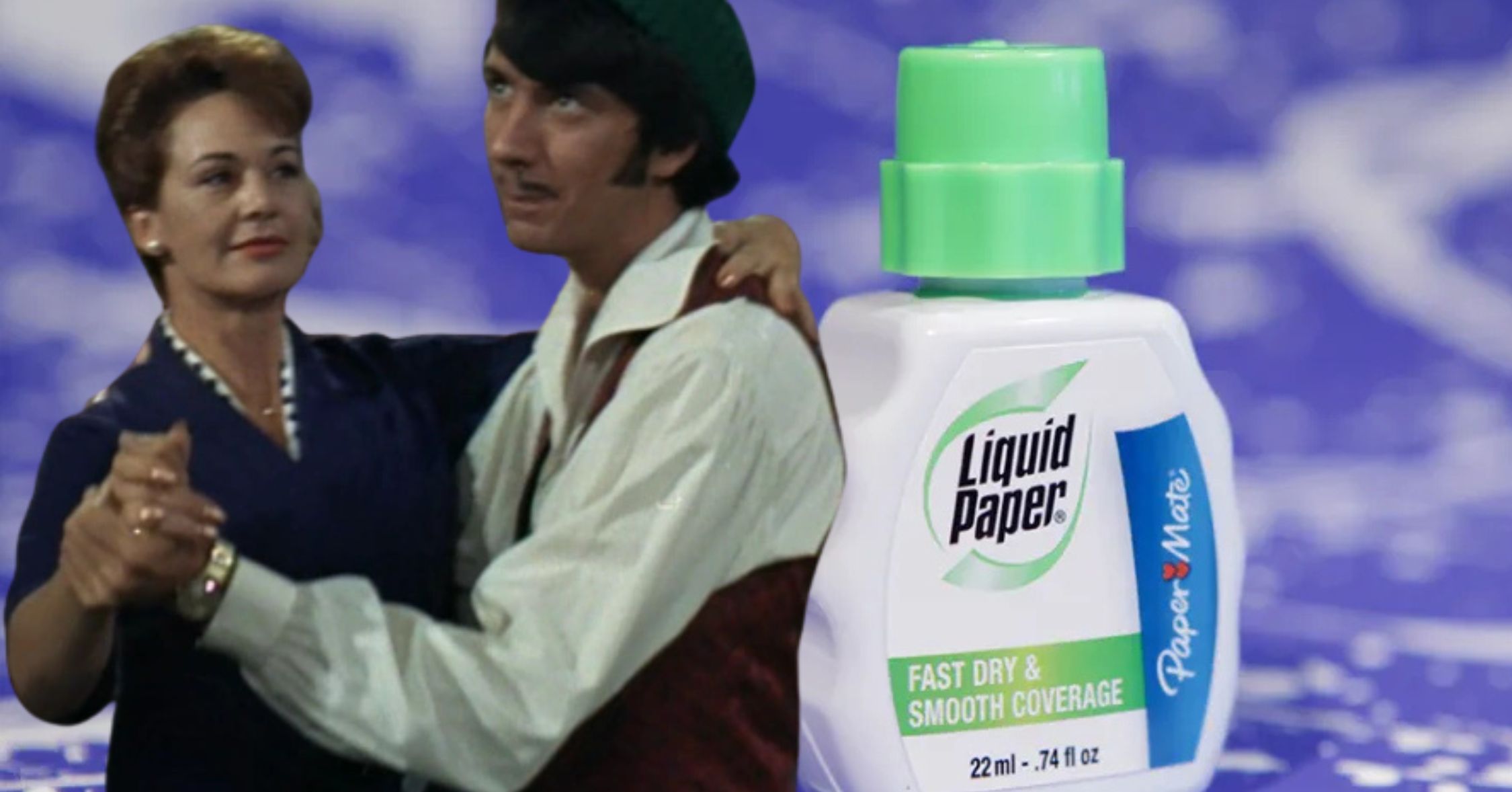
Betty Nesmith Graham made her fortune because of me.
At least in part. Betty is the mother of Michael Nesmith from the hit 1960’s band The Monkees. But she is probably more well known, if not by name then by her invention – Liquid Paper. Betty worked as an executive secretary and wanted to find a way to more easily fix her typos. At the time, computers were a thing of science-fiction instead of real life and typewriters didn’t have a good way erasing her mistakes. Being an artist, she took the lessons learned from her artistry and applied them to her work. She was quoted as saying, “…an artist never corrects by erasing, but always paints over the error.”[1] She applied that to her work by creating her own paint solution and thus Liquid Paper was born! I still remember the first time at school I was asked to write with a pen. It was exciting! And a bit nerve-wracking. Not being able to erase my mistakes bothered me. If I made a mistake, I wasn’t the kind to just keep going. I would stop. Erase it as best as I could (sometimes ripping the paper I was trying so hard). And make the correction. But with a pen, that wasn’t possible. Until Liquid Paper. What a Godsend that was! Make a mistake? No problem. Just “white it out.” Sure, you’d have to wait a few seconds, but it looked so clean and neat afterward. I can’t remember when it happened, but one of my teachers (I think it was Ms. Logan in junior high) told us she didn’t want us using Liquid Paper. Or erasable pens. Or pencils. She said, if we made a mistake, just cross it out and keep going. Seriously? That bothered me. If you’ve got something why not use it? It just looked ugly crossing things out. The first time I did it, there was this one section where I basically crossed out nearly an entire paragraph. It was actually just one sentence I had to keep re-writing because I kept making mistakes, but it looked like a paragraph it was so long. But I learned an important lesson from her. If I wanted to improve, I had to take the time and be intentional about what I was doing.
Intention provides direction.
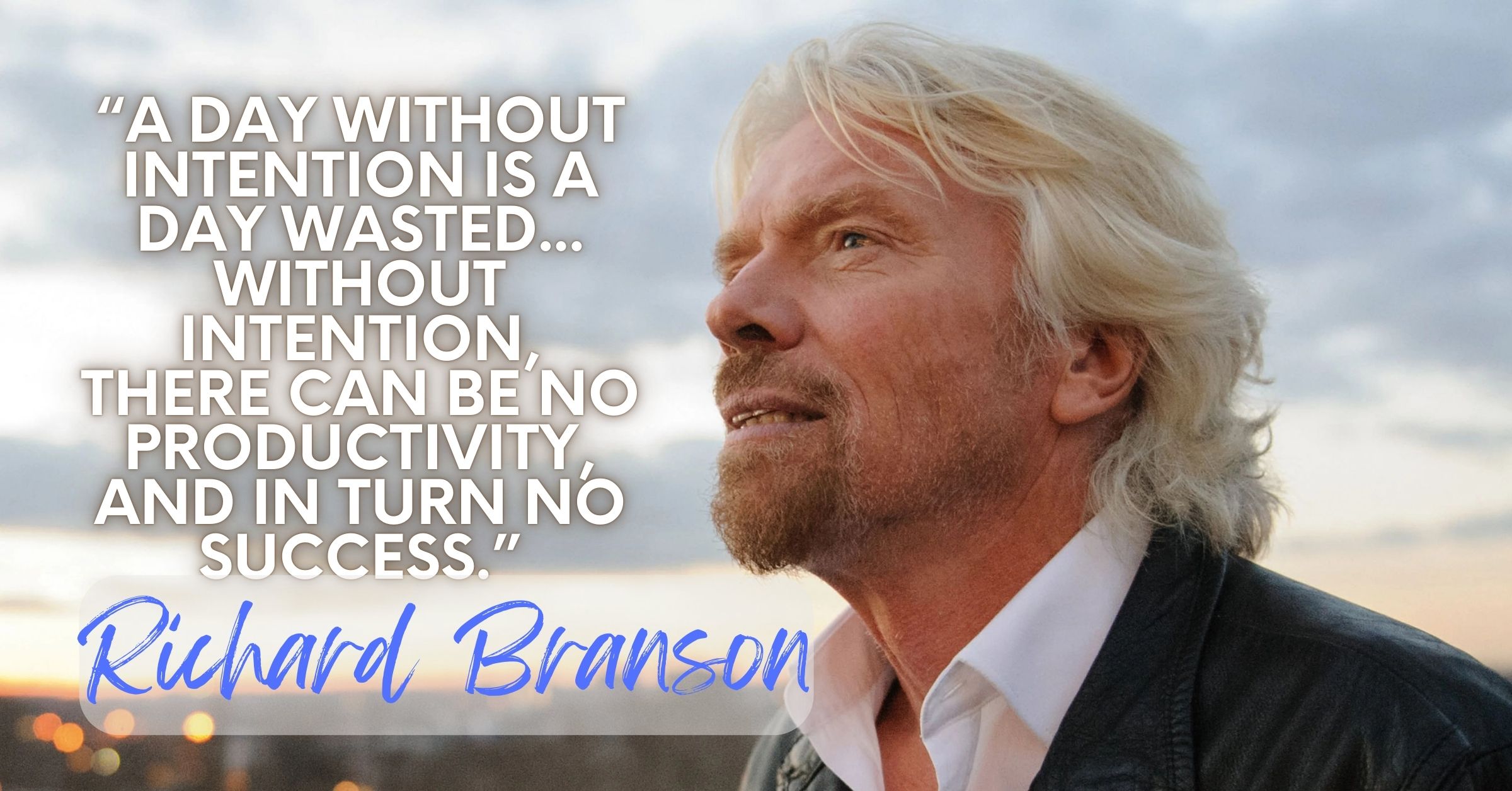
Richard Branson wrote, “A day without intention is a day wasted. It doesn’t matter if you want to get some exercise, write an essay, or start a business; without intention, there can be no productivity, and in turn no success.”[2] Living a life of intention helps to guide us and give us a sense of direction, a sense of purpose. It also provides a space between impulse and reckless abandon. How many times have you said something rash or did something out of anger or spite? How many times have you maybe said what you were thinking and wish you hadn’t let that little nugget out? If we’re honest about it, at one time or another we probably have all done that. But wouldn’t it be great if we didn’t? I find my life turns out for the best when I live a life of intention, and I think that’s the kind of life God wants us to lead. If you have a Bible or a Bible app, would you please turn to Philippians 4:8-9? It’s toward the back half of the New Testament. Philippians 4:8-9. Now, that is not to say we have to live a regimented life or a life devoid of spontaneity. One of my favorite lines in the movie The Sure Thing is when Alison tells Walter, “Spontaneity has its time and its place.” But that’s not what I mean at all. You CAN be spontaneous and still be intentional because being intentional means being purposeful. It means directing your life in a certain direction. If all we are is regimented, if all we can do is live by a specific plan, then we won’t know what to do when something surprises us as life often does. Being intentional doesn’t mean we have to plan for everything. Being intentional is a matter of being and of thought. Intentionality is a matter of spiritual discipline.
8 Finally, brothers and sisters, whatever is true, whatever is noble, whatever is right, whatever is pure, whatever is lovely, whatever is admirable—if anything is excellent or praiseworthy—think about such things. 9 Whatever you have learned or received or heard from me, or seen in me—put it into practice. And the God of peace will be with you. – Philippians 4:8-9
Think about such things!
“Whatever is true, whatever is noble, whatever is right, whatever is pure, whatever is lovely, whatever is admirable – if anything is excellent or praiseworthy – think about such things.” That’s the kind of life God wants for us to lead, to focus on the aspects of life that are good and true and to leave everything else behind. Paul teaches us that when we are able to do that, when we fill our minds with the excellent and praiseworthy, we will have the peace of Christ in our hearts. Paul is writing to the people in the church at Philippi. And to hear these words from him at this time in his life is pretty astonishing. Paul is writing from prison and yet he is full of hope. Instead of seeing failure, he sees opportunity. He talks about how he is reaching the prison guards with the good news of Jesus and anticipates he will be released. But even if not, even if this is where he will die, Paul is satisfied. And that’s the kind of life he is writing about to this church. He encourages them to “conduct yourselves in a manner worthy of the gospel of Christ (Philippians 1:27).”
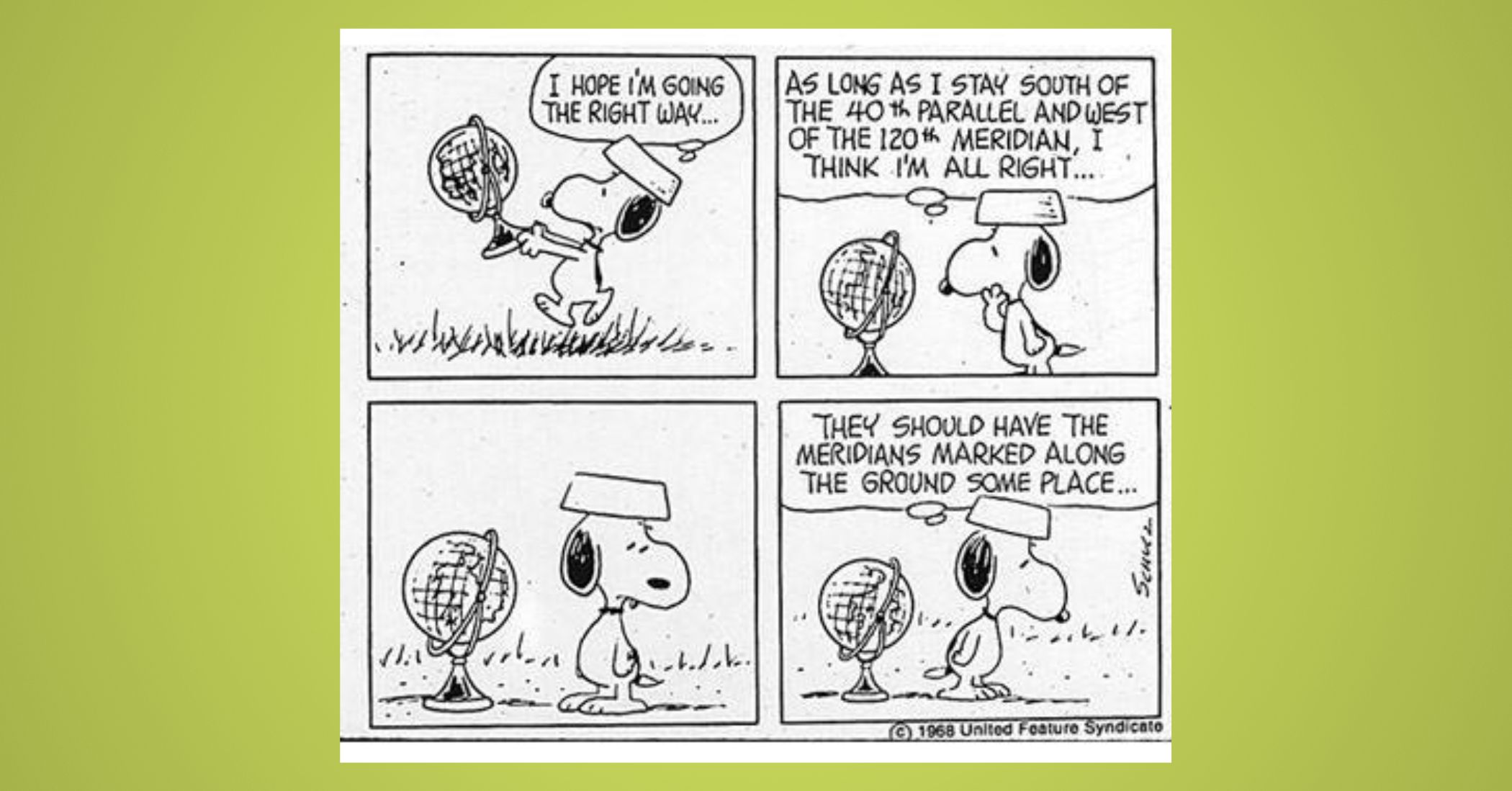
For us to grow in our faith we have to be intentional.
We have to be intentional in our prayer life. We have to be intentional in our reading of the Bible. We have to be intentional about seeing the world through the eyes of Jesus. Of loving the unlovable. Of reaching those furthest from God. Of looking for opportunities to share the love of Christ. It’s so easy to become “too busy” for God. But that’s what happens when we are not intentional about putting God first. We drift away and pretty soon, we don’t even realize how far we have left the path. The passage we read from Matthew this morning is one that sticks with me constantly. “‘You will be ever hearing but never understanding; you will be ever seeing but never perceiving. 15 For this people’s heart has become calloused; they hardly hear with their ears, and they have closed their eyes. Otherwise they might see with their eyes, hear with their ears, understand with their hearts and turn, and I would heal them (Matthew 13:14-15).’” It pains me to think that so many people in the world have eyes to see and ears to hear, but neither see nor hear God in their lives. But couldn’t the same be true of us? Aren’t there times we drift away from God and become lackadaisical in our faith? Being intentional is a discipline and one if we aren’t careful to cultivate easily slips away from us.
Intentionality is the key to life.
You’ve probably read those guides to a healthy marriage. Almost every single one says to carve out time for your spouse. Seems obvious. But most marriages suffer because they forget this one simple rule. And from this one simple rule an entire host of problems happens. Lack of communication, feeling lonely, working at odds with one another, feeling unwanted. Which of course leads to even worse problems and which often leads to divorce when we aren’t even looking. But that’s the problem isn’t it? We aren’t even looking. Ferris Bueller said, “Life moves pretty fast. If you don’t stop and look around once in a while, you could miss it.”[3] We don’t want that to happen to us, especially in the areas of our life that are most important – our spouse, our kids, our faith. But that’s what happens when we let things slip away.

Andy Stanley gave this great example once.
He gave the example that we often sacrifice family time because of work or school or other obligations, but that you can’t ever get those moments back. He was pointing out how important it is to be intentional with your family, to carve out time for them and not let life slip away from you. It’s not like you can gather up your family on Sunday morning and say to them, “Okay, I know I said I’d be home to have dinner with you all week, but I wasn’t able to do it, so here’s what we’re going to do. On the way to church this morning, we’re going to stop by Waffle House and have some pecan waffles and hash browns scattered and smothered! When we’re done there, we’ll drive over to Denny’s and eat the Grand Slam. After that we’ll head over to IHOP and have all-you-can eat pancakes, okay? That will make up for all the meals I missed this week and we can have this great family bonding time and everything will be okay.” It just doesn’t work like that.
If we aren’t intentional, we lose focus, and our lives can become just a long string of events.
In a world of growing choices, it’s easier and easier to drift from one thing to another and not really think about what it is YOU can contribute to the great tapestry of life. It’s too easy to let your gifts become squandered as the little things eat up your time, your money, and your attention. Like we’ve been saying, you have to be intentional in what you do, including and maybe especially your faith. God shouldn’t take a back seat in your life. There was a great line from the very first episode of Studio 60 on the Sunset Strip where these two characters are talking about how topsy-turvy everything is on the set and one of them says, “do we let Jesus be our co-pilot?” And the other one responds, “My mom used to say to me, ‘If Jesus is your co-pilot, you should trade seats.’” Be intentional. About your family. About your marriage. About your job. About your faith. Take time for the things that are important and don’t let time escape you for the things that aren’t. Make sure to avoid the rabbit holes and bunny trails that so easily divert us from what we intend to do. The truth is, none of this is anything you probably don’t already know, but if we don’t remind ourselves once in a while what’s important, we can lose everything of any real meaning. Our lives are not written in pencil. They are written in ink. And there is no Liquid Paper to correct some of the mistakes we make if we are not careful.
[1] https://en.wikipedia.org/wiki/Bette_Nesmith_Graham
[2] https://www.virgin.com/richard-branson/power-intention
[3] Ferris Bueller’s Day Off
Judge Me By My Size Do You?

Size isn’t everything. Just ask Yoda.
Yoda is a Jedi Master, a wielder of the Force, and the one who trained Luke Skywalker to become a Jedi Knight. But it took some heavy convincing. Yoda wasn’t sold on Luke to begin with. Too old, too fixed in his ways. But finally, he gives in and Luke actually makes some real progress, becoming more and more adept at wielding the Force. While they were training, Luke’s X-Wing starfighter sinks into the swamp and in distress Luke exclaims, “We’ll never get it out now,” as all but a small part of the wing is below the muck. Immediately Yoda chirps up and says, “So sure are you? Tried have you? Always with you it can’t be done.” After some arguing Luke says, he’ll try and Yoda exclaims, “No! Do or do not. There is no try.” But Luke can’t do it and he tells Yoda that the ship is too big. Yoda tells him, “Size has no meaning. It matters not. Look at me. Judge me by my size do you?” Then Yoda does what seems impossible and single-handedly lifts this gigantic starship out of the swamp. Luke looks on in awe and whispers, “I don’t believe it.” And Yoda responds, “That is why you fail.”

Luke’s failure had little to do with the size of the ship.
He fails because he lacks faith. And who could blame him? Faced with such a daunting task, would we believe any differently? His ship is literally made of tons of metal and Yoda expects him to move it with just the power of the Force. Luke says to him, “Master, moving stones around is one thing. This is totally different!” And Yoda responds, “No, only difference is in your mind! You must unlearn what you have learned.” What is it we have learned that we might have to unlearn?
We are a size-oriented society.
In so many ways we equate “bigger” with “better.” In sports we value home runs over singles, the slam dunk over the lay-up, the “Hail Mary” over the slow march down the field. We talk about “Big Business” and “Big Money” and look at the driving influence of such wealthy entrepreneurs as the Koch brothers, Bill and Melinda Gates, and Warren Buffett. Even in the church we talk about the “size” of our congregations. Mega-churches are seen as more “successful” because they have higher attendance, can afford big buildings and newer technology, and have large campuses. But before we buy in to the philosophy that “bigger is better” let’s not forget that Christianity, the world’s “biggest” religion[1] was not started by the rich and powerful, but by a Jewish carpenter and his twelve, normal, everyday followers. We are so quick to believe that a task is too big or a job too daunting because of its scope and size, but the truth is success can happen on any level.

Think back to the early church.
I mean the REALLY early church. The church before buildings and sanctuaries and fellowship halls. Now, they not only didn’t have a regular place to meet, they didn’t have much of anything else either, but the Bible describes this group of people as being completely at peace with one another. We stress out over a lack of money, lack of resources, and lack of people, but the early church didn’t have any of those things either. What they DID have was something available to any church no matter what size they were. As we read this passage, think about the things they did have and how similar or different it is to our churches today.
42 They devoted themselves to the apostles’ teaching and to fellowship, to the breaking of bread and to prayer. 43 Everyone was filled with awe at the many wonders and signs performed by the apostles. 44 All the believers were together and had everything in common. 45 They sold property and possessions to give to anyone who had need. 46 Every day they continued to meet together in the temple courts. They broke bread in their homes and ate together with glad and sincere hearts, 47 praising God and enjoying the favor of all the people. And the Lord added to their number daily those who were being saved. – Acts 2:42-47
Did you notice what the church had?
Devotion. Awe. Common belief. Giving spirit. Togetherness. Did you notice what wasn’t mentioned? Money. Buildings. Pews. Programs. None of the things we associate with the modern church. The only time they came close to talking about money was when they mentioned that the followers sold their things and gave to everyone who had need. And still “the Lord added to their number daily those who were being saved.” Could you imagine if that were true here? Even if the Lord added to our number weekly, we would grow faster than our building could handle. All they needed were these common core attributes – devotion, which they exhibited through worship and study; an awe of God and the work he was doing in the world; common belief in Christ without fighting about the little things; a giving spirit which they showed by doing for those around them; and being together. That word is mentioned three times in this short passage. “Together.” They were together in serving the Lord. When we have those attributes, we are open to the designs of the Holy Spirit, and he can do amazing things with us that we haven’t even thought of.
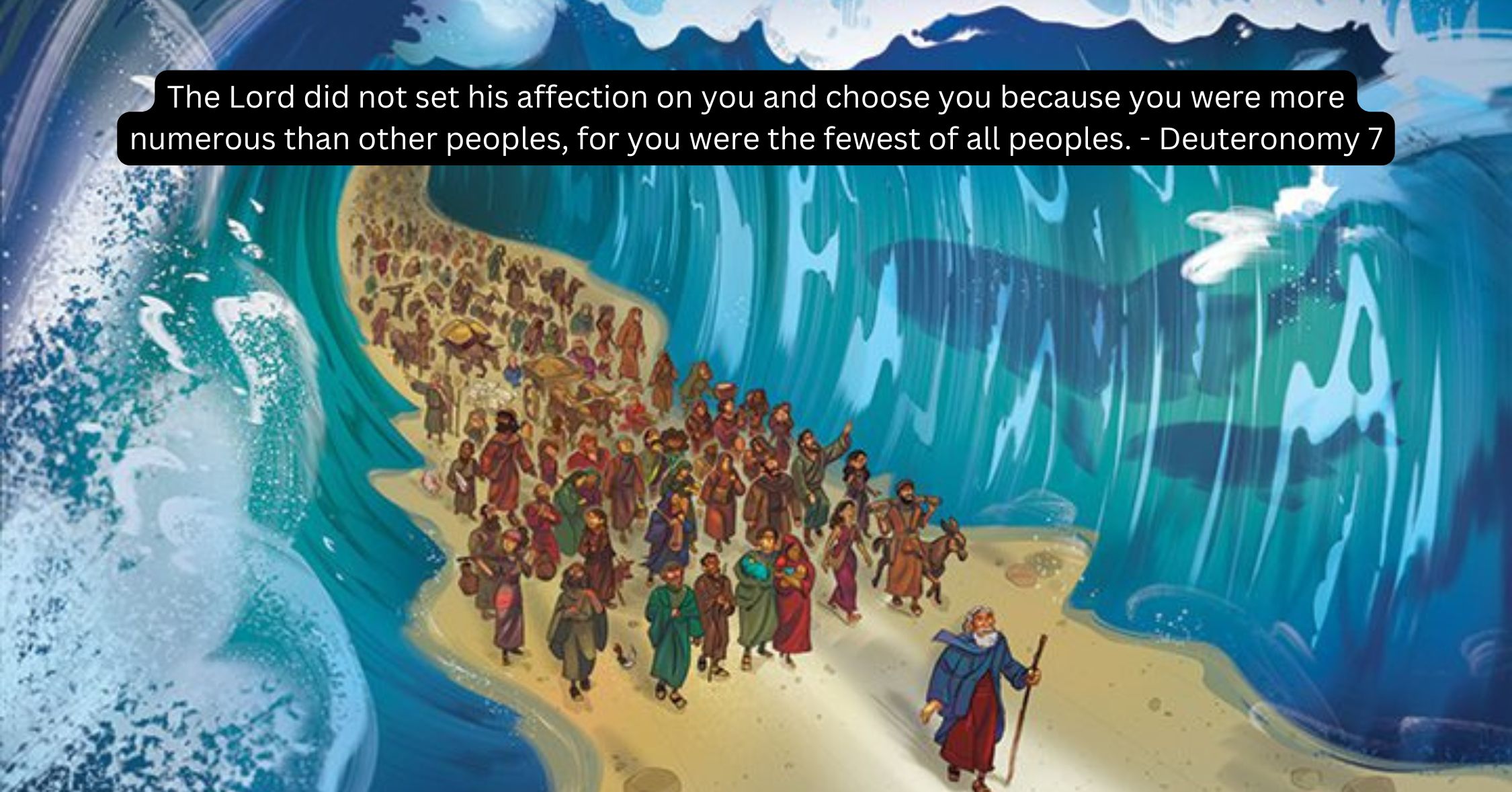
Size alone is not a measure of worth to God.
If God only cared about size or wealth or prestige or any of the other things the world generally measures “success” by, he never would have chosen Israel to be his chosen people. Listen again to what Moses himself told the assembled peoples of Israel in Deuteronomy, “The Lord did not set his affection on you and choose you because you were more numerous than other peoples, for you were the fewest of all peoples. But it was because the Lord loved you and kept the oath he swore to your forefathers that he brought you out with a mighty hand and redeemed you from the land of slavery, from the power of Pharaoh king of Egypt.” (Deuteronomy 7:7-8). We see in the Bible, time and time again how true this statement is; that God does not pick the mightiest or the smartest or the strongest of people to be his messengers. Often, they are normal, flawed people like you and me. Take for example the story of Samuel. If you remember, God rejects Saul as King of Israel and tells Samuel to go looking for a new one. During his search he goes to meet Jesse of Bethlehem and immediately, he thinks he’s found the new king in Eliab, Jesse’s oldest son, but the Lord hears Samuel’s thoughts and says to him in 1 Samuel 16:7, “Do not consider his appearance or his height, for I have rejected him. The Lord does not look at the things man looks at. Man looks at outward appearances, but the Lord looks at the heart.” So in a scene reminiscent of Cinderella[2], Samuel asks to see each of Jesse’s other sons. But as each one walks by, God says “Nope, not the one.” And after all seven of Jesse’s oldest sons walk by and having the Lord reject them all, Samuel asks “Are these all the sons you have?” and Jesse admits, “There is one more, but he’s out in the back tending the sheep.” Tending the sheep! Could there BE any clearer sign for Samuel? It was like the glass slipper fit right on this youngest son’s foot. And when the youngest son walks in, God tells Samuel, “That’s the one.” And so began the reign of King David, slayer of Goliath and long considered the greatest king of the Israeli people. David wasn’t the biggest or the oldest or the smartest nor was he free of sin, but God did say David was a man after His own heart, and THAT’S what was important to God. His heart, not his size.
Craig Groeschel is one of my favorite pastors.
And it’s not because we share the same name, although admittedly it’s kind of cool. And it’s not because he has a HUGE church, because he does. It’s because he had the bravery and most importantly, the FAITH to step out and do what God was calling him to do. Craig actually used to be a United Methodist pastor, but he felt called to start a new church and for whatever reason, the United Methodist church told him “No.” So, he left. Not with a grudge. Not with bitterness. But with a strong sense of what God was calling on him to do. He didn’t have anything to start with that you would think would set him up for success. They didn’t have a big building to meet in. They didn’t have a ton of money. They didn’t have a large children’s ministry. He often tells the story that they were so small that worship consisted of meeting in a garage with an overhead projector run by a guy with a missing finger. The children’s ministry literally met in a closet in the garage, and he likes to joke that they came out of the closet every week. But he felt sure this was what God called him to do. He stayed faithful to it, he dared to do things differently, he followed where God was leading instead of taking the safe route and more people came to Christ. Today that church that started in a garage now has more than 26,000 people every week. But it’s not because his church is big that people are coming to Christ. People are coming to Christ and as a result the church is big. We often confuse the two and make size the goal instead of what we’re supposed to do – transform lives.

Like Yoda said, “Size has no meaning.”
We’ve seen throughout the Bible that God does amazing things with small groups of people. Gideon and his army of 300. David and his slingshot. Jesus and the 12 disciples. As Mark Twain put it, “It’s not the size of the dog in the fight. It’s the size of the fight in the dog.” That’s what matters. Are we willing to live up to the core values that Christ taught us? Because there really isn’t anything we can’t do if we are willing to go all out. If we are willing to do what’s necessary to reach people for God, we can make it happen. But are we willing? Because we will only succeed if like those early disciples we are devoted, we are in awe of what God can do in us, we agree on our common beliefs, we have a giving spirit, and we do it TOGETHER. In the name of the Father and of the Son and of the Holy Spirit. Amen.
[1] https://www.npr.org/sections/thetwo-way/2015/04/02/397042004/muslim-population-will-surpass-christians-this-century-pew-says
[2] http://www.asails.freeserve.co.uk/King%20Eliab.htm. Rev. Andrew Sails used the Cinderella reference in a sermon on a completely different subject, but it was such a clever comparison, I wanted to use it.
 Craig's Corner