
Top 10 Reasons People Didn’t Come Back to Church

Thom Rainer, author of many books and an expert on church growth and decline, did an informal Twitter poll about why people didn’t return to a particular church. Mind you this is NOT scientific, but the results were worth pondering. Here are his findings (and his words condensed – you can read his full blog post here). I used Disney theme park pictures for this post because Disney does it right!
- Having a stand up and greet one another time in the worship service. First, I was surprised how much guests are really uncomfortable during this time. Second, I was really surprised that it was the most frequent response.
- Unfriendly church members. The surprise was the number of respondents who included non-genuine friendliness in their answers.
- Unsafe and unclean children’s area. If your church does not give a high priority to children, don’t expect young families to attend.
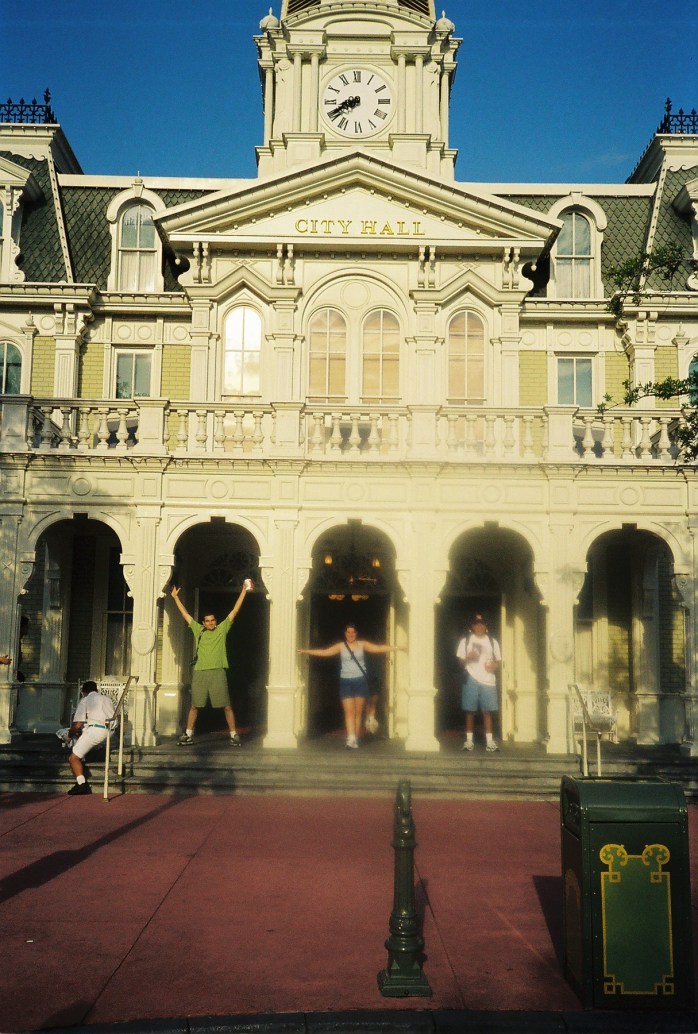
City Hall at any Disney theme park is the place to go for information. It’s clear, consistent, and always in the same location whether in Hong Kong or Anaheim - No place to get information. If your church does not have a clear and obvious place to get information, you probably have lowered the chances of a return visit by half. There should also be someone to greet and assist guests at that information center as well.
- Bad church website. Most of the church guests went to the church website before they attended a worship service. If they attended the service after visiting a bad website, they attended with a prejudicial perspective.

Trying to find a restroom? At Disneyland the signs are always clear - Poor signage.
- Insider church language. “The WMU will meet in the CLC in the room where the GAs usually meet.”
- Boring or bad service. My surprise was that it was not ranked higher.
- Members telling guests that they were in their seat or pew.
- Dirty facilities. Some of the comments: “Didn’t look like it had been cleaned in a week.” “No trash cans anywhere.” Restrooms were worse than a bad truck stop.” “Pews had more stains than a Tide commercial.”
Does your church have any or all of these things? If we hope to attract people for Christ, we should take into consideration that detail is important and perception is communication. I would love to hear your ideas about how you are tackling these issues in your own context.


Craig’s Library – Is Your Church Truly Welcoming?

Everyone says they are a welcoming church.
But (to modify a When Harry Met Sally Quote) not everyone could possibly BE a welcoming church. If everyone were truly welcoming, church attendance would be much higher than it is today. People wouldn’t just say they belong to a church, but would actually be part of the life of the church. Would you like that? Then read Thom S. Rainer’s book Becoming A Welcoming Church. This should be on your list of “must reads.”

Title: Becoming A Welcoming Church
Author: Thom S. Rainer
Cost: $12.99
Age: Adult
Publisher: BH Publishing Group
Nutshell: Challenging churches to look at themselves objectively
Thom addresses the disconnect between how churches perceive themselves and how others perceive them. Often the local church has a distorted view of how great they are, mostly because they’ve stopped looking at themselves objectively. But Thom challenges those perceptions and spells out the real life consequences of ignoring issues of safety, cleanliness, insider language, and other topics we often do unintentionally.


Visitors make judgments about a church long before they ever hear a sermon. Sometimes they make judgments based solely on your website (or lack of one). Today’s consumers (and that’s what church seekers are) start online. The web is the new front door. Greeters, signage, and visual appeal all matter to a first time visitor. It doesn’t matter if we think those matter – they do. And Thom does a great job of illustrating that point with stories from real people and their real experiences with churches.
Becoming A Welcoming Church is a quick and easy read, but one that could change the path of your church from declining to growing. Thom even includes surveys and questionnaires in the back of the book to help you get started. This is a must-read for any ministry in your church!
Craig’s Kitchen – Best Peanut Butter Cookies Ever!

Maybe “one” of the best peanut butter cookies ever.
I think it depends on your taste. But I like mine heavy on the peanut butter and the right peanut butter is essential to great peanut butter cookies. If you don’t start with the right peanut butter, you’re doomed to failure. Okay maybe that’s exaggerating, but it does make a big difference. The problem with many peanut butter cookies (IMHO) is that they taste more like peanut butter flavored sugar cookies instead of actual peanut butter cookies. When you taste these, there will be no doubt. You are putting an authentic peanut butter cookie in your mouth!
Better yet, they are completely gluten-free! That was a happy byproduct of my search for a truly good peanut butter cookie. Thanks to the Internet, I found a recipe I liked and then added my own touches to it (like brown sugar – yum). I do have to add a small warning – these peanut butter cookies are SO peanut-buttery that they need their own container. Last Christmas I gave some away and we packaged them in a tin with snickerdoodles and chocolate chip pan cookies. We came away with peanut butter flavored snickerdoodles and peanut butter and chocolate pan cookies.
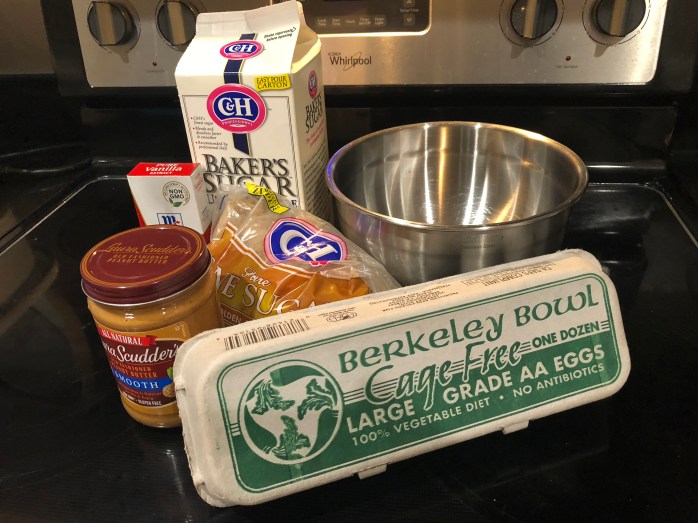 The Ingredients:
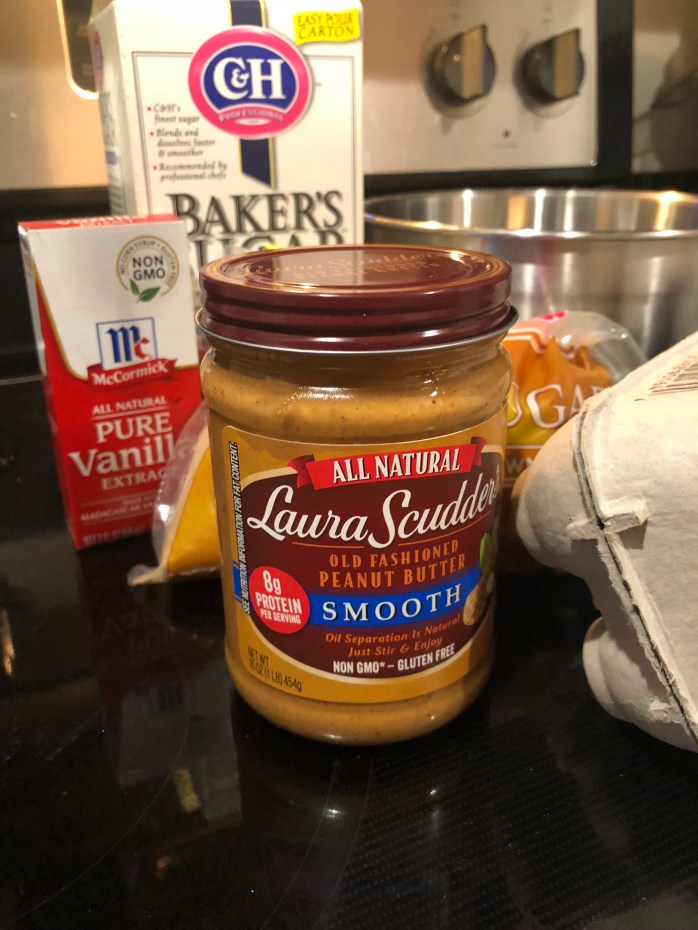
- Laura Scudder’s All Natural Smooth Peanut Butter – the number one key ingredient. The 16oz jar is the perfect amount for this recipe.
- Brown Sugar – 1 cup – Light brown is the best (never used dark brown for this recipe but my thought it it would be a little too rich)
- Granulated White Sugar – 1 cup – If you’ve got some handy, I like to use baking sugar which is even more refined than regular white sugar, but either one is fine
- Vanilla Extract – 1 tsp – I like McCormick Pure Vanilla Extract but just make sure it’s real vanilla and not imitation
- Eggs – 2 large – I like to use cage free eggs, but any large eggs will do. Extra large will be too big
- Baking soda – 2 tsp
- Salt – pinch
- Chocolate Chips (optional) – 6 oz (half a bag) – I just started experimenting with this but everyone loved it. If you want a pure peanut butter cookie, just leave this out
 lis
lis
- Mix together the peanut butter until it is super smooth. THIS IS THE MOST CRITICAL PART OF THE RECIPE! If the peanut butter isn’t super smooth you won’t get the even peanut butter taste you’ll be craving. Instead it will be unbalanced. Laura Scudder’s (like any good real peanut butter) comes separated into the oil and peanuts. This is the most work, but the rewards are so great!
- While you are stirring, preheat your oven to 350 degrees. Get a cookie sheet and line with parchment paper to prevent sticking
- Once your peanut butter is super smooth, pour your two cups of peanut butter into a bowl and mix with both white and brown sugar. Stir until it comes out well mixed
- Add eggs one at a time until mixed in then add the rest of the ingredients. After stirring until well mixed, it will look like peanut butter! If you want the chocolate chips, this is the time to stir them in – after everything else is combined
- Form about 1 inch balls in the palms of your hands. It’s okay if it’s a little big or a little small – don’t worry about it! Just place them on the prepared cookie sheet with enough space to grow. I put about twenty on a sheet – five rows of four balls each
- Make the cute criss-cross with the back of a small fork, pressing down gently on the ball until you get that criss cross pattern. I don’t know why this is done except that it’s the universal symbol of peanut butter cookies
- Place in the oven and watch them. Cooking times will definitely vary by oven but for me about 9 or 10 minutes works best. You want to make sure the cookie is cooked (eggs and all) without overcooking them. When they are overcooked they start turning darker and darker. Obviously if they are black, it was way too long! If you’re unsure, lift one of them up off the parchment and look at the bottom (it will be flimsy so be careful). If it is a nice, rich, dark color on the bottom it’s probably done. It will start turning black on the bottom before anywhere else so you can usually tell this way
- Remove from the oven when done and let them sit for a few minutes just to firm up enough to move them to a wire rack. They should be ready to eat in about 10 minutes (but yummy enough if you can’t wait to pull them early)
I hope you’ll enjoy this recipe and let me know if you love it! Seriously great peanut butter cookies.
Craig’s Library – When Work and Family Collide

Everybody cheats.
That’s how Andy Stanley, author and lead pastor at North Point Community Church in Atlanta, GA starts the introduction to his book When Work and Family Collide. “Everybody cheats.” It’s probably not what you think, but Andy is right. In the push and pull of life we make choices. We choose work over family, family over faith, fun over everything. Not always and not all the time, but when we fail to find a balance between these different aspects of our lives, we get in serious trouble. And that’s what Andy explores in this book – that line between “enough” and “too much.”

Title: When Work and Family Collide
Author: Andy Stanley
Cost: $12.99 ($9.99 on Amazon)
Age: Adult
Publisher: Multinomah Books
Nutshell: Practical advice on work / life balance
In typical Andy Stanley fashion (which is to say clear, concise, and with great storytelling ability), he examines the roles of work and family life, how easily we can ignore family in favor of work, and some of the tell-tale signs when we are in trouble. My favorite example of his is the “rock” analogy (which you’ll have to read for yourself). I’ve heard him tell this story in person and it is just as captivating then as it is in print. It’s the power of the story itself to graphically illustrate the predicament we face when we prioritize work over family.

Now even if work / family balance isn’t a problem for you (are you sure?), this is a great read for balance issues in general. Like with faith. We often put faith on the back burner for other stuff like kids sports, watching football with friends, or just plain sleep. Do we really have our priorities in order or are we simply choosing what we like the most or what is most convenient for us? Andy challenges us to look at these things as heart issues and not to ignore it. Overall, this is a well-written book that flows smoothly. It offers practical advice as well as ways to identify the balance issues in our lives. And it is extremely relevant whether you are Christian or not. Andy does use Biblical references and stories from the Bible to illustrate some of his points, but it is extremely friendly to those who have no background in Christianity at all. So feel free to share it with your non-Christian friends. They won’t get “preached” to, but they’ll see how faith can be integrated into life in practical ways.
Craig’s Kitchen – Simple Ahi Poke
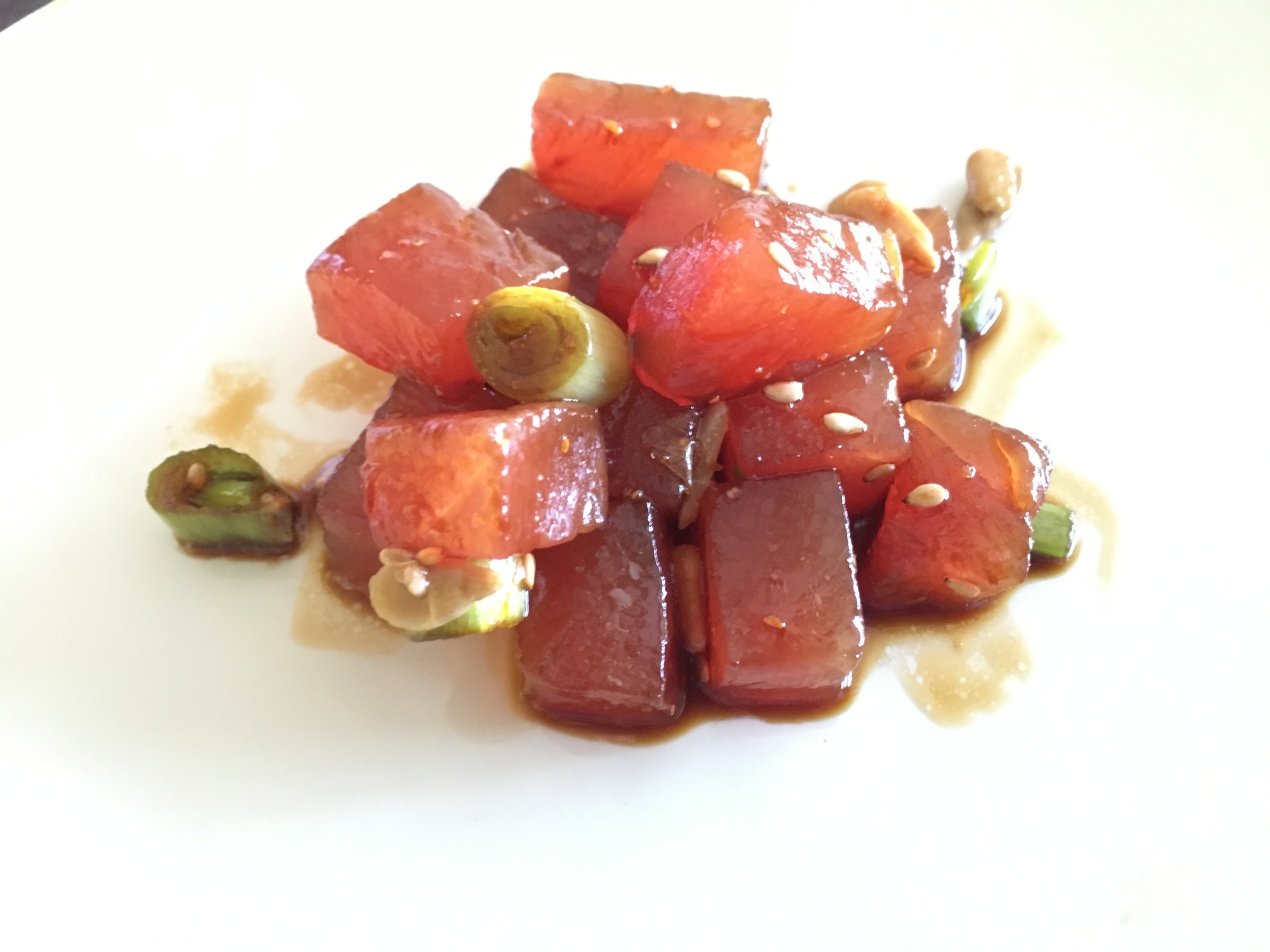
Poke is such a funny word for food. If you’re not used to its pronunciation it looks like something you’d do to someone’s tummy. But it’s actually pronounced like “okay” with a “p” in front of it. Poke or “pokay.” As for what it is, poke is a simple raw tuna dish with some added flair and oomph. It’s sort of like sashimi but with lots more flavor. If you were to try and draw a comparison, it’s like the difference between a baked potato and potato salad. One is plain and you add stuff to it, the other is a medley of flavors and tastes.

I first tried poke in Hawaii with my friend Allison who showed me around the big island. It was my first time in Hawaii and Allison took me to Matsumoto’s Shave Ice (not shaved ice – shave ice. There’s a big difference). But she also took me to this awesome little poke place and I thought it was delicious. I already liked sashimi, but this was on a whole other level. Now, first of all there are many, many ways of making poke. And I guess none of them are wrong, just different. Mine is a very simple recipe based on something I found while perusing AllRecipes.com. Their recipe was good, but I made some tweaks and adjustments to maximize the flavor and bring back for me that taste I had in Hawaii.
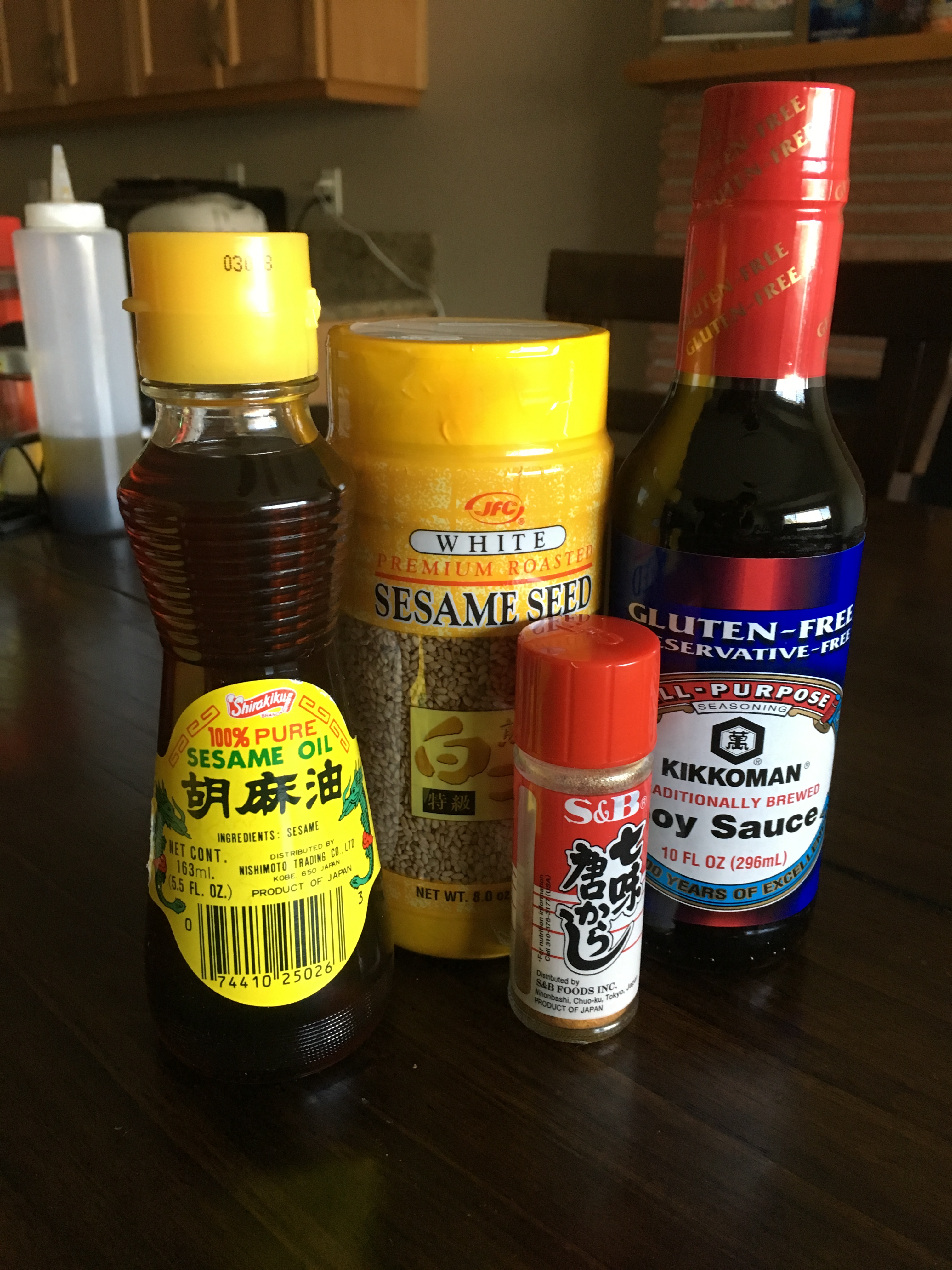
The Six Ingredients
- Ahi Tuna – for this you want the good kind – sashimi grade tuna. If you’re not sure what it is, ask your local fishmonger and they should know. A good piece to use is one that doesn’t have stripes of fat in it. It should look like a solid block of raw fish. Now there are fatty tuna that are solid without stripes of fat and that’s fine. In fact those cost way more but are even more luscious. But for this dish you don’t need to spend that kind of money. The taste of the fish will really meld with all the other flavors so save your dollars.
- Soy Sauce – any soy sauce will do, but my favorite is Kikkoman’s Gluten-Free Naturally Flavored Soy Sauce. Even if you aren’t going gluten-free, I love it because it has a more rich flavor (loaded with umami).
- Sesame Oil
- Green Onions – chopped into small pieces
- Sunflower Seeds – you can use most any nut and the recipe I first used said macadamia nuts, but those aren’t always readily available or as economic. I love sunflower seeds and the purpose of having them is to add crunch, texture, and another layer of flavor. With macadamia nuts you have to chop them up anyway but sunflower seeds are small enough you don’t have to. Pine nuts also work well but again much more expensive.
- Togarashi – Japanese dried hot peppers – this comes in a little glass tube that you shake sort of like salt or pepper. It packs a punch but is not excessively hot. I think it adds some oomph and flavor to the dish.

Putting this dish together is super easy. Make sure you have a non-reactive bowl to mix and store your poke. It’s one of the few times I avoid stainless steel.
- Cut the raw tuna into small blocks maybe about 1/3rd to a 1/2 inch squares. It should be small enough that you can fit a few pieces at a time into your mouth but not so small that it looks like little pebbles. A good block looking cut will work great
- Place tuna into a bowl (non-reactive) and mix in about a 1/4 cup of soy sauce for each half pound of tuna. Play it by ear. If you’ll eat the whole dish right away, that amount is fine but if its going to be sitting around for more than a couple of hours, you might want to dial back on it because the flavor will intensify with time as the tuna absorbs the soy sauce.
- Also add about a 1/4 cup of green onions, 1/2 tbsp sesame oil, 1 tbsp sunflower seeds, a few shakes of sesame seeds, and togarashi to taste. I would probably start out with about 1 tsp and just add more as you like. The tuna is your star ingredient. If you have more of anything other than tuna, it won’t taste the way it should so add the seeds, onions, and togarashi as you see fit, but just keeping in mind balance is an important part of the dish. Keep tasting if need be and just remember the longer you keep it in the fridge, the more the soy sauce will penetrate the tuna.
That’s pretty much it. A very easy dish to make it will just take one or two tries to get the balance right in flavor. Goes great with rice, can be a main dish by itself, or be a hearty and flavorful appetizer or side. Enjoy!
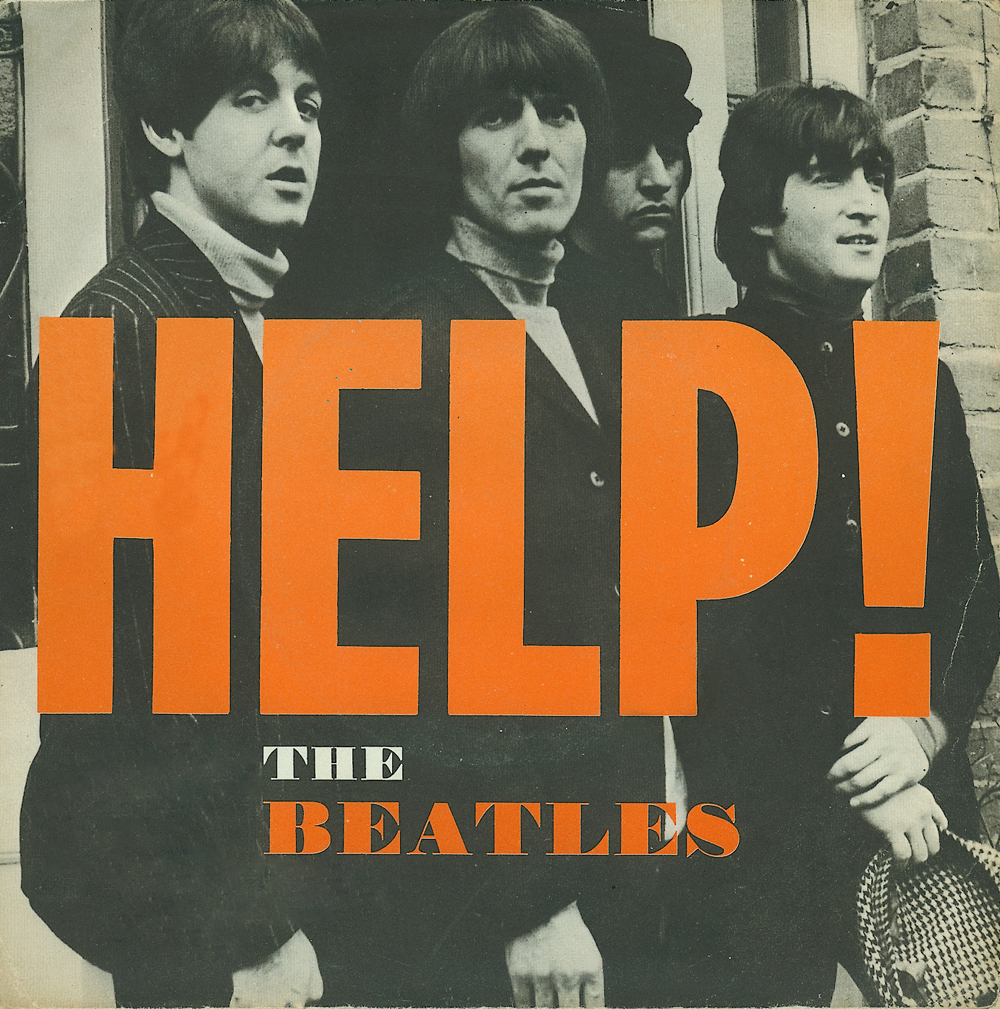
Help! – The Theology of The Beatles

When I’m writing a sermon, I get lots of ideas that end up in the trashcan. Maybe one day I’ll be ambitious and do a “director’s cut” of a sermon. But one of the ideas I didn’t get a chance to flesh out was about the song “Help!” by The Beatles. In fact, the title of the sermon was originally inspired by that song. The song itself made me think of our need to cry out for God. I know that wasn’t The Beatles intent, but I was thinking how much the words of this song reflect our Christian theology. And why can’t modern Psalms be reflections of modern music? Perhaps it will be included in a future church hymnal. I would certainly want to go to THAT church! Here’s how I broke the song down in my head:
Help, I need somebody
Help, not just anybody
Help, you know I need someone, help
I’ll be honest and tell you I’m not lyrically fluent so I believe this would be a called a pre-verse since it bridges the opening music and the 1st verse. For me, these words echo our cry to God when we realize we are in over our head or when we finally realize we need God in our lives. I like how the writer says he needs help from “not just anybody” implying someone far more capable (like God) than the writer. And the line “you know I need someone” could refer to God knowing us so deeply that God already knows we need the help before we cry out (what Methodist’s call prevenient grace).

When I was younger so much younger than today
I never needed anybody’s help in any way
But now these days are gone, I’m not so self assured
Now I find I’ve changed my mind and opened up the doors
So this first verse talks about how many of us feel when we are young – strong, invulnerable, without a need for God as far as we know. But as we grow older, we realize that there is so much more going on in us, through us, and around us. And at this point in the lyricists life, he realizes he can’t do it alone and opens up his life to the possibility of something more.
Help me if you can, I’m feeling down
And I do appreciate you being ’round
Help me get my feet back on the ground
Won’t you please, please help me
The chorus then is the writer’s plea to God to give him aid “if he can.” This reflects for me Mark 9 and the story about Jesus and the father who asks Jesus to help his child “if he can.” Jesus replies in v. 23, “‘”If you can”?’ said Jesus. ‘Everything is possible for one who believes.’” The writer is making a plea to Christ for assistance.

And now my life has changed in oh so many ways
My independence seems to vanish in the haze
But every now and then I feel so insecure
I know that I just need you like I’ve never done before
This verse seems to say that there are times when we realize how interdependent the world is and how much we need to rely on God. So much so that our “independence seems to vanish in the haze.” But the lyricist doesn’t see this as a bad thing and in fact still has doubt in his life from time to time which again echoes the story in Mark 9 where the father says to Jesus in v.24, “‘I do believe; help me overcome my unbelief!'” And in the end, the lyricist realizes that he needs God more than ever before.
The rest of the song repeats the chorus and the 1st verse so no need to repeat it. But it just goes to show you the power of The Beatles work! I would seriously love a Beatles hymnal.
Craig’s Kitchen – Spam Musubi

Spam musubi is one of those dishes that once in a while I simply crave. If you’ve been to our home for our holiday open house or to one of our Bible studies, I’ve probably made it for you. If you haven’t, its all the more reason to come! Spam musubi is a great, easy-to-make appetizer for any church potluck, family get-together, holiday gathering, or for friends coming over. It is definitely a savory treat with a little mix of sweet in the sauce that coats the Spam. And it has plenty of umami! It only has six ingredients and other than cooking the rice probably takes about 30 minutes to make – tops!

The Six Ingredients
- Nori – toasted seaweed which you can often find in your Asian food section of the supermarket
- Rice – I use Botan Calrose Rice but any sticky rice will do (not Thai sticky rice which is a whole other thing)
- Spam – well, it’s in the name. Usually one 7 oz can is enough but if you’re making it for a party use the 12 oz
- Furikake – again with the toasted seaweed! This time it is combined with added ingredients to make the rice even more flavorful such as roasted sesame seeds, salt, and sugar. There are many different flavors if you go to a Japanese or Asian market, but I go for the simplest kind
- Soy Sauce – any soy sauce will do, but my favorite is Kikkoman’s Gluten-Free Naturally Flavored Soy Sauce. Even if you aren’t going gluten-free, I love it because it has a more rich flavor (loaded with umami)
- Sugar – gotta mix the soy sauce with sugar to make the coating

The recipe is super easy and you only need one piece of equipment – a Spam musubi press which you can order online through Amazon or find at your local Japanese store. Make sure it’s non-stick!
- Cook the rice – pretty simple. For the 7oz can I use about 3 cups of rice as indicated on our rice cooker (I believe it’s about 1 1/2 cups if you’re not using a Japanese rice cooker).
- About 3o minutes before the rice is done, open up your spam and cut slices about 1/4 wide along the length of the Spam
- Mix together equal parts sugar and soy sauce until the sugar is dissolved (about 1/4 cup each – depending on your taste)
- Dip the Spam in the soy sauce mix right before cooking it – making sure to coat both sides
- Heat an appropriate sized frying pan and place the pieces inside when it gets hot
- Pour any additional sauce over the pieces and dredge them through it as you turn them over
- When the pieces are coated nicely and have turned a slightly brownish color remove from heat
- Place a half sheet of sea weed under the Spam musubi press (it should be the exact size by width)
- In your Spam musubi press, place a layer of rice filled slightly less than halfway
- Put your Spam in and dust lightly with furikake
- Fill the rest of the press with rice and press down to compress
- Remove the press and wrap the seaweed around the rest of the pressed rice and Spam
- Let sit until not quite so hot and slice – each wrap yields 5 pieces of nice width
Now some people like to simply drop a mound of rice and slap the Spam on top. But to me there’s something magical about the way the rice sandwiches the Spam and with the furikake in the middle, it makes the flavors more subtle which only enhances the overall flavor of the bite. Hopefully your friends and family will enjoy this dish as much as mine do! I would love your feedback and how you might make it differently.
Craig’s Library – What Half Truths Do You Believe In? (book review)

“God doesn’t give us more than we can handle.”
“Everything happens for a reason.”
“God helps those who help themselves.”
Have you ever heard these sayings? Perhaps you’ve said them yourself. If you have I understand. They sound thoughtful, insightful, or inspirational – but in reality they do a lot more harm than good. Lots of familiar sayings that Christians throw around are not at all grounded in sound theology and when tested, they break down very fast. Saying that “God doesn’t give us more than we can handle” implies that God is the one who is causing that person whatever trouble, grief, or pain they are experiencing. To share that “Everything happens for a reason” again is like telling someone that they deserve whatever happens – good OR bad and that certainly isn’t true. And to say that “God helps those who help themselves” is to deny Jesus’ saving work by grace alone.

Adam Hamilton addresses these sayings and a couple more in his book Half Truths: God Helps Those Who Help Themselves and Other Things The Bible Doesn’t Say. Typical of Hamilton’s work, the book is filled with a caring touch and an easy-to-understand explanation of exactly how these sayings can be devastating to those receiving them. He deftly walks through the reasons why these “half truths” do more harm than good by even the most well-intentioned person, and he grounds it all in sound Biblical theology. A short book at only 169 pages (short both in stature and in length) this is perfect for a small group study, but is also useful for those who have been hurt by such sayings or for someone seeking deeper truth into how God actually works.

Title: Half Truths: God Helps Those Who Help Themselves and Other Things the Bible Doesn’t Say
Author: Adam Hamilton
Cost: $19.99 (only $10.99 on Amazon)
Age: Adult
Publisher: Abingdon Press
Genre: Christian Life / Spiritual Growth
Top 5 Musicals You Haven’t Heard Of

In our last sermon, I mentioned my love for musical theater so I thought I would share five great musicals you may never have heard of. Given that I haven’t seen as much musical theater lately, these are much older shows, but great ones that from time to time have been revived. If it happens to be performed in your neighborhood, give it a shot! I would love to know your favorites.

Starlight Express – The only musical I know performed on roller skates! Produced in the 1980’s in London and Broadway, it was a smash hit in the UK and even more so in Germany where it still runs today as the longest running musical in German history. However it was short-lived on Broadway, running only 761 performances. This innovative musical was the brainchild of legendary theater superstar Andrew Lloyd Webber and I found it interesting that ALW wanted to do a musical based on Thomas the Tank Engine but they folks who make Thomas wouldn’t let him. So he came up with something on his own and this was the result. The book isn’t as innovative as the staging and choreography, but the music is a delight. I saw it while it played in Las Vegas and thought it was terrific.
By Jeeves – Another ALW musical, this one is designed for small theaters. I saw a limited run of it in Westwood at the Geffen Playhouse and thought it was just fantastic. It didn’t get great reviews, but it was so different than most ALW stuff that for me it was delightful. I love the smaller, more intimate setting and the stage direction was brilliant (I loved the way they showed the gang traveling in an automobile on stage – it was like what a kid might do for a class project except life size). The plot was cute. It wasn’t grandiose as we see with most ALW musicals. Instead it was more befitting a quiet night at home watching a British comedy.
Buskers – Or as I saw it Stage Door Charley. This musical starring another legendary figure, Tommy Tune, only made it as far the touring stage. Slated for Broadway, the producers pulled out after Tommy was injured and it never made it. For Disney fans, this show was a treat since it was written by the Sherman Brothers. The idea was conceived back in the sixties and just never was produced until 1995 when Tommy agreed to be in it. It was a charming love story about two “buskers” or street performers. And with Tune attached it was a visual treat as he is such a gifted performer. I happened to see it when it came to the OC Performing Arts Center.

I Love You, You’re Perfect, Now Change – This show was cute, clever, funny, and touching. Instead of a narrative that continues throughout the musical, instead it is the story of people falling in love told in vignettes. Four people play all of the parts. I saw it originally at the Laguna Playhouse and if you’ve been there before it’s a great venue for a play like this. I saw it again in 1998 at the Coronet Theater with Jennifer Simard. I remember her specifically because she was part of the original cast and because after seeing it, I bumped into her at a local restaurant and told her what a wonderful job she did. It was a cool moment for me. If you want to see a cute musical about love, take your significant other to see this one.

Forever Plaid – The absolute best play ever! I’ve seen it about three dozen times and I’ve taken lots of friends with me to see it. One in particular, Sharon, came with me about 2/3 of those times. We went so often that for her birthday I got her the seat in the front row where the cast comes up and asks her what the date is. Very cool. Except for the fact that Sparky kept leering at her the whole show. Hey, buddy. She’s with me. During the show, they sing classic harmony songs from the 40’s and 50’s like “Three Coins in a Fountain,” “Heart and Soul,” “Sixteen Tons,” and “Love Is A Many Splendored Thing.” They did make a movie of it, but like most shows adapted to film, there’s something missing. If you get the chance to see it live, go and check it out. Especially in a smaller theater. It also loses something in too big a venue. But it is amazing.
So what are your favorite musicals?


We Are The Church Together


Just a note: This was the sermon given to our congregation on the final day of worship in the First UMC building. The members of First UMC are going to worship with their sister church, Palm UMC in Dinuba beginning Oct 5 and so we hosted one final service here as a way of celebrating God’s ministry in this place for so long.
This is a day of celebration!
A day to look back at all the people of this church have accomplished and to praise God for using us in such an amazing way. It’s a day to reflect on the many people whose lives have been touched because of the ministry that happened here and to give thanks for what we have been able to do within these walls. But I’m sure for many of you it doesn’t feel like a celebration. In fact, it feels like quite the opposite. Instead it’s like we’re saying goodbye to an old friend. It’s hard not to look around and grieve the “might have beens” and reflect on the “what ifs.” But maybe we can take heart in some of Paul’s words this morning. If you have a Bible or a Bible app on your phones, you can follow along in Philippians 3:7-14. Philippians 3:7-14. Paul’s writing to the church to give them confidence, to give them hope, something we need in these difficult times. Paul’s been imprisoned and many of those who believed in his testimony are losing heart to hear about him being in jail, but Paul is telling them, “No, even this is good news!” He’s trying to encourage them and he tells them to keep the faith. He wants them to be wary of false teachers and braggarts who are telling everyone who will listen about their credentials for teaching about belief in God and he says that he has more reason to brag than any of them! But then he says this.
7 But whatever were gains to me I now consider loss for the sake of Christ. 8 What is more, I consider everything a loss because of the surpassing worth of knowing Christ Jesus my Lord, for whose sake I have lost all things. I consider them garbage, that I may gain Christ 9 and be found in him, not having a righteousness of my own that comes from the law, but that which is through faith in[a] Christ—the righteousness that comes from God on the basis of faith. 10 I want to know Christ—yes, to know the power of his resurrection and participation in his sufferings, becoming like him in his death, 11 and so, somehow, attaining to the resurrection from the dead.
12 Not that I have already obtained all this, or have already arrived at my goal, but I press on to take hold of that for which Christ Jesus took hold of me. 13 Brothers and sisters, I do not consider myself yet to have taken hold of it. But one thing I do: Forgetting what is behind and straining toward what is ahead, 14 I press on toward the goal to win the prize for which God has called me heavenward in Christ Jesus.

We are supposed to press on.
Paul writes that he forgets about the things of the past and keeps straining toward what is ahead. He doesn’t care about his success before because it all means nothing to him in his pursuit of becoming a disciple of Christ. To him, that is what matters. Paul’s situation is slightly different than ours because for him, he’s leaving behind a life of worldly success to pursue a life of spiritual success but we can learn from his words because they apply to us as well. If we want to achieve all we can for Christ, we cannot let ourselves be haunted by the past. We have to be willing to leave it behind and embrace the future. Holding on to the past will only hamper our progress. And the best way we can do that is by remembering that it’s the people and not the place that made our ministry a success. It’s the people and not the place that made our ministry a success. The building is simply a vessel, a container for all that has happened here. The weddings, the baptisms, the funerals were all made special not because of these four walls, but because of the people who were present. This place is a reminder of those happy and sometimes sad but meaningful times, but that’s all it is. A container of memories. And leaving this place doesn’t change those memories one bit.
I remember the apartment we had when I was very young.
When I was four years old, my parents and I used to live in Los Angeles near the Coliseum. About five minutes away lived my grandfather and grandmother, the one who gave me cherry cookies and up the road a bit was Golden Chicken, some of the best fried chicken I’ve ever had. My favorite rib place growing up was only a little ways away, too. Leo’s BBQ. Still one of the best beef ribs I’ve ever had. I used to play almost daily with my friends Brian and Derek. Brian I think lived across the way and Derek lived upstairs. We all were fans of Speed Racer and would act out different adventures of his. We would take turns being Speed since there was one of him and three of us so one of us ended up being Trixie, his gal pal. Not enough good guy roles in the show. There was Speed, Racer X, and Trixie. I hated being Trixie. But we all took turns. My sister Karen was born while we were living there. She used to call me “D.” It was the closest she could get to saying “Craigy” which is what my parents used to call me. Eventually she called me “E” as her language skills developed. She would pull me by the hair and drag me all over the living room, over the sofa and the floor and all over the place. Those were really happy times. I still remember pouring Johnson & Johnson’s baby powder all over my head just so I could see it snow in LA. When I was turning five, we moved to Cerritos where my parents still live today. I don’t often go by the old neighborhood. It’s not as well kept or safe as it used to be and there’s rarely a reason for me to drive past. But when I do, I still have fond memories of the place. I’ll point out the window and say, “Look, Emma. That’s where Daddy used to live.” And we’ll drive on. But leaving wasn’t as hard as I thought it would be. I’m not friends with Brian and Derek now. Leo’s BBQ gave way to some infinitely inferior place. And I don’t even know if Golden Chicken still exists in that location. But that doesn’t make it any less important a part of my past. But that’s where it belongs. In the past. I love the life I have now. I love the family I have and the friends I’ve made. I love being here with all of you and everyday brings a new set of memories. Yes, we should cherish those places that brought us fond memories, but they are simply places where those memories were built.

The important part is still a part of us.
The people who changed our lives, the things we did with the people we loved, how we felt when we said our “I dos.” Those things will never change. They are a part of who we are. And as we leave this building and continue to worship God, his work comes with us too. The story doesn’t end here just because we aren’t here anymore. The story of God continues on with us. It happened before we got here and will continue after we are gone. It’s part of what brings us comfort, that we are a part of something greater. Our part is important but not because we are in this place, but because we are faithful to God. YOU are the church, not this building. YOU are the church, not this building. The church was built upon the cornerstone of Jesus and each of you make up the foundation. The foundation isn’t made of bricks and mortar. The walls aren’t made of drywall and plaster. All of it is made from living stones, each one of us. As it says in that classic hymn, we are the church together. Let us pray.
Creator God, we give you thanks for the nearly 125 years of ministry that happened in this place. We feel so blessed to be able to take part in your amazing work and so pleased we were able to be your faithful servants for so long. We shared some of the stories that make up the history of First UMC, but there are many more that we haven’t shared that are as vitally important as all the rest. Even though a chapter is closing on us, like any good book, we eagerly turn the page and await what comes next! We pray Lord that you will give us direction and clarity about our next steps and we lift up all praise and glory to you Father for the ministry that happened within these walls. We take those memories with us as we continue to serve you in a new way. In the name of the Father and of the Son and of the Holy Spirit. Amen.
 Craig's Corner