
Happy Birthday, America?

What do you like to do on your birthday?
Well, if you’re a little girl whose birthday happens to be in just a couple of days, you watch fireworks. Cassie was born on July 7th and she told me that growing up, she imagined that 4th of July fireworks were done for her. How cool to be a child and see this display of lights up in the sky and imagine it was all for you! Everyone should be able to celebrate a birthday like that. To have the world show its appreciation for you being a part of it. One of her favorite birthdays was the time we went to Tokyo Disneyland. We were on summer vacation and staying at the Tokyo Disneyland Hotel. Knowing it was acast members in English said “Happy Birthday!” to her with a big smile and a bow. She felt very special the whole day. And of course, there were fireworks. Birthdays are the best because it gives us the chance to celebrate how much someone means to us. It’s the one time of the year when people are gathered to celebrate YOU! And why shouldn’t they? You are special.
But this weekend, as we remember the birthday of our country, we might not be feeling so joyous.
It might be hard to celebrate when so much seems to be going wrong with our country. If in 1776 we were filled with joy and hope for a bright future, today we might wonder what happened? Our country is more divided than ever. There doesn’t seem to be any middle ground and the word “compromise” feels like a dirty word. We are under the leadership of a President who believes he has never made a mistake, who routinely debases and belittles the people around him and the people of our country, and threatens the people of the country he is supposed to be leading with economic and military punishment. What’s worse, he isn’t an outlier. He might be an outlier among presidents, but if you simply look at the views of this country, he has plenty of support out there. We like to think we are the greatest country in the world, but I’m reminded of that brilliant speech in the opening for the show The Newsroom where Will points out how far we are from that reality. But I like how he ends that speech. “We could be.”
Despite all the problems we have as a country, hope is still alive.
The ideals painted in the Declaration of Independence are still ideals worth striving for. That we are endowed by our Creator with the inalienable rights of life, liberty, and the pursuit of happiness. We just need to realize we aren’t there yet. But just because we aren’t there doesn’t mean we should give up or that it’s hopeless. We have indeed made great strides forward in the time between then and now. Women have the right to vote. Children are no longer abused for their labor. And at least on paper we have equal protection under the law. We look great on paper. We just need to work on making that paper a reality. Women are still only making about $0.80 to the dollar compared to men despite the 1963 Equal Pay Act.[1] Children are still being abused and neglected, just in different ways. According to the Department of Health and Human Services, about 678,000 children were victims of abuse or neglect in 2018 and that number has remained steady for the past five years.[2] And that’s only the ones we know about. And we only have to look at our TV screens to see that despite what is written down on paper, racial injustice is still alive and well in the United States.

But maybe more than ever we need to pause and give thanks.
It would be so easy to get caught up in all that is wrong that we forget how much we have to be grateful for, but gratitude helps to anchor us. Gratitude makes it possible to endure the hardship, to know that our work is not fruitless, and despite the trials and tribulations we are working toward a better tomorrow. Being grateful does not belittle our circumstances or ignore what is wrong, but gives us perspective and stops us from becoming bitter and angry which seems to be the path so much of the world is traveling these days. Consider what Paul wrote to his fellow believers.
Now we ask you, brothers and sisters, to acknowledge those who work hard among you, who care for you in the Lord and who admonish you. 13 Hold them in the highest regard in love because of their work. Live in peace with each other. 14 And we urge you, brothers and sisters, warn those who are idle and disruptive, encourage the disheartened, help the weak, be patient with everyone. 15 Make sure that nobody pays back wrong for wrong, but always strive to do what is good for each other and for everyone else.
16 Rejoice always, 17 pray continually, 18 give thanks in all circumstances; for this is God’s will for you in Christ Jesus.
Rejoice always, pray continually, and give thanks in all circumstances.
This might have been Paul’s most inspirational piece and his most challenging at the same time. To be clear, Paul wasn’t lounging on some beach on the Mediterranean when he wrote this. He wasn’t downing pina coladas while soaking in the sun. Paul was hard at work establishing the church at Corinth at the time, but felt that the church in Thessalonica needed some of his attention so he wrote this to encourage them and to give them some guidance. Paul knew that being Christian meant having to endure persecution and ridicule, that there would be people – MANY people – resistant to these new ideas of love and acceptance. And he knew there would be times when the people of the church would want to either give up or fight back with violence. But that would have been the wrong path. Not only would that be against the teachings of Christ, but it would get them nowhere. Paul knew that in order for the early Christians to win the hearts and minds of the population, they had to rise above it. That’s why he tells them to “encourage the disheartened, help the weak” and “be patient with everyone.” Something you and I know isn’t easy for us to do – especially that last part. Be patient with everyone. It’s easy to be patient with those who think and act like we do, but it’s so hard to be patient with people who are ignorant or downright racist. But tell me, when was the last time shouting insults at someone got them to conform. When was the last time you attacked a person’s character and it made them step back and say, “Gosh, you’re right. I’m a racist and I should change my ways.” Changing someone’s attitude isn’t always possible, but where it is can’t be done by exchanging wrong for wrong. We have to take the high ground and be better than that. Otherwise, our hard work means nothing.


Despite all of our flaws, I’m grateful to be an American.
Look at the sham elections they just had in Russia where basically Putin gets to be President for life. Or the people of Hong Kong who suddenly had all of their freedoms squashed when China decided to ignore their treaty with Great Britain. Or the people of North Korea who live in a dictatorial state that doesn’t even pretend to offer its citizens freedom. Again, that doesn’t mean we don’t have problems. According to Freedom House, we are ranked 51st out of the 87 countries deemed to be “free” in the world today.[3] Pretty low for a country that claims to be the Home of the Free and the Land of the Brave. But we have opportunities for change that are even now beginning to sprout new roots. The protests against social injustice have already made a real impact on our country, forcing us to take a hard look at ourselves in light of the number of tragedies across the United States. George Floyd. Ahmaud Arbury. Breonna Taylor. These are by far not the only victims of tragedy due to systemic racism, but have been the catalyst for us to be awakened to how far removed we are from the ideal we hope to be. The protests spanning the entire country have heightened our awareness of racial disparity and has brought about actual change. NASCAR banned the Confederate flag at its races. Mississippi finally removed the Confederate symbol from its state flag. And legislatures are making real reforms to how they handle policing efforts across the country.
You may not feel like celebrating, but we can certainly count our blessings.
Things in our country have seemed more hopeful in the past month than they have for a long time. Three plus years to be exact. The Supreme Court has made a series of surprising but hopeful and uplifting decisions. They upheld DACA, supported the rights of the LGBTQ community, and even held firm on the pro-choice movement. Despite President Trump’s ignorance of the facts, governors across the country are finally starting to mandate mask-wearing and even started to roll back or at least halt some of the privileges of a more open society. Awareness of racial injustice is growing and at least forcing us to look in the mirror at some of the ways we have perpetuated these systems of injustice through our language, our actions, and our assumptions. And while we are far from completing the journey, we are starting to remove the roadblocks of our own ignorance that have been blinding us for so long.

Birthdays are a time to thank God for the blessings in our life.
When we celebrate Cassie’s 29th birthday again for the 22nd time in two days, I will have a lot to be thankful for – for the life we have carved out together, for the experiences we have shared as a family, for the birth of our daughters, for her love and support, and for never needing to learn how to install a garbage disposal! And while our life isn’t perfect, that doesn’t stop me from being grateful for what we do have and how much I am looking forward to an even brighter future. The same is true for our country. I had a hard time thinking about what it means to celebrate Independence Day and what that means for our church. But we’re not celebrating the state of things as they are, but what we hope they could be. We’re not uplifting ourselves as a bastion of all that’s right in the world, but instead giving thanks for our forefathers who came before so that we might have the freedoms we possess today. But make no mistake. That freedom is not equal. We still have a lot of work to do. But with God’s help, we will keep marching forward to that day that Martin Luther King shared with us all, the day when we can truly say, “Free at last! Free at last! Thank God Almighty we are free at last!” In the name of the Father and of the Son and of the Holy Spirit. Amen.
[1] https://www.business.org/finance/benefits/gender-pay-gap/ Note: CA is the best in the country at bridging the gender pay gap at $0.88 to the dollar and has narrowed the gap by 4.6% much higher than the national average of 2.6%.
[2] https://www.acf.hhs.gov/sites/default/files/cb/cm2018.pdf
[3] https://www.businessinsider.com/countries-that-arent-free-report-2019-5
Fishing With Dad
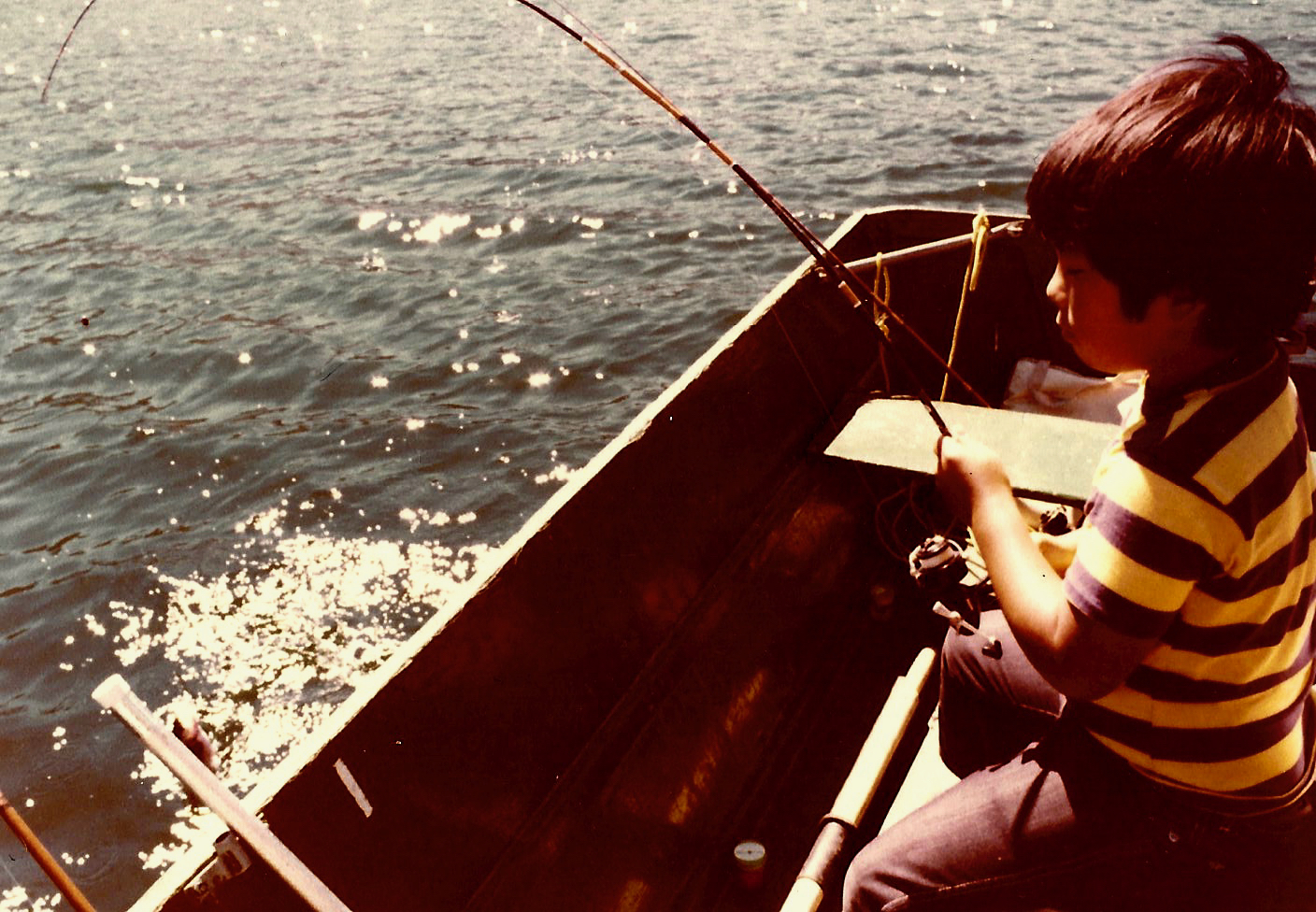
What do you like doing with your dad?
Growing up, fishing was our thing. He would take me fishing a lot. It was our father-son time together. When I was little we did mostly lake fishing, but as I got older, he would take me out on half-day boats. It was the best. The challenge of catching a fish, battling against this primal force of nature, and then bringing it in. It was always exciting. But mostly I loved going out with my dad and hanging out. When we would go to the lake, I’d bring a stack of comics from the library with me and just sort of sit in the car or in a chair and blissfully read about Doctor Strange or the Hulk. My dad would do all the real work. He would let me do all the fun stuff like cast the line and reel the fish in, but the hard stuff? That was all dad. All I did was read comics, eat hamburgers from the burger place, and reel the fish in once he caught them. When I was about eight years old, my dad took me fishing at Puddingstone Lake and we caught ELEVEN fish. It was amazing. ELEVEN fish! My dad let me reel all of them in. It was one of the best times we had on the lake. When we got home, I RAN into the house and shouted, “Mom! Mom! Guess what? I caught ELEVEN fish and Dad didn’t catch a single one!” Fishing with my dad was great but I know that if he had been by himself, he probably could have caught more. He also would have had more peace and quiet. He didn’t NEED me there. He WANTED me there. And that makes it all the more special.


God is like that.
God is like your dad who wants to take you fishing. Sure, he could do it all by himself, but the joy of spending time with you, of sharing those moments together, are treasured by God. God doesn’t NEED you. He WANTS you. He wants you to be part of what he’s doing. He wants you to spend time with him, to help him, to be part of this amazing plan he has for the universe. But he leaves it up to us. Whether we want to help is up to us. God doesn’t force us. So we’re always free to say “no.” Have you ever said “no” to your parents? Have you ever looked back and thought, “What an idiot I am!” I have. When I was in college, my parents were going to take my sisters with them to Hawaii. HAWAII! I’d never been to Hawaii. My sisters had never been to Hawaii. I think my dad was there once when he was in the Navy, but I don’t think my mom had ever been there either. At the time, I was working at Disneyland and enjoying the free time of summer. But my parents asked me if I’d like to go. In my head, I was thinking I’d have to take time off of work, they might not give it to me, and besides, I’d have the whole house all to myself. So I said, “No, thanks.” HAWAII! It wouldn’t be for about another 20 years before I’d have the chance to go. In the meantime, the rest of my family had this wonderful memory about their time on the islands and they had this beautiful family photo up on top of the TV with all of them in Hawaii. All of them except me. Of course, it was my own fault. But those are both the benefits and the drawbacks of free will. We get to decide, but sometimes we don’t always make the best choices.

What will you choose?
Are you going to help your Dad or will you say “No thanks?” Because your Father in Heaven is waiting for you, is reaching out to you, is hoping you’ll say, “Let’s go catch some fish!” Fishing is God’s favorite sport. You don’t see any mention of football or basketball or baseball or hockey in the Bible. True, they weren’t invented yet and fishing in the Bible isn’t mentioned as a sport but as a way of life. But fish play a vital role in the story of God. The fish is a symbol for Jesus. Jesus shared fishes and loaves with the five thousand. Jonah from the Old Testament wasn’t swallowed by a whale but by a giant fish. And fish are one of the animals specifically mentioned in the creation story. Fishing itself is venerated, not for the act of catching fish, but what it means in a deeper sense. We will hear about that in our passage this morning.
One day as Jesus was standing by the Lake of Gennesaret, the people were crowding around him and listening to the word of God. 2 He saw at the water’s edge two boats, left there by the fishermen, who were washing their nets. 3 He got into one of the boats, the one belonging to Simon, and asked him to put out a little from shore. Then he sat down and taught the people from the boat.
4 When he had finished speaking, he said to Simon, “Put out into deep water, and let down the nets for a catch.”
5 Simon answered, “Master, we’ve worked hard all night and haven’t caught anything. But because you say so, I will let down the nets.”
6 When they had done so, they caught such a large number of fish that their nets began to break. 7 So they signaled their partners in the other boat to come and help them, and they came and filled both boats so full that they began to sink.
8 When Simon Peter saw this, he fell at Jesus’ knees and said, “Go away from me, Lord; I am a sinful man!” 9 For he and all his companions were astonished at the catch of fish they had taken, 10 and so were James and John, the sons of Zebedee, Simon’s partners.
Then Jesus said to Simon, “Don’t be afraid; from now on you will fish for people.” 11 So they pulled their boats up on shore, left everything and followed him.
God wants us to be fishers of people.
That is the role we were created for. And while you don’t literally have to be a fisherman to do that, the qualities that make up the character of a successful fisherman are what Jesus is hoping for from us. Patience. Perseverance. Strength. Trust. We see these qualities in Simon Peter’s story right here. They had been fishing all night (perseverance) but without any luck. Then this teacher comes up and asks one of the fisherman, Simon, to take him a bit off shore. Simon must be pretty tired. He just got done after a long night of fishing and Jesus catches him while he and his partners are cleaning their nets. I imagine Simon was looking forward to a nice hot meal and some sleep, but out of respect for this teacher he takes him a little bit off shore so that those gathered around could all hear him better (patience). I don’t know exactly what Jesus was teaching that day, but Simon Peter must have respected Jesus quite a bit because even though he had just got done cleaning the nets and was ready to go home, he does as Jesus asks and takes him out to sea and then casts his nets in the water. He says to Jesus, “Master, we’ve worked hard all night and haven’t caught anything. But because you say so, I will let down the nets (trust).” And then they caught so many fish, it almost broke their nets. They had to have James and John and everyone in the other boats come to help (strength). But what really showed the kind of strength and trust Jesus is looking for is how they left everything behind, including this career changing catch to follow him.

Do you have what it takes to be a fisher of men?
Or fisher of people to be more precise. Do you have the patience, perseverance, strength, and trust God is looking for? Because it takes all of these attributes to be successful. You have to be patient when trying to catch a fish because it can take a long time for one to bite. You have to have perseverance because not everything you try will work and sometimes you’ll fail before you succeed. But you can’t give up. You need to have strength to bring the fish in because its natural instinct is to flee. And you have to have trust that your efforts are not in vain. All of these same qualities apply when it comes to fishing for people. When you’re trying to help someone know and trust in Christ, that can be a lifelong effort. It may take some people decades to come around if ever. We have to have perseverance in the waiting. We can’t give up just because some choose not to go deeper in their faith. Because you never know who might just blossom in their belief. We are like the sower of seeds who keeps faithfully spreading them, not knowing which ones will sprout but being faithful to the process. Which is where trust comes in. We have to trust in God to make faith blossom. We can only do our part, but it’s up to God and the people God is trying to reach for it to grow. And the strength comes in strength of character. There will always be people who doubt you or even question if it’s the right thing to do. There are people who will resist or push back or even call you names and insult you, but you must be strong when this happens and again trust in God that what you’re doing is exactly what God wants you to do. Because God does want you with him in his work. God wants you to be a part of it. He wants to grow closer to you and sharing in this effort will bring you closer to him. And the best part is when you see these efforts come to fruition, you’ll feel a sense of joy that only comes from doing God’s work.


I love to cook.
And when Emma was younger, we used to cook fish together. She would come in the kitchen and I’d ask her if she wanted to help and she always did. She loved it especially when I cooked panko-breaded fish. We would get messy together and it was a lot of fun. And like my dad, I didn’t need the help. I could have done it all by myself. But I was so happy every time Emma wanted to help because it meant I got to spend time with her and that we would get to know each other, that our bond would grow stronger. And I hope that every time we spend moments like these together, we are building memories that let her know I love her and value her just because she is my child. We all need that and that’s something God wants for each and every one of us, too. God wants us to live a life where we feel WANTED. Because a person who knows they are valued is a person who approaches life with vigor and energy and hope. God has a plan for you. As he told Jeremiah, it’s a plan to prosper you, not to harm you. Plans to give you hope and a future. Praise God. In the name of the Father and of the Son and of the Holy Spirit. Amen.
We Are the Church
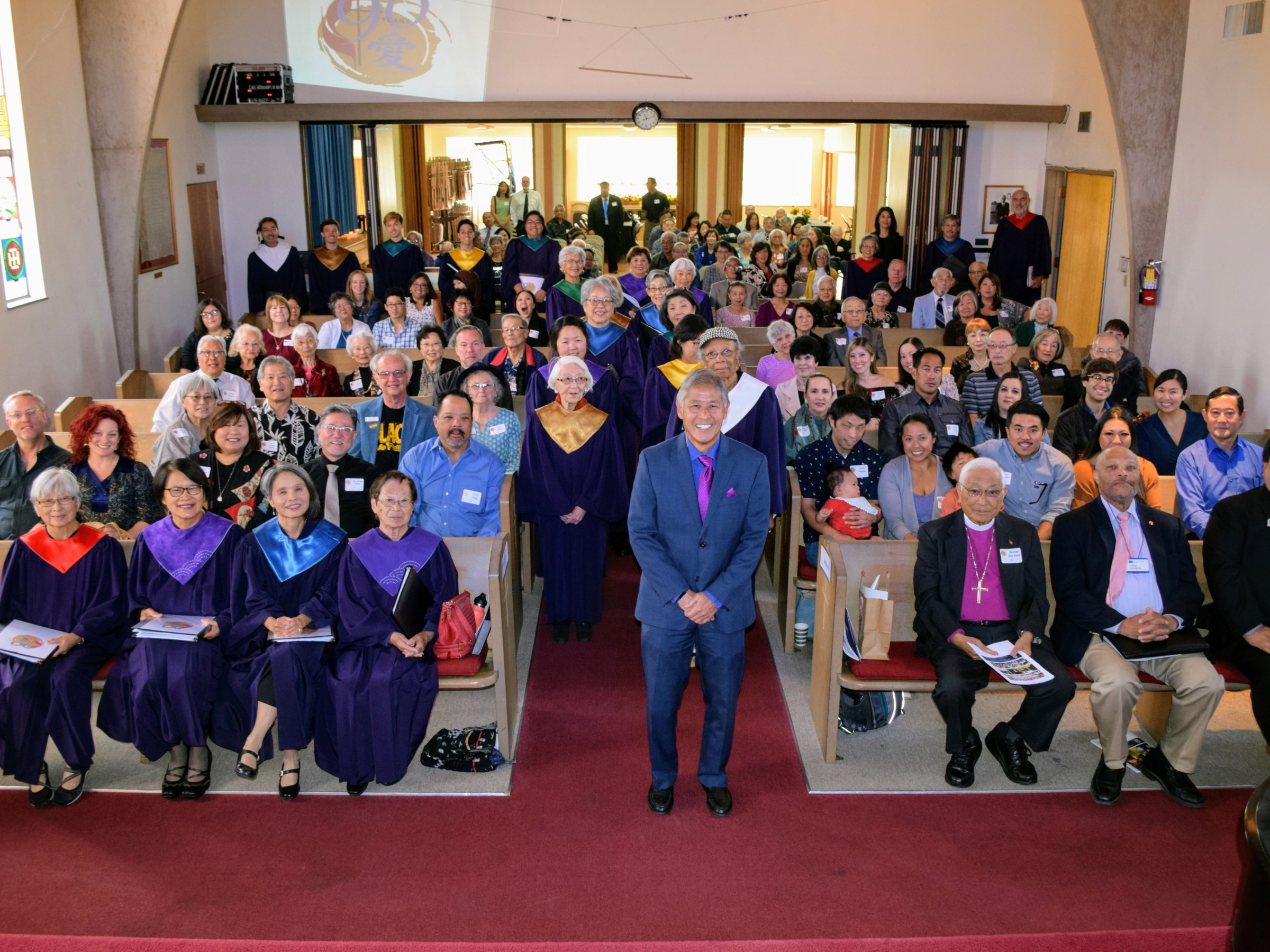
One person is all it takes.
One person with the coronavirus and people start dying. Let me tell you the real-life story of Bob.[1] Bob isn’t his real name, but the story is real. Bob sat down to dinner one night with two family members. They were sharing a take-out meal together over a nice leisurely dinner that lasted three hours. The next day, Bob went to a funeral where he offered his condolences to the family with hugs of support. Not long after, Bob went to a birthday party with nine other people who all hugged and laughed and ate together. Three of the people who also went to the birthday party went to church that Sunday. Unfortunately, they shared much more than God’s love. Within four days of that first dinner, both family members became sick. Another family member at the funeral also became sick. Seven of the nine people at the birthday party became sick. Six more people at the church became sick. And finally, Bob became sick, was hospitalized, ventilated, and died. In all, Bob infected numerous people, 16 ended up getting ill from COVID-19, and 3 ended up dying because of it. All from one initially asymptomatic person.
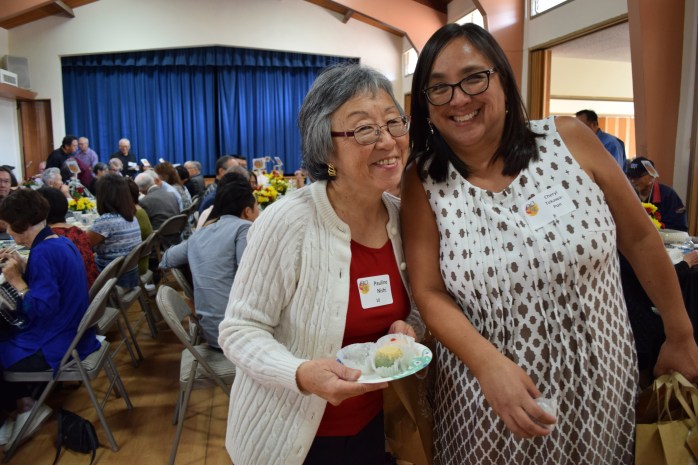
Most churches take the pandemic seriously.
According to Christianity Today 93% of church buildings are closed, most taking their worship online.[2] But it’s that vocal 7% that gives us all a bad name. Churches started to realize they were potential hot spots when disaster erupted in a number of places early on. Forty-four people were infected after attending a church conference in Eastern Kansas back in late March, five people related to this group died.[3] About 100 people were placed under quarantine in Hopkins County, Kentucky after a church held a revival in mid-March despite the warnings. Dozens reported COVID-19 symptoms and two died.[4] But perhaps the most well-known case and one of the saddest comes from the Skagit Valley Chorale who joined together on March 10th for choir practice. Even with social distancing and everyone bringing their own music sheets, 75% of the people in attendance were infected or had symptoms. Forty-five of them were ill, three hospitalized, and two died. Most of us have learned our lesson and are taking great care when thinking about reopening. Most of us are erring on the side of caution when it comes to decisions about live worship. Most…but not all.
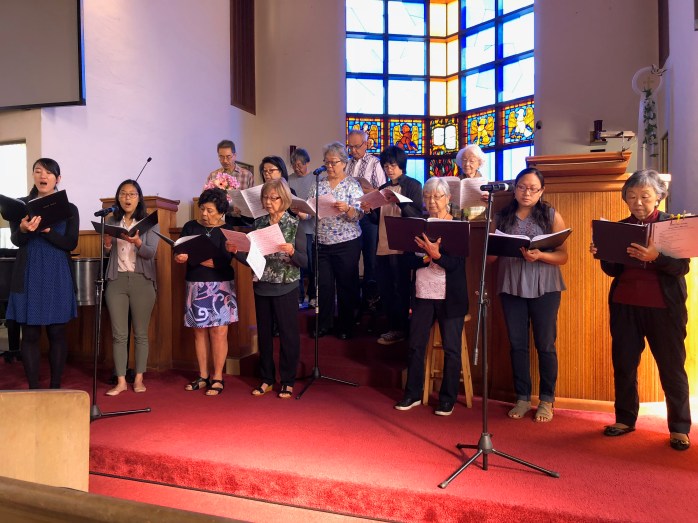
Churches across the country are filing lawsuits against state governments to open back up.
A very small minority of churches, but a very vocal minority nonetheless. They are pushing back against states’ orders to keep the doors shut. They are claiming their religious liberties are being infringed upon, that it is a violation of the First Amendment’s freedom of religion clause. The lawyer representing three of the churches in California who are filing suit said, “People need faith more than ever in difficult times.”[5] That statement is 100% true. But church buildings don’t need to be open for people to have faith. If your faith is rooted in a building, you don’t understand what faith is. Faith is rooted in Jesus Christ. I don’t believe there is a God because a church building exists. I believe in God because GOD exists! I believe in God because Jesus died for me and then came back for me, too. The basis of our faith is not a building. It is in the life, death, and resurrection of Jesus. In your heads, you know that to be true, but in your hearts? When we take a step back, most of these fights are not about preserving the faith. They are about preserving the church as we know it. Our faith doesn’t need a building or an order of worship or potluck suppers. The early church didn’t have any of those things. All they had was each other and the life-giving energy of the Holy Spirit and that was enough to see the church grow by the thousands. But in our human nature we become attached to “the way we do things.” Our faith becomes twisted and we begin to define it not by the movement of the Spirit but by the familiarity of the routine. Like a tattered and torn security blanket, we cling to the past and ignore the present. Worship attendance might have been falling for decades. Baptisms might have continued to shrink in number. Younger generations might not be leaving in droves. But we make excuses for why this is happening instead of realizing that “church” isn’t changing with the times. The same is true today with the vocal 7%. They don’t have faith that the Spirit can move in new ways and cling to their old traditions. The problem is now it is costing people their lives.
Things change all the time.
We just need to have faith in Christ that God can use any circumstance to work in the hearts of those who need him. We don’t need a building to do God’s work. We just need the church. And those are two different things. The apostle Paul reminds us not to cling to the past in this passage we’re about to read. Paul, as you know was a converted disciple. He didn’t start off that way. In fact, he was known for being one of the most dogged persecutors of early Christians before coming around. But he became so on fire for Christ, so devoted to helping others know the love of Christ, that he gave the rest of his life for that mission. In this passage we’re sharing today, Paul is writing from prison. His situation is dire, but he’s writing to inspire those in the church at Philippi to take heart! To be bold and press onward! Not to look to the past, but to be inspired by the future. Here’s what he wrote.
We are supposed to press on.
In the midst of trouble, in the midst of this crisis, we are supposed to keep moving forward and not get stuck in the past. We should heed Paul’s words to forget what is behind and strain toward what is ahead. Not to deny our past. Our past will always be with us. The people, places, and events that have molded us and shaped us to be who we are is an important part of our character. But to look back is to risk missing opportunities for what is ahead. That’s why Paul is so eager to press on. He wants to take advantage of every opportunity God places in his path. He wants to make sure he is always looking for where God is leading him. Even while in prison. Maybe especially while he is in prison. Because it might seem like there is so little room for opportunity, but Paul knows that God can do amazing things. Think about it. Paul writes this letter while he is in prison, taking advantage of this opportunity to share his thoughts with this distant congregation. Not only does he help the people of Philippi, but this letter survives the millennia to bless us in the here and now. If Paul hadn’t been attuned to the leading of the Holy Spirit, would we have received this word of encouragement?

We are in our own prison.
It’s not quite the same and much more comfortable than what Paul had to endure, but like Paul we are suddenly living in a new reality. And like Paul we’ve adapted. Worshipping in this new way has opened up possibilities we had never explored before. I have been so encouraged to see our people stretching their imaginations, pushing at the boundaries, and trying new things to make worship meaningful and they have. We embraced this moment and are moving forward. But this is only one moment, and as we move forward, we will face new challenges. Will we face each of those in the same way? Even when we are able to come back, it will look very different. We’ve already started discussions about what our “new normal” may look like when we come back to our buildings and already some pretty radical changes are being discussed. No choirs. No call and response. No fellowship time. No hymnals. No bulletins. People sitting in every third pew. Multiple worship services. What this will look like when it all shakes out is still being determined, but we know it will be different. Will you dwell on the past or will you move forward?
We are constantly challenged by a changing reality.
Not just in this, but in every facet of our lives. And if we trust in Christ and turn over our fears and doubts to God, we can make it through with grace and love. Our eyes will be open to new possibilities and new hopes and dreams. And we will grow in faith as well as in ability. But if we allow fear and doubt to overtake us, we end up putting on blinders to God’s work in our lives and in the world. We will miss opportunities God is offering to us, and in the end become like those 7% of churches that are willing to risk the lives of their congregation just to “do church.” As God told Jeremiah, he has plans for you. Plans to prosper you and not to harm you, plans for hope and future. Don’t miss out on God’s plan for your life. Keep an open mind and an open heart and see what new possibilities God is opening up in front of you! In the name of the Father and of the Son and of the Holy Spirit. Amen.
[1] https://www.erinbromage.com/post/the-risks-know-them-avoid-them?fbclid=IwAR1etJxcmd6Y5GPP-y3cJqL2WSS1R0GBa-maIJc9NBiNDKCxKNm6Ye5mUmg
[2] https://www.christianitytoday.com/news/2020/april/churches-defy-coronavirus-religious-liberty.html
[3] https://www.kctv5.com/coronavirus/5-deaths-44-coronavirus-cases-tied-to-gathering-at-kck-church/article_f9f51996-8030-11ea-9c2b-67c54e5d687c.html
[4] https://www.courier-journal.com/story/news/2020/04/01/coronavirus-kentucky-church-revival-leads-28-cases-2-deaths/5108111002/
[5] https://www.nbcnews.com/politics/politics-news/right-worship-church-state-clash-over-religious-services-coronavirus-era-n1201626
The Courage to Stay at Home

You can’t tell me what to do!
Sounds like something a five-year old would say. But protesters all over the country are pouting like five-year old children because they are being told to shelter in place or wear a mask in public. They use more sophisticated words (slightly) and couch their arguments in terms of being denied personal freedom, but the truth is these protests are largely the result of a five-year old temper tantrum. “You can’t tell me what to do!” Yet, our society tells people ALL THE TIME what they can and cannot do. It’s just that these people don’t like THIS one. We develop rules and guidelines in the form of laws and regulations to protect the community at large. We have stop signs and crosswalks and lane lines to guide people in traffic. I’ve never heard someone argue successfully they didn’t need to obey them because it infringes on their personal freedom. We have statutes in place preventing people from shouting fire in a theater or selling fake COVID-19 medicine and again, no one has argued successfully they didn’t need to obey them because it infringes on their personal freedom.

I have a lot more sympathy for people making the economic argument.
There are businesses out there, mostly mom and pop businesses, that will likely not be able to recover from this disaster. The pandemic has highlighted some serious problems in our system of government and the way we take care of each other that scholars and advocates have been shouting about for decades but have now come screaming into the light. Access to decent healthcare, how we take care of the elderly, and an inability to effectively distribute food and supplies where it is needed come to mind. And of course, a crisis not only brings out the best in people, but the worst, too. We are having to adapt on the fly to new forms of predatory lending, unscrupulous companies taking advantage of government programs designed to help the little guy, and people hoarding essential supplies and then reselling them at outrageous prices. When we add the unprecedented sudden high rate of unemployment on top of all the other issues we’re facing, it’s no wonder people are crying out for relief. Certainly, we have to find a better way to prevent food and housing insecurity during this crisis. But risking people’s death because we don’t like people telling us what to do seems to be the ultimate in selfish behavior.
There’s no denying we value freedom.
Freedom is one of the most important values our country was founded upon. The freedom of choice, freedom of the press, freedom of self-expression are those for which we have fought and died for. But sometimes the most brilliant, loving, and self-sacrificial way we can show how much we value that freedom is when we choose not to use it. Paul talks about it explicitly in his first letter to the church at Corinth. He spends a great deal of time talking about freedom and the freedom he is given as a believer in Christ. But he also believes how we CHOOSE to use that freedom says a lot about our faith. Here’s what Paul has to say:
Sounds a bit like an Aaron Sorkin screenplay.
“You can’t handle the truth!” Maybe we can’t. Maybe we struggle with this idea that freedom isn’t just the right to do what we want, but is also the right to choose not to. Just because we have the right doesn’t mean we ought to do it. That’s what Paul is arguing here. There were people complaining about him and the other disciples not “earning their keep” so Paul launches into this argument about it. First, he establishes his credentials. Number one: He’s an apostle. He’s not just some schmuck out there, peddling a false gospel. HE actually saw and spoke to Jesus Christ himself! Now if THAT doesn’t earn you some street cred, I don’t know what does. But more than that, he actually founded the church at Corinth. It was because of his work that they even exist. So he tells them, “Look, other people may doubt my credibility, but none of you would be here if it wasn’t for the work I put in.” So then he moves into the argument that all that work deserves some reward. They are in the business of saving people’s souls after all and if THAT doesn’t deserve the occasional In-N-Out Double-Double, what does? There are other people out there doing work a lot less significant who get compensated for their time, so don’t those who are working hard to spread the Gospel deserve something for their effort? Paul argues they do.

But what makes Paul’s argument the most convincing is what he writes next.
He goes on to say that even though they HAVE the right, they choose not to use it to make sure no one can question their motives. They want to make sure no one can accuse them of impropriety. They want to make sure everything they do is above reproach to protect the sanctity of the gospel message. Later on, in the same letter to the church at Corinth he writes, “23 ‘I have the right to do anything,’ you say—but not everything is beneficial. ‘I have the right to do anything’—but not everything is constructive. 24 No one should seek their own good, but the good of others.” No one should seek their own good, but the good of others. That is the barometer Paul uses to measure the proper use of freedom. It’s not about what we get out of it, but about what we do that adds to the good of others. If eating at home instead of in a restaurant can save a life, if wearing a mask when you go to the store can save a life, isn’t that worth giving up a tiny bit of your freedom?

We seem to be so focused on ourselves we fail to see the impact we are having on people around us.
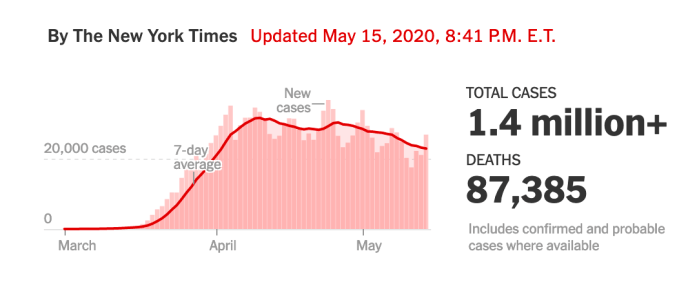
The divisiveness. The bitterness. The irrational hatred aimed at people who are only trying to save our lives. I saw a picture online the other day from the Los Angeles Times about this group of protesters up in Sacramento. Fifteen hundred people protesting the stay-at-home orders, all crowded together like it was a Trump rally, none of them in the picture wearing masks or social distancing.[1] People carrying signs that read “Death happens / Open CA now” and “Our Constitutional rights are ESSENTIAL.” One person was holding a sign that read, “California’s Civil War starts today.” Are people really equating an order to stay at home with institutional slavery? Are they so far detached from reality that they think the two are anywhere in the same ball park? Most ironic of all was this one guy in the crowd wearing a shirt that says, “Truth matters.” Ironic because it does and yet these people seem to be ignoring it. More than 1.3 million cases have been reported of COVID-19 in America with over 80,000 deaths. And while the number of new cases is declining, it’s still in excess of 20,000 per day with more than 1,000 people dying every 24 hours from this coronavirus, and that’s with social distancing in place.[2] The truth, if it matters, is that these policies have helped to “flatten the curve” and to slow down the spread of the virus, but it hasn’t gone away. Is it unreasonable to take precautions like keeping your distance and wearing a face mask in public if it might help save someone’s life?
But this goes beyond face masks and social distancing.
It says a lot about who we are as a people. Christ challenges us to love one another. Paul writes to the church that we need to seek the good of others and not of ourselves. How can we best do THAT? We need to rise above the narrow, small-minded way of looking at the world as revolving around our wants and our needs and instead embrace the challenge Christ puts before us and love others. Instead of attending rallies to open up the economy let’s find ways to open up our hearts toward our fellow neighbor. Instead of shouting out about being denied civil rights, let’s find a way to stop denying people food and shelter. There are plenty of problems in the world and wearing a face mask isn’t one of them. We have much bigger fish to fry.
Just a little over a week ago something tragic happened.
It was the sad ultimate expression of that five-year old temper tantrum. “You can’t tell me what to do!” And even though it happened in Flint, Michigan, I am reminded of something Dr. King wrote in his “Letter From A Birmingham Jail.” He wrote, “We are caught in an inescapable network of mutuality, tied in a single garment of destiny. Whatever affects one directly affects all indirectly.”[3] So I grieve over the death of Calvin Munerlyn.[4] Calvin didn’t die of COVID-19. Instead, Calvin was a security guard at a local Family Dollar store and when he went up to Sharmel Teague and informed her that her nine-year old daughter needed to wear a face mask to shop in the store they got into it and Sharmel ended up spitting at Calvin before leaving with her daughter. Twenty minutes later, Sharmel’s husband Larry, and her son Ramonyea Bishop came in and confronted Calvin about “disrespecting” Sharmel. It was at that point Ramonyea blew a hole in the back of Calvin’s head. The most tragic expression of “You can’t tell me what to do!” Calvin Munerlyn, age 43, husband and father of nince, died that day. Over a face mask.
We are living in scary times.
And with so much uncertainty and so many problems coming to light, it’s easy to become self-absorbed and self-involved when the world seems to be collapsing in on us. It’s easy to become impatient and anxious. But now more than ever we have to remember Christ’s command to turn that around and love one another. We have to challenge ourselves to remember the great impact we have on the world around us. How the actions of one person can have devastating or uplifting effects on those around us. If we’re going to get through this well, it has to be together. So practice patience, perseverance, and love. Lay down your anger and your fear at the feet of Christ. Turn to him in prayer. And let God help shoulder the burden. We need to remember that sometimes the greatest act of love is not in the use of our freedom but in choosing not to. In the name of the Father and of the Son and of the Holy Spirit. Amen.
[1] https://www.latimes.com/california/story/2020-05-04/coronavirus-california-reopening-will-start-slow
[2] https://www.nytimes.com/interactive/2020/us/coronavirus-us-cases.html
[3] http://okra.stanford.edu/transcription/document_images/undecided/630416-019.pdf
[4] https://news.yahoo.com/security-guard-father-9-shot-224138508.html
If It Wasn’t For Mom…
Weirdest. Mother’s Day. Ever.
I’m pretty sure we’ll be saying that about every celebration until this pandemic is under control. Every event, every holiday, will take on new meaning. But sometimes that’s a good thing. I don’t normally get to spend time with my mom anyway since Mother’s Day SOMEHOW always ends up on a Sunday, but this one in particular has made me miss my mom even more. I think being sheltered in place has helped me to appreciate family and friends in a new way. Hearing from many of you, I don’t think I’m alone in that. Whether it’s your biological mom or someone who’s been a mom to you your entire life, whether your mom lives close by or far away, or whether your mom is alive or has passed on, we seem to be thinking of them more often. Maybe it’s because we have more time on our hands to reflect, but at least part of it is the risk we all have of contracting the virus and the chance, however small, of actually dying from it. Plus, many of our moms are in the high-risk category and that alone almost forces us to reflect on what’s really important in our lives. Like our moms.
Where would we be without our moms?
Nowhere. Even if you didn’t have the best mom in the world, you could at least say one thing – she brought me into this world. That alone should be an accomplishment worthy of recognition. Giving life to a child, enduring not only labor but the nine months leading up to it is a sacrifice we don’t often appreciate as much as we should. Now the truth is, most of us DO believe we have the best mom in the world or at least right up there in the top 10. Just for putting up with me alone, I know my mom deserves top 5 status. I look back now and wonder how in the world my mom didn’t just strangle me on a daily basis. I guess I can credit that to a mother’s love. It seems most moms have a never-ending wellspring of the stuff, a love that goes beyond any other that exists. In that way, our love for our children mirrors God’s love for us. It’s the strongest kind of love there is.
If you look in the Bible you see so many examples of this type of motherly love.
In Genesis we see Jochebed, the mother of Moses not only giving up her child for the chance to let him live, but then purposely making herself a servant in the princess’ household so she could be with him. Even though it meant she would likely live a life of poverty, Naomi released her two daughters-in-law from their duty to her when her sons died tragically. She loved them that much, and knew their best chance was to abandon her and she wanted what was best for their lives over her own. Then there’s the story about the woman in King Solomon’s court. Her child was stolen from her by a jealous and bitter woman whose own baby passed away in the night. Without a clear way to tell who was lying, King Solomon tried something tricky and offered to settle their dispute by sacrificing the child so that neither one could have him. The mother instantly said she would give up her claim if only the king would allow the baby to live. And in the New Testament we hear the story of the Canaanite woman who comes before Jesus, crying out for mercy. Her daughter is suffering and she comes begging for help. Eventually, Jesus recognizes this woman’s great faith and takes mercy on her, curing her daughter. All of these mother’s stories have a similar theme – self-sacrifice. They were willing to sacrifice their own security, happiness, or well-being for the sake of their children.
Mary was the same way.
If you have a Bible or a Bible app, please go to the Gospel according to Luke, chapter 1, beginning with verse 26. Luke 1:26. Mary had a lot to lose becoming the mother of Jesus. We look back now and see what an amazing honor it was to be chosen for this role, but back then there was a lot at stake. Right before Mary is pregnant, we read that Mary’s cousin, Elizabeth, was also pregnant, itself a miracle considering Elizabeth’s advanced age. But God had graced Elizabeth with a son and she would soon give birth to the man we know as John the Baptist. Mary, however, had no immediate plans to be pregnant. So everything that’s about to happen is going to come as a big surprise.
26 In the sixth month of Elizabeth’s pregnancy, God sent the angel Gabriel to Nazareth, a town in Galilee, 27 to a virgin pledged to be married to a man named Joseph, a descendant of David. The virgin’s name was Mary. 28 The angel went to her and said, “Greetings, you who are highly favored! The Lord is with you.”
29 Mary was greatly troubled at his words and wondered what kind of greeting this might be. 30 But the angel said to her, “Do not be afraid, Mary; you have found favor with God. 31 You will conceive and give birth to a son, and you are to call him Jesus. 32 He will be great and will be called the Son of the Most High. The Lord God will give him the throne of his father David, 33 and he will reign over Jacob’s descendants forever; his kingdom will never end.”
34 “How will this be,” Mary asked the angel, “since I am a virgin?”
35 The angel answered, “The Holy Spirit will come on you, and the power of the Most High will overshadow you. So the holy one to be born will be called[b] the Son of God. 36 Even Elizabeth your relative is going to have a child in her old age, and she who was said to be unable to conceive is in her sixth month. 37 For no word from God will ever fail.”
38 “I am the Lord’s servant,” Mary answered. “May your word to me be fulfilled.” Then the angel left

This would have been a tremendous burden for Mary.
To be willing to carry a child that was not from her husband would be a disgrace in the eyes of the community. And since they had never been together, Joseph would know it was not his child and would have every reason to leave her, and from Matthew’s version of the story, Joseph originally intended to do exactly that, but was convinced to stay by an angel of the Lord. Still Mary couldn’t count on an angel to come and intervene. If Joseph had left her, it was likely she never would have been married. Because of the society they lived in, she would probably have been destitute and would need to rely on the mercy of others to provide her with food and clothing. Her life as she knew it would take a drastic turn for the worse. But she accepted her role with grace and simply trusted God would make everything all right. That’s what makes this story so amazing. She was willing to sacrifice so much for this child and for her faith in God.
It’s that kind of sacrifice that reminds us of Christ.
Just as a mother is willing to sacrifice her life for the child that she loves, so too does Christ love us. That he was willing to give his life for all of us is a testimony to love we see from parent to child. A mother’s life is often one of sacrifice. When we look again at Mary’s life not only did she risk much to give birth to Jesus, but she stood by him even at his death. She was one of the few who remained by Jesus’ side in his final moments, and despite the ridicule he suffered, the abandonment of even his closest friends she would not abandon him. The pain and difficulty of seeing her son in those final moments must have been heart rendering. But she did it out of love for her child. Because that’s what a mother does. She is willing to sacrifice herself for her children just as God does for us.
Mary fittingly is one of the cornerstones of our faith.
Not only because she was the mother of the Christ child, but because of her own example of faithfulness and self-sacrifice to God. Looking through the Bible and reading through the history of the church, mothers have been vital in the development of the faith, both on a personal level and as a mirror of the self-sacrifice of Christ. Think about the mothers we talked about today – not only Mary, but Jochebed, Naomi, the woman in King Solomon’s court, and the Canaanite woman. Their actions were all based on love and self-sacrifice. The same kind of love and self-sacrifice that God has shown to us through his son Jesus. As parents, when we are at our best, we are a reflection of the love of Christ.
When the Bible says we are created in his image, this is what it meant.
That we are built for love. That it is in our nature to love and in its purest most Christ-like form to think of others before ourselves. A mother’s natural instinct for love and self-sacrifice is because we are created in his image. But as creatures of free choice, we don’t always make the wise decision. Not all of us are blessed to have a mother who loves us the way we deserve or that she was created to be. So if you have a mother in your life who has given you this kind of love, whether she is your biological mother, your adopted mother, or your surrogate mother, remember to give thanks to her and thanks to God for the way he created us. In this time of the pandemic, it’s good to stop and remind ourselves what is truly important. Family. Friends. God. Life.
A Radio, A Boat, and A Helicopter
Captain EO!
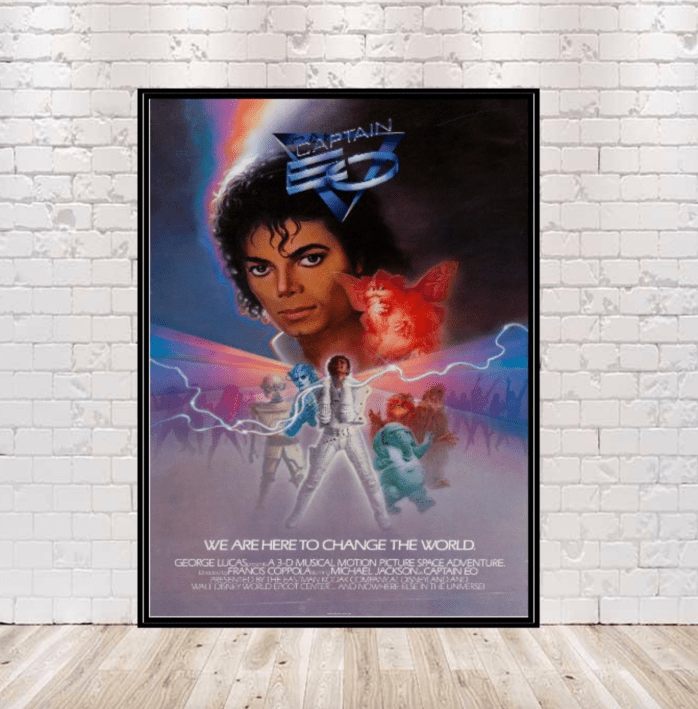
From a film critic point of view, a horrible movie. The script was awful. The plot non-existent. And the acting was atrocious. Michael Jackson was amazingly talented, but acting was not one of his talents. Still, I don’t know anyone who didn’t LOVE it when it premiered at Disneyland back in 1986, myself included. As bad as the movie was, it had a lot going for it – the music, the dancing, and most of all the special effects. The first time I saw that spinning asteroid in front of my face I was in awe. I tried reaching out to touch it. I knew there was nothing actually there, but the illusion was so REAL! I could see out of the corner of my eye the rest of the audience all doing the same thing. The new 3D technology was leaps and bounds ahead of the old red and blue eyeglasses version, but you still needed the glasses to see it properly. Without them, you could still see the film, but it was kind of blurry and fuzzy. The glasses helped you to see it in a completely different way.
During this crisis, I’ve heard a lot of people ask where God is in all of this mess.
The truth is, he’s here with us all the time. It’s just sometimes we forget to put on our God glasses and it makes it hard to see him. Like a fuzzy 3D image. God is constantly at work in the world, but if we don’t train our eyes to see him, we can miss the multiple opportunities God provides to interact with him and grow closer to him, and in times like these where the world seems so topsy-turvy a solid relationship with God sounds like a good thing to most of us. When international missionaries first started to share the Gospel with others, they would often say they were bringing God to the people, but we don’t use that kind of language any longer. Today we say we are helping to REVEAL God to the people. God is already at work. God is already present. It’s just that we are not always looking at the world through a God lens. The same is true for our ears.

We don’t spend enough time listening for God.
If you have a Bible or a Bible app on your phone and you want to follow along, we’ll be reading from the book of Isaiah in the Old Testament, chapter 6, verses 8-10. Isaiah 6:8-10. We’re not always tuned in to God’s frequency. Like back when I was young and we had to manually find a radio station. If you didn’t turn the dial to just the right spot, you were likely to get static instead of music. Listening for God is often the same way. If we don’t train ourselves to tune into the God frequency we might be listening to a lot of static. The thing is God is trying to communicate with us and interact with us, but we might be looking or listening for the wrong things. There is a reason the prophet Elijah was favored by God. He knew how to listen. There’s one time in particular that God was trying to speak to Elijah and Elijah had to prepare himself to hear God’s Word. From 1 Kings 19:11-13:

11 The Lord said, “Go out and stand on the mountain in the presence of the Lord, for the Lord is about to pass by.” Then a great and powerful wind tore the mountains apart and shattered the rocks before the Lord, but the Lord was not in the wind. After the wind there was an earthquake, but the Lord was not in the earthquake. 12 After the earthquake came a fire, but the Lord was not in the fire. And after the fire came a gentle whisper. 13 When Elijah heard it, he pulled his cloak over his face and went out and stood at the mouth of the cave.
Then a voice said to him, “What are you doing here, Elijah?”
I love that story. It just shows you how in tune Elijah was to God. I think most of us would have thought God was in the powerful wind or in the earthquake or in the fire. These are monumental events where we would expect God to be. But Elijah knew. And waited. And when it was over, he went to the mouth of the cave and listened not to the wind or the earthquake or the fire, but to the gentle whisper and heard God say to him, “What are you doing here, Elijah?” In so many ways we have become desensitized to God’s voice and God’s movement in the world that it’s hard for us to notice God’s movement in our lives. It’s why God gave this message to Isaiah.

“This people’s heart has become calloused…
Has your heart become calloused? Do you take time to really hear God? Or like most of us, do you see the storm or the earthquake or the fire and react to that without listening to the soft, gentle whisper trying to get your attention. How easy it is to miss the fine details and focus on the wrong things. I don’t know about you, but I think that’s why I love riddles. I like to try and hone my mental skills to help keep my wits about me. When I went to a class offered by the Disney Institute, they told us one that stumped me. They said, “Rearrange the letters in the phrase ‘new door’ to spell one word.” Take a second and try to figure that one out.

SPOILER FOLLOWING – ONLY KEEP READING IF YOU’RE READY TO MOVE ON
Did you get it? “Rearrange the letters in the phrase ‘new door’ to spell one word.” If you were both listening and discerning, you probably realized that the letters in the words “new door” can be arranged to spell the words “one word.” For me, I was listening but didn’t pause to consider the obvious. Now of course, I can’t help but notice what I should have done right away. But that’s the kind of pause we need to take in our faith life to really listen to God. We have to pause, take a calming breath, and really focus on the blessings God is placing in front of you. In the midst of a crisis, pausing is often the last thing we want to do, but it can be the best thing we do also. Really take a moment, pray, and then ask yourself, “Where do I see God today?” Every day. Do that at least once a day. Maybe while you’re doing the dishes or taking a shower or eating your lunch or walking the dog. Take a moment while you’re doing those things, pause, take a calming breath, and just ask yourself, “Where do I see / hear / smell God today?”

I still have to remind myself to do that on a regular basis.
There are times when I can get so caught up in what’s going on around me, that I forget to stop and take notice where God is moving in the world. But I have found that when I do stop, give myself over to God, and trust in him, he opens doors for me I never knew were there. It takes time and practice to hone your God-searching skills. You have to be intentional about it, like any other skill in life. But if you do this regularly, if you stop once in a while and consider where God is moving in your life, pretty soon you’ll be able to see how God is there for you. You’ll know that even in this, in the midst of this coronavirus, that God is right there beside you. If we only listen. God told the prophet Jeremiah in Jeremiah 29:11-13, “11 For I know the plans I have for you,” declares the Lord, “plans to prosper you and not to harm you, plans to give you hope and a future. 12 Then you will call on me and come and pray to me, and I will listen to you. 13 You will seek me and find me when you seek me with all your heart.” Come, pray, listen, seek God and you will find him when you seek him with all of your heart.
I want to leave you today with a little story.
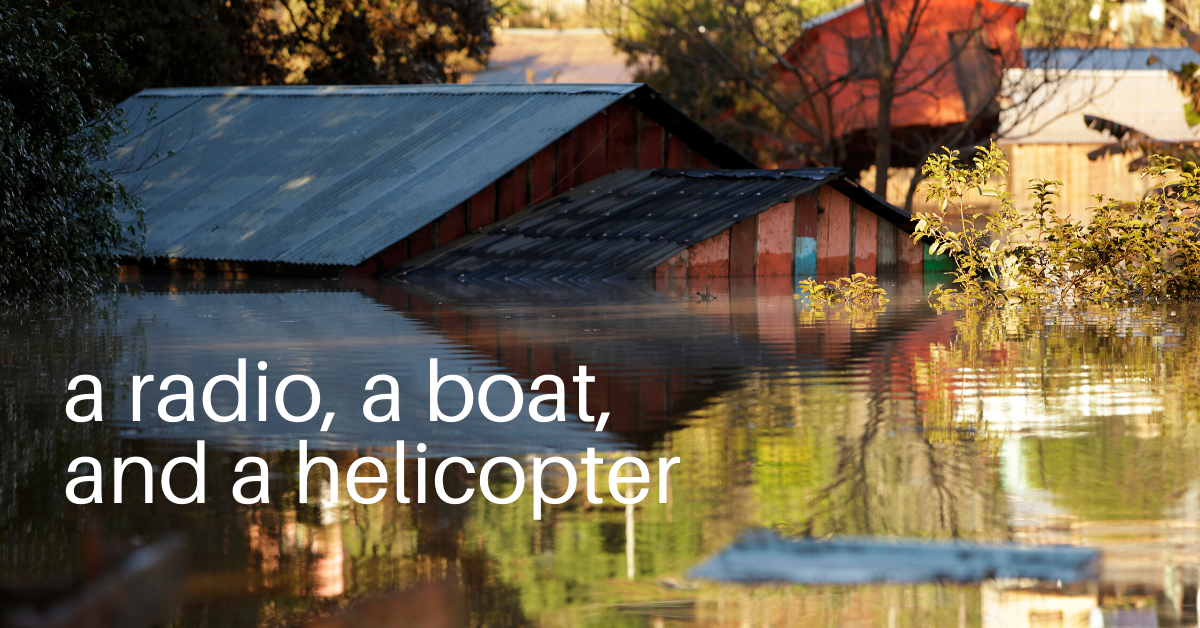
It’s from an episode of the TV show The West Wing and in it President Bartlett is having a tough time. He isn’t sure what God wants him to do so he brings in his family priest for confession. The priest listens to the President and asked him if he prayed and the President said, “Yes, but I didn’t hear a thing and frankly I’m a little mad.” But to the priest it seems obvious and he tells the President this story. “You remind me of the man who lived by the river. He heard a radio report that the river was going to rush up and flood the town and that all the residents should evacuate their homes. But the man said, ‘I’m religious. I pray. God loves me. God will save me.’ The waters rose up. A guy in a rowboat came along and he shouted, ‘Hey, you! You in there! The town is flooding! Let me take you to safety!’ But the man shouted, ‘I’m religious. I pray. God loves me. God will save me.’ A helicopter was hovering overhead and a guy with a megaphone shouted, ‘Hey, you! You down there. The town is flooding! Let me drop this ladder and I’ll take you to safety.’ But the man shouted back that he was religious, that he prayed, that God loved him, and that God would take him to safety. The man drowned. Standing at the gates of St. Peter, he demanded an audience with God. He said, ‘Lord, I’m a religious man. I pray. I thought you loved me. Why did this happen?’ God said, ‘I sent you a radio report, a helicopter, and a guy in a row boat. What are you doing here?’” Who is God sending to you? How might God be trying to get through to you that you need to listen to? Put on your God glasses and tune into the God frequency and find out.
A New Day Dawning

Remind the people to be subject to rulers and authorities, to be obedient, to be ready to do whatever is good, 2 to slander no one, to be peaceable and considerate, and always to be gentle toward everyone.
3 At one time we too were foolish, disobedient, deceived and enslaved by all kinds of passions and pleasures. We lived in malice and envy, being hated and hating one another. 4 But when the kindness and love of God our Savior appeared, 5 he saved us, not because of righteous things we had done, but because of his mercy. He saved us through the washing of rebirth and renewal by the Holy Spirit, 6 whom he poured out on us generously through Jesus Christ our Savior, 7 so that, having been justified by his grace, we might become heirs having the hope of eternal life. -Titus 3:1-7
This is not the Easter I imagined.
I’m betting it’s not the one you imagined either. As early as a couple of months ago, I was already deep into planning the Easter weekend. We start talking about it as a staff right after Christmas. First, just the rough edges and then as it gets closer and closer, we get down to the nitty gritty. I had a whole sermon series planned leading up to the big day! Already had a postcard designed and ready to drop in the mail around the neighborhood; 4,000 copies about to be printed and sent out to invite people to come to Easter Sunday worship. And then this happened. 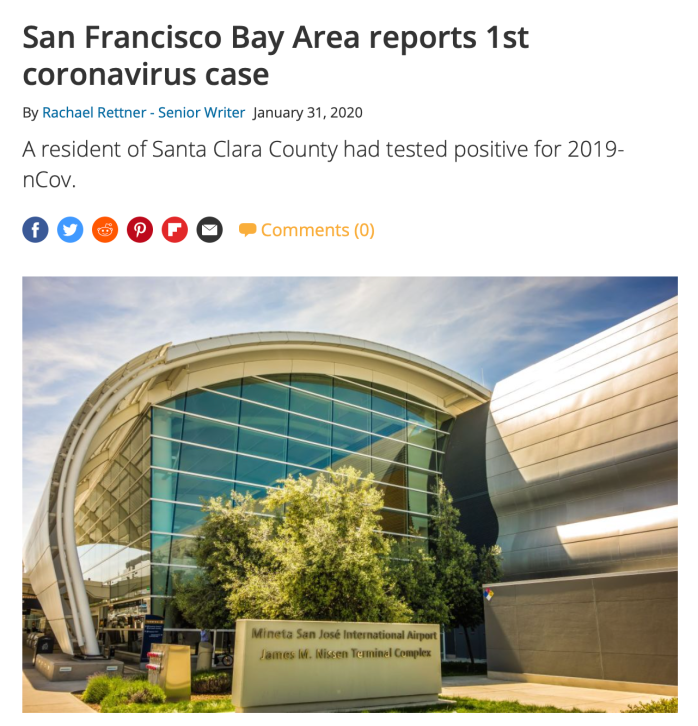
Every day, it seemed like something new was happening. Every day, someone else was getting sick from the virus. Every day, new orders were issued, new developments were happening, new cases were cropping up. Then the dominoes really started to fall.
We all had questions. We were all seeking answers.
How do I know if I have the virus? Should I be wearing a mask? Do I have to wash my potato chips I just bought from the store? And what is going on with the run on toilet paper? As a church community, we began asking questions, too. Lots of them. And just like it was with the rest of the world, the answers changed from week-to-week and sometimes from day-to-day. It just seemed to be a time with a lot of unknowns. Life as we knew it changed seemingly overnight. And people are really bad with change. We deal with it because we have to, not because we want to. Many of us struggle with change especially when it comes to the things we hold most dear like family, friends, and faith. The worst part was no one seemed to have any definitive answers. Even now, we continue to have questions. We keep making the best guesses we can, but there is still so much we don’t know. It’s been a time of anxiety, of doubt, and of fear.

Which makes Easter all the more relevant for us today.
Jesus’ followers must have felt the same way. Their whole world had been turned upside down. This man who they called Lord and Savior just died. And not from natural causes but because his own people had condemned him to death. If you really believed that Jesus was the Son of God, then how could he die such an ignoble death? He died on a cross with common thieves. Nothing was as it should be. It was a time of anxiety, doubt, and fear. They probably asked each other the same questions we find ourselves asking today. What next?
It seems like we’re going through our own Good Friday.
It’s not an exaggeration to say none of us have experienced an Easter like this one. While we are confident the world will go on, we’ re not sure how different it will be when we get to the other side. We don’t know who is going to make it. And we’ re not sure when we’ll get there. It’s the waiting and the lack of clarity that is making us even more anxious and filled with worry and fear. It’s like the whole world is on pause. God pushed the big stop button up in the sky and the world has ground to a halt. Except that it hasn’t. Not completely. With the economy nearly at a standstill all, people are getting furloughed or laid off at an alarming rate. One of my close friends just lost her job of 23 years. Those lucky enough to still have a job are sometimes asked to take drastic pay cuts like one of my sisters who is working the same number of hours but at half the pay. Lines at food banks and food distribution centers are longer than ever. And people are still dying by the thousands, sometimes completely alone. My friends and I are still in shock over the death of one of our high school buddies who is one of the thousands of victims of this disease. They say it’s darkest before the dawn, but when is that dawn coming?

Still that’s why Easter is so important
If Easter has taught us anything it’s that God can use even THIS to bring us new life. God is constantly doing something new in the world. He renews our spirit, he renews our strength, and he gives us new hope. That early Easter morning when Mary was weeping beside the empty tomb, she had no idea what had happened. She assumed as most of us would that Jesus’ body was stolen. The ultimate insult. To desecrate the dead was just one more indignity to the memory of Jesus. And whatever revelation John had when he looked in the tomb, he did’ t share with Mary because Mary was still there weeping when he went home. But then something amazing occurred. Jesus called Mary by name and her eyes sprung open as she realized who was standing before her. God had done the impossible and resurrected Christ our savior. And because Christ was reborn, we know that our God can conquer even death, that Jesus truly was the Son of God. All the doubt and fear and anxiety the disciples were feeling vanished once they realized what God was doing among them. They were given new strength and new hope so that when Jesus would eventually go back to the Father, this time they were unafraid. They met the challenge of a world without Jesus with conviction and confidence because they knew they were not truly alone. Christ was with them.
We may not be able to see the other end of this crisis yet.
But we can have faith there is an end and it is coming. We know that all things are possible for a God who can raise the dead that we too will see our day of rising. Just as Jesus emerged from the tomb, we know that one day we will emerge from our homes and be able to engage the world in person once again. But until that day comes, we need to be strong. We need to support one another. We need to offer each other hope by being Christ in the world today. As Paul wrote to Titus, “Remind the people to be subject to rulers and authorities, to be obedient, to be ready to do whatever is good, 2 to slander no one, to be peaceable and considerate, and always to be gentle toward everyone.” Even though it’ s hard, even though it’ s tough, even though it seems at times stifling, we are doing our part to help others make it through by listening to the advice of our health experts, by sheltering in place, and by wearing our masks in public. Until there is a handle on this pandemic, each one of us is playing an important part by being as safe as we can so that as many as possible will make it through.
God made us a resilient people.
We are made of tougher stuff than we know. A few months ago, who would have thought we would be moving toward online worship? Online worship has been a blessing as much as a necessity and as the saying goes, “Necessity is the mother of invention.” What has been remarkable to me is not only seeing so many of you adapting to this new challenge, but meeting people online who are now able to join us because of this technology. We were and are forced to come up with new and creative ways of engaging with one another and keeping connected, and even though it hasn’t been easy, it has been rewarding in ways we hadn’t imagined. Which only reinforces our need to trust in God. While all of us would have preferred for this virus never to have happened, we are stretching in new and different ways for Christ and it is making a difference. It’s like the prophet Isaiah was speaking to us directly instead of to the Israeli people millennia ago when he shared God’s words with us,

18 “Forget the former things, · do not dwell on the past. 19 See, I am doing a new thing! Now it springs up; do you not perceive it? I am making a way in the wilderness and streams in the wasteland.” – Isaiah 43:18-19
God can do things we can’t even imagine. We just need to be open and receptive to where the Holy Spirit is leading us and trust that God will lead us where we need to be.
This is a time of testing.
But we will make it through and we will make it through together. Let us be the kind of people God created us to be. Let us support one another and lift each other up. As Paul wrote to Titus,
3 At one time we too were foolish, disobedient, deceived and enslaved by all kinds of passions and pleasures. We lived in malice and envy, being hated and hating one another. 4 But when the kindness and love of God our Savior appeared, 5 he saved us, not because of righteous things we had done, but because of his mercy. He saved us through the washing of rebirth and renewal by the Holy Spirit, 6 whom he poured out on us generously through Jesus Christ our Savior, 7 so that, having been justified by his grace, we might become heirs having the hope of eternal life.
A new day is dawning! I can’t wait for us to see what God has in store.
We Can Pray…
It seems overwhelming.
I don’t know about you, but everything having to do with the Coronavirus at times seems overwhelming. If you turn on the news or listen to the radio, you can’t help but watch the number of people who have the virus keep growing. At the same time, the death toll continues to go up at an alarming rate. I’m both fascinated and disgusted with the little stats tracker most TV news stations keep up on the right-hand side of the screen that shows both numbers day after day. But I also can’t help myself from looking and feeling pretty helpless before this invisible enemy. I know a lot of you are anxious. I know a lot of you are worried about getting ill or maybe worse worried someone you love will get ill. And even though they’ve stressed over and over that most of us, even if we get the Coronavirus, will recover just fine, it’s hard not to fixate on the negatives. People over 65 are at higher risk. People with underlying health conditions are at higher risk. And this one they popped out just a couple of days ago, men are at higher risk. And even if you aren’t in any of these groups, you can be a risk to the people around you. It’s put most of us at least a little on edge and some of us a lot.
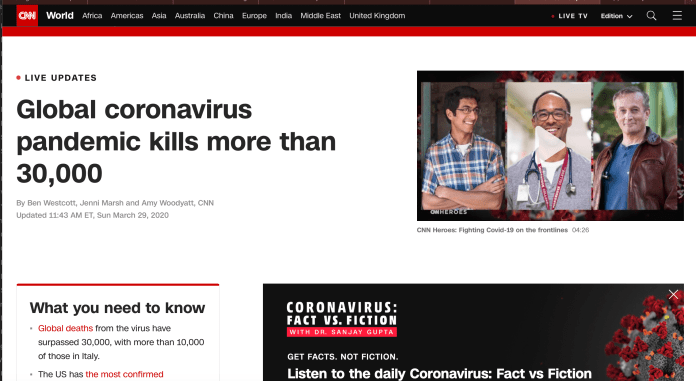
What do we do?
When we are faced with a situation like this where so much seems out of our control, what CAN we do? We can listen to the experts. We can protect ourselves and our loved ones by being physically distant while still reaching out to one another. For those who are able, we can offer a helping hand whether that’s shopping for a neighbor, buying dinner through Door Dash to support a local business, calling a friend who might be lonely, writing a letter to someone who would love a little sunshine in the pile of ads and bills. And we can pray. As a people of faith, in times of strife, in times of darkness, in times of joy, we can pray. It’s what we do.
But does it work?
Most definitely, yes. Let’s get that out of the way as soon as possible. I want to assure you that prayer works! God listens to each and every one of us. God hears us and knows our pain, knows our happiness, and knows our struggle. But I find that even among those who believe we struggle with what prayer is and what it does. Some feel foolish praying. Some feel pessimistic praying. Some just feel like there is no evidence that it works at all. But I guess it depends on your definition of “works.” The biggest problem is how to measure the effectiveness of prayer. Dr. Candy Brown from Indiana University in Bloomington wrote that most researchers study prayer as they would any other phenomenon. They set up studies, they do double-blind trials, they set up a control group and an experimental group, and then they compare results.[1] But maybe that’s part of the problem right there. Maybe you can’t measure the effects of prayer simply by doing blind trials. As Brown noted, “…when people actually pray for healing, they usually get up close to someone they know, touch the person and empathize with their sufferings… Double-blinded, controlled trials are not the only — or even the best — way to gauge the effects of this kind of prayer practice.”[2] Prayer is such a personal experience and the results may not become evident for a long time or they might unfold in a way we never expected.
That’s the biggest problem with trying to measure the “success” of prayer.
Sometimes it doesn’t happen the way we expect. We often say “Wishing Well” prayers. By that I mean, we tell God what we want and we measure our prayer’s success on if we get what we ask for. Like a Wishing Well. And then we judge God by whether or not God lives up to our expectations. Except God doesn’t work that way. If you’ve ever heard the song “Unanswered Prayers” by Garth Brooks, you know what I’m talking about. Garth sings about how when he was young, he prayed hard for God to help him out with a girl he liked. That if God would make this one girl his wife, he would never ask for anything again. But God didn’t answer that prayer. At least not in the way he wanted at the time. Instead he ended up meeting the woman who would one day become his wife and he sums it all up in the chorus by saying, “Just because he doesn’t answer, doesn’t mean he don’t care. Some of God’s greatest gifts are unanswered prayers.” We’re going to hear about one of those unanswered prayers in our reading today.

Then Jesus went with his disciples to a place called Gethsemane, and he said to them, “Sit here while I go over there and pray.” 37 He took Peter and the two sons of Zebedee along with him, and he began to be sorrowful and troubled. 38 Then he said to them, “My soul is overwhelmed with sorrow to the point of death. Stay here and keep watch with me.”
39 Going a little farther, he fell with his face to the ground and prayed, “My Father, if it is possible, may this cup be taken from me. Yet not as I will, but as you will.”
40 Then he returned to his disciples and found them sleeping. “Couldn’t you men keep watch with me for one hour?” he asked Peter. 41 “Watch and pray so that you will not fall into temptation. The spirit is willing, but the flesh is weak.”
42 He went away a second time and prayed, “My Father, if it is not possible for this cup to be taken away unless I drink it, may your will be done.”
43 When he came back, he again found them sleeping, because their eyes were heavy. 44 So he left them and went away once more and prayed the third time, saying the same thing.
45 Then he returned to the disciples and said to them, “Are you still sleeping and resting? Look, the hour has come, and the Son of Man is delivered into the hands of sinners. 46 Rise! Let us go! Here comes my betrayer!” – Matthew 26:36-46
God didn’t answer this prayer.
At least not the way Jesus was asking him to. Jesus knows what’s about to happen. He knows the agony he is about to endure. And he begs God to let him off the hook. But God doesn’t do it. God doesn’t save Jesus from a death most would consider cruel and evil. Instead, God lets it happen. God lets the most blameless, sinless, holiest person ever to walk the Earth, die on the cross. And it’s not like God couldn’t have saved him if he wanted. After all, if you read the story of Elijah, one of the great prophets of Israel, God just whisks Elijah up to Heaven. It was within God’s power to do so. But instead God let him hang on the cross. Jesus was even mocked for God’s inaction. They ridiculed him. Dared him to save himself. Put a crown of thorns on his head and a sign above him saying “King of the Jews.” If there was ever any evidence that prayer didn’t work, this was it! Except that God had something else in mind.
 We know the end of this story.
We know that Christ died for us. Because we are at the other end of history. But at that time it must have been hard to believe. Look at Peter. He denied even knowing Jesus. Hardly any of the apostles came to support Christ in his greatest hour of need. Jesus was left alone by almost everyone but a handful of people. But we know how the story ends. We know that Christ rose from the dead. We know that because of his willingness to trust in God, we have been forgiven for our sins. And we know that God had something greater in mind than what we could possibly imagine. We have such a limited idea of who God is that we judge him based on our criteria. And if God fails to live up to our expectations, we tend to think that he must not care, or he must not have heard, or he must not exist. But God operates on a whole different level than we do. The concepts of time and space are not the same for him as they are for us. And a being who lives in a reality so different from ours cannot and should not be judged by our standards. And this is where trust comes in. We need to trust that God hears our prayers. Our prayers are not falling on deaf ears, but on the ears of someone who loves us intensely. And just because we don’t get the response we’re looking for doesn’t mean that God doesn’t care.
I do believe God answers prayers.
Why some people get what they pray for and others don’t, I think is really about our own expectations rather than if God is listening and answering. It could be that God answers every prayer in his own time, in his own way. Some prayers seem to get an immediate response and some just seem to languish. Sometimes it takes years to see a prayer get answered, even decades. I am still struck by the story of a man I was able to baptize much later in his life. I believe he was in his 60s or late 50s. Either way, God caught up to him and struck him in a powerful way. He told me pretty much his entire adult life his mother had been praying for him to come to know God, to be baptized and accept Jesus in his heart. And for decades that prayer went unanswered. Finally, he came around. Through a series of incidents, he decided to be baptized and only about a week or two after he was baptized, his mother passed away. He hadn’t been baptized just to please his mom’s dying wish because her death was unexpected. She was older to be sure, but had no indication she was close to passing on. It was hard for me to hear this story and not think she was holding on just long enough to make sure her son was alright before letting go.
Our definition of whether or not prayer “works” is too narrow.
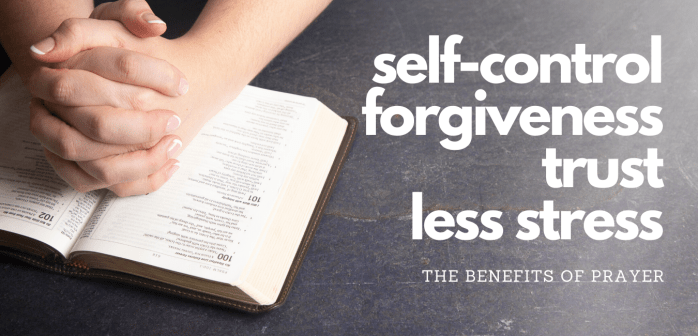
Science definitely proves there are benefits to prayer. Prayer has been shown to improve self-control, to make you nicer, to help you be more forgiving, to increase your trust, and offset the negative effects of stress.[3] Pretty awesome benefits. I would think that anything that give you more self-control, makes you nicer, more forgiving, trusting, and less stressed out definitely “works!” But praying to God isn’t like tossing a coin in a wishing well. Prayer isn’t meant to be simply telling God what we want and then getting everything we desire. Prayer is about this ongoing relationship with God that helps us to trust in him and know that he is there. Prayer is meant to be a regular, constant building of a relationship with God that brings us comfort in times that are dark and joyous in times that are bright. During these times of doubt and anxiety where every day seems to bring up new problems and new dilemmas, I want you to give prayer a chance. Keep your social distancing, stay in self-isolation, do what you can to help your neighbor and loved ones, but don’t forget to turn to God in prayer. If you don’t already pray regularly, try doing so. Pray every day even if it’s just for a little bit. And don’t worry about saying the “right” prayer. God is simply waiting to hear from you. Just pray. Open yourself up to what God is speaking into your life. Truly listen to where God is leading you through prayer. And know that God is there. In the name of the Father and of the Son and of the Holy Spirit. Amen.
[1] http://www.huffingtonpost.com/candy-gunther-brown-phd/testing-prayer-science-of-healing_b_1299915.html
[2] Ibid
[3] https://www.psychologytoday.com/blog/more-mortal/201406/5-scientifically-supported-benefits-prayer
When The Walls Fall Down

7 “Be strong and very courageous. Be careful to obey all the law my servant Moses gave you; do not turn from it to the right or to the left, that you may be successful wherever you go. 8 Keep this Book of the Law always on your lips; meditate on it day and night, so that you may be careful to do everything written in it. Then you will be prosperous and successful. 9 Have I not commanded you? Be strong and courageous. Do not be afraid; do not be discouraged, for the Lord your God will be with you wherever you go.” – Joshua 1:7-9
Hope will not stop the coronavirus from spreading.
Hope will not protect you or your family from getting it. Hope will not find a cure. When people talk about “hope,” there is often a misunderstanding of what it is and what it can do. As Rick Page once said to me, quoting from his book, “Hope is not a strategy.” Hope by itself won’t solve the current crisis, but we need it, perhaps more than we need any other thing to get us through. Because while hope isn’t a strategy and while hope isn’t a solution, hope is the fuel that will power us to the end. Hope will be what carries us to the next thing and the next thing and the next things when we run out of things to believe in. When we run into a brick wall and can’t seem to find a solution, hope is what will enable us to keep searching until we find the hidden door that leads us to the next level. Hope is the fuel for our soul. It’s a good thing for us God has it in abundance!

I can only imagine what the Israelites were thinking as they walked around the walls of Jericho.
If you don’t know the story, God tells his prophet, Joshua, that God is about to deliver into the hands of the Israelites the Promised Land! The land of Canaan is to be given to the Israeli people which meant that God will be with them as they conquer the land. Today, the land of Canaan encompasses Israel, the West Bank, Gaza, and parts of Syria, Lebanon, and Jordan.[1] But this wasn’t going to be an easy task. Cities like Jericho were fortified and for the people of Israel to launch an assault on a fortified city would have been a blood bath. So God instructs Joshua how to tear down the walls to give the Israelites the chance to break through. Did God tell them of a secret underground tunnel they could use to sneak into the city? No. Did God tell them of a weakness in the defensive strategy of the people of Jericho? No. Instead God told them to walk around the walls of the city once a day for six days and then on the seventh day to walk around it seven times and blow a horn and the walls will fall. Imagine being a solider in the Israeli army and being told you were going to conquer a city by simply walking around a wall and shouting at it. You might have thought Joshua had finally gone off the deep end. But God had done so much for the Israeli people already that they had faith in him as a prophet of God and that gave them hope that this too would work. And that hope gave them the fuel to do the impossible. And the walls came tumbling down.

We are in the midst of our own time in the desert.
A time of anxiety. A time of insecurity. A time of testing. To be clear, God did not create the coronavirus to test us. There are people out there who will say outlandish things like that, but that comes from a deep misunderstanding about who God is and how God works in the world. Rather, whenever the people of God are going through tough and difficult times, it is a test of our faith. And right now, we are in the middle of that desert. Nothing around us as far as the eye can see. No idea about where our destination will ultimately be or what it will look like or how long it will take to get there. I feel myself glued to the TV screen or to NPR, waiting for the next press conference to tell me how something else has changed in my life. I keep getting messages from every company I’ve ever given my email address telling me the twenty ways they are doing their part to protect me and I keep thinking, you mean you didn’t wash your hands when you served my food before? My heart sinks to think of all the people living alone out there who are in isolation and just need someone to talk to or hold their hand or give them comfort during this time of increasing loneliness. And like a desert, it seems to be without end.
But we are a people of hope.
God shares with us so many stories of inspiration through the eyes of his people. We read in Genesis about God promising Abraham he will be the father of many nations and indeed though his sons, he has. We read in 1 Samuel about David being chosen by God to defend the nation of Israel and when there seemed to be no hope left at all, David defeated the champion of the Philistines in a single blow. And in John’s Gospel, Jesus shared with us all that even in death we have hope because he goes before us and prepares the way for our return home to God. But if all we had were stories from 2000 years ago, it would not be enough. If our only evidence of hope came from people who were long gone, it would not be enough. But thankfully, God’s work in the world didn’t stop with Paul and the apostles. Even the Bible doesn’t cover every story of God’s amazing work in and through his people. John wrote, “30 Jesus performed many other signs in the presence of his disciples, which are not recorded in this book. 31 But these are written that you may believe that Jesus is the Messiah, the Son of God, and that by believing you may have life in his name.”
The story of God lives on in each one of us.
Gone are the days of the burning bush as cool as that would be. It’s not likely that we’ll get to cross the River Jordan because the waters part before us. Instead, God is made real in the love we share for one another. We become God incarnate in the world today, Christ embodied in human form. In every kind word, in every prayer, in every act of kindness, God is made manifest. And one day our time in the desert will end. One day, we will come together once again and this time of testing will be over. But until that time, we do what we can, wherever we can, to be God incarnate to a world that needs us more than ever. Paul wrote a passage in his letter to the believers in Rome about how they should behave to reflect their love of Christ. He wrote:
10 Be devoted to one another in love. Honor one another above yourselves. 11 Never be lacking in zeal, but keep your spiritual fervor, serving the Lord. 12 Be joyful in hope, patient in affliction, faithful in prayer. 13 Share with the Lord’s people who are in need. Practice hospitality. – Romans 12:10-13
That sounds like a pretty good prescription for what we should be doing in these trying times. The doors to our building might be closed, but the church is open! Let us take these words of Paul to heart and continue to be devoted to one another and to honor one another. Let us continue to be enthusiastic for the work of God in the world and to join in however we can. Let us be patient in this time of affliction, let us be faithful in prayer, and let us be joyful in the hope that we have. And above all, let us practice hospitality to the Lord’s people who are in need.
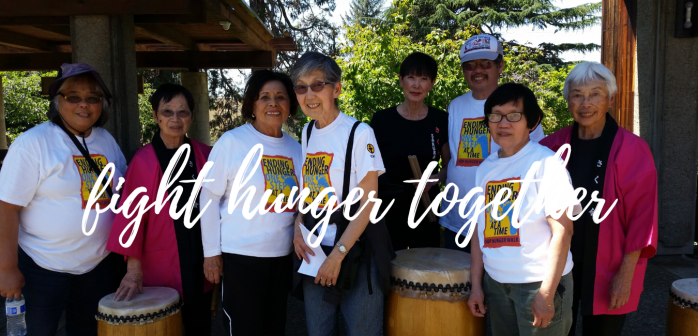
We have devoted our time and energy this Spring to fighting hunger.
And even though being “sheltered in place” is hampering those efforts, we are going to continue to do our part. Especially now, when people are out of work, unable to pay their bills, and having to choose between medicine, food, and rent, helping to fight hunger is more important than ever before. So if you’re out and about running essential errands and want to drop off food for the Alameda County Food Bank, feel free to drop it off outside the church doors and I’ll put it in the two huge drums we have in the entryway. Or you can donate directly to the church and I will go and buy canned goods and food on a grocery run to fill up the barrels. Just let us know that the money is to be used for the Alameda County Food Bank and 100% will go directly to help our efforts. We’re also sponsoring a team in the Berkeley Virtual CROP Walk! This is a wonderful organization under the Church World Services banner dedicated to fighting hunger and poverty worldwide, and you can help out in two ways. First, you can donate money to our team by going online to Berkeley CROP Walk and looking for Team BMUC or by following the link in our events page or on our website. Second, you can take a selfie of yourself walking and post it on Facebook on the CROP Walk page and let them see your virtual support.

We’re also looking for ways to keep connected, especially with our elderly folks in the church.
Join our K.I.T. Team (Keep In Touch) by volunteering to call or write to those who would enjoy a friendly voice or a handwritten note. Lee Marrs came up with this idea and we’re sort of running with it in a bunch of different directions. Our Congregational Care Ministers wanted to be sure to keep in touch with those on our care list, and we thought we might need to expand that list. So if you’d like to help us, just let me know and I’ll make sure to put you on our team. Or if you know of someone we should include who would like a phone call or letter, please let us know that, too. And for those of you on social media, we’re going to be starting a Wednesday Night Social Hour on ZOOM as a way for us all to stay connected regularly. Open to anyone who wants to join, I’ll send out a link every week to remind you all, but I hope you’ll come just to chat and check in so we can see how you’re doing. My wife Cassie thought it would be fun to do something like this to help us stay in touch and to let each other know what’s going on.
In this challenging time, it’s going to take more effort to be the people of God.
We’ll have to be more creative. We’ll have to be more intentional. We’ll have to reach out in new and different ways. But it’s important for us to continue to be the hope for the world by being the Body of Christ in the world today. Because hope is the fuel; that will get us through this crisis. Hope is the fuel that will push us through in those days when it gets lonely or frustrating. Hope will help us fight when our bodies are tired or sick. Hope will see us through. Let us be the hope for the our own little corner of the world today.
1 Vs. 99

When it comes to Emma, some might say I’m a little overprotective.
Now I’ve seen helicopter parents and I’m not quite there, but to say I’m…cautious would be fair. It’s also possible I’ve seen the movie Taken just one too many times. I’ve got that Liam Neeson speech at the ready. “I don’t have money, but what I do have are a very particular set of skills. Skills I have acquired over a very long career. Skills that make me a nightmare for people like you. If you let my daughter go now that’ll be the end of it. I will not look for you, I will not pursue you, but if you don’t, I will look for you, I will find you and I will kill you.” Obviously, I hope I never have to use that speech, but the movie represents my biggest nightmare, especially when Emma was younger. So you can imagine the horror I felt watching her being taken away from me by a rogue school bus!
It was in third grade when Emma was coming home from Immanuel Elementary. We thought it would be fun for Emma to take the school bus once in a while. She was supposed to be dropped off at 3:15pm on the #6 bus. She had only taken the bus home a few times so we were still nervous about it. She was the only one getting off at her stop so we wanted to be sure to always be there for her. This one afternoon in particular Cassie and I both went to pick her up. 3:15 came and went. 3:16. 3:17. When 3:18 came around we started to wonder if we had the right stop. If maybe they got there early. But then to our relief, the #6 bus came…and WENT! It didn’t stop!!! All over again we wondered what to do. Did we get the wrong bus number? That bus wouldn’t stop until it hit the next town over which was more than 30 minutes away and we had no idea where it would drop the kids off. We decided to chase the bus. Driving like a mad man, speeding at 80mph in a 55mph zone, we honked and waved and tried everything we could to catch the bus driver’s attention. It was like a suburban version of Mission: Impossible. Cassie in the meantime is trying to call the school or anyone who might have answers, but to no avail. The bus driver finally noticed us about and pulled over. I jumped out of the car and raced to the door, and as it opened, there was Emma’s smiling face as she hopped out safe and sound. I gave her a big hug and I was smiling from ear to ear. The driver told us he just completely forgot about Emma’s stop and while I would normally be freaking out, I was just so happy to have Emma I didn’t even care. That was the last day Emma took the bus.

I don’t think I’ll ever forget what it was like to find Emma safe and sound.
The relief, the joy, the happiness all at once. When you’ve found something precious you thought was lost, it’s indescribable how amazing it feels. And it doesn’t have to be someone who is physically lost. It could be someone close to you who lost their way. Maybe they’re in a bad relationship or engaged in addictive behavior or seem to be meandering through life and then suddenly things change for the better. Some revelation helps them to turn their life around and this wave of relief and joy washes over you. It could be a precious object you found. A ring that belonged to your mother, a watch your wife gave you on your anniversary, a favorite toy that got left behind. But that feeling you get when something lost gets found is simply amazing. And that’s the joy Jesus shares with the disciples in our passage this morning.
The Parable of the Lost Sheep
1Now the tax collectors and “sinners” were all gathering around to hear him. 2But the Pharisees and the teachers of the law muttered, “This man welcomes sinners and eats with them.”
3Then Jesus told them this parable: 4″Suppose one of you has a hundred sheep and loses one of them. Does he not leave the ninety-nine in the open country and go after the lost sheep until he finds it? 5And when he finds it, he joyfully puts it on his shoulders 6and goes home. Then he calls his friends and neighbors together and says, ‘Rejoice with me; I have found my lost sheep.’ 7I tell you that in the same way there will be more rejoicing in heaven over one sinner who repents than over ninety-nine righteous persons who do not need to repent.
To Jesus, one lost sheep was more important than the ninety-nine who were found.
It’s not because Jesus didn’t care about the 99, but instead he knew they were safe. A shepherd could leave the flock because together they would look out for each other, but the lost sheep was all on its own. It had no protection, it didn’t have any direction, and it was in constant danger from predators. A good shepherd felt safe leaving the flock behind and instead could focus on those who had wandered off. Now imagine applying the same thought process to God’s church and Jesus’ message is a call for us to do the same, to focus not on the found but on the lost. To help those who don’t know a life with Christ to embrace that life. When people refer to the “lost” it’s not a judgment on them, but an indictment on us. WE could have done more. WE should have done better. WE haven’t done OUR part. We want to avoid becoming like the Pharisees during Jesus’ time who wouldn’t dream of associating with sinners lest their reputations become tarnished or were afraid they might fall victim to that “sinful” crowd. In their mind, sinners chose their lifestyle and that’s their fault. They should have known better. So to associate with people like them would make you unclean. They left it up to the sinners to come and make peace with God. But Jesus never saw it that way. Instead, Jesus saw it as our responsibility to help others to know God and show them what a life with Christ could be like.
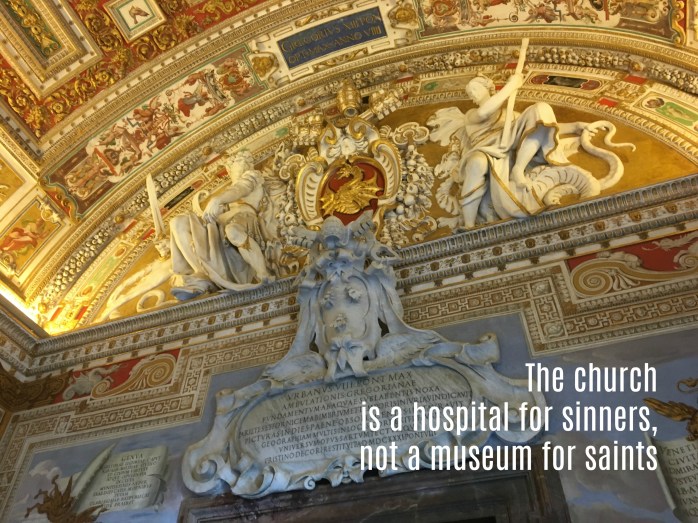
The problem with the Pharisees was they saw the church as a holy site to be preserved.
But that isn’t the case. The church is a field office for God. It’s the hub of action for God’s work in the world. Or to put it in more familiar terms, the church is a hospital for sinners, not a museum for saints. The Pharisees and often many people today look at the church as a place that preserves their traditions and their way of worship. They see it as a relic where time often stands still. And the Pharisees were awesome at this. They obeyed every law. They knew them by heart. They studied them over and over, and in the process they forgot the spirit behind the law and instead stuck to the letter of it. But God meant for the church to be an ever-changing, ever-evolving dynamic community designed to adapt to the world around it to preserve the spirit of God’s intent – to love the world in a way that reflects the love of Christ. We are the center of operations for God, Inc.! And now more than ever it’s important to keep that in mind. Because when we stop doing the WORK of the church and instead worry about the WALLS of the church, we have become like the Pharisees – observers but not believers.
In the past, a church simply needed to open its doors and people would come.
There wasn’t this great NEED to go out in search of the lost, because the church was the social hub of the community. People would come to us, whether they believed in Jesus or not. All the church needed to do was host some dinner or some program and people would come. They would come and experience this community of Christians and hopefully many of them would stick around to find out more. But the paradigm has shifted. We cannot afford to be so isolated. People don’t NEED the church to be the social hub of the community. Instead they have cell phones and soccer games and Starbucks to fill that need. The church used to be the champion of social justice, but you don’t NEED the church to champion social justice because there are as many organizations as there are causes to do that for us. The church used to champion social welfare, but today there are tons of organizations who care for those in need. The church is now only one of many options and usually not the best one. So we don’t often even get the chance to make an impact on people the way we used to because the entire paradigm of church is different. How can we show them the love of God if they don’t even come through the door? The answer is simple. We need to go to them.
People see the church as self-centered.
Too self-involved. Too focused on itself and not on the concerns of the world. The perception of the church as a museum is one held on both sides of the walls. And it’s one of the reasons people have left the church. They just don’t see us as relevant any longer. How can we turn that around? Are we willing to serve people where they are and open the doors to the church in a new way? Can we leave our comfort zone and engage the world on the front lines instead of from the safety of our walls? It’s a tough thing to consider, but one that is important if we are to rethink church for the 21st century. But there is so much work to be done. As much now as there ever has been. And if we could do our part to help others know the love of God in a real and meaningful way, if we can impact the lives of the people around us by connecting people to Christ and to have the peace that comes from a deepening faith, think of how much rejoicing there would be! Think of how much of a difference we could make for God and for our little corner of the world. But it all starts with us.
Have you ever seen Star Trek III: The Search for Spock?
If you haven’t guessed, the whole movie is about the search for Spock. The movie opens with his death and his friends believe they’ve seen the last of him, but when they discover there might be a chance to save his soul, they risk everything to do it. They risk their careers, their lives, and their ship on just the chance they might bring him back. And they pretty much lose everything. But at the end, Spock is made whole. He still has some memory loss, but he’s on the road to recovery and he approaches his friend, Kirk, and asks him why he did it – why did he risk everything just for him? And Kirk says to him, “Because the needs of the one outweigh the needs of the many.” The needs of the one outweigh the needs of the many. There are times in this world where the needs of the one outweigh the needs of the many. There are times when we all must step out of our comfort zone and do what’s needed. Because the world is filled with busses that need to be chased, with sheep that need to be found, and Vulcans that need their friends.

