
Atheists Are People, Too

What difference has Christ made in your life?
How do you see God at work in the world? It seems more than ever we are living in an age of disbelief and distrust. With over 250,000 deaths in the United States alone there are still people out there who think the coronavirus is nothing more than the common flu. Worse, there are those who believe that masks and vaccines are a conspiracy by the media and the liberals to circumvent our liberties. To what logical end makes no difference. Their distrust is so complete that if a liberal said the sky is blue, they would think it was a socialist plot to take over the world. I actually have a friend who believes this and it is so hard to be friends when you can’t even agree on what’s real. More than ever, we are living in a world desperately in need of Jesus. But perhaps more than ever, it is harder and harder to believe in that which we cannot see. People need a reason to believe.
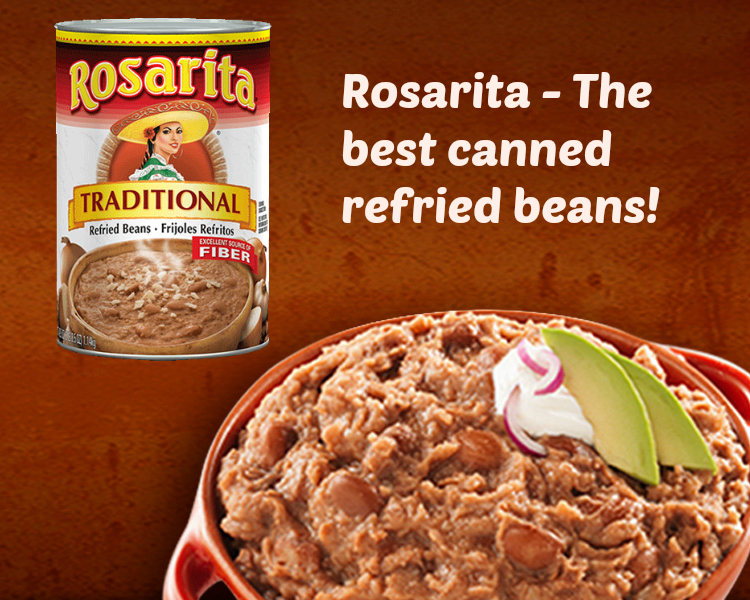
When I first moved to Atlanta, I was desperate to find Rosarita refried beans.
No, you didn’t jump into the Twilight Zone. Just bear with me and it will all connect to Jesus. Rosarita refried beans are by far the best canned refried beans ever, but they were nowhere to be found. Believe me, I looked. It wasn’t until I called Cub Foods, 45 minutes away that I found ONE store that carried them. Cassie and I had just started dating and I wanted to cook a Mexican dinner for her so I decided to make the journey for these refried beans. Cassie volunteered to go with me, not realizing how far away it was. After about 30 minutes and having passed about a dozen grocery stores, she asked me what the big deal was. Canned refried beans are all the same. I assured her they were not, but it wasn’t until she tasted them that she believed me. “These are the best refried beans I’ve ever had,” she said and I knew she was hooked. I had successfully opened up her mind to a world where refried beans were not all the same.
Of course, living in California, Cassie knows there are way better refried beans than Rosarita.
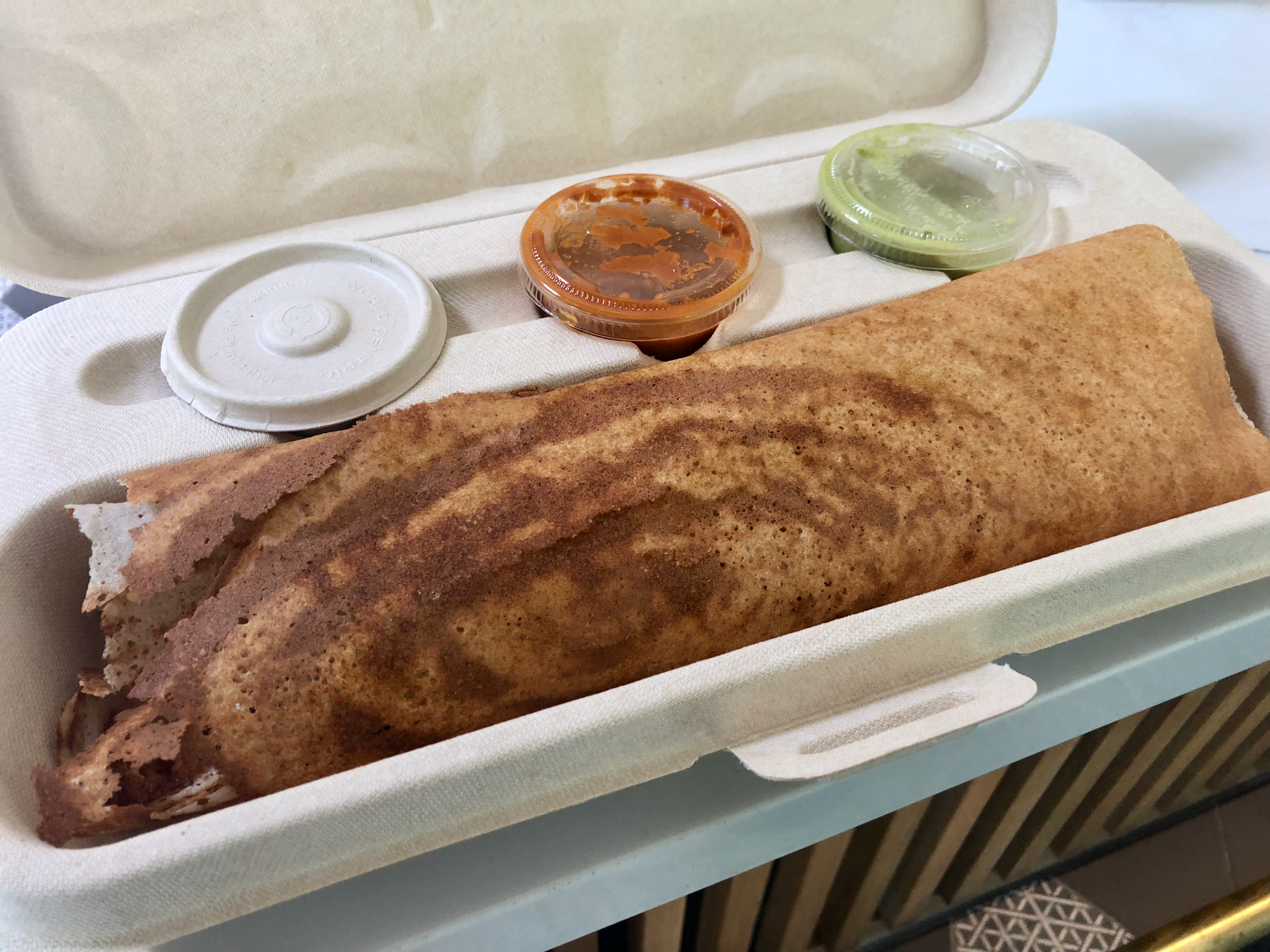
But at the time she was limited by what she knew. Even though there existed a whole other world of flavor out there, she didn’t know it existed so it was hard for her to imagine there would be much of a difference. That’s the same with me and Indian food. I never had it before and in my mind I had these preconceptions about what it might taste like, but when I actually had it, it was mind blowing! I’ve loved it ever since. Daal, palak paneer, masala dosa, chiken tikka masala…I love the rich spices and flavors of Indian food that are similar yet so different from what I knew before. Until you experience it for yourself, it’s hard to understand what people are talking about. You do the best you can, but we are all limited by our experience. Simply put, you don’t know what you don’t know.
It’s why so many people in the world don’t believe in Christ.
Even if they do, it’s not always easy to convince people to dive deeper into their faith. Why bother coming to church or joining a faith community? They’re all a bunch of hypocrites anyway. I felt like that at one time so I understand it when people tell me that’s why they don’t feel compelled to come to church. It’s not that most people object to the idea of God or Jesus, but they just don’t have a reason to believe. They don’t have a reason to think coming to church will deepen their faith. They’re not anti-religion. To be sure, there are definitely some who are, but for the majority of folks out there, they just don’t know what they don’t know. For them the reality of Christ doesn’t exist or if it does they don’t feel a need to go deeper. It’s up to us to make a difference, to show them why Christ matters.
The good news is anyone can do it.
You don’t need a seminary degree or any special training to help people understand why our faith is important. You don’t need a sandwich board or a megaphone or a stack of Bibles to hand out either. In fact, all you need…is YOU! For the most part, this section of Paul’s letter to the church at Colossae is about living a Christian life. But it’s the last bit of advice he gives that is going to be our focus today. The formula for success at showing people the love of Christ resides in you and Paul shares with us exactly what we need. Please listen to these words from Colossians 4:2-6. Hear now the Word of God.
2 Devote yourselves to prayer, being watchful and thankful. 3 And pray for us, too, that God may open a door for our message, so that we may proclaim the mystery of Christ, for which I am in chains. 4 Pray that I may proclaim it clearly, as I should. 5 Be wise in the way you act toward outsiders; make the most of every opportunity. 6 Let your conversation be always full of grace, seasoned with salt, so that you may know how to answer everyone.

Prayerful, watchful, thankful.
That’s what we need to be “full” of to make a difference in someone’s faith journey. Prayerful, watchful, and thankful. It’s these three components that can open us up to opportunities that might otherwise pass us by. Being prayerful, watchful, and thankful puts us in the right frame of mind to be open to the Holy Spirit and notice when an opportunity opens up for us to share our faith in just the right way. There’s a beautiful passage of Scripture in Matthew where Jesus tells the disciples, “In them is fulfilled the prophecy of Isaiah: ‘You will be ever hearing but never understanding; you will be ever seeing but never perceiving. 15 For this people’s heart has become calloused; they hardly hear with their ears, and they have closed their eyes. Otherwise they might see with their eyes, hear with their ears, understand with their hearts and turn, and I would heal them.’ 16 But blessed are your eyes because they see, and your ears because they hear. 17 For truly I tell you, many prophets and righteous people longed to see what you see but did not see it, and to hear what you hear but did not hear it.” Being prayerful centers us in God’s will. When we learn to pray, we learn to trust and rely on God. Being thankful does the same. It creates in us a heart for God. When we approach life with a thankful heart, we are driven to show our appreciation by sharing our love with others. And both of these help us to be watchful. We develop what Jesus calls eyes that see and ears to hear. It’s like those Magic Eye images that used to be super popular, the ones where there is a hidden 3D image within the picture? Once you find the image, it’s so much easier to see it again and again, but until you do it can be pretty tough. At least if you’re me. Finding opportunities to share your faith is like that. Once you train your mind to look for those opportunities, it becomes easier and easier for us to do.
Paul cautions us to “be wise in the way you act toward outsiders.”
And by outsiders he meant those who were not Christian. Paul knew even then our actions are a reflection of our faith. What people see in us is how they perceive the reliability of our beliefs. When Christ told us to love our neighbor, it was at least partially for this reason, to be a reflection of what it means to be Christian. That’s what Paul means when he says to “make the most of every opportunity.” Each encounter we have with people outside of our faith is a chance to show what it means to be Christian. Authenticity is what we need the most. We live in a very skeptical world, one that struggles with accepting facts let alone something as intangible as God. And the church hasn’t done much to help its own cause. We are in the news far more for what’s not good about us than for what we are doing well. Stories about scandal, abuse, and hypocrisy are in the public eye much more than stories about disaster relief, helping the homeless, or funding college education. It’s no wonder people have doubts about what the church promises. To them it could be just another scam to get their money. I’ve had friends who have said as much. They feel like worship is just a means to separate people from their money. So if we have any hope of reaching into the hearts and minds of people who don’t believe in Christ, it has to be with truth and integrity. We have to be our most authentic self and trust in Christ that being “you” is enough. We don’t need to know all the answers. We don’t need to be perfect, and the world honestly isn’t expecting us to be. We just need to point to the one who is. We don’t need to be perfect, we just need to point to the one who is.
The world around us is growing increasingly non-Christian.
Spirituality seems to be as strong as ever, but there is a growing trend away from faith in Christ. The number of people who don’t belong to a church or any religion keeps growing. In a study done in the US from 2007 to 2014, the number of those people went from 16% of the population to 23%. At the same time, the number of people who identified as Christian went down the same percentage – from 78% to 71%.[1] And while the vast majority of people still identify as Christian, it would be wise to assume many of them do not actively practice their faith. More likely they identify as Christian in name only. But more and more it is increasingly important to BE Christian in the world today. The world needs the radical love of Jesus Christ. The world needs the peace that a life in Christ can bring. And the world desperate needs the grace, mercy, and forgiveness that Christ offers – not only to us, but the love, grace, mercy and forgiveness we can offer one another. So this week as we continue our time of waiting, pray for those who don’t know Christ, who have drifted away, or who don’t see the importance of focusing on their faith. Think of at least one person who needs that prayer and focus on them. Be watchful for an opportunity to share your faith or invite them into our community. And be thankful that Christ is in your life. When we have an attitude of gratitude we become more inviting to those around us. So be prayerful, be watchful, be thankful. Do you believe Jesus has made a difference in your life? Then make sure you let it show.
[1] http://www.pewresearch.org/fact-tank/2015/05/13/a-closer-look-at-americas-rapidly-growing-religious-nones/
Humble Pie

A Thanksgiving unlike any other…
How many times have we said that this year… about EVERYTHING?! Easter, July 4th, Halloween, and now Thanksgiving. It will seem strange to be without family around the table, but it’s for the best. With so many cases of the coronavirus coming from family gatherings and get-togethers with friends, it’s the smartest and safest option this year. At least we will still get to have the next best thing about the holiday – Thanksgiving food! Turkey, dressing, potatoes, warm rolls, soft butter, sweet potato casserole, and cranberry sauce…mmmm! Makes me salivate just thinking about it. But Thanksgiving to me is not complete without pie. It is the pie holiday. I can’t think of another holiday that more easily lends itself to pie. Pecan, cherry, lemon, apple – anything but pumpkin. I know it seems like sacrilege for a guy who loves pie, but I just don’t go that way. Still it’s one of my favorite parts of the holiday. Thanksgiving just doesn’t seem to be complete without a good helping of pie. But while reflecting on the holiday, I was thinking there’s one slice of pie we should all have once in a while. Humble pie. We could all use a good slice of humble pie.
It’s so easy to forget all the people God put in our life to make us who we are.
There was an episode of Sports Night where it becomes clear one of the main characters, Casey, has no idea about the people who make Sports Night happen. So when he goes on a talk show and gets complimented for his wardrobe, he doesn’t give credit to the wardrobe designer for the show and instead he makes a joke and everyone laughs. But later on, one of the wardrobe assistants, Monica, comes to his office, carrying his clothes for that night’s show and says to him, “I think you hurt the feelings of the woman I work for. Maureen? She’s been working here since the day you started?” Monica holds up a tie and asks him, “Do you know what color this is?” And Casey responds, “It’s gray.” And Monica says, “It’s called gunmetal. Gray has more ivory, gunmetal has more blue. Do you know what shirt you should wear with it?… Mr. McCall, you get so much attention and so much praise for what you actually do and all of it’s deserved. When you go on a talk show and get complimented on something you didn’t, how hard would it be to say, ‘That’s not me. That’s a woman named Maureen who’s been working for us since the first day. It’s Maureen who dresses me every night. And without Maureen I wouldn’t know gunmetal from a hole in the ground. Do you have any idea what that would have meant to her? Do you have any idea how many times she would have played that tape for her husband and her kids?” Casey just got served a big helping of humble pie and it creates in him a humble heart. It makes him reflect on the people in his life and at the end of the episode he publicly gives thanks to the people behind the scenes who make Sports Night a reality.
When we give thanks, do we do it from a humble heart?
Do we reflect on all the ways in which we are blessed? Do we think of the people in our lives who make it possible and feel gratitude? Or when we say thanks, is it simply reflexive; a societal norm instead of coming from the heart? Most of us don’t think about all the work behind our blessings. How hard would it have been for you to grow the cotton, spin it and weave it together to make your clothes? Would you have wanted to take the time to grow the vegetables or raise the animals for each and every meal you eat? Or dig the pipelines and put in a sewage plant to clean the water coming into your house? Perhaps. But then you could not pursue anything else. As independent and self-sustaining as we like to believe we are, it really does take a community of people to provide for the life we have. None of us can really do it on our own. None of us is truly a self-made person. But it takes a humble heart to realize that. Someone once wrote, “If you want to live in a state of perpetual thanksgiving, you must abide in humility. Humility is the state of mind wherein pride, ego and haughty self-sufficiency have been crucified with Christ.”[1] The culture we live in encourages a pull-yourself-up-by-your-bootstraps mentality, but that mentality denies the state of the world we live in. We owe our success and our blessings to those around us, to our community, and ultimately to God. That’s the lesson King David tried to teach the people of Israel in our passage. Prior to this, David had addressed all of Israel about his desire to build a temple to the Lord. He told them of how the Lord had chosen Solomon to succeed him as King and that it would be Solomon who would build the temple, but David wanted to make it as easy as possible for Solomon to accomplish this task so before he died, David wanted to amass everything that would be needed for building it. He not only acquired all the necessary material, but he donated his personal fortune into building the temple and David asked all the leaders of the nation of Israel to do the same. By the time they were done, the people of Israel had donated more than 8 billion dollars worth of gold and more than 243 million dollars in silver not to mention precious stones, bronze and iron that was also given. And that’s on top of what David gave. And so after all the wealth had been collected, David lifted up this prayer of thanksgiving to God.

10 David praised the Lord in the presence of the whole assembly, saying,
“Praise be to you, Lord, the God of our father Israel, from everlasting to everlasting. 11 Yours, Lord, is the greatness and the power and the glory and the majesty and the splendor, for everything in heaven and earth is yours. Yours, Lord, is the kingdom; you are exalted as head over all. 12 Wealth and honor come from you; you are the ruler of all things. In your hands are strength and power to exalt and give strength to all. 13 Now, our God, we give you thanks, and praise your glorious name.
14 “But who am I, and who are my people, that we should be able to give as generously as this? Everything comes from you, and we have given you only what comes from your hand. 15 We are foreigners and strangers in your sight, as were all our ancestors. Our days on earth are like a shadow, without hope. 16 Lord our God, all this abundance that we have provided for building you a temple for your Holy Name comes from your hand, and all of it belongs to you. 17 I know, my God, that you test the heart and are pleased with integrity. All these things I have given willingly and with honest intent. And now I have seen with joy how willingly your people who are here have given to you. 18 Lord, the God of our fathers Abraham, Isaac and Israel, keep these desires and thoughts in the hearts of your people forever, and keep their hearts loyal to you. 19 And give my son Solomon the wholehearted devotion to keep your commands, statutes and decrees and to do everything to build the palatial structure for which I have provided.”
20 Then David said to the whole assembly, “Praise the Lord your God.” So they all praised the Lord, the God of their fathers; they bowed down, prostrating themselves before the Lord and the king.
David’s model of thanksgiving is one that comes from humility.
He praises God as Creator and Father of all. He attributes all good things to God. And then he adds this line, “But who am I, and who are my people, that we should be able to give as generously as this? EVERYTHING comes from you, and we have given you only what comes from your hand.” Everything comes from you, and we have given you only what comes from your hand. David wants to make sure everyone understands all the wealth and power and blessings they have been given are only because of God’s grace. It would have been easy for them to take pride in what they accomplished. Think about how much they were able to give! When you include David’s personal contribution it was over $12-13 BILLION DOLLARS worth of gold alone. It would have been easy for them to say, “See what we’ve done? Look at we were able to accomplish! All for God of course, but look at what WE did!” And David reminds them in his prayer that this is nothing. This is nothing because they were only returning to God what he allowed them to use. As huge of a sacrifice as this seemed to be, it was really no sacrifice at all because it didn’t belong to them in the first place.
This was an important lesson to Israel and to us.
To remember all we have accomplished comes on the backs of the many people around us. That as talented as we are, it is only because we are utilizing the gifts God has given and the people God has created. And that our worth cannot ever be measured in dollars and cents but in the love we show to others. Because the richer we are, the more we seem to forget these lessons. We don’t even have to go back to ancient Israel to see that it’s true. Patricia Greenfield from UCLA studied the linguistic frequency of key words in our writings over a period from 1800 to 2000 and as the country became more wealthy “the frequency of the word ‘get’ went up, and the frequency of the word ‘give’ went down.”[2] Americans also became more individualistic and less community-oriented. Words like “individual,” “self,” and “unique” were more common while words like “give,” “obliged,” and “belong” were seen less. This might seem to be a small thing, but when you couple that with giving statistics that show that poorer people give about 50% more of their income to charity than the wealthy, it’s not that big of a leap to say that as we become more affluent, we tend to forget our humility and instead become more sure of our own ability to succeed. The wealthier we are the more we cut ourselves off from our communities and from those around us. We cut them off and assume people are only in it to take from us what is “rightfully ours” forgetting again that it doesn’t really belong to us in the first place and won’t go with us when we die. We forget these wise words from Ecclesiastes which says in chapter 9, verse 11, “The race is not to the swift or the battle to the strong, nor does food come to the wise or wealth to the brilliant or favor to the learned; but time and chance happen to them all.” We forget that our good fortune is as unlikely to happen to us as it is to anyone else, but when we stay grounded in humility, we become rooted in reality and realize how truly grateful we need to be. Because thankfulness without humility is like pie without the filling. Thankfulness without humility is like pie without the filling – it’s empty. It has no real meaning.

When Rev. Akiko and I worked together at UJCC, she used to say these great prayers for blessing the food.
She would always give thanks for the land, for the animals, for the people who cultivated the land…I mean she would do more than ask for a blessing. She would give thanks for the chain of life that made it possible to have this food on our table and it made me think how much more interconnected we are than we often think about. Too often we take things for granted that we shouldn’t. Things like water and the sun and the plants, let alone the people and the resources that it takes to make the world go round. This week as we celebrate thanksgiving let us remember that no matter how great our accomplishments we never do it in a vacuum. Let us find within ourselves the humility to admit that we need others more than we think we do. In that vein, let us challenge ourselves this week to give thanks to at least one person every day for what they do in our lives. Give thanks to them for helping you in ways big and small that maybe you’ve never noticed before or given voice to. And give thanks for the invisible ways in which your life is made better because of the efforts of those who labor around you. Pray daily to God for no other reason than to give thanks. Not just for the food we eat or the clothes we wear, but for being the one who gives life. For being the one who loves us enough to send his son into the world for us. And for being the very model of humility to us that we should strive to emulate. Let’s face it. We can all stand to eat some humble pie once in a while. Make it your thanksgiving treat this year.
[1] http://www.christianblog.com/blog/blessings2you/humility-is-the-foundation-for-thanksgiving/
[2] http://www.npr.org/2013/09/03/218627288/why-being-wealthy-doesnt-lead-to-more-giving
Do Dogs Go to Heaven?
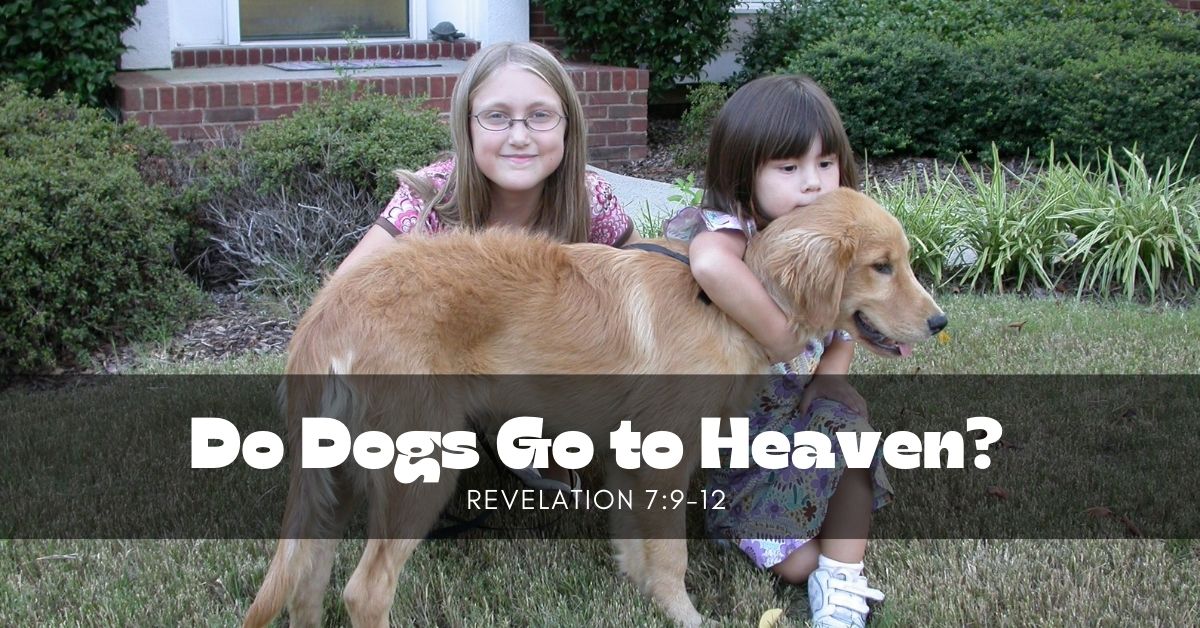
Do dogs go to Heaven when they die?
My oldest daughter, Eve asked me this question on our way to the bus stop one morning. She was about 7 or 8 years old at the time and we were living in Georgia. I was carrying Emma in my arms as we were heading down the hill to the corner where the bus would come and take her to school when the question popped out. “Do dogs go to Heaven when they die?” I wasn’t completely surprised. Just the night before, we found out the cute little dog across the street got hit by a car and didn’t survive so I’m sure it was on her mind. That’s probably how most kids first start to wonder about “what happens next.” The loss of a pet, or in this case a neighbor’s pet, starts us down that path. But the number of questions only grow as we get older. I remember when I was eight years old and my grandmother died, my mom told me she had gone to Heaven and the first question I had in mind was, “How do you get there?” Did she catch a bus? How did she know where to go? Can I go visit? Especially when we are younger, life is pretty literal and I was looking for concrete answers about a topic that had none. I went to quite a few funerals when I was a child and each one left me with more questions than answers.
But every question we ask about death revolves around one central question:
What happens after we die? It’s a question that stays with us because there are so few people who can tell us the answer. Jesus is the leading authority about it and even he didn’t share much about what it was like. Lazarus never said a word. Elijah and Moses only came back to powwow with Jesus and didn’t spill the beans. The disciple John had a tremendous vision of God and life in the spiritual world, an experience he wrote down in what would become the book of Revelation. But that book is also the most difficult and confusing book in the Bible. John was trying to put into words something that defies explanation – concepts and images that go beyond human understanding. Now, every once in a while we hear amazing stories like that of Colton Burpo, the young boy whose life was the basis for the movie and the book Heaven is for Real. And reading stories like that give us hope and allow us to point to something and say, “At last there’s something tangible to hold on to.” But for every story like Colton’s you can read stories about people who have come back and experienced nothing but darkness and coldness, emptiness and solitude and that puts us right back where we started.
We’ve tried to prove or disprove the existence of an afterlife using logic and reason.
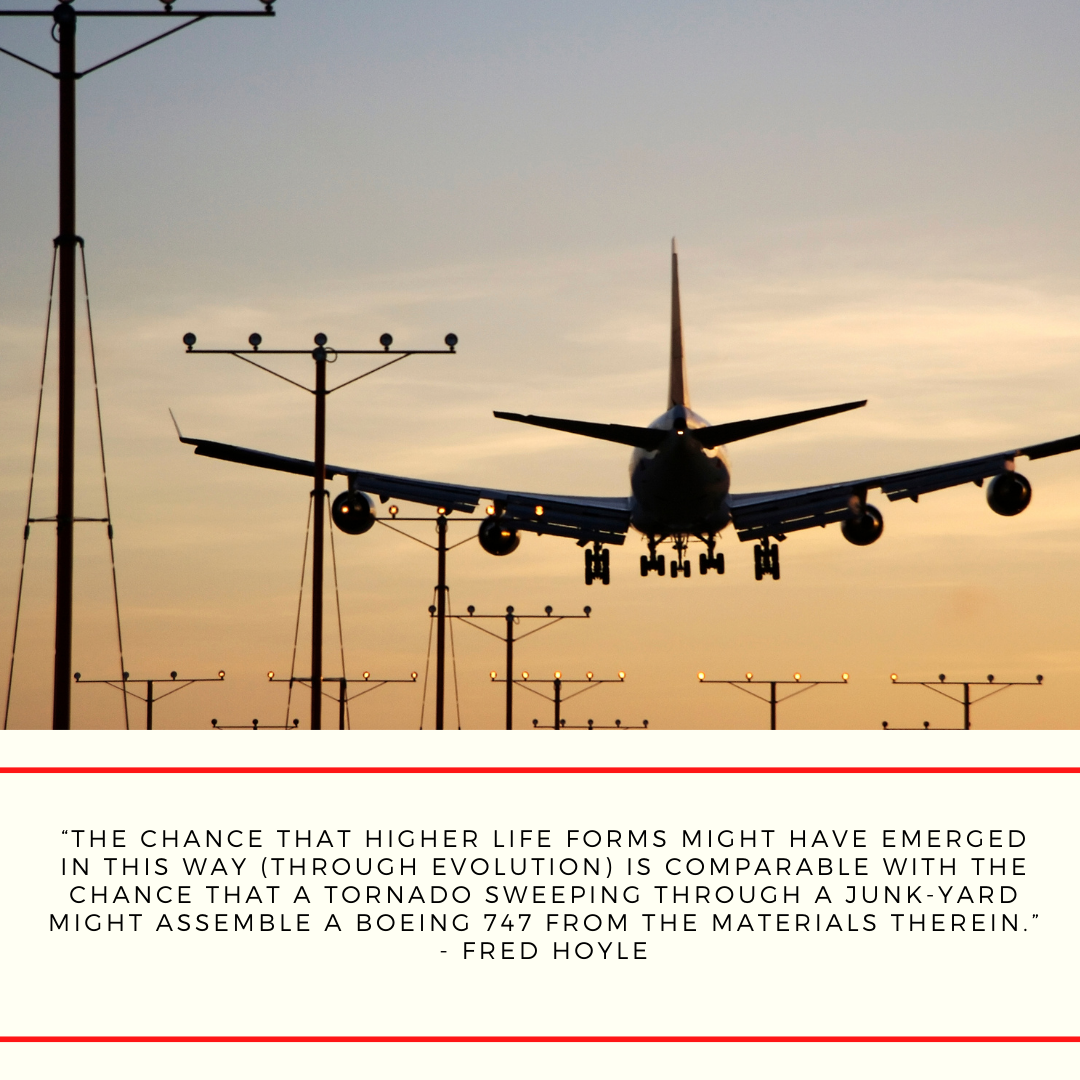
Which seems weird since logic and reason are based on our knowledge and experience and we simply don’t have enough of either when it comes to the hereafter. But most of these arguments revolve around the existence of God, because if we can prove God exists, it logically follows that all the rest of it is true, including the afterlife. On the other hand, some atheists like to use evolution as an argument against the existence of God which doesn’t make sense because evolution and God are not contradictory beliefs. So it’s ironic that one of the best arguments FOR God comes from an atheist. You probably don’t know the name Fred Hoyle, but you probably do know the theory of creation he coined – The Big Bang Theory (not to be confused with the TV show of the same name). Interestingly, Hoyle didn’t believe in the Big Bang Theory. Nor did he believe in evolution as Darwin had originally posited.[1] Instead he believed in intelligent design, a concept that something greater than ourselves must have guided the development or even creation of humanity. He didn’t believe in God as we understand God, and might be offended to hear his argument being used in God’s defense. But what he said in defending intelligent design was, “The chance that higher life forms might have emerged in this way (through evolution) is comparable with the chance that a tornado sweeping through a junk-yard might assemble a Boeing 747 from the materials therein.”[2] That’s how infinitesimally small the odds are of human beings ever being created simply by chance.
One doctor tried to prove the human body had a soul by weighing patients as they died.
Dr. Duncan MacDougall posited the theory that human beings have souls and that it could be proved at the point of death. He took six dying patients and weighed them right before death and immediately afterward and he claimed that after the body had ceased functioning, the human body suddenly lost weight that could not be accounted for by normal means. He said that through his experiments, he calculated that the human soul weighs ¾ of an ounce or as it is more popularly known today: 21 grams.[3] 21 grams, Dr. MacDougall said, was how much the soul weighed. But the truth is his results over this incredibly small sample varied widely and none of them had a consistency of weight loss. Just one person recorded an actual loss of 21 grams and the rest had completely different results.[4] But MacDougall’s efforts is testimony to our desire to learn about the afterlife.

Scholars have poured over the Bible to find clues to what we can expect when we die.
Jesus tells us that in Heaven God has a house with many rooms and that there is a room reserved there for each of us who believe in Him. John tells us that when God creates the New Jerusalem at the end of the age that it will have streets of gold and walls of jasper and foundations made of gemstones. But for me, my favorite image in the Bible comes from Revelation 7:9-12. The passage we’re reading is from John’s vision of the end of days before the creation of the New Heaven and New Jerusalem. Now this isn’t an image of the New Heaven, but an image of what John sees as we approach the day of final judgment when God will determine what happens to each of us. And even though this isn’t exactly an image of the New Heaven, to me this is a glimpse of what we can expect when we get there.
9 After this I looked, and there before me was a great multitude that no one could count, from every nation, tribe, people and language, standing before the throne and before the Lamb. They were wearing white robes and were holding palm branches in their hands. 10 And they cried out in a loud voice:
“Salvation belongs to our God, who sits on the throne, and to the Lamb.”
11 All the angels were standing around the throne and around the elders and the four living creatures. They fell down on their faces before the throne and worshiped God, 12 saying: “Amen! Praise and glory and wisdom and thanks and honor and power and strength be to our God for ever and ever. Amen!”
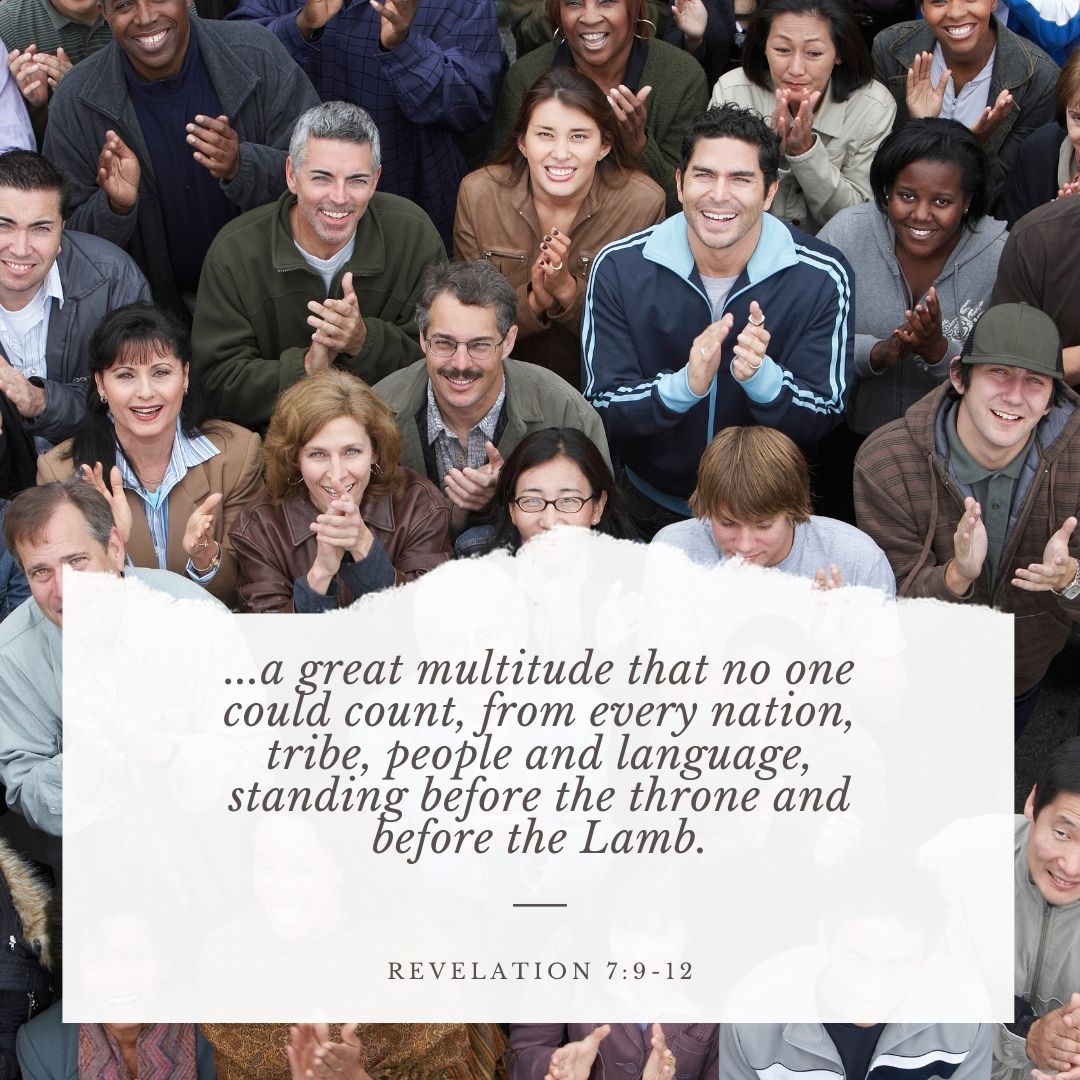
This is often how I imagine Heaven to be.
Filled with people of every type from every nation. A multitude of every race, color, gender, age, and size. A crowd so large they cannot be counted. A place where all of God’s children live in unity with one another. And I think the reason we debate so much about what Heaven looks like and how you get there and what we can expect is because we are not sure if we are going to be in that great multitude. Our beliefs about Heaven are often exclusive to our belief in God. Catholics believe that it is a combination of faith and good works that earn you a place in Heaven. Mormons believe that Heaven consists of three levels and that only believers of the Mormon faith get into the best level to be with God. And Jehovah’s Witnesses believe it all doesn’t matter. God has already picked out the 144,000 that will be joining him and too bad for the rest of humanity. Presbyterians and other Calvanist faiths believe that we are predestined. And so the debate about who is right becomes more important than ever because it involves our eternal destiny. That’s why we worry so much about this stuff. But maybe instead of worrying about how to get into Heaven we should focus instead on living a life that honors Christ.
Sometimes we focus on the wrong things.
If we really want to get into Heaven the last thing we should be worrying about is getting into Heaven. Because worrying about it won’t get us there. There isn’t some magic formula where if you do “X” number of good things you get in. There isn’t some cosmic scale of justice that says if our total good guy points outweigh our bad guy points, we’re in. The only thing that truly matters is our heart for God. Just listen to the words of Jesus himself. He told his disciples, “Therefore I tell you, do not worry about your life, what you will eat or drink; or about your body, what you will wear. Is not life more than food, and the body more than clothes? 26 Look at the birds of the air; they do not sow or reap or store away in barns, and yet your heavenly Father feeds them. Are you not much more valuable than they? 27 Can any one of you by worrying add a single hour to your life?… 31 So do not worry, saying, ‘What shall we eat?’ or ‘What shall we drink?’ or ‘What shall we wear?’ 32 For the pagans run after all these things, and your heavenly Father knows that you need them. 33 But seek first his kingdom and his righteousness, and all these things will be given to you as well. 34 Therefore do not worry about tomorrow, for tomorrow will worry about itself. Each day has enough trouble of its own.” The solution is simple. Put God first. Trust in God and free yourself from worry. The rest will fall into place on its own.
Harvey West is one of the best pastors I know.
He was my senior pastor when I was attending Alpharetta First UMC back in Georgia and I was fortunate enough to take a Bible study class with him. During that class one of the people asked, “How do you know you are saved?” And Harvey said, “I don’t.” That stunned all of us right there. But then he continued. “But I have faith in God and in his Son Jesus Christ. And I believe that faith will save me. And so I don’t worry about it. Instead I focus on trying to live a life that best honors Christ’s sacrifice for me.” Those words have continued to guide me every day of my life and I hope they guide yours as well. And as for the question, “Do animals go to Heaven?” I think they do. When we read the Scripture we hear from God through the prophet Isaiah that “the wolf and the lamb will feed together, and the lion will eat straw like the ox, and dust will be the serpent’s food. They will neither harm nor destroy on all my holy mountain.” If God will provide space for the wolf and the lamb, the lion and the ox, and even the serpent, surely my former neighbor’s dog is resting comfortably somewhere up there waiting for his human. But either way, I trust in God enough to believe that God knows best and that no matter what my vision of Heaven or how we get there, God’s vision will always be better.
[1] http://www.uncommondescent.com/intelligent-design/fred-hoyle-an-atheist-for-id/
[2]http://en.wikiquote.org/wiki/Fred_Hoyle
[3] http://en.wikipedia.org/wiki/Duncan_MacDougall_%28doctor%29#In_popular_culture
Come to the Table

This story is not new.
There are two sides. Your side. And their side. Your side is right. Their side is wrong. You wonder to yourself why they believe what they believe. It just doesn’t make any sense. And it’s hard not to see them as monsters. What they stand for will make things worse for everyone. Surely, they know that, and yet they so stubbornly refuse to do what’s right! How could any clear-headed person could see the world as they do? Obviously, they are not clear-headed. You feel you have to do whatever is necessary to make it right. No matter the cost. Of course, I’m talking about Kaecilius from the Marvel movie Doctor Strange. Who else did you think I was talking about? By every stretch of the imagination, Kaecilius is a villain except in his own eyes. He murders. He steals. He ignores all the warnings. But Kaecilius doesn’t see it that way. Mads Mikkelsen who portrayed the character in the film said, “I always play all characters as a hero. I mean, I think we have to look at it that way. The key to any good villain… is that they have a point. It’s not completely crazy what they’re saying…” Or doing apparently.

Everyone is the hero in their own story.
As we come to a close to one of the most contentious political elections in our country’s history, we would do well to keep this in mind. The “other” side, regardless of who that is to you, is convinced they are the hero of their own story. So it’s not likely they will come to their senses, realize they’ve been wrong the whole time, and beg for forgiveness. As nice as that would be, one side is going to feel TRIUMPHANT and the other depressed and defeated (and maybe somewhat angry). If they are Christian, the winners will feel like God was on their side and the losers will feel as if Satan was involved. Mostly I’m worried about the possibility of violence. Donald Trump and his campaign calling for his supporters to become an “army” of poll watchers makes me worried we are devolving into the very totalitarian societies we have always abhorred.[1] These are the kinds of tactics we would see in Russia or China, the very “socialist” regimes the President is constantly accusing his opponents to be. Just the very word he uses – “army” – suggests physical violence to any who oppose him. So if he loses and claims a rigged election what will happen next? That we have to even entertain that notion in this country is itself a testimony to how divided we are and how badly we need to bring people back to the table. We need to remind ourselves we are all Children of God.
How we respond in the coming days will say a lot about who we are.
If you have a Bible or a Bible app on your phone, please find John 11:35. John 11:35. This is literally the shortest verse in the Bible. If you know much about the history of the Bible itself, you know that there isn’t a uniform way the chapters and verses are assigned. Some verses are extremely long and some are extremely short, but this one is the shortest of all (although according to Wikipedia it is not the shortest when read in the original Greek).[2] I would love to know why whoever assigned the verses to John’s Gospel chose to include only these two words in this verse. Maybe it was because of the impact of this one moment in the life of Christ. Maybe because no more needed to be said. In just two words we understand so much about Jesus. His humanity, his love, and his empathy for all of us. Jesus wept.
But you have to know the whole story to understand why these two words have such an impact.
Earlier, we find out Jesus knows his friend Lazarus is sick but does nothing about it for TWO days. Seems surprising since he was able to heal a centurion’s son without ever visiting him or even knowing him (John 4), so the question kind of hangs out there, “Why wouldn’t Jesus do the same for this man who is a close friend?” Now, the disciples don’t find it weird at all. They’re glad Jesus doesn’t go. The last time Jesus went to Judea where Lazarus lived, Jesus was nearly stoned to death so they figure he’s playing it safe. But instead Jesus is taking this moment to reveal his human side, the side that journeys with his friends in both their joy and their sorry. By the time they leave, Lazarus has died. When Jesus does arrive in Judea, Lazarus’ sister Martha comes up to him and says, “If you had been here, he would not have died.” Jesus comforts her and Martha returns to get their other sister Mary. When Mary finds Jesus, she falls to her feet crying and says the same thing Martha did, “If you had been here he would not have died.” Jesus finds himself surrounded by those who loved Lazarus, all crying out of grief and he can’t help but be moved. He shares their pain and their sorrow even as he knows what is about to happen. And he weeps. Jesus doesn’t weep for Lazarus as all of his family and friends do. He weeps because he empathizes with them. Because he knows the hurt they feel inside. He takes the time to share their pain, to let them know he feels their loss. And then he does the miraculous and brings Lazarus back from the dead. It’s that empathy, that ability to put ourselves in someone else’s shoes and feel what they feel we seem to be missing in our world today. We don’t have to agree with them. We don’t have to believe what they believe. But empathy is a key ingredient in bridging the divide between people. And more importantly, empathy is a choice.
Sadly, empathy is on the decline.
You probably don’t need any scientific evidence to see that. Just follow the antics of our current administration to see the hatred, name-calling, slander that comes out of their mouths to see empathy is not welcome in 2020. Researchers did a study about 10 years ago where they looked at empathy over a period of 30 years and found the measure of empathy dropped by 75%.[3] That means 75% of people showed less empathy than they did just 30 years ago. 75%! And the problem seems to be getting worse. College students after the year 2000 showed 40% lower levels of empathy than their earlier counterparts. What was most stunning was they couldn’t even fake empathy on the study. The questions were so obvious that anyone who just wanted to SEEM like a nice person could have scored high without even trying.[4] On the survey[5] you’re asked how well a statement describes you, and they give you statements like “I often have tender, concerned feelings for people less fortunate than me” or “When I see someone being taken advantage of, I feel kind of protective towards them.” An empathic person would of course highly identify with those statements. They are SO blatantly obvious what you should answer, you might wonder why they even ask it, yet 40% of students could not even muster fake empathy. That’s how bad the situation has become. Not only are we less empathic, we can’t even pretend to be anymore.

There are lots of hypotheses about why this is.
But the most telling to me and the one that seems consistent across these studies is what they call social isolation. Social isolation seems to be the leading cause of the empathy epidemic today. We don’t engage with one another anymore. Researchers found school children were consistently given less free time to play by about 33%.[6] With less time to interact, we don’t build the tools necessary to place ourselves in someone else’s shoes. And that bleeds into our adult lives, too. As adults we tend to live alone more often and are less likely to join groups, whether that’s the PTA or casual sports leagues.[7] And that means we have less understanding of how other people feel. They conducted a study about trust and found that lonely people were more likely to take advantage of other’s trust and cheat than those who were less lonely.[8] And we don’t even bother to read. I thought this one was weird when I first heard it, but researchers found that preschoolers who read more were better able to understand other people’s emotions. They also found that adults who read more fiction were more empathic than those who didn’t. There are so many factors that likely cause this behavior that it’s probably hard to pinpoint just one. But the statistics are revealing. We are less empathic than ever before. And with all of us having to stay at home more, not being able to interact, with kids having to stay home from school, those opportunities are lost.

The good news is that empathy is something that is both innate and learned.
Our capacity for empathy CAN grow, simply by trying.[9] By making an effort to be empathic, we can learn to walk in another person’s shoes, or at least grow closer to it. I read an article in TIME magazine that offered four simple ways to help increase your empathy.[10] 1. Stop and listen – take time to really listen to other people. Learn to reflect back how other people are feeling. It might seem silly, but believe me this works. It was an exercise we practiced when I became a Resident Assistant AND when I got my psych degree. 2. Ask your barista (or Subway sandwich person or Walmart store clerk) how their life is going. Just engaging other people connects you in different ways and helps you to see them not as stereotypes but as people. Take a moment to relate to people one-on-one. 3. Read a book. This one coincides with those studies we talked about earlier and is a great way to just engage with different thoughts and ideas. Books open us up to new perspectives and new ways of looking at things. And 4. Look into people’s eyes. The eyes say a lot about a person and being willing to look in another person’s eyes, creates a connection and can help you to better understand them. It might also feel awkward, but that’s okay.
Everyone is the hero of their own story.
And I’m not saying you need to believe they are right, but simply that if we understand why people think the way they do, we can do something to make the world a better place. Studies have shown that empathic people make better doctors,[11] better leaders,[12] and I’m guessing people you want to be around. Empathy also better equips us to reach out in love to those around us, to show the love of Christ to a hurting world. Without empathy, we are less likely to even want to reach out or lend a helping hand. And the world needs that more than ever right now. We are not as different as we sometimes make each other out to be. If we can’t build bridges between us, the divide will only get wider. That doesn’t mean compromise, it just means don’t demonize those who are different than us. As we approach the election, let it be with a prayerful heart. Let us pray for people to vote safely and securely. Let us pray that whatever the outcome there won’t be violence in the streets. And pray we can restore our nation to be the bastion of democracy we have always hoped to be. In the name of the Father and of the Son and of the Holy Spirit. Amen.
[1] https://www.usatoday.com/story/news/politics/elections/2020/10/14/2020-election-trump-army-poll-watchers-stirs-fears-violence/5908264002/
[2] https://en.wikipedia.org/wiki/Jesus_wept#cite_note-2
[3] https://www.scientificamerican.com/article/what-me-care/
[4] https://www.psychologytoday.com/blog/born-love/201005/shocker-empathy-dropped-40-in-college-students-2000
[5] You can take the survey for yourself here: https://umichisr.qualtrics.com/jfe/form/SV_bCvraMmZBCcov52?SVID=
[6] When comparing schedules from 1981 to 2003. https://www.psychologytoday.com/blog/born-love/201005/shocker-empathy-dropped-40-in-college-students-2000
[7] https://www.scientificamerican.com/article/what-me-care/
[8] Ibid.
[9] http://www.nytimes.com/2015/07/12/opinion/sunday/empathy-is-actually-a-choice.html?_r=0
[10] http://time.com/3562863/5-ways-to-be-more-empathetic/ They actually offered five ways, but one was for the classroom and for young children only.
[11] http://healthaffairs.org/blog/2014/02/25/empathy-the-first-step-to-improving-health-outcomes/
[12] http://www.huffingtonpost.com/douglas-labier/why-humble-empathic-busin_b_6042196.html
More Than Chicken Soup

Being sick is miserable.
But I have to tell you, some of the moments I’ve felt the most loved are when I’ve been laid up in bed with a fever. When you’re sick, people are just nicer to you overall. They help you out in ways they never think of doing when you’re feeling normal. For instance, in our house, I’m the cook. Cooking is fun for me. Cleaning not so much, but cooking? I’m all over it. So generally, when there’s cooking to be done, I’m the one to do it. But when I’m sick, Cassie ALWAYS cooks for me and often brings me a nice big bowl of hot soup. Now granted it’s usually the kind you heat up out of a can, but I don’t care. She takes care of me, and I feel loved. She gets me water. She gets me warm Sprite. She makes sure I get some rest. And a hundred other little things to maximize my recovery. I have to tell you, except for the downside, being sick isn’t so bad…in normal times. In COVID times, I think we would all hope for everyone to be safe and healthy.
Caring for others is an amazing opportunity to show love.
And it doesn’t have to be with people who are physically sick. We can be drained mentally, emotionally, even spiritually. Just having someone there to help you through it is not something you are likely to forget. Can you think of a time when you were feeling awful or anxious or depressed and someone helped you? Maybe you were physically ill or maybe you were going through addiction problems and someone was there to help. Maybe you were diagnosed with depression, and you only found out because someone noticed and took the time to bring you to a counselor. Maybe you were suffering from a broken heart and needed someone to lean on. We are more than just these physical bodies. And when any of that is thrown out of kilter, life becomes that much harder.

As Christians, though, we have a moral imperative to heal the sick.
We’re going to be reading today from Matthew 10:1-8. Now, when this passage takes place, it is still in the early stages of Jesus’ ministry, but already he was doing the miraculous and everywhere he went he did two things – share the Gospel, heal the sick. Share the Gospel and heal the sick. In Matthew 4, soon after he gathers the first of his disciples, the Bible tells us in verse 23, “23 Jesus went throughout Galilee, teaching in their synagogues, proclaiming the good news of the kingdom, and healing every disease and sickness among the people.” In Matthew, we see a real focus on Jesus as healer. From that point in his ministry to the part we’re going to be reading about this morning, Jesus goes on a healing spree. He heals a man with leprosy, a centurion’s servant, a paralyzed man, a dead girl and her mother, two blind men, and a man made mute by demon-possession. He even healed Peter’s mother-in-law! Funny thing, I never pictured Peter being married. But there it is. Anyway, that’s where we pick up in our reading for this morning. Jesus is gathering the twelve disciples together for the first time and sending them out into the world. From Matthew 10:1-8, hear now the Word of God.
1 Jesus called his twelve disciples to him and gave them authority to drive out impure spirits and to heal every disease and sickness. 2 These are the names of the twelve apostles: first, Simon (who is called Peter) and his brother Andrew; James son of Zebedee, and his brother John; 3 Philip and Bartholomew; Thomas and Matthew the tax collector; James son of Alphaeus, and Thaddaeus; 4 Simon the Zealot and Judas Iscariot, who betrayed him.
5 These twelve Jesus sent out with the following instructions: “Do not go among the Gentiles or enter any town of the Samaritans. 6 Go rather to the lost sheep of Israel. 7 As you go, proclaim this message: ‘The kingdom of heaven has come near.’ 8 Heal the sick, raise the dead, cleanse those who have leprosy, drive out demons. Freely you have received; freely give.

What amazes me about Jesus’ call to heal is that it’s more than just physical healing.
It’s also a way to provide spiritual healing at the same time. Listen again to verses 6-8, “Go rather to the lost sheep of Israel. As you go, PROCLAIM THE MESSAGE: ‘The kingdom of heaven has come near (meaning Jesus).’ Heal the sick, raise the dead, cleanse those who have leprosy, drive out demons….” Proclaim the message and heal the sick. We heard that same theme in Matthew 4 earlier when Matthew tells us that Jesus proclaimed the good news and healed every disease and sickness among the people. And again in chapter 9 where it says in verse 35, “35 Jesus went through all the towns and villages, teaching in their synagogues, proclaiming the good news of the kingdom and healing every disease and sickness.” Healing of both body and spirit went hand-in-hand. Healing alone can be a powerful witness to God’s power, but when Jesus healed, he did more than just cure them of their physical ailments. He also shared with them the good news about who he was and why he was sent. He did that because the REASON for healing is more important than the healing itself. It’s like that old proverb. You know the one. “Give a man a fish and you feed him for a day, teach a man to fish and you feed him for a lifetime.” Healing people (giving them a fish) would cure their ills for the moment, but the next time they were sick how would they handle it if Jesus wasn’t around? Sharing with them the message of hope that is in Christ (in essence TEACHING them to fish) is something that will help them now and in the future. It’s a kind of healing that goes beyond the surface and reaches our soul. Because now there’s a place for them to go to in their pain, a hope they can lean on no matter what the circumstance. Healing is more than just taking away our aches and pains, sometimes it’s not even that. Sometimes healing is offering hope when there is little hope left. Sometimes it’s a healing of our souls that is most in need.

We have a duty to help those in need.
Whether that is physical, spiritual, emotional, or mental, if we take seriously the lessons of Christ, it is our calling to help others. We can argue all day whether or not healthcare is a “right,” but in the end it doesn’t matter because we have a duty that’s higher than that. A “right” is something we are owed, but a duty is something we are obliged to give. And as Christians, Jesus makes it very clear it is our duty to help others. Yet, there are many people who claim to be Christian who would deny access to even basic medical needs, who want to repeal the Affordable Care Act without offering a viable plan in its place. If our goal as a nation was to help people who couldn’t afford basic healthcare, this law did exactly that. From the time it went into force in 2014 up until the election of the current administration and its rollbacks, the ACA helped to decrease the percentage of uninsured people by nearly 50%![1] Literally, tens of millions of people who didn’t have healthcare suddenly did. But after the Trump Administration started rolling back the ACA, more and more people are again losing their health insurance. Since he took office, the percentage of uninsured people has continued to rise year after year. The worst part is not those who voluntarily opt out of the ACA, but children who are seeing the effects of these rollbacks also. The US Census Bureau’s most recent report shows that in just one year, there was an increase in 320,000 more uninsured children than the year before.[2] Today more children are uninsured than they were just a few years ago and of course, it affects the poor much more than the wealthy.
That was the case with a little boy named Deamonte Driver who was only 12 years old.[3]
Deamonte died in 2007, but his story is a reminder of how important this issue is for us as Christians and simply as human beings. Deamonte was a seventh-grader in Prince George’s County, Maryland just outside of Washington, D.C. He complained to his mother about a toothache. His mother, Alyce, had a difficult time finding a dentist who would accept Medicaid because of the low pay out to physicians, a problem that still exists today. As Deamonte’s pain got worse, Alyce had no choice but to finally take him to the emergency room where doctors gave him medication for headache, sinusitis, and dental abscess and sent him home. But the bacteria in Deamonte’s abscess spread to his brain and he was rushed back to the hospital. The doctors did everything they could but the infection had turned into meningitis and ultimately Deamonte died…from a toothache. He died never having finished the seventh-grade. The cost of the two operations he needed and the eight weeks of care and therapy totaled about $250,000. All of which could have been avoided for an $80 tooth extraction that Alyce simply couldn’t afford. While we think this kind of thing could never happen to us, it does. And it’s getting worse. In December of 2019 (before COVID), Gallup reported a record 25% of Americans say they or a family member put off treatment for a serious medical condition because of cost. Another 8% put off treatment for less serious conditions which put the total up at 33%, tying the high right as the ACA was enacted.[4]
If we truly believe in the sanctity of life, we have to care for ALL life.
And as we consider this question leading up to the election, and think about who we want to lead us forward, also consider how we might do more. We shouldn’t have any more Deamonte’s, and we can do something about that in making wise choices about who we elect. But maybe we need healing of a different sort at the same time. Former VP Joe Biden called this election a “Battle for the Soul of the Nation” and maybe it is. Maybe we need a healing of the soul as much as anything else. We may not be able to heal the nation with a law or a mandate, but if we work on a personal level to heal the soul of the nation one person at a time, maybe we can make a difference. Maybe we can bring hope through healing – both body and soul. The next time a loved one is sick make them a bowl of chicken soup. Care for them and help them to feel loved. And ask if you can say a prayer for them as well. Sometimes our need for prayer is just as great as our need for repair.
[1] https://www.census.gov/content/dam/Census/library/publications/2020/demo/p60-271.pdf and https://en.wikipedia.org/wiki/Affordable_Care_Act (The numbers they use to calculate this were by age under 65 since most over 65 qualified for government sponsored healthcare)
[2] https://www.census.gov/content/dam/Census/library/publications/2020/demo/p60-271.pdf (These number are for children 0-18 from the year 2019 compared to 2018 – the most current data available)
[3] https://www.theguardian.com/inequality/2017/jun/13/healthcare-gap-how-can-a-child-die-of-toothache-in-the-us and https://oneill.law.georgetown.edu/death-from-a-toothache-the-story-of-deamonte-driver-and-where-we-stand-today-in-ensuring-access-to-dental-health-care-for-children-in-the-district/ and https://www.childrensdefense.org/child-watch-columns/health/2011/deamonte-drivers-continuing-legacy/
[4] https://news.gallup.com/poll/269138/americans-delaying-medical-treatment-due-cost.aspx
Cradle to Grave
Who isn’t “pro-life?”
Really. Let’s take a look at that. I don’t know many people who are not pro-life. We like life. Some of us even love it. The closer we get to the end of it, the more we seem to treasure it. Isn’t everybody “pro-life?” I don’t understand why so many Christians consider being “pro-life” a justification for how they choose who represents them in government. They seem willing to forgive any number of other sins like adultery, lying, and cheating if someone promises to select a “pro-life” judge. They are willing to ignore racist and sexist comments, put up with cyber bullying, and endorse crime and corruption on the highest levels, if they get a little something in return. God tells us all sins are equally horrible, “for all have sinned and fall short of the glory of God,” yet a portion of humanity has decided that isn’t so. Because, after all, life trumps everything else.


If only that were so.
I wish being “pro-life” was exactly what it sounded like – someone who cares about LIFE! In all its glory. Because that sounds pretty Christian to me. Pro-life. What a wonderful way to live. But even in this, certain Christians are showing their hypocrisy. I’m going to quote now from an article I read about four years ago, but it seems even more appropriate now.
“You see, it’s not that you’re really pro-life… I can tell by how often your heavy burden for the sanctity of life evaporates upon delivery. In so many cases this compassion really has a nine-month expiration date, as if life begins at conception but ends upon leaving the birth canal. The completion of that third trimester is actually the shelf life of your passionate regard for much of the living.
Because if that life you say you so treasure, one day converts to Islam, you label it dangerous, you see it as a threat, you applaud suggestions of its expulsion, you deny it open worship.
If that life eventually comes out as LGBTQ, you condemn its soul, harass it in your workplace and church, try to prevent its marriage, tell it where and when it can use a public bathroom. You bully it and drive it to suicide.
If that life has brown skin and wears baggy pants and gets gunned down during a traffic stop, you not only have little grief over its loss, but readily blame it for its own execution.
If that life is strapped to a prison gurney and pumped full of drugs that will cease its lungs from expanding while its terrified mind comprehends it all, you celebrate the occasion as justice being served — after a last meal you resent having to pay for.
If that life has to endure its formative years in overcrowded, grossly underfunded public schools, you tell it to “pull itself up by its own bootstraps,” while nestled in the cloistered, privileged gated community of a Suburbia where bootstraps come with a birth certificate.
If that life has working parents who can’t make a living wage, you label it a lazy, unproductive drain on society always looking for handouts and trying to work the system to its advantage.”[1]
Life needs to have more meaning than that.
We should be doing more to care for one another from the cradle to the grave, not just for the nine months a baby is in the womb, but for its whole life. How is it that our country has one of the highest mortality rates among like nations for pregnant mothers?[2] Out of 10 similar countries, we are ranked 10th and overall ranked 55th. If “life” is so important to us why aren’t we better at it? Why is it that we have by far the highest number of gun deaths than any other economically advanced country? We are second overall in total number of gun deaths at 37,200 behind only Brazil.[3] In the show, The West Wing, Toby Ziegler says, “I do know that if you combine the populations of Great Britain, France, Germany, Japan, Switzerland, Sweden, Denmark, and Australia, you’ve got a population roughly the size of the United States. We had 32,000 gun deaths last year and they had 112. Do you think it’s because Americans are more homicidal by nature? Or do you think it’s because those guys have gun control laws?” I find it ironic those who label themselves as pro-life are often the staunchest opponents to universal healthcare and gun control. Why? Wouldn’t it make sense for someone who proclaims to be pro-life to want those things? The list of hypocrisy is much longer than that. What about refusing to wear face masks? How can you claim to be pro-life and refuse to wear a face mask? Certainly, you wouldn’t tell the world not to worry about the coronavirus. And we wonder why people are leaving the church. It’s hard to reconcile this kind of hypocrisy with the moral high-ground so many Christians like to believe they have. Worst of all, it goes against what Jesus taught.
31 “When the Son of Man comes in his glory, and all the angels with him, he will sit on his glorious throne. 32 All the nations will be gathered before him, and he will separate the people one from another as a shepherd separates the sheep from the goats. 33 He will put the sheep on his right and the goats on his left.
34 “Then the King will say to those on his right, ‘Come, you who are blessed by my Father; take your inheritance, the kingdom prepared for you since the creation of the world. 35 For I was hungry and you gave me something to eat, I was thirsty and you gave me something to drink, I was a stranger and you invited me in, 36 I needed clothes and you clothed me, I was sick and you looked after me, I was in prison and you came to visit me.’
37 “Then the righteous will answer him, ‘Lord, when did we see you hungry and feed you, or thirsty and give you something to drink? 38 When did we see you a stranger and invite you in, or needing clothes and clothe you? 39 When did we see you sick or in prison and go to visit you?’
40 “The King will reply, ‘Truly I tell you, whatever you did for one of the least of these brothers and sisters of mine, you did for me.’
41 “Then he will say to those on his left, ‘Depart from me, you who are cursed, into the eternal fire prepared for the devil and his angels. 42 For I was hungry and you gave me nothing to eat, I was thirsty and you gave me nothing to drink, 43 I was a stranger and you did not invite me in, I needed clothes and you did not clothe me, I was sick and in prison and you did not look after me.’
44 “They also will answer, ‘Lord, when did we see you hungry or thirsty or a stranger or needing clothes or sick or in prison, and did not help you?’
45 “He will reply, ‘Truly I tell you, whatever you did not do for one of the least of these, you did not do for me.’
46 “Then they will go away to eternal punishment, but the righteous to eternal life.”
Whatever you did for the least of these.
Makes you think maybe Jesus cared about EVERYBODY. Not just the ones who could “pull themselves up by their bootstraps.” He cared about people who were homeless; people who were impoverished; people who were in prison; Jesus cared about the sick and those who were food insecure. And Jesus was critical of those who looked down on others, who treated others without regard for human dignity. He overturned the tables in the temple because of the money lenders and merchants trying to make a profit off of God in a Holy space. He often criticized the elders and religious leaders for their lack of compassion and rigid ways of thinking. And he warns us, right there in this passage, that if we behave in the same way, we can expect no different. “…[W]hatever you did not do for one of the least of these, you did not do for me.” We need to treat people as God created them. As Children of God.

The topic of abortion is complex to say the least.
Those who argue that keeping abortion legal leads to more abortions are ignorant of the truth. Today the abortion rate is lower now than it was since BEFORE Roe vs. Wade was argued in the Supreme Court.[4] There isn’t this widespread use of abortion as birth control as people feared. Instead, today we have more education. We have more options. We have more resources available to more people. And that’s really the key to success in any endeavor. Educate not discriminate. Convince not coerce. If we want lasting change, we have to win the hearts and minds of people, not take away their freedom to choose. There’s so much more to this debate than can go into a 20-minute message, so you’ll have to trust me when I say that issues of race and class and healthcare all play major factors in how this plays out.[5] The bottom line is if you want to advocate on behalf of life, the “pro-life” movement is the wrong way to go about it. Instead focus on making life better for everyone. Focus on treating life as sacred – ALL life, not just the ones you pick and choose. Ultimately, the choice is yours as it should be, but I hope as we reflect on what it means to be Christian during this election season, we take time to pause and pray. Give God a chance to guide your vote and to guide your life. In the name of the Father and of the Son and of the Holy Spirit. Amen.
[1] https://www.huffpost.com/entry/white-conservative-christian-friends–i-wish-you-really-were-pro-life_b_12475464
[2] https://www.vox.com/2020/1/30/21113782/pregnancy-deaths-us-maternal-mortality-rate
[3] https://worldpopulationreview.com/country-rankings/gun-deaths-by-country ; https://www.pbs.org/newshour/health/theres-a-new-global-ranking-of-gun-deaths-heres-where-the-u-s-stands
[4] In 1973 when Roe was decided the rate was 13/1000 women aged 15-44 and the ratio was 196/1000 live births. In 2016 the rate was 11.6 and the ratio was 186. Both lower than before Roe. https://en.wikipedia.org/wiki/Abortion_statistics_in_the_United_States
[5] For a really good Christian doctor’s perspective, you might want to read this article: https://billmoyers.com/story/christian-doctor-fighting-for-reproductive-rights/
Until that Day

Sometimes it takes someone outside of our group to speak truth to us.
If you haven’t heard of E. Stanley Jones, he was a very influential Methodist preacher and missionary, best known for his work in India. Of his many friends was a man you might know by the name of Mahatma Gandhi. Yes, that Gandhi. Together they had many conversations about Christianity, and in one of those conversations, Jones turned to his friend and said, “Mr. Gandhi, though you quote the words of Christ often, why is it that you appear to so adamantly reject becoming his follower?” To which Gandhi replied, “Oh, I don’t reject Christ. I love Christ. It’s just that so many of you Christians are so unlike Christ.”[1] It’s hard to refute Gandhi of all people. Plus, it’s true. There are so many ways we fall short of the Christ-like way we should treat one another. It’s particularly noticeable in how often we disagree. Instead of working things out, we just break off and start a new group who think just like us. Did you know that there are approximately 41,000 different Christian denominations?[2] 41,000! I didn’t know we could disagree so fundamentally on 41,000 different things.
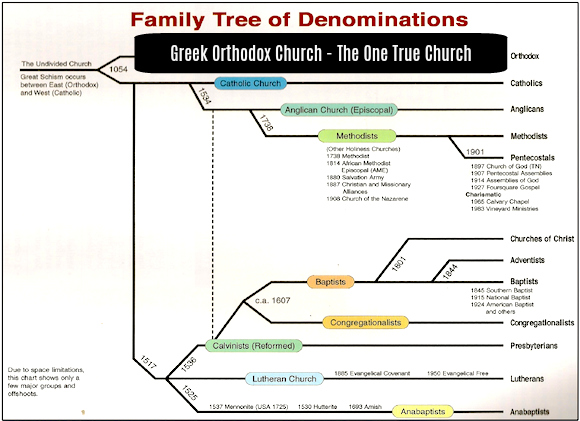
Of course, we all think we’re right.
That fact hit me square in the face one day when I was on the search for some mighty gyros. When I was attending seminary, there was a Greek Orthodox church I would drive by every morning to get to school. And once a year, they had a festival where you could get the best baklava, spanakopita, and gyros this side of the world. Like any church festival, they also had lots of crafts, trinkets to buy, and exhibits and in one of those exhibits was a big poster board showing a timeline of all the major different Christian denominations. There was a line for Roman Catholics, Baptists, even Methodists. But running throughout all of these was a huge, big, fat one labeled “Greek Orthodox Church – the One True Church.” Maybe they thought it was a selling point, but instead it came across as arrogant as if all other Christian beliefs had no validity. But that’s part of the problem. Our pride gets in the way of our efforts to unite. We focus far too much on the things that divide us instead of the things that unite us. If we would only focus on what we hold in common we could accomplish so much together. That was and always has been the hope of Christ, that the Children of God would be united as one. We can hear that hope in Jesus’ prayer to the Father after the Last Supper. The other Gospels (Matthew, Mark, and Luke), skip this prayer entirely and instead go right to the Garden of Gethsemane, but this one is specifically for a prayer for the Body of Christ, both then AND now. Jesus is thinking of us, of you and me, when he says this prayer. Hear now the Word of the Lord from John 17.
20 “My prayer is not for them alone. I pray also for those who will believe in me through their message, 21 that all of them may be one, Father, just as you are in me and I am in you. May they also be in us so that the world may believe that you have sent me. 22 I have given them the glory that you gave me, that they may be one as we are one— 23 I in them and you in me—so that they may be brought to complete unity. Then the world will know that you sent me and have loved them even as you have loved me.
If we could unify as one church, we would be so much stronger.
But our divisiveness keeps us from being as strong as we could be. Imagine what it might be like if we were able to put aside our differences and instead unite in a common cause. Imagine all the different projects we could do if we were together instead of apart. Doing a quick Google search for churches in the area, there were over 20 in about a one-mile radius of our church. And that doesn’t include any of the Methodist churches which never even showed up in the search! What if we did what most businesses would do and consolidate our churches and turned the property left behind into affordable housing? Or homeless shelters? Or feeding centers? If we sold even a fourth of those properties, we could probably feed everyone in Berkeley for a year. Or start our own cooperative business venture and help employ local residents while using the profits to fund a variety of ministries to fight racial injustice, homelessness, and poverty. There is no end to what we could do together. Imagine the energy, vitality, and excitement we could generate by being united. What a powerful statement we would be making on behalf of Christ. “…that they may be brought to complete unity. Then the world will know that you sent me and have loved them even as you have loved me.” Isn’t that what it is all about, sharing the love of Christ with the world?
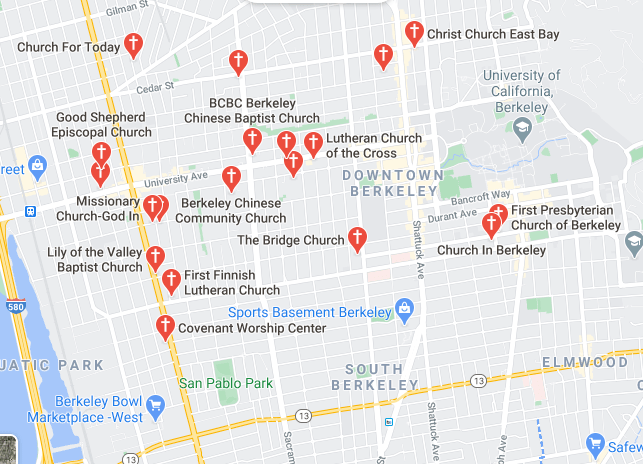
Most people aren’t even aware of other churches in their area.
If I asked you to name three of the other churches in a one-mile radius of ours, most couldn’t do it (unless you were looking at the graphic I just posted). It’s not that we don’t care or we don’t like them, we’re just blissfully ignorant of the church landscape. Once we find a place where we fit in, that’s what we stick with. There might be other churches that are closer, but we like what we like and we stick with what we like. But it also blinds us to the possibilities. When I was serving in Dinuba, I was caring for two churches, both were filled with God-loving, wonderful people, but both were struggling financially. They were literally about half a mile from each other. It didn’t make a lot of sense why these two Methodist churches weren’t together. When they were formed, it did. One was an historically Japanese church like ours, whose original mission field were Japanese immigrants to the area. And there were a lot of them. They had services in different languages and had different cultural needs. But over the years, while there were some differences in culture, they were no longer separated by language and it had been that way for decades. Visitors would often ask me, “Why haven’t these two churches merged?” And there wasn’t really a good answer. Both were struggling. Both could use the energy and vitality that comes from having more people in worship. Both could use the cost savings from insurance and utilities to operate and maintain only one facility. Yet, neither had even considered that option before. Today, they are one church and doing well. They were able to fix up their church building, doing some much needed repairs and making the place look even more appealing to guests. They found a way to incorporate both of their traditions and honor their past while looking to the future. And they are still wonderful people doing God’s work. Now there are more of them to do the work together.
There’s nothing wrong with small churches.
In fact, most churches are small community churches that serve the needs of their local area. And it allows for more intimacy, more nuance, and we hope deeper relationships. But we should do more to work in cooperation with one another. To utilize the strength of being united even while maintaining our individuality. One of the reasons I love the Methodist church is because of our connectional system. It allows us to do more together than any one church could do apart. We give a certain amount of what we receive to the greater United Methodist Church and with that, they are able to fund churches all over the globe, give scholarships to seminary students, provide relief work when natural disasters occur, fight against racial injustice, and encourage people to come and know Christ. For literally pennies on the dollar, we are able to do all of this and more together.
Today is World Communion Sunday.
It is a time for us to reflect on who we are as Christians and what that really means to us. It is a time for us to reflect on all that we have in common with our fellow brothers and sisters in Christ around the globe and to pray for them and with them for the furtherance of God’s kingdom. It is a time to lay aside our differences and remember who we are as God’s children. John Wesley once said, “…to all opinions that do not strike at the heart of Christianity, we think and let think.” It is time for us to do that today. We must remember at all times that we are to love one another. As Christ told us, “By this all men will know that you are my disciples, if you love one another.” We have a long way to go my brothers and sisters. We have a long way to go.
There is so much work to be done in the world.
But if we work on it together, who knows what we can accomplish?
Until every child has a home, a meal, and a loving family, our work as Christians is not yet done.
Until every woman gets paid for her work and not by her gender, our work as Christians is not yet done.
Until we stop polluting our airways, our waterways, and our byways, our work as Christians is not yet done.
Until racism, ageism, and every other “ism” is eradicated, our work as Christians is not yet done.
Until we first take the plank out of our own eyes, our work as Christians is not yet done.
Until there is no Jew nor Greek, slave nor free, male nor female, our work as Christians is not yet done.
Until we are all one in Christ Jesus, united as one people, our work as Christians is not yet done.
My brothers and sisters in Christ, our work is not yet done.
We leave this morning as we opened, with the words of a non-Christian, Mahatma Gandhi, speaking to us about us. “To live the gospel is the most effective way – most effective in the beginning, in the middle and in the end. Not just preach, but live the life according to the light… If, therefore, you go on serving people and ask them also to serve, they would understand. But you quote instead John 3:16 and ask them to believe it and that has no appeal to me, and I am sure people will not understand it…the gospel will be more powerful when practiced and preached.”[3] God uses messengers of all types to communicate to us, if we only listen. In the name of the Father and of the Son and of the Holy Spirit. Amen.
[1] From an article in Christian Today 2006 – http://in.christiantoday.com/articledir/print.htm?id=2837
[2] Accessed 9/28/2020 – https://www.learnreligions.com/christianity-statistics-700533#:~:text=Number%20of%20Christian%20Denominations.%20According%20to%20the%20Center,Christian%20denominations%20and%20organizations%20in%20the%20world%20today.
[3] http://in.christiantoday.com/articledir/print.htm?id=2837
Red State / Blue State

Since when did Christianity become synonymous with the Republican Party?
In my lifetime, the most devout president was Jimmy Carter and he was a Democrat. From Georgia no less. He was at one time the state’s governor and got elected on a platform of civil rights, affirmative action, and anti-segregation. This progressive-thinking president was also the same man who “prayed several times a day, and professed that Jesus was the driving force of his life.”[1] He still teaches Sunday School at his home church in Plains, GA and serves as a deacon. A devout Baptist, he split from the Southern Baptist Convention because their doctrines did not match with his Christian beliefs and he worked to form a coalition of other Baptists and Baptist leaders who felt the same way including President Clinton. Did I mention he was a Democrat? Yet over the years, the Republican Party has become equated with Christian beliefs. When people hear the word Christian, they picture in their mind someone who is an anti-immigrant, climate-denying, conspiracy theorist who is at best willfully ignorant of the racial injustice in our society. What is worse is we have allowed that to happen. It doesn’t matter if you are a Democrat or a Republican, we cannot afford to allow any political party to claim us as their own. If our faith means something to us, it has to be above partisan politics. The choices we make in life should adhere to a higher calling. One that represents love, justice, mercy, forgiveness, and diversity.

But like Hester Prynne, wearing a cross around your neck is like wearing a scarlet letter.
In the Bay Area, being called a Christian is like being called an adulterer. I spent a Sunday last year with our youth and in talking to them one of them mentioned how hard it is to admit to being Christian. People make fun of you, jeer or sneer at you, and look down at you as some kind of misguided miscreant. Being Christian is something we should be able to share without first having to explain you’re not one of “those” Christians. Whoever, “those” Christians are. I know people both Republicans and Democrats who are wonderful examples of what it means to be Christian. I also know members of both political parties who claim to be Christian but act and believe in ideas that are far from Christ’s teachings. The ones who are models of Christianity, are also the type of people who put people above party and God above all. When you already believe you are not the one in charge and whatever power you possess trifles in comparison with the one who created the universe, it gives you the freedom to choose according to your conscience rather than out of fear or human greed or pride or self-righteousness.
The term “evangelical Christian” has been corrupted.
The Atlantic ran an article back in 2015 that said depending on how you define “evangelical Christian” anywhere from 7% to 47% of Americans would qualify. A definition that widespread doesn’t seem to be a good definition at all, but the media tends to use it to describe any politically conservative Christian as “evangelical” and discards moderate-leaning conservatives or anyone who would be considered politically progressive. But why? Do people believe you can’t be a person of faith and still have progressive ideas? Because if that’s the case, Jesus would not be an “evangelical Christian.” Jesus told his followers to let go of the idea of an eye for an eye and embrace love and forgiveness instead. Jesus told his followers not to discriminate against others just because society said they were outcast but instead to welcome them and embrace them into the fold. When his disciples told him the people were hungry, he didn’t send them away. Instead he asked the disciples to feed them all. He didn’t charge them money or ask for a donation, he just gave it away for free. He called out the religious leaders of the time for adhering to the letter of the law and not its spirit. And he spent time not with those who would serve his agenda, but with those who needed him the most. Jesus was a radical with progressive ideas and it got him killed. But he was certainly a Christian.

We need to reclaim what it means to be an “evangelical Christian.”
We can’t afford to let the media or politicians or anyone else rob us of the true meaning of those words – one who proclaims Christ as Lord and Savior. We are not some voting block to be swayed or manipulated but people who believe in love as the overarching theme of all of creation. Love created us. Love sacrificed for us. And love holds us together. That should be what defines us. Everyone agrees that church has become irrelevant to a large percentage of Americans. The number of people affiliated with a church has been in decline for a long time and the number of people who actually come to worship has been shrinking too. Part of the problem is this perception of us as judgmental, hypocritical, and too involved in politics.[2] One young man said, “…twenty years ago, when I was looking at evangelical Christianity from the inside, it seemed like a movement bursting with energy to spread good news to people. Looking at it from the outside today, this message seems to have been lost in exchange for an aggressive political strategy that demonizes segments of society.”[3] If all you knew of Christianity is what you see through the eyes of the media, what would you see? Those of us on the inside know that the church is filled with people both good and bad. We know that even within the church there are those who are far from Christ and those who are close. But we also know that most of us are trying. That we want to be better than we are. That’s the message of love and hope that needs to get out into the world. People are constantly testing us, to see if we will live up to the high ideals that Christ taught us and we have to do what we can to make sure we live by those ideals. It was the same for Jesus as we hear in this passage.
13 Later they sent some of the Pharisees and Herodians to Jesus to catch him in his words. 14 They came to him and said, “Teacher, we know that you are a man of integrity. You aren’t swayed by others, because you pay no attention to who they are; but you teach the way of God in accordance with the truth. Is it right to pay the imperial tax[b] to Caesar or not? 15 Should we pay or shouldn’t we?”
But Jesus knew their hypocrisy. “Why are you trying to trap me?” he asked. “Bring me a denarius and let me look at it.” 16 They brought the coin, and he asked them, “Whose image is this? And whose inscription?”
“Caesar’s,” they replied.
17 Then Jesus said to them, “Give back to Caesar what is Caesar’s and to God what is God’s.”
And they were amazed at him.
Jesus seems to be stuck in a Kobayashi Maru.
If you saw Star Trek II: The Wrath of Khan, you know this is a classic “no-win” situation for Jesus. Should he tell them to pay the tax, the Pharisees can discredit him by claiming he is saying that Rome has greater authority than God! But if he tells them to ignore the tax, the Pharisees can rat on him to the Roman government that Jesus is inciting people to defy the law. Either way he loses. But then Jesus pulls a WOPR. Like the supercomputer from the movie WarGames, he realizes that the only way to win is not to play the game.[4] He tells them, “Give back to Caesar what is Caesar’s and to God what is God’s.” And with that, he not only escapes their trap but elevates his argument by reminding them we answer to a higher calling. That while we are obligated to live by the rules of our society, we have a greater responsibility to live our lives as children of God.
Joe Biden says this year’s presidential election is a Battle for the Soul of the Nation.
And it may very well be. It seems we are at an inflection point, one of those critical junctures in history that can lead us one way or another. As you consider what to do when casting your vote, I hope to encourage you to do three things. One, vote. No matter who you decide to support or what propositions you vote for or what local elected officials get your checkmark on that ballot, please vote. Your voice does make a difference. People are frustrated with the electoral system, and sometimes feel like their vote doesn’t count, but it does in more ways than one. And there’s more at stake than just any one race. Two, sign this online petition asking the media to stop labeling political conservative Christians under one banner. If we can convince the media to stop lumping us together, maybe we have a chance to show those outside our walls that we are more than just some monolithic belief system. And three, cast your ballot for the people and ideas who most exhibit our values as Christians. We’ll talk about that more through the month of October after World Communion Sunday, but in your deliberations, consider not just any one topic when you vote but all of them. Consider the quality of the person you hope to lead us. Consider the life they’ve led. Consider if they exhibit love of neighbor or if they denigrate those around them. Consider if supporting that person or idea will advance love, hope, and light in the world or if it will lead us deeper into isolationism, fear, and hate. For Christ himself said, “What good is it for someone to gain the whole world, yet forfeit their soul?” Let us not forfeit our soul but hold onto it and all we hold dear. My hope and prayer is that we can reclaim what it means to be Christian. That we are known not by the things we oppose but by the things we believe in. And that as Christians, we put our faith first. We let God by our guide. I’m reminded once more of President Carter who said he was greatly influenced by something he heard in a sermon as a young man. The pastor said, “If you were arrested for being a Christian, would there be enough evidence to convict you?”[5]
[1] https://en.wikipedia.org/wiki/Jimmy_Carter#Religion
[2] UnChristian by David Kinnaman, p.34.
[3] UnChristian by David Kinnaman, p. 166.
Tomorrowland

The Land That Time Forgot
That’s what they should call Tomorrowland, because it stopped being about tomorrow a long time ago. Take for instance Autopia. I used to love Autopia. As a kid, it was one of the rides I always wanted to go on when my family went to Disneyland. But it seemed kind of odd even back then that it was in Tomorrowland. When Disneyland opened back in 1955 Autopia was cutting edge stuff. At the time, there was no such thing as an interstate highway system.[1] Hard to believe but its true. People didn’t drive on multi-lane highways that stretched across the country. This idea was so new to America that it made Autopia a natural fit in the land of the future. Today it makes no sense. In fact most of the rides in Tomorrowland make no sense. The monorail is something used regularly like BART in San Francisco and MARTA in Atlanta. Submersible vehicles are not only for military use anymore (although rarely does anyone see talking fish when they dive under the ocean). And the Orbitron is basically a preview of when Space X becomes more common. For a long time, Tomorrowland has become more and more obsolete, and while they have added new attractions like Star Tours, they’ve also let many things become outdated or simply disappear. The Peoplemover track lies empty and has for almost 25 years. The Magic Eye Theater which once housed state-of-the-art movies in 3D with actual physical special effects is now a showcase for Star Wars. And the Autopia? It’s still driving cars on highways from 1955 despite the updates.

The problem is that Tomorrowland stopped being about tomorrow.
It’s still fun, but after Walt passed, they haven’t stayed true to his original vision to keep this area on the cutting edge of innovation, to give guests a glimpse into the future. That’s why you still have gas-powered cars instead of solar cars, electric cars, or self-driving vehicles on the Autopia track. Enough people ride it the way it is so they haven’t felt the need to invest in changing it. They’ve spent tons of money refurbishing it, but little to reimagine it. Because it is doing “good enough.” But that is so short-sighted. When we wait for a need to arise without trying to plan ahead, we are setting ourselves up for failure. When we let “good enough” be the bar, we lose sight of the opportunities that could be. Because someone else will come along and do it better and be five steps ahead of the game. Like the original vision for Tomorrowland, we need to constantly strive toward a better future so we are prepared for what comes ahead. The writer in Hebrews said it so well that’s what we are going to read from this morning. It is important to be future-oriented. Looking forward keeps us focused on how we can make the world a better place. It also drives us from being complacent. And it drives innovation and creativity. I told you the story before about Walt Disney wanting to put in a Christmas parade at Disneyland. His financial advisors told him not to spend the money, that it would cost too much, that nobody would complain because they wouldn’t be expecting it and he said to them, “That’s just the point…We should do the parade precisely because no one’s expecting it. Our goal at Disneyland is to always give the people more than they expect. As long as we keep surprising them, they’ll keep coming back. But if they ever stop coming, it’ll cost us ten times that much to get them to come back.”[2] Give people more than they expect. Don’t just focus on what’s needed now, but plan ahead for the future. And he was right. Don’t settle for “good enough.” Figure out how we can do it better, even when (and maybe especially when) it’s going good.
8 By faith Abraham, when called to go to a place he would later receive as his inheritance, obeyed and went, even though he did not know where he was going. 9 By faith he made his home in the promised land like a stranger in a foreign country; he lived in tents, as did Isaac and Jacob, who were heirs with him of the same promise. 10 For he was looking forward to the city with foundations, whose architect and builder is God. 11 And by faith even Sarah, who was past childbearing age, was enabled to bear children because she[b] considered him faithful who had made the promise. 12 And so from this one man, and he as good as dead, came descendants as numerous as the stars in the sky and as countless as the sand on the seashore.
13 All these people were still living by faith when they died. They did not receive the things promised; they only saw them and welcomed them from a distance, admitting that they were foreigners and strangers on earth. 14 People who say such things show that they are looking for a country of their own. 15 If they had been thinking of the country they had left, they would have had opportunity to return. 16 Instead, they were longing for a better country—a heavenly one. Therefore God is not ashamed to be called their God, for he has prepared a city for them.
They were longing for a better country.
These forefathers of faith trusted in the vision that God had presented to them and did what they knew to be right. And even though they never lived long enough to see it all come to fruition, they trusted that their efforts led them toward a brighter future.[3] The Scripture says to us, “they only saw them and welcomed them from a distance.” The things God promised to the people of Israel and by extension to all of us was not something they could tangibly touch or experience, but they honored God with their efforts even though they didn’t know how it would all work out and that pleased God. God is future-oriented. Think about it. It was the same in the Old Testament as it is in the New Testament. God promised Abraham that his people would spread throughout the Earth and even though as long as Abraham lived he didn’t see it, that promise came true. God promised Moses that he would lead his people to the promised land and even though Moses didn’t live to see it, that promise came true. Jesus promised us that when he returned to Heaven the Holy Spirit would come upon us and fulfill God’s promise to us and when he left that promise came true. God is always looking ahead to the future. Jesus trained up his disciples because he knew one day he would no longer be there. He could have done all the work himself, but instead he trained the disciples to insure the future of the church after he wasn’t with them. He pulled them aside and taught them. He explained the parables to them, because they didn’t understand it any better than anyone else. He had them do the work of passing out bread and fish when he fed the 5,000, even though he could have just made it rain down manna from Heaven because he wanted to train them to do the work and to participate in the miracles themselves. Jesus was constantly working toward a future that he wouldn’t be alive to see.
As a parent, that makes sense to me.

I want to help build a foundation of strength to support Emma her whole life. I want to give Emma the best education possible because a time will come when I am not here and I want her to have as many opportunities to pursue her dreams long after I’m gone. I want to make sure Emma knows how much I love her so that even when I’m not around, she will never doubt that I am still looking after her and sending my love to her even if she can’t touch me or see me. And I want her to be grounded in faith because I want my child to know the love of God for when times get rough (and they will get rough) so that even if I’m not there she will know she can turn to God and trust in him. I try to teach Emma practical things, too. Not that I always get it right myself, but I hope I am helping to build up her future. I hope and pray that I am here for a very long time and will get to see many of these things come to pass, but I am constantly helping to prepare her for whatever comes. My actions today will help build a brighter tomorrow.
That’s why it is so important to keep striving to make things better.
Human beings love the path of least resistance, so it’s tempting to stop when things are just the way we like it. After all, most of have seen what happens when people mess with a good thing. Sometimes it turns out disastrous. Like New Coke. That fear of failure prevents us from doing something amazing. We tend to look at failure as a waste instead of a learning opportunity. But failure is the greatest teacher there is. It’s only when we refuse to learn from the past that we truly fail. But when we succeed! We can make an impact that lasts for generations. The reason Disneyland can afford to keep Tomorrowland around is because it DOES invest heavily in the future. Cars Land and the entire remodel of Disney California Adventure. Star Wars: Galaxy’s Edge. And all of Disneyland Paris were risks that paid off big. By the way, our church was a risk. Ninety plus years ago, the Methodist church decided to invest in reaching out to Japanese immigrants and for over nine decades because of that risk we exist today. That’s why it is so important to continue to work toward the future. The possibilities that come about because of those risks are worth far more than the failures along the way.
There is a grace consequence to the flip side of it all, too.
When we stop becoming oriented to the future, we become oriented to the finish line instead. We go into survival mode. We are constantly trying to extend the time we have instead of working to create a better future. But all that does is delay the inevitable. It’s like a sinking boat. If we only concentrate on bailing out the water, we’ll stop from sinking for a while, but eventually the hole will get bigger and the water will overwhelm us. But if we let in a little water while we fix the boat, we can keep going for untold distances into the future. This pandemic has given us an opportunity to fix the boat. So many churches all across the nation were stuck in the 20th century and suddenly got thrust into the 21st. Online worship, social media, digital outreach are new to so many people. And even though every indication was this was where we were heading, the pandemic pushed us to move forward faster. Will we take this momentum and keep going? Or will we revert to the way we always did things? Looking around at the new faces that have joined us since the pandemic started, going backward hardly seems an option, but can we steel ourselves for a new future?

Jesus was a futurist.
Walt Disney was a futurist. Martin Luther King, Jr. was a futurist. Most of the great leaders and innovators of our nation and our world were futurists. They were always looking ahead to what was possible and trying to work toward THAT. How can the church do anything different? As Robert Kennedy once said (paraphrasing George Bernard Shaw), “Some people see things as they are and say why? I dream things that never were and say, why not?”[4] What is your why not? What is something you have held back from daring to dream? What is something you would like to accomplish but haven’t done so? Now ask yourself, why not? The Autopia is great. But it’ll never be more than it is unless someone does the work to make it better. In the name of the Father and of the Son and of the Holy Spirit. Amen.
[1] https://en.wikipedia.org/wiki/Autopia
[2] http://grumpymickey.com/tag/plussing-it/
[3] This section was inspired by Thom Rainer’s book Autopsy of A Deceased Church, Chapter 3.
[4] https://www.jfklibrary.org/Research/Research-Aids/Ready-Reference/RFK-Speeches/Remarks-of-Robert-F-Kennedy-at-the-University-of-Kansas-March-18-1968.aspx
Stay In Love With God: The Third Rule

5.53 seconds.
That’s the world record. 5.53 seconds.[1] At my very best, I could do it in under 30 and that’s when I was in junior high. Today, I’m lucky to solve a Rubik’s Cube in 30 minutes let alone 30 seconds. But the world record holder came in five times faster than me at under six seconds. There’s a great documentary on Netflix called The Speed Cubers. It’s a wonderful story about two of the best competitors out there – Felix Zemdigs, the world record holder in the 3×3 and one of the nicest guys you’ll meet and Max Park, au autistic savant from my hometown of Cerritos, CA who holds the records in the 4×4, 5×5, 6×6, 7×7, and one-handed categories. Yes, one-handed. 9.42 seconds. Behind it all is a very touching story about two friends from different backgrounds who bonded over speed cubing, but what amazed me is the speed at which they can solve this complex puzzle that for most of us is confusing just to look at. There were hundreds of competitors from around the world and they were solving cubes one-handed, with only their feet, BLINDFOLDED, it was dazzling. Max’ dad made a comment that stuck with me as we talk about Wesley’s Third Rule. He said most cubers top out in their 20’s because life gets in the way. The best of them are constantly solving the cube. Every free moment they are working their cube and trying to get faster and faster. It trains their mind to instantly recognize patterns and solutions. And as they get older, other things start to take priority like jobs and relationships and they simply have less time to devote to cubing. Part of being so good at solving the cube is talent, but the other part is practice.
Practice makes perfect.
That philosophy holds true no matter what you’re trying to do. Whether it’s the Rubik’s Cube or chemistry or basketball or playing music you need to practice over and over to improve on your skills. Talent alone only gets you so far. Practice is what takes you over the top. And the same is true for our faith. Practice makes perfect. In our passage this morning, Paul was writing to the church because he was worried they might drift away from their faith. Someone could come along and convince them to turn away from Christ. Not that hard to believe considering the stories they already knew from their own history (like Aaron building the idol when Moses went on the mountaintop to pray). Christianity was in its infancy and they were still trying to figure everything out. False prophets were likely everywhere and it would have been especially hard for Paul to guide them from far away. They didn’t have things like ZOOM worship to rely upon, so Paul wrote this letter to encourage them and to offer them a way to stay grounded in their faith. This is what he shares with the church in our passage this morning.
6 So then, just as you received Christ Jesus as Lord, continue to live your lives in him, 7 rooted and built up in him, strengthened in the faith as you were taught, and overflowing with thankfulness. 8 See to it that no one takes you captive through hollow and deceptive philosophy, which depends on human tradition and the elemental spiritual forces of this world rather than on Christ.
The Word of God for the people of God and the people said, “Thanks be to God.” Please be seated.

Sometimes it’s hard to believe how little we’ve changed.
Human beings that is. Paul had to battle the same concerns we do today and this topic is no different. He was worried people would drift away from Jesus and his teachings. That they would be “wowed” by something more appealing, something that fit their lifestyle better and would abandon everything they were taught. Again, not hard to believe considering we still do this today. We gravitate toward whatever new trend or philosophy lets us do what we want regardless of whether or not we should do it. Human beings love to find ways to beat the system. Kind of like me and the Weight Watchers Fat and Fiber Plan. I was following the traditional Weight Watchers plan for a long time and doing pretty well, when they suddenly offered this new Fat and Fiber Plan that said you could eat whatever you want as long as you stayed below a certain amount of fat per day and above a certain amount of fiber. I could eat half a bag of Snackwell cookies (which still had tons of sugar and carbs and processed ingredients) and as long as I had a bowl of refried beans (super high in fiber), I was good for the day. Seriously. That’s what I did. Even though in my head I KNEW this was too good to be true, I was like, “Trust in the experts.” Especially when it let me eat as many cookies as I wanted. Sure enough, even though I stayed faithful to the plan, I GAINED a ton of weight. Who would have guessed that any eating plan that includes eating half a bag of cookies daily might not be good for you?
Paul had to deal with this basic human frailty.
Finding ways to beat the system. Looking for loopholes instead of long-term benefits. Paul wasn’t there to help them in person, to guide them and remind them on a regular basis, so instead he did the only thing he could do. He encouraged them to remember the teachings, to be “rooted” in Christ, to build each other up and strengthen each other’s faith, to remind one another of the truths they had been taught and believed. In essence Paul was trying to teach them to “stay in love with God,” Wesley’s Third Rule. Do no harm, do good, and stay in love with God. For John Wesley, who taught these three rules as the foundation of Methodism, staying in love with God was vital to our faith. If “do no harm” is preventative and “do good” is proactive, then “staying in love with God” requires practice. Like Paul, John Wesley taught this same basic principle. To draw closer to Christ and to maintain your faith, John told those who became part of the Methodist societies they needed to regularly attend to all the ordinances of God. By that he meant they needed to do those everyday things, those regular things, over and over again to infuse God into their lives. That when God became an integral part of who we are, our faith would have a firm foundation. Wesley told them they needed to pray. They needed to read their Bibles. They needed to be in small groups together. They needed to take communion. They needed to go to worship. It’s those everyday routines Wesley felt were most important to keep us connected to God and to one another, and Paul in this passage stresses the same thing. Paul encourages the church to “continue to live your lives in him, rooted and built up in him, strengthened in the faith as you were taught, and overflowing with thankfulness.”

Science backs them up.
Their assumption that maintaining these patterns of behavior would help to make God a part of our everyday lives is true. In different studies, it has been shown that through consistency and repetition over a period of time we can form new ways of doing things. But it takes time. You may have heard that it takes 21 days to form a new habit, but the truth is it takes much longer. Studies show it takes an average of 66 days.[2] 66 days and that’s just an average. It can take as long as 8 or 9 months. But it can be done. If you want to get in the habit of relying on God, if you want to learn to put your faith and trust in him, you have to make God a part of your everyday life. Things like praying and reading the Bible and going to worship need to be more than a chore but a way of life that you embrace and then it will take hold in you in a deep and meaningful way. And once you have this foundation at your core, you will be open to an even deeper relationship with God. One that opens you up to that “peace that passes all understanding” Paul promises we can have. Staying in love with God, or as Wesley put it, “attending to all the ordinances of God,” takes time but the investment is well worth it.
When I first started praying with others, I hated it.
Not because I didn’t think it was important and not because I didn’t think it was helpful. But because I felt so inadequate about it. It seemed everyone I knew could pray better than I could. But after my Walk to Emmaus, I joined a Day Four group and we’d meet once a week and took turns praying for each other. They were SO eloquent with their prayers. Thoughtful. Not the kind where they just repeat the word “Lord” 40 times in one sentence, but from the heart, sincere, deep prayer. By comparison, I felt my prayers were more along the lines of “God is great, God is good, thank you God for this food.” But they encouraged me regularly and gave me confidence as I kept working on it. And as I kept it up, I felt more comfortable. I was less self-conscious. I worried less about doing a “good” prayer and came to realize it’s not about how fancy my words were or how articulate I was or whether or not I repeated myself a dozen times. It was all about my heart for the Lord. That’s all God really cares about. And at least in that, I am confident. To do anything well takes practice. Like with the Rubik’s Cube, the more we work at it, the better we will be. In our marriages, in our work, as parents – even in our faith. Practice makes perfect. In the name of the Father and of the Son and of the Holy Spirit. Amen.
[1] https://www.worldcubeassociation.org/results/records
[2] http://www.huffingtonpost.com/james-clear/forming-new-habits_b_5104807.html

