
Love Without End, Amen

Imagine a world where everyone knew they were loved unconditionally.
In that kind of a world, many of the problems we have today would probably disappear. Not all of them to be sure, but being surrounded by people who loved you just as you are and loved you the way you wanted and needed to be loved would be incredible for anybody. If you have a Bible or a Bible app on your phone, please go to 1 John chapter 4 and we’ll begin reading from verse 7. 1 John 4:7. Unconditional love is the greatest gift in the world. It gives you a sense of self-worth, confidence, and assurance nothing else can give you. People spend their whole lives looking for it. By its very definition, you can’t buy it, you can’t earn it, you can’t do anything to get it. It’s the one great equalizer in society because everyone wants it and whether you get it has nothing to do with wealth, fame, or power. In fact, it’s probably the one thing that’s harder to get the more successful you become because you can’t help but wonder if people love you because of who you are or for what you have. But God loves us unconditionally, no matter how much we have or don’t have, no matter how much we do or don’t do – God loves us anyway. If you would please rise as we read from 1 John 4:7-12, and 19-21. Hear now the Word of God.
7 Dear friends, let us love one another, for love comes from God. Everyone who loves has been born of God and knows God. 8 Whoever does not love does not know God, because God is love. 9 This is how God showed his love among us: He sent his one and only Son into the world that we might live through him. 10 This is love: not that we loved God, but that he loved us and sent his Son as an atoning sacrifice for our sins. 11 Dear friends, since God so loved us, we also ought to love one another. 12 No one has ever seen God; but if we love one another, God lives in us and his love is made complete in us.
19 We love because he first loved us. 20 Whoever claims to love God yet hates a brother or sister is a liar. For whoever does not love their brother and sister, whom they have seen, cannot love God, whom they have not seen. 21 And he has given us this command: Anyone who loves God must also love their brother and sister.
The Word of God for the people of God, and the people said, “Thanks be to God.” Please be seated.

We love because he first loved us.
As parents, we experience the kind of love God has for us most strongly with our children. We feel it right from the moment of their birth. Or even before then. When Cassie was pregnant with Emma, I used to talk to Emma every day. Before bed each night, I’d put my head next to Cassie’s stomach and talk to my little unborn baby girl, telling her about my day, about how I can’t wait for her to come out, and saying “good night.” Sometimes I’d randomly just go up to Cassie’s stomach and just for fun say “Helloooooo in there.” It was probably a bit embarrassing for Cassie, because I’d do it whenever the mood struck – at home, at the mall, in the car – just whenever. One night, Cassie started getting some unusual pains and we rushed to the hospital, worried something had gone wrong. We sat in this cold, sterile intake room waiting for Cassie to get some kind of medical scan done, and I remember holding her hand and just feeling completely helpless. The worst part was when they wheeled Cassie away. They wouldn’t even let me go with her and I sat in this little, tiny waiting room all by myself with Law & Order on the television above me. I remember thinking about how much I loved my little girl who I hadn’t even seen yet except on some fuzzy sonogram, and praying everything would be alright. I had never felt that anxious before. Thankfully, it was just a scare and about seven months later, Emma would come out just fine, but I felt like just for a moment I had a glimpse of God’s unconditional love for us – that deep love of God that reaches out to us even before we realize we need it.

It’s that kind of love John is talking about in this letter to the church.
It’s the love that comes before we realize we ARE loved. In Methodism we call this prevenient grace – the unmerited, undeserved, unasked-for love of God that comes before we even know there IS a God. And it’s this unconditional love that motivates God to send Jesus on our behalf. Not because we behaved particularly well. Not because we did some great deed for God. But because he knew it was what we needed. It’s what we do for those we love. That’s why John writes, “This is love: not that we loved God, but that he loved us and sent his Son as an atoning sacrifice for our sins.” When John tells us that we need to love one another in the same way that God loves us, this is the kind of love he’s talking about – the unconditional, self-sacrificing, put-yourself-out-there kind of love. We don’t do this because we need to “pay God back” or to balance some kind of cosmic debt. It isn’t love if it requires payment. We don’t do it to store up God’s good will. Again, that isn’t love. Look at what it says in the Gospel of Luke. In Luke 6, Jesus tells the crowd to love their enemies. He says, “If you love those who love you, what credit is that to you? Even sinners love those who love them.” It doesn’t take any effort to love those who already love you because you expect love in return. Real love is being able to offer it without expectation. To love the way God loves us. When we are able to love like that, we have a deeper understanding of God’s love for us.
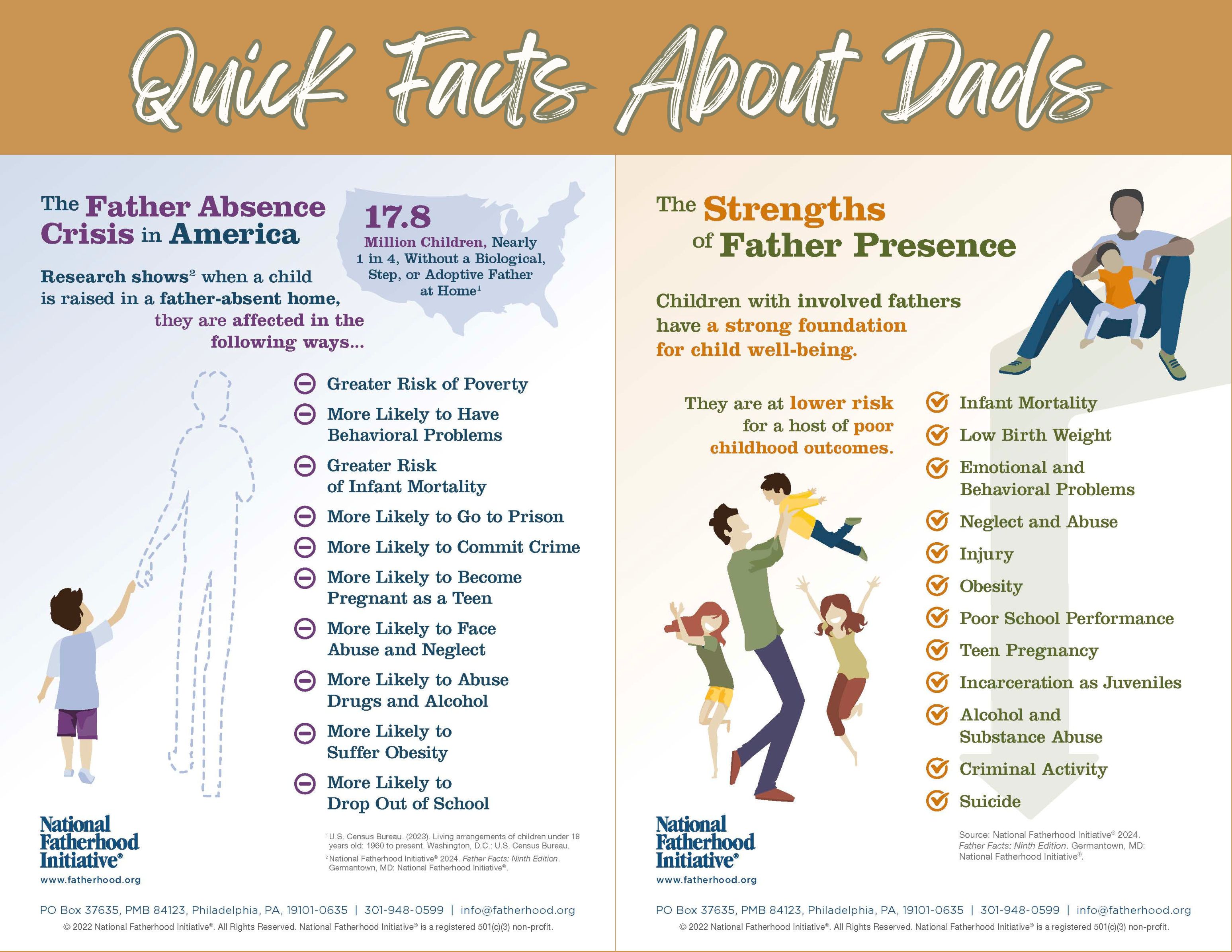
Love is essential. When we are loved, we do better in life.
As a father, there is a unique role we play in the lives of our children and a reason God created us to be fathers in the first place. It’s not only a duty, but an honor to be a father. As more research is done, it becomes clearer and clearer that fathers are an important part of a child’s development not just because they are a “second parent” but men specifically interact and behave in ways that help their children become more well-rounded, well-developed people.[1] Studies have shown that having a loving, involved father increases a child’s chance of getting A’s in school by 43% and children are 33% less likely to repeat a grade.[2] 43% more likely to get A’s. Children with fathers who play with them on average have higher IQs “as well as better linguistic and cognitive capabilities,” meaning they tend to be more sophisticated in both speech and thinking.[3] Children with involved fathers tend to be more sociable, exhibit better self-control, were less likely to lie, experience depression, and more likely to engage in pro-social behavior. The more we learn about fathers, the more we realize how important they are. Not that mothers are any less important, but too often in society the job of raising children has fallen on mothers. Take for instance Elon Musk’s recent response to a reporter about balancing his work life with being a father. He doesn’t. “Well, babies are just eating and pooping machines, you know?…Right now there’s not much I can do.”[4] Fathers have a deeper responsibility than society gives them credit for or often expects of them, but not less than what God expects. In Ephesians we hear from Paul that fathers are responsible for bringing up their children in the “training and instruction of the Lord” and are called not to exasperate them. In the letter to the Colossians, Paul writes that fathers should not embitter their children, or they will become discouraged. God places upon fathers an expectation of love and encouragement that is important in how they grow up.

Love is a choice.
Love isn’t just a feeling. Love is a choice. We shouldn’t love our children just when we feel like loving them. We shouldn’t love them when they deserve it. We shouldn’t make them earn our love. We should love them simply because they are our children. But what we SHOULD do and what we DO do are not always the same. Ultimately, love is still a choice as evidenced by the unfortunate number of fathers out there who are not involved in their children’s lives. One in four children live in a fatherless household.[5] 48% of those see their children less than once a month. 31% say they don’t even call or email once a month.[6] We choose what’s important in our lives. We choose who to love and how to love even if it’s only ourselves. It is a choice we make moment by moment just as God constantly chooses to love us despite our rebelliousness. And just as we are loved by God, we must also choose to love our children so that when they explore faith for themselves, they have an idea of what it means to have a loving God in Heaven. It’s hard to imagine a loving Father above when ours is absent. Love is a choice. And God chooses to love us everyday. We must choose to love also.
We don’t always realize the importance of the role we play in the lives of our children.
Academically, socially, and spiritually, too. How involved a father is in the faith life of their children influences greatly the future faith of their children as well. Fathers who go to church regularly have a greater impact on the future of their children being in church than their mothers. In fact, if a father goes to church regularly with their mother, 75% of their children will still be in church either regularly or irregularly as adults. If a father doesn’t go to church but the mother does only 39% of their children will go to church at all, with only 2% being regular attenders.[7] As a father, we have a greater responsibility to our children’s well-being than we often think. We influence not just their life here, but their eternal life as well. On this Father’s Day, I want to encourage you to show your unconditional love to the people important in your life. Encourage, embolden, and love your children, grandchildren and great-grandchildren so that they may know not only your love but the model of love God has for them.
[1] http://www.focusonthefamily.com/parenting/parenting_roles/the_involved_father.aspx
[2] http://www.thefatherhoodproject.org/10-facts-about-father-engagement/#_edn7
[3] https://www.zerotothree.org/resource/the-daddy-factor-how-fathers-support-development/ originally from childwelfare.gov
[4] https://www.brookings.edu/articles/the-unique-power-of-dads-in-childhood-development-during-a-pandemic-and-beyond/
[5] http://www.fatherhood.org/media/consequences-of-father-absence-statistics (interestingly this number has gotten better over the years! Not that long ago it was 1 in 3!)
[6] http://www.pewsocialtrends.org/2011/06/15/a-tale-of-two-fathers/ (hopefully these numbers have improved over time, but I couldn’t find a more recent study of male parental involvement like this one)
[7] http://www.christianpost.com/news/fathers-key-to-their-childrens-faith-51331/
What Makes You Beautiful

When I was a little boy, I had a favorite stuffed animal named “Tiger.”
I know. Not incredibly creative. I could have named him “Tony,” after all I loved Frosted Flakes (still do actually) or “Tigger” after Winnie-the-Pooh’s friend, but nope I named him “Tiger” and it stuck. Tiger went with me everywhere. I loved that doll. Now, mind you, Tiger wasn’t the best-looking doll on the block. He wasn’t the biggest or the fluffiest. He was just two pieces of patterned cloth sewn together with synthetic fiber mashed inside. Did any of you have those kinds of dolls? Half of the stuffed animals I had came from a pattern at the local fabric store. Today they are much more sophisticated and intricate, but I’d still choose Tiger any day of the week because he was mine. As kids do, I gave him the same birthday as me. Even after I was “too old” for dolls, I’d still pull him out and wish him happy birthday and give him a big ol’ hug like the old days. I kept him, thinking one day I would pass Tiger on to my child, and when Emma was around three I did just that. That was a significant moment for me. To be able to pass down a treasured keepsake from my past to my daughter was so meaningful. The first time she slept with it felt so special. Side note: Want to hear something funny? At that point I had owned Tiger for over three decades, but when I handed it to Emma I discovered something. Tiger wasn’t a tiger at all. Tiger was a lion! It was the most orange lion you’d ever seen, but there was no mistaking it. Tiger wasn’t a tiger. The mane should have been a dead giveaway. I don’t know how that fact escaped me all those years, but there you go. I’d love to show Tiger to all of you so you could see for yourself, but someone else in our family liked Tiger, too. Our golden retriever, Luke who played with it as any big dog would. Tiger didn’t survive the experience. All that was left of him was a scrap of cloth. Cassie was so nice about it and was like, “Well, maybe you could keep the cloth.”

Tiger had a good life as far as stuffed animal go.
But to most people, he was just an ordinary doll. Not all that remarkable. If you put him in a pile with other stuffed animals, he probably wouldn’t have gone first. Or even twenty-first. But he was special to me. And I’d have picked him first every time. Whether he was a lion or not. I imagine God feels the same way about each and every one of us. No matter what kind of “worth” the world puts on us, no matter how the “world” would judge us, God sees beyond that and loves each and every one of us. We’d all get picked first. And isn’t that really all we want? To know we matter. And you DO matter. In fact, there is passage after passage in the Bible telling you that you matter. We will share some of those together today. We all probably know the most famous verse of this – John 3:16. 16 For God so loved the world that he gave his one and only Son, that whoever believes in him shall not perish but have eternal life. That God was willing to give up the life of his son for us, that God was willing to die a mortal death so that we would come to believe in him is a striking example of just how much God loves us. How often would we give up OUR lives for those we didn’t love? From John 15:12-17 – 12 My command is this: Love each other as I have loved you. 13 Greater love has no one than this: to lay down one’s life for one’s friends. 14 You are my friends if you do what I command. 15 I no longer call you servants, because a servant does not know his master’s business. Instead, I have called you friends, for everything that I learned from my Father I have made known to you. 16 You did not choose me, but I chose you and appointed you so that you might go and bear fruit—fruit that will last—and so that whatever you ask in my name the Father will give you. 17 This is my command: Love each other. There is no greater love than this: to lay down one’s life for one’s friends. Which is exactly what God has done for us. And I love another part of this verse. “You did not choose me, but I chose you…” God loved us first. God took the first step. We didn’t do anything to merit God’s love or earn God’s love, but instead God chose us – to create us, to love us, to be there for us. God chose. We didn’t make God love us. God loved us first. Which is exactly what John wrote in his first letter to the church. From 1 John 4: 19 We love because he first loved us. 20 Whoever claims to love God yet hates a brother or sister is a liar. For whoever does not love their brother and sister, whom they have seen, cannot love God, whom they have not seen. 21 And he has given us this command: Anyone who loves God must also love their brother and sister. You didn’t earn God’s love. God gave it freely. God wants you and God loves you for no other reason than God DOES! And even if you reject God, God is still waiting for you. To me, that is probably the most powerful evidence of God’s love – his eternal patience with us. As it says in 2 Peter: 8 But do not forget this one thing, dear friends: With the Lord a day is like a thousand years, and a thousand years are like a day. 9 The Lord is not slow in keeping his promise, as some understand slowness. Instead he is patient with you, not wanting anyone to perish, but everyone to come to repentance. If you didn’t matter to God, why would he wait?
God IS love!
The Bible doesn’t give us straight answers about a lot of things – the Internet, space travel, invitro fertilization. But about this it is very clear. God is love. It tells us in many ways, but in 1 John 4 it says it specifically in verse 16. God is love. We only know what love is because it is a part of who God is. God is the living embodiment of love. Our ability to love; our ability to be loved; all of it is a gift of God. And God chooses to share it with us. God knows we are flawed, that we drift away, that we make poor choices from time to time (and sometimes more than that), but God waits because God loves. I had a friend who once thought she wasn’t good enough to be loved by God. That she had done too many things wrong in life to be forgiven, but nothing could be further from the truth. God’s love and grace and mercy is endless. As it says in Romans 8:38-39: 38 For I am convinced that neither death nor life, neither angels nor demons,[b] neither the present nor the future, nor any powers, 39 neither height nor depth, nor anything else in all creation, will be able to separate us from the love of God that is in Christ Jesus our Lord.

There is only one thing God asks of us.
To love one another. It’s in my favorite verse of the Bible. John 13:34-35:34 “A new command I give you: Love one another. As I have loved you, so you must love one another. 35 By this everyone will know that you are my disciples, if you love one another.” Love one another. It’s Jesus last command before he dies on the cross. And by the way, it isn’t conditional. If you don’t do this doesn’t mean God will stop loving you. It’s just that God wants us to show the same kind of love he has given us to other people and that way more people will come to know God’s love for themselves. Don’t hoard it all to yourself. God’s love is like the bottomless fries at Red Robin; there is no end. The best way to honor Christ, to give meaning to his sacrifice, is to love one another as Christ loved us. This week, go out into the world and do something to make this a better place to live. Show the love of Christ to someone without any hope or expectation of getting something in return because let’s face it, you’ve already been given the greatest gift in the world – the love of God. Be the incarnation of Christ to someone who needs it. Send a card to an old friend. Pick up the phone and call your mom or your dad or your sister you haven’t talked to in a while. Connect with someone online you haven’t seen in a while or just give a random compliment to a stranger. Pay for a cup of coffee for the guy behind you at Starbucks or McDonald’s. Think of something creative to show the love of Christ for those around you. Here’s a good one. Compliment a stranger on how they look. Don’t make it creepy. Say something nice about their shoes or their hat or the design on their shirt. Studies show that it makes people feel better than we expect, but also makes us feel good in the process.[1] Doing good feels good. For everybody.
I love the song “What Makes You Beautiful” by One Direction.
It’s all about a guy telling a girl she’s more beautiful than she realizes. And I think most of us feel like that from time to time; that maybe we aren’t as beautiful as we’d like to be or as we once were or as we could be. Maybe it’s what’s inside that feels ugly or unworthy. But let me tell you that you underestimate yourself. God loves you and believes in you. He sees the true beauty within, even when we don’t see it ourselves. If he didn’t why would he wait for you? Why would he love you unconditionally? Especially when we so often are ungrateful and ignore him in our busy lives. But his love is truly everlasting. We should take heart and be encouraged by God’s great love and know we are wanted and valued. My stuffed animal Tiger may not have been much to look at, but he was everything to me. God feels the same about you. Regardless of what you think you look like or if you think you’re worth it, have confidence that you are the most beautiful and most desirable being inside and out to God. Let that knowledge fill you with the confidence you need to share God’s love with those around you.
[1] https://www.psychologytoday.com/us/blog/evidence-based-living/202109/the-psychology-compliments-nice-word-goes-long-way
A Mother’s Heart
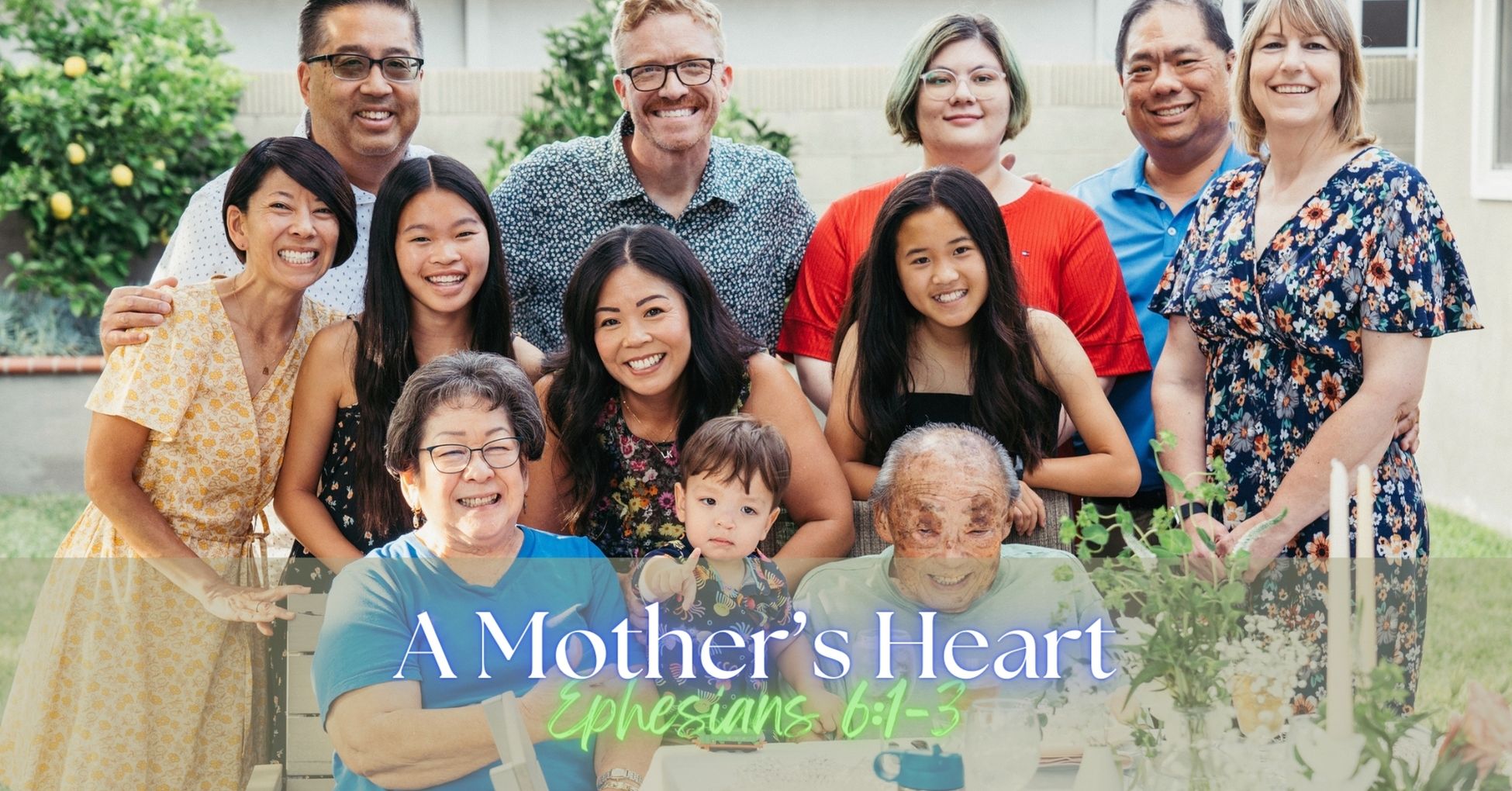
Children, obey your parents in the Lord, for this is right. 2 “Honor your father and mother”—which is the first commandment with a promise— 3 “so that it may go well with you and that you may enjoy long life on the earth.” – Ephesians 6:1-3
Moms are people, too.
That might seem obvious but take a moment to think about when you finally realized that simple fact. Moms are people, too. When we’re kids, we don’t see our moms as being like other people. We don’t imagine them with vulnerabilities or feelings like the rest of us. They are SUPERMOM! Able to leap large stacks of toys in a single bound! Then suddenly our moms seem out of touch. They just don’t get it. Suddenly they transform from knowing pretty much everything to knowing nothing at all. Over time as we grow and mature, we come to realize mom had a pretty good head on her shoulders the whole time. At least that’s how it was for me. Looking back, I don’t know how much I appreciated my mom until I became a parent myself and all of a sudden that veil over my eyes was lifted and I could empathize with her in a whole new way. I also realized how tough it must have been at times to put up with me.

“Honor your father and mother.”
We all know that commandment, whether you’re religious or not. But how well do we do it? How well do we honor our mothers whether biological or not? Because if you think about it, this mandate to honor your father and mother isn’t exclusive to biology and isn’t just talking about your own mother. It includes the mother of our children, too. Paul writes in Ephesians husbands are supposed to love their wives as Christ loved the church – and since Christ was willing to sacrifice everything, it seems we owe the mothers of our children an awful lot.
But how can we honor them the right way?
We can never go wrong by following Jesus’ example. When reading the Bible, we tend to focus on Jesus as the Christ, the Messiah, the Son of God and for good reason. But what if we were to also look at Jesus as the Son of Man and specifically the son of Mary and Joseph. We don’t read much about Joseph outside of Jesus’ birth, but with Mary we have a lot more to pull from. There were three distinct incidents of Jesus throughout his life that made me realize what it meant to honor your mother. Each one took place at a different moment – when Jesus was a child, when he first began his ministry, and on the cross before he died.
The first was when Jesus was in the temple.
This is the only incident we read about Jesus’ life as a kid. The only one. His family traveled from his home in Nazareth to Jerusalem for the Passover Festival and after it was over, the whole family was headed home, a journey of about 75 miles.[1] And by “whole family” we’re talking about cousins and uncles and aunts and grandparents, etc. It’s the WHOLE FAMILY. After the first full day of travel, Joseph and Mary realize Jesus isn’t with them and immediately head back to Jerusalem to find him. You might wonder why they didn’t notice before, but at Jesus’ age it was just as likely he was walking with some of his other relatives instead of his parents. Any of you with pre-teens or teenagers can probably empathize with that. I imagine they assumed he was with his cousin John or someone else in the family because the Bible tells us they were all traveling together. But at the end of that first day when they are setting up camp for the night, they can’t find him and immediately Joseph and Mary head back to Jerusalem.

I can’t imagine how worried Mary must have been.
I still have nightmares about the time Emma was trapped on the school bus and we had to drive after it like a mad man. The bus driver forgot to let Emma off at her usual spot and just started heading out of town. The next stop would have been 30 minutes away! We drove after her, honking frantically, and waving to try and get him to pull over. Finally, some kids at the back of the bus noticed us and told the driver to stop. He finally pulled over and we got Emma out safely. The next day we bought her a phone – and she stopped taking the bus. We were only missing Emma for a few minutes and that shook us to the core. Imagine how worried Mary must have been to leave her 12-year old all alone in another city overnight, not knowing what was happening to him or if he was even alright. When Joseph and Mary made it back to Jerusalem, Jesus was like a rock star in the temple, dazzling people with his wisdom and insight. But Mary didn’t care about that. She was probably panicked and relieved at the same time. She went up to him and said, “Son, why have you treated us like this? Your father and I have been anxiously searching for you.” But Jesus made her proud of him. Not just for his wisdom and insight but for what Luke writes what happens next, “…he went down to Nazareth with them and was obedient to them. But his mother treasured all these things in her heart.And Jesus grew in wisdom and stature, and in favor with God and man (Luke 2:51-52).” The only passage we have about Jesus’ childhood is one where we focus on Mary and how proud she was of her son.
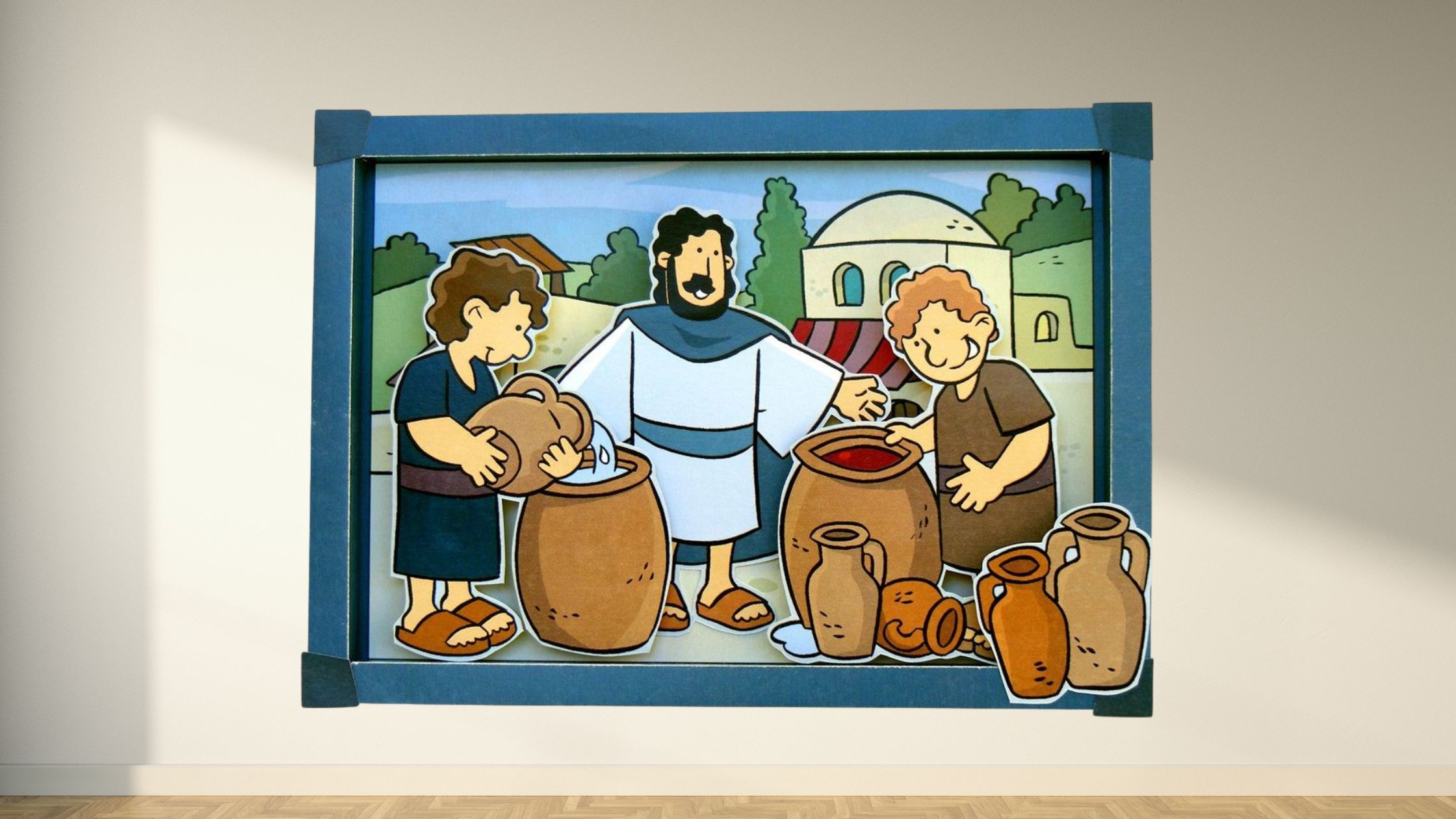
Then there was that time at the wedding.
It’s the first recorded public miracle in the Bible and it happens because of his mom. Jesus and Mary were at a wedding and the family runs out of wine. Mary turns to Jesus and simply says, “They have no more wine.” Now, I don’t know if Jesus has done this sort of thing before, but I imagine he must have because that’s all she has to say to him and he knows what she expects. Jesus responds with “…why do you involve me? My hour has not yet come.” I guess that’s the 1st century version of “Ah, gee, mom. Do I have to?” But Mary knows Jesus will do it, despite his remark and he tells the servants, “Do whatever he tells you.” And they do. Even though Jesus knows it isn’t time for him to reveal himself openly to the world, he does what his mother asks and he turns water into wine. The first recorded miracle happens because of his mother. He honors her by being dutiful.
And then there’s the moment of his death.
As he hangs on the cross, about to die, his mother, along with John the disciple and some of the other women who were close to Christ come to stand with him and give him their support. And right before he dies, he tells John to take care of his mother and asks his mother to adopt John as her own. Why Mary didn’t go to stay with one of her other children or what happened to Joseph, the Bible isn’t clear. But Jesus wanted to make sure before he died that his mother would be taken care of. In those days, a woman without a husband wouldn’t have the means to take care of herself and would end up destitute and alone so before he dies Jesus asks John to take care of her and he does. Only then does Jesus allow himself to die.
In each stage of his life, Jesus honors his mother.
It’s funny because we have no other story about Jesus’ childhood except this moment in the temple. And while most people remark on Jesus’ wit and wisdom, the bulk of the story is about Mary and Jesus. Not about Jesus’ time in the temple but about the relationship between mother and son. And we read that Mary’s heart becomes full watching her son. Then we see Jesus honoring his mother by doing as she asks despite the fact that it wasn’t time for him to reveal himself. Still, he does what she wants and Mary doesn’t have to say any more. And even at the moment of his death, Jesus makes sure that his mother is taken care of. He doesn’t die before he knows she will be alright. Throughout his life, Jesus never disrespected her, always cared for her, and lived a life that brought her honor. Jesus is the very model for how we should treat the moms in our lives.

I hope the life I have lived fills my mother’s heart.
I know my mom’s proud of me, but I hope I have honored the many sacrifices she has made for me in my life. I hope I properly show my appreciation and love because I know it’s so easy to forget. Not on purpose. Not because I mean to disrespect her. But because as a human being, I’m bound to make mistakes. The same is true for my love and appreciation for Cassie. I hope I am the husband she needs me to be, to show her honor and respect for what she does for our family. I hope she knows that even when we disagree, I still love her and am proud she is Emma’s mom. And although I can’t possibly expect to be like Jesus, I can try. Jesus is the model for our lives. He exemplifies for us what we should strive for. On this day, most of all, we should honor the women in our lives who have given so much of themselves to us. And hopefully, we will fill their hearts as they have filled ours.
[1] http://www.christianitytoday.com/history/issues/issue-59/on-road.html
Ideophobia

Would you ban this book?
Before I tell you the title, let me share some of why you might want to ban this book from schools and libraries all over the country. It’s a book about adultery and polygamy. It also includes rape, torture, and genocide. There are graphic – and I mean GRAPHIC – descriptions of sex. One of its protagonists willfully allows the death of the husband of a woman he is secretly having sex with. With all of the book banning being legislated all over the country, it’s surprising that this book is widely accepted in most school districts and is even uplifted as important for kids to read. That book of course is the Bible.[1] But you have to wonder why some parents are challenging school boards all over the country to ban some books and not others. Why a book like the Bible with its many problems is lauded while others are condemned for what would seem to be far less egregious offenses is hard to understand.
Personally, I love the Bible.
I collect different versions of the Bible. And nearly every day I read some passage of Scripture or another in my own search for God’s truth. But the Bible does have its problems, and it would be so much easier for us to just read “the good parts” version and ignore the rest. But it’s the process of wrestling with these troublesome and challenging passages that help us define our faith. We shouldn’t be afraid of Scripture that describes a God we have trouble with. Instead, we need to take time to study it and better understand what God is trying to say to us through it. It’s why we have church. So together we can better understand the God we love. We don’t ban the Bible because for all its difficulties it’s too valuable to discard. In fact, the Bible itself tells us to do this very thing; to take the time to really know it. We’re going to read about that this morning in our passage so if you have a Bible or a Bible app on your phone, please go to 2 Timothy 4:1-5. 2 Timothy 4:1-5.
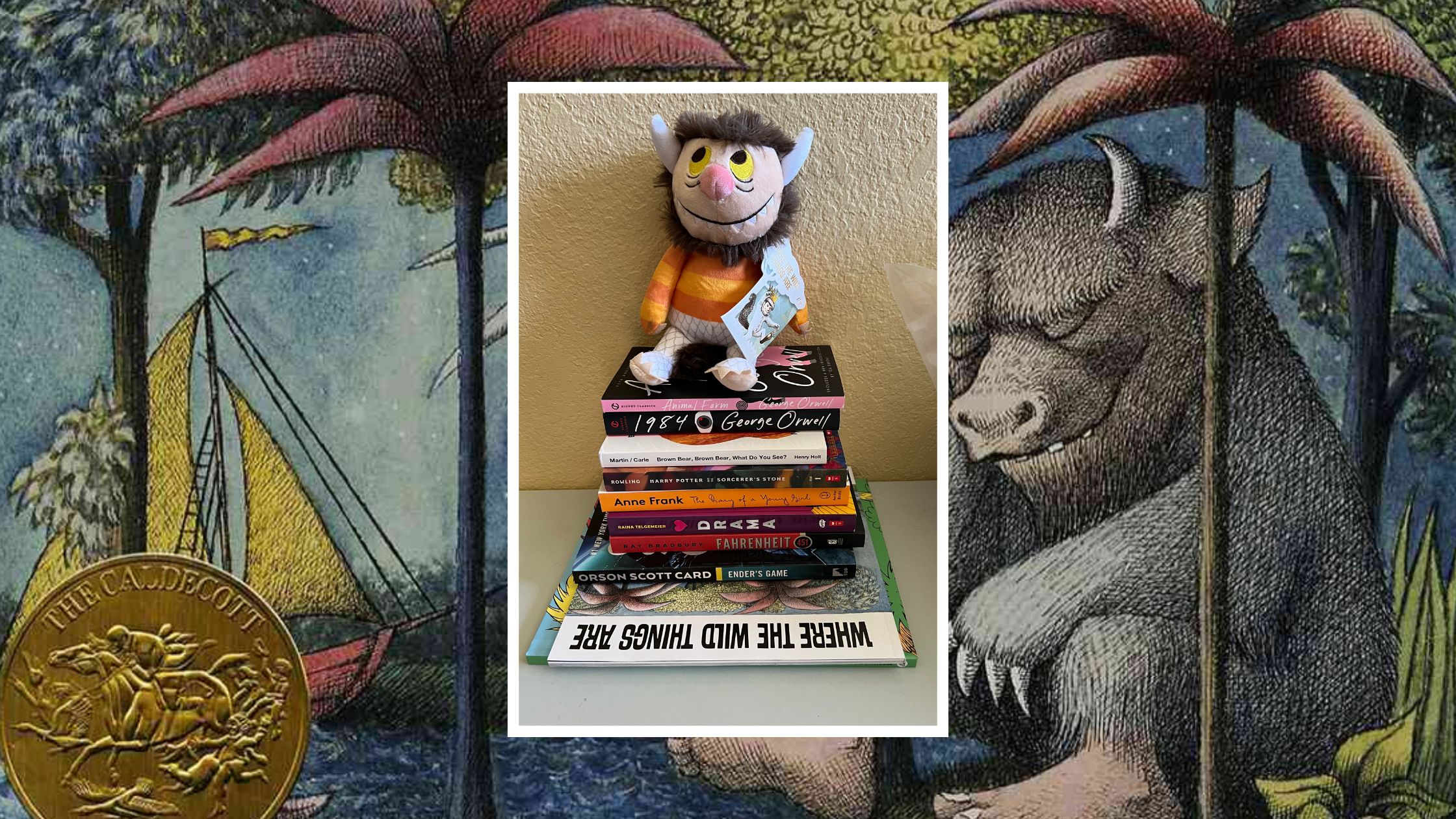
We embrace the Bible but are so fearful of other books and the ideas they share.
This fear of ideas is called “ideophobia.” The formal definition is the fear (some say morbid fear) or distrust of ideas or of reason. But what are we so afraid of? Here’s an example of books that have been banned or challenged. Some like A Brave New World (#26), 1984 (#79), and Fahrenheit 451 (ironically about book burning among other things) are perennially challenged for a multitude of reasons. Others are put on the list for being of the moment. Right now, a majority of recently challenged and banned books are about the LGBTQ community (26%) or people of color (30%).[2] Why they are being banned is the topic for a whole other sermon but suffice it to say the political moment where fear of the other is being fanned into a wildfire is certainly the cause.[3] Still others are being listed for completely illogical reasons. Where the Wild Things Are by Maurice Sendak was banned for child abuse and witchcraft.[4] Brown Bear, Brown Bear, What Do You See? by Bill Martin Jr. was banned by the State Board of Education in Texas because he shared the same name as a person who wrote a book on Marxism. He didn’t write it and he’s not related. He just had the same name.[5] But here’s my favorite one. In Laytonville, CA they banned The Lorax by Dr. Seuss. Not for its leftist agenda or for its pro-environmental stance but because some in Laytonville complained it was “anti-logging.”[6] How many of you read The Diary of A Young Girl by Anne Frank in high school? In 1983 (about the same time I read it), the Alabama State Textbook Committee challenged it because it was “a real downer.”[7] If we start restricting what people are allowed to learn because we don’t like it, we become exactly like those societies in A Brave New World we are so afraid of. Of course, some of you may never know that because you weren’t allowed to read it.

But banning things has never been the way to solve a problem.
Look at prohibition as an example. A failed experiment, it was designed with the purpose to ban alcohol. Instead, it spawned an unregulated, underground industry that caused so many fits they eventually got rid of prohibition. When people were afraid of the Japanese, California created the Alien Land Laws of 1913 which banned aliens from owning land. And when we became afraid of our own history, we created laws like the “Stop WOKE Act” to prohibit the teaching of history when it became uncomfortable.[8] When we become afraid, we resort to tactics of fear and intimidation. But that’s not God’s way. God advocates for understanding.
In the presence of God and of Christ Jesus, who will judge the living and the dead, and in view of his appearing and his kingdom, I give you this charge: 2 Preach the word; be prepared in season and out of season; correct, rebuke and encourage—with great patience and careful instruction. 3 For the time will come when people will not put up with sound doctrine. Instead, to suit their own desires, they will gather around them a great number of teachers to say what their itching ears want to hear. 4 They will turn their ears away from the truth and turn aside to myths. 5 But you, keep your head in all situations, endure hardship, do the work of an evangelist, discharge all the duties of your ministry. – 2 Timothy 4:1-5
Here are the key words I picked up when reading this passage.
Be prepared. Great patience. Keep your head. Endure hardship. Never once does it say to forbid others or to be judgmental. Instead, God encourages us to hold fast to our beliefs, to be prepared to defend those beliefs, BUT to do so with great patience and careful instruction. And this is where Christians especially falter. We tend to join the crowd and become judgmental. Instead of trying to live by example, teaching our children and investing in their future, we resort to the easy route and seek to impose our will and our beliefs on those around us. Again, we just have to look to the past to see how poorly that turns out. People don’t respond well to judgmental authoritarianism. People do respond to being inspired, being accepted, and being loved. Why don’t we do that instead? Which is exactly what God teaches us.
Yes, there will be people who follow demagogues who tell them what they want to hear.
We see that today! But God challenges us to live a different life. He says it right in this passage. Be prepared by taking time to discern God’s will. Sometimes that means being open to new ideas. Sometimes it means understanding how God is speaking to us in this moment. Be flexible in our thinking and our understanding and then we are prepared to hear how God is speaking to us. We also need great patience and to keep our head. We hold back from imposing our beliefs on others. To dictate how others should think and behave, that’s the easy route. The harder route, and this is where we are called to endure hardship, is to lead by example, to teach with kindness, and to listen to the thoughts and perspectives of others, and thereby show the love of God. That’s how we lead people to Christ. It is not easy. But it is effective. Cassie is a lot more blunt with me now. Being married for 20 plus years will do that. But when we first started dating, she would ask me every week if I wanted to go to church with her. And at first, I said no. I always had an excuse. I was tired. It was a long week. I needed to take “me time.” But she never judged me or forced me to go. Instead, she would simply go by herself. But the next week, she would ask again. And again. And again. Until I finally woke up to how important this was to her and decided to go too. I haven’t stopped going since. Be prepared. Have great patience. Keep your head. Endure hardship.

I owe my life to books.
It’s why I’m so passionate about the subject. Books have helped me learn about the world. Books have helped me to learn about myself. Books have transported me to places real and unreal. When I was going through a crisis of faith, a friend recommended a book, and it started me down a path of healing. When I was at a conference on church leadership, I found a book on guest hospitality that completely changed how I approached the topic. And when I was searching for a better way to show the love of Christ to others, I read a book that blew my mind. When we start becoming afraid of new ideas and new ways of thinking, we are shielding ourselves from the glory of God. How we approach and understand God has changed constantly over the years – our ideas about the blind and those with disabilities, our understanding of people of color, on the equal rights of women and children – none of that has stayed the same. And all of that came about because of people with new ideas who were often persecuted for their beliefs. Not everyone with a new belief is right. But if we shield ourselves from them, we are missing out on so many levels. On how to reach others with different ideas and how God is sometimes trying to reach us. Our challenge living in the world today is to keep an open mind, seek to understand rather than be understood, and to love as God loved us. And do yourselves a favor. Go read a book.
[1] Interestingly, one Utah community actually did ban the Bible in elementary schools. And overall it ranks 52nd in books banned or challenged in the 2010’s according to the ALA. https://theweek.com/book-ban/1024016/how-the-bible-became-conservative-book-bans-unintended-target ; https://www.ala.org/advocacy/bbooks/frequentlychallengedbooks/decade2019
[2] https://pen.org/report/banned-in-the-usa-state-laws-supercharge-book-suppression-in-schools/ )
[3] Although most are being banned because of the controversies surrounding both topics politically. Laws being enacted banning use of restrooms or participation in sports and laws banning the teaching of racially sensitive topics are fanning the flames and leading to book bans and other retaliatory measures.
[4] https://pen.org/where-the-wild-things-arent-on-the-banning-of-sendak/
[5] https://fgibookmobile.org/10-surprising-banned-books/
[6] https://www.latimes.com/archives/la-xpm-1989-09-18-mn-147-story.html ; https://theweek.com/articles/459795/america-surprising-banned-books
[7] https://theweek.com/articles/459795/america-surprising-banned-books
It’s Not Fair!

God isn’t fair. And it’s a good thing he isn’t.
We’ll get back to that. For now, we’ll begin with a reading from Matthew. We like it when things are “fair.” It makes us feel like all is right in the universe. But what is “fair?” In the words of one of my favorite characters, Inigo Montoya, “You keep using that word. I do not think it means what you think it means.” The textbook definition of “fair” is “in accordance with the rules or standards; legitimate,”[1] but we intertwine that definition with a sense of justice or righteousness for us. The practical application of “fairness” goes beyond the literal meaning of what is fair. Have you noticed we only call things “unfair” when something doesn’t meet our expectations? When we get MORE than we’re hoping for, we have no problem with “fairness.” It’s only when things don’t go our way we feel life is unfair. Has anyone in history ever complained the IRS gave them TOO much money? Or demanded an umpire reverse a call that won their team the game? Or complain the grocery store was unfair when they gave you extra change? No. Fairness is only called into question when things don’t go our way. And that’s what we see in this passage from Matthew.

“For the kingdom of heaven is like a landowner who went out early in the morning to hire workers for his vineyard. 2 He agreed to pay them a denarius for the day and sent them into his vineyard.
3 “About nine in the morning he went out and saw others standing in the marketplace doing nothing. 4 He told them, ‘You also go and work in my vineyard, and I will pay you whatever is right.’ 5 So they went.
“He went out again about noon and about three in the afternoon and did the same thing. 6 About five in the afternoon he went out and found still others standing around. He asked them, ‘Why have you been standing here all day long doing nothing?’
7 “‘Because no one has hired us,’ they answered.
“He said to them, ‘You also go and work in my vineyard.’
8 “When evening came, the owner of the vineyard said to his foreman, ‘Call the workers and pay them their wages, beginning with the last ones hired and going on to the first.’
9 “The workers who were hired about five in the afternoon came and each received a denarius. 10 So when those came who were hired first, they expected to receive more. But each one of them also received a denarius. 11 When they received it, they began to grumble against the landowner. 12 ‘These who were hired last worked only one hour,’ they said, ‘and you have made them equal to us who have borne the burden of the work and the heat of the day.’
13 “But he answered one of them, ‘I am not being unfair to you, friend. Didn’t you agree to work for a denarius? 14 Take your pay and go. I want to give the one who was hired last the same as I gave you. 15 Don’t I have the right to do what I want with my own money? Or are you envious because I am generous?’
16 “So the last will be first, and the first will be last.” – Matthew 20:1-16
It’s hard not to feel empathy for the people who worked all day.
Working in a vineyard is not easy labor, and if you had been doing that all day long and you saw another group come in at the last instant and get the same pay, you would probably be upset, too. My first thought wouldn’t be, “Oh, what a generous guy.” It would be, “Are you kidding me?” We think to ourselves (and sometimes out loud) they didn’t “deserve it.” But why would we complain? As long as we get what was promised to us, why do we get concerned over what someone else gets? It goes back to our sense of expectation. If someone gets a full denarius for one hour of work, we think in our heads our labor should be worth eight denarius. So even if we got exactly what we were promised, we are no longer satisfied. We feel cheated! Someone else got away with working a whole lot less for the same amount of money. But the truth is, the owner was fair to us. We accepted the deal as is and we got exactly what was promised. And if you were one of the guys who came last and received a full day’s wage, you WOULD think the owner was generous. You would even think he was fair. In fact, more than fair.

So why not just goof off until the last minute?
Why put in the time, the hard work, and the effort if it doesn’t matter? Some people approach faith with just this attitude. Why bother trying to be GOOD, going to church, praying, reading your Bible if all I have to do is say I’m sorry and I’m instantaneously forgiven? Why not live it up? Party hard. Be selfish. Look out for number one. And then at the end of your life, repent. All good, right? By the way, that’s not a new idea. A long time ago, people actually did this. It was commonly believed you were only allowed to repent once and if you blew it after that, you would be condemned to an eternity in hell. Because of this belief, people would wait until they were on their deathbed before confessing their sins so it wouldn’t be held against them in the afterlife. That’s where we get the idea of a deathbed confession. But there are two flaws to that logic; the same two flaws that were in my plan as a kid for surviving a plane crash. All you had to do was wait until the plane was about 10 feet above the water and then jump. Easy peasy. So here are the two flaws; the primary one being, “What if I wait too long?” Same problem with deathbed confessions; if you wait too long, you might be too late. The second problem is gravity. Just because I jump at the last second doesn’t mean I negate all of the speed we’ve already accumulated. Again, same problem with deathbed confessions. Asking for forgiveness right before you die doesn’t negate a lifetime of sin if you don’t mean it. If your plan is to be selfish and greedy and do whatever you want thinking you’ll make it into Heaven through a loophole, you’ve really underestimated God. But for those of us who actually have developed a relationship with God and know God’s character, we know repentance is not a one-time thing. And our reward is not based on our work but on our coming to God in repentance.

Our culture however reinforces this work/reward concept.
We believe the amount of work you put in should equate to what you get in return. That’s why we feel like the people who started working at the beginning got a raw deal. They put in more effort, they should get more reward. But that’s missing the point Jesus was trying to make: It’s never too late to receive God’s forgiveness. No matter when you come to realize you need it, the reward is the same. Jesus is also trying to impress upon us God is fair – in fact, more than fair. It’s only our work/reward concept that holds us back from realizing the reward we are receiving is more than generous no matter when we repent. It’s like salaries for professional athletes. When Alonzo Mourning was playing for the Charlotte Hornets, he was bitter because the team didn’t offer him $13 million a year , they only offered him $11.2 million – which at the time would have made him the second highest paid player in the league.[2] But for him it wasn’t about the money. It was the money IN COMPARISON to what other players were making. That’s why player salaries keep escalating to outrageous amounts. It’s always about what the other guy is making. By the way, Alozno Mourning would only by the 136th highest paid player today. Average salaries for all Americans during this time rose 258% which seems great. And then you compare it to average NBA salaries which were already 63 times higher than the average American and they rose 567%. That’s how out of sync things can get when we focus on what other people get. Let’s be honest. If we were paying people by what they contributed to society, teachers, doctors, and 1st responders would be getting endorsement deals by Nike instead. This concept of “value” the workers in the story are pushing back against is a human concept of self-worth instead of anything to do with God’s fairness.
God is unfair. And I’m so glad he is.
Because God looks at us like we look at our own children. We love them, even when they make mistakes. We hope they don’t repeat them, not because we get anything out of it, but because we want them to live life to the fullest! We are willing to pay the price for our children’s mistakes because we love them and want them to succeed. And that is exactly what God has done for us. Christ paid the price for our salvation, not because we deserved it but because he loves us. If our relationship with God were like a business, we wouldn’t survive because what God has to offer is worth more than we could ever afford. Not just in the afterlife but in this one, too. The workers in the parable don’t realize it, but being a part of the work that God is doing IS a reward in itself. Knowing Christ is its own reward. We are often just too blind to see it.
In the book, Andy tells a story that brings all of this home.
He talks about a time when his children were very young and he had bought a new car. It was a used Infiniti but it was the nicest car he had ever owned. It was in mint condition and he had every intention of keeping it that way. His daughter, however, thought it could use some improvement. He was taking out the trash and as he passed his car, he noticed a big letter “A” scratched into the hood. He was furious! He looked around and demanded to know who had done this! His two sons were standing next to him and suddenly got quiet, so Andy looked at them and his son Garrett, all of five years old, said to him, “Allie did it.” He looked over at Allie, his youngest child and only daughter who was just three and a half at the time and pointed to the car. “Did you do that?” he asked her. “Yes, Daddy” she said. Suddenly, all of these different thoughts went through his head. Would a three-year-old even understand what she had done? Would she understand labor cost, renting a car while this one was fixed, the amount of money it would take to fix it, why having the letter “A” scratched into the hood wasn’t a good thing? Of course not. He could demand she repay him for the damages, because that would be fair. Absurd but fair. So what did he do? This is what he wrote, “I did the only thing I could do for someone I loved as much as I loved her. I knelt down and said, ‘Allie, please don’t do that anymore.’ She said, ‘Yes, sir, Daddy.’ Then she hugged me and went back inside. I continued to love her as much as ever. And I paid for the damage she caused. I wasn’t concerned about fairness. It wasn’t appropriate to figure out what was fair. What was more important was grace and mercy. Even if it meant that I had to pay for what she had done.” That’s what Jesus has done for us. Jesus has paid it all so that we can live a life of love and peace in his company. And it’s not about fairness and it’s not about reward, but about the grace and mercy of God’s love.
[1] https://www.google.com/search?q=definition+of+fair&ie=utf-8&oe=utf-8&aq=t&rls=org.mozilla:en-US:official&client=firefox-a
[2] https://en.wikipedia.org/wiki/Highest-paid_NBA_players_by_season#1995-1996 – that was even higher than Michael Jordan that year
They Pay People to Do That!
So God created mankind in his own image,
in the image of God he created them;
male and female he created them.
28 God blessed them and said to them, “Be fruitful and increase in number; fill the earth and subdue it. Rule over the fish in the sea and the birds in the sky and over every living creature that moves on the ground.” – Genesis 1:26-28
“They pay people to do that!“
I’m embarrassed to say those words came out of my mouth. But they did. I’ll ask you to forgive me. This was before I was a pastor, before I went to seminary, and before I was even baptized. Still, I should have known better. But I said those words and worse, I said them to my beautiful wife Cassie on our third date. Thankfully, she didn’t dump me. We had just gone to see Bridget Jones Diary and like any good date at the movies, I bought soda and popcorn to share. At the end of the show, I left them behind. Now, I didn’t dump them on the floor or anything. I left the soda in the cup holder and the popcorn on the floor, but Cassie came behind me and picked it up. I turned to her and said, “You don’t have to pick that up. They pay people do to that.” Again, lucky she didn’t dump me. Cassie just thought it was wrong to make other people do the work she could and should do herself. Sure, we pay people to do that, but think of the opportunity cost. Opportunity cost is what is lost when you choose one option over another. If the theater didn’t have to hire so many people to clean up after us, we would have quicker service at the concession stand. They might be able to invest in better technology. They might be able to upgrade their system to give you a better viewing experience. All because we pick up after ourselves instead of making other people do it for us. I have never left my trash behind in a theater ever since.

Our choices have long-term consequences.
Something we are learning about right now. And I don’t mean tomorrow or next week or next year. What we do today can have a lasting impact over time that affects the next generation and the next and the next. Our selfish actions now are hurting our children, grandchildren, and great-grandchildren. And that only makes me think about what God said to us in the Ten Commandments, that our sins carry over from generation to generation, but that our love does, too.[1] The choices we make decide what kind of impact we have not just on our own lives, but the lives of people long after we are gone. It’s all about choice. So what choices are you making today? Earlier we shared the companion passage to this one about God’s creation and how God has tasked us to take care of the Earth. God said, “Be fruitful and increase in number; fill the earth and subdue it. Rule over the fish in the sea and the birds in the sky and over every living creature that moves on the ground.” Some translations have “rule” as “have dominion over,” but both fall short of God’s expectations. Instead, some Biblical scholars have looked at the root meaning of the word “radah” and have determined we’ve misinterpreted it, and actually it means something similar to “center of strength.” [2]Can you imagine how we would view our role in the world if we saw it from THAT lens? If we read that passage as “Be fruitful and increase in number; fill the earth and be the center of strength for it.” How different our world would look. And we find that to be consistent with our passage this morning.
8 Now the Lord God had planted a garden in the east, in Eden; and there he put the man he had formed. 9 The Lord God made all kinds of trees grow out of the ground—trees that were pleasing to the eye and good for food. In the middle of the garden were the tree of life and the tree of the knowledge of good and evil.
10 A river watering the garden flowed from Eden; from there it was separated into four headwaters. 11 The name of the first is the Pishon; it winds through the entire land of Havilah, where there is gold. 12 (The gold of that land is good; aromatic resin[d] and onyx are also there.) 13 The name of the second river is the Gihon; it winds through the entire land of Cush.[e] 14 The name of the third river is the Tigris; it runs along the east side of Ashur. And the fourth river is the Euphrates.
15 The Lord God took the man and put him in the Garden of Eden to work it and take care of it. – Genesis 2:8-15
Human beings were entrusted by God with the care of creation.
In both readings of the story of creation, God puts humanity at the heart of it. In this passage, we find out that there is a river flowing through the Garden of Eden and God entrusts Adam to care for the Garden. This river then becomes four rivers which flow forth to nourish the known land: the Pishon, the Gihon, the Tigris and Euphrates, so this one river flowing through the Garden of Eden is the “center of strength” for all of creation and humanity is put in charge of caring for it. God makes it clear that creation care is our responsibility. But sadly, we are doing a poor job of it. In our consumer culture, fast fashion is not just a moral problem (forced and child labor) but is already a vast environmental problem as well. In order to invent new trends and keep up with fashion wants, the fast fashion industry pumps out as much as it can at affordable prices, and the way they do it is by employing cheap labor in countries with lax environmental protections and using inferior materials so they can get it to market cheaper and faster than their competitors. For you to buy these products at Zara, H&M, Forever 21, and Uniqlo (four of the biggest culprits of fast fashion[3]), all we have to do is sacrifice the earth. It’s estimated that every second a garbage truck of clothes is either dumped into a landfill or incinerated, which makes sense considering by 2015 we bought 60% more clothes than we did at the turn of the century, and we would throw them away in half the time.[4] But impacting our landfills and our air pollution isn’t the only byproduct. According to the United Nations, “nearly 95 trillion gallons of wastewater are produced every year – roughly the equivalent of 41 years of drinking water for the entire human population.”[5] Of that wastewater, 20% is produced by the fashion industry – “more than the aviation and shipping sectors combined.”[6] And 80% of that goes untreated and even less is recycled.[7] The dyeing process used to make your clothes is responsible for 17 to 20 percent of industrial water pollution.[8] As if that wasn’t enough, the fashion industry is also responsible for an estimated 35% of the microplastics that litter the ocean.[9] Those microplastics can cause harm in a variety of ways, both known and suspected.
You may have heard of the Great Pacific Garbage Patch.
It’s one of five areas in the world’s oceans where these plastics and microplastics gather. In 2018, it was estimated that the GPGP contains at least 79,000 tonnes of ocean plastic and covers an area nearly three times the size of the country of France![10] What is so insidious is that you can’t easily see it. Although we like to imagine a literal island of plastic garbage floating in the ocean, most of it doesn’t appear as anything but a “murky soup.”[11] The actual mass of it is largely composed of fishing nets and other ocean fishing equipment, but the majority of pieces (94%) are due to microplastics. Many of the negative effects of microplastics are still being studied, but one of the biggest concerns for humans is the ingestion of these microplastics through consumption of fish, oysters, sardines, and other marine life. We know consumption of microplastics can cause disease, disability and contribute to premature death, and because toxic chemicals bind easily to microplastics, it’s hypothesized that it can also lead to other diseases like cancer, can cause inflammation, damage to the colon and small intestine, and the immune system.[12] While it’s still being studied it’s hard not to believe that a bunch of plastic floating in the ocean caused by human waste won’t have a negative effect on us in multiple ways.

We simply have to do a better job of caring for our planet.
The choices we make have an impact. What we wear, what we eat, how we eat it – they all make an impact on the environment around us. We can and should make choices every day to make the world a better place. We will make mistakes and we won’t be perfect, but if all made an effort and did a little bit more, made things last a little bit longer, we could transform the world. Just look at what happened during the height of the pandemic. People stopped driving. People stopped producing massive amounts of goods. And fast fashion came to a standstill.[13] Clothing was the least of our concerns and factories all over the world slowed or stopped production. And the land started to heal. But now, we are right back to where we were and maybe we shouldn’t be. Maybe we could do things a different way. The opportunity cost of a throwaway culture is a damaged Earth. Let’s take the opportunity instead to invest more time to do things right. Recycle more. Throw away less. Make things last longer. And perhaps we can help to save our planet. After all, it’s exactly what God wants us to do.
[1] Derived from Exodus 20:5-6. In that passage, we have translated it as “punish” and “jealous” but what God is telling us is that our sins have consequences that go beyond just ourselves but affect those around us. Our love does too. And the positive consequences of our actions can ALSO be felt by future generations.
[2] http://www.christiantoday.com/article/dominion.over.the.earth.comes.with.responsibility.christians.learn/25635.htm http://www.unitingearthweb.org.au/explore/a-radical-new-look-at-dominion-in-genesis
[3] According to Earth.org these are just some of the fast fashion companies responsible for these effects: https://earth.org/fast-fashion-companies/
[4] https://www.unep.org/news-and-stories/story/environmental-costs-fast-fashion
[5] https://www.cnn.com/2023/04/21/middleeast/textile-wastewater-pollutant-cleaner-hnk-scn-spc-intl/index.html
[6] https://news.climate.columbia.edu/2021/06/10/why-fashion-needs-to-be-more-sustainable/
[7] https://www.cnn.com/2023/04/21/middleeast/textile-wastewater-pollutant-cleaner-hnk-scn-spc-intl/index.html
[8] https://news.climate.columbia.edu/2021/06/10/why-fashion-needs-to-be-more-sustainable/
[9] Ibid
[10] https://www.bbc.com/future/article/20240115-visualising-the-great-pacific-garbage-patch
[11] https://www.bbc.com/future/article/20240115-visualising-the-great-pacific-garbage-patch
[12] https://www.niehs.nih.gov/research/programs/geh/geh_newsletter/2023/8/articles/new_research_highlights_the_problem_of_microplastic_pollution
[13] https://news.climate.columbia.edu/2021/06/10/why-fashion-needs-to-be-more-sustainable/
Good People Don’t Go to Heaven

How good is “good enough?”
How good do you have to be to get into Heaven? What’s the bare minimum we have to do to sneak into the pearly gates? We believe in a good God, so it’s easy for us to believe in the Good Person Theory – that all you have to do to make it to Heaven is BE a good person. But as we’ve come to discover, there are some serious problems with that theory. There isn’t a standard or rubric God has given us to know how good you have to be or how we can calculate how good we are. Our internal barometer of good and bad isn’t reliable and changes from culture-to-culture and from time-to-time. And the only standard we DO have is to be perfect as Christ is perfect, which is too high a bar for any human being. But Andy Stanley had an answer to this, and it’s one I think we kind of know on some level: “Good people don’t go to heaven. Forgiven people do.”

What does it mean to be a forgiven people?
To showcase this standard of forgiveness and to give us some understanding of the forgiveness of God, we’re going to read a passage from Matthew’s account of the gospel. Right before our passage, Matthew recounts Jesus telling the disciples about resolving conflict with one another. He talks about how important it is to heal those relationships and Jesus gives a step-by-step guideline for how to do that – confront one another personally, bring a friend to help resolve the conflict, bring the matter before the church. Jesus says we must do what we can to bring healing to our relationships. But this gets Peter thinking. And that’s always trouble. He asks Jesus, “Seriously, though. How often do I need to forgive someone? I mean, isn’t there a limit when we just write the guy off?” And that’s where we pick up Matthew’s account of what happened between the disciples and Jesus next.
The Parable of the Unmerciful Servant
Then Peter came to Jesus and asked, “Lord, how many times shall I forgive my brother when he sins against me? Up to seven times?” Jesus answered, “I tell you, not seven times, but seventy-seven times.
“Therefore, the kingdom of heaven is like a king who wanted to settle accounts with his servants. As he began the settlement, a man who owed him ten thousand talents was brought to him. Since he was not able to pay, the master ordered that he and his wife and his children and all that he had be sold to repay the debt.
“The servant fell on his knees before him. ‘Be patient with me,’ he begged, ‘and I will pay back everything.’ The servant’s master took pity on him, canceled the debt and let him go. But when that servant went out, he found one of his fellow servants who owed him a hundred denarii. He grabbed him and began to choke him. ‘Pay back what you owe me!’ he demanded. His fellow servant fell to his knees and begged him, ‘Be patient with me, and I will pay you back.’
“But he refused. Instead, he went off and had the man thrown into prison until he could pay the debt. When the other servants saw what had happened, they were greatly distressed and went and told their master everything that had happened. Then the master called the servant in. ‘You wicked servant,’ he said, ‘I canceled all that debt of yours because you begged me to. Shouldn’t you have had mercy on your fellow servant just as I had on you?’ In anger his master turned him over to the jailers to be tortured, until he should pay back all he owed.
“This is how my heavenly Father will treat each of you unless you forgive your brother from your heart.” – Matthew 18:21-25

Forgiveness is powerful.
Think about a time when you’ve been forgiven when you didn’t deserve it, when a simple, “I’m sorry” was able to mend a relationship. More than anything, you probably remember the feeling of gratitude you had when it happened. Because forgiveness is powerful. It can change your life. When I was young, we used to go to Shi’s Fish Market every week right after Japanese school. My parents would go to shop for Japanese groceries and to talk to friends, but I was in it for the Star Wars cards behind the counter. I would spend my chore money every week filling up on those treasured pieces of cardboard and then would borrow money from my mom to get extra packs, $1.00 here and there. As I got older, my allowance grew bigger but so did the cost of everything else. By then I was collecting comic books, going out with friends to the football game, playing arcade games at the bowling alley, and over and over again I’d “borrow” from my parents. By the time I graduated from high school, I had amassed a debt of about $700 dollars. My first summer job at Disneyland would mean I was basically working for free to pay back my mom. Which also meant the big end of summer trip my friends had planned was something I wasn’t going to be able to go on. I was pretty bummed, but I didn’t see any way out. After all, I promised my mom to pay her back and I hadn’t for way too long. Then one day, my mom calls me over to her desk and asks me when she’s going to see the money I owe her. I tell her I’m working on it but only have about half so far. She looks up at me and says, “That’s okay. You keep it. Consider it a graduation gift from me and dad.” I was SO grateful! By every measure, my mom deserved to get that money. She had every reason to ask for me to repay it. And there was no way I could argue. But she forgave my debt anyway. As a kid, $700 seemed like a vast fortune of money, especially for me. But that debt was gone in an instant. I’m still grateful to her for that tremendous gift.

Naturally, when I read this parable from Jesus, it struck a chord with me.
How similar Jesus’ message was for the disciples as was my mother’s act of forgiveness for me. Peter starts off by asking how many times are we to forgive someone? Seven times? He must be thinking, “Seven? That’s pretty generous.” You can imagine Peter was surprised at Jesus’ answer, “I tell you, not seven times, but seventy-seven times,” Not seven times but seventy-seven times! In fact, some translations say “seventy TIMES seven times.” (For you math whizzes, that’s 490 times – way more than 77). And then Jesus tells them the Parable of the Unmerciful Servant where God is like a king who forgives his servant’s debt of 10,000 talents. But instead of being grateful, instead of being merciful and forgiving like the king was to him, the servant goes out and squeezes someone else who owes him a pittance in comparison and ends up throwing the other guy in jail. As if that wasn’t bad enough, it gets worse when you consider what a “talent” is worth. The king had forgiven the servant the equivalent of $9 BILLION dollars today. Imagine that. Nine BILLION dollars. Forgiven. Just like that. The king knows, as God knows, the servant could NEVER pay back that money and in an act of kindness forgives him his debt, as God forgives us our sins. But instead of remembering the mercy and forgiveness the king just showed him, the servant instead goes out and immediately pesters a fellow servant for what amounts to $40,000. Compare that. Nine BILLION. $40,000. And that’s why God is so angered at the servant. Was the man owed that money? Sure. But given the debt he had just been forgiven, the king was angered the servant couldn’t show the same mercy to a fellow human being. That’s what it looks like to God when we can’t forgive those around us. We look like this unmerciful servant who quickly forgets how much we have been forgiven and we fail to forgive those who need it.
We don’t “deserve” to go to Heaven.
That would be saying somehow we can earn it. But as this parable points out, we have done more to separate ourselves from God than we can ever make up. Like the $9 billion dollars the king forgave the servant, it is really because of God’s grace, mercy, and forgiveness we are able to repair that broken relationship. Without it, we would be lost. We tend to think as long as we aren’t doing anything TOO bad, it’s not a big deal, but we nickel and dime our sins and rack up an unpayable debt sooner than we realize. And we know when we are doing something wrong because we sit there and justify our actions to anyone who will listen. With my mom, that debt hung over me like a weight. I knew I had not done right by her. Whenever the issue of money was brought up, even if it wasn’t about the debt I owed, there was this pang of guilt I felt each and every time. It felt uncomfortable and made me anxious. I needed her forgiveness to make it right. And that’s what happens to us when we turn toward God and ask for forgiveness. God repairs that broken relationship and makes it right so that we can be close to him again. And God calls on us to do the same thing with others. We need to forgive those around us. Whether it’s something small and insignificant or large and difficult, God calls on us to be a forgiving people in the way he has been forgiving toward us. The challenge for us this week is to forgive someone who does something against us. To really let it go. Maybe it’s something small like when your kids forget to put their clothes in the hamper. Maybe it’s something you’ve complained about over and over again like leaving the toilet seat down in the bathroom. Or maybe it’s something big. An argument you had with a sister or brother. A fight you had with a close friend that left you not talking to each other. This week I want to challenge you to let go of the small stuff and forgive all of these minor transgressions like socks and toilets. And I want you to pray about forgiving the big stuff. Because when we fail to forgive, we harbor bitterness, and bitterness grows like a disease. And the longer it grows the harder it is to let go of, and none of us need that in our lives. When we wonder if we have the strength to do that, to forgive as God has forgiven us, remember this story Jesus told us about the unmerciful servant and be reminded of the grace and goodness of a God who has already forgiven you. Because remember, “Good people don’t go to Heaven, forgiven people do.”
God’s Bell Curve

The world came to an end on December 21st, 2012.
At least it was supposed to. Once again, we avoided a long-prophesied disaster! How do we keep doing it? There are tons of doomsday prophecies out there, but this one got some serious attention. They even made a movie about it. According to the legend, December 21st, 2012 coincided with the end of the Mayan calendar which was going to trigger a massive apocalypse. Many different theories emerged about how that was going to happen. Some believed the gravitational effects of an alignment between the Sun and a massive super black hole would rip the earth apart. Some believed the Earth’s magnetic poles would suddenly be reversed, releasing energy equal to 100 billion atomic bombs. And some believed the mysterious planet Nibiru would come crashing into our planet.[1] Needless to say, none of those things happened. “End of the world” hypotheses are a dime a dozen. Everyone from Pat Robertson to Pope Innocent III back in 1284 has predicted the Earth’s demise. Even Sir Isaac Newton, the gravity guy, predicted the end of the Earth in the year 2060.[2] The end of the world has special significance for Christians because it’s linked to the return of Christ. Some believe prior to Jesus’ return, God’s chosen people will be taken up to Heaven in an event called the Rapture where literally people will simply disappear. There was even a service that would take care of your pets in case you were taken. It was called Eternal Earthbound Pets USA and they were a group of loving atheists who, for the small fee of $135 dollars to cover travel costs, would take care of your pet in case of rapture.[3] You know, in case God didn’t take pets. You could rest easy knowing your pet would be well taken care of by a loving atheist.[4] Unfortunately, the business was a hoax. But it does make us ponder the question “Where will you go and how do you know?[5]”

We don’t often like to think about death.
Maybe because we are afraid. Maybe because we don’t have a lot of answers. And maybe because we are pretty confident about where we are headed. According to an ABC News poll done in 2005, about 89% of people believe in Heaven and 85% of people believe they are going there.[6] Why are they so sure? It’s because we cling to the belief that good people go to Heaven and most of us believe we are good people. And to be honest, it’s a premise that makes sense. I mean if you live a good life and you do good things and we believe in a good God, then you’ve earned a good spot, right? We tend to believe that rule applies to just about everyone, whether or not they are Christian. We figure the answer to the question, “Where will you go and how do you know?” is pretty simple. We’re going to heaven. But maybe we shouldn’t be so confident in that assessment.
First of all, how good is good enough?
That’s the question Andy Stanley asks in his book of the same title. How good is good enough? What level do we need to achieve to make it into Heaven? Believe it or not God doesn’t tell us. You would think for something as important as this, God would have told somebody or written it down somewhere, but nowhere does God tell us what qualifies as “good enough.” In our heads we have a cosmic balance sheet going on with a running total of good things we’ve done and bad things we’ve done, and we feel that as long as we’re in the plus column, we’ll be okay. But is that true? I mean, what’s the percentage? Do you have to be 51% good, you know just barely tip the scales in your favor? Or is it higher, because on most tests 51% would be a failing grade. Is it 70%? If you’re good 70% of the time do you pass? And if we’re all bad anyway, does God grade on a curve? I mean maybe 70% is too hard for most of us to achieve. “Okay, everyone above this percentage, you all get in. Sorry 59%. The cut off was 60%.” When you take a test at the DMV you know they’re not letting you behind the wheel with a score lower than 70% and considering how bad some drivers are on the road, maybe they should raise that score. Seems 70% is too lax. But at least you know. Surely God is fairer than the DMV. But he doesn’t tell us anywhere how “good” we have to be.

Some would argue God gives us an internal barometer of right and wrong.
We seem to instinctively know what is good and what is bad. But how reliable is that barometer? Some things are obvious. Everyone knows it’s wrong to cheat, steal, lie, and kill. But is that an all-encompassing rule? We tell “white lies” to save someone’s feelings. We kill animals for food but which animals are okay to kill and which are not varies from culture to culture. And these concepts of right and wrong change not just between different cultures, but over time. We’ve labeled everything from being a woman, to being dark-skinned, to being left-handed as bad, evil, or wrong at some point. In the 2000 years Christianity has been around it was only in the last 50 interracial marriage became widely acceptable, and still there are hold outs who haven’t come around. When I was living in Georgia, my friend Jon mentioned he didn’t go to church anymore and it was the “anymore” that caught my attention. I asked him about it and he looked at me, pointed to a mixed race couple sitting a few tables away from us and said, “If they walked into your church and asked you to marry them, what would you say?” I told him, “I’d say that was fine. Why wouldn’t I?” But I already suspected the answer. He told me a friend of his who was black wanted to marry a woman who was white. When they went to her pastor to ask him to perform the ceremony, he told her he wouldn’t do it because it was “an abomination in God’s eyes.” Jon said, “And after that, I wouldn’t step foot in a church.” What we believe is right and wrong isn’t even consistent within cultures let alone between cultures or across time. So how reliable is our internal barometer?
You might say, “Well, at least we can rely on the Bible to tell us what God considers good.”
But let’s look at what God says about us and about his standard of being good. In his letter to the Romans, Paul addresses a perception among the Jewish Christians that they are somehow a step up or more advantaged than the Gentiles because of their heritage and Paul brings them back down to Earth. He tells them because they ARE Jewish not only do they not have a step up, but they have a greater responsibility toward the law than the Gentiles do. He tells them that just because by birth they are part of God’s chosen people does not make them any different than the Gentiles who have accepted Christ as their savior because both are equally unrighteous. And that’s where we pick up in our reading today.
What shall we conclude then? Do we have any advantage? Not at all! For we have already made the charge that Jews and Gentiles alike are all under the power of sin. 10 As it is written:
“There is no one righteous, not even one; there is no one who understands; there is no one who seeks God. 12 All have turned away, they have together become worthless; there is no one who does good, not even one.”
13 “Their throats are open graves; their tongues practice deceit.”
“The poison of vipers is on their lips.”
14 “Their mouths are full of cursing and bitterness.”
15 “Their feet are swift to shed blood; ruin and misery mark their ways, and the way of peace they do not know.”
18 “There is no fear of God before their eyes.” – Romans 3:9-18
There is no one righteous. Not even one.
Not Jewish or Roman or Greek. Not Mother Theresa. Not Billy Graham. Not the Pope. Paul is trying to impress upon us we are flawed. None of us can escape the fact we are sinners. At one time or another each of us has done something that would disappoint God and that something drives a wedge between us and God. You might think, “Yeah, but I’ve never done anything THAT bad. Sure I might not be perfect, but it’s not like I’m a killer or anything.” But that is God’s standard. Perfection. Jesus tells us himself in the Sermon on the Mount. He tells the crowds, “Be perfect, therefore, as your heavenly Father is perfect (Matthew 5:48).” That’s why no one can live up to the standard that good people go to Heaven because the standard is just too tough.

So how do we know?
How do we know how good is good enough? If we can’t tell from God’s word, if we can’t use our own internal compass or barometer, and if we can’t even use the Bible, then how do we know how good is good enough? And that’s what God is challenging us to think about today. Despite all the predictions, the world isn’t likely to end any time soon, but we should still keep in mind those two eternal questions – where do you go and how do you know? As we talked about today, the assumption good people go to heaven is riddled with difficulty. So, what can we believe in then? Here’s something else Andy Stanley wrote, “Good people don’t go to Heaven. Forgiven people do.” We’ll talk more about that next week. But for today, let us come to the realization no matter how “good” we are, we are not perfect. We all need forgiveness. Thankfully we worship a forgiving God who gives us hope in Christ for something more than this life.
[1] http://en.wikipedia.org/wiki/2012_phenomenon#Planet_X.2FNibiru
[2] https://isaac-newton.org/statement-on-the-date-2060/
[3] http://eternal-earthbound-pets.com/
[4] Unfortunately, they didn’t get enough business and had to close up shop.
[5] I’m pretty sure I heard Andy Stanley share this phrase either in his sermon or his book How Good Is Good Enough?
Imagine…

One little spark…
Of inspiration, is at the heart of all creation. Right at the start of everything that’s new, one little spark lights up for you!
That’s how Journey Into Imagination at EPCOT begins.
The song celebrates the power of imagination and introduces us to the character of Figment – a “figment” of our imagination. But those words could also describe God and the creation of the universe. Think about what kind of imagination would be needed to make all of this! What level of brilliance would you need to create the thousands of different types of living beings on this planet? From blue whales to the common housefly, God created it as well as every variation we see within each species. It’s fascinating to think about how creation is woven together, but to have the genius to envision the millions of species and variations within species is even more remarkable. And not just living things. Even snowflakes are all unique. Who thinks of all the different ways you can make a snowflake? A while ago, I was at a conference listening to pastor Erwin McManus talking about faith, and he told us about a guy who asked, “Why is it we grow up believing in lots of imaginary beings but as we grow up we stop believing in them, but we still hold on to God?” And Erwin’s response was, “How do you know it wasn’t God who created imagination?”

God created imagination.
The power to be able to envision things we can’t see or touch – that is a gift from God. And it is through this gift we are able to know God. Imagination is what fuels faith and is what enables us to comprehend the incomprehensible. God is so far beyond human understanding even his own name is “a riddle, wrapped in a mystery, inside an enigma.”[1] When Moses asked God to tell him his name, God said “I AM WHO I AM.” I don’t think God was being evasive or cagey. It’s just that “Bob” doesn’t summarize the essence of God. No word or words really can. Instead, we have to experience God to know God. It’s why the Apostle John wrote in his first letter to the church, “No one has ever seen God; but if we love one another, God lives in us and his love is made complete in us.” It’s through love and faith that we come to know the creator of the universe. Our imagination, the thing that fuels our faith, also helps us to bridge the gap between what is seen and what is unseen.

But as we grow older, we tend to drive out imagination.
We start to become “realists.” We rely only on what we see and what we know. But worse, we start being limited by it. We stop reaching for the stars and instead set our sights on what we think we can achieve. As Andy Stanley once said, We begin to replace the “wow” with “how.” Meaning we become so fixated on the “how” that we shove the “wow” right out.[2] In our faith, we question the virgin birth, the resurrection, Heaven and even God. But that’s not the people God created us to be. He gave us imagination so we could bring to life a world of possibilities that exceeded our reality. That we could achieve things others would think were impossible. The, the airplane, landing on the moon. People thought these things at one time would never happen, but people who weren’t limited by “reality” chased their dreams and succeeded against the odds. It’s imagination that powers those dreams. As Robert Kennedy once said, “Some people see things as they are and say why? I dream things that never were and say why not?”[3] At this point in Jesus’ life where our reading begins, the Pharisees start to feel threatened by this upstart. Jesus now has a group of dedicated disciples and he has been teaching in the synagogues and miraculously healing people. Obviously, there is something different about this man that draws attention to him, and the Pharisees don’t like it. They won’t admit it, but Jesus is drawing power and authority away from them and they are desperate to get it back. They keep picking on him every chance they get. They try to find ways to discredit him and his teachings. And even though it goes against everything God commands of them, they plot to get rid of him, to break the Ten Commandments and kill him. That’s where we pick up today. The Pharisees already accused Jesus of breaking the law by picking grain on the Sabbath and now they are at it again.

6 On another Sabbath he went into the synagogue and was teaching, and a man was there whose right hand was shriveled. 7 The Pharisees and the teachers of the law were looking for a reason to accuse Jesus, so they watched him closely to see if he would heal on the Sabbath. 8 But Jesus knew what they were thinking and said to the man with the shriveled hand, “Get up and stand in front of everyone.” So he got up and stood there.
9 Then Jesus said to them, “I ask you, which is lawful on the Sabbath: to do good or to do evil, to save life or to destroy it?”
10 He looked around at them all, and then said to the man, “Stretch out your hand.” He did so, and his hand was completely restored. 11 But the Pharisees and the teachers of the law were furious and began to discuss with one another what they might do to Jesus. – Luke 6:6-11
“What they might do to Jesus…”
Sounds ominous because it is. This is just another way of saying they were plotting to kill him, and they try to justify it by saying they are doing it in God’s name. But that’s a twisted view of the Bible. Even any casual reading of either the Old or New Testament would show they were fooling themselves. And because they are blinded by their desire for power, they can’t see what is right in front of them – Jesus the Messiah, the one promised long ago. They can’t imagine this man could be the Messiah because that would mean changing their entire world. So even though they see this man do miracles right in front of them, even though they are witnesses to things no man could possibly do, they haven’t even thought he could be the promised messiah. In John 11, we read about how Jesus raised Lazarus from the dead. Now, if you had actually seen this miracle, if you knew it was real and there were tons of witnesses, you would think that would be enough to convince anyone. But that’s how hard it is for us to escape from our fixed point of view. We will hold onto false beliefs. We will deny reality. We will even embrace hypocrisy for the sake ouf our point of view. People become so fixated on their own reality, they often miss the miracles right in front of them. The Pharisees call a meeting of all the Jewish leaders and they say, “If we let him go on like this, everyone will believe in him, and then the Romans will come and take away both our temple and our nation.” And Caiaphas, the high priest, says, “You know nothing at all! You do not realize that it is better for you that one man die for the people than that the whole nation perish.” He even prophesied “that Jesus would die for the Jewish nation, and not only for that nation but also for the scattered children of God, to bring them together and make them one (John 11:47-52).”. Although they were doing it for their own selfish reasons, they ended up helping Jesus fulfill the prophecies that would do exactly that.
How amazing would it have been to know you were walking with God!
These people missed out on the opportunity of a thousand lifetimes because they had lost the “wow” and had been focused on the “how.” Miracles were being performed right in front of them and they couldn’t see it! Instead, they were laser-focused on the ramifications of allowing this man to continue teaching and saw it as a threat instead of a blessing. But before we become too judgmental about the Pharisees and the Jewish leaders, can we really say we are all that different? Do we really keep our eyes open for the ways in which God works in our own lives? True, we may not have seen someone rise from the dead, but it’s still so easy to miss the “wow.” When I was going to UCLA, I worked two summers up in the dorms. The pay wasn’t great, but they covered room and board and it beat having to move back home just for the summer. At night, all of us working on campus would hang out and I remember this guy who said he didn’t believe in love. Having experienced love many times myself – or at least what I thought was love – I was shocked. I said, “You’re telling me you don’t think love exists?” And he said, “Nope. It’s just a chemical reaction within your body that stimulates different hormones to make you think you’re feeling something we call ‘love’ but that’s all it really is. It’s just a chemical reaction.” I asked him why this chemical reaction only happened between certain people and not just everyone we met, and he told me it was based on certain physical and mental stimuli hard-wired into our brains as we grew up. Is there some truth to what he said? Sure. Love does create chemical reactions within our bodies that causes us to react in different ways. Are we influenced by our environment and how we grew up? Sure, our choices are always affected by our experiences. But does that mean love doesn’t exist? Talk about taking the “wow” out of life.

But to some degree we all do that.
We forget we live in a world where God came to earth for the salvation of all humanity. For 51 weeks out of the year we forget Jesus was resurrected after being hung on a cross, stabbed in the side of his body, and his dead body placed inside a stone tomb it took multiple men to seal. If we constantly lived in the mindset that we walked with a God who could do these amazing things, maybe we would be more open to the possibilities that are right in front of us. Maybe we would be more open to the work of the Holy Spirit within us. And maybe we could truly be the children of God we were always meant to be. I love going to a Disney theme park because they make you feel like you’re walking into a different world – a world that COULD exist. A world of possibilities. It’s a reminder that we are only limited by what we dare to achieve and that we are meant to create a better world. Fifty years ago, Walt Disney World opened its gates for the first time to the public. And on opening day one person commented, “Isn’t it too bad Walt didn’t live to see this?” To which another replied, “He did. That’s why it’s here.”[4] Embrace the gift of imagination that God has given you and see where it can take you. Live a life that embraces the possibilities! After all, we live in a world where Jesus lived, died, and rose again. Anything is possible.
[1] A quote by Winston Churchill describing Russia after the signing of the Nazi-Soviet Pact. (Library of Congress)
[2] From a talk I attended at a conference where Andy was speaking.
[3] https://www.americanrhetoric.com/speeches/rfkreclaimingemoralvision.htm Actually RFK was paraphrasing a quote by George Bernard Shaw in a speech at the University of Kansas.
[4] Craig Groeschel, It: How Churches and Leaders Can Get It and Keep It, (Zondervan, 2008) p. 48
Que Sera Sera

“Everything happens for a reason.”
You’ve probably heard that before. You might have even said it yourself. Usually when something sad or tragic happens, people say these words to help comfort those who are struggling. “Everything happens for a reason.” We say it because it gives us comfort to think this tragedy was somehow important or necessary. That there was a purpose behind it. A grand design. It makes us feel better when we believe a tragedy wasn’t pointless. And we say other things, too. “It was meant to be,” or, “It was his time.” But does everything really happen for a reason? Whenever we use superlatives like “everything” and “always” we should be prepared to have an ounce of skepticism. As you probably already know, rarely is anything that definitive. The same is true for this. Not everything happens for a reason.
Well-meaning Christians have been popping out sayings like this for a long time.
But it isn’t grounded in anything that makes sense. It might seem comforting on the surface, but when you think about it, it breaks down faster than butter in a hot pan. When we tell someone “Everything happens for a reason,” we’re essentially saying God caused it to happen. That it was God that caused them to die or to suffer or go through some unimaginable pain. When I was in high school, my high school chemistry teacher, Mr. McNally, died in a tragic car accident. He was hit by a drunk driver and thankfully his son survived the crash. But Mr. McNally died. His life, which up to that point seemed great, was suddenly over. A much beloved teacher who had inspired many of his students was ripped away from his family, his friends, and his students in a moment. The drunk driver however, not only survived but walked away from the accident. Was there a grand design behind this? If there was then do we blame God for the pain caused that night? If you believe “everything happens for a reason,” this moment of pain was necessary for something bigger in the grand scheme of things. But is that really true? Just because there MAY be a positive outcome from something tragic, did God CAUSE it to happen, or did God create something meaningful out of something bad?

The answer to that question makes a big difference in how we understand God and the world.
When we say “Everything happens for a reason,” we’re really saying God controls our actions and that poses two problems – our responsibility and God’s responsibility. Saying God controls everything poses two problems – our responsibility and God’s responsibility. We have none and God has it all. Adam Hamilton, in his book Half Truth, wrote “If I drink and drive and someone is killed as a result, it must have been the victim’s “time.” Yes, I did a terrible thing, but the devil didn’t make me do it. Instead, God used me to accomplish some greater purpose. I cannot be held responsible for my actions. I was only doing what God willed me to do.”[1] And if we really believe everything happens for a reason, we believe this to be true. We are only carrying out God’s will no matter how hurtful, how obscene, or how violent it may be. Hitler? God’s fault. Terrorism? God’s fault. Cancer? God’s fault. It’s all God’s fault. Which makes the problem of “Everything happens for a reason” clear – it’s all God’s fault. Everything horrible that happens in the world is God’s fault and since we have absolutely no responsibility, why worry about it? It’s what I like to call the “Que Sera Sera” philosophy – whatever will be, will be so it’s not my problem.
Some Christians buy into this.
Maybe not that callously, but they do believe everything is pre-destined, that God has already chosen what you will do and when you will do it. It’s a theology called Calvinism or Reformed Christianity and it says God has already decided everything that will ever happen in the history of the world. God has already chosen who is going to Heaven and who is going to Hell and there’s nothing you can do about it. As Hamilton points out, John Calvin, whom the movement was named after, believed that since God was completely sovereign then “Absolutely everything… happens by God’s will and command.”[2] “If something happens that is not God’s will…then God does not in fact have dominion over everything,” and that would run counter to Calvin’s beliefs.[3] In Calvin’s point of view, human beings are merely puppets of God who’s every action is caused by God. Your breathing at this very moment is caused by God. God didn’t merely make it possible; he coordinated and orchestrated it. And if Calvin is right, then everything does happen for a reason.

As Methodists, we don’t believe this to be true.
We believe in free will. We believe God allows us to choose our path. We believe God created us not to be puppets but to be free creatures. I always think of this bookmark I had as a kid that said, “If you love something set it free. If it comes back to you, it’s yours. If it doesn’t it was never yours to begin with.” It’s an idiom, but within every idiom is a kernel of truth. God sets us free because he hopes we will come to him of our own free will. He wants us to CHOOSE him, is there love if there is no free will? Is there love without a choice?
11 Now what I am commanding you today is not too difficult for you or beyond your reach. 12 It is not up in heaven, so that you have to ask, “Who will ascend into heaven to get it and proclaim it to us so we may obey it?” 13 Nor is it beyond the sea, so that you have to ask, “Who will cross the sea to get it and proclaim it to us so we may obey it?” 14 No, the word is very near you; it is in your mouth and in your heart so you may obey it.
15 See, I set before you today life and prosperity, death and destruction. 16 For I command you today to love the Lord your God, to walk in obedience to him, and to keep his commands, decrees and laws; then you will live and increase, and the Lord your God will bless you in the land you are entering to possess.
17 But if your heart turns away and you are not obedient, and if you are drawn away to bow down to other gods and worship them, 18 I declare to you this day that you will certainly be destroyed. You will not live long in the land you are crossing the Jordan to enter and possess.
19 This day I call the heavens and the earth as witnesses against you that I have set before you life and death, blessings and curses. Now choose life, so that you and your children may live 20 and that you may love the Lord your God, listen to his voice, and hold fast to him. For the Lord is your life, and he will give you many years in the land he swore to give to your fathers, Abraham, Isaac and Jacob. – Deuteronomy 30:11-20
There are tons of Scriptures like this.
Ones that make it clear we have a choice. Here, Moses is speaking to the people of Israel. He’s just got done talking to them about God’s covenant and tells them God stands ready to offer them his blessing if they simply turn to him. They can choose to follow their own way, but it will be one filled with pain and suffering, and while Moses couches it in terms of God’s wrath, I think we’ve come to understand that it’s not so much God’s wrath as it is the natural consequence of living without God in your life. But it’s a choice! Joshua tells the people of Israel in another time, “15 But if serving the Lord seems undesirable to you, then choose for yourselves this day whom you will serve, whether the gods your ancestors served beyond the Euphrates, or the gods of the Amorites, in whose land you are living. But as for me and my household, we will serve the Lord. (Joshua 24:15).” Again, a choice. And God offers that choice over and over and over again. God never gives up on us, but he never forces us to follow him.
That doesn’t mean God ever stops reaching out to us.
He does. Constantly. Through the people around us, God reaches out to us. Sometimes subtly, sometimes right in our face, but God keeps reaching. It’s what we call prevenient grace in our Methodist tradition – the grace that comes before we even know we need it. Prevenient grace is the grace that God offers us before we even know we need it. And we need it. We need it more than ever. We live in a broken world filled with broken people, but the first step toward fixing it is by first recognizing the problem and turning to the one who can give us the tools to make it better. We are not helpless. We are not puppets. We are beings created in the image of God and God has offered us a chance to make it better. I like what Adam Hamilton said. He wrote, “God gave us a brain, a heart, a conscience, his Spirit, the Scriptures, and the ability to interpret them as guides to help us select the right path.”[4] But ultimately the choice is up to us. God equips us with what we need, but we still get to choose and ultimately live with the consequences of our choices. Mr. McNally died when I was only 16 years old. I never knew back then where my life would lead me today. I don’t believe God caused Mr. McNally to be killed by a drunk driver, but I do believe that God used this tragedy in my life to help me better understand the consequences of the choices we make and to be able to share that with you. God doesn’t cause the calamities in our life, but he can bring blessing out of the deepest pain. Does everything happen for a reason? No, but that doesn’t mean God can’t open up the world to you and through you to serve a higher purpose if we let him. But that choice is up to you.
[1] Adam Hamilton, Half Truths, p. 20
[2] Ibid, p.26.
[3] Ibid, p.26.
[4] Ibid, p.37.
 Craig's Corner