
Tomorrowland

The Land That Time Forgot
That’s what they should call Tomorrowland, because it stopped being about tomorrow a long time ago. If you’ve been to Disneyland in the past ten years, you know what I mean. Take Autopia for instance. I used to love Autopia. As a kid, it was one of the rides I always wanted to go on, but even then, it seemed kind of odd to be in Tomorrowland. Now when Disneyland opened back in 1955, Autopia was cutting edge. At the time, there was no such thing as an interstate highway system.[1] Hard to believe but true. People didn’t drive on multi-lane highways that stretched across the country. This idea was so new to America that it made Autopia a natural fit in the land of the future. Today it makes no sense. In fact most of the rides in Tomorrowland make no sense. The monorail is an early predecessor of trams used in airports all over the world. Submersible vehicles are used by both the military and private owners. And the Orbitron is basically a carousel version of Space X. Over the years, Tomorrowland has become more and more obsolete, and while they have added new attractions like Star Tours, they’ve also let many things become outdated or simply disappear. The Peoplemover track lies empty and has for almost 30 years. The Magic Eye Theater which once housed state-of-the-art movies in 3D with actual physical special effects is now completely empty. And the Autopia? It’s still driving cars on highways from 1955.

The problem is Tomorrowland stopped being about tomorrow.
Walt always wanted to keep this area on the cutting edge of innovation, to give guests a glimpse into the future. But instead, you have gas-powered cars instead of solar cars, electric cars, or self-driving vehicles on the Autopia track. It’s fun, but they drifted away from Walt’s vision because it was “good enough.” People enjoyed it; they continued to make money from it; so they just stopped trying to make it better. But that is so short-sighted. If we simply wait for a need to arise, then by the time we can fix it we are already too far behind. Either someone else has met the need or we have to spend much more time, effort, and money to catch up. “Good enough” shouldn’t be our standard. Like Walt’s original vision for Tomorrowland, we need to constantly strive toward a better future, so we are prepared for what comes ahead. The writer in Hebrews said it so well that’s what we are going to read from this morning. If you have a Bible or a Bible app on your phone, find the letter to the Hebrews in the New Testament, chapter 11 beginning with verse 8. Hebrews 11:8. It is important to be future-oriented. Looking forward keeps us focused on how we can make the world a better place. It also keeps us from being complacent. And it drives innovation and creativity. When Walt Disney wanted to put in a Christmas parade at Disneyland, his financial advisors told him not to spend the money; that it would cost too much; that nobody would complain because they wouldn’t be expecting it and he said to them, “That’s just the point…We should do the parade precisely because no one’s expecting it. Our goal at Disneyland is to always give the people more than they expect. As long as we keep surprising them, they’ll keep coming back. But if they ever stop coming, it’ll cost us ten times that much to get them to come back.”[2] Give people more than they expect. Don’t just focus on what’s needed now, but plan ahead for the future. And he was right. Don’t settle for “good enough.” Figure out how we can do it better, even when (and maybe especially when) it’s going good.

8 By faith Abraham, when called to go to a place he would later receive as his inheritance, obeyed and went, even though he did not know where he was going. 9 By faith he made his home in the promised land like a stranger in a foreign country; he lived in tents, as did Isaac and Jacob, who were heirs with him of the same promise. 10 For he was looking forward to the city with foundations, whose architect and builder is God. 11 And by faith even Sarah, who was past childbearing age, was enabled to bear children because she[b] considered him faithful who had made the promise. 12 And so from this one man, and he as good as dead, came descendants as numerous as the stars in the sky and as countless as the sand on the seashore.
13 All these people were still living by faith when they died. They did not receive the things promised; they only saw them and welcomed them from a distance, admitting that they were foreigners and strangers on earth. 14 People who say such things show that they are looking for a country of their own. 15 If they had been thinking of the country they had left, they would have had opportunity to return. 16 Instead, they were longing for a better country—a heavenly one. Therefore God is not ashamed to be called their God, for he has prepared a city for them. – Hebrews 11:8-16
They were longing for a better country.
These forefathers of faith trusted in the vision that God had presented to them and did what they knew to be right. And even though they never lived long enough to see it all come to fruition, they trusted that their efforts led them toward a brighter future.[3] The Scripture says to us, “they only saw them and welcomed them from a distance.” The things God promised to the people of Israel and by extension to all of us was not something they could tangibly touch or experience, but they honored God with their efforts even though they didn’t know how it would all work out and that pleased God. God is future-oriented. Think about it. It was the same in the Old Testament as it is in the New Testament. God promised Abraham that his people would spread throughout the Earth and even though as long as Abraham lived he didn’t see it, that promise came true. God promised Moses that he would lead his people to the promised land and even though Moses didn’t live to see it, that promise came true. Jesus promised when he returned to Heaven, he would send the Holy Spirit to be with us and guides us, and that promise also came true. God is always looking ahead to the future. Jesus trained up his disciples because he knew one day he would no longer be there, and he wanted to be sure the movement would continue long after he was gone. He pulled them aside and taught them. He explained the parables to them, knowing that eventually the lessons would sink in. And he had them do the work in the field. Jesus was constantly working toward a future he wouldn’t be alive to see.

As a parent, that makes sense to me.
Since Emma was born, I wanted to help build a foundation to support her in life. I want to support her dreams. I want to support her hopes. I want her to know she is loved. And I hope to help her be grounded in faith. I try to teach her the practical things that will help her out in day-to-day life. And although I hope and pray I’m here for a long time to come, I certainly hope I leave this planet before she does and that when that time comes she has what she needs to have a long and happy life. My actions now will hopefully lead to a brighter tomorrow. That’s why it is so important to keep striving to make things better. A better tomorrow. Human beings love the path of least resistance, so it’s tempting to stop when things are just the way we like it. After all, most of have seen what happens when people mess with a good thing. Sometimes it turns out disastrous. Like New Coke. That fear of failure prevents us from doing something amazing. We tend to look at failure as a waste instead of a learning opportunity. But failure is the greatest teacher there is. It’s only when we refuse to learn from the past that we truly fail. But when we succeed! We can make an impact that lasts for generations.
But what happens when we don’t?
What happens when we choose to stay still; when we choose the path of least resistance? When we stop looking to the future, we start looking to the finish line instead. We go into survival mode. We constantly try to extend the time we have, and we give up on the future. But that only delays the inevitable. It’s like a sinking boat. If we only concentrate on bailing out the water, we’ll stop from sinking for a while, but eventually the hole will get bigger and the water will overwhelm us. But if we let in a little water while we fix the boat, we can keep going for untold distances into the future. Keep focused on the future and always have hope for a brighter tomorrow. Will we always get there? Maybe not, but if we never try we surely won’t.

Jesus was a futurist.
Walt Disney was a futurist. Martin Luther King, Jr. was a futurist. Most of the great leaders and innovators of our nation and our world were futurists. They were always looking ahead to what was possible and trying to work toward THAT. How can we do anything different? As Robert Kennedy once said (paraphrasing George Bernard Shaw), “Some people see things as they are and say why? I dream things that never were and say, why not?”[4] What is your why not? What is something you have held back from daring to dream? What is something you would like to accomplish but haven’t done so? Now ask yourself, why not? The Autopia is great. But it’ll never be more than it is unless someone does the work to make it better. In the name of the Father and of the Son and of the Holy Spirit. Amen.
[1] https://en.wikipedia.org/wiki/Autopia
[2] http://grumpymickey.com/tag/plussing-it/
[3] This section was inspired by Thom Rainer’s book Autopsy of A Deceased Church, Chapter 3.
[4] https://www.jfklibrary.org/Research/Research-Aids/Ready-Reference/RFK-Speeches/Remarks-of-Robert-F-Kennedy-at-the-University-of-Kansas-March-18-1968.aspx
The Meaning of Christmas
Christmas is a big letdown.
Now don’t get me wrong. I love pretty much everything about Christmas. It’s my favorite holiday of the year. Singing “A Christmas Carol.” Telling “A Christmas Story.” Buying gifts at “The Shop Around the Corner.” My favorite part of the holiday is a new tradition we started after moving to California. Cassie knows how much time, energy, and effort goes into being a pastor at Christmas, so she started cooking Christmas dinner every year. And I don’t mean just any old dinner, but Christmas dinner with all the fixings and I don’t have to do anything other than pick out the menu and buy some of the groceries. It’s truly a Christmas gift I look forward to, and I don’t take it for granted. If she ever wanted to stop, I would totally understand. So, I just cherish it as long as she wants to do it. “It’s A Wonderful Life” at Christmas. And then…it’s over. That’s the letdown. It all comes to a screeching halt. You wake up the next day and realize it’s time to put away the decorations, take down the lights, and throw away the trash. Two months of being inundated with music and lights and commercials and TV specials and toys and gift-giving and parties and suddenly…it’s…over.

But does it have to be?
Does it have to be over? Why can’t Christmas last all year? Maybe not the lights or the music or the weather; I mean I’m a pretty big fan of summer and a person can only take so much peppermint. But why can’t we hold on to that Christmas spirit all year long? It certainly seems to be Biblical. This evening, we’re going to read a favorite passage of mine from Paul’s letter to the Colossians. What I love about this letter is that it typifies God’s work in the world. As we heard in reading 1 Corinthians, “God chose the foolish things of the world to shame the wise; God chose the weak things of the world to shame the strong. God chose the lowly things of this world and the despised things – and the things that are not – to nullify the things that are.” According to a commentary, the house church at Colossae was “the least important church to which any epistle of St. Paul is addressed.”[1] Yet, this letter has become one of the most important and influential for us today. In the passage we’re going to hear tonight, Paul makes it clear how we should treat one another.
12 Therefore, as God’s chosen people, holy and dearly loved, clothe yourselves with compassion, kindness, humility, gentleness and patience. 13 Bear with each other and forgive one another if any of you has a grievance against someone. Forgive as the Lord forgave you. 14 And over all these virtues put on love, which binds them all together in perfect unity.
15 Let the peace of Christ rule in your hearts, since as members of one body you were called to peace. And be thankful. 16 Let the message of Christ dwell among you richly as you teach and admonish one another with all wisdom through psalms, hymns, and songs from the Spirit, singing to God with gratitude in your hearts. 17 And whatever you do, whether in word or deed, do it all in the name of the Lord Jesus, giving thanks to God the Father through him. – Colossians 3:12-17
This is the life we are meant to live every day. A Christmas life.
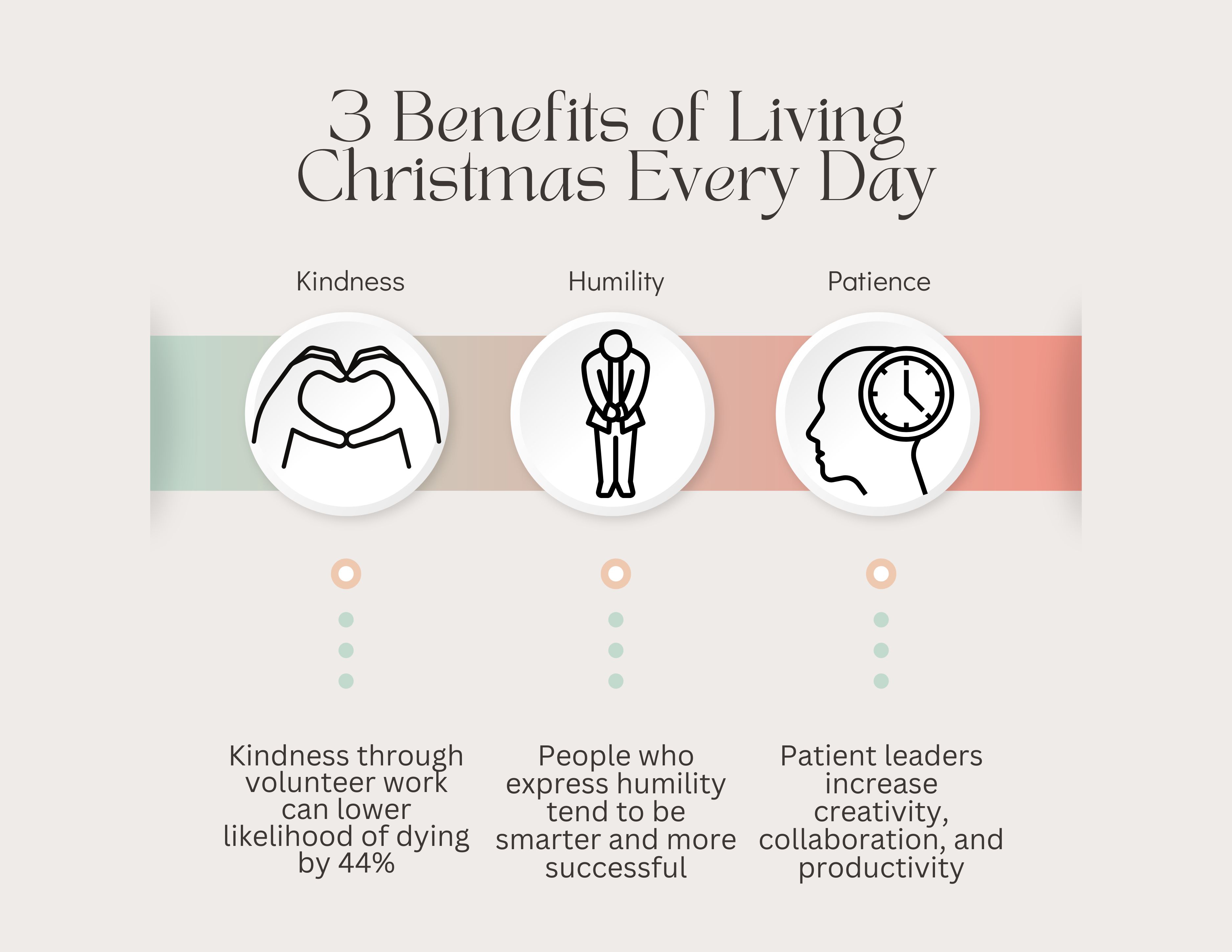
A life that reminds us of who Christ was and what he believed in. It’s why Paul tells us to embrace compassion, kindness, humility, gentleness, and patience. These are all qualities Jesus showed us during his time on Earth. They are also qualities we find in abundance during the Christmas season, and exactly the qualities Christ wants us to show one another. To bear with each other, forgive each other, and love each other are the ways we are supposed to behave all the time. We don’t need to wait until after Halloween to show this kind of “love. Actually,” we should be doing it every day. If every Sunday is a mini-Easter, then every other day should be a mini-Christmas. Because when we act as God wants us to, it not only benefits the world, but benefits us as well. Showing kindness through volunteer work can lower your likelihood of dying by 44%![2] People who express humility tend to be smarter and more successful.[3] Patient leaders increase creativity, collaboration, and productivity in the workplace.[4] And the list goes on and on. Embracing the Christmas spirit, improves our lives in both tangible and intangible ways and as Paul notes can bring about a peace to our soul we cannot get otherwise.
Sounds great but doing it every day isn’t easy.
But it can be done. It’s not about being perfect, because God knows none of us are. It’s about returning over and over to this life in Christ that leads us to a transformation of our inner being. It’s about becoming someone new by practicing over and over the kind of person we want to be until we become it. That’s what Paul means when he tells us to clothe ourselves in these things. Paul loved the metaphor of putting on clothes. To the church in Ephesus, he talked about putting on the full armor of God (Ephesians 6) and here he talks about clothing ourselves in these qualities. Because every day we must CHOOSE to be like Christ. We choose to be humble. We choose to be kind. We choose to be patient. These are things we have to make the conscious choice to do. Like getting dressed every day. And that’s why we can choose to lead a Christmas life. This Christmas spirit that seems to magically come around every year is something we can choose to continue even after tomorrow when it’s time to put away the lights and decorations. It’s a matter of making the choice to do it. Don’t let the Christmas spirit “die. Hard” to do, but it’s a choice we make every day.

The things we do during the season are what keep us grounded in its spirit.
So instead of waiting ten more months to do it again, let us continue to live as if every day was Christmas. Randomly send gifts to people simply to brighten their day. Send someone you haven’t spoken to in a long time a card and do it for no reason other than wanting to make contact. Don’t wait for their birthday, but simply drop them a note. Be randomly generous. Give an extra-large tip to your server at the restaurant. Leave something extra for the person who does your hair. Pay for the dinner of the person behind you in the drive-thru window of your favorite fast-food place. These are the kinds of things we find natural to do at Christmas. Why not make them part of simply who we are? The point is simply this: We are called to live a Christmas life. Not just during the month of December but all year round. We are often called an Easter people. Maybe we can be a Christmas people, too.
[1] https://bible.org/seriespage/background-colossians
[2] https://www.randomactsofkindness.org/the-science-of-kindness
[3] https://www.inc.com/jessica-stillman/science-shows-humility-makes-you-smarter-more-successful-here-are-8-types-to-cultivate.html
[4] https://www.psychologytoday.com/us/blog/mind-of-the-manager/202303/patience-brings-tangible-benefits-to-management
And A Little Child Shall Lead Them

Close your eyes and picture in your mind the moment of Christ’s birth.
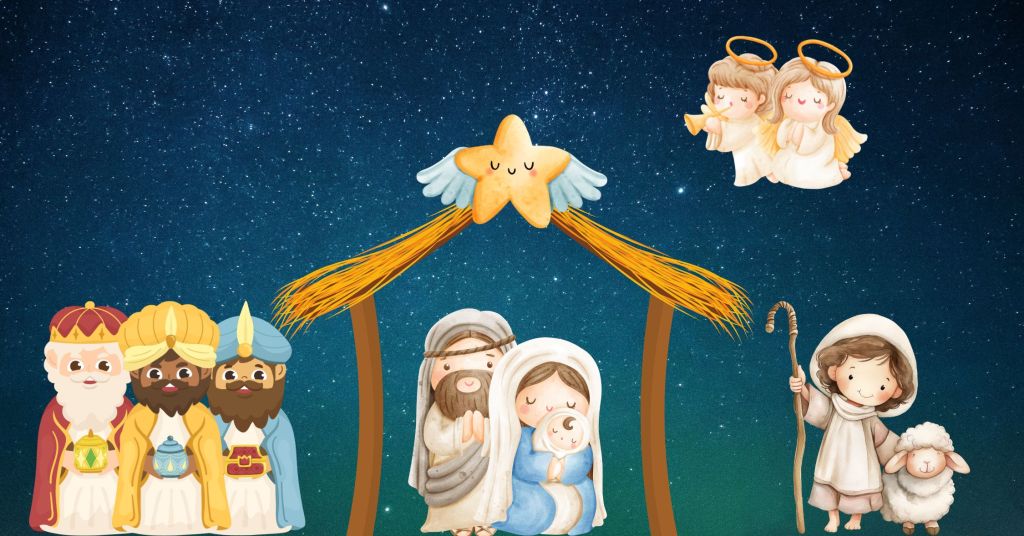
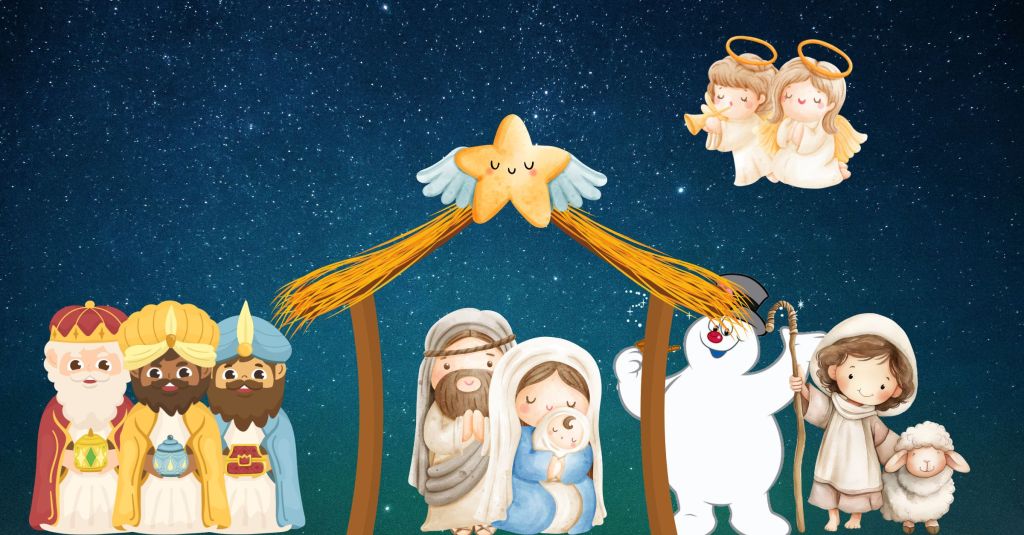
If you are like most people, you probably picture a stable with a wooden manger. In the manger atop a bale of hay is the baby Jesus. And surrounding Jesus are Mary, Joseph, a group of shepherds, and three wise men or kings – Caspar, Balthazar, and Melchior with gifts of gold, frankincense, and myrrh. Around the open stable are horses, sheep, camels, and goats. And atop the stable shines a star so bright it led the wise men to this place surrounded by angels. It’s peaceful and calm and maybe you can hear the gentle cooing of the baby Jesus. This is the traditional Christmas picture we’ve been fed since we were little. You see it in books, on television, in movies. Almost assuredly, you’ll pass by someone’s house with a recreation of the birth of Jesus on their lawn with all of these things – right next to an inflatable Frosty the Snowman who was apparently ALSO present at the birth of Christ. The truth is, most of these images have very little to do with what really happened that night. We are going to be picking up the Christmas story after the angels proclaim the good news of Jesus’ birth to the shepherds in the fields nearby. But before that happens, many other powerful aspects of the Christmas story come into play. Perhaps the strongest of these images is the denial of Joseph and Mary at a local inn.
“There was no room at the inn.”
It’s hard to believe that some cold-hearted innkeeper wouldn’t make room for an obviously expecting woman! But what if we got it wrong? What if there wasn’t a cold-hearted innkeeper AND his wife (see, we’re just going to make the story even worse now, right?)? What if instead the Bible didn’t say “there was no room at the inn” and instead said “there was no guest room available for them?” Could that change the context by which we judge these people? Today, most versions (but not all) of the Bible have the word kataluma more accurately translated to “guest room.” And as Adam Hamilton pointed out in the book The Journey it made more sense that Joseph would have gone to a relative’s house to have the birth of their child, especially as they probably had little money to pay for a room at an inn.[1] Since he and Mary were returning to Joseph’s home town, he likely had friends and relatives living there he could have gone to stay with. But that only changes things slightly, maybe makes it worse! His own family and friends would send them out to a barn? The thing that’s missing here is context. For one, it was likely that every home would have had limited space since the census forced everyone to return. Every home would have been challenged for space as friends and family returned. But more than that, according to Jewish custom, a pregnant woman was considered ceremonially unclean, which made anyone or anything she touched unclean as well. Not just the people, but anything Mary touched, the walls, the floors, the bed would all be considered unclean. In those days, being unclean couldn’t be resolved simply by washing your hands. It took rituals and ceremonies and time spent in preparation. Cleansing a body or a house took a lot of effort and until you did it you couldn’t go to the temple. It might have been the only place their relatives could put them up was in a place outside the home. So there they are, Mary, Joseph, and little baby Jesus lying in a manger. And this is what happens next.

15 When the angels had left them and gone into heaven, the shepherds said to one another, “Let’s go to Bethlehem and see this thing that has happened, which the Lord has told us about.”
16 So they hurried off and found Mary and Joseph, and the baby, who was lying in the manger. 17 When they had seen him, they spread the word concerning what had been told them about this child, 18 and all who heard it were amazed at what the shepherds said to them. 19 But Mary treasured up all these things and pondered them in her heart. 20 The shepherds returned, glorifying and praising God for all the things they had heard and seen, which were just as they had been told.
21 On the eighth day, when it was time to circumcise the child, he was named Jesus, the name the angel had given him before he was conceived. – Luke 1:15-21
What is interesting to me about this story is as much what WASN’T said as what WAS said.
There was no reference to a brightly shining star. There was no reference to the appearance of three wise men or three kings or anyone other than the shepherds. The stable, which we generally imagine to be a wooden barn, is never described in detail. And there definitely wasn’t a little drummer boy present, at least not in the Biblical story. Today, we know it was just as likely, perhaps more so, that Jesus was born in a cave. During those times, it was common for animals to be kept in caves for shelter from the weather which would have provided better protection than a wooden barn. We also know that wise men, and not likely kings, eventually did come to visit Jesus, but Bible experts say it could have been as late as two years later![2] A far cry from the miraculous appearance of three kings with their gifts of gold, frankincense, and myrrh on the night of Jesus’ birth. Most people believe we got the image of three kings based on the number of gifts that were presented to Mary and Joseph, but if you notice, it never says in the Bible how many people were there. The word used to describe the visitors is magoi or magician which could have meant they were priests of another religion or astrologers but not likely to be kings.
But the story as it is in the Bible is a richer story without these things.
A richer story by far than one we may have thought about before. In fact, when we look at Jesus’ birth as it is told in the Gospels, we find out God is counter-cultural. We find out that God is counter-cultural. He never did things the way people expected. God would flip expectations on their head and then exceed the imaginations of what people thought they wanted and did something even more amazing instead. This was the birth of the most powerful, most holy person in the universe, and yet look at the details of his story. They were not details you would expect of someone like Jesus. He was born to a father who wasn’t wealthy and didn’t hold a position of power. He wasn’t a holy man or spiritual leader but a carpenter. His parents were from the tiny town of Nazareth. And when I say tiny, I mean TINY. Hamilton said in his book the town was so small it wasn’t even mentioned among the 63 other villages associated with Galilee in the Hebrew Talmud or the 45 mentioned by the historian Josephus.[3] In fact, there were likely only 100 to 400 people in his entire town. 100 to 400 people. That’s it. You’d be lucky if they had a gas station and a grocery store if that town were around today. In fact, it was such a tiny little town Nathanael insults it when Phillip tells him about Jesus. He says in John 1:46, “Nazareth! Can anything good come from there?” To which Phillip told him to “Come and see.” Three verses later, Nathanael sees the light and exclaims, “Rabbi, you are the Son of God; you are the King of Israel.”

In the passage we read today, God didn’t announce the arrival of Jesus as we would expect.
The angels of Heaven, who did not likely float around in white robes with wings, came first to the shepherds to proclaim the birth of Christ. Shepherds! We just accept that as part of the story of Jesus today, but back then it would have been mind blowing! Shepherds were considered among the lower-class in Jewish society. They were located toward the bottom of the socio-economic ladder because they were “typically uneducated, usually poor,… and smelled like dirty sheep.”[4] They were often looked down upon because of this but also because they would often have their animals graze on other people’s land. Imagine how upset we get today when the neighbors’ dog or cat roams freely around our yard. Now multiple that by the number of sheep in a flock and you get the picture. So why on earth would God reveal himself first to the shepherds? Why not to King Herod or to the Jewish leaders or to the high priest? To us that would make more sense. People would have believed right away had the high priest of the temple proclaimed the birth of the savior!
Yet we see throughout the Bible God uses the meek and not the mighty, the lowly and not the luxurious.
God doesn’t go to the rich and the powerful. He goes to the weak and disenfranchised. But he also uses those who are most open, most willing, and most receptive to his message to share the good news. The high priest would likely have cast doubt about the authenticity of the birth of Christ and we already know how King Herod reacted – with fear, trepidation, anger and resentment. No, God went to the shepherds, to Mary, to Joseph, to a tiny town called Nazareth, and to a cave for a reason. If you look at 1 Cornithians 1:26-31 we hear the words of Paul who sums it up so nicely. “26 Brothers and sisters, think of what you were when you were called. Not many of you were wise by human standards; not many were influential; not many were of noble birth. 27 But God chose the foolish things of the world to shame the wise; God chose the weak things of the world to shame the strong. 28 God chose the lowly things of this world and the despised things—and the things that are not—to nullify the things that are, 29 so that no one may boast before him. 30 It is because of him that you are in Christ Jesus, who has become for us wisdom from God—that is, our righteousness, holiness and redemption. 31 Therefore, as it is written: ‘Let the one who boasts boast in the Lord.’” As we leave here this morning, let us take the time to reflect on the miracle of the Christmas story. Not just the grace and mercy of a God who humbled himself to be amongst us. Not just the astounding and incredible circumstances of Jesus’ birth to a virgin named Mary. But how God comes into our lives in ways we least expect it. God uses our weakness, our faults, and our imperfect selves to share his message of love to a broken world that seeks him. Our story of hope rests not just in the power of God almighty, but that God chooses to use us with all our imperfections and faults and mistakes to share his Word of Love. God knows it is within us to do this work, because after all, he created us in His image. How will you share His story, now and everyday?
[1] Adam Hamilton, The Journey: Walking the Road to Bethlehem, pp. 96-100.
[2] Stephen Miller, The Jesus of the Bible, p. 59.
[3] Hamilton, p. 15.
[4] Hamilton, p. 113.
The Sound of Music
To sing or not to sing – that is the question.
Whether ‘tis nobler to wait until Christmas
Or to dive headlong into temptation’s arms
Do we sing songs only of Advent subjects
Or do we dare to sing songs about Christmas? – inspired by Hamlet
That argument has been an ongoing question in churches all across America. Maybe all over the world. When do we sing Christmas songs? Outside the church, as soon as Halloween ends. You start hearing the first trickle of it in stores right as November rolls around. I mean, you have to play Christmas songs for all those pre-Black Friday sales, right? I’m old enough to remember when Black Friday WAS on the Friday after Thanksgiving. But this year, nearly every store was having an “Early Black Friday” sale or a “Pre-Black Friday” sale or a “Black Friday Two Weeks Early” sale. Seriously. Have you seen this? The Christmas season starts so early you can’t help but hear Christmas music everywhere. But there’s one place where you often don’t hear the sounds of Christmas during this time. Church. Isn’t that weird?

Tradition dictates that Christmas songs are reserved for the Christmas season.
Which for the church STARTS on Christmas Day with the birth of Jesus and goes for two weeks up to Epiphany. Many churches hold off on singing Christmas songs until Christmas Eve. But for the rest of the world, the Christmas season IS Advent. As Pastor Tom Hobson put it, “The average person walks into church on December 28 and is not expecting to hear Christmas carols, because in their view, the season has come and gone.”[1] That feeling is true for folks who have been in church all their lives and for those who only come on holidays. People CRAVE to hear those Christmas favorites! It helps put them in the Christmas spirit and isn’t that a good thing? Encouraging people to express love, joy, hope and giving are all Christ-like traits and if hearing a few songs like “Angels We Have Heard on High” does that, then why hold back?

You certainly can’t avoid hearing Christmas songs everywhere else.
We hear them on the radio, in shopping malls, in elevators; it is such a natural part of the holiday that for many it wouldn’t be Christmas without Christmas music. But did you know churches only began singing Christmas songs as we know them within the past 150 years? It wasn’t until the late 19th century when Christmas carols moved from the streets into the walls of the church, even though Christmas carols had been around for hundreds of years before that. Perhaps the most famous example is the “Festival of Nine Lessons and Carols” that began in Cornwall, England back in 1880.[2] 1880! It’s weird to think historians could trace something like that so specifically but weirder to think that for nearly nineteen centuries nobody sang a song like “The First Noel” inside of a church. Like most music today, the best songs were sung in the streets, at festivals, at parties, but not in worship. Even then the church was behind the times. If you heard music at all during worship, it would be some kind of somber tune, usually in Latin.[3] But there was a hungering among people, just as there is now, to celebrate the life of Christ through music, and so the Christmas carols we know and love sprang to life – outside of the church.
We can’t help but sing these songs.
People are wired to lift praise and thanksgiving for their blessings and for Christians we direct that praise and thanksgiving into the hands of God and of his son Jesus Christ. So, even when the church could not get with the program in those early days, the spirit of praise and thanksgiving could not be stopped, and people wrote these songs that we love today. For anyone who casually reads the Bible, that is no surprise. The pages of the Bible are filled with people lifting praise to God in song, in prayer, and in their actions. Paul wants to encourage that kind of living and he writes this letter to the church at Ephesus where he includes this passage.
15 Be very careful, then, how you live—not as unwise but as wise, 16 making the most of every opportunity, because the days are evil. 17 Therefore do not be foolish, but understand what the Lord’s will is. 18 Do not get drunk on wine, which leads to debauchery. Instead, be filled with the Spirit, 19 speaking to one another with psalms, hymns, and songs from the Spirit. Sing and make music from your heart to the Lord, 20 always giving thanks to God the Father for everything, in the name of our Lord Jesus Christ. – Ephesians 5:15-20

Singing is central to worship.
Singing is central to worship. Not a controversial stance, I know. It’s important to note though Paul doesn’t say what kind of songs we should sing or when we should sing them. He only has one guideline. “Sing and make music from your heart to the Lord… (Verse 19)” I love that when they numbered the verses, they cut it off right there in mid-sentence. “Sing and make music from your heart to the Lord.” If it comes from your heart, that is what matters. My other favorite reference to singing? “Make a joyful noise to the Lord, all the earth (Psalm 98).” Because that’s what I do. Make a joyful noise. When we sing, you don’t have to worry about being in tune or having perfect pitch. It’s about the joy in your heart. Now the people around you might appreciate it, but God is pleased with what comes from inside.
The only “right way” to sing is with this in mind.
The early church would adopt customs and traditions of the surrounding culture to better fit in and appeal to the people around them. That’s how we got Christmas in the first place. Flexibility is our approach to the Gospel is a key component to reaching others for Christ. But that doesn’t always happen. Especially as Christianity has become more dominant, many have become more stuck in their ways, believing others should bend to our will instead of the other way around. One United Methodist minister was even quoted in USA Today as saying, “You would not sing ‘Christ the Lord is Risen Today’ on Good Friday…You don’t throw in Christmas hymns for the sake of appeasing people who want to sing.”[4] But do you think Jesus would care if we sang “Christ the Lord is Risen Today” on Good Friday if it brought someone to faith? Breaking with tradition is hard for some, but we need to remember what is truly important. Bringing people to faith in Christ.
There’s nothing wrong with tradition.
Only when it gets in the way of doing the work of Jesus. Traditions are important. They help to ground us. They help us to remember all that came before. But when adhering to tradition starts to get in the way of doing Christ’s work in the world., we need to remember to be flexible. While we should never compromise the message of Christ, we can alter the delivery if it helps others to see Jesus in a way that brings them closer to God. Singing Christmas songs during this season of Advent is not a compromise of our beliefs, but today it is a way for us to more easily get in the Christmas spirit, and shouldn’t we always be doing that? Keep in mind that almost all of the Christmas traditions we hold onto so tightly are human inventions. Advent itself was one of those inventions and has changed many times throughout the history of the church. But the message of Christmas, that God came to Earth to save us and bring us closer to him, is the truth of Christmas and the only one we need to hold on to. For those who believe, every day is Christmas. In the name of the Father and of the Son and of the Holy Spirit. Amen.
[1] https://pres-outlook.org/2010/11/christmas-carols-during-advent/
[2] http://en.wikipedia.org/wiki/Christmas_carol ; http://www.whychristmas.com/customs/carols_history.shtml
[3] Ace Collins, Stories Behind the Best-Loved Songs of Christmas, p. 53.
[4] http://www.usatoday.com/news/opinion/forum/2010-12-13-column13_ST_N.htm
Believing the Unbelievable
How do you tell truth from fiction?
Sometimes it’s easy, sometimes…it’s complicated. Truth can be fictionalized like we see in the movies and on television. “Based on a true story” simply means some aspect of what you are about to see happened in some way but it doesn’t mean everything you see is factual. On the other hand, fiction can be peppered with truth. The Big Bang Theory is a television show based on completely fictional characters, but the science they talk about is real.[1] When you see equations on the white board in Leonard and Sheldon’s apartment, someone has actually gone over those equations to make sure they check out. Our concepts of truth and fiction are constantly being challenged, not just in movies and television but in real life. As our knowledge expands, so does our understanding of the world and sometimes that means shattering long-held beliefs. We once thought the sun was the center of the universe. We once thought the Earth was flat. We once thought the atom was the smallest unit of matter in the universe. Now we know that an atom is about 10,000 times bigger than an electron.[2] In a world where truth and fiction are more thinly separated than we are sometimes aware, what can we believe? What is the truth?

Growing up, I wanted to be a Knight of the Round Table!
Chivalry, honor, daring deeds, fighting the good fight. These are the stuff legends are made from. And indeed King Arthur is often considered a legend, a story regarded as historical but unauthenticated or at least disputed.[3] A legend is a story regarded as historical but unauthenticated. While there are references to a King Arthur in legitimate records of history, they are few and far between and most historians question whether he really existed, let alone believe the fantastic tales that are told about him. But it’s those fantastic tales that make Arthur worth believing in! It is prophesied in the hour of Britain’s greatest need, Arthur will return. Sounds a bit like our belief in the return of Jesus Christ. So, is Jesus real or is he just a legend, too?

We can understand why people have doubts about the reality of Jesus.
Some of the stories of Jesus are so fantastic as to defy belief, one of which we are going to share this morning. Now what we are about to hear is the story of how Mary was chosen to be the mother of Jesus. But before that happens, we find out her cousin Elizabeth was also pregnant. What makes Elizabeth’s pregnancy even more remarkable is her advanced age. Yet, the angel, Gabriel, comes to deliver a message of hope to the couple. They will have a child, and this child will be the herald of the Lord, and he will be called John. We know him as John the Baptist. Six months into the pregnancy, the same angel goes to visit Mary and that’s where we pick up the Bible reading this morning.
26 In the sixth month of Elizabeth’s pregnancy, God sent the angel Gabriel to Nazareth, a town in Galilee, 27 to a virgin pledged to be married to a man named Joseph, a descendant of David. The virgin’s name was Mary. 28 The angel went to her and said, “Greetings, you who are highly favored! The Lord is with you.”
29 Mary was greatly troubled at his words and wondered what kind of greeting this might be. 30 But the angel said to her, “Do not be afraid, Mary; you have found favor with God. 31 You will conceive and give birth to a son, and you are to call him Jesus. 32 He will be great and will be called the Son of the Most High. The Lord God will give him the throne of his father David, 33 and he will reign over Jacob’s descendants forever; his kingdom will never end.”
34 “How will this be,” Mary asked the angel, “since I am a virgin?”
35 The angel answered, “The Holy Spirit will come on you, and the power of the Most High will overshadow you. So the holy one to be born will be called the Son of God. 36 Even Elizabeth your relative is going to have a child in her old age, and she who was said to be unable to conceive is in her sixth month. 37 For no word from God will ever fail.”
38 “I am the Lord’s servant,” Mary answered. “May your word to me be fulfilled.” Then the angel left her. – Luke 1:26-38
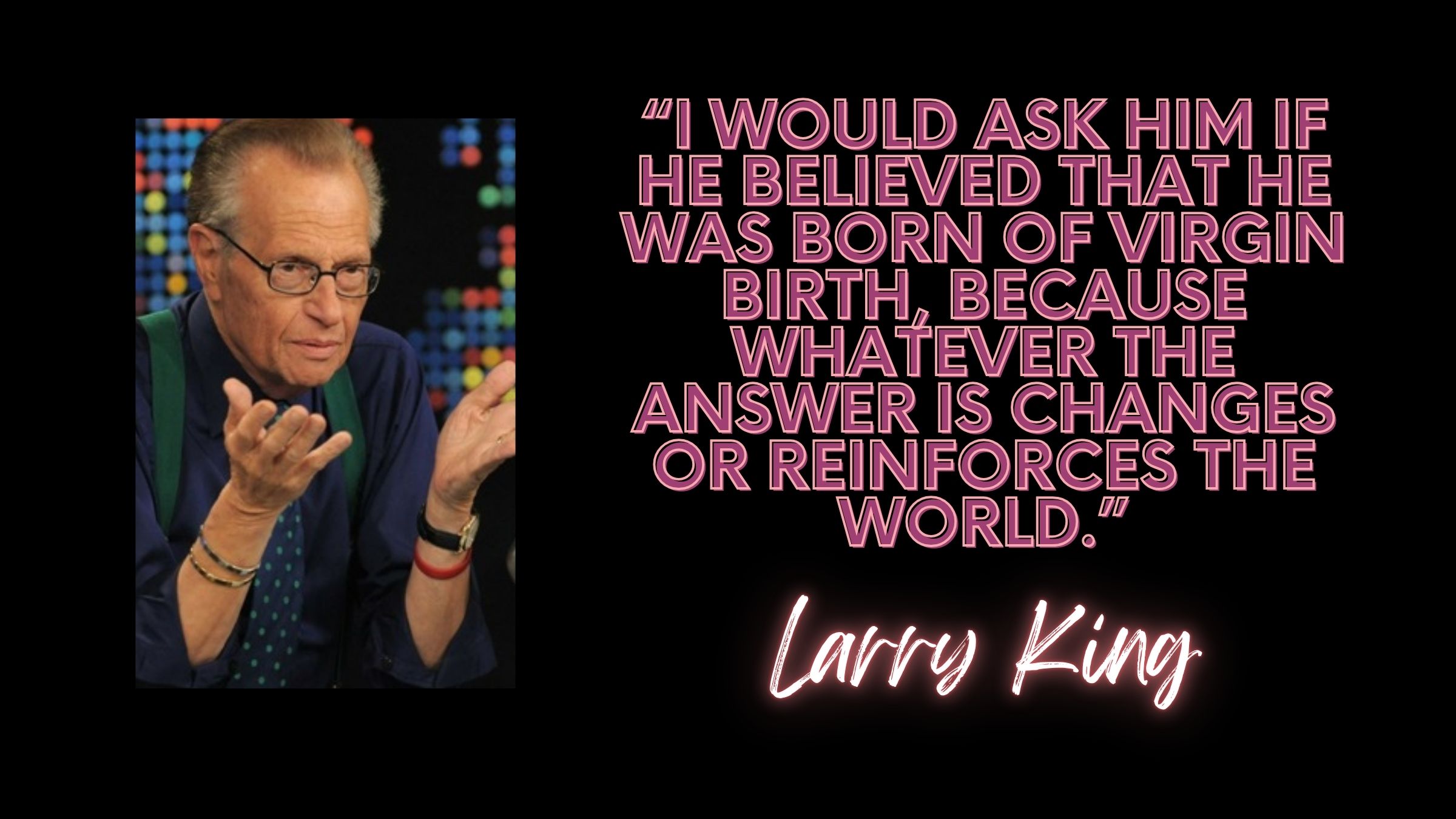
The virgin birth is one of the most unbelievable stories about Jesus.
Next to the resurrection itself it is the hardest to swallow and it’s one of the reasons people have a hard time accepting Christ as Messiah. Even the famous CNN talk show host, Larry King said his fantasy interview would be with Jesus and he said, “I would ask him if he believed that he was born of virgin birth, because whatever the answer is changes or reinforces the world.”[4] Given what we know today, the virgin birth is impossible. But what do we know about the impossible? Would anyone have thought in vitro fertilization was possible until it happened? Today, Louise Brown, the first known IVF baby is 46 years old, married, and living in England with her husband and naturally born son.[5] Sarah, Isaac’s mom in the book of Genesis, was 90 years old when she conceived her first child. That seems impossible, too, but we get closer to making that a reality every day. A woman in India recently gave birth at the age of 73 breaking a record that was only set 3 years earlier.[6] Is it ethically the right thing to do? That’s a question we need to wrestle with as technology continues to advance, but the limits of what is and isn’t possible grows thinner every day. We don’t know the boundaries of the impossible.
Some believe the story of Christ is just another myth.
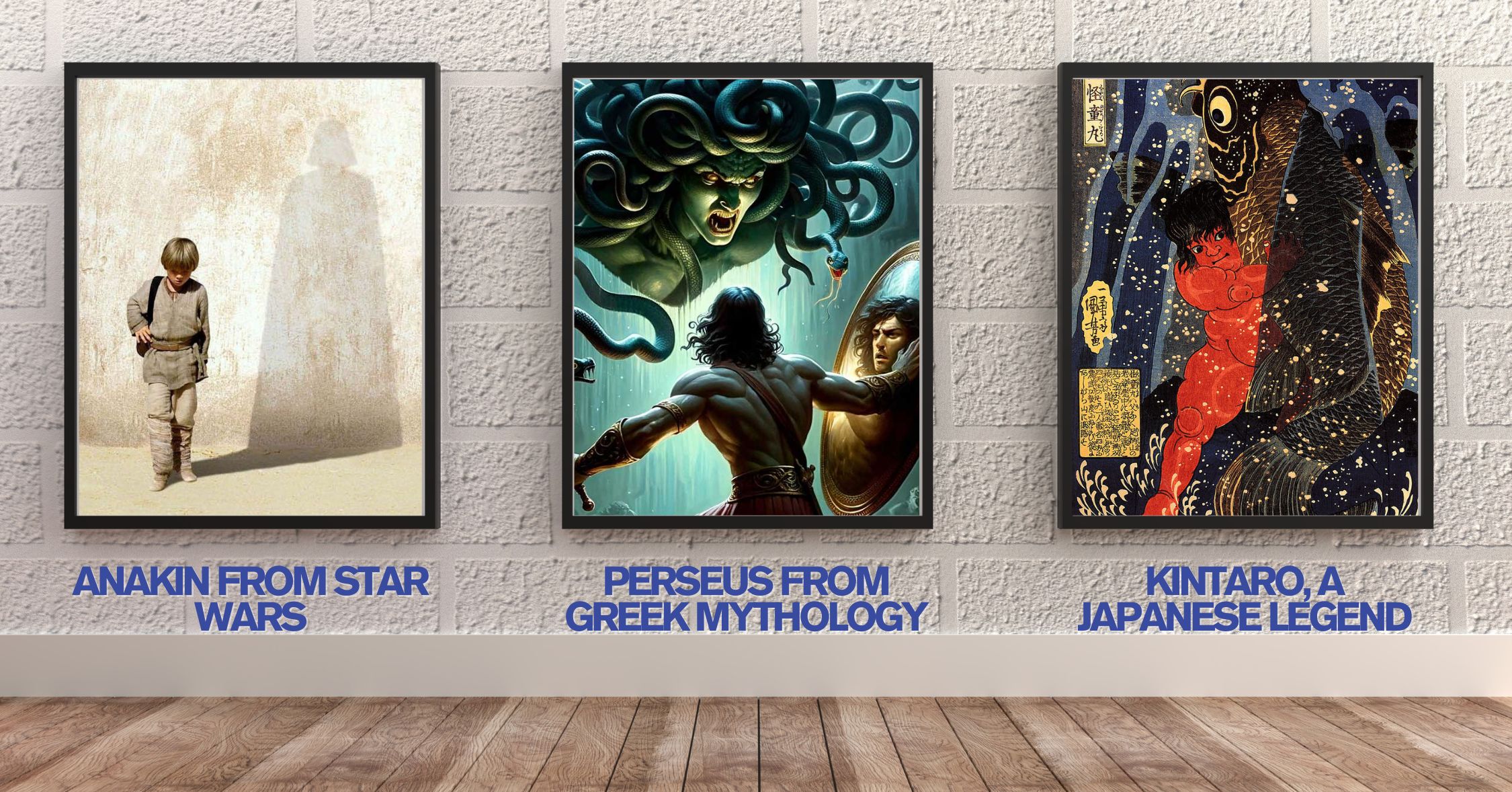
Other religions have stories about a miraculous birth like Jesus’. The concept of the divine entering the world is not new by any means. George Lucas used it in Star Wars: The Phantom Menace to describe Anakin’s birth, the boy who would become Darth Vader. When questioned about the identity of Anakin’s father, his mother Shmi simply said, “There was no father…I carried him, I gave him birth…I cannot explain what happened.” Many stories we consider myths talk about virgin births. Perseus in Greek mythology was born to Danae who was locked in a tower all her life specifically so she could not have children but still was impregnated by Zeus when he turned into a shower of gold that penetrated the tower walls.[7] Even in Japan, one of the legendary stories of Kintaro, the boy warrior, says that his mother Yama-uba was impregnated with a clap of thunder from a red dragon in Mount Ashigara.[8] Divine intervention in the birth of a child is a powerful symbol for divine purpose, and this theme is found not just in fiction, but in other religions as well. Both Krishna and Buddha are said to have orchestrated their own births. The deity of Vishnu from Hinduism is said to have descended into his mother’s womb much like God made flesh in Christ, and the “Great Being” from Buddhism was said to have imparted itself into a human woman to be born as the first Buddha. Neither one was necessarily a virgin birth but thought to be divine.[9] Even other historical figures are said to have been born by supernatural means – Pythagoras, Alexander the Great, even Plato.[10] With so many stories of supernatural birth out there, it would be easy for the skeptic to dismiss the story of Jesus as just another fanciful tale.
But for us, it’s more than just a story.
It’s historical fact. Yes, the story of Jesus shares elements with other supernatural births, but does that mean it isn’t true? Unlike other myths, there are multiple records of the virgin birth of Jesus. We forget the stories in the Bible were not written by one person, but by a number of people who themselves were witnesses to one of the most amazing events in history and the birth of Christ is recorded in multiple accounts. But apart from that, we also have evidence from the writings of the Qur’an and from the historian Josephus who attest to the birth, death and existence of Jesus. The Qur’an, the holy book of Islam, even goes so far as to acknowledge the virgin birth and the miraculous deeds of Christ. And unlike other myths and legends which change and shift over time, the story of Christ has remained the same for nearly 2000 years. Those are just some of the reasons why we believe the story of Jesus is more than fiction but fact, because of the evidence in favor of the story being real.
But no amount of evidence will ever convince some people.
Vaccine safety, climate change, the “deep state;” these are issues we still can’t agree on so why should religion be any different? To ask people to believe in someone as extraordinary as Jesus when they can’t even believe what they can see and experience with their own eyes is a hill too steep for some. But that does not mean we cannot reach these people? As it is written in Philippians 4:13, “I can do all this through him who gives me strength.” Or in Matthew 19:26 where Jesus tells the disciples, “With man this is impossible, but with God all things are possible.” For most of us, Christ comes alive not in the pages of a book, but in our lives through the love of God. Maybe it’s our parents or grandparents who reflected God’s love in their love for us. Maybe a pastor or a teacher who was there in our time of need. Maybe just a neighbor or friend who reached out in a meaningful way. It’s not the words in a book that make Christ come alive for us but how we love one another. As it says in 1 John 3:18, “Dear children, let us not love with words or speech but with actions and in truth.” That is when Christ moves away from just being another story to the living Gospel. It is when God becomes real in our own lives that the doubt and questions fade, and we can embrace the truth of Jesus for ourselves. Let us commit this Christmas season to live life more closely to where Christ is leading us. Let us be the candle in the darkness for those around us. And let the transformation of our lives by the presence of Jesus be the strongest proof of his existence.
[1] http://minnesota.cbslocal.com/2011/02/17/good-question-is-the-big-bang-theory-science-real/
[2] https://people.astro.umass.edu/~arny/jatoms_tut.html and https://www.fnal.gov/pub/science/inquiring/matter/
[3] https://www.google.com/search?q=legend&ie=utf-8&oe=utf-8&aq=t&rls=org.mozilla:en-US:official&client=firefox-a&channel=sb#rls=org.mozilla:en-US:official&channel=sb&q=legend+definition
[4] https://www.latimes.com/archives/la-xpm-1990-10-15-ca-2099-story.html
[5] http://en.wikipedia.org/wiki/Louise_Brown
[6] https://www.washingtonpost.com/world/2019/09/06/this-year-old-woman-just-gave-birth-twins/ and http://en.wikipedia.org/wiki/Pregnancy_over_age_50
[7] https://study.com/learn/lesson/perseus-greek-mythology.html
[8] http://en.wikipedia.org/wiki/Kintar%C5%8D
[9] http://en.wikipedia.org/wiki/Miraculous_births
[10] http://www.huffingtonpost.com/james-d-tabor/did-paul-invent-the-virgin-birth_b_2355278.html
Festivus for the Rest of Us
“A Festivus for the rest of us!”
George Costanza’s father shouted that line in a 1997 episode of Seinfeld. Frank Costanza, tired of the rampant commercialization of Christmas, decided to make his own holiday called Festivus. As he proclaimed, “A Festivus for the rest of us!” Instead of a Christmas tree, there was a Festivus aluminum pole completely unadorned because tinsel bothered George’s father. There was the traditional Festivus dinner, the Feats of Strength, and my personal favorite, the Airing of Grievances where you sat around the table and told everyone how they bothered you this past year. Festivus was meant to be a parody of the holiday season, but there are people today who still celebrate it as a holiday. A workplace with a very diverse group of employees decided to have a Festivus party to be inclusive of everyone’s beliefs. One guy at the office felt it was so blasphemous he tried to knock down the Festivus pole.[1] The lead organizer said, “Grievances were aired about him.” But he’s not the only one with a humbug attitude. Two groups, The Catholic League and the New York Board of Rabbis, joined together to condemn another made up holiday, Chrismukkah, saying it was “insulting” to both Jews and Christians.[2] Theologically you can make the argument the two are not compatible, but is that really the issue or is it us?
Sometimes, when we feel challenged, we become defensive.
And people can be awfully defensive about Christmas. But are we defensive for the right reasons? Christians protest when nativity scenes are taken down in public places. Some get upset when companies tell their employees to say, “Happy Holidays” instead of “Merry Christmas.” But we don’t seem too worried there are people who can’t afford to put food on the table or are living in the streets. Instead of focusing on the things Jesus would be concerned about we act as if somehow Christianity will cease to exist if it’s not being celebrated publicly. We forget that Christmas is a completely made-up holiday. For that matter, so is Advent.

People love opening Advent calendars.
But few realize it’s much more than just a countdown to Christmas. For Christians today, it’s a season of preparation for the coming of Christ. In fact, “Advent” literally means “coming.” But originally, it wasn’t about the birth of Christ at all. Instead, it was the six-week period leading up to the Epiphany and during that time followers celebrated all the aspects of Jesus’ early life up to the first miracle at the wedding in Cana. It would be another 200 years before it focused on the coming of Christ, but instead of the birth of Jesus, it focused on his second coming.[3] It would be another thousand years before it would become what we are familiar with today. For most of recorded history, Advent wasn’t about the birth of Christ at all.
Which, by the way, didn’t happen on December 25th.
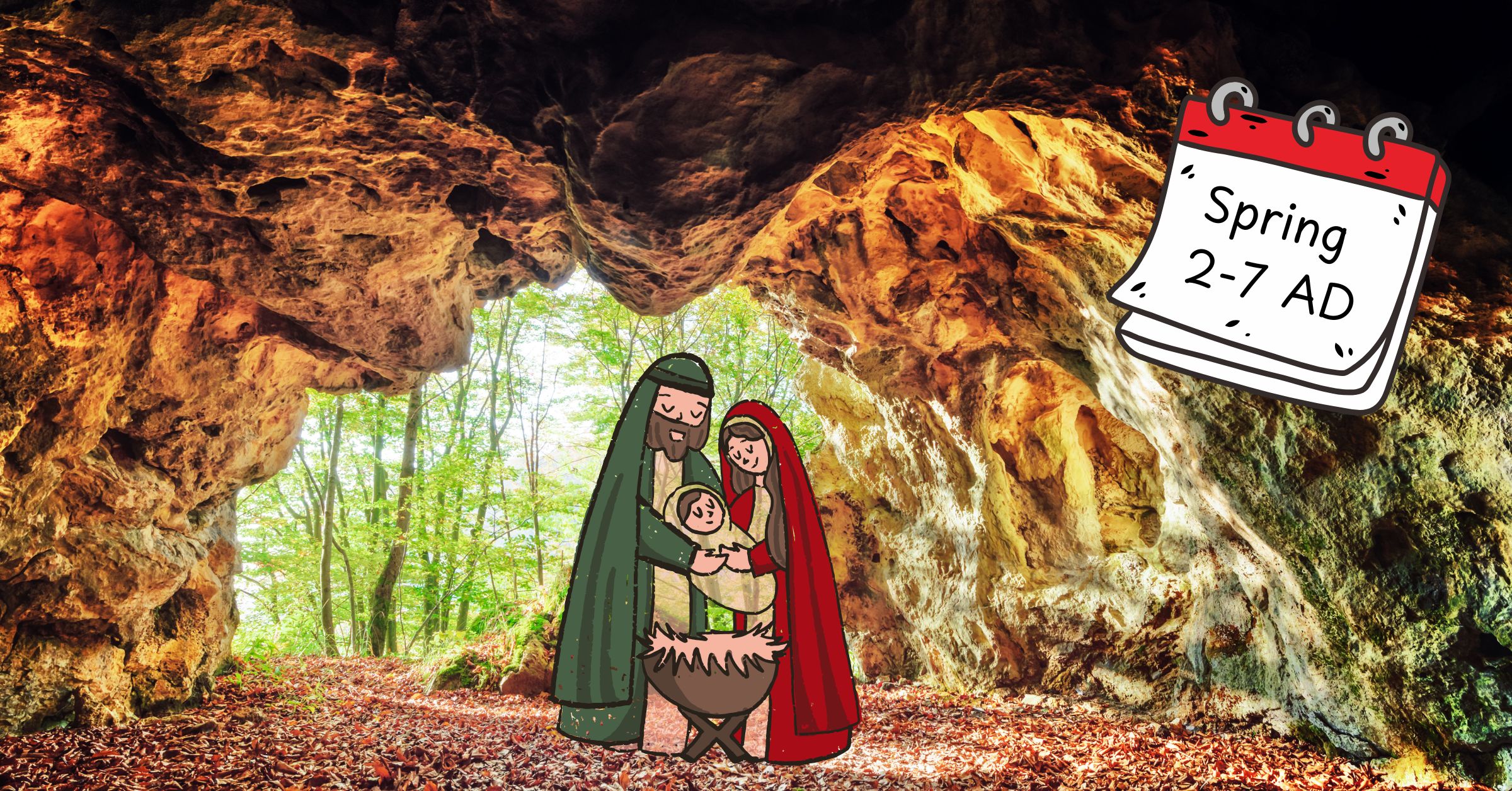
You probably know that by now, but I grew up associating December 25th with the birth of Jesus. Even friends of mine who are not Christian believe that’s what the holiday is all about. But the truth is, no one knows precisely when he was born. One book I read explained it was likely Jesus was born in the Spring since the Bible refers to shepherds who were tending their flocks at night, something they wouldn’t have done in the dead of winter. But no one ever wrote it down because to the early church it wasn’t important. The two biggest events in the church calendar were Epiphany and Easter. Christmas wasn’t even on the radar. It would take 400 years after Jesus’ actual birth before Christians started to celebrate it. Which also, by the way, wasn’t in 1 AD. Most scholars today will tell you Jesus was likely born somewhere between 2 and 7 BC, which translated from the Latin means “before Christ.” Because of an error in calculation, the guy who invented the counting of years was off. I don’t know how you miscalculate years, but there you have it. The first actual Christmas was not December 25th, 1 AD but sometime in the Spring of 2-7 BC.
But none of that really matters.
What we need to focus on during the Christmas season is the “why,” not the “when.” Other than the event itself, the rest of what we think of as a traditional Christmas was created by human beings. The date, the season, the traditions, even the giving of gifts did not happen on the day Jesus was born. The only gift given that day was God’s gift to us in the form of a baby in a manger. Which is the reason we celebrate. Sometimes we forget the reason for the season and celebrate the traditions more than the event itself. For today, let us be reminded of that evening long ago that changed the world.
8 And there were shepherds living out in the fields nearby, keeping watch over their flocks at night. 9 An angel of the Lord appeared to them, and the glory of the Lord shone around them, and they were terrified. 10 But the angel said to them, “Do not be afraid. I bring you good news that will cause great joy for all the people. 11 Today in the town of David a Savior has been born to you; he is the Messiah, the Lord. 12 This will be a sign to you: You will find a baby wrapped in cloths and lying in a manger.”
13 Suddenly a great company of the heavenly host appeared with the angel, praising God and saying,
14 “Glory to God in the highest heaven,
and on earth peace to those on whom his favor rests.” – Luke 2:8-14
This is the importance of Christmas.
The birth of Christ into the world. “Today in the town of David a savior has been born to you; he is the Messiah, the Lord.” In all the hubbub of the Christmas season, it’s good to simply share in the story of the birth of Christ and be reminded of the significance of that moment when “a great company of the heavenly host appeared” saying, “Glory to God in the highest heaven and on earth peace to those on whom his favor rests.” When I mentioned we need to focus on the “why” instead of the “when,” this is the “why” we need to focus on – why we celebrate the season. We celebrate the fact that God humbled himself to enter into the world just as we do. God became man to lead us, guide us, and share with us the good news of salvation that comes through him. The good news the angel refers to is of course the birth of Jesus and as we like to say, he is the reason for the season. Instead of getting focused on the details of Christmas or complaining about the commercialization of Christmas or worried the season is losing its meaning, we need to instead focus on the meaning ourselves. Because Christmas isn’t a date on a calendar, it’s a way of living. Jesus comes alive when we love one another. And in that way, everyday can be Christmas.
Let me tell you a story about a friend of mine named Mark Thompson.
We went to Cerritos Elementary School and had most of the same teachers all the way up through fourth grade. Mark recently had his 14th birthday. That’s right. His 14th birthday. And I don’t mean because he’s young at heart. I mean literally, his 12th birthday. If you haven’t figured it out already, Mark is a “leaper” or “leapling” as they call it. He was born on February 29th, 1968, the same year as I was born. Yet he is only 11 years old because of the way we keep time on the calendar. Since his actual birth date only occurs once every 4 years, he is only one-fourth of my age. But is he really? We’ve lived the same number of days – actually I’ve lived less of them since my birthday is after his. But Mark used to like to say that he’d live to be a lot older than me because he’s aging only a fourth as fast as I am. I hate to break it to him, but he’s not really aging slower than anybody. Just because the date of his birth only shows up on a calendar once every four years, doesn’t take away from the fact that he’s still aging like the rest of us. All of that to say that December 25th is just a number. Christmas should live in our hearts every day.
[1] Taken from a story on the CNN website back in 2009. The story has since been removed.
[2] https://www.catholicnewsagency.com/news/2646/new-york-rabbis-join-catholic-league-to-denounce-chrismukkah
[3] https://www.up.edu/garaventa/did-you-know/meaning-advent.html – in fact, Advent does mean coming, but it’s Greek derivative is “Parousia” which refers to the second coming of Christ.
The Hidden Cost of Love
There’s a lot more that goes into something you love than meets the eye.
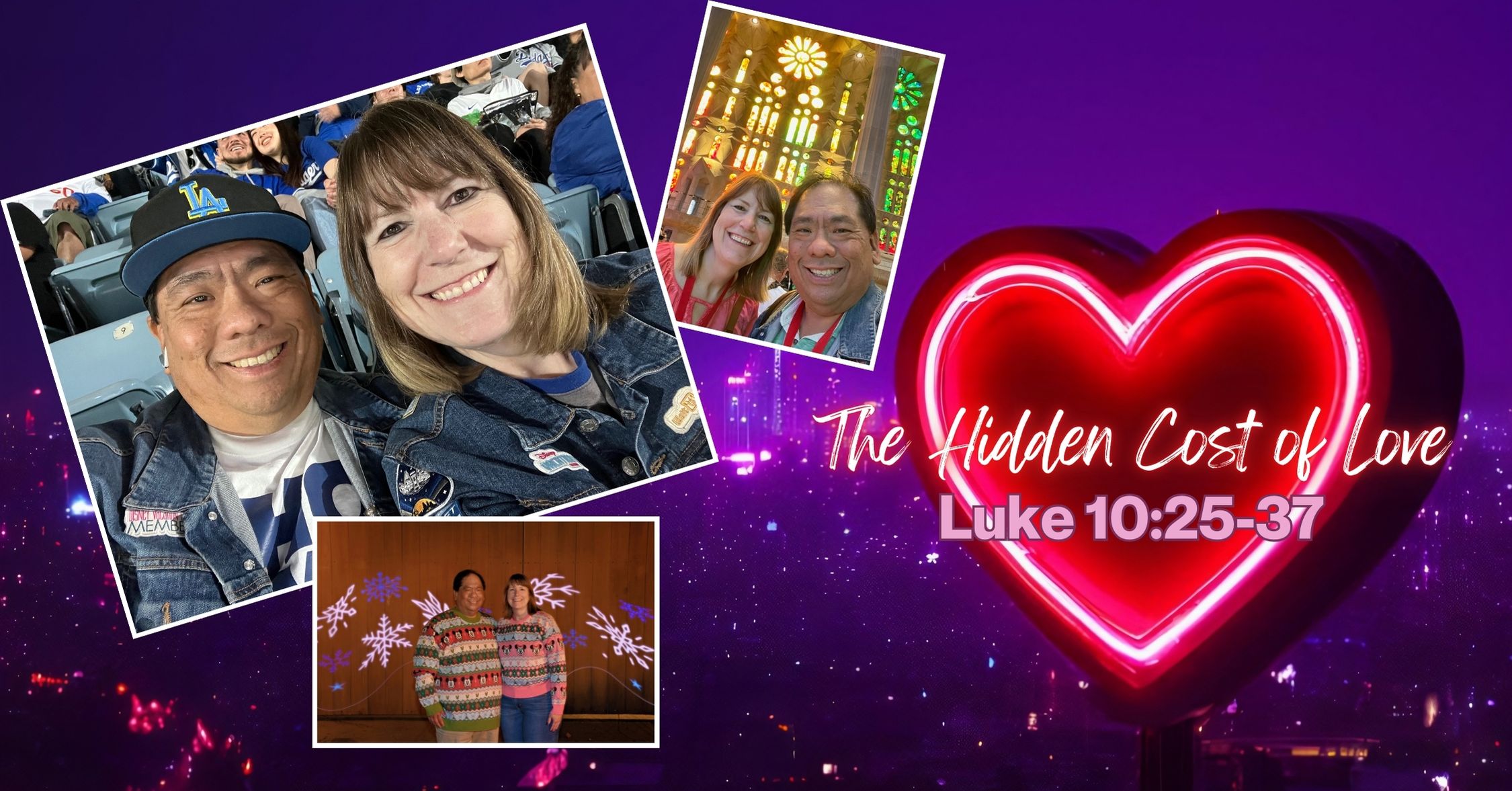
Take for instance my passion for Disney pins. It started innocently. We were at Disney-MGM Studios (when it was still called that) and we were just looking at souvenir pins when Emma noticed a cute one on a Cast Member’s lanyard. The nice young woman said these were for trading and if she had a pin to trade for it she could. So, after Emma looked up at me with these big, round eyes, I bought a pin for her so she could trade, and she walked away a happy camper. Pretty soon, every time we would go to the park we would buy a pin to add to our collection, but these were nice pins, and we didn’t want to trade them away so we also bought pins just for trading. Well, our collection started to grow, and we didn’t have anywhere to store them safely until I noticed they sold pin bags you could use for storage. Pretty soon, I’m going to special pin trading events and waiting in line for hours for a pin release and purchasing tickets just for the OPPORTUNITY to buy MORE pins. The pins themselves are fairly reasonably priced, but when you add in the special pin backs to secure them, the pin bags to haul them, the pin backpacks to trade with…well, you get the idea. But overall, it’s worth it. When you love something, it is worth investing in.

The same is even more true with people.
Hobbies are great and people certainly become passionate about them. But when we invest in people, the reward is so much greater and the people who mean the most to you are certainly worth investing in. They say you can’t buy love, but you can sure put a price tag on it. According to a survey of 1,500 engaged and married couples, a lifetime of love costs $192,769.19.[1] By the way, that’s just gifts, date nights, special occasions, engagement rings and wedding bands. That doesn’t include everyday expenses, family vacations, homes, or kids. $192,769.19. The first year is the most expensive, clocking in on average at $9,233.32. It gets progressively less expensive from there on out. But even dating is an investment. Want to find out if that person is worth it? It’s going to cost you up front to the tune of $196 per date.[2] Now if the date is a bomb, you might feel ripped off. But when you find someone special, the cost seems trivial because it was worth it.

Let me tell you, God thinks you’re worth it, too.
And he’s willing to pay any price for you. If you have a Bible or a Bible app on your phone please turn to the Gospel of Luke, chapter 10, beginning with verse 25. In the story from John 3, Nicodemus, a Pharisee and a member of the Jewish ruling council seeks out Jesus, but unlike other Pharisees, he’s not trying to kill Jesus or trick him. He genuinely seeks to understand him better. This is just the first of Nicodemus’ encounters with Christ and over time he comes to believe in him as the Messiah. But here, he comes seeking to know more and Jesus reveals to him that he is indeed the Christ that was prophesized. For us, the most important lines are also the most famous of the Bible. “For God so loved the world that he gave his one and only Son, that whoever believes in him shall not perish but have eternal life. For God did not send his Son into the world the condemn the world, but to save the world through him.” That is how much God loves you. That God would sacrifice his only Son out of his love for you. When we think of what something will cost us, we often revert to money, but God tells us and shows us that love requires something more. And we see that here in the story of the Good Samaritan.
25 On one occasion an expert in the law stood up to test Jesus. “Teacher,” he asked, “what must I do to inherit eternal life?”
26 “What is written in the Law?” he replied. “How do you read it?”
27 He answered, “‘Love the Lord your God with all your heart and with all your soul and with all your strength and with all your mind’[c]; and, ‘Love your neighbor as yourself.’[d]”
28 “You have answered correctly,” Jesus replied. “Do this and you will live.”
29 But he wanted to justify himself, so he asked Jesus, “And who is my neighbor?”
30 In reply Jesus said: “A man was going down from Jerusalem to Jericho, when he was attacked by robbers. They stripped him of his clothes, beat him and went away, leaving him half dead. 31 A priest happened to be going down the same road, and when he saw the man, he passed by on the other side. 32 So too, a Levite, when he came to the place and saw him, passed by on the other side. 33 But a Samaritan, as he traveled, came where the man was; and when he saw him, he took pity on him. 34 He went to him and bandaged his wounds, pouring on oil and wine. Then he put the man on his own donkey, brought him to an inn and took care of him. 35 The next day he took out two denarii[e] and gave them to the innkeeper. ‘Look after him,’ he said, ‘and when I return, I will reimburse you for any extra expense you may have.’
36 “Which of these three do you think was a neighbor to the man who fell into the hands of robbers?”
37 The expert in the law replied, “The one who had mercy on him.”
Jesus told him, “Go and do likewise.” – Luke 10:25-37

Love means investing in what’s important.
Sometimes that’s a person like it is in this story. Sometimes, it’s an ideal or an institution. And in this story, we see it in the time, talent, gifts, service, and witness the Samaritan gives to the injured Jewish man. By the way, it isn’t a coincidence these are the same five qualities we promise to give to the church when we join. Time, talent, gifts, service, and witness. Time is probably the most obvious. He stops. The Samaritan who probably wouldn’t have been given the time of day by most Jewish people stops for this Jewish man in need. But then he uses his own possessions to dress his wounds enough so he can travel. He bandages him up using the skill he has and uses his own oil and wine to flush it out. He uses his donkey to transport the man to a local inn, also meaning he has to walk. And then he uses his own money to pay the innkeeper. Time, talent, gifts, and service were used to witness to the love Christ showed to us.
Do you invest in the things that are important?
It’s so easy for us to be like the Levite and the priest and ignore what truly matters. In this story what mattered was this injured man on the side of the road. The first two men probably assumed someone else would stop. They were too busy. Too focused on themselves. But the Samaritan took time to notice what should have been obvious to the other two and not only noticed it but did something about it. How often do you take for granted the very things that are most important to you? Sometimes it’s your family. Sometimes it’s your spouse. Sometimes it’s time itself. And sometimes it’s the things you don’t even think about, but that you would miss terribly if they were gone. Too often people become so invested in their work they ignore their families. They don’t realize there is a growing distance between them and their spouse or their kids. Eventually, their spouse gets tired of being second fiddle. Their kids lose all trust and faith in them. And soon they have a broken home with broken people.

Take the time to invest in what is important.
Your family, your health, your faith. “Do not store up for yourselves treasures on earth, where moths and vermin destroy, and where thieves break in and steal. But store up for yourselves treasures in heaven, where moths and vermin do not destroy, and where thieves do not break in and steal. For where your treasure is, there your heart will be also.” Matthew 6:19-21. Jesus isn’t talking about just material treasures, but power, fame, recognition, and all the things that distract us from loving our families, taking care of our health, and separating us from our faith. One of my colleagues was famous for overworking himself. In a bizarre twist of fate, I served multiple churches where he also served. I’d hear about how he would work so hard he would fall asleep at the church and wake up in time for worship. Or how he would travel three hours away to visit the friend of a family member of someone in the church because he heard they were in the hospital. But the stress he put upon himself to maintain that reputation ate at his body until he was forced to go to the hospital himself. He is a wonderful guy and a terrific pastor, but he didn’t set up boundaries where they were important, and it cost him. I don’t want the same to happen to you.
In this season of Thanksgiving, take the time to reflect on all of these thoughts.
How well are you balancing family, health, and faith? Are you investing as much in these as you do other aspects of your life? If not, what steps can you take to get back in balance. Just as you invest in your hobbies, your career, and other aspects of your life, make sure you create boundaries so they don’t take over your life. Keep focused on the things that are truly important and let us give thanks to God for what we have.
[1] https://www.shaneco.com/theloupe/articles-and-news/the-cost-of-love/
Waving Through A Window
I’m a huge Star Trek fan because of my mom.
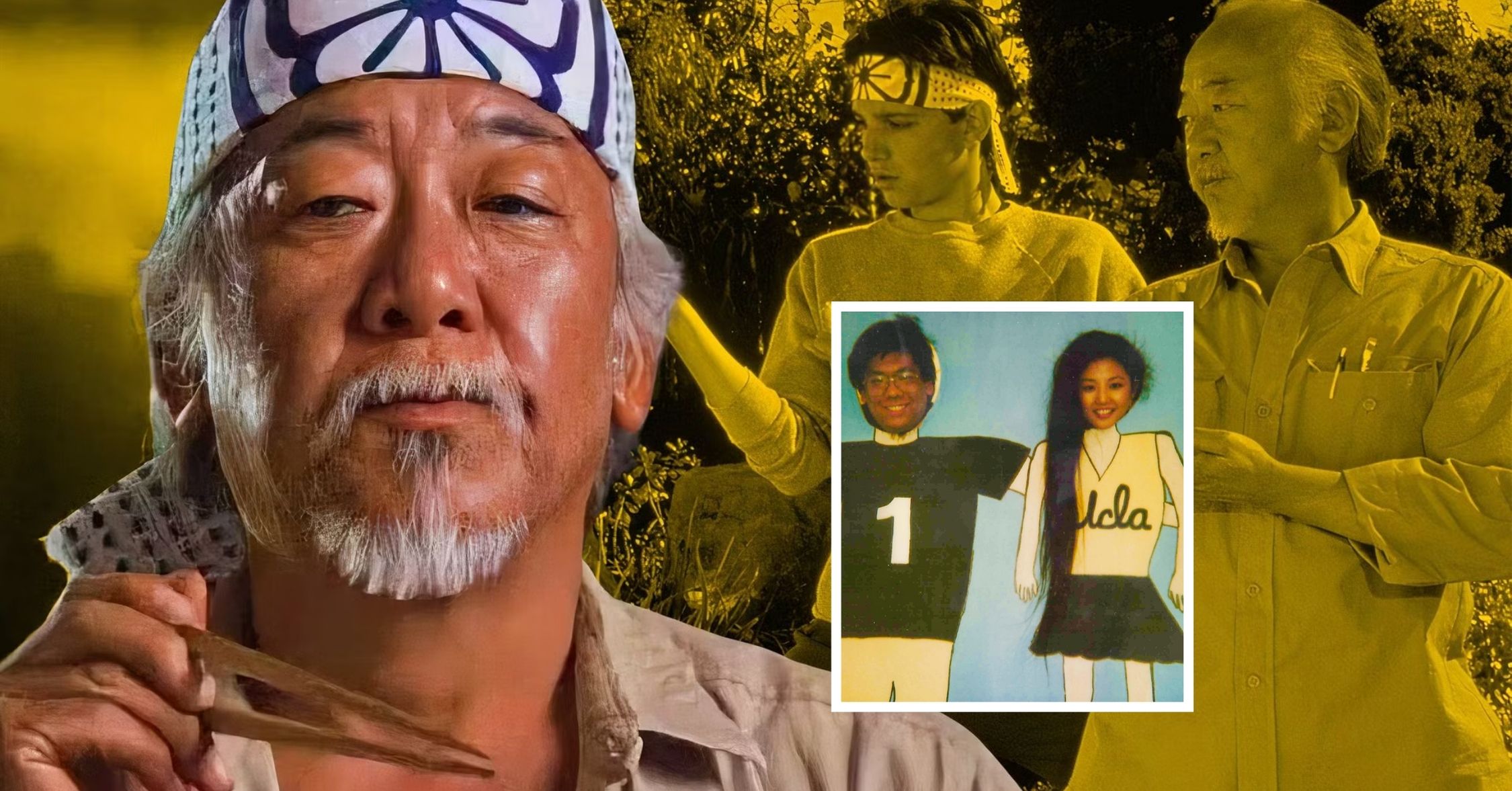
We would sit down in front of the television every day at 5pm to watch the original Star Trek on Channel 5 KTLA. It became an afternoon tradition with us, and I must have seen every episode multiple times. It was also the first time I can remember seeing someone who looked like me on mainstream TV that wasn’t in some way a mockery or put-down of Asian people. Maybe that’s why I loved Karate Kid so much and why I had such a huge crush on Tamlyn Tomita. Even though Mister Miyagi was portrayed as your typical Japanese gardener with a penchant for martial arts and a thick accent, he was cool and wise and turned the tables on most stereotypes of the day that portrayed Asians in secondary roles often subservient to other characters in the movie. Even today, a recent study showed that nearly half of all Asian characters on the screen are the “punchline or butt of the joke.”[1] There is no worse example than the character of Long Duk Dong in Sixteen Candles. Everything about him made him the butt of the joke and only served to insult people of Asian heritage. Research even shows that these stereotypes not only perpetuate the negative image of an entire group of people, but those who view it who are being stereotyped feel shame and anxiety over their portrayal, and it often serves to reinforce their inferior place in society.[2]
Representation matters.
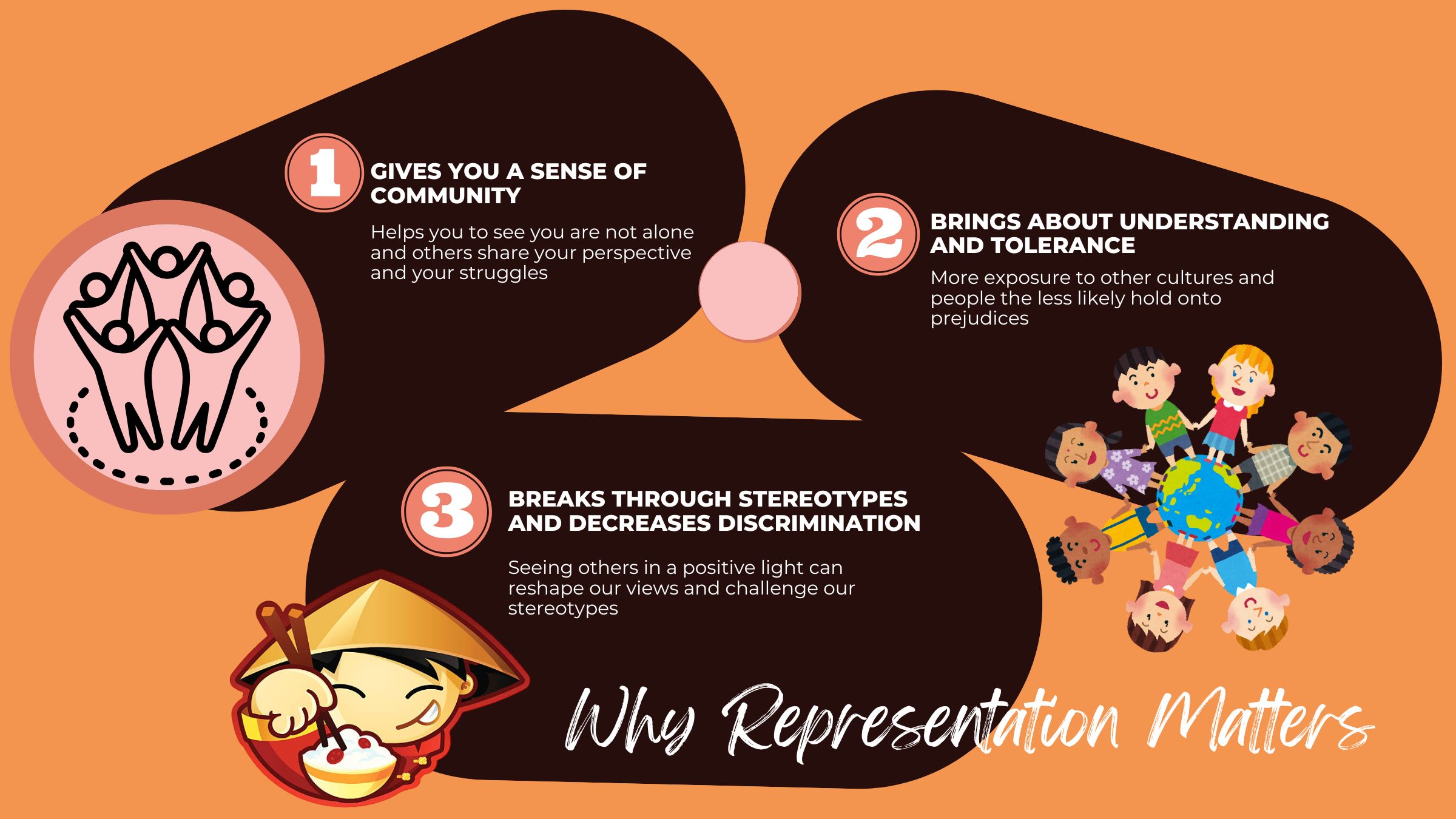
If you don’t believe me, this entire country was formed because of a lack of representation. It wasn’t racial but political and it moved an entire group of people to rebel against the powerful British empire. Most of us remember the phrase taught to us in elementary school – “No taxation without representation.” We wanted to be seen and not just be an afterthought. The same is true for marginalized people in our country today. We want to be seen and celebrated for who we are instead of forced to conform to the norms and expectations of the people around us. Representation matters for a number of reasons no matter your gender, your ethnic heritage, your size, or your identity. And here’s why:[3] It gives you a sense of community. Seeing yourself in media helps you to realize you are not alone. That other people are out there going through what you are going through. It brings about understanding and tolerance. According to Dr. Gordon Allport, researchers believe the more exposure we have to diverse cultures and points of view the less likely we are to maintain long-held prejudices.[4] It can break through stereotypes and decrease discrimination. When we see others in a positive light, it reshapes our view and challenges our stereotypes. We start to see the other as people and not caricatures. And we start to treat one another as the people God created us to be.
We can witness the effect of being seen in stories found in the Bible, too.
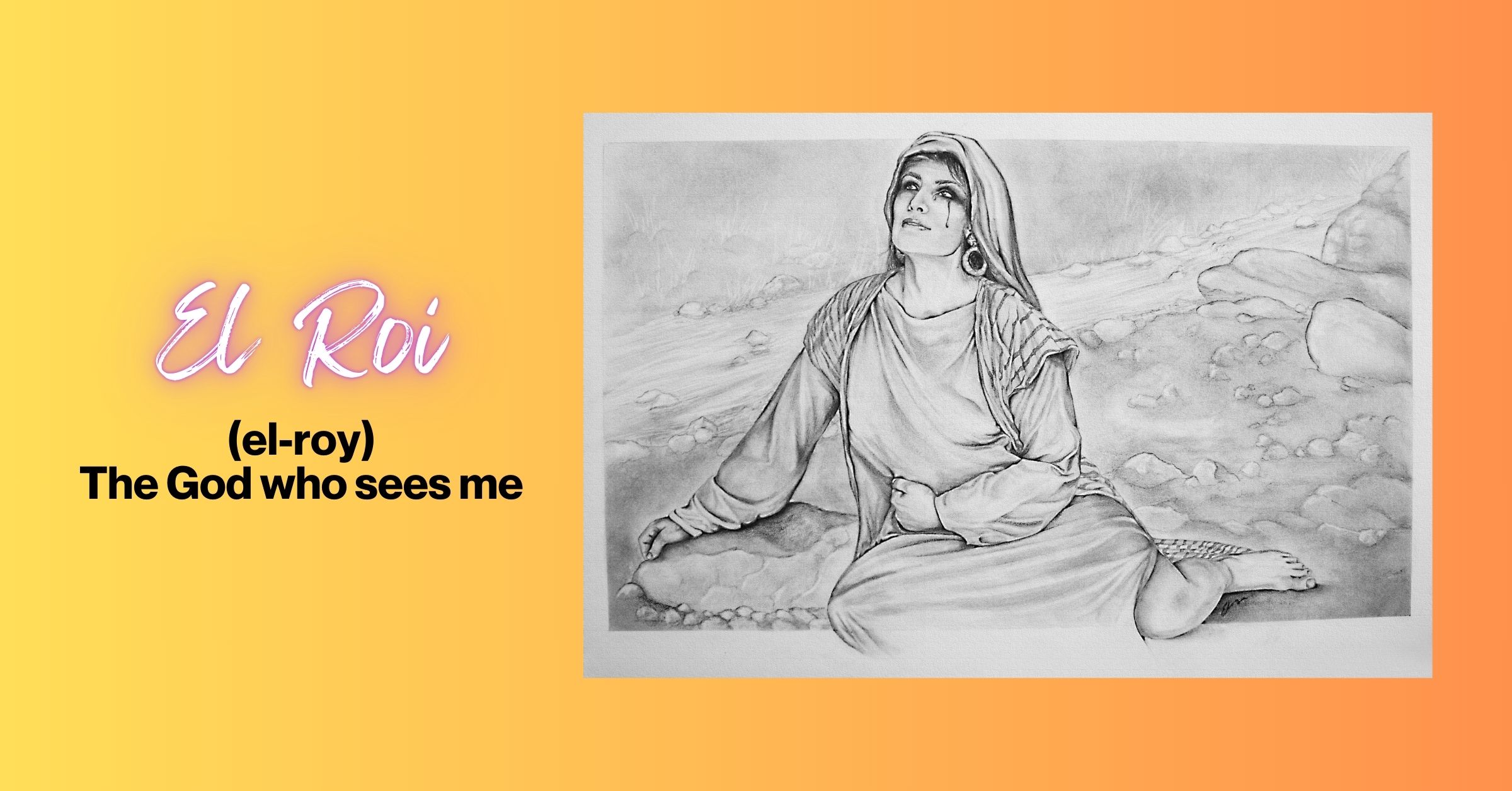
In the story of Hagar from Genesis 16, Hagar is a slave to Sarah, then called Sarai. Sarah as the story goes is unable to give her husband Abraham a child and so she invites her husband to sleep with Hagar in hopes they can have children. And it works! Except now Sarah is jealous and treats her slave so badly that Hagar runs away into desert. But God goes to Hagar and comforts her and promises to make her the mother of a great multitude and Hagar in gratitude gives God a new name – El Roi which means “The God who sees me.” Hagar feels so low after how badly Sarah treats her, but being recognized, being seen meant so much to her she gives God this new name. By the way, God comes through on his promise and Hagar becomes mother to Ishmael who is widely regarded as the founder of Islam, the second largest religion in the world. But then we see another story in the Bible where someone who is outcast by society is seen…
Now he had to go through Samaria. 5 So he came to a town in Samaria called Sychar, near the plot of ground Jacob had given to his son Joseph. 6 Jacob’s well was there, and Jesus, tired as he was from the journey, sat down by the well. It was about noon. 7 When a Samaritan woman came to draw water, Jesus said to her, “Will you give me a drink?” 8 (His disciples had gone into the town to buy food.)
9 The Samaritan woman said to him, “You are a Jew and I am a Samaritan woman. How can you ask me for a drink?” (For Jews do not associate with Samaritans.) 10 Jesus answered her, “If you knew the gift of God and who it is that asks you for a drink, you would have asked him and he would have given you living water.”
11 “Sir,” the woman said, “you have nothing to draw with and the well is deep. Where can you get this living water? 12 Are you greater than our father Jacob, who gave us the well and drank from it himself, as did also his sons and his livestock?” 13 Jesus answered, “Everyone who drinks this water will be thirsty again, 14 but whoever drinks the water I give them will never thirst. Indeed, the water I give them will become in them a spring of water welling up to eternal life.”
15 The woman said to him, “Sir, give me this water so that I won’t get thirsty and have to keep coming here to draw water.”
16 He told her, “Go, call your husband and come back.”
17 “I have no husband,” she replied.
Jesus said to her, “You are right when you say you have no husband. 18 The fact is, you have had five husbands, and the man you now have is not your husband. What you have just said is quite true.”
19 “Sir,” the woman said, “I can see that you are a prophet. 20 Our ancestors worshiped on this mountain, but you Jews claim that the place where we must worship is in Jerusalem.”
21 “Woman,” Jesus replied, “believe me, a time is coming when you will worship the Father neither on this mountain nor in Jerusalem. 22 You Samaritans worship what you do not know; we worship what we do know, for salvation is from the Jews. 23 Yet a time is coming and has now come when the true worshipers will worship the Father in the Spirit and in truth, for they are the kind of worshipers the Father seeks. 24 God is spirit, and his worshipers must worship in the Spirit and in truth.”
25 The woman said, “I know that Messiah” (called Christ) “is coming. When he comes, he will explain everything to us.”
26 Then Jesus declared, “I, the one speaking to you—I am he.”
27 Just then his disciples returned and were surprised to find him talking with a woman. But no one asked, “What do you want?” or “Why are you talking with her?”
28 Then, leaving her water jar, the woman went back to the town and said to the people, 29 “Come, see a man who told me everything I ever did. Could this be the Messiah?” 30 They came out of the town and made their way toward him
Many of the Samaritans from that town believed in him because of the woman’s testimony, “He told me everything I ever did.” 40 So when the Samaritans came to him, they urged him to stay with them, and he stayed two days. 41 And because of his words many more became believers.
42 They said to the woman, “We no longer believe just because of what you said; now we have heard for ourselves, and we know that this man really is the Savior of the world.” – selections from John 4
She was seen and it changed her life forever.
Samaritans were marginalized people during Jesus’ time, much like tax collectors and people with leprosy. They were shunned and it even says so in this passage. Verse 9, “for Jews do not associate with Samaritans.” This was an understatement. Samaritans were considered not worthy of the Jewish people. When it says they didn’t associate with them, the Jewish people treated them like pond scum. But not Jesus. Instead, Jesus spends time with her, and it confuses her because this is not how it is supposed to be. But he not just spends time with her, but he KNOWS her. He SEES her in a way that no one else ever had and he was Jewish which made it even more remarkable. When he spends time with the other Samaritans, they feel seen too and come to faith in Christ. Being seen. Being known. It can transform a person.
As God’s people we have to do a better job of making people feel seen and heard.
We need to be in conversation with those who are not like us and take the time to know them. We need to challenge ourselves to learn about other cultures and other places and other ways of thinking. Not to change our minds or make us more like them, but so we can better know ourselves in relation to the world and so we can recognize that people unlike us have value and worth to the Kingdom of God. This is how we can show love to those around us, by seeing them and hearing them and VALUING them as children of God.

My entire life I had never felt what it was like to see myself reflected in the society around me.
That is until I went to Hawaii for the first time. There are so many people of Japanese heritage on the islands that for the first time I didn’t feel like I was different. The food was all food I grew up with and loved. They even had Asian food at the local McDonald’s! I’ll never forget driving past and seeing a sign in the window for Portuguese Eggs and Rice – in a McDonald’s! The malls were filled with culturally relevant stuff I could relate to. Everywhere we went, the things I had to seek out back at home were everywhere. It seems like a small thing, but when you live your life on the margins it feels oddly empowering to suddenly be at the center. You start to feel like anything is possible. And that’s what God wants for all of his children – to believe anything is possible. In the name of the Father and of the Son and of the Holy Spirit. Amen.
[1] https://www.nbcnews.com/news/asian-america/almost-half-all-asian-roles-serve-punchline-study-finds-n1276103
[2] https://www.scholarsandstorytellers.com/blog/diversity-in-hollywood-how-to-write-asian-characters-more-effectively
[3] The information here comes from two sources although many others support those sources: https://www.blackillustrations.com/blog/representation-matters-5-reasons-representation-in-media-matters and https://www.psychologytoday.com/us/blog/psychology-the-people/202112/why-representation-matters-and-why-it-s-still-not-enough
[4] Ibid. Psychology Today.
God and the Wizarding World of Harry Potter

I’m a Harry Potter fan.
I’ve read all seven books. I’ve seen all eight movies. I own most of the DVDs and then bought them again digitally if I didn’t have them. I’ve even been to the Wizarding World of Harry Potter in Orlando and the Making of Harry Potter Warner Bros. Tour in London! And yet, somehow, AMAZINGLY, I turned out to be a Christian. I don’t believe in witchcraft. I don’t play Quidditch. And I don’t cast spells. Despite the influence of Harry Potter on my life, I turned out okay and you did, too. I believe in God. I believe in Jesus. I don’t do animal sacrifices, much to the relief of my three dogs. But if you were to read all of the stuff on the Internet, you’d think it was a blessed miracle I didn’t turn out differently. Apparently, Harry Potter is EVIL![1] Harry Potter will make you turn away from God. Harry Potter will turn you to witchcraft. For a fictional character, apparently Harry Potter has a lot of power. One woman in Georgia even tried to blame Harry Potter for a school shooting saying that having the books in the school library created an “atmosphere where violence is possible.”[2] She suggested instead that children read the Bible. Now, I’m not opposed to people reading the Bible, but maybe she’s unaware of the thousands of people killed in the name of God from READING the Bible or of the excessive violence we read about IN the Bible or the stories of things people did that I would never want my children to emulate that comes FROM the Bible. If that’s our criteria, then I’m not sure the Bible would pass the test either.

Most Christians who oppose Harry Potter do so because they claim it promotes the occult.
This is the same claim that people made about the role-playing game Dungeons and Dragons back in the late 70’s and early 80’s. And the same claim made about the card game Magic: The Gathering in the 90’s. Simply the inclusion of supernatural elements like ghosts, goblins, and ghouls supposedly promotes the occult. But let me share with you a secret. By definition, the BIBLE promotes the occult. Seriously. It does. So, when people make the claim that something is evil or wrong simply because it promotes the occult and the Bible is against it, I think they haven’t read their Bible very well. It makes me wonder if these people even know what “occult” means. To quote Inigo Montoya from my favorite movie, The Princess Bride, “You keep using that word. I do not think it means what you think it means.” So let’s look at the definition of “occult.” According to the definition, the word “occult” means “Of, relating to, or dealing with supernatural influences, agencies, or phenomena. Beyond the realm of human comprehension; inscrutable.”[3] Of, relating to, or dealing with supernatural influences, agencies, or phenomena. Beyond the realm of human comprehension. That’s what it means. And people would be hard-pressed to say that the Bible doesn’t deal with the supernatural.

The truth is, I believe in ghosts[4].
I do. And in the spirit of Halloween, indulge me for a few minutes as I tell you about a real-life ghost story. Way back in 1716, a preacher, his wife, and his children were all living inside a parsonage provided the church. On a cold December day, the maid, who only helped out occasionally, came rushing in to the room where the family was and told them that she heard loud groans and moans in the dining room. They laughed at her and ignored the warnings. But soon thereafter, one by one, they each heard the ghost. They heard the strange sounds, the moans and groans, and other noises the ghost would make; everyone that is except for the pastor himself. The women of the household didn’t say anything, particularly their mother who was worried that her husband would simply laugh at her and pass it off as something attributed to her imagination. Eventually, though, she had to tell him and she told him about the many incidents that had happened, and sure enough, he reacted just as they thought he would and ignored the warning. But then, nearly three weeks after the ghost began haunting the parsonage, the pastor, Sam, began to hear loud thumping against the bedroom wall. He searched all around the house and couldn’t find the cause and so went to bed. But five days later, on the night after Christmas, the knocking returned. Sam knocked back, hoping to stop whoever it was from bothering him, but every time he knocked, the ghost would repeat the knocking even louder than before! Finally, it got to be too much, and Sam invited some people over to investigate. As they attempted to enter the house, the door suddenly pushed back against them hard! But nobody was there. Nobody could explain the strange disturbances, except to say that there was indeed a ghost. One of Sam’s daughters, Emily, was the first to name the ghost and called him Jeffrey. She would write to her brothers who were away, about Jeffrey’s exploits in the house and what strange things occurred. The ghost would leave for a time and then come back, never hurting anyone, but at times they could almost feel him passing by and hear the rustling of clothing as he went. Jeffrey the Ghost did grant one strange request. The children’s mother asked that she not be disturbed during prayer time, and the ghost never did. Emily’s brother blamed their father for the hauntings, claiming that it was simply punishment for how poorly Sam had treated his wife. The family never did find out the cause of the haunting that lasted for over ten years.
What makes this story even more interesting is that like I said, it is a true story.
It is in fact, one of the most well-documented hauntings in history. There have been many letters and written documents attesting to this as something that actually happened. Now, some of you will scoff and say ghosts don’t exist. Some of you will say ghosts are just figments of our imagination. Some might even say tories about ghosts are the work of the Devil himself, but you would be hard-pressed to say that about THIS ghost story, because the person who wrote about THIS ghost was none other than John Wesley himself, the founder of Methodism. The parsonage belonged to his father Samuel who had “deserted” his wife Susanna for a time over an argument about the “true King of England,” and John always thought Jeffrey’s appearance was punishment for his father’s bad behavior.
Still is it really that hard to believe that there might be such things as ghosts?[5]
After all, we believe in at least one. We even say it in worship. “I believe in the Holy Spirit.” Also called the Holy Ghost. So, belief in at least ONE ghost is part of our heritage and tradition. But that’s not the only supernatural thing we believe in. In fact, one of our most fundamental beliefs we have as Christians is that first and foremost a man came back from the dead to lead us to salvation. You HAVE to believe in the supernatural because by the very definition, our God is a supernatural God. So even if you believed that things like Harry Potter and Dungeons and Dragons had a connection to the supernatural, that doesn’t make it bad or evil. Being supernatural can be good, too. It’s the choices we make that determine if something is good or evil, not the things themselves. People say money is evil. But the Bible tells us in 1 Timothy that it’s the LOVE of money that is the root of evil (1 Timothy 6:10) not the money itself. THINGS are not good or evil. What people do with them IS.

Listen to this story.
We begin our Scripture reading in the church at Antioch. This is the beginning of Paul’s first missionary journey as he is about to be sent forth by the Holy Spirit. While you listen or read along, notice what the Holy Spirit is doing in Paul.
2While they were worshiping the Lord and fasting, the Holy Spirit said, “Set apart for me Barnabas and Saul for the work to which I have called them.” 3So after they had fasted and prayed, they placed their hands on them and sent them off. 4The two of them, sent on their way by the Holy Spirit, went down to Seleucia and sailed from there to Cyprus. 5When they arrived at Salamis, they proclaimed the word of God in the Jewish synagogues. John was with them as their helper.
6They traveled through the whole island until they came to Paphos. There they met a Jewish sorcerer and false prophet named Bar-Jesus, 7who was an attendant of the proconsul, Sergius Paulus. The proconsul, an intelligent man, sent for Barnabas and Saul because he wanted to hear the word of God. 8But Elymas the sorcerer (for that is what his name means) opposed them and tried to turn the proconsul from the faith. 9Then Saul, who was also called Paul, filled with the Holy Spirit, looked straight at Elymas and said, 10“You are a child of the devil and an enemy of everything that is right! You are full of all kinds of deceit and trickery. Will you never stop perverting the right ways of the Lord? 11Now the hand of the Lord is against you. You are going to be blind, and for a time you will be unable to see the light of the sun.”
Immediately mist and darkness came over him, and he groped about, seeking someone to lead him by the hand. 12When the proconsul saw what had happened, he believed, for he was amazed at the teaching about the Lord. – Acts 13:2-12
Elymas became blind by the power of the Holy Spirit.
But what’s more important is why. He didn’t become blind because he was a sorcerer. In fact, the word “sorcerer” here doesn’t have anything to do with magic. This guy is into astrology. But Elymas became blind because he was attempting to lead the proconsul away from the faith. Sergius called for Paul and Barnabas because he wanted to hear the Word of God. And that probably made Elymas worried. Think about it. If the procounsel decided to take advice from God instead of Elymas, he’d be out of a job pretty quickly. I mean, if you’re making a living off of giving people advice based on the supernatural and they start relying on the source of all things supernatural, well you don’t have much to offer. Elymas was probably worried about losing his job so he tries to convince the proconsul not to listen to these two guys and it completely backfires on him. Instead of convincing him NOT to listen to them, he helps convince him that God is real. The Bible warns us against things like divination and astrology not because they have magic or even necessarily deal with something evil. The Bible warns us against these things because they lead us away from God. They influence where we place our faith and they turn our faith away from God and place it in something else. That’s the real danger. That’s what defines sin – a separation from God. That’s what defines sin – a separation from God.

The supernatural is not something we have to be afraid of.
It is a part of our tradition and heritage as Christians. It is often the way God works in our lives, to use us as vehicles for his grace. We don’t need to be afraid of things like Harry Potter, Dungeons and Dragons, or anything else that deals with magic. After all, magic is simply defined as “the use of means believed to have supernatural power over natural forces.” We are a people who believe in ghosts and spirits and the power of faith – all supernatural things. And to me, there is no supernatural power greater than love and our God who embodies love. But it’s the choices we make that determine if something is being used for good or evil. It’s the choices we make that determine if something is being used for God or against God. So choose God. Choose love. Choose God. Choose love. So as long as you have a heart for God and continue to look for Christ in all things, the supernatural – God – is our ally. God works wonders in the world everyday. When I think about the extraordinary circumstances that bring me before you today, when I think about how God was able to bring Cassie and I together, when I think about the miracle of birth I witnessed when Emma was born, I believe in magic. I believe that when a person finally comes to accept Christ as His Lord and Savior, that there is magic in that act, because it means that God’s influence touched that person’s life and brought him out of the world today. I believe in everlasting life, I believe in the Holy Spirit, and I believe that a man rose from the dead to bring salvation to the world and if that isn’t magical, I don’t know what is.
[1] There are many websites and many stories on the Internet decrying the “evil” nature of Harry Potter, but I don’t want to give them any publicity. If you’re curious, just google search “Harry Potter is evil” or some other search term and you’ll understand.
[2] http://atheism.about.com/b/2006/10/07/harry-potter-books-to-blame-for-school-shootings.htm
[3] http://www.thefreedictionary.com/occult
[4] http://www.annecdalton.com/civic.html, http://gaslight.mtroyal.ab.ca/dreamX10.htm, and http://www.historic-uk.com/CultureUK/JohnWesley.htm provided background for this story.
[5] http://www.new-life.net/magic.htm Interesting article on this site about the use of magic and what it means to Christians.
A Radio, A Boat, and a Helicopter

Captain EO!
From a film critic point of view, a horrible movie. The script was awful. The plot non-existent. And the acting atrocious. Michael Jackson was talented in so many things but acting was not one of them. Still, I don’t know anyone who didn’t LOVE the short film when it premiered at Disneyland back in 1986, me included. As bad as the movie was, it had a lot going for it – the music, the dancing, and most of all the special effects. The 3D technology was revolutionary and mind-blowing to see. The film starts out with a spinning asteroid moving closer and closer to you. I knew there was nothing there, but the illusion was so REAL, I reached out to touch it. I could see out of the corner of my eye the rest of the audience were all doing the same thing. The new 3D technology was leaps and bounds ahead of the old red and blue eyeglasses version, but you still needed these special glasses to see it properly. Without them, you could still watch the film, but it was blurry and fuzzy. The glasses helped you to see it in a completely different way.

With everything going on around us, it’s hard not to wonder where God is in all this mess.
From the hurricanes to the election to the fighting in the Middle East to our own lives at home, sometimes we get so frustrated and it’s easy to believe God isn’t there. That might make us feel alone or feel like God just doesn’t care. The truth is, God is with us all the time and is constantly at work in the world and in our lives, but if we don’t train our eyes to see him, if we don’t put on our God glasses, we can miss him. We have to learn to use a God lens. The same is true when we are trying to listen to God. We’re not always tuned in to God’s frequency. Like back when I was young and we had to manually find a radio station. If you didn’t turn the dial to just the right spot, you were likely to get static instead of musiv. Listening for God is often the same way. If we don’t train ourselves to tune into the God frequency we might be listening to a lot of static. The thing is God is trying to communicate with us and interact with us, but we might be looking or listening for the wrong things. There is a reason the prophet Elijah was favored by God. He knew how to listen. There’s one time in particular that God was trying to speak to Elijah and Elijah had to prepare himself to hear God’s Word. From 1 Kings 19:11-13:
11 The Lord said, “Go out and stand on the mountain in the presence of the Lord, for the Lord is about to pass by.” Then a great and powerful wind tore the mountains apart and shattered the rocks before the Lord, but the Lord was not in the wind. After the wind there was an earthquake, but the Lord was not in the earthquake. 12 After the earthquake came a fire, but the Lord was not in the fire. And after the fire came a gentle whisper. 13 When Elijah heard it, he pulled his cloak over his face and went out and stood at the mouth of the cave.
Then a voice said to him, “What are you doing here, Elijah?”
I love that story. It just shows you how in tune Elijah was to God. Most of us would have thought God was in the powerful wind or in the earthquake or in the fire. These are monumental events where we would expect God to be. But Elijah was patient. And waited. And when it was over, he went to the mouth of the cave and listened not to the wind or the earthquake or the fire, but to the gentle whisper and heard God say to him, “What are you doing here, Elijah?” In so many ways we have become desensitized to God’s voice and God’s movement in the world that it’s hard for us to notice God’s movement in our lives. Its why God gave this message to Isaiah.

8 Then I heard the voice of the Lord saying, “Whom shall I send? And who will go for us?” And I said, “Here am I. Send me!”
9 He said, “Go and tell this people:
“‘You will be ever hearing, but never understanding;
You will be ever seeing, but never perceiving.’
10 This people’s heart has become calloused;
they hardly hear with their ears, and they have closed their eyes.
Otherwise they might see with their eyes,
hear with their ears,
understand with their hearts,
and turn and be healed.” – Isaiah 6:8-10 (from the Septuagint translation)
“This people’s heart has become calloused…”
Have you ever had a callous maybe on your hand or the bottom of your feet? It doesn’t happen all at once and most of the time we don’t notice it until suddenly…we do! It forms slowly over time until it’s a hard blob that seems impenetrable and it takes a lot to grind it down and get rid of it. Has your heart become calloused? Do you take time to really hear God? Or like most of us, do you see the storm or the earthquake or the fire and react to that without listening to the soft, gentle whisper trying to get your attention. How easy it is to miss the fine details and focus on the wrong things. Like this: Try to solve this riddle. Rearrange the letters in the phrase ‘new door’ to spell one word. Take a second and try to figure that one out.

SPOILER FOLLOWING – ONLY KEEP READING IF YOU’RE READY TO MOVE ON
Did you get it? “Rearrange the letters in the phrase ‘new door’ to spell one word.” If you were both listening and discerning, you probably realized that the letters in the words “new door” can be arranged to spell “one word.” When I first tried this puzzle, I was listening but didn’t pause to consider the obvious. Now of course, I can’t help but notice what I should have done right away. But that’s the kind of pause we need to take in our faith life to really listen to God. We have to pause, take a calming breath, and really focus on the blessings God is placing in front of you. In the midst of a crisis, pausing is often the last thing we want to do, but it can be the best thing we do also. Really take a moment, pray, and then ask yourself, “Where do I see God today?” Every day. Do that at least once a day. Maybe while you’re doing the dishes or taking a shower or eating your lunch or walking the dog. Take a moment while you’re doing those things, pause, take a calming breath, and just ask yourself, “Where do I see / hear / smell God today?”
I still have to remind myself to do that on a regular basis.
There are times when I can get so caught up in what’s going on around me, that I forget to stop and take notice where God is moving in the world. But I have found that when I do stop, give myself over to God, and trust in him, he opens doors for me I never knew were there. It takes time and practice to hone your God-searching skills. You have to be intentional about it, like any other skill in life. But if you do this regularly, if you stop once in a while and consider where God is moving in your life, pretty soon you’ll be able to see how God is there for you. You’ll know that even in this, in the midst of this coronavirus, that God is right there beside you. If we only listen. God told the prophet Jeremiah in Jeremiah 29:11-13, “11 For I know the plans I have for you,” declares the Lord, “plans to prosper you and not to harm you, plans to give you hope and a future. 12 Then you will call on me and come and pray to me, and I will listen to you. 13 You will seek me and find me when you seek me with all your heart.” Come, pray, listen, seek God and you will find him when you seek him with all of your heart.
I want to leave you today with a little story.
It’s from an episode of the TV show The West Wing and in it President Bartlett is having a tough time. He isn’t sure what God wants him to do so he brings in his family priest for confession. The priest listens to the President and asked him if he prayed and the President said, “Yes, but I didn’t hear a thing and frankly I’m a little mad.” But to the priest it seems obvious and he tells the President this story. “You remind me of the man who lived by the river. He heard a radio report that the river was going to rush up and flood the town and that all the residents should evacuate their homes. But the man said, ‘I’m religious. I pray. God loves me. God will save me.’ The waters rose up. A guy in a rowboat came along and he shouted, ‘Hey, you! You in there! The town is flooding! Let me take you to safety!’ But the man shouted, ‘I’m religious. I pray. God loves me. God will save me.’ A helicopter was hovering overhead and a guy with a megaphone shouted, ‘Hey, you! You down there. The town is flooding! Let me drop this ladder and I’ll take you to safety.’ But the man shouted back that he was religious, that he prayed, that God loved him, and that God would take him to safety. The man drowned. Standing at the gates of St. Peter, he demanded an audience with God. He said, ‘Lord, I’m a religious man. I pray. I thought you loved me. Why did this happen?’ God said, ‘I sent you a radio report, a helicopter, and a guy in a row boat. What are you doing here?’” Who is God sending to you? How might God be trying to get through to you that you need to listen to? Put on your God glasses and tune into the God frequency and find out.

