
No Room

Scotty didn’t get enough credit.
There would be no Captain Kirk or Mister Spock or Bones if not for the man we know as “the miracle worker” – Chief Engineer, Montgomery Scott. One of the few “red shirts” who never died. If you were ever a fan of the original Star Trek, you know Scotty saved the ship over and over again despite the seemingly near impossible tasks he seemed to be given. “I cannot change the laws of physics,” he is known for saying. But then he did. Even though he would protest or say why he couldn’t do it, he always found a way. It remained a mystery how he was able to do the impossible…until he revealed his secret in the movie The Search for Spock. Kirk asks for a repair estimate on the Enterprise and Scotty tells him, “It’ll take at least eight weeks sir…” Kirk is about to respond when Scotty finishes, “but you don’t have eight weeks so I’ll do it for you in two.” Kirk replies, “Mr. Scott, do you always multiply your repair estimates by a factor of four?” And Scotty says, “Of course, sir. How else can I keep my reputation as a miracle worker?”
Scotty gives himself a “buffer.”
He creates space to allocate for the unknown. And that way, he’s prepared for the unexpected. Because life can throw you curve balls, he found that this strategy worked for him. It gave him a chance to expect the unexpected. Disney does that in their theme parks. No matter how short the line is on a ride, the sign outside will always say “5-minute wait.” Even if you can walk right on! That way, if you get through the line early, you’ll be happy and if you don’t, you’ll still think you got through the line early and be happy. They give themselves a buffer zone to be prepared for the unexpected.

Do you give yourself a buffer in life?
Not necessarily a time buffer, but space in your life for the unknown. Our lives are often full of rigidity. We become rigid in our schedules, rigid in our viewpoints, rigid in our expectations, and we can’t handle when things come up that upset the balance we’ve created. We get mad or angry or disappointed in the unexpected. BUT! BUT!!! It’s in the unexpected that the most amazing opportunities can occur. And if we aren’t open to it, we can miss those opportunities. Jesus alludes to this in the story we are going to share together this morning. In our reading, Jesus has been speaking to the crowds after his encounter with the woman who committed adultery. The crowd wanted to stone this woman for breaking the commandments, and instead of telling them “no” or speaking against them, Jesus simply said, “Let any one of you who is without sin be the first to throw a stone at her.” And…they walked away. Not long after this, Jesus is again talking to a group of Jewish people. He is able to convince some of them he truly is the Son of God and he shares with them some wisdom they may not have been ready to hear.
31 To the Jews who had believed him, Jesus said, “If you hold to my teaching, you are really my disciples. 32 Then you will know the truth, and the truth will set you free.”
33 They answered him, “We are Abraham’s descendants and have never been slaves of anyone. How can you say that we shall be set free?”
34 Jesus replied, “Very truly I tell you, everyone who sins is a slave to sin. 35 Now a slave has no permanent place in the family, but a son belongs to it forever. 36 So if the Son sets you free, you will be free indeed. 37 I know that you are Abraham’s descendants. Yet you are looking for a way to kill me, because you have no room for my word. – John 8:31-37
The truth will set you free.
“If you hold to my teaching, you are really my disciples. Then you will know the truth, and the truth will set you free.” We often equate freedom with independence, but that’s not what Jesus is saying here. Knowing the truth won’t make you more independent. In fact, in some ways it’ll make you more DEPENDENT as we realize how much we need Christ in our lives. But it will also give you a sense of inner peace and that’s the freedom Jesus is referring to – freedom from worry, freedom from anxiety because you have faith and trust in Christ. It is in Jesus we gain a spiritual freedom as we focus on what’s important. Having that freedom is what allows us to move forward in life – to grow and learn and fulfill our purpose. But like the group Jesus is talking to, many of us don’t even know we need this “freedom.” We walk around with all of this potential but are so rigid in our thinking and our perceptions we can’t see we are not as free as we think we are. We don’t leave room in our hearts and minds for new possibilities or new ways of looking at the world and so we become slaves to our own selves.

It’s interesting how this group of Jewish people talk to Jesus.
Jesus isn’t speaking to Gentiles. He’s speaking to his own people. And even more surprising, John tells us, is this group of people actually thinks he is the Messiah. John tells us in his Gospel, he’s speaking to believers. And yet, they argue with him. They cast doubt on him. They challenge him and this is why Jesus says they don’t have room in their hearts for his message. They say to him, “We are Abraham’s descendants and have never been slaves of anyone. How can you say that we shall be set free?” First of all, they HAVE been slaves of nearly EVERYONE! The Egyptians, the Assyrians, the Babylonians, even the Persians. How quickly they are to forget but in their indignation they make this broad statement challenging Jesus when they are completely wrong. On top of that, they are missing the point. Christ wants them to know there is a greater freedom he offers than physical freedom. When you live a life in Christ, you can be free in a different way. But their own pride and rigid view of the world gets in the way of seeing the truth. Jesus tries to steer them back when he says, “Very truly I tell you, EVERYONE who sins is a slave to sin.” And everyone sins. So none of us are truly free without Christ. You might not be in shackles or caged like an animal, but you are NOT free. Because sin separates us from Christ, and you become a slave to whatever that sin is. Anger. Hate. Jealousy. Greed. Rage. Pride. WHATEVER it is, it has a hold on you. But when you free room in your heart for the Holy Spirit, when you have that freedom Christ is talking about, you create space for God to do the unexpected and to be open to receive it. That is the remarkable power of God.

Are you like that at times?
Are there times you feel yourself resistant to new ideas and new ways of thinking, even if your old ways are not producing the results you were hoping for? Christ is asking us to be open to the possibilities, to give room in our hearts to where God might be leading you, to allow for the movement of the Spirit in your life. God wants you to leave a buffer for the Spirit to work within you and around you. Because it’s in those gaps that amazing things can happen. It’s a lesson it’s taken me a while to learn, but that has become easier over time. It wasn’t always easy for me to listen to where God was leading me. I often thought that my plans were his plans and that made me unwilling to open up to where else God might want me to go. That was the case when I found out I wasn’t going to be coming back to Roswell UMC. My District Superintendent, my boss in the Methodist system, told me it was likely I was going to a small rural town outside of Atlanta. It was a town that was racially divided. It was a town that didn’t have a good school system. It was a town where Cassie would have to commute three hours every day for work on a good day and it was rarely a good day for traffic in Atlanta. And it was a place that didn’t fit any of my gifts and graces. How in the world could this be where God was sending me? We tried everything to forge our own path, to go the route WE wanted to go, but every time we tried, we kept hitting roadblocks. Finally, I gave up. Normally, I’d say that was horrible, but in this case it was the best thing I could have done. I literally went into my closet, laid down on the floor and in the pitch blackness of the room, I prayed. And I just said to God, “I can’t believe this is the path you want me to follow, but if it is, I’ll do it. But if it isn’t, if this is not where I’m supposed to be, would you please open a door for me? No matter what door is opened, I’ll walk through it.” That honest prayer, where I finally created room in my life for God to work, helped me to let go and trust in God like I should have all along. It only took an hour to get a response. After that prayer, I went back to my desk and started going through my emails and found one from a friend of mine out in California who just became a DS herself. She asked how things were going and I opened up to her about our situation. About an hour later, I got a phone call that changed the course of my life. I ended up coming back home to California to serve in our conference. And it has just been one God-led moment after another. It hasn’t always been smooth and rarely the way I expected it to turn out, but I have felt so blessed. All because I was finally willing to open myself up to where God was leading me.
Are you open to where God is leading you?
Do you pray regularly? Not for what you want or what you need, but do you ever pray for what God needs from you? Are you open to new ideas and new ways of doing things? Or have you become so rigid in your life that there isn’t room for where God might be leading you next? In any situation where you find difficulty, do what Scotty did and give yourself a buffer. Allow room for the unexpected and the unknown. Give different ideas a chance and you might be wildly surprised at where God is taking you.
Some Assembly Required

Three of the most dreaded words I know in the English language – Some Assembly Required.
They make it seem so innocent, but we all know what it really means: “Advanced degree in engineering.” That’s what they should put on the side of the box. It would be more accurate. One time, we bought our oldest daughter, Eve a new bicycle. I was in the store and saw one I thought would be great for her, so I found a salesperson and asked them to get one for me from the back. He asked if I wanted them to put it together for an extra $10 bucks. I smiled politely and said, “No thanks,” but inside I was laughing. I mean, seriously. Pay an extra $10 to have someone put together a bicycle? Come on! So, I took the new bike home and started to put it together. Cassie came in and asked why I didn’t just have the guy put it together for us, and I laughed and said, “Honey. I’m not going to waste $10 bucks to have someone do something I can do for free. I used to do this all the time when I was in high school.” You know, high school at the time was 25 years in the past. Bicycles have changed slightly. But I was confident! After about 5 hours, I wheeled the bicycle out and let Eve try it. But darn it if there weren’t a couple of extra pieces. Cassie asked me, “How come there’s extra pieces?” And I told her as a good husband ought to, “Oh, they always do that. They put extra pieces in.” Cassie just looked at me as if to say, “You know, this isn’t a LEGO set.” I’ll tell you; I should’ve paid the $10 bucks. Not just to save me 5 hours of work, but I never did put it together right. Wouldn’t it be great if Pay someone $10 bucks and have your problems solved. But life isn’t like that. We make choices every day on how to live our lives. Sometimes we build the bike correctly. Sometimes…we put the brake assembly on wrong. The key is to choose the right set of directions for your life. Because no matter how hard you try to build that bicycle, if you have directions for an Easy Bake Oven, you’re going to have an awfully hard time.

But God gives us the instructions to a better life.
Through his Word, through the life of Jesus, by the guidance of the Holy Spirit – it’s all there if we simply follow him. Because when we listen to God, we make the kind of choices that will help us to have the life he wants for us. BUT if we ignore his instructions or put OTHER things ABOVE God (money, status, famous people), or think we can do it on our own, that’s when we get into trouble. Because we remove God from the process. You can’t make mashed potatoes without potatoes. You can’t make omelettes without eggs. You can’t have the life God wants for you, if you don’t include God in that life. That’s why God warns us against living our lives according to things like horoscopes, witchcraft, and mediums. Not because these things are evil, but because when we put our faith in things other than God, we start living a life separated from God and we become something other than what God wants us to be. And everyday, everyday when you wake up, you make that choice on how you are going to live your life just as surely as you choose what clothes to wear and food you’re going to eat, except the consequences can be much bigger.

Our reading this morning comes from the book of Joshua, Chapter 24.
In this chapter, God is speaking through Joshua. Joshua’s lived a long and fruitful life and has seen his people finally at peace. There are no enemies to fight, and they live in the land that God had promised them so long ago. So, Joshua is getting ready to die. He knows it’s his time and has one last message from God. Joshua gathers all the people together at Shechem and begins to tell them what God has said.
2 Joshua said to all the people, “This is what the LORD, the God of Israel, says: ‘Long ago your forefathers, including Terah the father of Abraham and Nahor, lived beyond the River and worshiped other gods. 3 But I took your father Abraham from the land beyond the River and led him throughout Canaan and gave him many descendants. I gave him Isaac, 4 and to Isaac I gave Jacob and Esau. I assigned the hill country of Seir to Esau, but Jacob and his sons went down to Egypt.
And from there, he gives the people a mini biography of God. He tells them of all the times God has been there for them. When they cried out in Egypt, when they were conquered by the Amorites, when he saved them from Balak, and on and on. And each time, God was there. God has always been there. It was the people who turned on God. And once again, God has saved them and given them this land. And so now, Joshua makes this one last proclamation.
14 “Now fear the LORD and serve him with all faithfulness. Throw away the gods your forefathers worshiped beyond the River and in Egypt, and serve the LORD. 15 But if serving the LORD seems undesirable to you, then choose for yourselves this day whom you will serve, whether the gods your forefathers served beyond the River, or the gods of the Amorites, in whose land you are living. But as for me and my household, we will serve the LORD.”
Who do you serve?
Because it IS a choice. And it is a choice we make everyday. You might be thinking you already follow God, but how many times do we SAY we follow God, but act as if we don’t. I’m sure almost all of us have been there at one time or another. I know I have. I want to follow God each and every day, but I know I’ve made my share of mistakes. I know I haven’t always done what he wanted and I’ve been selfish in my actions. But thankfully, we follow a God who loves us and forgives us for our mistakes. That’s not what gets us in trouble. Making mistakes is part of being human. The trouble begins when they stop being mistakes. When we make the conscious choice to put the things of this world before God, that’s when we dishonor all that God has done for us. Then we become as God said through Isaiah, “These people come near to me with their mouth and honor me with their lips, but their hearts are far from me.” (Isaiah 29:13) Are you following the instructions God has for your life?

It’s funny sometimes how so little has changed.
From the time of the early writers of the Old Testament to today, we still have many of the same problems. Moses uses the examples of horoscopes and witchcraft and mediums as things that might steer us away from God, and we still have those today. Now we also have the internet and YouTubers and TikTok superstars to go along with that. People on the app formerly known as Twitter who spout lies and half-truths, and millions follow them! Sometimes followers of Christ go too far and condemn all of those things as if they are the cause of evil, but they are not. When I was growing up, it was Dungeons and Dragons that got a bad rap. People were saying it was the “work of the devil.” As a Dungeon Master myself, I was offended by that and those attitudes turn people away from faith. As I got older it became things like Magic the Gathering (something I also enjoy) and then it became Harry Potter. None of those things are evil or bad and there are plenty of good people (and good Christians) who enjoy those things. It’s when those things dominate your life to the point where they push out what’s important – like God and family and friends – that’s when it becomes dangerous. Again, it’s not about the things in our life, but about the choices we make. And if you follow God’s call on your life, you don’t have to worry about it because it’s all there in the instructions.

When I was growing up, my family and I often went up to the Mammoth Mountain area to vacation.
We’d stay up at June Lake and go fishing every day. We’d get up early, go out to the lake and rent a motorboat for the day and go out onto the water. Those were awesome times. I loved fishing with my dad. It would be so much fun. We’d take what we caught and bring it back to the cabin for dinner that night, or we’d freeze it and bring it back with us. We always had a good time. Except once. The mosquitoes were biting pretty bad and I’m somewhat allergic to mosquito bites. Not horribly allergic, but they would swell up on me when I got bitten and I’d have these huge red welts on my skin. The next day, my dad brought some mosquito repellant out with us. Well, on the way to where my dad wanted to fish, I was reading the back of the can and it said, “WARNING!” in BIG capital letters, “WARNING! Do not use this product on your face or mouth.” When we got to our fishing spot, my dad pulled out the can, and told me to stand up in the boat and he began spraying my clothes all over. Then he said, “Close your eyes” and he held up the can toward my face! I looked at him with alarm and said, “Dad, it says on the can not to use it on your face.” And my mom said, “Kensuke, maybe you shouldn’t spray it on his face.” And there I am nodding my head. And my dad said, “I know what I’m doing. Just close your eyes. They don’t really mean it when they say that.” So, I closed my eyes, and no sooner did that spray hit my face, I started shouting out loud, “My eyes! My eyes!” I dropped to the floor of the boat, reached my hands over the side while my dad is holding on to my jacket to keep me from going over, and I’m throwing water into my face, trying like mad to get rid of the stuff. Needless to say, we didn’t catch any fish from THAT spot, and I spent most of that morning looking at my mom and saying, “Am I going blind? Hold up your fingers.” All because my dad didn’t follow directions. He had the can. The directions were clear. But he chose to ignore them. We do that to God sometimes, too. We have the directions, but we don’t follow them. If you’ve never made the choice to really follow a Christ-like life, I want to challenge you to give it a try. To test God in this and see how your life could be better. If you already follow God, challenge yourself this week to take a look and see where you might not be doing as God would want you to do, and work on that. Because the truth is, God wants you to have a better life. You just have to choose to do so.
Thirty Good Years
Being successful in the world takes one key ingredient.
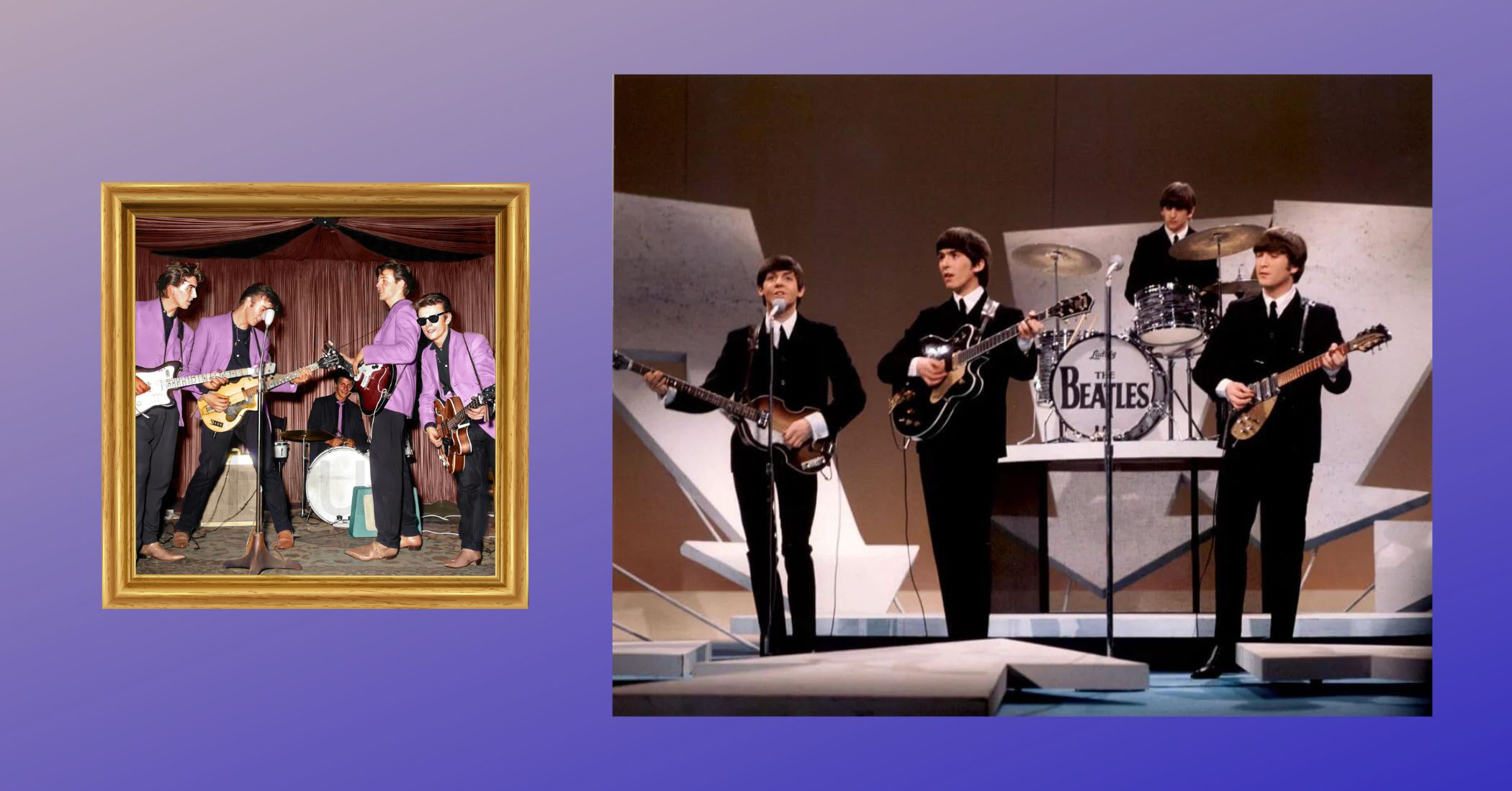
And it might not be what you think. You might guess talent, and yes, talent helps, but talent alone will get you only so far. We all know of talented people who couldn’t make a career out of what they love to do or haven’t achieved the level of success their talent merited. So, is it status, money, luck, opportunity? All those things contribute to being successful, but even with them, there is still one thing missing. Commitment. Commitment is the key ingredient to success. Take the Beatles for instance. The Beatles are one of the most successful rock bands in the history of music, but did you know before they ever hit the shores of America, John Lennon and Paul McCartney had been playing together for about seven years? In 1960 they played a gig in Hamburg, Germany and unlike other places they played at, they would play five to eight hours straight. John once said in an interview about that time together, “We got better and got more confidence. We couldn’t help it with all the experience playing all night long…. In Liverpool, we’d only ever done one-hour sessions, and we just used to do our best numbers, the same ones, at every one. In Hamburg, we had to play for eight hours, so we really had to find a new way of playing.”[1] It was because of this large amount of time playing together, constantly finding new ways to challenge themselves and become better, that pushed them to a new level of talent and it was the difference for them between long-term success and short-lived fame. It’s what made the Beatles into the Beatles instead of Dexy’s Midnight Runners. Who is that you might be wondering? Exactly.
Malcolm Gladwell called this level of commitment the 10,000 Hour Rule.
His theory is that it takes 10,000 hours honing your craft to be exceptional at whatever it is you’re doing. Whether in sports, entertainment, or even in business, it’s that dedication to putting the hours in that makes the difference. We often hear stories about our favorite ball players who are the first ones to practice and the last ones to leave. We hear about superstar athletes who, even at the height of their game, will ask the coach to shag a few more fly balls, to stay late and keep working on their free throws, or to spend just a little more time studying film. And Gladwell said it was the 10,000 Hour Rule that separates the average from the exceptional. He put it this way, practice isn’t the thing you do ONCE you’re good. It’s the thing you do to MAKE you good. And that’s true in every aspect of our lives – work, school, relationships, even our faith. It takes commitment to become successful.

Commitment is something the Bible talks about as well.
The story of Ruth opens with a famine in the land of the Israelites and so Elimelek, his wife Naomi, and their two sons Mahlon and Kilion all move to the country of Moab to start a new life. Eventually, and the Bible doesn’t tell us how long, but eventually Elimelek dies and Naomi is now a widower. Her two sons marry Moabite women named Orpah and Ruth, but after about 10 years of marriage, both of Naomi’s sons die, too and now Naomi is all alone, which is a HUGE deal in early Israelite society. Back in those days, a woman without a husband or sons to provide for the family likely suffered an impoverished life. Naomi decides to return to Judah where she heard God had answered the prayers of the people and provided food. But before she goes, she decides to release her daughters-in-law from their duty to her. And that is where we pick up the story.
8 Then Naomi said to her two daughters-in-law, “Go back, each of you, to your mother’s home. May the LORD show you kindness, as you have shown kindness to your dead husbands and to me. 9 May the LORD grant that each of you will find rest in the home of another husband.”
Then she kissed them goodbye and they wept aloud 10 and said to her, “We will go back with you to your people.”
11 But Naomi said, “Return home, my daughters. Why would you come with me? Am I going to have any more sons, who could become your husbands? 12 Return home, my daughters; I am too old to have another husband. Even if I thought there was still hope for me—even if I had a husband tonight and then gave birth to sons— 13 would you wait until they grew up? Would you remain unmarried for them? No, my daughters. It is more bitter for me than for you, because the LORD’s hand has turned against me!”
14 At this they wept aloud again. Then Orpah kissed her mother-in-law goodbye, but Ruth clung to her.
15 “Look,” said Naomi, “your sister-in-law is going back to her people and her gods. Go back with her.”
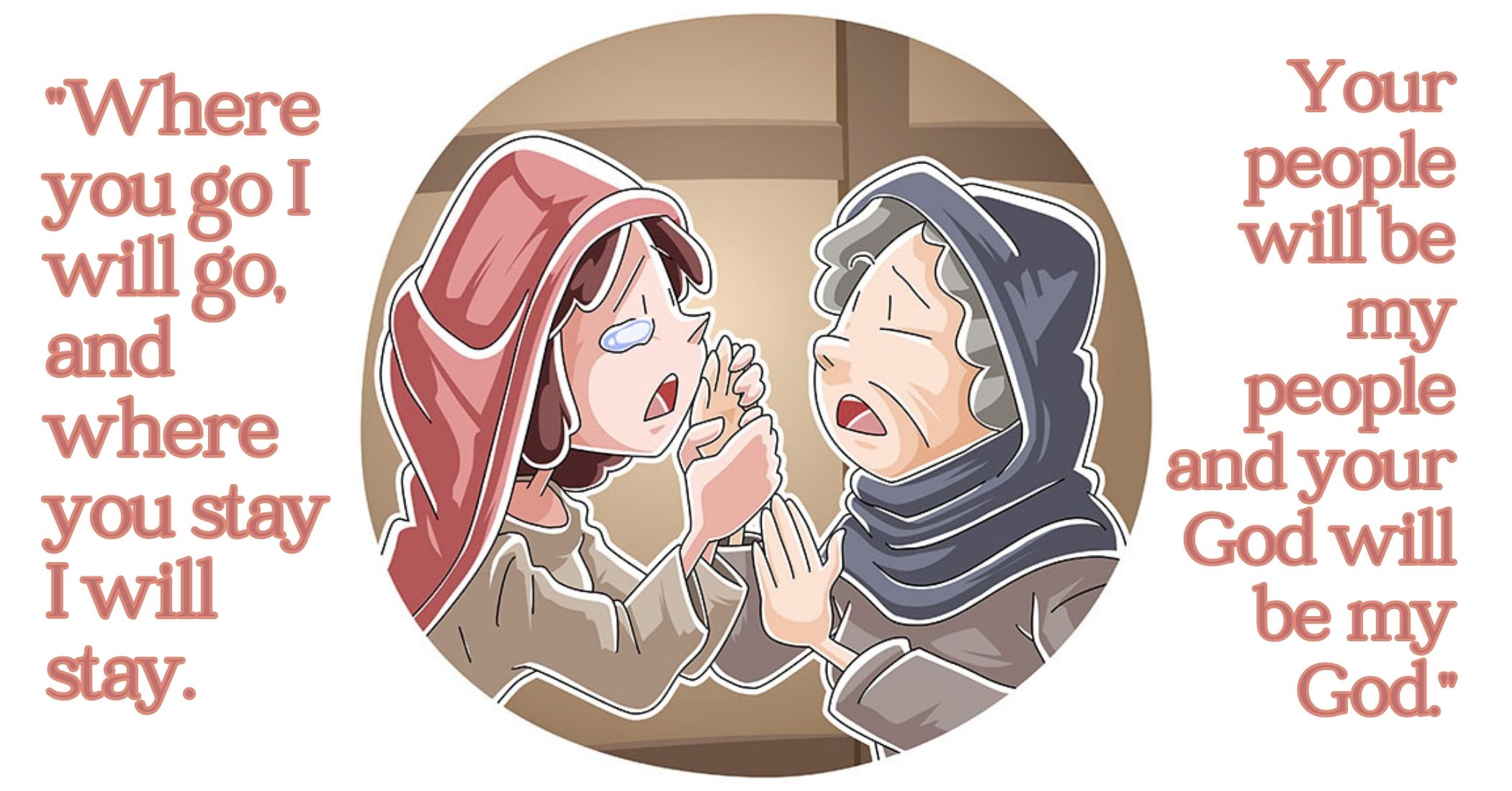
16 But Ruth replied, “Don’t urge me to leave you or to turn back from you. Where you go I will go, and where you stay I will stay. Your people will be my people and your God my God. 17 Where you die I will die, and there I will be buried. May the LORD deal with me, be it ever so severely, if even death separates you and me.” – Ruth 1:8-17
Ruth personifies the very essence of commitment.
She has every reason to leave. Her prospects of staying with Naomi are not good. Ruth, being relatively young or at least young enough to find another husband, could have made a good life for herself had she gone back. Without a husband and without other resources, Naomi was looking at possible starvation or at the very least a poor, tenuous life. But instead, Ruth chooses to stay, even though Naomi, without a husband or sons, was without land and without property. Naomi was essentially a nomad. Ruth says to her though, “Where you go I will go, and where you stay I will stay. Your people will be my people and your God my God. Where you die I will die, and there I will be buried.” This is the kind of commitment God seeks from us. The kind that is faithful in both the good times and the bad, that sees things through and doesn’t give up. It’s the kind of commitment we’re supposed to have toward God when the Bible tells us that we are to “love the Lord with all our heart and all our soul and all our mind (Matthew 22:37).”
But often we think of commitment as something negative.
Like a burden or an unwelcome task. When we talk about commitment, we’re as likely to conjure up images of marriage as we are to being locked up in a mental institution. It’s this kind of perception of “commitment” that makes us think of it as “lacking freedom.” But the truth is commitment is the ultimate freedom because commitment is a choice. It’s a choice we make every day. Like Ruth, we choose to stay in our relationships. We choose to follow Christ. We choose to follow our passions. The problem is that in our disposable society we often choose NOT to commit to one another. We choose instead to leave an escape hatch. But when we always have one foot out the door, we are never really in it. We’re never fully committed and thus we can never enjoy the fruits that come from commitment.
In the book, have a little faith by Mitch Albom, Mitch and the rabbi talk about these fruits.
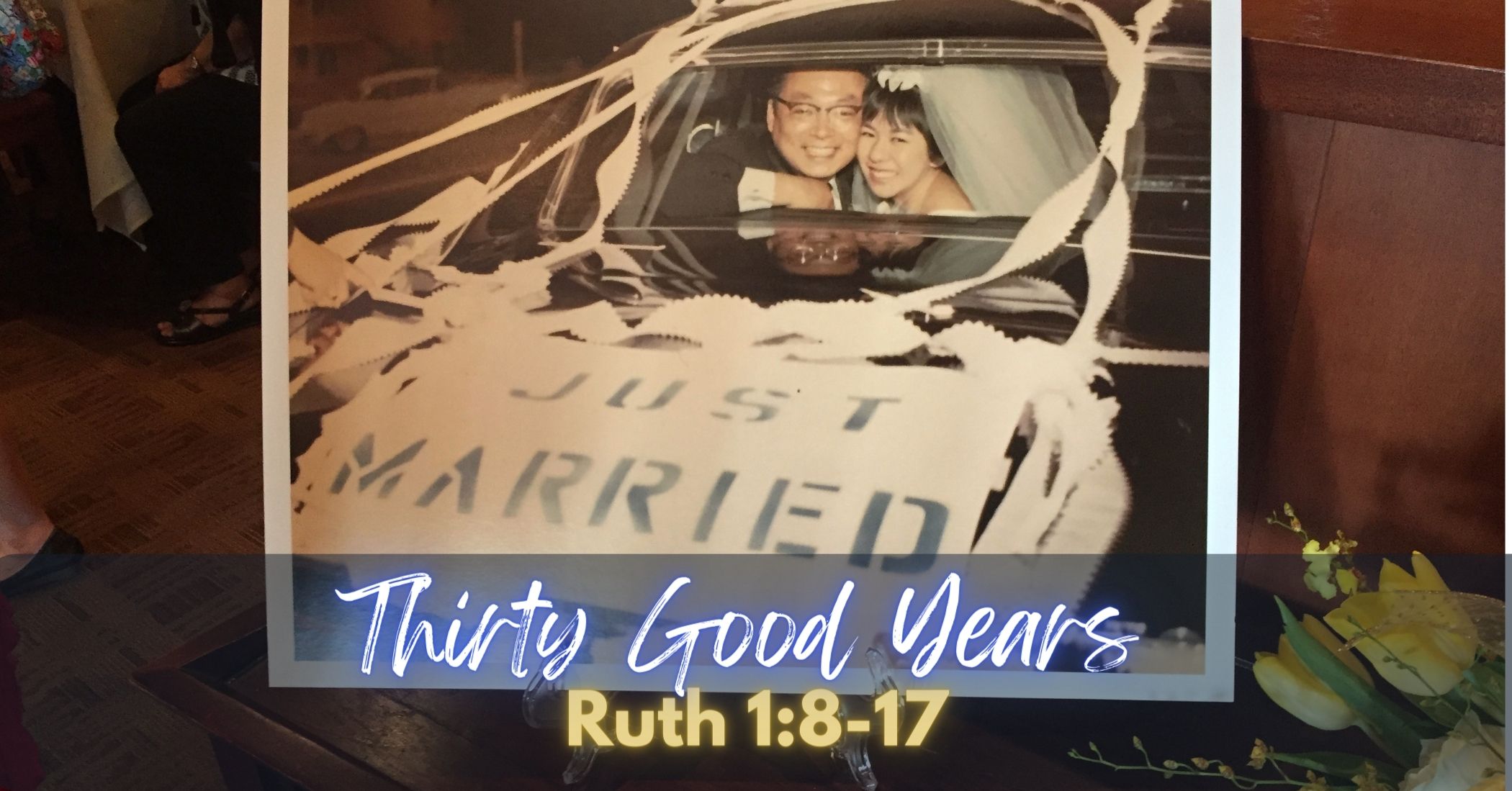
Mitch sees them in the relationship the Rabbi has with his wife, Sarah and talks to him about how they are truly a team. They stick together through thick and thin. Sarah would often joke with congregants and tell them, “I’ve had thirty wonderful years with my husband, and I’ll never forget the day we were married, November 3, 1944.” “Wait…,” someone would say doing the math, “that’s way more than thirty years ago.” “Right,” she would say. “On Monday, you get twenty great minutes, on Tuesday you get a great hour. You put it all together, you get thirty great years.” The Rabbi knew there was wisdom in his wife’s light-hearted joke. He told Mitch. “I think people expect too much from marriage today…They expect perfection. Every moment should be bliss. That’s TV or movies. But that is not the human experience. Like Sarah says, twenty good minutes here, forty good minutes there, it adds up to something beautiful. The trick is when things aren’t so great, you don’t junk the whole thing. It’s okay to have an argument. It’s okay that the other one nudges you a little, bothers you a little. It’s part of being close to someone. But the joy you get from that same closeness – when you watch your children, when you wake up and smile at each other – that, as our tradition teaches us, is a blessing. People forget that.” Why do they forget it? “Because the word ‘commitment’ has lost its meaning. I’m old enough to remember when it used to be a positive. A committed person was someone to be admired. He was loyal and steady. Now a commitment is something you avoid. You don’t want to tie yourself down. It’s the same with faith, by the way. We don’t want to get stuck having to go to services all the time, or having to follow all the rules. We don’t want to commit to God. We’ll take Him when we need Him, or when things are going good. But real commitment? That requires staying power – in faith and in marriage.” And if you don’t commit? I asked. “Your choice. But you miss what’s on the other side.” What’s on the other side? “Ah.” He smiled. “A happiness you cannot find alone.”

And that’s what commitment is all about.
Commitment is a happiness you cannot find alone. Commitment is a happiness you cannot find alone. That statement is true for marriages, for families, for friends, for faith, and for communities. There is something about commitment to one another, a commitment to an idea or an ideal, that builds character, that helps us grow, that deepens our faith that we cannot find without it. If you never committed your life to Christ or made a commitment to join a faith community, I want you to consider doing so. If you would like to give your life to Christ, let me know so we can journey down that road together. Commitment is a journey. It sees us through difficulties and drives us to even greater success. And when we commit to one another, whether that commitment is to a spouse, a friend, our families, our church or our God, we build a wealth of experiences that leads us to a happiness we cannot find alone.
[1] Malcolm Gladwell, Outliers, p.49.
The Key to Happiness

If I said, I have a surefire way of making you 10-25% happier with your life would you do it?
It isn’t illegal. It isn’t harmful. And it doesn’t cost you anything. Would you do it? Sounds to good to be true, right? But if all that is true (and it is) wouldn’t you at least try it? The funny thing is the key to happiness is much more simple than you probably imagined. So simple in fact, you will think, “Now why didn’t I do that before?” Some of you, even after I tell you what it is, may not do it, and that’s all right. But if you DO it, you will be happier. Numerous studies have shown this to be true. In fact, you’ll be happier than if you won a million dollars in the lottery.[1] Want to know what it is? You’re going to have to wait. We’ll get to that in a few minutes.
In our last post, we began exploring life through the context of the book have a little faith.
In the book the author, Mitch Albom, follows the lives of two men who have had a powerful impact on his life – a rabbi and a Christian minister. And through their lives he discovers answers to some of life’s hardest questions. This week we are going to focus on the elusive quest for happiness. How can we live a happier life? When Mitch asked the rabbi this question, this was his answer:
“The things society tells us we must have to be happy – a new this or that, a bigger house, a better job. I know the falsity of it. I have counseled many people who have all these things, and I can tell you they are not happy because of them. The number of marriages that have disintegrated when they had all the stuff in the world. The families who fought and argued all the time, when they had money and health. Having more does not keep you from wanting more. And if you always want more – to be richer, more beautiful, more well known – you are missing the bigger picture, and I can tell you from experience, happiness will never come.” So, have we solved the secret of happiness? “I believe so,” he said. Are you going to tell me? “Yes. Ready?” Ready. “Be satisfied.” That’s it? “Be grateful.” That’s it? “For what you have. For the love you receive. And for what God has given you.” That’s it? He looked me in the eye. Then he sighed deeply. “That’s it.”

That’s the key to happiness. Be grateful.
Be grateful. Studies show that being grateful increases your happiness anywhere from 10%-25% over a period of time. 10% to 25%![2] Not just for the day or for the moment, but sustained happiness over a period of time. Dr. Robert Emmons did an experiment where he asked people to write down once a week five things they were grateful for. He compared their results and their levels of reported happiness and found that this simple exercise of recording your blessings increased their happiness by 25%. Not only that, but they were more optimistic about their future, felt better about their lives, and exercised 1.5 hours more per week than those in either of the other two groups. They did a similar study with a group of patients suffering from neuromuscular disorders, often a result of a delayed reaction to the polio virus. They wanted to find out if their hypothesis held up even among people who had deeper challenges. They found this group also expressed more happiness and optimism than those who didn’t write down their blessings and they even slept better than the other group.[3] What most astounded me was the results of a study done that showed over a six-month period you would be happier recording your blessings for five minutes a day than winning more than a million dollars in the lottery. In that moment, winning the lottery seems pretty awesome, but in just six months your happiness increase is barely up 4% to what it was before, compared to 10% by people who simply journal their gratitude – 2.5 times happier than winning the lottery. Want to know other ways gratitude makes your life better? People like you more. You are generally healthier. It can boost your career. It reduces materialism and increases your spirituality. It improves our sleep. We live longer lives. It makes us feel good. It helps us to relax. We have better marriages. We have more and better friends. And at work it can improve our productivity and decision making. And those are just SOME of the benefits of being grateful.[4]

But gratitude seems to be going the way of the dinosaur.
More and more we seem to have an attitude of entitlement or expectation rather than thankfulness. How many times have you opened the door for someone and they just walk through without saying anything? How many times have you let someone in front of you while driving and they don’t acknowledge you with even a “thank you” wave? Whatever happened to the “thank you” wave? How absent is our attitude of gratitude? Well don’t worry. This isn’t something new. In fact, Jesus had to deal with this problem. Interestingly, this encounter with Christ happens right after Luke’s version of the mustard seed story, which is a little bit different than the one we heard last week. But this is what happened.
11 Now on his way to Jerusalem, Jesus traveled along the border between Samaria and Galilee. 12 As he was going into a village, ten men who had leprosy met him. They stood at a distance 13 and called out in a loud voice, “Jesus, Master, have pity on us!” 14 When he saw them, he said, “Go, show yourselves to the priests.” And as they went, they were cleansed.
15 One of them, when he saw he was healed, came back, praising God in a loud voice. 16 He threw himself at Jesus’ feet and thanked him—and he was a Samaritan. 17 Jesus asked, “Were not all ten cleansed? Where are the other nine? 18 Has no one returned to give praise to God except this foreigner?” 19 Then he said to him, “Rise and go; your faith has made you well.” – Luke 17:11-19 [5]

Ten men all had the same affliction – leprosy. Ten men were healed. But only one came back.
Only one came back to give thanks. They might have wondered why Jesus was sending them to the priest, but as they walked, the answer became obvious – to be welcomed back into society. Only the priest could declare someone as having been cured of leprosy. And being cured was a big deal because having leprosy meant you were ostracized from society. You were banished not only for fear your disease might spread, but because people thought you were being punished by God for some sin you had committed. The disease was a mark of God’s wrath upon you. So to be suddenly cured of something that had kept them away from family, friends, and the rest of society would have been a miracle to say the least. But only one of them returned to give thanks to the one who made it possible. Maybe the others were in a hurry to get the approval of the priest. Maybe the others never put two and two together that through Jesus, God had cured them. Maybe they never even thought about it and were just glad their whole ordeal was over. But one did. One of them realized that this gift came from Christ and came back in gratitude. The irony here is that it was one of the least likely people to have done so – the Samaritan. The Samaritan people were looked down upon by the Jews. They were considered unclean because most of them had intermarried with others in the area so the Jews looked down upon them as unworthy. The Samaritan, more than any other, would have reason not to come back – out of spite, out of anger, out of loneliness. But instead, he realizes who the source is of his many blessings, and comes back to give thanks. Now, the Bible doesn’t tell us how many foreigners were in this group, but likely there were at least as many Jewish people as there were others. But none of them came back except the one. How much is that like us today? We take for granted God provides. We take for granted Jesus offers salvation. And we do little to appreciate it. Instead we get angry at God when things don’t go our way instead of being grateful for what we do have.

We live today in an age of entitlement.
People EXPECT to have things given to them. People EXPECT to have things go right. We live with the philosophy that I’m a good person so good things should happen to me and we equate “good things” with “things we want to have happen.” We equate “good things” with “things we want to have happen.” Even if we don’t do anything to deserve them. And we get mad when they don’t. On one of our trips to Los Angeles, my daughter Emma and I went to this little food place called Milk where they serve the best red velvet cupcakes I’ve ever tasted and these really yummy morsels called Ooey Gooey Chocolate Chip Cookies. Don’t get me started or we’ll never get out of here. But as we left the car and walked to the place, there was a homeless woman asking for money from anyone who passed by. And seeing her really bothered Emma. She felt bad this woman was without a home and without a place to call her own, so as we walked back she asked me, “Daddy if that woman is still there, can I give her my money?” She reached into her pocket and pulled out what little change she had, and I smiled at her and said, “Of course, honey. That would be nice.” And sure enough, the woman was still there, so Emma went up to her and gave her every last cent in her pocket. I know it made Emma feel good to do what she could to help her. Emma will often give her own money to Sunday School or the homeless or whatever else she feels compelled to give towards. So the woman took her money, looked up at her, looked up at me, and said, “That’s it?!” I was shocked. “That’s it?!” she said again in a loud voice, looking at the coins. “Can’t you do better than that? Come on I want to go buy some stuff.” It crushed Emma. It made me mad. Now, I know it wasn’t a huge amount, but this was coming from a woman who had nothing and was begging on the streets for a handout. Yet when a little child gave her all she had, she spat on it like it was nothing. I offered to take back the money, but the homeless woman held on to it anyway. I guess she didn’t feel that badly about it. Emma, however, felt horrible about it all the way home and would mention it again and again. “Daddy, if I had more I would have given it to her.” We talked all the way home about how we can only be faithful to God and where God leads us, but it’s up to others how they react. Still, how ungrateful can we be? And it made me think, are we sometimes that ungrateful toward God?
In Jesus, we have received the greatest gift of all – forgiveness.
He died bearing the sins of the world, and WE PUT HIM THERE. He suffered because of our sinful nature. And still asked for forgiveness on our behalf. And because of that, we have been given a chance at eternal life with our Father in Heaven. Isn’t that worth our gratitude? Take five minutes out of your day over the next month either in prayer or writing down in a journal the things you are grateful for. They could be minor, they could be life-changing, but spend just five minutes each day and see if that affects your life. When we take time out to be grateful, it changes our perspective. It helps us to appreciate the people around us more and to appreciate the blessings we have. We begin to look at life not as a series of things we don’t have, but instead for the many things we do. And it changes us as well. It changes us to be more like the one than the other nine. It changes us to look at a child’s gift with grace and gratitude instead of spite. And it offers to the world a better place to live. On top of all that? It will make you a happier person. As a wise man once said, “It is not happiness that makes us grateful, but gratefulness that makes us happy.”[6] In the name of the Father and of the Son and of the Holy Spirit. Amen.
[1] http://happierhuman.com/benefits-of-gratitude/
[2] http://www.spring.org.uk/2007/09/practicing-gratitude-can-increase.php and http://happierhuman.com/benefits-of-gratitude/
[3] http://www.spring.org.uk/2007/09/practicing-gratitude-can-increase.php
[4] http://happierhuman.com/benefits-of-gratitude/
[5] I was inspired to use this passage because of a devotional I read at Christianity Today. Thank you to people with a heart of gratitude. http://www.christianitytoday.com/iyf/faithandlife/devotionals/9c3010.html
[6] http://blog.ted.com/2013/06/14/want-to-be-happy-be-grateful-brother-david-steindl-rast-at-tedglobal-2013/
Mustard Seeds

Wishful thinking is not the same as faith.
But sometimes we act as if it is. We’re told in so many ways all we have to do is have enough faith and everything’s going to be alright. If we just have enough faith, we’ll be able to have a baby. If we just have enough faith, we’ll win the ball game. If we just have enough faith, we won’t be sick anymore. All we need is ENOUGH faith. But how much is enough? No one ever tells us that. It seems like it’s enough if what we want comes true. And not enough if it doesn’t. But that isn’t right is it? Does anyone think God is that petty? Do you imagine God in Heaven saying, “Well, if Bob had just a smidgen more faith, I would have done it, but since he didn’t, I guess he won’t get that job.” Is that really the kind of God we follow? When our team doesn’t win a game, is it because we didn’t have enough faith, or was it because the shortstop overthrew first base and the runner scored? Was it because the pitcher didn’t have enough faith or was it because on that night he couldn’t hit the broadside of a barn? On some level we know God isn’t that petty, that he doesn’t punish us for our lack of faith, but we’ve been taught for so long to equate faith with this power of positive thinking that it’s hard to know the difference.

The Bible even seems to support this point of view.
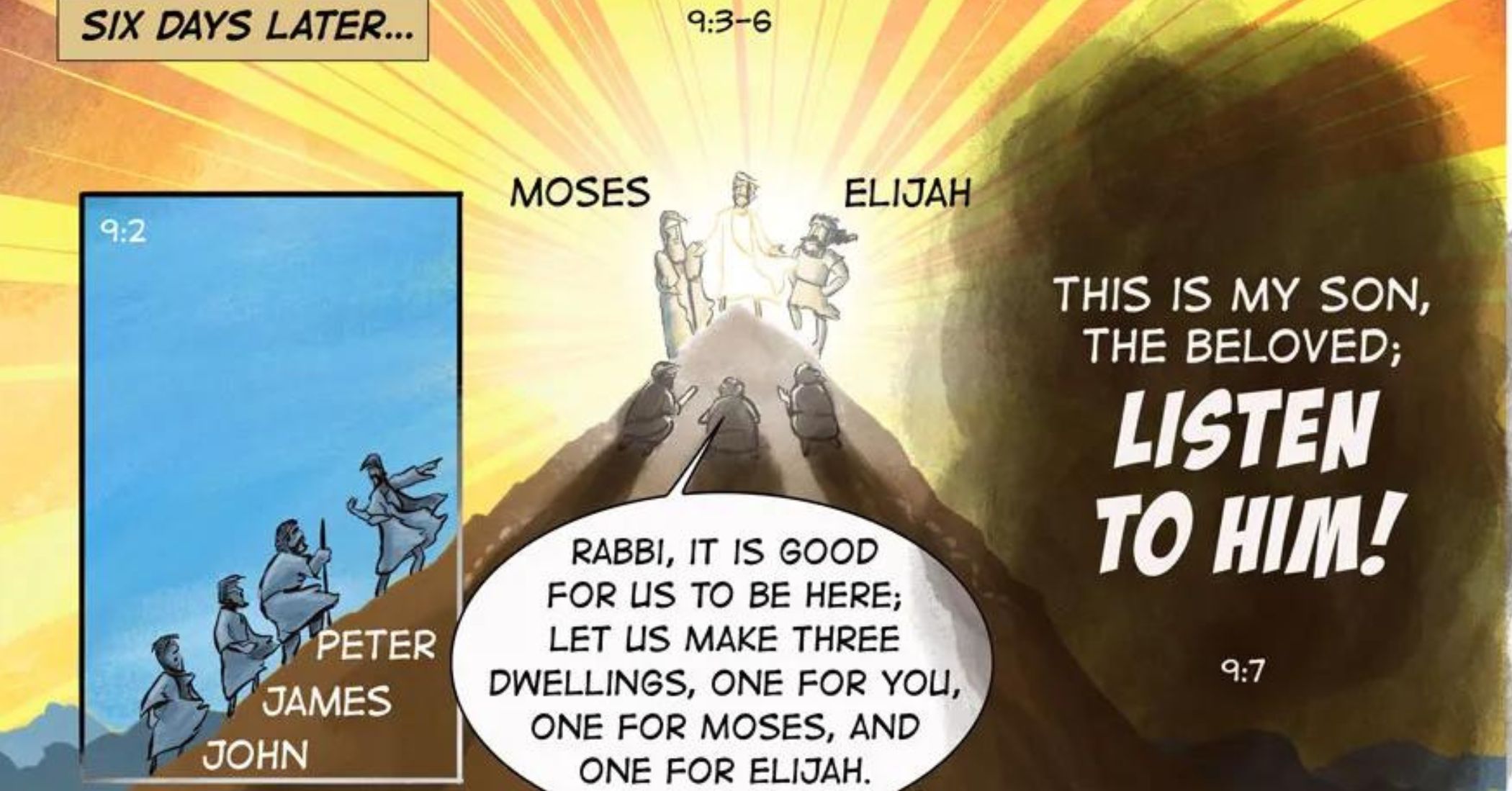
At least at first glance. The passage below occurs in all three of the Synoptic Gospels – that is the Gospels of Matthew, Mark, and Luke – which is important because while all three recount many of the same events in roughly the same order, there are slight differences, so in this we get a more complete view of events. Right before this passage, Peter, John, and James have just witnessed the Transfiguration, when Jesus goes on top of a mountain and talks with Moses and Elijah as if they were old buddies. The disciples are already stunned to see these legendary prophets with Jesus when suddenly they hear this voice out of the clouds, “This is my Son, whom I love; with him I am well pleased. Listen to him!” And all three of them collapse to the ground. You probably would too if the voice of God just spoke to you out of thin air and proclaimed Jesus as the Savior. But Jesus touches them lightly, tells them not to be afraid, and they walk down the mountain. That’s when this passage begins.
14 When they came to the crowd, a man approached Jesus and knelt before him. 15 “Lord, have mercy on my son,” he said. “He has seizures and is suffering greatly. He often falls into the fire or into the water. 16 I brought him to your disciples, but they could not heal him.”
17 “You unbelieving and perverse generation,” Jesus replied, “how long shall I stay with you? How long shall I put up with you? Bring the boy here to me.” 18 Jesus rebuked the demon, and it came out of the boy, and he was healed at that moment. 19 Then the disciples came to Jesus in private and asked, “Why couldn’t we drive it out?” 20 He replied, “Because you have so little faith. Truly I tell you, if you have faith as small as a mustard seed, you can say to this mountain, ‘Move from here to there,’ and it will move. Nothing will be impossible for you.” – Matthew 17:14-20
If you have faith the size of a mustard seed nothing will be impossible for you.
Sounds a lot like something you’d hear from a self-help guru right? The power of positive thinking! Just have enough faith! And apparently the disciples came up short because Jesus tells them they have so little of it. But if the disciples, who’ve seen Jesus perform miracles and have even performed some themselves, if even THEY don’t have enough faith, who would? The Bible doesn’t tell us if Jesus is referring to Peter, John, and James, but they just saw and heard the impossible – Jesus talking to two dead prophets and the voice of God telling them Jesus was his Son. They didn’t have enough faith? But maybe…maybe we don’t know the whole story. When we read Matthew’s account alone, it seems like that’s exactly what Jesus is saying, that they just didn’t have enough positive thoughts, but Matthew only gives us part of the story. If you read Mark’s version, it’s longer and ends a little differently.[1] In Mark, Jesus has the boy brought to him and the father asks Jesus to help them out if he can to which Jesus replies, “’If I can?’ Anything is possible if a person believes.” And he cures him, but this time when the disciples ask why they couldn’t drive the demon out, Jesus replies simply, “This kind can be cast out only by prayer.” This kind can be cast out only by prayer. Apparently, nobody had prayed for the boy. Nobody had called on God to do the work. They were relying only on themselves. So in light of this, it’s no wonder Jesus would call them out and say they had little faith. It wasn’t they didn’t believe in THEMSELVES. It was they didn’t believe enough in God to turn to him in their need.

When it comes to faith we have a problem with semantics.
Larry Osborne, in his book “10 Dumb Things Smart Christians Believe” described it this way.[2] Generally, when we think of faith, we think of this power of positive thinking. The whole, “If I have enough faith, I can move mountains.” But if we ask people about belief, they think belief is an intellectual process where we come to a conclusion based on the knowledge we have available. Like the fact we believe people have landed on the moon even though none of us were there to see it. When people are asked about trust, it’s something backed up by action. We don’t usually just SAY “I trust you.” We generally then SHOW we trust them – by believing them, by listening to their advice, by doing what they asked. But what’s most interesting about these three words that SEEM very different, is they all come from the same Greek root word in the Bible. Faith is emotional; belief is intellectual; trust is actionable – yet all three share the same Greek root word in the Bible. This is one of those instances where our ability to translate the Bible falls short and the nuance of the word gets lost. Our understanding of faith is cut short if we only mean it as an emotional response – the power of positive thinking. We fail to see the deeper meaning that incorporates belief and trust. And it is only when we understand faith as a blending of emotion, intelligence, AND action, that we understand what faith is. Look at Hebrews 11. If we read the entire chapter it’s a litany of faith stories. Some end happily and miraculously, but some also end tragically and brutally and yet in verse 39 the Bible says this, “39 These were all commended for their faith, yet none of them received what had been promised, 40 since God had planned something better for us so that only together with us would they be made perfect.” None had received what was promised. It makes you wonder then how do we understand faith?
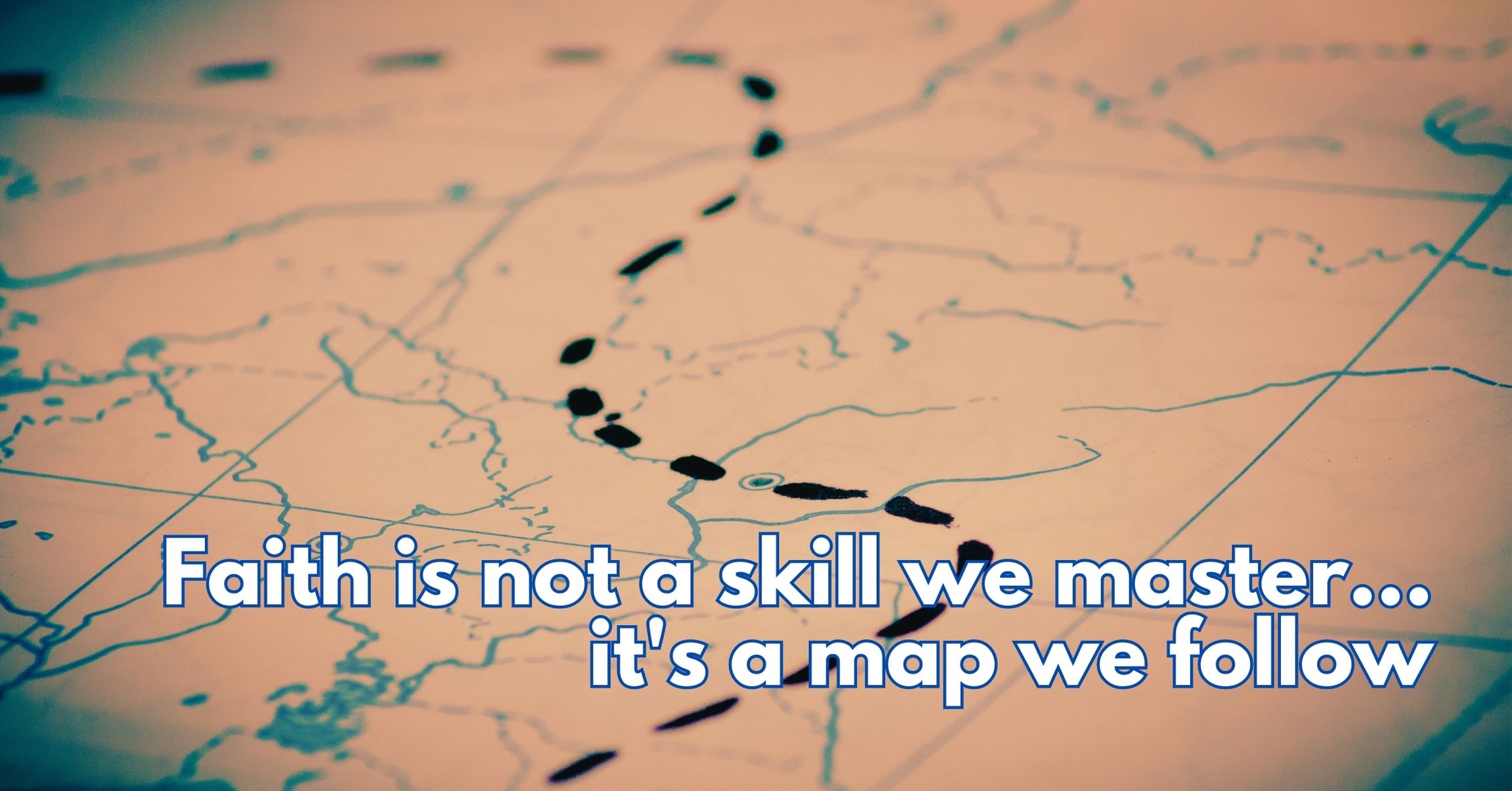
Larry Osborne described it this way:
“Faith is not a skill we master. It’s not an impenetrable shield that protects us from life’s hardships and trials. It’s not a magic potion that removes every mess. It’s a map we follow.” Faith is not a skill we master…it’s a map we follow. When we are hurting the most in life, it’s faith that carries us through. Not the power to think positively, but the ability to continue as if Christ is still in control of our lives. To behave and respond with trust that even in the darkest corners of life, God will be with us even in this. That’s what faith is, to put our belief in the hand of God and say, “Even if I don’t understand this, even if it hurts like nothing that has ever hurt before, I will lay this down before you and trust in you.” That’s faith. It isn’t a pill we take to get better. It isn’t a cure-all for the world’s ills. It’s a process. It’s how we behave, act, and believe when the world around us falters. Faith defines who we are and how we behave when things DON’T work out. It doesn’t take faith when things are working great. It takes a LOT of faith to continue to trust in God when things are collapsing all around you. In the end, faith is the answer to the question, “What do I do now?” Faith is the answer to the question, “What do I do now?”
In the book, Mitch tells a story about the time when the rabbi’s daughter died at the age of four.
It was his first time back in the pulpit after the tragedy where this precious little girl died from an asthma attack, the kind that today could have been prevented, but back then had cost her life. The rabbi stepped up to the pulpit and shared his anger at God. He shared his tears and his loss with God. He talked about the pain and the hurt he felt at losing his little girl. And he talked about prayer. He faithfully recited the words of the Kaddish, the Mourner’s Prayer in Hebrew, and as he said those words it made him think, “I am part of something here; one day my children will say this very prayer for me just as I am saying it for my daughter.” His faith brought him comfort. The act of saying that prayer, a prayer he must have said many times with others and now for himself, helped him to realize that we are all frail parts of something powerful. That even when we curse God for our misfortune, we have faith that there is a power greater than ourselves that knows more than we know and even though we don’t know what that is, our faith can bring us solace even in the dark times. He would see his little girl again one day. In the meantime his faith would help him to heal.
Faith is real.
But it isn’t some magic medicine to make the pain of the world go away. Faith is what carries us in those times. To reduce faith to the power of positive thinking marginalizes what it really is. Faith is partially something we feel, something we know, and something we do. It is greater than any one those things alone. Faith is believing enough during the good times that we act consistently the life Christ asks us to live – to love others we don’t even like, to be kind to people who don’t even appreciate it, to help out just because it’s the right thing to do. And faith is believing enough during the bad times to hang on to God despite what our feelings might tell us in our pain. To know that God has something greater in store for us. To lift up praise even in our hurt. And most of all to turn to God when we’re not sure he’s even there through prayer and worship. Because that is the kind of faith that honors God and shows we truly believe. It’s the kind of faith that provides a powerful witness to all that God can do. And it’s the only kind of faith that will truly bring you the peace of Christ in your heart when you need it the most. Faith IS that powerful. When Jesus tells us that faith the size of a mustard seed can move a mountain, he wasn’t kidding. A mustard seed is one of the smallest seeds in the world. Often only one or two MILLIMETERS in size, but it can grow into the biggest of garden plants nine or ten feet tall.[3] And if God can put that much power in that small a package, just think of what he can do in you. Because everything is possible for him who believes.
[1] http://faithdays.wordpress.com/2010/03/10/day-22-mark-914-29-the-healing-of-a-demon-possessed-boy/ One of the sources that provided deeper introspection about this passage and about Jesus’ perspective on it. https://www.facebook.com/notes/alfred-scott/why-couldnt-the-disciples-cast-out-the-demon-from-the-boy-in-matthew-17/632227293468847 Another good passage.
[2] Larry Osborne, 10 Dumb Things Smart Christians Believe, p. 10-12.
The Devil Inside

What do you think the devil looks like?
There are thousands if not millions of different depictions of the devil from all four corners of the globe. From the classic red-skinned, horned guy with a tail and a pitchfork that you see pretty much every Halloween to well… Elizabeth Hurley. Sometimes I think that the devil is a plate of homemade chocolate chip cookies. There is nothing more tempting to me in the world – my own personal devil. But what do YOU think the devil looks like? It might surprise you to know there is no description of him at all in the Bible. None. There are lots of places in the Bible that talk about the devil – like in the book of Job where God allows Satan to test Job. Or in the New Testament in the Gospels where Jesus is tested in the wilderness by the devil and offered many temptations to which Jesus refuses them all. Many believe the devil was in the Garden of Eden and is the one responsible for tempting Eve to take the fruit from the tree. Or perhaps the devil is the dragon represented in the book of Revelation. But nowhere is there a definitive description of the devil in the Bible.

Pretty much, our ideas of what the devil looks like come from us.
Whether it’s Dante’s Inferno or the song by INXS or any other expression, the image of the devil is one we have created. One of my favorite descriptions comes from the movie Broadcast News which I’m now realizing dates me horribly! But even after all of these years, I still love that quirky but poignant reflection on life. If you’ve seen it, you know it’s the story about a love triangle between Aaron the news reporter, Jane the producer, and Tom the news anchor. Aaron and Jane are in his house talking about Tom, and Aaron’s trying to convince Jane she shouldn’t be with Tom and he says to her, “Tom, while being a very nice guy…is the DEVIL.” She gets mad and is about to storm off when Aaron keeps going, “What do you think the devil’s going to look like if he’s around? Come on, no one is going to be taken in by a guy with a long, red pointy tail… He will be attractive. He’ll be nice and helpful. He’ll get a job where he’ll influence a great, God-fearing nation. He’ll never do an evil thing, he’ll never deliberately hurt a living thing. He’ll just bit by little bit lower our standards where they’re important. Just a tiny little bit. Just coax along. Flash over substance. Just a tiny little bit…and he’ll get all the great women.” When I first saw this movie, this was the part that stuck out to me the most. Not that he’ll get all the great women, but that the devil, whatever we believe the devil to be – might look like us. When you think about it, this concept we have of the devil as being some guy with red skin is pretty ludicrous. But I hadn’t thought I might not be able to tell the difference.
So again we ask, “What do you think the devil looks like?”
Does the devil even exist? Everyone has an opinion, even if they don’t go to church. But even in the church we have different understandings of what or who the devil is. Some believe the devil is an actual physical being. A flesh and blood embodiment of evil. Others believe the devil is simply a spiritual being not having any real form. Like the little devil and angel we think about on our shoulders. And others believe the devil is the personification of evil. But regardless of what your personal beliefs on the matter, it’s clear evil exits. And more, evil is something we as Christians not only struggle with, but have a duty to overcome. And God gives us the prescription for how to do that. If you have your Bibles or a Bible app on your phone or the Bible, please turn to the book of Ephesians, chapter 4, beginning with verse 22. Ephesians 4:22. In this letter, Paul is writing to the church at Ephesus. The world in which the Ephesians live is filled with people fascinated by magic and the occult.[1] These early Christians are surrounded by a culture that is captured by beliefs very different from their own, not unlike ours. For us, we deal with New Age thinking that rejects Jesus, belief in a multitude of gods, belief in a “personal God.” We put our faith in technology, science, money, or anything else that isn’t God. And this is where Paul’s letter comes in. writing to tell us how to combat the temptation to give in to the devil, to give in to those things that separate us from the love of God.
You were taught, with regard to your former way of life, to put off your old self, which is being corrupted by its deceitful desires; to be made new in the attitude of your minds; and to put on the new self, created to be like God in true righteousness and holiness. Therefore each of you must put off falsehood and speak truthfully to your neighbor, for we are all members of one body. “In your anger do not sin”; Do not let the sun go down while you are still angry, and do not give the devil a foothold. Anyone who has been stealing must steal no longer, but must work, doing something useful with their own hands, that they may have something to share with those in need. Do not let any unwholesome talk come out of your mouths, but only what is helpful for building others up according to their needs, that it may benefit those who listen. And do not grieve the Holy Spirit of God, with whom you were sealed for the day of redemption. Get rid of all bitterness, rage and anger, brawling and slander, along with every form of malice. Be kind and compassionate to one another, forgiving each other, just as in Christ God forgave you. – Ephesians 4:22-32
This is the prescription for fighting off the devil.
Do not go to bed angry. Do not talk unkindly about people. Build people up! Don’t tear people down. Get rid of bitterness, rage, anger, brawling, and slander in your life along with every form of malice. Be kind and compassionate. Be forgiving as God forgave you. These are the ways we can fend off evil. These are the ways we can triumph over that which separates us from God. Because if there is one thing true about evil, no matter what form it takes, is that it separates us from the love of God. Evil is that which separates us from the love of God. It might be through temptation, anger, jealousy, rage, hate, bitterness or any of those negative feelings we have toward one another, but evil is simply anything that separates us from the love of God.

Evil wasn’t meant to be part of God’s creation.
When God created the Earth the Bible tells us in Genesis that “God saw all that he had made, and it was very good. (Genesis 1:31)” In fact, God tells us the heavens and the earth were completed at this time (Genesis 2:1) and evil did not exist. Evil came into the world because we allowed it to through our actions, through our willful disobedience of God’s plan for our lives. Any time we act contrary to the will of God, we manifest evil. Bitterness, rage, anger, brawling, slander, hatred, holding a grudge, not being able to forgive people – this is how evil continues in the world today. But WE have the power, by God’s grace and forgiveness, to DO something about it. Because the choice is ours. It’s tempting to say, “The Devil made me do it,” but it’s also not true. Whether we call it the devil or evil, it has no power over us except that which we allow it to have. When we give in to our baser selves, when we give in to things like rage and anger, we are CHOOSING to allow the devil a foothold in our lives. The expression “Don’t go to bed angry,” comes from this passage in the Bible. And these wise words are given to us for a reason. When we hold on to our anger, when we hold on to bitterness and hurt and feelings of ill will, they take on a life of their own. They become ingrained in us and we begin to look at the world through these lenses. Pretty soon, that person or that object or that event or whatever it is takes on the personification of evil and everything associated with it becomes against us in our heads when the truth is usually far from it. The more we hold on to those things which separate us from God, the more we ourselves become separated from God, and the worse our lives become. But we can do something about that. The power is in our hands. The choice is ours to make. It’s not always easy and at times it’s exceptionally difficult, but before those negative feelings take root in your soul, work on getting rid of them. Don’t let the devil get a foothold in YOUR life. Instead, choose to forgive. Choose to be understanding. Choose to be patient. Choose to be kind. Choose to exemplify in your life the prescription of love which can root out evil. The truth is evil exists, but by the grace and mercy of God, we CAN do something about it. And we can choose to love.
[1] ESV Study Bible, 2258.
Pulpits, Pews, and Programs

…And Other Non-Essentials of Church
What makes a church, a church?
When we compare our church to what it must have looked like in Jesus’ time, it’s probably not surprising the early church looked nothing like it does today. The Followers of the Way (as Christians were known back then) would gather in homes, maybe gather round a table, share some food, and talk about Jesus and how they could apply his teachings to their lives. No pulpit. No cross. No robes. Not even pews. All these things were added along the way. The pulpit for example didn’t come into existence until the 3rd century. Up until the 4th century, the cross wasn’t used as a symbol for Christ because it was seen as idolatry. In fact, the first crosses weren’t seen in places of worship, but instead on battle armor as commanded by Constantine. Constantine was also responsible for clergy wearing robes because he thought they should be “set apart.” And pews didn’t make their way into churches until the 13th century and then only as backless benches. During early Christianity, worship looked a lot more like a gathering of friends at somebody’s home. They truly embodied the idea of the priesthood of all believers, the concept that ALL of us are set apart by God for his work on the Earth. ALL of us.[1]

“What about the pastor? Isn’t that Biblical?”
If by Biblical you mean, is it mentioned in the Bible, then yes, it’s Biblical. But only Paul mentions pastors at all and only in one passage – Ephesians 4:11 & 12 where he writes, “So Christ himself gave the apostles, the prophets, the evangelists, the pastors and teachers, to equip his people for works of service, so that the body of Christ may be built up…” In Paul’s example, the pastor is but one of many servants of God with distinct gifts. The role of pastor as we know it today isn’t found anywhere. We sort of put all those roles Paul listed into one person and hope their good at all of them – preaching, teaching, evangelism, healing, leadership, service, encouragement, and mercy. The pastor is sort of the Super Christian. Knows every Bible verse by heart! Can also sing and play a musical instrument! Able to leap tall buildings in a single bound! But the pastor was never meant to be Super Christian. He’s part of a team that includes all of us. In Romans 12 we read, “For just as each of us has one body with many members, and these members do not all have the same function, so in Christ we, though many, form one body, and each member belongs to all the others. We have different gifts, according to the grace given to each of us. If your gift is prophesying, then prophesy in accordance with your faith; if it is serving, then serve; if it is teaching, then teach; if it is to encourage, then give encouragement; if it is giving, then give generously; if it is to lead, do it diligently; if it is to show mercy, do it cheerfully.” The pastor leads, encourages, and nurtures others who share these gifts. But the pastor was never meant to supplant the gifts of the people but to help those gifts grow in others to serve God.

In our minds, we’ve built up an idealized version of “church.”
This is what a pastor is supposed to do. This is what a church is supposed to look like. This is how we’re supposed to behave. Almost none of which happened in the 1st century. Not that we should go back to doing things the way they were done in the first century. Personally, I’m pretty fond of air conditioning. But are we open to where God is leading? Can we let go of our image of church to embrace where we might need to go next? We want to make sure that in all we do, we are putting God first, not ourselves or we might find ourselves with the form and function of church but without the heart. The passage we’re going to share today talks about this danger specifically. Isaiah is warning the people not to be so wrapped up in their version of church that they end up in idolatry instead of true worship.
13 The Lord says: “These people come near to me with their mouth and honor me with their lips, but their hearts are far from me.
Their worship of me is based on merely human rules they have been taught.
14 Therefore once more I will astound these people with wonder upon wonder;
the wisdom of the wise will perish,
the intelligence of the intelligent will vanish.”
15 Woe to those who go to great depths to hide their plans from the LORD,
who do their work in darkness and think,
“Who sees us? Who will know?”
16 You turn things upside down, as if the potter were thought to be like the clay!
Shall what is formed say to the one who formed it,
“You did not make me”?
Can the pot say to the potter,
“You know nothing”? – Isaiah 29:13-16

“Their worship of me is based on merely human rules they have been taught”.
That’s the danger we fall into when we hold on too tightly to our traditions, to our way of doing things. We transform worship from being about GOD to being about US. If the seven last words of a church are “We’ve never done it that way before,” then the seven words before that were probably very similar. “We’ve ALWAYS done it that way before.” Traditions are great. They give us a sense of continuity. They help remind us of our roots and reinforce what’s important to us. But there comes a point where if we hold on too tightly to them, we miss out on opportunities God is opening up before us. And the reason I say that is because traditions build within us expectations for how things should be and eliminate for us the possibility of what could be. Think about that. How many times have you caught yourself saying, “Well, that’s not the way it’s supposed to be done.” Isn’t that just another way of saying, “We’ve never done it that way before?” We need to learn to eliminate the expectation of how things should be, and embrace what might be possible if we open our hearts and minds. Eliminate the “SHOULD Be’s” and embrace the “COULD Be’s.”

COVID forced us to adapt in ways we never thought possible.
My experience of it was lightning quick. One Sunday we were open. The next Sunday we were closed. We transitioned from in-person worship to remote worship in one week! It was crazy! It was a challenge. We had to do everything differently. Everything from music to the message and all that was in-between. We had to restructure worship to make it flow naturally on a screen. We had online giving to make it easier for everyone. We shortened our worship to account for a video audience. We even did creative communion where everyone would bring the food of their choice with them to the computer, and we would say a blessing over whatever was there. One time Cassie brought bacon! We still gathered together. We were still a community of faith. But it was unlike ANYTHING any of us could imagine and hearing your stories, you experienced that, too. Were we a church? Of course we were. Maybe more than ever. As it says in the Bible, “where two or three are gathered in my name, there I am with them (Matthew 18:20).” Because the church is not the building. It’s the people. It’s the PEOPLE who are the church. It’s not the pulpit, it’s not the piano, it’s not the Sunday School rooms – it’s the people. YOU are the Body of Christ. Not any of what we surround ourselves with. And as we envision what it means to be the church, let us also apply this to ourselves. This is a lesson we can use in every aspect of our lives. Keep in mind the things that are important – family, friends, and God – and really challenge yourselves about the things that drive a wedge between you and them. Because we are a people meant to live in community. We are better when we are together. Remember the words God gave to us through Paul the Apostle, “But avoid foolish controversies and genealogies and arguments and quarrels about the law, because these are unprofitable and useless.” When Emma was young she once said to me, “I have something important you should put in your sermon, Daddy.” I said, “What is it?” And she said, “Tell everybody it’s not about arguing or getting mad or fighting because everyone is part of God’s family. All of our friends and family are part of God’s family.” Isn’t that the truth?
I am so blessed to celebrate with our church family at EVUMC today removing the burden of debt from around our necks. Because of the hard work of so many both past and present, we can say we have been faithful to God here at Evergreen Valley UMC. But what makes us a church is one another…
[1] Most of the information about the use of common symbols in church comes from the book Pagan Christianity by Viola and Barna.
Is Barney Biblical?

Barney is BACK!
For fans of the big purple dinosaur, there is MUCH to cheer about. Slated for a 2024 launch, everyone’s favorite Tyrannosaurus Rex will be coming back to television on Max with his friends Billy and Baby Bop – this time as an animated adventure.[1] Also in the works is a Barney movie geared more toward an adult audience, those who fondly remember Barney as they were growing up.[2] But with the current political climate and the fierce backlash against…well, everything, will Barney even make it onto the screen? At a time when we’re banning books and letting people sue school districts and fire teachers for sharing ideas anyone finds offensive, will there be places where kids never hear about dinosaurs at all?[3] I wonder if there will be disclaimers at the beginning of every episode of the new Barney show that say evolution is “only one way creation might have happened.”

When did science and religion become enemies?
Turns out Darwin was responsible for more than introducing us to the idea of natural selection. Up until the 18th century science and religion were buddies. Often referred to as the “handmaiden of theology,” philosophical studies of the natural world were seen as a way to better understand God’s creation.[4] Some of the most brilliant scientific minds came from the halls of the Lord. Robert Grosseteste was not only a Bishop but also one of the first proponents of the scientific method. Roger Bacon, a student of his and himself a Franciscan monk, studied a wide variety of scientific fields including astronomy, mathematics, and alchemy. In fact, for a time he taught at the University of Paris and wrote some truly remarkable works including passages about flying machines and submarines![5] And this was in the 13th century! Copernicus, Kepler, Newton, and even Galileo were all devout religious men who saw their work as honoring God and exploring his wonder.[6] It might surprise you to know that the terms “science” and “religion” didn’t even come into common use until the 19th century.[7] Science was considered part of philosophy and was often referred to as the “natural law.” It was during the Age of Enlightenment in the 17th and 18th centuries that we see this split between science and religion for the first time. Those who focused more on theology started to push back against the findings of natural law. But it wasn’t until Darwin that religious people said, “That’s enough.”
What about Darwin’s discovery sparked the fire between these two camps?
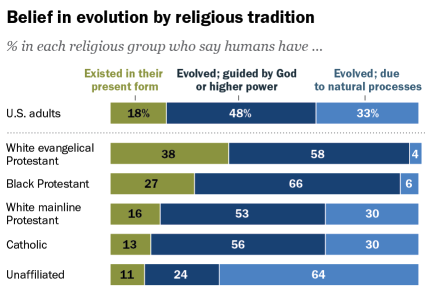
To be fair to Darwin, it wasn’t him personally they were opposed to but his ideas about creation. If evolution was true, then where was God in all of this? But probably more than that, it threatened the church’s power over people’s lives. It threatened the power and influence the church had on society and we see this playing out more and more. As science becomes the new idol we worship, people outside our faith (and even some within) tend to look at religion as something at best behind the times and at worse denying the obvious. The more people of faith push back against the discoveries of science, the more we look out of touch, and it’s hard to reach people for Christ when we fail to meet people where they are. The thing is science is still regarded by the vast majority of Christians as being compatible with our faith. In fact, while 81% of all Americans believe in some form of evolution, 83% of White mainline Protestants and 86% of Catholics believe in it. Even among White evangelical Protestants, the Christian group least likely to believe in evolution, 62% believed.[8]
The debate often centers not on dinosaurs in particular.
But instead on the differences between the Biblical account of creation and the scientific version of it. According to Young Earth Creationists probably the most extreme view on creationism, the Earth is somewhere between 6,000 and 10,000 years old.[9] They even date it to around 4004 B.C.and they believe the Bible literally. God created the earth in six days. There were no dinosaurs. There was no evolution. They take into account the birth of Christ, the ages of his ancestors, and the genealogies described in the Bible and put the Earth at 6,000 years old. But that’s only one Christian account of creation. Most Christians don’t adopt a literal interpretation of the Bible. Instead, they believe the Bible accounts for evolution. These are Theistic Evolutionists and they make up the majority of Christian belief. Evolution is viewed by them as a tool God used to create the Earth; placing God still as creator, but not denying evolution. Instead of the literal six days of creation, they believe those “days” could actually have been thousands or millions of years like it says in 2 Peter 3:8 – “But do not forget this one thing, dear friends: With the Lord a day is like a thousand years, and a thousand years are like a day.” Theistic Evolutionists even believe that the Bible talks about the existence of dinosaurs and they point to the passage from Job 40:15-19 as proof, saying that the behemoth in the passage was actually a dinosaur. Now the Bible doesn’t reference dinosaurs by name because the word “dinosaur” wasn’t a word until 1842. 1842. Long after the Bible was written. But Theistic Evolutionists often point to the description of the behemoth as an indicator that it was more than just a hippopotamus or an elephant.

“Look at Behemoth,
which I made along with you
and which feeds on grass like an ox.
16 What strength it has in its loins,
what power in the muscles of its belly!
17 Its tail sways like a cedar;
the sinews of its thighs are close-knit.
18 Its bones are tubes of bronze,
its limbs like rods of iron.
19 It ranks first among the works of God,
yet its Maker can approach it with his sword. – Job 40:15-19
But here’s the thing.
The story of Genesis was never meant to be an historical account of the beginning of the world. When we spend time focusing on the details of creation, we miss the forest for the trees. The story of creation was not supposed to be a factual accounting of events, but was meant to point us toward God as creator; that God is in control, that God is trustworthy and praiseworthy. That’s what Genesis is about. The power of God. But we get stuck fighting about the first thing that comes up in the Bible. Can’t even get one chapter in without arguing. Now the Bible is vague about creation on purpose. Nowhere does it say how old the Earth is, because it doesn’t matter. You’ll find all throughout Scripture there are many details each author could have included. Like what color was Jesus’ skin? What type of material were his shoes made out of? But none of that is important. The point we’re supposed to come away with after we read Genesis is a deeper sense of awe about God’s might. We’re supposed to read it and realize that we exist because of the grace, mercy, and love of God and really for no other reason. And that’s what the book is about. If you come away with THAT understanding, you come away with a deeper love and appreciation of God than you’ve ever had before.
We get caught up in “foolish controversies” far too often.
And when we ignore the Word of God which tells us not to argue about these things, we end up at odds with one another instead of realizing that with God all things are possible. That we should concentrate on the things that DO matter instead of the things that don’t. It brings to mind for me an episode of Friends where Ross is trying to get Phoebe to believe in evolution and at the end of the episode Phoebe says to him, “Look Ross, I’m not DENYING evolution. I’m just saying it’s one of the possibilities.” And Ross says, “It’s the ONLY possibility.” And Phoebe gets up from her chair and says to him, “Ross, can you open your mind like THIS much. Okay? Wasn’t there a time when the brightest minds in the world believed that the Earth was flat? And up until like 50 years ago you all thought the atom was the smallest thing until you split it open and this whole mess of stuff came out. Now, are you telling me you are so unbelievably arrogant that you can’t admit there’s a TEENY tiny possibility that you could be wrong about this?” And Ross admits, there’s a TEENY tiny possibility he could be wrong. We all could be wrong. But that isn’t the point of the story of creation, and I hope you walk away today understanding that no matter which side of the argument you fall on, the story is about the power, love, and grace of God who created this world for us because he loves us. That’s the point of the story. And as to all opinions that do not strike at the root of Christianity, we think and let think.
[1] https://variety.com/2023/tv/news/barneys-world-dinosaur-animated-series-max-cartoon-network-1235607348/
[2] https://www.theguardian.com/film/2023/jul/04/barney-the-dinosaur-film-daniel-kaluuya
[3] Many states are enacting or attempting to enact legislation to ban the teaching of certain subjects instead of leaving it to professional educators and school board officials. See https://www.npr.org/2022/02/03/1077878538/legislation-restricts-what-teachers-can-discuss
[4] https://www.encyclopedia.com/education/encyclopedias-almanacs-transcripts-and-maps/christianity-history-science-and-religion
[5] https://en.wikipedia.org/wiki/Roger_Bacon
[6] https://www.pbs.org/faithandreason/intro/histo-frame.html
[7] https://plato.stanford.edu/entries/religion-science/#BrieHist
[8] https://www.pewresearch.org/short-reads/2019/02/11/darwin-day/ Statistics were only for Americans who answered the question. Those who responded without an opinion or answered outside the accepted fields were omitted.
[9] https://www.gotquestions.org/young-earth-creationism.html
The Fundamental-List

We all have images of perfection.
The perfect career. The perfect school. The perfect spouse. I first met Anne while working at Disneyland. She was smart, funny, attractive, and sweet. She was a sweetheart to boot. It’s no wonder virtually every guy in our department wanted to date her. But I knew something most of them didn’t. She had never seen Star Wars. Not the prequels or the sequels. I’m talking the original Star Wars, the one without the any other words attached to it. It came up in some random conversation we were having when her, my buddy Mark, and I were all hanging out and the thought crossed my mind for the briefest moment – could I date someone who had never seen Star Wars? It was such a defining part of my childhood, what kind of relationship could we have? How would we raise our kids? Of course, all this was predicated on the small trivial detail that she would need to be interested in me. Minor stuff, I know. But we all have these images in our head of what we think things ought to be like. It informs how we look at the world, the relationships we develop, the careers we pursue and even our faith. And when reality doesn’t match our expectations, sometimes we react badly. But is it justified? How much heartache and pain could we avoid if we simply kept things in perspective? Because when we elevate the trivial to be on par with the essential, we often miss out on the richness and possibilities that life has to offer.

This morning, we’re opening with a passage from Titus.
In this letter from the apostle Paul to one of his emissaries, Titus, he spends most of it talking about how to live a Christian life. And even though it’s written in the words of an ancient culture, its lessons of humility, service, and honor are still values we hold today even if we look at the issues differently. It was also clear in this letter to Titus that Paul wanted him to model these expectations and teach those who would listen these lessons as well so they would become living examples of God’s love. In the passage we are about to share, Paul tells Titus to remind the people how to behave but also to remind them to be kind and merciful to those around them.
1 Remind the people to be subject to rulers and authorities, to be obedient, to be ready to do whatever is good, 2 to slander no one, to be peaceable and considerate, and always to be gentle toward everyone.
3 At one time we too were foolish, disobedient, deceived and enslaved by all kinds of passions and pleasures. We lived in malice and envy, being hated and hating one another. 4 But when the kindness and love of God our Savior appeared, 5 he saved us, not because of righteous things we had done, but because of his mercy. He saved us through the washing of rebirth and renewal by the Holy Spirit, 6 whom he poured out on us generously through Jesus Christ our Savior, 7 so that, having been justified by his grace, we might become heirs having the hope of eternal life. 8 This is a trustworthy saying. And I want you to stress these things, so that those who have trusted in God may be careful to devote themselves to doing what is good. These things are excellent and profitable for everyone.
9 But avoid foolish controversies and genealogies and arguments and quarrels about the law, because these are unprofitable and useless. 10 Warn a divisive person once, and then warn them a second time. After that, have nothing to do with them. 11 You may be sure that such people are warped and sinful; they are self-condemned. – Titus 3:1-11 (Old Testament)
These words are as important today as they were back then.
“Remind the people to be subject to rulers and authorities, to be obedient, to be ready to do whatever is good, to slander no one, to be peaceable and considerate, and always to be gentle toward everyone.” Sounds like a great way to live, right? Things we should aspire to. It’s also a living testimony to a loving God. But I can think of recent examples by people who claim to be Christian where that hasn’t happened. The way we behave IS IMPORTANT. It reflects not just on us but the God we say we follow. And as important as that is, the next bit Paul shares is vital to our reflection today. “But avoid foolish controversies and genealogies and arguments and quarrels about the law, because they are unprofitable and useless.” This is where we mess up the most. This is why people call us hypocritical and judgmental and closed-minded. Too often the people of God don’t ACT like the people of God.
Do you know how many different denominations there are in Christianity?
45,000. 45,000 Christian denominations in the world today.[1] And growing. Are there REALLY 45,000 things to fight about? And not just fight about but fight about so badly that we would turn our backs on one another. We’re about to enter into another season of that right now. There are those in the United Methodist Church who feel like they can no longer share a table with us. That there is just too much separating us to work it out. But are these arguments essential to our faith or trivial? Of course, to the people in the middle of it all it FEELS essential. When does it not? When you’re in the middle of a heated argument with someone, doesn’t it ALWAYS feel like you had no other choice? But you do. You always do. You always have a choice. That’s one of the great gifts of God, the freedom to choose. And yet, here we are. On the precipice of another break in the church. But is it a break over something essential or something trivial? Maybe we would do well to listen to John Wesley.

John Wesley, the founder of Methodism, had a saying – “Think and let think.”
Think and let think. Even back in Wesley’s time, the church had an issue with fissures and splits. To be fair, Methodism was never intended to be a split itself, but a revival – going back to the roots – within the Episcopal Church. John Wesley is famously known for never leaving the Episcopal Church even though he is credited (rightfully) as the founder of Methodism. To Wesley, Methodism was a way of being, of living out your faith and not a separate religious movement. But even so, Methodism came under attack and in part as a response to these attacks, Wesley wrote the tract called “The Character of a Methodist” where he sought to define the fundamentals of Methodist belief. He wrote, “the distinguishing marks of a Methodist are not his opinions of any sort. His assenting to this or that scheme of religion, his embracing any particular set of notions, his espousing the judgment of one man or of another, are all quite wide of the point. Whosoever, therefore, imagines that a Methodist is a man of such or such an opinion, is grossly ignorant of the whole affair; he mistakes the truth totally. We believe, indeed, that “all Scripture is given by the inspiration of God;” and herein we are distinguished from Jews, Turks, and Infidels. We believe the written word of God to be the only and sufficient rule both of Christian faith and practice; and herein we are fundamentally distinguished from those of the Romish Church. We believe Christ to be the eternal, supreme God; and herein we are distinguished from the Socinians and Arians. But as to all opinions which do not strike at the root of Christianity, we think and let think. So that whatsoever they are, whether right or wrong, they are no distinguishing marks of a Methodist.”[2] His point was that those things which are not essential tenets of our faith shouldn’t be argued over. We can debate them, we can talk about them, we can offer our opinions, but those things which are not central to who we are should not divide us which is exactly in line with what God tells us in the Bible; “avoid foolish controversies and genealogies and arguments and quarrels about the law, because they are unprofitable and useless.”

These are the only three things Wesley called out that define us as Christians.
Scripture as the inspired Word of God, the sufficiency of Scripture to determine God’s will, and Christ as part of the Holy Trinity. I’ll add one more. Not that Wesley didn’t believe this himself, but because he would have believed it was covered by the other rules, but I think it’s important enough that we call it out. From John 13:34-35, 34 “A new command I give you: Love one another. As I have loved you, so you must love one another. 35 By this everyone will know that you are my disciples, if you love one another.” Pretty much everything in the Bible can be summed up in this verse of Scripture. “Love one another.” These are the beliefs that define what it means to be a Christian. Anything else is simply a matter of interpretation. We don’t have to agree on everything to be united on the big things. We don’t have to adapt every belief someone else has to work together for the good of Christ. But it seems more than ever we cling to the unimportant and abandon what is essential to our faith. Is it any wonder more and more people are leaving the church? Is it that puzzling those outside the church think we’re so behind the times? If we abandon one another over the trivial, how are people to believe we will be there for them when things get tough? A friend of mine once served a church that threatened to split because of a sofa. Seriously. Somebody had donated a sofa that was sitting in the narthex or lobby area, and it had become an eyesore. At one time it was nice and in style, but over the years it had become beat up, the cushions were lumpy, the colors were garish, and half the church hated it. But it had been donated by a member of a prominent family so the other half for one reason or another refused to get rid of it. And in arguing over the couch, they threatened to leave the church. Over a couch. That’s how petty we can become when we forget what is essential to our lives as Christians. We need to keep our hearts focused on what’s important and let go of the rest. We need to focus on what is essential and ignore the trivial. Because when we do that, we can do so much more for each other and for the world – even for people who’ve never seen Star Wars.
Note: While the contents of the sermon are totally original, the sermon title is not. But it was so clever and fit our message so well I used it. I’d give credit to Andy Stanley, Lead Pastor of North Point Community Church, but in HIS message he ALSO said he borrowed it from someone else, too!
[1] https://www.gordonconwell.edu/center-for-global-christianity/research/quick-facts/
Maybe He’s In Here…

Have you ever heard of Bobbie the Wonder Dog?[1]
Bobbie was a mixed breed collie who hailed from the state of Oregon back in 1923. He lived with his people, Mr. and Mrs. Frank Brazier and their two daughters, Nova and Leona. Bobbie would love to run and play on the farm where he spent most of his time with the family. Eventually the family moved into town and concerned that the small confines of city life would be too much for a farm dog like Bobbie, the family sold him to the friend who was going to take over their farm. But Bobbie didn’t give up on his family and soon found them on his own, walking into town every weekend and returning to the farm by Monday. Eventually the family bought him back (at three times the price) and Mr. and Mrs. Brazier decided to take Bobbie with them on a trip back East to Indiana. While getting some gas, Mr. Brazier saw Bobbie getting chased by four other dogs. He was confident Bobbie would find his way back, but after an hour or so, Bobbie didn’t return. Pretty soon, the Brazier’s started to worry and went looking for the dog, but to no avail. They searched, made phone calls, even put in an ad in the local paper, but nothing. After three weeks of visiting in the area, they decided to head home, heartbroken over the loss of their dog. Six months later, while walking down the street, Nova, the youngest daughter spotted a mangy, grimy, lean dog walking along and noticing the similarities shouted, “Oh look! Isn’t that Bobbie?” At the sound of his name, Bobbie came running up to Nova and licked her all over. He had returned home. No one knows for sure how Bobbie knew the route to take or how he knew which way to even go. He had traveled over 2,500 miles to reach the Brazier home, but somehow, Bobbie had an innate sense of where to find home.

Bobbie’s story is incredible, but he is not alone in making miraculous journeys.[2]
There’s the story of Howie the Persian cat who crossed the Australian Outback to get back home. Misele the farm cat who traveled nine miles into town to find her farmer who had been taken to the hospital. Amazingly, she had never been there before but was still able to track him down. And Troubles, a scout dog for the military, who was flown into the jungles of Vietnam by helicopter and was abandoned after his handler was shot and taken to the hospital. Troubles found his handler after trekking through the jungle on foot for more than 10 miles in unfamiliar terrain and searching for him tent-by-tent once he made it back to camp. These are only a few of the seemingly amazing stories of animals able to find their way home despite all the obstacles. Yet if we can believe that God could create an animal that can find its way home despite all the odds, couldn’t we also believe in a God that would put it within us to find OUR way home as well? To find OUR way back to God?
He as much told us he would.
Our passage takes place in the time when the people of Israel are in exile. They’ve been taken over by the Babylonians and removed from Jerusalem by force and scattered throughout the land. God told them this would happen, but the people of Israel didn’t listen. Most of them had started to again follow pagan gods and had drifted away from their faith. Can you imagine how frustrating that must be? I know God’s above that, God’s better than that, but imagine if you were in God’s shoes how frustrating that must be? He makes this covenant with Abraham and again with Moses and again with David. I will be your God and you will be my people. And he does it. He is faithful to the people of Israel. But time and again they drift away. Then something bad would always happen. And they would come crawling back. And every single time God forgave them. But as soon as they were comfortable, they would drift away again. God warned them there were consequences for this constant drifting away, and eventually they become exiled from their own land. But in this passage we’re about to read God offers them hope and tells them about a new covenant that’s coming that would help them to always remember his promise. This is where we enter into the reading this morning.

31 “The days are coming,” declares the Lord,“when I will make a new covenant with the people of Israel and with the people of Judah. 32 It will not be like the covenant I made with their ancestors when I took them by the hand to lead them out of Egypt, because they broke my covenant, though I was a husband tothem,” declares the Lord.
33 “This is the covenant I will make with the people of Israel after that time,” declares the Lord. “I will put my law in their minds and write it on their hearts. I will be their God, and they will be my people. 34 No longer will they teach their neighbor, or say to one another, ‘Know the Lord,’ because they will all know me, from the least of them to the greatest,” declares the Lord. “For I will forgive their wickedness and will remember their sins no more.”
35 This is what the Lord says, he who appoints the sun to shine by day, who decrees the moon and stars to shine by night, who stirs up the sea so that its waves roar— the Lord Almighty is his name: – Jeremiah 31:31-35
God tells the people of Israel, “The days are coming…”
The days are coming when I will forgive their wickedness and will remember their sins no more. And this day God talks about is the coming of the Holy Spirit. We know that because Jesus himself told us it would happen. He promised not to leave us alone. That when he ascended back into Heaven to be with God, he would leave behind the Holy Spirit to guide us and show us the way. And this is what it means to us when God says, “I will put my law in their minds and write it on their hearts,” that the Holy Spirit would come and be accessible to us always. That through the Spirit, we could know God. But if all that’s true, then why is it sometimes so hard to find God? I mean if God put it within us to know him, why is it so difficult? God may be everywhere, but sometimes it feels like God is nowhere. Like God is Waldo in a Where’s Waldo picture. We search and search, but we just can’t pick him out of the crowd. We might find the clock or the pen or the compass, but God? He seems almost invisible. We know he’s there because the book tells us he’s there. But if God is everywhere why is it so hard to find him?

Maybe it’s because we’re not looking in the right place.
Human beings since time began have searched for evidence of God in the world around them. From archaeological digs in the Middle East to scholarly dissertations on the mysterious Q source of the Bible, we’ve looked for God everywhere. And even though we can find evidence of God, it doesn’t seem to quell our search for him. We have this incessant need to find God. In fact, that is the whole basis for In Star Trek V: The Final Frontier, Sybok the Vulcan prophet has dedicated his life to finding God. But when he reaches the planet he believes God can be found, he ends up finding out God was never there in the first place. At the end of the movie, Captain Kirk notices Dr. McCoy and Mr. Spock are deep in thought so he says to them, “Cosmic thoughts gentlemen?” McCoy responds, “We were speculating, is God really out there?” That’s a sentiment we have probably all wrestled with from time to time. Is God out there? And Kirk pauses for a moment as if reflecting on the question before he says, “Maybe he’s not out there, Bones. Maybe he’s in here…the human heart.”
Leave it to Star Trek to come up with a Biblical answer.
When God tells us that he is going to write the law in our minds and on our hearts, perhaps what he’s saying is not that each human being would instantly and always see God in everything. But maybe instead, that God through the Holy Spirit, puts within us this very need to find him. This quest we have for meaning in life, for understanding our Creator, is in fact the gift from God that he has put on our hearts. This drive to understand God is the DNA of our being that came about with this new covenant God promised through Jeremiah. Most people have a sense there is a creator, that there is something greater “out there.” In fact, only about 4% of the U.S. identifies as atheist.[3] We just don’t all label it as God. Some people identify God as Mother Nature or Lady Luck or Fortune or Chance. Some people sense God can be found in other religions or in the stars. But nearly all of us have this identity with some kind of Creator. And it drives us to understand the meaning of life. Perhaps the best evidence that there is a God is this God “compass” that seems to be built within us.
Jesus promised us that we would not be left alone.
And we are not. We are not alone in this world. The Holy Spirit may not be something we can see, but it doesn’t mean it isn’t active and working in our lives. The very fact we search for God, for meaning, for something more than our mere existence, is itself evidence of God’s activity within us. Our challenge then is not to rest comfortably in this knowledge, but instead to share it with the world. Our challenge is to help others recognize the work God is doing within them, so they can come to know him like we do. And the challenge is also for us to know him better. We can grow closer to God through pray and study, by being in community with one another and by breaking bread together. And when we do those things, we will follow this homing beacon back to God and through Christ and the Holy Spirit obtain the peace of knowing who we are and to whom we belong. Follow the compass of your heart and find God at the end of it.
[1] Story from various sources on the Internet including http://www.silvertonor.com/murals/bobbie/bobbie_wonder_dog2.htm, http://www.oregonencyclopedia.org/entry/view/bobbie_the_wonder_dog/, and http://en.wikipedia.org/wiki/Bobbie_the_Wonder_Dog#cite_note-oe-3
[2] https://animals.howstuffworks.com/pets/pet-travel/6-pets-that-traveled-long-distances-to-get-home.htm
[3] https://www.pewresearch.org/short-reads/2019/12/06/10-facts-about-atheists/
 Craig's Corner