
Mustard Seeds

Wishful thinking is not the same as faith.
But sometimes we act as if it is. We’re told in so many ways all we have to do is have enough faith and everything’s going to be alright. If we just have enough faith, we’ll be able to have a baby. If we just have enough faith, we’ll win the ball game. If we just have enough faith, we won’t be sick anymore. All we need is ENOUGH faith. But how much is enough? No one ever tells us that. It seems like it’s enough if what we want comes true. And not enough if it doesn’t. But that isn’t right is it? Does anyone think God is that petty? Do you imagine God in Heaven saying, “Well, if Bob had just a smidgen more faith, I would have done it, but since he didn’t, I guess he won’t get that job.” Is that really the kind of God we follow? When our team doesn’t win a game, is it because we didn’t have enough faith, or was it because the shortstop overthrew first base and the runner scored? Was it because the pitcher didn’t have enough faith or was it because on that night he couldn’t hit the broadside of a barn? On some level we know God isn’t that petty, that he doesn’t punish us for our lack of faith, but we’ve been taught for so long to equate faith with this power of positive thinking that it’s hard to know the difference.

The Bible even seems to support this point of view.
At least at first glance. The passage below occurs in all three of the Synoptic Gospels – that is the Gospels of Matthew, Mark, and Luke – which is important because while all three recount many of the same events in roughly the same order, there are slight differences, so in this we get a more complete view of events. Right before this passage, Peter, John, and James have just witnessed the Transfiguration, when Jesus goes on top of a mountain and talks with Moses and Elijah as if they were old buddies. The disciples are already stunned to see these legendary prophets with Jesus when suddenly they hear this voice out of the clouds, “This is my Son, whom I love; with him I am well pleased. Listen to him!” And all three of them collapse to the ground. You probably would too if the voice of God just spoke to you out of thin air and proclaimed Jesus as the Savior. But Jesus touches them lightly, tells them not to be afraid, and they walk down the mountain. That’s when this passage begins.
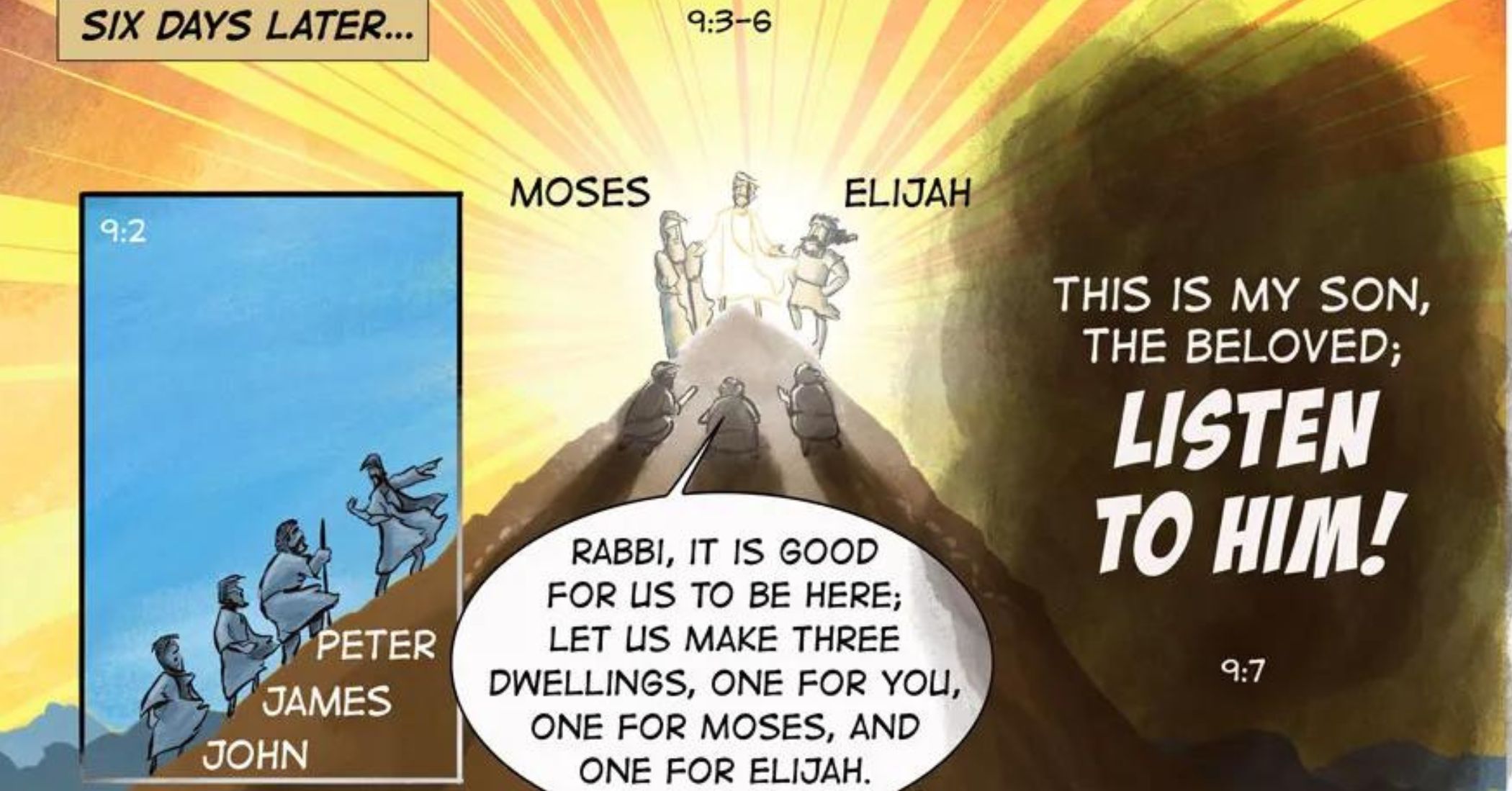
14 When they came to the crowd, a man approached Jesus and knelt before him. 15 “Lord, have mercy on my son,” he said. “He has seizures and is suffering greatly. He often falls into the fire or into the water. 16 I brought him to your disciples, but they could not heal him.”
17 “You unbelieving and perverse generation,” Jesus replied, “how long shall I stay with you? How long shall I put up with you? Bring the boy here to me.” 18 Jesus rebuked the demon, and it came out of the boy, and he was healed at that moment. 19 Then the disciples came to Jesus in private and asked, “Why couldn’t we drive it out?” 20 He replied, “Because you have so little faith. Truly I tell you, if you have faith as small as a mustard seed, you can say to this mountain, ‘Move from here to there,’ and it will move. Nothing will be impossible for you.” – Matthew 17:14-20
If you have faith the size of a mustard seed nothing will be impossible for you.
Sounds a lot like something you’d hear from a self-help guru right? The power of positive thinking! Just have enough faith! And apparently the disciples came up short because Jesus tells them they have so little of it. But if the disciples, who’ve seen Jesus perform miracles and have even performed some themselves, if even THEY don’t have enough faith, who would? The Bible doesn’t tell us if Jesus is referring to Peter, John, and James, but they just saw and heard the impossible – Jesus talking to two dead prophets and the voice of God telling them Jesus was his Son. They didn’t have enough faith? But maybe…maybe we don’t know the whole story. When we read Matthew’s account alone, it seems like that’s exactly what Jesus is saying, that they just didn’t have enough positive thoughts, but Matthew only gives us part of the story. If you read Mark’s version, it’s longer and ends a little differently.[1] In Mark, Jesus has the boy brought to him and the father asks Jesus to help them out if he can to which Jesus replies, “’If I can?’ Anything is possible if a person believes.” And he cures him, but this time when the disciples ask why they couldn’t drive the demon out, Jesus replies simply, “This kind can be cast out only by prayer.” This kind can be cast out only by prayer. Apparently, nobody had prayed for the boy. Nobody had called on God to do the work. They were relying only on themselves. So in light of this, it’s no wonder Jesus would call them out and say they had little faith. It wasn’t they didn’t believe in THEMSELVES. It was they didn’t believe enough in God to turn to him in their need.

When it comes to faith we have a problem with semantics.
Larry Osborne, in his book “10 Dumb Things Smart Christians Believe” described it this way.[2] Generally, when we think of faith, we think of this power of positive thinking. The whole, “If I have enough faith, I can move mountains.” But if we ask people about belief, they think belief is an intellectual process where we come to a conclusion based on the knowledge we have available. Like the fact we believe people have landed on the moon even though none of us were there to see it. When people are asked about trust, it’s something backed up by action. We don’t usually just SAY “I trust you.” We generally then SHOW we trust them – by believing them, by listening to their advice, by doing what they asked. But what’s most interesting about these three words that SEEM very different, is they all come from the same Greek root word in the Bible. Faith is emotional; belief is intellectual; trust is actionable – yet all three share the same Greek root word in the Bible. This is one of those instances where our ability to translate the Bible falls short and the nuance of the word gets lost. Our understanding of faith is cut short if we only mean it as an emotional response – the power of positive thinking. We fail to see the deeper meaning that incorporates belief and trust. And it is only when we understand faith as a blending of emotion, intelligence, AND action, that we understand what faith is. Look at Hebrews 11. If we read the entire chapter it’s a litany of faith stories. Some end happily and miraculously, but some also end tragically and brutally and yet in verse 39 the Bible says this, “39 These were all commended for their faith, yet none of them received what had been promised, 40 since God had planned something better for us so that only together with us would they be made perfect.” None had received what was promised. It makes you wonder then how do we understand faith?
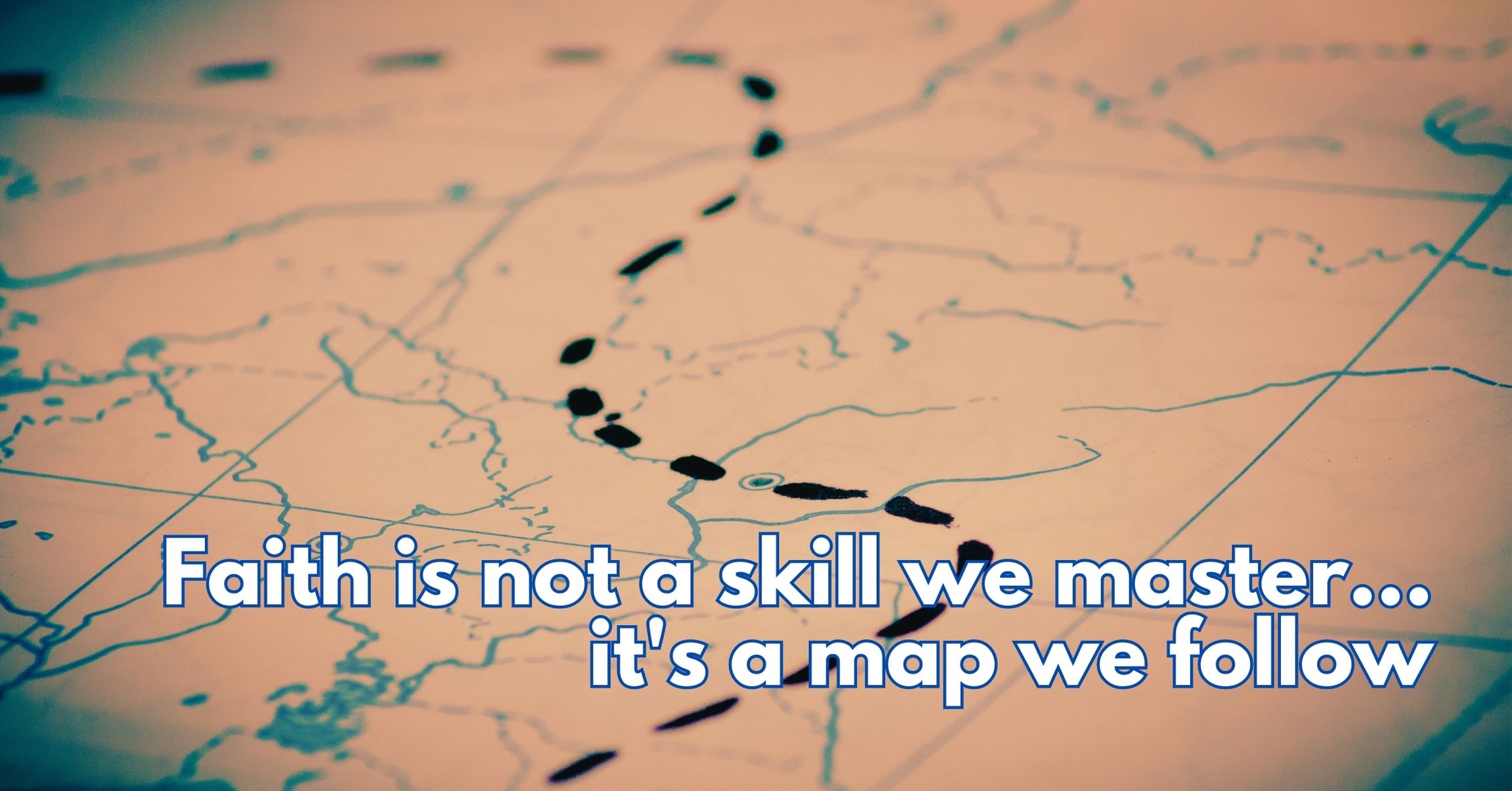
Larry Osborne described it this way:
“Faith is not a skill we master. It’s not an impenetrable shield that protects us from life’s hardships and trials. It’s not a magic potion that removes every mess. It’s a map we follow.” Faith is not a skill we master…it’s a map we follow. When we are hurting the most in life, it’s faith that carries us through. Not the power to think positively, but the ability to continue as if Christ is still in control of our lives. To behave and respond with trust that even in the darkest corners of life, God will be with us even in this. That’s what faith is, to put our belief in the hand of God and say, “Even if I don’t understand this, even if it hurts like nothing that has ever hurt before, I will lay this down before you and trust in you.” That’s faith. It isn’t a pill we take to get better. It isn’t a cure-all for the world’s ills. It’s a process. It’s how we behave, act, and believe when the world around us falters. Faith defines who we are and how we behave when things DON’T work out. It doesn’t take faith when things are working great. It takes a LOT of faith to continue to trust in God when things are collapsing all around you. In the end, faith is the answer to the question, “What do I do now?” Faith is the answer to the question, “What do I do now?”
In the book, Mitch tells a story about the time when the rabbi’s daughter died at the age of four.
It was his first time back in the pulpit after the tragedy where this precious little girl died from an asthma attack, the kind that today could have been prevented, but back then had cost her life. The rabbi stepped up to the pulpit and shared his anger at God. He shared his tears and his loss with God. He talked about the pain and the hurt he felt at losing his little girl. And he talked about prayer. He faithfully recited the words of the Kaddish, the Mourner’s Prayer in Hebrew, and as he said those words it made him think, “I am part of something here; one day my children will say this very prayer for me just as I am saying it for my daughter.” His faith brought him comfort. The act of saying that prayer, a prayer he must have said many times with others and now for himself, helped him to realize that we are all frail parts of something powerful. That even when we curse God for our misfortune, we have faith that there is a power greater than ourselves that knows more than we know and even though we don’t know what that is, our faith can bring us solace even in the dark times. He would see his little girl again one day. In the meantime his faith would help him to heal.
Faith is real.
But it isn’t some magic medicine to make the pain of the world go away. Faith is what carries us in those times. To reduce faith to the power of positive thinking marginalizes what it really is. Faith is partially something we feel, something we know, and something we do. It is greater than any one those things alone. Faith is believing enough during the good times that we act consistently the life Christ asks us to live – to love others we don’t even like, to be kind to people who don’t even appreciate it, to help out just because it’s the right thing to do. And faith is believing enough during the bad times to hang on to God despite what our feelings might tell us in our pain. To know that God has something greater in store for us. To lift up praise even in our hurt. And most of all to turn to God when we’re not sure he’s even there through prayer and worship. Because that is the kind of faith that honors God and shows we truly believe. It’s the kind of faith that provides a powerful witness to all that God can do. And it’s the only kind of faith that will truly bring you the peace of Christ in your heart when you need it the most. Faith IS that powerful. When Jesus tells us that faith the size of a mustard seed can move a mountain, he wasn’t kidding. A mustard seed is one of the smallest seeds in the world. Often only one or two MILLIMETERS in size, but it can grow into the biggest of garden plants nine or ten feet tall.[3] And if God can put that much power in that small a package, just think of what he can do in you. Because everything is possible for him who believes.
[1] http://faithdays.wordpress.com/2010/03/10/day-22-mark-914-29-the-healing-of-a-demon-possessed-boy/ One of the sources that provided deeper introspection about this passage and about Jesus’ perspective on it. https://www.facebook.com/notes/alfred-scott/why-couldnt-the-disciples-cast-out-the-demon-from-the-boy-in-matthew-17/632227293468847 Another good passage.
[2] Larry Osborne, 10 Dumb Things Smart Christians Believe, p. 10-12.
The Devil Inside
What do you think the devil looks like?
There are thousands if not millions of different depictions of the devil from all four corners of the globe. From the classic red-skinned, horned guy with a tail and a pitchfork that you see pretty much every Halloween to well… Elizabeth Hurley. Sometimes I think that the devil is a plate of homemade chocolate chip cookies. There is nothing more tempting to me in the world – my own personal devil. But what do YOU think the devil looks like? It might surprise you to know there is no description of him at all in the Bible. None. There are lots of places in the Bible that talk about the devil – like in the book of Job where God allows Satan to test Job. Or in the New Testament in the Gospels where Jesus is tested in the wilderness by the devil and offered many temptations to which Jesus refuses them all. Many believe the devil was in the Garden of Eden and is the one responsible for tempting Eve to take the fruit from the tree. Or perhaps the devil is the dragon represented in the book of Revelation. But nowhere is there a definitive description of the devil in the Bible.

Pretty much, our ideas of what the devil looks like come from us.
Whether it’s Dante’s Inferno or the song by INXS or any other expression, the image of the devil is one we have created. One of my favorite descriptions comes from the movie Broadcast News which I’m now realizing dates me horribly! But even after all of these years, I still love that quirky but poignant reflection on life. If you’ve seen it, you know it’s the story about a love triangle between Aaron the news reporter, Jane the producer, and Tom the news anchor. Aaron and Jane are in his house talking about Tom, and Aaron’s trying to convince Jane she shouldn’t be with Tom and he says to her, “Tom, while being a very nice guy…is the DEVIL.” She gets mad and is about to storm off when Aaron keeps going, “What do you think the devil’s going to look like if he’s around? Come on, no one is going to be taken in by a guy with a long, red pointy tail… He will be attractive. He’ll be nice and helpful. He’ll get a job where he’ll influence a great, God-fearing nation. He’ll never do an evil thing, he’ll never deliberately hurt a living thing. He’ll just bit by little bit lower our standards where they’re important. Just a tiny little bit. Just coax along. Flash over substance. Just a tiny little bit…and he’ll get all the great women.” When I first saw this movie, this was the part that stuck out to me the most. Not that he’ll get all the great women, but that the devil, whatever we believe the devil to be – might look like us. When you think about it, this concept we have of the devil as being some guy with red skin is pretty ludicrous. But I hadn’t thought I might not be able to tell the difference.
So again we ask, “What do you think the devil looks like?”
Does the devil even exist? Everyone has an opinion, even if they don’t go to church. But even in the church we have different understandings of what or who the devil is. Some believe the devil is an actual physical being. A flesh and blood embodiment of evil. Others believe the devil is simply a spiritual being not having any real form. Like the little devil and angel we think about on our shoulders. And others believe the devil is the personification of evil. But regardless of what your personal beliefs on the matter, it’s clear evil exits. And more, evil is something we as Christians not only struggle with, but have a duty to overcome. And God gives us the prescription for how to do that. If you have your Bibles or a Bible app on your phone or the Bible, please turn to the book of Ephesians, chapter 4, beginning with verse 22. Ephesians 4:22. In this letter, Paul is writing to the church at Ephesus. The world in which the Ephesians live is filled with people fascinated by magic and the occult.[1] These early Christians are surrounded by a culture that is captured by beliefs very different from their own, not unlike ours. For us, we deal with New Age thinking that rejects Jesus, belief in a multitude of gods, belief in a “personal God.” We put our faith in technology, science, money, or anything else that isn’t God. And this is where Paul’s letter comes in. writing to tell us how to combat the temptation to give in to the devil, to give in to those things that separate us from the love of God.
You were taught, with regard to your former way of life, to put off your old self, which is being corrupted by its deceitful desires; to be made new in the attitude of your minds; and to put on the new self, created to be like God in true righteousness and holiness. Therefore each of you must put off falsehood and speak truthfully to your neighbor, for we are all members of one body. “In your anger do not sin”; Do not let the sun go down while you are still angry, and do not give the devil a foothold. Anyone who has been stealing must steal no longer, but must work, doing something useful with their own hands, that they may have something to share with those in need. Do not let any unwholesome talk come out of your mouths, but only what is helpful for building others up according to their needs, that it may benefit those who listen. And do not grieve the Holy Spirit of God, with whom you were sealed for the day of redemption. Get rid of all bitterness, rage and anger, brawling and slander, along with every form of malice. Be kind and compassionate to one another, forgiving each other, just as in Christ God forgave you. – Ephesians 4:22-32
This is the prescription for fighting off the devil.
Do not go to bed angry. Do not talk unkindly about people. Build people up! Don’t tear people down. Get rid of bitterness, rage, anger, brawling, and slander in your life along with every form of malice. Be kind and compassionate. Be forgiving as God forgave you. These are the ways we can fend off evil. These are the ways we can triumph over that which separates us from God. Because if there is one thing true about evil, no matter what form it takes, is that it separates us from the love of God. Evil is that which separates us from the love of God. It might be through temptation, anger, jealousy, rage, hate, bitterness or any of those negative feelings we have toward one another, but evil is simply anything that separates us from the love of God.

Evil wasn’t meant to be part of God’s creation.
When God created the Earth the Bible tells us in Genesis that “God saw all that he had made, and it was very good. (Genesis 1:31)” In fact, God tells us the heavens and the earth were completed at this time (Genesis 2:1) and evil did not exist. Evil came into the world because we allowed it to through our actions, through our willful disobedience of God’s plan for our lives. Any time we act contrary to the will of God, we manifest evil. Bitterness, rage, anger, brawling, slander, hatred, holding a grudge, not being able to forgive people – this is how evil continues in the world today. But WE have the power, by God’s grace and forgiveness, to DO something about it. Because the choice is ours. It’s tempting to say, “The Devil made me do it,” but it’s also not true. Whether we call it the devil or evil, it has no power over us except that which we allow it to have. When we give in to our baser selves, when we give in to things like rage and anger, we are CHOOSING to allow the devil a foothold in our lives. The expression “Don’t go to bed angry,” comes from this passage in the Bible. And these wise words are given to us for a reason. When we hold on to our anger, when we hold on to bitterness and hurt and feelings of ill will, they take on a life of their own. They become ingrained in us and we begin to look at the world through these lenses. Pretty soon, that person or that object or that event or whatever it is takes on the personification of evil and everything associated with it becomes against us in our heads when the truth is usually far from it. The more we hold on to those things which separate us from God, the more we ourselves become separated from God, and the worse our lives become. But we can do something about that. The power is in our hands. The choice is ours to make. It’s not always easy and at times it’s exceptionally difficult, but before those negative feelings take root in your soul, work on getting rid of them. Don’t let the devil get a foothold in YOUR life. Instead, choose to forgive. Choose to be understanding. Choose to be patient. Choose to be kind. Choose to exemplify in your life the prescription of love which can root out evil. The truth is evil exists, but by the grace and mercy of God, we CAN do something about it. And we can choose to love.
[1] ESV Study Bible, 2258.
Pulpits, Pews, and Programs

…And Other Non-Essentials of Church
What makes a church, a church?
When we compare our church to what it must have looked like in Jesus’ time, it’s probably not surprising the early church looked nothing like it does today. The Followers of the Way (as Christians were known back then) would gather in homes, maybe gather round a table, share some food, and talk about Jesus and how they could apply his teachings to their lives. No pulpit. No cross. No robes. Not even pews. All these things were added along the way. The pulpit for example didn’t come into existence until the 3rd century. Up until the 4th century, the cross wasn’t used as a symbol for Christ because it was seen as idolatry. In fact, the first crosses weren’t seen in places of worship, but instead on battle armor as commanded by Constantine. Constantine was also responsible for clergy wearing robes because he thought they should be “set apart.” And pews didn’t make their way into churches until the 13th century and then only as backless benches. During early Christianity, worship looked a lot more like a gathering of friends at somebody’s home. They truly embodied the idea of the priesthood of all believers, the concept that ALL of us are set apart by God for his work on the Earth. ALL of us.[1]

“What about the pastor? Isn’t that Biblical?”
If by Biblical you mean, is it mentioned in the Bible, then yes, it’s Biblical. But only Paul mentions pastors at all and only in one passage – Ephesians 4:11 & 12 where he writes, “So Christ himself gave the apostles, the prophets, the evangelists, the pastors and teachers, to equip his people for works of service, so that the body of Christ may be built up…” In Paul’s example, the pastor is but one of many servants of God with distinct gifts. The role of pastor as we know it today isn’t found anywhere. We sort of put all those roles Paul listed into one person and hope their good at all of them – preaching, teaching, evangelism, healing, leadership, service, encouragement, and mercy. The pastor is sort of the Super Christian. Knows every Bible verse by heart! Can also sing and play a musical instrument! Able to leap tall buildings in a single bound! But the pastor was never meant to be Super Christian. He’s part of a team that includes all of us. In Romans 12 we read, “For just as each of us has one body with many members, and these members do not all have the same function, so in Christ we, though many, form one body, and each member belongs to all the others. We have different gifts, according to the grace given to each of us. If your gift is prophesying, then prophesy in accordance with your faith; if it is serving, then serve; if it is teaching, then teach; if it is to encourage, then give encouragement; if it is giving, then give generously; if it is to lead, do it diligently; if it is to show mercy, do it cheerfully.” The pastor leads, encourages, and nurtures others who share these gifts. But the pastor was never meant to supplant the gifts of the people but to help those gifts grow in others to serve God.

In our minds, we’ve built up an idealized version of “church.”
This is what a pastor is supposed to do. This is what a church is supposed to look like. This is how we’re supposed to behave. Almost none of which happened in the 1st century. Not that we should go back to doing things the way they were done in the first century. Personally, I’m pretty fond of air conditioning. But are we open to where God is leading? Can we let go of our image of church to embrace where we might need to go next? We want to make sure that in all we do, we are putting God first, not ourselves or we might find ourselves with the form and function of church but without the heart. The passage we’re going to share today talks about this danger specifically. Isaiah is warning the people not to be so wrapped up in their version of church that they end up in idolatry instead of true worship.
13 The Lord says: “These people come near to me with their mouth and honor me with their lips, but their hearts are far from me.
Their worship of me is based on merely human rules they have been taught.
14 Therefore once more I will astound these people with wonder upon wonder;
the wisdom of the wise will perish,
the intelligence of the intelligent will vanish.”
15 Woe to those who go to great depths to hide their plans from the LORD,
who do their work in darkness and think,
“Who sees us? Who will know?”
16 You turn things upside down, as if the potter were thought to be like the clay!
Shall what is formed say to the one who formed it,
“You did not make me”?
Can the pot say to the potter,
“You know nothing”? – Isaiah 29:13-16

“Their worship of me is based on merely human rules they have been taught”.
That’s the danger we fall into when we hold on too tightly to our traditions, to our way of doing things. We transform worship from being about GOD to being about US. If the seven last words of a church are “We’ve never done it that way before,” then the seven words before that were probably very similar. “We’ve ALWAYS done it that way before.” Traditions are great. They give us a sense of continuity. They help remind us of our roots and reinforce what’s important to us. But there comes a point where if we hold on too tightly to them, we miss out on opportunities God is opening up before us. And the reason I say that is because traditions build within us expectations for how things should be and eliminate for us the possibility of what could be. Think about that. How many times have you caught yourself saying, “Well, that’s not the way it’s supposed to be done.” Isn’t that just another way of saying, “We’ve never done it that way before?” We need to learn to eliminate the expectation of how things should be, and embrace what might be possible if we open our hearts and minds. Eliminate the “SHOULD Be’s” and embrace the “COULD Be’s.”

COVID forced us to adapt in ways we never thought possible.
My experience of it was lightning quick. One Sunday we were open. The next Sunday we were closed. We transitioned from in-person worship to remote worship in one week! It was crazy! It was a challenge. We had to do everything differently. Everything from music to the message and all that was in-between. We had to restructure worship to make it flow naturally on a screen. We had online giving to make it easier for everyone. We shortened our worship to account for a video audience. We even did creative communion where everyone would bring the food of their choice with them to the computer, and we would say a blessing over whatever was there. One time Cassie brought bacon! We still gathered together. We were still a community of faith. But it was unlike ANYTHING any of us could imagine and hearing your stories, you experienced that, too. Were we a church? Of course we were. Maybe more than ever. As it says in the Bible, “where two or three are gathered in my name, there I am with them (Matthew 18:20).” Because the church is not the building. It’s the people. It’s the PEOPLE who are the church. It’s not the pulpit, it’s not the piano, it’s not the Sunday School rooms – it’s the people. YOU are the Body of Christ. Not any of what we surround ourselves with. And as we envision what it means to be the church, let us also apply this to ourselves. This is a lesson we can use in every aspect of our lives. Keep in mind the things that are important – family, friends, and God – and really challenge yourselves about the things that drive a wedge between you and them. Because we are a people meant to live in community. We are better when we are together. Remember the words God gave to us through Paul the Apostle, “But avoid foolish controversies and genealogies and arguments and quarrels about the law, because these are unprofitable and useless.” When Emma was young she once said to me, “I have something important you should put in your sermon, Daddy.” I said, “What is it?” And she said, “Tell everybody it’s not about arguing or getting mad or fighting because everyone is part of God’s family. All of our friends and family are part of God’s family.” Isn’t that the truth?
I am so blessed to celebrate with our church family at EVUMC today removing the burden of debt from around our necks. Because of the hard work of so many both past and present, we can say we have been faithful to God here at Evergreen Valley UMC. But what makes us a church is one another…
[1] Most of the information about the use of common symbols in church comes from the book Pagan Christianity by Viola and Barna.
Is Barney Biblical?

Barney is BACK!
For fans of the big purple dinosaur, there is MUCH to cheer about. Slated for a 2024 launch, everyone’s favorite Tyrannosaurus Rex will be coming back to television on Max with his friends Billy and Baby Bop – this time as an animated adventure.[1] Also in the works is a Barney movie geared more toward an adult audience, those who fondly remember Barney as they were growing up.[2] But with the current political climate and the fierce backlash against…well, everything, will Barney even make it onto the screen? At a time when we’re banning books and letting people sue school districts and fire teachers for sharing ideas anyone finds offensive, will there be places where kids never hear about dinosaurs at all?[3] I wonder if there will be disclaimers at the beginning of every episode of the new Barney show that say evolution is “only one way creation might have happened.”

When did science and religion become enemies?
Turns out Darwin was responsible for more than introducing us to the idea of natural selection. Up until the 18th century science and religion were buddies. Often referred to as the “handmaiden of theology,” philosophical studies of the natural world were seen as a way to better understand God’s creation.[4] Some of the most brilliant scientific minds came from the halls of the Lord. Robert Grosseteste was not only a Bishop but also one of the first proponents of the scientific method. Roger Bacon, a student of his and himself a Franciscan monk, studied a wide variety of scientific fields including astronomy, mathematics, and alchemy. In fact, for a time he taught at the University of Paris and wrote some truly remarkable works including passages about flying machines and submarines![5] And this was in the 13th century! Copernicus, Kepler, Newton, and even Galileo were all devout religious men who saw their work as honoring God and exploring his wonder.[6] It might surprise you to know that the terms “science” and “religion” didn’t even come into common use until the 19th century.[7] Science was considered part of philosophy and was often referred to as the “natural law.” It was during the Age of Enlightenment in the 17th and 18th centuries that we see this split between science and religion for the first time. Those who focused more on theology started to push back against the findings of natural law. But it wasn’t until Darwin that religious people said, “That’s enough.”
What about Darwin’s discovery sparked the fire between these two camps?
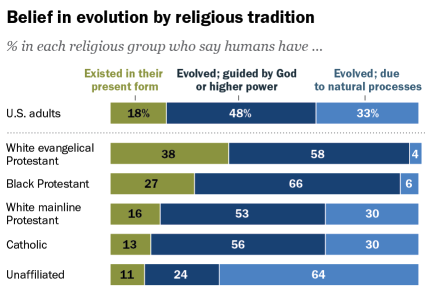
To be fair to Darwin, it wasn’t him personally they were opposed to but his ideas about creation. If evolution was true, then where was God in all of this? But probably more than that, it threatened the church’s power over people’s lives. It threatened the power and influence the church had on society and we see this playing out more and more. As science becomes the new idol we worship, people outside our faith (and even some within) tend to look at religion as something at best behind the times and at worse denying the obvious. The more people of faith push back against the discoveries of science, the more we look out of touch, and it’s hard to reach people for Christ when we fail to meet people where they are. The thing is science is still regarded by the vast majority of Christians as being compatible with our faith. In fact, while 81% of all Americans believe in some form of evolution, 83% of White mainline Protestants and 86% of Catholics believe in it. Even among White evangelical Protestants, the Christian group least likely to believe in evolution, 62% believed.[8]
The debate often centers not on dinosaurs in particular.
But instead on the differences between the Biblical account of creation and the scientific version of it. According to Young Earth Creationists probably the most extreme view on creationism, the Earth is somewhere between 6,000 and 10,000 years old.[9] They even date it to around 4004 B.C.and they believe the Bible literally. God created the earth in six days. There were no dinosaurs. There was no evolution. They take into account the birth of Christ, the ages of his ancestors, and the genealogies described in the Bible and put the Earth at 6,000 years old. But that’s only one Christian account of creation. Most Christians don’t adopt a literal interpretation of the Bible. Instead, they believe the Bible accounts for evolution. These are Theistic Evolutionists and they make up the majority of Christian belief. Evolution is viewed by them as a tool God used to create the Earth; placing God still as creator, but not denying evolution. Instead of the literal six days of creation, they believe those “days” could actually have been thousands or millions of years like it says in 2 Peter 3:8 – “But do not forget this one thing, dear friends: With the Lord a day is like a thousand years, and a thousand years are like a day.” Theistic Evolutionists even believe that the Bible talks about the existence of dinosaurs and they point to the passage from Job 40:15-19 as proof, saying that the behemoth in the passage was actually a dinosaur. Now the Bible doesn’t reference dinosaurs by name because the word “dinosaur” wasn’t a word until 1842. 1842. Long after the Bible was written. But Theistic Evolutionists often point to the description of the behemoth as an indicator that it was more than just a hippopotamus or an elephant.

“Look at Behemoth,
which I made along with you
and which feeds on grass like an ox.
16 What strength it has in its loins,
what power in the muscles of its belly!
17 Its tail sways like a cedar;
the sinews of its thighs are close-knit.
18 Its bones are tubes of bronze,
its limbs like rods of iron.
19 It ranks first among the works of God,
yet its Maker can approach it with his sword. – Job 40:15-19
But here’s the thing.
The story of Genesis was never meant to be an historical account of the beginning of the world. When we spend time focusing on the details of creation, we miss the forest for the trees. The story of creation was not supposed to be a factual accounting of events, but was meant to point us toward God as creator; that God is in control, that God is trustworthy and praiseworthy. That’s what Genesis is about. The power of God. But we get stuck fighting about the first thing that comes up in the Bible. Can’t even get one chapter in without arguing. Now the Bible is vague about creation on purpose. Nowhere does it say how old the Earth is, because it doesn’t matter. You’ll find all throughout Scripture there are many details each author could have included. Like what color was Jesus’ skin? What type of material were his shoes made out of? But none of that is important. The point we’re supposed to come away with after we read Genesis is a deeper sense of awe about God’s might. We’re supposed to read it and realize that we exist because of the grace, mercy, and love of God and really for no other reason. And that’s what the book is about. If you come away with THAT understanding, you come away with a deeper love and appreciation of God than you’ve ever had before.
We get caught up in “foolish controversies” far too often.
And when we ignore the Word of God which tells us not to argue about these things, we end up at odds with one another instead of realizing that with God all things are possible. That we should concentrate on the things that DO matter instead of the things that don’t. It brings to mind for me an episode of Friends where Ross is trying to get Phoebe to believe in evolution and at the end of the episode Phoebe says to him, “Look Ross, I’m not DENYING evolution. I’m just saying it’s one of the possibilities.” And Ross says, “It’s the ONLY possibility.” And Phoebe gets up from her chair and says to him, “Ross, can you open your mind like THIS much. Okay? Wasn’t there a time when the brightest minds in the world believed that the Earth was flat? And up until like 50 years ago you all thought the atom was the smallest thing until you split it open and this whole mess of stuff came out. Now, are you telling me you are so unbelievably arrogant that you can’t admit there’s a TEENY tiny possibility that you could be wrong about this?” And Ross admits, there’s a TEENY tiny possibility he could be wrong. We all could be wrong. But that isn’t the point of the story of creation, and I hope you walk away today understanding that no matter which side of the argument you fall on, the story is about the power, love, and grace of God who created this world for us because he loves us. That’s the point of the story. And as to all opinions that do not strike at the root of Christianity, we think and let think.
[1] https://variety.com/2023/tv/news/barneys-world-dinosaur-animated-series-max-cartoon-network-1235607348/
[2] https://www.theguardian.com/film/2023/jul/04/barney-the-dinosaur-film-daniel-kaluuya
[3] Many states are enacting or attempting to enact legislation to ban the teaching of certain subjects instead of leaving it to professional educators and school board officials. See https://www.npr.org/2022/02/03/1077878538/legislation-restricts-what-teachers-can-discuss
[4] https://www.encyclopedia.com/education/encyclopedias-almanacs-transcripts-and-maps/christianity-history-science-and-religion
[5] https://en.wikipedia.org/wiki/Roger_Bacon
[6] https://www.pbs.org/faithandreason/intro/histo-frame.html
[7] https://plato.stanford.edu/entries/religion-science/#BrieHist
[8] https://www.pewresearch.org/short-reads/2019/02/11/darwin-day/ Statistics were only for Americans who answered the question. Those who responded without an opinion or answered outside the accepted fields were omitted.
[9] https://www.gotquestions.org/young-earth-creationism.html
The Fundamental-List

We all have images of perfection.
The perfect career. The perfect school. The perfect spouse. I first met Anne while working at Disneyland. She was smart, funny, attractive, and sweet. She was a sweetheart to boot. It’s no wonder virtually every guy in our department wanted to date her. But I knew something most of them didn’t. She had never seen Star Wars. Not the prequels or the sequels. I’m talking the original Star Wars, the one without the any other words attached to it. It came up in some random conversation we were having when her, my buddy Mark, and I were all hanging out and the thought crossed my mind for the briefest moment – could I date someone who had never seen Star Wars? It was such a defining part of my childhood, what kind of relationship could we have? How would we raise our kids? Of course, all this was predicated on the small trivial detail that she would need to be interested in me. Minor stuff, I know. But we all have these images in our head of what we think things ought to be like. It informs how we look at the world, the relationships we develop, the careers we pursue and even our faith. And when reality doesn’t match our expectations, sometimes we react badly. But is it justified? How much heartache and pain could we avoid if we simply kept things in perspective? Because when we elevate the trivial to be on par with the essential, we often miss out on the richness and possibilities that life has to offer.

This morning, we’re opening with a passage from Titus.
In this letter from the apostle Paul to one of his emissaries, Titus, he spends most of it talking about how to live a Christian life. And even though it’s written in the words of an ancient culture, its lessons of humility, service, and honor are still values we hold today even if we look at the issues differently. It was also clear in this letter to Titus that Paul wanted him to model these expectations and teach those who would listen these lessons as well so they would become living examples of God’s love. In the passage we are about to share, Paul tells Titus to remind the people how to behave but also to remind them to be kind and merciful to those around them.
1 Remind the people to be subject to rulers and authorities, to be obedient, to be ready to do whatever is good, 2 to slander no one, to be peaceable and considerate, and always to be gentle toward everyone.
3 At one time we too were foolish, disobedient, deceived and enslaved by all kinds of passions and pleasures. We lived in malice and envy, being hated and hating one another. 4 But when the kindness and love of God our Savior appeared, 5 he saved us, not because of righteous things we had done, but because of his mercy. He saved us through the washing of rebirth and renewal by the Holy Spirit, 6 whom he poured out on us generously through Jesus Christ our Savior, 7 so that, having been justified by his grace, we might become heirs having the hope of eternal life. 8 This is a trustworthy saying. And I want you to stress these things, so that those who have trusted in God may be careful to devote themselves to doing what is good. These things are excellent and profitable for everyone.
9 But avoid foolish controversies and genealogies and arguments and quarrels about the law, because these are unprofitable and useless. 10 Warn a divisive person once, and then warn them a second time. After that, have nothing to do with them. 11 You may be sure that such people are warped and sinful; they are self-condemned. – Titus 3:1-11 (Old Testament)
These words are as important today as they were back then.
“Remind the people to be subject to rulers and authorities, to be obedient, to be ready to do whatever is good, to slander no one, to be peaceable and considerate, and always to be gentle toward everyone.” Sounds like a great way to live, right? Things we should aspire to. It’s also a living testimony to a loving God. But I can think of recent examples by people who claim to be Christian where that hasn’t happened. The way we behave IS IMPORTANT. It reflects not just on us but the God we say we follow. And as important as that is, the next bit Paul shares is vital to our reflection today. “But avoid foolish controversies and genealogies and arguments and quarrels about the law, because they are unprofitable and useless.” This is where we mess up the most. This is why people call us hypocritical and judgmental and closed-minded. Too often the people of God don’t ACT like the people of God.
Do you know how many different denominations there are in Christianity?
45,000. 45,000 Christian denominations in the world today.[1] And growing. Are there REALLY 45,000 things to fight about? And not just fight about but fight about so badly that we would turn our backs on one another. We’re about to enter into another season of that right now. There are those in the United Methodist Church who feel like they can no longer share a table with us. That there is just too much separating us to work it out. But are these arguments essential to our faith or trivial? Of course, to the people in the middle of it all it FEELS essential. When does it not? When you’re in the middle of a heated argument with someone, doesn’t it ALWAYS feel like you had no other choice? But you do. You always do. You always have a choice. That’s one of the great gifts of God, the freedom to choose. And yet, here we are. On the precipice of another break in the church. But is it a break over something essential or something trivial? Maybe we would do well to listen to John Wesley.

John Wesley, the founder of Methodism, had a saying – “Think and let think.”
Think and let think. Even back in Wesley’s time, the church had an issue with fissures and splits. To be fair, Methodism was never intended to be a split itself, but a revival – going back to the roots – within the Episcopal Church. John Wesley is famously known for never leaving the Episcopal Church even though he is credited (rightfully) as the founder of Methodism. To Wesley, Methodism was a way of being, of living out your faith and not a separate religious movement. But even so, Methodism came under attack and in part as a response to these attacks, Wesley wrote the tract called “The Character of a Methodist” where he sought to define the fundamentals of Methodist belief. He wrote, “the distinguishing marks of a Methodist are not his opinions of any sort. His assenting to this or that scheme of religion, his embracing any particular set of notions, his espousing the judgment of one man or of another, are all quite wide of the point. Whosoever, therefore, imagines that a Methodist is a man of such or such an opinion, is grossly ignorant of the whole affair; he mistakes the truth totally. We believe, indeed, that “all Scripture is given by the inspiration of God;” and herein we are distinguished from Jews, Turks, and Infidels. We believe the written word of God to be the only and sufficient rule both of Christian faith and practice; and herein we are fundamentally distinguished from those of the Romish Church. We believe Christ to be the eternal, supreme God; and herein we are distinguished from the Socinians and Arians. But as to all opinions which do not strike at the root of Christianity, we think and let think. So that whatsoever they are, whether right or wrong, they are no distinguishing marks of a Methodist.”[2] His point was that those things which are not essential tenets of our faith shouldn’t be argued over. We can debate them, we can talk about them, we can offer our opinions, but those things which are not central to who we are should not divide us which is exactly in line with what God tells us in the Bible; “avoid foolish controversies and genealogies and arguments and quarrels about the law, because they are unprofitable and useless.”

These are the only three things Wesley called out that define us as Christians.
Scripture as the inspired Word of God, the sufficiency of Scripture to determine God’s will, and Christ as part of the Holy Trinity. I’ll add one more. Not that Wesley didn’t believe this himself, but because he would have believed it was covered by the other rules, but I think it’s important enough that we call it out. From John 13:34-35, 34 “A new command I give you: Love one another. As I have loved you, so you must love one another. 35 By this everyone will know that you are my disciples, if you love one another.” Pretty much everything in the Bible can be summed up in this verse of Scripture. “Love one another.” These are the beliefs that define what it means to be a Christian. Anything else is simply a matter of interpretation. We don’t have to agree on everything to be united on the big things. We don’t have to adapt every belief someone else has to work together for the good of Christ. But it seems more than ever we cling to the unimportant and abandon what is essential to our faith. Is it any wonder more and more people are leaving the church? Is it that puzzling those outside the church think we’re so behind the times? If we abandon one another over the trivial, how are people to believe we will be there for them when things get tough? A friend of mine once served a church that threatened to split because of a sofa. Seriously. Somebody had donated a sofa that was sitting in the narthex or lobby area, and it had become an eyesore. At one time it was nice and in style, but over the years it had become beat up, the cushions were lumpy, the colors were garish, and half the church hated it. But it had been donated by a member of a prominent family so the other half for one reason or another refused to get rid of it. And in arguing over the couch, they threatened to leave the church. Over a couch. That’s how petty we can become when we forget what is essential to our lives as Christians. We need to keep our hearts focused on what’s important and let go of the rest. We need to focus on what is essential and ignore the trivial. Because when we do that, we can do so much more for each other and for the world – even for people who’ve never seen Star Wars.
Note: While the contents of the sermon are totally original, the sermon title is not. But it was so clever and fit our message so well I used it. I’d give credit to Andy Stanley, Lead Pastor of North Point Community Church, but in HIS message he ALSO said he borrowed it from someone else, too!
[1] https://www.gordonconwell.edu/center-for-global-christianity/research/quick-facts/
Maybe He’s In Here…

Have you ever heard of Bobbie the Wonder Dog?[1]
Bobbie was a mixed breed collie who hailed from the state of Oregon back in 1923. He lived with his people, Mr. and Mrs. Frank Brazier and their two daughters, Nova and Leona. Bobbie would love to run and play on the farm where he spent most of his time with the family. Eventually the family moved into town and concerned that the small confines of city life would be too much for a farm dog like Bobbie, the family sold him to the friend who was going to take over their farm. But Bobbie didn’t give up on his family and soon found them on his own, walking into town every weekend and returning to the farm by Monday. Eventually the family bought him back (at three times the price) and Mr. and Mrs. Brazier decided to take Bobbie with them on a trip back East to Indiana. While getting some gas, Mr. Brazier saw Bobbie getting chased by four other dogs. He was confident Bobbie would find his way back, but after an hour or so, Bobbie didn’t return. Pretty soon, the Brazier’s started to worry and went looking for the dog, but to no avail. They searched, made phone calls, even put in an ad in the local paper, but nothing. After three weeks of visiting in the area, they decided to head home, heartbroken over the loss of their dog. Six months later, while walking down the street, Nova, the youngest daughter spotted a mangy, grimy, lean dog walking along and noticing the similarities shouted, “Oh look! Isn’t that Bobbie?” At the sound of his name, Bobbie came running up to Nova and licked her all over. He had returned home. No one knows for sure how Bobbie knew the route to take or how he knew which way to even go. He had traveled over 2,500 miles to reach the Brazier home, but somehow, Bobbie had an innate sense of where to find home.

Bobbie’s story is incredible, but he is not alone in making miraculous journeys.[2]
There’s the story of Howie the Persian cat who crossed the Australian Outback to get back home. Misele the farm cat who traveled nine miles into town to find her farmer who had been taken to the hospital. Amazingly, she had never been there before but was still able to track him down. And Troubles, a scout dog for the military, who was flown into the jungles of Vietnam by helicopter and was abandoned after his handler was shot and taken to the hospital. Troubles found his handler after trekking through the jungle on foot for more than 10 miles in unfamiliar terrain and searching for him tent-by-tent once he made it back to camp. These are only a few of the seemingly amazing stories of animals able to find their way home despite all the obstacles. Yet if we can believe that God could create an animal that can find its way home despite all the odds, couldn’t we also believe in a God that would put it within us to find OUR way home as well? To find OUR way back to God?
He as much told us he would.
Our passage takes place in the time when the people of Israel are in exile. They’ve been taken over by the Babylonians and removed from Jerusalem by force and scattered throughout the land. God told them this would happen, but the people of Israel didn’t listen. Most of them had started to again follow pagan gods and had drifted away from their faith. Can you imagine how frustrating that must be? I know God’s above that, God’s better than that, but imagine if you were in God’s shoes how frustrating that must be? He makes this covenant with Abraham and again with Moses and again with David. I will be your God and you will be my people. And he does it. He is faithful to the people of Israel. But time and again they drift away. Then something bad would always happen. And they would come crawling back. And every single time God forgave them. But as soon as they were comfortable, they would drift away again. God warned them there were consequences for this constant drifting away, and eventually they become exiled from their own land. But in this passage we’re about to read God offers them hope and tells them about a new covenant that’s coming that would help them to always remember his promise. This is where we enter into the reading this morning.

31 “The days are coming,” declares the Lord,“when I will make a new covenant with the people of Israel and with the people of Judah. 32 It will not be like the covenant I made with their ancestors when I took them by the hand to lead them out of Egypt, because they broke my covenant, though I was a husband tothem,” declares the Lord.
33 “This is the covenant I will make with the people of Israel after that time,” declares the Lord. “I will put my law in their minds and write it on their hearts. I will be their God, and they will be my people. 34 No longer will they teach their neighbor, or say to one another, ‘Know the Lord,’ because they will all know me, from the least of them to the greatest,” declares the Lord. “For I will forgive their wickedness and will remember their sins no more.”
35 This is what the Lord says, he who appoints the sun to shine by day, who decrees the moon and stars to shine by night, who stirs up the sea so that its waves roar— the Lord Almighty is his name: – Jeremiah 31:31-35
God tells the people of Israel, “The days are coming…”
The days are coming when I will forgive their wickedness and will remember their sins no more. And this day God talks about is the coming of the Holy Spirit. We know that because Jesus himself told us it would happen. He promised not to leave us alone. That when he ascended back into Heaven to be with God, he would leave behind the Holy Spirit to guide us and show us the way. And this is what it means to us when God says, “I will put my law in their minds and write it on their hearts,” that the Holy Spirit would come and be accessible to us always. That through the Spirit, we could know God. But if all that’s true, then why is it sometimes so hard to find God? I mean if God put it within us to know him, why is it so difficult? God may be everywhere, but sometimes it feels like God is nowhere. Like God is Waldo in a Where’s Waldo picture. We search and search, but we just can’t pick him out of the crowd. We might find the clock or the pen or the compass, but God? He seems almost invisible. We know he’s there because the book tells us he’s there. But if God is everywhere why is it so hard to find him?

Maybe it’s because we’re not looking in the right place.
Human beings since time began have searched for evidence of God in the world around them. From archaeological digs in the Middle East to scholarly dissertations on the mysterious Q source of the Bible, we’ve looked for God everywhere. And even though we can find evidence of God, it doesn’t seem to quell our search for him. We have this incessant need to find God. In fact, that is the whole basis for In Star Trek V: The Final Frontier, Sybok the Vulcan prophet has dedicated his life to finding God. But when he reaches the planet he believes God can be found, he ends up finding out God was never there in the first place. At the end of the movie, Captain Kirk notices Dr. McCoy and Mr. Spock are deep in thought so he says to them, “Cosmic thoughts gentlemen?” McCoy responds, “We were speculating, is God really out there?” That’s a sentiment we have probably all wrestled with from time to time. Is God out there? And Kirk pauses for a moment as if reflecting on the question before he says, “Maybe he’s not out there, Bones. Maybe he’s in here…the human heart.”
Leave it to Star Trek to come up with a Biblical answer.
When God tells us that he is going to write the law in our minds and on our hearts, perhaps what he’s saying is not that each human being would instantly and always see God in everything. But maybe instead, that God through the Holy Spirit, puts within us this very need to find him. This quest we have for meaning in life, for understanding our Creator, is in fact the gift from God that he has put on our hearts. This drive to understand God is the DNA of our being that came about with this new covenant God promised through Jeremiah. Most people have a sense there is a creator, that there is something greater “out there.” In fact, only about 4% of the U.S. identifies as atheist.[3] We just don’t all label it as God. Some people identify God as Mother Nature or Lady Luck or Fortune or Chance. Some people sense God can be found in other religions or in the stars. But nearly all of us have this identity with some kind of Creator. And it drives us to understand the meaning of life. Perhaps the best evidence that there is a God is this God “compass” that seems to be built within us.
Jesus promised us that we would not be left alone.
And we are not. We are not alone in this world. The Holy Spirit may not be something we can see, but it doesn’t mean it isn’t active and working in our lives. The very fact we search for God, for meaning, for something more than our mere existence, is itself evidence of God’s activity within us. Our challenge then is not to rest comfortably in this knowledge, but instead to share it with the world. Our challenge is to help others recognize the work God is doing within them, so they can come to know him like we do. And the challenge is also for us to know him better. We can grow closer to God through pray and study, by being in community with one another and by breaking bread together. And when we do those things, we will follow this homing beacon back to God and through Christ and the Holy Spirit obtain the peace of knowing who we are and to whom we belong. Follow the compass of your heart and find God at the end of it.
[1] Story from various sources on the Internet including http://www.silvertonor.com/murals/bobbie/bobbie_wonder_dog2.htm, http://www.oregonencyclopedia.org/entry/view/bobbie_the_wonder_dog/, and http://en.wikipedia.org/wiki/Bobbie_the_Wonder_Dog#cite_note-oe-3
[2] https://animals.howstuffworks.com/pets/pet-travel/6-pets-that-traveled-long-distances-to-get-home.htm
[3] https://www.pewresearch.org/short-reads/2019/12/06/10-facts-about-atheists/
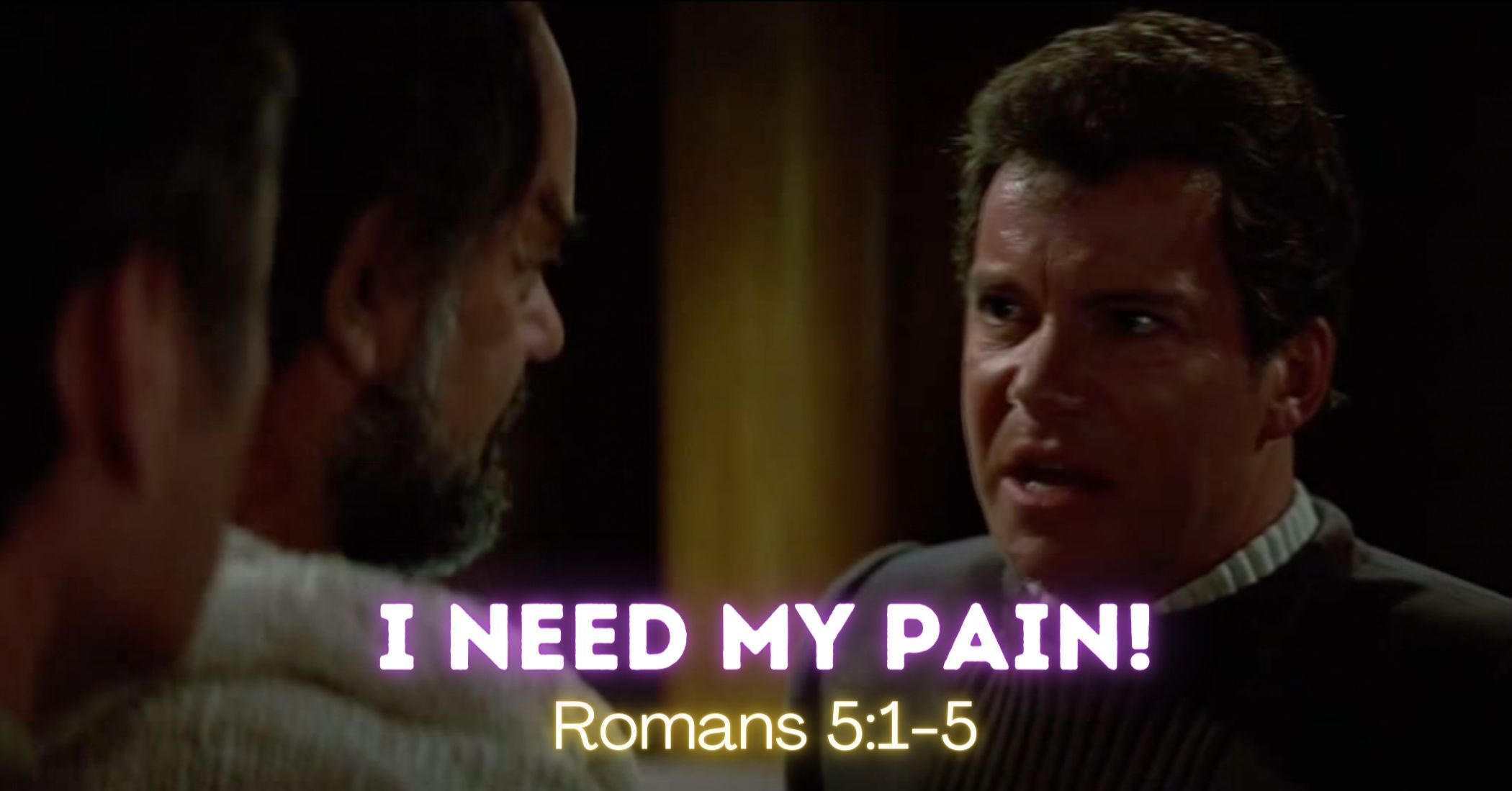
I NEED MY PAIN!
Pain stinks!
I’ve had to endure a bit of it this year and I’ve got to tell you, I’d rather do without. When pain hits, it’s hard to focus on anything else. It becomes consuming as we try to deal with it. To not have to worry about pain would be a blessing! Or would it? Maybe we should ask Steve Pete. He is someone who literally feels no physical pain. None. He has a rare condition called congenital analgesia. [1] When his body is injured, he can’t tell at all. When other kids would get a broken arm or leg, they would stop because of the pain, but Steve would just keep going and would cause even worse injury to his body. His condition meant that his body never gave him any signals that there was something wrong. Often that meant he would have to stay in the hospital. When he was young, he literally bit off his tongue and didn’t feel it. It was then when his parents discovered he had this condition. Because he has no way of knowing the damage he is doing, Steve has often caused far more harm to his body than others ever would and that damage has been so extensive that even though he doesn’t feel it, Steve still has to pay the price. He may not feel pain, but he still suffers from its effects. The doctors told him so much damage has been done to his left leg that eventually they will have to amputate it.[2] And believe it or not, Steve is the lucky one. Because of the damage done, people with this condition are reported to rarely live past the age of 30.[3] In fact, Steve’s brother, who also suffered from the same condition, took his own life. Steve believes it is precisely because of his condition that he did.[4]
What are we to do about the problem of pain?
Pain can be crushing. It can rob us of the joy of life. And it can wreck us – not just physically, but emotionally and spiritually, too. Pain hurts on many levels, not just one. Sometimes people wonder if pain is God’s punishment for doing something wrong. It’s not. I can tell you that now. But it sure seems like it sometimes. Especially, when we are in the middle of it. Losing a loved one brings an emotional pain that is hard to endure, and it’s one of the biggest reasons people lose faith. Where is God in the middle of this pain? Why did God take this person from my life? It’s hard to believe in a just and loving God when there is so much pain in the world. But a pain-free life? That has its problems, too. Just ask Captain Kirk. In Star Trek V: The Final Frontier, Sybok, the Vulcan prophet, has this unusual ability to help people release their innermost pain. And at first it seems like a blessing. Dr. McCoy had been carrying around this guilt about the death of his father for decades! And with just a touch, Sybok seemed to release him from that pain. When McCoy tries to convince Kirk to let Sybok take away his pain too, Kirk tells his friend, “…Bones, you’re a doctor. You know that pain and guilt can’t be taken away with a wave of a magic wand. They’re the things we carry with us – the things that make us who we are. If we lose them, we lose ourselves. I don’t want my pain taken away. I NEED MY PAIN!”
“I NEED MY PAIN!”
Kirk, who has been through a lot of pain – the loss of his son, the death of his best friend, the loss of his career – wants to hold on to those experiences BECAUSE of what he has endured. He shouts almost in desperation because he is afraid the only redemption that comes from experiencing those painful moments will be lost if they are simply taken away. These are events that have shaped his life and have made him the person he is. To steal that pain away, would rob him of the ongoing transformative power of that pain. And that’s what Paul is trying to teach us in our passage today. The idea of pain as punishment is not new. It is literally as old as the Bible. In fact, older. Ancient Judaism believed our favor with God was not part of some future promise in Heaven but was a very real part of our life now; we could tell whom God favored by how good their life was. The pain and suffering of Christians were just more evidence we shouldn’t follow Christ, because surely, if God had blessed this kind of thinking, these people wouldn’t be suffering. But Paul tells us in this short passage suffering isn’t something to despair over. Not that God CAUSES suffering, but God can transform it into something better. God can bring hope out of our despair.
Therefore, since we have been justified through faith, we have peace with God through our Lord Jesus Christ, 2 through whom we have gained access by faith into this grace in which we now stand. And we boast in the hope of the glory of God. 3 Not only so, but we also glory in our sufferings, because we know that suffering produces perseverance; 4 perseverance, character; and character, hope. 5 And hope does not put us to shame, because God’s love has been poured out into our hearts through the Holy Spirit, who has been given to us. – from Romans 5
Here in this passage, Paul puts a new spin on pain and suffering.
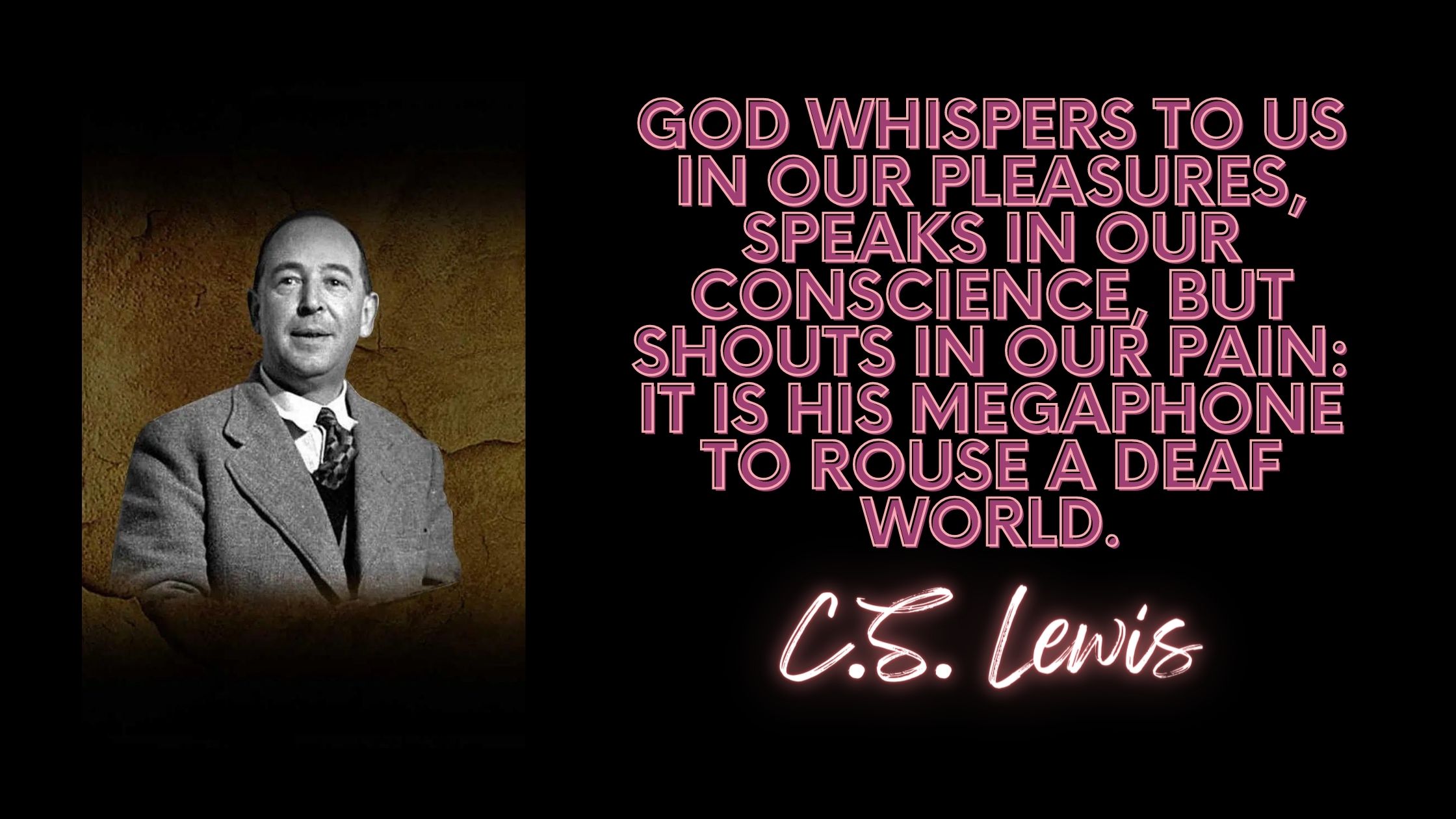
He’s not saying it doesn’t hurt. He’s not discounting the difficulties that come with pain, and let’s be honest – Paul knows quite a bit about it himself. He’s not only been a victim of it, but some of his friends and fellow disciples have been tortured and killed for their faith. Paul is no stranger to pain. But he wants us to look at it with a different perspective. In verse 3, Paul explains, “…we also glory in our sufferings (our pain, our affliction), BECAUSE we know that suffering produces perseverance; perseverance, character; and character, hope.” Paul is making the connection that we can grow from our pain. It is the journey of enduring the pain where we come to understand the hope we have in Christ and lean more into our faith. Pain is often a crucible for our character. It’s a testing ground. It’s the kiln that refines and polishes the clay that is our life. C.S. Lewis, one of my favorite authors, wrote a book called “The Problem of Pain,” and in it he said this, “…pain insists on being attended to. God whispers to us in our pleasures, speaks in our conscience, but shouts in our pain: it is His megaphone to rouse a deaf world.”[5] It is often in our pain, our suffering, and our trials that we draw closest to God, that we are most ready to hear him. Not that God causes pain, but in our pain, we are most ready to listen.
Pain is sometimes the catalyst we need to grow.
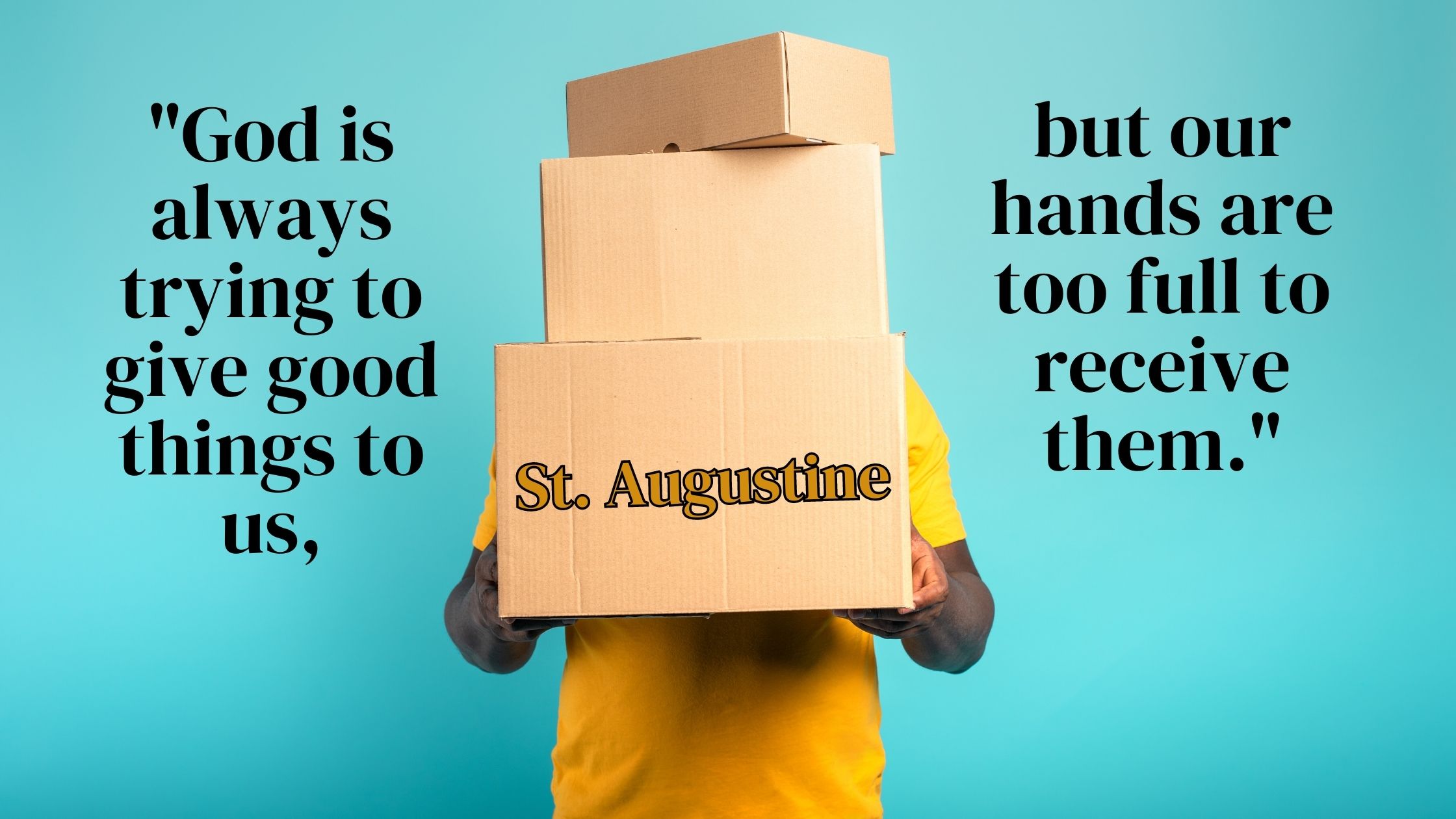
It is when we are most willing to make room for God. Lewis makes the counterpoint that when things are going too well, when our lives are free of trouble, free of pain, we have the tendency to shut God out, to forget we still need God. We look upon ourselves as being wholly sufficient without recognizing the need we have for Christ. We tend to make room for God only when we are in need. St. Augustine once said, “God is always trying to give good things to us, but our hands are too full to receive them.”[6] A human being’s natural tendency toward sin and pride and self-reliance too often wins out and only in our pain are we receptive to God. Maybe this is the point Captain Kirk was trying to make when he shouted, “I NEED MY PAIN!” The things he has suffered through are the same things that have transformed him into a better person. The ordeal, the battle, the struggle to endure – it is in these things that our character is shaped and formed.
But the hope Paul talks about comes from Christ himself.
When Paul talks about how character builds hope, he’s talking about the hope we have in Christ. When he says hope does not put us to shame, he means because we know Christ has suffered with us and for us. Jesus not only understands your pain but has felt it himself. In the darkest moment of his life, his friends abandoned him; his people demanded his death; and he was beaten, tortured, and humiliated – and that was before he was put on a cross to die. But the story doesn’t end there. If it did there would be no redemption, no transformation to speak of. A friend of mine put it this way, “God never lets human violence and sin have the last word. He transformed the worst that humans could do into the path of our own redemption.” That is why we have hope in Christ. Because even in this, God can transform and redeem us. It is in the resurrection of Christ that we find this hope that Paul is talking about and it is THAT hope which allows us to endure. As Richard Rohr once wrote, “Faith is not for overcoming obstacles; it is for experiencing them – all the way through!”[7]
It’s tempting for us to think that our life would be better without pain.
But the truth is pain serves a very useful purpose. In our physical body, it serves as a warning system. It gives us the opportunity to fix what’s wrong and to bring us more in line with our optimal selves. In our spiritual life, pain serves the same function. It tells us when something is wrong and gives us the opportunity to grow. As Captain Kirk said, we need our pain. We are so often surrounded by the immediacy of the moment, we cannot always see how pain can be useful. Our challenge is to understand the necessity of pain and have faith that even in this God can redeem our pain for his glory. And we rest assured that he can because he has already done so in the most difficult circumstances of all. Most of all, we can take comfort in knowing that we believe in a God who understands pain because he has experienced it first-hand. One thing we can be sure of in life is that we will experience pain, and when we do, let us pray to God to renew our faith, strengthen our resolve, and help us to grow and learn from the experience.
[1] http://www.bbc.co.uk/news/health-20239836
[2] https://www.bbc.com/news/magazine-18713585
[3] http://www.psychologytoday.com/blog/overcoming-pain/201201/chronic-pain-s-parallel-universe-congenital-analgesia
[4] http://www.bbc.co.uk/news/magazine-18713585
[5] C.S. Lewis, The Problem of Pain, p. 91.
[6] http://www.goodreads.com/quotes/75226-god-is-always-trying-to-give-good-things-to-us. Based on C.S. Lewis’ quote of St. Augustine from The Problem of Pain.
[7] http://www.goodreads.com/quotes/556286-faith-is-not-for-overcoming-obstacles-it-is-for-experiencing
Are You Mad?

Does God exist?
Believe it or not, that is the central question in – get this – a Star Trek movie! If you haven’t seen Star Trek V: The Final Frontier… you’re not alone. Considered by fans the worst or second worst film in the original series franchise, it was also the worst of the original six at the box office.[1] But I love it. In it, Sybok is a Vulcan who has devoted his life to search for the answer to that question – does God exist? He believes God not only exists but is calling to him from the wellspring of creation, a place he calls Sha Ka Ree or what we would call the Garden of Eden and he executes an elaborate plan to hijack the Enterprise to prove it. Sybok thinks it exists beyond the Great Barrier in the center of the galaxy and when Captain Kirk tries to explain it’s impossible to breach the barrier, Sybok says to him, “But if we do, will that convince you that my vision was true?” Kirk looks at him, “Your vision?” Sybok responds, “Given to me by God. He waits for us on the other side.” And Kirk can only look at him and say, “You ARE mad.” And Sybok responds, “Am I? We’ll see.”
That’s the problem with people who claim to speak for God.
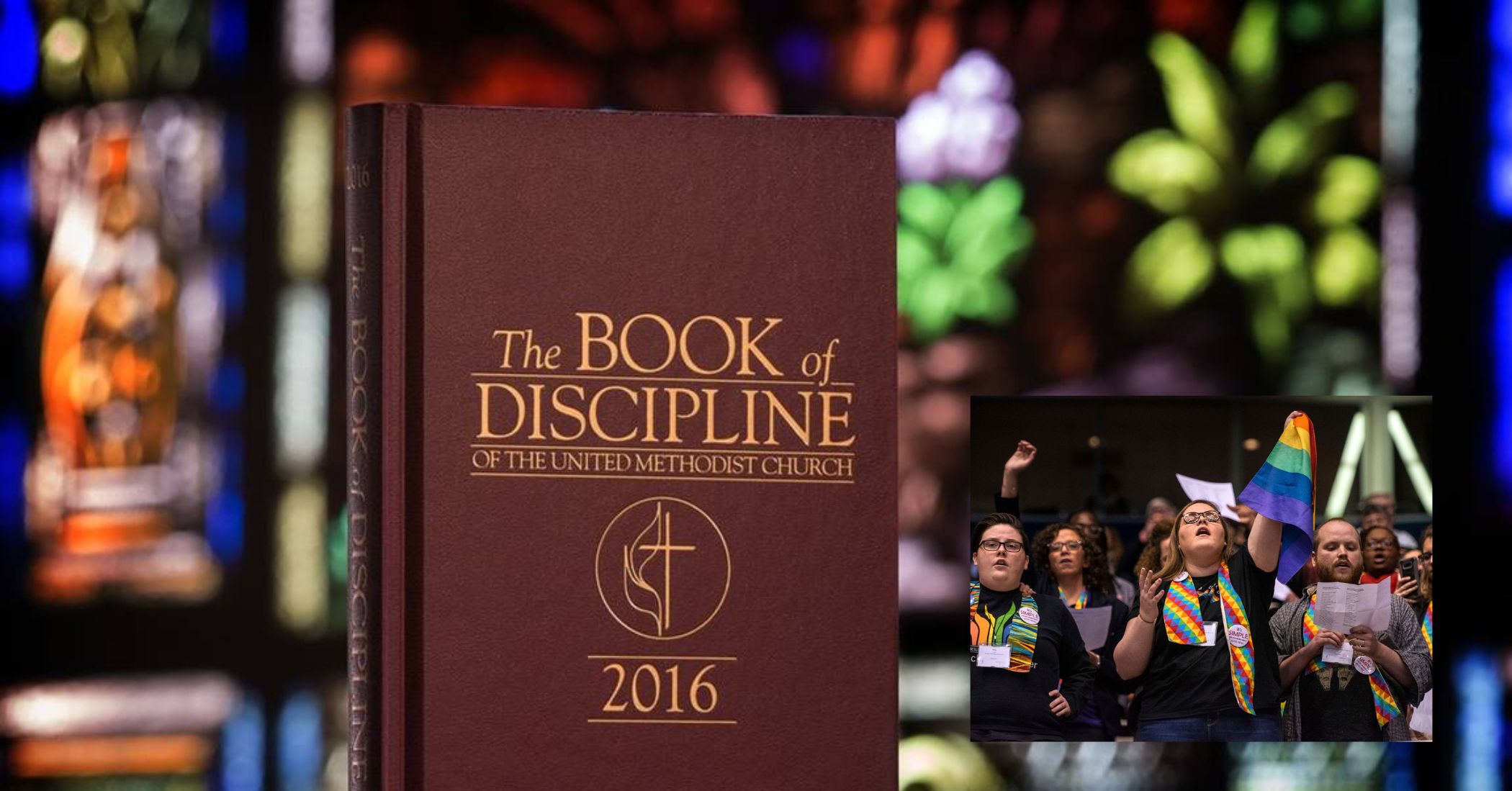
They ALL believe whole-heartedly in what they do. And that’s the case with Sybok. He honestly believes he has heard the voice of God and this place called Sha Ka Ree, this paradise from which creation began, is something that can be found. No one disputes Sybok’s brilliance, his gifts, or his devotion, but is that enough? Does that mean he is truly following God’s call and is that call right for us? That is the question we must ask ourselves. And we need to be cautious because if history is any indication, Christians have often gotten it wrong. We have believed without proper testing, the tall tales and complete falsehoods of leaders who claim to have support from God for their actions. There’s a reason the white supremacy movement is so closely linked to Christianity. It’s because Christians from the pulpit and the pews have long spouted their belief in it and justified it as God’s will. This quote was from a respected and influential pastor just weeks before the attack on Freedom Riders in Alabama back in 1961.[2] Henry Lyons, Jr., the pastor of a 3,000-member church in Montgomery, Alabama said this to the local white Citizens Council, “…I am a believer in a separation of the races, and I am none the less a Christian. If you want to get in a fight with the one that started separation of the races, then you come face to face with your God. The difference in color, the difference in our body, our minds, our life, our mission upon the face of this earth, is God given.”[3] And this guy wasn’t even considered an extremist. Today we have no problem seeing this for what it is – a white supremacy complex which sadly is alive and well in the world. But back then? People believed Henry Lyons, Jr. and thought he was sharing God’s word on the subject. We have the same problem in the church today. We have a solid group of people who believe whole-heartedly that people who identify as LGBTQ+ should not be preachers or teachers in the church and we have a group who whole-heartedly believe the opposite, and both throw around Scripture like its ammunition for a gun. How can we tell what path to follow?
Fortunately, like always, the Bible has a prescription for this problem.
And it can be found in the Book of Matthew in the Sermon on the Mount when Jesus himself addresses this issue. This isn’t the only place in the Bible where we are warned against false prophets, against those who would teach us things in the name of God that aren’t true. But this passage not only comes from Jesus, but he gives specific instructions on how it is that we, as ordinary, everyday people, can discern truth from untruth. Jesus’ words come near the end of his sermon to the people, and he closes with these words for a purpose. He wants the people to hold him to the same standard he is asking them to hold everyone else. In essence, he’s saying, “If everything I said is true, then judge me by these criteria as well, and then you will know who is speaking falsely and who is sharing the truth.” So here is what Jesus says:
15“Watch out for false prophets. They come to you in sheep’s clothing, but inwardly they are ferocious wolves.
Jesus warns us that it’s hard to tell the difference between one who speaks for God and one who does not because both drape themselves in the trappings of faith. They both play the part. It reminds me of a scene from Shakespeare’s The Merchant of Venice where the character Antonio says, “Mark you this, Bassanio, The devil can cite Scripture for his purpose… what a goodly outside falsehood hath!”[4] So how can we tell the difference? Listen to Jesus, verse 16:
16By their fruit you will recognize them. (He says this twice in our passage. Right here and again in verse 20.) Do people pick grapes from thornbushes, or figs from thistles? 17Likewise every good tree bears good fruit, but a bad tree bears bad fruit. 18A good tree cannot bear bad fruit, and a bad tree cannot bear good fruit.

The fruit Jesus is talking about is the fruit of the Spirit and the Bible is very clear what that fruit looks like. Paul’s letter to the church in Galatia tells us, “…the fruit of the Spirit is love, joy, peace, forbearance, kindness, goodness, faithfulness, gentleness and self-control. Against such things there is no law (Galatians 5:22-23).” James, the brother of Jesus tells us, “But the wisdom that comes from heaven is first of all pure; then peace-loving, considerate, submissive, full of mercy and good fruit, impartial and sincere. Peacemakers who sow in peace reap a harvest of righteousness (James 3:17-18).” Notice what’s NOT in there? Anything about judgment or belittling others or forcing people to do your will. Christ believed, and his disciples believed, that love, mercy, and gentleness was the way to go. Not using the Bible as a weapon to justify your own behavior. And there are consequences to working against God’s will as Jesus shares in verse 19 and on:
19Every tree that does not bear good fruit is cut down and thrown into the fire. 20Thus, by their fruit you will recognize them. 21“Not everyone who says to me, ‘Lord, Lord,’ will enter the kingdom of heaven, but only he who does the will of my Father who is in heaven. 22Many will say to me on that day, ‘Lord, Lord, did we not prophesy in your name, and in your name drive out demons and perform many miracles?’ 23Then I will tell them plainly, ‘I never knew you. Away from me, you evildoers!’

I love that Jesus uses the metaphor for fruit.
It makes me think of all the times my dad used to take me to Plowboys as kid. At the time, I thought it was BORING! I went to hang out with my dad (and because he always bought me this awesome gum called Adams Sour Apple). But looking back, I’m glad I went. Every week, we’d go down to the market together and Plowboys was sort of like the Whole Foods of its day. It was a fresh fruit and produce market where they got everything from local growers. It seemed like we spent HOURS there every weekend. But I learned a lot without even realizing it. I watched my dad as he would knock on a watermelon to see if it had the right sound or squeeze a tomato to see if it was ripe. I’d look at the kinds of apples he would pick and would taste samples of grapes to see if they were sweet enough and when they were too tart. He would show me how to tell if different fruit were good or not by using all of the five senses and these are still lessons I carry with me to this day. Now I bore Emma whenever she goes with me to the market, and I hope one day she finds those lessons as valuable as they are to me.
Spending that time with my dad helped me to discern the good from the bad.
Learning about which fruit were good and which were bad saved me so much grief over the years. In the same way, spending time with our heavenly Father can do much the same thing. Through prayer, worship, reading the Bible for yourself, joining a small group, and sharing the love of Christ with others, we begin to get a better idea which teachings are truly God blessed and which are just self-righteous. And in the long run, it will help us – no matter what – to be more Christ-like to one another. I mentioned at the beginning that our church is struggling with issues over the LGBTQ+ community and whether or not they should be teachers and preachers. I think those who condemn them are forgetting to apply God’s fruit test. Are they producing fruit? Are they showing the love, joy, peace, forbearance, kindness, goodness, faithfulness, gentleness and self-control of Christ? Some people get so hung up on what they consider “the law” or even the Book of Discipline, but we heard from Paul, those who exhibit fruit? “Against such things there is no law.” This week, I want to challenge you to spend time in prayer, read your Bible (or even listen to it on the Bible app), or find a podcast with sound teaching and dive deeper into God’s Word for yourself so that you might be better prepared for to see the wolves in sheep’s clothing. And if you’re interested in starting a small group or to be part of one, let me know so we can get you connected and start one up. We need to be prepared because there are a lot of false prophets out there, a lot of Sybok’s ready to lead you down a path that is anything but Christ-like, and if you’re not ready you’ll fall into that trap. Squeeze the fruit for yourself and see if it’s good. Learn what it means to bear good fruit. And you will be well-equipped to discern the truth always. In the name of the Father and of the Son and of the Holy Spirit. Amen.
[1] https://www.the-numbers.com/movies/franchise/Star-Trek#tab=summary&franchise_movies_overview=od5
[2] This is one of the most disturbing examples of racism and attempted murder in the fight for Civil Rights and is only one of many horror stories. To find out more, read from this account from the Equal Justice Initiative. https://calendar.eji.org/racial-injustice/may/14
[3] https://www.npr.org/2020/07/01/883115867/white-supremacist-ideas-have-historical-roots-in-u-s-christianity
[4] Found this reference while doing research for our message from this website: https://www.theledger.com/story/opinion/columns/guest/2021/09/25/beware-politicians-quoting-bible/5820118001/
Amazing Grace

I’ll never forget the time I got to see Mikhail Baryshnikov dance in person.
He was with the White Oak Dance Project, a modern dance company he founded. The year was about 1995 and they were doing a series of four dances, only one of which Baryshnikov himself was in. He was already 47 or 48 years old at the time, and I wondered what I would see. Most of the dancers on stage were much younger than him, about 20 to 25. Would he be able to keep up with the other dancers, or would he be a pale version of his former self? I guess I was about to find out. The first three acts were admittedly kind of dull. Maybe if you were a modern dance enthusiast you would have appreciated the performance, but it was pretty boring for me. Had it not been for the fact that I had a crush on the girl who I was with, I probably would have fallen asleep. But then I would have missed Baryshnikov. When he took the stage, he completely captured the attention of everyone in the room. He danced circles around the kids who were nearly half his age. It was as if they were props in a dance routine made just for him. I’d never seen anyone move like that before or since. If there was anyone who epitomized grace, it would have been him.

Funny thing about that word “grace.”
It’s used in so many ways. When I share with you the grace Baryshnikov showed that night, you all know exactly what I mean. But if we were talking about Mark McGwire’s fall from grace over his steroid use, you’d know what that meant too even though they are completely different definitions. When we say grace over a meal we mean something different from both of the other meanings. The credit card company offers us a “grace period” to pay our bills. A person shows grace by admitting to their faults. So what does this word really mean? And what does it mean to talk about the grace of God? If you have a Bible or a Bible app on your phone, please go to John 1:9-18. In church, we constantly talk about God’s grace, but this is another one of those words that gets thrown out there without any real explanation of what it means. We don’t do a good job of letting people know what grace IS. So, what do we mean by it? Our passage from John will help us shed a little light on the subject.

9 The true light that gives light to everyone was coming into the world. 10 He was in the world, and though the world was made through him, the world did not recognize him. 11 He came to that which was his own, but his own did not receive him. 12 Yet to all who did receive him, to those who believed in his name, he gave the right to become children of God— 13 children born not of natural descent, nor of human decision or a husband’s will, but born of God.
14 The Word became flesh and made his dwelling among us. We have seen his glory, the glory of the one and only Son, who came from the Father, full of grace and truth.
15 (John testified concerning him. He cried out, saying, “This is the one I spoke about when I said, ‘He who comes after me has surpassed me because he was before me.’”) 16 Out of his fullness we have all received grace in place of grace already given. 17 For the law was given through Moses; grace and truth came through Jesus Christ. 18 No one has ever seen God, but the one and only Son, who is himself God and is in closest relationship with the Father, has made him known. – from John 1
The beginning of the passage helps us to understand the end.
John writes, “9 The true light that gives light to everyone was coming into the world.”In a few words, John is describing Jesus as the bringer of hope and life – the “true light that gives light to everyone.” You’d think people would be thrilled about that, but John then writes, “the world did not recognize him. He came to that which was his own (the Jewish people), but his own did not receive him.” Despite the fact the Jewish people had been long hoping for a savior, few recognized him when he came among them. It’s hard to be tough on them because let’s face it. In our skeptical world, we would harbor doubts, too. And they didn’t have Instagram, Snapchat, or TikTok. Nobody did a choreographed dance to Jesus walking on water. If you weren’t there to witness it, you had every reason to doubt. Still, even though we failed to recognize Jesus for who he was, John tells us, “Out of his fullness we have all received grace in place of grace already given.” We have all received grace in place of grace already given. God had given humanity the gift of life. God had given humanity relief in the desert when Moses led his people to freedom. God had blessed the people again and again, and then, to top it off, God gave us his son Jesus Christ. And that is what grace is. Grace is the unmerited favor of God for a group of people who didn’t deserve it. Even though we wander away constantly; that we turn to worshipping other idols like power, money, beauty, and fame; despite the fact we fail to give thanks to God for the life we have, God still sent Jesus to redeem us. God forgives us our sin. God still offers us salvation. That is the meaning of grace.
But grace and mercy, even though they are similar are two completely different things.
They often go hand-in-hand, but they as one writer put it, “Mercy withholds a punishment we deserve; grace gives a blessing we don’t deserve.”[1] Mercy withholds a punishment we deserve; grace gives a blessing we don’t deserve. That’s what makes the grace of God so amazing. It’s more than not being punished for what we’ve done, but then God elevates it to another level! God offers us salvation! He not only wipes our slate clean of sin but asks us to join him in Heaven when our time here ends. He asks us to reenter paradise even though we don’t deserve it. THAT is the God we follow. Everything else pales in comparison. I like what Andy Stanley, the lead pastor of North Point Community Church, said about grace, “To say that someone deserves grace is a contradiction in terms. You can no more deserve grace than you can plan you own surprise party…the minute you think you deserve it, the it you think you deserve is no longer grace. It is something you have earned. But grace can’t be earned.”[2] That’s the whole point. That grace can’t be earned.

The reason so many people are opposed to the church is not because of Jesus.
It’s not because of his message of peace and love. It’s because of us. We do a great job of receiving grace, but not a good job extending it. If you look at organized religion today, you’ll notice we tend toward becoming a “graceless religion.” Again to use Andy’s words, “Instead of defining itself in terms of what it stands for, the church often takes the less imaginative and easier path of defining itself in terms of what it is against.”[3] We like to tell people what we are against. Throughout the church’s history we have made bold statements about what we are against, only to later realize how wrong we were. We’ve stood against interracial marriage. For that matter we stood against racial equality. We’ve stood against women in leadership positions in the church. Again, we’ve stood against gender equality. But instead of focusing on the things we are against, why don’t we focus instead on the things we believe in. Instead of condemning people for being different than we are, why don’t we embrace them for the things we hold in common, like being human beings. Christianity didn’t become the world’s largest religion because of what we stood against, but because of what we stood for. We stood for caring for the sick, so we built hospitals. We stood for helping people get ahead in life, so we built schools and universities. We stood for people deserving affordable houses so we started Habitat for Humanity. We stood for helping the poor and the needy so we built shelters and food banks. We helped others, not because they paid us to. Not because they did something for us. But because there was a need and we filled it. THAT is what it means for us to extend the grace of God – helping others not because they deserve it, but because we want to show them the grace that God has given to us by offering grace ourselves. We can talk about grace in so many ways – in the arts like with Mikhail Baryshnikov, in finance where it’s really mercy more than grace – but this is the greatest grace there is.

One of my favorite stories of grace comes from Francis Chan.
He’s another pastor and writer and I was at a conference where he gave this tremendous story about grace. It was about his daughter. His daughter had done poorly on a test. She had gotten a “C” and I love the way he described it. He said, “It’s like getting an Asian ‘F.’ Asian kids aren’t supposed to get “C’s.” So his daughter’s friends were asking her, “So what’s he going to do to you?” “What’s he going to do to you?” as if he was going to take her out behind the woodshed or something. So when he picked her up from school that afternoon, she got in the car and told him about the grade. And instead of getting mad, or getting upset, or giving her a punishment, he said, “Okay. Let’s go get some ice cream.” Instead of punishing her or lecturing her as she felt she deserved, he not only forgave her, but then added on top of that the ice cream! The next day at school when she told her friends about what had happened, the other kids all said, “I wish I had your dad.” This week, I want to challenge you to show the grace of God to someone in your life. Someone who maybe deserves your wrath, your anger, or your justice, like the guy who cuts you off on the highway or the knucklehead who gets your coffee order wrong or maybe one of your kids or your spouse who makes a mistake that maybe they should have known better. Instead of giving them “justice,” not only show them mercy but extend to them God’s grace. Go above and beyond what’s needed or expected to do something out of kindness and love and thereby passing the grace of God forward. Sometimes we are like Francis Chan and we are put in situations where we can show justice, mercy, or grace, and it’s up to us to choose. Any of those things would be technically right, but only one is going to make people say, “I wish I had your dad.” Some times we need to share about the grace of God with others so that they CAN say that and realize that the Dad we have in Heaven is a pretty awesome dad indeed. In the name of the Father and of the Son and of the Holy Spirit. Amen.
[1] http://www.gotquestions.org/grace-of-God.html
[2] Andy Stanley, The Grace of God, p. xiii-xiv.
[3] Ibid, p.xiv.
A Single Word

“What’s in a name?”
“That which we call a rose by any other name would smell as sweet.” I had to memorize that passage from Romeo and Juliet for Freshman English in high school. I’m guessing I’m not the only one. And I understand the sentiment the great playwright is trying to make; that labels don’t change who we are, but I’ve got to say Shakespeare kind of got it wrong. A label can stick to a person for their entire life whether it’s true or not! The words we use CAN make a difference. Sometimes a huge one. They can build us up and tear us down. They can create division between friends, between lovers, between entire segments of society. A speech can inspire people to march for civil rights or incite others to riot against their nation. Words can unite or turn people against one another. Listen to these quotes and guess who they might be referring to. “They’re stealing our jobs!” “They’re stealing our women!” “They’ll change our culture!” “Why don’t they just go home?” Today, you might think these quotes are about Mexican immigrants or Muslim or even Jewish people with antisemitism on the rise once again. But these are the words said about the Japanese when they first started to immigrate to America. Ironically, it’s also the same words used about the Chinese when THEY first came to America. And believe it or not, it’s the SAME WORDS used to talk about the Italians, the Irish, the Germans, the Russians, and the Polish when THEY first started coming to America. And in each of those instances the public was turned against those groups and some of the negative stereotypes about each one still sticks with us today. Here are some of the headlines used when Japanese immigration was at its peak in the early 20th century.
- Japanese a Menace to American Women
- Japanese Throttle Progress in the Rich Fruit Section – Actually they didn’t use the term “Japanese.” You can guess what word they used instead.
- Brown Asiatics Steal Brains of Whites – That’s one of my favorites.
It’s ridiculous, but people believed it! And it created negative images of these new immigrants to our shores. Again, images that haunt us even now.

Words can hurt.
And words have power. With a single word, you can alienate someone, make them feel as if they don’t belong, or even reinforce age-old ideas about racial superiority based on nothing more than skin color. Words like “Oriental” and “Negro” while at one time common ways to describe people have become outdated and in their outdated-ness sometimes have negative connotations. When I hear the word “Oriental,” I don’t think of myself. I think of some caricature of a dude with slanted eyes, a triangular hat, wearing some gold-laced print shirt that’s too big with matching pants. So admittedly I’m offended when other people refer to me as “Oriental” because it reinforces this old stereotype and belittles me and people like me. Is it really that hard to honor how other people feel? Is it that big of a deal to use a different word than the one you’re used to in describing someone? Words have power and our passage today reinforces that idea. James, the brother of Jesus, was trying to warn the church not to take what we say casually. That we can cause far more damage than we realize when we aren’t careful with our words. This is how he put it.

Not many of you should become teachers, my fellow believers, because you know that we who teach will be judged more strictly. 2 We all stumble in many ways. Anyone who is never at fault in what they say is perfect, able to keep their whole body in check.
3 When we put bits into the mouths of horses to make them obey us, we can turn the whole animal. 4 Or take ships as an example. Although they are so large and are driven by strong winds, they are steered by a very small rudder wherever the pilot wants to go. 5 Likewise, the tongue is a small part of the body, but it makes great boasts. Consider what a great forest is set on fire by a small spark. 6 The tongue also is a fire, a world of evil among the parts of the body. It corrupts the whole body, sets the whole course of one’s life on fire, and is itself set on fire by hell.
7 All kinds of animals, birds, reptiles and sea creatures are being tamed and have been tamed by mankind, 8 but no human being can tame the tongue. It is a restless evil, full of deadly poison.
9 With the tongue we praise our Lord and Father, and with it we curse human beings, who have been made in God’s likeness. 10 Out of the same mouth come praise and cursing. My brothers and sisters, this should not be. 11 Can both fresh water and salt water flow from the same spring? 12 My brothers and sisters, can a fig tree bear olives, or a grapevine bear figs? Neither can a salt spring produce fresh water. – James 3:1-12
Our praise is meaningless if we can’t control our tongues.
We can’t lift up praise to God and with the same mouth belittle others. Not if we want our praise to mean something. A salt spring cannot produce fresh water. The tongue might seem to be a little thing, but by itself it can be devastating. And it doesn’t even have to be intentional. Sometimes people can say things that seem innocuous but actually perpetuate systems of racial inequality. Being born Asian, I’ve had more than one person come up to me and say, “You speak really good English.” To this day, I don’t know how to respond to that. First of all, they should have said I speak English well, let’s be grammatically correct. But more importantly, they weren’t complimenting my use of grammar or my sentence structure. They were implying, “You speak really good English…for an Oriental.” People don’t realize how insulting that is or how it points out that somehow you aren’t normal, that being Asian somehow means not being a “real American.”

It’s called racial microaggression.
And it’s defined as “the brief and everyday slights, insults, indignities and denigrating messages sent to people of color by well-intentioned…people who are unaware of the hidden messages being communicated.”[1] Phrases like “What are you?” or “Where do you come from?” imply that you don’t belong. What’s worse is when you answer honestly and the person persists, “No, where do you REALLY come from? Where were you born?” It’s just a constant reminder that you aren’t one of us. These microaggressions don’t even have to be verbal. They can be non-verbal like when someone looks at you cross ways or clutches their purse more tightly as they walk by. They can be environmental like the flying of a Confederate flag or doing the tomahawk chop at a baseball game. You might think, “well those things are trivial. Stop being so sensitive.” And I’ve actually heard those types of responses, but microaggression is anything but trivial and people who don’t pay attention to it are being insensitive. In his research on racial microaggression, Dr. Sue, a leading expert on the topic, found that these tiny insults affect our mental health, create a hostile climate, perpetuate stereotypes, devalue people of color, and create inequities in education, employment, and health care.[2] And that’s only partially how they affect us and the world around us. We need to be alert to our own microaggressions and our own unintended biases. We all have them. We need to be open to hearing about them and doing something to correct it when we find out. We have to stop assuming the world around us is just “too sensitive” or “too PC” and instead do something about it.

What are you willing to do?
Change is tough. There’s no doubt about that. And people are more resistant to change than you might imagine. We like to believe we’re capable of it, but many people struggle with it. The same reason we have problems changing church culture is the same reason we are having problems changing systems of racial injustice. We don’t like to change. If church, if society, if LIFE is working for YOU, why bother? It takes brave people who not only have the courage to face their own shortcomings, but to work to do something about it. Who have to be willing to overturn the apple cart and sacrifice some of the privilege they have to make the whole world better. Dr. Sue wrote that it’s really hard to get people to correct microaggressions (racial or otherwise) because they are often unconscious of it. They don’t even think about it because it’s not overtly racist (or sexist or gender-centric), and often they believe they are good, moral people – which in general they probably are. When people point out these microaggressions, most of us react defensively because it creates a tension between this image we have of ourselves as a “good” person and one where we, even unintentionally, are contributing to oppressive systems.
But God gave you two ears and one tongue for a reason.
As the philosopher Epictetus said, it’s so that we can listen twice as much as we speak. And I can’t think of a more important time to remember those words. Whether its race, gender, gender identity, or sexual identity, we need to remember words matter. Words can have great power and as Spider-Man taught us, with great power comes great responsibility. And a word’s meaning changes over time. What might not have been offensive ten, twenty, fifty years ago, might be especially offensive now. In our day and age, we need to be cognizant of how we use them. We need to do some mirror-gazing and be willing to accept we still have work to do on ourselves. We’re going to make mistakes. But there’s grace and forgiveness for all. I’m still getting used to how best to use pronouns and hope someone comes up with a better system and quick! No one expects us to be perfect, but we should always be working toward perfection. It doesn’t matter how old you are, we all have room to grow. But to me, that’s what makes life exciting! There’s always something new to learn, always more that we can do, and always a way to make the world a better place. In the name of the Father and of the Son and of the Holy Spirit. Amen.
[1] I did leave out the word “white” because I don’t think you have to be white to level a racial microaggression. But the article is very helpful and well-written. https://www.psychologytoday.com/gb/blog/microaggressions-in-everyday-life/201010/racial-microaggressions-in-everyday-life
[2] Ibid.

