
Dunking Donuts

How do you like to eat your donuts?
Are you a dunker? Do you like it with milk or coffee? Me, I’m an “as is” kind of guy. I like to experience my donuts without other flavors impacting the “donut experience.” I know some people like to dunk their donuts especially if they’re a few days old, but I can’t bring myself to do that. Personally, I’m a donut purist and even though I love milk, I wouldn’t want to blend the tastes together. It’s the same reason I eat cereal the way I do. I’m on a timer as soon as the milk hits the bowl. It just makes me cringe to think about eating soggy cereal and I feel the same way about donuts. Who wants a soggy donut? It would be like putting sugar on grits, butter on rice, ketchup on eggs! Wait, I do that. The point is we each have our own way of doing things that WE think is RIGHT and we can’t IMAGINE doing it differently. Ironically, the same is true for some of the things we do in our Christian faith. Different denominations and even different churches have different ways of observing certain rituals that are central to what we believe. Baptism is one of those rituals. The people of God have very different viewpoints on what constitutes a “proper” baptism. To dunk or not to dunk? That is the question. And the attempt to answer it has driven right thinking people in different directions. How you dunk your donut doesn’t seem to upset anybody, but for some reason, how you dunk people does.

There are basically four methods of baptism – aspersion, affusion, immersion, and submersion.
Say it with me. Aspersion, affusion, immersion, submersion. Aspersion, affusion, immersion, submersion.[1] It’s a tongue twister. Sounds like that Gene Kelly song from Singing in the Rain. “Moses supposes his toes-es are roses, but Moses supposes erroneously.” Anyway, aspersion is a fancy way of saying sprinkling with water, that’s what we do most commonly. You take a palm full of water and just run it gently over the person’s head. Affusion is the pouring of water over the head, usually from a jug or pitcher of water with a bowl underneath to catch it as it drips off. The advantage of these two types is you stay dry. Immersion is literally standing or kneeling in a body of water and using a jug or bowl or something where you can scoop up a lot of water, and having it poured on top of you. Sort of like the Gatorade soak at the end of a football game. And then there is complete immersion or submersion, which is the mother of ALL baptisms. It’s the one we most commonly think of when we think of someone being “dunked.” In our church, ALL of these are acceptable forms of baptism, but not every church sees it that way.
In fact, some are very rigid in their beliefs.
I had a friend named Susan who belonged to the International Church of Christ. I remember talking to her one day after I had moved to Atlanta. We had lost touch for a couple of years, and I decided to reconnect with her, see how she was doing, and she told me about this church she joined. It seemed strange right from the beginning. She was telling me about this intense discipleship training they had to go through before they were allowed to be baptized. ALLOWED! They had very strict ideas about baptism and the saddest one to me was that she believed only those baptized in this particular way were going to be saved. It literally made me sad. Incidentally, only her church baptized people in this particular way – which she never gave me the details. She said there was only one true baptism and if you didn’t take part in it, you couldn’t be saved. I wish I had known then what I know now. This was the passage I wish I had read to her. Luke 23:33-43. Because this one passage would prove that belief wrong. It shows all you need to receive salvation in Christ. This is the reading from Luke of the crucifixion of Christ. We begin the reading with Christ at the top of Golgotha along with the two criminals and this part of Scripture describes what happens next. But pay attention not only to what happens but to what DOESN’T happen.
33When they came to the place called the Skull, there they crucified him, along with the criminals—one on his right, the other on his left. 34Jesus said, “Father, forgive them, for they do not know what they are doing.” And they divided up his clothes by casting lots. 35The people stood watching, and the rulers even sneered at him. They said, “He saved others; let him save himself if he is the Christ of God, the Chosen One.” 36The soldiers also came up and mocked him. They offered him wine vinegar 37and said, “If you are the king of the Jews, save yourself.” 38There was a written notice above him, which read: THIS IS THE KING OF THE JEWS.
39One of the criminals who hung there hurled insults at him: “Aren’t you the Christ? Save yourself and us!”
40But the other criminal rebuked him. “Don’t you fear God,” he said, “since you are under the same sentence? 41We are punished justly, for we are getting what our deeds deserve. But this man has done nothing wrong.”
42Then he said, “Jesus, remember me when you come into your kingdom.”
43Jesus answered him, “I tell you the truth, today you will be with me in paradise.” – Luke 23:33-43
Nowhere in the Bible does it say you HAVE to be dunked.
I’ve looked and I’ve looked, and it just doesn’t say that anywhere. People who believe that dunking is the only way will argue, “That’s how Jesus did it.” Again, though, if you read the Bible, it doesn’t say anything about HOW Jesus got baptized, just that he did. Even Jesus himself never says anything about it except to say we should do it, too. Dunkers will argue the word “baptism” MEANS to “dip” or “immerse,” but they conveniently ignore its other definitions, to “wash” or to “pour water over.”[2] Dunkers even ignore the historical and archaeological evidence that even in the early church people often had water poured over them instead of being dunked. Instead, what we see in our reading this morning is the only thing essential for a person to receive salvation – faith in Jesus Christ.
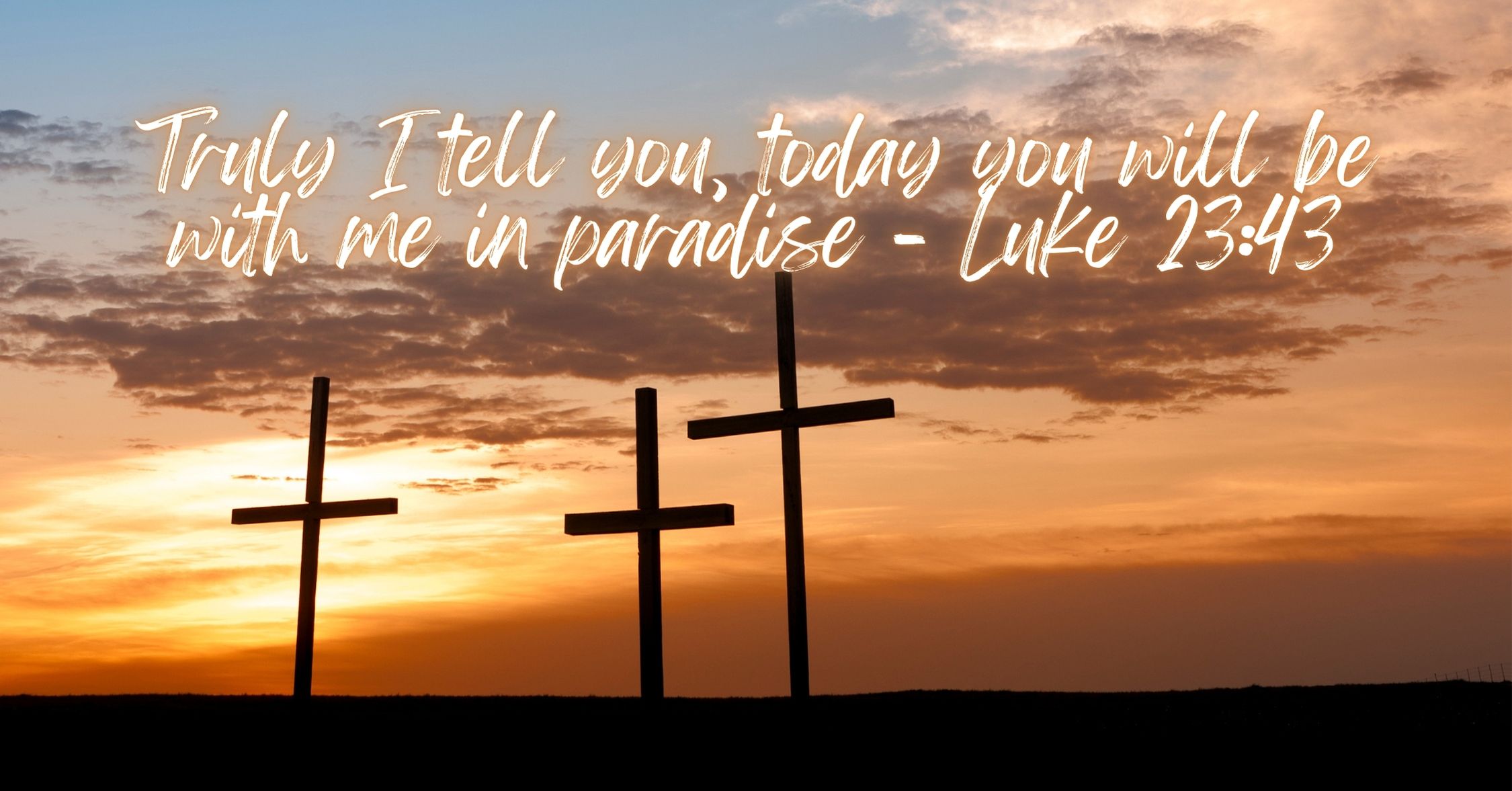
The people watching ridiculed and mocked Jesus.
Even one of the criminals as he is hanging there in pain insulted him and shouts at him “Save yourself and us!” But the other criminal scolds the first one, admits to his crimes, and proclaims that Jesus has done nothing wrong. Then he says to Jesus, “…remember me when you come into your kingdom.” And Jesus says these words, “I tell you the truth, today you will be with me in paradise.” Today you will be with me in paradise. The man repented, moments before his death with a sincere and honest heart, and Jesus forgave him. It’s as simple as that. And that thief? He never got baptized. His sins were never washed away in a river. He never went underwater. There isn’t some hidden gospel account that shows the thief being taken down to receive the ritual cleansing. Instead, with a love of God and repentance in his heart, the criminal asks for forgiveness and Christ forgives.
But that doesn’t mean baptism isn’t important.
In fact, for anyone who knows Christ it is essential. Jesus commanded us to baptize all nations in his name. And if salvation is based on our faith in Christ, what does it say about us if we refuse to be baptized? As one of only two sacraments in our faith, we believe baptism like communion is an outward and visible sign of an inward and spiritual grace. When we are baptized we are acknowledging our faith in Christ and we do it in the community of believers because baptism is about joining the family of God; becoming a true child of Christ. There are no secret baptisms. And in the Methodist tradition, we accept the baptisms of any Christ-centered church. I know in some traditions, it’s customary to be “rebaptized.” But we have a different perspective.
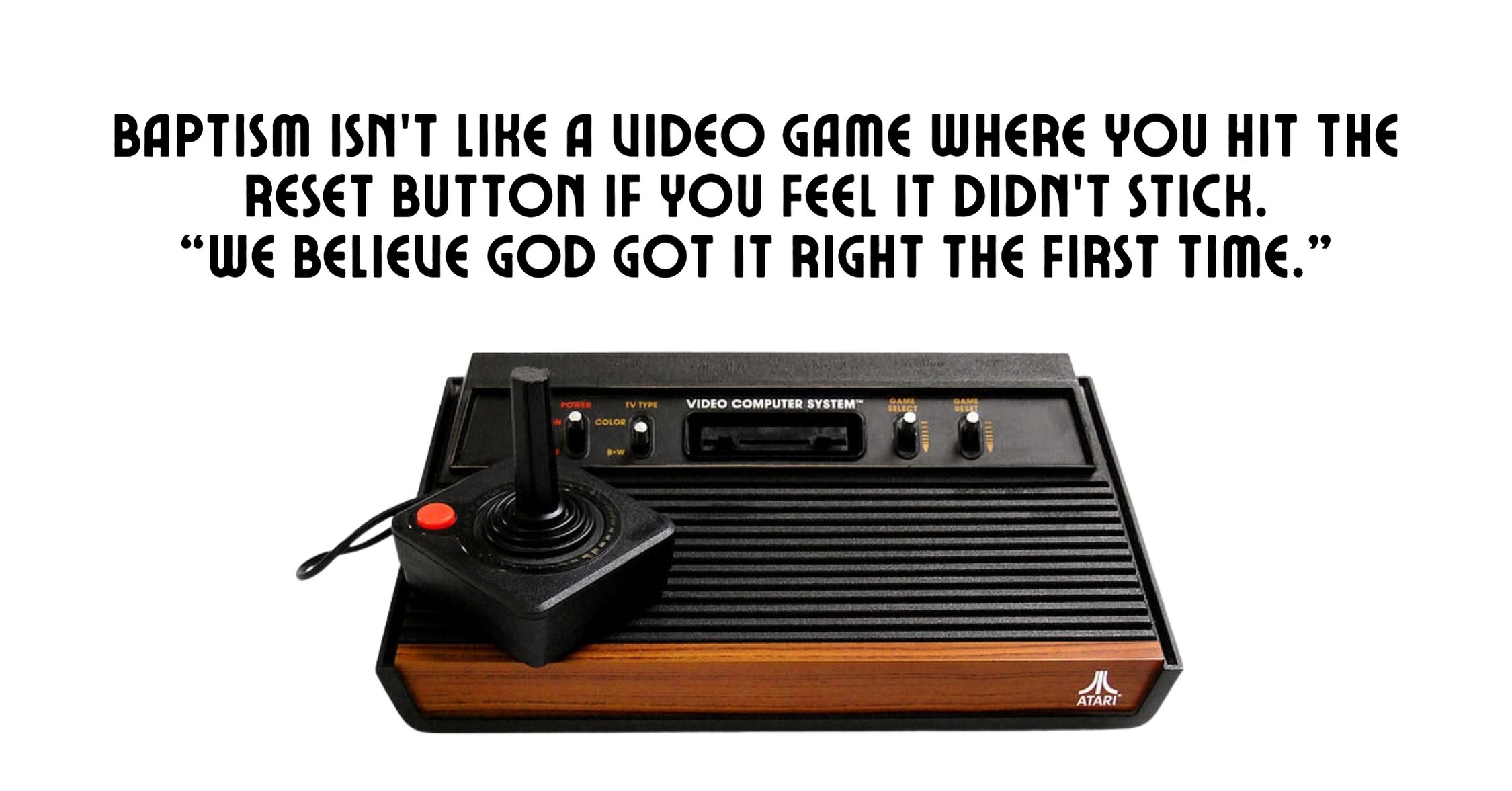
I had a friend who asked our pastor to be rebaptized.
She had been baptized as a child and at the time it didn’t have the meaning it did for her now. She had been away from the church for a long while and when she came back, she really felt that her life had been transformed. She wasn’t the same person she was before, and she felt like she needed to rededicate her life to God. And our pastor told her we didn’t do rebaptisms and the reason she gave has always stuck with me. She told her, “We believe God got it right the first time.” We believe God got it right the first time. That’s why we don’t rebaptize people from other denominations or rebaptize adults who left and came back. Because baptism, isn’t like a video game where you start over if you don’t get it right. Baptism is a covenant between you and God. And just like your parents will always be your parents, once you become a child of God, you are ALWAYS a child of God and God loves you whether you love him back or not.
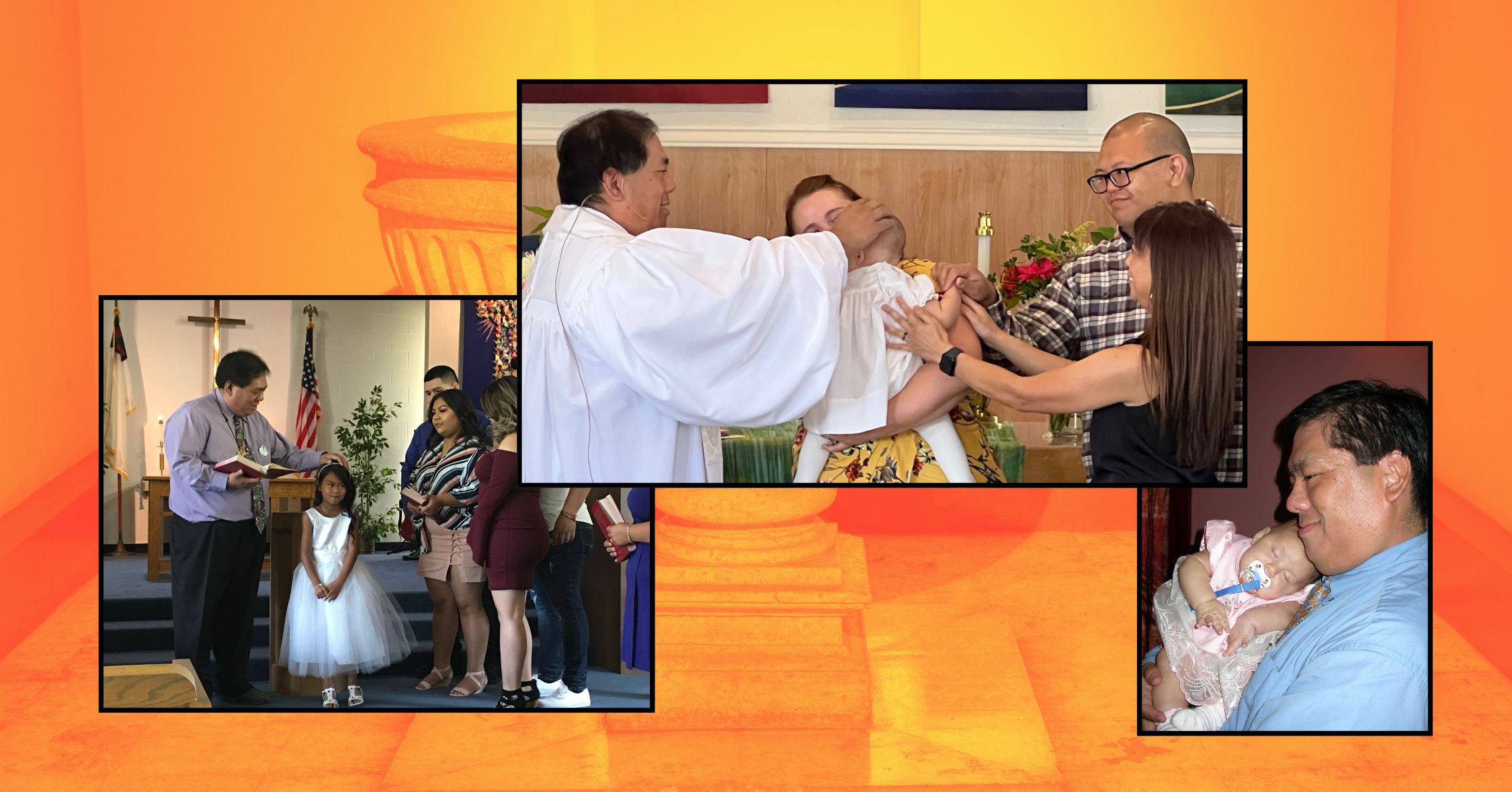
Baptism is the first MILESTONE in our faith journey, but it’s not the first STEP.
The difference is that a milestone is a reference point. It’s a marker along a road that already exists to show us where we’ve been and how far there is to go. In the Christian faith, our life is filled with these milestones and from the moment we are born to the moment we die, we are continually walking along that road. If we say it’s the first STEP, then we’re saying that our faith, our journey only begins HERE – at this point, when we’re baptized. But the truth is God is constantly working in and through our lives. It just takes us awhile to recognize that sometimes. But God is always active. If you’ve never been baptized or know someone who hasn’t been baptized, encourage them to come join the family. It’s never too late. Just remember whether we are baptized by sprinkling, pouring, or dunking doesn’t matter to God. What matters are your faith and your heart. That’s always been enough for him. Now I need to go and eat a donut. In the name of the Father and of the Son and of the Holy Spirit. Amen.
Not By Bread Alone…
Why do we preach?
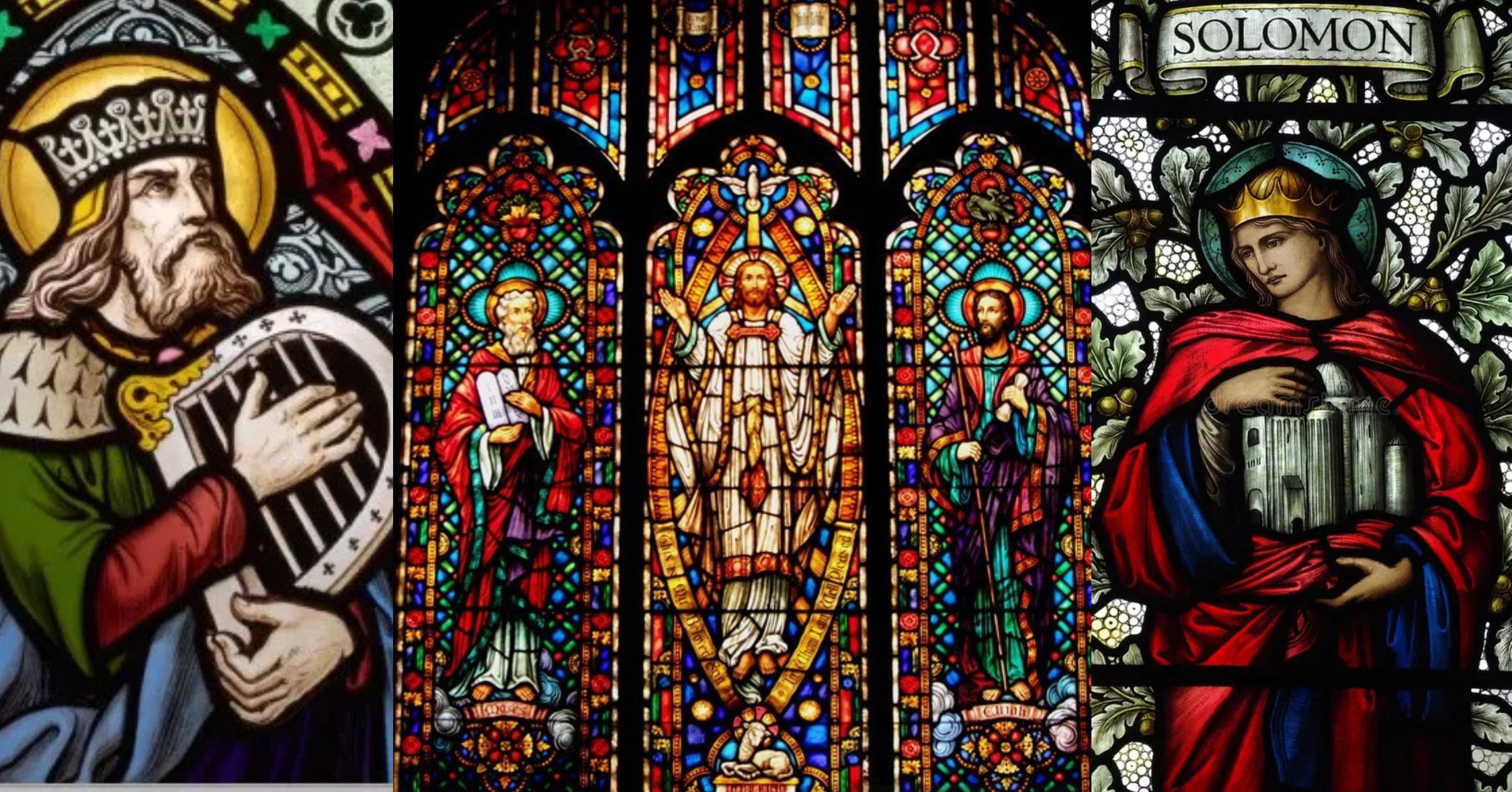
Why is there a message every Sunday? From the earliest days of worship, God gathered his people for the purpose of receiving his Word and God used ordinary, everyday people to deliver it. In the passage we just read in Deuteronomy we were reminded that it was God who gathered his people before Mt. Horeb[1] and in that gathering delivered to them the Word, literally. He gave Moses the Ten Commandments and appointed Moses to teach them to the people. It was also God who appointed Solomon, David, the prophets, and of course, Jesus. All great leaders, but also great teachers who shared the lessons of God. When Jesus left to return to God, he appointed the disciples to continue his work and imbued them with the Holy Spirit so they could go forth and proclaim God’s Word. In the passage we’ll be reading from this morning, Paul explains the importance of this task to Timothy. If you have a Bible or a Bible app on your phone, please go to 2 Timothy 4:1, 2 Timothy 4:1. These are Paul’s final instructions to Timothy. He says in verse 6 of that passage that he knows he is soon about to die, but he wants to leave these words as encouragement. He doesn’t start out in the best way. He tells him to expect hardship. He tells him to expect persecution. That having the protection of the Lord is a promise of salvation, but not freedom from the troubles of THIS place. And he tells Timothy something very important. He says to him in this letter that all he needs is imbedded in Scripture. That all Scripture is God-breathed, and that will be enough to teach, rebuke, correct, and train God’s people. Then he gives him these following words.
In the presence of God and of Christ Jesus, who will judge the living and the dead, and in view of his appearing and his kingdom, I give you this charge: 2 Preach the word; be prepared in season and out of season; correct, rebuke and encourage—with great patience and careful instruction. 3 For the time will come when people will not put up with sound doctrine. Instead, to suit their own desires, they will gather around them a great number of teachers to say what their itching ears want to hear. 4 They will turn their ears away from the truth and turn aside to myths. 5 But you, keep your head in all situations, endure hardship, do the work of an evangelist, discharge all the duties of your ministry. – 2 Timothy 4: 1-5
We hear from Paul the vital role sharing God’s Word plays in the life of his people.
It is used to correct, rebuke, and encourage – but I really like and appreciate what he adds right there at the end of verse 2. After a pause, he writes, “with great patience and careful instruction.” With great patience and careful instruction – as if to heighten the importance of those words. Preaching isn’t something you do at the last minute – although there are times when I feel like I’m reworking and refining up to the last minute. Preaching isn’t something you do extemporaneously. Preaching is a craft done with great patience and care because it’s that important. On average a good sermon takes about an hour to prepare for each minute preached. From experience that seems about right. It should take time to pray over the sermon, discern what God wants to be said, research to make sure what you’re sharing is accurate, and then writing it out. So much goes into a sermon because of what might become of those words. It can be the difference between turning people away from God or helping them hold fast to his Word in difficult and challenging circumstances. Paul writes there will come a time when people turn away from the truth and instead turn to myths. Today, that might mean other religions, or it might mean relying on money, wealth, or power. It might mean turning to false beliefs. What we share and how we share it can influence the power of these “myths” over people’s lives.
But this isn’t just for preachers.
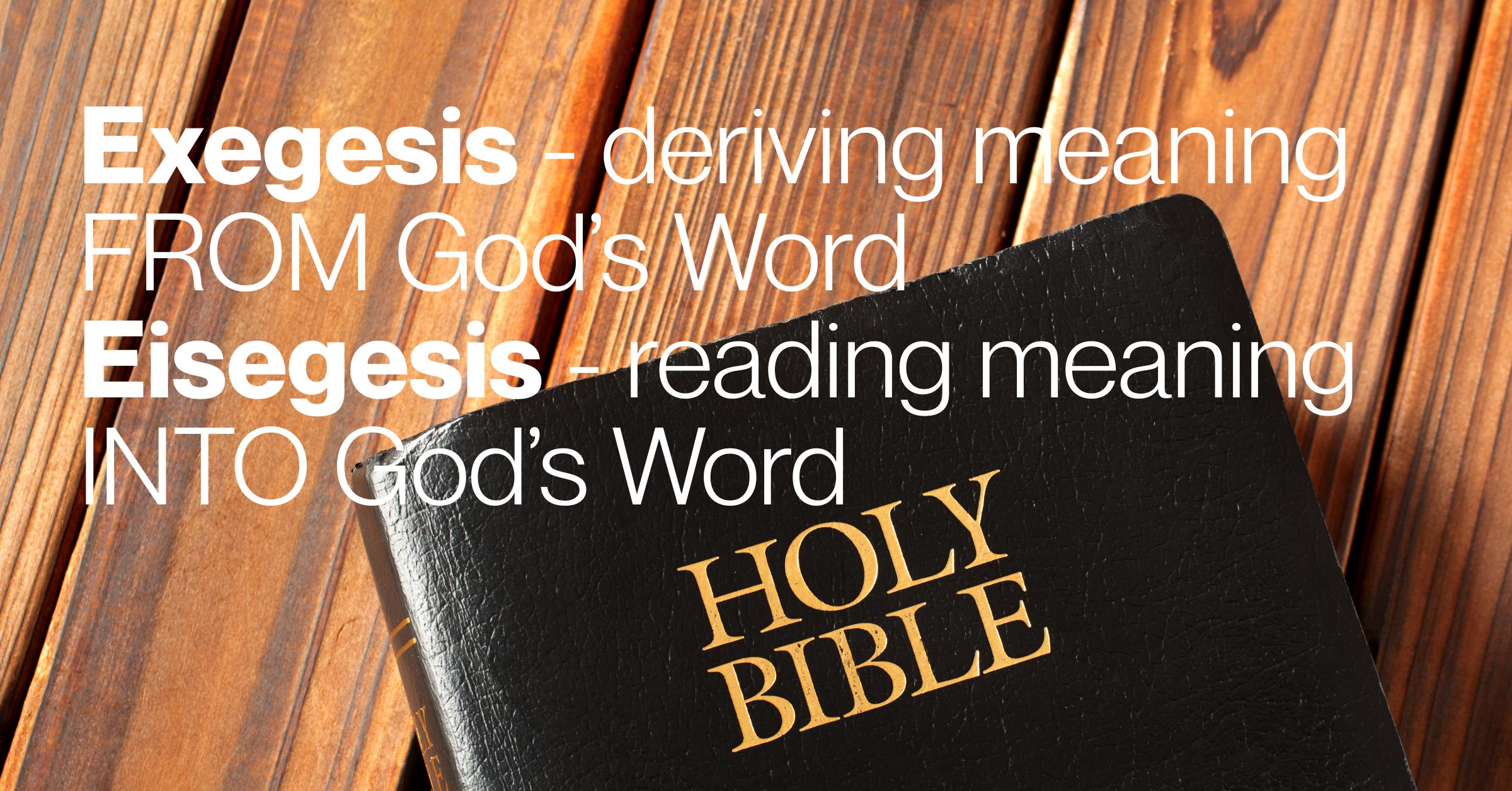
It’s a lesson for all of us. All of us have the capacity and the duty to share God’s Word. Whether you’re standing in the pulpit or sharing what the Bible says with a friend. God wants us to find our own ways of sharing God’s Word, so it’s important we share what God wants us to say instead of injecting our own words into it. It’s a danger we always have when using the Bible to tell people what God wants. Are we saying what God wants us to say or are we saying what we want the Bible to say? This is what scholars call exegesis and eisegesis. Exegesis is deriving meaning FROM God’s Word as opposed to eisegesis, which is reading meaning INTO God’s Word. Now eisegesis is probably easiest to see when you hear people quoting Scripture to justify outrageous or horrible things done in the name of God – bombing abortion clinics or killing members of the LGBTQ+ community. But those are extremes. It’s the subtle ways we misinterpret the Bible that are sometimes the most dangerous of all. One that is always troubling is when people say, “It’s all part of God’s plan.” When people say it, they are trying to offer hope, but when you pull on that string it all starts to unravel. Pretty soon, we start to wonder if all the horrible things of the world are also “part of God’s plan.” Was the Holocaust “part of God’s plan?” Was my divorce and everything that led up to it “part of God’s plan?” Was getting a disease “part of God’s plan?” Of course not. And that’s why it’s so important to be careful how we talk about God and it’s why Paul encourages us to be patient and careful.
But the most amazing thing about preaching is that it has very little to do with us.
Like everything else in worship, preaching is about God. Before I became a pastor, Cassie and I were attending Alpharetta First United Methodist Church near our home in Georgia. We had decided we wanted to attend a Methodist church and a friend of Cassie invited us and said she thought we would like it. So Cassie convinced me to go with her, and we attended the contemporary worship service her friend went to. It was led by a female pastor named Jane and Jane was around our age. She wore normal clothes, didn’t wear a robe or a stole, and seemed like someone you might bump into in the grocery store. But we both really liked her sermons. They were relevant, they told interesting stories we could connect to, and her messages always revealed something new about the Bible. After going for about a couple of months, I went up to her one day and said “thank you” for the wonderful message and I’ll never forget her response. She said, “It wasn’t me. It was God.” Here I am relatively new to church and I’m thinking, “What was THAT about? Doesn’t she know how to take a compliment?” It wasn’t me; it was God? To me it sounded a bit disingenuous. I mean did she expect me to believe God wrote the sermon and God spoke the words as if she were possessed? Was it false humility? I mean I know it was her speaking. But that statement always stuck with me, and I remembered it especially one day when I was preaching in my first appointment. I had written about 35 sermons in a row, and I was really struggling with number 36. Just absolutely NOTHING was coming to me. After a lot of prayer and…well a LOT more prayer, I finally finished the sermon, but it was FAR from my best. I was thinking in my head, “Okay, just get through this week and you’ll do better next Sunday.” But after worship, I had two different people come up to me and tell me it was exactly what they needed to hear. I was shocked and amazed. What did they hear? Because I heard a lot of drivel. And then another person came up and said the same thing and then proceeded to tell me what it was she heard me saying that touched her heart so much and I just stood there with the most loving smile I could possibly muster on my face because what she was saying was NOTHING like what I had written down. It was like I gave a sermon on loving your dog and she heard me say you should go buy a cat. And at that moment, my pastor’s words rang so true in my head. It wasn’t me. It was God.
We share a message from God in worship every week because it’s important.
It’s important to hear what God wants from us. It’s important to be reminded who we belong to and why we are here. But sharing his Word isn’t reserved for only worship. It’s about living out God’s Word in the world today. And you never know just how God might use you. We need the Word of God in our lives. As Jesus said in the desert, “Man shall not live by bread alone, but on every Word that comes from the mouth of God.” Presenting God’s Word is a humbling and honoring experience, but as in all things the Holy Spirit is at work in this place so that we can hear what God needs us to hear. In the name of the Father and of the Son and of the Holy Spirit. Amen.
[1] Most scholars believe Mt. Horeb is another name for Mt. Sinai.
Who Invited Whom?

Going to a Japanese wedding sounds a lot like being on Oprah.
Remember those episodes of Oprah when she would just giveaway stuff to everyone? When I was in high school, we watched this video about wedding traditions in Japan, and they do something very different than we do in America. It’s the guests who go home with the gifts![1] In the video we watched, the couple gave every attendee a new color television. YOU get a TV! And YOU get a TV! Everyone gets a TV! Apparently, I need to get invited to some Japanese weddings. Most of the time, the gifts are not that extravagant, but it is a different mindset. When we come together to celebrate in my family, it’s often the guests who bring the gifts and not the other way around. It’s enough that you’re hosting it. But we all have something in common when it comes to celebrations. We gather to bask in the moment. We gather to spend time with one another. We gather to give thanks and praise for those being celebrated. And doesn’t that sound a lot like worship? Worship is God’s party. God calls and we respond.

Every Sunday is a mini-Easter.
It is a time to celebrate God for all that he has done for us; to recognize he is the source for the blessings of life, to be reminded of how great our God truly is. When we come to worship it is about our response to what God is doing in our life and our passage today reflects that thought. There is so much to be thankful for. For life, for love, for community. God has stood by us through so many trials and tribulations. In the Bible we read about some of those stories. In the beginning God created us. God gave us life. God spared us time and time again despite our many failures and misgivings. And most of all, God sent his Son on our behalf to atone for our sins. Worship is not about what we do FOR God, but rather our RESPONSE to God’s love for us.
7 Dear friends, let us love one another, for love comes from God. Everyone who loves has been born of God and knows God. 8 Whoever does not love does not know God, because God is love. 9 This is how God showed his love among us: He sent his one and only Son into the world that we might live through him. 10 This is love: not that we loved God, but that he loved us and sent his Son as an atoning sacrifice for our sins. 11 Dear friends, since God so loved us, we also ought to love one another. 12 No one has ever seen God; but if we love one another, God lives in us and his love is made complete in us. – 1 John 4:7-12
When we gather together for worship, it is a response to God’s invitation.
God has invited us into his house, and we gather by his grace. Throughout this passage, we witness God’s initiative, God’s first movement on our behalf. Verse 7, “Everyone who loves has been born of God.” He is the creator. He is the one who made us. We didn’t make God. It was the other way around. Verse 9, “He sent his one and only Son into the world that we might live through him.” Sending Jesus was God’s idea, not ours. We asked God for a King, but God sent us a Savior. And then in verse 10, “This is love: not that we loved God, but that he loved us and sent his Son as an atoning sacrifice for our sins.” God loved us FIRST! And in response we gather together as his people to praise and worship him.
We call it “the gathering” because it’s the time when we come together.
That might seem pretty obvious, but we don’t come together just in the physical sense but in the spiritual as well. Each part of the gathering is designed to prepare us for receiving and responding to God. The prelude, opening song, welcome and announcements set the stage for what’s to come. It’s like the opening band at a concert or the comedian who comes out to warm up the audience before the headliner appears on stage. The gathering helps us to see God more clearly and to place our head and hearts in the right frame of mind so we can concentrate on what God is saying to us. As one writer put it, “God does not simply invite us to a party of friends, or a lecture on religion, or a concert of sacred music – he invites us into the presence of the King of the Universe…”[2] When you put it like that it gives worship a completely different framework.

We kick off worship with music and singing.
But why do we sing? Especially for those of us who sing best in the shower. We sing because it is a gift from God; this ability to lift up praise through music, but we also sing because it is an expression of joy and gratitude. And sometimes it’s an expression of sadness and longing. But we also sing because it connects us more closely to God. In both the Old and the New Testament there are MANY verses about singing. Psalm 95 says in the very first verse, “Come, let us sing for joy to the Lord; let us shout aloud to the Rock of our salvation. Let us come before him with thanksgiving and extol him with music and song.” And it’s not just in the Old Testament either. In Paul’s letter to the church in Ephesus he encourages them, “And do not get drunk with wine, for that is debauchery, but be filled with the Spirit, 19 addressing one another in psalms and hymns and spiritual songs, singing and making melody to the Lord with your heart, 20 giving thanks always and for everything to God the Father in the name of our Lord Jesus Christ, 21 submitting to one another out of reverence for Christ (Ephesians 5:18-21).” We’re don’t need to get drunk or filled up on liquor. Instead, Paul encourages us to get intoxicated with the Spirit through song! We are encouraged to let go and sing loudly and boldly. When we release our inhibitions in worship this way, it fills us with the Spirit and prepares our heart for God. God doesn’t care if we sing on key or have perfect pitch because that’s not what makes it beautiful to God. It’s the very act of singing and lifting up praise that makes God happy. Psalm 100 says, “Make a joyful noise to the Lord, all the earth! (ESV)” A joyful noise. Thank God we don’t have to be perfect. It is in the singing itself God is invited into our lives to fill us with the Spirit.
Prayer is another key component to prepare us for God.
It’s why we do the Unison Prayer. Our prayer always points to God as creator and redeemer whether we pray to the Father, the Son, or the Holy Spirit. The Unison prayer reminds us of who we belong to. We do prayers of the people to lay down our burdens before God, so we are free to hear him more clearly. We get rid of the distractions, and we lift up our concerns. We empty ourselves to prepare our hearts for what God wants to pour into us. When we are filled with all the distractions and worries of life, there isn’t room for God. Our minds are too preoccupied with all of this STUFF. And we pray out loud and we pray together because prayer is also an act of worship. Just the very nature of prayer – bowing before God, kneeling before God, praying in unison to God – these acts point us to the one who calls us to worship. They create an attitude of submission, a realization that we are not in control. When we pray together, we are reminded that none of us can do it alone. We are reminded that Christ died for ALL of us. Prayer reminds us we are all equally sinners before God. And when we come before him with that kind of humility, we are ready to hear his Word for us. Prayer prepares us to receive what God is about to offer us through his message.
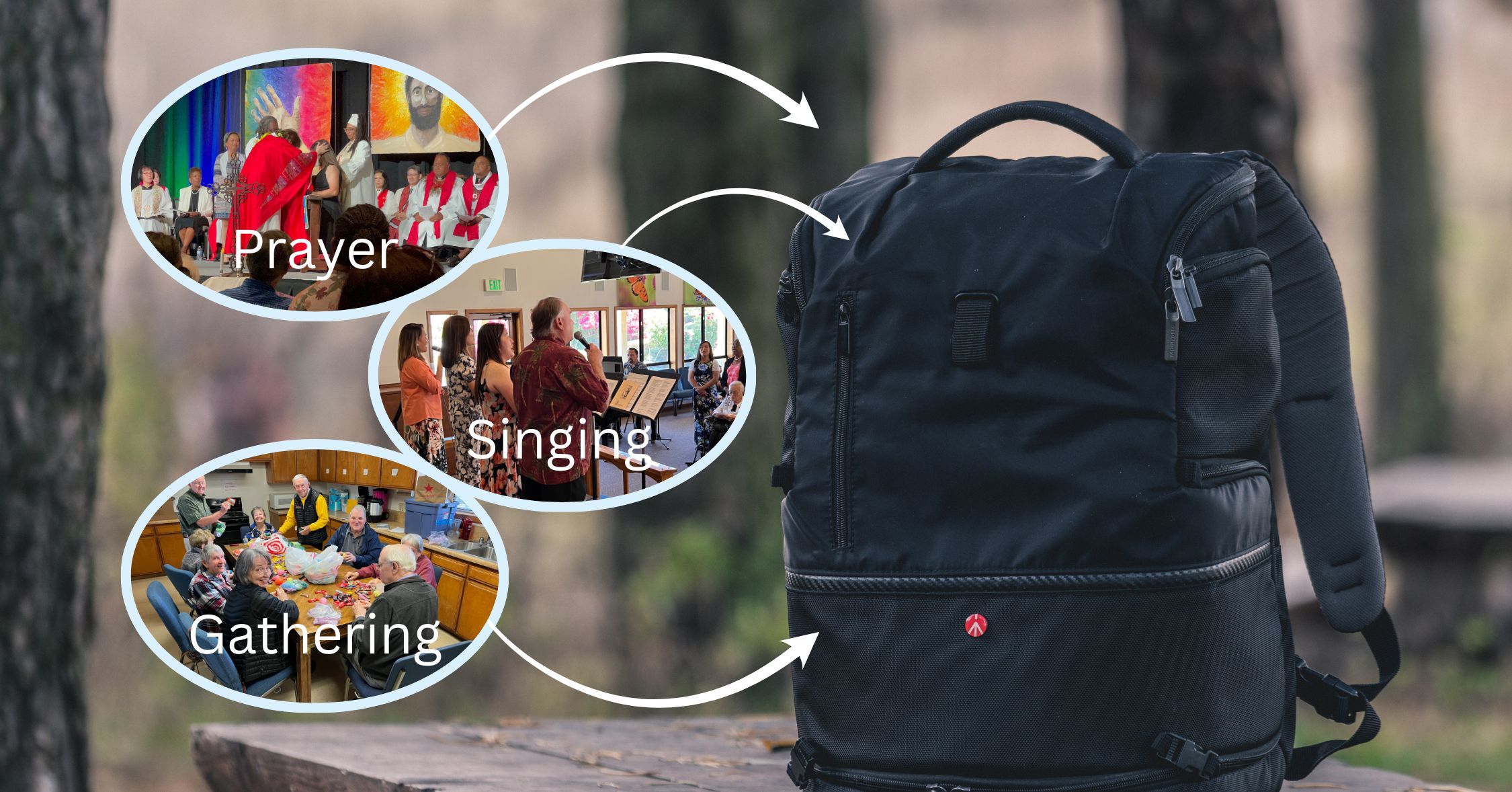
The time of gathering all leads us to this point where we are prepared for God’s Word.
Through the call to worship we acknowledge that God is the one who calls us. We are reminded that our presence isn’t something we did on our own initiative, but rather that we are responding to God’s will. And as we go deeper into this gathering time, we continue on this journey of recognizing and relying on God. We confess our beliefs. We confess our sins. We sing praise for the one who created us. And ultimately, we lay down and empty ourselves before God. So as we journey together through worship, let us remember that we didn’t invite God. He invited us. How will you respond?
[1] Guests usually give cash gifts to the couple instead of physical gifts and the couple gives physical gifts to the guests
[2] Bryan Chapell, “Called to Worship: Giving God the First Word,” from Worship Notes Vol 3, 3, March 2008.
The “Order” of Worship

What is “proper” worship?
Over the years, I’ve read a LOT about the subject. I’ve read books and articles, listened to sermons and the only thing I can tell you for sure is everyone has an opinion about it. And nobody has a definitive answer. But they sure have strong feelings about it. Very strong. The spectrum of comments range from “contemporary worship is empty and devoid of meaning” to “traditional worship is old and outdated.” I was at a workshop about emergent worship (and if you don’t know what that is, don’t worry. I don’t know if THEY know what it is either) and the person there was saying that if you worship in a church, you’re not really worshipping. She said worship is singing spontaneously in a coffee shop with three of your friends. She said worship was having someone just shout out a verse from Scripture and someone else tell everyone what it means. She said worship was not caring about an offering but just being in the moment. And after each of these statements, she said, “Now THAT’S worship.” I found it ironic that she was saying this in a gathering of church leaders who all led churches that “didn’t know what worship was,” and she was sharing this in a church that apparently didn’t know it either. Certainly there are a lot of different opinions, which begs the question then, what is “proper” worship?
We can find the answer to THAT question in Scripture.
Our answer lies in a reading from Psalm 100. In it we read that worship is shouting to the Lord with joy! Worship is coming to the Lord with gladness and with a joyful song. Worship is knowing the Lord is God and we belong to him. Worship is coming before God with praise and thanksgiving in our hearts, knowing we can count on him always. Those are the components of worship. Whether it’s contemporary, traditional, emergent, praise, or whatever you want to call it, worship is comprised of those elements – gathering, knowing God, responding with praise and thanksgiving. Worship isn’t a style, it’s an attitude. Matt Redman sings this song called “The Heart of Worship” and in a few simple words he gets to the deeper meaning of worship – it’s all about you, Jesus. If there’s such a thing as “proper” worship then it is one focused on God, Son, and Holy Spirit. Another pastor told me this funny story. She was listening to a youth praise band, and they were covering Matt Redman’s song in worship. The lead singer changed one word, but that one word changed the entire meaning of the song. Instead of singing “it’s all about you, Jesus,” she said instead, “it’s all about me…it’s all about me, Jesus.” One simple word and the entire meaning of the song changed. And that’s important because when we come to worship we need to remember it really is all about God.
Believe it or not, the way we worship today has its roots in a surprising story of the Bible.
There actually IS an order to worship if you will. There actually is an order to worship and in preparing for this sermon, I was surprised at finding out what that story is. I hope you find it as interesting as I did. If you have a Bible or a Bible app, go ahead and turn to Luke 24:13-35. Luke 24:13-35. You’ve probably heard this story before of the two men who encounter Jesus on the road to Emmaus. Usually, we hear this story as an account of coming to faith, specifically juxtaposed to that of Paul. Sometimes, you’ll hear people refer to their journey of faith as an Emmaus or Damascus experience, meaning either they came to faith over a period of time, or suddenly because of some event in their life. But this passage is more than just another Easter story about an encounter with Jesus. It’s a story about worship.

Scholars call this the “four-fold pattern of worship” – gather, receive, respond, and go.[1]
Gather, receive, respond, and go. We see how this unfolds in our story this morning. And because our passage today tells a story I’m going to share from it a little differently. Instead of asking you to stand and read the entire passage, I’ll break it up into chunks so we can explore for ourselves this four-fold pattern of worship. The first part of course is the gathering of God’s people and we begin our reading by joining the two men on their walk to Emmaus. Beginning with verse 13:
13 Now that same day two of them were going to a village called Emmaus, about seven miles from Jerusalem. 14 They were talking with each other about everything that had happened. 15 As they talked and discussed these things with each other, Jesus himself came up and walked along with them; 16 but they were kept from recognizing him.
We join these two men walking along the road together. They’re catching up and it sounds like from this reading they are talking about Jesus being crucified. Just from context, this is something important to both of them. In our study of worship, we recognize this is the gathering of God’s people. In Matthew’s version of the Gospel he writes, “For where two or three gather in my name, there I am with them.” Except in this case, it is VERY literal. Verse 17:
17 He asked them, “What are you discussing together as you walk along?”
They stood still, their faces downcast. 18 One of them, named Cleopas, asked him, “Are you the only one visiting Jerusalem who does not know the things that have happened there in these days?”
19 “What things?” he asked.
“About Jesus of Nazareth,” they replied. “He was a prophet, powerful in word and deed before God and all the people. 20 The chief priests and our rulers handed him over to be sentenced to death, and they crucified him; 21 but we had hoped that he was the one who was going to redeem Israel. And what is more, it is the third day since all this took place. 22 In addition, some of our women amazed us. They went to the tomb early this morning 23 but didn’t find his body. They came and told us that they had seen a vision of angels, who said he was alive. 24 Then some of our companions went to the tomb and found it just as the women had said, but they did not see Jesus.”

Here we visit with the two men as they bring their fears and concerns to God. They don’t know it at the time, but they are laying them down before him just like we do in prayer. And this is part of our preparation for hearing God’s Word. A confession. A plea. A praise. This is what we do in our unison prayer as we get our hearts ready to hear God’s message. Here, the two men begin by praising Jesus, saying he was a prophet, powerful in word and deed before God.” But then we hear in verse 21 how the men “had hoped that he was the one who was going to redeem Israel.” And now they can’t even find his body and they don’t know what’s happened. They raise their concerns before God and Jesus responds through the Word. Verse 25:
25 He said to them, “How foolish you are, and how slow to believe all that the prophets have spoken! 26 Did not the Messiah have to suffer these things and then enter his glory?” 27 And beginning with Moses and all the Prophets, he explained to them what was said in all the Scriptures concerning himself.
Just a few short verses, but we can imagine the sermon was long because they were able to finish their seven-mile journey during the time Jesus told them his story. But through it all they listened intently. Jesus begins with Moses and explains all of the prophecies of Scripture that predicted every event in Jesus’ life. He uses Scripture to illustrate and connect to current events how this all fits into God’s greater plan for the world. Much like we try to do every Sunday, Jesus makes the words of Scripture relevant to the lives of these two men. And when he’s done, the two men cannot let him leave without offering him something. Verse 28:
28 As they approached the village to which they were going, Jesus continued on as if he were going farther. 29 But they urged him strongly, “Stay with us, for it is nearly evening; the day is almost over.” So he went in to stay with them.
30 When he was at the table with them, he took bread, gave thanks, broke it and began to give it to them. 31 Then their eyes were opened and they recognized him, and he disappeared from their sight. 32 They asked each other, “Were not our hearts burning within us while he talked with us on the road and opened the Scriptures to us?”
Of course you probably recognize this image as the men did at the table. Jesus breaks bread with them. They heard all Jesus had to say and out of gratitude for hearing the Word, they invited him in. In fact, Scripture tells us they “urged him strongly.” This was their response to God, and Jesus stayed as he does with us whenever we join him at the table. When he breaks the bread, their eyes are opened and they experience the living God. When we share together in Holy Communion that’s the experience we hope for each and every time. That through the elements we come face-to-face with Christ. Verse 33:

33 They got up and returned at once to Jerusalem. There they found the Eleven and those with them, assembled together 34 and saying, “It is true! The Lord has risen and has appeared to Simon.” 35 Then the two told what had happened on the way, and how Jesus was recognized by them when he broke the bread. The final part of our worship is the call to “go.” Go into the world as they two men from Emmaus did and share with everyone the Good News. Worship should compel us to take what we experience and what we learn and apply it to our daily lives so that we might be a living witness for God in the world. Gather together, receive God’s Word, respond to his call, and go into the world with what you’ve learned. Gather, receive, respond, and go. This is why we worship, to remind ourselves of the love of Christ that we will go out into the world and tell everyone about him.
[1] https://www.umcdiscipleship.org/book-of-worship/the-basic-pattern-of-worship
These are the Times That Try Men’s Souls
Do you have a dark side?
One of my all-time favorite movies is When Harry Met Sally… And in the beginning when Harry and Sally are driving to New York, Sally asks Harry how he and his girlfriend Amanda got together and Harry says it’s because of his “dark side.” Sally looks at him incredulously and says, “Your dark side.” Harry explains, “When I buy a book, I always read the last page first. That way in case I die I know how it ends. THAT my friend is a dark side.” When I was growing up, I used to do that, too. After reading a couple of chapters, if I thought the book was good, I’d go to the end to see how it turns out. It’s because I read a story about some little kid who never got to hear the end of some bedtime story and his soul was trapped on Earth until someone finally read it to him. That freaked me out! And then I read that ghosts are people with unfinished business and I didn’t want that to be me, so I’d flip to the end. Just. In. Case. Now, I don’t believe I’m going to come back and haunt anybody, but once in a while I still flip to the end of the book. It gives me peace of mind knowing how it ends up. I don’t read it in detail. I still want to be surprised, but when you know where you’re heading, you don’t mind the twists and turns you encounter along the way. It’s the things you don’t know that cause you the most anxiety.
Not knowing makes people do the strangest things.
Researchers did a study where they tested if people preferred getting an electric shock immediately or maybe getting an electric shock later and they found people preferred getting the shock now rather than go through the anxiety of waiting to see if they would get one.[1] Sounds crazy, right? Get a guaranteed electric shock early rather than maybe not get one at all? But as human beings, we do not like the unknown. Sure, for things that are fun, we tolerate it and sometimes even like it. Movies, books, surprise parties; those we tolerate the anxiety, hoping the payoff is worth it. Professor Fishbach from the University of Chicago said, “it’s exciting when the stakes are not huge.”[2] But for other things like test results, applying for college or a job interview, those things make us more on edge because more is at stake and the end is unknown. People can go one of two ways when the stress of not knowing starts to become too much – they either work hard toward ending the stress or ignore it altogether, both of which can have disastrous results. Not going to the doctor because you’re afraid of the result won’t cure whatever you might have and bugging someone constantly to get the results you want might push them the other way. There was an episode of The Big Bang Theory where Sheldon went up to his childhood idol, Professor Proton and wanted to collaborate with him, but Professor Proton turned him down. Sheldon said, “It’s because I’m annoying, isn’t it? Just say it. I’m annoying. Just say it. I’m annoying.” Sheldon kept going on and on until finally Professor Proton said, “You’re annoying!” and closed the door on him. Sheldon looking sheepish said, “Wow, that hurt.”
The future seems uncertain for us.
It seems like a storm cloud has surrounded us and we are caught in the middle of it all. Just look around at all the things happening in the world today and in our own country and you can tell people are freaking out. Not just because they agree or disagree with what is happening but because they have no idea where it will all end up. If you KNEW everything would end up okay, it would be easier to tolerate. You might even be more gracious, more understanding of other people who are also freaking out. You might react in kindness instead of in kind, but we are in such uncertain times, it is driving up the anxiety all around us. Israel and the Palestinian people. Israel and Iran. Ukraine and Russia. Not to mention the National Guard being sent into California and basically occupying DC. Rigging elections. With so much uncertainty everyone has in their own lives already, this extra level of stress makes it that much worse. As Thomas Paine once wrote, “These are the times that try men’s souls.”[3] How we react will say a lot about who we are.

22 One day Jesus said to his disciples, “Let us go over to the other side of the lake.” So they got into a boat and set out. 23 As they sailed, he fell asleep. A squall came down on the lake, so that the boat was being swamped, and they were in great danger.
24 The disciples went and woke him, saying,“Master, Master, we’re going to drown!”
He got up and rebuked the wind and the raging waters; the storm subsided, and all was calm. 25“Where is your faith?” he asked his disciples.
In fear and amazement they asked one another,“Who is this? He commands even the winds and the water, and they obey him.” – Luke 8:22-25
That must have been one BIG storm.
It also must have been one BIG lake.[4] I’ve gone lake fishing a BUNCH of times growing up and I can’t imagine a storm so violent that I would ever be in danger. Especially not in a boat with a bunch of fishermen.[5] And these would have been seasoned fishermen who have been out to sea, who understood if not experienced what storms were like already. The fact they were scared enough to believe they might drown means it must have been a massive storm. Not being a seasoned fisherman myself, I had to look up a couple of the terms, and a squall is “a sudden violent gust of wind or localized storm, especially one bringing rain, snow, or sleet”[6] so this would have taken them by surprise, especially if they were in the middle of the lake. There would be nowhere for them to go. And when the Bible says the boat was being swamped, that’s not just waves of water crashing down on it. It means that the boat was being drenched or submerged.[7] That’s how much water was rushing into it. They were literally fearing for their lives. These kinds of storms can become extremely violent. Back in 1961, there was a 92-foot ship called the Albatross which sank suddenly when it encountered a “white squall” where winds whipped up to 150 miles per hour.[8] Six people died as a result including four teenagers. And the boat the disciples were on likely wasn’t that big. We don’t know how bad the squall was, but it was enough to panic the disciples. When they woke Jesus, he calmly stood up and quelled the storm and he asked them “Where is your faith?” In the middle of the storms of our life we need to put our trust in Jesus. When we focus on him, he will calm the storm raging around us and quell our anxiety. In the story, the disciples literally focused on the person of Jesus, but today we need to focus on the promises of Jesus and the lessons he taught us. When people did things Jesus didn’t agree with, he didn’t condemn them or curse them. He ate with them. He got to know them. He invited them into a relationship with him. And Jesus asks us to do the same.

We don’t need to turn to the end of the book because we already know how it turns out.
God wins. God’s goodness will overcome the evil around us. God’s will is stronger than our best efforts to sabotage it. And God’s love will win out over hatred and indifference. But that doesn’t mean we should sit around and do nothing. God always calls on us to be proactive in the world. When God presents an opportunity, we need to step through the door and pursue it. But when we are filled with fear and anxiety, it’s hard to see those opportunities. They block us from noticing where God is leading. We need to quiet the storms within us. Moses’ crossing the Red Sea speaks to this exactly. The escaping Israelites are in complete panic, yelling at Moses that he should have left them in Egypt. “Better to die a slave and live out your life than to die on the run!” But Moses tells the people, “The LORD will fight for you; you need only to be still.” We can’t listen for God’s direction when we are caught in the middle of our anxiety. We must allow God to quiet the storm inside us, then and only then can we go where God is leading us.
There are still times when I let the storms of life get the better of me.
But through experience and my own stubbornness, I have learned the best way to handle them is to have faith in God and allow him to guide me. It has led me to have a peace about life that I know I didn’t have before. You’ll often hear me say I don’t know how things will work out, but I know they will, and I believe that. I trust in God to guide me through. But I’m still working on it. One day I hope to have a peace about myself like Cassie’s grandparents who remain for me a model of Christ’s love in the world. Or like some of you. In each place I’ve served there have always been people who have what Paul calls the “peace that passes all understanding (Philippians 4:7).” I pray we all can share in that peace. I pray for our country and I pray for our church, but I know God will be there no matter whatever else happens. And I still flip to the end of books sometimes, but I don’t worry anymore about dying and coming back as a ghost. Instead I am learning to enjoy the journey and turn to Christ in the storm.
[1] https://www.theatlantic.com/health/archive/2015/03/how-uncertainty-fuels-anxiety/388066/
[2] Ibid
[3] http://www.ushistory.org/paine/crisis/c-01.htm
[4] The lake Jesus was on with the disciples was the Sea of Galilee and according to Bible Hub was a lake about 13 miles long and 8 miles wide – so pretty big.
[5] It’s possible none of the disciples on that particular voyage were fishermen, but since Luke simply said “the disciples” it’s more than likely that at least some if not all of them were there.
[6] https://www.google.com/search?q=squall&ie=utf-8&oe=utf-8
[7] https://www.google.com/search?q=swamped+boat+meaning&ie=utf-8&oe=utf-8
[8] http://www.nytimes.com/1996/03/10/nyregion/the-day-the-albatross-went-down.html
The Hardest Word

There was no way I was going to apologize.
I was in 10th grade and it was right before my English class was about to start. That year we had Mr. Cox for a teacher. A great guy with a reputation for being nice. Not a pushover, but the kind of teacher you could talk to about anything. Maybe that’s why I felt freer to speak my mind. Mr. Cox had arranged the chairs in our classroom in a semi-circle, three rows deep. I sat in the front row with Quincy, Bryan, and five other students. A few of us were talking before the bell rang and I was resting my foot on Bryan’s chair. Out of nowhere, Bryan comes rushing up to me and with a snarl in his voice tells me to get my foot off…or else! You’d probably never guess Bryan was one of my best friends. Especially not if you saw that exchange. I was pretty taken aback, but my foot stayed right where it was. “Are you kidding me?” I said incredulously. “You put your foot on my chair all the time!” He stood toe-to-toe with me and just said, “Well, I don’t want your dirty foot on my chair.” So now, I definitely wasn’t going to move it. Not if you paid me. But then Mr. Cox called me over to his desk. Taking my foot off the chair wasn’t submission, it was a necessity, so I went over to Mr. Cox’s desk as instructed. He said, “I want you to apologize.” For the second time in about two minutes, I was shocked (as only a teenager can be). “No way!” I told him. “He does that to me all the time and I never go crazy like he did.” After going back and forth, Mr. Cox finally just looked at me and said, “Apologize or I’ll have to send you to the office.” To say I was headstrong as a teenager is probably an understatement, so it came as no surprise (to myself anyway) when I said, “Fine, send me to the office.” I don’t know if thought I was being some kind of hero, but I wasn’t about to cave when I sat in the seat of righteousness! Mr. Cox just gave in. He shook his head in frustration (apparently, he was bluffing) and he said, “Craig, would you please just go and apologize? Sometimes you just have to be the bigger man.” I hate when teachers do that. Appeal to my vanity. I guess he figured if I was sitting in the seat of righteousness, he should take full advantage of it. I mumbled, “I hate being the bigger man.” And I went over and apologized to Bryan. I never did find out what in the world got into him that day, but I did learn an important lesson. Apologies don’t make you weak. They make you strong.
Our pride is what makes us weak.
I’m not talking about the kind of pride you have when achieve a personal milestone or the kind of pride you have for your children. I’m talking about the kind of pride that elevates us at the cost of others. And it’s certainly not the kind of life God wants us to live. God not only wants us to have a relationship with him, but with one another, too. That’s why Jesus told us the greatest commandment was to love the Lord your God, but the second was like it – to love our neighbor. Jesus goes out of his way to bring together those who society had largely ignored – women, children, foreigners, and Gentiles. He even reached out to those reviled by the rest like tax collectors and prostitutes. Jesus wanted his love to reach everyone, but he knew our pride would get in the way. Our inability to humble ourselves, our unwillingness to compromise, our lack of empathy or compassion stops us from repairing our broken relationships or starting them in the first place. I believe that’s why he said what he did in our passage this morning.
23 “Therefore, if you are offering your gift at the altar and there remember that your brother or sister has something against you, 24 leave your gift there in front of the altar. First go and be reconciled to them; then come and offer your gift.
25 “Settle matters quickly with your adversary who is taking you to court. Do it while you are still together on the way, or your adversary may hand you over to the judge, and the judge may hand you over to the officer, and you may be thrown into prison. 26 Truly I tell you, you will not get out until you have paid the last penny. – Matthew 5:23-26
Don’t even bother coming to worship.
I’m not saying that. God’s saying that. If we can’t settle our conflicts, we shouldn’t come to church. It’s not a punishment or judgment; that’s just how important reconciliation is to God. Especially in Jewish society at the time, worship was the most important part of both our faith and society. But God would rather we skip worship if it means we could mend fences with someone. This idea of repentance and reconciliation was so important that God sent Jesus into the world. When Jesus talks about us needing to settle matters quickly or we may be thrown into prison, he doesn’t mean a literal prison (although I guess that is a possibility). He’s talking about a prison of our own making. We become trapped by bitterness, anger, hurt and all sorts of negative emotions and it gets in the way of us becoming our best selves and gets in the way of our relationship with God. We build our own prisons from these feelings and emotions that trap us.

What’s insidious is we often think we’re okay, but eventually these prisons hurt us.
When people have a broken relationship, it affects everyone around them. I was listening to the podcast, This American Life and they told a story about two brothers who hadn’t seen each other in decades. Literally decades. It had been 20 years since their mother’s death, and even then they got into an argument over funeral arrangements. They were so out of touch that the wife of one of the brothers died and the other didn’t find out for years after it happened. It had been nearly 40 years they had anything resembling a relationship, but listening to their story, they both craved one. Their anger and their pride got in way and they missed out on so much time they could have had together. When one of their sons was finally able to get these two brothers together, they found out they had been mad for all the wrong reasons. The assumptions they made during those 40 years were based on fiction instead of fact. To think they missed out on so much time together because of a false assumption. If they had only made steps to apologize to one another, maybe this all could have been avoided.

But we are taught that apologies make us weak.
Reconciliation is not as important as being RIGHT! Even if we’re not right. I don’t know about you, but one of the first things my dad taught me when he was teaching me how to drive was to never say you were sorry. If you got in an accident, you needed to be careful NOT to apologize because it was the same as saying you were wrong and even if you WERE wrong, you shouldn’t say it. He was worried (and rightly so at the time) that saying “sorry” was the equivalent as admitting guilt and if the other person decided to sue you for injury or damages to the car or whatever, you would automatically lose. But that’s no longer true. In the year 2000, the state of California introduced Evidence Code 1160 which says, “The portion of statements, writings or benevolent gestures expressing sympathy or a general sense of benevolence… shall be inadmissible as evidence of an admission of liability in a civil action.”[1] What studies have shown is when people sincerely apologize to someone else, it results in “faster settlements and lower demand for damages.”[2] Which flies in the face of what you would think would happen. If someone was accepting responsibility, doesn’t that mean they are admitting guilt? Wouldn’t that make them targets for bigger settlements? But most people are not looking for money. They are looking for reconciliation. They take money and property out of anger and a sense of justice, but when the other person seeks to make things right, that often softens our hearts and we are much more willing to let our anger go. Because of such research 38 states (as of 2021) introduced some form of “apology law” into their statutes.[3]
Of course, there are right ways and wrong ways of offering an apology.
Nobody wants the “sorry, not sorry” approach. “I’m sorry you’re such a loser” is obviously a bad way to begin. “I’m sorry you can’t take a joke,” is another. But it doesn’t even have to be that blatant. “I’m sorry you took it the wrong way,” SEEMS like an apology but it’s not because it puts the blame squarely on the other person. The best way to offer a sincere apology is following these three steps: Regret, Responsibility, Remedy.[4] Offer regret for causing harm. Accept responsibility for what happened. And then offer a remedy. Whether it’s your fault or not is sometimes unimportant. Acknowledging someone’s pain and hurt though is very important. It shows empathy. And when you apologize, be specific about it when you can. It again shows empathy and understanding at the same time. Then accept responsibility. Dr. Liane Davey suggested erring on the side of MORE responsibility instead of less. She gave a workplace example of saying, “I’m sorry the traffic was bad. I probably shouldn’t have scheduled a meeting for this time.”[5] Like YOU caused the traffic. But there’s truth in her statement. Had the meeting been scheduled at a different time, maybe there would have been less traffic. More importantly, it lets the other person know you understand. Finally, offer a remedy. “I’ll be more aware of your feelings.” “I will take that into account next time.” “I’ll be more careful.” Even simple remedies are meaningful. Dr. Davey even suggests that we should at times apologize even if it isn’t our fault. She even gave an example, “[I]f a teammate walks over to you in the cafeteria, flops himself down and regales you with a story about a really rough meeting that morning, it can be very valuable to take a moment to say ‘I’m sorry you had such a tough meeting.’ The research shows that this superfluous apology triggers something different and more beneficial than if you simply acknowledge the adverse event with a comment like ‘Wow. You had a tough meeting.’”[6]

We are creatures of community.
So, when there’s a rift in that community, it hurts all of us in one way or another. That’s why it’s so important for us to find ways to fix those rifts. To find a way to reconcile as soon as possible. Is there anyone in your life you need to reconcile with? Are there people you have caused harm to? Pray about it this week. Think about those you may have hurt and pray about offering them an apology. Apologies don’t make us weak, they make us strong because they repair the rifts in our lives that cause us pain. Repentance leads to reconciliation, redemption, and renewal. A simple apology can lead to healing, which can lead to redemption of our relationships and a renewal of faith in God and in one another. Whether or not they accept your apology is another thing, but one that is completely out of your hands. Don’t let that get in the way of doing what YOU need to do. God thinks it’s so important he would rather you skip worship to make this happen. If I don’t see you next week, I’ll know why.
[1] http://www.neildymott.com/apologizeor-not
[2] https://www.strategy-business.com/article/10411a?gko=07cd6
[3] “When and Where to Say “I’m Sorry,” February 16, 2021.
[4] https://www.psychologytoday.com/articles/200207/the-power-apology
[5] https://www.psychologytoday.com/blog/making-your-team-work/201403/the-value-saying-im-sorry
[6] Ibid
Not One Stone on a Stone

“What are we talking about?”
In the film Moneyball, General Manager Billy Beane of the Oakland A’s is about to trade two of his better players to force manager Art Howe to finally play Scott Hatteberg at first base. It’s a move that would be hard to explain because to most people it doesn’t make any sense. Hatteberg is an unknown while they have a proven All-Star caliber player there already. Beane believes in the process he and his right-hand man Peter Brand have put together and wants to see it in action. But a move this drastic? Peter says to him, “What are you doing? This is the kind of move that gets you fired.” Billy looks at his friend and responds, “I don’t think we’re asking the right question. The question we should be asking is ‘Do you believe in this thing or not?’” Peter says, “Yes, I do.” So Billy asks, “Will we win more with Pena or Hatteberg at first base.” Peter pauses and says, “Theoretically? Hatteberg.” Beane looks at him, “Then what are we talking about?”
Change is risky.
Sometimes it doesn’t work. But when things already aren’t working the way we hope, change is often necessary. That doesn’t mean it isn’t hard. But if we hope to succeed, whether in baseball or in life, we need the courage, determination, and persistence to see it through. I love a good underdog film and especially an underdog sports film, and any movie about the Oakland A’s is automatically going to fall into both categories. Still, the reason I love this film so much is because it’s a reflection of exactly what we are going through in the church. Not just our church, but the state of the church across the country. And like Billy Beane, I believe we have to shake it up and do things differently.
Jesus tells us that one day the temple will fall.
He points to the temple buildings, and he says to Peter, John, James and the rest, “Do you see all these things? …Truly I tell you, not one stone here will be left on another; every one will be thrown down.” And the disciples immediately leap to the conclusion that he is talking about the end of the world. But I wonder if Jesus was talking about something completely different. Like most people today, the disciples equated the buildings with their faith. If the buildings fell, then it was a sign the people had lost their faith. But maybe… MAYBE it’s because faith has moved out of the building. And I think this is what Jesus always intended. If the goal of Christianity is to create a world where the love of Christ was evident in each and every person, we wouldn’t need a church building because everywhere we would experience the community of believers. In that kind of world, we wouldn’t need a place to gather on Sunday mornings because everywhere the presence of God would be felt and seen in one another. And you certainly wouldn’t need a pastor because the evidence of God would be part of your everyday life and so clear that you would feel immersed in your faith. I’ve told anyone who would listen that I would love it if I didn’t have a job any longer because it wasn’t needed. Then, I could devote myself to my other passions – travel, food, and Disney.
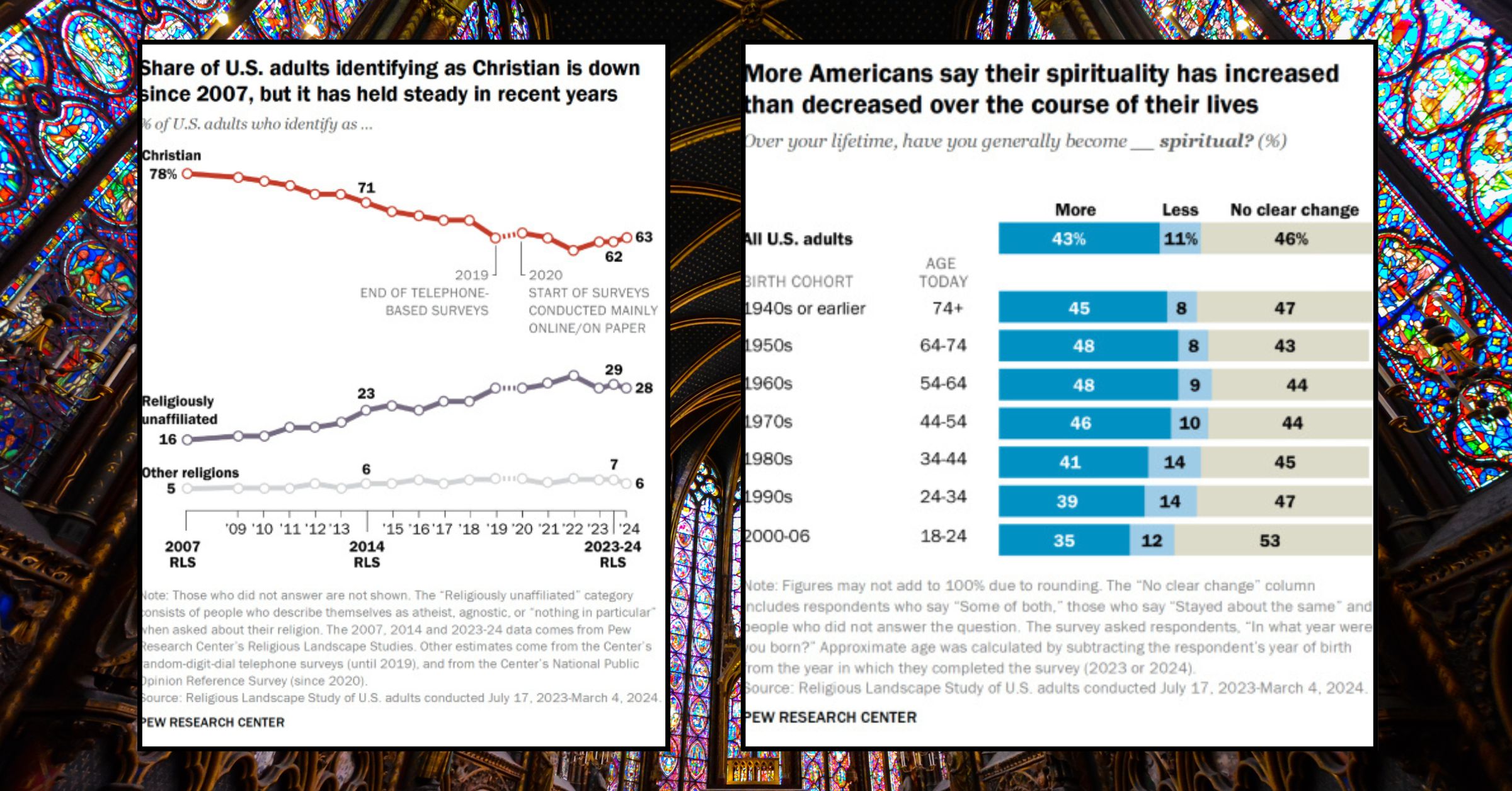
In some ways, I think we are already seeing this phenomenon.
But not in the way Jesus would have hoped. People are leaving the building. But not because they have found Jesus and want to spread the Gospel. They’ve left because they don’t feel Jesus is in organized religion. Church attendance continues to be on the decline, and it doesn’t seem to be getting better. Yet, amazingly, people still consider themselves spiritual. About 7 in 10 fits in this category and 22% say they are “spiritual but not religious.”[1] 83% of all U.S. adults believe they have a soul; 81% believe there is something spiritual beyond the natural world; 74% believe there are some things science cannot possibly explain; and 38% report a connection with a loved one who passed away.[2] And still more and more people are distancing themselves from religion. Over a 16-year period from 2007 to 2023, the number of religiously unaffiliated rose from 16% to 28%.[3] In our own community we see these trends, too. 63.8% of people in our area do not believe you need to be in church to believe in Jesus up from 42.7% just four years before, and to go along with that 62.6% believe that the people in the church do not behave as Jesus would an increase by a whopping 34.4%. At the same time, the number of people who say that faith is very significant in their life has gone up by nearly 15%. And most people in the study believe that God is love and they have a personal relationship with one living God. So, while more people feel that church is increasingly unnecessary, they also feel closer to God.[4]
As most of you know, I’m studying to get my doctorate in ministry.
I wanted to get my doctorate specifically from Emory University because their program focuses on the local church. I’m not just studying theory. The goal of the program is to put theory into practice with the idea that we would come out with a doctorate AND a way to make an impact on our church and community. My focus is on growing the church…but maybe not in the way you might think. In the nearly 20 years I’ve been in ministry, one thought has become crystal clear. The church of today is NOT the church of tomorrow. People are connecting to themselves and to God in different ways. They are not interested in sitting in a building for an hour and listening to someone tell them about God. They want to experience God. Maybe that’s in serving the community. Maybe it’s in a small group. Maybe it’s volunteering at a hospital. But they want to belong to a movement, not a lecture series. Circles not rows.
It’s a cliché thing to say, but it’s true.
I first heard this phrase from Andy Stanley at North Point Community Church in Atlanta, GA. It’s funny because the average worship attendance at North Point is upwards of 30,000 weekly and they most certainly sit in rows.[5] But Andy stresses the idea that “circles are better than rows.” He said, “We are famous for our rows. But the strength of our churches is what happens in circles.”[6] And it’s true. At least it is for me. My most transformative moments in faith took place in small groups. From the time I went to a Men’s Group meeting at Alpharetta First and talked to Steve, to the time we met in small groups during our Walk to Emmaus retreat, to the times I spent with our Sunday School group when Emma was born; those were the moments where it felt I encountered Jesus so clearly. The church made that happen, but it was in small groups and quiet moments where I felt the impact of Jesus’ love the most.
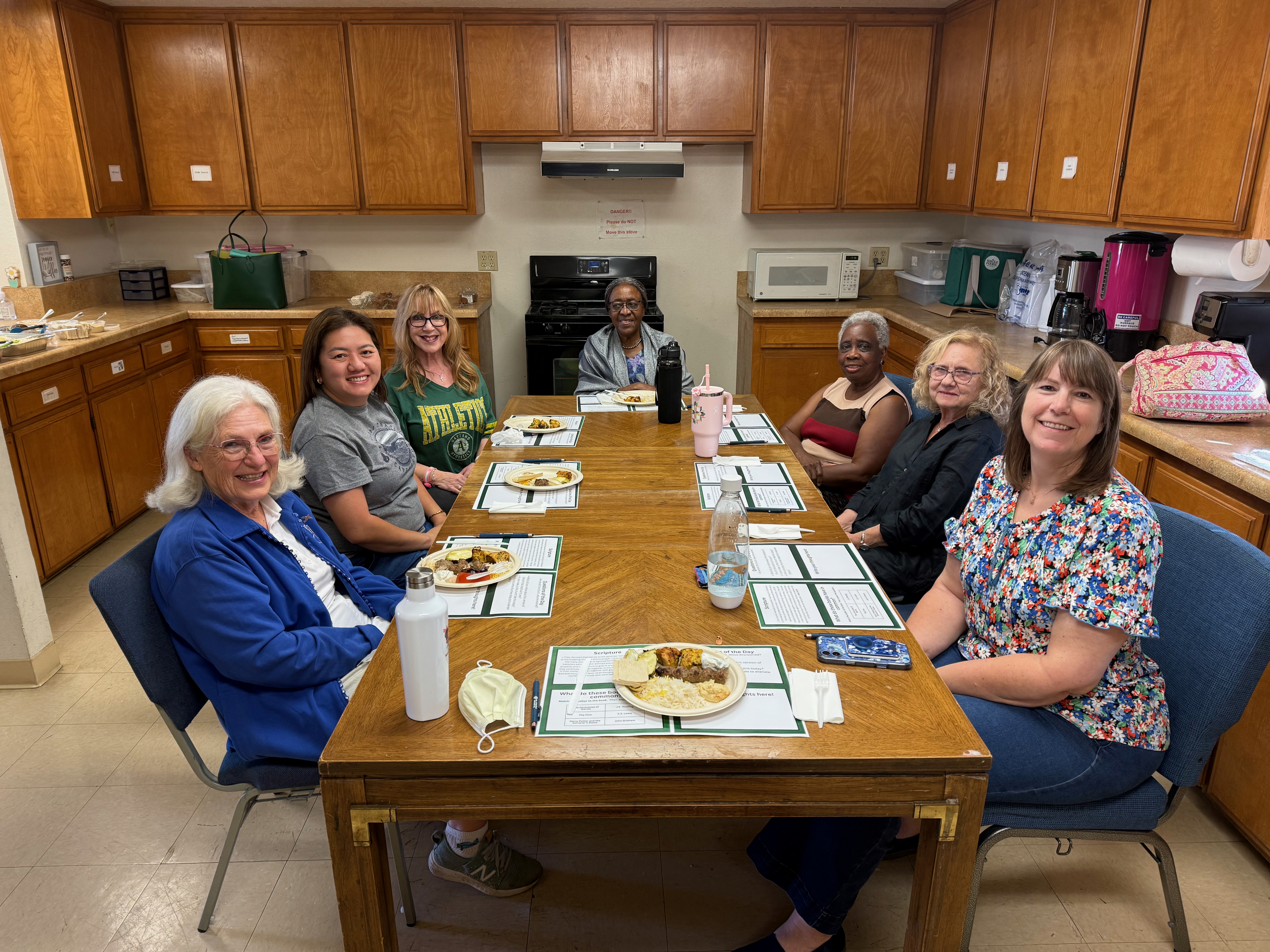
There’s something powerful about a table.
It’s a connection point. It’s a gathering place. It’s where we find sustenance. Tables bring people together in a variety of ways. In church, we come to the table once a month to encounter Jesus. But we develop relationships over a table in so many different places and in so many different ways. After a year of study, consulting with my colleagues, friends, and professors, we’re going to try something different and beginning next year, we are going to launch Faith Dinners. These dinners are aimed at people outside the church. They are completely free to anyone who participates. There will be a very short message but most of the time it will involve people sitting at a table, enjoying a meal and talking about faith. We will have a topic of the day printed on placemats we create each month, and our table leaders will engage these groups in conversation in the hopes we build deeper relationships with those who join us each month. My family and I will donate the money to cover the food each month so it will be a minimal cost to the church. Mostly just space and utilities. At the end of the year, we will evaluate how effective our faith dinners have been, and I’ll write that up as the final project for my doctorate, and of course, I’ll share the results with all of you. We had our first Faith Dinner with just our table leaders last Sunday and every month we will take turns leading the discussion, getting feedback and preparing for our launch next year. We will invite all of you for a dress rehearsal so you can see what it’s all about and I hope it will encourage you to want to take part, either by inviting people to a Faith Dinner, donating toward our effort, or becoming a table leader yourself. But most of all, I hope you keep this effort in your prayers that we might make a difference in our community and lead people to Christ in a new way.

Church hasn’t been working the way we want it to for some time.
Instead of being the heart of society, we have become part of the fringes of it. Our faith has become synonymous with politics and that would have been the last thing Jesus would have wanted. It’s time for us to re-evaluate what it means to be the church in the world today and do something different to reach people with the love of Christ. My District Superintendent, Debra Brady, encouraged me to find a new way to reach people. She encouraged me to find something I was passionate about and to do THAT and not worry about what anyone else said. That was over seven years ago. I’ve never forgotten that conversation and it was about time to do something about it. Faith Dinners are that something. It may be risky. Maybe no one will come. Maybe no one will be changed. Maybe people will come and eat the food and leave and never feel the love of Christ. Maybe. But I believe they will. And I believe that the only way to reach people for Christ in the coming age is to approach faith from a different angle. What are we talking about? Doing everything we can, the best we can, to reach people for Jesus.
[1] Pew Research Center, “Spirituality Among Americans,” December 7, 2023.
[2] Jason DeRose, “7 in 10 U.S. adults consider themselves spiritual,” All Things Considered, NPR, December 7, 2003.
[3] Pew Research Center, “Religious ‘Nones’ in America: Who They Are and What They Believe,” January 24, 2024.
[4] Mission Insite, The ReligionInsite Report: 2.5 mi Around 3520 San Felipe Road, San Jose, California 95135, United States, (Florence, SC: ACS Technologies, October 10, 2024), 4-5, 7-8, 29.
[5] This number is hard to pin down. Generally, all agree that the number is huge with some as “small” as 28,000 and one as big as 50,000. But most records agree it’s higher than 30,000 per week.
[6] Mark Howell, “Andy Stanley: Circles Are Better Than Rows,” November, 27, 2020.
Stay In Love With God: The Third Rule

3.05 seconds.
That’s the world record. Xuanyi Geng from China solved it in 3.05 seconds.[1] At my very best, I could do it in 30 seconds and that’s when I was in junior high. Today, I’m lucky to solve a Rubik’s Cube in 3 minutes let alone 30 seconds. But the world record holder was nearly TEN times faster than me at my best with 3.057 seconds. And he’s only 8 years old. They hold puzzle solving competitions worldwide in every size of cube including solving it one-handed and blindfolded! Can you imagine solving it blindfolded? But the classic is the 3×3. It’s the gold standard in cubing. What got me thinking about the Rubik’s Cube was this great film on Netflix called The Speed Cubers. It was about two guys – Feliks Zemdigs and Max Park – who at one time were each the very best at the 3×3. Felix broke the record ten times and was the first to get sub seven and sub six. When they asked him how he did it, he had one word, “Practice.”
Practice makes perfect.
That philosophy holds true no matter what you’re trying to do. In speedcubing, it also takes talent, skill, and a little bit of luck to break a world record, but overall talent and skill can only take you so far. Whether it’s the Rubik’s Cube or chemistry or basketball or playing music, you need to practice over and over to keep improving. Practice is what takes you over the top. And the same is true for our faith. In our passage this morning, Paul was writing to the church because he was worried they might drift away from their faith. It had happened before. You only have to read the story of Moses to see how Moses’ brother Aaron built an idol to false God while Moses was up on the mountain waiting to bring down the Ten Commandments. People drift away all the time and often it doesn’t take much. And Paul was understandably worried. After all, Christianity was in its infancy and they were still trying to figure everything out. False prophets were likely everywhere and it would have been especially hard for Paul to guide them from far away. They didn’t have ZOOM to gather together from afar, so Paul wrote this letter to encourage them and to offer them a way to stay grounded in their faith. This is what he shares with the church in our passage this morning.
6 So then, just as you received Christ Jesus as Lord, continue to live your lives in him, 7 rooted and built up in him, strengthened in the faith as you were taught, and overflowing with thankfulness.
8 See to it that no one takes you captive through hollow and deceptive philosophy, which depends on human tradition and the elemental spiritual forces of this world rather than on Christ. – Colossians 2: 6-8.

Sometimes it’s hard to believe how little we’ve changed.
Human beings that is. Paul had to battle the same concerns we do today and this topic is no different. He was worried people would drift away from Jesus and his teachings. That they would be “wowed” by something more appealing, something that fit their lifestyle better and would abandon everything they were taught. Again, not hard to believe considering we still do this today. We gravitate toward whatever new trend or philosophy lets us do what we want regardless of whether we should do it. We love to find ways to beat the system. We pride ourselves on it. Kind of like me and Weight Watchers. I had done really well on their traditional plan for a long time and lost about 30 or 40 pounds, but then they switched to this new Fat and Fiber Plan that said you could eat whatever you want as long as you stayed below a certain amount of fat per day and above a certain amount of fiber. They touted it as giving you more flexibility. And it did. In the waistline. Suddenly, I stopped losing weight. The old method was more restrictive, but that really worked for me. I limited myself better. I had one “cheat day” a week. But on this new plan, it was so easy to game the system. I would eat one bowl of refried beans which covered pretty much all my fiber and then ate an entire box of Snackwell cookies which had only 1g of fat – but a TON of sugar and calories. I found a way to game the system. Should I have known better? Of course. What nutrition plan ever would let you eat an entire box of cookies?
Paul had to deal with this basic human frailty.
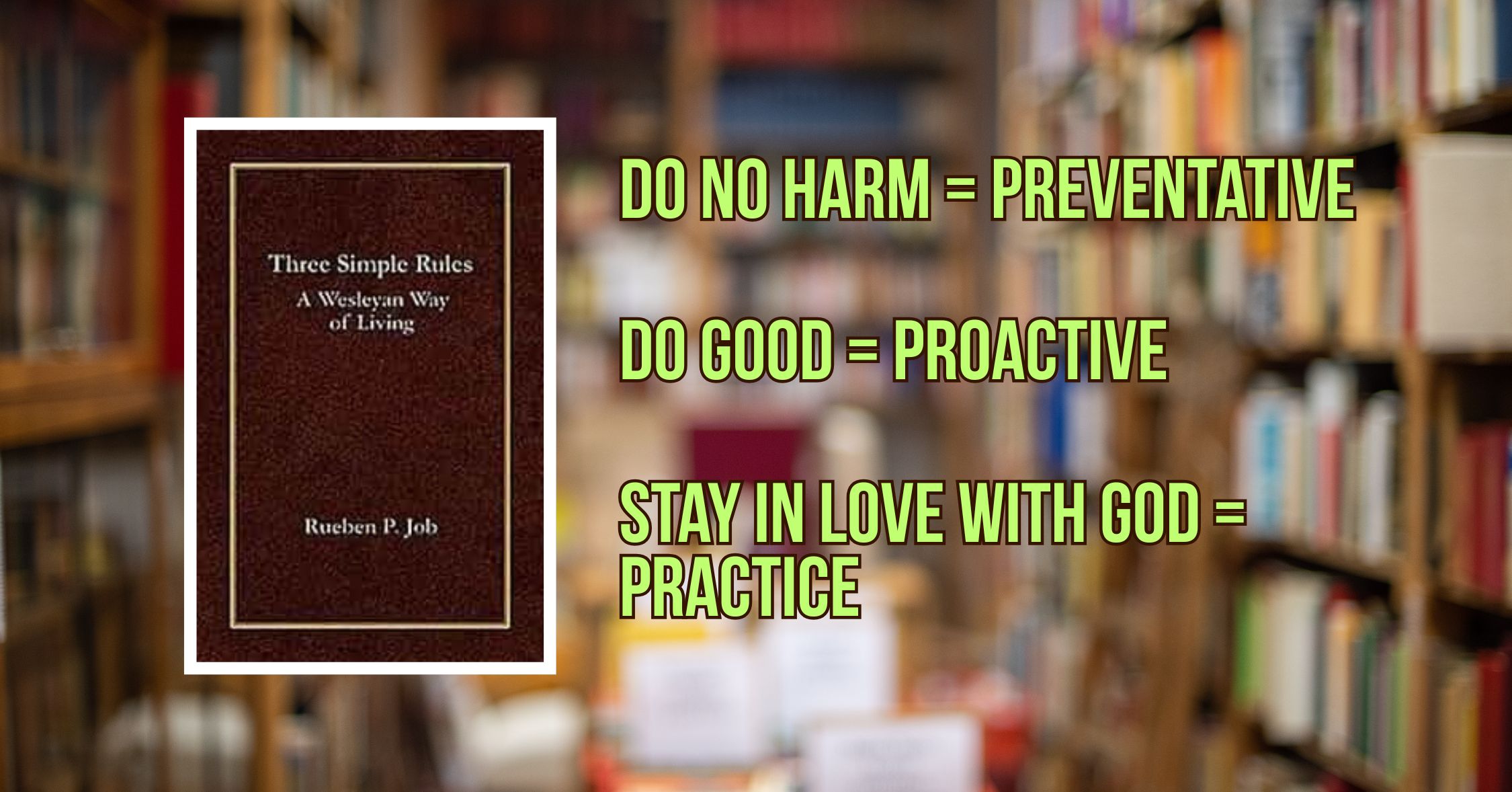
Finding ways to beat the system. Looking for loopholes instead of long-term benefits. Paul wasn’t there to help them in person, to guide them and remind them on a regular basis, so instead he did the only thing he could do. He encouraged them to remember the teachings, to be “rooted” in Christ, to build each other up and strengthen each other’s faith, to remind one another of the truths they had been taught and believed. In essence Paul was trying to teach them to “stay in love with God,” Wesley’s Third Rule. Do no harm, do good, and stay in love with God. For John Wesley, who taught these three rules as the foundation of Methodism, staying in love with God was vital to our faith. If “do no harm” is preventative and “do good” is proactive, then “staying in love with God” requires practice. Like Paul, John Wesley taught this same basic principle. To draw closer to Christ and to maintain your faith, John told those who became part of the Methodist societies they needed to regularly attend to all the ordinances of God. By that he meant they needed to do those everyday things, those regular things, over and over again to infuse God into their lives. That when God became an integral part of who we are, our faith would have a firm foundation. Wesley told them they needed to pray. They needed to read their Bibles. They needed to be in small groups together. They needed to take communion. They needed to go to worship. It’s those everyday routines Wesley felt were most important to keep us connected to God and to one another, and Paul in this passage stresses the same thing. Paul encourages the church to “continue to live your lives in him, rooted and built up in him, strengthened in the faith as you were taught, and overflowing with thankfulness.”
Science backs them up.
Their assumption that maintaining these patterns of behavior would help to make God a part of our everyday lives is true. In different studies, it has been shown that through consistency and repetition we can form new ways of doing things. But it takes time. You may have heard that it takes 21 days to form a new habit, but the truth is it takes much longer. Studies show it takes an average of 66 days.[2] 66 days and that’s just an average. It can take as long as 8 or 9 months. But it can be done. If you want to get in the habit of relying on God, if you want to learn to put your faith and trust in him, you have to make God a part of your everyday life. Things like praying and reading the Bible and going to worship need to be more than a chore but a way of life that you embrace and then it will take hold in you in a deep and meaningful way. And once you have this foundation at your core, you will be open to an even deeper relationship with God. One that opens you up to that “peace that passes all understanding” Paul promises we can have. Staying in love with God, or as Wesley put it, “attending to all the ordinances of God,” takes time but the investment is well worth it.
When I first started praying with others, I hated it.
Not because I didn’t think it was important and not because I didn’t think it was helpful. But because I felt so inadequate about it. It seemed everyone I knew could pray better than I could. But after my Walk to Emmaus, I joined a Day Four group and we’d meet once a week and took turns praying for each other. They were SO eloquent with their prayers. Thoughtful. Not the kind where they just repeat the word “Lord” 40 times in one sentence, but from the heart, sincere, deep prayer. By comparison, I felt my prayers were more along the lines of “God is great, God is good, thank you God for this food.” But they encouraged me regularly and gave me confidence as I kept working on it. And as I kept it up, I felt more comfortable. I was less self-conscious. I worried less about doing a “good” prayer and came to realize it’s not about how fancy my words were or how articulate I was or whether or not I repeated myself a dozen times. It was all about my heart for the Lord. That’s all God really cares about. And at least in that, I am confident. To do anything well takes practice. Like with the Rubik’s Cube, the more we work at it, the better we will be. In our marriages, in our work, as parents – even in our faith. Practice makes perfect.
[1] https://www.worldcubeassociation.org/results/records
[2] http://www.huffingtonpost.com/james-clear/forming-new-habits_b_5104807.html
Do Good: The Second Rule

What goes around comes around.
We LOVE justice. At least when it happens to other people. The idea, “What goes around comes around,” allows us to believe there is justice in the world. In Japanese they have a word for that: “Bachigatata” or “Bachi” for short. Even Christians echo these thoughts: “A man reaps what he sows” which comes from our passage this morning. If you have a Bible or a Bible app on you, please go to Galatians 6:7-10. Galatians 6:7-10. What Paul is talking about when he writes this phrase isn’t about retribution, it’s about making the most out of life. Whatever effort we put into something, the effort we make, is what we can expect to get out of it. If we pour ourselves into something it’s more likely we’ll get good returns. But if we put little effort, or bad effort or no effort at all, we can only expect what we put into it. So, here’s the passage from the Bible.
7 Do not be deceived: God cannot be mocked. A man reaps what he sows. 8 Whoever sows to please their flesh, from the flesh will reap destruction; whoever sows to please the Spirit, from the Spirit will reap eternal life. 9 Let us not become weary in doing good, for at the proper time we will reap a harvest if we do not give up. 10 Therefore, as we have opportunity, let us do good to all people, especially to those who belong to the family of believers. – Galatians 6: 7-10

“Doing good” is part of what it means to be a Methodist.
We don’t believe people go to Heaven because they do good stuff. But we do believe doing good is evidence of God in your life, and we believe doing good draws us closer to Christ. There’s a famous quote often attributed to John Wesley that says, “Do all the good you can, by all the means you can, in all the ways you can, in all the places you can, at all the times you can, to all the people you can, as long as ever you can.” While no one can find this to be a literal quote from John, it certainly reflects his beliefs. In his sermon “The Use of Money” he said, “employ whatever God has entrusted you with, in doing good, all possible good, in every possible kind and degree to the household of faith, to all men!”[1] And when he wrote up the three General Rules that formed the Methodist classes and later all of us, he included it there, too. Do no harm, do good, stay in love with God. “Do no harm” (the first rule) is preventative. It encourages us to be thoughtful, to take time out to ponder our words, to think through a situation. But it’s a rule that is meant to prevent us from doing something hurtful. If “do no harm” is preventative, “do good” is proactive. More than just making sure we aren’t hurting people, we’re supposed to make the world a better place. As Paul wrote, “Let us not become weary in doing good, for at the proper time we will reap a harvest if we do not give up.”

But how do we “do good?”
It seems like an obvious question. You just DO GOOD. But how can we do the MOST good? If you’re like Dan in the TV show SportsNight, you want to try to figure this out. Dan gets flooded with a stack of solicitation letters from various charities and causes and he doesn’t know what to do. He tells his friend and co-anchor, Casey, “I’m on a mailing list to end all mailing lists…I’d love to give money to all these people, but then I’d have no money and I’d need somebody’s mailing list just to pay rent.” You’ve probably felt like this before. Too many worthwhile causes and not enough money or time to go around. We feel that personally and as a church. It can be overwhelming when you think of how many worthy causes are out there. Dan and Casey go back and forth until Casey finally says, “You know, while we’ve been having this conversation, a couple people have probably died from something you could have cured.”
Dan starts to ask around.
He goes up to his friend Natalie and asks what she would do and she says she gives what she can to an AIDS group. Dan thinks that’s great, but asks her what about breast cancer and diabetes and leukemia? Don’t they deserve funding also? Dan is struggling to figure out who is the MOST deserving. Where should he invest his money? So, he asks his boss, Isaac. Isaac will know. Isaac is smart, respected, and Dan looks up to him like a father. Isaac tells him, “Danny, every morning I leave an acre and a half of the most beautiful property in New Canaan, get on a train and come to work in a 54-story glass hi-rise. In between, I step over bodies to get here – 20, 30, 50 of them a day. So, as I’m stepping over them, I reach into my pocket and give them whatever I’ve got.” Dan asks, “You’re not afraid they’re going to spend it on booze?” And that’s the heart of Dan’s problem, and ours a lot of the time. We worry so much about what might happen with what we give, whether it’s money or time or talent, that we end up holding back giving at all, or we give cautiously when we could be giving more. But that’s not how Jesus envisioned us helping one another. Remember the story of the rich young man who asked Jesus how he could have eternal life? Jesus told him to give his wealth to the poor. He didn’t put conditions on it. He didn’t warn him what the poor would do with his money. Because it’s really about our heart for giving. It’s about being abundantly generous and not worrying where it goes once we give it. That doesn’t mean God wants us to be foolish with our time or money or talent, but he wants us to be more actively engaged in the world. If we spend more time worrying about what other people are going to do with “our” money, we’re missing the point. God wants us to have a heart for giving – giving money, giving time, giving talents, giving a kind word, giving our sympathy, giving our love. He wants us to have a giving attitude. Let God worry about where it goes.
At the end of the show, Dan and Casey wrap things up.
Casey asks him if he’s solved the problem of who to give to, and Dan says, “It’s easier being a miser.” And Casey responds, “Can I say something? You’re not going to solve everybody’s problems. In fact, you’re not going to solve anybody’s problems, so you know what you should do? Anything. As much of it and as often as you can.” Anything. As much of it and as often as you can. Casey was echoing exactly what John Wesley and Paul have been trying to tell us. Give anything, as much of it and as often as you can. God wants us to be proactive. He wants us to get into the habit of being giving people, trying to make a difference in the world. Sure, we want to try to do the most good for the most people, but if we worry so much about where it’s going or if it will be put to good use we might end up like the guy in Jesus’ story about the bags of gold where the one guy ends up burying it in the ground instead of doing something with it. We don’t want to be THAT guy. We want to be responsible. We want to be good stewards. But we don’t want to get to the point where we are paralyzed from doing ANYTHING! Along the way, we might make some missteps, but the important thing is the state of our heart. Are we operating out of fear or out of love? Which one will rule our heart?

Our faith is empty without good deeds.
James, the brother of Jesus wrote about this extensively in his letter. He said, “As the body without the spirit is dead, so faith without deeds is dead (James 2:26).” That’s because a person who says he believes in Jesus but does nothing to help his fellow human being does not really have faith. They have faith in themselves or faith in their money, but not faith in Christ to do what is needed. James also wrote (James 2:15-17), “Suppose a brother or a sister is without clothes and daily food. 16 If one of you says to them, ‘Go in peace; keep warm and well fed,’ but does nothing about their physical needs, what good is it? 17 In the same way, faith by itself, if it is not accompanied by action, is dead.” And while I think James intended for that to be a statement against Christians who call themselves believers and do nothing to help others, it’s also a prescription for ourselves. Our faith is brought to life, both in other people AND in ourselves, when we live it out.

Have you heard of the term GIGO?
It’s a computing term, but you might be familiar with it anyway. GIGO.[2] GIGO. It stands for Garbage In, Garbage Out and refers to the idea that bad programming will lead to bad results. Basically, you get out what you put in. And that’s true for every aspect of our lives. Our friendships, our family, our marriages, our jobs, our hobbies, our passions and our relationship with God. You get out what you put in. If you spend your life trying to put good into the world, there might be some garbage from time-to-time, but overall, you’ll get even more out of life. Better relationships with others. Better relationship with God. A better world to live in. And after all, isn’t that what we all want? If it’s true that “A man reaps what he sows” and “What goes around comes around” then we need to put as much good out there in the world as we can. Let go of our fears. Trust in God. Devote yourself to doing good and not worry about what they do with our gifts, but instead be dedicated to a heart for generosity.
[1] http://www.umcmission.org/Find-Resources/John-Wesley-Sermons/Sermon-50-The-Use-of-Money
Do No Harm: The First Rule

Primum non nocere.
That’s a Latin phrase meaning, “First, do no harm.” Every medical professional in the world is familiar with that tenet, so it’s kind of weird it is also the first rule of Methodism. Or is it? Maybe it’s the most important rule of all. Our sermon series this month is going to explore the three General Rules of Methodism and why they are so important to us. If you ask most people they likely don’t know these rules, but it is an important part of our history and the foundation of our beliefs as a church. Once in a while, it’s a good idea to remind ourselves what we believe in, why we are gathering, and what it’s all about. With that in mind, let’s open our Bibles or Bible apps to Matthew 26:47-54. Now this passage takes place right after Jesus was praying in the Garden of Gethsemane and after the Last Supper. We’re nearing the time of Jesus’ death on the cross. He’s about to be betrayed by one of those closest to him, a man who sold him out for money. Judas has arranged for Jesus’ capture by an angry mob and as these events play out, pay close attention to what Jesus does. Hear now the Word of God.
47 While he was still speaking, Judas, one of the Twelve, arrived. With him was a large crowd armed with swords and clubs, sent from the chief priests and the elders of the people. 48 Now the betrayer had arranged a signal with them: “The one I kiss is the man; arrest him.” 49 Going at once to Jesus, Judas said, “Greetings, Rabbi!” and kissed him.
50 Jesus replied, “Do what you came for, friend.”
Then the men stepped forward, seized Jesus and arrested him. 51 With that, one of Jesus’ companions reached for his sword, drew it out and struck the servant of the high priest, cutting off his ear.
52 “Put your sword back in its place,” Jesus said to him, “for all who draw the sword will die by the sword. 53 Do you think I cannot call on my Father, and he will at once put at my disposal more than twelve legions of angels? 54 But how then would the Scriptures be fulfilled that say it must happen in this way?”
The Word of God for the people of God and the people said, “Thanks be to God.” Please be seated.
When we think of great leaders who preached about non-violent social change, some amazing people come to mind like Dr. Martin Luther King and Mahatma Ghandi.
Although one was a Baptist minister and one was a Hindu lawyer, both found inspiration in the life and work of Jesus Christ. Jesus taught and lived the principles of non-violence as we read about in this passage. Even though he knows, HE KNOWS, he is about to be taken to his death, he stops Peter from defending him and says, “…for all who draw the sword will die by the sword.” In this one moment, Jesus makes crystal clear that the people of God must live by higher ideals. As he taught the disciples elsewhere, it isn’t enough to offer an eye for an eye, you have to go beyond that. You have to turn the other cheek. When you offer forgiveness, it isn’t just once or twice, but seventy times seven times! Because if we are really going to be the people of God, if we are going to show the love of Christ to a hurting world, we have to be the first ones to offer forgiveness. We have to be the first ones to come to the table. We have to be the first ones to show there is a better way. We must resist the temptation to return tit for tat, violence for violence because that is the trap that leads us away from God.
The foundation of the United Methodist Church is found in three simple rules.
Do no harm, do good, and attend upon all the ordinances of God. Bishop Reuben Job summarized it in his book this way, “Do no harm, do good, and stay in love with God.”[1] When John Wesley formed the first Methodist small groups (or “classes” as he called them), this was how they agreed to live; do no harm, do good, and stay in love with God. It sounds simplistic because it is, but it’s still hard to do. That’s why these small groups would meet every week, to help keep each other accountable; to remind each other of their promise to live this kind of life. Because even though in our heads we know what we SHOULD do, it’s not always what we DO. We are not immune to the impulses of human nature. We can call this one of the first 12 step programs because these classes were meant to help us against the temptations we all struggle with.[2] As we explore what Wesley meant by “do no harm,” we come to understand that he meant more than we shouldn’t kick puppies (who would do that?!). Wesley wants us to consider the broader implications of what that means.

“Do no harm” is a broader idea than most of us really consider.
Wesley wanted to make it clear, so he explained in some detail exactly what he meant. When he wrote the General Rules for those small group classes, he included things you would expect. No fighting, no quarreling, no brawling. I’m not sure why John felt the need to call out brawling separate from fighting, but he did. And then he put in other stuff. No getting drunk. No suing your brother. No cheating the system. No working on the Sabbath. Mostly stuff you and I would agree with. My favorite, of course, is not saying anything bad about your pastor. Seriously. He put that in there. Then he added stuff to the list we might not immediately think of as “doing harm” – wearing gold or fancy clothes, needless self-indulgence (I guess as opposed to self-indulgence we need), and singing songs which do not tend to the knowledge and love of God.[3] Does that mean no more Sabrina Carpenter songs? We could argue about some of these all day, but that would be missing the point. Wesley was trying to challenge us to go beyond thinking of harm as something physical and force us to take a step back and think, “Am I doing something to hurt someone else?” Sometimes that hurt can be completely unintentional.
At one of the churches I used to serve, they had a very strong youth group.
These kids would come to church every week because they looked forward to spending time with one another and felt really connected by how long they’d been growing up in church. But as you can imagine, when a group gets that tight, it’s hard for a newcomer to feel like they belong unless the group is intentional about being inclusive and reaching out to them. And while all of these kids had good intentions, they unintentionally left some kids behind, and those kids quietly left the church. When I became pastor, one of the moms came up to me and told me about her daughter who was one of those kids. She told me how alone and isolated it made her daughter feel to never really be included. Her daughter wasn’t asked to help or invited to be part of the group. She wasn’t often invited to be involved in their activities. She told me how her daughter tried to fit in, but just couldn’t crack that shell. And how eventually she told her mom she needed to find another church. As a fellow parent, that made me so sad. Of all places, you would think a church would be the one place where everyone was welcome, but that isn’t always true. These kids weren’t intentionally mean, just thoughtless as we all can be from time to time. We can become so focused on ourselves that we neglect to see what should have been obvious and unintentionally cause other people harm. Everyone does this. Kids and adults alike. The trick is to be mindful in what you do and what you say. Train yourself to consider others and not just yourself. We can avoid a great deal of the world’s problems if we learn to have an eye beyond what we want and what we like.

Be thoughtful.
I think that’s it in a nutshell. Be thoughtful. Consider others before yourself. Think about how your actions AND your words will hurt others. Take time to pause before uttering something painful. Maybe the person you’re talking to said something hurtful or painful or plain stupid and you are so tempted to lash out, but consider before speaking, because the other person probably didn’t. I’ve found in my own life and in the experiences of others, that when people say hurtful things, it’s rarely with careful planning that they do it. Usually, they react because they are angry, mad, or hurt. And we can probably all agree you’re not likely to say something wise or sage in that moment. Sometimes, stepping back from a situation and taking two seconds before reacting is the best possible medicine. I’ve never forgotten the advice Emma gave me one day. I was upset about something and Emma looked at me and said, “Daddy, my teacher told me that when we’re upset we should take three deep breaths and count to ten.” Of course I followed her advice, and by golly it worked. Will that solve every problem? No. I’m sure it won’t. But it probably will avoid a good many more. Of course, there will be times when harm seems inevitable. But in those instances, wouldn’t it be best to be thoughtful – to be intentional about how to do the least amount of harm? I was thinking about the Hippocratic Oath and how part of it is to always remember “warmth, sympathy, and understanding may outweigh the surgeon’s knife or the chemist’s drug.” Sometimes we need those things more than anything else: warmth, sympathy, and understanding. Consider others before yourself and we can turn the world into the kind of place God would be proud of. Primum non nocere. First, do no harm. In the name of the Father and of the Son and of the Holy Spirit. Amen.
[1] As he summarized in his book Three Simple Rules.
[2] https://www.hazeldenbettyford.org/articles/twelve-steps-of-alcoholics-anonymous The 12-step program for AA started in 1935 and was based on religious principles even though today those principles have been broadened to appeal to more people.
[3] https://www.umc.org/en/content/the-general-rules-of-the-methodist-church
 Craig's Corner