
Do No Harm: The First Rule
Primum non nocere.
That’s a Latin phrase meaning, “First, do no harm.” Every medical professional in the world is familiar with that tenet, so it’s kind of weird it is also the first rule of Methodism. Or is it? Maybe it’s the most important rule of all. Our sermon series this month is going to explore the three General Rules of Methodism and why they are so important to us. If you ask most people they likely don’t know these rules, but it is an important part of our history and the foundation of our beliefs as a church. Once in a while, it’s a good idea to remind ourselves what we believe in, why we are gathering, and what it’s all about. With that in mind, let’s open our Bibles or Bible apps to Matthew 26:47-54. Now this passage takes place right after Jesus was praying in the Garden of Gethsemane and after the Last Supper. We’re nearing the time of Jesus’ death on the cross. He’s about to be betrayed by one of those closest to him, a man who sold him out for money. Judas has arranged for Jesus’ capture by an angry mob and as these events play out, pay close attention to what Jesus does. Hear now the Word of God.
47 While he was still speaking, Judas, one of the Twelve, arrived. With him was a large crowd armed with swords and clubs, sent from the chief priests and the elders of the people. 48 Now the betrayer had arranged a signal with them: “The one I kiss is the man; arrest him.” 49 Going at once to Jesus, Judas said, “Greetings, Rabbi!” and kissed him.
50 Jesus replied, “Do what you came for, friend.”
Then the men stepped forward, seized Jesus and arrested him. 51 With that, one of Jesus’ companions reached for his sword, drew it out and struck the servant of the high priest, cutting off his ear.
52 “Put your sword back in its place,” Jesus said to him, “for all who draw the sword will die by the sword. 53 Do you think I cannot call on my Father, and he will at once put at my disposal more than twelve legions of angels? 54 But how then would the Scriptures be fulfilled that say it must happen in this way?”
The Word of God for the people of God and the people said, “Thanks be to God.” Please be seated.
When we think of great leaders who preached about non-violent social change, some amazing people come to mind like Dr. Martin Luther King and Mahatma Ghandi.
Although one was a Baptist minister and one was a Hindu lawyer, both found inspiration in the life and work of Jesus Christ. Jesus taught and lived the principles of non-violence as we read about in this passage. Even though he knows, HE KNOWS, he is about to be taken to his death, he stops Peter from defending him and says, “…for all who draw the sword will die by the sword.” In this one moment, Jesus makes crystal clear that the people of God must live by higher ideals. As he taught the disciples elsewhere, it isn’t enough to offer an eye for an eye, you have to go beyond that. You have to turn the other cheek. When you offer forgiveness, it isn’t just once or twice, but seventy times seven times! Because if we are really going to be the people of God, if we are going to show the love of Christ to a hurting world, we have to be the first ones to offer forgiveness. We have to be the first ones to come to the table. We have to be the first ones to show there is a better way. We must resist the temptation to return tit for tat, violence for violence because that is the trap that leads us away from God.
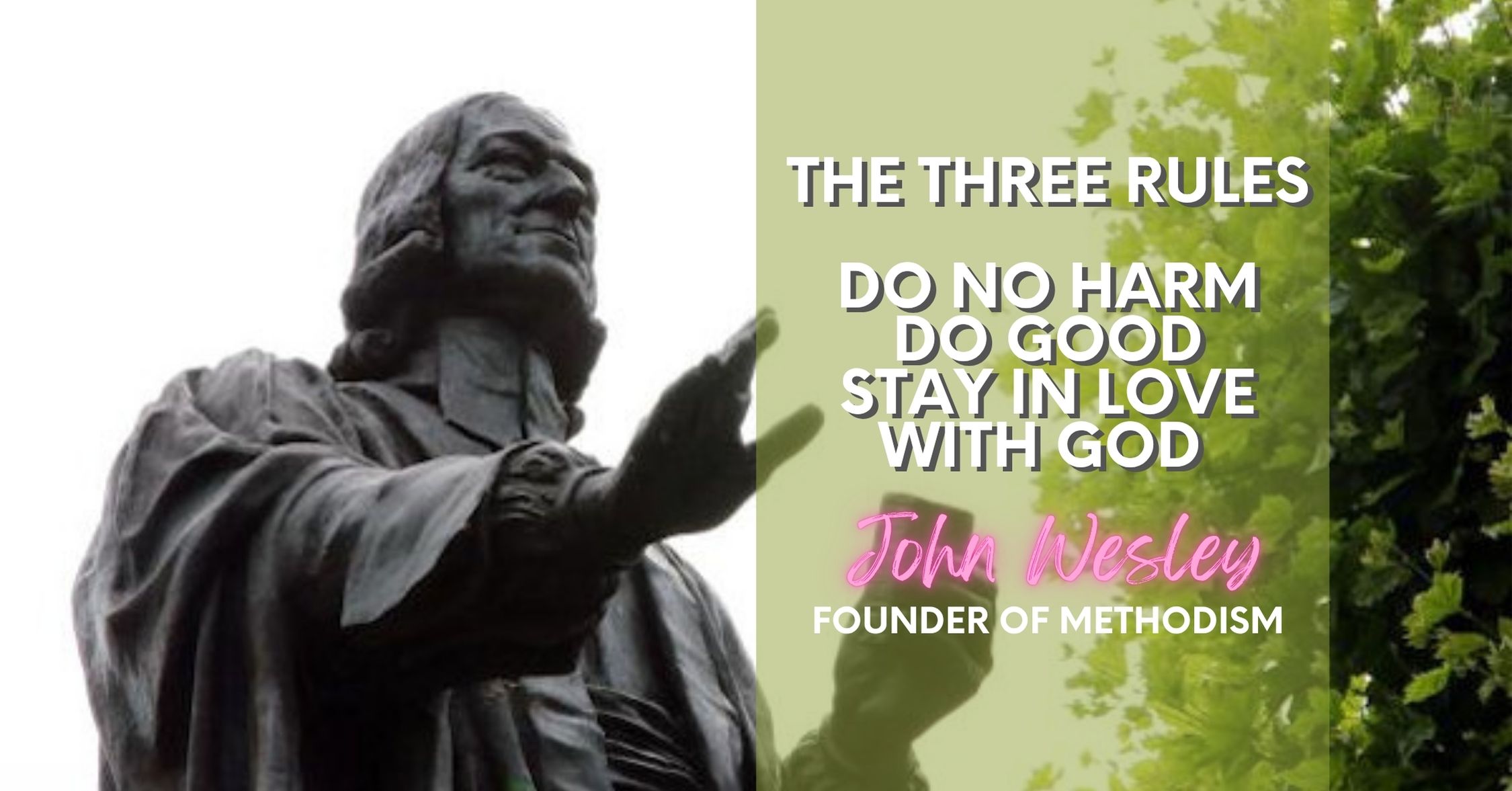
The foundation of the United Methodist Church is found in three simple rules.
Do no harm, do good, and attend upon all the ordinances of God. Bishop Reuben Job summarized it in his book this way, “Do no harm, do good, and stay in love with God.”[1] When John Wesley formed the first Methodist small groups (or “classes” as he called them), this was how they agreed to live; do no harm, do good, and stay in love with God. It sounds simplistic because it is, but it’s still hard to do. That’s why these small groups would meet every week, to help keep each other accountable; to remind each other of their promise to live this kind of life. Because even though in our heads we know what we SHOULD do, it’s not always what we DO. We are not immune to the impulses of human nature. We can call this one of the first 12 step programs because these classes were meant to help us against the temptations we all struggle with.[2] As we explore what Wesley meant by “do no harm,” we come to understand that he meant more than we shouldn’t kick puppies (who would do that?!). Wesley wants us to consider the broader implications of what that means.

“Do no harm” is a broader idea than most of us really consider.
Wesley wanted to make it clear, so he explained in some detail exactly what he meant. When he wrote the General Rules for those small group classes, he included things you would expect. No fighting, no quarreling, no brawling. I’m not sure why John felt the need to call out brawling separate from fighting, but he did. And then he put in other stuff. No getting drunk. No suing your brother. No cheating the system. No working on the Sabbath. Mostly stuff you and I would agree with. My favorite, of course, is not saying anything bad about your pastor. Seriously. He put that in there. Then he added stuff to the list we might not immediately think of as “doing harm” – wearing gold or fancy clothes, needless self-indulgence (I guess as opposed to self-indulgence we need), and singing songs which do not tend to the knowledge and love of God.[3] Does that mean no more Sabrina Carpenter songs? We could argue about some of these all day, but that would be missing the point. Wesley was trying to challenge us to go beyond thinking of harm as something physical and force us to take a step back and think, “Am I doing something to hurt someone else?” Sometimes that hurt can be completely unintentional.
At one of the churches I used to serve, they had a very strong youth group.
These kids would come to church every week because they looked forward to spending time with one another and felt really connected by how long they’d been growing up in church. But as you can imagine, when a group gets that tight, it’s hard for a newcomer to feel like they belong unless the group is intentional about being inclusive and reaching out to them. And while all of these kids had good intentions, they unintentionally left some kids behind, and those kids quietly left the church. When I became pastor, one of the moms came up to me and told me about her daughter who was one of those kids. She told me how alone and isolated it made her daughter feel to never really be included. Her daughter wasn’t asked to help or invited to be part of the group. She wasn’t often invited to be involved in their activities. She told me how her daughter tried to fit in, but just couldn’t crack that shell. And how eventually she told her mom she needed to find another church. As a fellow parent, that made me so sad. Of all places, you would think a church would be the one place where everyone was welcome, but that isn’t always true. These kids weren’t intentionally mean, just thoughtless as we all can be from time to time. We can become so focused on ourselves that we neglect to see what should have been obvious and unintentionally cause other people harm. Everyone does this. Kids and adults alike. The trick is to be mindful in what you do and what you say. Train yourself to consider others and not just yourself. We can avoid a great deal of the world’s problems if we learn to have an eye beyond what we want and what we like.

Be thoughtful.
I think that’s it in a nutshell. Be thoughtful. Consider others before yourself. Think about how your actions AND your words will hurt others. Take time to pause before uttering something painful. Maybe the person you’re talking to said something hurtful or painful or plain stupid and you are so tempted to lash out, but consider before speaking, because the other person probably didn’t. I’ve found in my own life and in the experiences of others, that when people say hurtful things, it’s rarely with careful planning that they do it. Usually, they react because they are angry, mad, or hurt. And we can probably all agree you’re not likely to say something wise or sage in that moment. Sometimes, stepping back from a situation and taking two seconds before reacting is the best possible medicine. I’ve never forgotten the advice Emma gave me one day. I was upset about something and Emma looked at me and said, “Daddy, my teacher told me that when we’re upset we should take three deep breaths and count to ten.” Of course I followed her advice, and by golly it worked. Will that solve every problem? No. I’m sure it won’t. But it probably will avoid a good many more. Of course, there will be times when harm seems inevitable. But in those instances, wouldn’t it be best to be thoughtful – to be intentional about how to do the least amount of harm? I was thinking about the Hippocratic Oath and how part of it is to always remember “warmth, sympathy, and understanding may outweigh the surgeon’s knife or the chemist’s drug.” Sometimes we need those things more than anything else: warmth, sympathy, and understanding. Consider others before yourself and we can turn the world into the kind of place God would be proud of. Primum non nocere. First, do no harm. In the name of the Father and of the Son and of the Holy Spirit. Amen.
[1] As he summarized in his book Three Simple Rules.
[2] https://www.hazeldenbettyford.org/articles/twelve-steps-of-alcoholics-anonymous The 12-step program for AA started in 1935 and was based on religious principles even though today those principles have been broadened to appeal to more people.
[3] https://www.umc.org/en/content/the-general-rules-of-the-methodist-church
I’m An American

5 You are all children of the light and children of the day. We do not belong to the night or to the darkness. 6 So then, let us not be like others, who are asleep, but let us be awake and sober. 7 For those who sleep, sleep at night, and those who get drunk, get drunk at night. 8 But since we belong to the day, let us be sober, putting on faith and love as a breastplate, and the hope of salvation as a helmet. 9 For God did not appoint us to suffer wrath but to receive salvation through our Lord Jesus Christ. 10 He died for us so that, whether we are awake or asleep, we may live together with him. 11 Therefore encourage one another and build each other up, just as in fact you are doing.
– 1 Thessalonians 5:5-11
Racism can be subtle.
It doesn’t have to be men with pointed hoods and robes burning crosses on the lawn. It’s not always found in name-calling and ethnic slurs. Sometimes racism can be found in the little assumptions we make about other people because of what they look like or what we see on TV. Sometimes racism can be found in the way we choose not to include others who don’t seem to “fit in” to our group.
And sometimes racism can be found in the seemingly innocent comments of little children.

Emma and I were on a school field trip back in third or fourth grade. She and one of her friends were sitting across from me on the bus when out of nowhere this Caucasian boy in her class came up and asked her “What are you?” At first, my daughter gave him a quizzical look as she tried to figure out what he was asking. Finally, she just responded by saying, “Huh?” And he repeated again, “What are you?” And then added, “I mean are you Chinese or something?” Now, just for full disclosure, my ethnic background is Japanese and Cassie is Caucasian, so Emma is a beautiful mix of the two of us and she answered, “Oh, I’m Japanese, but I have some American Indian and some English and some other stuff, too. What about you?” And this is where it gets me.
“I’m an American.”
I have to admit to being offended, even by this little kid. He said it like it’s his ethnicity. But unless he’s 100% Native American, which from his light-colored hair, green eyes, and fair color skin I’m guessing he isn’t, he has some immigrant blood in his veins, too. So, I spoke up, “Emma’s an American, too. So am I. We were all born here.” And then he said with some conviction,
“Yeah, but I’m an American American.”
What do you say to that? Do you feel bad for him that he has no sense of ethnic identity? Do you try to make him understand that being American isn’t about race but citizenship? Or do you just wonder what kind of parents don’t teach their kids the difference? I don’t blame the kid. Honestly, I don’t. He only knows what he’s been taught – or not taught – by his parents, his environment, sometimes by the media and pop culture that fails to include the rich diversity of life we find every day whether we acknowledge it or not.
Cognitively, I’m sure he’ll learn (one day) that being “American” is not an ethnicity, but I wonder if he’ll ever totally understand he’s not “more American” than other people who look different than he does. He might acknowledge it, but this attitude that somehow some of us are less worthy of being American is one that seeps into our national landscape.
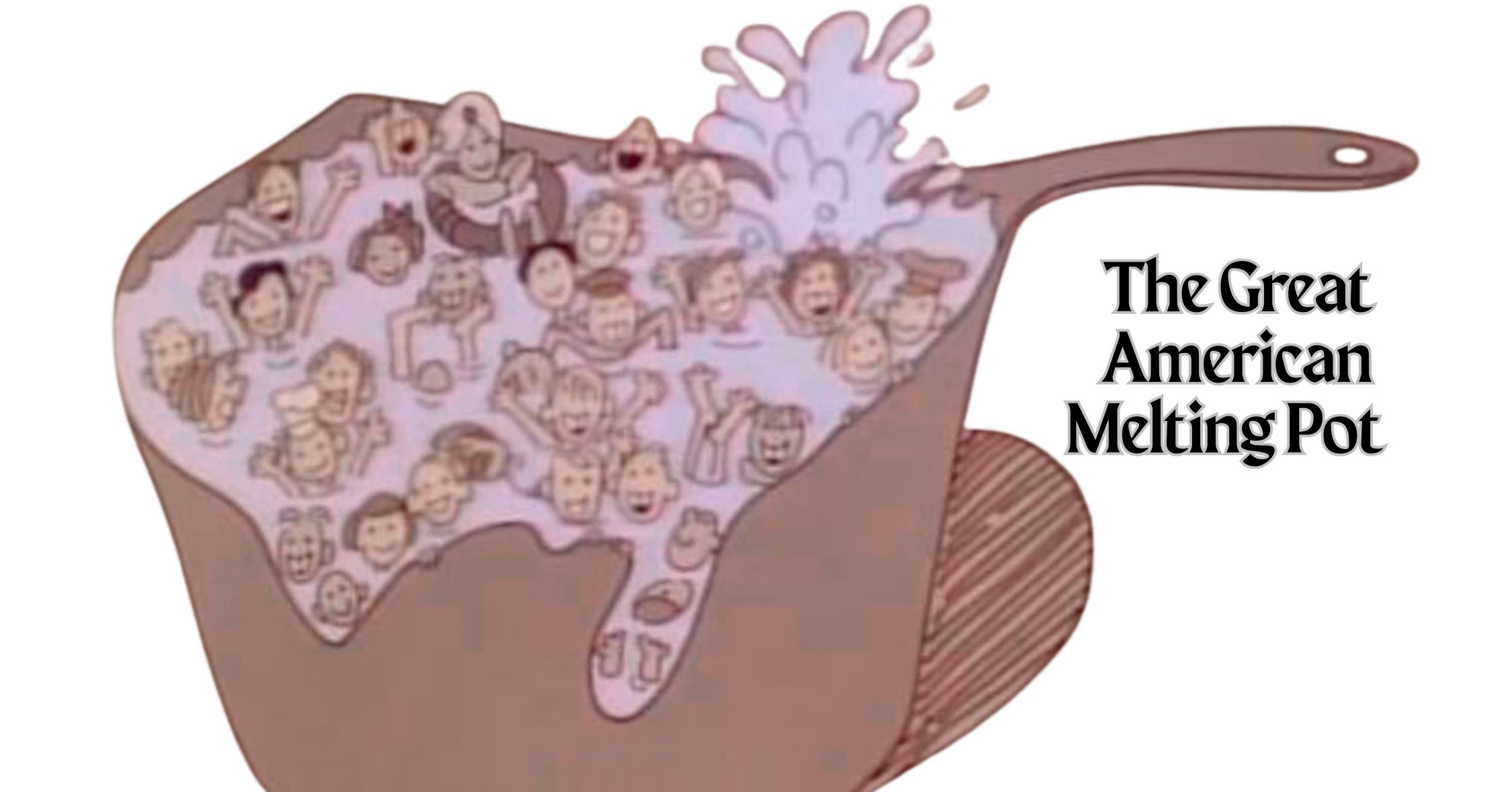
And that landscape is changing. It’s estimated by 2043 White, non-Hispanic people will no longer be in the majority.[1] In New Mexico and California, Hispanic people now make up the largest single ethnic group in those states.[2] Our idea of what it means to be “American” is shifting rapidly, and some people are having a very difficult time adjusting to that, but I think this shift is a great thing! As more and more people are added to the Great American Melting Pot, the stew inside becomes even more flavorful.

Already the vast number of different cultures in our country have influenced how we eat.
We think of California Rolls as sushi, but they’re called “California” for a reason. Nobody living in Japan thought of stuffing avocado into rice and seaweed. Sweet and sour anything SEEMS Chinese but really was invented in America to make traditional Chinese food more palatable to people in the States. And don’t get me going about fortune cookies! Whatever California native thought of that was a marketing genius![3]
Racism doesn’t have to be openly vicious or harmful.
That little boy’s comment on the bus didn’t use a racial slur or say something negative directly to me or Emma. But think about what he said. He said, “I’m superior to you because I’m a real American and you’re not.” He wasn’t intellectual sophisticated enough to purposely think that, but it’s what he meant. He was perpetuating a belief he was taught by his parents, society, movies, who knows. But it’s hurtful to be on the receiving end of a comment like that one. That somehow, based on the color of your skin or the shape of your eyes, you’re somehow less American. That somehow you don’t belong as much as other people.
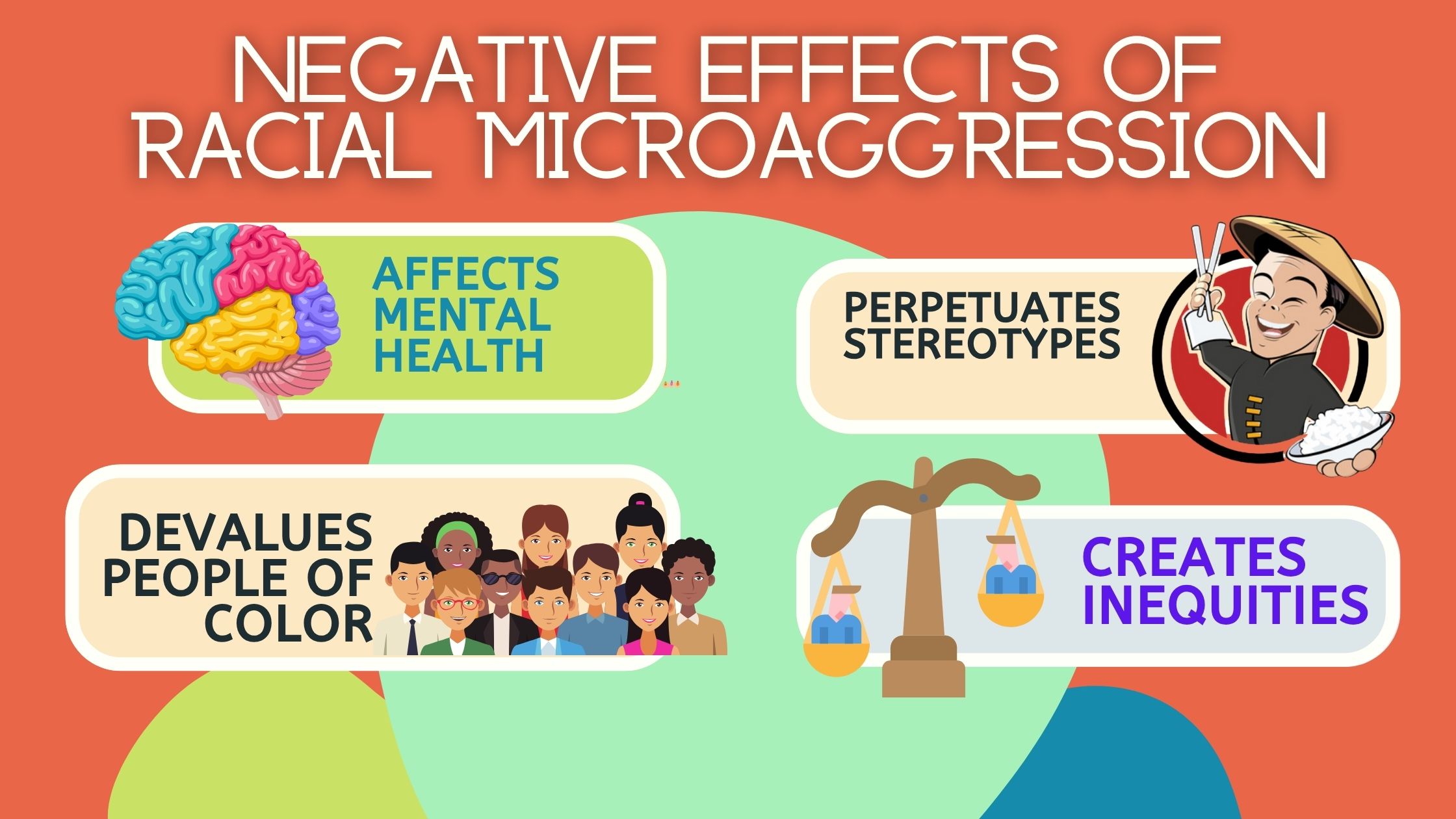
It’s called racial microaggression.
We’ve talked about this before. It’s “the brief and everyday slights, insults, indignities and denigrating messages sent to people of color by well-intentioned…people who are unaware of the hidden messages being communicated.”[4] Phrases like “What are you?” or “Where do you come from?” imply that you don’t belong. What’s worse is when you answer honestly and the person persists, “No, where do you REALLY come from? Where were you born?” It’s just a constant reminder that you aren’t one of us. These microaggressions don’t even have to be verbal. They can be non-verbal like when someone looks at you cross ways or clutches their purse more tightly as they walk by. Microaggressions can be environmental like the flying of a Confederate flag or doing the tomahawk chop at a baseball game. You might think, “well those things are trivial. Stop being so sensitive.” But it’s the cumulative effect of all of those tens, hundreds, thousands, and millions of microaggressions that create environments that sustain racism and stereotypes. In his research on racial microaggression, Dr. Sue, a leading expert on the topic, found that these tiny insults affect our mental health, create a hostile climate, perpetuate stereotypes, devalue people of color, and create inequities in education, employment, and health care.[5] And that’s only partially how they affect us and the world around us. We need to do our part by being more aware of what we do and what we say.
We need to work together to eradicate prejudice and stereotypes of all kinds.
They do nothing to uplift us and instead tear us down and apart. Hopefully, we’ll embrace the concept that America really is the Great American Melting Pot; that we are made better because we embrace and incorporate the cultures and ideas of those who come to this country. What makes America unique is that we are a truly heterogeneous society with no one origin story. What makes us unique is that everyone can be American. And what unites us is that everyone is a child of God.
[1] http://www.huffingtonpost.com/2012/12/12/census-hispanics-and-black-unseat-whites-as-majority-in-united-states-population_n_2286105.html
[2] http://www.pewresearch.org/fact-tank/2014/01/24/in-2014-latinos-will-surpass-whites-as-largest-racialethnic-group-in-california/
[3] http://www.infoplease.com/spot/fortunecookies.html
[4] I did leave out the word “white” because I don’t think you have to be white to level a racial microaggression. But the article is very helpful and well-written. https://www.psychologytoday.com/gb/blog/microaggressions-in-everyday-life/201010/racial-microaggressions-in-everyday-life
[5] Ibid.
Parenting Myths of the Bible

Spare the rod, spoil the child.
That phrase is often attributed to the Bible but it’s about as Biblical as “God helps those who help themselves,” which is to say not very Biblical at all. “God helps those who help themselves” comes from early Greek works.[1] “Spare the rod, spoil the child” comes from elsewhere, too – first by William Langland in the 14th century and later by Samuel Butler in the 17th century.[2] But as Christians we are quite fond in believing this comes originally from the Bible and some would argue that even if the direct quote didn’t come from there, the sentiment surely did. Usually they cite one of the two sayings in Proverbs we read this morning as proof. This belief that corporeal punishment is generally useful in child-rearing has been triumphed by both Christians and non-Christians alike. I know that’s how I grew up, how my dad grew up, and how my grandfather grew up. I don’t know how far back it goes beyond that, but from the early citations quoted, it’s been common for at least 700 years. And in case you thought this idea of physical violence curbing behavior has gone the way of the dinosaur, you’ll be as shocked as I was to discover that 19 states that still allow corporeal punishment in schools.[3] People stick to what they know and the idea behind “Spare the rod, spoil the child” is one that’s ingrained in many of us.

For me, the concept of “time out” was completely foreign.
It was like giving a pair of chopsticks to someone who’s used a fork their whole life and then trying to convince them it works. When I met Cassie, Eve was already four years old and I remember being totally confused the first time I saw Cassie put her in “time out.” I had to ask what it was. It wasn’t a hard concept to grasp – a child would literally take time out from what they were doing to quietly contemplate their actions. Whether they DID that is up for debate, but I never heard of “time out” before. It seemed to let her off easy. But Cassie is uber-intelligent and as always did her research on parenting techniques and told me this was how it was done nowadays. Would you believe that? But the more I thought about it, the more it made sense. Spanking might put the fear of God into a kid, but it didn’t make them understand any better why it was wrong. It’s like putting criminals in jail. Originally, jail was meant to be to keep criminals off the street until they could be rehabilitated, but we have a real “punishment” mindset in America. Do the crime, do the time. That’s how we think of it. Eye for an eye, tooth for a tooth. That’s why sayings like “Spare the rod, spoil the child” makes sense to us. It’s a very consequence-oriented way of looking at life. It’s no wonder we read these passages from the Bible and assume that’s what it means.

But what if that’s NOT what it meant?
I’ve always struggled with the punishment mind set. Do we really want to punish people or do we just want them to get it right? Can we forgive people’s mistakes without seeking retribution? Especially when it comes to kids. Is our behavior uplifting or oppressive? Hear then these words from Mark. If you would please rise for the reading of the Gospel, Mark 10:13-16. Hear now the Word of God.
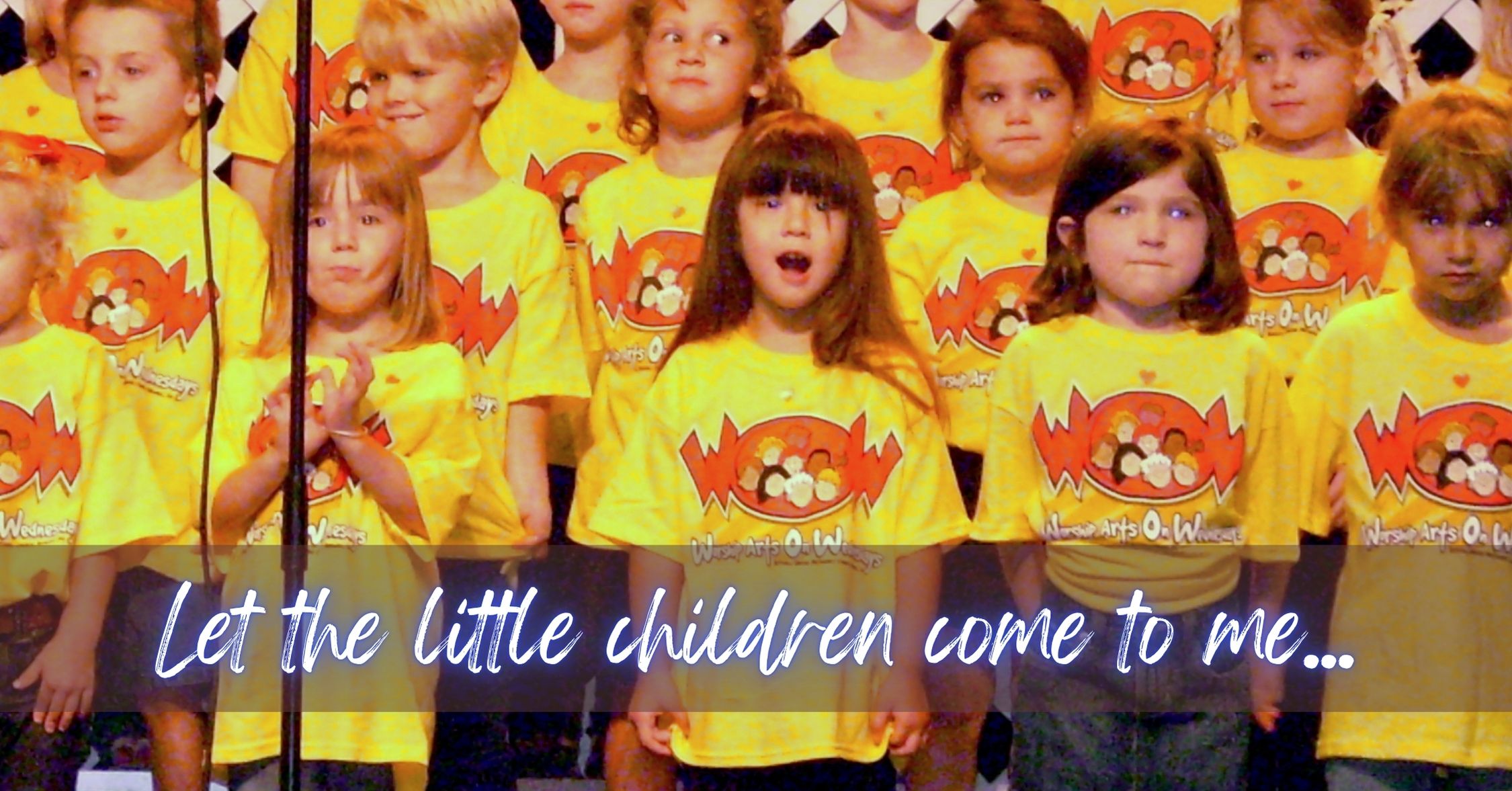
13 People were bringing little children to Jesus for him to place his hands on them, but the disciples rebuked them. 14 When Jesus saw this, he was indignant. He said to them, “Let the little children come to me, and do not hinder them, for the kingdom of God belongs to such as these. 15 Truly I tell you, anyone who will not receive the kingdom of God like a little child will never enter it.” 16 And he took the children in his arms, placed his hands on them and blessed them. – Mark 10:13-16
It’s easy to look at the disciples as the bad guys in this scenario.
And they are. But they’re bad guys with good intentions. They’re trying to keep the riff raff away from Jesus. You can imagine a guy who performs miracles probably is getting a lot of attention. Think the first century equivalent of Beyonce or One Direction. Maybe even bigger than the Beatles. So, the disciples are like his crew, his posse, and in their heads, Jesus doesn’t have time for a bunch of little kids. He’s got more serious people to put his hands on. But then Jesus corrects them. “Let the little children come to me,” he says, “and do not hinder them, for the kingdom of God belongs to such as these.” In my head, I always get this image of the disciples being kind of surprised and this rush of children come forward to see Jesus. He said to the disciples, “Do not hinder them.” And it made me think, we’ve all probably had people who hindered us. I can think of a few right away who were the bane of my existence growing up, who made life harder. Were they good for me in the long run? No. Did they help teach me valuable life lessons? No. They just made life worse. That’s not to say I’ve never gained value from bad situations, because I have. I’ve learned something valuable from a lot of bad situations. But these hindrances were just that – hindrances. They didn’t add value to my life at all, and Jesus is warning us not to be these kinds of people; not to be stumbling blocks, especially in the lives of children. And as the people who spend the most time with them, we also have the most opportunity to be exactly that to our kids and grandkids. Sometimes, like with the disciples, with the best of intentions.
And so we come back to that saying, “Spare the rod, spoil the child.”
What the Bible actually says is “Whoever spares the rod hates their children, but the one who loves their children is careful to discipline them.” Whoever spares the rod hates their children, but the one who loves their children is careful to discipline them. Notice how there is nothing in there about spoiling them? “Spare the rod, spoil the child” definitely refers in our modern language to the idea that holding back physical punishment will create spoiled children, but what the Bible is telling us in Proverbs is actually something completely different. The rod is a symbol of authority but not one of punishment.[4] It was used in discipline, but not for beating or spanking but instead as a tool for correcting. The rod was very much like a club and would be used to protect the flock of sheep from other animals or even from themselves. If the sheep started to wander into something dangerous or head in the wrong direction, the shepherd would throw the rod to startle the sheep and bring them back to the flock.[5] But it wasn’t a tool used to beat the sheep or hurt them. It was used to help correct behavior. If we understand the rod in this way, we can understand this passage in a better light. Perhaps we should read it as “whoever does not guide and protect their children hates them, but the one who loves their children is careful to discipline them.” This is much more in line with the rest of the Bible where we are told that a parents’ obligation is to teach their children about the Lord, to instruct them “when you get up and when you lie down (Deuteronomy 11:19).” This is also in line with Psalm 23 when David writes, “your rod and your staff, they comfort me.” The rod and staff bring comfort not because David likes a good beating once in a while, but because God cares enough about his sheep to correct and guide them. Relying on God will steer us the right way.
We learn new things about the Bible all the time.
Each successive generation reinterprets and understands the Scripture with new eyes. As our understanding of how the world works continues to expand, so must our vision of God expand with it. We must ever be vigilant about how we read the Word of God and to make sure that what we read is really in line with our understanding of him. We should never be complacent because so much is at stake. Especially when it comes to our children. This isn’t to condemn people who did things differently in the past. We all strive to be the best parents we can be and we go by what we believe to be the best information out there. That’s all any of us can do. But what we need to be wary of is complacency. Complacency. When we sit back and fail to open our minds to new ways of looking at things is when we do a disservice to God. Challenge yourself constantly to be better than you are in all things. And in that way, we become a help instead of a hindrance to our children, our grandchildren, our nieces and nephews, and even our great-grandchildren. They learn from us the value of keeping an open mind, of being able to admit when we are wrong, and doing something about it. Those are perhaps some of the best lessons we can teach them – to have open hearts and open minds. On this Father’s Day, we should give thanks especially for our Father in Heaven who constantly keeps an open heart and an open mind about us. Regardless of our own mistakes, we can rely on him always for his grace, forgiveness, and mercy.
[1] https://en.wikipedia.org/wiki/God_helps_those_who_help_themselves
[2] http://www.phrases.org.uk/meanings/328950.html
[3] http://www.businessinsider.com/19-states-still-allow-corporal-punishment-2014-3
[4] http://gracethrufaith.com/topical-studies/tough-questions-answered/spare-the-rod-and-spoil-the-child/
[5] http://www.antipas.org/commentaries/articles/shepherd_psa23/shepherd_07.html
The Bible

The Bible is not a Holy Book.
(I had to get your attention somehow, right?) It would be more accurate to call it a Holy Anthology, because the Bible isn’t one book by one author. Instead, scholars consider it to be a collection of 66 different books written by various authors. Some of those “books” are incredibly small – only a few pages at most. Today we wouldn’t even call those books. They’d be pamphlets at best. Those are often letters written by Paul or various apostles to the church. Others are huge like Psalms often considered the longest of the books. Interestingly one scholar converted the Bible into ASCII format to calculate the true length of each book and found Jeremiah to be the longest.[1] Who wrote which books is a matter of debate even today. Scholars argue whether or not Paul wrote all the letters he is said to have written. There is also debate around the Gospels. Most assume they were written by the apostles they were named after – Matthew, Mark, Luke and John. Some believe that Mark wrote the first account and then Matthew and Luke added to it and changed it slightly. Because John is so different, it’s assumed that his was written by him.

Or was it?
Authorship of the Gospels is something scholars continue to argue about, too. Most don’t believe they were written by the actual disciples themselves but might have been written by their followers or from communities formed by them. Some speculate all three of what we call the Synoptic Gospels – Mark, Matthew, and Luke – were based on Mark and a secondary Q source. Sounds like the basis of a Dan Brown novel, right? But many Biblical scholars believe it to be true. They think there was another source that provided the stories that are in common between Matthew and Luke. No one has ever found such a source or evidence of such a source, but because of how similar the stories between them are scholars feel confident some other source must have been used. John, however, was so different from the others that while it is considered one of the Gospels, it is unique among the four. And also, thought not to be written by John. Many believe the purpose behind each Gospel account is different. Mark is often considered the original source and is the shortest of the four. Luke’s Gospel along with the Book of Acts is closest to an historical recounting of events. Luke takes painstaking care to include dates and events in his writing to allow historians to pinpoint his accounts to other attested things that happened during that time. Matthew’s account was written more for the Jewish people of his time. He recounts details that would matter to the Jewish community and focuses on Jesus’ fulfillment of Scripture. And John is largely seen as an appeal to the Gentiles. It is written as a story outlining the phenomenal life of Christ and is accessible to people who have no history of the Old Testament or any of the prophecies. It’s also probably why it ends with the verse, “Jesus did many other things as well. If every one of them were written down, I suppose that even the whole world would not have room for the books that would be written. (John 21:25)”

Our Old Testament is the same as the Jewish Tanakh.
But with one big difference. The books are ordered differently. Tanakh is actually an acronym for the three major sections of the Hebrew Bible. It stands for Torah (the Law or Instructions); Nevi’im (the Prophets); and the Ketuvim (or Writings sometimes referred to as Poetry and Wisdom literature). T-N-K or Ta-Na-Kh. The Christian Bible, alternatively, orders the books of what we call the Old Testament with the same first five books, but from there they mix it up and instead of ending in the poetry and writings, ours ends with the prophets. For Christians this makes complete sense because the story of the Old Testament ends with prophets pointing to the coming of Christ which then gets fulfilled in the very next pages. And that is what the Bible is really all about. For me, the entirety of these 66 books comes down to one passage which is why it is my favorite in the whole Bible. It comes from John’s Gospel as he relates Jesus’ final commandment. It isn’t long but it has more meaning packed into it than whole books.
34 “A new command I give you: Love one another. As I have loved you, so you must love one another. 35 By this everyone will know that you are my disciples, if you love one another.” – John 13:34-35
We should know more about the Bible.
How it was created; the thought behind each book; how it is similar and different to the Hebrew Bible; but most importantly is to make sure we understand the message God is trying to share with us – love one another. How much better would the world be if we followed this simple rule. Simple to understand, not always simple to follow. But God’s message for us, while summarized here beautifully is found all over the Bible. Maybe most famously is in the Matthew which we call the greatest commandment. “’Love the Lord your God with all your heart and with all your soul and with all your mind.’ This is the first and greatest commandment. And the second is like it: ‘Love your neighbor as yourself.’ All the Law and the Prophets hang on these two commandments. (Matthew 22:36-40).” But there are others, too. From John’s first letter to the church: Beloved, let us love one another, for love is from God… (1 John 4:7). From Peter’s first letter: Above all, love each other deeply, because love covers a multitude of sins. (1 Peter 4:8). From Paul’s letter to the Roman people: Let no debt remain outstanding, except the continuing debt to love one another, for whoever loves others has fulfilled the law. (Romans 13:8). And so many others.

If more people read the Bible instead of quoting from it, the world would be a better place.
I want to encourage you to find a Bible that speaks to you. There are so many out there and the translation makes a difference. Take for example this passage from Proverbs:

Each passage is different in its own way, and some will speak to you more than others, but most are faithful translations of the Bible. There are a few like The Message and The Living Bible that are not translations at all but paraphrases of the Bible so that’s even one more step removed from the original source. We use the New International Version in worship. It is easy to understand yet still faithful to the original text. It’s the most widely used version and one of the most balanced. The one we used in seminary was the NRSV or New Revised Standard Version. It is closer to a word-for-word translation while still being fairly easy to read. But the one I like to introduce to people who might find the NIV a little bit tough is the New Living Translation or NLT. It’s a bit more “loosey-goosey” than the NIV but it is even easier to read, and I just find somehow enjoyable. The NiRV is also a wonderful read. Even though we do have the words on the screen in worship, I do encourage you to read your own Bibles, to take notes, to read it for yourself and see how the words impact you personally. Some of the stories may challenge you. Some might uplift you. Some might be frustrating or puzzling. But by reading it for yourself, I think you’ll get a deeper understanding of God.

If you are looking for a style of Bible, a journaling Bible is useful, especially for anyone who likes to take notes. One of my favorites is the Beautiful Word Coloring Bible. It has space for notes and has coloring throughout when you just want to sit with a verse for a while. I love the leathersoft cover. The Inspire Bible is the NLT equivalent. The cover is hardback instead of soft but otherwise very similar to the Beautiful Word Bible. If you’re more of a history buff or want to understand the culture and times the Scripture was written, my favorite over the years has been the Archaeological Study Bible. It has great resources and illustrations to bring that time to life. Another good one that I own on Kindle is the Cultural Backgrounds Study Bible. Any study Bible is wonderful, especially if you’re starting out exploring the Bible on your own. When Cassie and I first started attending Bible study together we both had the Life Application Study Bible. Even today, that version is a great place to start. No matter what Bible you start with, I would encourage you to read it for yourself. We believe in this so much we bought Bibles for you. If you don’t have a Bible and would like one, you can take one and I will even send you one for free. Every person should have a Bible to get to know God’s vision for their life. Because it’s all about love.
[1] In his article, Justin Taylor cites David J. Reimer’s research on the topic.
The Living Word

What is considered “canon?”
This question is debated all the time in virtually every nook and cranny of fandom. Star Wars, Star Trek, Marvel, DC, even Disney! What is official and what is not? There’s always a controversy somewhere. Star Wars reset their entire continuity after Disney took over and fans were so upset! Some of their favorite characters were wiped out of official continuity at the drop of a hat.[1] When Star Trek rebooted the movies and introduced Chris Pine as Captain Kirk, again fans were livid. Less because they introduced new actors and more because they changed Trek history. They even named this block of movies as “The Kelvin Timeline” to differentiate it from the “real” timeline.[2] And don’t get me started on comic books. The number of times a character’s origin story has been told and retold is ridiculous. One website chronicles the number of Superman origin stories at 835 (and counting with the new movie coming out in July).[3] Fans will spend hours arguing about which origin story is real, or which version best represents the heart and soul of their favorite character. Believe it or not, the same thing happened with the Bible.

To us, the Bible is the most authoritative book we have.
We are called the People of Five Books because of how important each one is defining who we are. The Book of Worship provides guidance on how to lead worship. The Book of Discipline outlines the basics for running a church. The Book of Resolutions collects our position on many social issues. And our hymnal shares our most important songs and prayers cataloged for easy research. But the Bible is the most important. It is held in higher esteem than any other book in our faith. Even non-churchgoing people often hold it in reverence or at least respect as a holy book. But when it was first created, there was a lot of debate about which books should be included and which should not. Which books would become canon? It would take hundreds of years to decisively determine which books would make the final list. Even today we still differ about which books are considered authoritative. Although Catholics, Orthodox, and Protestants have the same New Testament, they have different numbers of books included in the Old Testament. Thirty-nine of the books in the OT are the same, but the Catholic Bible includes a section we refer to as the Apocrypha – additional books not considered to be as authoritative as the others, but still important enough to be included. The Orthodox Church has even more of those “not quite as authoritative” books included – hence the differences in our Bibles.

So what is the Bible to us?
One way of looking at it comes directly from the Bible itself. As Methodists, our official stance on the Bible is that it is the inspired Word of God. We believe the Bible is inspired, but not inerrant. That means the early writers were guided by the Holy Spirit when composing the different books of the Bible, but they wrote them in their own style, their own experience, and their own encounter with God. Everything they wrote was through their own life experience. We also believe the Bible is sufficient for matters of faith. All that means is we believe by knowing God’s character and reading the Bible in context we can figure out for ourselves what God would say to us today. But the Bible is not inerrant in the way we understand inerrancy today.[4] Plain and simple there are errors in the Bible. But those errors are not errors that change the fundamentals of our faith. Like when you read all four Gospels, you’ll find they don’t always put events in the same order or they will have slightly different details. Does that mean they didn’t happen? No. It just means each writer remembers the events a little differently. But they do not take away from the essence or meaning of the Bible. Maybe because we are so far away from the time of Christ we have put more and more weight on the Bible itself, but something Adam Hamilton wrote in his book Making Sense of the Bible stuck with me. He wrote, “One concern I have for those who hold to inerrancy is that they seem to indicate that their entire faith would collapse if the Bible were found to have one real error…this seems a very weak foundation for one’s faith. The early Christians did not see an inerrant Bible as the foundation for their faith. For them, it was Jesus Christ, God’s Word enfleshed, that was the foundation of their faith.”
14 But as for you, continue in what you have learned and have become convinced of, because you know those from whom you learned it, 15 and how from infancy you have known the Holy Scriptures, which are able to make you wise for salvation through faith in Christ Jesus. 16 All Scripture is God-breathed and is useful for teaching, rebuking, correcting and training in righteousness, 17 so that the servant of God may be thoroughly equipped for every good work. – 2 Timothy 3: 14-17
When we read this passage, we think Paul is talking about the Bible.
But he wasn’t talking about the Bible at all. At least not as we know it today. The Scriptures Paul was talking about were what we call the Old Testament. At most it may have included some of the early church writings, but the Bible as it is constructed today hadn’t yet been determined. Having said that, we still believe this statement is as true today as it was back then. What we consider to be our sacred texts, the Scriptures as we know it, are God-breathed to us – meaning we believe them to have been inspired by God and because they were, they are useful in “teaching, rebuking, correcting, and training us in righteousness.” If this is true, we should constantly refer to them for direction and inspiration. We should know them. We should study them so we too can be “thoroughly equipped for every good work.”

But there are some things the Bible is not.
The Bible is not an Owner’s Manual. It isn’t meant to be the single definitive answer to every problem we encounter. It IS meant to help us understand the nature of God and his will for our lives, but unlike an Owner’s Manual, it doesn’t deconstruct our lives one bolt at a time or tell us in minute detail everything we should do every minute of every day. Some people refer to the Bible using an acronym – Basic Instructions Before Leaving Earth.[5] Basic Instructions Before Leaving Earth and while cute, the Bible is much more than that. The danger we have when we treat it as an owner’s manual is we are left rudderless when something doesn’t turn out as expected. Take for instance the book of James. In James 5:14-15, the Bible states, “14 Is anyone among you sick? Let them call the elders of the church to pray over them and anoint them with oil in the name of the Lord. 15 And the prayer offered in faith will make the sick person well…” What happens then when that person dies? Does that mean we were not faithful enough? Hamilton told a story about a woman who had became angry with God because she believed in this promise, but when her son became ill he died anyways. He said, “The Bible now seemed to her a book of broken promises.”[6] We need to look at the Bible as a living document. It isn’t meant to address every problem in every age with exactitude. Instead the Bible is meant to help us understand the God we serve. It’s intended to give us a better perspective on how God intends for us to live and how we are to treat one another. It’s meant to give us a clearer picture of the people God meant for us to be. But it wasn’t meant to be an instruction manual given once for all time. If you were to read an instruction manual for the telephone back in the 1930’s it would read very differently than one today. That’s because an instruction manual is meant to be used only for a very specific time and place. To think the Bible was written like that would be very much the same thing – very limiting. Instead, the Bible is written more like our Constitution with different people interpreting it in different ways. Some take a more literal view of it, some take a more interpretative view of it, and together we struggle to hear the intent of our founding fathers in applying its principals today. For us as Christians we would say we struggle to hear the intent of our Founding Father in Heaven.

The Bible is a gift.
It’s a gift from God to help us grow closer to him and understand him. But like I said before, it’s not an owner’s manual. God gave you a brain and free will for a reason, in the hopes that you will make decisions that honor him. And how can you do that if you don’t know him? Read your Bible. Study it. Become a student of God if you aren’t already. And I hope that by studying the Bible, and discovering new truths about it, it will strengthen your faith and make you more confident in the God who inspired these writings. As it says in the last chapter of John, “30 Now Jesus did many other signs in the presence of his disciples, which are not written in this book. 31 But these are written so that you may come to believe that Jesus is the Messiah, the Son of God, and that through believing you may have life in his name.”
[1] More and more of the old characters are being “re-canonized” as fan favorites are leaking into the new rebooted universe. My favorite being Grand Admiral Thrawn, but another favorite, Luke Skywalker’s wife and former Red Guard Mara Jade remains outside of the official story. https://screenrant.com/star-wars-disney-canon-reset-problems-explained/ for more on Star Wars canon.
[2] I did find it interesting that even Gene Roddenberry, the creator of Star Trek, never had a consistent view on what was “canon.” However, the debate about the Kelvin timeline was solved, even if some fans didn’t accept it.
[3] My personal favorite version of Superman is the one with Krypto the Superdog! I mean who wouldn’t love a super dog? This article from Comic Book Resources shares some of those 835 origins.
[4] http://www.crivoice.org/inerrant.html (This article about inerrancy gives a lot of clarification to the entire debate and how our view of modern inerrancy is different from what it was intended to be).
[5] Adam Hamilton, op.cit., p.8.
[6] Ibid, p.9.
From A Certain Point of View

When my youngest sister, Nicole, would cry, I would get up in the night and take care of her.
My room was right next to hers so I could hear her clear as a bell. The first time it happened, I asked why no one picked her up and my mom told me she needed to cry it out. But I couldn’t sit there and do nothing! How could I let her cry, not knowing if anyone cared, while tears rolled down her face? I couldn’t. Not when all I had to do was pick her up to get her to stop crying. The first time I did it, I got in trouble so I would sneak into her room…quietly lower the crib jail door…and rock her to sleep. A couple of times I even changed her diaper when it felt full. Once she fell asleep, I would lay her down gently and make my way back to my room. It only happened a few times. It’s not like I went in there every single night. But still, if you ask my family about it, they deny it ever happened. But my argument is this– how would they know? They were asleep! That’s the whole point!

It’s funny how people remember things differently.
From something as simple as helping my baby sister to huge historical events, different people remember things in different ways. Living in California, the internment of Japanese Americans during World War II is pretty common knowledge. You may not know a ton about it, but I remember even in junior high we learned about it when we studied World War II. But when I was living in Georgia, most people I ran into either knew very little about it or didn’t know it happened at all. Cassie told me it wasn’t something they were taught in class even though it was a part of our curriculum out here. When I was serving at Roswell UMC right outside of Atlanta, I would share stories in Sunday school and worship about how the internment affected the lives of the Japanese American community and my family in particular and it took me by surprise how many people would come up afterward and talk about how shocked they were and how surprised they were to find out what happened. More shocking to me was how easily people would brush it aside and justify it as a reasonable reaction to the war. I wonder if they would think it so reasonable if their parents and grandparents were the ones locked up?

How we view the world and everything in it depends on a lot of things.
How we were raised. Where we lived. Who were our friends. What our parents believed. The biology of our bodies. Our own experiences. All these things and so much more shape our perspective and color our interpretation of everything around us. So, let me ask you this: Do you believe in OT God or NT God? Are you a fire and brimstone God believer or a God of hugs and love? Drastic oversimplification, I know. But how we understand God and view God depends on the lens through which we view life. One of the biggest difficulties we encounter in the Bible is the difference between the God of the Old Testament who at times seems cruel and angry, and the God of the New Testament filled with love and grace. Now there are plenty of times in the Old Testament where God shows grace and mercy. The hundred or so times that the people of Israeli abandon God and then come crying back to him when things get tough. God always welcomed them back. God saved his people and brought them out of slavery in Egypt. God provided manna and water literally out of the clear blue sky while they were wandering in the desert. But God’s wrath is evident in abundance in the Old Testament, and it makes us wonder, “Is God really like this?” Or is the God we follow the one we see in the New Testament that John describes for us in his letter to the church.
7 Dear friends, let us love one another, for love comes from God. Everyone who loves has been born of God and knows God. 8 Whoever does not love does not know God, because God is love. 9 This is how God showed his love among us: He sent his one and only Son into the world that we might live through him. 10 This is love: not that we loved God, but that he loved us and sent his Son as an atoning sacrifice for our sins. 11 Dear friends, since God so loved us, we also ought to love one another. 12 No one has ever seen God; but if we love one another, God lives in us and his love is made complete in us.
13 This is how we know that we live in him and he in us: He has given us of his Spirit. 14 And we have seen and testify that the Father has sent his Son to be the Savior of the world. 15 If anyone acknowledges that Jesus is the Son of God, God lives in them and they in God. – 1 John 4:7-15

This is the God we believe in.
But do we just ignore the God of the Old Testament because we don’t like what we see? Do we rewrite history because it doesn’t make us feel good? Or do we wrestle with it and try to understand the complex nature of God? These are both the same God. I think what troubles us most is how it sows seeds of doubt about God’s character and God’s existence. It is also the biggest hurdle for people to overcome in their belief in God. If you take the Bible to be the inerrant word of God (meaning that there are absolutely no mistakes), then there are two possibilities people rely on to justify God’s actions. One, that God as the author of life has the right to take it at any time he pleases. And two, the people God kills somehow deserve it.[1] But does that make it okay? A mother who gives birth to her child wouldn’t be justified in taking that child’s life simply because she gave birth to him, so why would we let God get away with it? Plus, it makes God awfully fickle when it comes to giving and taking life. When Hurricane Katrina hit, there were people who said it was God’s will against the sinful city of New Orleans, but can you tell me what the 10 recorded infants who died might have done to sin against God? Or the other 10 children who died along with them? And could we really say the people who died were among the most sinful in the city? All 971 of them? And that’s only according to one study.[2] Some have the death toll at twice that much.[3] Do we think God handpicked those people to die? And if so, why in that way? God, being almighty, could simply strike down the people he didn’t like. Look at what happened to Ananias. Luke tells us in Acts 5 that Peter simply accuses Ananias of lying to God and he fell over dead. If God was really going to strike vengeance, why not do it this way? What disturbs me most about the passage we read from Deuteronomy is that God is making the Israelites into his engine of death. Instead of doing it himself, he commands them to do the killing including every man, woman, and child for something they haven’t even done yet. Is this the God we follow…or could there be another explanation?

Perhaps the early Biblical writers got it wrong.
Not intentionally but maybe the writers of the Old Testament confused what God was saying with what fit into their idea of the world. As Hamilton wrote in his book, Making Sense of the Bible, “In this case, the biblical authors were representing what they believed about God rather than what God actually inspired them to say.”[4] We test this not by our own opinions, but what we know of the life, death, and resurrection of Jesus. When measured against that rubric it becomes easier to determine the way in which we are supposed to read Scripture and gives us a more reliable way of understanding what God is trying to say to us. But if that’s the case, then you might ask why include them in the Bible at all? What purpose do these passages of violence and destruction serve? Again as Hamilton points out, there are two possible purposes these passages might serve for us today: As a way for us to understand the times and context in which the early writers put these passages to papyrus and as a reminder and a warning to us how easy it is for people to “invoke God’s name in the pursuit of violence, bloodshed, and war.”[5]
Nothing is ever written without context.
Even as we read passages of the Bible, they are read in the context of our own life and experiences. We can’t help that. As human beings, we are limited by what we know and how we came to know it. That’s why the Bible is such an amazing piece of literature. It has stood the test of time because we have been able to view it through many different lenses and it still talks to us today. But we need to keep that in mind as well. The authors of the Bible as much as us who read it today wrote the Bible out of the context of their lives. In the times of the Old Testament, it was common for people to believe God sent them to war because that was very consistent with the beliefs of the time. It was also common for there to be contests between deities to prove their worthiness. This happened a lot in the Old Testament. It happened in the story of Daniel and King Nebuchadnezzar when Daniel interpreted the dream; between Elijah and the prophets of Baal when they had a contest between which God could light the wood on fire. It was a different way of understanding God. So when they spoke about God and then later wrote down these stories, it was from that frame of reference. Our frame of reference changes, too. Just as we used to believe that God sanctioned racism and sexism, we don’t believe that any more. If our understanding of God could change within the frame of our lifetime, isn’t it possible that the violence we read about in the Bible was how the early writers understood God at the time? Isn’t it possible that our understanding of God has changed over the years? And if that is so, then perhaps the Bible should be seen not as a static work, unchanging in both meaning and words, but instead as a living document that offers us insight into the character of God and our own troubled history. Read your Bibles. Even the most difficult parts of it. And challenge yourselves to discover what God is saying to you within its pages. Wrestle with what you find and do not be afraid, because even though we may turn in the wind, “Jesus Christ is the same yesterday, today, and forever.”
[1] Adam Hamilton, Making Sense of the Bible, p. 212 – Hamilton states directly that advocates for this view “speak of God’s authority to give and take life at will” and then prefaces the destruction of the Canaanites to their evil.
[2] http://www.dhh.state.la.us/assets/docs/katrina/deceasedreports/KatrinaDeaths_082008.pdf
[3] http://www.history.com/topics/hurricane-katrina
[4] Hamilton, p.213.
[5] Ibid, p.214-216.
Craig’s Library – Making Sense of the Bible Makes a Lot of Sense (book review)

Adam Hamilton is turning out to be one of the clearest voices for compassion and reason within the church today. He often tackles tough subjects with aplomb and sensitivity. In his book, Making Sense of the Bible, Hamilton helps us look at the Bible in light of the 21st century. Too often churches don’t bother to tackle the tough issues of the Bible or explore what it really has to say. But in this book, Adam isn’t afraid to go there.
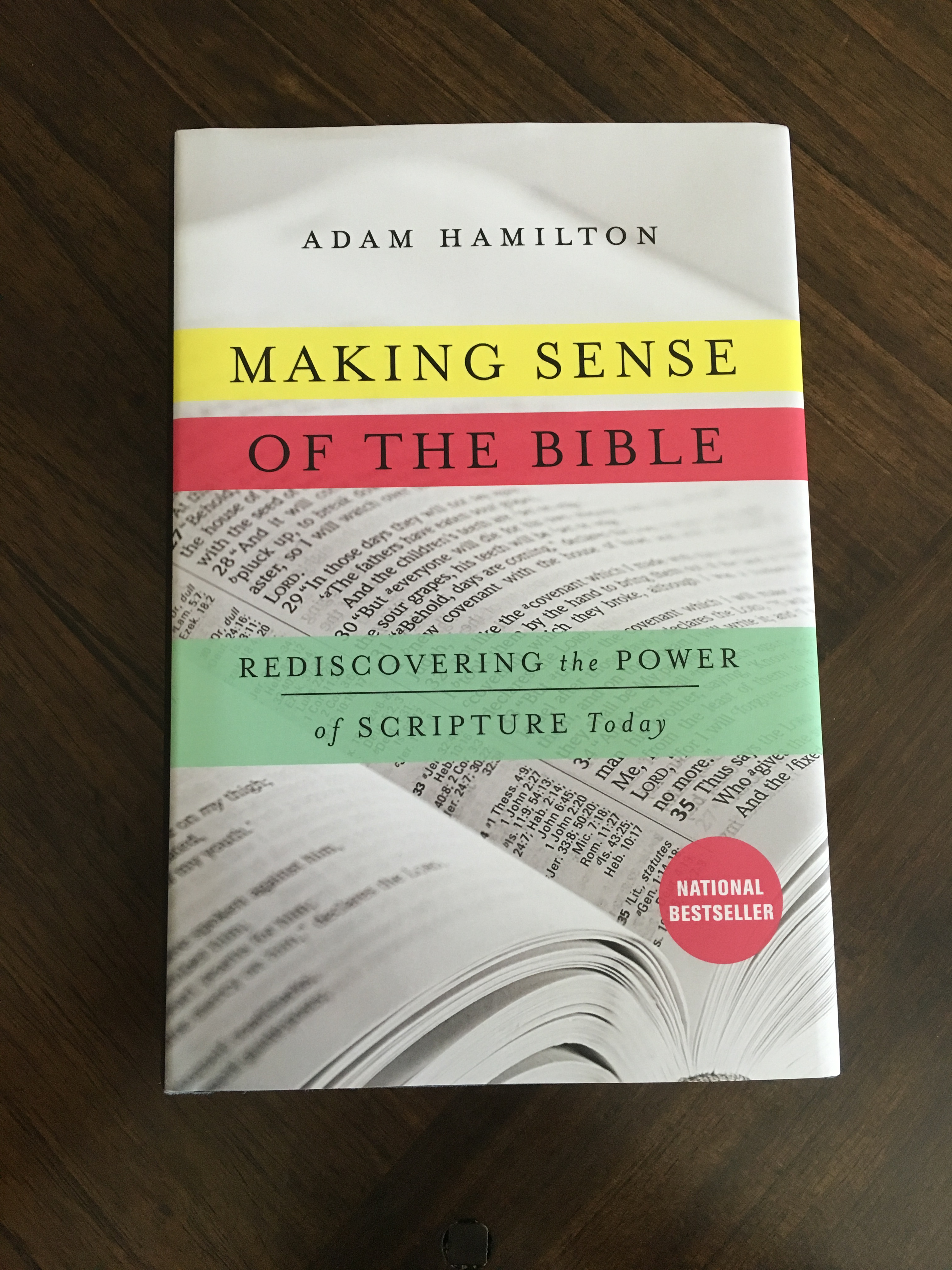
Some of the topics that he addresses are things like science and creation; the violence of God in the Old Testament; homosexuality; and the reliability of the Bible. He offers well-reasoned arguments for his thoughts on the subject but always with enough grace to make his words easy to read for even the staunchest of opponents. What I love about this book is that it offers Biblically-based answers to questions people ask who are not part of the church. Often these are the things they wrestle with that keep them from joining any faith community.
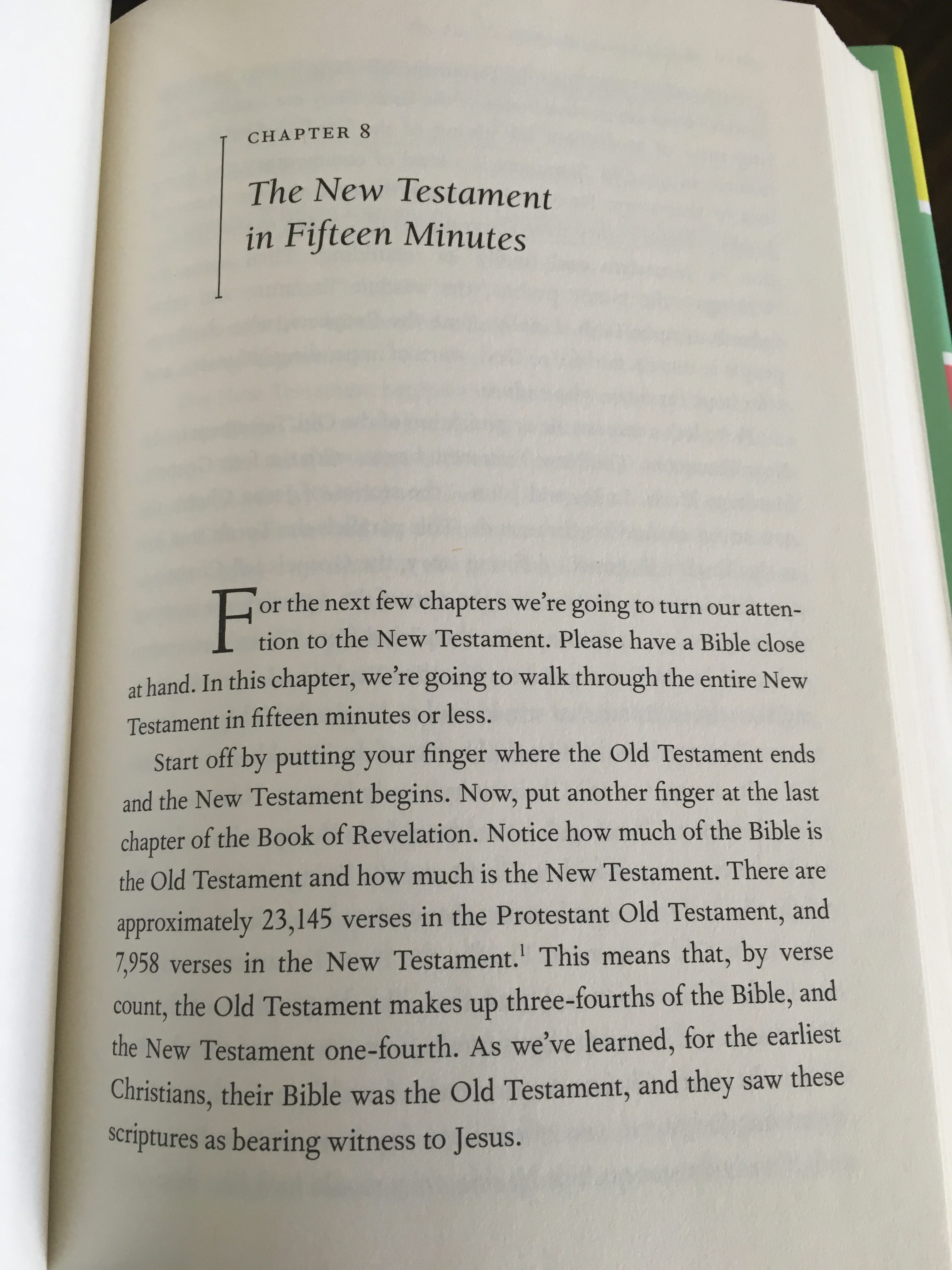
He also goes into depth about the Bible itself – how it was put together, which books made it in, and two of my favorite chapters, the Old and New Testaments in Fifteen Minutes. He clears up for many some of the complexities about the Bible and helps both long-time church-goers and people exploring their faith for the first time to take a nice, long look at what we consider to be the most Holy book in Christianity. There are many misconceptions about the Bible, about what it says, and about how it is interpreted. Hamilton offers a compelling way to look at it that is grounded in sound theology AND a pastor’s heart.
I also appreciate the humble way he approaches the topic. In the introduction he writes, “Am I right in everything I say in this book? I’m certain I’m not. But the book is an attempt to honestly wrestle with the difficult questions often raised by thoughtful Christians and non-Christians concerning things taught in the Bible (p.5).” His examples come from a wide range of experiences. He talks about everyday people who have challenged his own perceptions of Scripture and admits that he too wrestles with its words. Reading it, I found myself nodding my head so often, hearing my own questions being addressed.
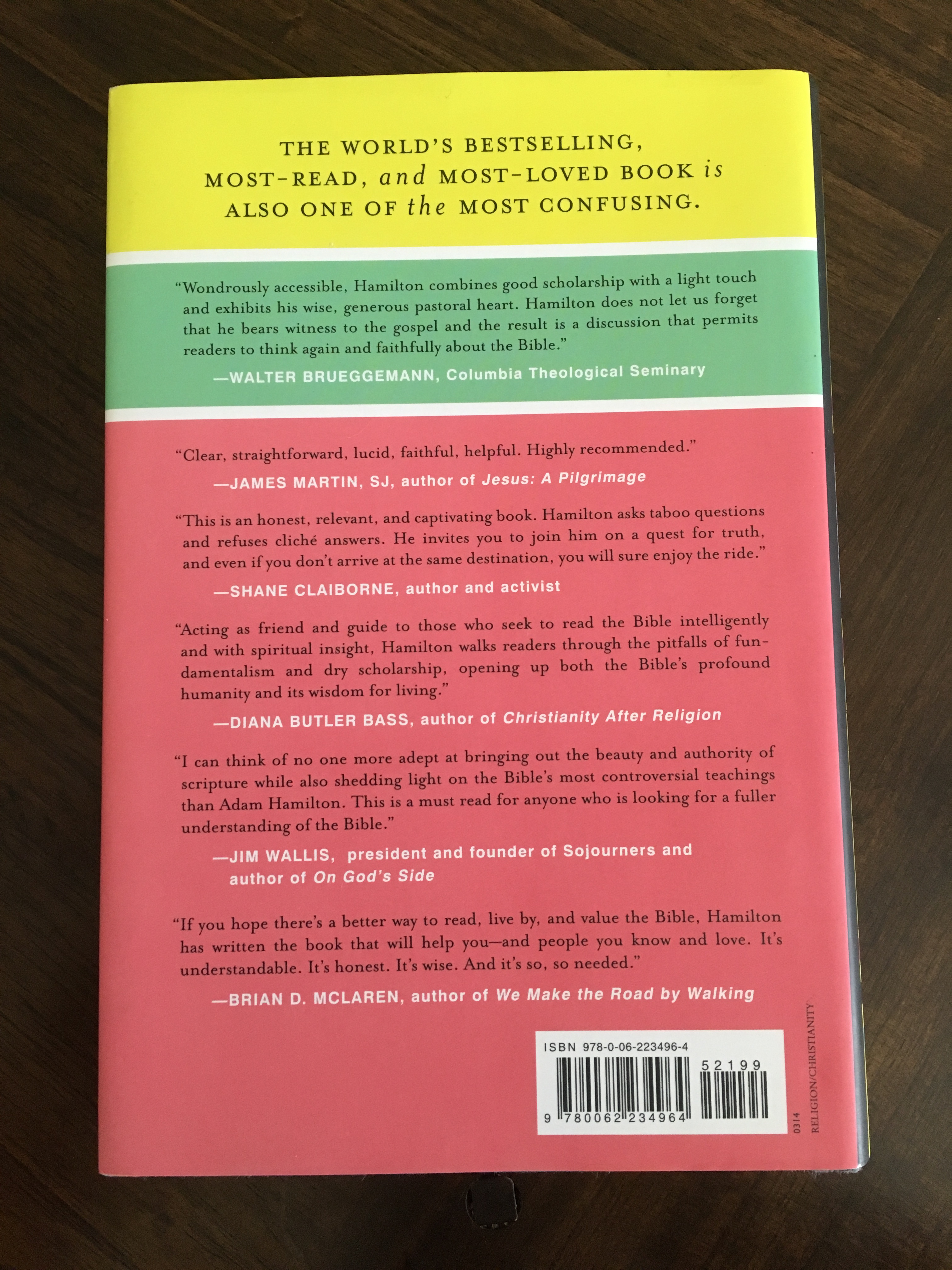
Making Sense of the Bible is a great book to base a sermon series on or for an indepth group study together.
Title: Making Sense of the Bible
Author: Adam Hamilton
Cost: $21.99
Age: Adult
Publisher: Harper One
Genre: Bible / Spiritual Growth
The Big Bang Theory of God

How did they feed the animals on Noah’s ark?
I can’t help it. I have questions. I love a good story as much as the next person, but when something doesn’t make sense, it bothers me and the story of Noah’s ark always left me with some doozies. Like this one. How did they feed the animals on Noah’s ark? Most of us believe Noah and his family (and all the animals) were on the ark for 40 days and 40 nights, but according to the Bible it was actually about 370 days in total.[1] That is a LONG time to be trapped on a boat full of every animal known to humanity. The smell must have been horrible. But I have more questions. Did they really have enough space for two of every animal? How did they deal with the problem of genetic inbreeding? How did Noah and his family stop the animals from eating each other? Who “cleaned up” after them? It’s these kinds of questions that drive a wedge between science and religion. We have grown to believe the two are somehow incompatible. That to believe in one means a person couldn’t logically believe in the other. That unless people who believe in the Biblical story of creation can answer these questions, then it must not be true. Well, I think I found an answer to at least one of those questions and it came from the TV show, The Big Bang Theory. Sheldon’s mother, Mary is in town to see her son get an award for a scientific paper he wrote. Mary (a devout Christian) tells her son (a self-avowed atheist) that she couldn’t quite understand what it was he was trying to explain, and he told her, “It describes a new model of the universe that conceptualizes it as an ‘N’-dimensional super fluid.” And she responds, “Interesting. You can believe that, but God filling an ark with animals two-by-two is nonsense.” Sheldon’s derision is almost palpable as he asks, “What did they feed the lions mother?” And Mary, sharp as a tack responds, “The floating bodies of drowned sinners.” Score one for Mary.
The debate between creation and evolution has gone on ever since Darwin.
And it’s still one that goes on today. You might find it surprising to know that most people believe God had a hand in creation. Seventy-eight percent of people believe God has a hand in the creation of human beings. 78%! And of that 78%, over half believe God created human beings as fully formed people free of evolution. According to a Gallup poll cited in Adam Hamilton’s book Making Sense of the Bible the numbers break down like this: 46% of Americans believe people were created by God without evolution, 32% believe human beings evolved by God’s guiding hand, and only 15% believe that evolution alone accounts for the development of humanity.[2] But even though most people believe God had a hand in human development, we have a number of different theories on how that came to be. On one end of the spectrum, Young Earth Creationists believe in a literal interpretation of the Bible and date the Earth as only 6,000 years old. They use the genealogies in the Bible to help come up with that number. On the other side are those who believe in theistic evolution. And as the name implies, they believe that evolution is a tool that God used to develop human beings. This group generally accepts the scientific theory that the Earth is about 4.57 billion years old and that humanity evolved over the last 2 million years.[3] For them, evolution and Scripture are in harmony with one another, and what we read in the Bible isn’t inaccurate but just wasn’t made to be taken literally in how we understand time and creation.

But why is there this divide in the first place?
Today it seems as if this rift has been around forever, but that hasn’t always been the case. The church has always been a supporter of knowledge and had in the past been unafraid of education. They were among the first to support the university system. They often funded and founded colleges and universities around the world. Some of the most famous schools in our country where many noted scientists, doctors, mathematicians, and scholars have come from were established by the church. In fact, some of the greatest scientists in the world have been Christian – Copernicus, Galileo, Pascal, Newton, Faraday, Pasteur, and Kelvin just to name a few.[4] Today, Francis Collins, “a renowned geneticist and former director of the Human Genome Project,” even developed an organization he calls the BioLogos Foundation to bridge the gap between science and religion and to help people realize that neither one is a threat to the other.[5] So where is this debate largely coming from? From Christians more than anyone else.

For Christians, this isn’t just a matter of historical accuracy, but a test of their faith.
The debate about the authenticity of the creationist point of view has more at stake than bragging rights about who’s right. It’s about trusting in the Word of God. And as science continues to uncover more about the origins of the world, there are Christians who fear hearing these new ideas. They are afraid the evidence being presented will contradict the beliefs they’ve held their entire lives, and they forcefully push back against it. But as we will see, perhaps the premise we have started out with is faulty at its root. In Genesis 2, we read a more personal story about God’s active hand in creation and how he formed the world. Then he flooded the earth with water to create the land and the sea and after that created us. And in that passage, it wasn’t until he created man that he finished the rest of creation. After he molded man out of the earth, God created trees and flowers and rivers and animals and even involved man in the naming of the animals. And only then did God create woman. But within the Bible itself there rests a contradiction to this narrative. In the chapter right before this one, the Bible has a distinctly different account of creation.
6 And God said, “Let there be a vault between the waters to separate water from water.” 7 So God made the vault and separated the water under the vault from the water above it. And it was so. 8 God called the vault “sky.” And there was evening, and there was morning—the second day.
9 And God said, “Let the water under the sky be gathered to one place, and let dry ground appear.” And it was so. 10 God called the dry ground “land,” and the gathered waters he called “seas.” And God saw that it was good.
11 Then God said, “Let the land produce vegetation: seed-bearing plants and trees on the land that bear fruit with seed in it, according to their various kinds.” And it was so. 12 The land produced vegetation: plants bearing seed according to their kinds and trees bearing fruit with seed in it according to their kinds. And God saw that it was good. 13 And there was evening, and there was morning—the third day. – Genesis 1:6-13
That was only the third day of creation.
Do you remember when humanity was created? The sixth day. It wasn’t until the end of the week that God created both male and female in his image. Before that he created the heavens and the earth, the land and the water, the plants and the animals. In this version of creation, humanity was the last thing to have been created – but in the very next chapter we find out that man was created not long after the earth was formed and BEFORE all the plants and animals. Both of them can’t be right. These two stories directly contradict one another, and they are right there at the very beginning of the Bible! Either humanity was created before or after the plants and animals, but it can’t be both. And don’t get me started on talking snakes. When you really examine these stories, it becomes harder and harder to defend a literal point of view. But maybe we don’t need to. Maybe we should focus on what God is trying to tell us instead of worrying about the details.
One of my favorite movies of the year was The Six Triple Eight.
It’s a film based on the true story of the first and only all-Black and all-female battalion stationed in Europe during World War II. I highly recommend it. It is a story of faith and grit and perseverance that will move you to tears and give you hope in the human condition. You’ll watch it and think, “I can’t believe this is true!” But it is. Now, is everything true? Is every last detail as it actually happened when Captain Charity Adams was in charge of the Six Triple Eight? Of course not. You all know how it is. “Based on a true story” means only that. Some parts are highlighted, some parts are deleted, and some parts are changed to make the story cohesive. But did you walk away from it with a better understanding of the monumental accomplishment these women performed? Yes, you did. Did you get a better idea of the racism and sexism and poor living conditions they had to suffer through and overcome just to serve their country? Yes, you did. Did the fact that not everything was exactly the way it happened in real life detract from the film? Not at all. Now, if you sat there with a fine-tooth comb and picked it apart, you’d find those inconsistencies. But if you’re focusing on the nitty gritty, you’re missing the point. You’re losing the forest for the trees. The Bible is many things, but it’s not a history book. Paul shares with us very clearly what it is supposed to be, “For everything that was written in the past was written to teach us, so that through the endurance taught in the Scriptures and the encouragement they provide we might have hope (Romans 15:4).” Don’t lose the forest for the trees. Use your eyes and ears to understand what God is trying to tell you.
Long ago, I came to the conclusion it just doesn’t matter how the Earth was created.
I believe God is the ultimate creator and I believe he created the Earth and everything in it. How he did it? I don’t care. Because it’s not important. If he chose to do it through evolution, great! If he spontaneously created everything all at once, great! How God did it doesn’t change my faith in him, and I hope it doesn’t change yours either. The Bible is our own understanding of the story of God and the bottom line is this. Love God, love one another. If we could hold on to those truths and stop arguing about the rest, we could possibly become the kind of people God keeps hoping we will be someday. Remember, it isn’t about history. It’s about His story.
[1] Some say 371 but close enough. https://www.gotquestions.org/how-long-was-Noah-on-the-ark.html This site says around 450 days: https://ncse.ngo/yes-noahs-flood-may-have-happened-not-over-whole-earth Regardless, it was a really long time!
[2] Adam Hamilton, Making Sense of the Bible, p. 188.
[3] Notes on Young Earth Creationists and evolution come from Hamilton’s boo
[4] https://carm.org/is-christianity-anti-science
[5] http://content.time.com/time/nation/article/0,8599,1895284,00.html Also, https://biologos.org/
If It Wasn’t For Mom…

Where would we be without our moms?
Nowhere. Even if you didn’t have the best mom, you could at least say one thing – she brought me into this world. That alone should be an accomplishment worthy of recognition. Giving life to a child, enduring not only labor but the nine months leading up to it is a sacrifice we don’t often appreciate as much as we should. I know our moms do it out of love, but still, it’s a pretty amazing sacrifice. Now the truth is, most of us believe we have the best mom or at least right up there in the top 10. Just for putting up with me alone, my mom deserves top 5 status. Growing up I thought I knew everything, but I look back now and wonder how my mom didn’t strangle me on a daily basis. I guess I can credit that to a mother’s love, too. And it is amazing how most parents seem to have a never-ending supply of it. Having more kids doesn’t deplete the well. Instead, the well just grows bigger. In that way, our love for our children mirrors God’s love for us. Just as God is our parent in Heaven, so our parents share that same love with us. It’s the strongest kind of love there is.
If you look in the Bible, you see so many examples of this type of motherly love.
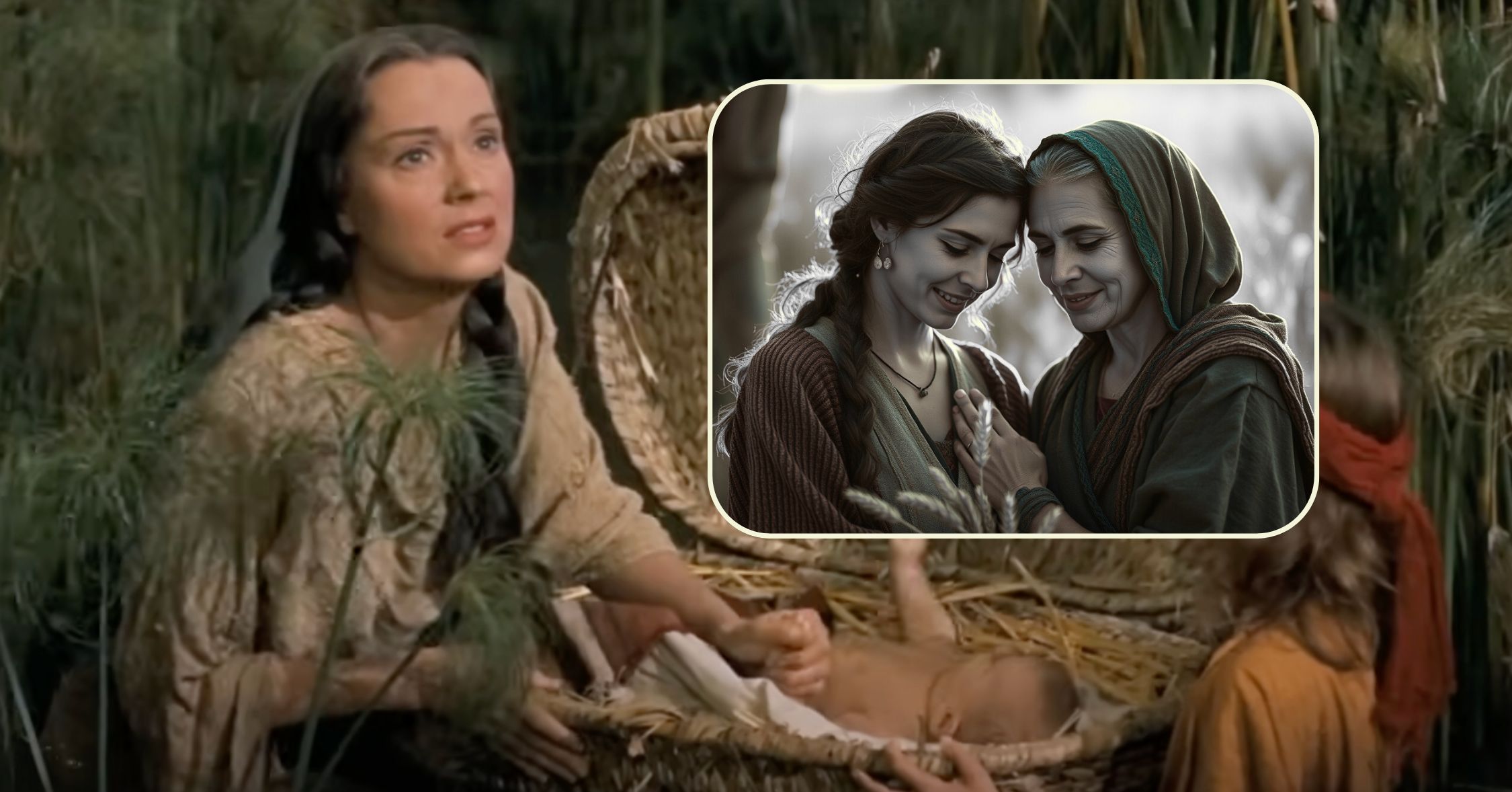
In Genesis we see Jochebed, the mother of Moses not only giving up her child for the chance for him to live, but then purposely making herself a servant in the princess’ household so she could be with him. Naomi loved her two daughters-in-law so much, she released them from their duty to her when her sons died tragically, even though it meant she would likely live in poverty for the rest of her life. She knew their best chance was to abandon her and she wanted what was best for their lives over her own. Then there’s the story about the woman in King Solomon’s court. Her child was stolen from her by a jealous and bitter woman whose own baby passed away in the night. Without a clear way to tell who was lying, King Solomon tried something tricky and offered to settle their dispute by sacrificing the child so that neither one could have him. The mother instantly said she would give up her claim if only the king would allow the baby to live. And in the New Testament we hear the story of the Canaanite woman who comes before Jesus, crying out for mercy. Her daughter is suffering, and she comes begging for help. Eventually, Jesus recognizes this woman’s great faith and takes mercy on her, curing her daughter. All of these mother’s stories have a similar theme – self-sacrifice. They were willing to sacrifice their own security, happiness, or well-being for the sake of their children.
Mary was the same way.
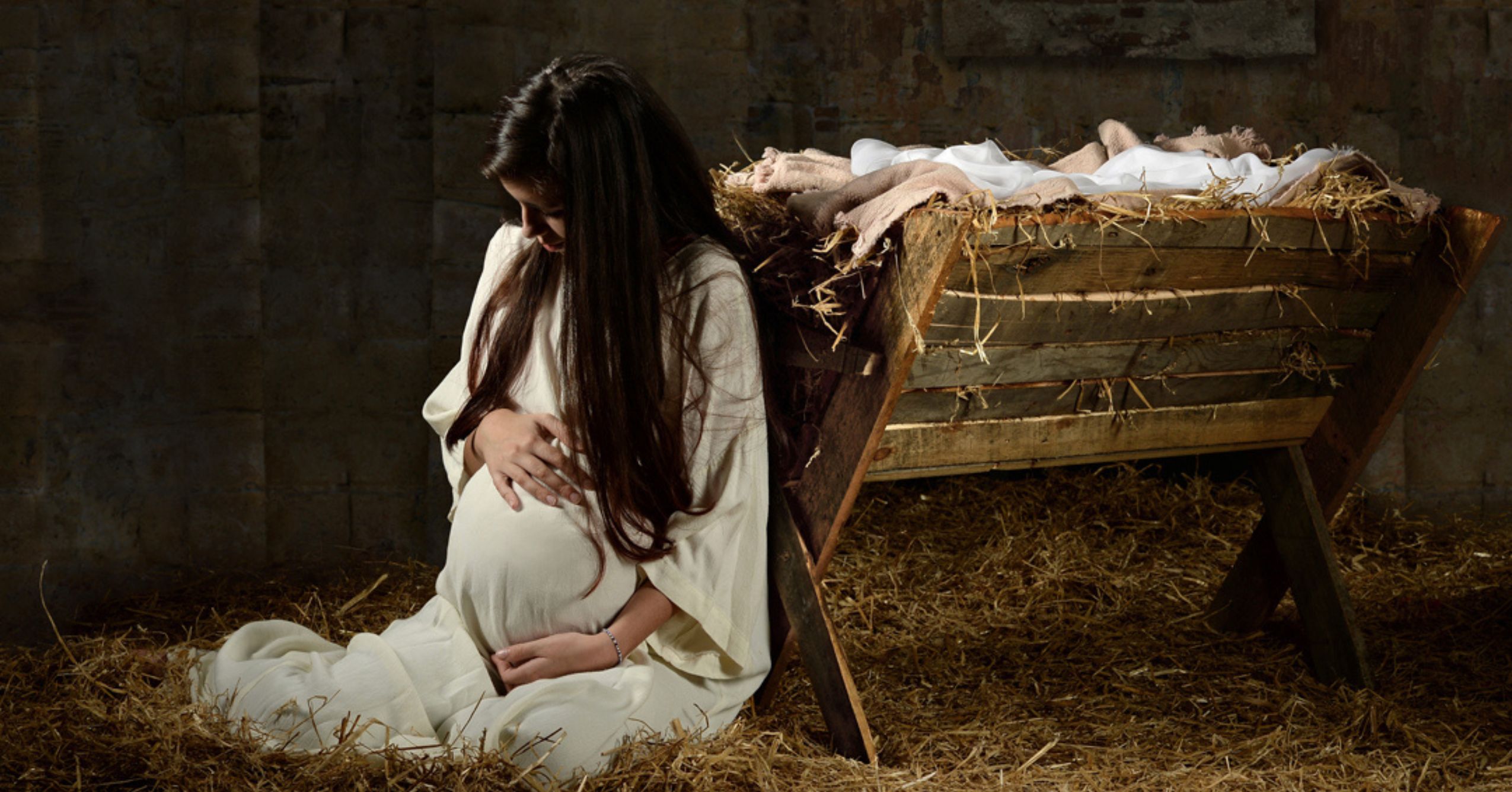
Mary had a lot to lose becoming the mother of Jesus. We look back now and see what an amazing honor it was to be chosen for this role, but back then there was a lot at stake. Right before Mary is pregnant, we read that Mary’s cousin, Elizabeth, was also pregnant, itself a miracle considering Elizabeth’s advanced age. But God had graced Elizabeth with a son, and she would soon give birth to the man we know as John the Baptist. Mary, however, had no immediate plans to be pregnant. So, everything that’s about to happen is going to come as a big surprise.
26 In the sixth month of Elizabeth’s pregnancy, God sent the angel Gabriel to Nazareth, a town in Galilee, 27 to a virgin pledged to be married to a man named Joseph, a descendant of David. The virgin’s name was Mary. 28 The angel went to her and said, “Greetings, you who are highly favored! The Lord is with you.”
29 Mary was greatly troubled at his words and wondered what kind of greeting this might be. 30 But the angel said to her, “Do not be afraid, Mary; you have found favor with God. 31 You will conceive and give birth to a son, and you are to call him Jesus. 32 He will be great and will be called the Son of the Most High. The Lord God will give him the throne of his father David, 33 and he will reign over Jacob’s descendants forever; his kingdom will never end.”
34 “How will this be,” Mary asked the angel, “since I am a virgin?”
35 The angel answered, “The Holy Spirit will come on you, and the power of the Most High will overshadow you. So the holy one to be born will be called[b] the Son of God. 36 Even Elizabeth your relative is going to have a child in her old age, and she who was said to be unable to conceive is in her sixth month. 37 For no word from God will ever fail.”
38 “I am the Lord’s servant,” Mary answered. “May your word to me be fulfilled.” Then the angel left her. – Luke 1:26-38
This would have been a tremendous burden for Mary.
To be willing to carry a child that was not from her husband would be a disgrace in the eyes of the community. And since they had never been together, Joseph would know it was not his child and would have every reason to leave her, and from Matthew’s version of the story, Joseph originally intended to do exactly that but was convinced to stay by an angel of the Lord. Still Mary couldn’t count on an angel to come and intervene. If Joseph had left her, it was likely she never would have been married. Because of the society they lived in, she would probably have been destitute and would need to rely on the mercy of others to provide her with food and clothing. Her life as she knew it would take a drastic turn for the worse. But she accepted her role with grace and trusted in God to make everything right. That’s what makes this story so amazing. She was willing to sacrifice so much for this child and her faith in God.
It’s that kind of sacrifice that reminds us of Christ.
Just as a mother is willing to sacrifice her life for the child she loves, so too does Christ love us. That he was willing to give his life for all of us is a testimony to the love we see from parent to child. A mother’s life is often one of sacrifice. When we look again at Mary’s life not only did she risk much to give birth to Jesus, but she stood by him even at his death. She was one of the few who remained by Jesus’ side in his final moments, and despite the ridicule he suffered, the abandonment of even his closest friends, she would not abandon him. The pain and difficulty of seeing her son in those final moments must have been heart-rendering. But she did it out of love for her child. Because that’s what a mother does. She is willing to sacrifice herself for her children just as God does for us.
Mary fittingly is one of the cornerstones of our faith.
Not only because she was the mother of the Christ child, but because of her own example of faithfulness and self-sacrifice to God. Looking through the Bible and reading through the history of the church, mothers have been vital in the development of the faith, both on a personal level and as a mirror of the self-sacrifice of Christ. Think about the mothers we talked about today – not only Mary, but Jochebed, Naomi, the woman in King Solomon’s court, and the Canaanite woman. Their actions were all based on love and self-sacrifice. The same kind of love and self-sacrifice that God has shown to us through his son Jesus. As parents, when we are at our best, we are a reflection of the love of Christ.
When the Bible says we are created in his image, this is what it meant.
That we are built for love. That it is in our nature to love and in its purest most Christ-like form to think of others before ourselves. A mother’s instinct for love and self-sacrifice is because we are created in his image. But as creatures of free choice, we don’t always make the wise decision. Not all of us are blessed to have a mother who loves us the way we deserve or that she was created to be. So, if you have a mother in your life who has given you this kind of love, whether she is your biological mother, your adopted mother, or your surrogate mother, remember to give thanks to her and thanks to God for the way he created us.
Slingshot 2.0

The most successful people in the world are unafraid of change.
To be fair, they may have been afraid, but they overcame their fear in the hopes of something better! They dared to be different. To do things outside of what others considered “normal.” By the way, “normal” is overrated. Different isn’t always popular. Different can be risky. Different means going against the status quo. But it also means looking at a situation in a new way. It means approaching a problem with a fresh attitude. And often that’s what it takes to make the next big step, to evolve into something MORE. Because when the old tried and true methods no longer work, we need the courage to do something different. Take for example, Billy Beane. Billy Beane was different. As general manager of the Oakland A’s, he threw nearly a century of “baseball wisdom” out the window and recruited a group of players using a system called sabermetrics which relied on data instead of traditional scouting techniques. He was ridiculed, criticized, and belittled in the press. The fans, other owners, even his own scouts were against him. They said it would never work. But under his leadership the Oakland A’s were able to field a tough, competitive team with comparatively very little money. In 2002, the year they implemented the system, the A’s had the third lowest payroll in all of baseball with only $39.7 million.[1] Yet they won an American League record 20 consecutive games and tied for most wins in all of baseball with a record of 103-59. The only other team with as many wins was the New York Yankees whose payroll was more than three times that of the A’s.[2] What Billy Beane did changed the face of baseball and still resonates today. When they make a movie of my life, I hope they get Tom Cruise. Brad Pitt is great, but I think me and Tom have more in common. There are still some who cling to the old ways of scouting, but most teams today incorporate at least some of the principles Beane adopted nearly 25 years ago. It even helped the Boston Red Sox break the Curse of the Bambino in 2004 to win its first World Series in 86 years. Billy Beane did things differently and it worked.
Today, in our reading, we’re going to look at another person who did things differently.
That would be King David. Or David as he is simply known at this part of his story. This is a story you are familiar with. Even if you’ve never read the Bible, you probably know about this event in David’s life. We’re going to read a portion of the story of David and Goliath. At the beginning of the story, the Israelites and the Philistines are gathering for war. The Israelites are on the top of one hill and the Philistines on another. And in the midst of this, a man named Goliath comes forward from the Philistine’s camp and issues a challenge to the Israelites. If one of the Israelites can best him in one-on-one combat, the Philistines will become the willful servants of the Israelites. But if Goliath can beat the Israelites’ champion, they must become the willful servants of the Philistines. Probably neither side would just give up that easily, but Goliath’s taunt did exactly what he hoped for. It created fear in the hearts of the Israelites. Not a one of them thought they could go toe-to-toe with Goliath. As you know Goliath was one of the Philistine’s champions and he was HUGE! Guinness Book of World Records huge. Early manuscripts have him at about seven feet tall, but the Bible says he stood at 9’ 9” which would beat any other record by about a foot! For forty days, Goliath came out and waited for someone from the Israelites to come challenge him. That’s where David comes in. Jesse sent David to the front lines to bring supplies to King Saul and to see how his sons were doing. When David gets there, he sees the Israelites in fear of Goliath and when he is brought before the king, David volunteers to fight Goliath. Saul tells David he doesn’t stand a chance and that’s where we pick up our story today.

34 But David said to Saul, “Your servant has been keeping his father’s sheep. When a lion or a bear came and carried off a sheep from the flock, 35 I went after it, struck it and rescued the sheep from its mouth. When it turned on me, I seized it by its hair, struck it and killed it. 36 Your servant has killed both the lion and the bear; this uncircumcised Philistine will be like one of them, because he has defied the armies of the living God. 37 The Lord who rescued me from the paw of the lion and the paw of the bear will rescue me from the hand of this Philistine.” Saul said to David, “Go, and the Lord be with you.”
38 Then Saul dressed David in his own tunic. He put a coat of armor on him and a bronze helmet on his head. 39 David fastened on his sword over the tunic and tried walking around, because he was not used to them. “I cannot go in these,” he said to Saul, “because I am not used to them.” So he took them off. 40 Then he took his staff in his hand, chose five smooth stones from the stream, put them in the pouch of his shepherd’s bag and, with his sling in his hand, approached the Philistine.
50 So David triumphed over the Philistine with a sling and a stone; without a sword in his hand he struck down the Philistine and killed him. 51 David ran and stood over him. He took hold of the Philistine’s sword and drew it from the sheath. After he killed him, he cut off his head with the sword. When the Philistines saw that their hero was dead, they turned and ran. – 1 Samuel 17:34-40 and 50-51
David did what was different.
But maybe not the way you’re used to looking at it. We see this story as an incredible testament to the faith that David had in God, and it is. It’s a story of great faith. Here is this young man with basically no training whatsoever who comes to the battlefield and decides to take on this nearly ten foot giant because he insulted the people of God. Now, everyone else in Saul’s army heard these same insults, but only David was moved enough to go out there and face Goliath. In all honesty, Saul probably thought this might be what was needed to motivate the troops, the death of a young Israelite at the hands of this giant. Maybe it would be enough to shame them into action and to find the bravery to face the Philistines. Or maybe he really did believe in David and that the hand of God was upon this young man. But either way, it was a testimony to David’s faith in God. But David did something else that is a lesson we need to hear. To make a difference, we have to do things differently. Take a look at this passage we just read and you can see that’s exactly what David did. David finally convinces Saul to let him face Goliath and after giving him his blessing, Saul gives David his very own tunic. Being the king, it was probably the best protection money could buy. He gave him armor and a helmet, but David told him, “I cannot go in these because I am not used to them.” Saul’s probably wondering what kind of protection David was going to wear since he didn’t come into camp with any. As it is, David would NEED some kind of protection if he hoped to survive even the first blow Goliath gave him. But David shed the armor and instead picked up a few stones and his slingshot and went into battle. And that’s it. Stones and a slingshot. Traditionally, men in one-on-one combat would bear down on each other in their armor and weapons and trade blows until one of them fell. It would be slow. Like two tree trunks swinging wildly at each other. Which is why David should have needed armor. But he knew he couldn’t defeat Goliath the traditional way. He would be slaughtered. So, David it differently. No armor meant he was extremely agile which he used to his advantage. He ran at his opponent, fired a stone at his head, the only part of Goliath’s body not likely covered with some sort of protection, and killed the giant. Had he been wearing armor he likely would have been so slow Goliath could easily have defended himself and killed David with a single blow. But David did it differently.
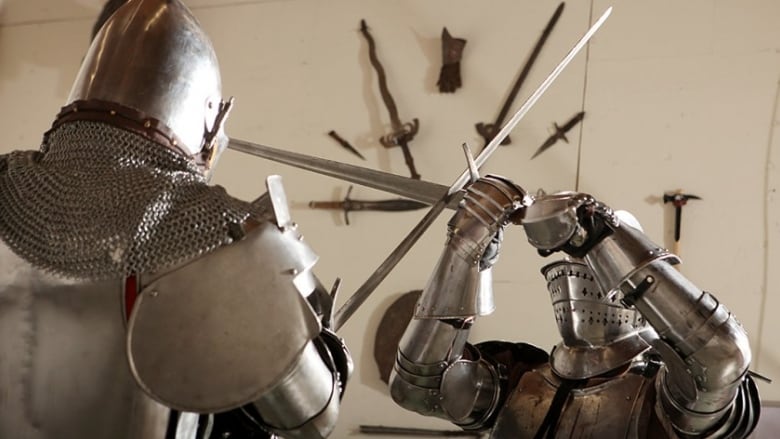
Ecclesiastes says “there is a time for everything and a season for every activity under the heavens.”
The trick is realizing when that time is up and when it’s time to do something different. Because as the world around us changes, we need to change, too. We need to adapt. We need to adjust to new circumstances. That’s not always easy, but sometimes it’s necessary. Look at the example of David. Had he fought Goliath in the traditional way, he almost surely would have been killed. But because he did things differently, he found a way to beat the odds. Businesses do this all the time. They are always trying to find something BETTER. Even when they are succeeding, they are always looking for that competitive advantage. Failure to adapt leads you to failure. Odds are its difficult to find any product the same way it was when you were a child. Even if the name is the same, it’s probably “new and improved.” Take for instance, Oreos or should I say the Oreo Chocolate Sandwich Cookie – its official name since 1974.[3] The Oreo cookie has saturated the market. Today they are the number one selling cookie in the world selling over 3 BILLION dollars worth per year – more than three times the amount of the next leading brand (Gamesa if you’re wondering).[4] But never one to rest on their laurels, Oreo has branched out and done any number of varieties of Oreo cookies. Double Stuf was the earliest variation coming out in 1974, Oreo Minis came out in 1991, and since then the flavors and varieties have kept on coming. They even released Gluten Free Oreos in 2021! Why bother when you are the number one cookie in the world? Because they want to stay that way.

In the same way, we need to examine where it is in our lives we might need to do things differently.
What isn’t working the way you hoped? What do you need to do differently to make it work? Maybe it’s something simple like our food choices. Maybe it’s how we relate to other people. Maybe it’s the path our career is taking us. Or maybe it’s where you feel God is calling you. Are you doing all you can to follow where God is leading you in your life, or do you hide behind the comfort and security of the familiar? Isn’t that so easy to do? It’s hard for us to step out in faith and do something different. We like staying with the tried and true – even if it’s not so tried and true any longer. But then we look at God’s example. God is the ultimate “doing something different” type of person. Jesus took death on the cross and turned it into new life. He took the symbol of utter despair and hopelessness and turned it into a symbol for life and hope instead. When Jesus was resurrected, he showed the disciples and ultimately the world that death was only a new beginning. The Israelites thought the savior of the world would come in triumph to destroy their enemies and lead them into a new existence. And he did. But not in the way they imagined. Jesus, like David, did something different. What will you do differently? This is a question we need to ask ourselves – both personally and even as a church. Churches all over the world are growing smaller, especially in countries like the United States. Often, it’s because the world around us keeps changing and we struggle to keep up. We fight against change because we like the comfort and security of the familiar. But without change, without growth, we fail to meet the needs of the people around us – the people who need to see God is alive and relevant to who they are. How can you contribute to God’s Kingdom? Maybe inviting a friend. Maybe by giving more of your time, talent, gifts, service, and witness. Pray on it and ask God what he would like you to do differently – and do it. Personally, I want to challenge you to do something different. Try a new vegetable. Exercise more. Eat a new food. It may make little difference, or it could change your life. Who knows? You won’t…until you do something different.
[1] http://www.baseballchronology.com/Baseball/Years/2002/Payroll.asp
[2] http://en.wikipedia.org/wiki/2002_Major_League_Baseball_season
[3] https://www.thoughtco.com/history-of-the-oreo-cookie-1779206
[4] https://www.statista.com/statistics/420561/global-cookie-market-sales-of-the-leading-brands/
 Craig's Corner