
Believing the Unbelievable
How do you tell truth from fiction?
Sometimes it’s easy, sometimes…it’s complicated. Truth can be fictionalized like we see in the movies and on television. “Based on a true story” simply means some aspect of what you are about to see happened in some way but it doesn’t mean everything you see is factual. On the other hand, fiction can be peppered with truth. The Big Bang Theory is a television show based on completely fictional characters, but the science they talk about is real.[1] When you see equations on the white board in Leonard and Sheldon’s apartment, someone has actually gone over those equations to make sure they check out. Our concepts of truth and fiction are constantly being challenged, not just in movies and television but in real life. As our knowledge expands, so does our understanding of the world and sometimes that means shattering long-held beliefs. We once thought the sun was the center of the universe. We once thought the Earth was flat. We once thought the atom was the smallest unit of matter in the universe. Now we know that an atom is about 10,000 times bigger than an electron.[2] In a world where truth and fiction are more thinly separated than we are sometimes aware, what can we believe? What is the truth?

Growing up, I wanted to be a Knight of the Round Table!
Chivalry, honor, daring deeds, fighting the good fight. These are the stuff legends are made from. And indeed King Arthur is often considered a legend, a story regarded as historical but unauthenticated or at least disputed.[3] A legend is a story regarded as historical but unauthenticated. While there are references to a King Arthur in legitimate records of history, they are few and far between and most historians question whether he really existed, let alone believe the fantastic tales that are told about him. But it’s those fantastic tales that make Arthur worth believing in! It is prophesied in the hour of Britain’s greatest need, Arthur will return. Sounds a bit like our belief in the return of Jesus Christ. So, is Jesus real or is he just a legend, too?
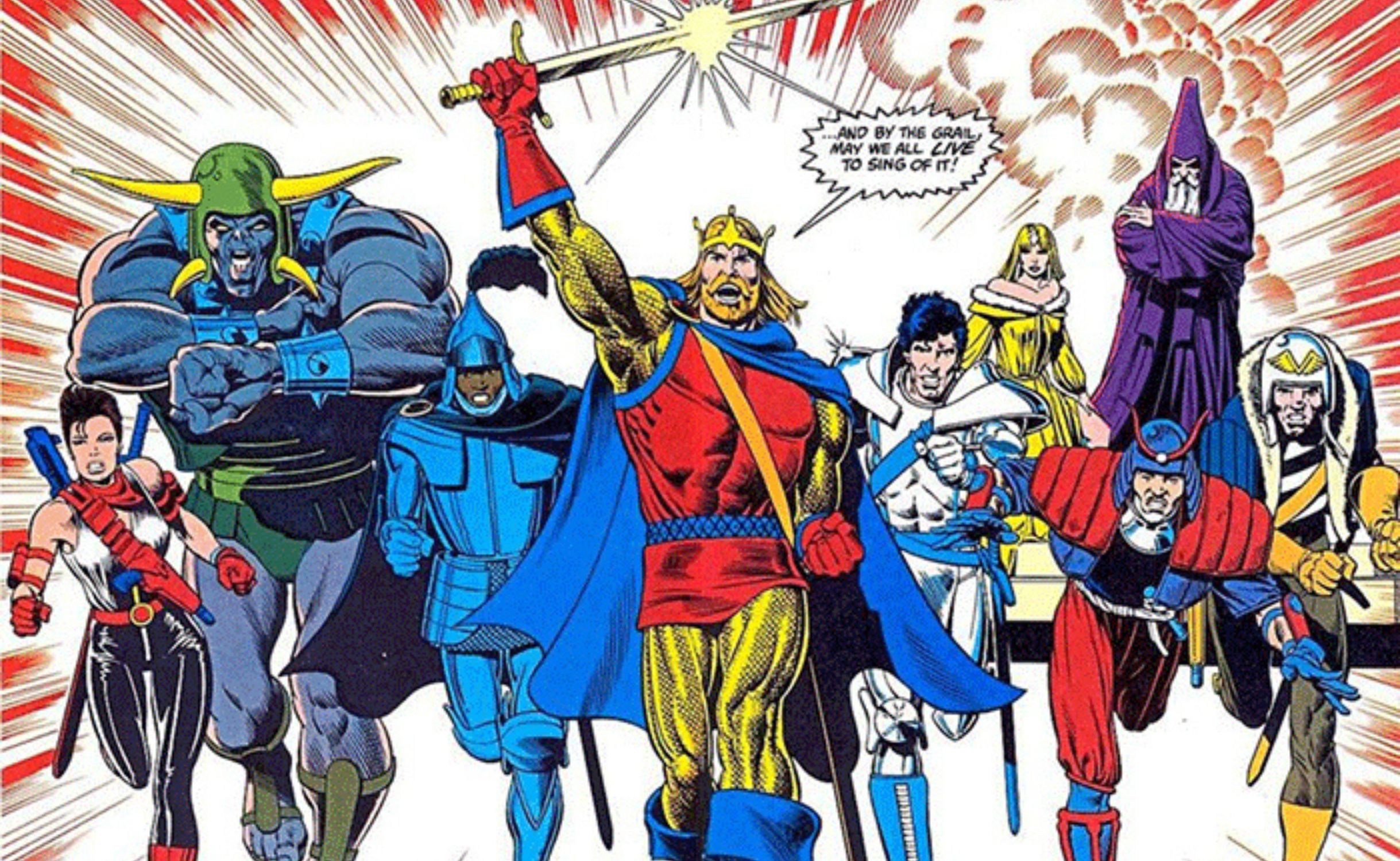
We can understand why people have doubts about the reality of Jesus.
Some of the stories of Jesus are so fantastic as to defy belief, one of which we are going to share this morning. Now what we are about to hear is the story of how Mary was chosen to be the mother of Jesus. But before that happens, we find out her cousin Elizabeth was also pregnant. What makes Elizabeth’s pregnancy even more remarkable is her advanced age. Yet, the angel, Gabriel, comes to deliver a message of hope to the couple. They will have a child, and this child will be the herald of the Lord, and he will be called John. We know him as John the Baptist. Six months into the pregnancy, the same angel goes to visit Mary and that’s where we pick up the Bible reading this morning.
26 In the sixth month of Elizabeth’s pregnancy, God sent the angel Gabriel to Nazareth, a town in Galilee, 27 to a virgin pledged to be married to a man named Joseph, a descendant of David. The virgin’s name was Mary. 28 The angel went to her and said, “Greetings, you who are highly favored! The Lord is with you.”
29 Mary was greatly troubled at his words and wondered what kind of greeting this might be. 30 But the angel said to her, “Do not be afraid, Mary; you have found favor with God. 31 You will conceive and give birth to a son, and you are to call him Jesus. 32 He will be great and will be called the Son of the Most High. The Lord God will give him the throne of his father David, 33 and he will reign over Jacob’s descendants forever; his kingdom will never end.”
34 “How will this be,” Mary asked the angel, “since I am a virgin?”
35 The angel answered, “The Holy Spirit will come on you, and the power of the Most High will overshadow you. So the holy one to be born will be called the Son of God. 36 Even Elizabeth your relative is going to have a child in her old age, and she who was said to be unable to conceive is in her sixth month. 37 For no word from God will ever fail.”
38 “I am the Lord’s servant,” Mary answered. “May your word to me be fulfilled.” Then the angel left her. – Luke 1:26-38
The virgin birth is one of the most unbelievable stories about Jesus.
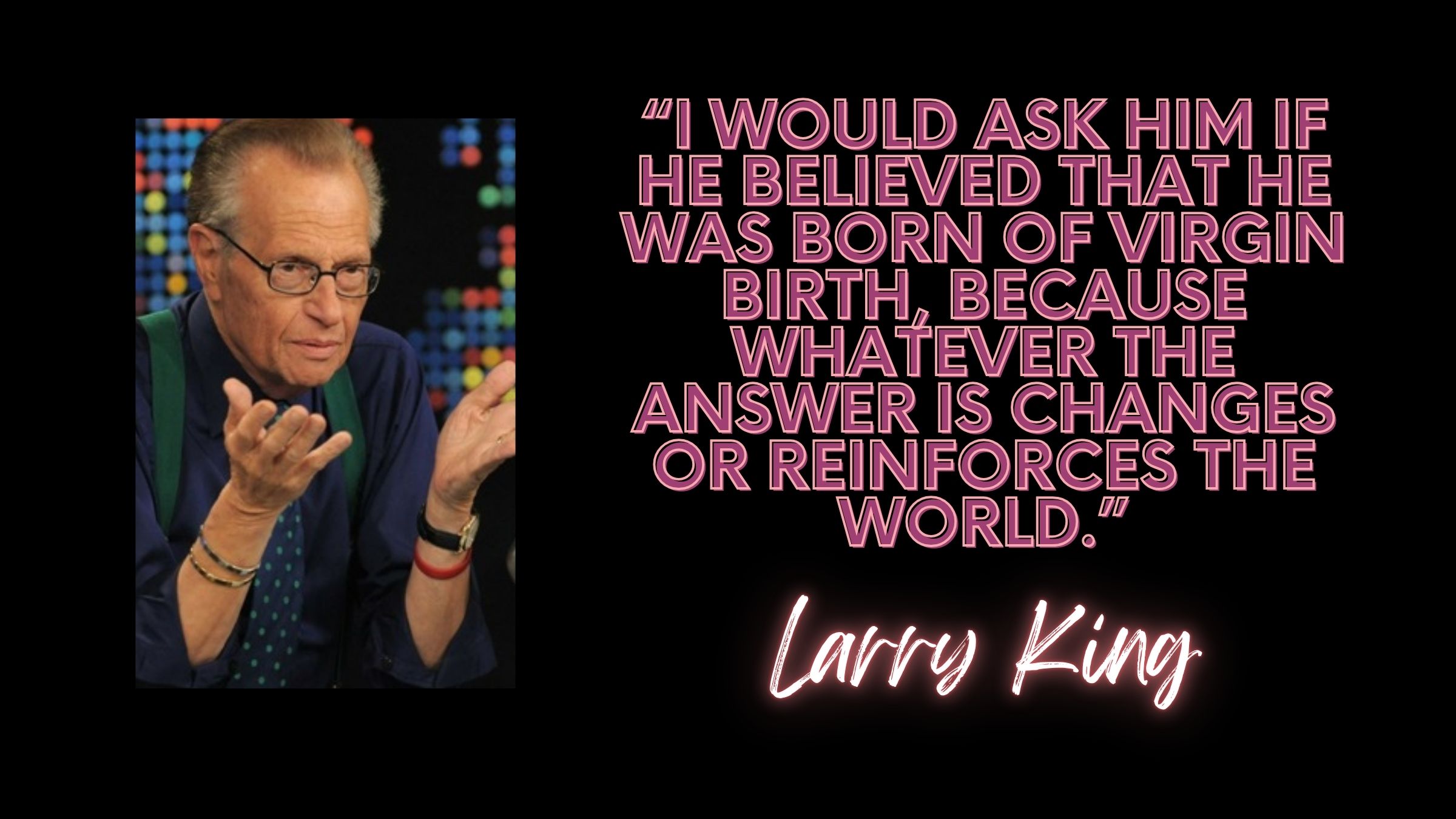
Next to the resurrection itself it is the hardest to swallow and it’s one of the reasons people have a hard time accepting Christ as Messiah. Even the famous CNN talk show host, Larry King said his fantasy interview would be with Jesus and he said, “I would ask him if he believed that he was born of virgin birth, because whatever the answer is changes or reinforces the world.”[4] Given what we know today, the virgin birth is impossible. But what do we know about the impossible? Would anyone have thought in vitro fertilization was possible until it happened? Today, Louise Brown, the first known IVF baby is 46 years old, married, and living in England with her husband and naturally born son.[5] Sarah, Isaac’s mom in the book of Genesis, was 90 years old when she conceived her first child. That seems impossible, too, but we get closer to making that a reality every day. A woman in India recently gave birth at the age of 73 breaking a record that was only set 3 years earlier.[6] Is it ethically the right thing to do? That’s a question we need to wrestle with as technology continues to advance, but the limits of what is and isn’t possible grows thinner every day. We don’t know the boundaries of the impossible.
Some believe the story of Christ is just another myth.
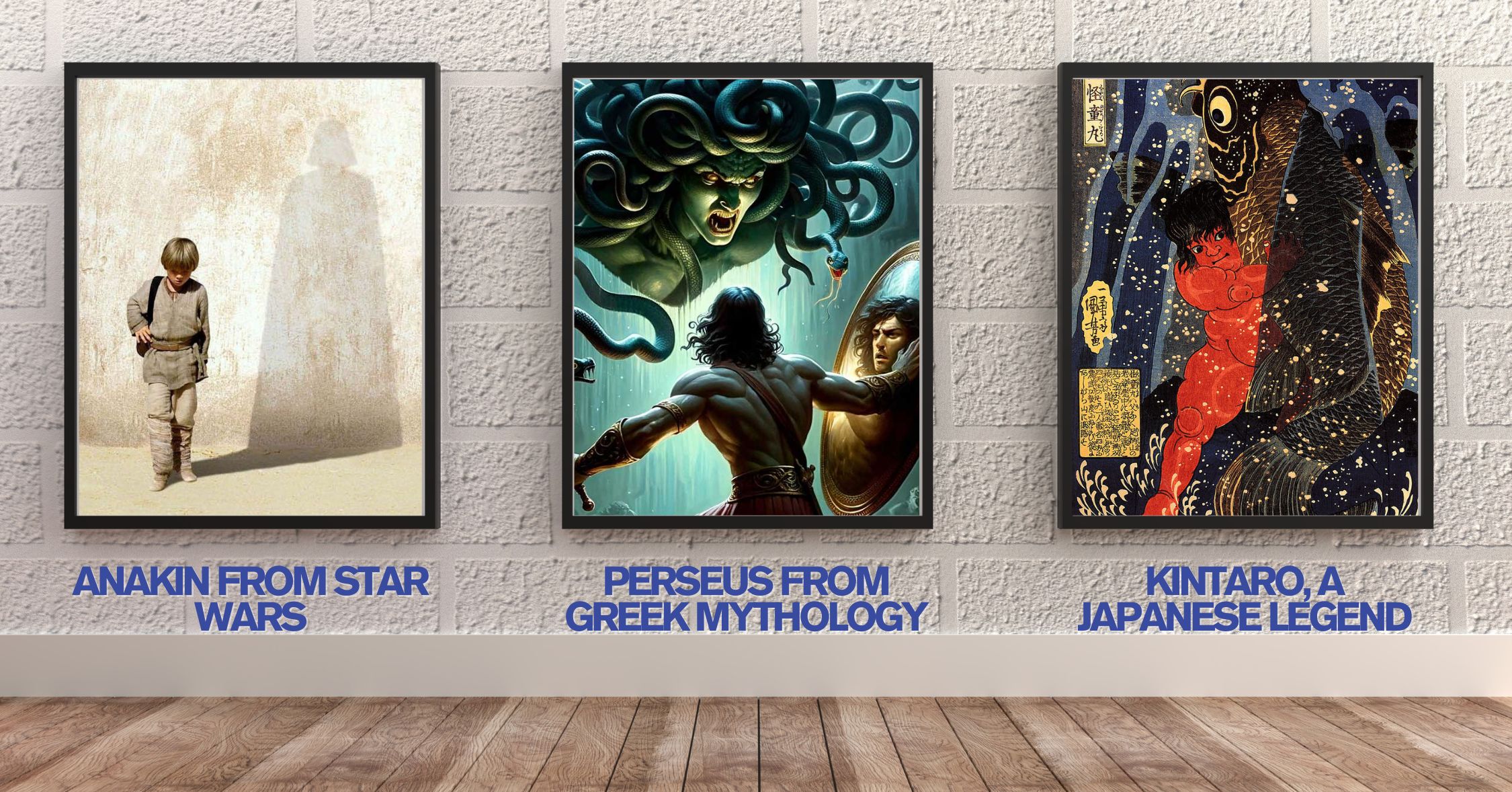
Other religions have stories about a miraculous birth like Jesus’. The concept of the divine entering the world is not new by any means. George Lucas used it in Star Wars: The Phantom Menace to describe Anakin’s birth, the boy who would become Darth Vader. When questioned about the identity of Anakin’s father, his mother Shmi simply said, “There was no father…I carried him, I gave him birth…I cannot explain what happened.” Many stories we consider myths talk about virgin births. Perseus in Greek mythology was born to Danae who was locked in a tower all her life specifically so she could not have children but still was impregnated by Zeus when he turned into a shower of gold that penetrated the tower walls.[7] Even in Japan, one of the legendary stories of Kintaro, the boy warrior, says that his mother Yama-uba was impregnated with a clap of thunder from a red dragon in Mount Ashigara.[8] Divine intervention in the birth of a child is a powerful symbol for divine purpose, and this theme is found not just in fiction, but in other religions as well. Both Krishna and Buddha are said to have orchestrated their own births. The deity of Vishnu from Hinduism is said to have descended into his mother’s womb much like God made flesh in Christ, and the “Great Being” from Buddhism was said to have imparted itself into a human woman to be born as the first Buddha. Neither one was necessarily a virgin birth but thought to be divine.[9] Even other historical figures are said to have been born by supernatural means – Pythagoras, Alexander the Great, even Plato.[10] With so many stories of supernatural birth out there, it would be easy for the skeptic to dismiss the story of Jesus as just another fanciful tale.
But for us, it’s more than just a story.
It’s historical fact. Yes, the story of Jesus shares elements with other supernatural births, but does that mean it isn’t true? Unlike other myths, there are multiple records of the virgin birth of Jesus. We forget the stories in the Bible were not written by one person, but by a number of people who themselves were witnesses to one of the most amazing events in history and the birth of Christ is recorded in multiple accounts. But apart from that, we also have evidence from the writings of the Qur’an and from the historian Josephus who attest to the birth, death and existence of Jesus. The Qur’an, the holy book of Islam, even goes so far as to acknowledge the virgin birth and the miraculous deeds of Christ. And unlike other myths and legends which change and shift over time, the story of Christ has remained the same for nearly 2000 years. Those are just some of the reasons why we believe the story of Jesus is more than fiction but fact, because of the evidence in favor of the story being real.
But no amount of evidence will ever convince some people.
Vaccine safety, climate change, the “deep state;” these are issues we still can’t agree on so why should religion be any different? To ask people to believe in someone as extraordinary as Jesus when they can’t even believe what they can see and experience with their own eyes is a hill too steep for some. But that does not mean we cannot reach these people? As it is written in Philippians 4:13, “I can do all this through him who gives me strength.” Or in Matthew 19:26 where Jesus tells the disciples, “With man this is impossible, but with God all things are possible.” For most of us, Christ comes alive not in the pages of a book, but in our lives through the love of God. Maybe it’s our parents or grandparents who reflected God’s love in their love for us. Maybe a pastor or a teacher who was there in our time of need. Maybe just a neighbor or friend who reached out in a meaningful way. It’s not the words in a book that make Christ come alive for us but how we love one another. As it says in 1 John 3:18, “Dear children, let us not love with words or speech but with actions and in truth.” That is when Christ moves away from just being another story to the living Gospel. It is when God becomes real in our own lives that the doubt and questions fade, and we can embrace the truth of Jesus for ourselves. Let us commit this Christmas season to live life more closely to where Christ is leading us. Let us be the candle in the darkness for those around us. And let the transformation of our lives by the presence of Jesus be the strongest proof of his existence.
[1] http://minnesota.cbslocal.com/2011/02/17/good-question-is-the-big-bang-theory-science-real/
[2] https://people.astro.umass.edu/~arny/jatoms_tut.html and https://www.fnal.gov/pub/science/inquiring/matter/
[3] https://www.google.com/search?q=legend&ie=utf-8&oe=utf-8&aq=t&rls=org.mozilla:en-US:official&client=firefox-a&channel=sb#rls=org.mozilla:en-US:official&channel=sb&q=legend+definition
[4] https://www.latimes.com/archives/la-xpm-1990-10-15-ca-2099-story.html
[5] http://en.wikipedia.org/wiki/Louise_Brown
[6] https://www.washingtonpost.com/world/2019/09/06/this-year-old-woman-just-gave-birth-twins/ and http://en.wikipedia.org/wiki/Pregnancy_over_age_50
[7] https://study.com/learn/lesson/perseus-greek-mythology.html
[8] http://en.wikipedia.org/wiki/Kintar%C5%8D
[9] http://en.wikipedia.org/wiki/Miraculous_births
[10] http://www.huffingtonpost.com/james-d-tabor/did-paul-invent-the-virgin-birth_b_2355278.html
Festivus for the Rest of Us
“A Festivus for the rest of us!”
George Costanza’s father shouted that line in a 1997 episode of Seinfeld. Frank Costanza, tired of the rampant commercialization of Christmas, decided to make his own holiday called Festivus. As he proclaimed, “A Festivus for the rest of us!” Instead of a Christmas tree, there was a Festivus aluminum pole completely unadorned because tinsel bothered George’s father. There was the traditional Festivus dinner, the Feats of Strength, and my personal favorite, the Airing of Grievances where you sat around the table and told everyone how they bothered you this past year. Festivus was meant to be a parody of the holiday season, but there are people today who still celebrate it as a holiday. A workplace with a very diverse group of employees decided to have a Festivus party to be inclusive of everyone’s beliefs. One guy at the office felt it was so blasphemous he tried to knock down the Festivus pole.[1] The lead organizer said, “Grievances were aired about him.” But he’s not the only one with a humbug attitude. Two groups, The Catholic League and the New York Board of Rabbis, joined together to condemn another made up holiday, Chrismukkah, saying it was “insulting” to both Jews and Christians.[2] Theologically you can make the argument the two are not compatible, but is that really the issue or is it us?
Sometimes, when we feel challenged, we become defensive.
And people can be awfully defensive about Christmas. But are we defensive for the right reasons? Christians protest when nativity scenes are taken down in public places. Some get upset when companies tell their employees to say, “Happy Holidays” instead of “Merry Christmas.” But we don’t seem too worried there are people who can’t afford to put food on the table or are living in the streets. Instead of focusing on the things Jesus would be concerned about we act as if somehow Christianity will cease to exist if it’s not being celebrated publicly. We forget that Christmas is a completely made-up holiday. For that matter, so is Advent.

People love opening Advent calendars.
But few realize it’s much more than just a countdown to Christmas. For Christians today, it’s a season of preparation for the coming of Christ. In fact, “Advent” literally means “coming.” But originally, it wasn’t about the birth of Christ at all. Instead, it was the six-week period leading up to the Epiphany and during that time followers celebrated all the aspects of Jesus’ early life up to the first miracle at the wedding in Cana. It would be another 200 years before it focused on the coming of Christ, but instead of the birth of Jesus, it focused on his second coming.[3] It would be another thousand years before it would become what we are familiar with today. For most of recorded history, Advent wasn’t about the birth of Christ at all.
Which, by the way, didn’t happen on December 25th.
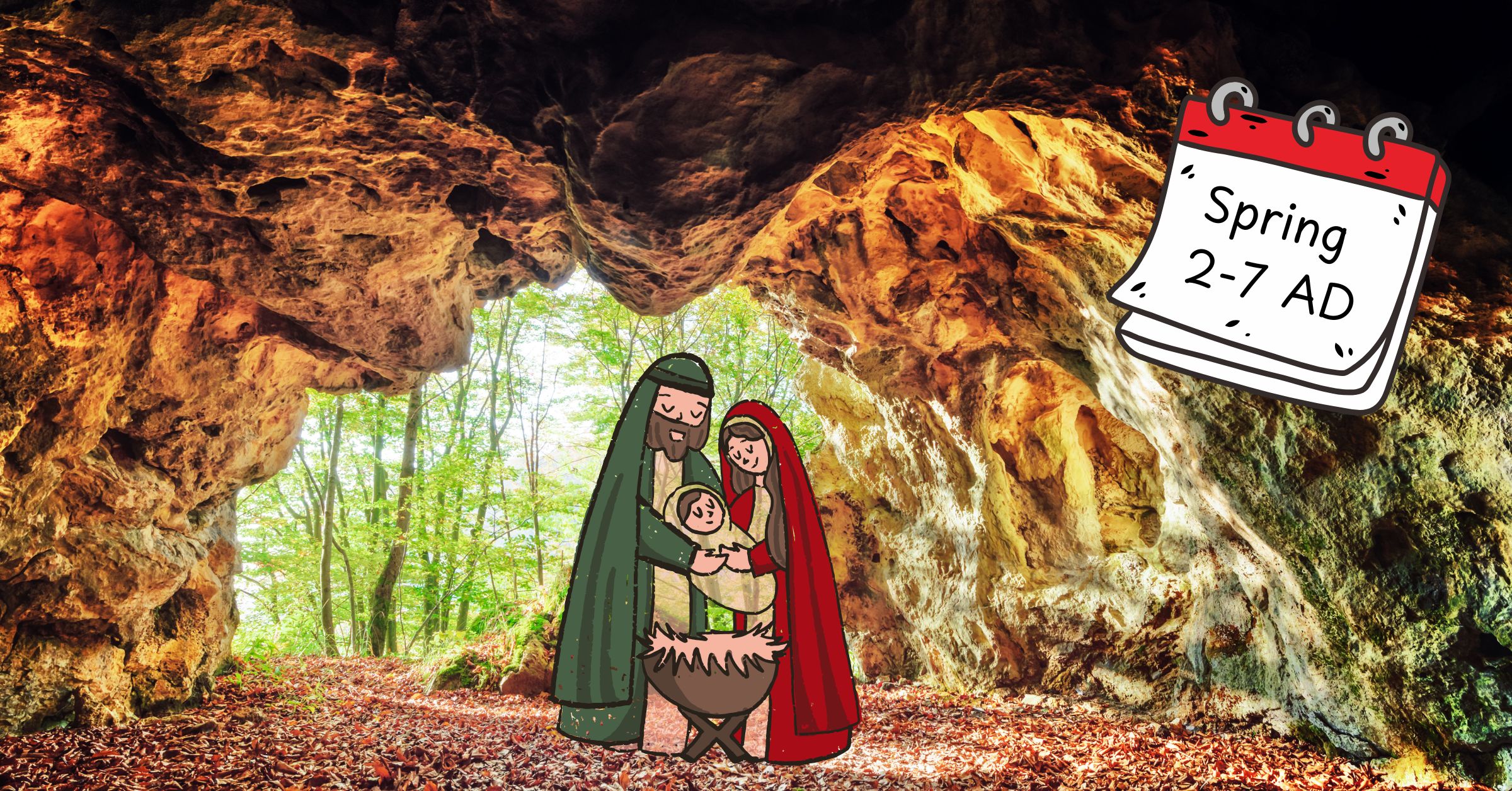
You probably know that by now, but I grew up associating December 25th with the birth of Jesus. Even friends of mine who are not Christian believe that’s what the holiday is all about. But the truth is, no one knows precisely when he was born. One book I read explained it was likely Jesus was born in the Spring since the Bible refers to shepherds who were tending their flocks at night, something they wouldn’t have done in the dead of winter. But no one ever wrote it down because to the early church it wasn’t important. The two biggest events in the church calendar were Epiphany and Easter. Christmas wasn’t even on the radar. It would take 400 years after Jesus’ actual birth before Christians started to celebrate it. Which also, by the way, wasn’t in 1 AD. Most scholars today will tell you Jesus was likely born somewhere between 2 and 7 BC, which translated from the Latin means “before Christ.” Because of an error in calculation, the guy who invented the counting of years was off. I don’t know how you miscalculate years, but there you have it. The first actual Christmas was not December 25th, 1 AD but sometime in the Spring of 2-7 BC.
But none of that really matters.
What we need to focus on during the Christmas season is the “why,” not the “when.” Other than the event itself, the rest of what we think of as a traditional Christmas was created by human beings. The date, the season, the traditions, even the giving of gifts did not happen on the day Jesus was born. The only gift given that day was God’s gift to us in the form of a baby in a manger. Which is the reason we celebrate. Sometimes we forget the reason for the season and celebrate the traditions more than the event itself. For today, let us be reminded of that evening long ago that changed the world.
8 And there were shepherds living out in the fields nearby, keeping watch over their flocks at night. 9 An angel of the Lord appeared to them, and the glory of the Lord shone around them, and they were terrified. 10 But the angel said to them, “Do not be afraid. I bring you good news that will cause great joy for all the people. 11 Today in the town of David a Savior has been born to you; he is the Messiah, the Lord. 12 This will be a sign to you: You will find a baby wrapped in cloths and lying in a manger.”
13 Suddenly a great company of the heavenly host appeared with the angel, praising God and saying,
14 “Glory to God in the highest heaven,
and on earth peace to those on whom his favor rests.” – Luke 2:8-14
This is the importance of Christmas.
The birth of Christ into the world. “Today in the town of David a savior has been born to you; he is the Messiah, the Lord.” In all the hubbub of the Christmas season, it’s good to simply share in the story of the birth of Christ and be reminded of the significance of that moment when “a great company of the heavenly host appeared” saying, “Glory to God in the highest heaven and on earth peace to those on whom his favor rests.” When I mentioned we need to focus on the “why” instead of the “when,” this is the “why” we need to focus on – why we celebrate the season. We celebrate the fact that God humbled himself to enter into the world just as we do. God became man to lead us, guide us, and share with us the good news of salvation that comes through him. The good news the angel refers to is of course the birth of Jesus and as we like to say, he is the reason for the season. Instead of getting focused on the details of Christmas or complaining about the commercialization of Christmas or worried the season is losing its meaning, we need to instead focus on the meaning ourselves. Because Christmas isn’t a date on a calendar, it’s a way of living. Jesus comes alive when we love one another. And in that way, everyday can be Christmas.
Let me tell you a story about a friend of mine named Mark Thompson.
We went to Cerritos Elementary School and had most of the same teachers all the way up through fourth grade. Mark recently had his 14th birthday. That’s right. His 14th birthday. And I don’t mean because he’s young at heart. I mean literally, his 12th birthday. If you haven’t figured it out already, Mark is a “leaper” or “leapling” as they call it. He was born on February 29th, 1968, the same year as I was born. Yet he is only 11 years old because of the way we keep time on the calendar. Since his actual birth date only occurs once every 4 years, he is only one-fourth of my age. But is he really? We’ve lived the same number of days – actually I’ve lived less of them since my birthday is after his. But Mark used to like to say that he’d live to be a lot older than me because he’s aging only a fourth as fast as I am. I hate to break it to him, but he’s not really aging slower than anybody. Just because the date of his birth only shows up on a calendar once every four years, doesn’t take away from the fact that he’s still aging like the rest of us. All of that to say that December 25th is just a number. Christmas should live in our hearts every day.
[1] Taken from a story on the CNN website back in 2009. The story has since been removed.
[2] https://www.catholicnewsagency.com/news/2646/new-york-rabbis-join-catholic-league-to-denounce-chrismukkah
[3] https://www.up.edu/garaventa/did-you-know/meaning-advent.html – in fact, Advent does mean coming, but it’s Greek derivative is “Parousia” which refers to the second coming of Christ.
The Hidden Cost of Love
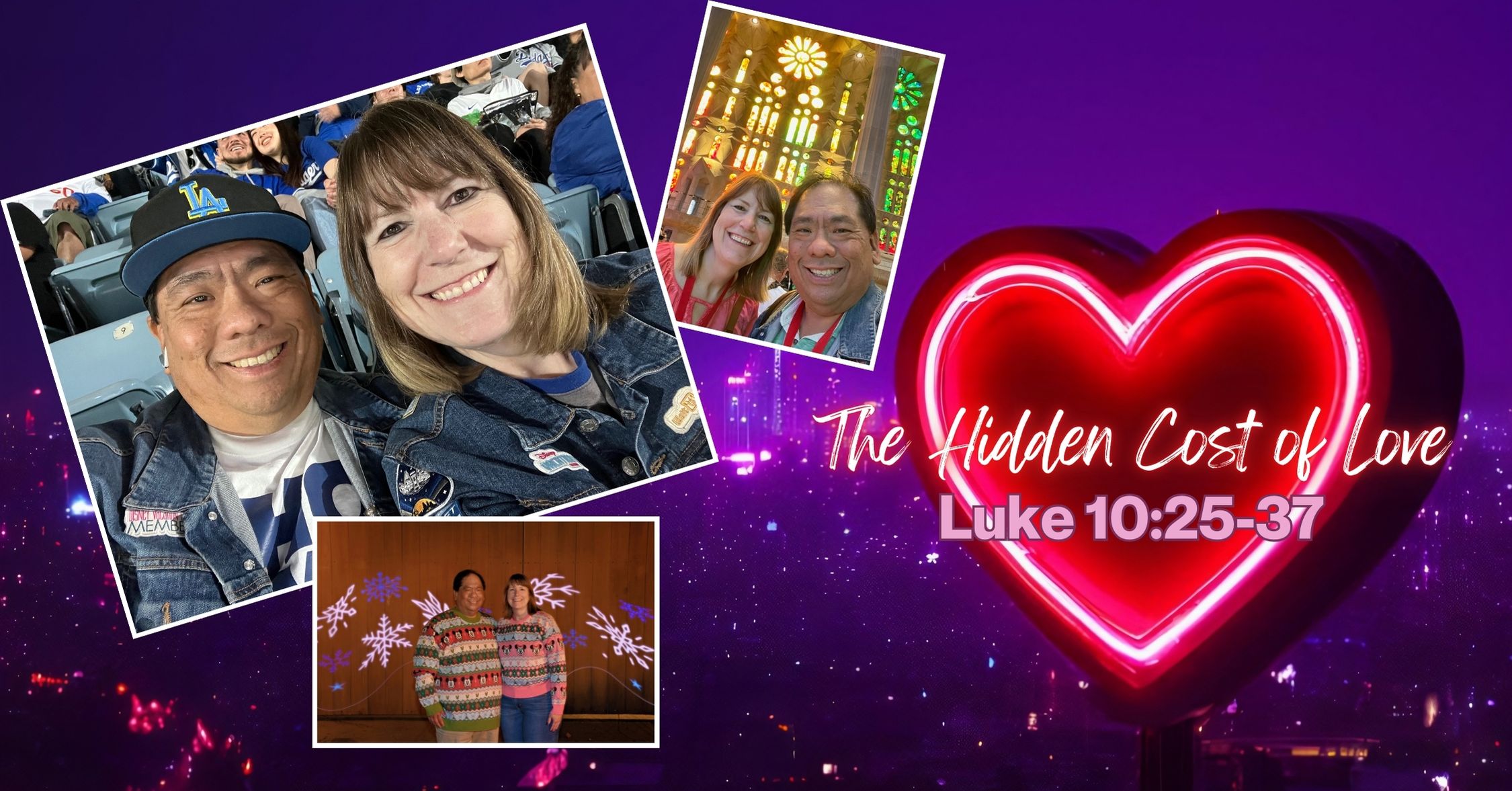
There’s a lot more that goes into something you love than meets the eye.
Take for instance my passion for Disney pins. It started innocently. We were at Disney-MGM Studios (when it was still called that) and we were just looking at souvenir pins when Emma noticed a cute one on a Cast Member’s lanyard. The nice young woman said these were for trading and if she had a pin to trade for it she could. So, after Emma looked up at me with these big, round eyes, I bought a pin for her so she could trade, and she walked away a happy camper. Pretty soon, every time we would go to the park we would buy a pin to add to our collection, but these were nice pins, and we didn’t want to trade them away so we also bought pins just for trading. Well, our collection started to grow, and we didn’t have anywhere to store them safely until I noticed they sold pin bags you could use for storage. Pretty soon, I’m going to special pin trading events and waiting in line for hours for a pin release and purchasing tickets just for the OPPORTUNITY to buy MORE pins. The pins themselves are fairly reasonably priced, but when you add in the special pin backs to secure them, the pin bags to haul them, the pin backpacks to trade with…well, you get the idea. But overall, it’s worth it. When you love something, it is worth investing in.

The same is even more true with people.
Hobbies are great and people certainly become passionate about them. But when we invest in people, the reward is so much greater and the people who mean the most to you are certainly worth investing in. They say you can’t buy love, but you can sure put a price tag on it. According to a survey of 1,500 engaged and married couples, a lifetime of love costs $192,769.19.[1] By the way, that’s just gifts, date nights, special occasions, engagement rings and wedding bands. That doesn’t include everyday expenses, family vacations, homes, or kids. $192,769.19. The first year is the most expensive, clocking in on average at $9,233.32. It gets progressively less expensive from there on out. But even dating is an investment. Want to find out if that person is worth it? It’s going to cost you up front to the tune of $196 per date.[2] Now if the date is a bomb, you might feel ripped off. But when you find someone special, the cost seems trivial because it was worth it.

Let me tell you, God thinks you’re worth it, too.
And he’s willing to pay any price for you. If you have a Bible or a Bible app on your phone please turn to the Gospel of Luke, chapter 10, beginning with verse 25. In the story from John 3, Nicodemus, a Pharisee and a member of the Jewish ruling council seeks out Jesus, but unlike other Pharisees, he’s not trying to kill Jesus or trick him. He genuinely seeks to understand him better. This is just the first of Nicodemus’ encounters with Christ and over time he comes to believe in him as the Messiah. But here, he comes seeking to know more and Jesus reveals to him that he is indeed the Christ that was prophesized. For us, the most important lines are also the most famous of the Bible. “For God so loved the world that he gave his one and only Son, that whoever believes in him shall not perish but have eternal life. For God did not send his Son into the world the condemn the world, but to save the world through him.” That is how much God loves you. That God would sacrifice his only Son out of his love for you. When we think of what something will cost us, we often revert to money, but God tells us and shows us that love requires something more. And we see that here in the story of the Good Samaritan.
25 On one occasion an expert in the law stood up to test Jesus. “Teacher,” he asked, “what must I do to inherit eternal life?”
26 “What is written in the Law?” he replied. “How do you read it?”
27 He answered, “‘Love the Lord your God with all your heart and with all your soul and with all your strength and with all your mind’[c]; and, ‘Love your neighbor as yourself.’[d]”
28 “You have answered correctly,” Jesus replied. “Do this and you will live.”
29 But he wanted to justify himself, so he asked Jesus, “And who is my neighbor?”
30 In reply Jesus said: “A man was going down from Jerusalem to Jericho, when he was attacked by robbers. They stripped him of his clothes, beat him and went away, leaving him half dead. 31 A priest happened to be going down the same road, and when he saw the man, he passed by on the other side. 32 So too, a Levite, when he came to the place and saw him, passed by on the other side. 33 But a Samaritan, as he traveled, came where the man was; and when he saw him, he took pity on him. 34 He went to him and bandaged his wounds, pouring on oil and wine. Then he put the man on his own donkey, brought him to an inn and took care of him. 35 The next day he took out two denarii[e] and gave them to the innkeeper. ‘Look after him,’ he said, ‘and when I return, I will reimburse you for any extra expense you may have.’
36 “Which of these three do you think was a neighbor to the man who fell into the hands of robbers?”
37 The expert in the law replied, “The one who had mercy on him.”
Jesus told him, “Go and do likewise.” – Luke 10:25-37

Love means investing in what’s important.
Sometimes that’s a person like it is in this story. Sometimes, it’s an ideal or an institution. And in this story, we see it in the time, talent, gifts, service, and witness the Samaritan gives to the injured Jewish man. By the way, it isn’t a coincidence these are the same five qualities we promise to give to the church when we join. Time, talent, gifts, service, and witness. Time is probably the most obvious. He stops. The Samaritan who probably wouldn’t have been given the time of day by most Jewish people stops for this Jewish man in need. But then he uses his own possessions to dress his wounds enough so he can travel. He bandages him up using the skill he has and uses his own oil and wine to flush it out. He uses his donkey to transport the man to a local inn, also meaning he has to walk. And then he uses his own money to pay the innkeeper. Time, talent, gifts, and service were used to witness to the love Christ showed to us.
Do you invest in the things that are important?
It’s so easy for us to be like the Levite and the priest and ignore what truly matters. In this story what mattered was this injured man on the side of the road. The first two men probably assumed someone else would stop. They were too busy. Too focused on themselves. But the Samaritan took time to notice what should have been obvious to the other two and not only noticed it but did something about it. How often do you take for granted the very things that are most important to you? Sometimes it’s your family. Sometimes it’s your spouse. Sometimes it’s time itself. And sometimes it’s the things you don’t even think about, but that you would miss terribly if they were gone. Too often people become so invested in their work they ignore their families. They don’t realize there is a growing distance between them and their spouse or their kids. Eventually, their spouse gets tired of being second fiddle. Their kids lose all trust and faith in them. And soon they have a broken home with broken people.

Take the time to invest in what is important.
Your family, your health, your faith. “Do not store up for yourselves treasures on earth, where moths and vermin destroy, and where thieves break in and steal. But store up for yourselves treasures in heaven, where moths and vermin do not destroy, and where thieves do not break in and steal. For where your treasure is, there your heart will be also.” Matthew 6:19-21. Jesus isn’t talking about just material treasures, but power, fame, recognition, and all the things that distract us from loving our families, taking care of our health, and separating us from our faith. One of my colleagues was famous for overworking himself. In a bizarre twist of fate, I served multiple churches where he also served. I’d hear about how he would work so hard he would fall asleep at the church and wake up in time for worship. Or how he would travel three hours away to visit the friend of a family member of someone in the church because he heard they were in the hospital. But the stress he put upon himself to maintain that reputation ate at his body until he was forced to go to the hospital himself. He is a wonderful guy and a terrific pastor, but he didn’t set up boundaries where they were important, and it cost him. I don’t want the same to happen to you.
In this season of Thanksgiving, take the time to reflect on all of these thoughts.
How well are you balancing family, health, and faith? Are you investing as much in these as you do other aspects of your life? If not, what steps can you take to get back in balance. Just as you invest in your hobbies, your career, and other aspects of your life, make sure you create boundaries so they don’t take over your life. Keep focused on the things that are truly important and let us give thanks to God for what we have.
[1] https://www.shaneco.com/theloupe/articles-and-news/the-cost-of-love/
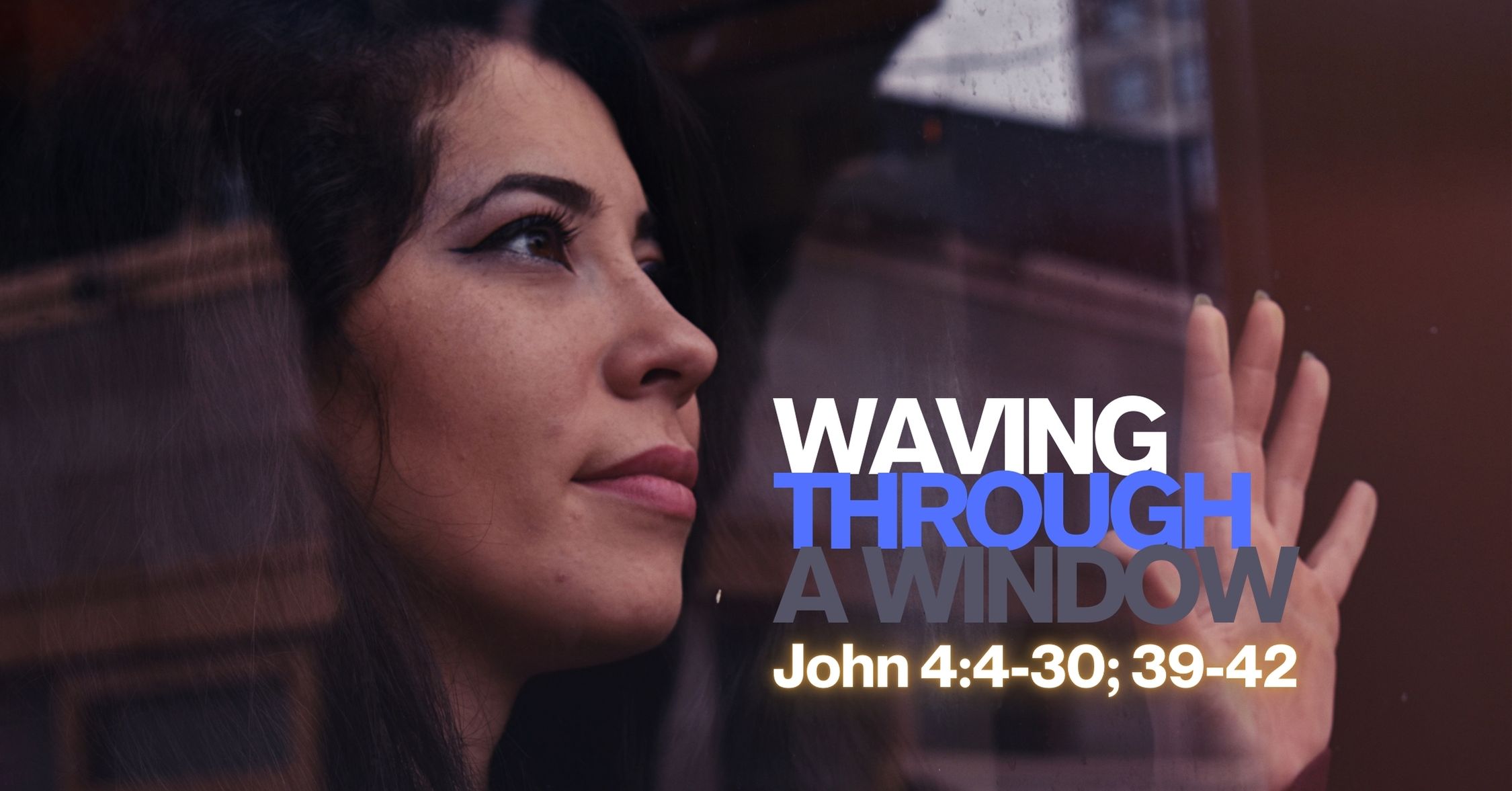
Waving Through A Window
I’m a huge Star Trek fan because of my mom.
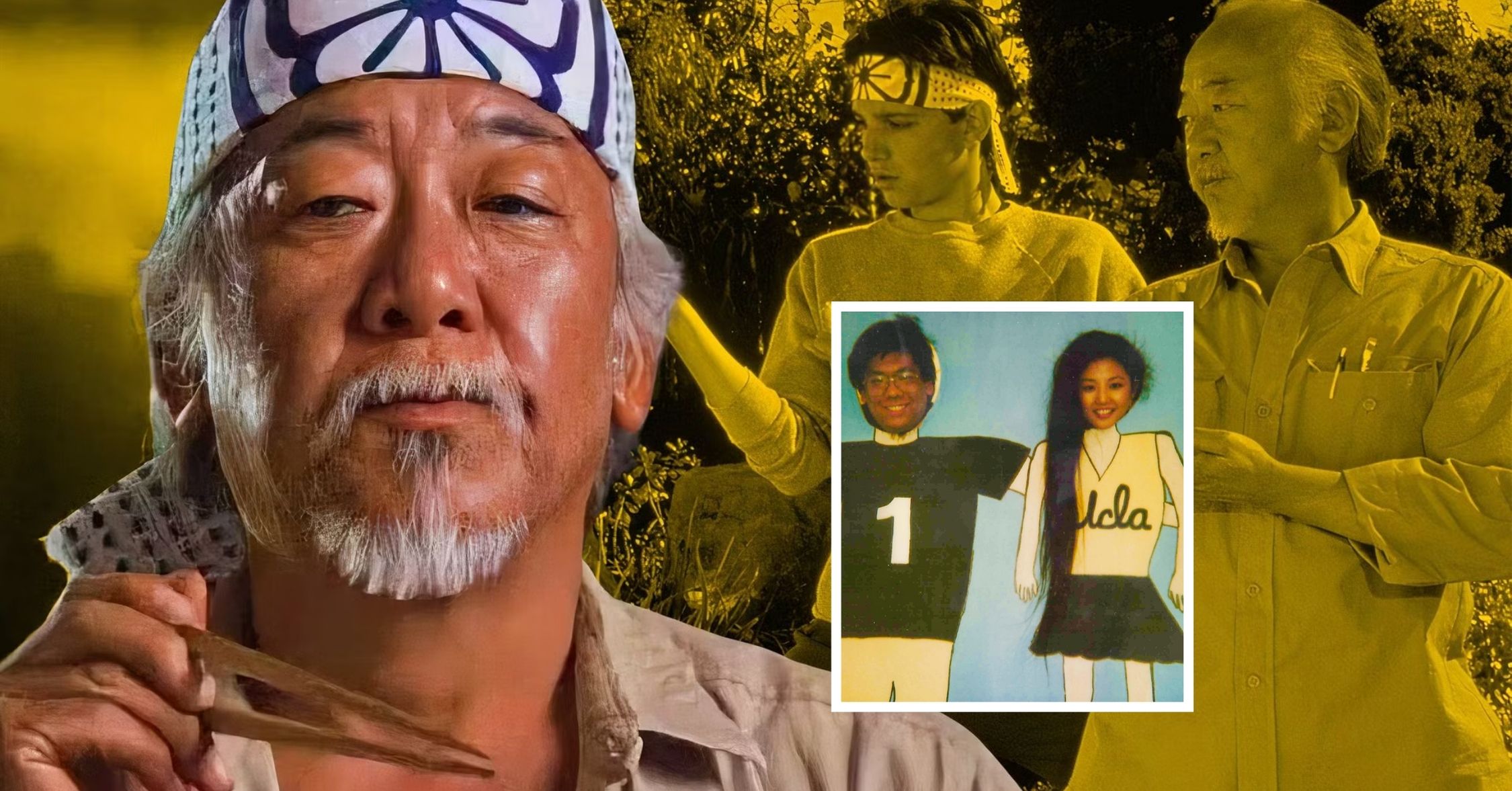
We would sit down in front of the television every day at 5pm to watch the original Star Trek on Channel 5 KTLA. It became an afternoon tradition with us, and I must have seen every episode multiple times. It was also the first time I can remember seeing someone who looked like me on mainstream TV that wasn’t in some way a mockery or put-down of Asian people. Maybe that’s why I loved Karate Kid so much and why I had such a huge crush on Tamlyn Tomita. Even though Mister Miyagi was portrayed as your typical Japanese gardener with a penchant for martial arts and a thick accent, he was cool and wise and turned the tables on most stereotypes of the day that portrayed Asians in secondary roles often subservient to other characters in the movie. Even today, a recent study showed that nearly half of all Asian characters on the screen are the “punchline or butt of the joke.”[1] There is no worse example than the character of Long Duk Dong in Sixteen Candles. Everything about him made him the butt of the joke and only served to insult people of Asian heritage. Research even shows that these stereotypes not only perpetuate the negative image of an entire group of people, but those who view it who are being stereotyped feel shame and anxiety over their portrayal, and it often serves to reinforce their inferior place in society.[2]
Representation matters.
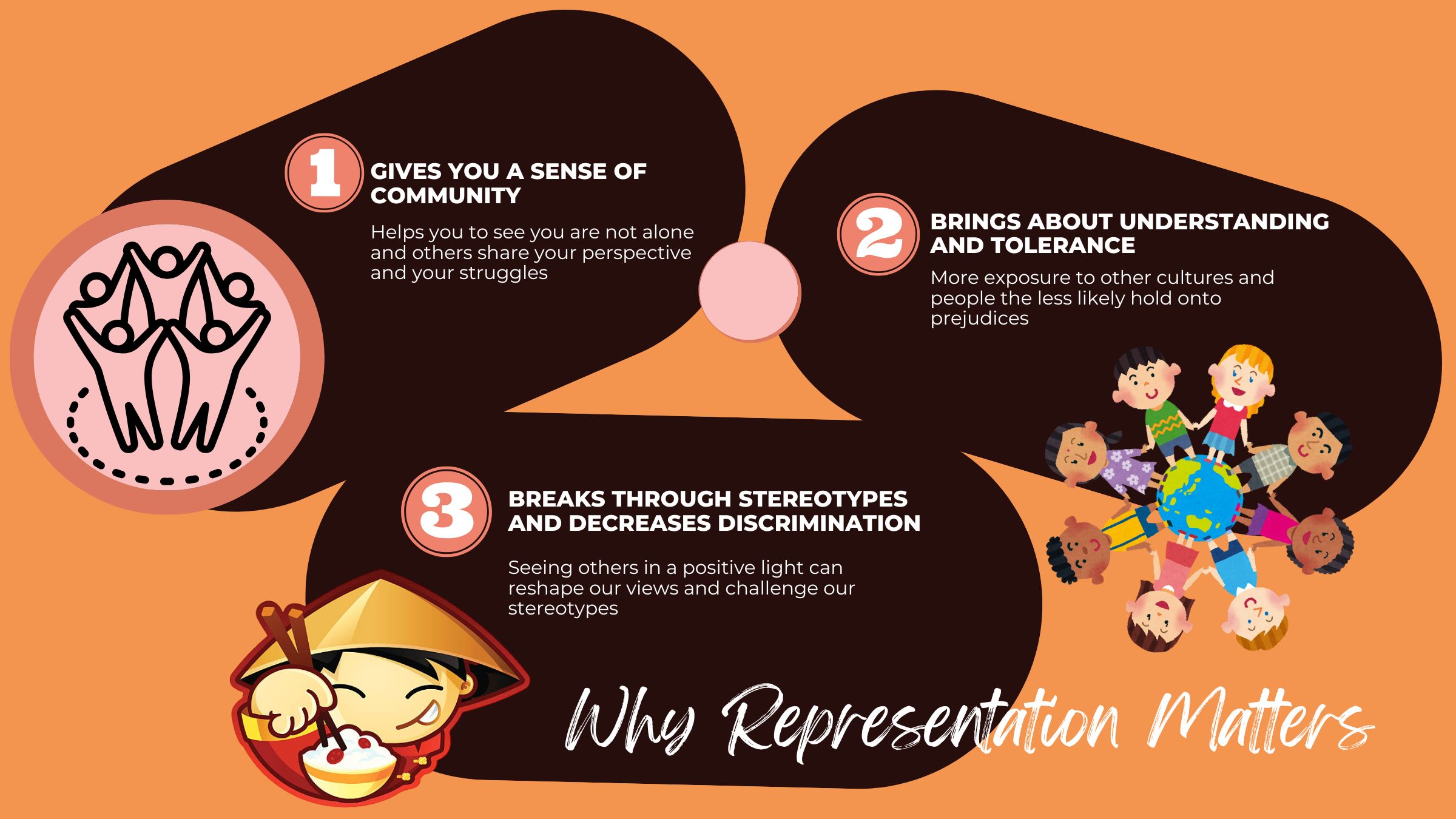
If you don’t believe me, this entire country was formed because of a lack of representation. It wasn’t racial but political and it moved an entire group of people to rebel against the powerful British empire. Most of us remember the phrase taught to us in elementary school – “No taxation without representation.” We wanted to be seen and not just be an afterthought. The same is true for marginalized people in our country today. We want to be seen and celebrated for who we are instead of forced to conform to the norms and expectations of the people around us. Representation matters for a number of reasons no matter your gender, your ethnic heritage, your size, or your identity. And here’s why:[3] It gives you a sense of community. Seeing yourself in media helps you to realize you are not alone. That other people are out there going through what you are going through. It brings about understanding and tolerance. According to Dr. Gordon Allport, researchers believe the more exposure we have to diverse cultures and points of view the less likely we are to maintain long-held prejudices.[4] It can break through stereotypes and decrease discrimination. When we see others in a positive light, it reshapes our view and challenges our stereotypes. We start to see the other as people and not caricatures. And we start to treat one another as the people God created us to be.
We can witness the effect of being seen in stories found in the Bible, too.
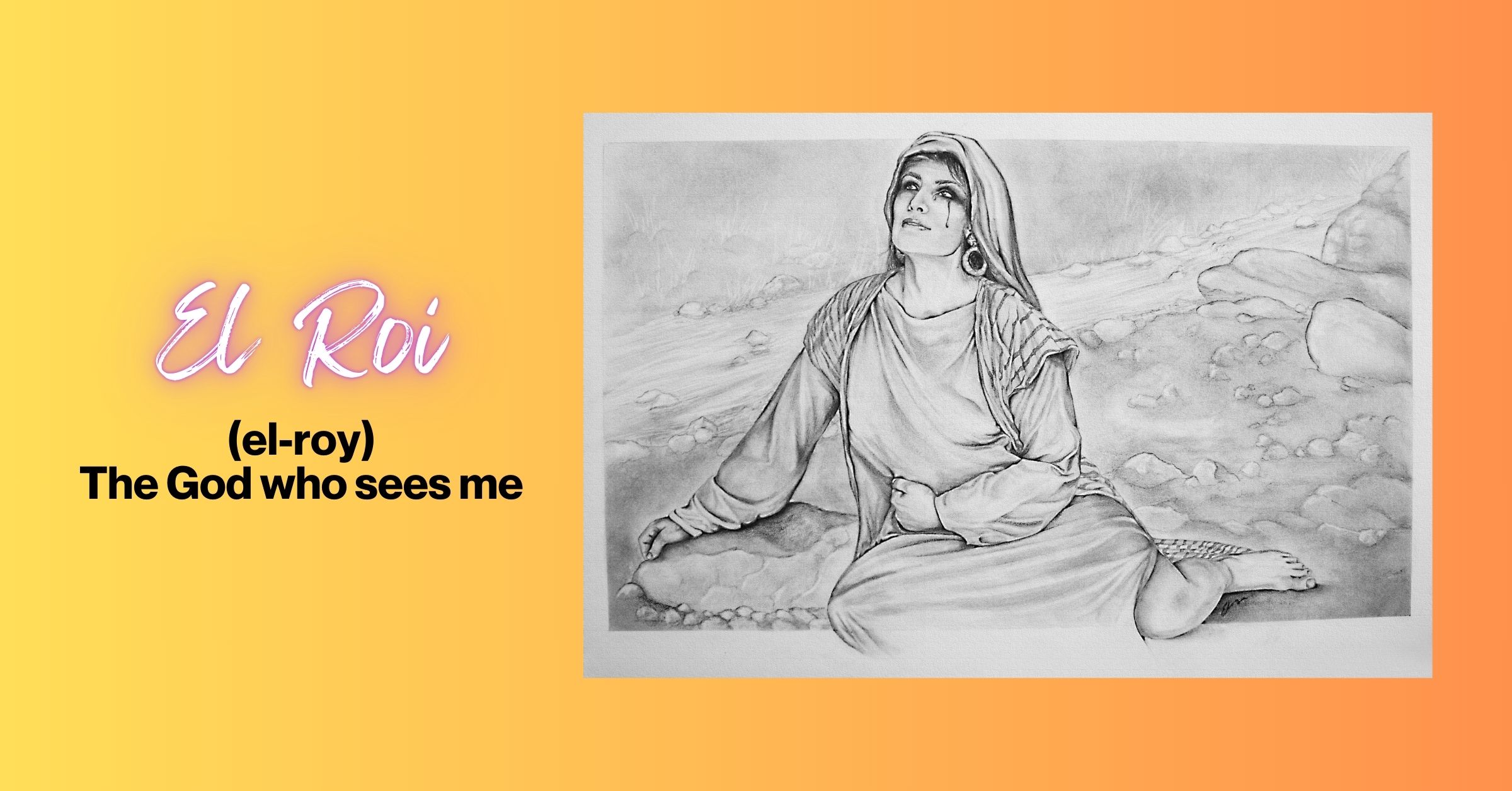
In the story of Hagar from Genesis 16, Hagar is a slave to Sarah, then called Sarai. Sarah as the story goes is unable to give her husband Abraham a child and so she invites her husband to sleep with Hagar in hopes they can have children. And it works! Except now Sarah is jealous and treats her slave so badly that Hagar runs away into desert. But God goes to Hagar and comforts her and promises to make her the mother of a great multitude and Hagar in gratitude gives God a new name – El Roi which means “The God who sees me.” Hagar feels so low after how badly Sarah treats her, but being recognized, being seen meant so much to her she gives God this new name. By the way, God comes through on his promise and Hagar becomes mother to Ishmael who is widely regarded as the founder of Islam, the second largest religion in the world. But then we see another story in the Bible where someone who is outcast by society is seen…
Now he had to go through Samaria. 5 So he came to a town in Samaria called Sychar, near the plot of ground Jacob had given to his son Joseph. 6 Jacob’s well was there, and Jesus, tired as he was from the journey, sat down by the well. It was about noon. 7 When a Samaritan woman came to draw water, Jesus said to her, “Will you give me a drink?” 8 (His disciples had gone into the town to buy food.)
9 The Samaritan woman said to him, “You are a Jew and I am a Samaritan woman. How can you ask me for a drink?” (For Jews do not associate with Samaritans.) 10 Jesus answered her, “If you knew the gift of God and who it is that asks you for a drink, you would have asked him and he would have given you living water.”
11 “Sir,” the woman said, “you have nothing to draw with and the well is deep. Where can you get this living water? 12 Are you greater than our father Jacob, who gave us the well and drank from it himself, as did also his sons and his livestock?” 13 Jesus answered, “Everyone who drinks this water will be thirsty again, 14 but whoever drinks the water I give them will never thirst. Indeed, the water I give them will become in them a spring of water welling up to eternal life.”
15 The woman said to him, “Sir, give me this water so that I won’t get thirsty and have to keep coming here to draw water.”
16 He told her, “Go, call your husband and come back.”
17 “I have no husband,” she replied.
Jesus said to her, “You are right when you say you have no husband. 18 The fact is, you have had five husbands, and the man you now have is not your husband. What you have just said is quite true.”
19 “Sir,” the woman said, “I can see that you are a prophet. 20 Our ancestors worshiped on this mountain, but you Jews claim that the place where we must worship is in Jerusalem.”
21 “Woman,” Jesus replied, “believe me, a time is coming when you will worship the Father neither on this mountain nor in Jerusalem. 22 You Samaritans worship what you do not know; we worship what we do know, for salvation is from the Jews. 23 Yet a time is coming and has now come when the true worshipers will worship the Father in the Spirit and in truth, for they are the kind of worshipers the Father seeks. 24 God is spirit, and his worshipers must worship in the Spirit and in truth.”
25 The woman said, “I know that Messiah” (called Christ) “is coming. When he comes, he will explain everything to us.”
26 Then Jesus declared, “I, the one speaking to you—I am he.”
27 Just then his disciples returned and were surprised to find him talking with a woman. But no one asked, “What do you want?” or “Why are you talking with her?”
28 Then, leaving her water jar, the woman went back to the town and said to the people, 29 “Come, see a man who told me everything I ever did. Could this be the Messiah?” 30 They came out of the town and made their way toward him
Many of the Samaritans from that town believed in him because of the woman’s testimony, “He told me everything I ever did.” 40 So when the Samaritans came to him, they urged him to stay with them, and he stayed two days. 41 And because of his words many more became believers.
42 They said to the woman, “We no longer believe just because of what you said; now we have heard for ourselves, and we know that this man really is the Savior of the world.” – selections from John 4
She was seen and it changed her life forever.
Samaritans were marginalized people during Jesus’ time, much like tax collectors and people with leprosy. They were shunned and it even says so in this passage. Verse 9, “for Jews do not associate with Samaritans.” This was an understatement. Samaritans were considered not worthy of the Jewish people. When it says they didn’t associate with them, the Jewish people treated them like pond scum. But not Jesus. Instead, Jesus spends time with her, and it confuses her because this is not how it is supposed to be. But he not just spends time with her, but he KNOWS her. He SEES her in a way that no one else ever had and he was Jewish which made it even more remarkable. When he spends time with the other Samaritans, they feel seen too and come to faith in Christ. Being seen. Being known. It can transform a person.
As God’s people we have to do a better job of making people feel seen and heard.
We need to be in conversation with those who are not like us and take the time to know them. We need to challenge ourselves to learn about other cultures and other places and other ways of thinking. Not to change our minds or make us more like them, but so we can better know ourselves in relation to the world and so we can recognize that people unlike us have value and worth to the Kingdom of God. This is how we can show love to those around us, by seeing them and hearing them and VALUING them as children of God.

My entire life I had never felt what it was like to see myself reflected in the society around me.
That is until I went to Hawaii for the first time. There are so many people of Japanese heritage on the islands that for the first time I didn’t feel like I was different. The food was all food I grew up with and loved. They even had Asian food at the local McDonald’s! I’ll never forget driving past and seeing a sign in the window for Portuguese Eggs and Rice – in a McDonald’s! The malls were filled with culturally relevant stuff I could relate to. Everywhere we went, the things I had to seek out back at home were everywhere. It seems like a small thing, but when you live your life on the margins it feels oddly empowering to suddenly be at the center. You start to feel like anything is possible. And that’s what God wants for all of his children – to believe anything is possible. In the name of the Father and of the Son and of the Holy Spirit. Amen.
[1] https://www.nbcnews.com/news/asian-america/almost-half-all-asian-roles-serve-punchline-study-finds-n1276103
[2] https://www.scholarsandstorytellers.com/blog/diversity-in-hollywood-how-to-write-asian-characters-more-effectively
[3] The information here comes from two sources although many others support those sources: https://www.blackillustrations.com/blog/representation-matters-5-reasons-representation-in-media-matters and https://www.psychologytoday.com/us/blog/psychology-the-people/202112/why-representation-matters-and-why-it-s-still-not-enough
[4] Ibid. Psychology Today.
God and the Wizarding World of Harry Potter

I’m a Harry Potter fan.
I’ve read all seven books. I’ve seen all eight movies. I own most of the DVDs and then bought them again digitally if I didn’t have them. I’ve even been to the Wizarding World of Harry Potter in Orlando and the Making of Harry Potter Warner Bros. Tour in London! And yet, somehow, AMAZINGLY, I turned out to be a Christian. I don’t believe in witchcraft. I don’t play Quidditch. And I don’t cast spells. Despite the influence of Harry Potter on my life, I turned out okay and you did, too. I believe in God. I believe in Jesus. I don’t do animal sacrifices, much to the relief of my three dogs. But if you were to read all of the stuff on the Internet, you’d think it was a blessed miracle I didn’t turn out differently. Apparently, Harry Potter is EVIL![1] Harry Potter will make you turn away from God. Harry Potter will turn you to witchcraft. For a fictional character, apparently Harry Potter has a lot of power. One woman in Georgia even tried to blame Harry Potter for a school shooting saying that having the books in the school library created an “atmosphere where violence is possible.”[2] She suggested instead that children read the Bible. Now, I’m not opposed to people reading the Bible, but maybe she’s unaware of the thousands of people killed in the name of God from READING the Bible or of the excessive violence we read about IN the Bible or the stories of things people did that I would never want my children to emulate that comes FROM the Bible. If that’s our criteria, then I’m not sure the Bible would pass the test either.

Most Christians who oppose Harry Potter do so because they claim it promotes the occult.
This is the same claim that people made about the role-playing game Dungeons and Dragons back in the late 70’s and early 80’s. And the same claim made about the card game Magic: The Gathering in the 90’s. Simply the inclusion of supernatural elements like ghosts, goblins, and ghouls supposedly promotes the occult. But let me share with you a secret. By definition, the BIBLE promotes the occult. Seriously. It does. So, when people make the claim that something is evil or wrong simply because it promotes the occult and the Bible is against it, I think they haven’t read their Bible very well. It makes me wonder if these people even know what “occult” means. To quote Inigo Montoya from my favorite movie, The Princess Bride, “You keep using that word. I do not think it means what you think it means.” So let’s look at the definition of “occult.” According to the definition, the word “occult” means “Of, relating to, or dealing with supernatural influences, agencies, or phenomena. Beyond the realm of human comprehension; inscrutable.”[3] Of, relating to, or dealing with supernatural influences, agencies, or phenomena. Beyond the realm of human comprehension. That’s what it means. And people would be hard-pressed to say that the Bible doesn’t deal with the supernatural.

The truth is, I believe in ghosts[4].
I do. And in the spirit of Halloween, indulge me for a few minutes as I tell you about a real-life ghost story. Way back in 1716, a preacher, his wife, and his children were all living inside a parsonage provided the church. On a cold December day, the maid, who only helped out occasionally, came rushing in to the room where the family was and told them that she heard loud groans and moans in the dining room. They laughed at her and ignored the warnings. But soon thereafter, one by one, they each heard the ghost. They heard the strange sounds, the moans and groans, and other noises the ghost would make; everyone that is except for the pastor himself. The women of the household didn’t say anything, particularly their mother who was worried that her husband would simply laugh at her and pass it off as something attributed to her imagination. Eventually, though, she had to tell him and she told him about the many incidents that had happened, and sure enough, he reacted just as they thought he would and ignored the warning. But then, nearly three weeks after the ghost began haunting the parsonage, the pastor, Sam, began to hear loud thumping against the bedroom wall. He searched all around the house and couldn’t find the cause and so went to bed. But five days later, on the night after Christmas, the knocking returned. Sam knocked back, hoping to stop whoever it was from bothering him, but every time he knocked, the ghost would repeat the knocking even louder than before! Finally, it got to be too much, and Sam invited some people over to investigate. As they attempted to enter the house, the door suddenly pushed back against them hard! But nobody was there. Nobody could explain the strange disturbances, except to say that there was indeed a ghost. One of Sam’s daughters, Emily, was the first to name the ghost and called him Jeffrey. She would write to her brothers who were away, about Jeffrey’s exploits in the house and what strange things occurred. The ghost would leave for a time and then come back, never hurting anyone, but at times they could almost feel him passing by and hear the rustling of clothing as he went. Jeffrey the Ghost did grant one strange request. The children’s mother asked that she not be disturbed during prayer time, and the ghost never did. Emily’s brother blamed their father for the hauntings, claiming that it was simply punishment for how poorly Sam had treated his wife. The family never did find out the cause of the haunting that lasted for over ten years.
What makes this story even more interesting is that like I said, it is a true story.
It is in fact, one of the most well-documented hauntings in history. There have been many letters and written documents attesting to this as something that actually happened. Now, some of you will scoff and say ghosts don’t exist. Some of you will say ghosts are just figments of our imagination. Some might even say tories about ghosts are the work of the Devil himself, but you would be hard-pressed to say that about THIS ghost story, because the person who wrote about THIS ghost was none other than John Wesley himself, the founder of Methodism. The parsonage belonged to his father Samuel who had “deserted” his wife Susanna for a time over an argument about the “true King of England,” and John always thought Jeffrey’s appearance was punishment for his father’s bad behavior.
Still is it really that hard to believe that there might be such things as ghosts?[5]
After all, we believe in at least one. We even say it in worship. “I believe in the Holy Spirit.” Also called the Holy Ghost. So, belief in at least ONE ghost is part of our heritage and tradition. But that’s not the only supernatural thing we believe in. In fact, one of our most fundamental beliefs we have as Christians is that first and foremost a man came back from the dead to lead us to salvation. You HAVE to believe in the supernatural because by the very definition, our God is a supernatural God. So even if you believed that things like Harry Potter and Dungeons and Dragons had a connection to the supernatural, that doesn’t make it bad or evil. Being supernatural can be good, too. It’s the choices we make that determine if something is good or evil, not the things themselves. People say money is evil. But the Bible tells us in 1 Timothy that it’s the LOVE of money that is the root of evil (1 Timothy 6:10) not the money itself. THINGS are not good or evil. What people do with them IS.

Listen to this story.
We begin our Scripture reading in the church at Antioch. This is the beginning of Paul’s first missionary journey as he is about to be sent forth by the Holy Spirit. While you listen or read along, notice what the Holy Spirit is doing in Paul.
2While they were worshiping the Lord and fasting, the Holy Spirit said, “Set apart for me Barnabas and Saul for the work to which I have called them.” 3So after they had fasted and prayed, they placed their hands on them and sent them off. 4The two of them, sent on their way by the Holy Spirit, went down to Seleucia and sailed from there to Cyprus. 5When they arrived at Salamis, they proclaimed the word of God in the Jewish synagogues. John was with them as their helper.
6They traveled through the whole island until they came to Paphos. There they met a Jewish sorcerer and false prophet named Bar-Jesus, 7who was an attendant of the proconsul, Sergius Paulus. The proconsul, an intelligent man, sent for Barnabas and Saul because he wanted to hear the word of God. 8But Elymas the sorcerer (for that is what his name means) opposed them and tried to turn the proconsul from the faith. 9Then Saul, who was also called Paul, filled with the Holy Spirit, looked straight at Elymas and said, 10“You are a child of the devil and an enemy of everything that is right! You are full of all kinds of deceit and trickery. Will you never stop perverting the right ways of the Lord? 11Now the hand of the Lord is against you. You are going to be blind, and for a time you will be unable to see the light of the sun.”
Immediately mist and darkness came over him, and he groped about, seeking someone to lead him by the hand. 12When the proconsul saw what had happened, he believed, for he was amazed at the teaching about the Lord. – Acts 13:2-12
Elymas became blind by the power of the Holy Spirit.
But what’s more important is why. He didn’t become blind because he was a sorcerer. In fact, the word “sorcerer” here doesn’t have anything to do with magic. This guy is into astrology. But Elymas became blind because he was attempting to lead the proconsul away from the faith. Sergius called for Paul and Barnabas because he wanted to hear the Word of God. And that probably made Elymas worried. Think about it. If the procounsel decided to take advice from God instead of Elymas, he’d be out of a job pretty quickly. I mean, if you’re making a living off of giving people advice based on the supernatural and they start relying on the source of all things supernatural, well you don’t have much to offer. Elymas was probably worried about losing his job so he tries to convince the proconsul not to listen to these two guys and it completely backfires on him. Instead of convincing him NOT to listen to them, he helps convince him that God is real. The Bible warns us against things like divination and astrology not because they have magic or even necessarily deal with something evil. The Bible warns us against these things because they lead us away from God. They influence where we place our faith and they turn our faith away from God and place it in something else. That’s the real danger. That’s what defines sin – a separation from God. That’s what defines sin – a separation from God.

The supernatural is not something we have to be afraid of.
It is a part of our tradition and heritage as Christians. It is often the way God works in our lives, to use us as vehicles for his grace. We don’t need to be afraid of things like Harry Potter, Dungeons and Dragons, or anything else that deals with magic. After all, magic is simply defined as “the use of means believed to have supernatural power over natural forces.” We are a people who believe in ghosts and spirits and the power of faith – all supernatural things. And to me, there is no supernatural power greater than love and our God who embodies love. But it’s the choices we make that determine if something is being used for good or evil. It’s the choices we make that determine if something is being used for God or against God. So choose God. Choose love. Choose God. Choose love. So as long as you have a heart for God and continue to look for Christ in all things, the supernatural – God – is our ally. God works wonders in the world everyday. When I think about the extraordinary circumstances that bring me before you today, when I think about how God was able to bring Cassie and I together, when I think about the miracle of birth I witnessed when Emma was born, I believe in magic. I believe that when a person finally comes to accept Christ as His Lord and Savior, that there is magic in that act, because it means that God’s influence touched that person’s life and brought him out of the world today. I believe in everlasting life, I believe in the Holy Spirit, and I believe that a man rose from the dead to bring salvation to the world and if that isn’t magical, I don’t know what is.
[1] There are many websites and many stories on the Internet decrying the “evil” nature of Harry Potter, but I don’t want to give them any publicity. If you’re curious, just google search “Harry Potter is evil” or some other search term and you’ll understand.
[2] http://atheism.about.com/b/2006/10/07/harry-potter-books-to-blame-for-school-shootings.htm
[3] http://www.thefreedictionary.com/occult
[4] http://www.annecdalton.com/civic.html, http://gaslight.mtroyal.ab.ca/dreamX10.htm, and http://www.historic-uk.com/CultureUK/JohnWesley.htm provided background for this story.
[5] http://www.new-life.net/magic.htm Interesting article on this site about the use of magic and what it means to Christians.
A Radio, A Boat, and a Helicopter

Captain EO!
From a film critic point of view, a horrible movie. The script was awful. The plot non-existent. And the acting atrocious. Michael Jackson was talented in so many things but acting was not one of them. Still, I don’t know anyone who didn’t LOVE the short film when it premiered at Disneyland back in 1986, me included. As bad as the movie was, it had a lot going for it – the music, the dancing, and most of all the special effects. The 3D technology was revolutionary and mind-blowing to see. The film starts out with a spinning asteroid moving closer and closer to you. I knew there was nothing there, but the illusion was so REAL, I reached out to touch it. I could see out of the corner of my eye the rest of the audience were all doing the same thing. The new 3D technology was leaps and bounds ahead of the old red and blue eyeglasses version, but you still needed these special glasses to see it properly. Without them, you could still watch the film, but it was blurry and fuzzy. The glasses helped you to see it in a completely different way.

With everything going on around us, it’s hard not to wonder where God is in all this mess.
From the hurricanes to the election to the fighting in the Middle East to our own lives at home, sometimes we get so frustrated and it’s easy to believe God isn’t there. That might make us feel alone or feel like God just doesn’t care. The truth is, God is with us all the time and is constantly at work in the world and in our lives, but if we don’t train our eyes to see him, if we don’t put on our God glasses, we can miss him. We have to learn to use a God lens. The same is true when we are trying to listen to God. We’re not always tuned in to God’s frequency. Like back when I was young and we had to manually find a radio station. If you didn’t turn the dial to just the right spot, you were likely to get static instead of musiv. Listening for God is often the same way. If we don’t train ourselves to tune into the God frequency we might be listening to a lot of static. The thing is God is trying to communicate with us and interact with us, but we might be looking or listening for the wrong things. There is a reason the prophet Elijah was favored by God. He knew how to listen. There’s one time in particular that God was trying to speak to Elijah and Elijah had to prepare himself to hear God’s Word. From 1 Kings 19:11-13:
11 The Lord said, “Go out and stand on the mountain in the presence of the Lord, for the Lord is about to pass by.” Then a great and powerful wind tore the mountains apart and shattered the rocks before the Lord, but the Lord was not in the wind. After the wind there was an earthquake, but the Lord was not in the earthquake. 12 After the earthquake came a fire, but the Lord was not in the fire. And after the fire came a gentle whisper. 13 When Elijah heard it, he pulled his cloak over his face and went out and stood at the mouth of the cave.
Then a voice said to him, “What are you doing here, Elijah?”
I love that story. It just shows you how in tune Elijah was to God. Most of us would have thought God was in the powerful wind or in the earthquake or in the fire. These are monumental events where we would expect God to be. But Elijah was patient. And waited. And when it was over, he went to the mouth of the cave and listened not to the wind or the earthquake or the fire, but to the gentle whisper and heard God say to him, “What are you doing here, Elijah?” In so many ways we have become desensitized to God’s voice and God’s movement in the world that it’s hard for us to notice God’s movement in our lives. Its why God gave this message to Isaiah.

8 Then I heard the voice of the Lord saying, “Whom shall I send? And who will go for us?” And I said, “Here am I. Send me!”
9 He said, “Go and tell this people:
“‘You will be ever hearing, but never understanding;
You will be ever seeing, but never perceiving.’
10 This people’s heart has become calloused;
they hardly hear with their ears, and they have closed their eyes.
Otherwise they might see with their eyes,
hear with their ears,
understand with their hearts,
and turn and be healed.” – Isaiah 6:8-10 (from the Septuagint translation)
“This people’s heart has become calloused…”
Have you ever had a callous maybe on your hand or the bottom of your feet? It doesn’t happen all at once and most of the time we don’t notice it until suddenly…we do! It forms slowly over time until it’s a hard blob that seems impenetrable and it takes a lot to grind it down and get rid of it. Has your heart become calloused? Do you take time to really hear God? Or like most of us, do you see the storm or the earthquake or the fire and react to that without listening to the soft, gentle whisper trying to get your attention. How easy it is to miss the fine details and focus on the wrong things. Like this: Try to solve this riddle. Rearrange the letters in the phrase ‘new door’ to spell one word. Take a second and try to figure that one out.

SPOILER FOLLOWING – ONLY KEEP READING IF YOU’RE READY TO MOVE ON
Did you get it? “Rearrange the letters in the phrase ‘new door’ to spell one word.” If you were both listening and discerning, you probably realized that the letters in the words “new door” can be arranged to spell “one word.” When I first tried this puzzle, I was listening but didn’t pause to consider the obvious. Now of course, I can’t help but notice what I should have done right away. But that’s the kind of pause we need to take in our faith life to really listen to God. We have to pause, take a calming breath, and really focus on the blessings God is placing in front of you. In the midst of a crisis, pausing is often the last thing we want to do, but it can be the best thing we do also. Really take a moment, pray, and then ask yourself, “Where do I see God today?” Every day. Do that at least once a day. Maybe while you’re doing the dishes or taking a shower or eating your lunch or walking the dog. Take a moment while you’re doing those things, pause, take a calming breath, and just ask yourself, “Where do I see / hear / smell God today?”
I still have to remind myself to do that on a regular basis.
There are times when I can get so caught up in what’s going on around me, that I forget to stop and take notice where God is moving in the world. But I have found that when I do stop, give myself over to God, and trust in him, he opens doors for me I never knew were there. It takes time and practice to hone your God-searching skills. You have to be intentional about it, like any other skill in life. But if you do this regularly, if you stop once in a while and consider where God is moving in your life, pretty soon you’ll be able to see how God is there for you. You’ll know that even in this, in the midst of this coronavirus, that God is right there beside you. If we only listen. God told the prophet Jeremiah in Jeremiah 29:11-13, “11 For I know the plans I have for you,” declares the Lord, “plans to prosper you and not to harm you, plans to give you hope and a future. 12 Then you will call on me and come and pray to me, and I will listen to you. 13 You will seek me and find me when you seek me with all your heart.” Come, pray, listen, seek God and you will find him when you seek him with all of your heart.
I want to leave you today with a little story.
It’s from an episode of the TV show The West Wing and in it President Bartlett is having a tough time. He isn’t sure what God wants him to do so he brings in his family priest for confession. The priest listens to the President and asked him if he prayed and the President said, “Yes, but I didn’t hear a thing and frankly I’m a little mad.” But to the priest it seems obvious and he tells the President this story. “You remind me of the man who lived by the river. He heard a radio report that the river was going to rush up and flood the town and that all the residents should evacuate their homes. But the man said, ‘I’m religious. I pray. God loves me. God will save me.’ The waters rose up. A guy in a rowboat came along and he shouted, ‘Hey, you! You in there! The town is flooding! Let me take you to safety!’ But the man shouted, ‘I’m religious. I pray. God loves me. God will save me.’ A helicopter was hovering overhead and a guy with a megaphone shouted, ‘Hey, you! You down there. The town is flooding! Let me drop this ladder and I’ll take you to safety.’ But the man shouted back that he was religious, that he prayed, that God loved him, and that God would take him to safety. The man drowned. Standing at the gates of St. Peter, he demanded an audience with God. He said, ‘Lord, I’m a religious man. I pray. I thought you loved me. Why did this happen?’ God said, ‘I sent you a radio report, a helicopter, and a guy in a row boat. What are you doing here?’” Who is God sending to you? How might God be trying to get through to you that you need to listen to? Put on your God glasses and tune into the God frequency and find out.
Spiritual But Not Religious
I don’t always like to tell people what I do for a living.
I’m not embarrassed. I have one of the greatest jobs in the world. The only way it could get better is to be appointed to Disneyland UMC. But people act differently around a pastor. And it’s not a question you can avoid. When two people meet, one of the first questions they ask is, “So what do you do?” I can’t LIE! It’s in the pastor rulebook. But you can almost FEEL the flow of conversation take a sharp right turn when you say, “I’m a pastor.” Suddenly, they stand up straighter and talk more carefully. I hear the word “sorry” a lot. Either for a swear word they just used or an apology for not coming to church for so long. It’s like they think I’m going to rat them out to God. “Gotta keep an eye on Jane over here, Lord. She doesn’t go to church.” Here’s a hint. He already knows. He doesn’t need me to tell him. Then I hear the reasons why they’ve missed every Sunday since their graduation, and it runs the gamut of excuses from “I usually have to work on Sundays” to “It’s the only day off I get all week.” I understand the “work on Sundays” reason because I used to also (I guess I still do but it’s different now). As for the other excuse, I guess people feel if it’s your only day off you shouldn’t have to spend it with Jesus.

And they’re right. No one should HAVE to go to church.
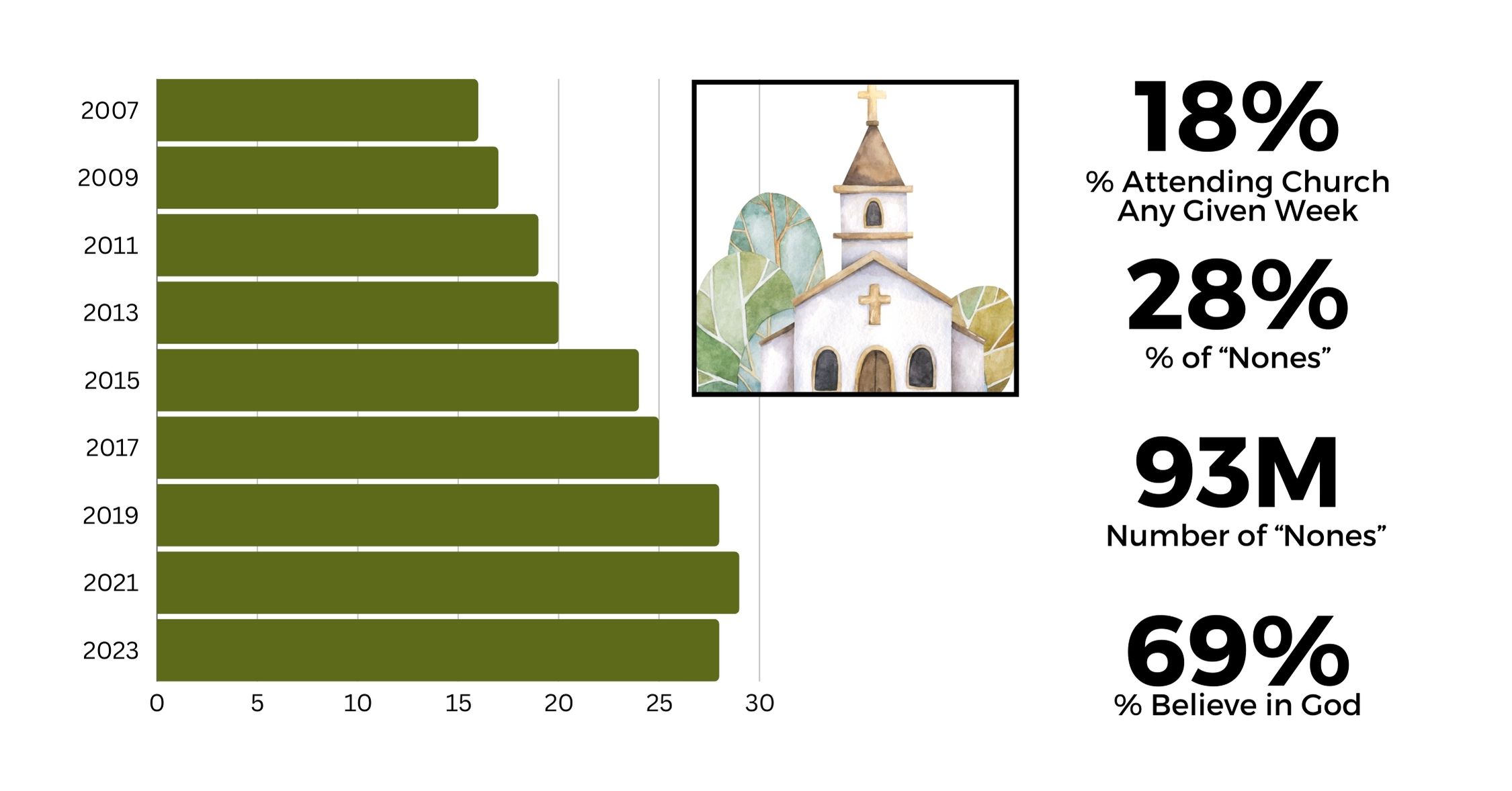
We hope instead it’s something they look forward to. That coming to church is about rejuvenation, instead of something that drains you. Too many people see church as a chore or an obligation instead of a joy. Which is why fewer and fewer people are coming. As of 2018, only about 18% of Americans attend church on any given week so that number is likely even smaller now.[1] But the problem is deeper than that. Not only do they not attend church, they don’t even belong to a church any more. More and more people are considering themselves “religiously unaffiliated,” meaning they don’t identify with any particular religion or denomination. From 2007 to 2024, that number has gone up significantly from about 16% to 28%.[2] The Pew Research Group calls this phenomenon the “rise of the nones.”[3] That’s because when asked what religion this group ascribes to, they answer “none.” That 28% represents about 93 million people. 93 million “nones.” Interestingly, though about 69% of them say they believe in God. 69%![4] You might think with that many “nones” we would be looking at the growth of a new atheism or more agnostics, but most of them still believe in God. Instead, they call themselves “spiritual but not religious.” But why?
The reasons they are “spiritual but not religious” come in a wide-range of answers.
Almost all of them have to do with the church letting people down. Whether it’s hypocrisy, exclusion, being judgmental, too political, or whatever other reason, they perceive the church as a barrier to faith instead of a path to faith. In our own area, 62.6% of our neighbors believe people in the church do not behave as Jesus would behave and that number increased dramatically over a four-year period, more than any other measurement[5] And they aren’t wrong. We don’t behave as Jesus would. But should anyone expect us to? Maybe there is a failure to understand exactly what the church is and why we exist. Our neighbors also think belief in Jesus does not require participation in a church. It’s the #1 thing they believe. More than Jesus’ divinity. More than his resurrection. More than he was the Messiah. But that again just shows a failure to understand why the church exists. And that’s not on society. That’s on us. We have not shown why the community of believers that Christ thought was so important is still important today. Let’s listen to the words of the apostle John. If you have your Bibles or a Bible app on your phone, please go to John 21:15. John 21:15. We’ll be sharing from the Gospel in just a minute. Now, Jesus created the church through Peter. Peter, the exceptionally flawed guy who pulled out a sword when Jesus wanted peace. Peter, the guy who denied Christ three times after swearing he would never deny Christ. It was this Peter that Jesus centered the church. In Matthew 16:18, Jesus says to Peter, “And I tell you that you are Peter, and on this rock I will build my church, and the gates of Hades will not overcome it.” We might just want to ask, “Really, Jesus? With this guy in charge?” But God didn’t make a mistake. For all of Peter’s faults, Peter understood and knew who Jesus was. When Jesus asked the disciples who they thought he was, it was only Peter who said, “You are the Messiah, the Son of the Living God.” Then later, after Jesus is resurrected and appears to the disciples while they are fishing, it is only Peter who jumps out of the boat and runs to Jesus. And it is to Peter that Jesus asks the famous three questions and we will share that together this morning. If you want to follow along, we’ll be reading from John 21:15-17. Hear now the Word of God.
15 When they had finished eating, Jesus said to Simon Peter, “Simon son of John, do you love me more than these?”
“Yes, Lord,” he said, “you know that I love you.”
Jesus said, “Feed my lambs.”
16 Again Jesus said, “Simon son of John, do you love me?”
He answered, “Yes, Lord, you know that I love you.”
Jesus said, “Take care of my sheep.”
17 The third time he said to him, “Simon son of John, do you love me?”
Peter was hurt because Jesus asked him the third time, “Do you love me?” He said, “Lord, you know all things; you know that I love you.”
Jesus said, “Feed my sheep…” – John 21:15-17
Three times, Jesus asks, “Do you love me?”
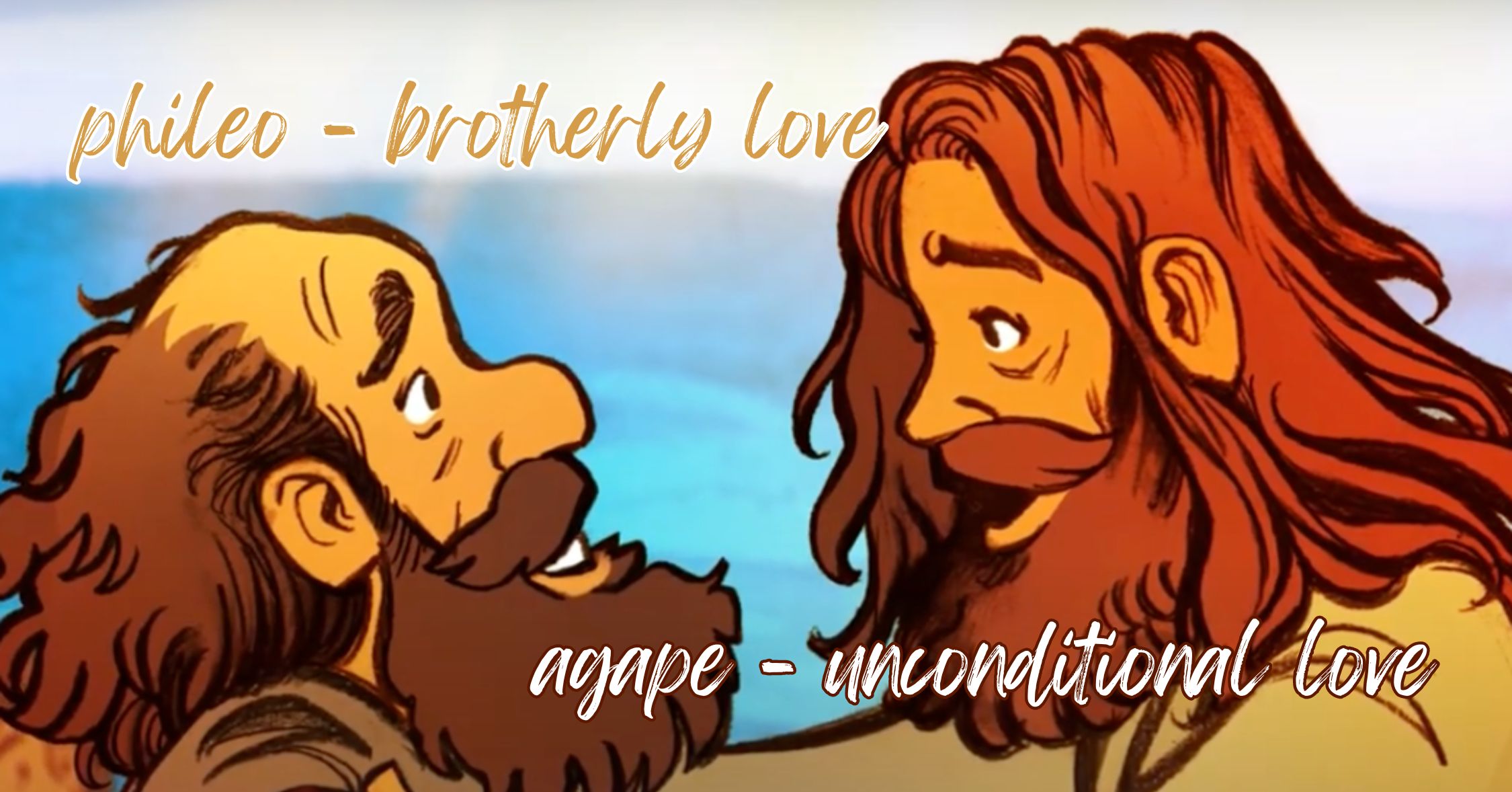
And three times Peter answers, “You know that I love you.” At first glance, you might think “Why is Jesus pestering Peter by asking him the same question over and over? Is he rubbing it in because Peter denied him three times?” But this is when it matters that you know a little Greek (or at least read a really good concordance). Jesus uses a different word for love the first two times. When he asks Peter the question, “Do you love me?” he uses the Greek word agape, an unconditional love – a love deeper than any other kind, but Peter responds each time by using the Greek phileo meaning more of a friendship or brotherly love.[6] They both are saying “love” but with completely different meaning. It must be so disheartening for Jesus that Peter can’t even SAY he has agape love for him, so the third time Jesus asks, he stops using the word agape and instead comes down to Peter’s level and uses the word phileo and Peter is hurt by this. Why? I don’t know. What did Peter expect? He asked you two times in a row Peter! If you didn’t know the difference in translation of the word for “love” you might think Peter was hurt because Jesus had to ask him three times, but instead we know it’s because Jesus came down to his level. Peter is hurt not because of Jesus but from his own inability to love the way Christ loved him. Still, Christ builds the church with Peter as its foundation because Peter is fallible but willing.
That’s what it means to be the church.
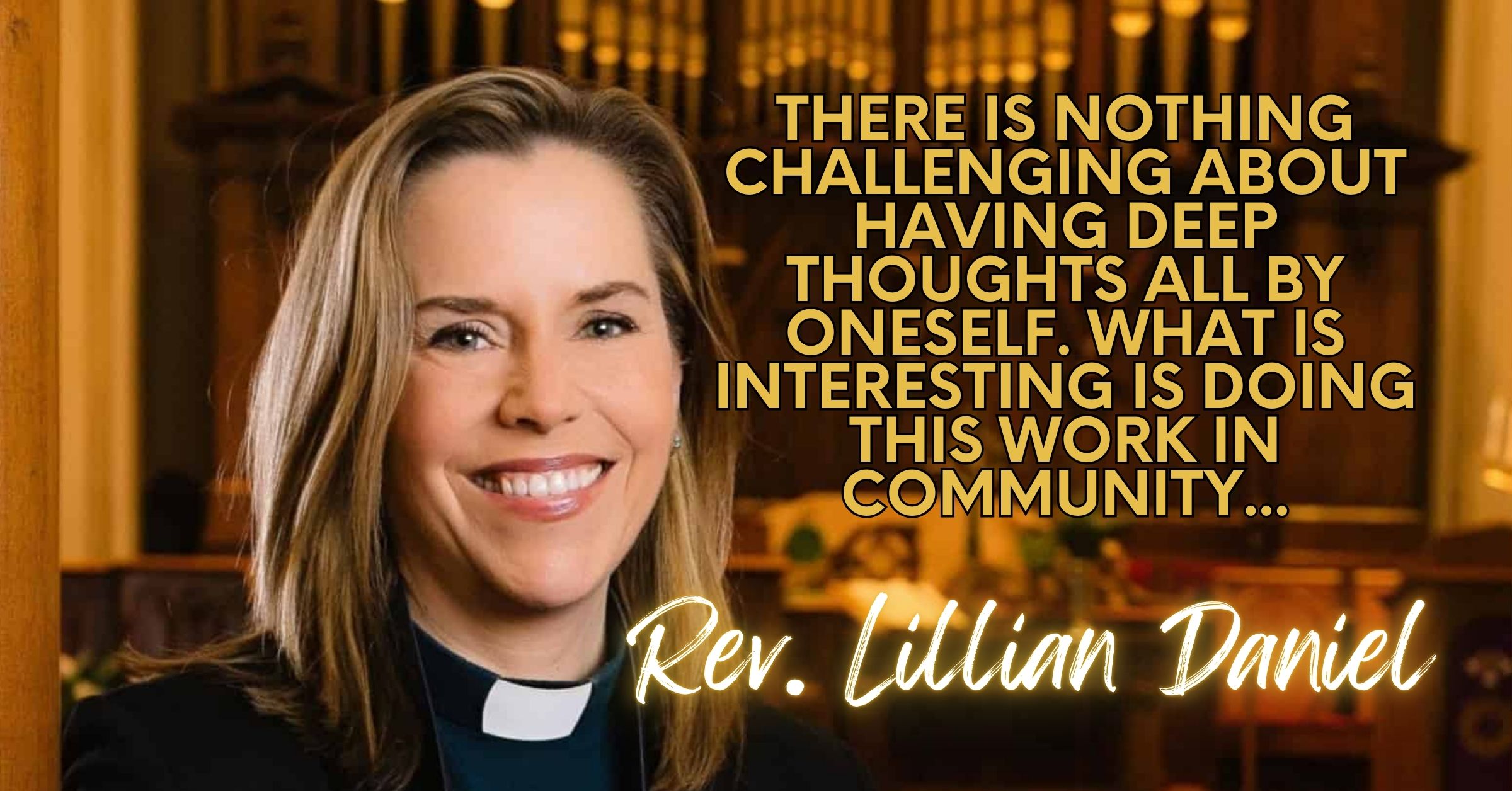
To be fallible but willing. Willing to stick it out. Willing to work on making things better. Willing to grow in our faith. We might mess up. We probably will make mistakes. But if we keep God at the center of our lives and our community we can help to grow the Kingdom of God. People who say they are “spiritual but not religious” are often saying they don’t need anyone else to know God. But some of the most meaningful experiences we will ever have with God come from being part of a community working together to grow in faith and to reach out to the world. Pastor Lillian Daniel said it very well when she said, “There is nothing challenging about having deep thoughts all by oneself. What is interesting is doing this work in community, where other people might call you on stuff, or heaven forbid, disagree with you. Where life with God gets rich and provocative is when you dig deeply into a tradition that you did not invent all for yourself.”[7]
Honestly, I used to think I didn’t need the church.
I completely understand the “spiritual but not religious” attitude because it used to be mine. But I’ve learned that despite all of its faults, people do need the church. Not as an afterthought. Not as a “backup plan.” But we need to be engaged in the life of the church on a regular basis. It helps us to grow deeper in our own faith and gives us opportunities that only come from working together. And there is a comfort and a strength from being in community. When push comes to shove, when a person has their faith truly tested, it isn’t the sunset that’s going to comfort them. It isn’t the beach that’s going to bring them egg rolls. And it isn’t the forest that will pray for them and hold their hand. It’s going to be real people who love God. We are not perfect. We will make mistakes. And to expect anything different is to expect something unrealistic. But Jesus knew what he was doing when he built the church upon the rock of St. Peter. Jesus knew this fallible human being would give us hope that despite our faults, Jesus believes in us. God also knows how much we need one another, and it is for that reason we need the church. Not this building or these chairs or the altar, but the church, the body of Christ. And while the “spiritual but not religious” people are missing out on something wonderful, WE have to do a better job of showing them why. Please consider who you might invite to join us on this journey together. Make it a goal to ask someone to worship or to our upcoming Trick or Treat potluck or to Cookies and Carols. Because honestly, we all need Christ in our lives and we together we are the body of Christ. In the name of the Father and of the Son and of the Holy Spirit. Amen.
[1] https://churchleaders.com/pastors/pastor-articles/139575-7-startling-facts-an-up-close-look-at-church-attendance-in-america.html Gallup shows this number at least double but the reason that isn’t a valid number is because it’s self-reported. When studying actual attendance, ChurchLeaders.com has it right. The Halo Effect creates this false self-reporting and the numbers are much lower. I think that’s evident by the number of people you know who are definitely not in church.
[2] https://www.pewresearch.org/religion/2024/01/24/religious-nones-in-america-who-they-are-and-what-they-believe/
[3] https://www.pewforum.org/2012/10/09/nones-on-the-rise/
[4] https://www.pewresearch.org/religion/2024/01/24/religious-nones-in-america-who-they-are-and-what-they-believe/
[5] MissionInsite report for the Evergreen Valley area 2.5 miles from our church. The numbers changed from 2017 to 2021 from 28.2% to 62.6% in just four years. The number who disagreed dropped from 20.7% to 9.7%.
[6] http://www.gotquestions.org/Jesus-Peter-do-you-love-me.html
[7] http://www.ucc.org/feed-your-spirit/daily-devotional/spiritual-but-not-religious.html
Twelve Baskets of Broken Pieces

Enterprise, Alabama is home to the most unusual hero.
The boll weevil. Smack in the middle of the city at the intersection of Main Street and College Street stands a 13-foot high monument to the boll weevil.[1] What would inspire people to construct a monument to a destructive agriculture pest that nearly destroyed the livelihood of an entire town? Back in 1915, the Mexican boll weevil found its way from Texas into Alabama and ruined many of the cotton crops that were the sole means of income for the people who lived there. Many lives looked to be ruined, but two people – Sessions and Baston – decided to forego their traditional cotton crops and plant peanuts instead.[2] Their first crop alone garnered them enough money to pay off all of their debts. More and more farmers took to their example and diversified their crops and within two years, Coffee County harvested more peanuts than anywhere else in the country! More importantly, the town was saved. The introduction of new crops reinvigorated the soil that was being depleted of vital nutrients by the cotton cultivation and gave them a new source or revenue.[3] But this near disaster made them realize something important. They could pick up the broken pieces of their lives and make something new of it. They found a way to turn what could have been a disaster into something bountiful. And that’s why they built the monument. On the bottom of the monument is inscribed the words, “in profound appreciation of the boll weevil and what it has done as the herald of prosperity this monument was erected by the citizens of Enterprise, Coffee County, Alabama. “[4]

It is inspiring to us when people can turn adversity into advantage.
We all hope we have that ability. We hope when we are in the midst of crisis, when we face our own disasters, we too can turn adversity into advantage. It happened twice to this community. Nearly 100 years after that disaster, another one hit this small Southern city. On March 1st, 2007 a tornado hit the town and killed eight students at Enterprise High School, the first recorded killer tornado at a US school since 1990.[5] Over 120 others were taken to nearby hospitals after the tornado passed and St. Luke’s United Methodist Church became a Red Cross Disaster Relief Center, offering aid to any one who needed it. Enterprise First UMC opened their doors to the youth of the community and hosted a worship service in memory of all eight of the students who passed away.[6] And among those who were there to help with the disaster was the United Methodist Committee on Relief or UMCOR. UMCOR is often one of the very first organizations on the ground to provide help to those in need. Their mission is to face the worst in adversity and become a beacon of hope by helping others. They are often able to make a huge impact quickly in places all over the world because of the presence of churches like ours that work together with UMCOR to get needed supplies to where they can be of the most use. It’s part of the reason why our connection system is vital and important because we can do more good together than any of us can by ourselves. We truly become the hands and feet of Christ.

Our verse today touches on that thought, of becoming the hands and feet of Christ together.
What we are about to read takes place not long after Jesus has sent the Apostles into the world to heal the sick and spread the Gospel. They have traveled to villages all over the land and shared with those who would hear about God’s kingdom and healed those who needed it. When this passage takes place, they’ve come back from those journeys to share with Jesus what has happened. As we read this passage together, listen carefully to what Jesus says and does and reflect on that.
10 When the apostles returned, they reported to Jesus what they had done. Then he took them with him and they withdrew by themselves to a town called Bethsaida, 11 but the crowds learned about it and followed him. He welcomed them and spoke to them about the kingdom of God, and healed those who needed healing.
12 Late in the afternoon the Twelve came to him and said, “Send the crowd away so they can go to the surrounding villages and countryside and find food and lodging, because we are in a remote place here.”
13 He replied, “You give them something to eat.”
They answered, “We have only five loaves of bread and two fish—unless we go and buy food for all this crowd.” 14 (About five thousand men were there.)
But he said to his disciples, “Have them sit down in groups of about fifty each.” 15 The disciples did so, and everyone sat down. 16 Taking the five loaves and the two fish and looking up to heaven, he gave thanks and broke them. Then he gave them to the disciples to distribute to the people. 17 They all ate and were satisfied, and the disciples picked up twelve basketfuls of broken pieces that were left over. – Luke 9:10-17
Jesus tells them, “You give them something to eat.”
The Apostles come up to Jesus and tell him he needs to send the crowd away so they have time to find somewhere to put them up for the night where they can get some food. The Bible tells us that where they are is a remote area and there probably aren’t that many places for a group this large to find a place to rest and fill their stomachs, so they need time to find somewhere before it gets too dark. But instead, Jesus says to them, “You give them something to eat.” The Apostles must have thought Jesus didn’t understand the situation because they start explaining it to him. “We only have five loaves of bread and two fish – unless we go and buy food for all this crowd.” Love that verse because it’s so down-to-earth and real. The disciples are probably pulling out their coin bags and checking to see if they would even HAVE enough to feed this many people. We’re talking on the order of around 10,000 people because the Bible tells us that there are 5,000 men, but some of them came with families with wives and kids in tow. How much was that going to cost? Is there a baker around who could make that much bread without calling ahead an advance order? But Jesus tells them to go and get the people to sit down in groups of 50 and he blesses the food and hands it to them. I can’t even imagine what it must have looked like when they divided up the food. That would have been at least 200 groups of people and still only 12 Apostles. But somehow, not only did everyone get fed until they were satisfied, but they had twelve baskets of broken pieces left over.
You give them something to eat.
Jesus has the disciples do the work. That’s the significant part about this passage. He could have just rained down manna from heaven. I mean he pulled that trick before. But it was important for the disciples to do the work. Just as they had been the ones to go from town to town and heal the sick and share the news of Christ, it had to be the disciples who passed out the bread because Jesus wasn’t always going to be there. But he was counting on these men and women who followed him to carry on the work after he was gone. Just as he does with us today. Jesus wants us to work together to share his Word and bring healing to his people. It may not be physical healing, but spiritual healing instead. But it’s up to us to do the work. It’s up to us to do the work, to be the hands and feet of Christ.
The next time you take communion, keep these images in your mind.
Picture yourself sitting in Bethsaida. Maybe you’re wearing a robe or a cloak and the ground is dusty underneath you. It’s been a long day, but a day of miracles and healing and you are so overwhelmed by the words of Jesus and the way he was able to cure all of those people of their ailments. You’re waiting to hear more. You don’t want to miss a moment. But you’re getting hungry since you haven’t eaten all day. But you also don’t want to leave. And then the disciples come out and start arranging you in groups of 50. You’re not sure why, but everyone in your group is equally puzzled when the disciples come back with these chunks of bread and fish and start handing it out. They don’t seem that big, but when it is your turn, you take enough to fill you and there is still more left. Eventually, everyone around you has had their fill but there are still twelve full baskets of bread left over. One basket for each tribe of Israel. Each basket representing the hope that Christ can fill us up with the bread of life. Each broken piece representing our own brokenness before God and yet no one is left wanting.

As we celebrate World Communion Sunday we are reminded of the power of unity.
Congregations all over the planet are sharing communion together on this very day. Some are doing it with Hawaiian bread. Some are doing it with Portuguese bread. Some are probably even doing it with Wonder bread. But they are all sharing the table to honor God. It is a good reminder that we are not in this alone; that together we have much more to offer the world than any one church could possibly do by itself. In our own Methodist tradition, we see this in so many ways including organizations like UMCOR that make a difference all over the world and in our own communities. As our churches face the future, there will be difficulties. There will be challenges. But like the folks in Enterprise, Alabama we can triumph despite them. With Christ, anything is possible.
[1] http://www.cityofenterprise.net/Default.asp?ID=91
[2] https://en.wikipedia.org/wiki/Boll_Weevil_Monument
[3] http://www.americaslibrary.gov/cgi-bin/page.cgi/jb/jazz/weevil_2
[4] http://www.cityofenterprise.net/Default.asp?ID=91
[5] http://en.wikipedia.org/wiki/February-March_2007_Tornado_Outbreak#Enterprise_area_tornado
[6] http://archives.gcah.org/xmlui/bitstream/handle/10516/4551/article4.aspx.htm?sequence=2
The Truth?
Joseph was killed in a construction accident.
The earthly father of our Lord and Savior Jesus Christ died in a construction accident when Jesus was still young, only 14 years of age. Joseph succumbed to the injuries he received when a derrick fell on top of him leaving him gravely injured. A messenger came for Mary to come immediately. For some strange reason, Mary decided to take James with her instead of Jesus to see what happened while leaving Jesus at home with his six other younger brothers and sisters. But Joseph died before Mary arrived and Jesus was now the head of the household. At least that’s what it says in The Urantia Book.[1] Also known as The Fifth Epochal Revelation, this tome was published in the first half of the 20th century after a period of 10 years where members of a small group were allowed to ask questions of a “sleeping subject” who received the transmissions of celestial beings. There are many other revelations about the life of Christ in this book, especially during his younger years. Like how Jesus loved to draw with charcoal or sculpt with clay when he was only nine years old.[2] At 10, Jesus had a friend, Jacob, the stone mason’s son, who defended Jesus from getting beat up since Jesus even then was a pacifist.[3] Age 6 was the first time Jesus could recall meeting John his cousin whom he played with on the roof of his house in the sand.[4] And did you know Jesus taught his brother James the alphabet when Jesus was only 8 years old?[5]
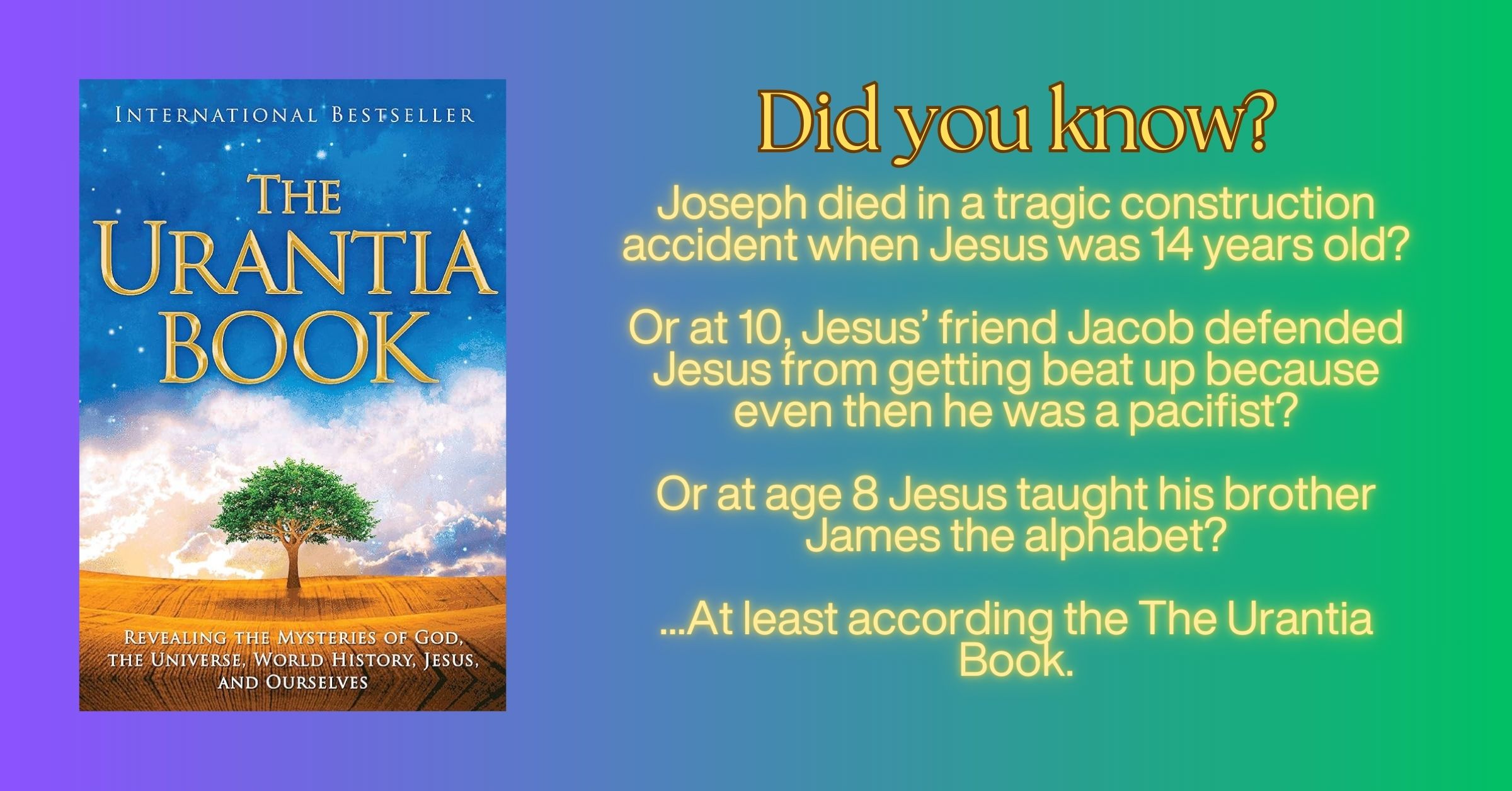
It’s hard to know what the truth is anymore.
Most of us hear stories like The Urantia Book and quickly categorize those as fiction. But too often things and ideas we held as “truths” constantly are being replaced with new things and ideas that we call “truths.” And when we look at the long history of those things, it can cause us to doubt the truth of what we think we know. We’ve talked about some of them before. The idea that slavery was justified by God was a “truth.” The thought that women were forbidden to teach men was a “truth.” Viewing children as property was a “truth.” All of which today we know to be wrong. We fabricate our own truth and call it fact. Tobacco companies lied for years about the health risks of smoking both to the public and to the government.[6] The NFL released a study showing the effects of concussion were negligible for its players and stood by that research for 13 years until it was discovered that those studies were flawed and that more than 100 cases of head trauma went unreported.[7] They have also been slow to enact change despite the mounting evidence about the long-term effects of these concussions.[8] And even now, when concussions continue to be a problem, the NFL refuses to acknowledge it and refuses to own up to their end of it.[9] These are situations where we’ve been lied to, but what about those situations where the results keep changing? Remember when eggs used to be good for you? And then they weren’t? And then they were? How about butter? How many of us switched to margarine because it was better for you only to find out it was much worse than butter ever was?[10]
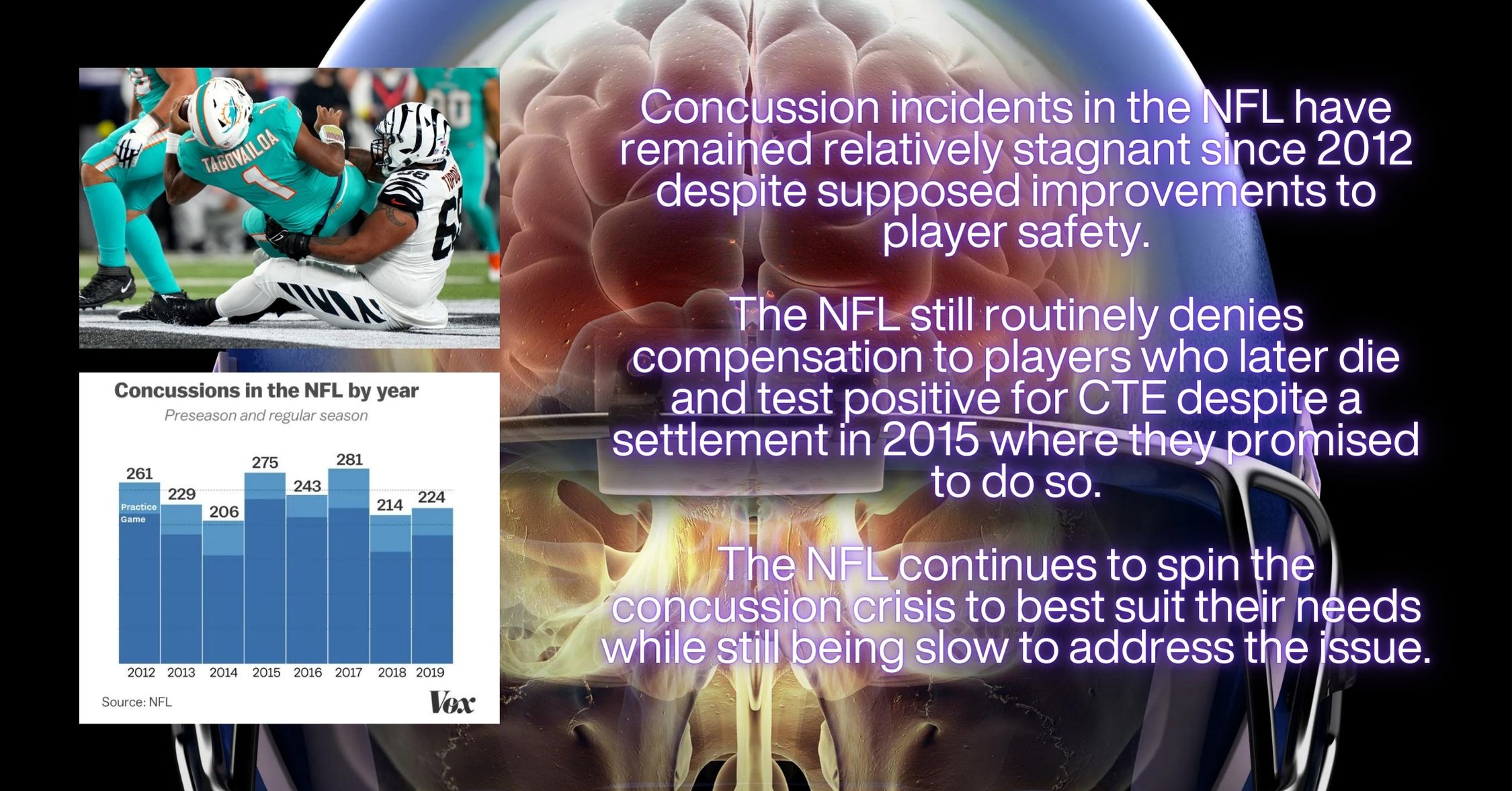
With all of these doubts about the truth, how can we put our trust in the Bible?
As we’ve shared, the Bible has not been free of controversy either. But does that mean there is no foundation to our faith? When we read the Bible, we keep in mind that it is a collection of books and documents, written by human beings, who were inspired by the Holy Spirit. We recognize that there are some inconsistencies in the Biblical narrative, but nothing that takes away from the essence of who God is or who Jesus claimed to be. In fact, the overwhelming amount of documentation in the Bible is uncontested and consistent. As Hamilton wrote in Making Sense of the Bible, “Only the most skeptical of historians question whether Jesus actually existed.”[11] But can it be trusted as the Word of God? As we’ve been talking about all month, whenever John Wesley wanted to understand the truth of Scripture, he turned to what we call today the quadrilateral. He didn’t call it that, but we named it after the process he went through. The Wesleyan Quadrilateral consists of four elements: Scripture, reason, tradition, and experience. He found that Scripture was sufficient for our knowledge of Christ filtered through our reason, our tradition, and our experience. It was through this triple lens that we could discern for ourselves the truth of God’s Word in our lives.
For me, I take comfort in knowing that Luke saw this coming.
I don’t know if people were as skeptical then as we are now, but for Luke it was important that what he wrote and how we wrote it would be taken seriously by others. That’s why he opens his book with these words.
Many have undertaken to draw up an account of the things that have been fulfilled among us, 2 just as they were handed down to us by those who from the first were eyewitnesses and servants of the word. 3 With this in mind, since I myself have carefully investigated everything from the beginning, I too decided to write an orderly account for you, most excellent Theophilus, 4 so that you may know the certainty of the things you have been taught. – Luke 1:1-4
People have often speculated on exactly who Theophilus was.
Some have conjectured Theophilus was a Roman official, a priest, or even a lawyer.[12] But since Theophilus literally means “Friend of God,” I hold with those who believe it was written to those of us who put our trust in Christ so we might have strength in our faith and be able to share Luke’s knowledge and testimony with others to encourage their faith as well. But from Luke’s opening lines, we know the events he shared were something he was able to verify either through people who were actually there or from documents that were considered sacred. From Paul’s letter to the Corinthians (1 Corinthians 15), we know that by the time Luke’s Gospel was written, there already existed documents being circulated that were considered Scripture and documented the life of Christ. They recount the resurrection and attest to the fact more than 500 people saw Jesus all at once after he had died on the cross. Hamilton stated, “To imagine that the Gospel writers could fabricate significant events from the life of Jesus while so many who were still alive had heard or seen Jesus seems unreasonable to me.”[13] Reason also helps us to understand that even though we look at the Bible as one document, it really is a collection of 27 documents written by at least nine different authors over a span of 50 years.[14] To have that much consistency over that span of time and have the essential elements of the same story be recounted from different sources without at least one of them shedding doubt on events is fairly convincing.

Tradition tells us the apostles or those close to them wrote the Gospels.
Tradition also tells us that the Gospels have withstood the test of time. Reason confirms that the accounts we read are likely to be accurate and reliable. But for me, it is experiencing the Word made flesh that convinces me the God we read about in the Bible is real. The God I encounter in my life is the same God I read about in the Bible – a God of love and kindness and mercy. I didn’t grow up in a house where we knew Christ. We didn’t go to church. My parents were nominally Buddhist at the time. Yet it was through my mother I first learned about God and Heaven. It was through the friends I met in my life who encouraged me to get to know Jesus, not by force but by their own example of what God meant to them. It was my girlfriend who would later become my wife, that I was encouraged to return to church. Everywhere I turned, I kept encountering God and each time I truly put my trust in God, God would open a new door in my life. And because I have seen the evidence of God in my own life, I believe what the Bible says about God is true. God is love.
But ultimately, that is something you still have to decide for yourself.
There are volumes of books written on the subject that would help convince you as it did me that God does exist. There are thousands of documents illustrating the miracles and testimonies of various people throughout time who have encountered God in astonishing ways. I can tell you about people who have tried to debunk the Bible and the “myth” of Christianity only to be converted themselves. But for every story about God’s work in the world, there is someone who will tell you it’s not real. They will say that its no different than any other religion. Or that we are attributing to God what is luck or chance. Or people who write things like The Urantia Book. No matter how much proof we offer, it still comes down to a leap of faith. We keep looking for definitive proof that God exists, but the only proof we really need is in the life of Jesus Christ. We call the Bible the Word of God, but the true Word of God isn’t a book, but Christ himself. We put our faith not in a book or a symbol but in the Living Water who still exists within us today. If it makes you feel any better, there is no valid argument that God doesn’t exist either. But for me, the overwhelming evidence is in favor of God. I challenge you to open your life up to God if you haven’t already. I challenge you to really give God a chance, to accept Christ into your heart and be willing to forego your own doubts if even for a little while. Because when you see the world with the lens of Jesus Christ, you can’t help but notice that God has been waiting for you all along.
[1] http://www.urantia.org/urantia-book-standardized/paper-126-two-crucial-years
[2] http://www.urantia.org/urantia-book-standardized/paper-124-later-childhood-jesus
[3] http://www.urantia.org/urantia-book-standardized/paper-124-later-childhood-jesus
[4] http://www.urantia.org/urantia-book-standardized/paper-123-early-childhood-jesus
[5] http://www.urantia.org/urantia-book-standardized/paper-123-early-childhood-jesus
[6] http://www.nytimes.com/1994/04/15/us/tobacco-chiefs-say-cigarettes-aren-t-addictive.html?pagewanted=all
[7] http://www.nytimes.com/2016/03/25/sports/football/nfl-concussion-research-tobacco.html?_r=0
[8] http://mmqb.si.com/mmqb/2015/12/23/nfl-reaction-concussion-movie-will-smith-bennet-omalu
[9] https://www.pbs.org/newshour/show/former-nfl-players-denied-compensation-for-brain-trauma
[10] http://www.dailymail.co.uk/health/article-2274747/At-truth-Butter-GOOD–margarine-chemical-gunk.html
[11] Adam Hamilton, Making Sense of the Bible, p. 233.
[12] https://en.wikipedia.org/wiki/Theophilus_%28biblical%29
[13] Hamilton, p. 236.
[14] Ibid, p. 233.
If you’re curious about football and concussions, please read these articles from ARSTechnica, PBS News Hour, and VOX. I have to admit what bothers me is how little focus there is on the issue, primarily because fans love the violence of football and players don’t want to miss a paycheck. But maybe our priorities are in the wrong place when we condone the violence knowing people are dying because of it. We are all guilty of not wanting to give up the things that give us pleasure even when we know it’s the right thing to do. Something we all struggle with.
Question Everything!
“Question everything!”
This simple quote has often been attributed to Albert Einstein, but no evidence proves he actually said it. Yet, the rumor persists and is often taken as fact. While researching our message today, I found numerous articles and images where people either said or showed those words as coming from him without any footnote or citation to show where they got that information.[1] It’s amazing how blindly we believe things that are not true. Here are a few other famous quotes we think we know. How many of these did you believe? “Let them eat cake!” is attributed to Marie Antoinette as Queen of France which makes her sound callous and unintelligent, but it’s actually a paraphrase from Jean-Jacques Rousseau’s autobiography where he recalls “a great princess” saying “Let them eat brioches.” Somehow people put two and two together and got sixteen and this quote stuck to her legacy.[2] “There’s a sucker born every minute” is another misattributed quote, this time to P.T. Barnum. Although most people think he said this, the truth is there is no evidence of it. In fact, the website The Quote Investigator traces the likely origins of this to a clothing store who linked the phrase to Barnum.[3] And of course my favorite – Captain Kirk never once said in the original run of Star Trek, “Beam me up, Scotty.”[4] The famous phrase for which he is known is something he never actually said. Weird, right?
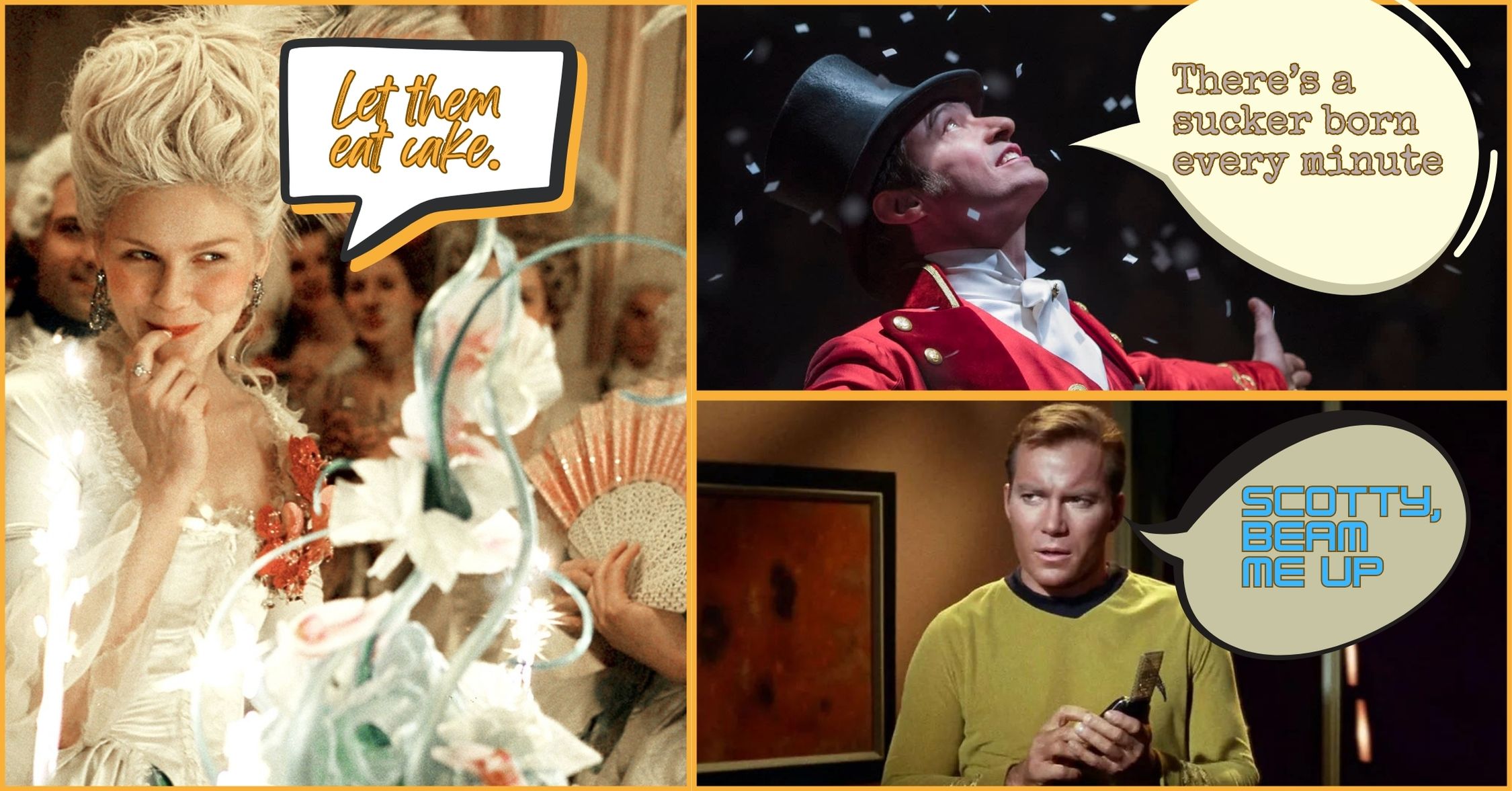
We often accept things as true without any actual evidence.
Part of that is because there is no way for us to know everything. We end up relying on others to provide us with information to make decisions. It’s what is called the illusion of explanatory depth – we think we know much more about a topic than we actually do. In her article on the subject, Rebecca Kates wrote, “We rely so regularly on other people’s expertise to the extent that we often take other people’s knowledge to be our own. It is often only when we are asked to explain a topic in great detail that we realize how little we understand something.”[5] In 2002 there was a study by Rozenblit and Keil where they asked people how well they thought they understood everyday objects like a toilet r a zipper and then afterward asked them to write a detailed explanation about how it worked. After the study they asked again how well they thought they understood those devices and their confidence dropped.[6] That’s why some of the great hucksters in society have been so successful at pulling the wool over our eyes. They gain our trust, and then exploit that to get what they want. Elizabeth Holmes is probably the most famous recent example of this. She swindled millions of dollars from investors by claiming fraudulently that her company Theranos had successfully devised a new machine that could instantaneously test for 200 to 250 different potential problems in the human body including HIV, diabetes, and cancer.[7] Through a very intentional cover up, she hid the fact that her new device could do virtually none of those things, and she not only got investors to believe in her but medical professionals who relied on the fake results she was peddling to have confidence in her product. There are too many examples of this to name them all here, but I’m guessing you can think of examples in your own life or in society where this has happened over and over again.
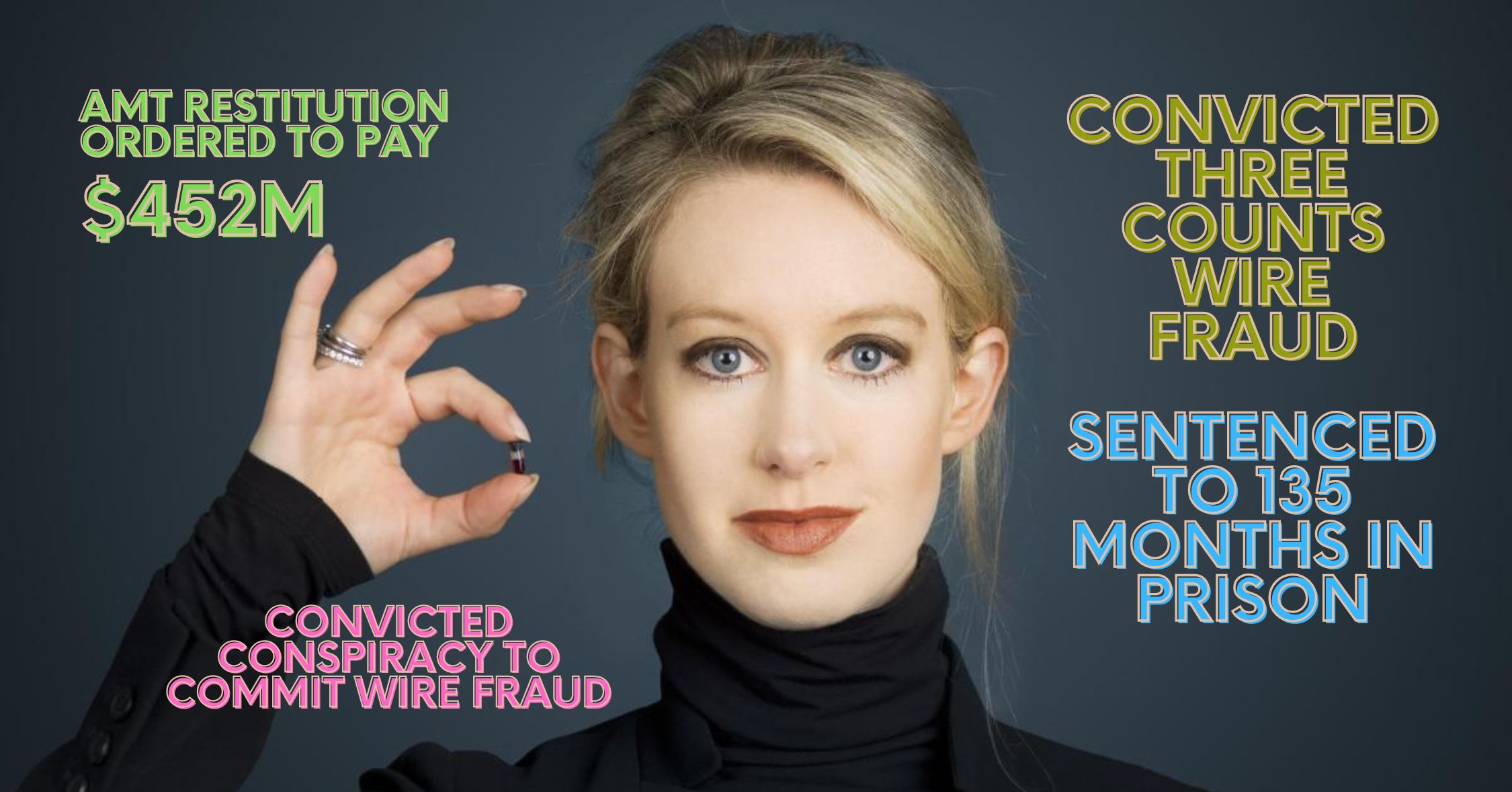
The lesson isn’t to stop trusting people.
The lesson is to wrestle with our understanding and question it when we should. In light of what you know, in light of your experience, do the things you believe make sense? The passage we are going to read this morning will take you by surprise. It did to me, and I wrote all of this. But God put this passage in front of me and suddenly I saw it in a different way. We’re going to read this morning from the book of Genesis all the way in the beginning of the Bible – Genesis 32:22-32. This is the passage where Jacob wrestles with God to a standstill. It is also where Jacob is renamed Israel and becomes the father of the Twelve Tribes. As we approach the time of the story, Jacob is worried about meeting his brother Esau. They haven’t seen each other since Jacob tricked his father to give him the family blessing which was a massive theft of Esau’s right as the eldest. He’s worried Esau will be furious with him. Maybe so furious, he could kill him. So, Jacob sends everyone else ahead of him including his wives and kids in an effort to calm Esau down before Jacob arrives. And while they are gone, Jacob wrestles with God. As in all of these stories, it’s left up to your imagination – did it happen or is this a metaphor? I have thought of it as a metaphor, but even still I always looked at it as a testimony to Jacob’s resilience. But now I’m beginning to see it in a different light.
22 That night Jacob got up and took his two wives, his two female servants and his eleven sons and crossed the ford of the Jabbok. 23 After he had sent them across the stream, he sent over all his possessions. 24 So Jacob was left alone, and a man wrestled with him till daybreak. 25 When the man saw that he could not overpower him, he touched the socket of Jacob’s hip so that his hip was wrenched as he wrestled with the man. 26 Then the man said, “Let me go, for it is daybreak.”
But Jacob replied, “I will not let you go unless you bless me.”
27 The man asked him, “What is your name?”
“Jacob,” he answered.
28 Then the man said, “Your name will no longer be Jacob, but Israel, because you have struggled with God and with humans and have overcome.”
29 Jacob said, “Please tell me your name.” But he replied, “Why do you ask my name?” Then he blessed him there. 30 So Jacob called the place Peniel, saying, “It is because I saw God face to face, and yet my life was spared.”
31 The sun rose above him as he passed Peniel, and he was limping because of his hip. 32 Therefore to this day the Israelites do not eat the tendon attached to the socket of the hip, because the socket of Jacob’s hip was touched near the tendon. – Genesis 32:22-32

Jacob wrestles with God.
Obviously, if God wanted to, God could have overpowered Jacob in an instant, but I don’t think that’s what this is about. Today we often “wrestle” with things. We wrestle with problems. We wrestle with morality. We wrestle with change. We, even now in the 21st century, still use this term when our minds are grappling with ideas or concepts or choices that are hard to figure out. We “wrestle” with them. I don’t think God is testing Jacob’s resilience. Jacob is instead wrestling with his ideas of God. Who is God in this moment? Is God going to strike Jacob down for stealing the blessing? Is God going to show mercy and forgiveness? What kind of God do I believe in? Jacob wants God’s blessing for his own. He stole it once before, but he hopes he has found forgiveness in God’s eyes as he approaches his brother. That’s why he says to the Lord, “I will not let you go unless you bless me.” I don’t think Jacob was being demanding, but instead pleading, not wanting to let go unless he knew he had God’s support. God wants us to wrestle with the questions of our own lives and our own world today in much the same way. He wants us to hold on tight to God until we can discern where God is leading us.

People often put reason and faith as opposite ends of the spectrum.
One is seen as a product of the mind and the other a product of the heart or the spirit. But the truth is God gave us these minds to use them. Reason is meant to support our faith, not to destroy it. Reason is a tool in our tool belt to help us discern truth from fiction. It is meant to bring us closer to God, not to keep us far away. And it is meant to help us so we might be able to help others know the love of God. As Peter wrote in his first letter recorded in the Bible, “Always be prepared to give an answer to everyone who asks you to give the reason for the hope that you have (1 Peter 3:15).” We are meant to explore our relationship with Christ. We are meant to bring questions to God and seek out the answers. One of the reasons we have a church family is to give us a place to bring those questions so we can find the answers together. At the end of the day, it still comes down to faith. But not blind faith. Faith as an informed choice. God doesn’t want zombies as followers. It’s why he gave us freedom. But God gave you the tools to find him through the use of your mind. At the beginning, I said Einstein didn’t actually say, “Question everything.” Instead he said something much more nuanced and more profound. Here’s what he actually said about questioning, “The important thing is not to stop questioning. Curiosity has its own reason for existing. One cannot help but be in awe when he contemplates the mysteries of eternity, of life, of the marvelous structure of reality. It is enough if one tries merely to comprehend a little of this mystery every day. Never lose a holy curiosity.[8]”
[1] https://www.linkedin.com/pulse/question-everything-marilynn-graves
[2] https://www.britannica.com/story/did-marie-antoinette-really-say-let-them-eat-cake
[3] https://quoteinvestigator.com/2014/04/11/fool-born/ ; There is actually an even more interesting story about this from the Skeptikai website hosted on Medium. But because this was only a “likely” story (even though from a reputable source) I went with The Quote Investigator version because they trace the evidence through time. To be sure, both could definitely be true.
[4] https://en.wikipedia.org/wiki/Beam_me_up,_Scotty ; You can read more about misquoted figures in the article which launched my investigative nose from Business Insider.
[5] https://drive.google.com/file/d/11xV9-NsgNw6RN1ID9TRqdVp1V71iUI6M/view
[6] Ibid
[7] https://www.integrityline.com/expertise/blog/elizabeth-holmes-theranos/ ; This website provided a comprehensive summary of the Theranos case.
 Craig's Corner