
Craig’s Kitchen – Simple Kalua Pork

Many dishes in one!
What a deal. Kalua pork is ridiculously simple to make but it’s taste depends mostly on how you cook it and the ingredients you use. This is one of my favorites to make because of its taste and utility. Then you can use the leftovers in egg drop soup! Which tastes great by the way. The saltiness of the kalua pork adds some depth to the soup beyond what is already there and turns it into a meal. I also love using it to make omelettes! The saltiness again adds some OOMPH to the dish.

Kalua Pork Three Ingredients:
- Pork butt – I always find that term funny and totally inaccurate. Pork butt is actually the shoulder portion of the pig. But it’s great for cooking down into kalua pork (and a bunch of other stuff). Make sure to get a boneless portion. It makes it easier. I use about 3 lbs for our family and always have left-overs.
- Liquid smoke – I like to use hickory as it seems to deepen the overall flavor of the dish, but I’ve used applewood before and it tasted great. Just a little less savory and a little more fruity (as you would imagine).
- Hawaiian Pink Sea Salt – Definitely want to get the thicker grains of salt (almost like small pebbles) and really rub that in. It breaks down better and gives it that salty taste you expect from this dish.

Putting it together:
- Before putting it into the crock pot, pierce the pork butt with a fork multiple times on each side of the meat. You want to basically create pockets for the liquid smoke to get into and spread into the meat.
- Pour about 1 tbsp for each 3 lbs evenly over the whole portion of pork butt. I rub it in as I’m going. If you like it extra smoky, go ahead and use more. Our family likes it with a less intense smoky flavor. You want enough to cover the surface as you spread it.
- Use about 1 heaping tbsp of sea salt for every 2-3 lbs. One recipe I tried said 1 tbsp per pound but that was TOO salty for us. Still use liberally over the surface of the meat. You want to rub it in so it mixes into those nice holes you made and also settles into the meat so it melds the flavors well.
- Put it in the crock pot with the fat side up (I like the melting fat to drip down the meat and continue to keep the meat moist). Set it on high for 8 hours or low for 12 hours. Generally, it’s actually done before the time is up, but judge for yourself. About 75% in I use two forks and start to break it up. By then, there is a sizeable amount of juice in the bottom of the crock pot and you want it to really soak in the fat juices! Shred the meat while it is in the pot and you’re pretty much done.
- (optional) Our family likes it when I then fry the kalua pork in a pan. It turns crispy because of the fat content and has a great crust on it. I create a layer of it on the bottom of the frying pan and let it sizzle on a medium high heat until it crisps up and then serve it either by itself, in an omelet, or with some egg drop soup. All taste great.
What If?…

What if?
We have probably all asked that question at some time during the last five months. It’s natural to wonder how things might have turned out if only we had done something different. And not just during the pandemic. What if you went to a different college? What if you had moved to a different city? What if you turned left instead of right? Our life is filled with choices and each one makes a difference. Growing up, one of my favorite comic books was titled “What If?” and every month they would explore this idea about how the choices we make can affect our lives. Sometimes the differences were huge. Sometimes the differences were small but meaningful. Sometimes the differences were just…different. It was always interesting to explore new possibilities, but was also a reminder that every day of our lives are important. What we do and say MATTERS! God has given us, but we only get to do it once so how can we make the most it?

God wants us to be BOLD in life!
Nowhere in the Bible is there a story about a guy who played it safe and was told by Christ, “Good job! Who needs to take risks? Play it safe.” Instead, it’s quite the opposite. In the story of the Parable of the Talents, God rewards those who have taken a chance with the gifts they are given and punishes the guy who plays it safe. In the book of Acts, we read about Ananias and Sapphira who withhold a portion of their profits for themselves instead of giving it to God and they die on the spot! Not that God would literally kill us for playing it safe, but instead a part of us dies when we hold back. A part of our ability to trust withers away. We were put on Earth to serve God in BOLD ways, to dare to make this world a better place. And that takes BOLD people. There was a scene in the movie Dead Poets Society that reminds me of God’s call to boldness. In it, Mr. Keating is teaching his students about poetry, and the kids are used to studying about rhyme and meter and iambic pentameter – all the forms and functions of poetry. But Mr. Keating wants to inspire them, to go beyond just studying about it and understanding it and he says to his students, “We don’t read and write poetry because it’s cute. We read and write poetry because we are members of the human race. And the human race is filled with passion. Medicine, law, business, engineering, these are all noble pursuits, and necessary to sustain life. But poetry, beauty, romance, love, these are what we stay alive for. To quote from Whitman: ‘O me, o life of the questions of these recurring, of the endless trains of the faithless, of cities filled with the foolish. What good amid these, o me, o life?’ Answer: that you are here. That life exists, and identity. That the powerful play goes on, and you may contribute a verse. That the powerful play goes on and you may contribute a verse. What will your verse be?” What will YOUR verse be?
God is never short of inspiration either.
There’s a great passage in Malachi that I want to share with you today. Malachi is the last book of the Old Testament. It was written to the Jews who had returned from Babylon after the temple had been rebuilt. The people had become spiritually apathetic. They didn’t turn to false gods or other deities, but were “disillusioned about their future and skeptical of God’s promises.”[1] They had the form and function of a church, but really had turned into nothing more than a country club for Jewish people. They stopped being a church. And in the beginning of this chapter, Malachi foretells the coming of Christ and asks the important question, “…who can endure the day of his coming? (Malachi 3:2)” Who can endure the day of his coming? And he follows it up with the section we are about to read this morning.
8 “Will a mere mortal rob God? Yet you rob me.
“But you ask, ‘How are we robbing you?’
“In tithes and offerings. 9 You are under a curse—your whole nation—because you are robbing me. 10 Bring the whole tithe into the storehouse, that there may be food in my house. Test me in this,” says the LORD Almighty, “and see if I will not throw open the floodgates of heaven and pour out so much blessing that there will not be room enough to store it. 11 I will prevent pests from devouring your crops, and the vines in your fields will not drop their fruit before it is ripe,” says the LORD Almighty. 12 “Then all the nations will call you blessed, for yours will be a delightful land,” says the LORD Almighty. – Malachi 3:8-12
Test me in this!
“Test me in this…and see if I will not throw open the floodgates of heaven and pour out so much blessing that there will not be room enough to store it…” Are you willing to take God up on that offer? All we need is two things – faith and trust. When we have faith in God’s promise and trust him to be faithful to us, he promises a flood of blessings. Instead, we often choose to rob God of what is already rightfully his. God doesn’t ask you to give everything you have (even though he could). He only asks for your trust enough that you would give at least 10% of what you earn to help what God is doing in the world. When we fail to give that to God, we are not only robbing God, but robbing ourselves of this opportunity to experience God’s blessing in our lives. Now, you might be tempted to get this image of a mighty God holding back this wonderful blessing as a punishment for our failure to be more faithful or trusting. But the curse we are under is one we’ve made ourselves, not one that God wants for us. It’s just that when we hold back from giving all we can, we are also holding back the chance for God to work in our lives in the most powerful of ways. God WANTS to do this for us. He invites us to “test him,” but that requires us to have faith in God’s promise.
How many of you have ever played “penny roulette” in Vegas?
Don’t be shy. No one is going to condemn you for gambling. But if you’ve ever played penny roulette in Vegas it’s pretty fun. For about a dollar, you can play for hours on end. The first time I went to Vegas was right when I turned 21. Living in Southern California, it’s just a day trip to the Strip and what better way to express your newfound freedom than to test your boundaries. So my friends and I went to Vegas and in about two minutes, lost nearly all the money I had set aside for gambling. Blackjack is a cruel and harsh game. So with limited funds and a whole lot of time left, I found penny roulette. I turned in a dollar and after playing for about three hours, I walked away with a fortune. Five whole dollars. I was good. You’ve all heard of saying, “you’ve got to bet big to win big,” or “you’ve got to spend money to make money.” It’s true. It was easy to bet “big” when you’re only playing for pennies, but you have to really have faith to go all in. God wants you to go “all in.” It’s only when we allow ourselves to be that open to God’s blessing that we can really receive it.
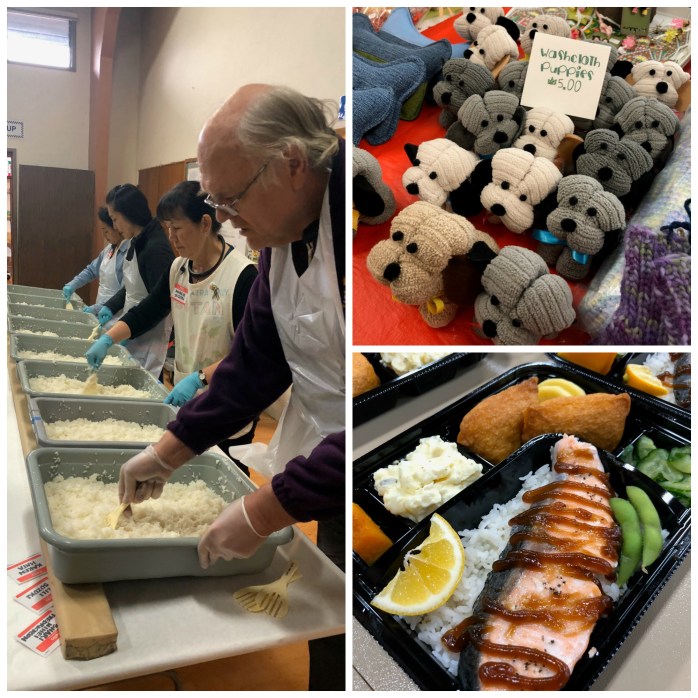
So the big “What If?” I have for our church is what if we didn’t need fundraisers?
What if we didn’t need fundraisers? Or special giving? What if instead of giving to get, we were giving to give? Instead of giving by buying a bento box or buying cookies from the bake sale or giving to buy some cool arts and crafts, we were giving just to give and trusting that God could do some mighty things with our giving. We give a LOT every year in memorials, holiday donations, and church fundraisers. And this year more than most is teaching us how tenuous that can be. So what if instead of giving to get stuff from the church, we dedicated ourselves to giving just for the sake of giving? What if we increased our giving even just by the amount we typically spend on fundraisers and bento boxes and everything else? Then when we do a fundraiser, we could dedicate that money directly to things we believe in to show the love of Christ.
That’s my big “What if?”
Could we challenge ourselves to make this shift in the time of the pandemic? Think about what we could do instead! The lives we could change and the faith we could grow if we were able to dedicate every fundraiser to a cause we believed in. We could provide computers to kids who need them. We could feed the hunger and the homeless for months. We could support different Black-owned businesses in the community every month. We could send our own kids and adults on international mission trips. And people would give. People love giving to things they think are worthy. Our fundraisers would be even more successful than ever before. We could do some wildly creative outreach events and make our presence felt deeply in our community. I think of the words of Bobby Kennedy when he said, “There are those who look at the way things are and ask why? I dream of things that never were and ask why not?” “There are those who look at the way things are and ask why? I dream of things that never were and ask why not?”
Fundraising should be about above and beyond giving.
But to be able to do that, we have to fund ministry ourselves. We have to stretch ourselves to give enough to be able to do these amazing things. But how fulfilling would it be to know that our efforts have gone to save lives, to change how someone connects to God, to give a child the chance to know Jesus Christ? These are the fruits of our giving. These are the types of things that we can do when we give ourselves to God. “Test me in this…and see if I will not throw open the floodgates of heaven and pour out so much blessing that there will not be room enough to store it…” We have to have faith and trust to really give what we can to God. And when we do those things, we can help to bring about God’s Kingdom on Earth. Let us be BOLD. Let us ask the big “What if?” Let us truly go all in for Christ. And ask yourself this, “What will your verse be?” In the name of the Father, and of the Son, and of the Holy Spirit. Amen.
[1] Some of this section is taken from The Archeological Study Bible, “Introduction to Malachi,” p. 1545.
Craig’s Kitchen: Seven-Layer Dip
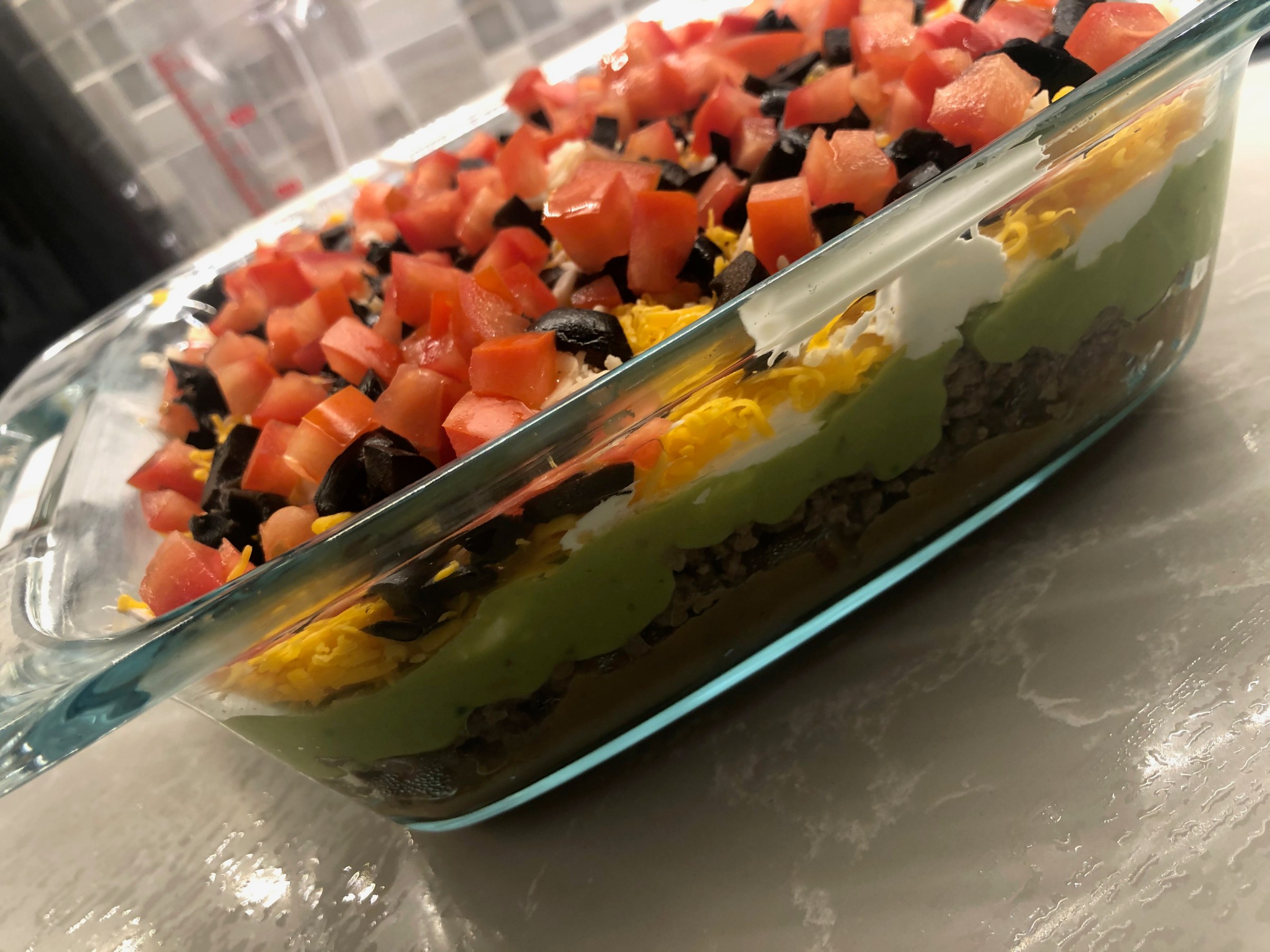
Seven layers of yummy goodness.
I love a good dip. Mom’s classic French Onion Dip made with sour cream and some old-fashioned Lipton’s Onion Soup Mix was always a staple. Something about that combination of savory onion flavor with cool, smooth sour cream on top of a crisp salty chip was tantalizing. I could eat that by the pound (I’m afraid). I think it was that combination of textures and flavors that was so appealing. Mixing multiple things into one scrumptious bite was fun, and when it worked, was the best.
You can imagine how Seven-Layer Dip was something that would grab my attention. Not only did it mix the crispness of a tortilla chip with the soft flavors of a dip, but the dip itself had multiple textures and flavors on its own! Over the years, I’ve worked hard to craft it to my liking and so far its a hit at church potlucks, but you can be the judge. Obviously the fun is creating your own mix of seven layers (or more). I would love to try yours!
 Anyway, my seven layers are (in order from bottom to top):
- Refried beans (1 regular can) – A good base as it holds the rest of the dip steady and makes it a bit easier to spread the guacamole on top of the ground beef. I use Rosarita refried beans (traditional – not any other kind). For me the flavor of Rosarita and the texture when refrigerated is the best.
- Ground beef (1 lb) – Because the goal is to create a harmony of flavors, I don’t use anything more fatty than an 85/15 ground beef. 90/10 works great in this dish because you don’t want tons of the beef juice to make the rest of the dish compromised.
- Guacamole – Something hearty and spreadable. Not an avocado dip since the sour cream has to go on top and ideally each one should be its own layer. I love a small half-pint container of Whole Foods guacamole made in store. Usually I need the whole container.
- Sour cream – Surprisingly I use almost a whole small container of sour cream! Normally, my favorite is Clover Organic, but its so thick its harder to spread. Something like regular Knudsen’s has a good flavor and a desirable thickness.
- Cheddar cheese (1 8oz block) – Please shred your own cheese. And personally, I use the second smallest grater size. I like that the cheese is fine, but not too wispy. A good fine cheese adds a delicate flavor to the mix. I found that sharp cheddar works best since it’s competing with the flavors of all the other ingredients.
- Diced tomatoes – I like Roma tomatoes because they are easy to slice and I tend not to use the mushy middle but just the meat of the tomato nearest the outer skin. Roma tomatoes cut down on wasting the mushy middle.
- Chopped Olives – Whatever you like works here. You just want that olive taste to balance out some of the other flavors and add a little something extra. Here especially is where people get creative and add their own seventh layer. I find the last two layers are open to interpretation.
Putting it together
- If you have two small pans, cook both the refried beans and the ground beef at the same time. If not, beans first. If the ground beef is too wet, I do drain it some. Beans layer first and then ground beef. Set aside and let sit until not quite so hot. You don’t want it heating up the guacamole and sour cream!
- Grate the cheese and chop the tomatoes and olives while you wait for the beans and beef to cool.
- Gently spread the guacamole on top of the ground beef, being careful not to displace the beef too much. Then spread the sour cream gently over the guacamole. You don’t want to mix the two but try to have two distinct layers.
- Cover it all with the grated cheese, then layer the tomatoes and olives together on the top.
- Refrigerate until the whole dish is cool and then remove and serve with your favorite tortilla chip. Here, I favor the thicker tortilla chip or make my own, but something without enough heft won’t carry the dip!
Enjoy!
What Really Matters

Once upon a time, there was a preacher.[1]
A real radical, hard-line, fundamentalist type. An adult video store was opening up in town and he was determined to stop it. He rallied the congregation. He preached on the sins that would come from this place. He even started a prayer group just for this purpose and asked God to strike down this establishment before it could be built. Lo and behold, about two weeks before it was about to open, lightning struck the store and it burned to the ground. The pastor was pretty pleased with himself as was the whole church until they were served with a notice that they were being sued by the owner of the video store on grounds that they were responsible, either directly or indirectly, for the demolishment of the building. The church denied all responsibility or any connection to its destruction and as the case made its way into court, the judge had a real puzzled look on his face. He looked up at the two groups and said, “I don’t know how I’m going to decide this case. From the paperwork, it looks like I’ve got a bar owner who believes in the power of prayer and an entire church that does not.”

Do you “Put your money where your mouth is?”
These people didn’t. Even though they had evidence of God’s power right before their eyes, they chose their pocketbook over God. You’ve heard it said, “Money is the root of all evil,” but the actual quote from the Bible is “The LOVE of money is A root of all KINDS of evil.” And there’s a difference. It’s not money itself that is evil. It’s our elevation of it. It’s putting the pursuit of it above everything else. That’s what gets us into trouble, when we elevate the material and downplay the spiritual. If you have a Bible or a Bible app on your phone, would you go to 1 Timothy 6:17. We’re going to hear the rest of the story. This letter is from a group of letters in the Bible from the apostle Paul called the “Pastoral Letters” because each one is written by Paul to help Timothy and Titus lead their churches. And in this first letter to Timothy, Paul gives advice on a wide number of topics. It’s kind of like a mini booklet on “How to Run A Church.” He talks about everything from worship to qualifications for being a deacon to how to treat the elderly, but today we’re going to focus on his teachings giving. In this passage, Paul is offering advice to Timothy on how to preach about “true wealth” and how we confuse material wealth and spiritual wealth. As you read this passage, listen for how that challenge speaks to you.
17 Command those who are rich in this present world not to be arrogant nor to put their hope in wealth, which is so uncertain, but to put their hope in God, who richly provides us with everything for our enjoyment. 18 Command them to do good, to be rich in good deeds, and to be generous and willing to share. 19 In this way they will lay up treasure for themselves as a firm foundation for the coming age, so that they may take hold of the life that is truly life. – 1 Timothy 6:17-19
Have you ever found yourself saying, “If I had a million dollars?”
What would you do with it? We’ve all probably daydreamed like that before. In fact, there’s a whole song on it by the group Barenaked Ladies called, “If I Had A Million Dollars,”[2] and it’s one of their most popular songs. It’s basically just a list of things they would buy, but my favorites are a llama or an emu, a K-car (a nice reliant automobile), and really expensive ketchup to go with their Kraft dinners. Like the band, most of us would not only buy things for ourselves, but we would do nice things for other people, too. There’s nothing wrong with daydreaming about what we would do with a windfall of money or even splurging on ourselves once in a while. The danger, as Paul writes to Timothy, is to put our hope in wealth (or anything else for that matter) over God. It’s to make the mistake in thinking that a car or a title or a hot-looking spouse will bring you long-lasting happiness. There’s nothing wrong with having a nice car or being rewarded for hard work with a good job or having a hot-looking spouse for that matter. But if your end goal is to achieve happiness through those things, you’ll end up being disappointed, because none of it lasts. Someone always has more. Someone has a better job, a better car, a better everything! You simply can’t keep up with the Joneses, because the Joneses always have more.
But you already know this.
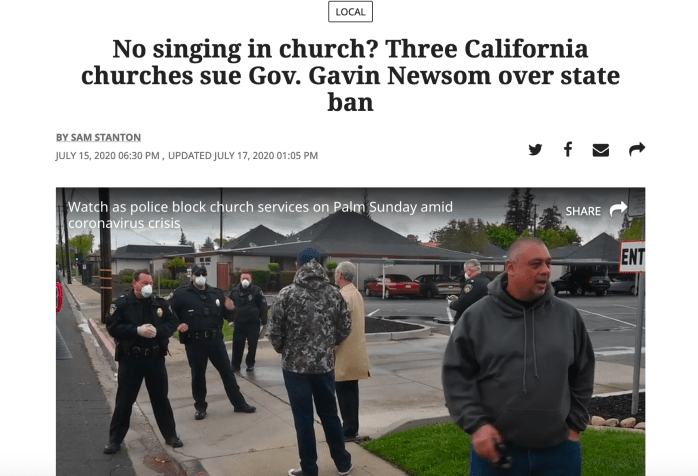
In your head, you know this to be true. It’s logical and from experience you have seen it for yourself. And yet we keep making these mistakes. We’re not talking about this today because you need to know this. We’re talking about it because in the hustle and bustle of life we often forget. Worshiping together is about being the community of Christ in the world and the family of Christ for one another. We need to take time once in a while to remind ourselves of what is truly important. In these crazy, wacky, and wild days, I keep hearing stories on the news of pastors and churches who are a constant embarrassment to all that it means to be the church today. People insisting on worshiping in person, accusing those who don’t agree with lacking faith, acting recklessly and without thought, and then saying they trust God as the reason for their actions. Do these people think God really is the one telling them that we need to sing in church, in front of a crowd of people, or it isn’t church? Or is that just something personal? Do you think God is saying we have to worship in person because otherwise it doesn’t count? Or is that the short-sightedness of people who can’t adapt to a changing world? Why couldn’t God be speaking through our local health officials to offer us protection and advice to keep us safe? Instead, health officials are quitting because their lives are being threatened for trying to do what’s right. Sometimes we bring up topics in worship that should be no-brainers, because sometimes they aren’t. Sometimes we forget. And with so much added stress because of the pandemic, it’s natural for us to shift priorities, but I hope you will keep in mind the one priority God asks of us all. “Love God, Love Your Neighbor.” As Jesus himself told the law expert, “‘Love the Lord your God with all your heart and with all your soul and with all your mind.’ 38 This is the first and greatest commandment. 39 And the second is like it: ‘Love your neighbor as yourself.’ 40 All the Law and the Prophets hang on these two commandments.” Everything rests on how we do these two things – loving God and loving our neighbor.

No amount of money, power, or fame will bring you peace.
It’s about how we use what we have that makes a difference. No matter how much or how little of it we have, it’s how we use it that will change the world. I’m hoping we will really pray about how we can use the resources we have, both individually and as a church, to make an impact on our community, our neighbors, and everyone we meet. For some who have lost jobs, who are having to take a cut in pay, who are having to worry about critical needs, by all means take care of those things first, and leave it to those who can to take this opportunity to do more. And if you are in that category of people who can do more, I hope you will pray about it. Not just for our church, and not just through money, but with your time, your talents, and your service. You don’t have to be rich to make a difference. I have some friends who are taking time to volunteer as polling place workers. I know Julia’s mom has been making masks for those in need especially early in the pandemic. She even gave a bunch to the church which we sent out to those who might need it. On our Wednesday Night Social Hour, Andy was telling us about how his wife Naomi was helping out with the Bay District’s Virtual Choir and creating sound tracks for the musicians who will be taking part. We can all find ways to love God and love our neighbor. As a church, we are very well off. We don’t have a mortgage. We don’t have any loans. And we have a very nice nest egg saved up of over $400,000. I mentioned in our monthly newsletter and in one of our sermons last month that I would like us as a church to do more. With our resources, we could certainly think of ways to make a difference in our community, to truly love our neighbor. But how else might we creatively help one another? Cassie thought it would be a great idea to have one of those neighborhood pantries. Not a full food distribution, but like a little library but for canned goods and dry sealed products. All it would take is a little space and a little bit of maintenance. I love this idea. What are some other ways we could creatively use our resources, not just our finances, to love our neighbor?
In these troubled times, it would be easy to hunker down and hole up.
During a crisis, people have a tendency to go into a hoard mentality and turtle up. They withdraw and tend to be more fearful about giving and being generous. And while we should be physically keeping our distance and wearing masks, that doesn’t mean we have to stop being the church. There’s a whole world out there that needs Christ, especially during this time. As we talk about giving, I know it’s a challenge, but now more than ever is when we should be generous. Now more than ever is when we need to challenge the status quo. Because now more than ever is our chance to truly be the hands and feet of Christ. That doesn’t mean you should give up food and rent. It means that if you have the means (and not all of us do), then this is the rainy day we keep waiting for. I had a cousin Matthew (second cousin actually) who had every economic advantage in the world. His family was pretty well off so when he turned sixteen, they bought him a new car. When he graduated from high school, they paid for him to go backpacking across Europe. My uncle even bought a camper just to take Matthew and his friends to concerts all over the country. But maybe when he started collecting guns was when someone should have noticed. I remember his parents talking proudly about Matthew’s gun collection. But for me, it seemed odd for a 21-year old to have that much of a fascination with guns. One day, the neighbors heard gunshots coming from Matthew’s apartment and called the police. When they came to the door, Matthew walked out with two loaded weapons and when the police told him to put the weapons down, he instead raised them toward the police and was shot down dead. “Suicide by cop” as they called it. Intentionally creating a situation where you would be killed. We tend to think having money solves all of our problems. Or fame. Or influence. But it doesn’t. I don’t know if Matthew having a church community who loved him would have made a difference, but I do know that having money didn’t prevent this tragedy from occurring. Money. Influence. Fame. These are not the things that will bring you deep and lasting happiness. Invest in those things that truly make a difference. Faith. Family. Friends. Make sure you keep in mind what really matters in life.
[1] http://www.snopes.com/humor/iftrue/prayer.asp Not a true story, but an illustration of our actual beliefs.
[2] http://www.metrolyrics.com/if-i-had-a-million-dollars-lyrics-barenaked-ladies.html
Line Item Giving

If you love God, raise your hand.
Nobody’s watching but the millions of people on Facebook, so go ahead. If you love God, raise your hand. Now, raise it a bit higher. REALLY show the world that you love God! So, why didn’t you do that in the first place? Why not thrust your hand in the air the first time? There’s a part of us that holds back out of fear. Fear of being made a fool. Fear of being used. Fear of the consequences. We are too often fueled by fear. We don’t have enough trust in one another or, let’s face it, trust in God, to whole-heartedly let go and have the kind of faith God is hoping for. That’s especially true when it comes to the topic of giving. We have trouble with giving. And again, trust and fear are tightly interwoven into that conversation. Most of us are challenged by it. We ALREADY know we should give more and we ALREADY feel guilty about it, so why rub it in? It’s like rubbing salt into an old wound. But this is one of the most important topics in the Bible if for no other reason than to dismiss the notion that the church is about money. As a pastor, you hear quite often that the church is always asking for more money. But giving is really about your trust and faith in God. It’s about priorities and bringing God’s vision into reality, but it has very little to do with money. Because God doesn’t need your money. It’s all his anyway. Psalm 24:1-2 – “The earth is the LORD’s, and everything in it, the world, and all who live in it; for he founded it on the seas and established it on the waters.” Giving is about faith and trust.
Let’s get rid of another myth: Pastors preach about money because they want more of it.
If that were true, I would have stayed in the marketing field. When I started on this journey 15 years ago, I was already making more money then than I am now. At our first gathering after becoming a provisional elder, our District Superintendents told us that if there was something else we would rather do, we should be doing that. There are easier jobs that make a lot more money than being a pastor. So when we preach about giving, it’s not because we want more; it’s because it’s important. We preach about it because it’s one of the most difficult things we are challenged by, and I mean ALL of us – myself included. Money is a physical symbol of all that roots us in THIS world and we need to continually challenge ourselves not to let that get in the way of our relationship with God. I know some of you hate hearing the pastor preach about giving. It has that nasty, slimy feel to it. Or you feel like the pastor is sitting on the street corner with his tin cup, begging for a scrap of something more like a homeless person on the street. But it’s because we care about developing people in their faith. Giving is such an important part of trusting in God and letting go of the things that hold us back from being all we can be, how could we not talk about it?
Even the apostle Paul taught on giving.
In one of his letters to the church at Corinth, he was hoping they would give him a donation so he could build more churches and help more people come to faith in Christ. I don’t know if this was the first sermon on giving outside of Jesus, but there is no doubt that was Paul’s goal. He wanted to convince the Corinthians to challenge themselves in giving. In chapter 8, verse 7-9 he writes this, “But since you excel in everything — in faith, in speech, in knowledge, in complete earnestness and in the love we have kindled in you — see that you also excel in this grace of giving. I am not commanding you, but I want to test the sincerity of your love by comparing it with the earnestness of others. For you know the grace of our Lord Jesus Christ, that though he was rich, yet for your sake he became poor, so that you through his poverty might become rich.” Sounds like a guilt trip, right? Maybe it was a little bit. But Paul was earnest in his desire to challenge the congregation through giving. See what he says right there in verse 8. “I am not commanding you, but I want to test the sincerity of your love by comparing it with the earnestness of others.” And he makes it clear in later verses that it’s not the amount they give, but whether or not they are faithful in giving. Much like the Parable of the Widow’s Mite, the amount matters very little. It’s the attitude of faith and trust that is the most important thing. Which leads us to our passage this morning.

6 Remember this: Whoever sows sparingly will also reap sparingly, and whoever sows generously will also reap generously. 7 Each of you should give what you have decided in your heart to give, not reluctantly or under compulsion, for God loves a cheerful giver. 8 And God is able to bless you abundantly, so that in all things at all times, having all that you need, you will abound in every good work. 9 As it is written:
“They have freely scattered their gifts to the poor;
their righteousness endures forever.”[a]
10 Now he who supplies seed to the sower and bread for food will also supply and increase your store of seed and will enlarge the harvest of your righteousness. 11 You will be enriched in every way so that you can be generous on every occasion, and through us your generosity will result in thanksgiving to God.
12 This service that you perform is not only supplying the needs of the Lord’s people but is also overflowing in many expressions of thanks to God. 13 Because of the service by which you have proved yourselves, others will praise God for the obedience that accompanies your confession of the gospel of Christ, and for your generosity in sharing with them and with everyone else. 14 And in their prayers for you their hearts will go out to you, because of the surpassing grace God has given you. 15 Thanks be to God for his indescribable gift! – 2 Corinthians 9:6-15
I think we are all challenged to be “cheerful givers.”
I don’t know of many people who give the way Paul challenges us to give. He says in verse 7, “Each of you should give what you have decided in your heart to give, not reluctantly or under compulsion, for God loves a cheerful giver.” But there IS a part of us that is reluctant to give. Part of that is because plain and simple, we’re selfish. We earned this money. We worked hard to get it and we want to spend it on ourselves. The other part is that even when we want to give, we don’t always trust the people we’re giving it to. We’ve seen too often people abusing the money they’ve been given. Forget about politics. I think we can all agree that the $436 the Navy spent on a hammer was a pretty big abuse of the country’s money. Which of course ranks right up there with the $7,622 coffee brewer that the Air Force bought.[1] But it doesn’t even have to be on that scale. Have you ever questioned the way your spouse spent your money? Have you ever found yourself saying, “You bought WHAT?” “But honey, I NEEDED that Daiwa Saltiga SA-Z Dog Fight Spinning Reel. What if one day I want to catch a marlin? And it was a bargain at only $1000.” “It’s a FISHING REEL.” Right? Haven’t we even questioned how those closest to us spend their money? So it’s hard to just be a cheerful giver because once we give it, we don’t have a lot of say in how it’s spent. We just have to have faith and trust that it will be used for the best.
And that’s what the challenge is for us – to have faith and trust in God as we give.
Whether that’s to the church or to the government or to a private charity, having faith and trust in God in our giving is a huge challenge for us. I think we confuse faith and trust in God with how our money is being spent. I would guess that God wants us to invest our resources in ways that make the Earth a better place, that bring us one step closer to Heaven on Earth. Fighting disease, poverty, hunger – these are all worthwhile endeavors. But faith and trust come not on the outcome of our giving, but on our giving itself. So we have to ask ourselves – are we giving to give or are we giving to get? Are we giving to give or are we giving to get? By that I mean are we giving cheerfully or are we giving conditionally? Are we so focused on the outcome of our giving that we are missing the greater transformation of our beings into generous people? Because the truth is being a cheerful giver is part of our developing relationship with God, the building of our faith and trust. Look at the rest of the passage from Paul’s letter, verses 12-15. “This service that you perform is not only supplying the needs of the Lord’s people but is also overflowing in many expressions of thanks to God. 13 Because of the service by which you have proved yourselves, others will praise God for the obedience that accompanies your confession of the gospel of Christ, and for your generosity in sharing with them and with everyone else. 14 And in their prayers for you their hearts will go out to you, because of the surpassing grace God has given you. 15 Thanks be to God for his indescribable gift!” Did you hear that? Giving isn’t just about helping others’ physical needs, but it is a way of saying thanks to God for the gifts you have been blessed with. It’s a way of witnessing to others your love for Jesus Christ. And in your spirit of giving, you will be blessed in return. Giving is about the building up of faith and trust in God. And so when we withhold our gifts and graces, when we fail to offer ourselves into God’s service, we are cheating God.

When we focus only on the outcome of our giving, we become line item givers.
We want to pick and choose the outcome of our giving like the Line Item Veto Act of 1996. If you remember, Congress passed a law giving the President the authority to veto portions of the federal budget without having to veto the whole thing. But the Supreme Court ruled it unconstitutional because it circumvented the system of checks and balances. In essence, it broke with the intended way the system was set up. And the same is true about our giving. Our failure to surrender control to a higher authority is our own lack of faith and trust in God. I think we should be careful with who and what we give our money to, but once we give it, we have to let it go. Will some people spend that money poorly? Yes. Will some people abuse the gift they’ve been given? Yes. But if we live our lives constantly worrying about how other people are use THEIR gifts, we miss out on what God wants for our lives. We will miss out on the opportunity to develop this way of living, of being a generous and loving people. Because if we keep worrying about what’s going to happen to “our” money, when it isn’t even ours to begin with, we end up forgetting what it means to be a generous people.
There are two passages I want you to remember as we close for today.
Luke 6:38 and Proverbs 11:24. They’re in your bulletins so you can write down these fill in the blanks. Luke 6:38 says, “Give, and it will be given to you. A good measure, pressed down, shaken together and running over, will be poured into your lap. For with the measure you use, it will be measured to you.” For the measure you use, it will be measured to you. And Proverbs 11:24 says, “One person gives freely, yet gains even more; another withholds unduly, but comes to poverty.” One person gives freely, yet gains even more; another withholds unduly, but comes to poverty. This is what we have been talking about today. When you give freely, you gain something greater – a heart for living that will bring you peace and freedom from anxiety. When you withhold, you come to a poverty of spirit and a poverty of friendship, trust, love, and other things that God wants to bless you with. So reflect today about how you will approach your heart for giving. Whether you give to the church or to your kids or to your spouse or to your alma mater. In whatever ways you give, reflect today on your heart for giving.
Same, Same But Different

On one occasion an expert in the law stood up to test Jesus. “Teacher,” he asked, “what must I do to inherit eternal life?” “What is written in the Law?” he replied. “How do you read it?”
He answered: ” ‘Love the Lord your God with all your heart and with all your soul and with all your strength and with all your mind’; and, ‘Love your neighbor as yourself.'”
“You have answered correctly,” Jesus replied. “Do this and you will live.”
But he wanted to justify himself, so he asked Jesus, “And who is my neighbor?”
In reply Jesus said: “A man was going down from Jerusalem to Jericho, when he fell into the hands of robbers. They stripped him of his clothes, beat him and went away, leaving him half dead. A priest happened to be going down the same road, and when he saw the man, he passed by on the other side. So too, a Levite, when he came to the place and saw him, passed by on the other side. But a Samaritan, as he traveled, came where the man was; and when he saw him, he took pity on him. He went to him and bandaged his wounds, pouring on oil and wine. Then he put the man on his own donkey, took him to an inn and took care of him. The next day he took out two silver coins[e] and gave them to the innkeeper. ‘Look after him,’ he said, ‘and when I return, I will reimburse you for any extra expense you may have.’
“Which of these three do you think was a neighbor to the man who fell into the hands of robbers?”
The expert in the law replied, “The one who had mercy on him.”
Jesus told him, “Go and do likewise.” – (Luke 10:25-37)

Aloha!
Aloha is a beautiful word. My favorite definition of it is “God in us” or “The presence of the Breath of Life.” Hawaiian is a very spiritual language full of nuance. What’s more amazing because there are so few letters, so it’s not a very technical language. Meaning is often determined by context and inflection instead of translation. As one writer put it, if you’re going to build a rocket ship to go to Mars, don’t do it in Hawaiian, but if you want to say a simple prayer, there’s no better language.[1] Even the way they say “thank you” or mahalo is filled with spiritual meaning. The definition I like the best is, “May you be in Divine Breath.” One simple word but filled with depth and breadth that fills it with beauty. What a wonderful way to celebrate God. And in the United Methodist Church we not only tolerate those different ways, we rejoice in it! The rich diversity that creates our church has allowed us to adapt to the ever-changing ways in which we understand the world. And yet, although we have these different traditions, we still share a common set of core beliefs that binds us all together. We believe in the Holy Trinity, we believe in the inspiration of the Holy Bible, and we believe that Jesus is our Lord and Savior. These fundamental truths define us as a church, but allow us the creativity to celebrate these truths in as many ways as there are churches. John Wesley would say that to all those things that do not strike at the heart of our core beliefs, we should “think and let think.” In Hawai’i, they would say, “Same, same, but different.”

Like the macadamia nut.
Being in Hawai’i I didn’t realize you could do so many different things with one simple nut. When I was a kid, we would have friends who would take trips to Hawai’i and they would bring back the traditional box of milk chocolate covered macadamia nuts which I loved. But that was pretty much my only exposure to them. Then they started popping up in cookies with white chocolate which were delicious. And then they started to become easier to find all on their own. But when I went to Hawai’I, I found a plethora of options I had never seen before. Not just milk chocolate ones, but dark chocolate, some with caramel, some with crispy rice, some of all different flavors including (of course) SPAM flavored macadamia nuts! Wow. They had different flavors and different textures, but at their core they all had one central feature in common – this nut which was the foundation for everything else. If you like macadamia nuts, you probably have a favorite way of eating it, but that doesn’t mean the other ways of celebrating the macadamia nut are any less valid. They’re just different.
Dr. Kendi’s views on antiracism struck a cord with me.
Dr. Ibrim X. Kendi is the author of the book How to Be An Antiracist, and in an interview with him, he shared the idea that anyone can be racist. In our discussions of racial justice, we too often resort to demonizing whole groups of people and in particular “white” people. Being married to someone of European heritage, it bothers me a lot to have people label Cassie and make assumptions about her character just because she’s white, as much as it bothers me when they label me for being Asian. But that’s a problem we have as human beings. We end up labeling each other and making assumptions about who we are based on the color of our skin. That isn’t a “white” problem. That’s an EVERYBODY problem. I know plenty of people who aren’t white who hold onto racist attitudes and racist views of the world; people who use what power they have to harm other people, based only on the color of their skin. You don’t have to be white to have power. It happens in our country that the power structures favor people who are white, but that doesn’t mean only white people are racist. I’ve seen Asian on Black racism. I’ve seen Asian on Latinx racism. I’ve seen Asian on Asian racism. I’m sure you’ve seen racism in your own context, too. Wherever there exists an imbalance of power, there exists the potential for racism. Teacher / student. Boss / employee. Police and ordinary citizens. For Dr. Kendi, a racist is someone who uses their power to uphold racist ideas and racist policies. An antiracist is someone who uses their power to resist those same things.[2] Dr. Kendi’s emphasis is more on direction. Are you part of the problem or part of the solution? That’s why he doesn’t like the phrase “not racist” because it doesn’t go far enough. We need to strive to be part of the solution.

The central tenet of racism is some are “less than” because they are different.
But it is that very difference that makes the world beautiful in all of its diversity. When I hear people denigrate the celebration of diversity or sneer when they hear the word, I know these are people who don’t understand that this is part of God’s great plan. God created us differently for a purpose, to add to the richness of life, and so that we can contribute uniquely to the world. Race, culture, intelligence, gender identity – all of these different aspects of who we are add to God’s great creation. They make us unique and in our uniqueness, we contribute to this beautiful tapestry of God’s creation. Back in 1896, the Supreme Court ruled in the landmark case Plessy v. Ferguson that people of different colors were “separate but equal” denying what was obvious, that being treated separately made them inherently unequal. But in Dr. Kendi’s vision, he paints a picture of people being “different AND equal.” That we can celebrate our differences without putting a value judgment on whether or not it is better or worse, but instead realize each person has inherent value. As Christians, this is something that should resonate with us because if there’s one thing Christ taught us is that each person is of inherent worth. A racist attitude is to deny that inherent worth, to deny the value of that difference between people because they don’t look like you or act like you – to give into the fear of something different.
We see that in the story of the Good Samaritan.
Three people come across a man battered and beaten and left on the side of the road. He’s naked and bare and completely helpless. That’s all we know. Jesus purposely leaves out any other identifying factors. Is he a Jew or a Gentile? Is he rich or poor? Is he gay or straight? We don’t know. And the point is, it’s not important. A fellow human being lies there in need of help on the side of the road. The first two who pass by, a priest and a Levite, don’t do a thing. These are men of religious background who are supposed to know better, but not only do they ignore the helpless man, they purposely cross on the other side of the street. They see him lying there and do nothing. But the third fellow, a Samaritan, helps him out. Jesus purposely lets you know this stranger is a Samaritan to draw a stark contrast to the priest and the Levite. Both the priest and the Levite hold prestige in the Hebrew community, but Samaritans are looked down upon as being “less than.” Basically, they are considered scum of the Earth. So for Jesus to tell this story in this way to this Hebrew man was to emphasize it isn’t the color of our skin, our religious belief, or our gender identity that makes us Christ-like. It’s how we treat one another.

We don’t always understand our own prejudices until we come face-to-face with them.
During World War II, the 442nd was the most decorated war unit in all of the United States, and the remarkable thing is they were comprised of nothing but Japanese-American citizens, all of whom fought for their country. Most Japanese-Americans were thrown into internment camps during the war. They were stripped of all their belongings and put behind huge fences in the middle of nowhere. So this made their involvement and willingness to volunteer that much more exceptional. Except for the Hawaiian Japanese-Americans. For the most part, they were kept out of the camps. You see, not only were they the dominant culture on the island, but they were needed to run the sugar plantations to keep producing sugar for the troops. On top of that, they knew the commanders and decision makers on the island who would vouch for them. In all, only about 1,500 of the most influential leaders were shipped overseas to the internment camps. Everyone else lived a pretty normal life. When they first brought together the 442nd, there was a lot of dissension among the men. There was a huge rift between the mainland Japanese and the Hawaiian Japanese. The Japanese from Hawai’i made fun of the mainland Japanese, taunting them and calling them names. They referred to them as “katonks” because that was the sound an empty coconut would make when it bonked against something hard, the reference being that the mainland Japanese were empty-headed. The Hawaiian Japanese thought the mainlanders just had a huge chip on their shoulder, so the commanders of the 442nd took all the troops to an internment camp and for the first time, the Hawaiian Japanese got to see what life was like for the mainlanders. Barbed-wire fences, towers with spotlights pointed inward, guns facing the people inside, most of whom were women and children. For the first time, the Hawaiian Japanese understood what their brothers on the mainland were going through and it opened them up to becoming one unit. And together they were able to do amazing things.

We need to realize we are at our core one and the same.
Like those macadamia nuts. We might all be covered in something different, but at our core we are all children of God. We need to realize that any of us can be racist and that at times we have probably all contributed, knowingly or unknowingly to perpetuating systemic racism. Every time you said, “those people” referring to white, brown, black, or any other color of people, you were contributing to the racism inherent in our system. Every time you labeled an entire group of people based on the actions of a few, you were contributing to racist ideologies. Every time you said, one group was lazy because they were of a certain ethnicity or smart because they were of a certain ethnicity or good at math or unintelligent or less than or more than based only on race, you were contributing to the problem instead of being part of the solution. Let’s be part of the solution. Next time you find yourself labeling or condemning a whole group of people based on their race, gender, or any other quality, check yourself and remind yourself of all the stereotypes people have about you. I’m Japanese-American. According to the stereotypes, I am a horrible driver. I speak with an accent. I roll my “r” and can’t say the letter “l” to save my life. I’m super good at math. I am deferential to a fault. And I like rice. Well, one of those things is true. Remember, different AND equal. We are all children of God.
[1] Paraphrase from http://www.kaleoaloha.com/footnotes.html.
[2] From Ibram X. Kendi’s interview with Dr. Charlene Dukes on 7/20/20 with the PGCMLS.
A Single Word
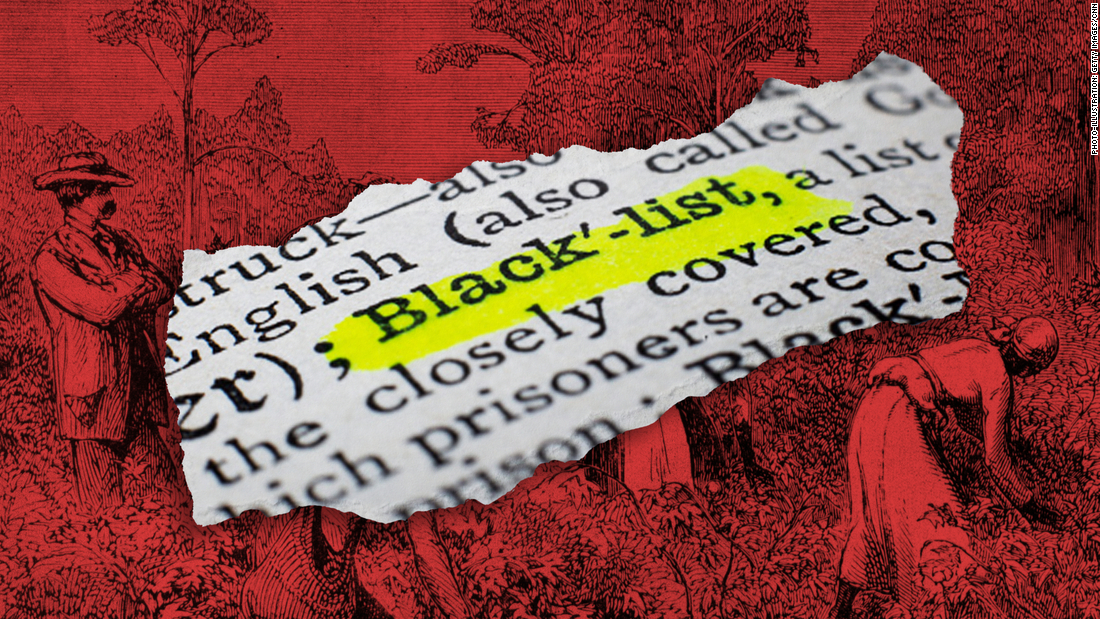
The Washington Redskins are no more!
The team still exists and the ownership hasn’t changed (too bad), but the name finally has! And it only took about six decades.[1] That’s how long it took for enough people to understand that word is offensive. And wrong. And perpetuates negative stereotypes about Native Americans. That’s how ingrained in our culture the power of a word can be. That it can perpetuate a negative stereotype for decades and still no one does anything about it. Words can have a powerful impact on how we perceive people and make assumptions about their character. It’s disturbing to me why this took so long. If there had been a team named the Washington Yellowskins with an Asian face as a mascot, it would be instantly obvious as a racist depiction. But because this term had been ingrained in our vocabulary for so many years, it was accepted and even stirred some to question why it was racist.

But our history is filled with words like this.
Words that have charged meaning or who’s usage has changed over time. Like the word “Indian.” That SHOULD refer to people who actually come from India or have Indian ancestry, but most Americans hear that word and immediately think of tomahawks and long-feathered headdresses instead. And why? Because for so long we’ve used that word to incorrectly describe a whole group of people. Even though we’ve known for centuries it was wrong. We have other words like that, too. Words like “Oriental” and “Negro” where over time they have become outdated and in their outdated-ness have become negative. When I hear the word “Oriental,” I don’t think of myself. I think of some caricature of a dude with slanted eyes, a triangular hat, wearing some gold-laced print shirt that’s too big with matching pants. So admittedly I’m offended when other people refer to me as Oriental. Now there are some Asians who don’t mind, and that’s fine. But just because some Asians aren’t offended doesn’t mean we shouldn’t be sensitive to those who are. The times are changing and we need to change with it.

Words have power.
With a single word, you can alienate someone, make them feel as if they don’t belong, or even reinforce a racial hierarchy that says some people are better than others based on nothing more than skin color. It isn’t enough to say “Well, I didn’t mean it.” In this day and age in particular, we should be all the more attuned to that. I’m sure the officer who killed George Floyd “didn’t mean it,” but had he simply done something other than place a knee against his throat, it wouldn’t have happened. Ignorance doesn’t allow us to escape responsibility. We have to constantly do better. This idea that words have power isn’t new. As the saying goes, it’s as old as the Bible itself. In our passage this morning, James, the brother of Jesus, was trying to warn the church not to take what we say casually. That we can cause far more damage than we realize when we aren’t careful with our words. This is how he put it.
Not many of you should become teachers, my fellow believers, because you know that we who teach will be judged more strictly. 2 We all stumble in many ways. Anyone who is never at fault in what they say is perfect, able to keep their whole body in check.
3 When we put bits into the mouths of horses to make them obey us, we can turn the whole animal. 4 Or take ships as an example. Although they are so large and are driven by strong winds, they are steered by a very small rudder wherever the pilot wants to go. 5 Likewise, the tongue is a small part of the body, but it makes great boasts. Consider what a great forest is set on fire by a small spark. 6 The tongue also is a fire, a world of evil among the parts of the body. It corrupts the whole body, sets the whole course of one’s life on fire, and is itself set on fire by hell.
7 All kinds of animals, birds, reptiles and sea creatures are being tamed and have been tamed by mankind, 8 but no human being can tame the tongue. It is a restless evil, full of deadly poison.
9 With the tongue we praise our Lord and Father, and with it we curse human beings, who have been made in God’s likeness. 10 Out of the same mouth come praise and cursing. My brothers and sisters, this should not be. 11 Can both fresh water and salt water flow from the same spring? 12 My brothers and sisters, can a fig tree bear olives, or a grapevine bear figs? Neither can a salt spring produce fresh water.
Our praise is meaningless if we can’t control our tongues.
We can’t lift up praise to God and with the same mouth belittle our fellow human beings. It just doesn’t work that way. A salt spring cannot produce fresh water. The tongue might seem to be a little thing, but by itself it can be devastating. And it doesn’t even have to be intentional. Sometimes people can say things that seem innocuous but that continue to prop up systems of racial injustice. Being born Asian, I’ve had more than one person come up to me and say, “You speak really good English.” First of all, they should have said I speak English well, but more importantly, they weren’t complimenting my use of grammar or my sentence structure. They were implying, “You speak really good English…for an Oriental.” People don’t realize how insulting that is or how it points out that somehow you aren’t normal, that being Asian somehow means not being a “real American.”
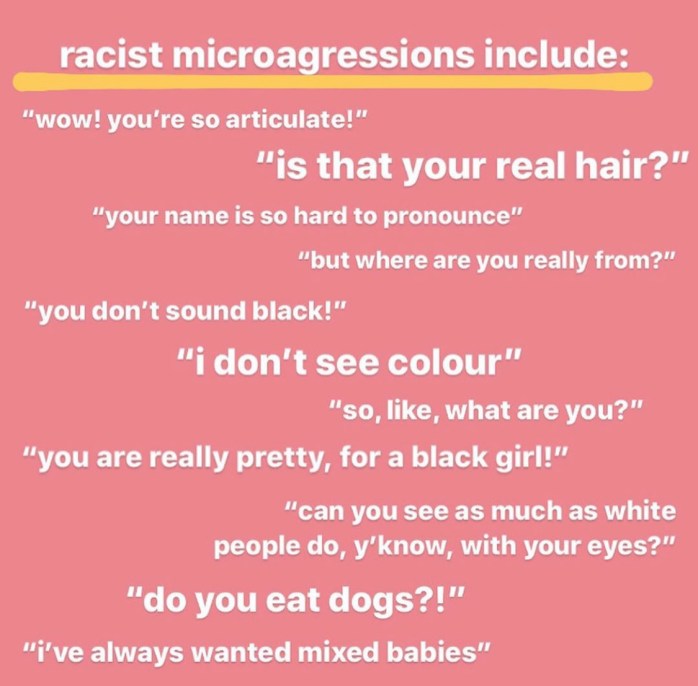
It’s called racial microaggression.
And it’s defined as “the brief and everyday slights, insults, indignities and denigrating messages sent to people of color by well-intentioned…people who are unaware of the hidden messages being communicated.”[2] Phrases like “What are you?” or “Where do you come from?” imply that you don’t belong. What’s worse is when you answer honestly and the person persists, “No, where do you REALLY come from? Where were you born?” It’s just a constant reminder that you don’t belong. These microaggressions don’t even have to be verbal. They can be non-verbal like when someone looks at you cross ways or clutches their purse more tightly as they walk by. They can be environmental like the flying of a Confederate flag or doing the tomahawk chop at a baseball game. You might think, “well those things are trivial. Stop being so sensitive.” And I’ve actually heard those types of responses, but microaggression is anything but trivial and people who don’t pay attention to it are being insensitive. In his research on racial microaggression, Dr. Sue, a leading expert on the topic, found that these tiny insults affect our mental health, create a hostile climate, perpetuate stereotypes, devalue people of color, and create inequities in education, employment, and health care.[3] And that’s only partially how they affect us and the world around us. We need to be alert to our own microaggressions and our own unintended biases. We all have them. We need to be open to hearing about them and doing something to correct it when we find out. We have to stop assuming the world around us is just “too sensitive” or “too PC” and instead do something about it.
What are you willing to do?
Change is tough. There’s no doubt about that. And people are more resistant to change than you might imagine. We like to believe we’re capable of it, but many people struggle with it. The same reason we have problems changing church culture is the same reason we are having problems changing systems of racial injustice. We don’t like to change. If church, if society, if LIFE is working for YOU, why bother? It takes brave people who not only have the courage to face their own shortcomings, but to work to do something about it. Who have to be willing to overturn the apple cart and sacrifice some of the privilege they have to make the whole world better. Dr. Sue wrote that it’s really hard to get people to correct microaggressions because they are often unconscious of it. They don’t even think about it because it’s not overtly racist, and often they believe they are good, moral people – which in general they probably are. When people point out these racial microaggressions, most of us react defensively. It creates a tension between this image we have of ourselves as a “good” person and one where we are, even unintentionally, contributing to racist systems. That’s when you hear comments like, “Stop being so sensitive!” As if it’s everyone else’s fault for not “letting it go.”
God gave you two ears and one tongue for a reason.
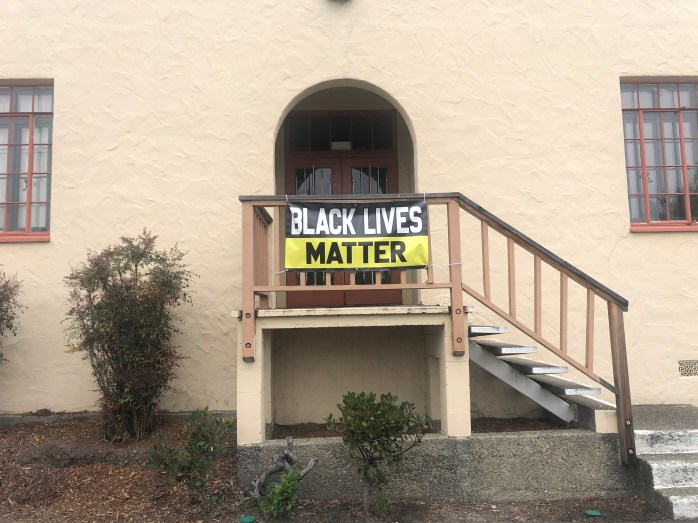
As the philosopher Epictetus said, it’s so that we can listen twice as much as we speak. Especially in this time of racial unrest, these words are truly wise. We need to really listen and not simply react to the moment. I hear people responding to the Black Lives Matter movement with the phrase “All lives matter,” but that’s a defensive reaction and for most people unwittingly part of the systemic racism we are working toward eliminating. When people say, “Black lives matter,” they are not saying other lives don’t. They’re reminding us that Black people are human beings with an equal right to those ideals we hold dear both as Americans and as Christians – life, liberty, and the pursuit of happiness. Saying “all lives matter” is to misunderstand or comprehend the extent to which Black lives have NOT mattered to society. The same thing is true of the phrase “I don’t see color.” You should. You should see color. If for no other reason than to acknowledge that a person’s color is a part of who they are. Being color-blind in this context means that you fail to comprehend how much color affects how people live, how they are treated, and how they are often denied opportunities given to other colors. It’s a phrase said usually with the best of intentions, the person saying it usually trying to emphasize that race isn’t an important factor in their relationship, but to the person hearing it, it’s denying an important part of who they are. I know I’ve said it in the past, thinking I was being of higher mind because of it, but realizing later that unconsciously I was part of the system that denies there is a difference in how people are treated.
Words matter.
And in our day and age, we need to be cognizant of how we use them. We need to do some mirror-gazing and be willing to accept we still have work to do on ourselves. No one expects us to be perfect, but we should always be working toward perfection. It doesn’t matter how old you are, we all have room to grow. But to me, that’s what makes life exciting! There’s always something new to learn, always more that we can do, and always a way to make the world a better place. Black lives matter. And if we want to make that into something more than a banner or a logo and instead make it a reality, we all have work to do.
[1] According to Wikipedia, the controversy began in the 1960’s among Native American groups and gained steam in the 1990’s. No matter how you look at it – it’s been decades! https://en.wikipedia.org/wiki/Washington_Redskins_name_controversy
[2] I did leave out the word “white” because I don’t think you have to be white to level a racial microaggression. But the article is very helpful and well-written. https://www.psychologytoday.com/gb/blog/microaggressions-in-everyday-life/201010/racial-microaggressions-in-everyday-life
[3] Ibid.
Craig’s Library: Top 5 Favorite Bibles
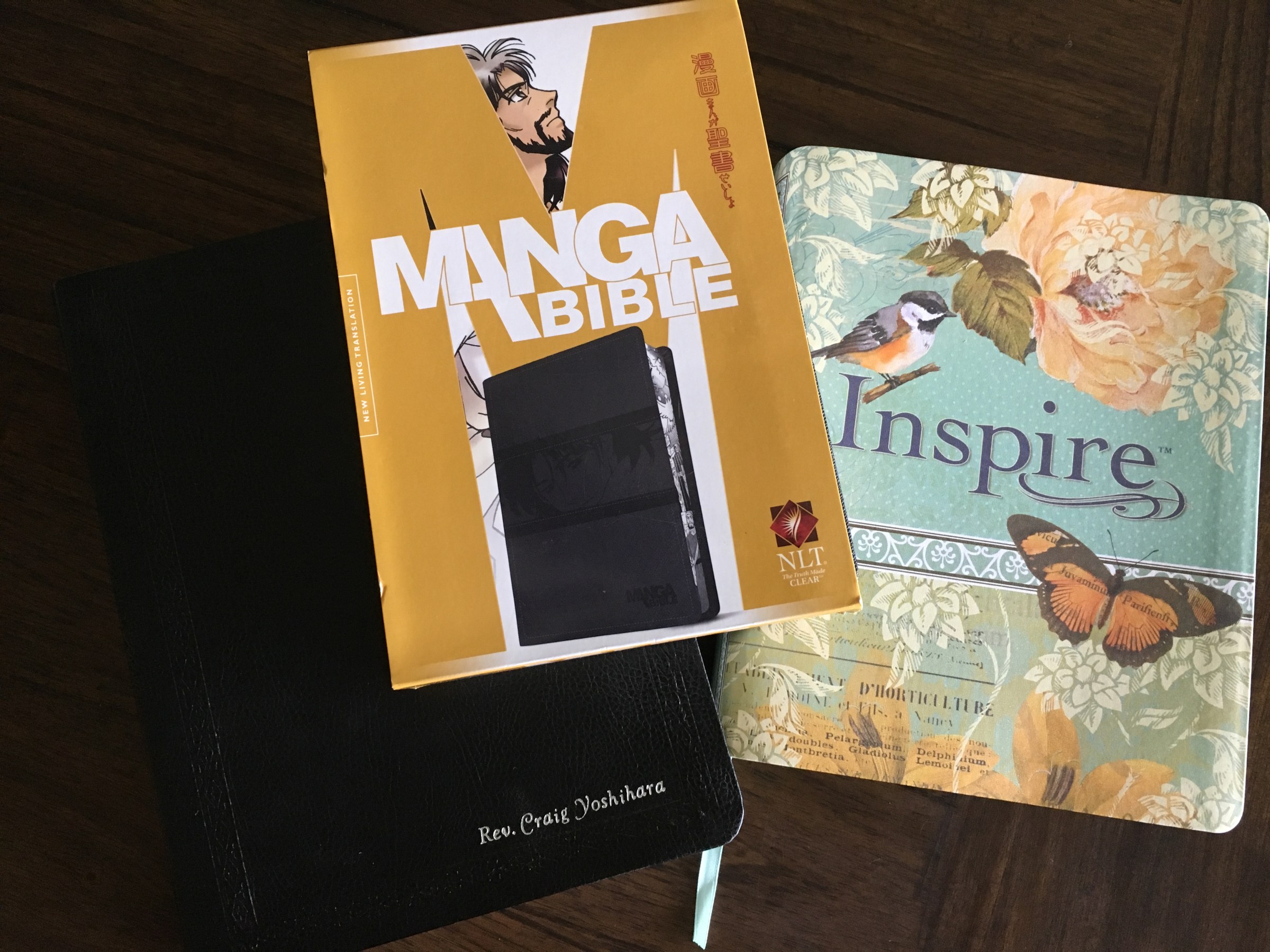
I collect Bibles.
Not that I collect EVERY Bible (mostly because I have this thing about not ever throwing away a Bible), but when I find one I really like, I either buy it for myself or give it away as a gift. A good Bible is like a good doctor. When you find one you like that works for you, you should stick with it. But if you find one that gives you misinformation or doesn’t provide you with an accurate interpretation, you could be doing more harm than good.
Personally, I stick with mostly NIV, NRSV, NLT, or NIrV as my translations of choice. The New International Version is the one most popular in churches and is a solid choice. The New Revised Standard Version is the one we used in seminary and is more gender inclusive and a very accurate translation. The New Living Translation and New International Reader’s Version are more reader-friendly and the NIrV is made for younger readers specifically, but us older folks like it too. I don’t often use interpretations like The Message in worship, because they are just that – interpretations instead of translations. But I do like to read The Message once in a while, just for clarification or to “interpret” Biblical meaning in a more modern context.
Having said all of that, here are my Top 5 Bibles:


Inspire Bible: I love this Bible! Not only is it reader friendly (NLT) but it has room in the margins for notes (if you like that sort of thing) AND it has things to color! Since adult coloring books are all the rage right now (in 2016), this book is not only timely but fun. And it’s beautiful. I bought this one for my daughter, Emma, but seriously thought about getting one for me just because it is so nice. If you like journaling or note taking, this is the Bible for you.


The Manga Bible: Personally, I’m a fan of manga (Japanese cartoon art) and so this Bible is perfect for me. And if you know someone who likes manga or just thinks having an illustrated story throughout their Bible is cool, this is a great choice. Now, there are many different manga Bibles, but this one is the best (however, just recently it went out of print so I’ll need to find another one to slip in this spot). It’s not only a good translation of the Bible NLT, is also the WHOLE Bible (some manga Bibles are just Bible stories done in a manga format), but the imitation leather version has manga drawings on sides where the pages are. It’s really ingenious.
The Apologetics Study Bible: One of my favorites. Apologetics is not the art of saying your sorry. Apologetics is the defense of the Christian faith and this Bible helps you to better understand the questions you may have about your own faith and help you to better answer friends and family who ask you why you believe what you believe. I have the imitation leather cover which I don’t know if they still make it, but got it as a gift from my wife who had it autographed by my favorite apologist – Dr. Ravi Zacharias. I actually got to meet Dr. Zacharias and correspond with him on occasion and he is not only kind-hearted by a true defender of God. He along with many other astute authors fill this Bible with answers to questions many people have about faith. Although not one of my normal translations, this one I have found to be very good and reliable.

NIV Cultural Backgrounds Study Bible: I just bought this Bible (literally while I was doing this post) and it definitely deserves top status. One of the difficulties in interpreting Biblical passages is the context in which it is written. This study Bible helps out with that with interesting articles that give Scripture context. I bought the Kindle version ($14.99) which is great but nowhere near as pretty (or as expensive) as the imitation leather edition you could purchase ($52.71 right now). If you want to get this one as a gift, the hard copy is beautiful and would be a welcome edition. If you want it for yourself and just want something lightweight – can’t get lighter than an e-book which still comes with all the articles in the hard copy.
The Jewish Study Bible: There were so many Bibles vying for this fifth spot including the Wesley Study Bible which was a close runner-up, but I love this one. Obviously, since it is the Jewish Study Bible it is only the Tanakh and does not include the New Testament. It also is ordered differently which I think is great. For the Biblical scholar, this one will be a treasure trove. Very well done with great explanatory notes, highly recommended.
My absolute favorite Bible is one that has personal meaning for me. When I was baptized in 2001, my then fiancee, Cassie bought me a simple NIV Bible with red lettering where Jesus spoke. I have brought that Bible and used that Bible at every important event and every Sunday when I preach. It’s getting pretty worn out from use and will probably have to start using another one so I don’t ruin this one, but I love it. A Bible makes a great gift for someone who is new to their faith journey, ready for another one (like transitioning from grade school to middle school or high school to college), or just loves reading the Bible. And a meaningful one will last forever.


Life Is A Team Sport

Life is a team sport.
Nobody does anything completely on their own. We triumph or we fail in the midst of those who surround us. We are made stronger or weaker by those who share the journey. And those who stand up at the end do so because of the work of many hands coming together as one. Life is a team sport.
In just about two weeks, the baseball season will begin.
In our COVID-19 world, who knows how that will turn out. But three of the four major league sports are about to crank up again after being interrupted by the spread of the coronavirus. Baseball is about to play in a mad dash sprint from beginning to end, shortening their normal 162 game schedule by about 100 games. The NBA and NHL will follow a week later, both trying to close out their seasons and determine a winner. I’m still skeptical how safe or wise it is to play sports during this pandemic, and at the same time grateful to watch the players take the field or step onto the court or take the ice. Our world has become so topsy-turvy in the past few months, that it’s nice to see some semblance of normalcy returning. But to be fair, this will be anything but normal. The herculean effort by players, owners, managers, and support staff to bring us these games is astounding. The NBA is having their entire league enter a bubble of protection with no one allowed in or out until a winner is announced with strict rules and protocols for safety.[1] The NHL is doing something similar, housing all of their players in four hotels in two different cities to finalize the playoffs.[2] And while Major League Baseball is still planning to play in their home towns, the entire structure of play has been realigned so that teams won’t have to travel as far. We’ll see more Dodgers / A’s games than ever before. All of the leagues are playing to empty stadiums with MLB experimenting with simulated crowd noise to make the experience as close to normal as possible.[3] To pull all of this off will take the hidden hands and feet of many people, most of whom won’t have their names engraved on a trophy or listed in the papers but who are essential and important nonetheless.

The truth is any measure of success requires a cast of many who are often unseen.
But important nonetheless. They may not get credit, but they are still essential to helping a person, a team, an organization achieve its goals. And that’s as true in society as it is in sports. We all need somebody. How can we be “somebody?” When I think of the history of our own church, there are key figures you may or may not know who played a pivotal role in keeping our church alive, without whom we wouldn’t have a church today. BMUC is built upon the work of many hundreds of people and not just our parents and grandparents, not just our ministers and youth leaders, but upon a number of allies who have journeyed alongside us in our times of greatest need. Some are known and some are unknown, but all have been like a Cyrus to our church. Who is Cyrus? Cyrus was the king of Persia, an historical figure who ruled the area for about 30 years until 530 BC. He was not a follower of the Hebrew God and was a self-proclaimed pagan, but without him, who knows where any of us would be today?
In the first year of Cyrus king of Persia, in order to fulfill the word of the Lord spoken by Jeremiah, the Lord moved the heart of Cyrus king of Persia to make a proclamation throughout his realm and also to put it in writing:
2 “This is what Cyrus king of Persia says:
“‘The Lord, the God of heaven, has given me all the kingdoms of the earth and he has appointed me to build a temple for him at Jerusalem in Judah. 3 Any of his people among you may go up to Jerusalem in Judah and build the temple of the Lord, the God of Israel, the God who is in Jerusalem, and may their God be with them. 4 And in any locality where survivors may now be living, the people are to provide them with silver and gold, with goods and livestock, and with freewill offerings for the temple of God in Jerusalem.’”
5 Then the family heads of Judah and Benjamin, and the priests and Levites—everyone whose heart God had moved—prepared to go up and build the house of the Lord in Jerusalem. 6 All their neighbors assisted them with articles of silver and gold, with goods and livestock, and with valuable gifts, in addition to all the freewill offerings. 7 Moreover, King Cyrus brought out the articles belonging to the temple of the Lord, which Nebuchadnezzar had carried away from Jerusalem and had placed in the temple of his god. 8 Cyrus king of Persia had them brought by Mithredath the treasurer, who counted them out to Sheshbazzar the prince of Judah.
9 This was the inventory:
| gold dishes | 30 |
| silver dishes | 1,000 |
| silver pans[b] | 29 |
| 10 gold bowls | 30 |
| matching silver bowls | 410 |
| other articles | 1,000 |
11 In all, there were 5,400 articles of gold and of silver. Sheshbazzar brought all these along with the exiles when they came up from Babylon to Jerusalem.
Cyrus restored the temple to the people of Jerusalem.
Not only that, but he returned all the items that had been taken from the temple by King Nebuchadnezzar. He hadn’t been converted, he was still a pagan. He wasn’t being patronizing. But he genuinely felt God’s call on his life to do this for the Hebrew people. Nothing short of an edict from the king could have caused this to happen, and without such an edict, it never would have been possible. God was working in the life of Cyrus just as he was working in the life of the Israelites who responded to the declaration to rebuild the temple. We all need allies. We all need people to walk alongside us to make our dreams become a reality. Even a singles tennis player doesn’t stand on the court alone. They have their families alongside them who provided the car rides and the tennis rackets and the endless sleeves of tennis balls so they could play the game. They have their coaches who instructed them, built up their confidence, and trained them how to face an opponent. They have the people who saw value in the sport who supported the schools and the scholarships to take them to a higher level. Even someone like Serena Williams who is a naturally gifted athlete and honed her skills to become one of the greatest players in the world, didn’t make the journey alone. And neither did we.


Our church wouldn’t be here without allies outside the JA community.
It’s easy to forget how much we rely on the goodwill of others, but there have always been people who stepped up when others would not. There have always been people who felt God calling them to serve our community despite the prejudice of the society around us. And because of those people our churches exist today. Mrs. Wilson of the Congregational Church in San Francisco who welcomed the early Japanese immigrants who would one day form the heart of the Japanese Gospel Society or Fukuin-Kai.[4] Dr. Otis Gibson, the superintendent of the Chinese Methodist Mission who saw potential in one of those students, Kanichi Miyama who would one day become the first ordained Japanese Methodist minister.[5] And of course, Dr. Frank Herron Smith. Our sanctuary was named in honor of this great man of faith who sacrificed so much on behalf of the Japanese immigrants and the Japanese-American people. He helped to inspire the Japanese churches toward self-sufficiency. Until then, every Japanese church relied at least in part on the conference to keep afloat financially, but Dr. Smith appealed to the people not out of duty but out of Christian love to take this challenge on and within his first six years as superintendent helped to make six of those churches completely independent. He also encouraged the congregations to grow in their connection with the Methodist church and by 1940, these fledgling missionary churches had become their own Conference. And when the war started and the Japanese were forced into the internment camps, Dr. Smith went from camp to camp, preaching, visiting the sick, and doing whatever was necessary to bring comfort to these people he felt such an affinity for. Outside of the camps, he helped to maintain the churches, arranged to rent the parsonages, and managed the church funds. He was also an advocate for the Japanese people when they had no voice. He was so strong in his advocacy that many named him “the white Jap” as an insult to his standing up for our people. He greatly influenced a number of our most influential and passionate ministers including Rev. Lloyd Wake, Rev. Dr. Lester Suzuki, and Bishop Roy Sano. Rev. Suzuki once wrote, “[Smith] had sized up the Japanese population in the United States and he figured that there was a need for five hundred trained Nisei ministers and workers to take care of this population. To me it was a real ringing challenge. Even when he came to the local churches, he mentioned the same thing to our official boards and at our local church administrative meetings. I heard him repeat this several times. That’s what got me. I wasn’t a baptized Christian then but became one very soon after that.”[6] That’s the kind of influence people like Dr. Smith had. He may not have been of Japanese ancestry, but he stood with us nonetheless.

Which got me thinking, how can we be an ally in this time of racial unrest?
How can we stand alongside the Black community as they strive for racial equality of opportunity? How can we be a supporter beyond placing a banner on the entryway of our church? How can we make a difference today? I reached out to our own District Superintendent, Rev. Staci Current and together with Rev. Sadie Stone we discussed it. While I realize it isn’t the job or the responsibility of the Black community to tell us what we need to do, I also am aware of the history of inadvertently imposing our own cultural values on another group of people. The early missionaries, with the best of intentions, went out among indigenous people and forced upon them a Western European way of living and being, in their minds “correcting” their lifestyle into something more “appropriate.” Many of those cultures are now realizing they lost a part of themselves when they accepted the missionaries’ help and are trying to reclaim it. We certainly don’t want to do the same in this moment. We want to walk alongside our brothers and sisters, not tell them where to go. First, they suggested doing some soul-searching and serious introspection, asking ourselves to look deeper into the ways we inadvertently perpetuate systemic racism. How do we unconscious support racist ideologies through our language, our perceptions, and our own unwillingness to learn the truth? How welcoming are we to people who don’t necessarily act or do things the way we do them?
Before we can reach out, we must search within.
We need to challenge ourselves regularly, to hold a mirror up in front of us and take a good look so that we are part of the solution and not part of the problem. We need to regularly engage through discussions, reading, and making ourselves informed while keeping an open mind that despite our best intentions we may be contributing to the problem and then doing something about it. During this time of introspection, I know most of us are hungering to do something concrete. Something we can point to and know that we made a difference. Over the next month, I’m going to challenge our Council of Ministries to do just that – to put our money where our mouth is and do something concrete to support the Black community in their time of need as others came to our aid in our time of need. I’m going to encourage them to offer a scholarship or contribute to a scholarship that helps the African-American community or to donate to a local Black-owned business or to help a primarily Black church in our neighborhood. Maybe we will do all three. In the meantime, I’m going to challenge each of you to support a Black-owned business in your local community (personally, I’m definitely going to frequent one of my favorites – James and the Giant Cupcake!). Frequent those places during this next month. Over tip when you can. Make the extra effort to shop there and be supportive. Walk alongside our neighbors in their time of need as others did for us our whole lives.

There is a tendency to demonize those that aren’t “one of us.”
But we can’t achieve our goals without the help of those outside of ourselves. God created us for community for a reason. We are meant to uplift one another. We are meant to support one another. We are meant to journey alongside one another. And that means being an ally to those in need and being willing to accept help when we are in trouble. As much as we think we can do it alone, we really can’t. It takes not only strong movement within our community, but outside of our community as well. When those athletes return to the field and you watch your first game in what seems like years, just remember that it took the work of hundreds if not thousands of people behind the scenes to make it happen. In the movement right now for racial justice, it will take thousands if not millions of people to make it happen. Let us be among those people. The iron is hot, the time to do something is now. Make a difference.
[1] https://www.forbes.com/sites/alexkay/2020/06/10/2020-nba-season-restart-schedule-participants-playoff-odds-news-on-basketballs-return-to-play/#60eb0e9b745b
[2] https://www.masslive.com/bruins/2020/07/nhl-hub-cities-toronto-edmonton-to-host-2020-playoffs-as-season-close-to-resuming.html
[3] https://www.msn.com/en-us/sports/mlb/video-dodgers-working-out-with-fake-crowd-noise-at-stadium-is-all-sorts-of-weird/ar-BB16iX3Y#image=1
[4] https://www.ucc.org/about-us_hidden-histories_sho-chiku-bai
[5] From my own thesis on the subject Context in Connection.
[6] Lester Eisaburo Suzuki in his autobiographical recounting of his Christian faith in Nisei Christian Journey: It’s Promise and Fulfillment, Volume III: Nisei Pastors, (Nisei Christian Oral History Project), 81.
Happy Birthday, America?

What do you like to do on your birthday?
Well, if you’re a little girl whose birthday happens to be in just a couple of days, you watch fireworks. Cassie was born on July 7th and she told me that growing up, she imagined that 4th of July fireworks were done for her. How cool to be a child and see this display of lights up in the sky and imagine it was all for you! Everyone should be able to celebrate a birthday like that. To have the world show its appreciation for you being a part of it. One of her favorite birthdays was the time we went to Tokyo Disneyland. We were on summer vacation and staying at the Tokyo Disneyland Hotel. Knowing it was acast members in English said “Happy Birthday!” to her with a big smile and a bow. She felt very special the whole day. And of course, there were fireworks. Birthdays are the best because it gives us the chance to celebrate how much someone means to us. It’s the one time of the year when people are gathered to celebrate YOU! And why shouldn’t they? You are special.
But this weekend, as we remember the birthday of our country, we might not be feeling so joyous.
It might be hard to celebrate when so much seems to be going wrong with our country. If in 1776 we were filled with joy and hope for a bright future, today we might wonder what happened? Our country is more divided than ever. There doesn’t seem to be any middle ground and the word “compromise” feels like a dirty word. We are under the leadership of a President who believes he has never made a mistake, who routinely debases and belittles the people around him and the people of our country, and threatens the people of the country he is supposed to be leading with economic and military punishment. What’s worse, he isn’t an outlier. He might be an outlier among presidents, but if you simply look at the views of this country, he has plenty of support out there. We like to think we are the greatest country in the world, but I’m reminded of that brilliant speech in the opening for the show The Newsroom where Will points out how far we are from that reality. But I like how he ends that speech. “We could be.”
Despite all the problems we have as a country, hope is still alive.
The ideals painted in the Declaration of Independence are still ideals worth striving for. That we are endowed by our Creator with the inalienable rights of life, liberty, and the pursuit of happiness. We just need to realize we aren’t there yet. But just because we aren’t there doesn’t mean we should give up or that it’s hopeless. We have indeed made great strides forward in the time between then and now. Women have the right to vote. Children are no longer abused for their labor. And at least on paper we have equal protection under the law. We look great on paper. We just need to work on making that paper a reality. Women are still only making about $0.80 to the dollar compared to men despite the 1963 Equal Pay Act.[1] Children are still being abused and neglected, just in different ways. According to the Department of Health and Human Services, about 678,000 children were victims of abuse or neglect in 2018 and that number has remained steady for the past five years.[2] And that’s only the ones we know about. And we only have to look at our TV screens to see that despite what is written down on paper, racial injustice is still alive and well in the United States.

But maybe more than ever we need to pause and give thanks.
It would be so easy to get caught up in all that is wrong that we forget how much we have to be grateful for, but gratitude helps to anchor us. Gratitude makes it possible to endure the hardship, to know that our work is not fruitless, and despite the trials and tribulations we are working toward a better tomorrow. Being grateful does not belittle our circumstances or ignore what is wrong, but gives us perspective and stops us from becoming bitter and angry which seems to be the path so much of the world is traveling these days. Consider what Paul wrote to his fellow believers.
Now we ask you, brothers and sisters, to acknowledge those who work hard among you, who care for you in the Lord and who admonish you. 13 Hold them in the highest regard in love because of their work. Live in peace with each other. 14 And we urge you, brothers and sisters, warn those who are idle and disruptive, encourage the disheartened, help the weak, be patient with everyone. 15 Make sure that nobody pays back wrong for wrong, but always strive to do what is good for each other and for everyone else.
16 Rejoice always, 17 pray continually, 18 give thanks in all circumstances; for this is God’s will for you in Christ Jesus.
Rejoice always, pray continually, and give thanks in all circumstances.
This might have been Paul’s most inspirational piece and his most challenging at the same time. To be clear, Paul wasn’t lounging on some beach on the Mediterranean when he wrote this. He wasn’t downing pina coladas while soaking in the sun. Paul was hard at work establishing the church at Corinth at the time, but felt that the church in Thessalonica needed some of his attention so he wrote this to encourage them and to give them some guidance. Paul knew that being Christian meant having to endure persecution and ridicule, that there would be people – MANY people – resistant to these new ideas of love and acceptance. And he knew there would be times when the people of the church would want to either give up or fight back with violence. But that would have been the wrong path. Not only would that be against the teachings of Christ, but it would get them nowhere. Paul knew that in order for the early Christians to win the hearts and minds of the population, they had to rise above it. That’s why he tells them to “encourage the disheartened, help the weak” and “be patient with everyone.” Something you and I know isn’t easy for us to do – especially that last part. Be patient with everyone. It’s easy to be patient with those who think and act like we do, but it’s so hard to be patient with people who are ignorant or downright racist. But tell me, when was the last time shouting insults at someone got them to conform. When was the last time you attacked a person’s character and it made them step back and say, “Gosh, you’re right. I’m a racist and I should change my ways.” Changing someone’s attitude isn’t always possible, but where it is can’t be done by exchanging wrong for wrong. We have to take the high ground and be better than that. Otherwise, our hard work means nothing.


Despite all of our flaws, I’m grateful to be an American.
Look at the sham elections they just had in Russia where basically Putin gets to be President for life. Or the people of Hong Kong who suddenly had all of their freedoms squashed when China decided to ignore their treaty with Great Britain. Or the people of North Korea who live in a dictatorial state that doesn’t even pretend to offer its citizens freedom. Again, that doesn’t mean we don’t have problems. According to Freedom House, we are ranked 51st out of the 87 countries deemed to be “free” in the world today.[3] Pretty low for a country that claims to be the Home of the Free and the Land of the Brave. But we have opportunities for change that are even now beginning to sprout new roots. The protests against social injustice have already made a real impact on our country, forcing us to take a hard look at ourselves in light of the number of tragedies across the United States. George Floyd. Ahmaud Arbury. Breonna Taylor. These are by far not the only victims of tragedy due to systemic racism, but have been the catalyst for us to be awakened to how far removed we are from the ideal we hope to be. The protests spanning the entire country have heightened our awareness of racial disparity and has brought about actual change. NASCAR banned the Confederate flag at its races. Mississippi finally removed the Confederate symbol from its state flag. And legislatures are making real reforms to how they handle policing efforts across the country.
You may not feel like celebrating, but we can certainly count our blessings.
Things in our country have seemed more hopeful in the past month than they have for a long time. Three plus years to be exact. The Supreme Court has made a series of surprising but hopeful and uplifting decisions. They upheld DACA, supported the rights of the LGBTQ community, and even held firm on the pro-choice movement. Despite President Trump’s ignorance of the facts, governors across the country are finally starting to mandate mask-wearing and even started to roll back or at least halt some of the privileges of a more open society. Awareness of racial injustice is growing and at least forcing us to look in the mirror at some of the ways we have perpetuated these systems of injustice through our language, our actions, and our assumptions. And while we are far from completing the journey, we are starting to remove the roadblocks of our own ignorance that have been blinding us for so long.

Birthdays are a time to thank God for the blessings in our life.
When we celebrate Cassie’s 29th birthday again for the 22nd time in two days, I will have a lot to be thankful for – for the life we have carved out together, for the experiences we have shared as a family, for the birth of our daughters, for her love and support, and for never needing to learn how to install a garbage disposal! And while our life isn’t perfect, that doesn’t stop me from being grateful for what we do have and how much I am looking forward to an even brighter future. The same is true for our country. I had a hard time thinking about what it means to celebrate Independence Day and what that means for our church. But we’re not celebrating the state of things as they are, but what we hope they could be. We’re not uplifting ourselves as a bastion of all that’s right in the world, but instead giving thanks for our forefathers who came before so that we might have the freedoms we possess today. But make no mistake. That freedom is not equal. We still have a lot of work to do. But with God’s help, we will keep marching forward to that day that Martin Luther King shared with us all, the day when we can truly say, “Free at last! Free at last! Thank God Almighty we are free at last!” In the name of the Father and of the Son and of the Holy Spirit. Amen.
[1] https://www.business.org/finance/benefits/gender-pay-gap/ Note: CA is the best in the country at bridging the gender pay gap at $0.88 to the dollar and has narrowed the gap by 4.6% much higher than the national average of 2.6%.
[2] https://www.acf.hhs.gov/sites/default/files/cb/cm2018.pdf
[3] https://www.businessinsider.com/countries-that-arent-free-report-2019-5
 Craig's Corner